
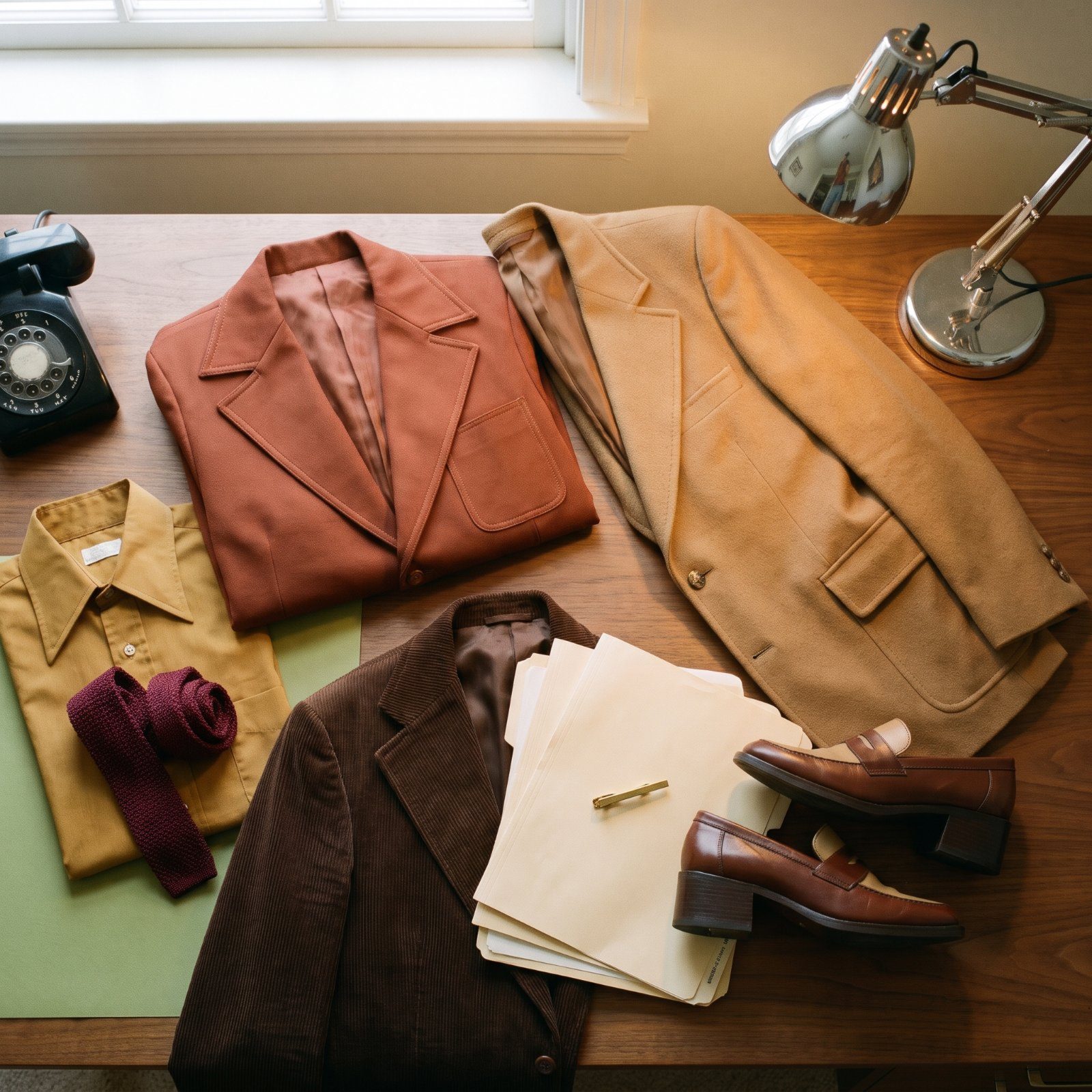
Somewhere in a filing cabinet there’s a photo of a man in a mustard safari suit holding a rotary phone like it owes him money, and that was a normal Tuesday. The 1970s office floor ran on polyester, wide lapels, and the quiet confidence of a guy who believed a plaid three-piece was a reasonable thing to wear to a budget meeting. Loud colors. Enormous collars. Nobody apologized for any of it. The pieces below ruled the water cooler and the corner office alike.
Please note that some of the images in this article were created with the assistance of AI.
43. The Polyester Leisure Suit That Owned Every Office Party
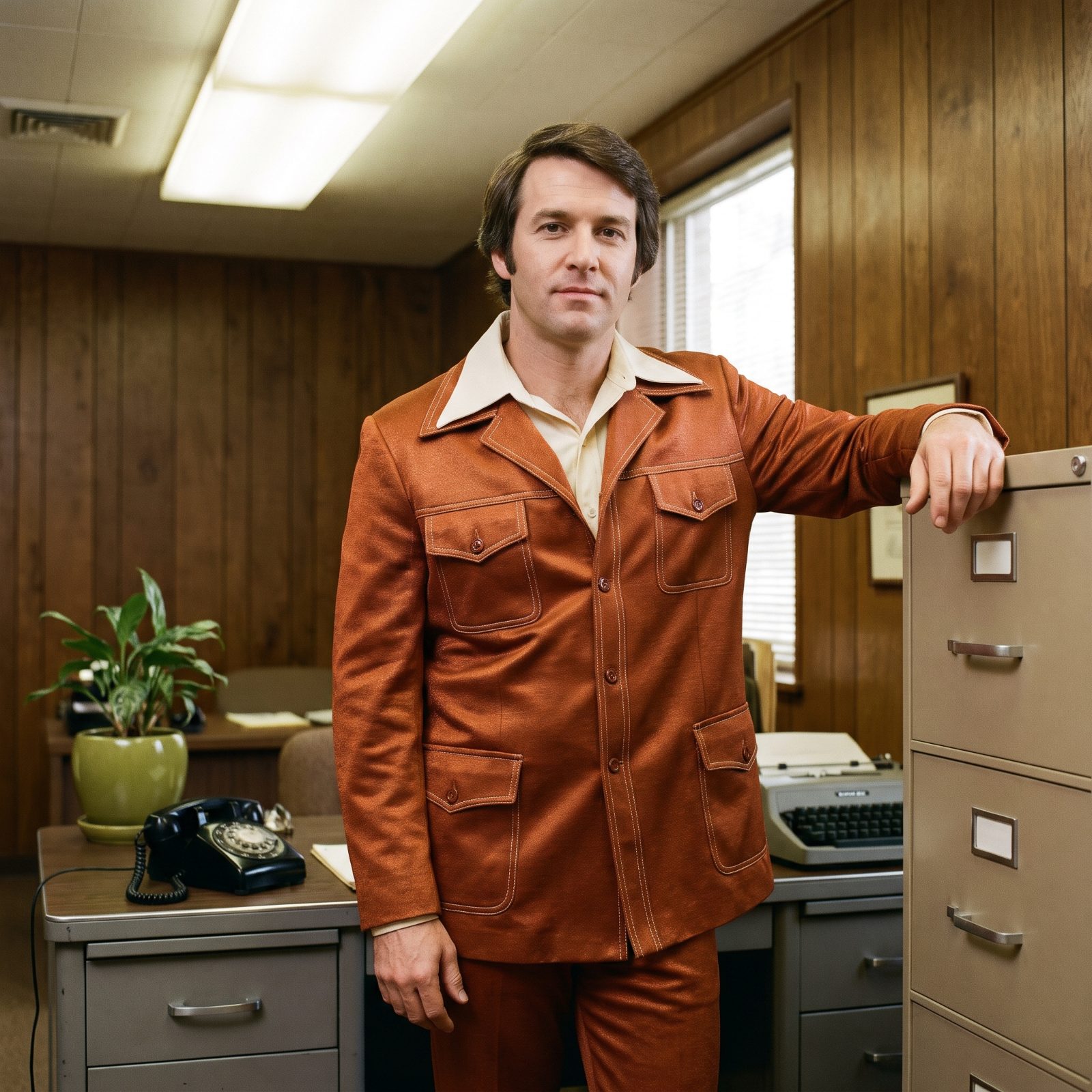
The leisure suit was the decade’s handshake — matching jacket and trousers in a polyester that refused to wrinkle, crease, or ever fully decompose. The collar did the heavy lifting. Wide enough to double as a paper airplane, it reframed the whole outfit from businessman to man-who-knows-how-to-have-a-good-time.
No tie, which was the whole point. This was tailoring that had loosened its grip, worn to the office and straight to happy hour without changing a thing. And the contrast topstitching along every seam? That was the signature move, turning construction into decoration.
42. The Extra-Wide Peak-Lapel Suit for the Man Who Meant Business
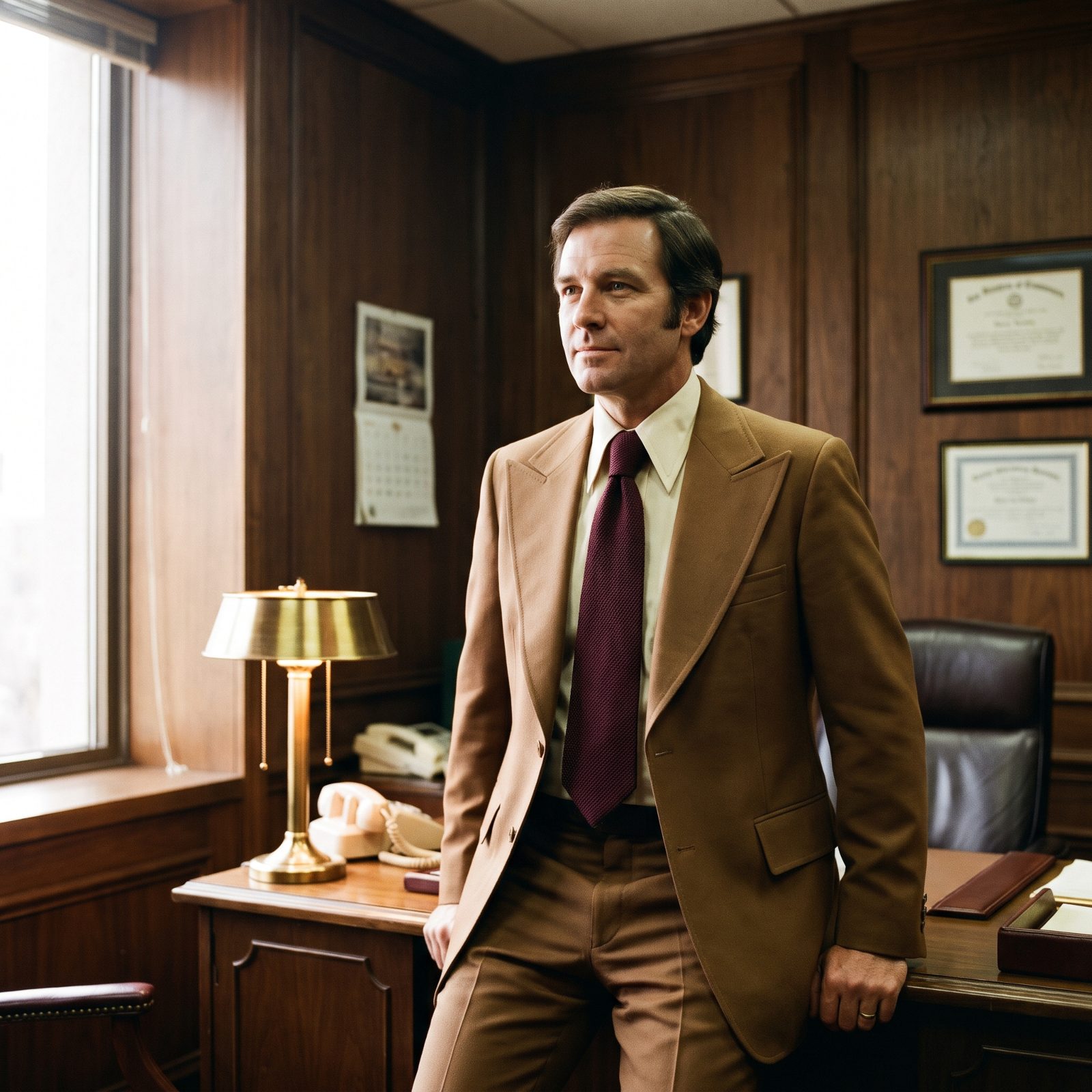
Those lapels could clear a desk. The extra-wide peak lapel was the power move of the mid-’70s — broad pointed wings that drew the eye up and out, making shoulders look like they could carry a whole department. The structure did the work, because a camel suit this sharp needs the lapel to announce it, otherwise it just reads soft.
Pair it with a wide knit tie and you’ve got the uniform of the man who got the corner office and intended to keep it. The silhouette whispered competence. The lapel shouted it.
41. The Bold Plaid Business Suit Nobody Questioned
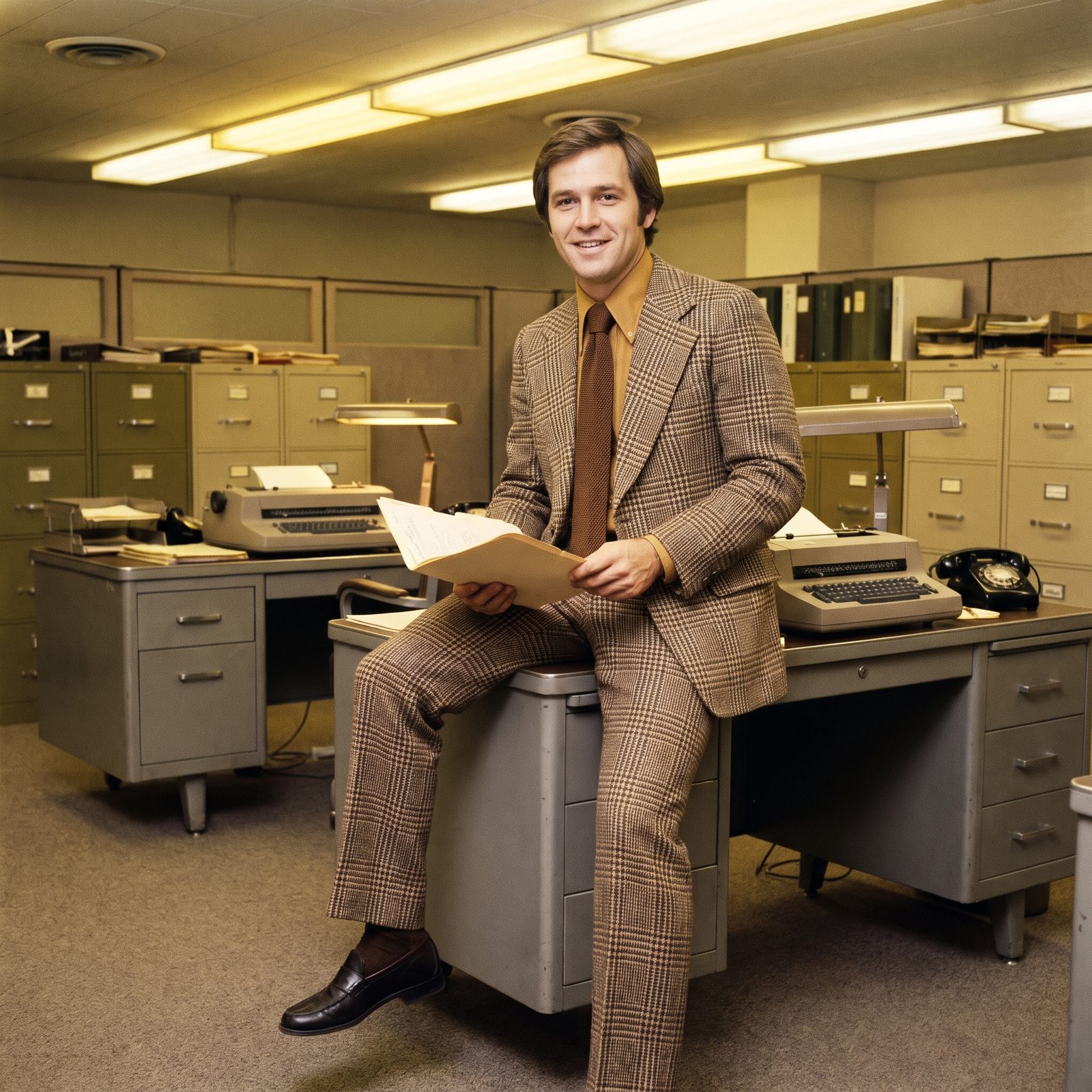
Plaid at the office is a tough sell now. In 1974 it was just Monday. The large-scale windowpane check in brown and tan read as entirely professional, and the trick was keeping everything else quiet so the pattern could do all the talking.
One bold element, everything else deferential — that’s why it worked. A loud plaid suit with a loud tie would have been chaos. Anchored by a solid mustard shirt, though, the plaid became the one thing you remembered about him at the meeting.
40. The Wide-Pinstripe Three-Piece That Ran the Boardroom
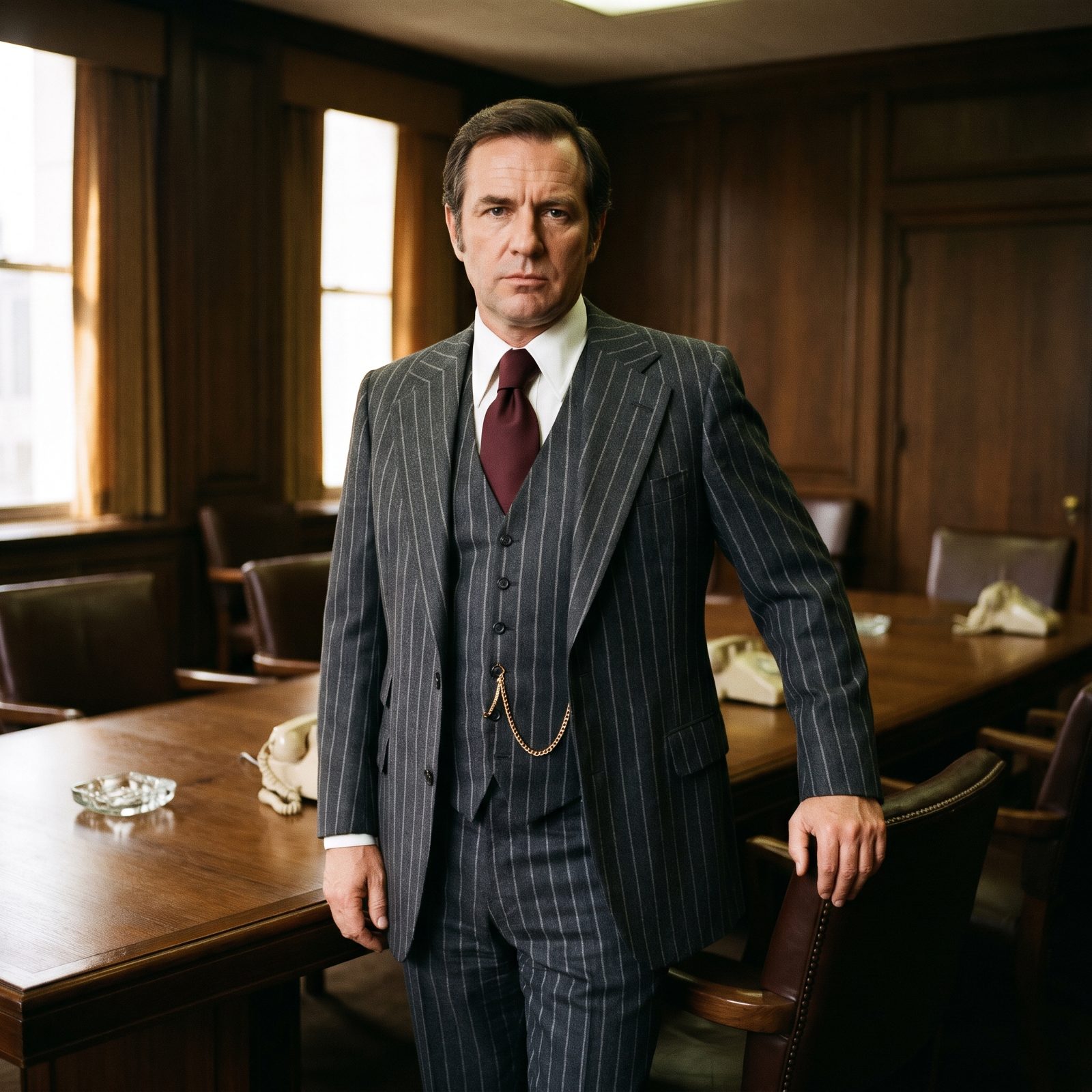
The three-piece pinstripe was the serious end of the ’70s. While the leisure suits were off having fun, this one was signing the contracts. The waistcoat is what powers the whole thing — a layer of formality, a frame for a gold watch chain that said tradition without saying a word.
Wide pinstripes elongated the frame and gave the suit vertical authority. This was armor. You walked into a room wearing it and people assumed you’d already won the argument. Enclothed cognition before anyone had a name for it.
39. The Belted Safari Suit for the Adventurous Executive
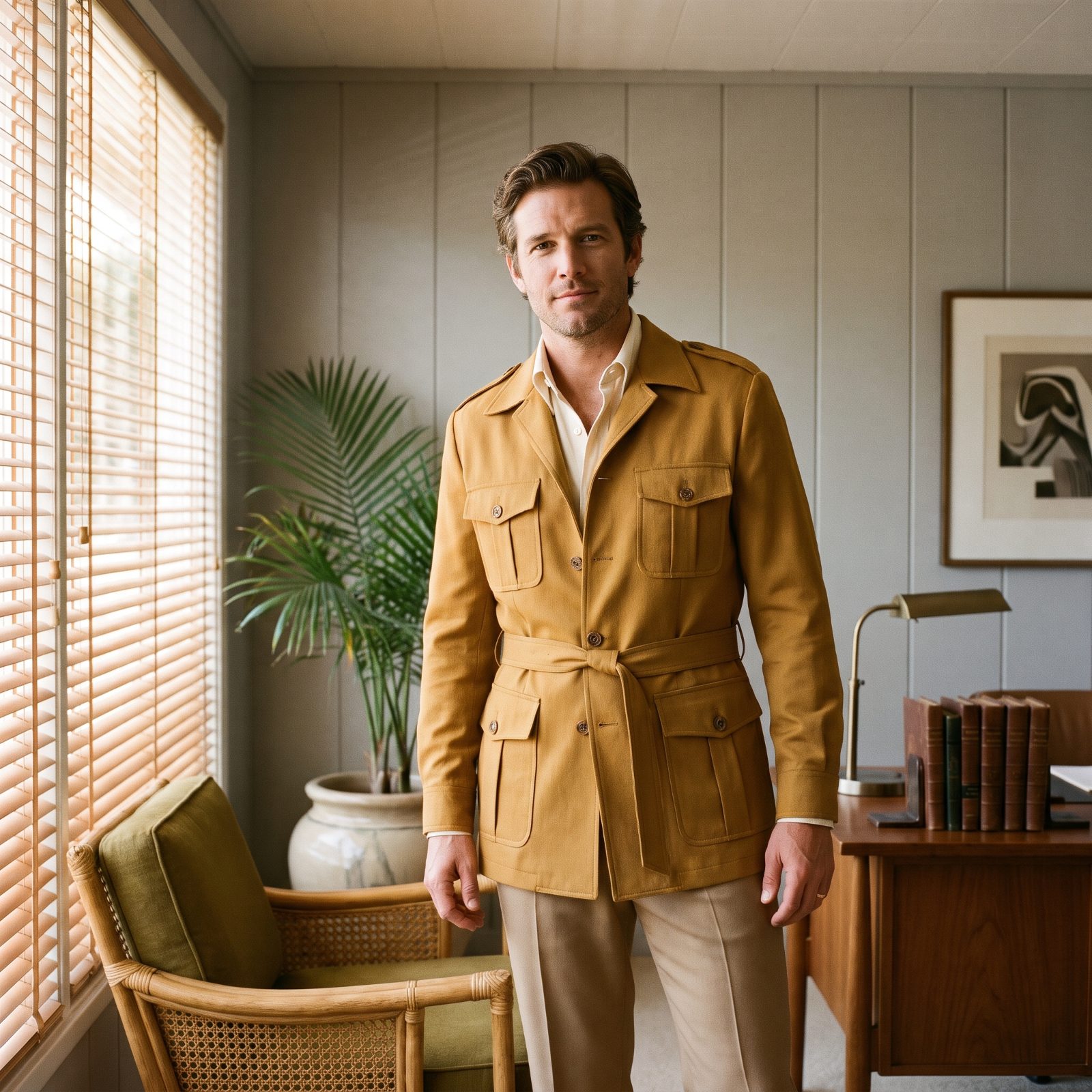
The safari suit brought the expedition indoors. Four big flap pockets, epaulettes on the shoulders, a self-belt cinching the waist — all of it in a mustard or tan that looked ready for a Land Rover it would never see.
The belt is the whole personality. It takes a boxy jacket and gives it a defined waist, which is the difference between looking like a uniform and looking like a choice. Worn open at the collar, no tie, it was the smart-casual flex of its moment: comfortable, a little theatrical, and completely unbothered by the fact that the nearest wildlife was a desk fern.
38. The Jewel-Toned Velvet Blazer That Earned the Evening
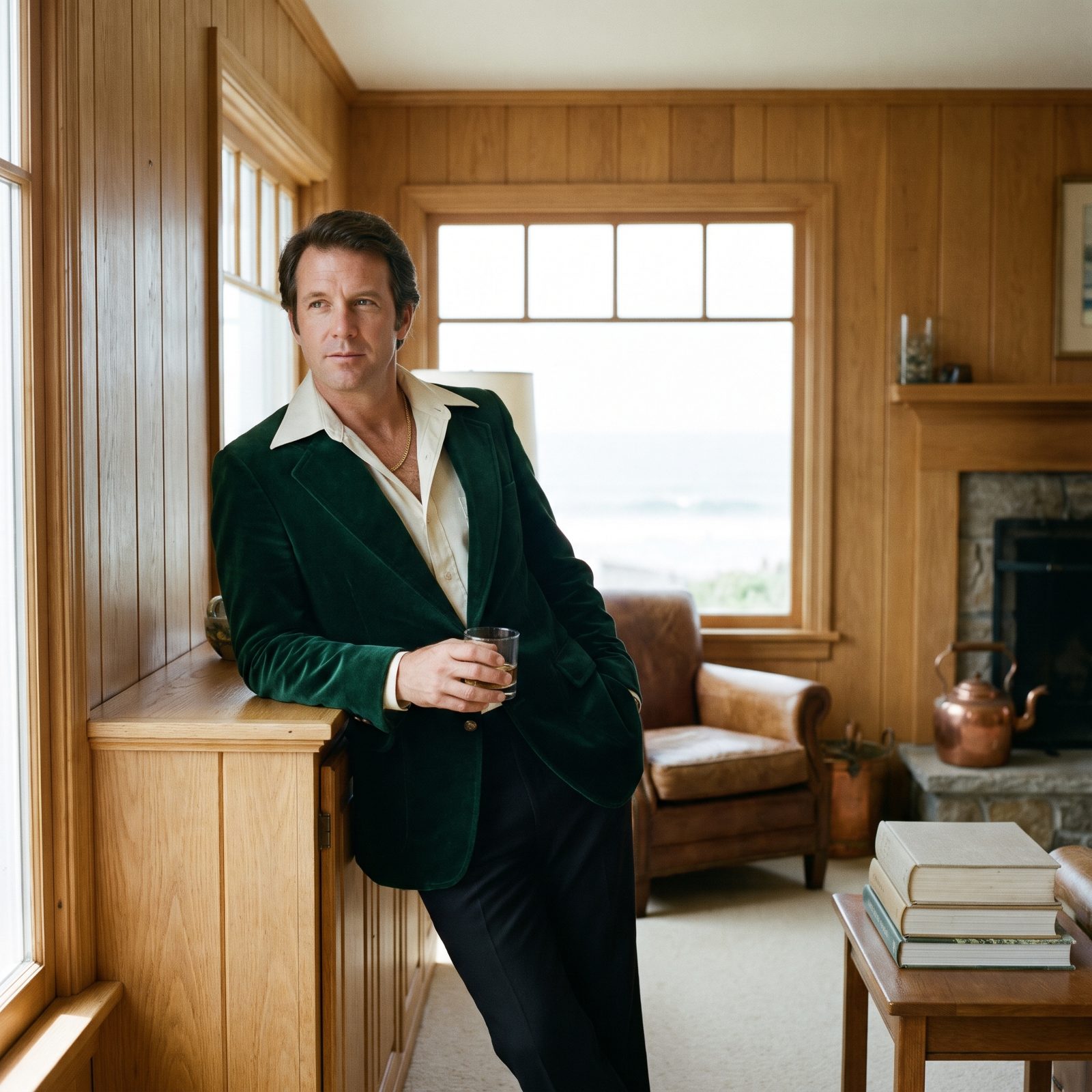
Velvet was the after-six power play. A blazer in emerald, burgundy, or sapphire signaled that the business day was done and the business dinner had begun. The texture is doing everything here — velvet catches light in a way wool never will, so a jewel-tone blazer practically pulses across a dim room.
You wore it over an open-collar shirt, maybe a gold chain, and let the plush nap carry the whole look. Indulgent. Slightly rakish. Absolutely intentional. Nobody wears emerald velvet by accident.
37. The Buttery Leather Blazer With Office Credibility
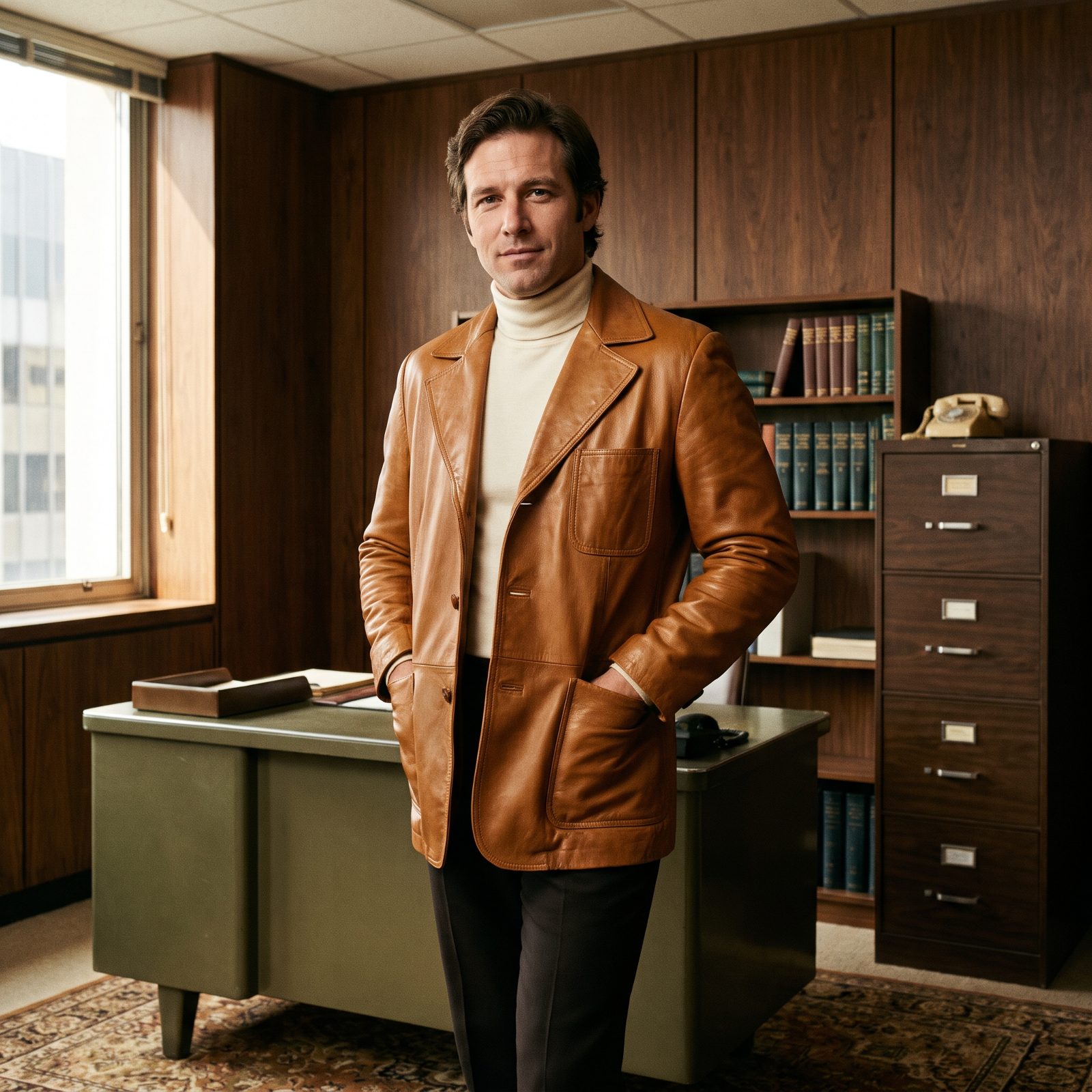
Leather had graduated from the motorcycle to the meeting. A soft caramel-tan leather blazer, cut like a proper sport coat, gave a man the structure of tailoring with the swagger of something a little outlaw.
The buttery supple grain is the point. Stiff leather looks like costume; soft leather that moves with you looks like money. Worn over a cream turtleneck, this was the look of the executive who was secretly the coolest guy on the floor and knew it.
36. The Chocolate-Brown Corduroy Sport Coat for Casual Fridays Before They Existed
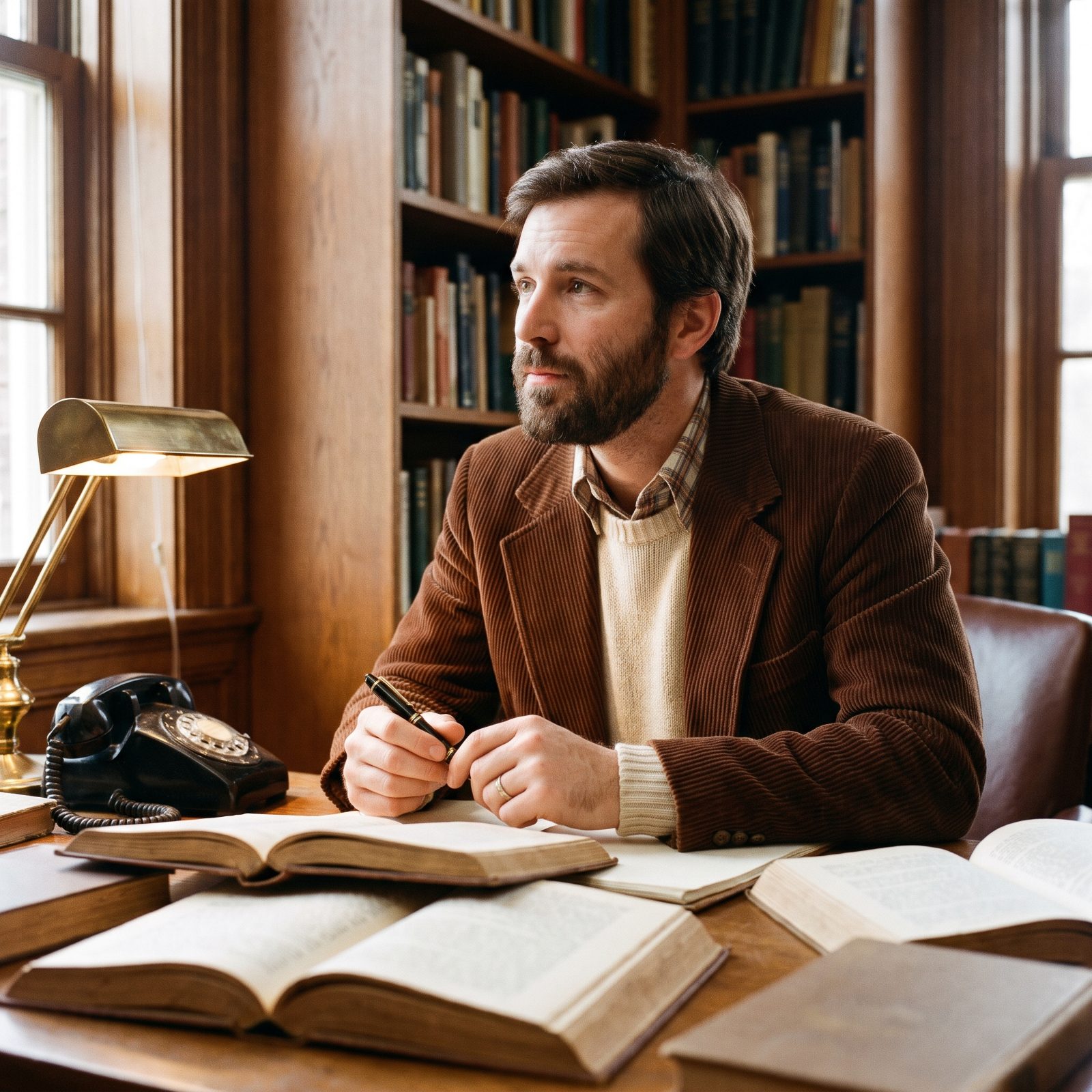
Corduroy was the thinking man’s armor. A chocolate-brown sport coat in wide-wale cord had softness built right in, the ribs running vertical and catching light in warm stripes. It read as approachable — exactly the appeal for the teacher, the editor, the mid-level manager who wanted authority without intimidation.
The texture is the entire argument. Smooth wool keeps its distance; corduroy invites you in. Layered over a knit sweater, it was the coziest way to look put-together, and it aged beautifully, developing character at the elbows instead of just wearing out.
35. The Tweed Jacket With Suede Elbow Patches That Never Went Out of Style
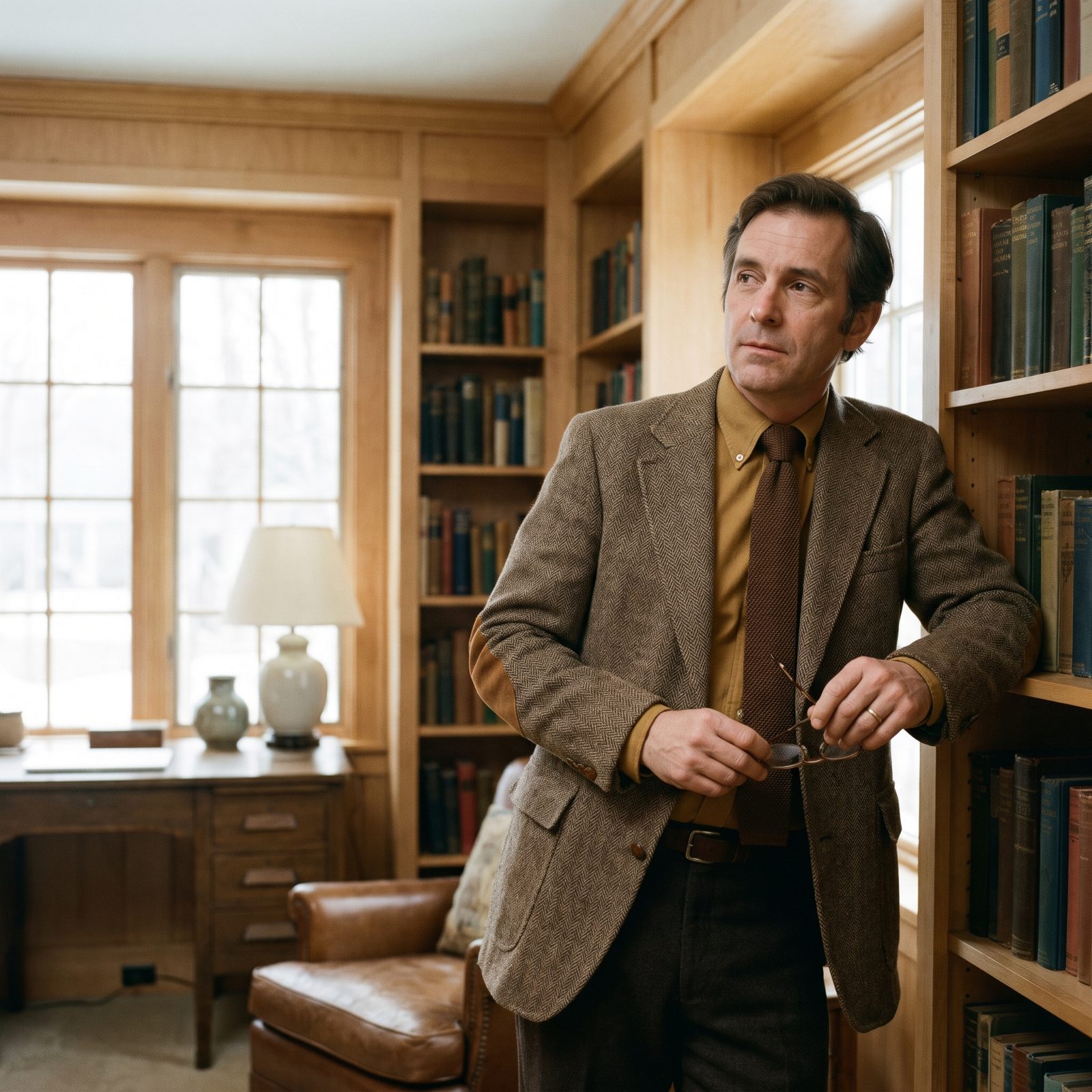
The one jacket on this list you could wear tomorrow. Herringbone tweed with suede elbow patches was the professorial standard — flecked brown-and-rust wool built for lecture halls, pipe smoke, and long arguments about books.
The elbow patches are the giveaway detail. Originally there to repair worn wool, eventually kept purely because they looked right. Form born from function, then function forgotten. Paired with a knit tie and a mustard shirt, it was the uniform of credibility that never chased a trend because it never needed one.
34. The Suit Vest Worn Alone, Jacket Left on the Chair
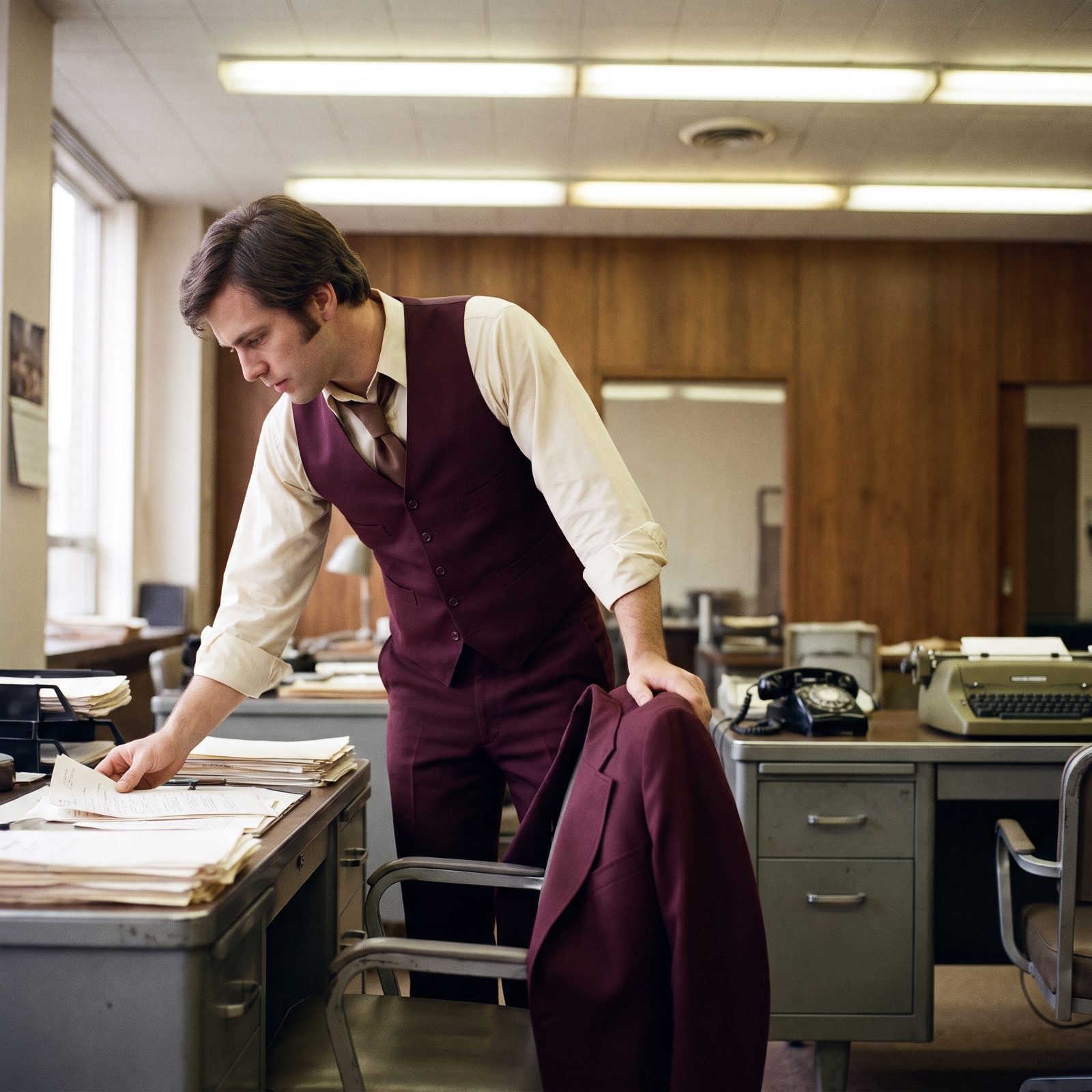
The vest-alone look was the universal signal that the real work had started. Jacket off and slung over the chair, sleeves rolled, waistcoat buttoned, tie loosened. It said: I’ve been here since seven and I’m not leaving until this is done.
The waistcoat holds everything together, keeping a man looking dressed and deliberate even without the jacket. Without it, rolled sleeves just look like you gave up. With it, they look like you’re winning. A burgundy vest against a cream shirt was the quiet flex of the guy who actually ran the department, title or not.
33. The Oversized Dagger-Collar Dress Shirt
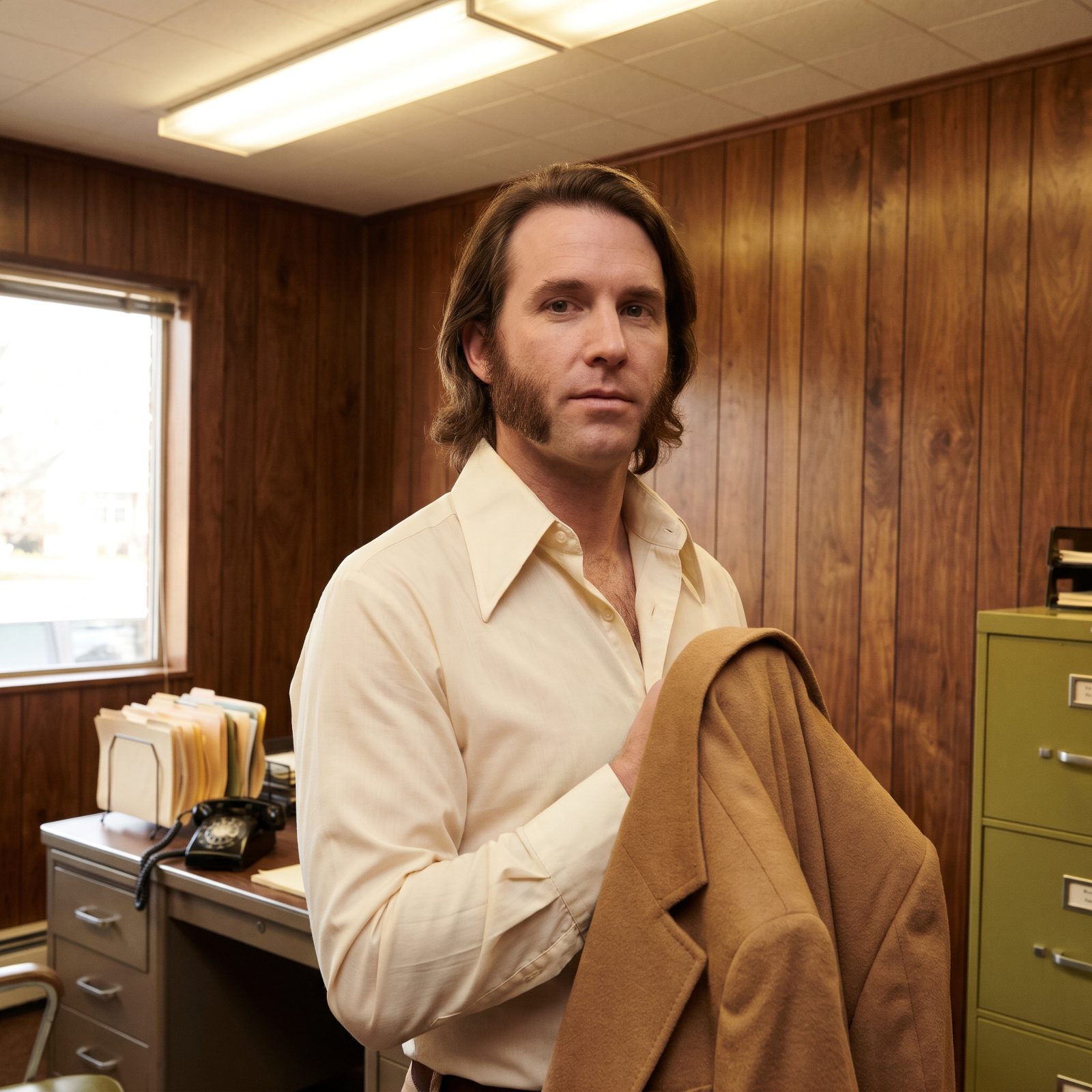
The collar did the talking. Nobody needed a statement necklace when their shirt collar pointed down toward the belt buckle like twin arrows, and that single detail defined a whole decade of office dressing. It worked because it gave the upper body a bold horizontal line that balanced the flared trousers waiting below.
What made it land wasn’t just size. It was the crispness. A properly starched dagger collar held its shape through a full workday, and the wider the spread, the more room it left for one of those fist-sized tie knots to sit proudly in the gap.
32. The Loud Geometric-Print Shirt
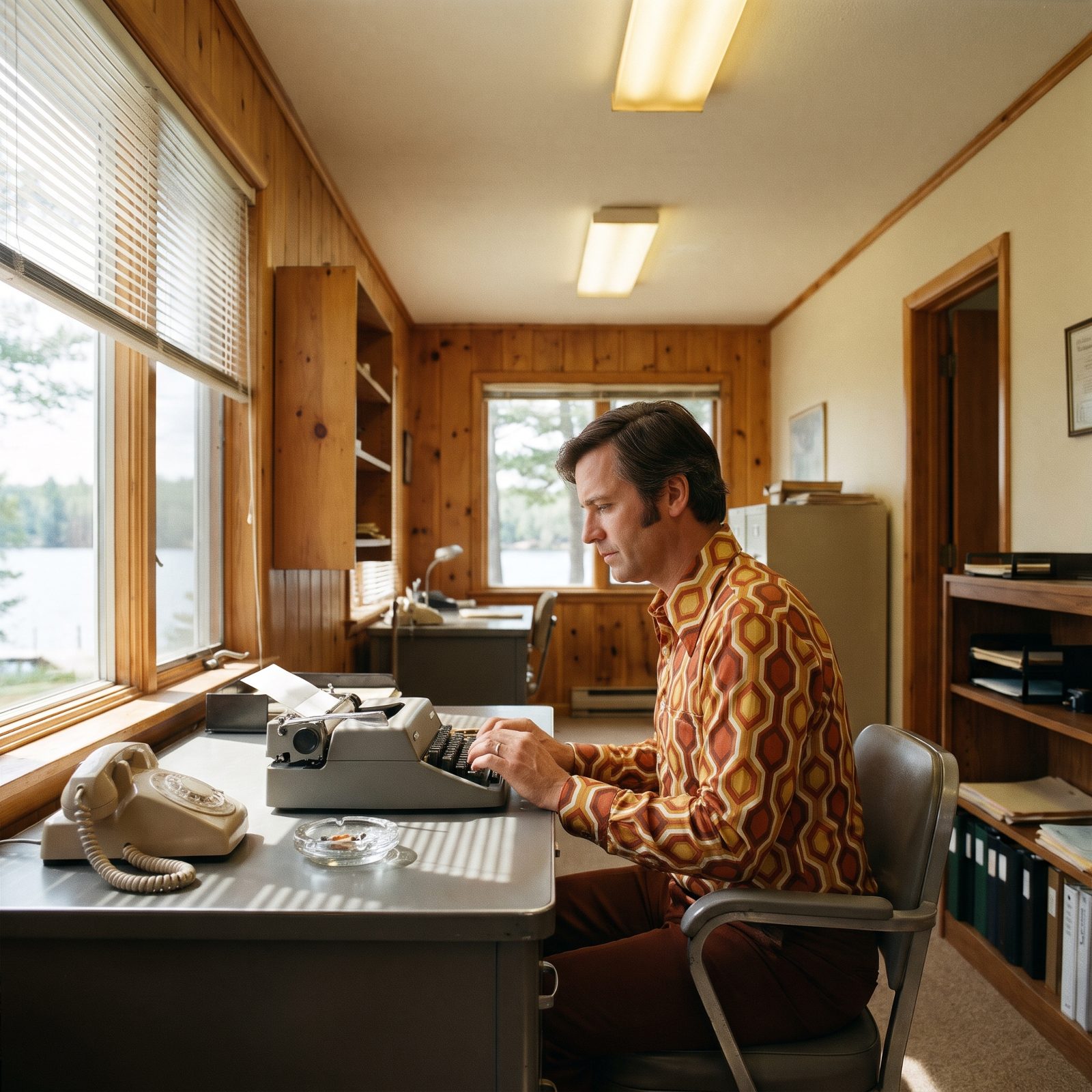
Restraint was not on the menu. These shirts arrived in interlocking diamonds, stacked hexagons, and optical repeats that practically hummed under office lighting, and the print carried the entire look, which is why men wore them open-collared with a solid blazer and let the fabric do the rest.
The genius was in the warm palette. Rust and mustard and cream kept the chaos grounded, so a shirt that should have looked like a migraine instead read as deliberate. We have a soft spot for these. They committed, and commitment always photographs better than caution.
31. The Earth-Toned Paisley Shirt
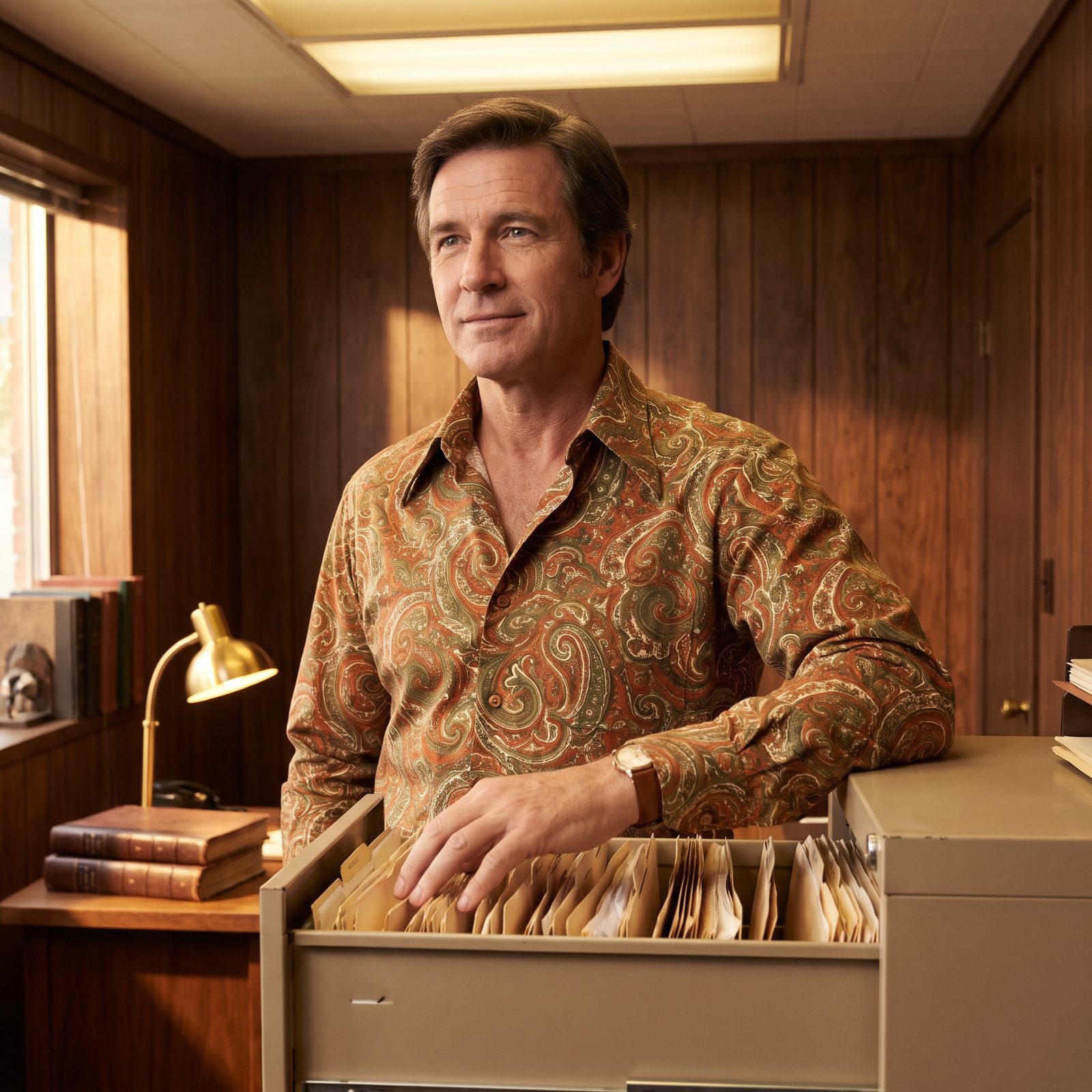
Paisley softened the whole equation. Where the geometric prints shouted, the earth-toned version murmured, all those teardrop swirls in burnt orange and olive giving a shirt the look of a Persian rug that decided to go to work.
This was the print for the man who wanted personality without the disco glare. Busy up close, nearly solid from across a room. Which is exactly why it suited the older guy in the department who still wanted a little flair but not a conversation about it.
30. The Satin-Finish Disco Shirt
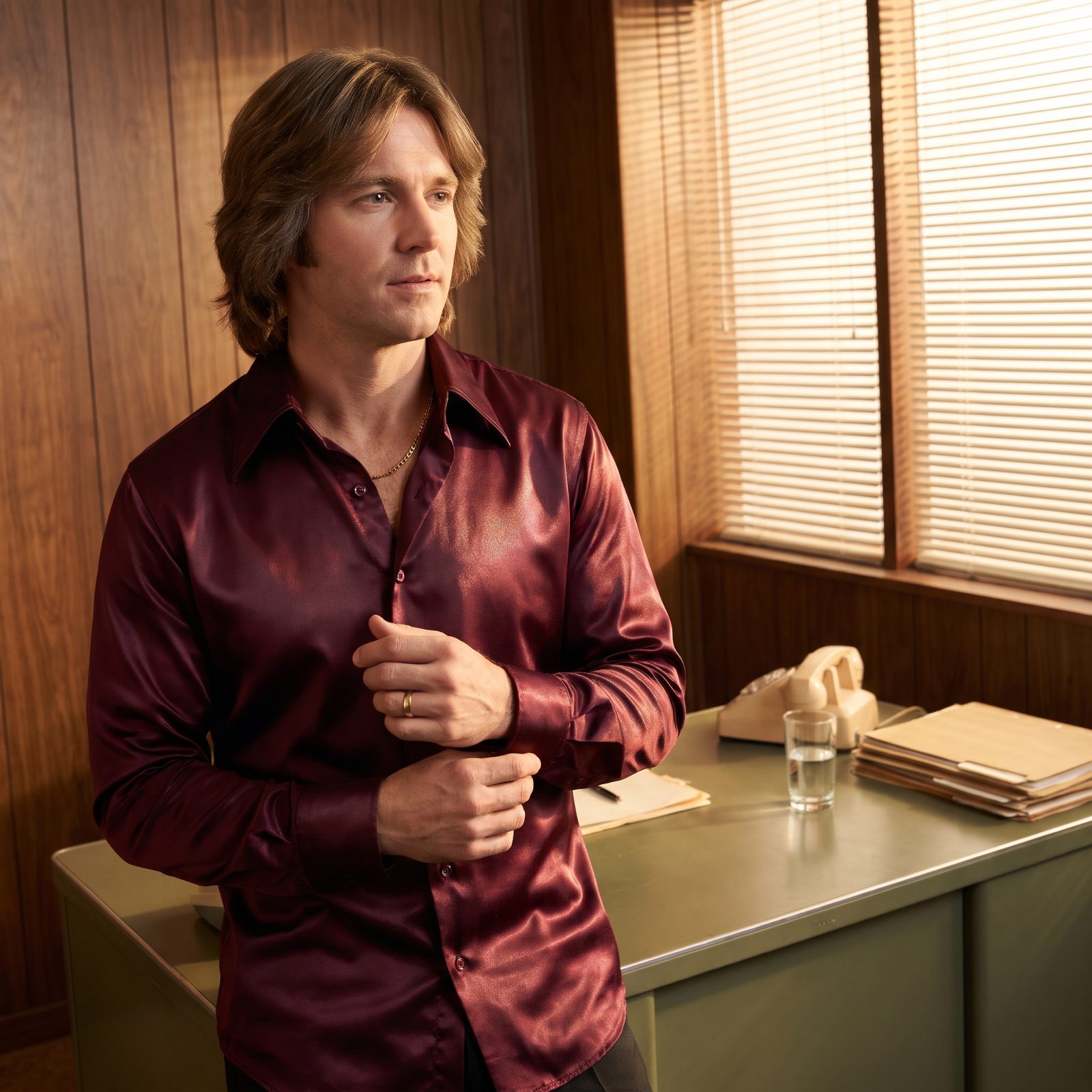
Shine was the point. The satin disco shirt existed in a liquid finish that caught every light source in the room, and burgundy separated the man who meant it from the man who was just trying.
Worn to the office, it sent one message: the workday ends but I do not. The sheen did all the work, so these were best left unadorned, collar open, maybe a gold chain, nothing competing with the glow of the fabric itself.
29. The Striped Shirt With a Contrasting White Collar
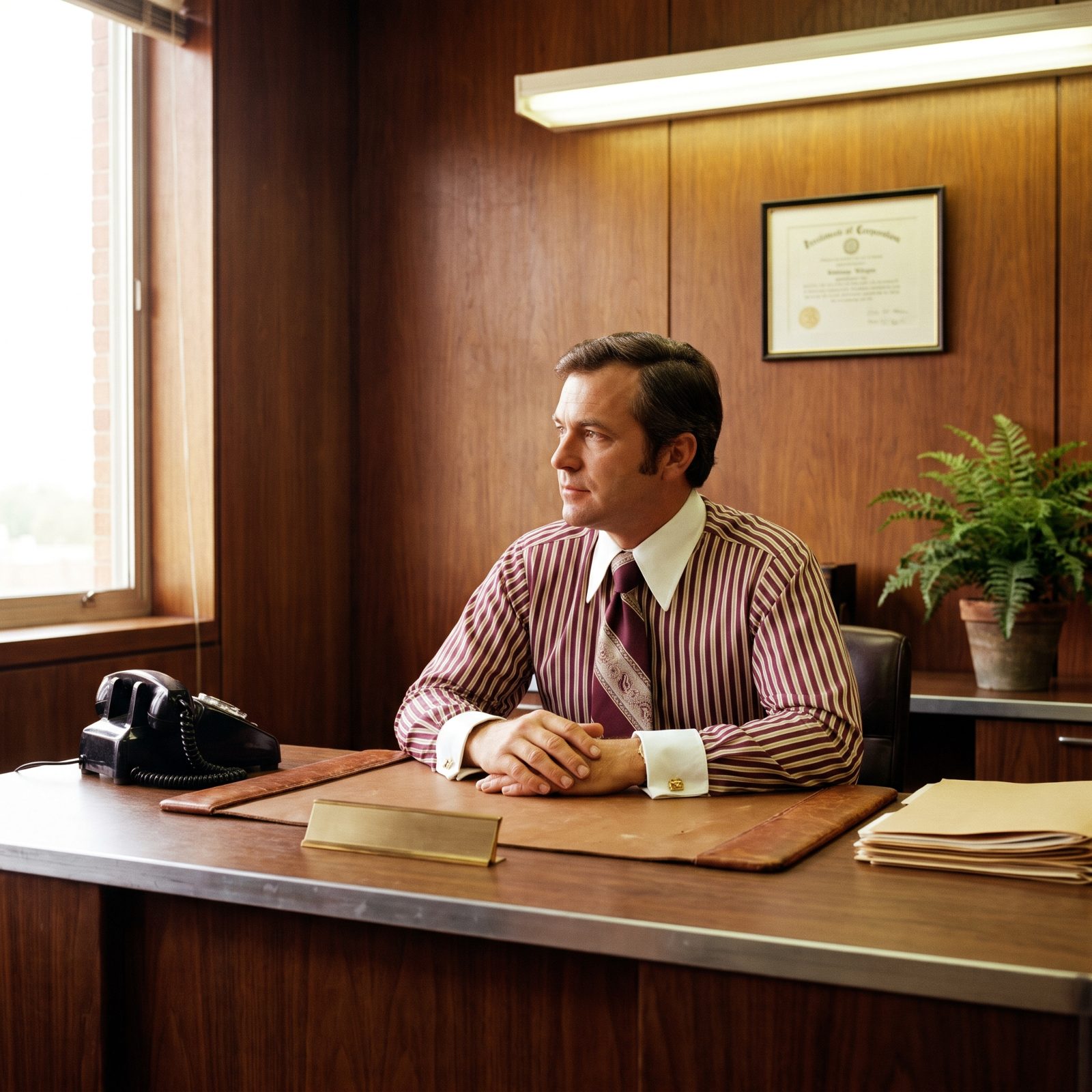
The contrast collar belonged to the man who ran things. A body full of candy stripes, then that solid white collar sitting on top like a signature, borrowed straight from banking and law and worn by anyone who wanted to look like he gave orders rather than took them.
Here’s why it worked. The white collar framed the face and tie knot cleanly while the stripes kept the torso lively, one formal element and one playful one, held in check. It is one of the few entries here you could walk into a boardroom with today and nobody would blink.
28. The Ribbed Office Turtleneck
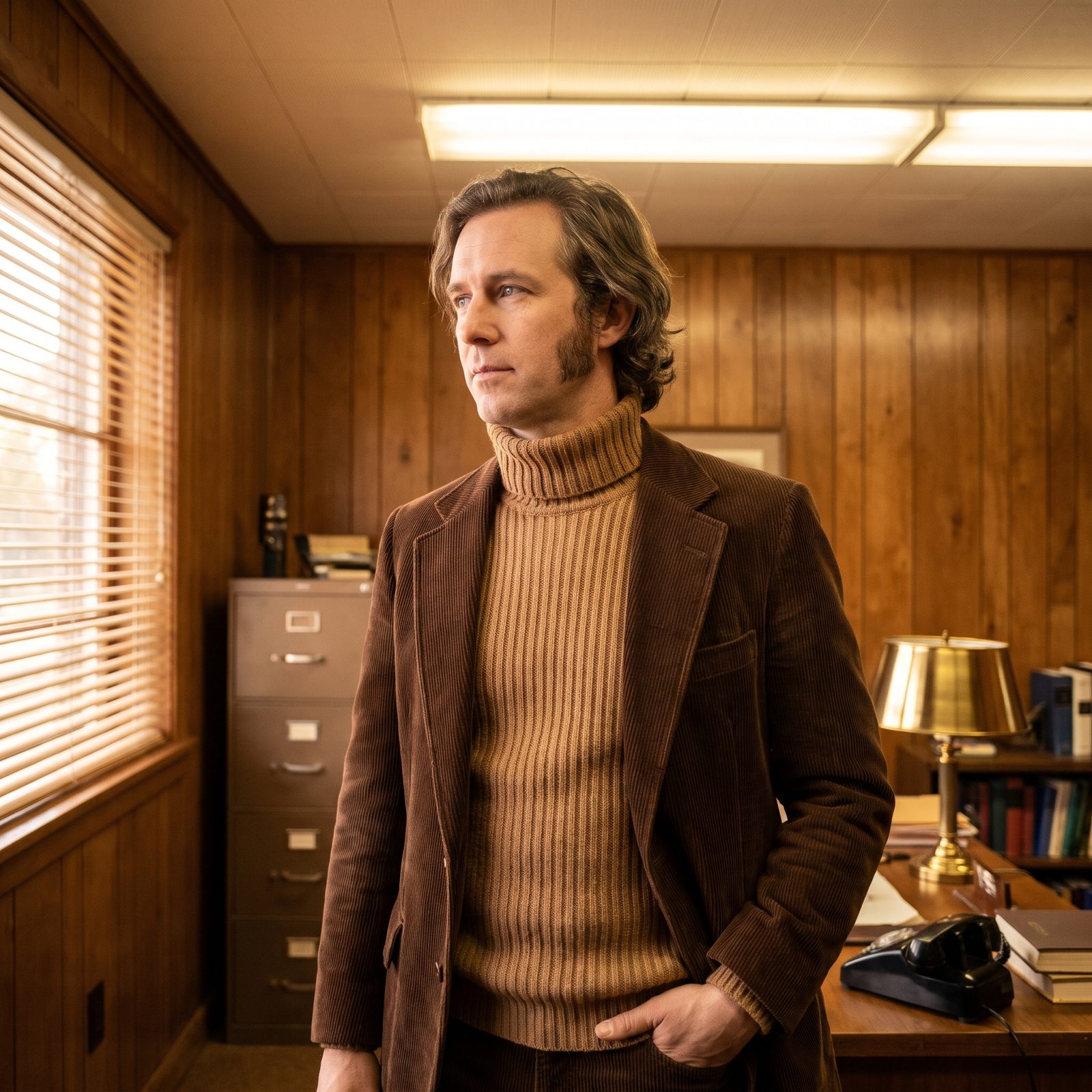
Someone decided the necktie was optional, and the ribbed turtleneck was the result. Slide one under a corduroy blazer and you looked like the department’s resident thinker, the man who had ideas and did not need a Windsor knot to have them.
Camel did it best. The vertical ribbing added subtle texture at the neck, and the rolled collar gave the face a clean frame without any fuss. Quiet rebellion, office-appropriate and a little bit smug about it.
27. The Button-Front Sweater Vest
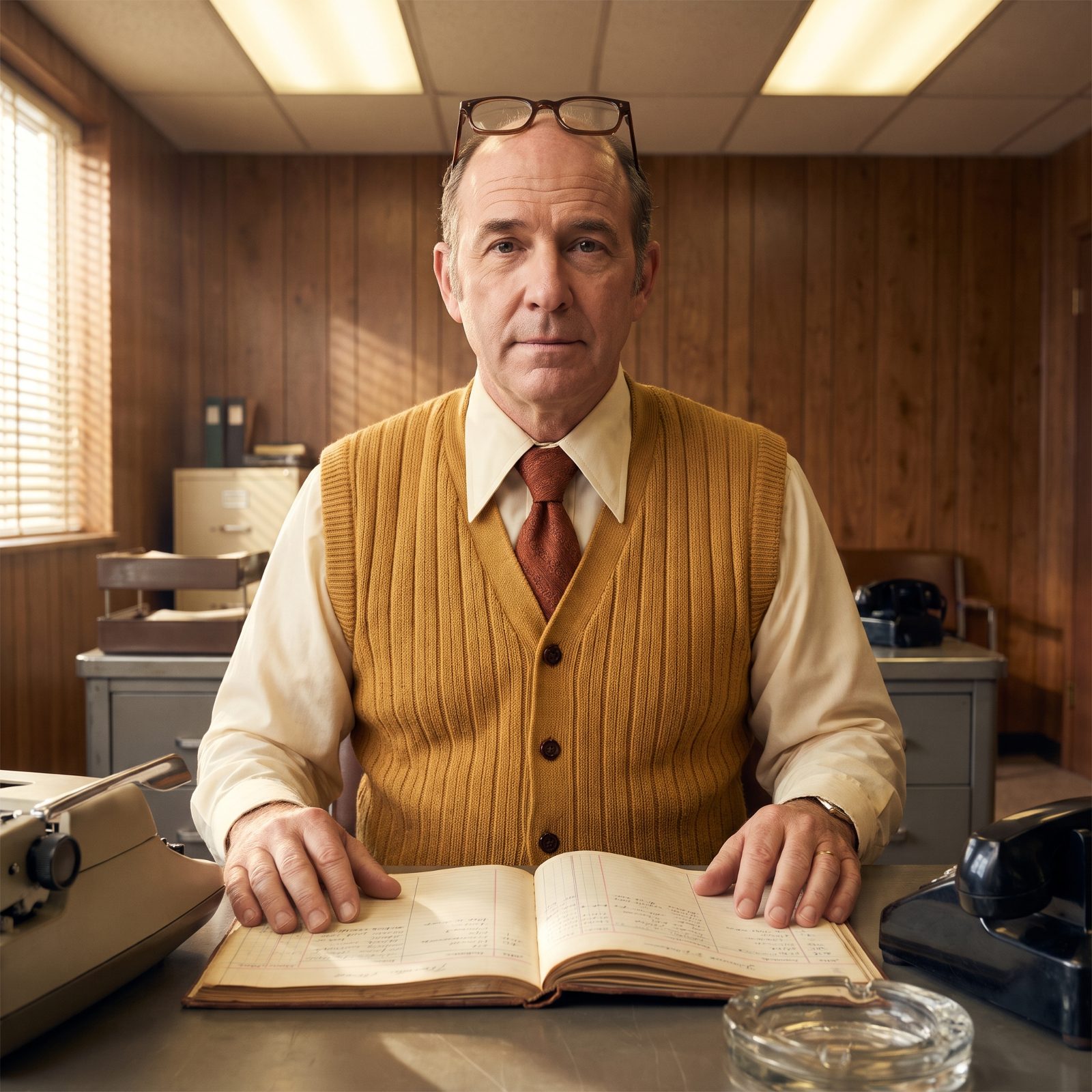
The button-front sweater vest belonged to the steady men, the ones who had been at the firm long enough to know where every file lived. Mustard was the signature shade, worn over a wide collar and tie, adding a cozy middle layer that said reliable without saying boring.
Three reasons this one earned its keep:
- It added warmth in drafty offices without the bulk of a full sweater.
- The buttons let you wear it open or closed depending on the room temperature and your mood.
- It framed the tie beautifully, drawing the eye straight to the knot.
26. The Extra-Wide Kipper Tie
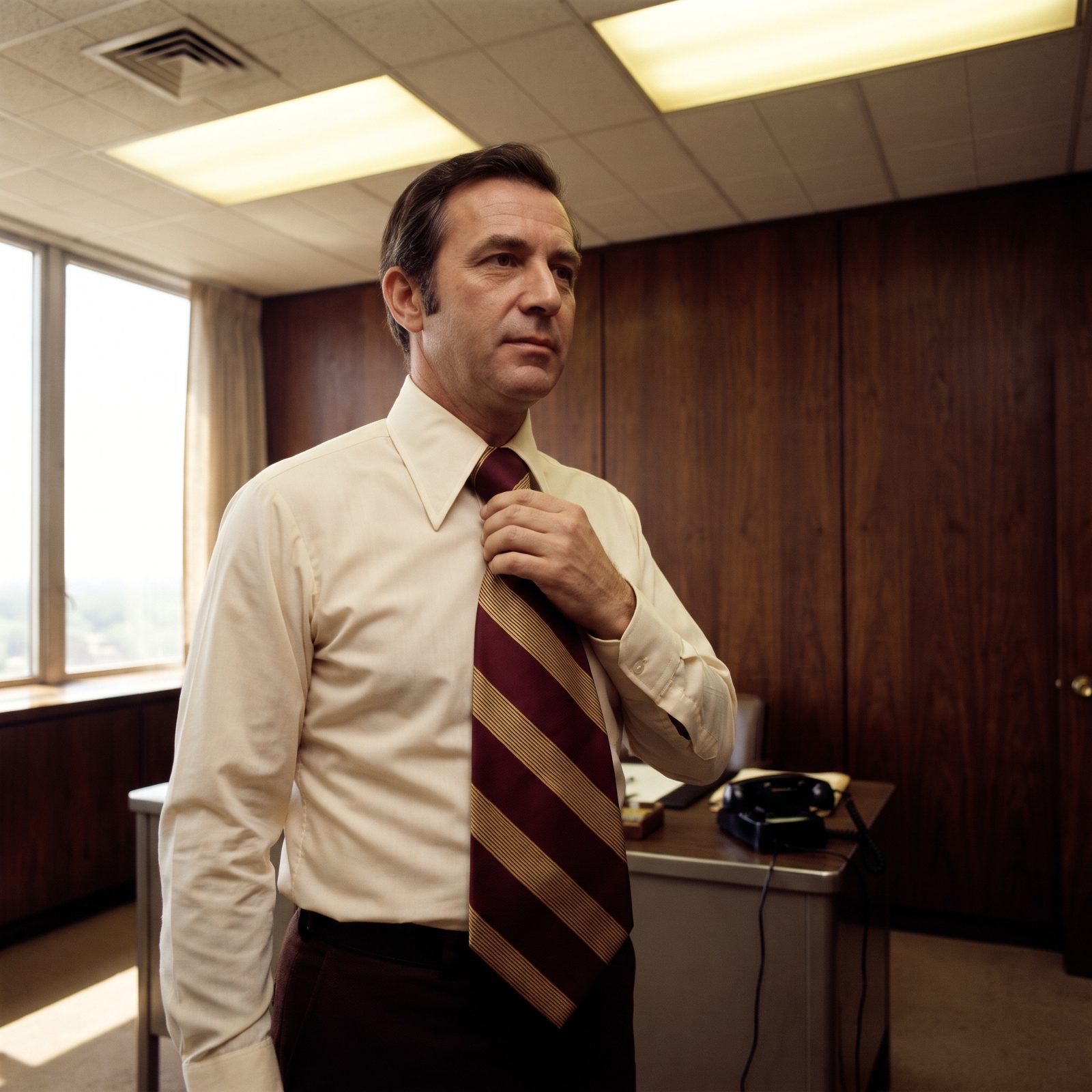
Width was the whole flex. The kipper tie fanned out to nearly five inches at its base, demanding a collar spread wide enough to hold the enormous knot it required, and burgundy with gold diagonals was peak form, loud enough to anchor a quiet suit.
These ties took up real estate on the chest, and that was the appeal. A thin tie disappears. A kipper announces. The decade favored the announcement every single time.
25. The Psychedelic Swirl Necktie
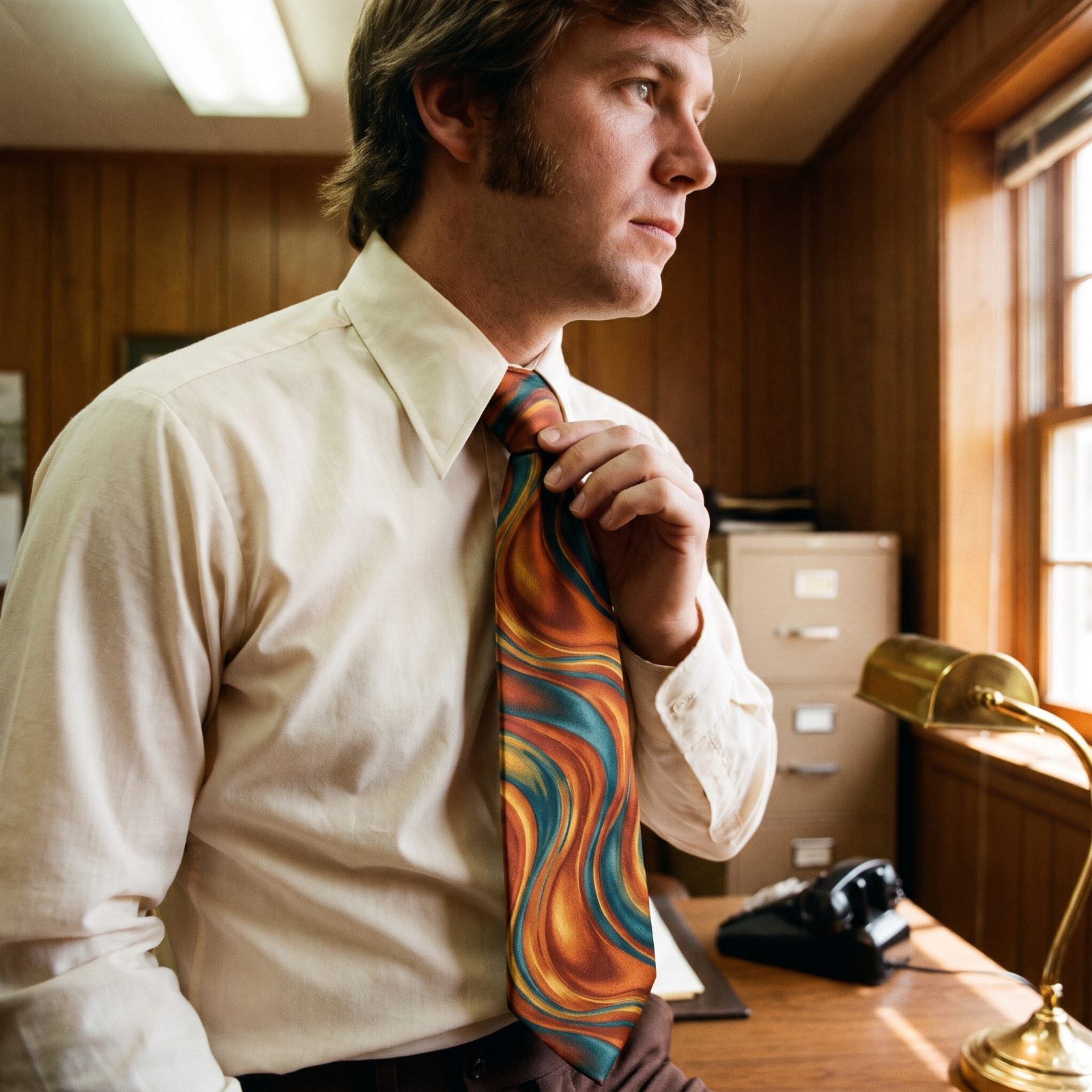
While the kipper went wide, this one went weird. Swirling kaleidoscopic patterns in rust, teal, and gold moved across the silk like something poured rather than printed, a tie for the man who read the manual and then ignored it.
The swirl gave the office a jolt of countercultural color without breaking the dress code, because technically it was still a necktie. The younger guys loved these. There is something a little subversive about wearing a lava lamp to a meeting about quarterly reports.
24. The Shirt-and-Tie Set in Matching Fabric
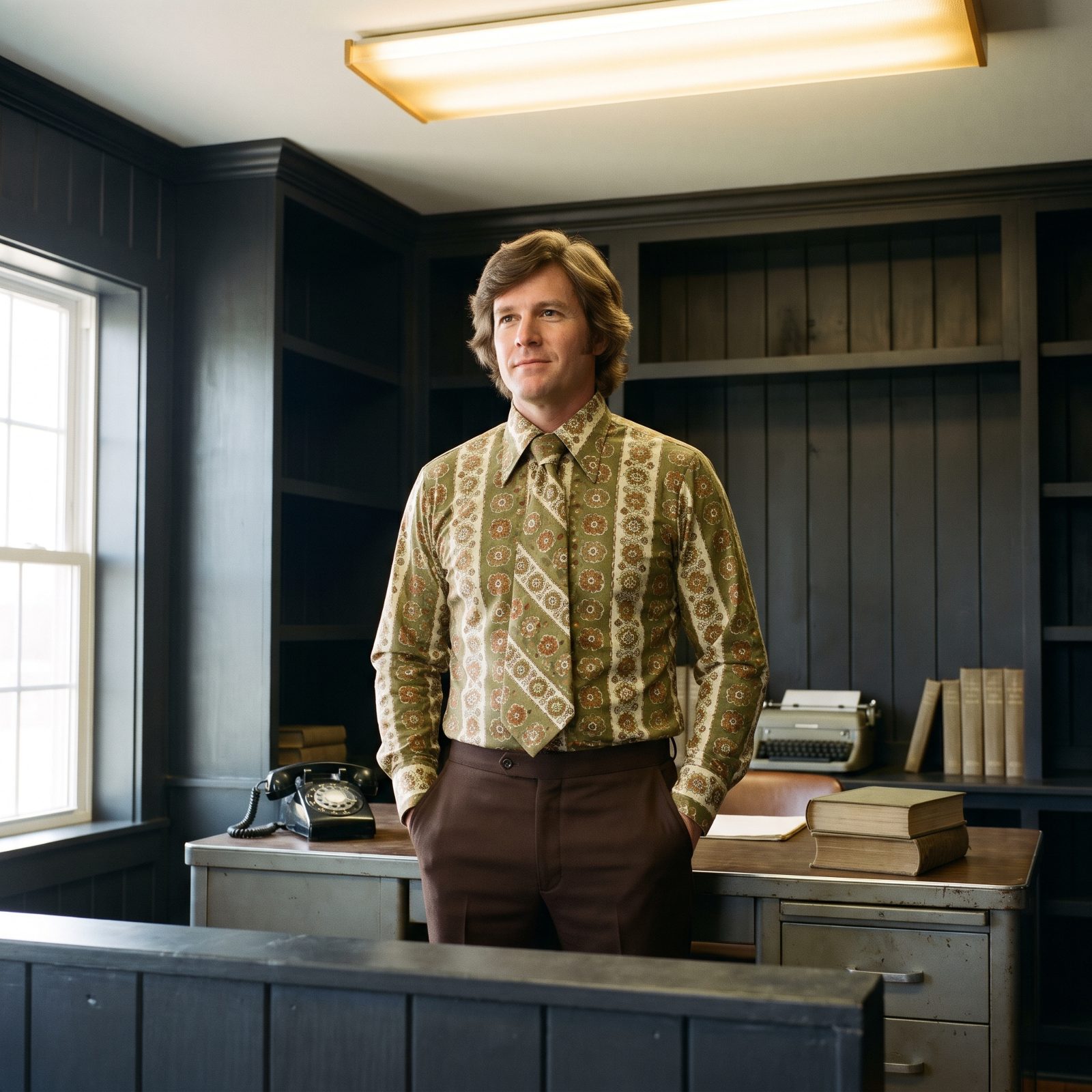
And then there was the man who matched his tie to his shirt from the exact same bolt of fabric. The coordinated set in olive floral-geometric print was the decade at its most unashamed, a head-to-chest commitment that left no doubt the outfit was intentional.
This took confidence bordering on defiance. Modern eyes see it as a lot, and it was a lot. But there is an honesty to a man who looks at a wall of tangled polyester and thinks, yes, both, same print. He walked into the office already having made every decision he was going to make that day. Alright, that one still gets me.
23. The Wide Ascot Tucked Into a Shirt
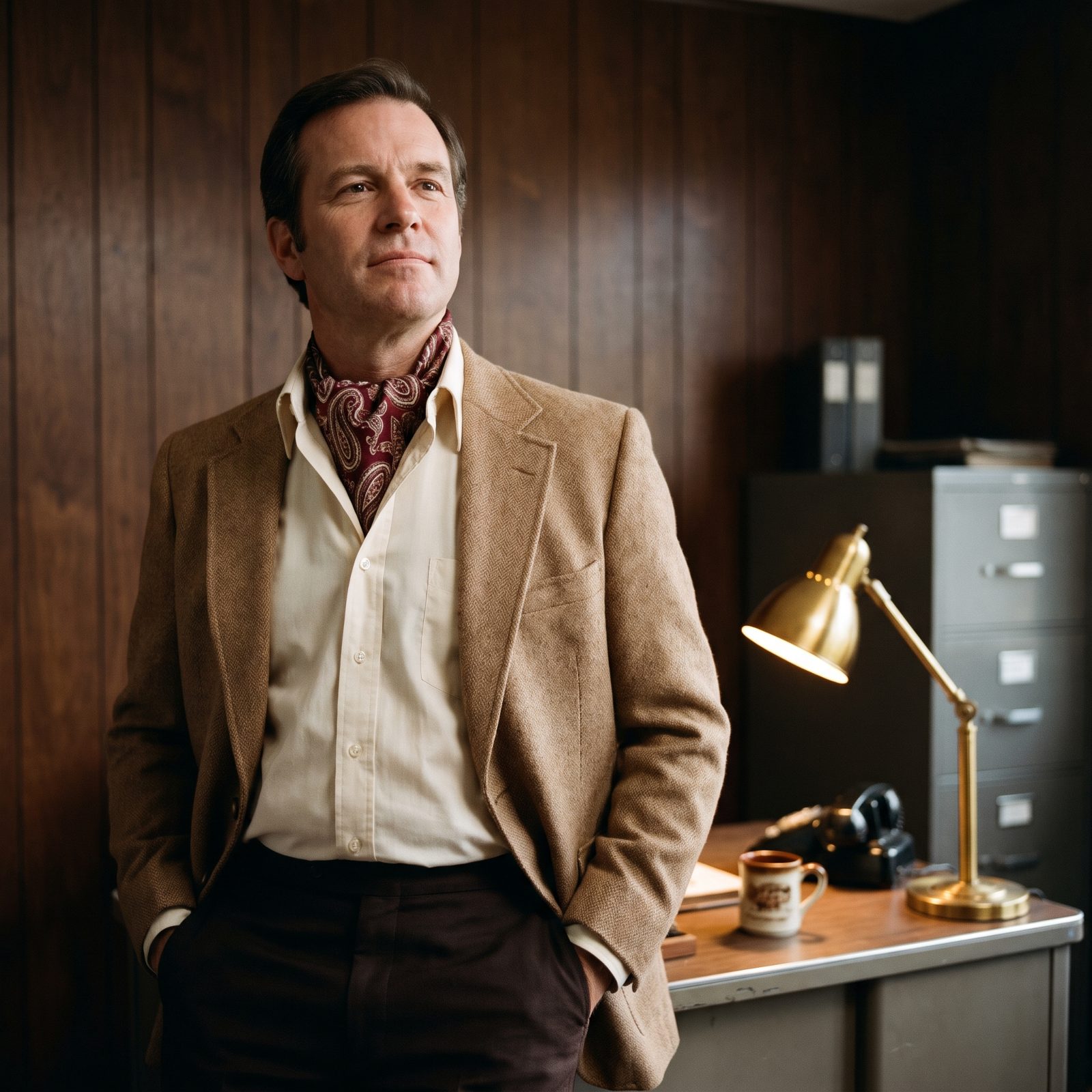
The ascot pulled off what a tie never could: relaxed and important at once. Tucked loose into an open collar, it softened a man’s whole upper half while still telling the room he ran something.
Texture drives it. Burgundy paisley silk against a plain cream shirt reads rich because your eye bounces between the sheen and the matte and back. Add a camel sport coat and now three surfaces are talking to each other, none of them raising their voice.
22. The Gold Tie Tack With a Safety Chain
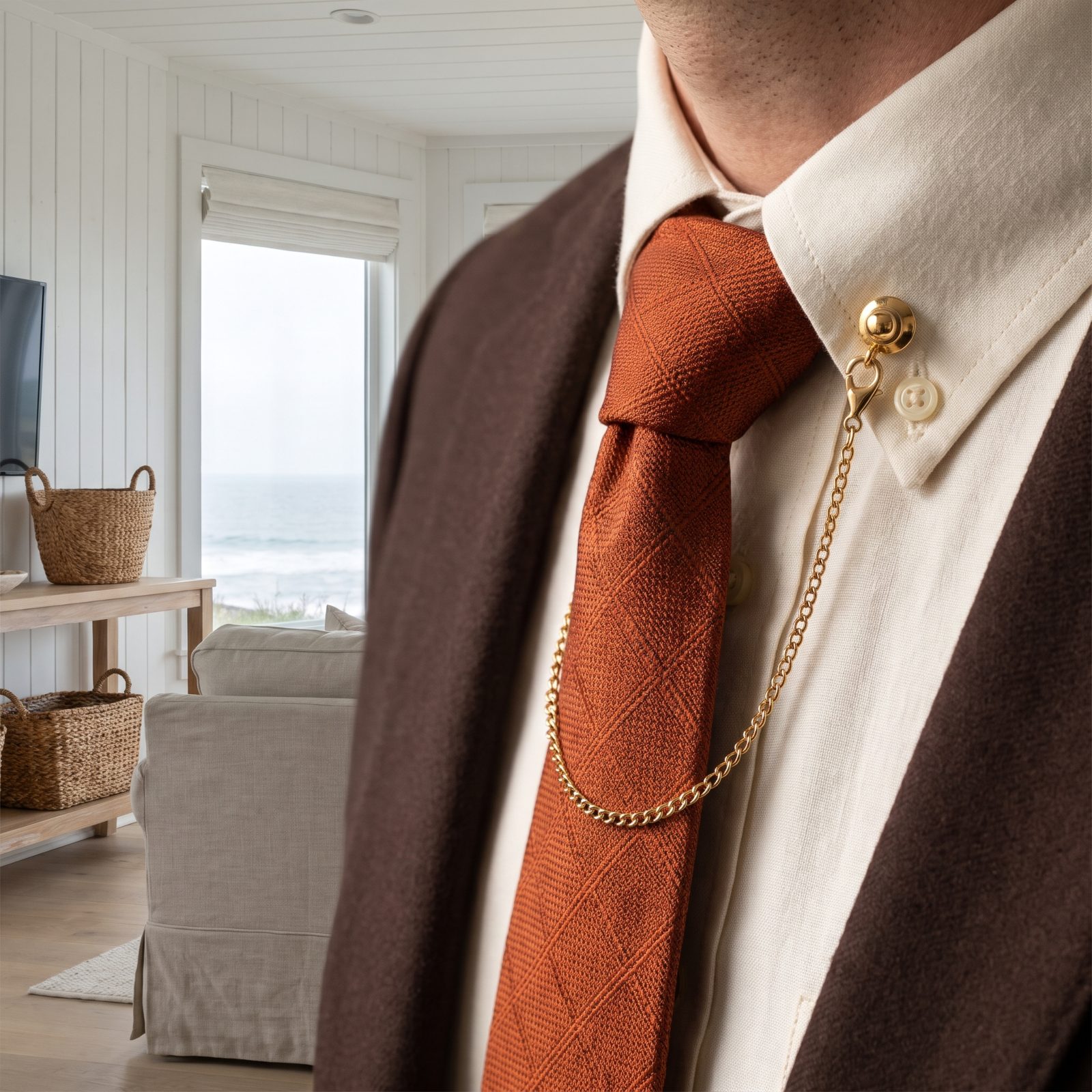
A man wore a tie tack because he had somewhere to be and didn’t want his tie swinging into his soup. That was the stated reason. The real one was that little gold gleam against a rust-colored tie, a flash of care nobody asked for but everybody clocked.
The safety chain gave him away. It meant he’d lost a tack once and swore off ever doing it again. There’s a whole personality coiled up in that chain.
21. The High-Waisted Flared Trousers
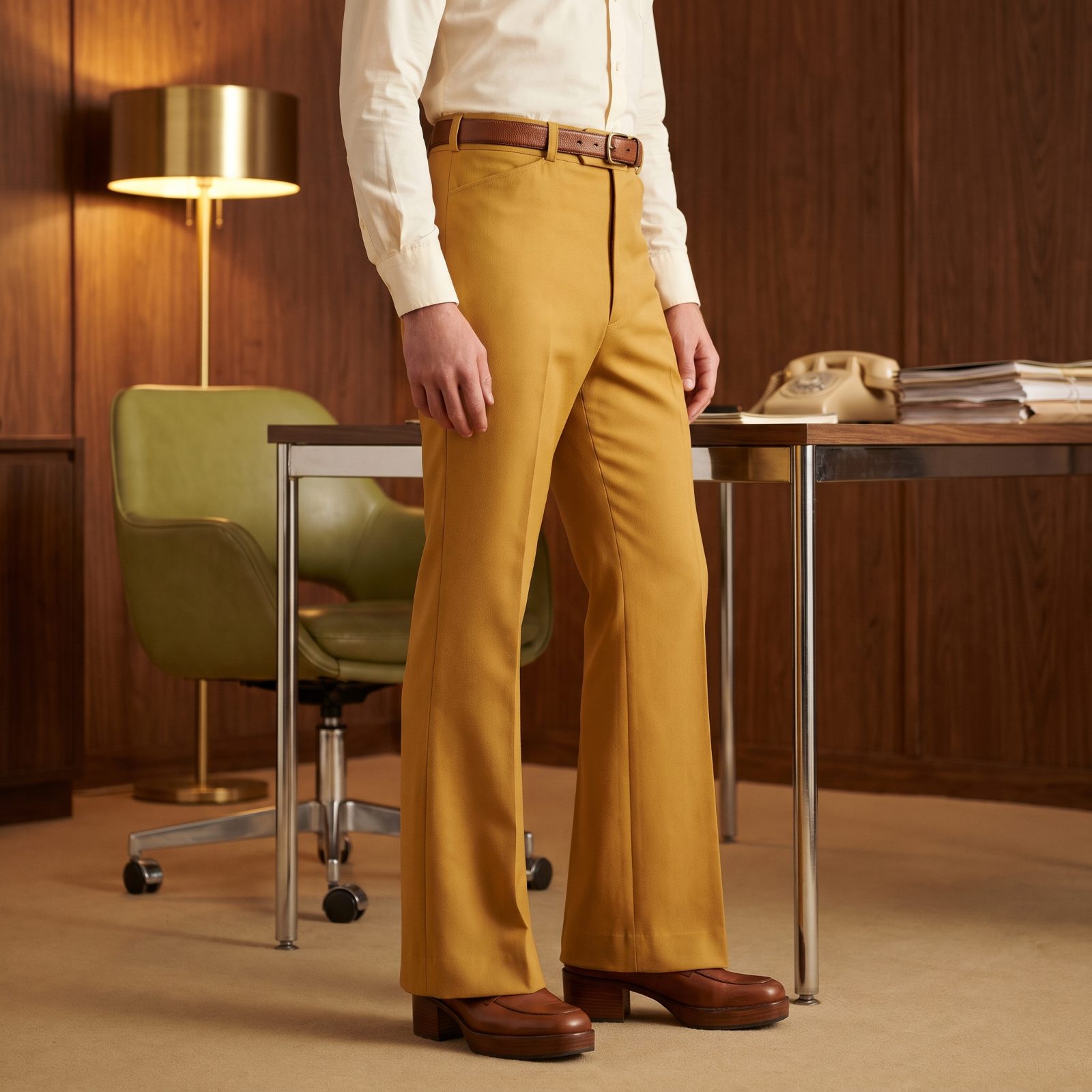
The waistband rode up near the ribs, and the leg told the rest: lean through the thigh, then an unapologetic flare breaking over the shoe. Narrow top, dramatic bottom, a leg line that just went on forever.
Mustard gabardine turned the volume up. The high waist stretched the torso, the flare balanced it down at the floor, and suddenly the man read taller than his tape measure said he was. Enclothed cognition in action. You stand differently when your legs look six feet long.
20. The Wide-Leg Double-Knit Slacks
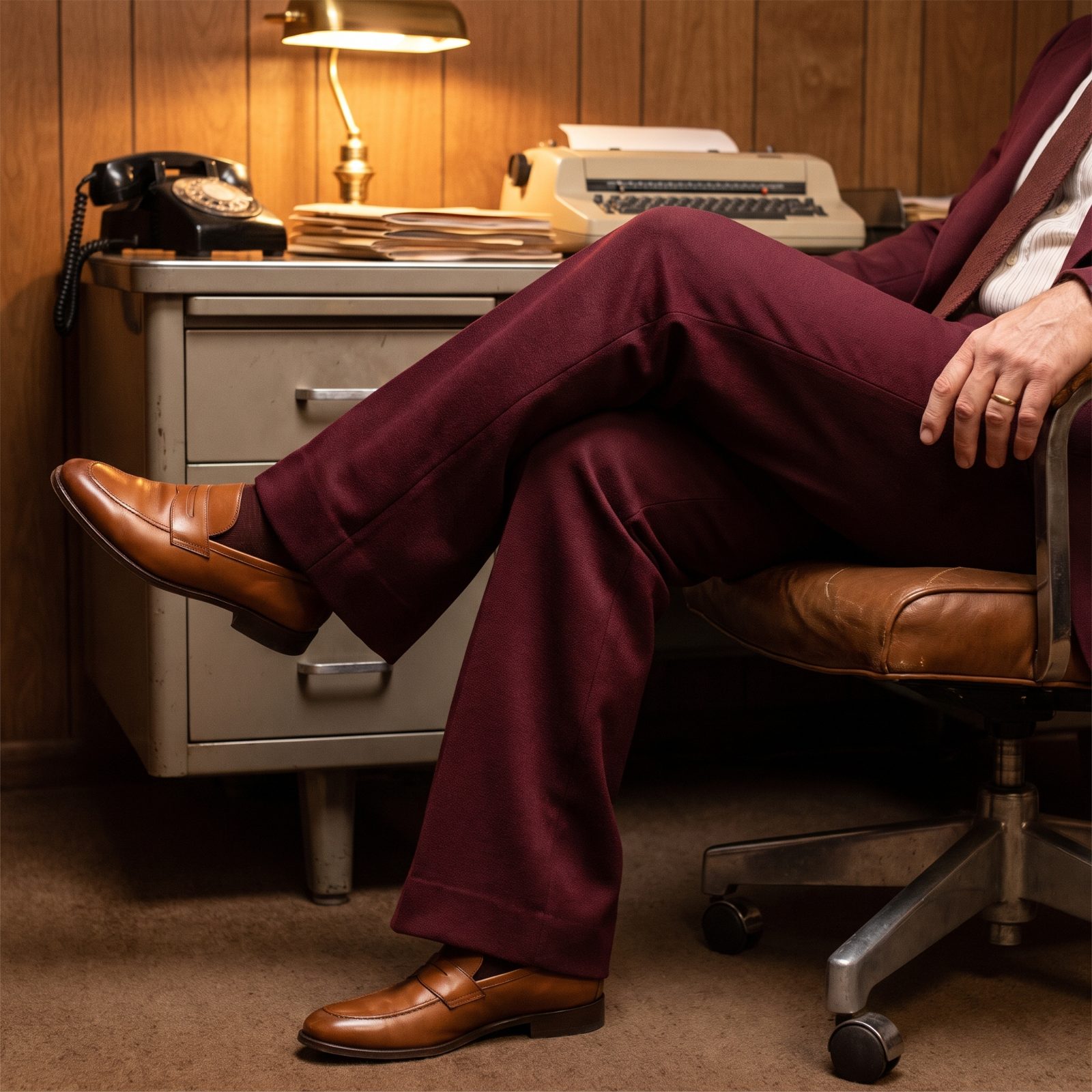
Double-knit polyester wouldn’t wrinkle, wouldn’t pinch, and would outlive the man who bought it. The wide leg gave it swing. You could spot the stuff from across a parking lot by its slight sheen and the way it sprang back the second you stood up.
Practical first, everything else second. These slacks survived a business flight, a two-hour lunch, and the drive home still looking pressed. That’s why half the office owned them in three colors.
19. The Sansabelt Trousers
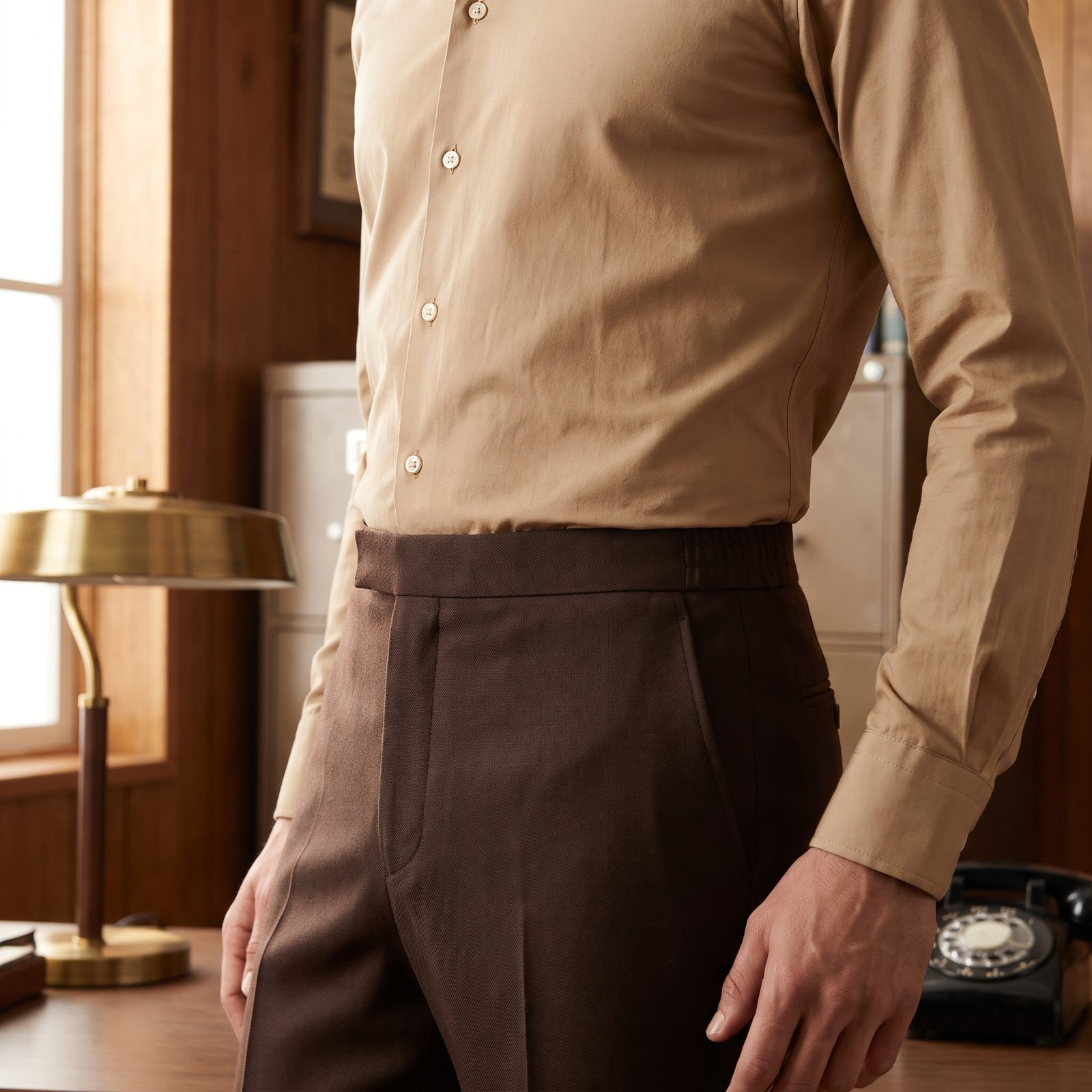
No belt. No loops. Just a smooth waist that moved with you. Sansabelt hung its entire identity on the hidden elastic webbing, and a certain kind of office man swore by them for the rest of his life.
That clean beltless line does the heavy lifting. With nothing interrupting the hip, the trouser runs as one unbroken plane from shirt to shoe, which happens to be quietly slimming. The guy who wore these had made peace with comfort as a real goal. Honestly, good for him.
18. The Brightly Colored Office Slacks
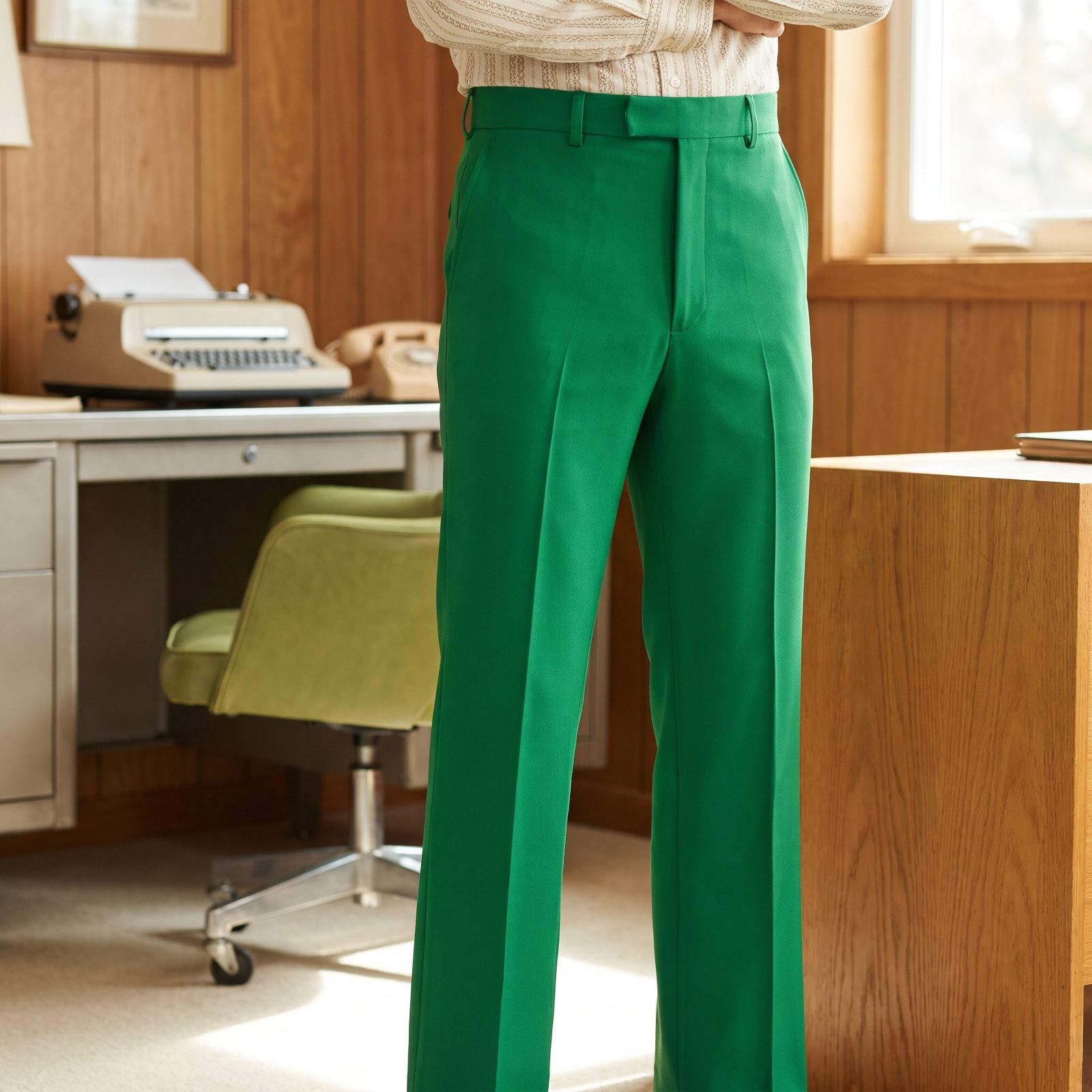
Kelly green slacks in an office full of brown and gray was a decision, and the man who made it knew it. One vivid leg of green against muted paneling drags every eye in the room over to him.
Restraint everywhere else is what sold it. Plain cream shirt, sharp crease, nothing fighting for attention. The brightness stood alone, so it looked deliberate instead of chaotic. Color as a social signal, basically: here’s a man announcing he doesn’t mind being noticed.
17. The Brown-and-Cream Houndstooth Pants
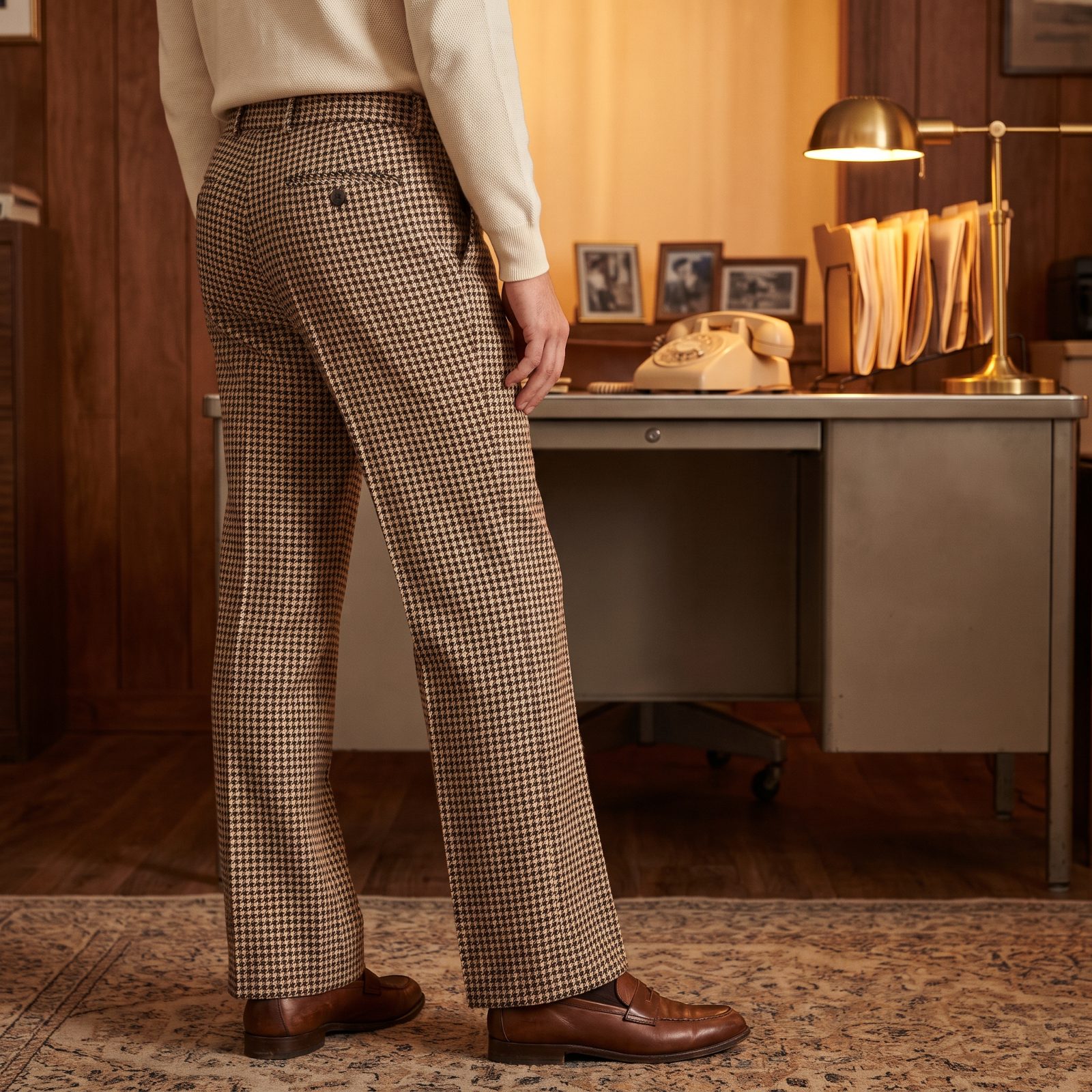
Houndstooth has nerve. The brown-and-cream check reads busy up close and reads solid from across the room, which is the whole trick of it. The pattern leads; everything above it just stays out of the way.
So keep the shirt quiet and let the leg talk. A solid cream knit gives the houndstooth room to breathe. Pile on more pattern anywhere else and the whole thing turns to static, but balanced right? These pants carry a man clean through a Tuesday meeting.
16. The White Office Trousers
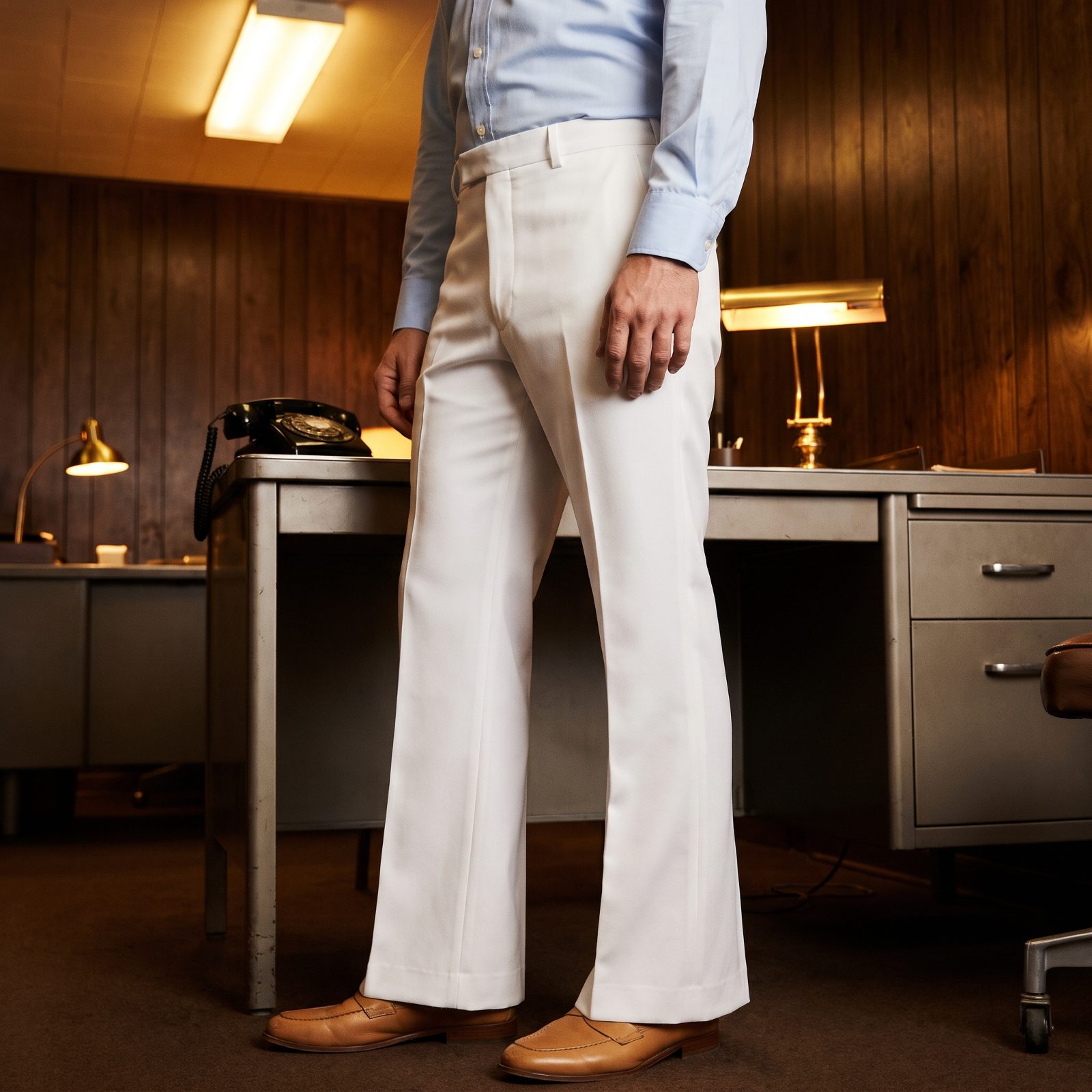
White trousers in an office took confidence bordering on recklessness. One coffee, one leaky ballpoint, and the whole look was finished. The man who wore them anyway was saying something about summer, about leisure, about not caring.
And the brightness reframes whatever’s near it. A pale blue shirt jumps from quiet to crisp just by sitting next to all that white. Light, warm-weather colors, worn by a man who’d clearly rather be at the club than at his desk and dressed for the day he wished he were having.
15. The Belt With an Oversized Brass Buckle
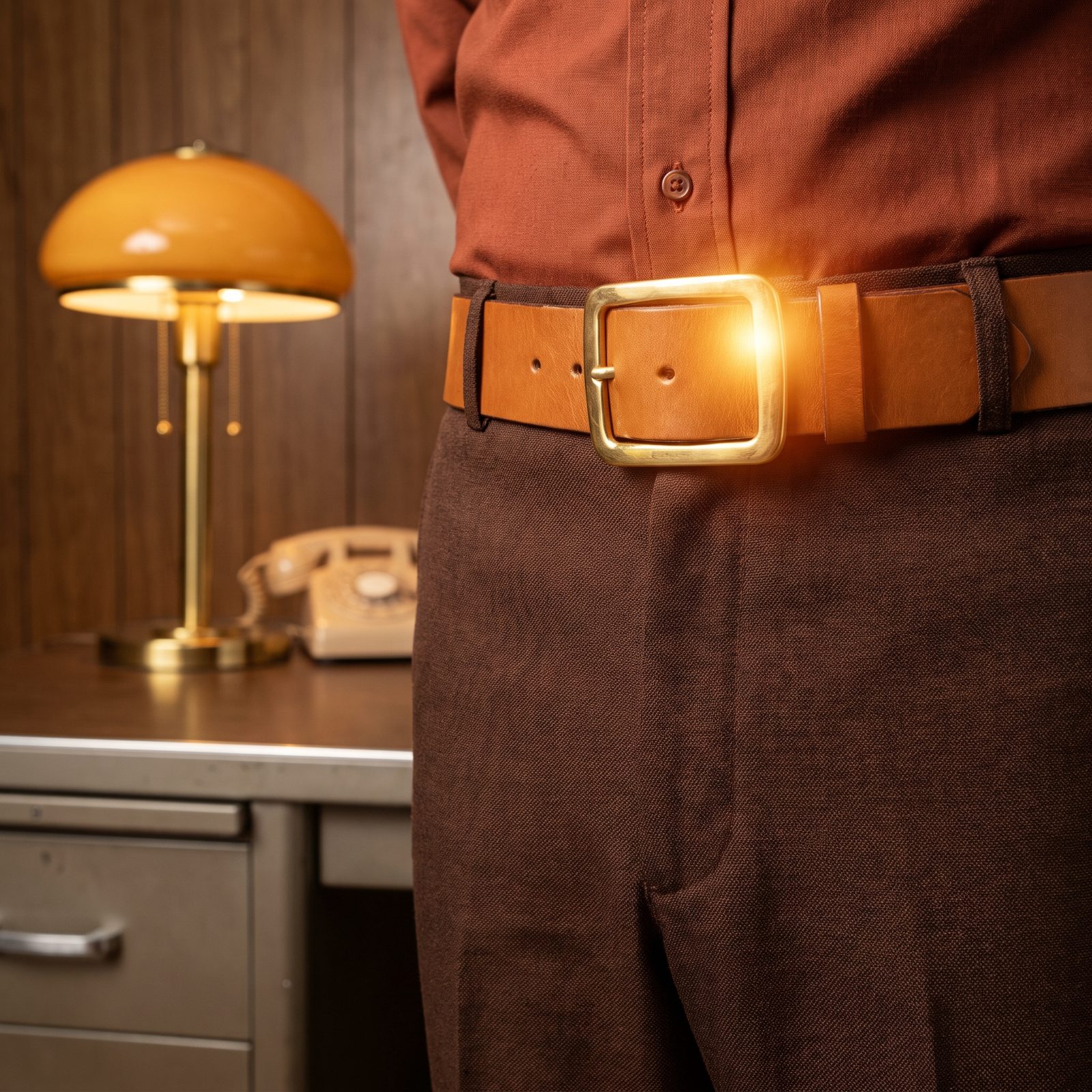
The buckle was the loudest thing a man could wear without opening his mouth. Oversized, brass, polished to a gleam, sitting dead center and daring you to look away. One small piece that reorganizes the whole outfit around it. Plain clothes plus a serious buckle equals a man with swagger.
Tan leather over chocolate trousers kept the brown family intact while the brass cracked it open. The weight mattered too. You felt the thing drop when you sat down.
14. The Button-On Suspenders
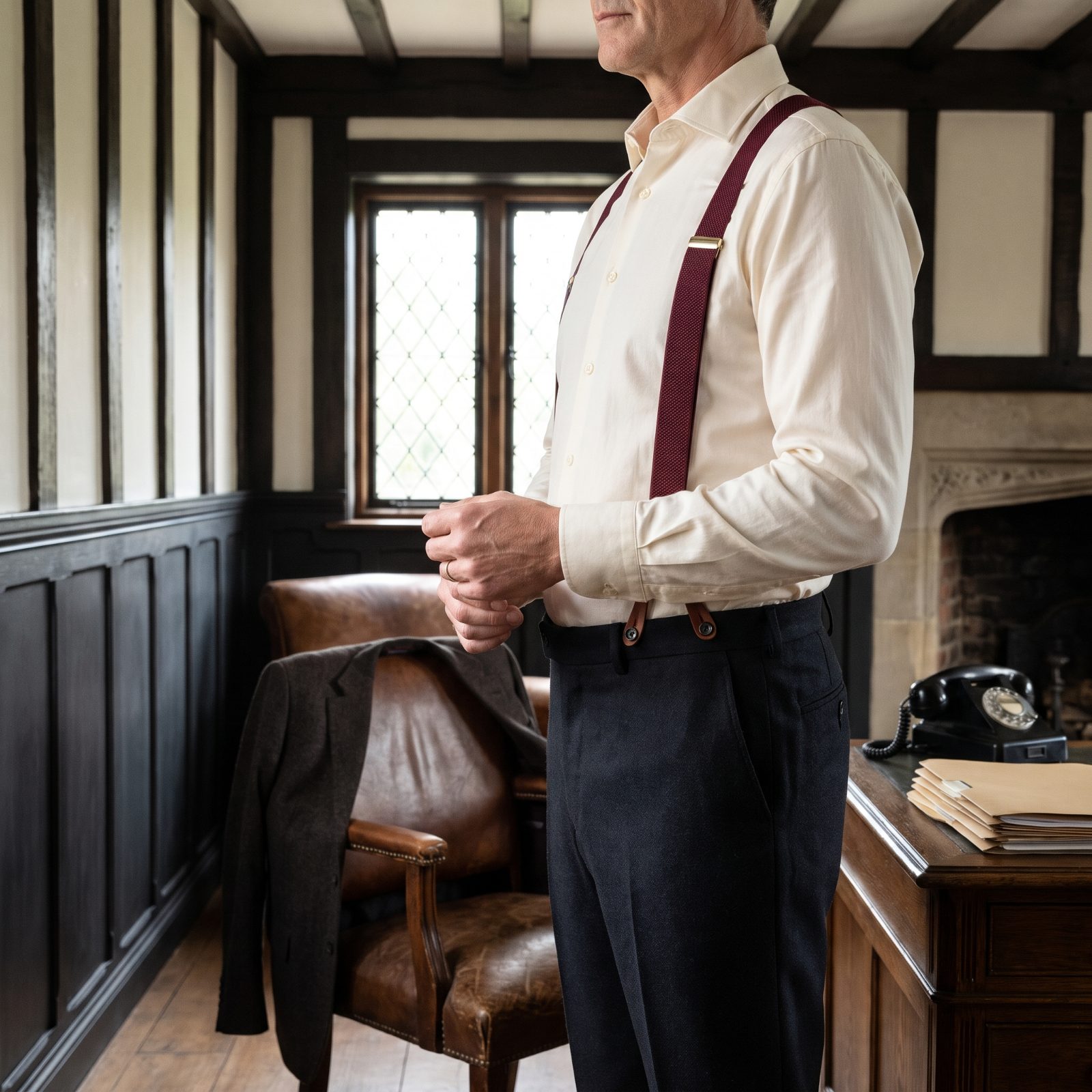
Button-on, never clip. The real ones fastened with leather tabs to buttons sewn on the outside of the waistband, and the men who wore them looked down on clips the way a carpenter eyes a stapled joint. A whole quiet hierarchy lives in that distinction.
Jacket off, burgundy suspenders over a cream shirt gave a senior man a shape no belt could manage. They held the trouser line clean and let the shirt lie smooth. Old-fashioned even back then, which was exactly the point: here was a man who learned to dress from somebody who knew. So go dig out your grandfather’s pair. They never stopped working.
13. The Two-Tone Spectator Shoes
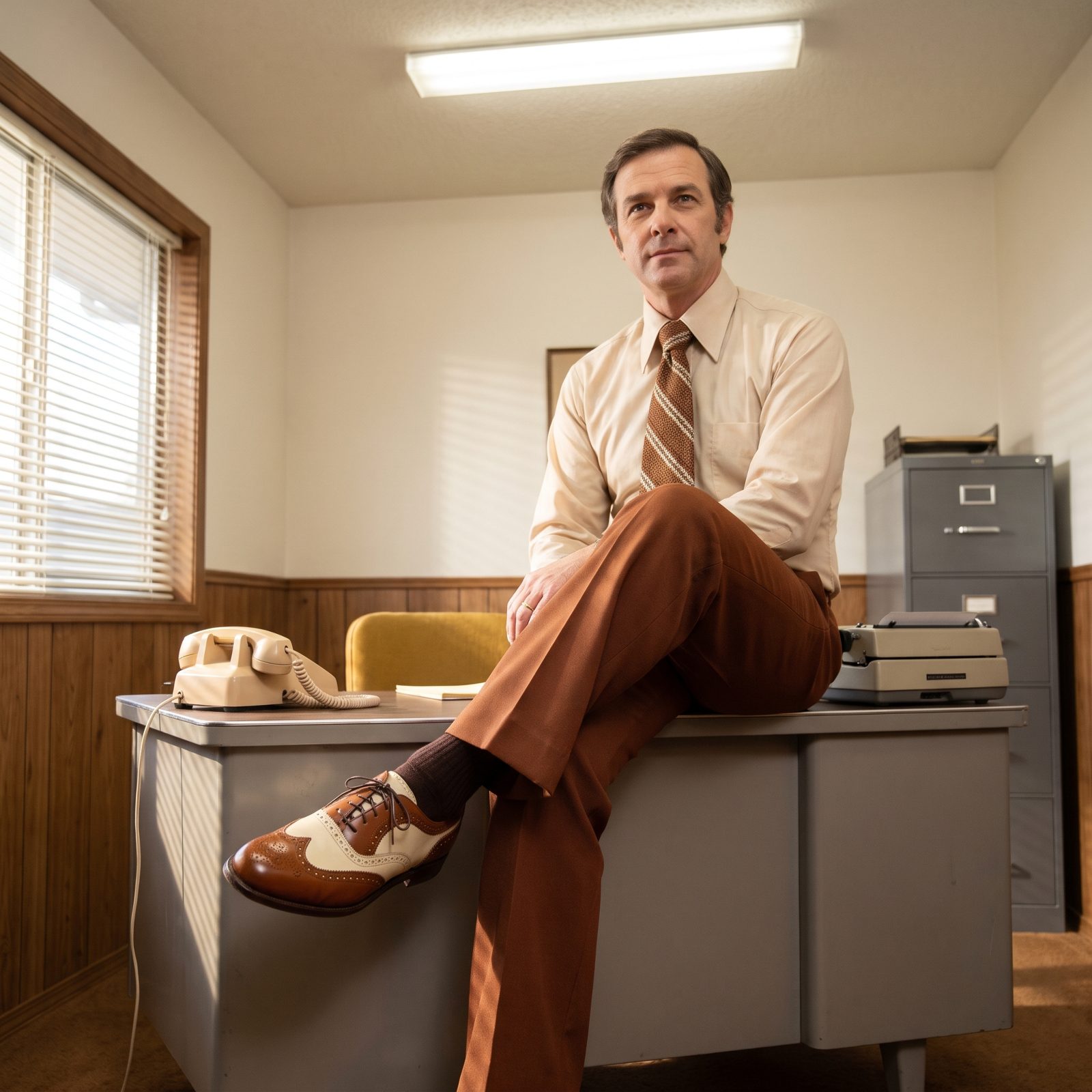
Two colors on one shoe used to signal that a man had somewhere to be. The brown-and-cream spectator was a quiet brag, the kind of footwear that said the wearer read the sports page and knew the maître d’ by name.
What made it work in a 1970s office was contrast done with restraint. The dark cap-toe anchored the lighter body, so the shoe looked considered rather than loud, even next to a pair of mustard trousers. Pair that with a crease sharp enough to cut paper, and a man walking to the water cooler became a man making an entrance.
12. The Chunky-Heeled Leather Loafers
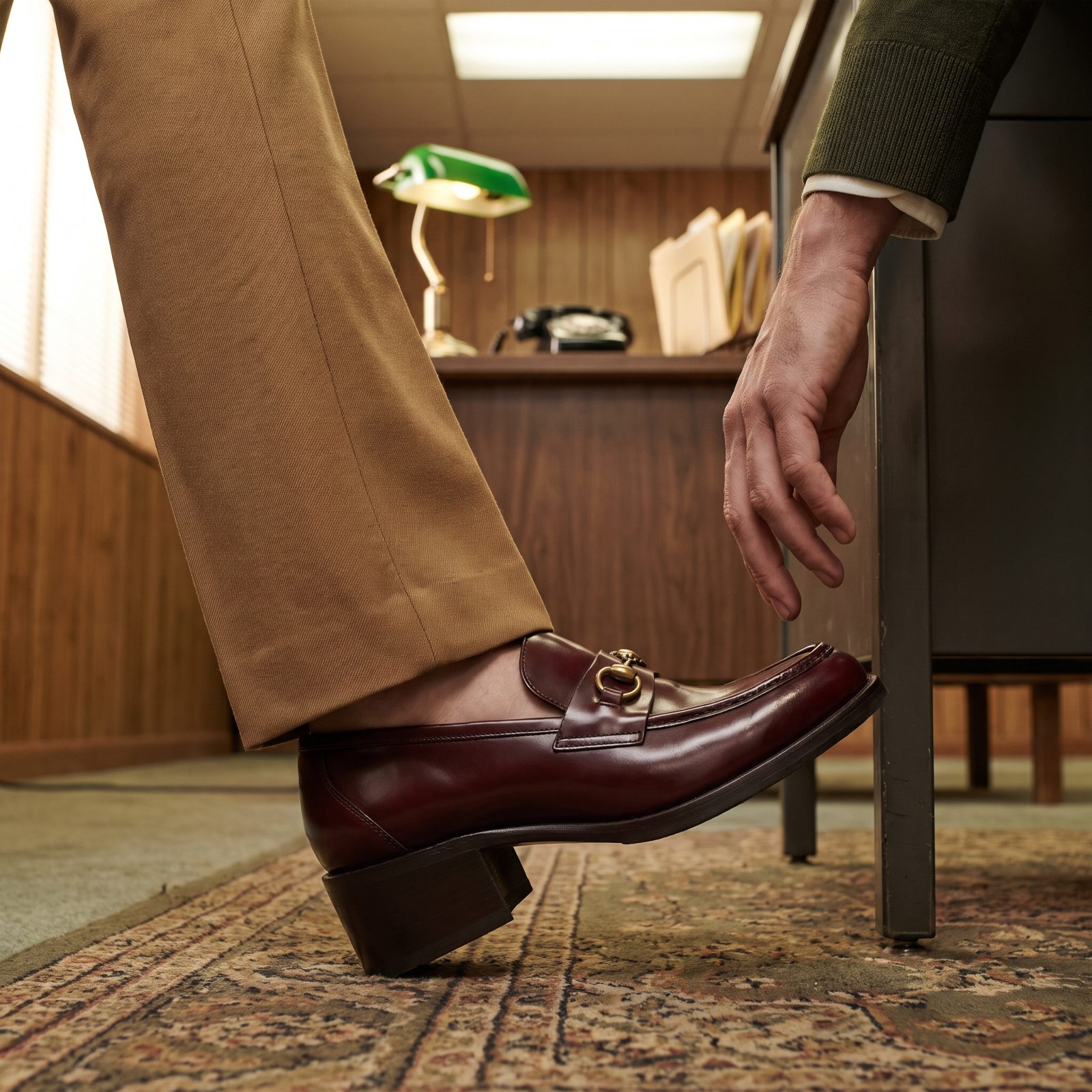
The heel got bigger and nobody blinked. A loafer in 1973 carried a stacked heel that would make a modern shoe salesman nervous, and men wore them everywhere — meetings, lunch, the long haul across the parking lot.
Weight was the whole trick. That thick heel changed a man’s entire stance, adding an inch and a planted, deliberate gait that matched the wide flare of the trouser. Brass horsebit up top, heft down below. It’s the rare shoe that made the tall man and the short man feel exactly the same height.
11. The Square-Toe Lace-Ups
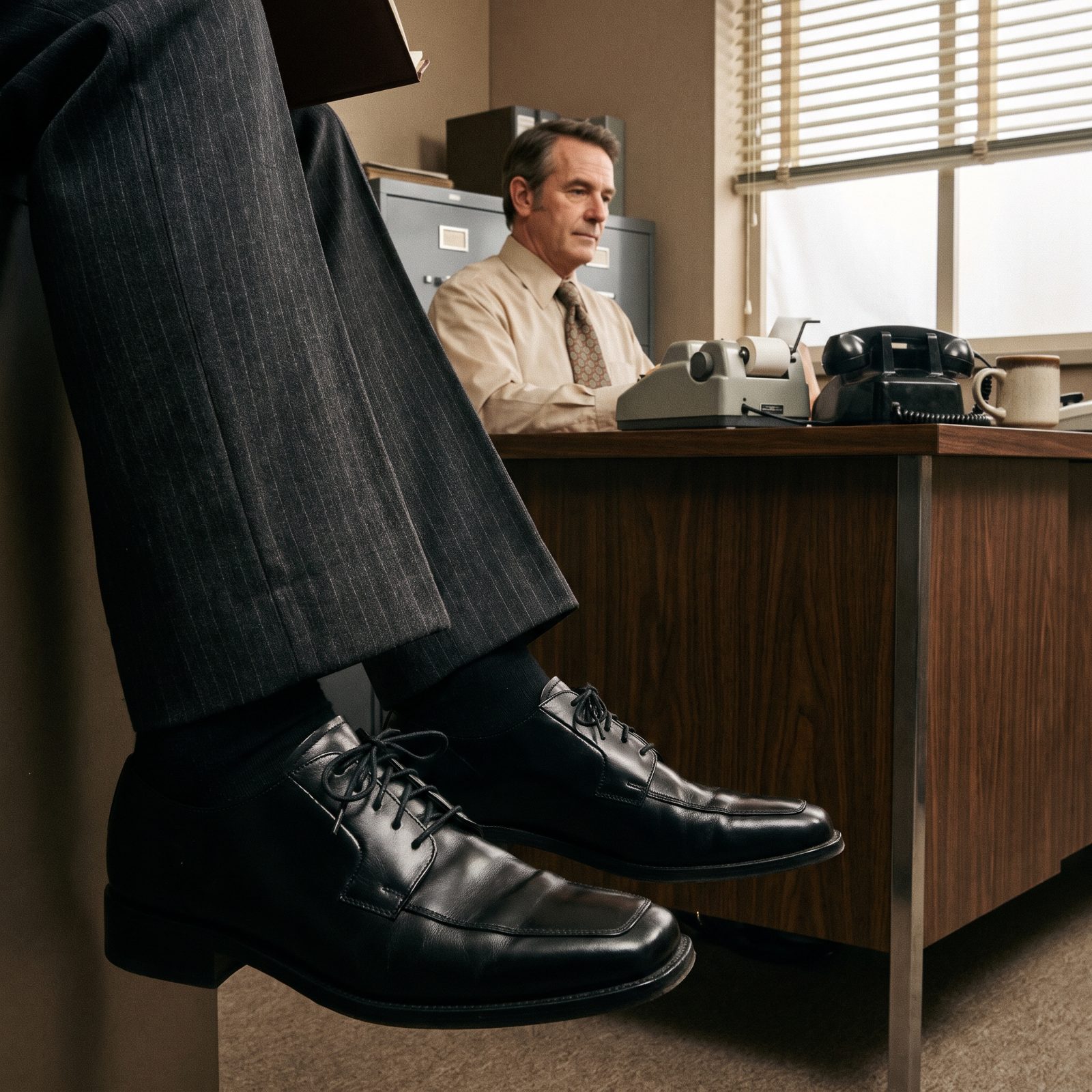
Somewhere mid-decade the rounded toe fell out of favor and a flat, blunt front took over. The square-toe lace-up looked like someone had taken a chisel to a conventional oxford, and that squared silhouette became the dividing line between a man who kept current and one who still shopped from his father’s catalog.
It read as modern precisely because it ignored the natural shape of a foot. On a charcoal pinstripe it looked severe, a little bit serious, carved rather than cobbled — exactly what the bookkeeper in the corner office was going for.
10. The Cuban-Heel Ankle Boots
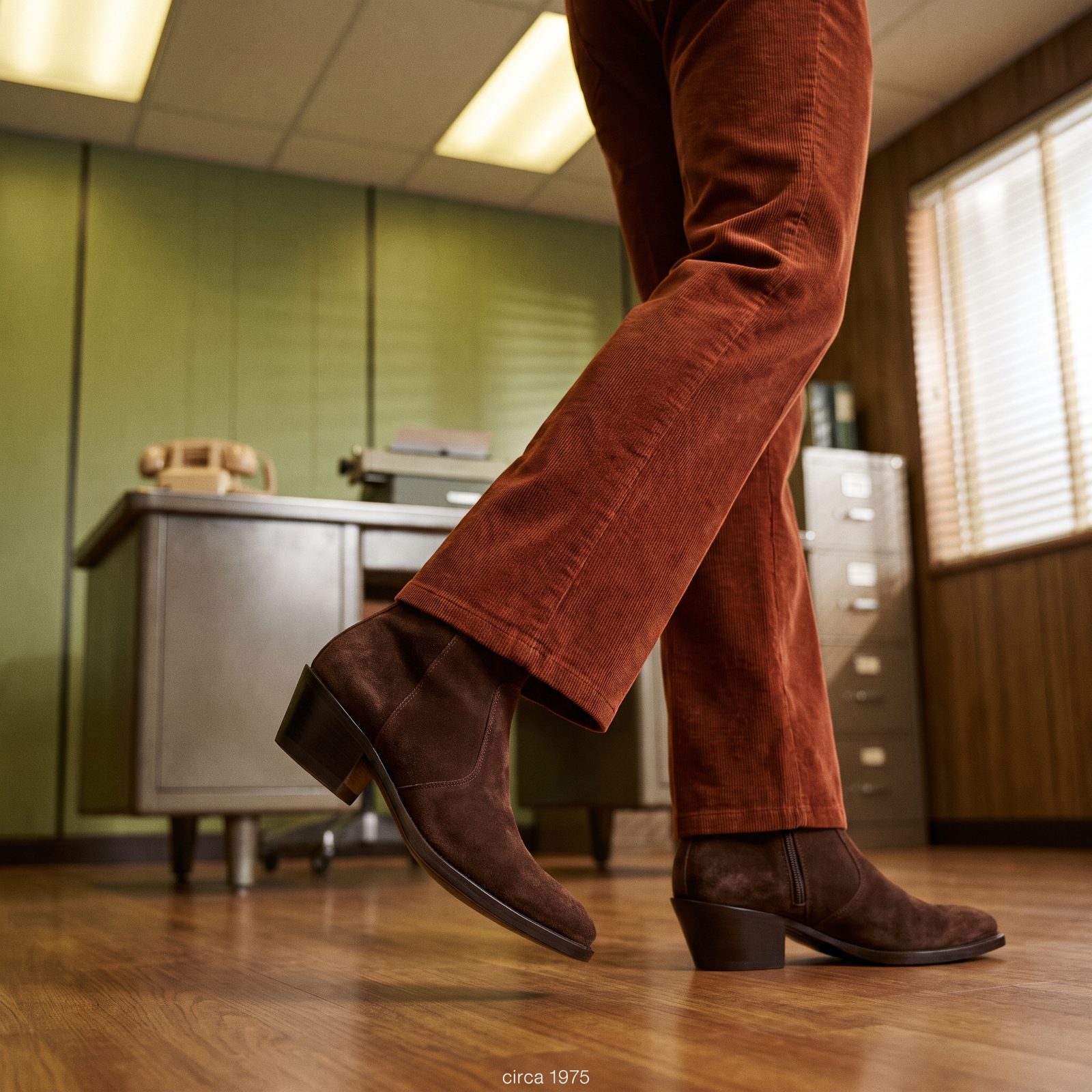
The Cuban heel borrowed from rock stars and dance floors, then quietly walked into the workplace. These ankle boots tapered to a slim angled heel, zipped up the side, and rose just high enough to disappear under a flared hem until the wearer took a step.
It came down to the lift and the lean line — a boot that stretched the leg and handed a regular guy a touch of showman swagger without tipping into costume. Brown suede softened the whole thing enough to clear the dress code. A man in these was telling you he had a record collection worth seeing.
9. The White Leather Loafers
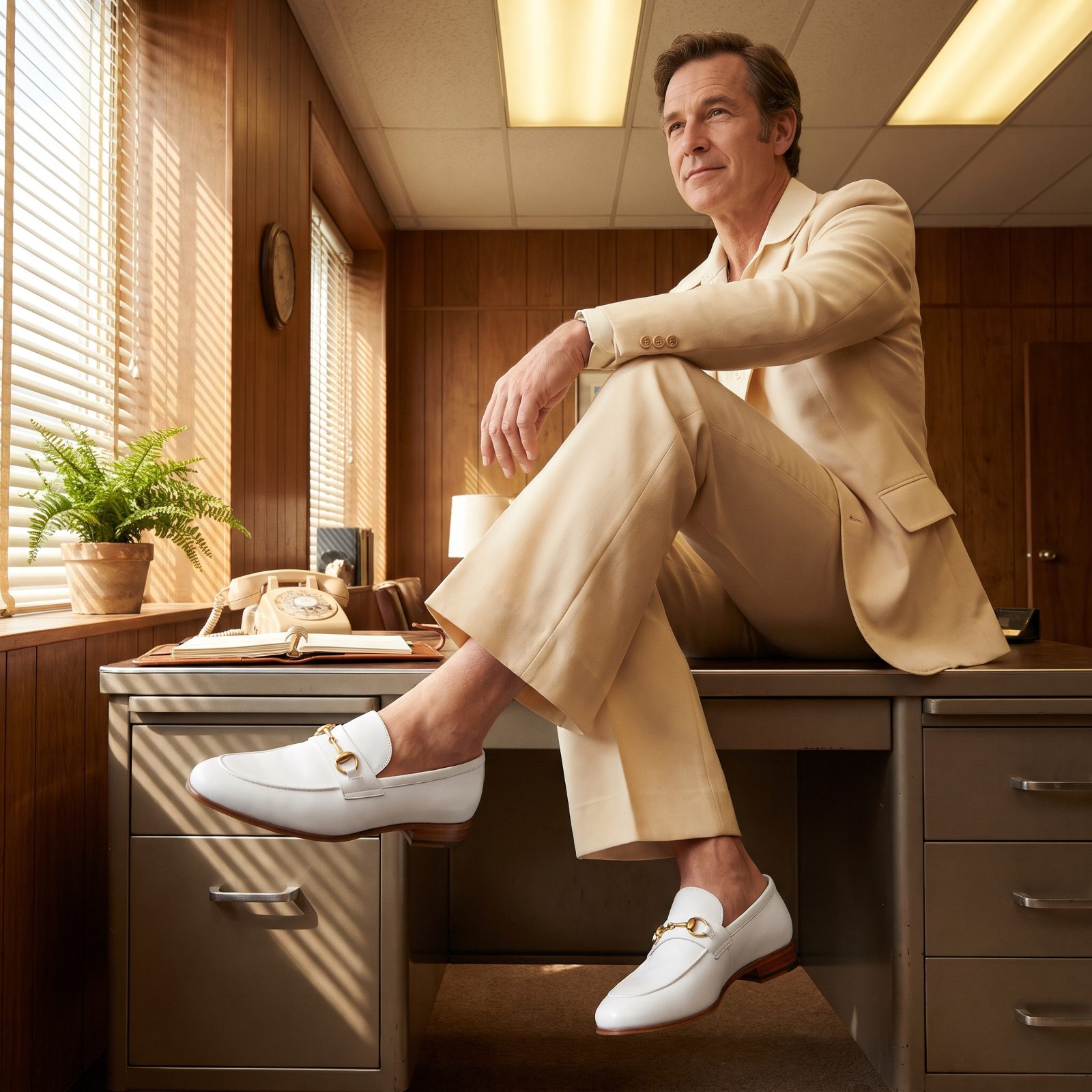
White shoes on a working man meant it was warm out and he was feeling good about it. The white leather loafer showed up around the same time as the leisure suit, and the two kept close company.
Against a cream slack the shoe practically glowed, which was the entire idea. There’s a particular confidence in wearing something that shows every scuff and daring the day to try. The gold bit across the top kept it from reading too casual, so a man could pull this off at a Friday lunch and still look like he closed deals. Hard to keep clean. Impossible to ignore.
8. The Knee-High Dress Socks in Loud Stripes
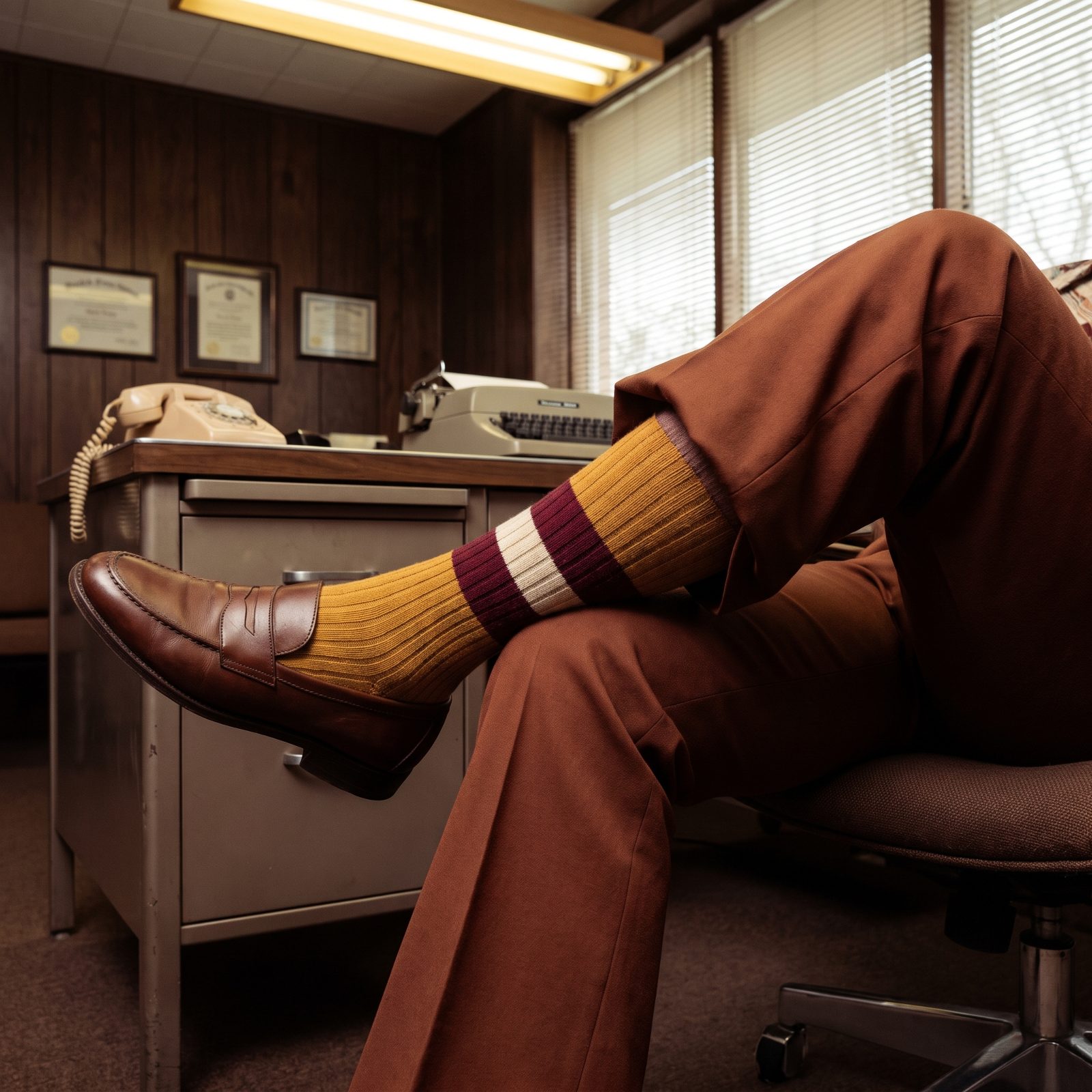
You never saw them until a man crossed his legs, and then there they were — knee-high socks striped bold enough to stop a conversation. The dress sock was the one place a buttoned-up office worker could get away with a little mischief.
Contrast through concealment was the whole game. Everything above the ankle stayed respectable while the sock hid a riot of mustard and burgundy, so the reveal landed like a wink. Knee-high meant no bare shin peeking out mid-meeting, a small point of pride that separated the careful dresser from the careless one.
7. The Gold-Rimmed Aviator Glasses
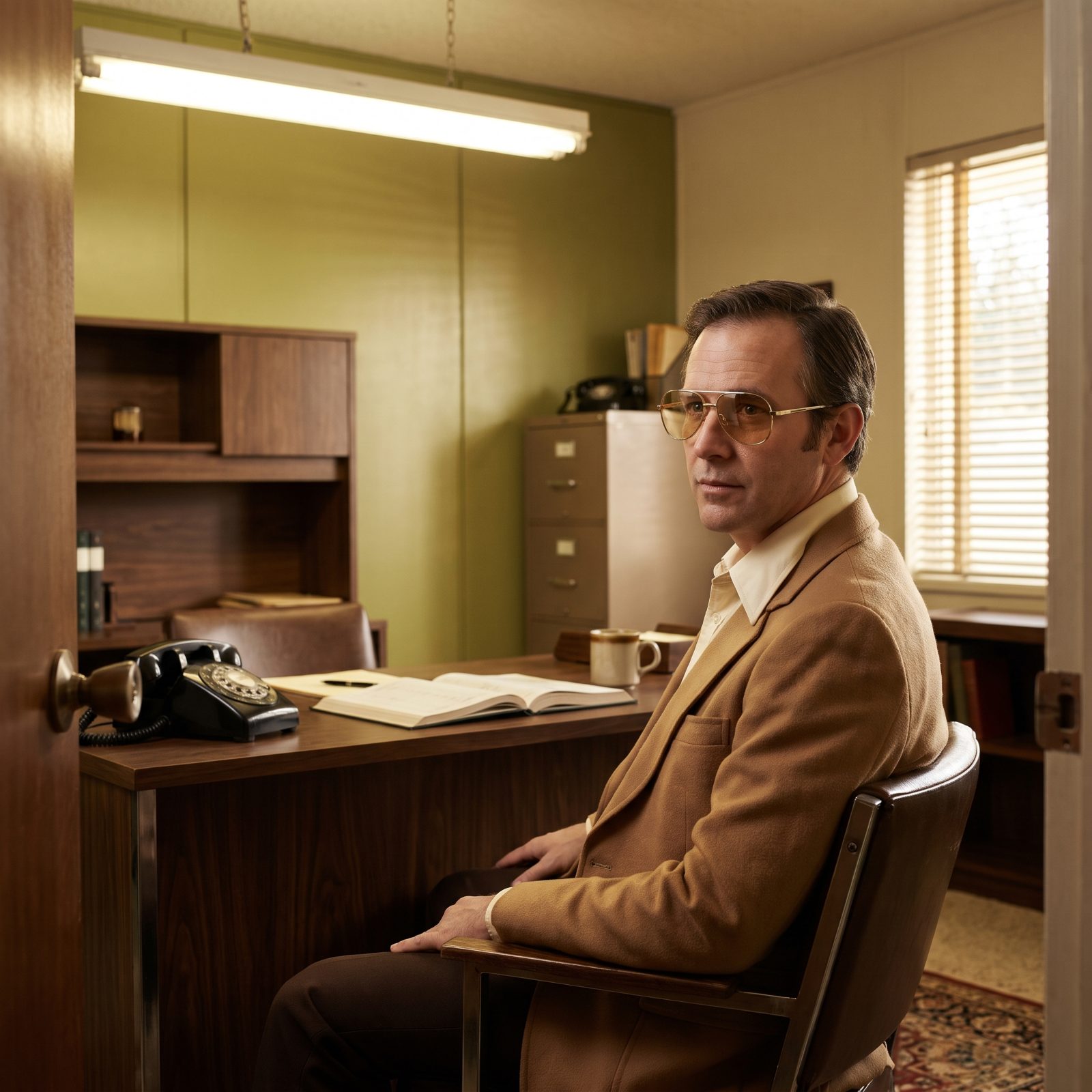
The aviator left the cockpit and landed on the face of every manager with a company car. Gold rims, a faint amber tint, lenses big enough to read a room — these said business and a little flair in the same breath.
Indoors, the warmth of the metal carried it. Gold against a camel sport coat tied the whole upper half together, and the slight tint softened a man’s expression into something approachable. Flip through any office photo from the era and half the executives are wearing them, which tells you how badly a generation wanted to look like it had somewhere to fly.
6. The Oversized Tortoiseshell Eyeglasses

If the aviator was the swagger, the oversized tortoiseshell frame was the brains. Thick plastic rims in mottled amber and brown took over the top third of a man’s face, and that was the point. These glasses said the wearer had read the report, understood it, and had notes.
They worked because the scale matched everything else going on — the wide lapels, the big collars, the general bigness of it all. Smaller glasses would have looked timid next to a knit tie and a sport coat. And the tortoiseshell kept things warm instead of cold, professorial instead of severe. Half of academia still looks like this, and wears it like a badge.
5. The Early LED Calculator Watch
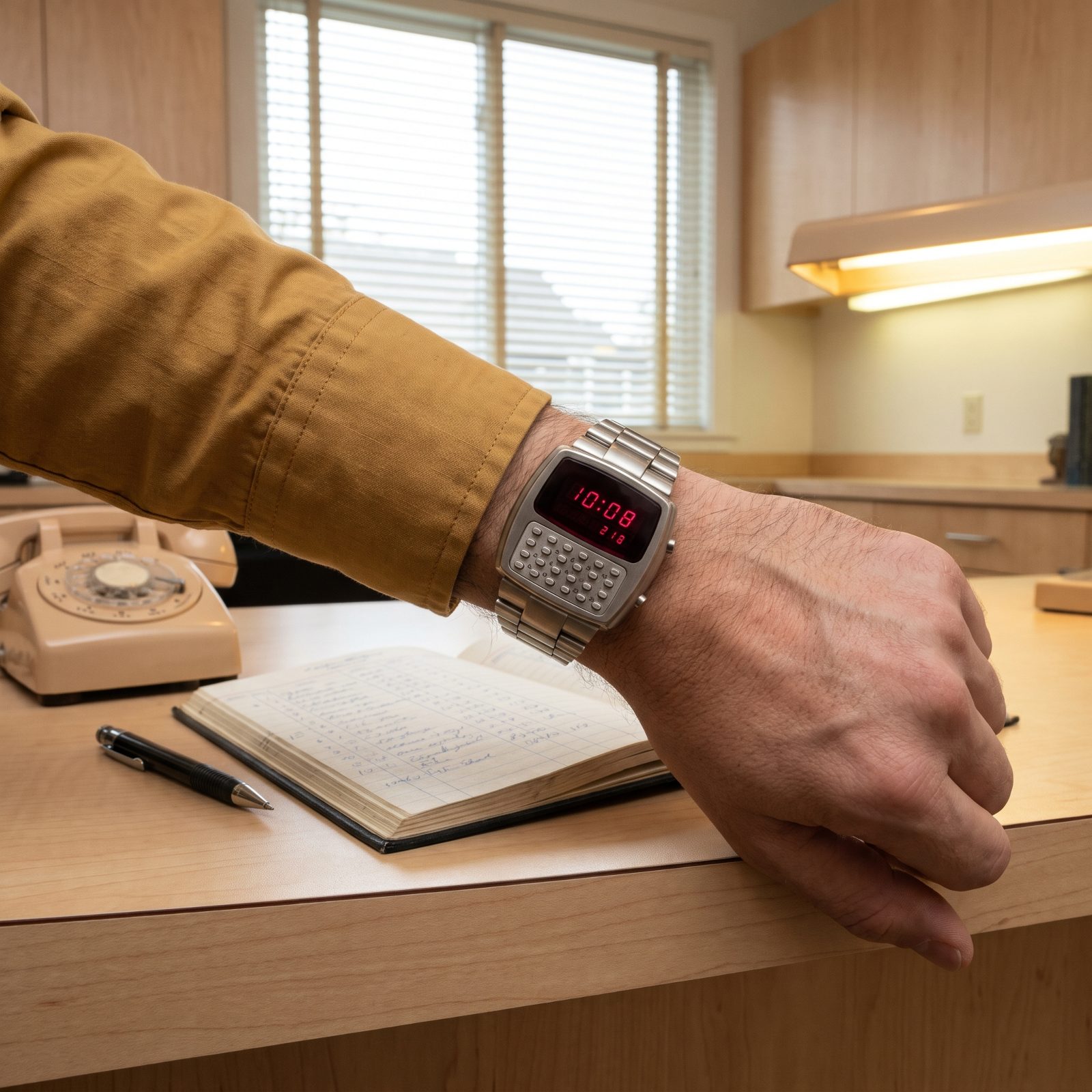
You pressed a button and red numbers glowed up out of a black glass face, and for a few years that was the most futuristic thing a man could do at a desk. The LED calculator watch was a small fortune of technology strapped to a wrist, and the owner wanted everyone to know it.
The ritual gave it away. These watches hid the time to spare the battery, so a man had to press the button, look, then press again to add two numbers — which meant anyone wearing one was constantly staging a tiny performance of being modern. Heavy, chunky, a little impractical. A wristful of the future that mostly told you it was 11:42.
It was the only accessory in the office that required a button-press to justify its existence, and men loved it for exactly that reason.
4. The Pinky Ring
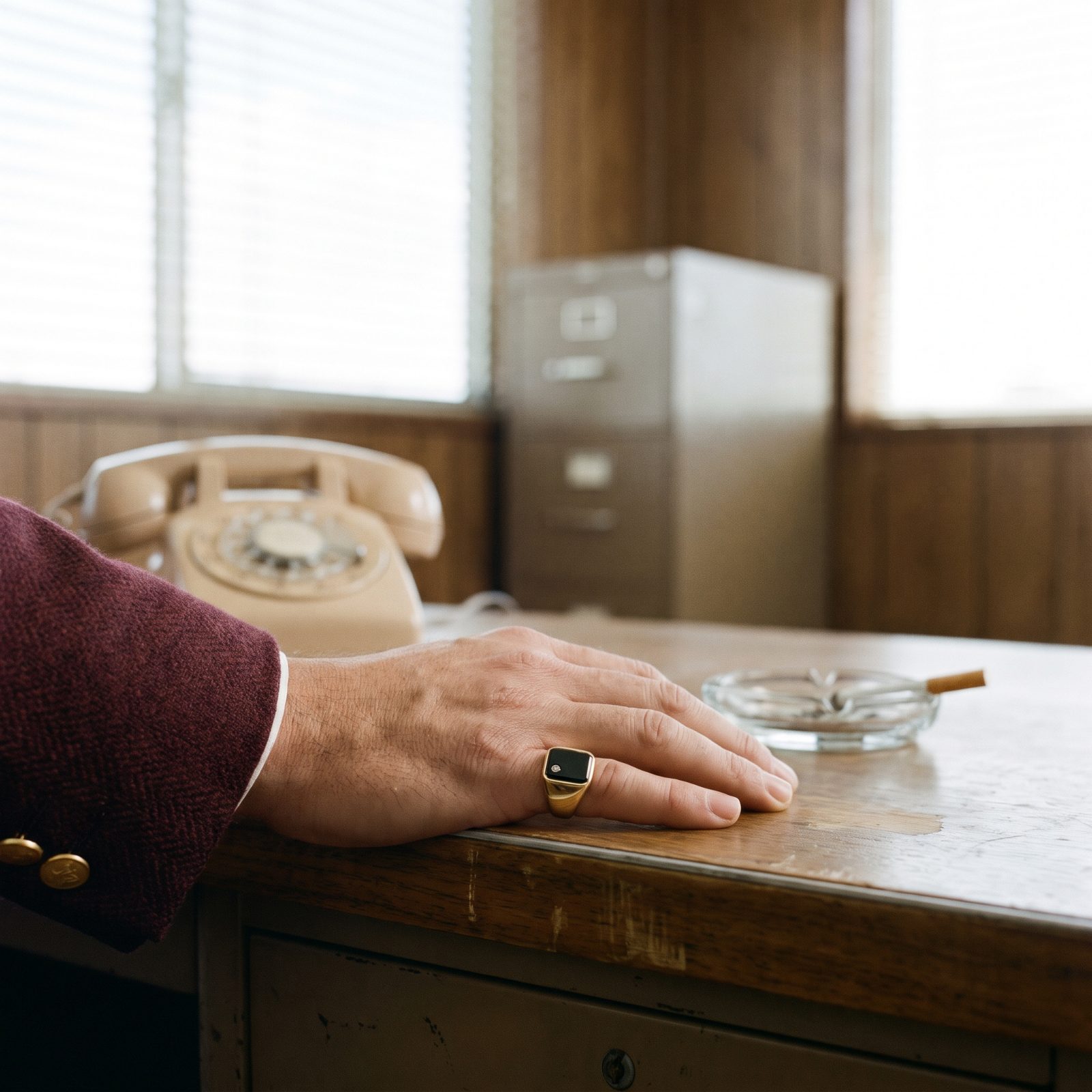
Gold on the smallest finger carried a whole biography. The pinky ring — usually a flat onyx with a diamond chip winking out of the center — sat on the hand of the man who ordered first and tipped loud. Jewelry with an attitude.
It worked because it broke a quiet rule. Men wore wedding bands and the occasional class ring, so a second ring, on the pinky of all fingers, read as deliberate. It announced that the wearer made his own rules and had the cash to back them. Flash it over a handshake and the whole room recalibrated who they were dealing with. Nobody wore a pinky ring by accident.
3. The Shearling-Collar Car Coat
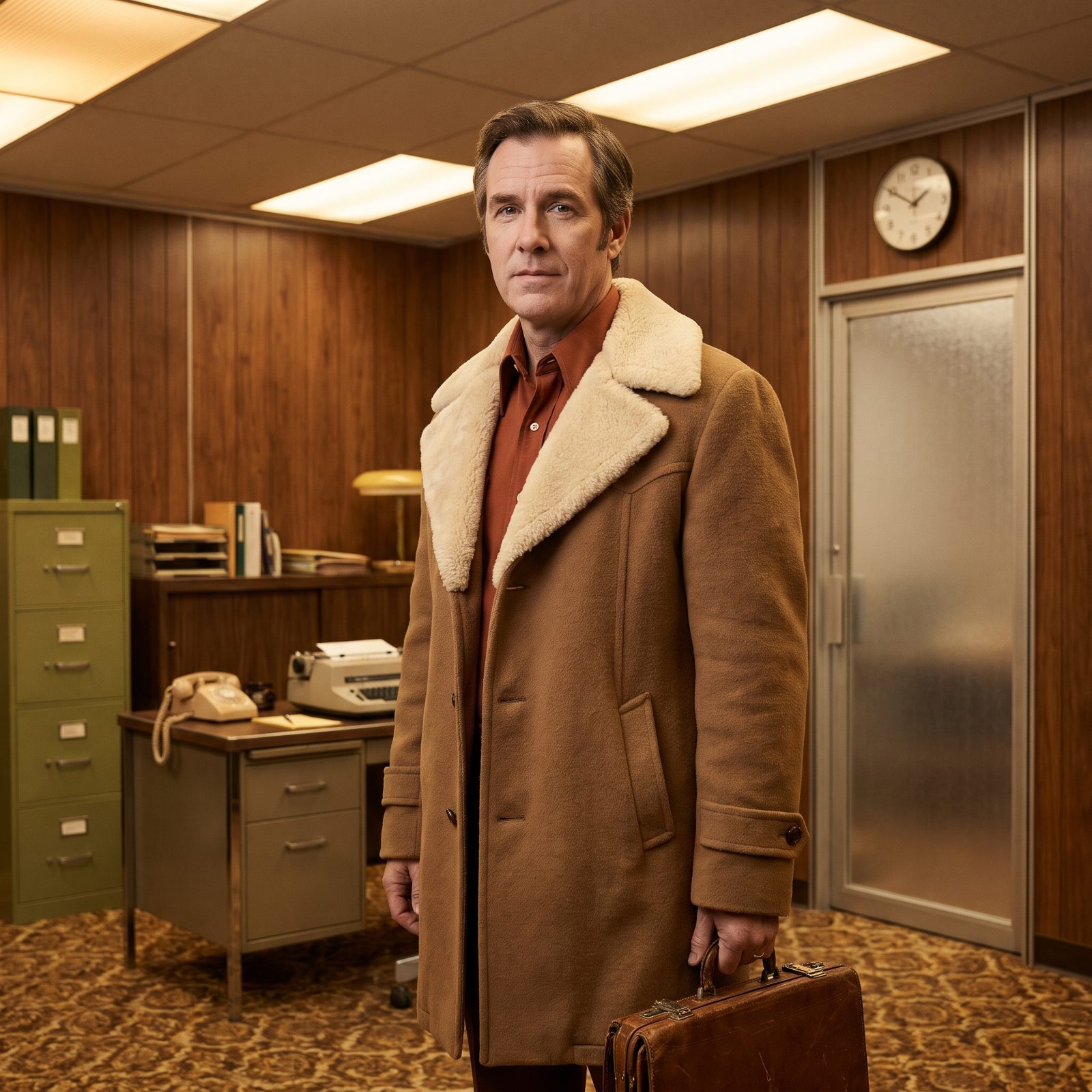
The shearling collar did the heavy lifting here. Flip it up and the whole coat changed register — sensible commuter wear one second, a little swagger the next. Camel wool against cream fleece, and that texture contrast alone made the thing look pricey even when it wasn’t.
Men wore these from the parking lot to the elevator, then draped them over the back of the chair and forgot about them all day. Because the straight mid-thigh cut and those big patch pockets worked over a suit or over a sweater, the coat earned its keep through every winter commute of the decade. No fuss. Just a warm shell that happened to look good.
2. The Thick Gold Chain at an Open Collar
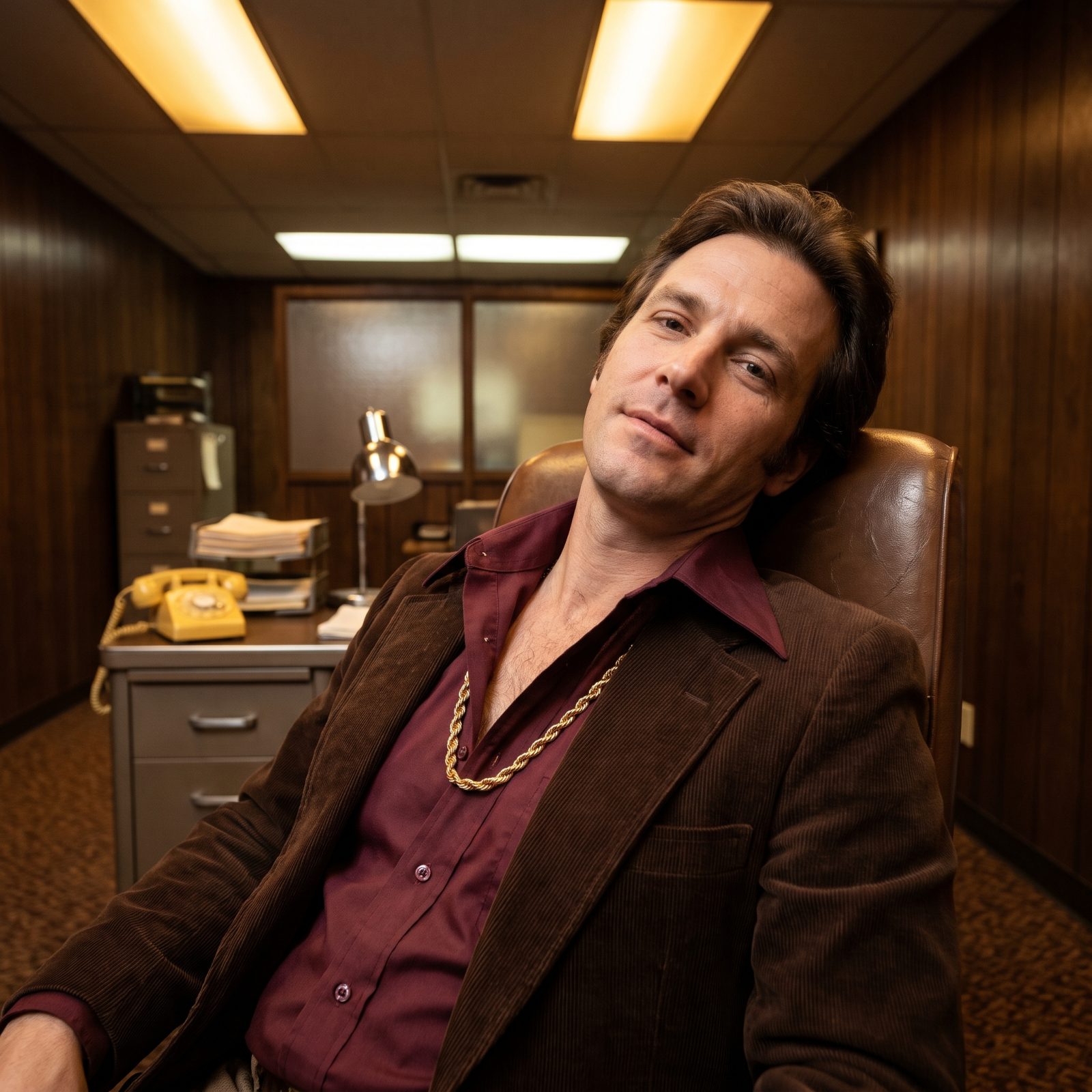
One accessory, one message. That thick gold rope chain sitting against an open collar announced the man wearing it had arrived — or at least wanted you to think so. The loudest quiet thing in the whole office.
And what made it land was everything around it staying calm. A burgundy wide-collar shirt, two buttons undone, a corduroy blazer over the top, nothing else fighting for the eye. The gold did all the talking. Button it up and the chain vanished, which is why that open collar mattered so much. You were paying for the glimpse.
1. The Platform Dress Shoes
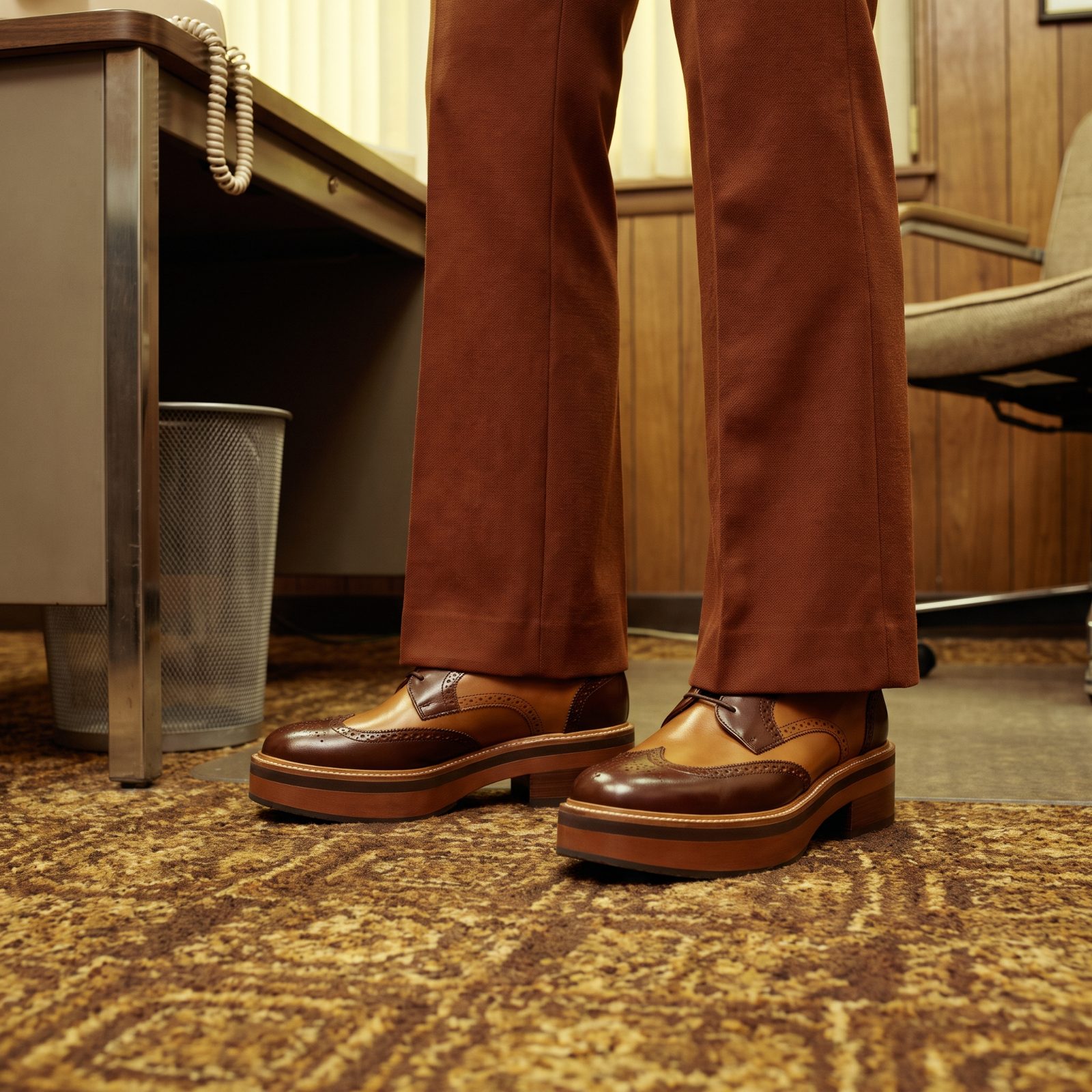
The platform sole turned a dress shoe into something you heard coming down the hall before you saw it.
Two inches of stacked leather under a rounded wingtip toe, usually two-tone tan and chocolate, worn with near-straight trousers whose hems stopped at the ankle and rested on top of the shoe, leaving the vamp in full view. Proportion was everything. Pair these with a hem that pooled over the vamp and you’d look ridiculous — no two ways about it. The clean ankle-length hem let the bulk of the sole show, so the eye read the shoe as the end of a long clean line instead of a brick bolted to the bottom of a leg.