
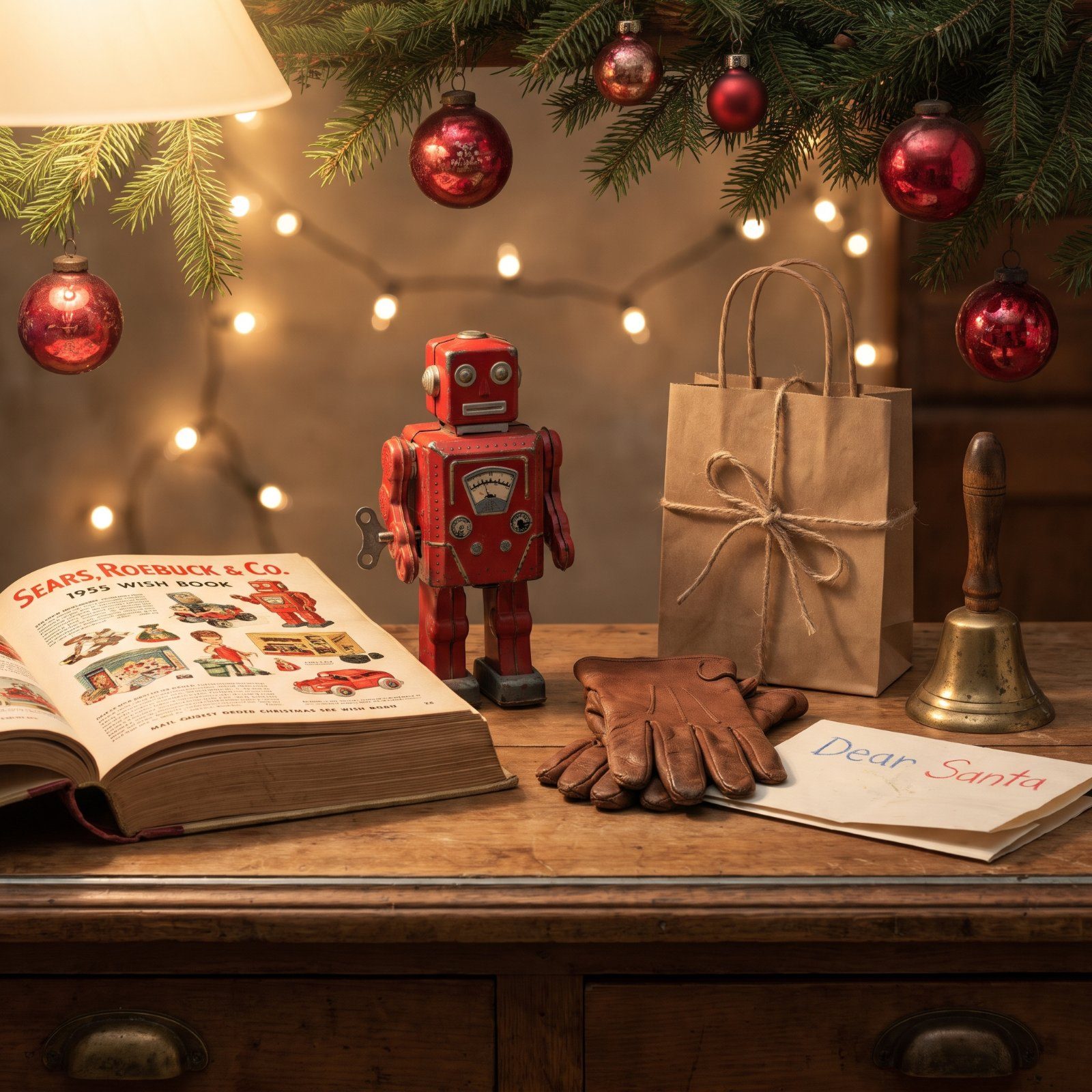
The smell hit you at the revolving door. Pine, hot cocoa, and the warm electric buzz of a thousand bulbs strung across the toy floor. You weren’t running an errand — you were walking into something that had been built and rehearsed and decorated for weeks, all to make December feel bigger than it had any right to be.
Please note that some of the images in this article were created with the assistance of AI.
Then the shopping got faster and the magic got quieter. These are the services and displays that once made the whole family pile into the car just to watch.
41. Animated Department Store Windows You Pressed Your Nose Against
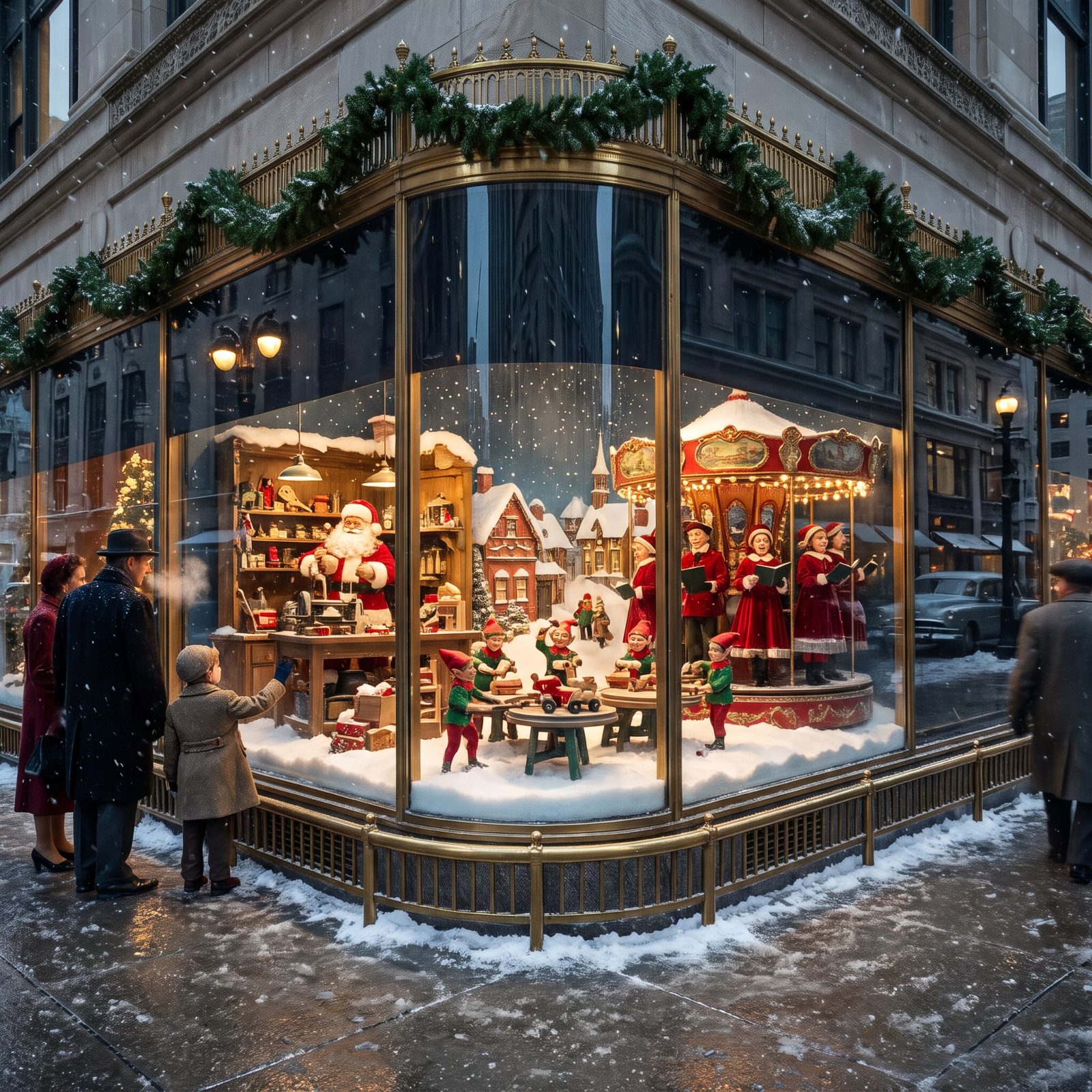
You stood on the cold sidewalk with your mittens pressed flat against the glass, watching a mechanical Santa raise and lower his hammer over the same little sled, forever. The window was the free show, and stores like Marshall Field’s and Macy’s spent months and serious money building these scenes so families could make a whole night out of walking the block.
Each window told a piece of a story, so you shuffled along from one to the next, breath fogging the glass as the figures turned on their hidden turntables. No sales pitch. Just wonder, paid for by the store and handed over free to anyone willing to stop and look.
40. An Entire Floor That Belonged to Toys Alone
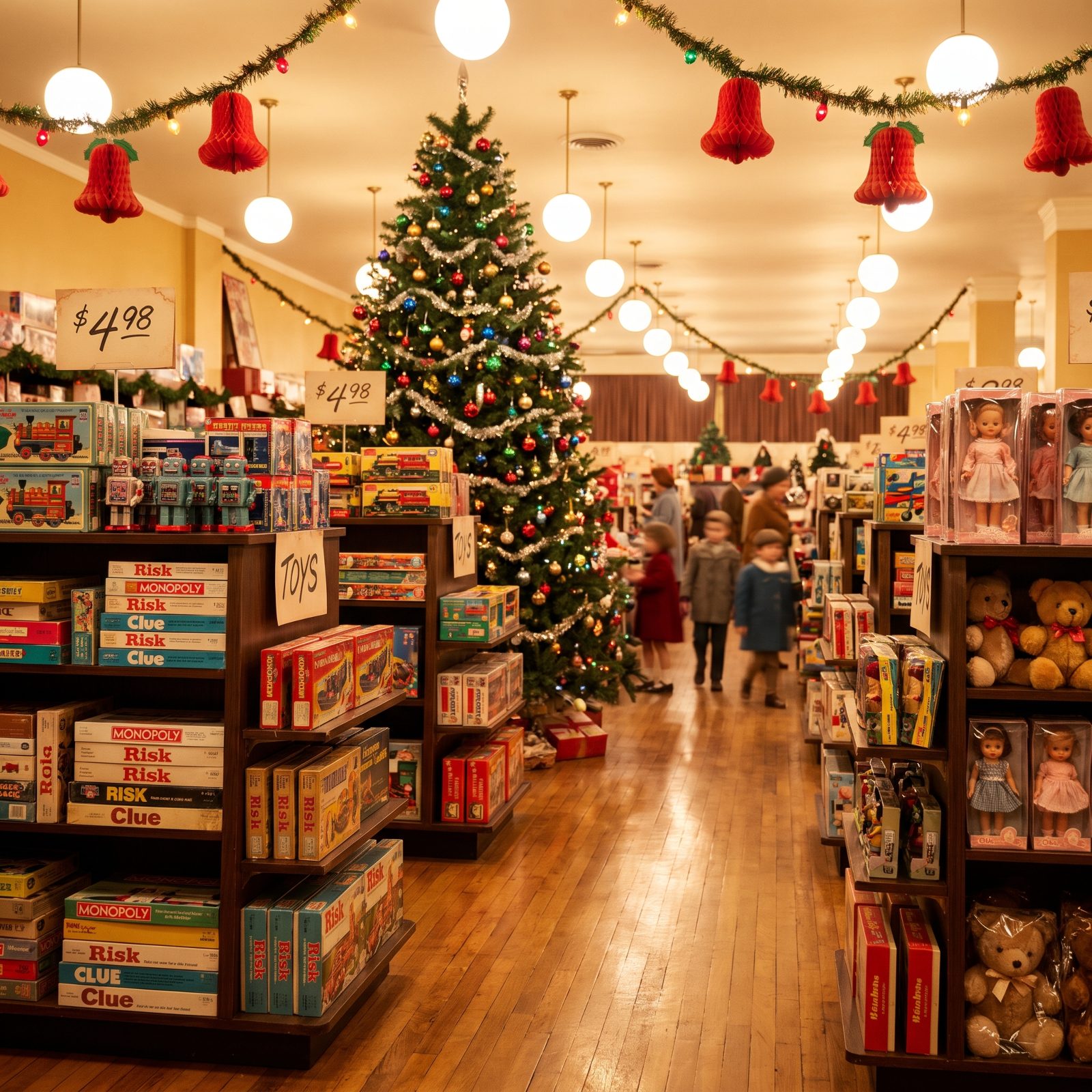
There was a button in the elevator, and when you pushed it you went up, not sideways. An entire floor. Nothing but toys.
Step off and the ceiling seemed to lift away, crowded with every doll, train set, and board game stacked to the rafters. A kid could get genuinely lost up there, which was sort of the point — parents learned to name a meeting spot by the big tree, because the toy floor swallowed children whole. These weren’t aisles. They were a destination you earned by surviving the appliance department first.
39. The Wish Book That Weighed as Much as a Phone Directory
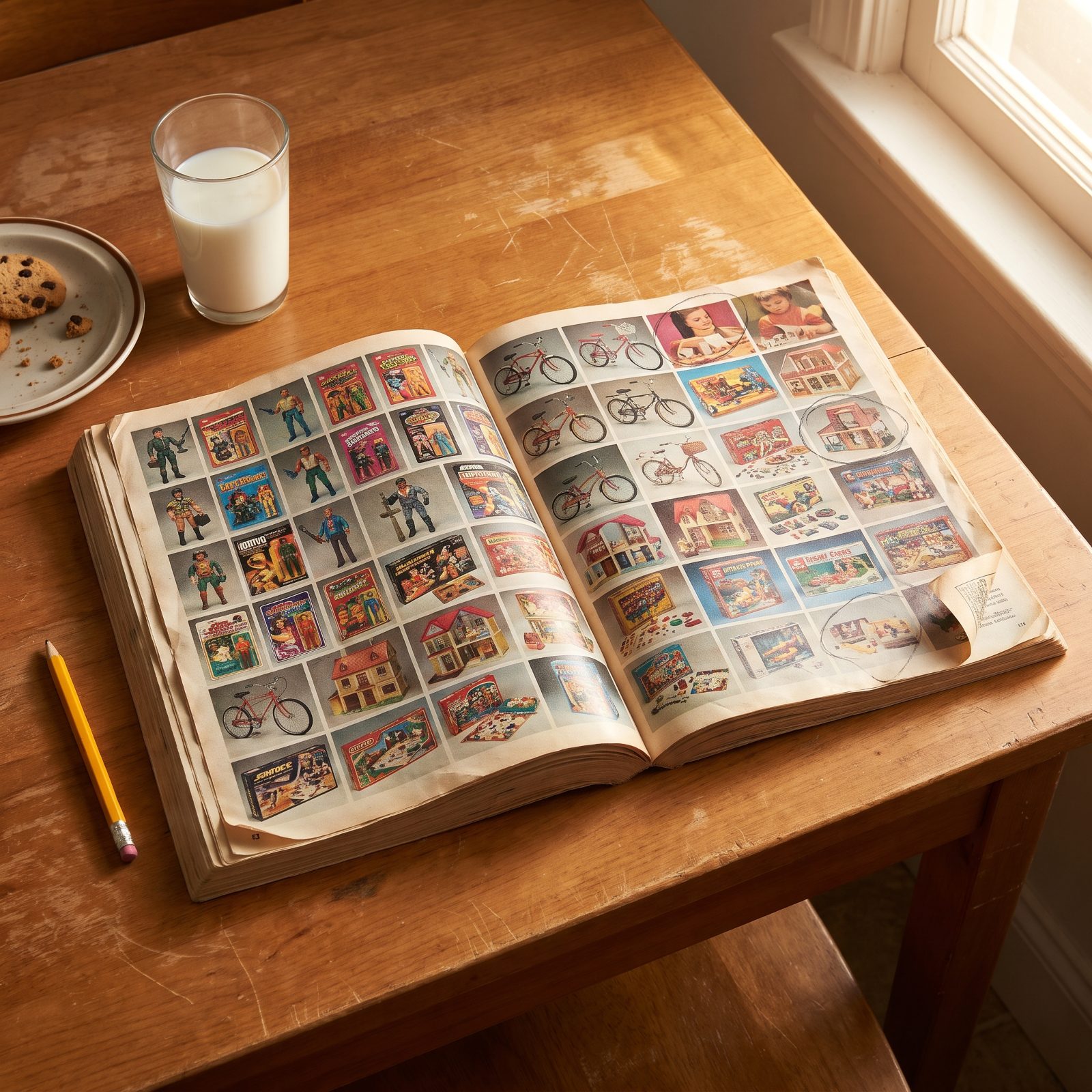
It landed in the mailbox like an event. The Sears Wish Book, the Montgomery Ward catalog, Penney’s holiday edition — hundreds of glossy pages each, and every kid in the house fought over it first.
You lay on the floor with a pencil and dog-eared the pages you wanted, circling the exact bike and the exact doll until the corners went soft from handling. Closest thing to online shopping anyone had, except you couldn’t click. You could only dream, circle, and leave the book open to the right page where a parent might happen to see it.
38. Toy Train Villages That Ran in an Endless Loop
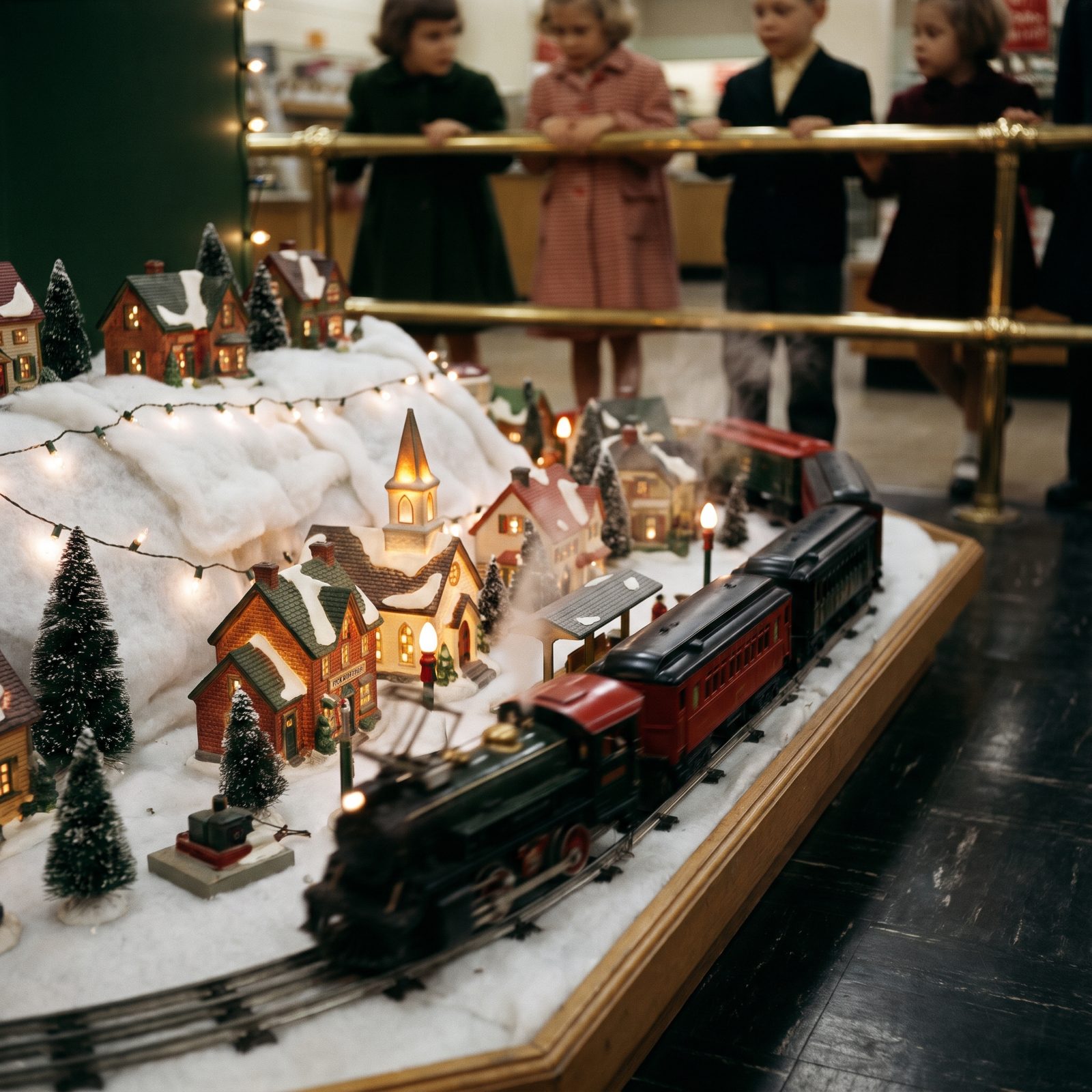
Somewhere in the store there was a table you couldn’t see over, and from behind it came the faint clack of metal wheels on track. A whole village down there — lit windows, cotton snow, a church with a glowing steeple, and a train that never stopped circling.
Kids planted their elbows on the rail and watched the same locomotive make the same loop for twenty minutes, waiting for it to vanish behind the tiny depot and come back around. Lionel and American Flyer built their reputations on this exact feeling. The displays sold trains, sure, but mostly they sold the quiet hypnosis of watching something small and perfect go round and round.
37. Santa’s Throne Room, Built Like a Royal Court
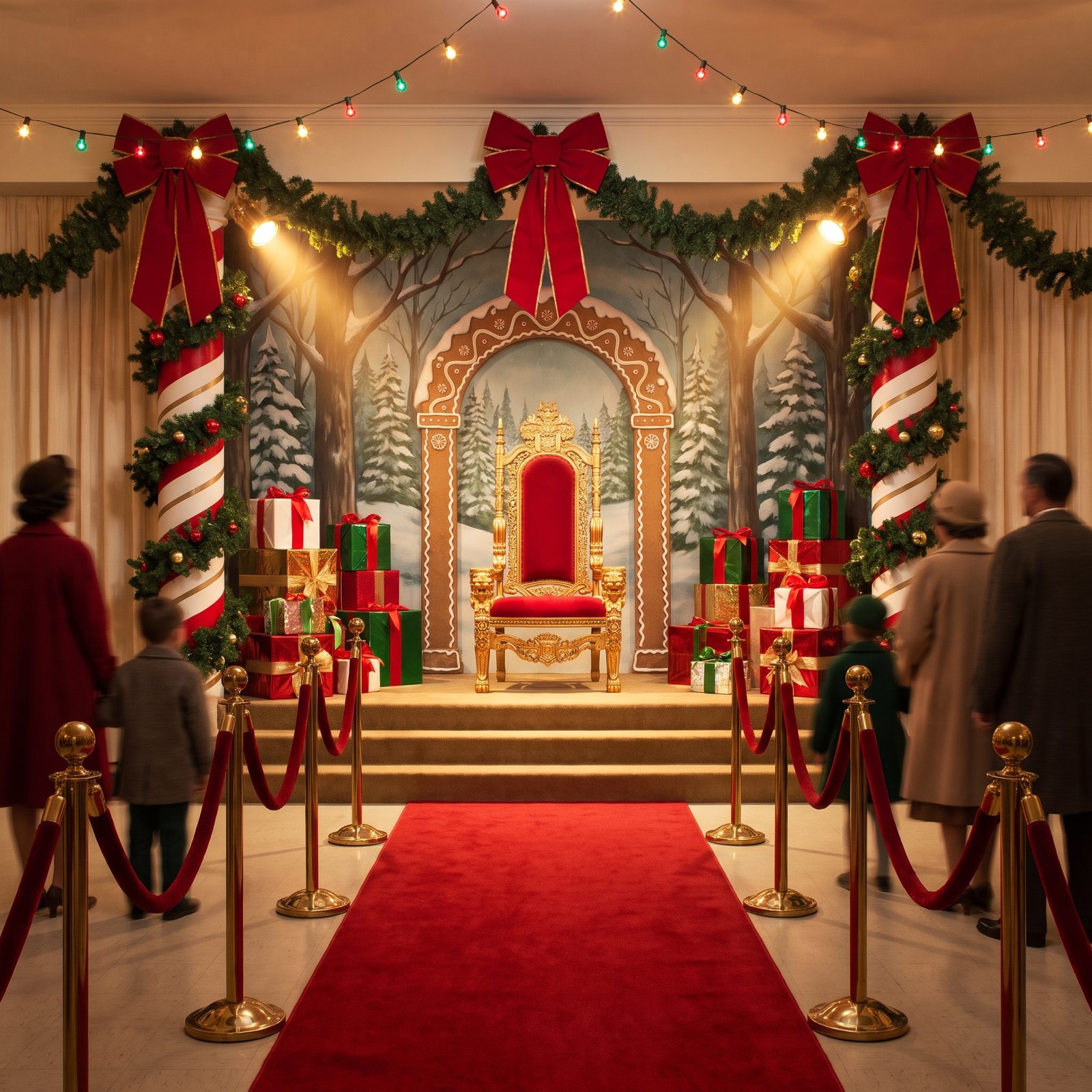
Getting to Santa was a procession. You waited in a line that wound past candy-cane pillars and gingerbread arches, palms sweating over your list, until you finally reached the red velvet throne up on its own little stage.
These weren’t folding chairs by the escalator. Stores built entire sets — painted forest backdrops, fake snow, elves managing the queue, the works. The whole production told a kid this was serious business. You were approaching someone important, so you’d better remember what you meant to ask for before your turn came.
36. The Day Santa Rolled In on a Fire Truck
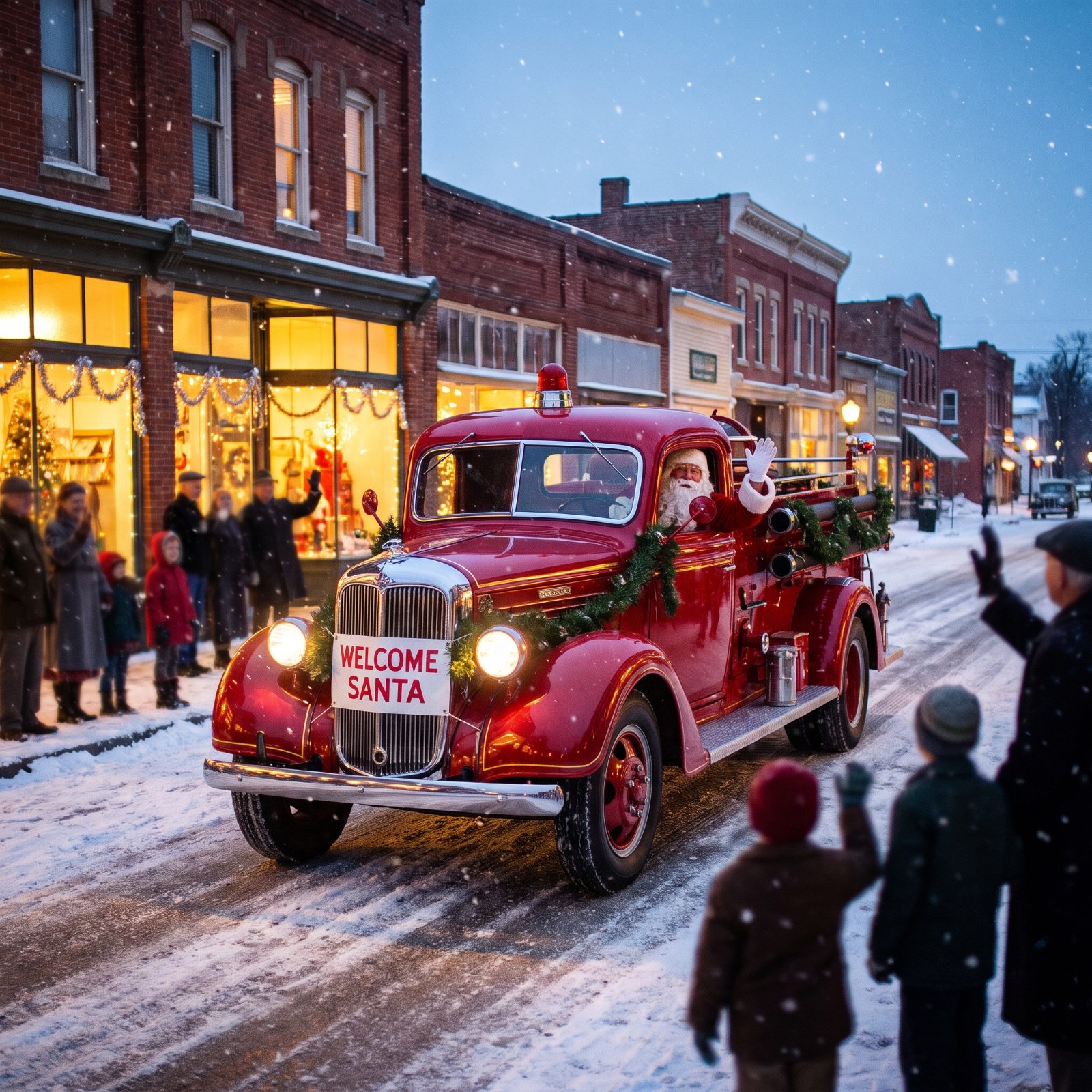
Santa didn’t just appear in the store. He had to get there, and the arrival was its own spectacle.
In a lot of towns he came in on the fire truck, siren going, waving from the top while the whole town stood freezing on the curb. Other places it was the tail end of the big parade — Santa’s float last down the street, which meant the season had officially started the second he passed. You couldn’t buy your way into that moment. You just showed up, stamped your feet to stay warm, and waited for the siren.
35. A Photo With Santa, Free of Charge
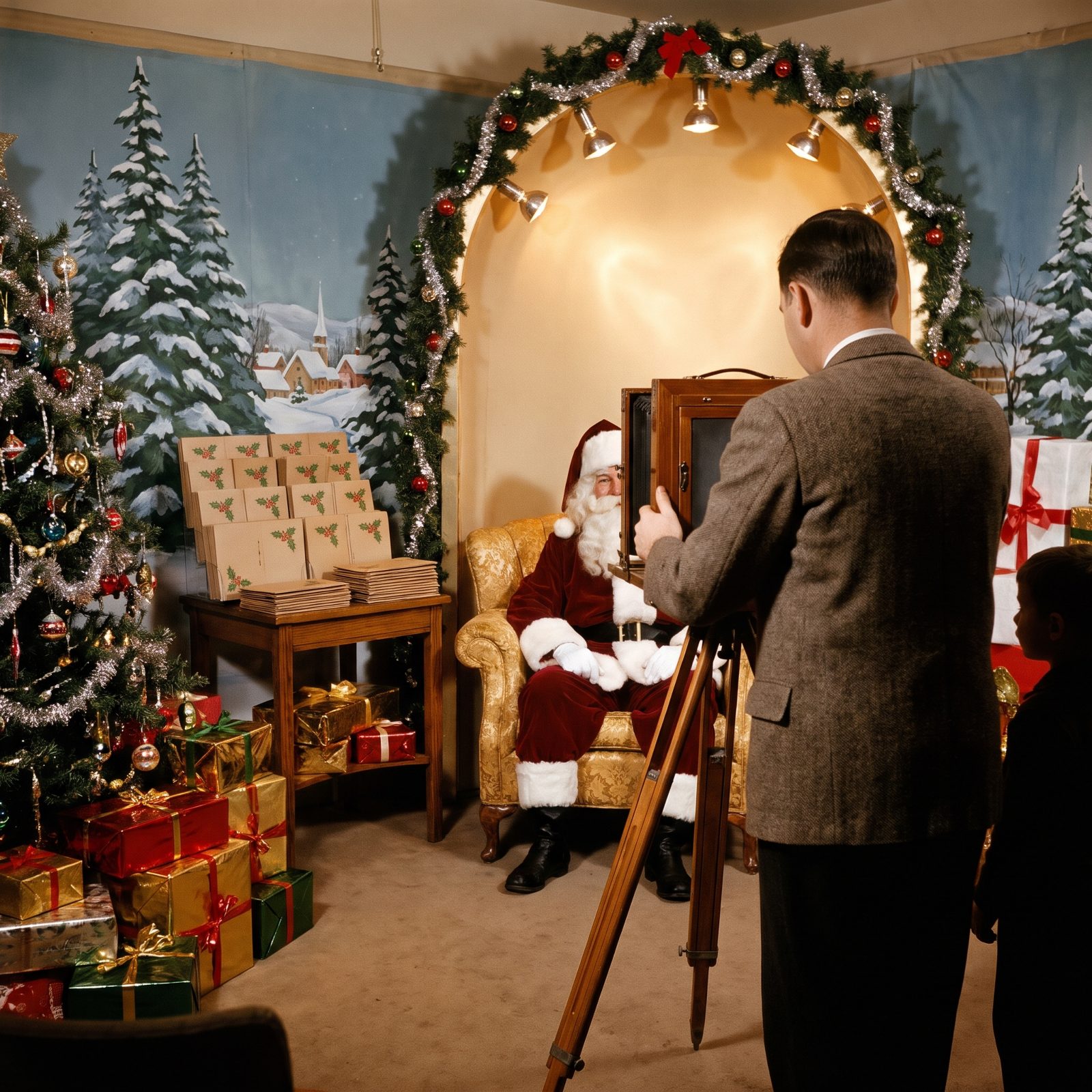
Here’s the part that sounds impossible now: the photo was free. You stood off to the side and watched as Santa settled into his gold armchair, a store photographer with a big boxy camera snapped the shot, and a few minutes later someone handed your parents a little cardboard folder printed with holly. No charge. No upsell package with digital downloads and a keychain.
The store ate the cost because the photo got families through the door, and because a photo with Santa meant you came back next year to compare. Somewhere in nearly every American household there’s a shoebox with a few of these — the kid getting a little bigger, Santa staying exactly the same.
34. Real Letters Back From the North Pole
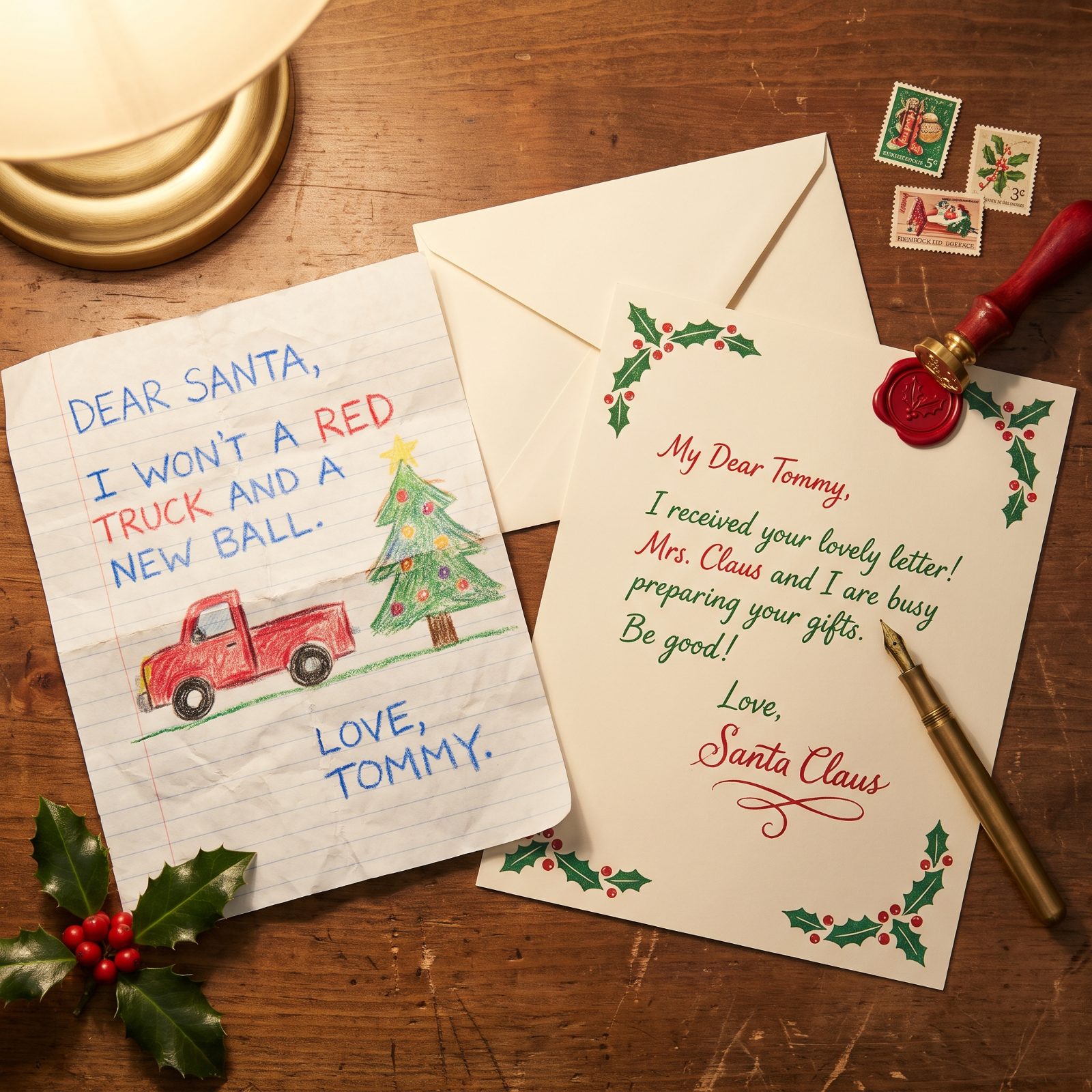
You mailed your letter to Santa, and sometimes, a few weeks later, one came back.
Post offices, newspapers, and stores ran reply programs where volunteers read the real letters children sent and wrote back by hand — calling the kid by name, mentioning the exact toy they’d asked for. A few towns still do a version of this, but the hand-penned reply on holly-edged paper has mostly gone quiet. A kid who got one read it until the creases wore through. Somebody, somewhere, had actually answered. That was the whole miracle of it.
33. The Little Shop Where Only Kids Were Allowed In
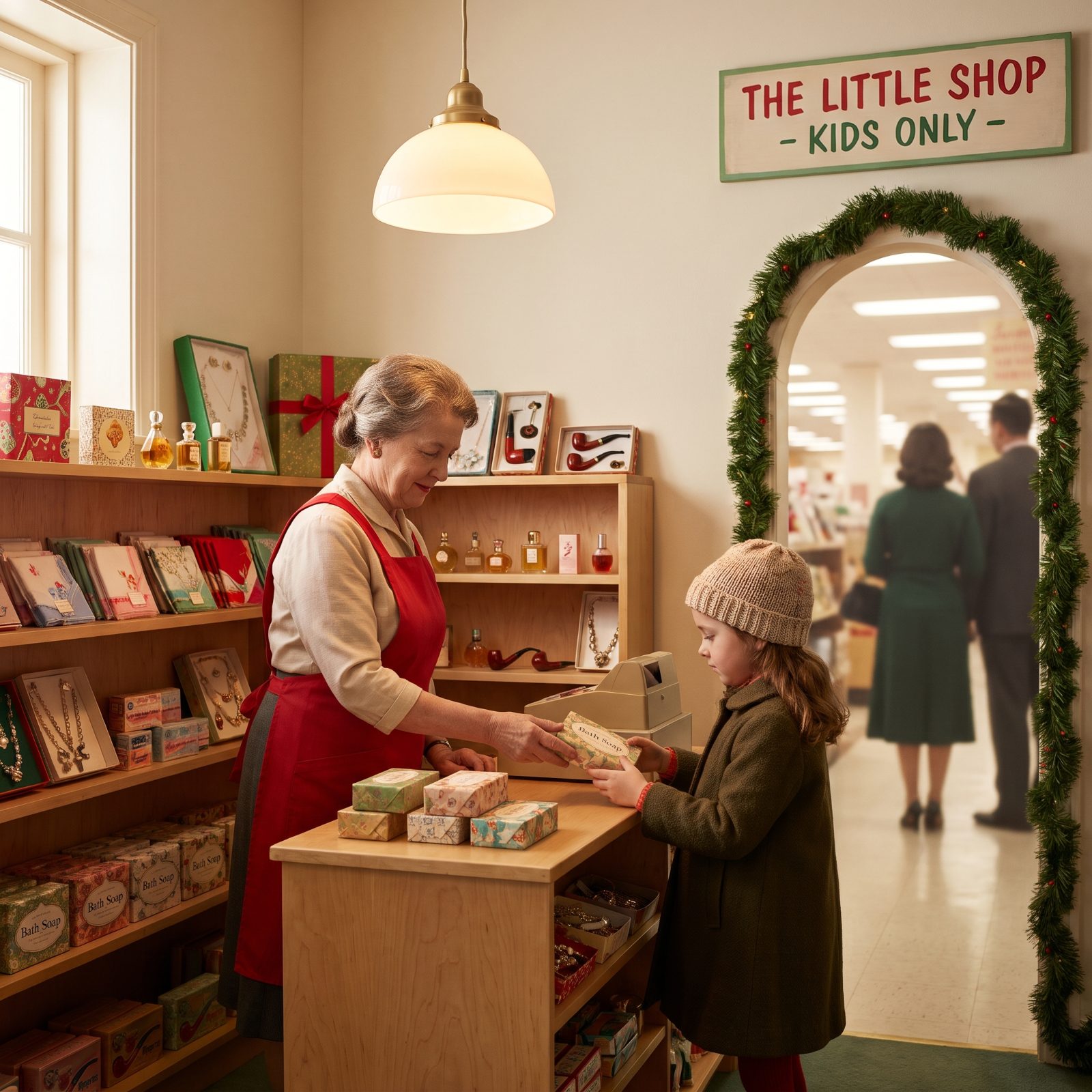
Behind a little doorway, parents weren’t allowed. This was the kids’ secret: a tiny shop stocked with cheap, giftable things — handkerchiefs, dime-store perfume, a pipe for Dad, costume brooches for Mom — all priced so a child’s saved-up quarters could cover them.
A patient clerk helped you pick, then wrapped it so Mom and Dad couldn’t peek. For once you were the shopper. You had the secret. You were the one giving instead of getting. The gifts were nothing fancy, but walking out with a wrapped box you’d bought yourself? That was the whole thing.
32. A Clerk Winding Up the Toy Right There on the Counter
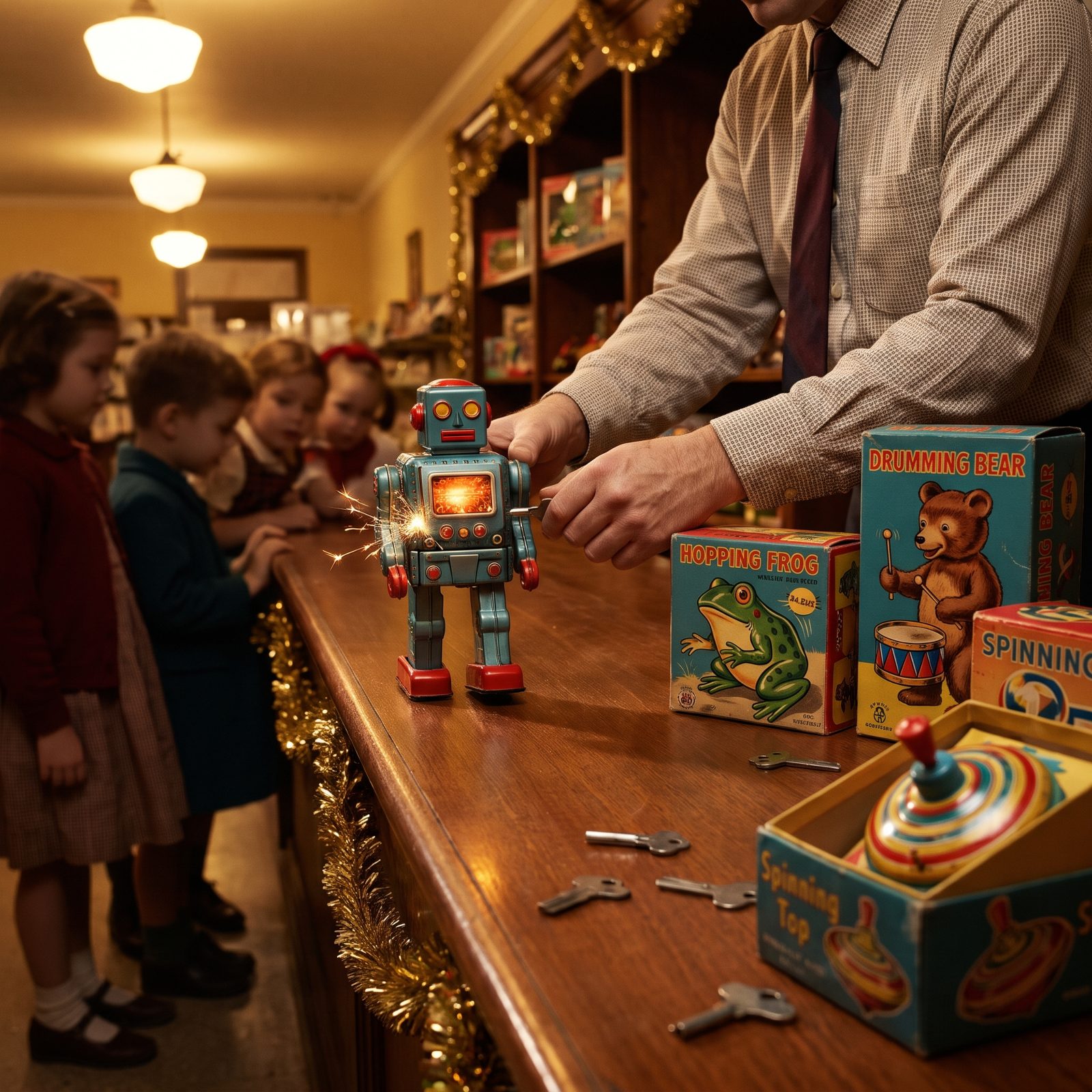
The best toys had to be seen moving. So a clerk would reach over the counter, wind the key, and set the thing loose — a tin robot marching across the wood, a frog hopping toward the edge while some kid lunged to catch it.
No review to read, no unboxing video to queue up. You watched a grown man in a shirt and tie make a mechanical bear bang a drum, and you decided right there whether you needed it. Half sales floor, half magic act. These days a product sells itself through a screen and an algorithm guessing what you’ll buy next. Back then it sold itself by hopping across a counter and nearly toppling off the edge.
31. Toymakers Building Dollhouses Right Inside Santa’s Workshop
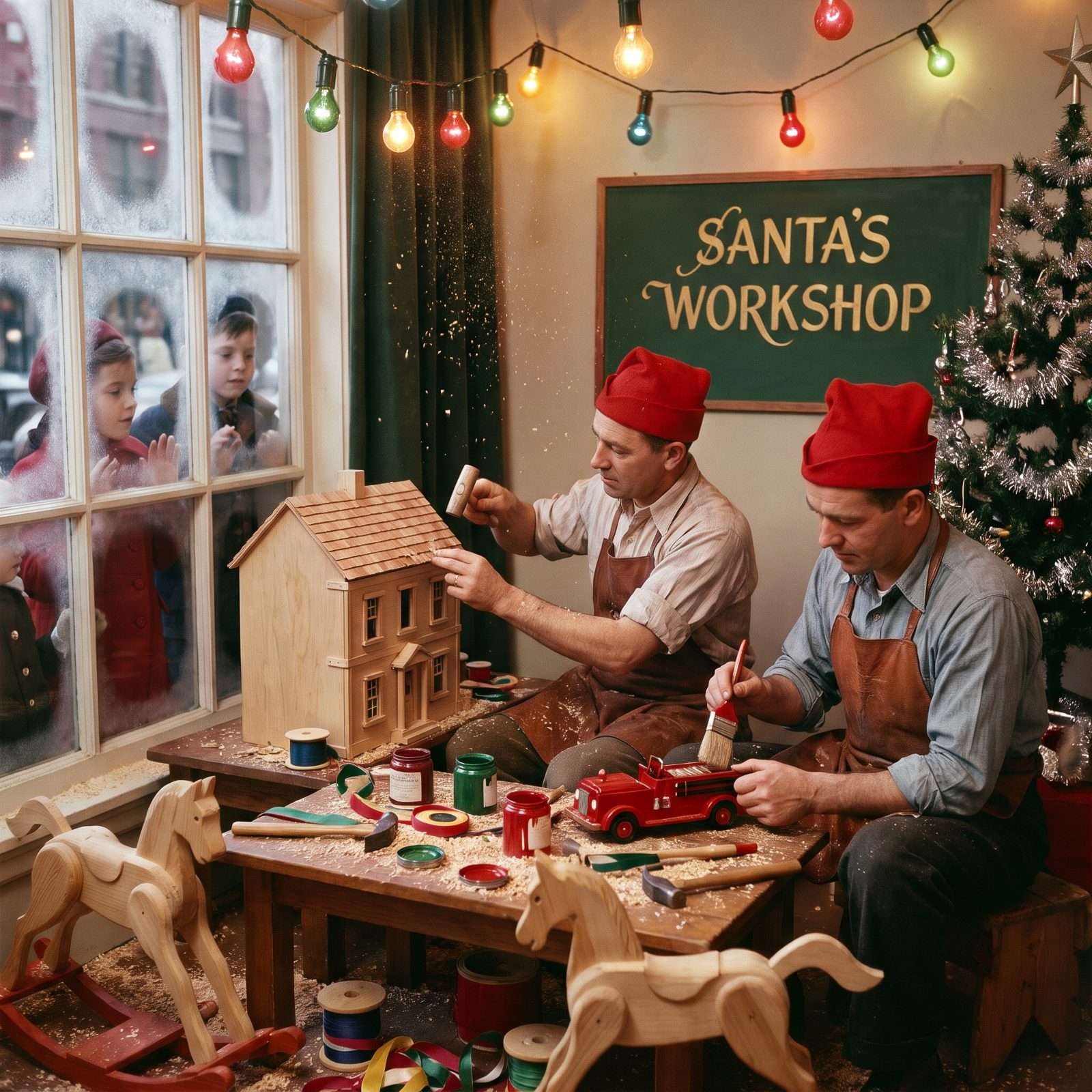
Somewhere past the toy floor, behind a painted wall trimmed in candy-cane stripes, there was a workshop, and someone was actually working in it. A craftsman in a leather apron sanded the edge of a tiny staircase, glued shingles onto a dollhouse roof, and painted shutters with a brush no wider than a matchstick.
You could stand at the rail and watch a house go up board by board over the course of a week. Kids came back on Saturdays to check the progress like it was a construction site downtown. The store could have just stacked boxed dollhouses on a shelf. Instead it showed you that toys came from somebody’s hands, and that made the ones under the tree feel a little more like they’d really come from the North Pole.
30. The Christmas Layaway Department Where You Paid a Little Each Week
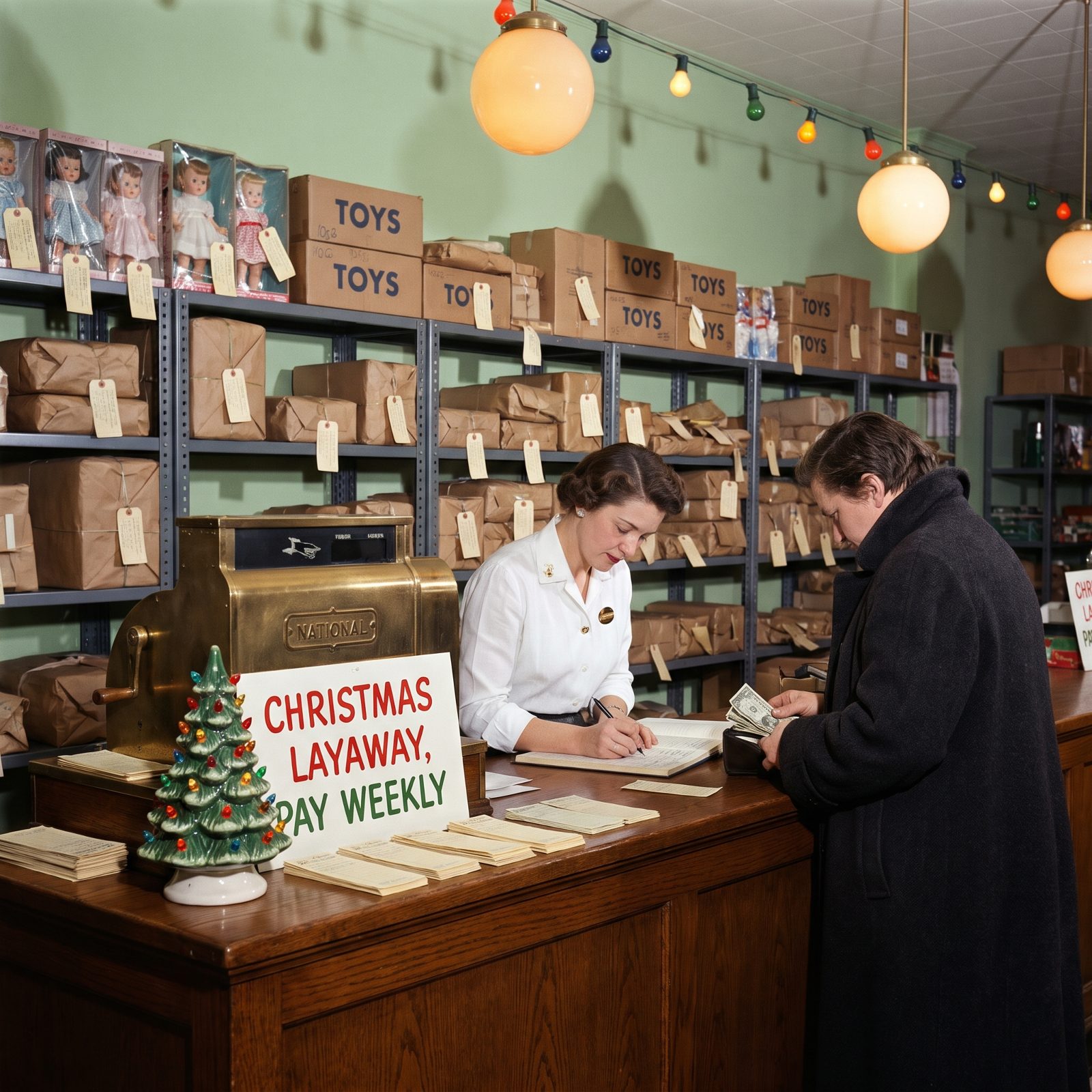
You picked out the doll or the train set in October, put a few dollars down, and the clerk tagged it with your name and carried it to the back. Every week you came in with a little more, watched the balance on your card shrink, and walked out without the thing, on purpose.
The layaway department was a back room stacked floor to ceiling with tagged packages, every one of them somebody’s Christmas in progress. No credit card, no bill showing up in January. Just patience, a paper ticket in your wallet, and the good feeling of carrying that last payment to the window in mid-December and finally taking it home, hidden under a coat on the back seat.
29. The Staffed Catalog Counter Where a Clerk Pulled Your Order From the Back
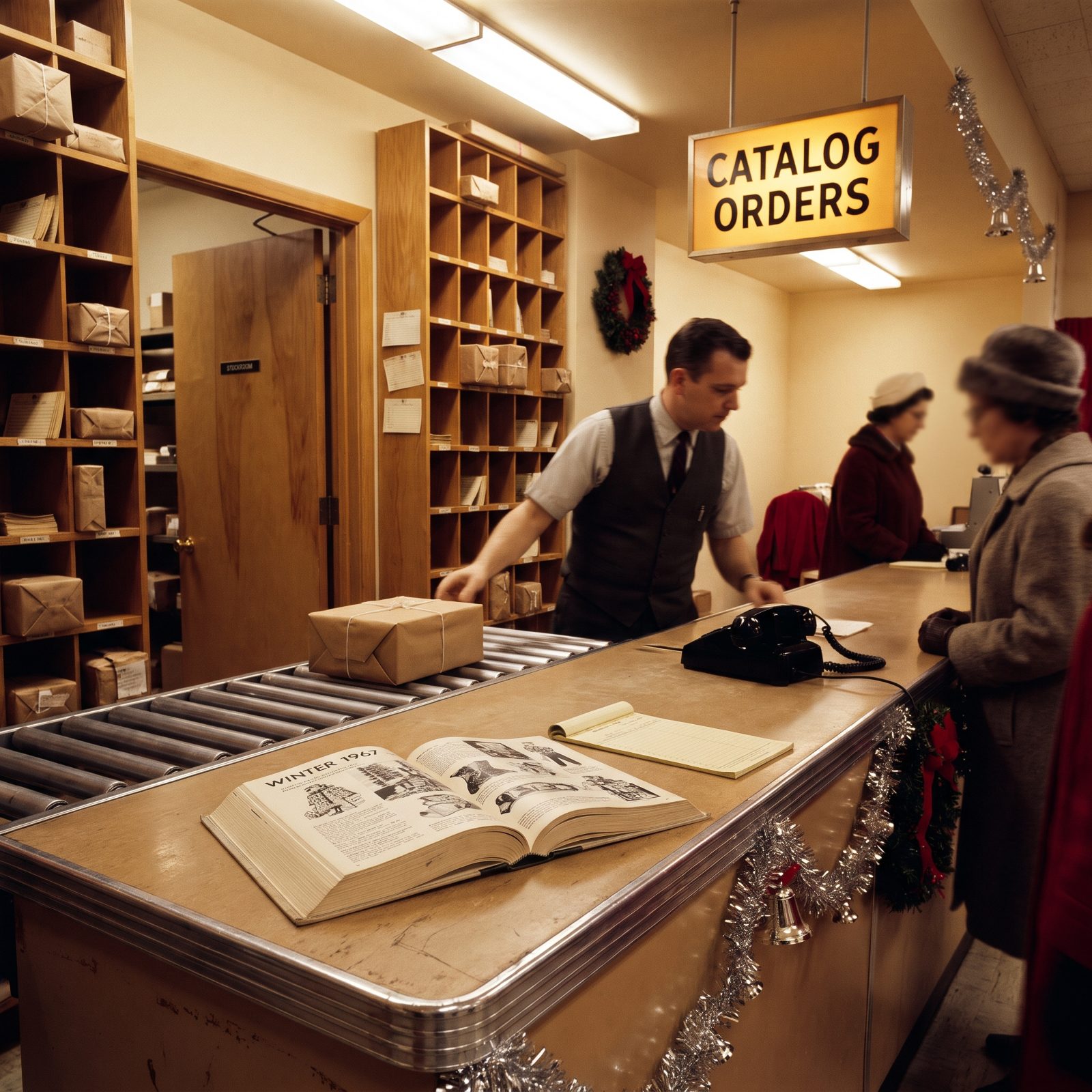
You flipped through the pages at the counter, wrote the item number on a little order slip with a stubby pencil, and handed it over. Then the clerk disappeared through a door into the back, and you waited, watching that door like it was a magician’s curtain.
A few minutes later out came your box, sometimes carried by hand, sometimes rattling down a conveyor belt at the catalog showrooms. Nobody wandered the aisles hunting for the right model number. A person who knew the stockroom went and got it. And if the item had to come from the warehouse, they called your house when it arrived and held it at the desk with your name on it.
28. Gifts Delivered Right to Your Door by the Store’s Own Van
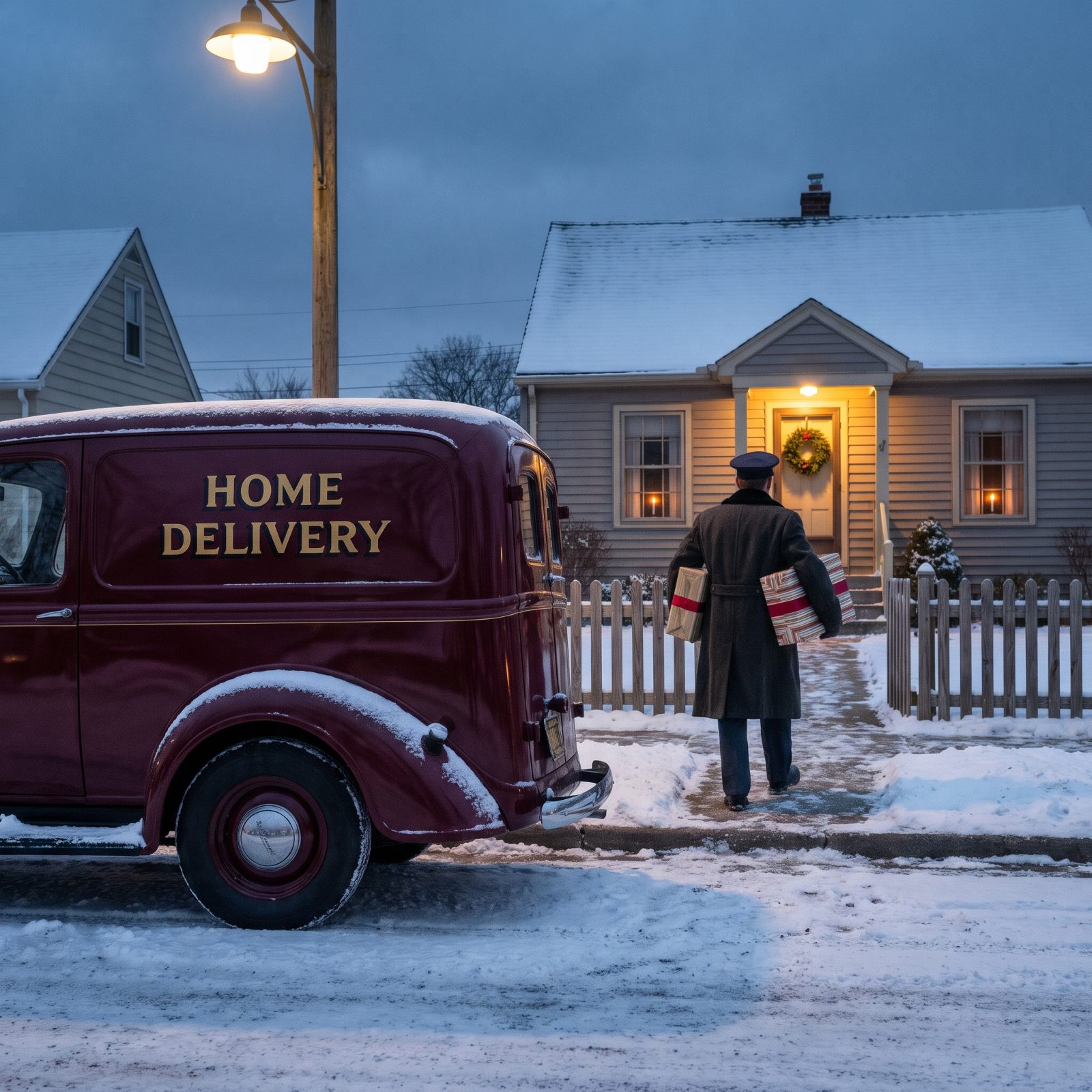
The van pulled up to the curb with the store’s name painted down the side in big script letters, and a driver in a uniform cap walked your packages right up to the front step. You’d bought them downtown that afternoon. You didn’t have to haul a single one onto the bus.
Department stores ran their own delivery fleets for exactly this, and in December those trucks crisscrossed town from morning until long after dark. The big stuff came that way, the rocking horses and toboggans and console radios, but so did the small boxes, because carrying them home simply wasn’t expected of you. Parents learned to time deliveries for school hours, then hustled everything into the hall closet before the kids got home.
27. Free Gift Wrapping, Folded and Ribboned While You Waited
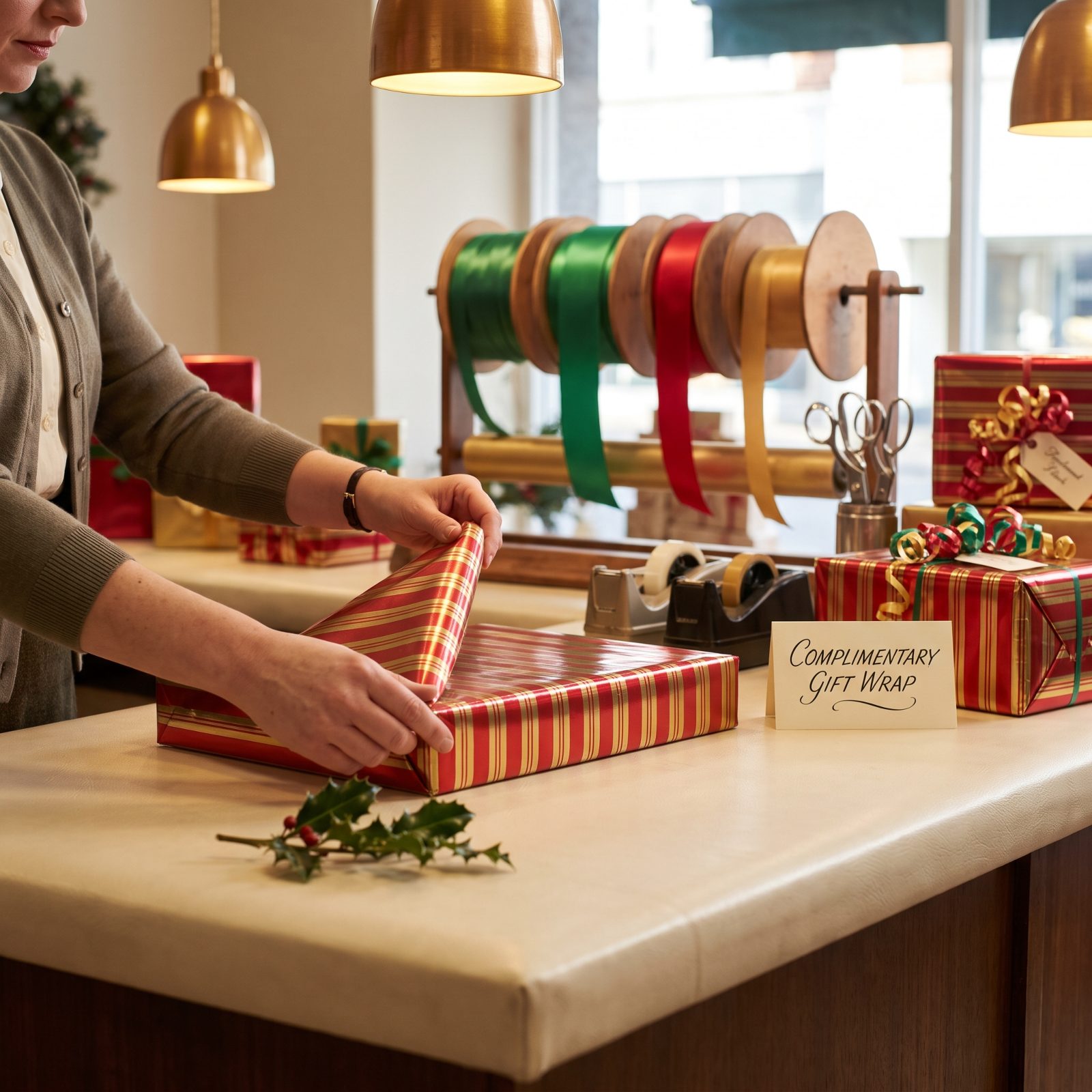
You didn’t go home and wrestle a roll of paper on the kitchen floor. You walked to the wrapping desk, handed over the sweater, and watched someone with very fast hands turn it into a present in about two minutes flat.
Crisp corners, paper cut to exactly the right length with no lumpy overlap, ribbon pulled across a scissor blade until it curled into a tight spiral. Some stores offered paper printed in their own holiday pattern. The wrapping was part of the purchase, not an upsell at a separate counter with a price list taped to it. And the gift under the tree looked like it came from somewhere special, because it did.
26. The Sturdy Gift Box Stamped With the Store’s Own Name
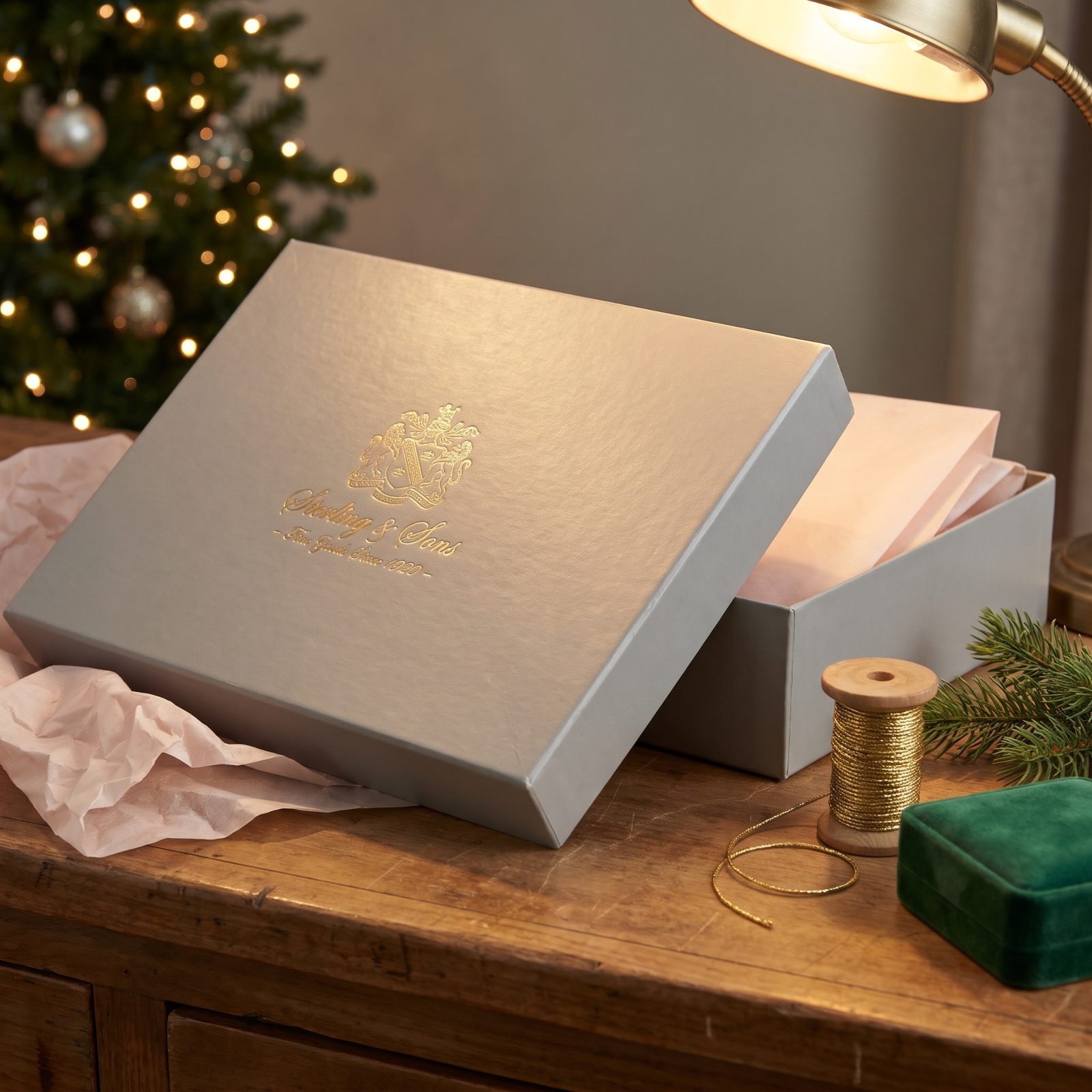
The box itself meant something. Heavy cardboard, a lid that slid off with a little whoosh of air, the store’s name pressed across the top in gold or embossed script, and a nest of tissue paper waiting inside.
Before the ribbon even came off, the person opening it could feel the weight and know exactly where it came from. A good department store box got saved, too. It was reused for years, the name fading at the corners, until it turned up under the tree holding something from a different store entirely. Families stacked them in the attic like heirlooms. Now the purchase comes home in a plastic bag, and the gift box is a separate thing you pay for at the register.
25. Free Engraving That Turned a Pen or Watch Into an Heirloom
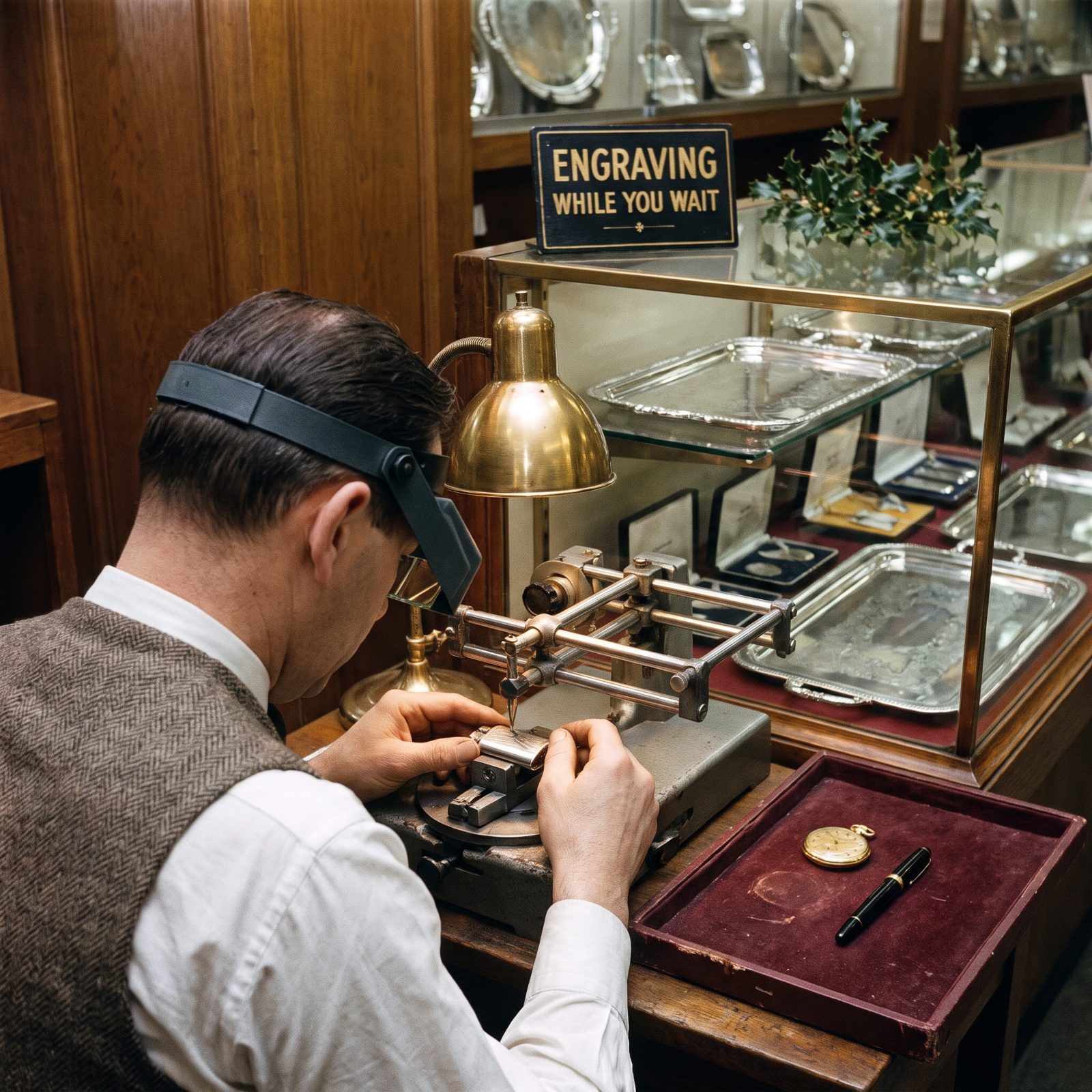
You bought the fountain pen, the pocket watch, the silver baby cup, and before you left the counter someone etched initials into it. A date. Sometimes a short line like “To Dad, Christmas” and the year, cut in neat script while you waited or ready to pick up the next day.
That small service changed what the gift was. A pen is just a pen until it carries a name, and then it’s something that gets handed down. Plenty of those engraved watches and lighters are still sitting in dresser drawers decades later, kept long after they stopped working, because nobody can bring themselves to part with a thing that has a grandparent’s initials on the back.
24. The Service Counter That Assembled Bicycles and Sleds Before Christmas Eve
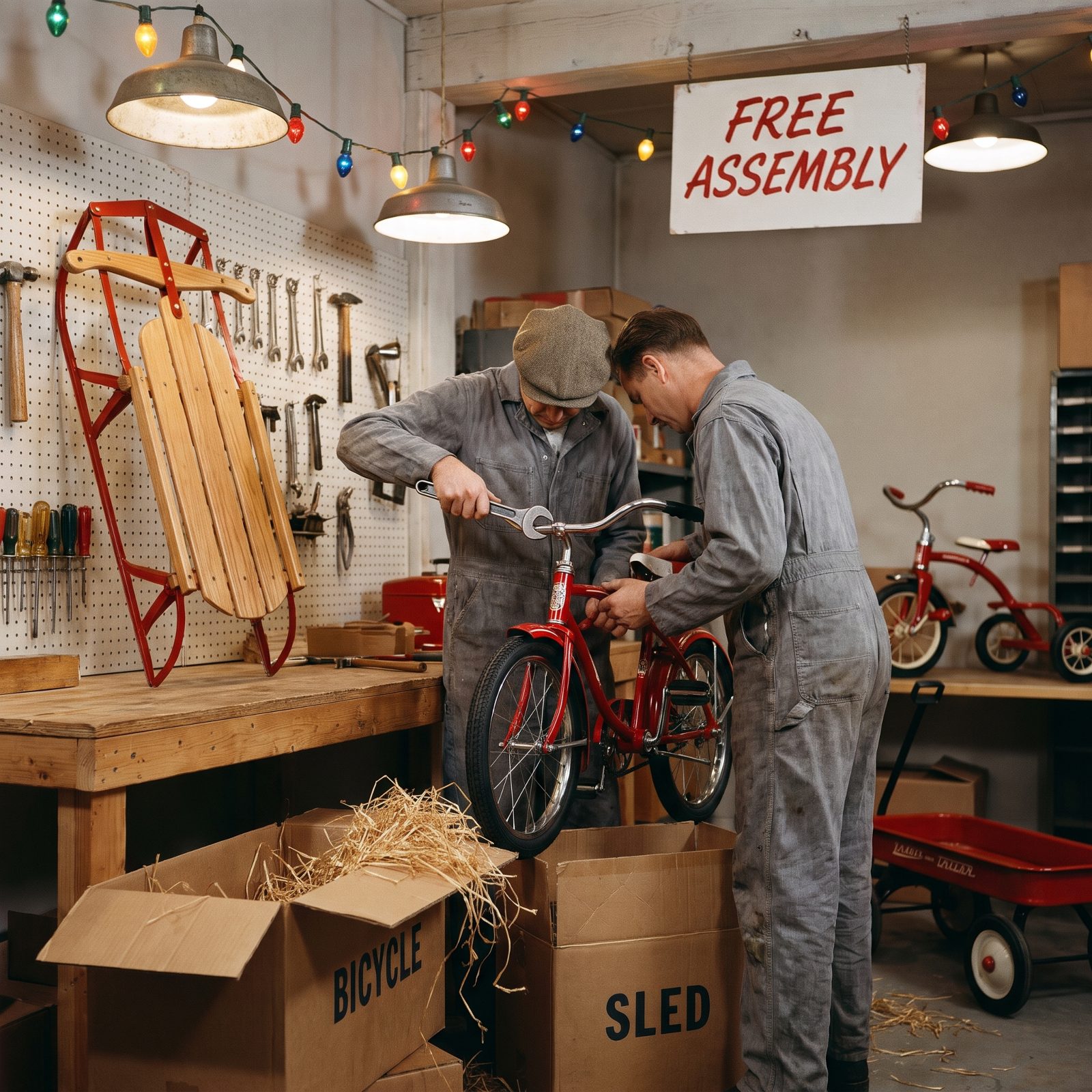
You bought the bike. The store built it, so your kid woke up to something gleaming under the tree instead of a cardboard box full of parts and an instruction sheet written by someone who clearly despised fathers.
That back-of-the-department service counter ran hardest the week before Christmas — men in coveralls tightening handlebars, squaring up sled runners, oiling wagon axles until the whole thing rolled. You picked it up finished. Or you had the van bring it over once the kids were down for the night.
23. Gift Advisers Who Actually Knew Every Item on the Floor
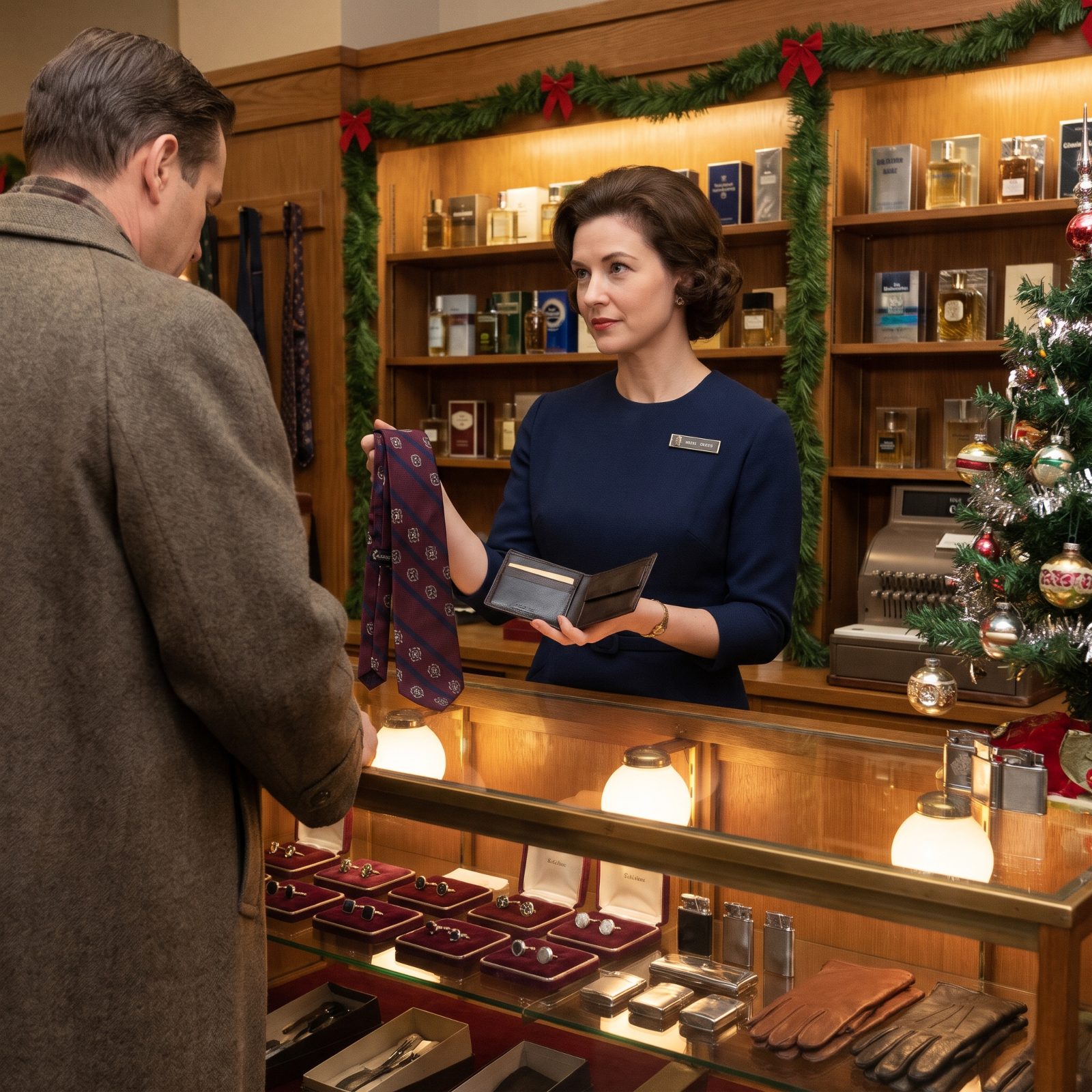
You walked in with a vague idea, something for your father-in-law, maybe for the den, and a clerk who had worked that floor for years started asking questions. Does he fish? Does he read in bed? What did you get him last year?
These weren’t seasonal temps restocking shelves. Many were career salespeople who knew every item in their department, which gloves held up through a Midwest winter and which wallet split at the fold by spring. They’d walk you across the floor, pull three options, and tell you straight which one they’d pick. You left with the gift and the confidence that it was the right one. Try getting that from a search bar.
22. Fully Furnished Rooms Staged Top to Bottom With Gift Ideas
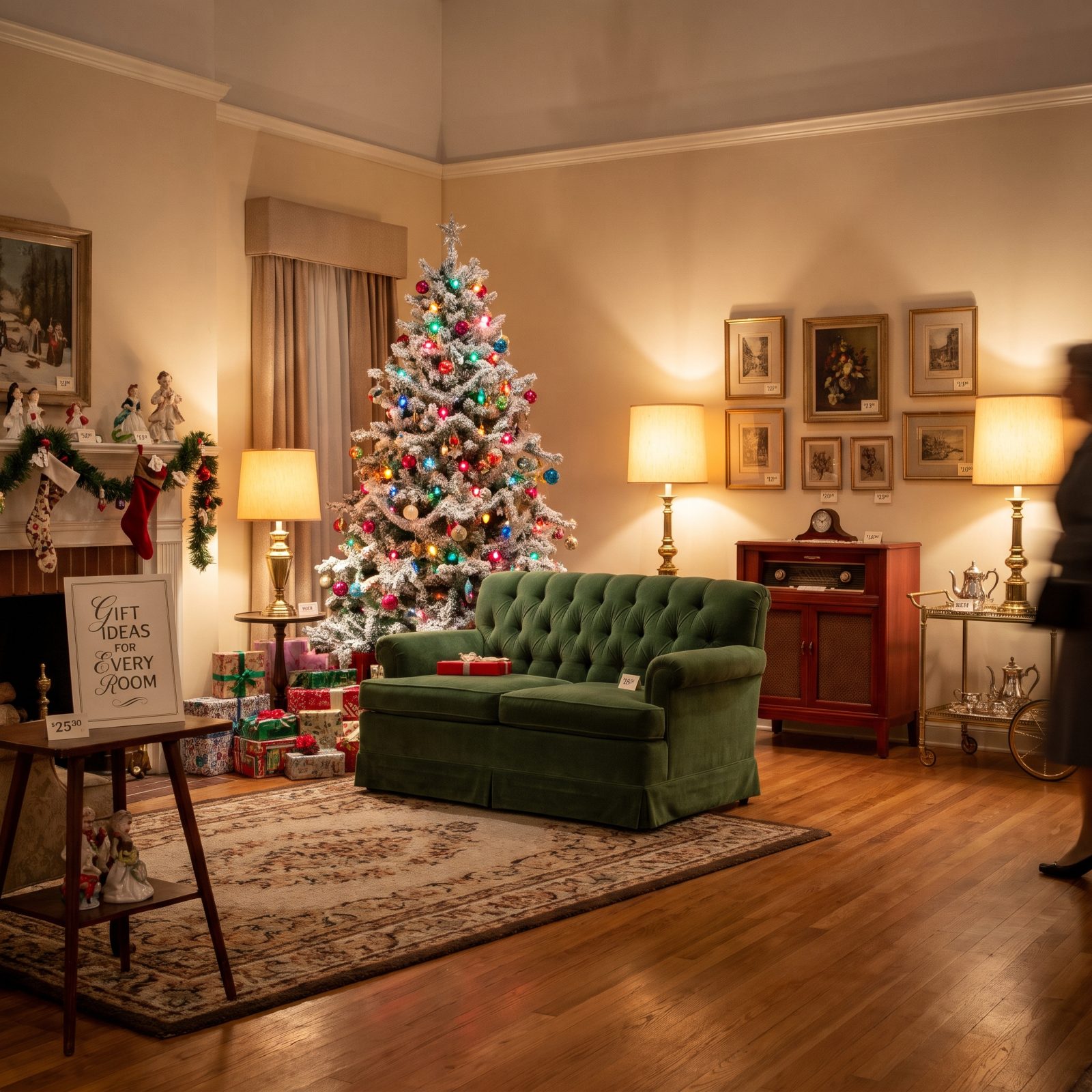
Turn a corner on the furniture floor and there it was: a whole living room set for Christmas morning, tree trimmed in the corner, stockings hung on a mantel, a plaid robe draped over the armchair, a new record player waiting on the side table. Next door, a dining room laid for the holiday meal with the good china and a centerpiece of holly and candles.
Every object in those rooms was for sale, and every one of them was a gift idea you never would have dreamed up standing in your own kitchen. Families strolled through like it was a museum, picturing their own house looking that put-together on Christmas Day. The store wasn’t just selling a lamp or a pair of slippers. It was selling the whole scene, and letting you walk around inside it for free.
21. Complimentary Parcel-Check Counters You Could Trust With Everything
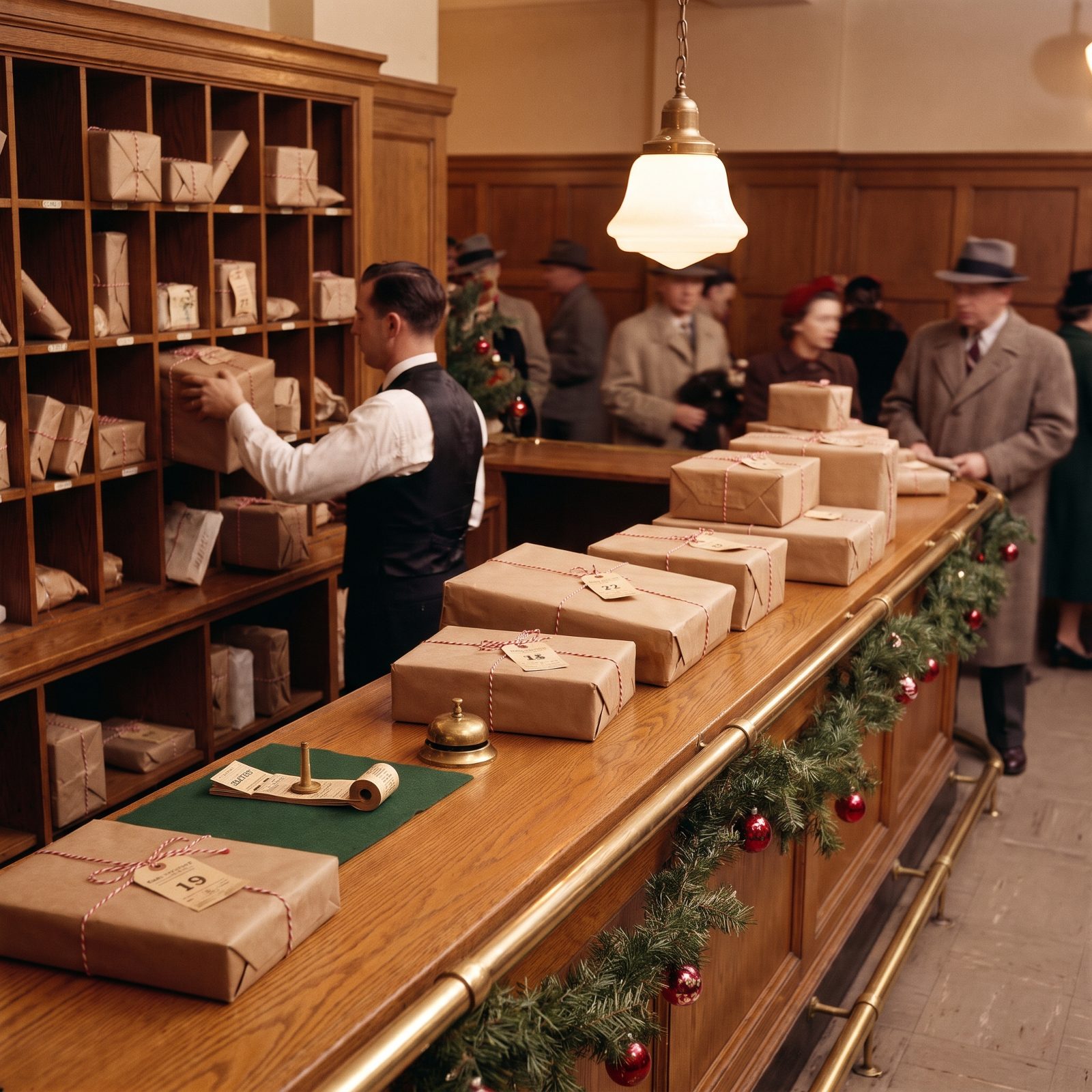
Back then you handed a stranger behind a counter an armload of wrapped presents, took a little numbered paper tag, and walked away without a second thought. The counter held your whole afternoon of shopping while you kept going.
No locker, no fee, no app. A clerk stacked your packages in a numbered cubby and you tucked the tag into your coat pocket. You shopped three more floors, ate lunch at the counter, and came back for it all at the end. The trust baked into that little slip of paper is the part that sticks.
20. Uniformed Porters Who Carried Your Packages All the Way to the Car
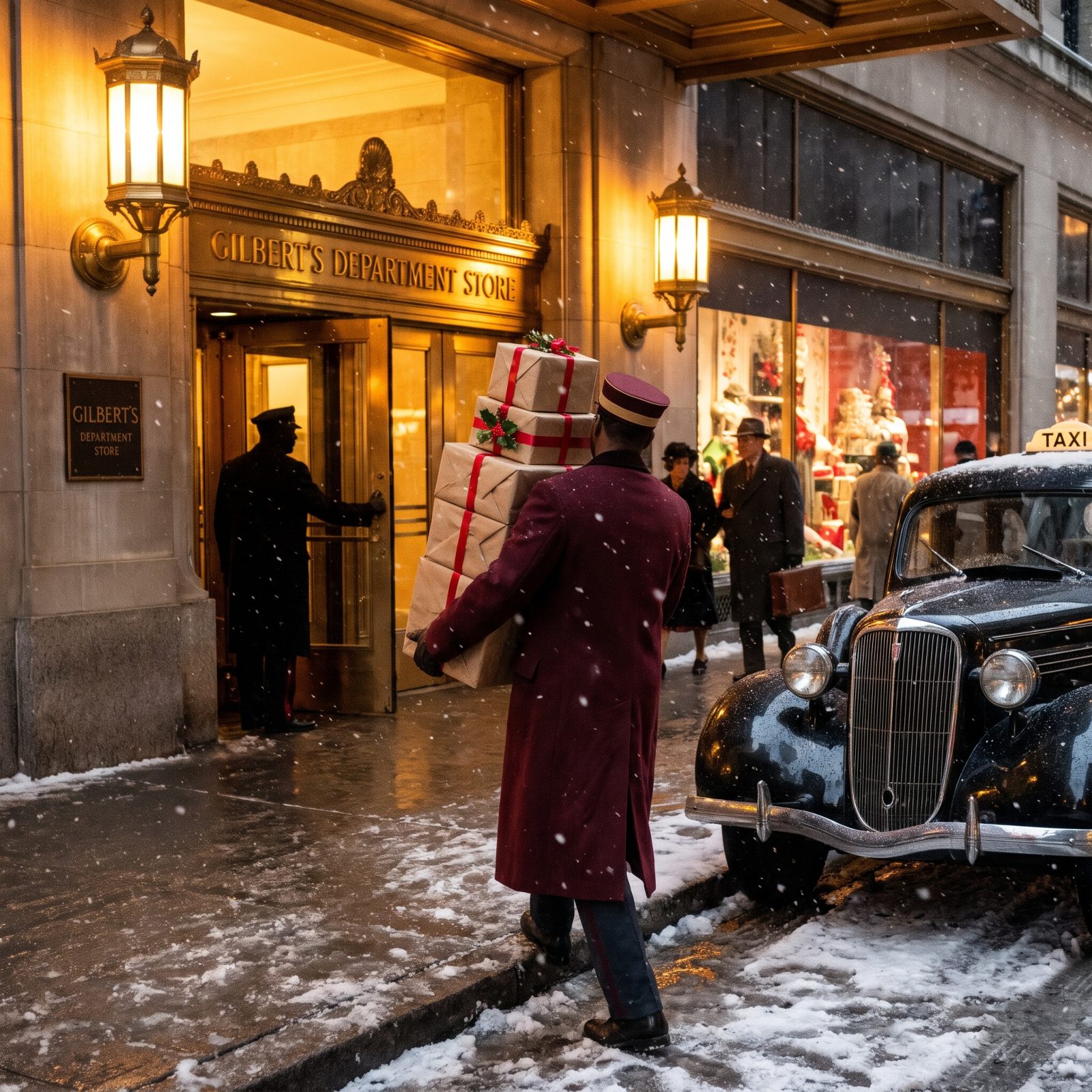
Imagine finishing your shopping with your arms empty. You paid, you walked out, and a porter in a brass-buttoned coat followed behind with every box balanced in a neat tower, walking you right out to the car at the curb.
These were real staff, in real uniforms, and they knew the lot cold. They loaded the trunk, wished you a merry Christmas, and went back for the next shopper. Nobody expected a tip to earn it, though plenty of folks slipped one anyway. The whole thing said something about how a store saw you — not a transaction, but a guest it walked to the door.
19. Coat-Check Rooms Where You Shopped in Shirtsleeves
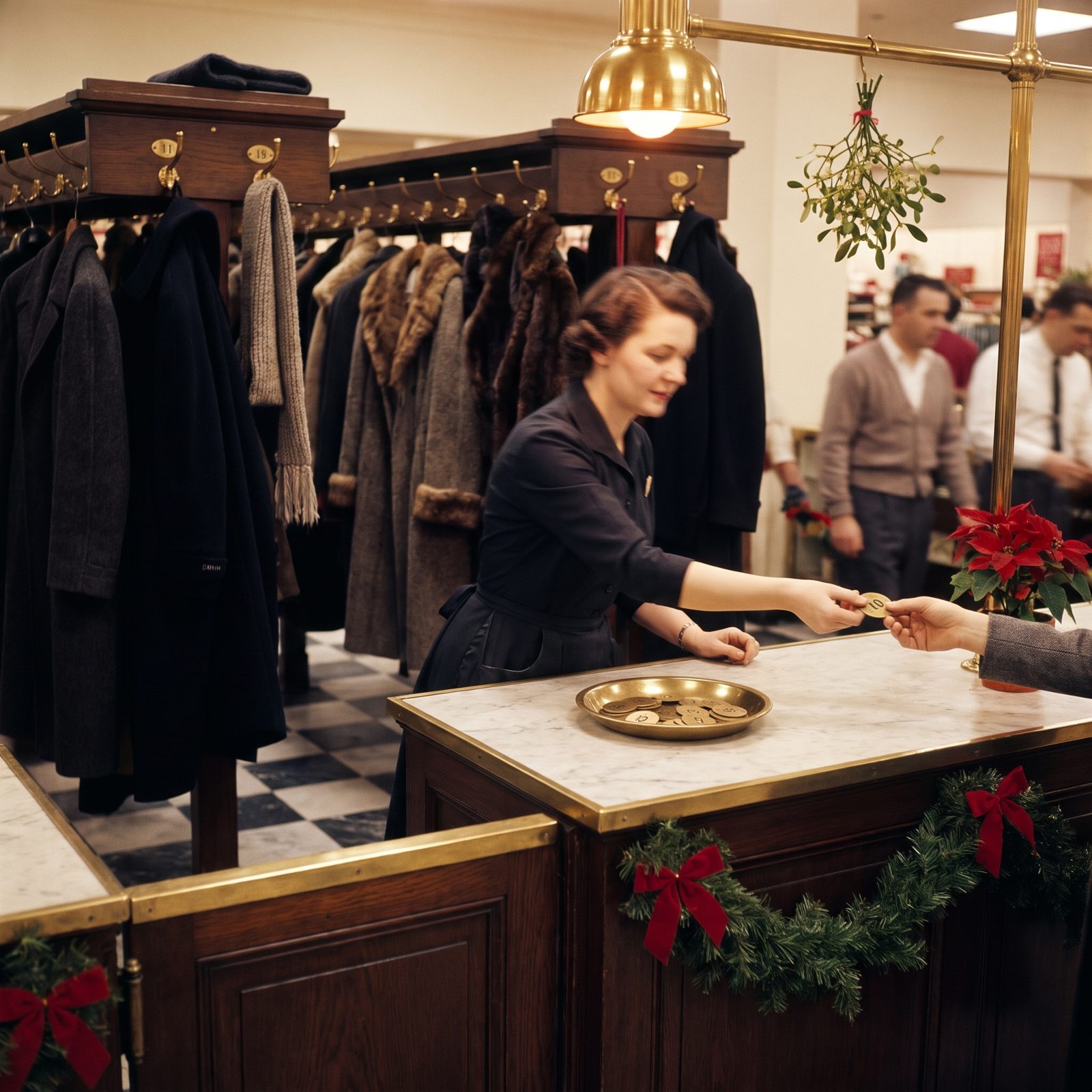
Walking into a warm store in a heavy wool coat is its own small misery. The old department stores solved it before you reached the escalator. You handed over your overcoat and scarf, took a little brass disc, and shopped in shirtsleeves like you owned the place.
Freed of twelve pounds of damp wool, you lingered. You browsed slower. You tried on the gloves without juggling your own coat over one arm, and that was the quiet genius of it — a shopper who isn’t overheated and burdened stays longer and buys more. The store knew it. You just felt looked after.
18. Elevator Operators in Their Christmas Finest
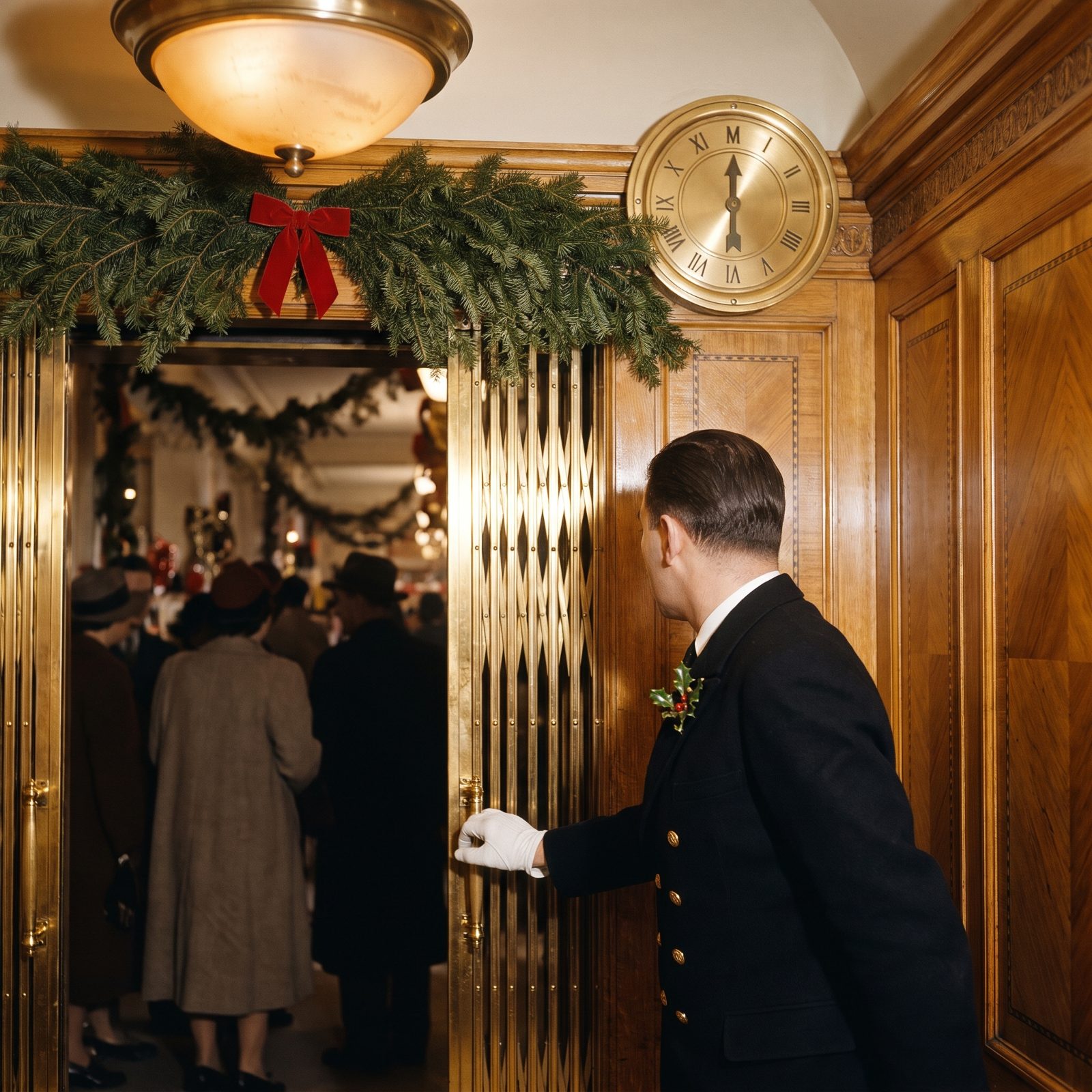
“Third floor, toys, trimmings, and Santa’s workshop.” A white-gloved attendant held the brass gate open onto a crowded, garland-hung sales floor, and someone announced your arrival like a conductor on a train.
The operator worked a lever to bring the car level with the floor, slid the accordion gate open by hand, and called out the departments. At Christmas they wore a sprig of holly or a tiny bow, and they knew the regulars by name. Forty seconds, maybe. Felt like an occasion anyway.
17. Cash and Receipts Whizzing Overhead Through Pneumatic Tubes
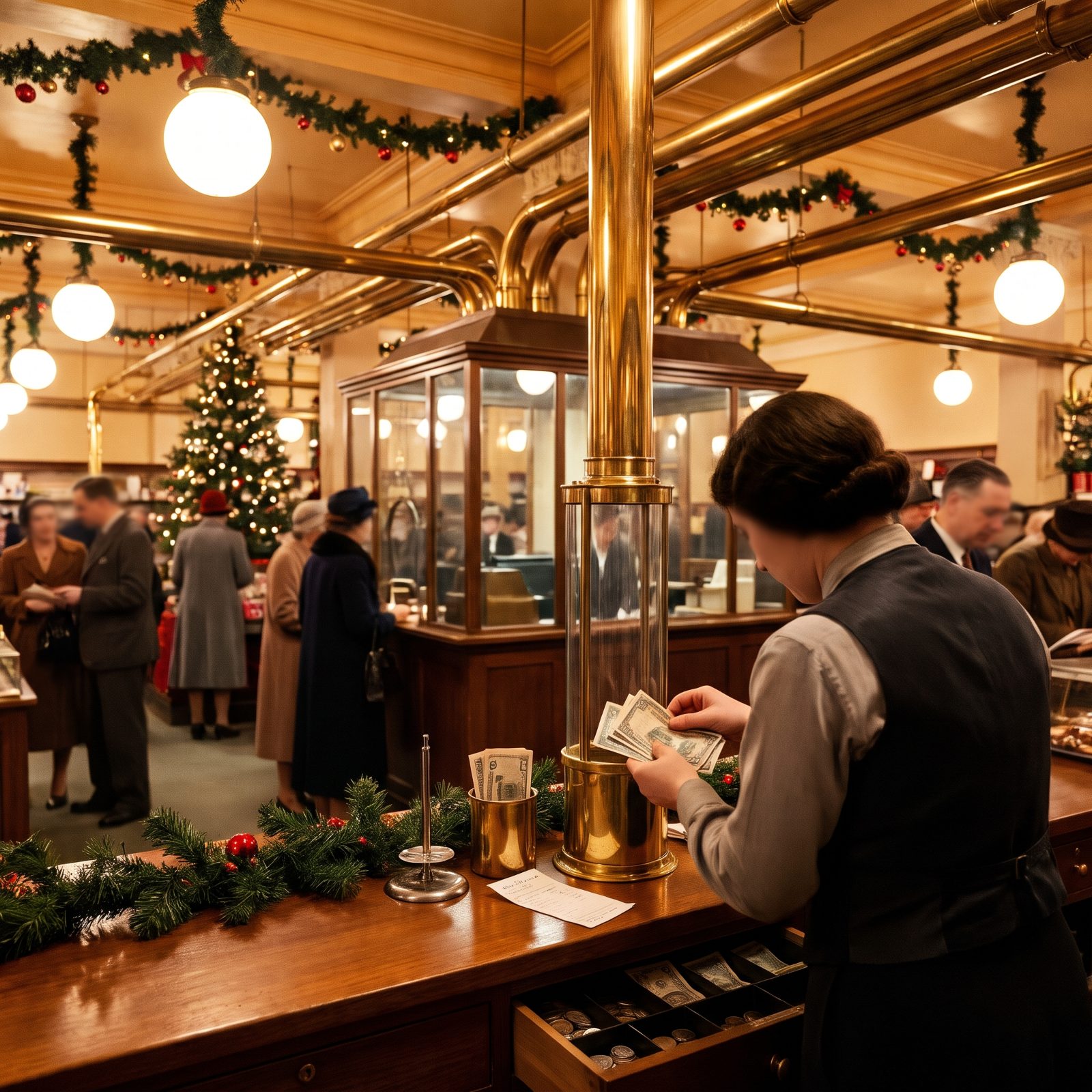
You paid the clerk, who kept no cash drawer at the counter. She tucked your bills and the carbon-copy receipt into a brass carrier, ready to send it up into the tubes overhead with a satisfying whoosh.
Across the floor a cashier in a booth checked it over, stamped the receipt, and sent the carrier rattling back. A few minutes later it landed with a thunk and the clerk counted your change out of the carrier. Kids pressed up against the counter just to watch the carrier shoot away. It put a second set of eyes on every sale, sure — but nobody cared about the logic. It was theater.
16. Ornate Gift Certificates That Came in Their Own Presentation Envelope
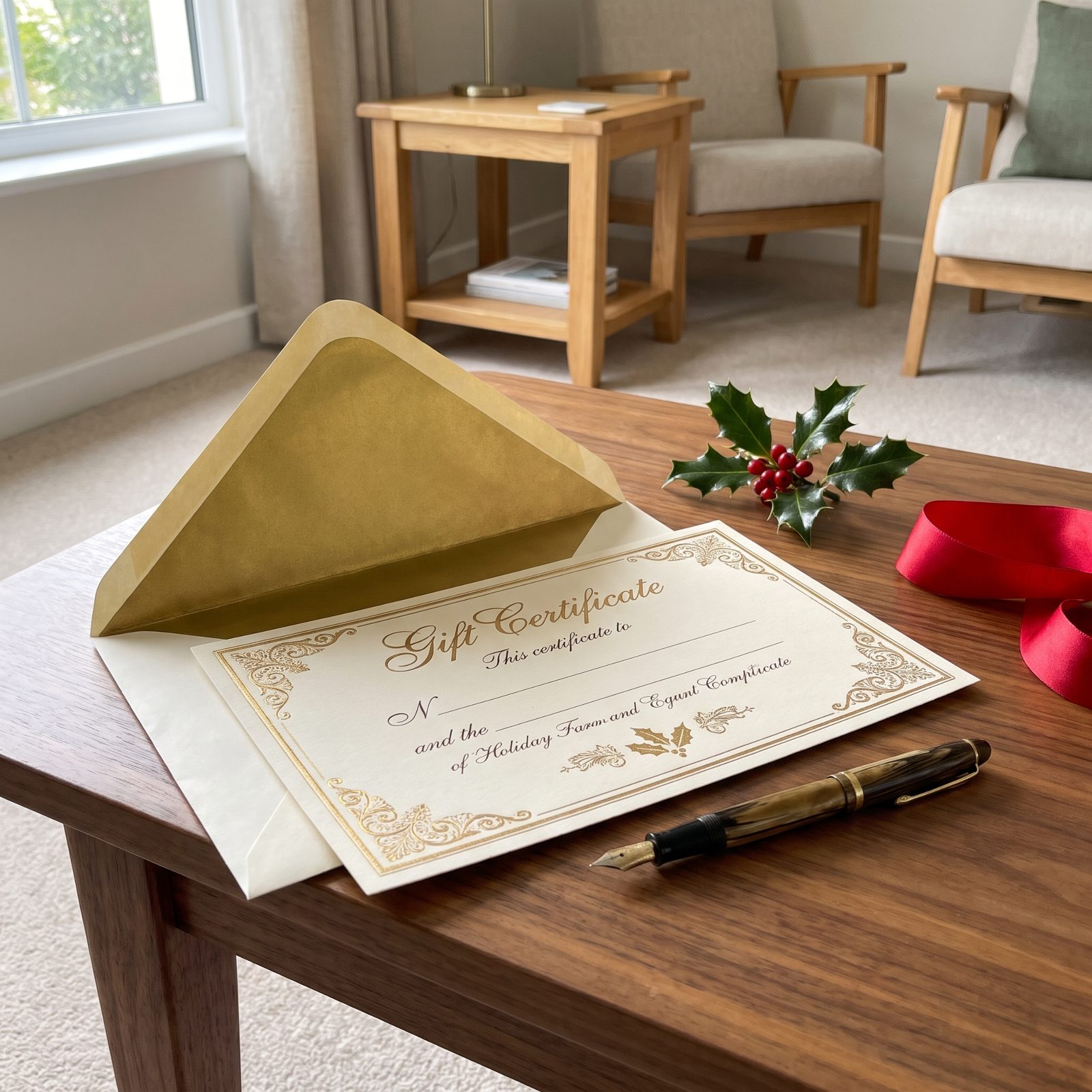
Before plastic cards in cardboard sleeves, a gift certificate was a document. Engraved borders, a dollar amount filled in by hand in fountain-pen script, your name written on the line. It slid into a lined envelope that felt like something from a wedding.
Giving one didn’t feel lazy — it felt generous, because the thing itself had weight. The clerk signed it, stamped it, and handed it over like a diploma. Sometimes you tucked a bill into the envelope flap, just to make it heftier. We’d take one of those over a slim gift card any Christmas.
15. Holiday Trading-Stamp Redemption Centers Buzzing in December
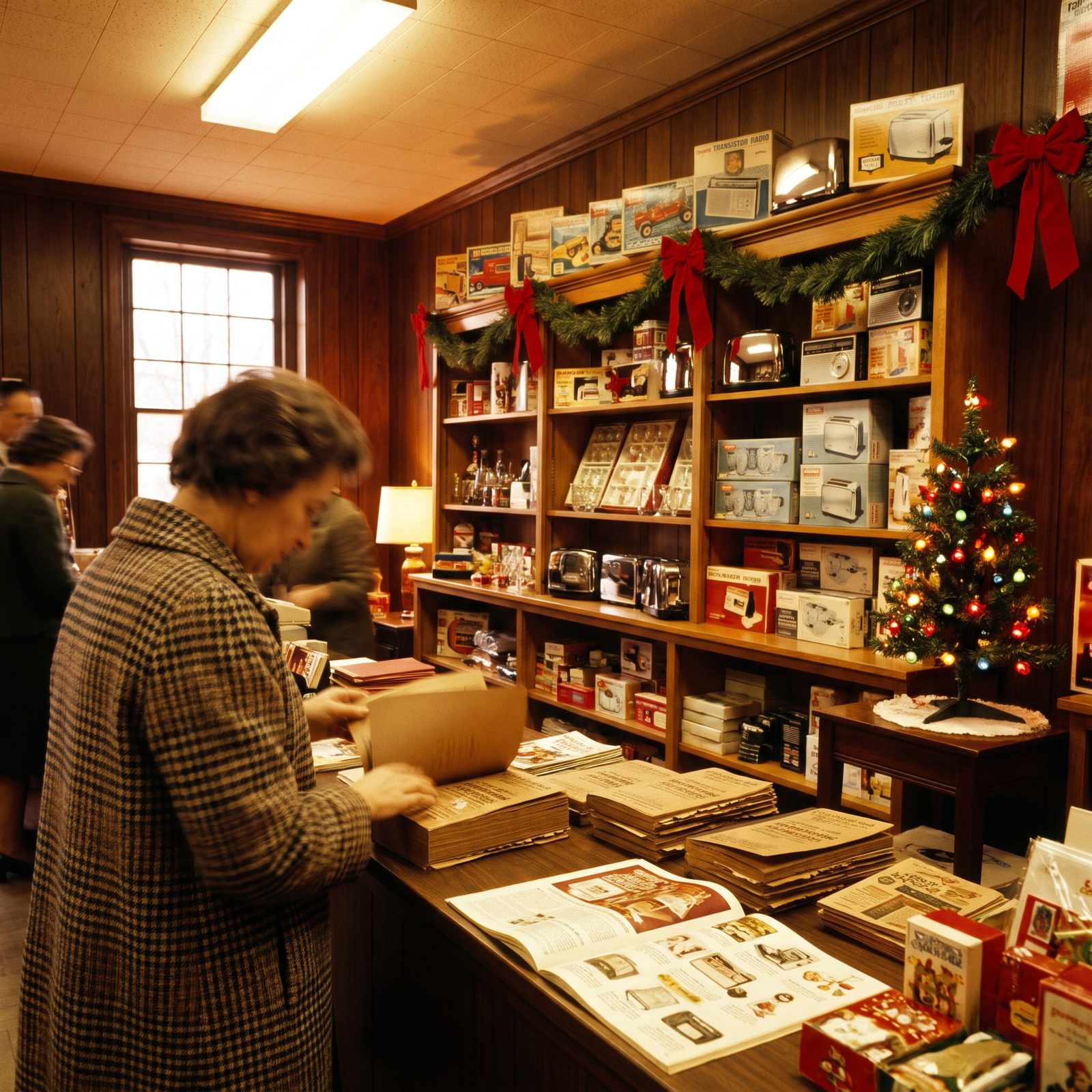
You spent all year licking stamps and pasting them into little books. Every grocery run, every fill-up, a strip of stamps you wet with a sponge and stuck in rows. Come December, those books turned into Christmas presents.
The redemption center was the payoff. You cashed in a year’s worth of stamps and walked out with a toaster, a radio, a boxed board game — whatever the catalog priced at the right number of books. Near Christmas the place got frantic. Lines out the door, folks leafing through the stacks of catalogs and flyers piled on the counter, picking out one more prize.
14. Rooftop Winter Carnivals Perched Above the City
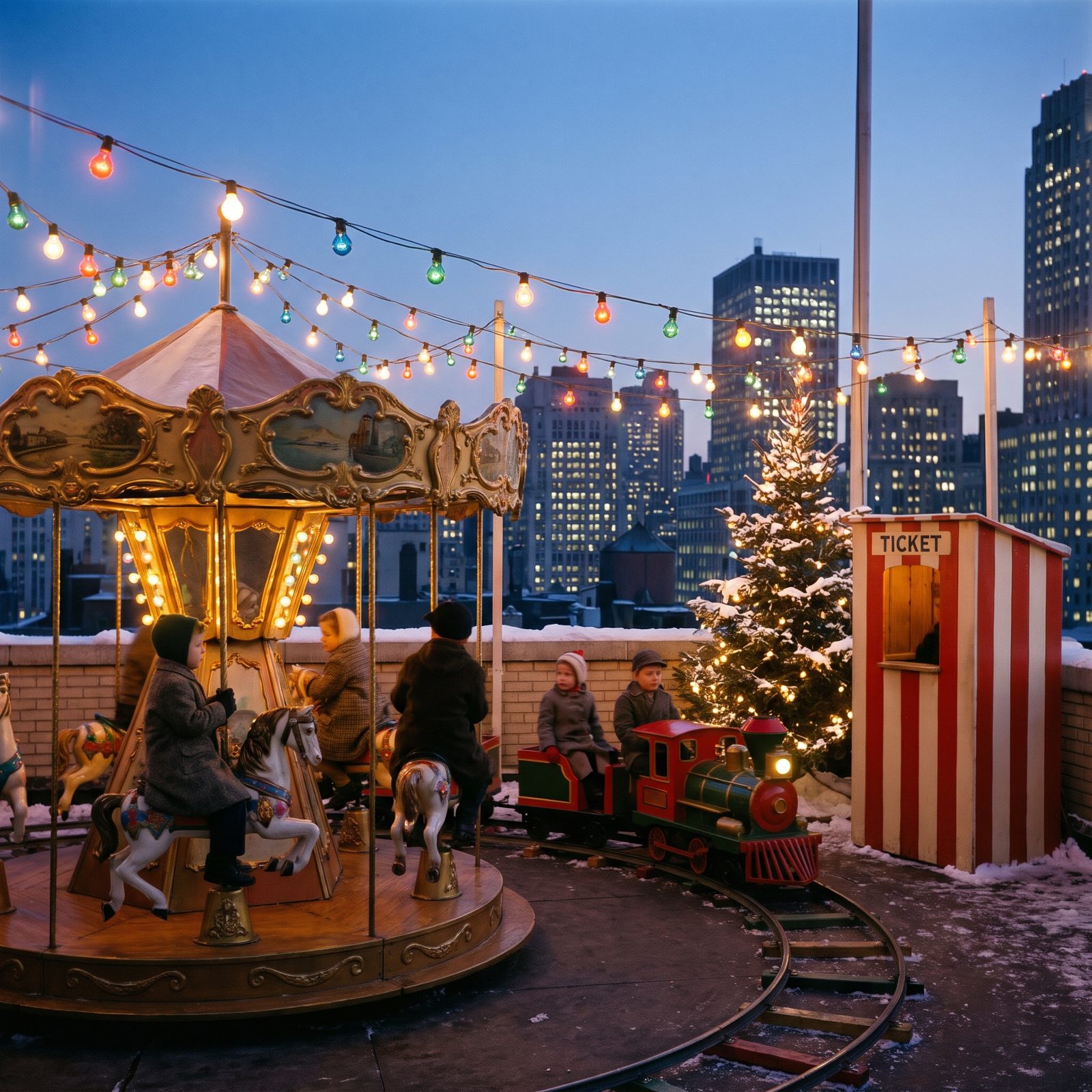
Some stores put a whole carnival on the roof. Up past the top floor, out onto the open deck above the city, kids rode a little carousel and a kiddie train while the skyline glowed beyond the parapet.
Picture riding a merry-go-round at dusk, nine stories up, Christmas lights strung between the poles and your breath fogging in the cold. Parents shopped downstairs while the kids got turned loose on the roof with a strip of ride tickets. It gave a family a reason to make the trip downtown an all-day outing, and it worked on every one of them.
13. Live Reindeer Displays That Stopped Kids Cold
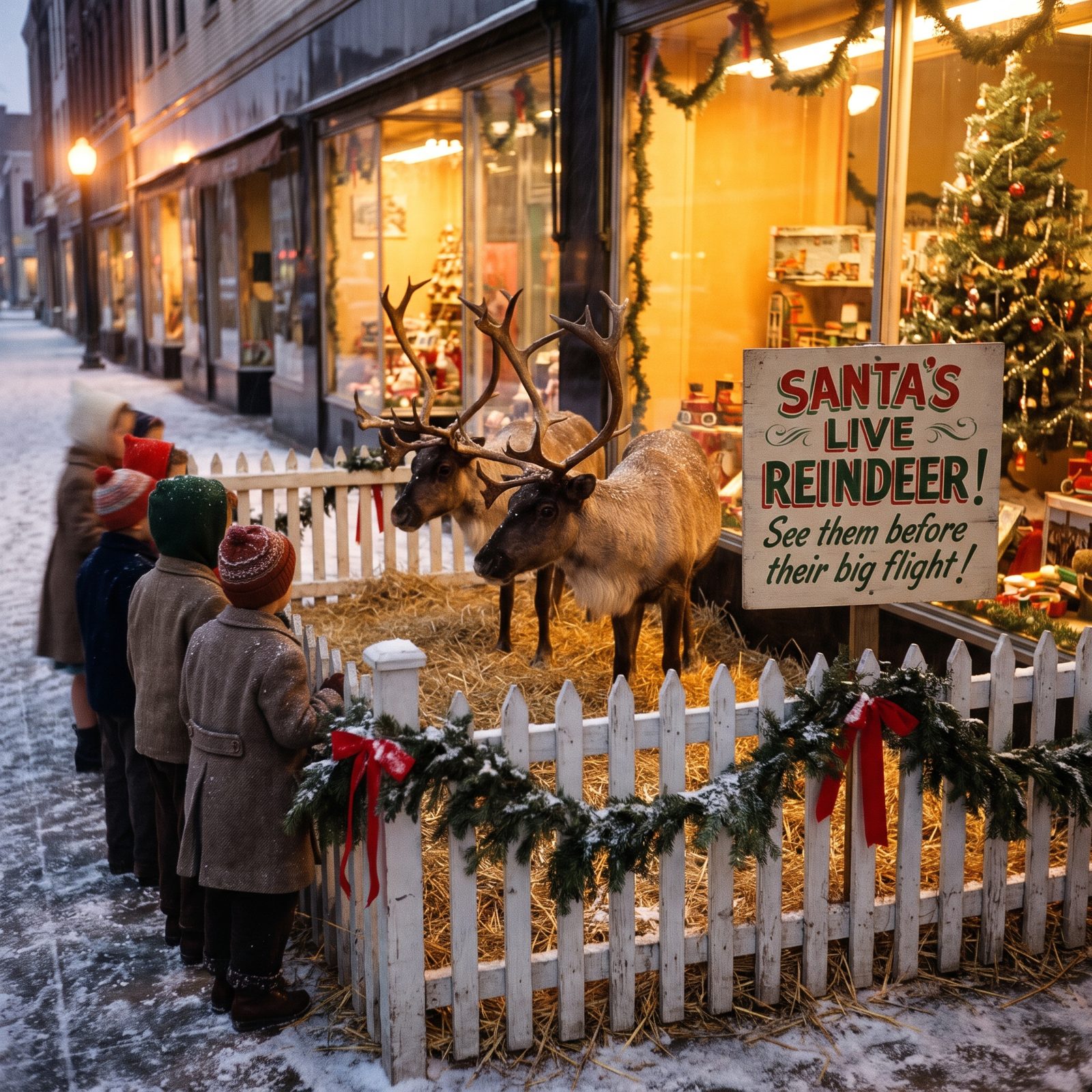
A live reindeer in a straw pen on the sidewalk. That’s all it took. Kids lost their minds, pressing against the picket fence, certain they were looking at one of the actual eight.
Stores rented them for the season and penned them near the entrance under a hand-lettered sign. The reindeer mostly chewed hay and ignored everyone, which somehow made it more convincing. For a child, proof of Santa stood ten feet away, breathing steam into the cold. You dragged your parents past it on every single visit, and they let you — because the look on your face was the whole reason to come downtown in the first place.
12. Real Evergreen Garlands Strung Through Every Aisle
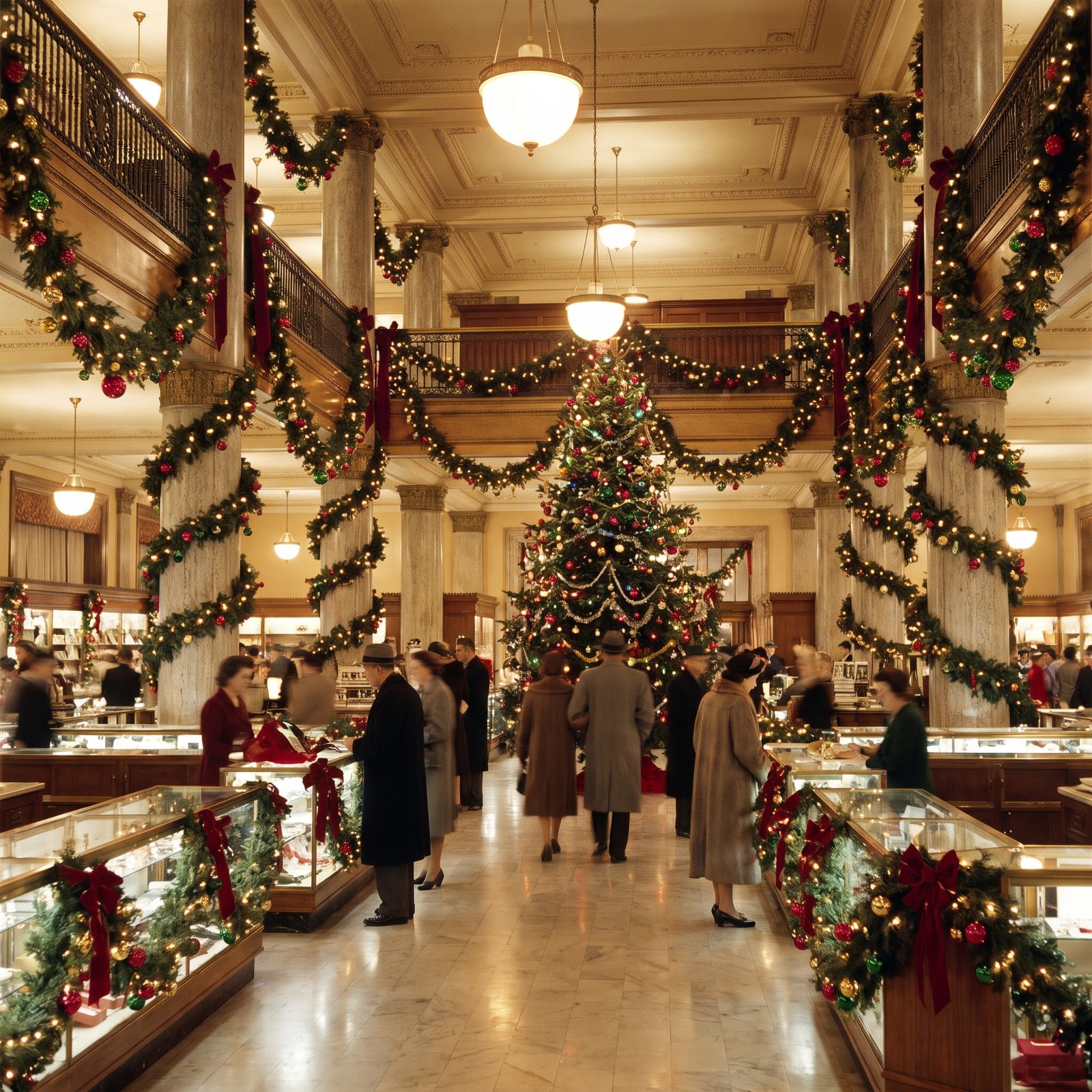
You smelled Christmas before you saw it. Real pine garland, miles of it, swagged along every balcony rail and wrapped around every column, dropping needles on the marble floor that someone swept up all day long.
None of it was plastic. The whole store smelled like a forest, and that scent tangled up with the memory so completely that a single whiff of fresh fir still drops grown adults straight back to a department store atrium in December. Stores burned through truckloads. Messy, flammable, gone brown by New Year’s. Worth every needle.
11. The Nativity Scene That Took Up a Whole Store Window
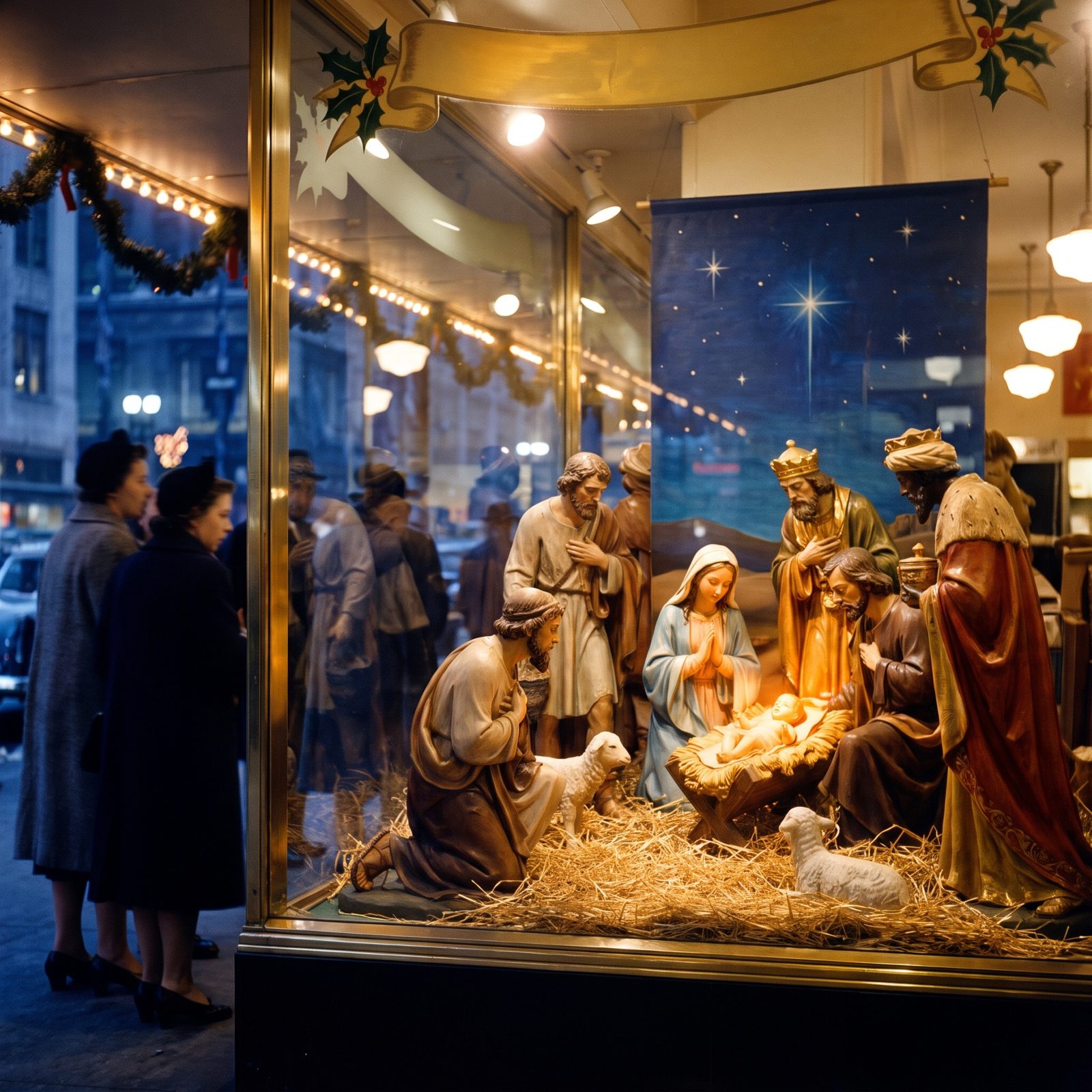
You stopped walking. A full window handed over to a manger scene, the figures nearly as tall as a child, straw scattered across the display floor like someone had actually mucked out a stable on Main Street.
Stores began building these in October and spent weeks on them — the painted sky, the hidden bulb warming the manger, the kings angled just so, and not a single sale sign anywhere near it. For a few feet of sidewalk, a shop window asked you to be quiet.
10. Live Organ Music Rolling Through the Main Hall
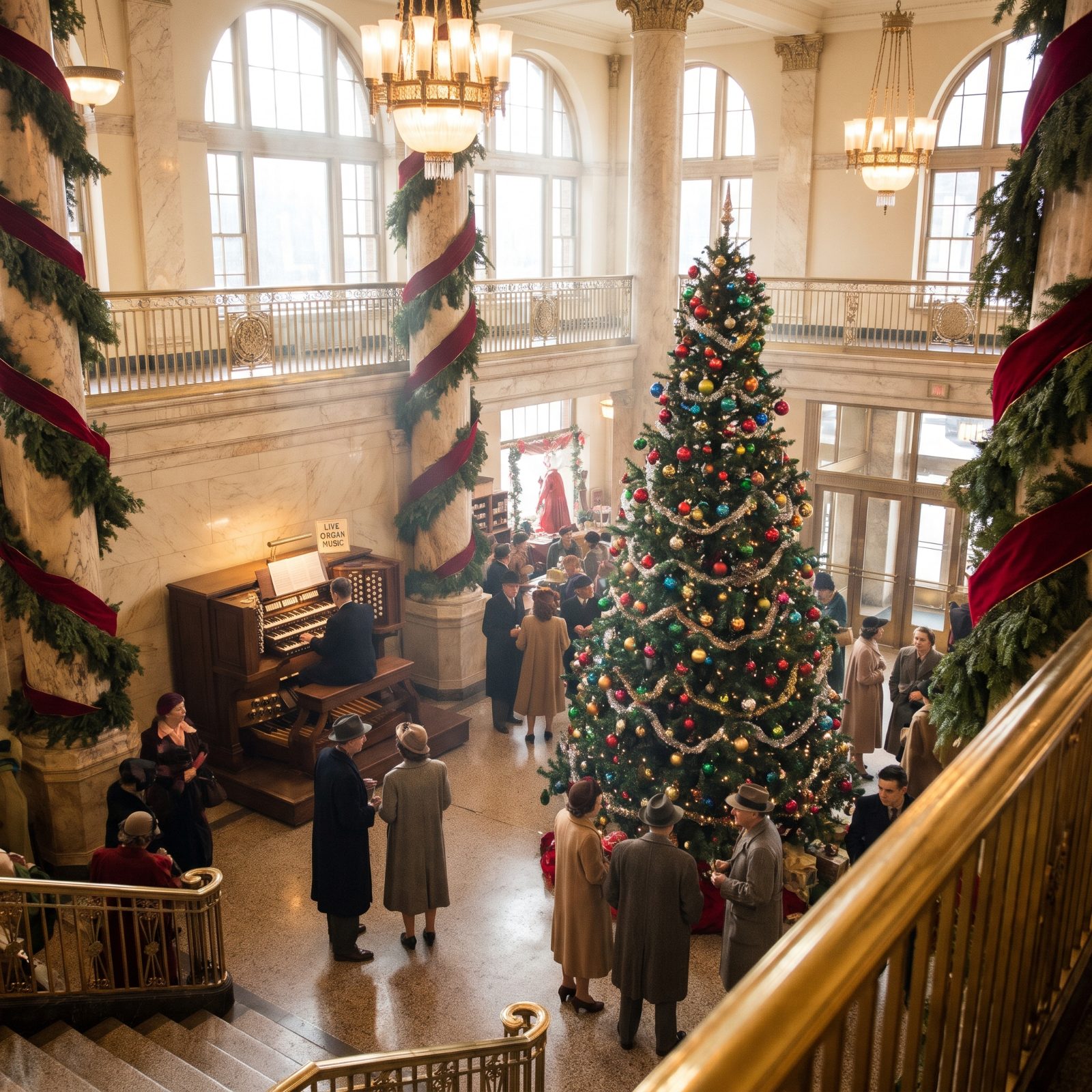
Before piped-in speakers, the music had a source you could find. You’d follow it across the floor, past glove counters and perfume, until you spotted the organist tucked against the wall, working two keyboards while the whole hall swelled around the melody.
The sound didn’t come from above. It came from the room — chords moving through marble and brass, settling into your chest, and people slowed down, drifted, shopped with the volume turned up on the whole afternoon.
We miss this one more than makes sense. A playlist does not carry weather the way a live organ does.
9. Puppet and Marionette Shows That Stopped the Whole Floor
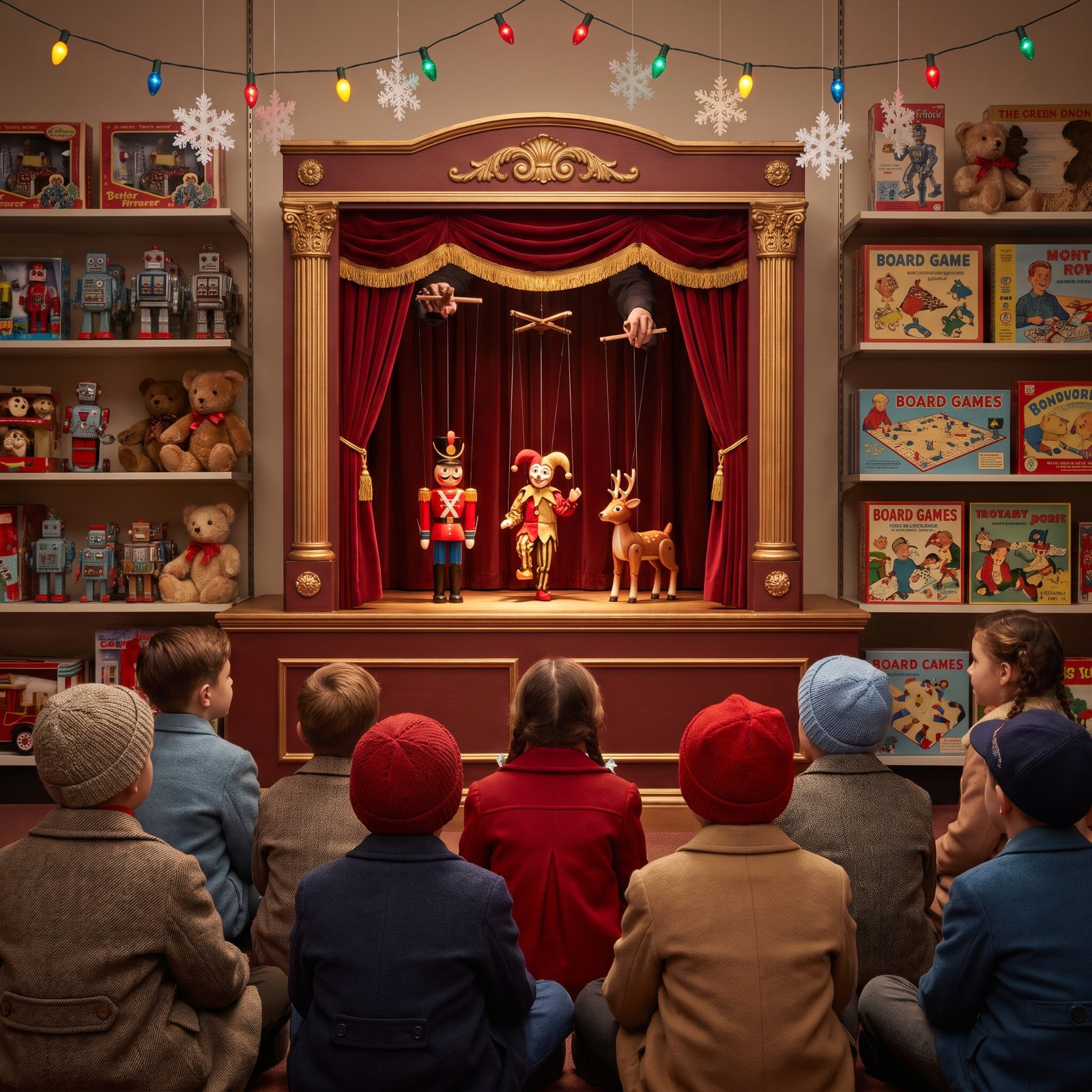
The strings were the magic and also the giveaway. You could see the wooden control bars working above the little velvet-curtained stage, and it didn’t matter at all. A toy soldier bowed, a reindeer pranced, and a whole clump of kids went dead silent on the floor.
Stores hired real puppeteers for the season — five shows a day, sometimes more, right in the toy department where the merchandise sat on the shelves behind the performance. Nobody was in a hurry to leave. Which, of course, was the whole idea.
8. Free Cartoon Screenings to Park the Kids For an Hour
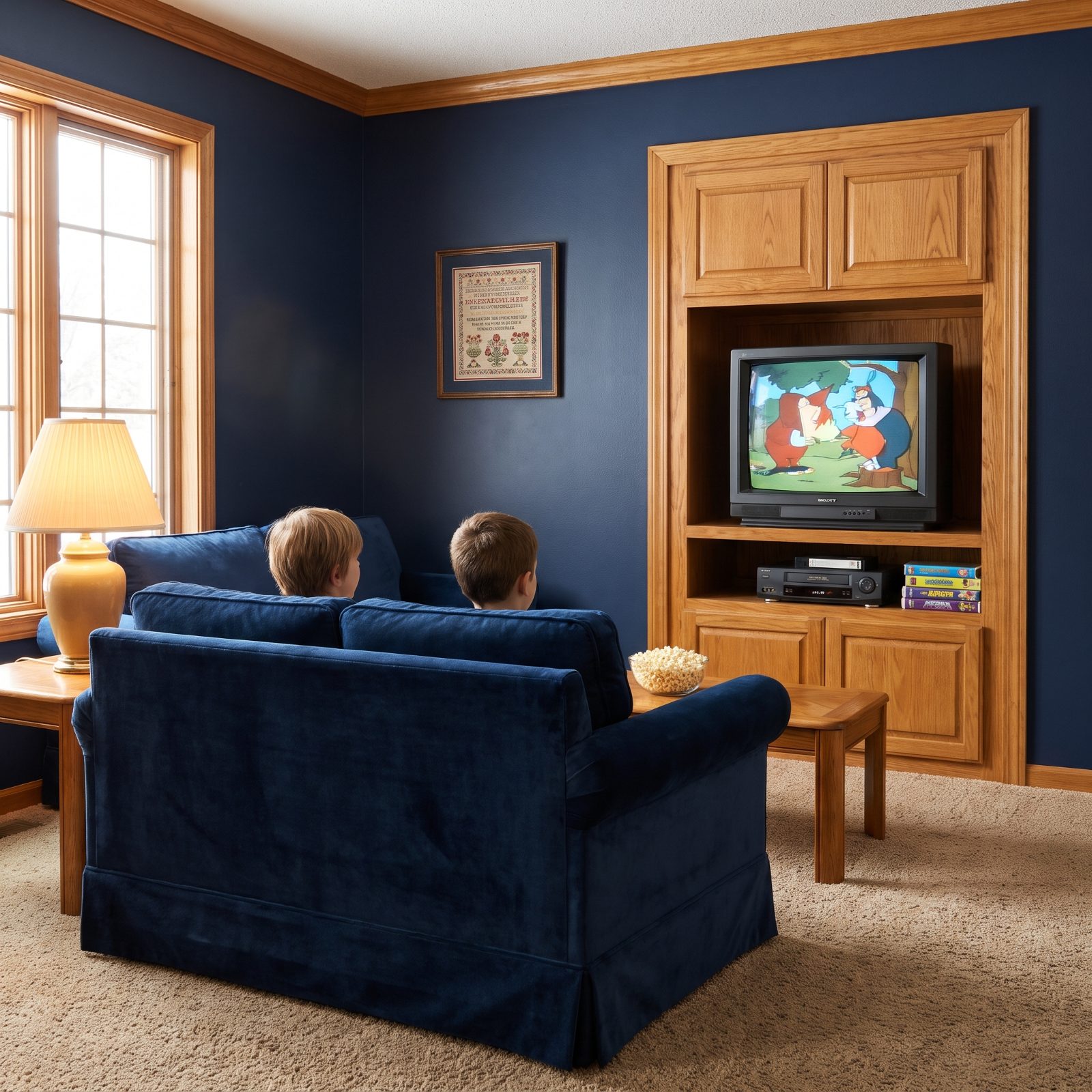
Parents figured this out fast. A free cartoon screening at the store bought you a stretch of time — twenty minutes, sometimes a full hour — to run errands without small hands reaching for everything in sight.
Stores set up rows of folding chairs in an auditorium or a corner of the toy floor, dimmed the lights, and ran cartoons on a projector while kids sat rapt. Practically free childcare dressed up as a treat, and both sides knew the deal perfectly well.
7. The Listening Booth Where You Previewed a Christmas Record
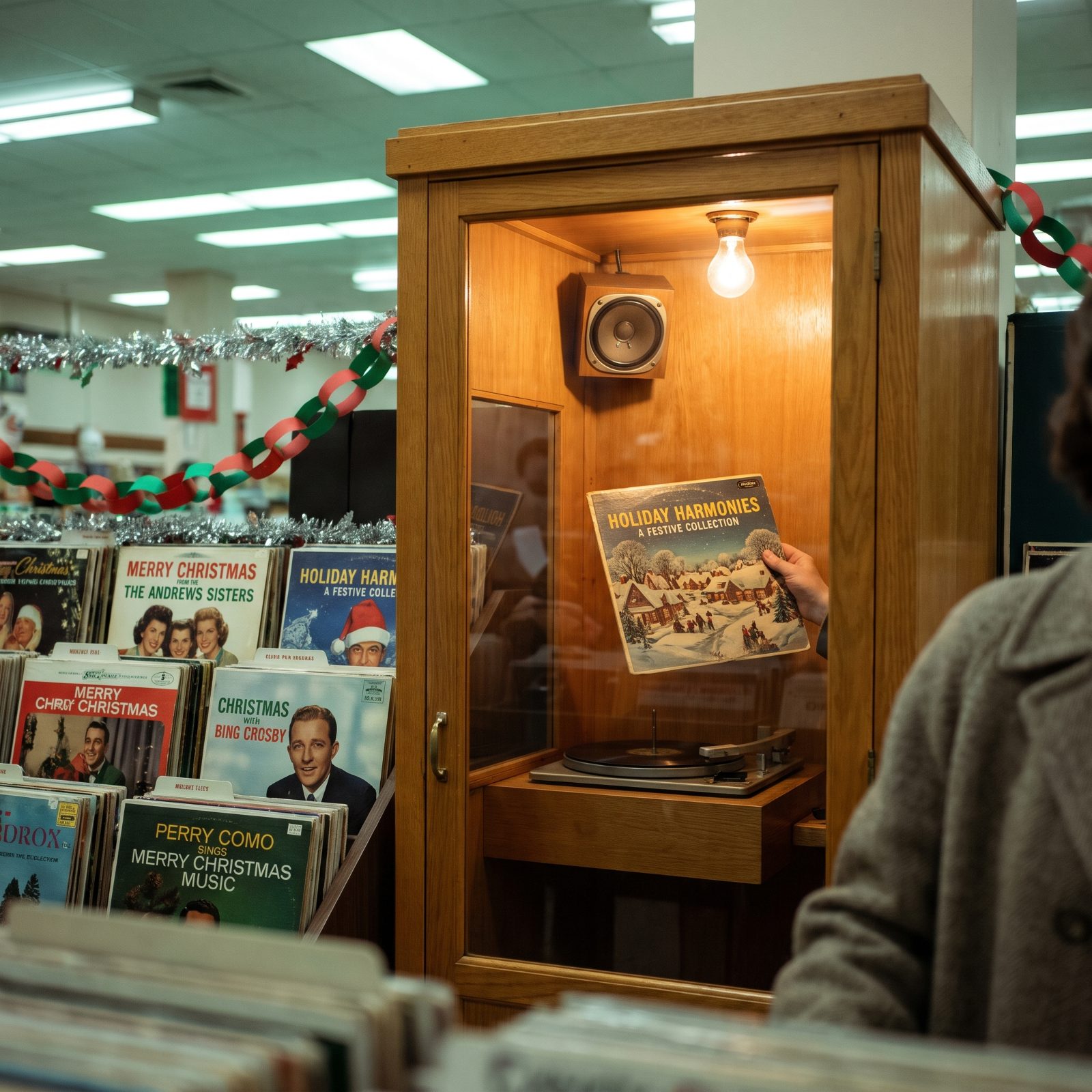
You wanted to hear it first. So you carried the record into a little wood-paneled booth, pulled the glass door shut, and listened while the store moved on without you.
Christmas records sold hard that month, and the booth let you audition a whole album before committing a dollar you couldn’t really spare. Three minutes of a carol from the little speaker under the warm bulb, the holiday rush fading to nothing around you.
Streaming gave us every song ever recorded and quietly took the ritual of choosing one.
6. Late-Night Shopping Festivals With Real Entertainment
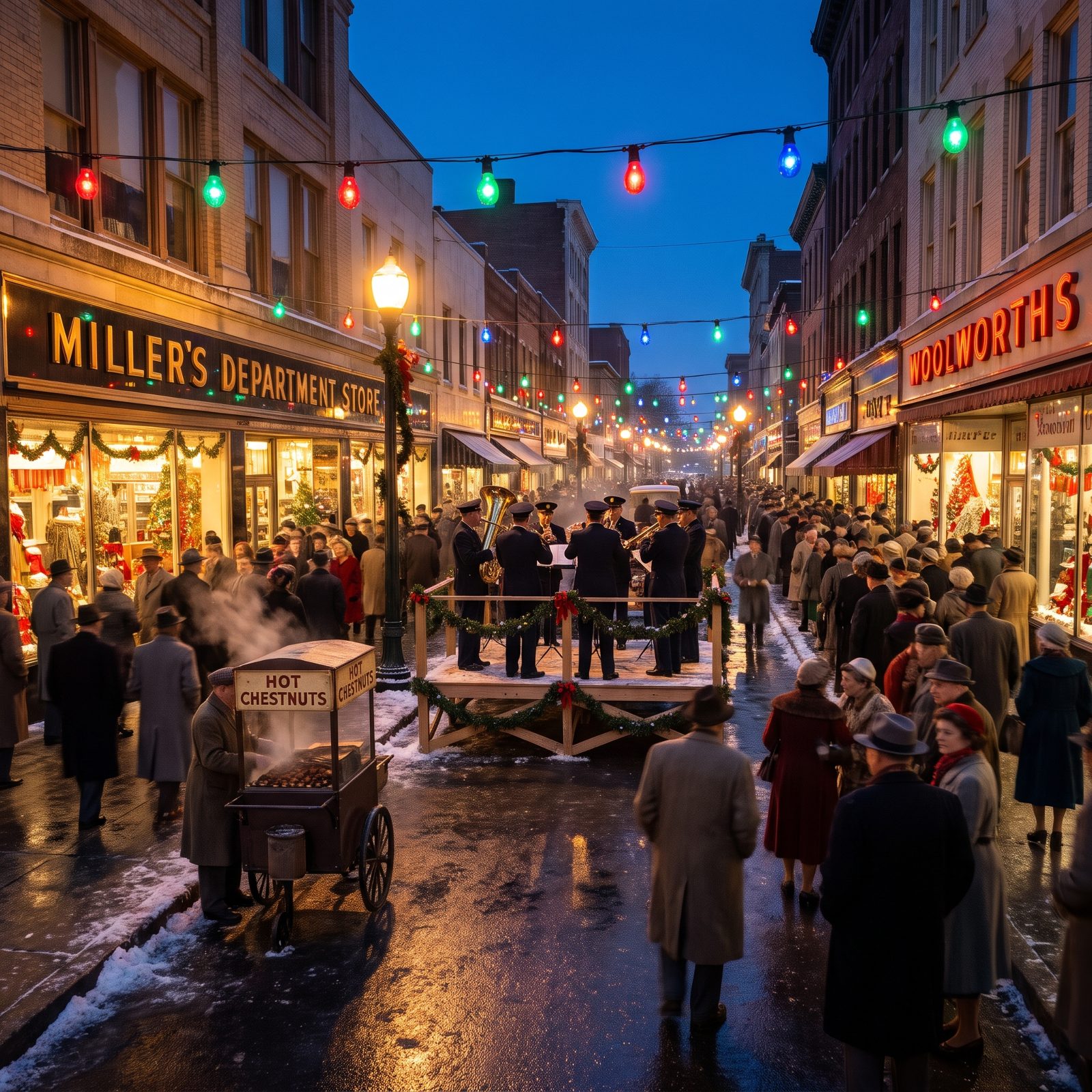
The stores stayed open past dark and the whole town came down for it. Most shops locked up at five for eleven months of the year. Then came the late-night Christmas shopping festival, and the rules broke open.
Strings of colored bulbs ran across the street, a brass band set up on the corner, carts steamed on the sidewalk, and crowds packed the storefronts well past the hour anyone should have been out buying anything. Shopping wasn’t an errand that night. It was the event you got dressed for.
5. Warm Roasted Nuts Handed Over in a Paper Cone
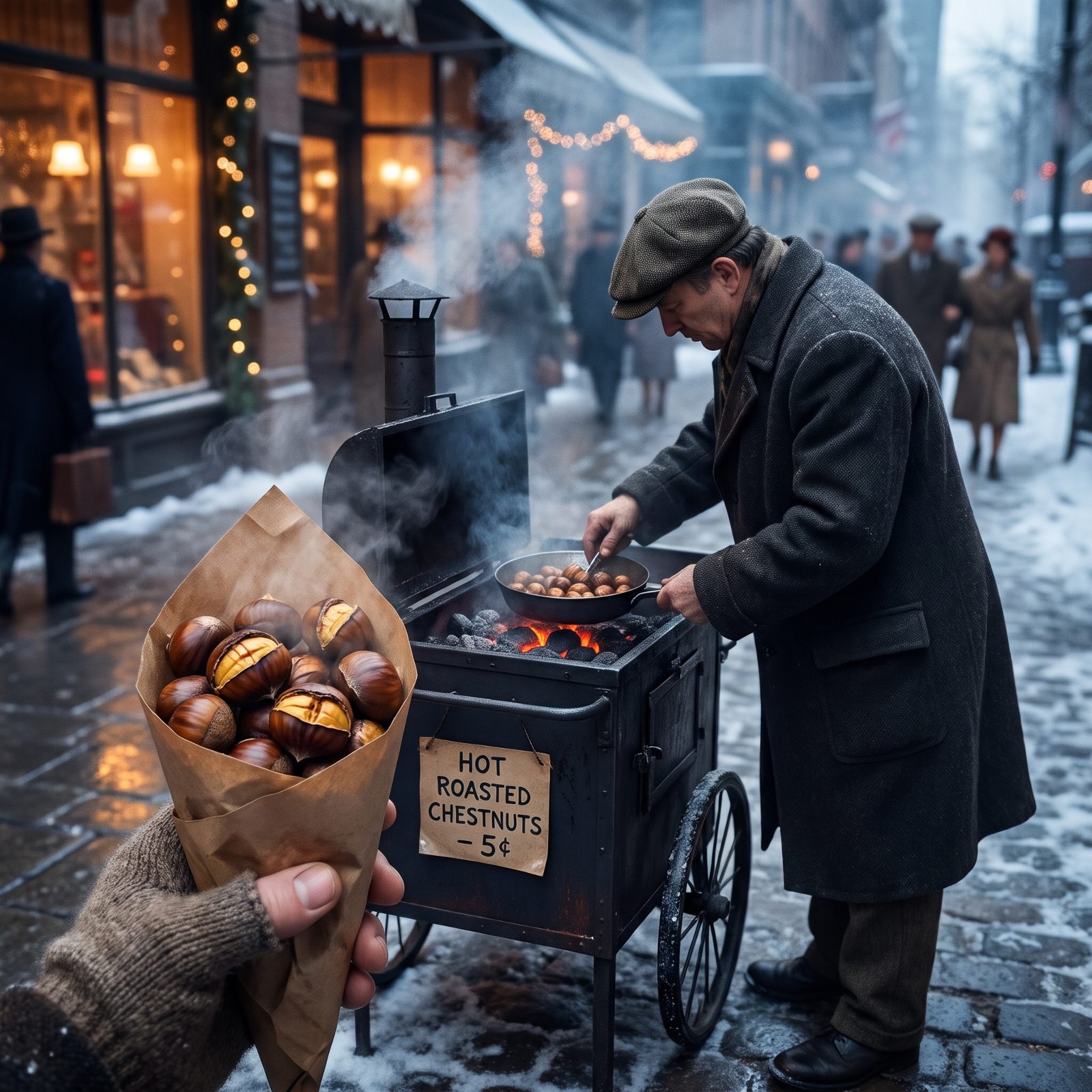
You smelled it before you saw it. Chestnuts roasting over coals, that specific scorched-sweet smell drifting down a cold sidewalk, and suddenly you wanted a cone whether you’d planned to or not.
The vendor twisted brown paper into a point and scooped the nuts in warm, shells split and steaming, and you held it with both hands for the heat as much as the snack. A nickel’s worth of warmth on a freezing night. The whole block smelled like winter.
4. The Formal Christmas Lunch in the Store Dining Room
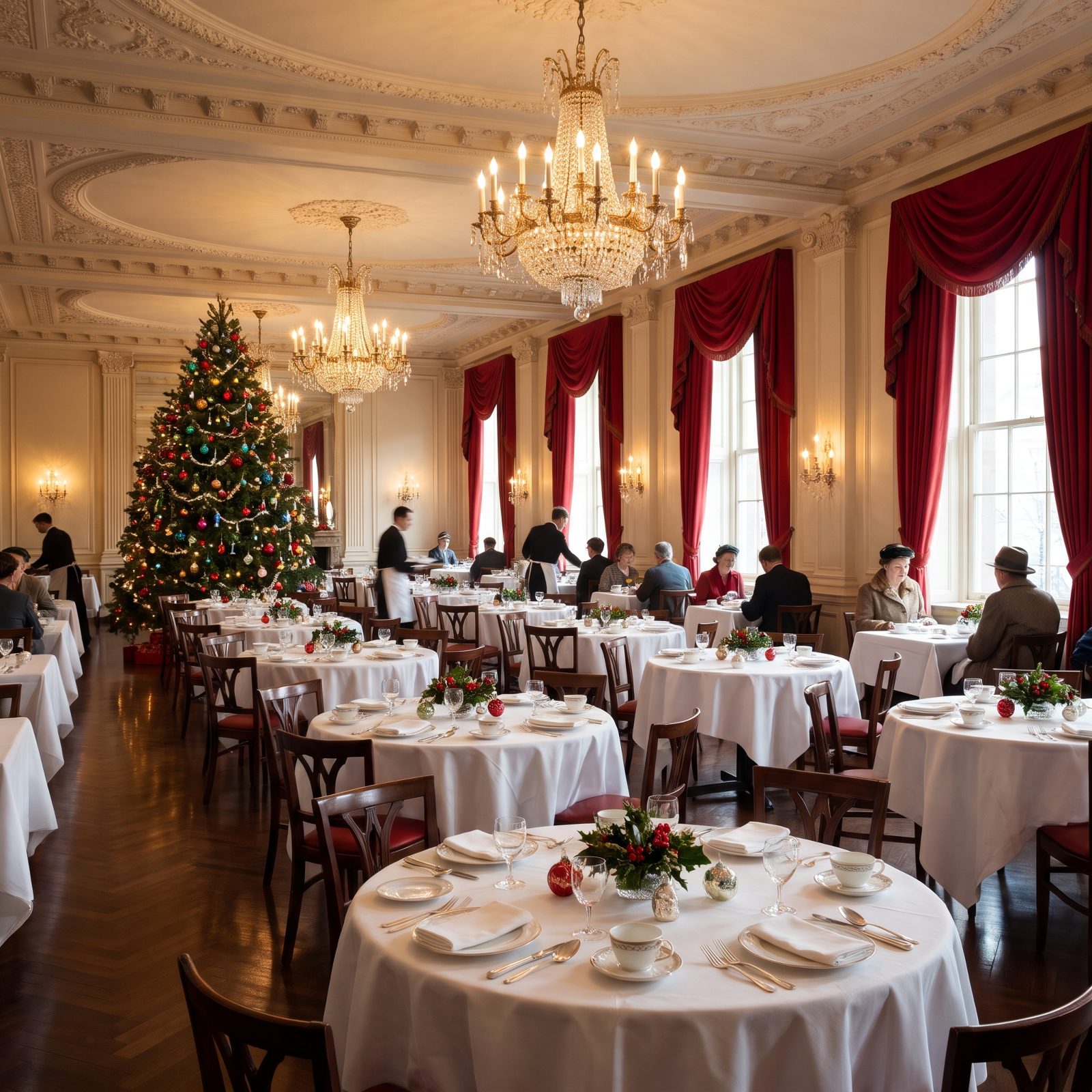
Shopping stopped at noon so you could sit down and be waited on. Big stores kept proper dining rooms upstairs — white linen, real china, a Christmas tree in the corner as big as the ceiling would allow.
You slid your packages under the table and ordered chicken à la king like it was a wedding. Waiters in black jackets and white aprons, a centerpiece of holly, the clink of real silver. Lunch wasn’t fuel between purchases. It was the reason you wore the good coat downtown in the first place.
Nobody shopped through lunch. You sat down, and the day had a middle to it.
3. Gift Baskets Built By Hand While You Watched
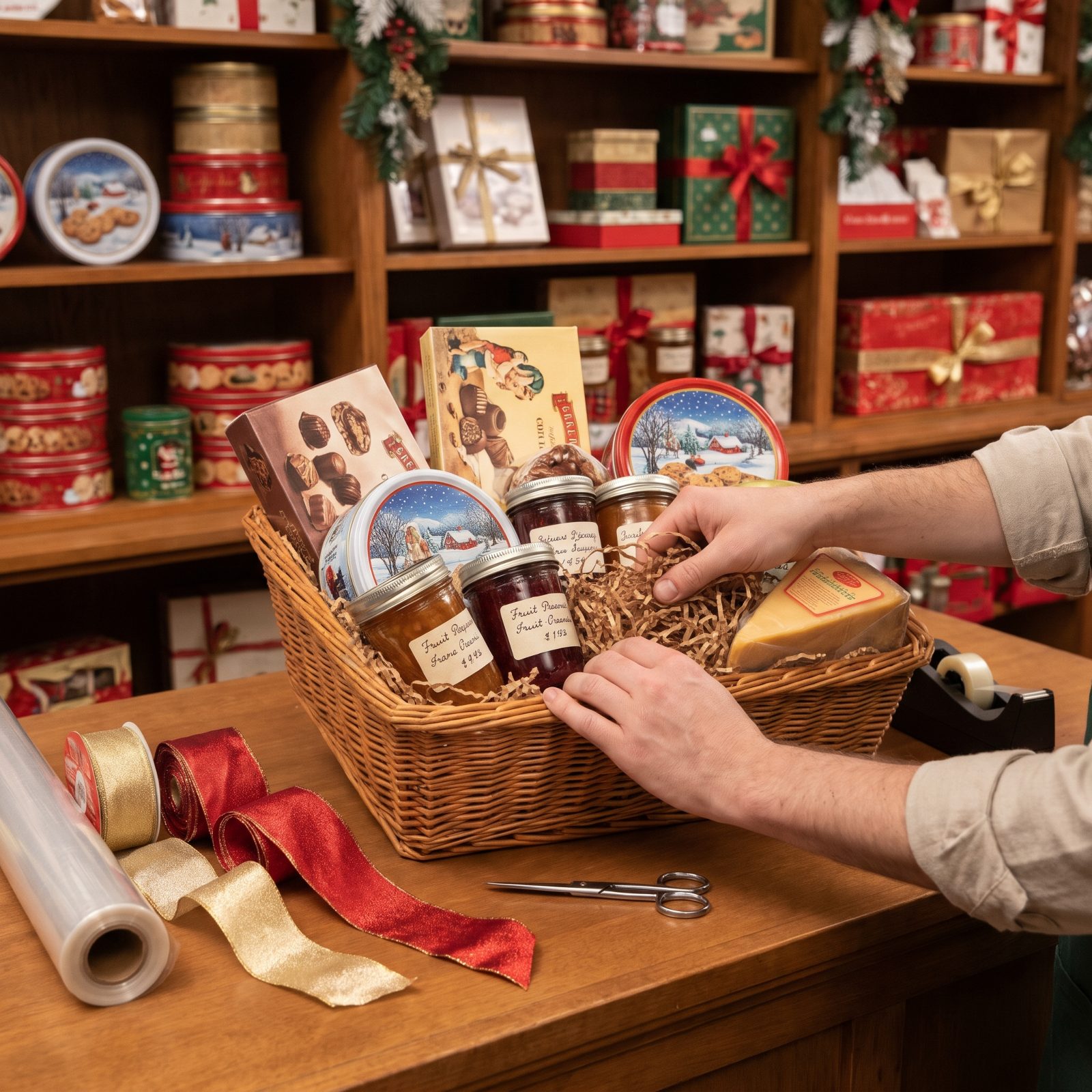
You picked the pieces and the clerk built it right there in front of you. A wicker basket on the counter, then in went the chocolates, the tin of cookies, the jar of preserves, a wedge of cheese wrapped in wax paper, all tucked into crinkled straw.
Then the cellophane and the ribbon, done by hand, tied tight. No pre-made shrink-wrapped version off a shelf — somebody assembled your gift while you stood there, and you walked out holding something that had been made, not just bought.
2. The Toy Repair Desk That Saved Christmas Morning
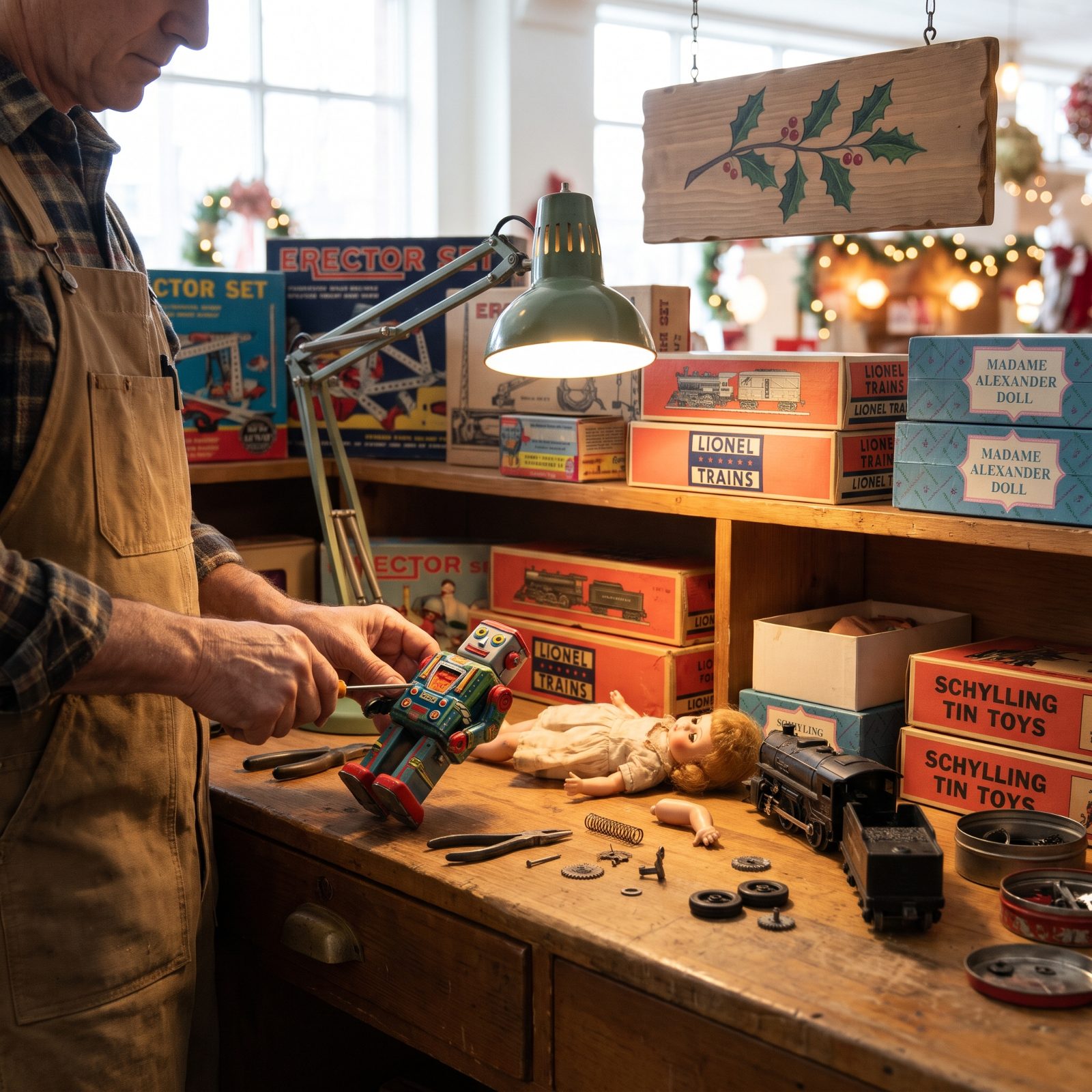
Things got fixed instead of replaced. A wind-up toy jammed, a doll lost an arm, a train car cracked — and you carried it to the toy repair desk, where a man in an apron bent over the bench and made it work again.
In December this desk ran hot. Parents brought in last year’s broken treasures hoping for a save before the kid noticed, and the repairman usually pulled it off with a spare spring and ten minutes. Nothing was disposable. That’s the part worth sitting with for a second.
1. Store Clerks Singing Carols as the Doors Locked on Christmas Eve
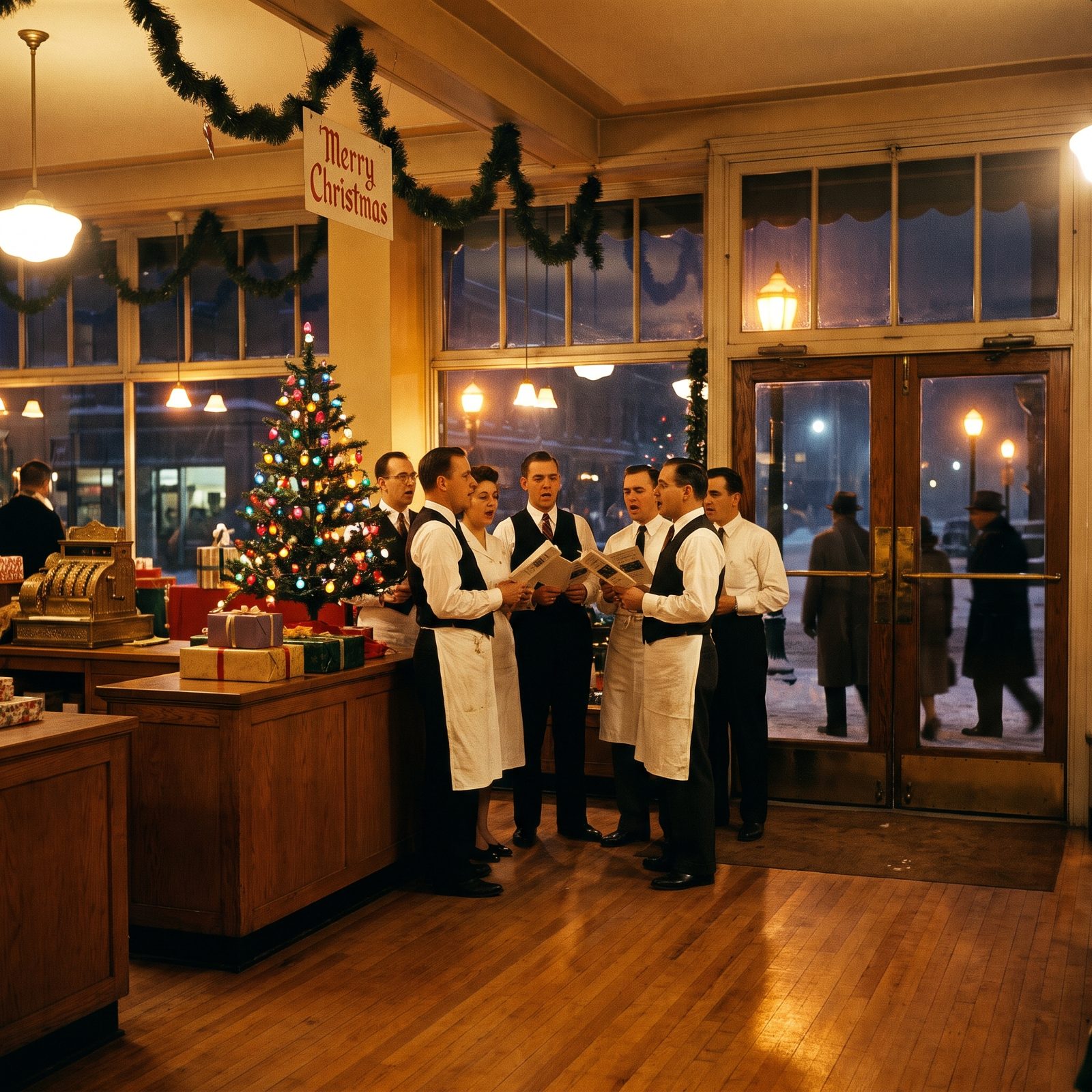
The big stores made a particular sound right before the lights went down on the twenty-fourth. Not the register, not the tissue paper, not the last harried footsteps. Singing. The clerks who’d been on their feet since before dawn would gather near the front doors, somebody would start Silent Night, and the whole floor went quiet enough to hear it.
Nobody sold tickets, and it wasn’t a performance in any sense you’d recognize. The folks behind the glove counter and the wrapping table and the toy department sang because the day was done and they’d clawed their way through it together. If you happened to be the straggler still paying for the last gift on your list, you got to stand right in the middle of the whole thing.
What stuck with people wasn’t any one carol. It was the oddness of a cash-and-commerce place turning, for about four minutes, into something closer to a church — the folding doors clicking shut, the snow still coming down outside, a room full of worn-out people in aprons sending everyone home singing.