
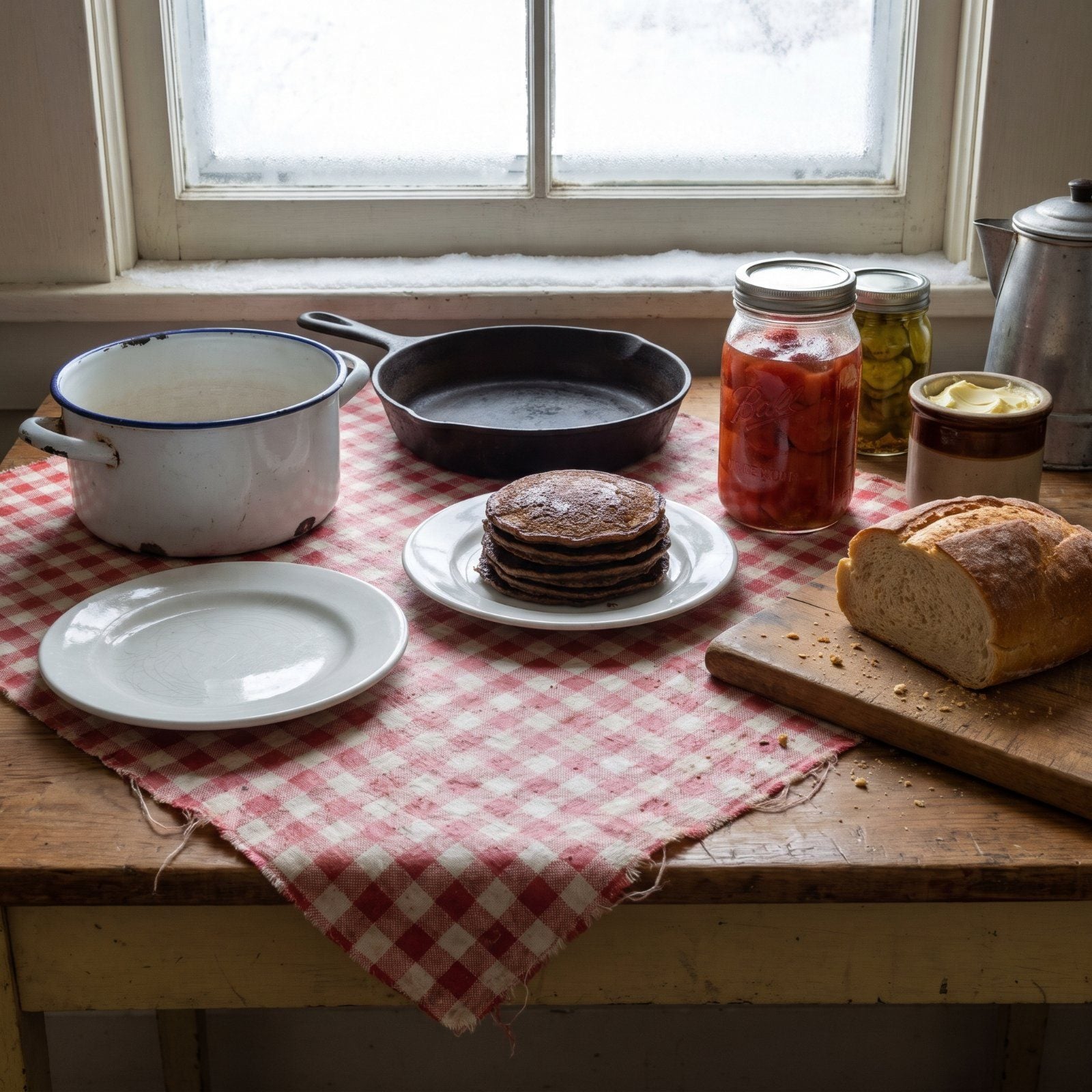
Hardly anything in the icebox came from a store. The ham had hung in the smokehouse since butchering, the tomatoes sat in jars down cellar, and the oatmeal came out of a cardboard drum about the size of a fence post. A farm kitchen in January ran on whatever got put up back in September, and every plate told you so. What follows is one ordinary week, tracked meal by meal, before the freezer aisle came along and changed all of it.
Please note that some of the images in this article were created with the assistance of AI.
23. Monday Breakfast: Oatmeal, Fried Eggs, and Toast
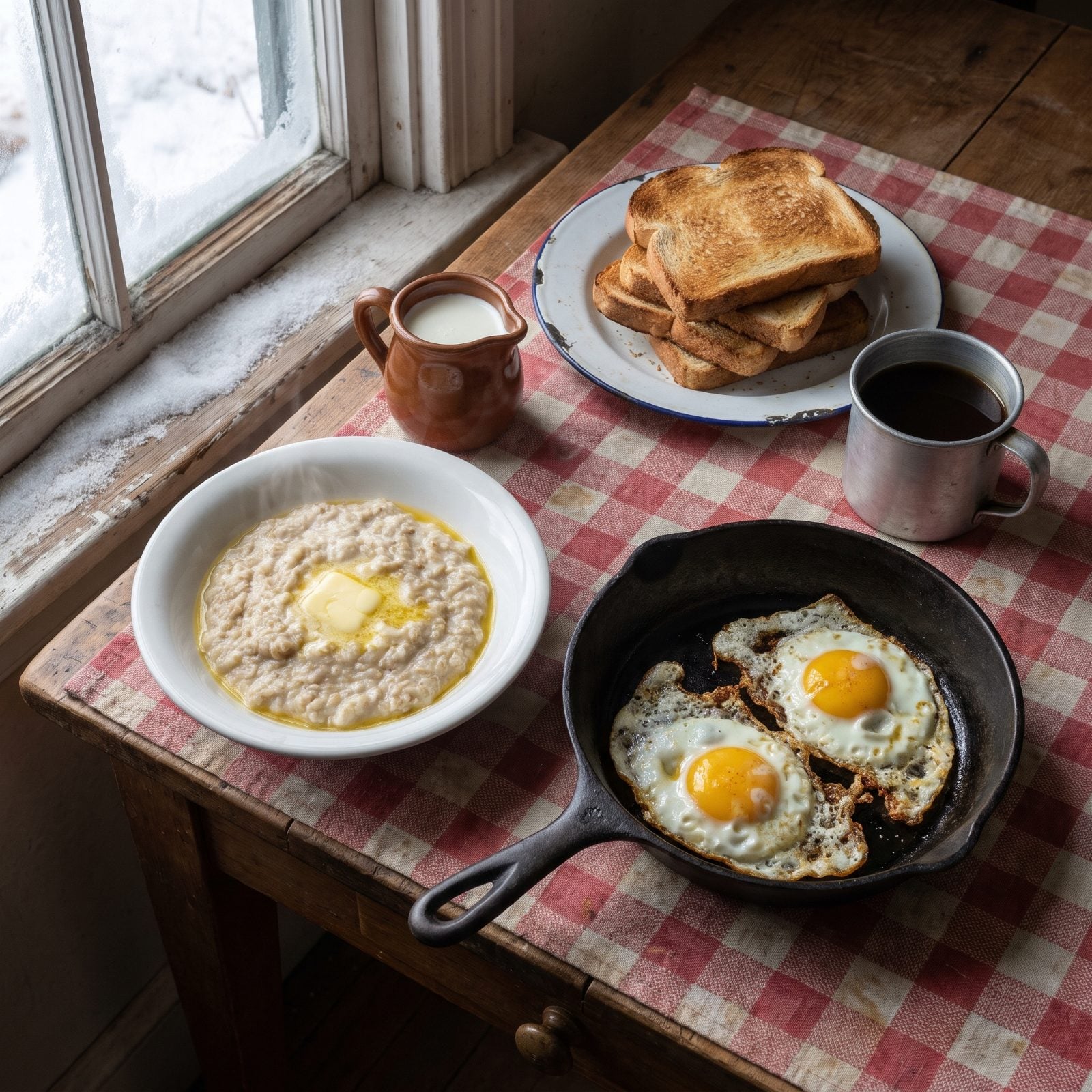
Oatmeal that stuck to your ribs because it was supposed to. None of that instant business in a paper packet. These were rolled oats simmered slow on the back of the woodstove while the barn chores got done, then drowned in cream straight from the morning milking and whatever butter the crock could spare.
The eggs came in from the henhouse that same hour, fried hard in bacon grease because nobody wasted a clean pan. Toast meant yesterday’s bread held over the fire. On a farm you ate heavy at dawn, and by the time the oatmeal wore off you’d already hauled water, fed stock, and broken ice on the trough.
22. Monday Dinner: Ham and Bean Soup With Cornbread
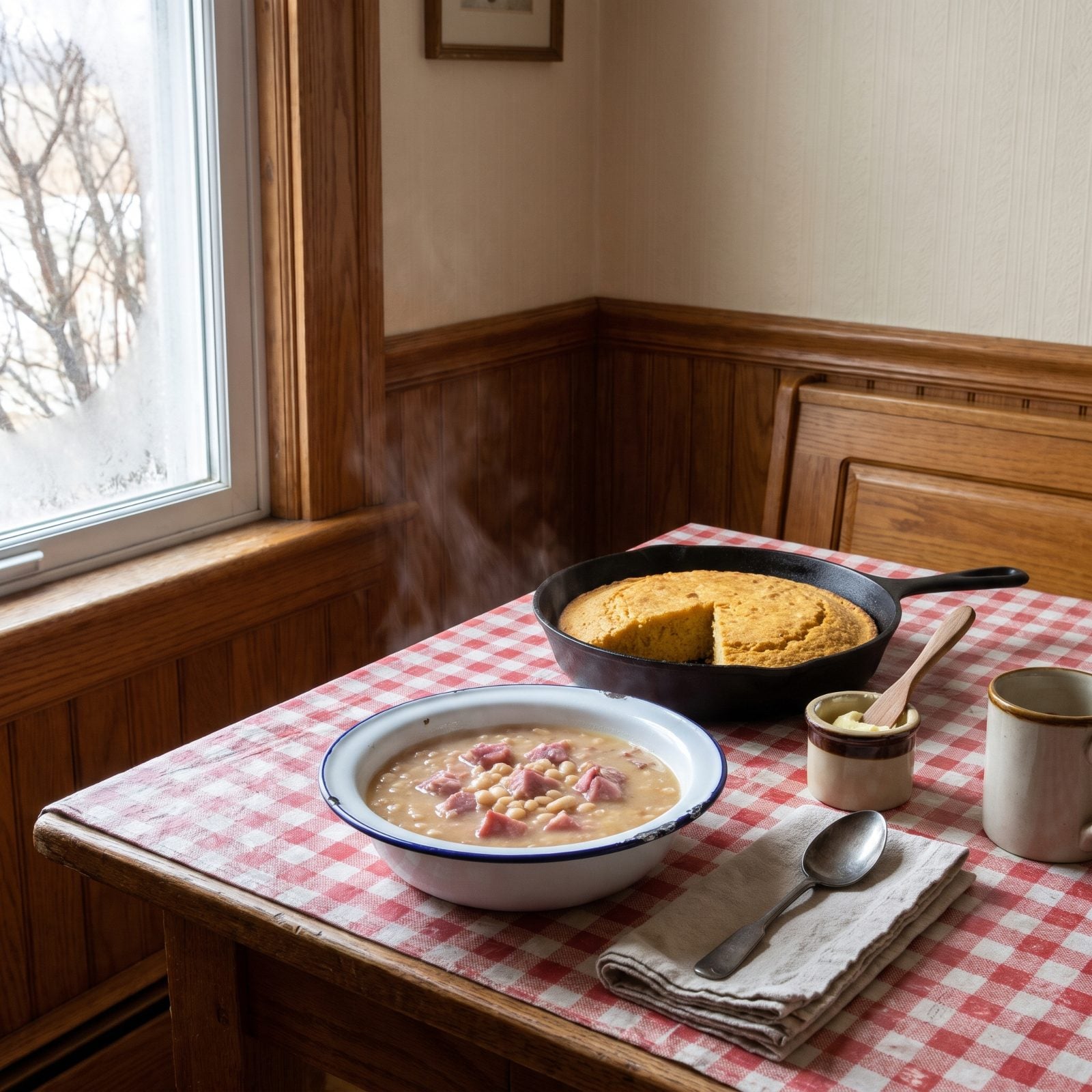
Midday was dinner, not lunch, and dinner was the big meal. A smokehouse ham bone went into the pot Monday morning with navy beans that had soaked overnight, and it muttered on the stove for hours.
Cornbread baked in the same skillet it got served from. Nobody frosted it, nobody sweetened it much, and if your people crumbled it right into the soup, that’s how it went. Fuel for men coming in frozen from the field at noon, and it put them back out the door warm.
21. Tuesday Breakfast: Buckwheat Cakes With Sorghum
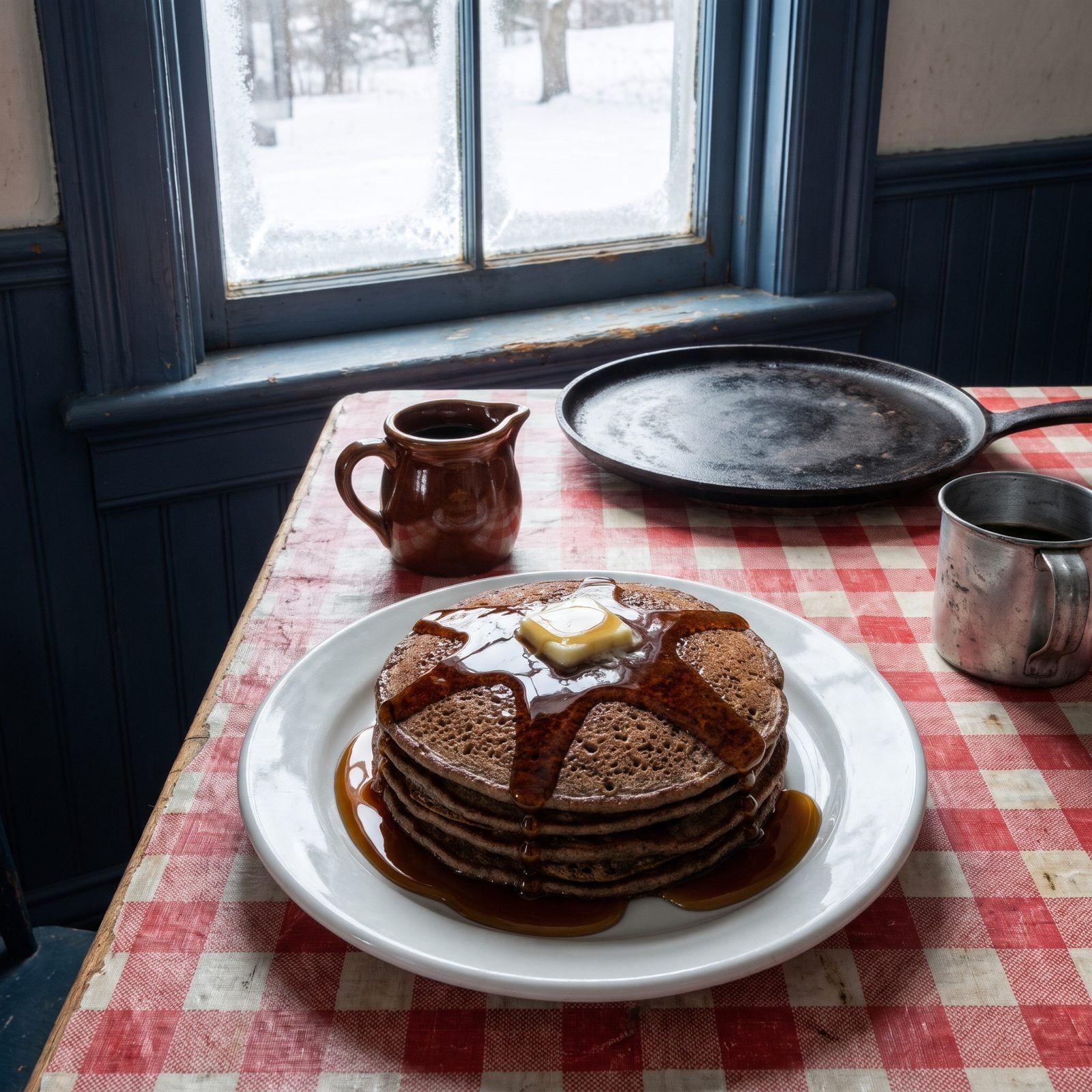
Buckwheat cakes came out darker and tangier than the pancakes you know now, and that was the point. A lot of kitchens kept a buckwheat batter crock going all winter, holding a little back each morning to raise the next day’s batch. The batter practically ran the kitchen.
Sorghum did the sweetening because it was cheaper than maple and a farm could grow its own. Thick, almost bitter at the back of the tongue, poured from a stoneware pitcher that never got put away between September and April. Butter and sorghum, a hot griddle, a cold window. That was Tuesday.
As a buckwheat cake maker who still feeds her own starter every evening explains, “Letting it set a few days will give it a sour taste that is characteristic of buckwheat cakes.”
20. Tuesday Dinner: Roast Chicken With Gravy and Mashed Potatoes
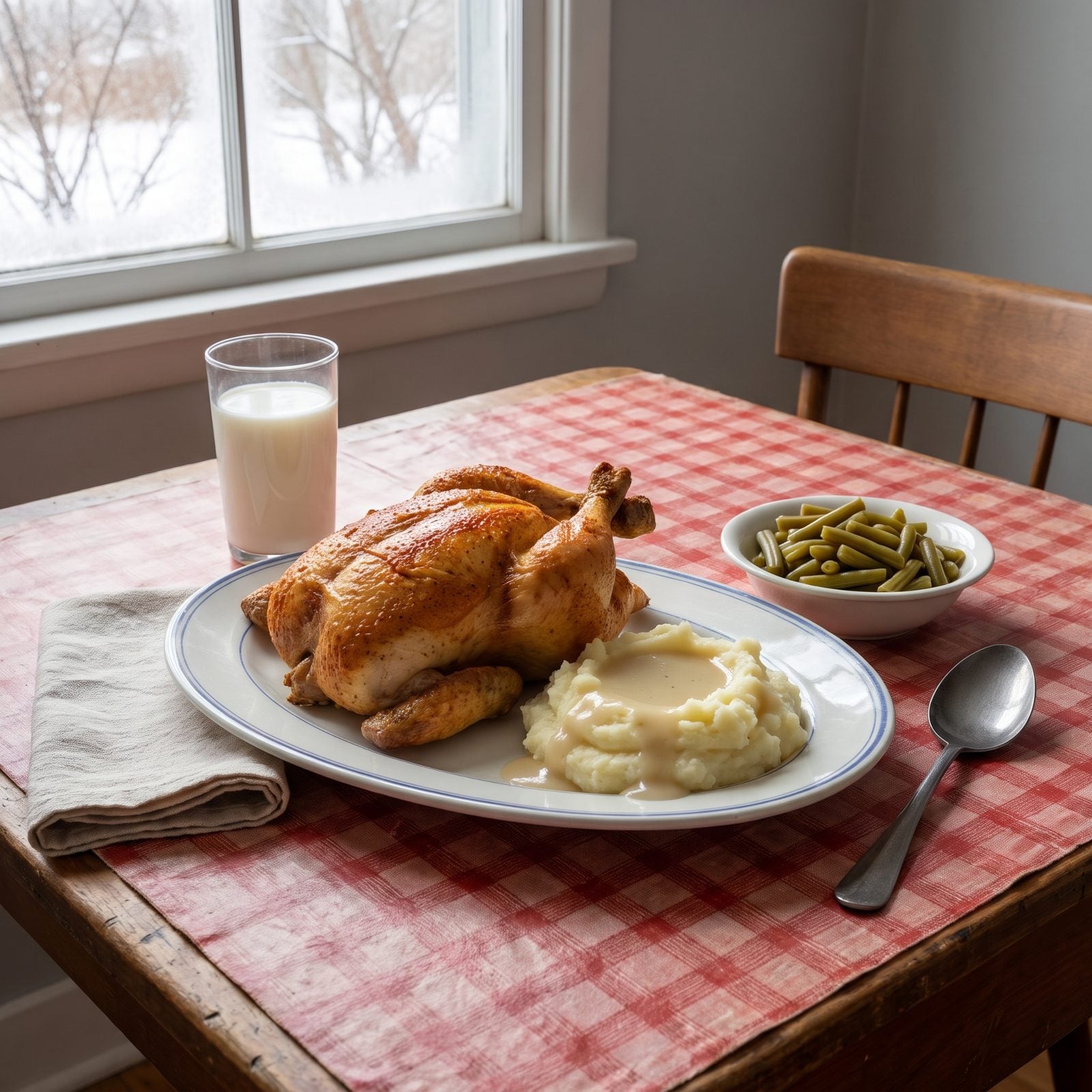
A roast chicken on a weekday meant a hen had stopped laying.
On a working farm you didn’t keep an animal that quit earning its feed, so the oldest layer met her end. Because she was tough, she got roasted slow and served with gravy thick enough to forgive her age.
Mashed potatoes came from the same cellar bin that fed the family all winter, and the drippings went straight into the gravy because that’s where the flavor lived. One of the best meals of the week, and it happened because of plain farm arithmetic, not any special occasion.
For a homesteader who butchers hens, laying hens that have slowed or stopped producing are still worth putting on the table, because their tough meat is full of flavor when it’s handled properly.
19. Tuesday Supper: Chicken Hash With Bread and Butter
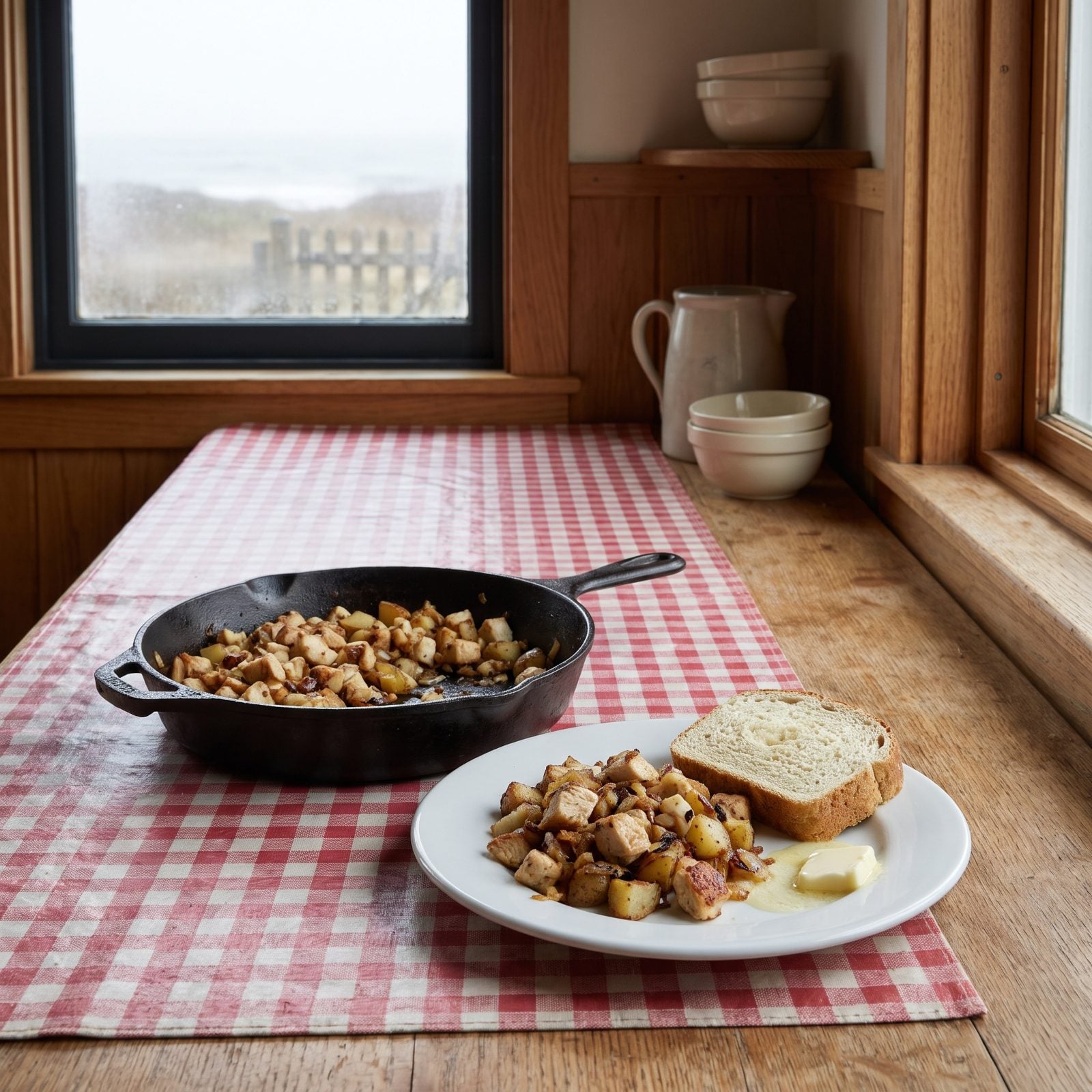
Not a scrap of that chicken went to waste. Whatever meat clung to the carcass got cut into chunky cubes, tossed with cold diced potatoes and onion, and stirred around a hot skillet until the pieces browned at the edges.
Bread and butter rounded it out, and that was supper. Hash was humble and nobody pretended otherwise, but a few well-browned pieces in the pan were their own small reward. You ate it by the window in the grey afternoon light, tired, and it was enough.
18. Wednesday Breakfast: Cornmeal Mush Fried in Bacon Drippings
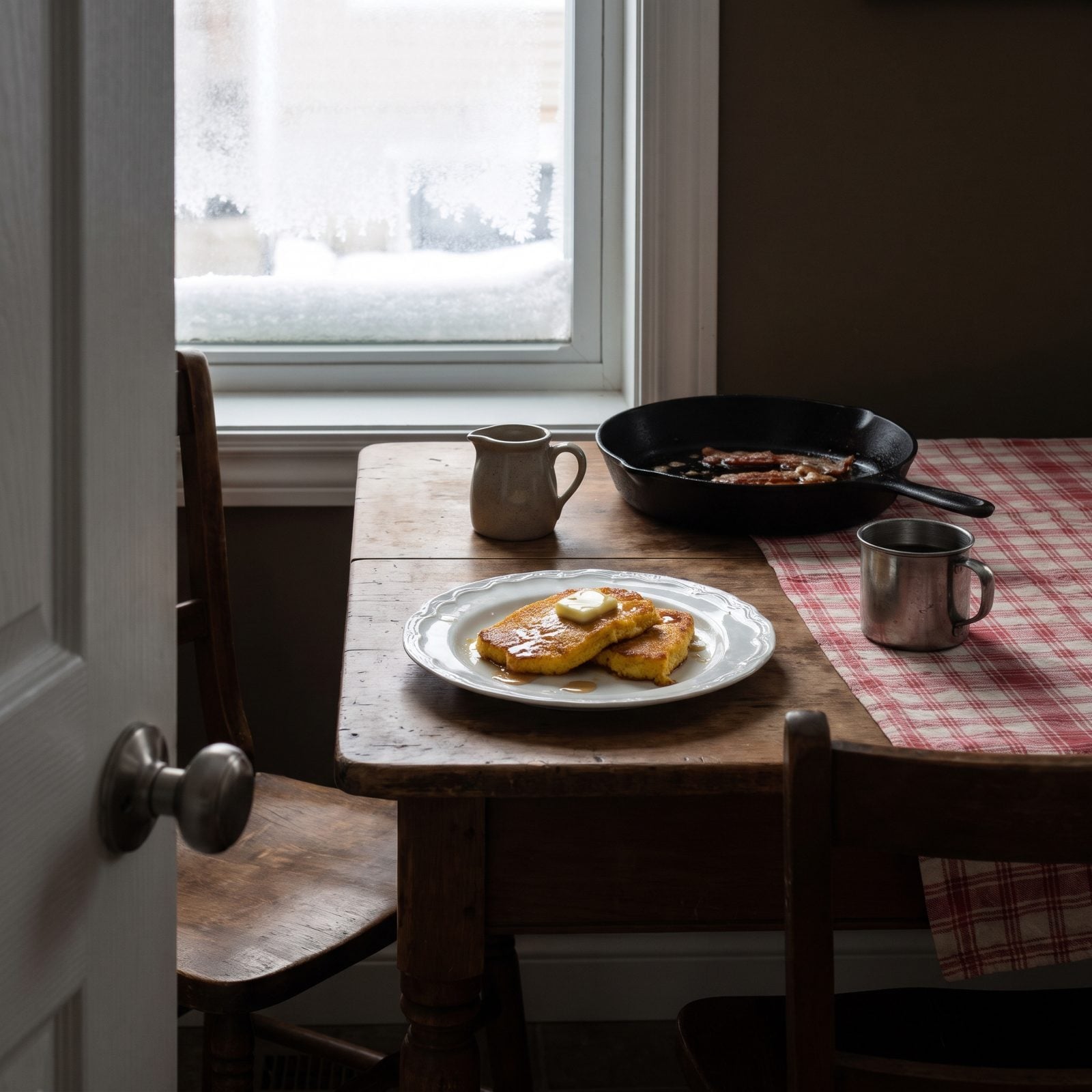
This is thrift you can taste. Last night’s cornmeal mush got poured into a loaf pan, set out cold overnight, then sliced and fried crisp in the bacon fat waiting in the skillet. One day’s leftovers became the next day’s breakfast with almost no effort and nothing thrown away.
Crisp on the outside, soft as pudding in the middle, finished with sorghum or butter or both. Cornmeal was cheap and a sack of it lasted. It fed people through hard times for generations, and it fried up good enough that nobody minded it was poverty food dressed in a brown crust.
17. Wednesday Dinner: Beef and Vegetable Stew With Biscuits
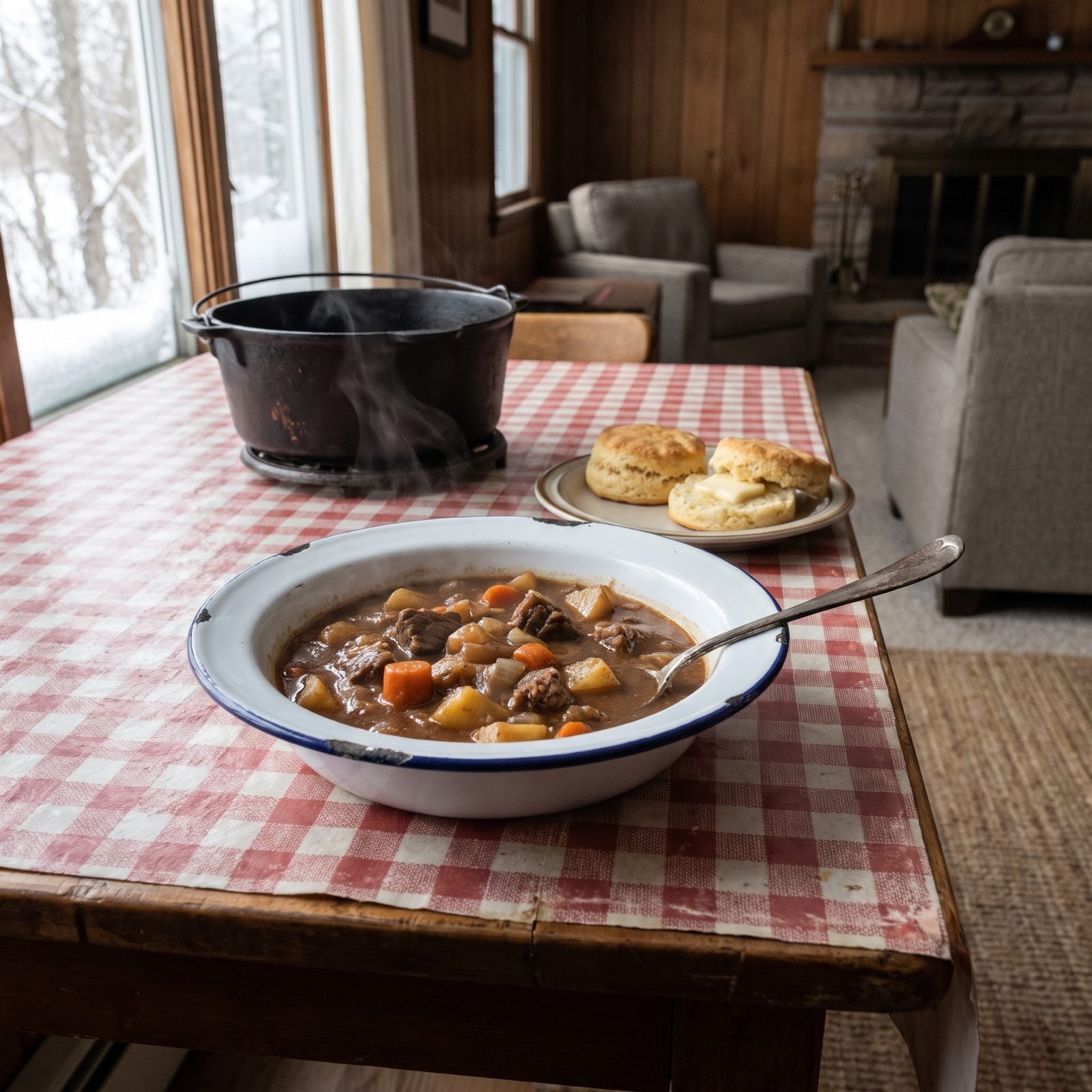
The stew pot was where the root cellar emptied itself.
Carrots, potatoes, onions, and whatever beef had been put up after fall butchering all went into the Dutch oven together, and it cooked down low while the morning’s work got done. By noon the whole kitchen smelled like it.
Biscuits came out of the oven at the last minute, split hot, and used to sop the bowl clean. Nobody left gravy behind. A stew like this stretched a little meat across a lot of mouths, and the cellar vegetables meant it cost next to nothing in January.
16. Wednesday Supper: Stewed Tomatoes Over Toast
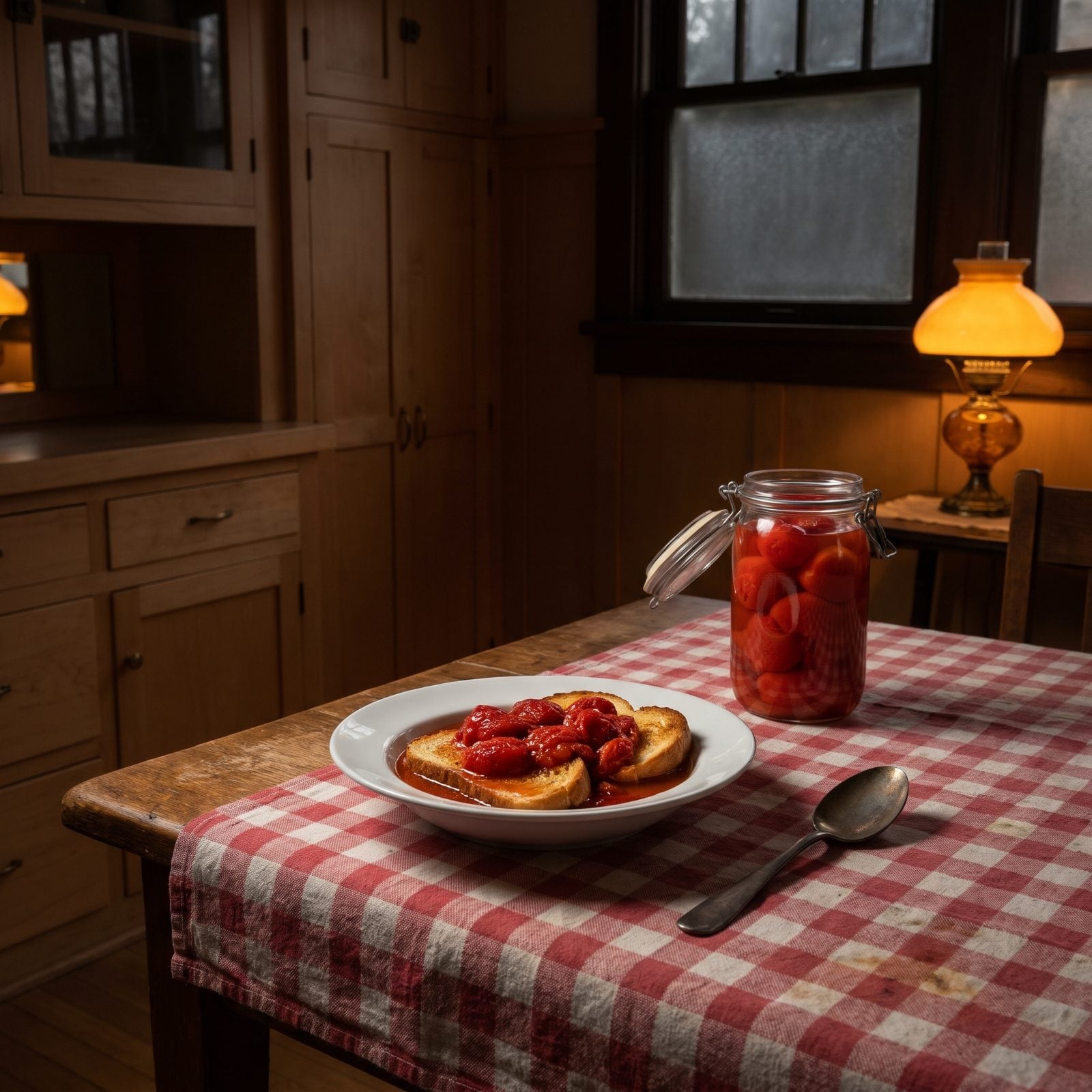
A jar of August poured out in January. The tomatoes got canned at the height of summer when the garden was drowning in them, and down in the cellar they waited through the cold in rows of quart jars with the lids sealed tight.
Stewed down with a little sugar and butter, ladled over toast until the bread went soft underneath. Plain supper. Humble as it gets. But in the dead middle of a Midwest winter, a spoonful of bright red tomato tasted like a promise that the garden would come back.
15. Thursday Breakfast: Biscuits With Sausage Gravy
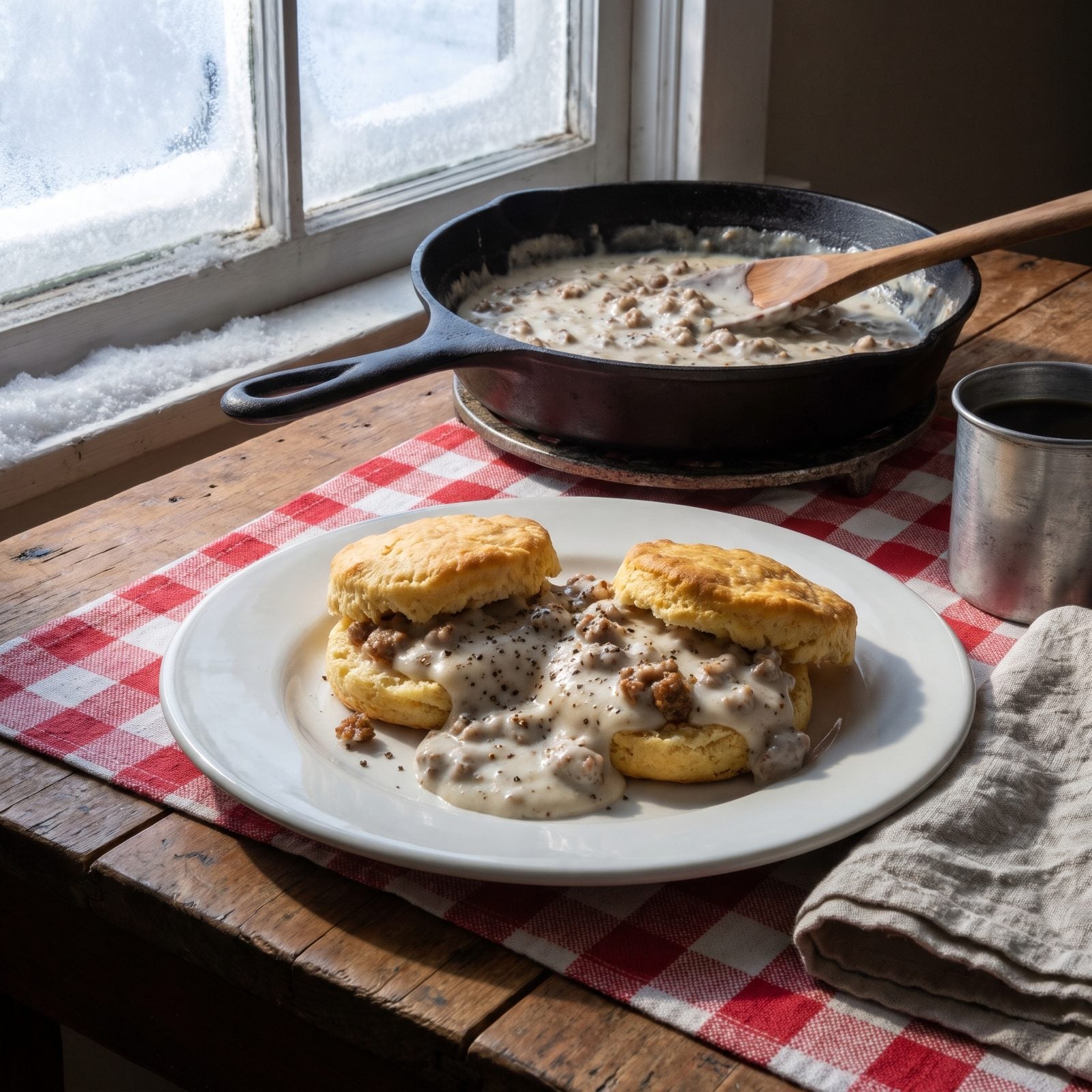
A big breakfast, and it needed to be. Thursday ran heavy on a lot of farms, and nothing carried a man through a cold morning like biscuits buried under sausage gravy.
The sausage came from the same hog that gave the ham and the bacon, seasoned and put up after butchering. Fried loose in the skillet, dusted with flour, loosened with milk, and peppered hard, then poured over biscuits split while they were still too hot to handle. This was the meal that proved a farm family never went hungry in winter as long as the smokehouse held out. And the smokehouse always held out.
14. Thursday Dinner: Pork Chops, Sauerkraut, and Boiled Potatoes
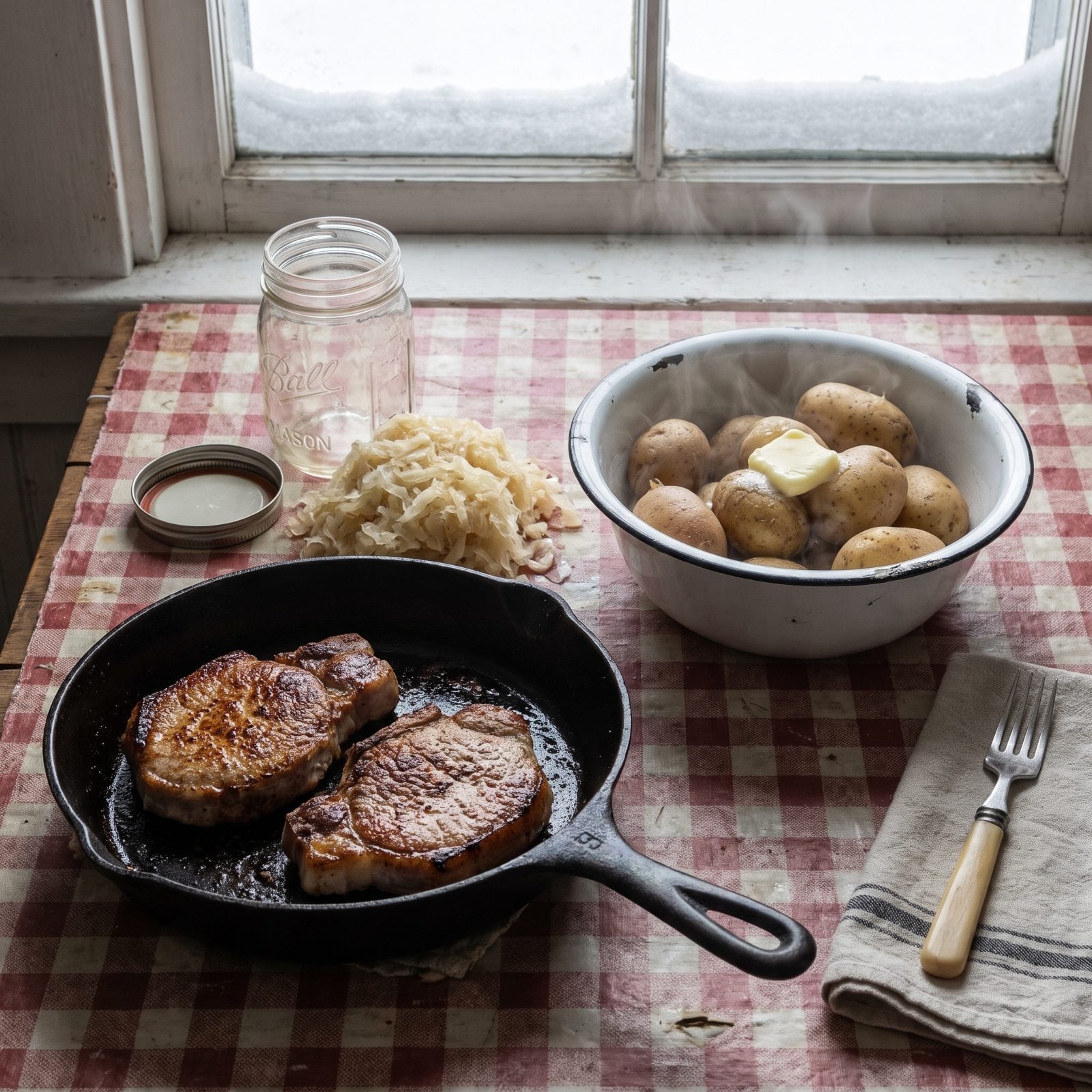
Thursday meant whatever the hog gave up that fall. Chops came thick, cut by hand and fried hard in lard until the fat along the edge turned into something you’d fight your brother for. No marinades, nothing from a box. And the sauerkraut had been packed into a crock back in October, spooned out all winter long, sour enough to make you blink.
Boiled potatoes sat under a slick of butter and did the quiet work of making a little meat feed a whole table. Nobody called it a comfort meal. It was just Thursday, and the cellar still had jars left.
As one farmer who ferments sauerkraut by the barrel describes the old crock cycle, you “harvest the cabbage, preserve it, store it for the winter, eat your way through it and eventually make room for the next harvest”
13. Thursday Supper: Navy Beans With Chow-Chow Relish
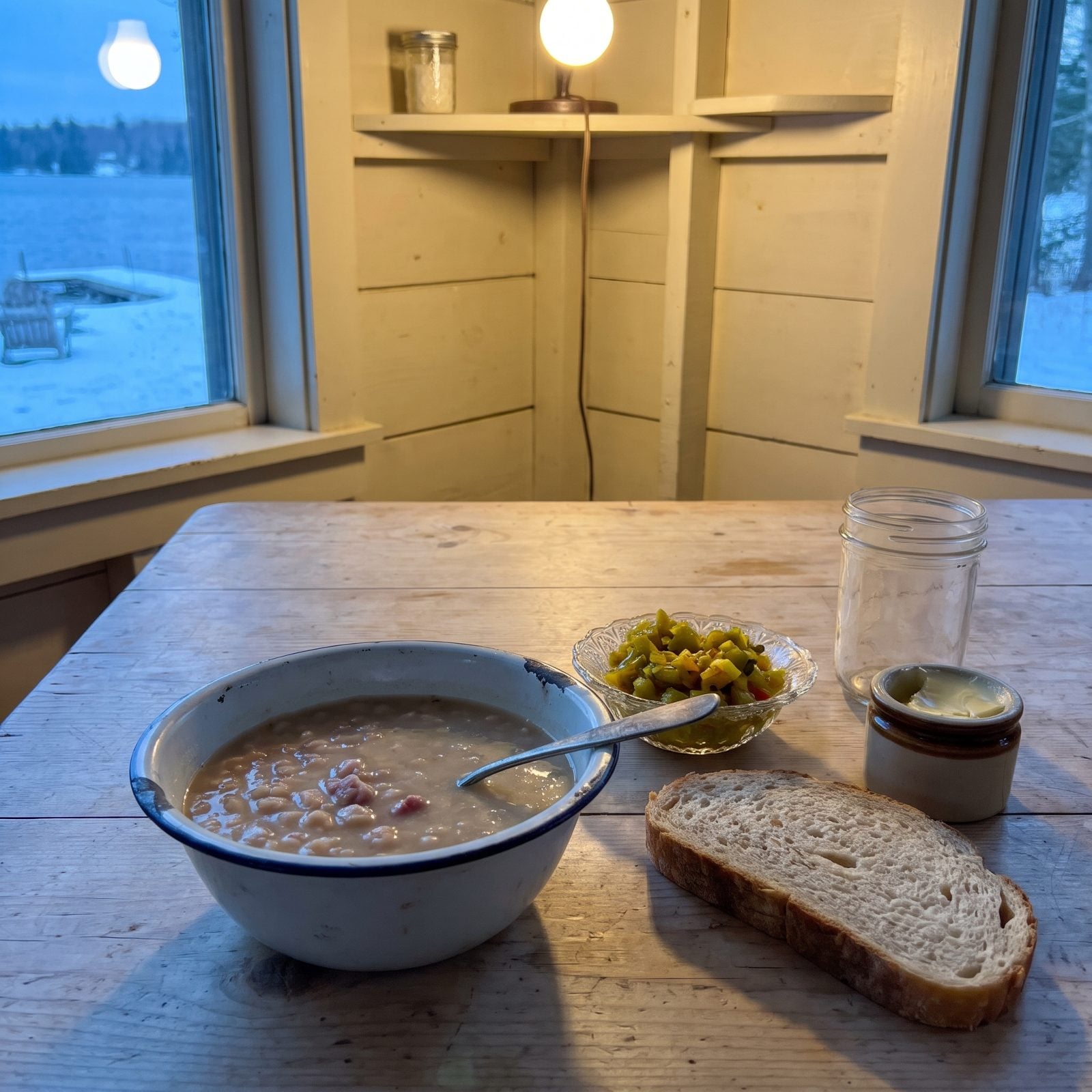
Supper was the lighter meal, and beans carried it. A pot of navy beans had been going since midday on the back of the stove, low and patient, broken down soft with a knuckle of salt pork for flavor. You ate them in a bowl with bread, and that was the whole affair.
The chow-chow was what made it. A spoonful of that tangy, mustardy relish cut right through all that soft starch. Folks put it up at the end of garden season, a way to use the last green tomatoes and cabbage before frost took everything.
12. Friday Breakfast: Cream of Wheat With Canned Peaches
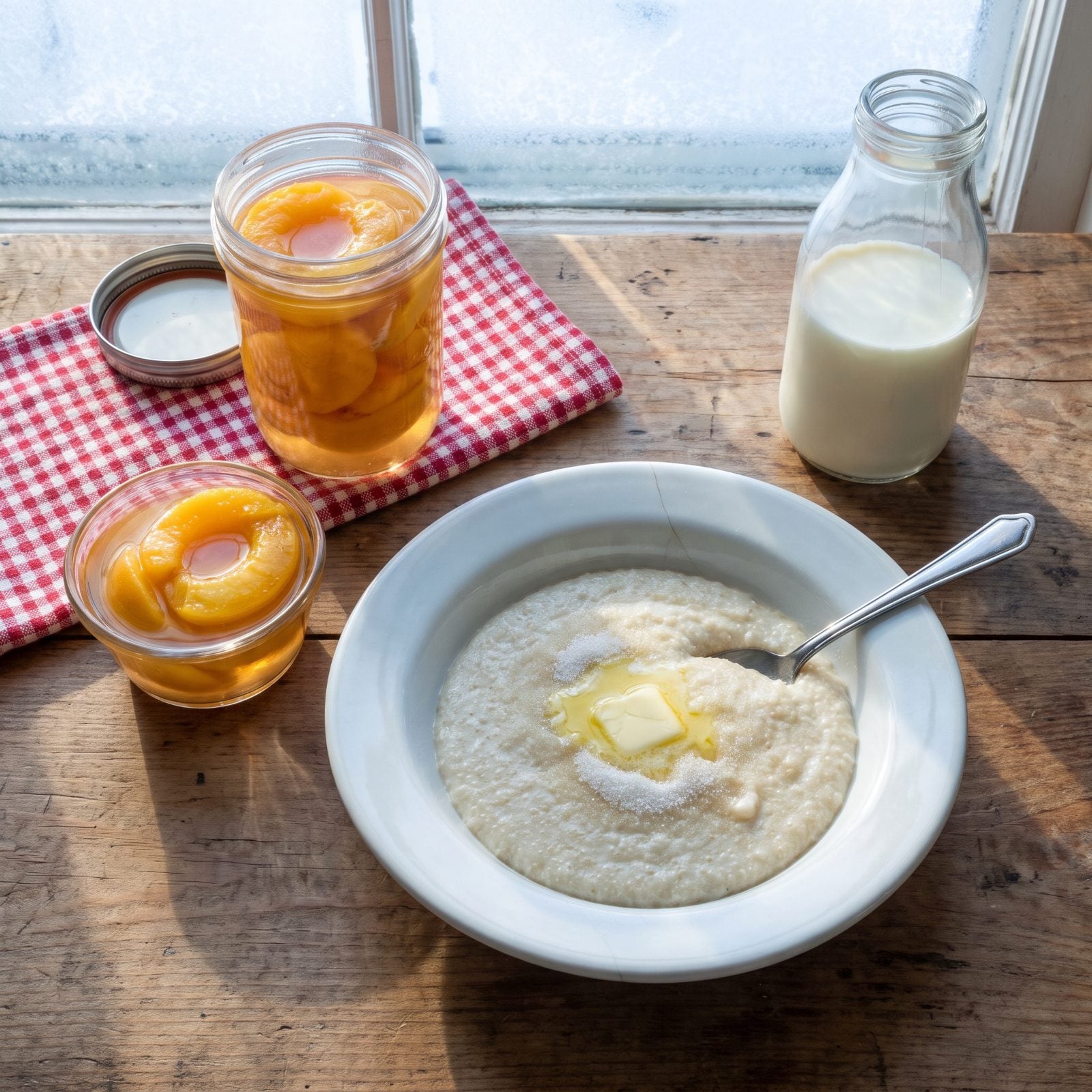
Cold mornings called for something hot and filling before chores, and Cream of Wheat stretched further than eggs when the hens slowed down in winter. It went into the bowl smooth, with a pat of butter and a spoon of sugar stirred down to the bottom where it pooled.
The real treat sat beside it: peaches put up last August, when the orchard let loose all at once and every jar in the house got filled. In January, opening one was like cracking into summer. That amber syrup alone made a kid eat the whole bowl.
11. Friday Dinner: Macaroni and Cheese With Stewed Tomatoes
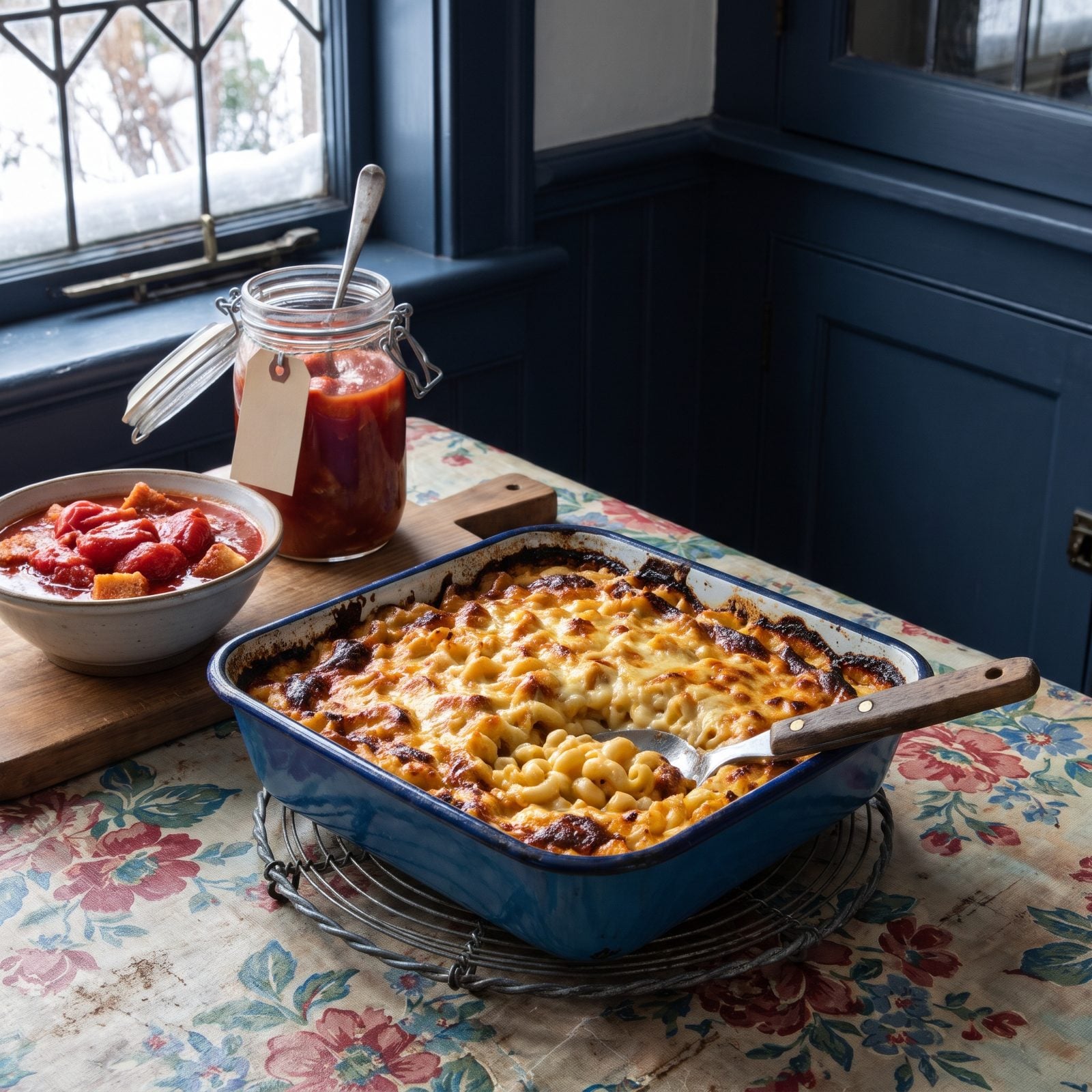
Friday was a meatless day in a lot of farm households, Catholic or not, and macaroni and cheese did the heavy lifting. And no, not the orange powder kind. This was elbow noodles layered with grated cheese and milk, baked in the oven until a crust formed at the edges that everybody fought over.
Stewed tomatoes rode alongside, canned from the garden, thickened with torn bread and a little sugar to take the edge off. Red and soft and a touch sweet, they turned a plain plate of pasta into a real dinner. Cheap, filling, and nobody left the table hungry.
10. Friday Supper: Salmon Patties With Creamed Peas
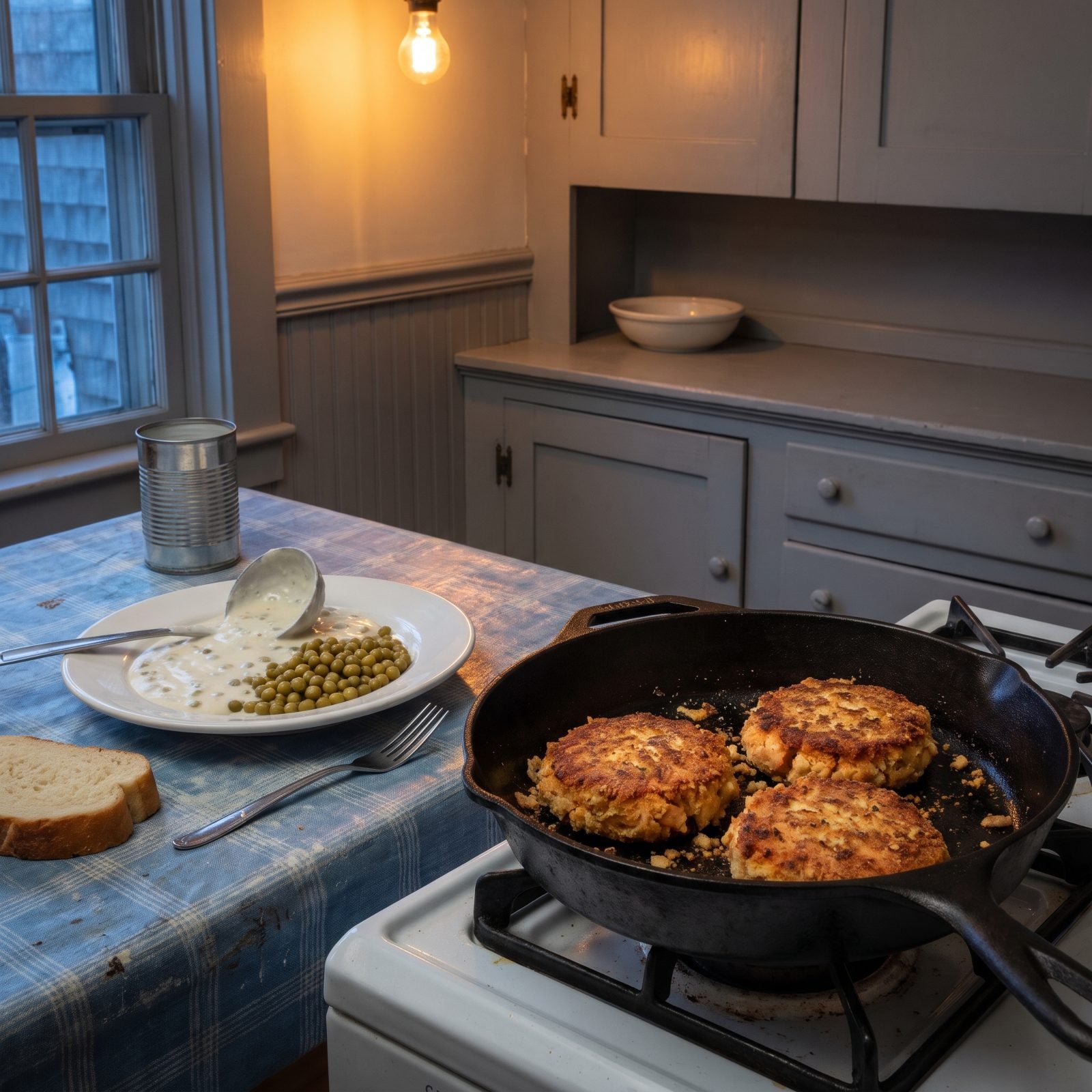
Canned salmon was the pantry hero of a farm miles from any ocean. One tin, a couple of crackers crushed fine, an egg to bind it, and you had patties frying in the skillet by the time the men came in from the barn. Crispy outside, soft in the middle, bones mashed right in because that was good for you, or so they said.
Creamed peas went over the top or alongside — peas from a summer jar, the sauce built from a spoon of flour and milk. A stretch-the-dollar supper that somehow felt like a small occasion. The whole house smelled of frying fish till Saturday.
According to historians at a southern museum, salmon patties caught on during the Great Depression, when struggling families turned to new recipes to keep themselves fed.
9. Saturday Supper: Potato Soup With Crackers
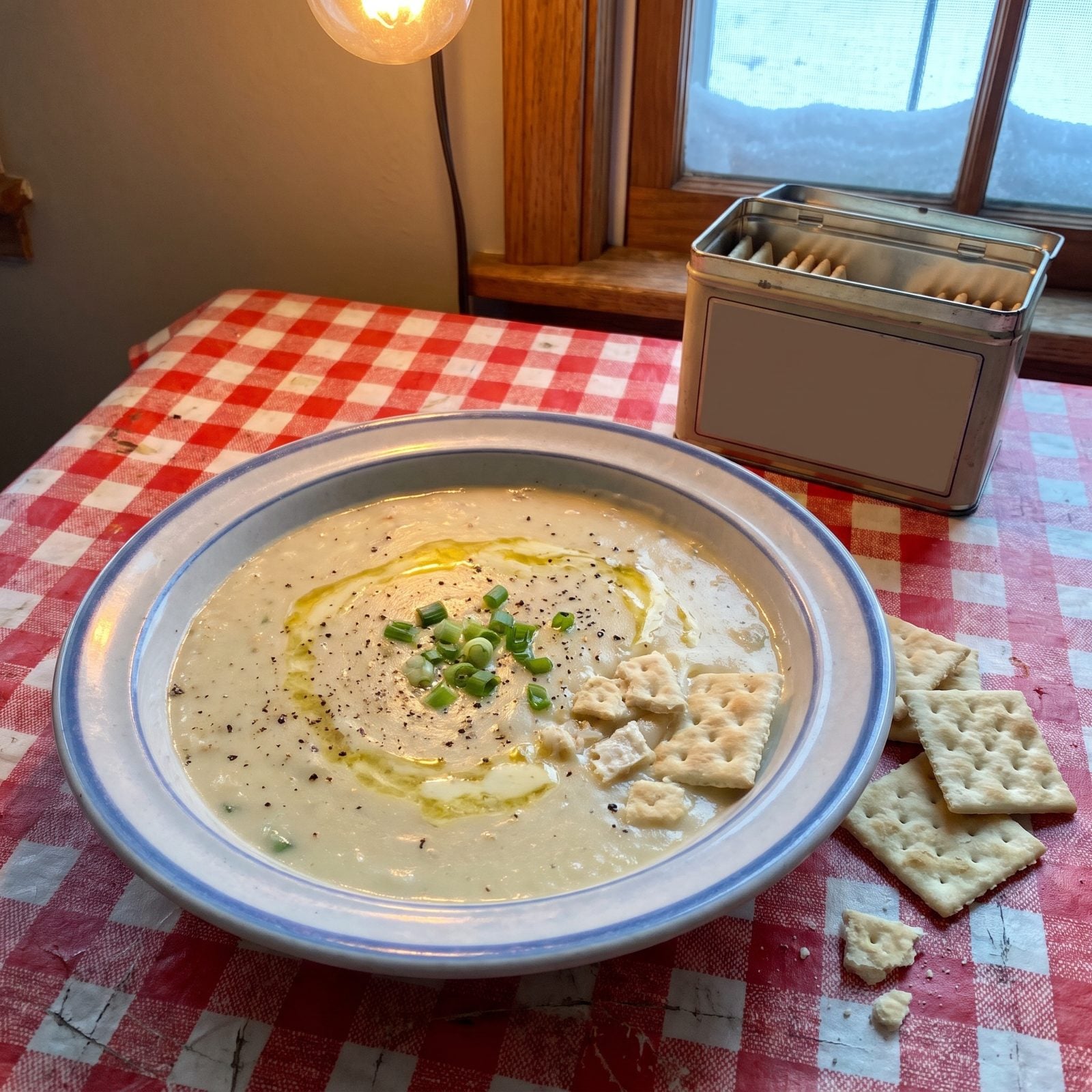
After a big noon dinner, supper could be as humble as a pot of potato soup, and on Saturday it often was. Diced cellar potatoes simmered soft in milk with a little onion, thickened with a flour-and-butter roux, seasoned with salt and a heavy hand of pepper.
Crackers went right in, crumbled and left to soften, or eaten dry off the side. It cost almost nothing and warmed you clean through after an afternoon of hauling wood. Nobody photographed potato soup back then. Too ordinary to bother with — which is exactly what makes it worth remembering now.
8. Sunday Dinner: Pot Roast With Carrots and Pan Gravy
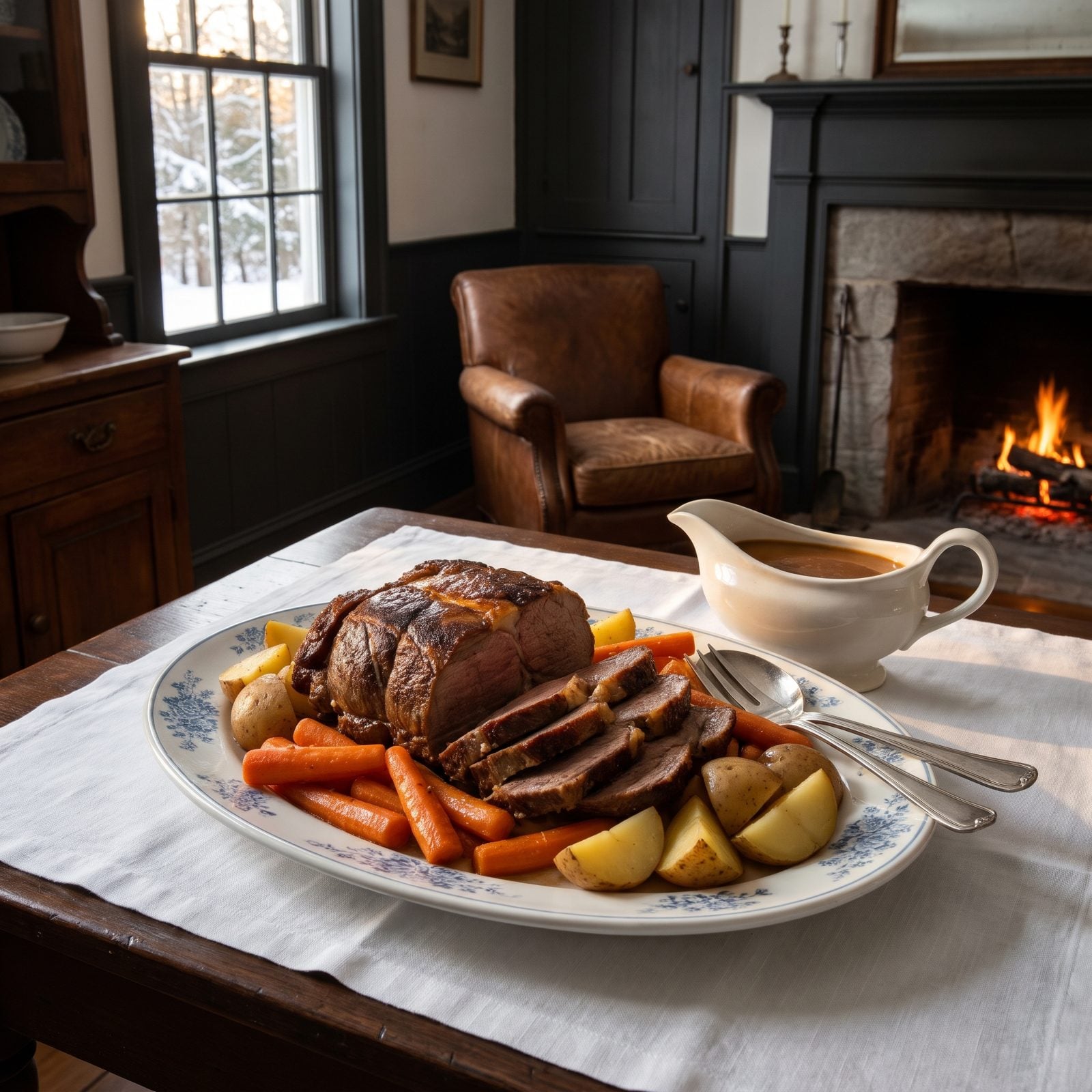
The whole week built toward this. A tough, cheap cut of beef went into the heavy roaster early, with carrots and potatoes and onions tucked around it, and it cooked low and slow through the morning church hour until the meat gave way to a fork.
The gravy got made right in the pan from the drippings, scraped up and thickened, and it went over everything. This was the one meal where the good platter came out and the family sat down together without anybody hurrying off. A pot roast turned the toughest, cheapest beef into the best meal of the week — the whole genius of a farm kitchen, really, and we’ve mostly forgotten how to do it.
A tough cut, a slow oven, and a patient Sunday morning. That was the recipe, and it never once came written down.
7. Sunday Supper: Leftover Roast Beef Sandwiches on Thick-Cut Bread
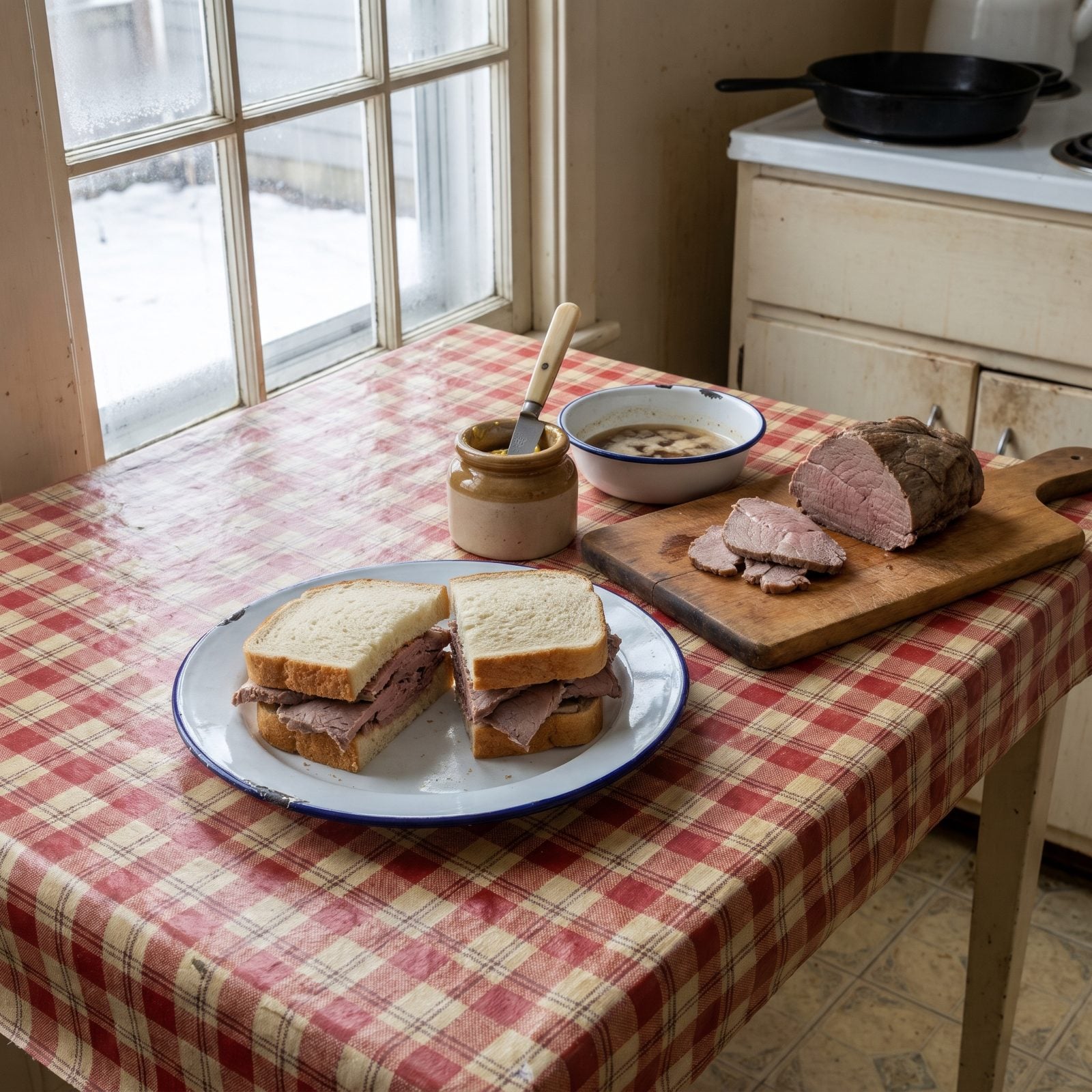
The big roast came out of the oven at Sunday noon, and by Sunday night it was sandwiches, because nothing got wasted on a farm in January and nobody expected it to.
Cold beef, sliced thin against the grain, laid on bread cut thick enough to stand up to it. A smear of mustard if there was any, or a little of the beef drippings spread cold like butter. No fuss. You’d worked all day, the roast had done its first job at dinner, and now it did its second.
6. Home-Canned Green Beans Seasoned With a Scrap of Salt Pork
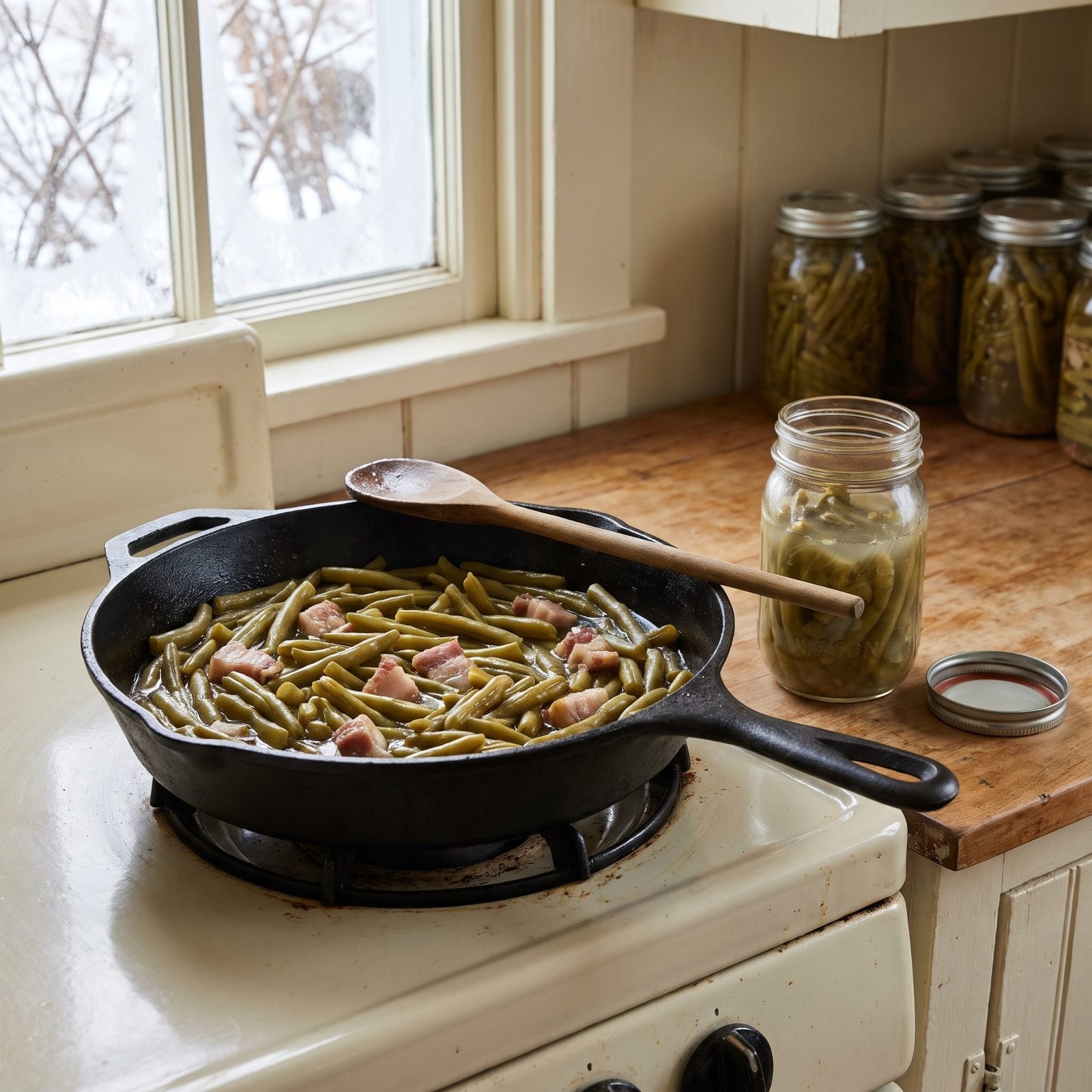
These beans were put up in August and tasted nothing like August anymore. That was the trade. You gave up the snap and the color of fresh, and in exchange you had green beans in a month when nothing green grew for a hundred miles.
A scrap of salt pork did the heavy lifting. Dropped in with the beans and simmered down slow, it turned a jar of plain canned vegetables into something cooked by someone who cared whether you ate well. The beans went soft, the fat rendered, the whole pot smelled like supper.
We’ll say it plainly: the texture would horrify a modern cook raised on blanched crisp-tender beans. But it was never trying to be that. Filling and good in January, and it was both.
5. Head Cheese Sliced Cold and Served With a Splash of Vinegar
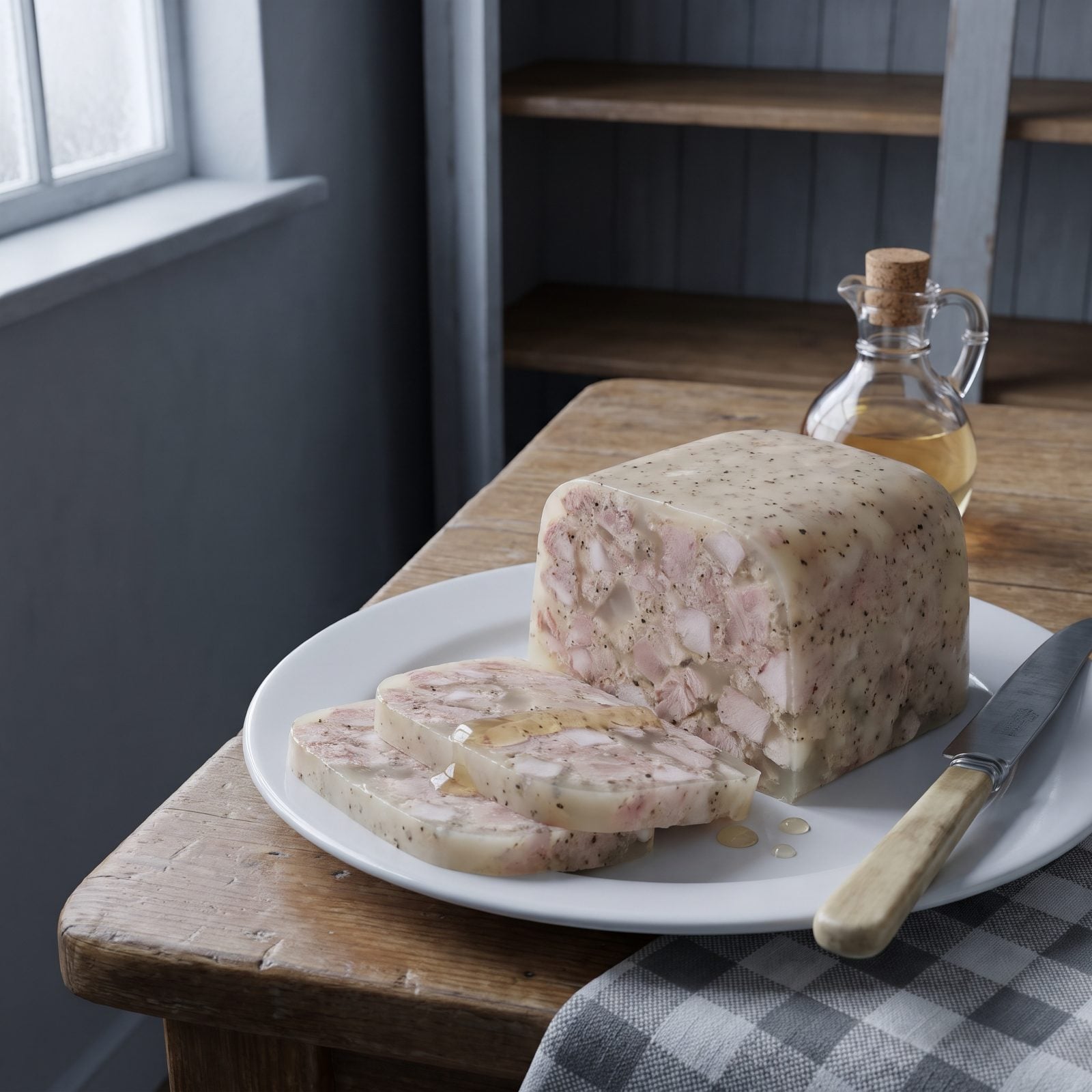
Head cheese isn’t cheese and never was. It’s the parts of a butchered hog that don’t fit anywhere else, simmered down until the meat falls away, then set in its own gelatin and sliced cold. On a farm that butchered its own, throwing those parts away was unthinkable.
The vinegar mattered most at the table. A splash of cider cut the richness and woke the thing up. Head cheese without it is heavy and bland; with it, you understood why people bothered.
You either grew up with it and feel fondly about it, or you didn’t and you’re squinting at this paragraph right now. We won’t try to convert anyone. But it fed people through a lot of cold Januaries.
4. Dried Apples Stewed Soft With a Stick of Cinnamon
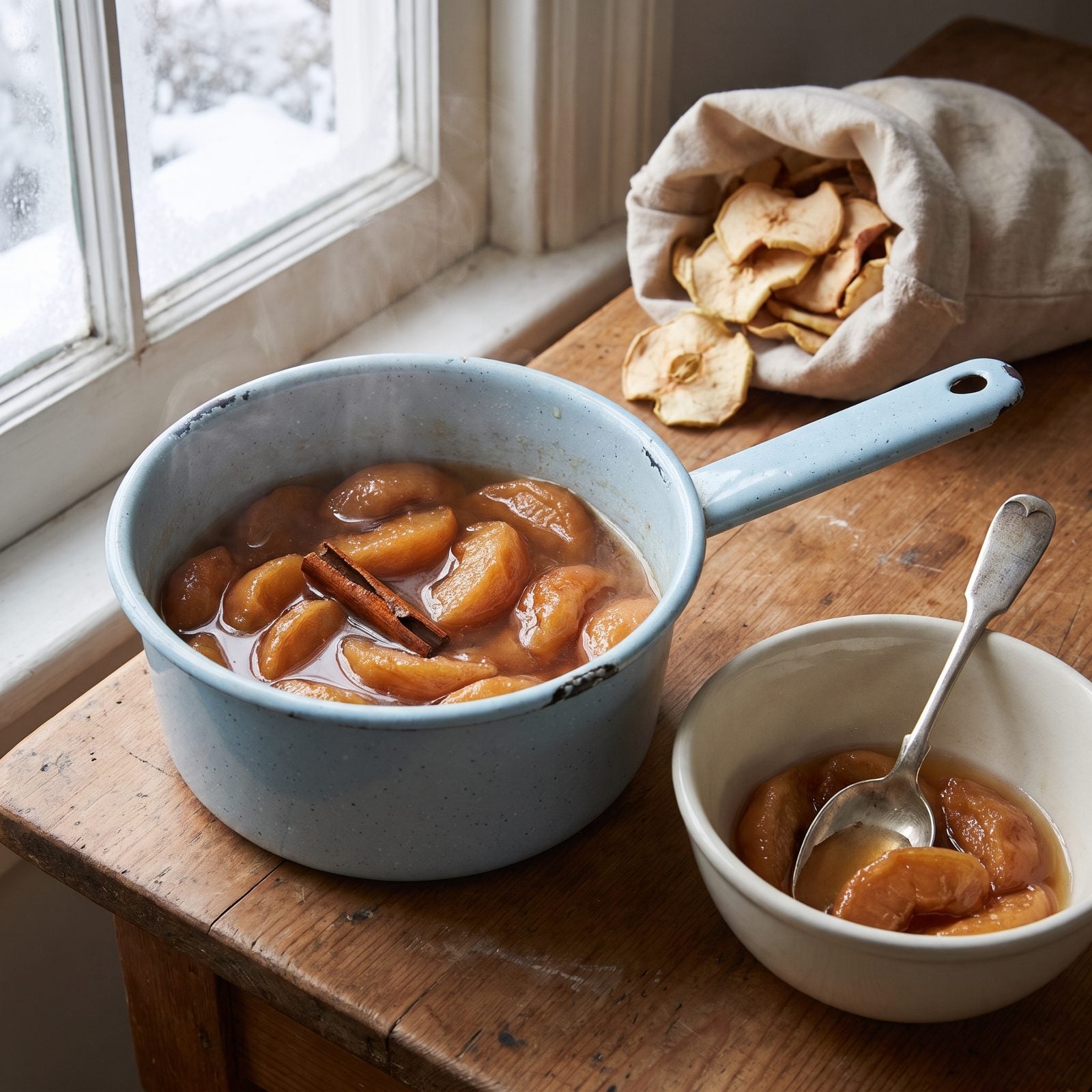
Fresh apples were long gone by January. What was left hung in cloth sacks in the pantry, sliced and dried back in the fall when the trees gave more than anyone could eat at once.
Stewed slow with water and a stick of cinnamon, those leathery slices came back to life — soft, amber, a little syrupy. Served warm in a bowl, they were pudding and sauce and dessert all at once, and they cost almost nothing because you’d already grown and dried the apples yourself.
This is one we genuinely miss the idea of. Not the labor of drying apples; we’re not romantic enough for that. But the notion that dessert in January could come entirely from what you’d set aside in October.
According to historians at a historic farm, farm families sliced apples and left them in the sun for several days until the pieces turned brown and leathery.
3. Popcorn Shaken Hot in a Lidded Kettle on the Stove
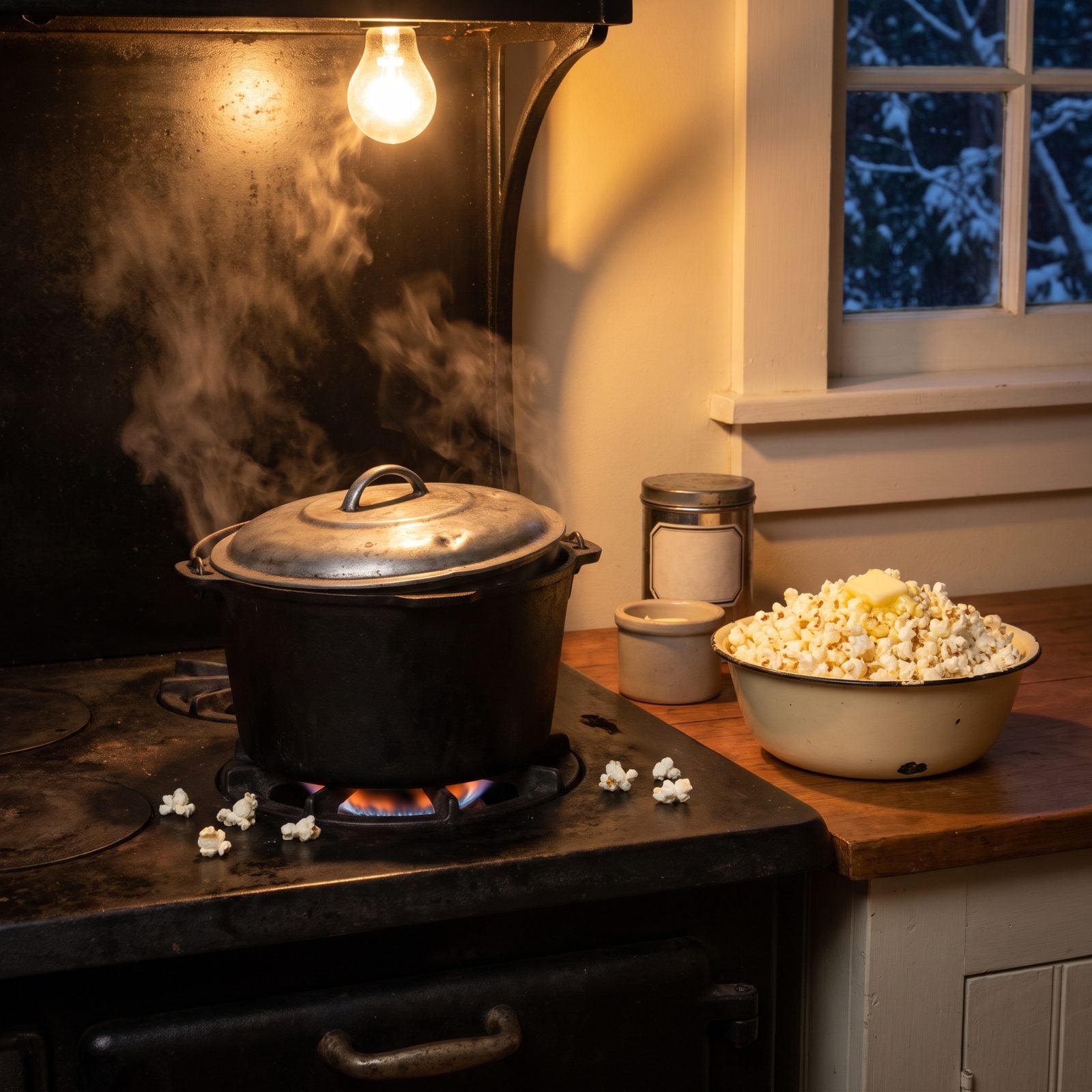
Evening popcorn was a whole event before a machine did it for you. A heavy kettle, a spoon of lard melted in the bottom, a handful of kernels grown right on the farm, and then the shaking. You stood at the stove and rocked that pot by the handle so nothing scorched, and the lid rattled as it filled.
Butter on top if you had it. Salt always. The kids got the first bowl and the parents got the quiet after.
2. Rice Pudding Baked Slow With a Handful of Raisins
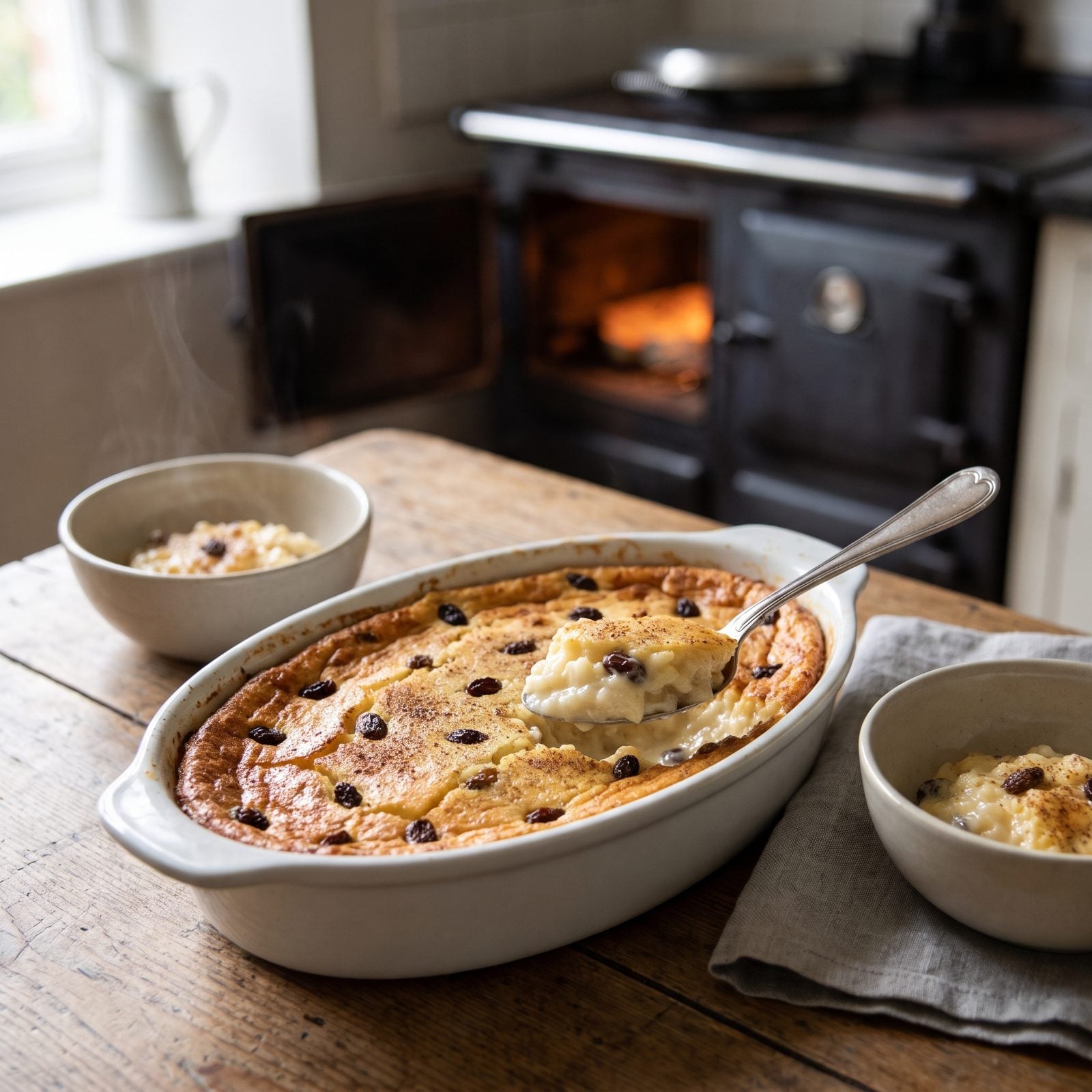
Rice pudding was Sunday’s answer to the question of dessert when there wasn’t much to work with. Rice, milk, eggs, sugar, a handful of raisins pulled from the pantry, baked slow in the oven’s falling heat after the roast came out.
What you got was a custard that set around soft rice, with a skin on top. Some people fought over that skin. Some people peeled it off and gave it away. The raisins plumped in the baking and sat dotted across the browned top, and a little nutmeg went over the top if the tin wasn’t empty.
It used up milk from the morning’s milking and eggs the hens were still laying even in the cold. Nothing in it had to be bought special, which is exactly why it showed up so often.
1. A January Applesauce Cake Built From Nothing But Pantry Spices
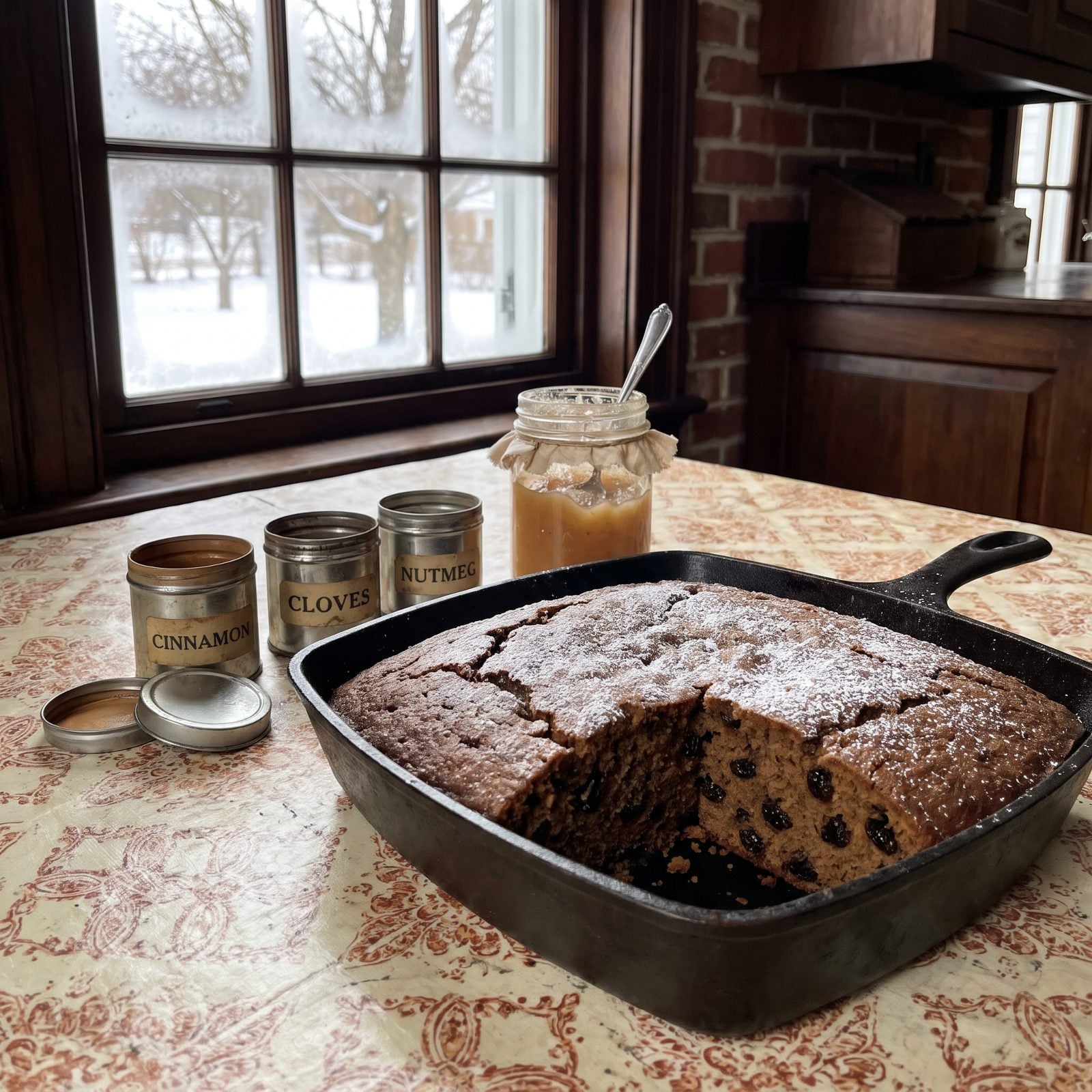
This is the cake you make when the fresh fruit is a memory and the nearest store is a long cold drive. Applesauce, put up in jars back in fall, gave it moisture and sweetness. And the spice tins on the shelf — cinnamon, cloves, nutmeg — gave it everything else.
No frosting. Applesauce cake didn’t need it, and nobody was icing cakes on a Tuesday in January anyway. It kept well on the counter under a cloth, which mattered, because a cake that lasted the week was worth more than one that vanished in a night.
The whole thing was built from the pantry, and that was the quiet genius of it. Winter baking that didn’t require a single trip to town.
If a single dish sums up a Midwestern farm January, it might be this one. Everything in it was already in the house, waiting for a cold afternoon and someone with time to bake.