
Would you like to save this?
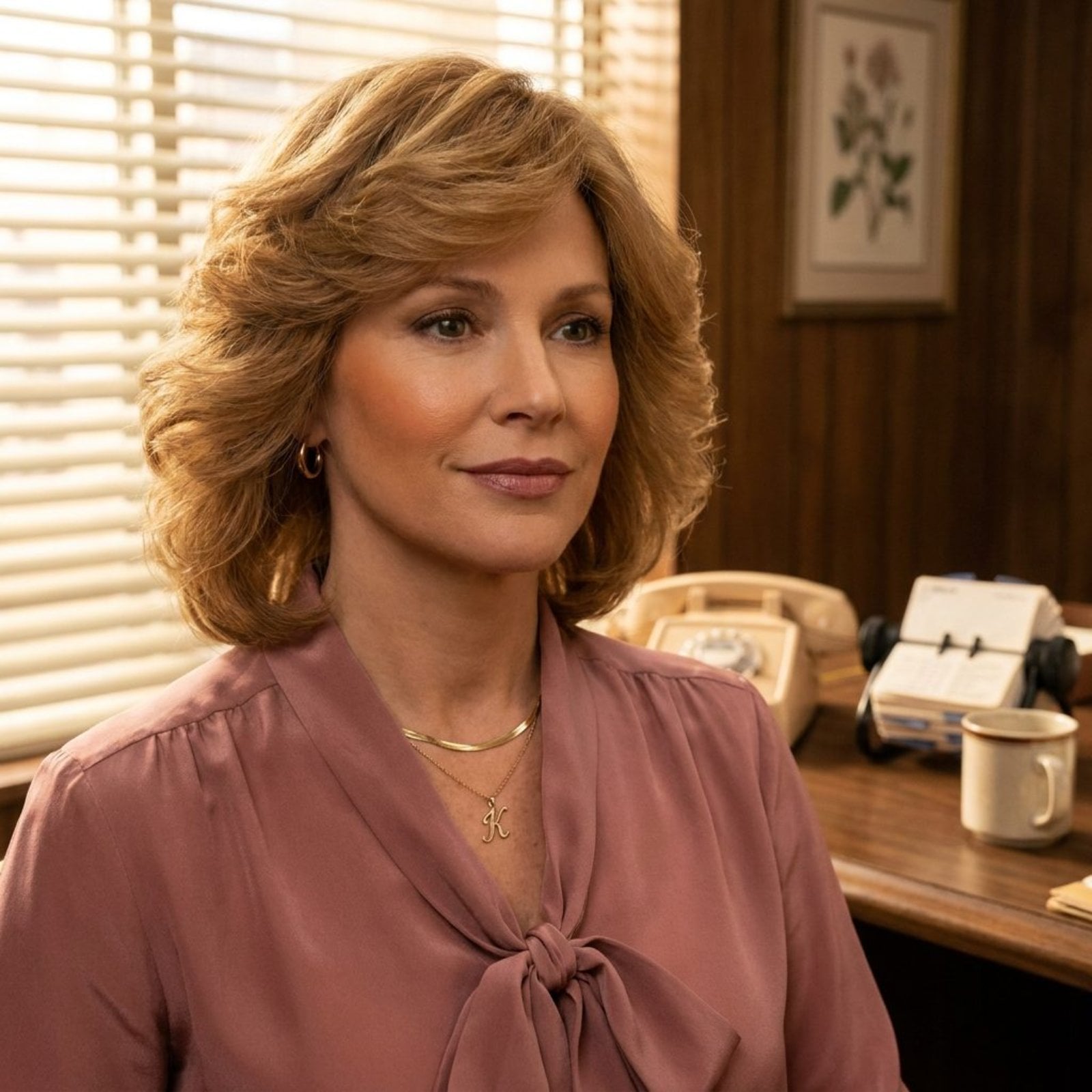
The click of a low heel on lobby marble at 8:47 a.m. The faint rustle of a silk blouse under a jacket with shoulders that could clear a doorway. Office dressing in the 1980s wasn’t about blending in. It was about arriving. Every morning was a small act of theater, and the costume department was a rotation of department stores, catalog orders from Talbots, and the occasional splurge at Nordstrom.
These ten pieces weren’t just clothes. They were armor, ambition, and identity, all buttoned up before the first cup of coffee.
33. The Power Suit With Shoulder Pads That Could Flag Down a Taxi
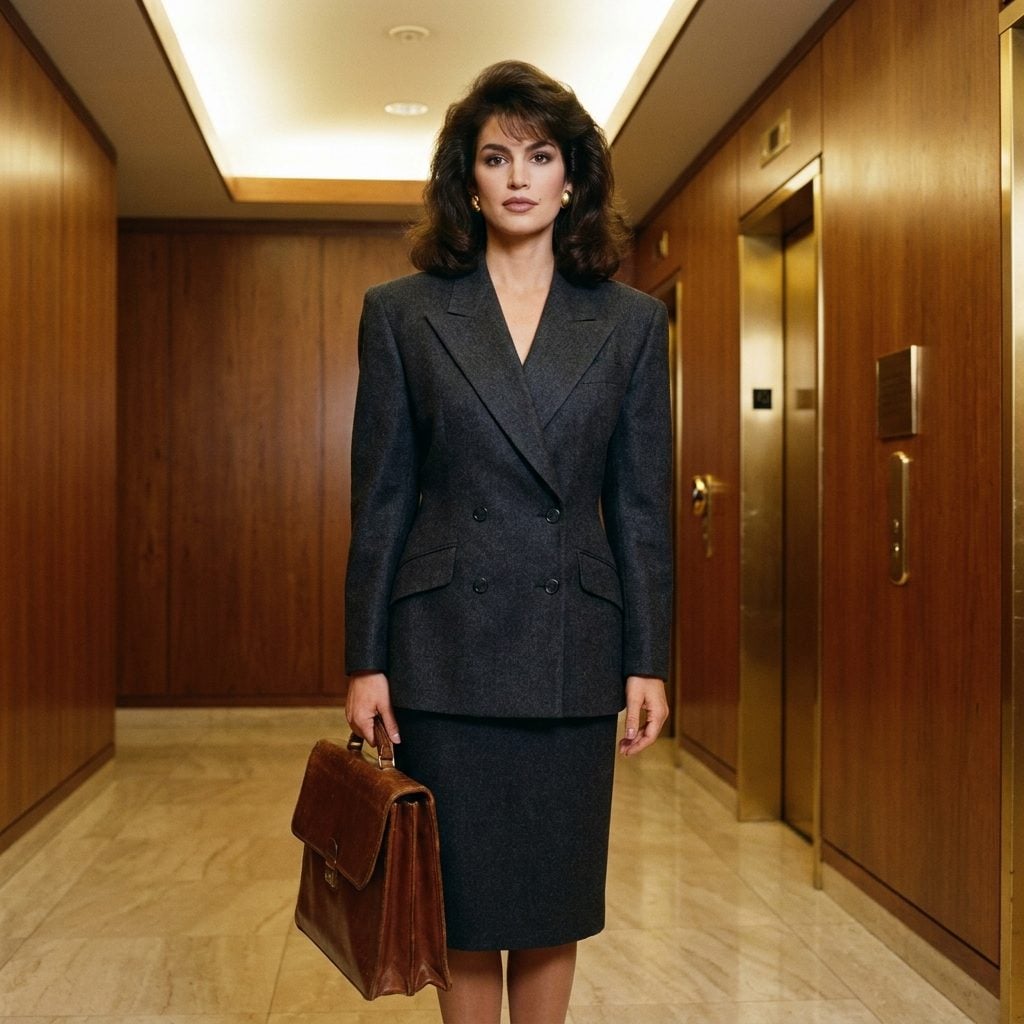
Those shoulders did not happen by accident. A good 1980s power suit required architecture: foam pads stitched into the jacket lining, sometimes a full inch and a half thick, creating a silhouette that turned every woman into a walking declaration of intent. The body underneath was almost beside the point. The suit announced you before you opened your mouth.
Most of us had at least two: one in charcoal, one in navy. Maybe a third in black wool if the budget stretched. You bought them at Casual Corner or splurged at Ann Taylor, and you had them altered at the little tailor near the dry cleaner who understood what “take in the waist but leave the shoulders alone” meant. The fit was specific: broad on top, nipped at the waist, structured everywhere.
There’s a reason the power suit became the uniform. Women were walking into boardrooms where every chair had been designed for a man’s frame, and the suit said, very quietly, I’m not borrowing space here. I belong in it.
32. The Pussy-Bow Blouse That Said ‘I Run This Meeting’
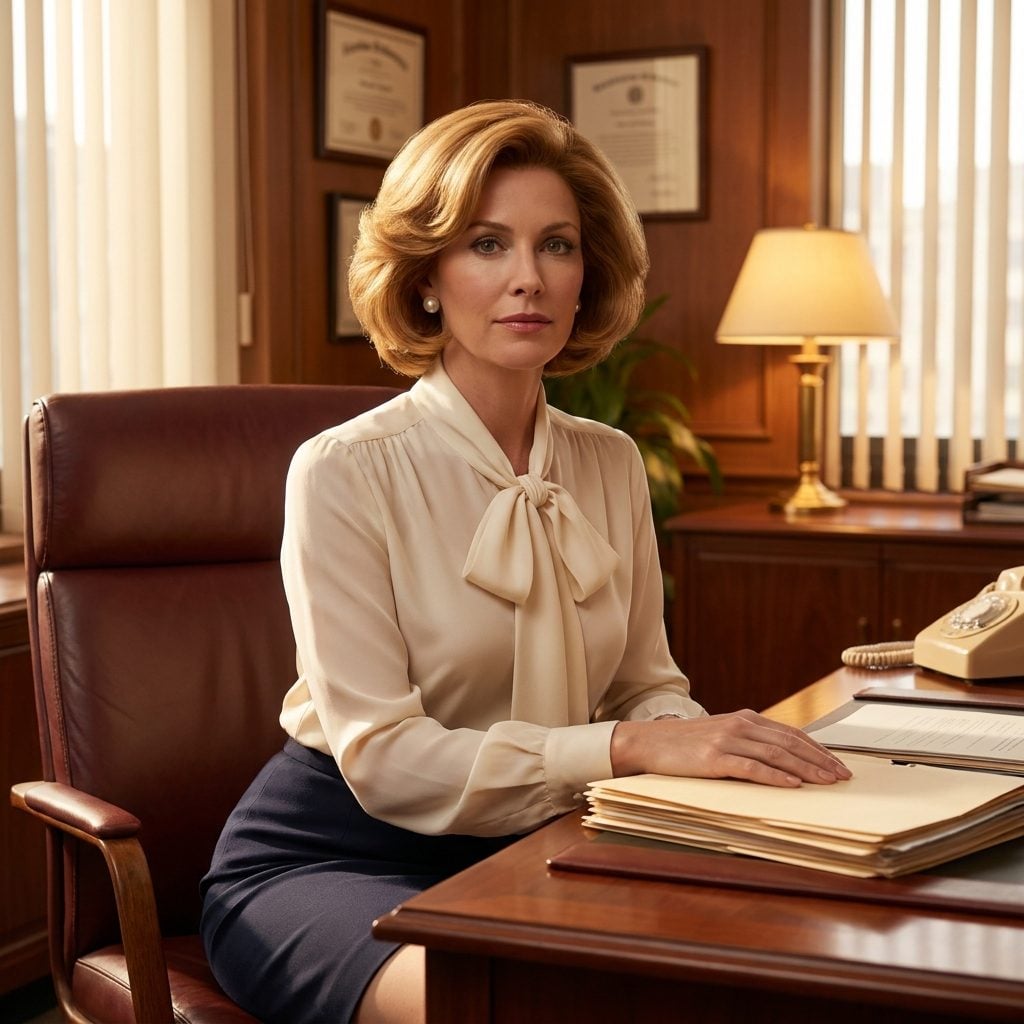
That bow was doing more work than anyone gave it credit for. A silk bow blouse softened the hard edges of a suit jacket while still reading as serious. It was femininity on your own terms, deployed strategically at the neckline where everyone’s eyes landed first.
You tied it yourself every morning, fussing with the length of the tails in the bathroom mirror, trying to hit that sweet spot between floppy and strangled. Cream was the classic. Burgundy was for when you felt bold. The fabric had to be silk or at least a silk-blend poly that fooled people from three feet away. Anything less and the bow just hung there, defeated.
31. Pencil Skirts and Matching Suit Jackets, the Uniform Nobody Questioned
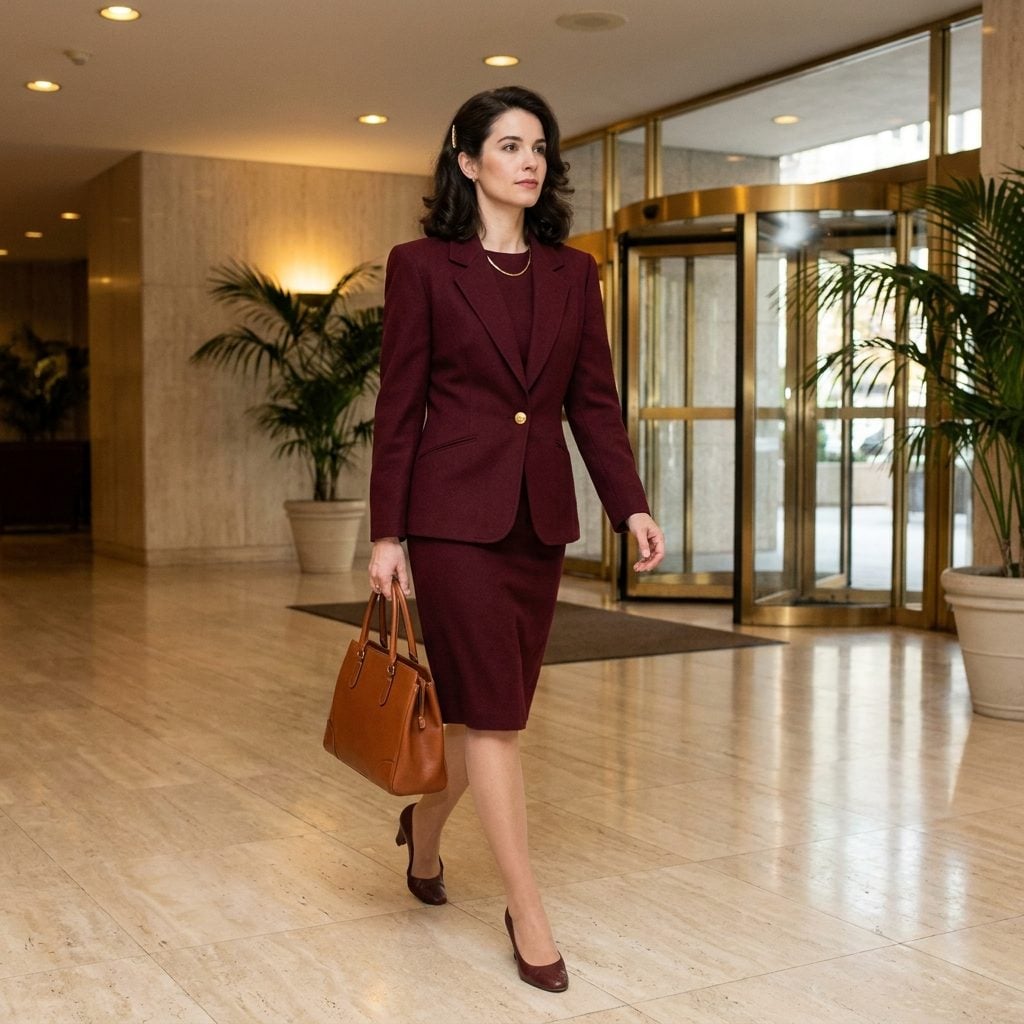
The matching set was non-negotiable. Not a blazer you found that sort of went with a skirt you already owned. A matched suit, same fabric, same dye lot, purchased together and kept together like a married couple in your closet. Separating them felt vaguely wrong.
The pencil skirt was the anchor. It hit below the knee, hugged the hip without grabbing, and required a specific walk: purposeful but not rushed, because the hem didn’t allow for long strides. You learned to navigate that restriction the way you learned to navigate everything else at the office. Quickly and without complaint.
I’ll say this: we underestimate how much confidence came from knowing every piece matched. There was no second-guessing in the elevator. No wondering if the colors were off. You were a complete sentence, head to toe.
30. Pantyhose, Every Single Day, No Exceptions
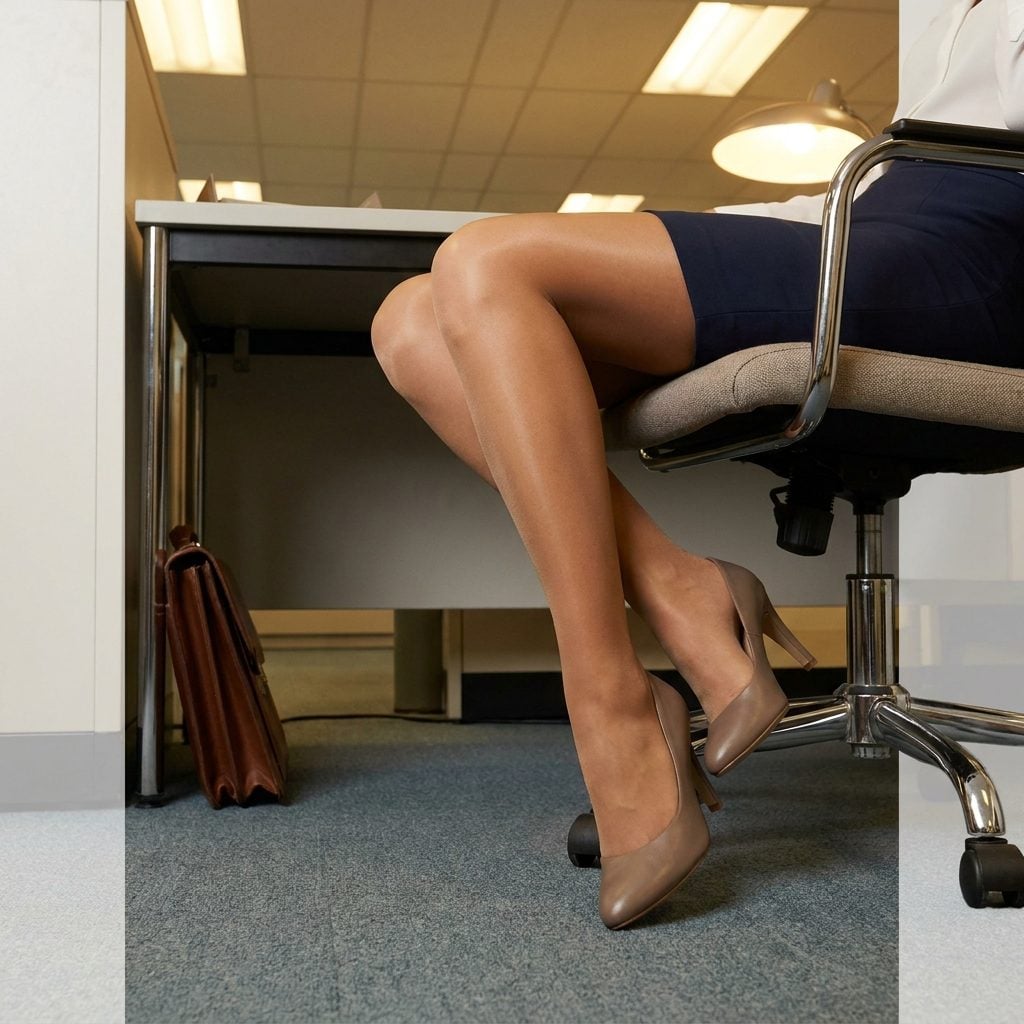
Bare legs at the office? In 1985? You might as well have shown up barefoot. Pantyhose were as mandatory as a name badge, and most of us kept a spare pair in our desk drawer because a run before lunch was not a question of if but when.
The shades had names that sound like paint swatches now: Suntan, Nude, Coffee, Off-Black. L’eggs came in that plastic egg. Hanes had the comfort waistband that actually did make a difference. You rolled them on carefully every morning, one bunched-up leg at a time, praying your thumbnail didn’t catch the fabric.
And they were hot. Genuinely, physically warm, which was fine in January and brutal by June. But you wore them anyway because the unwritten dress code was written in everyone’s eyes.
29. Pumps With Modest Heels and Sensible Ambition
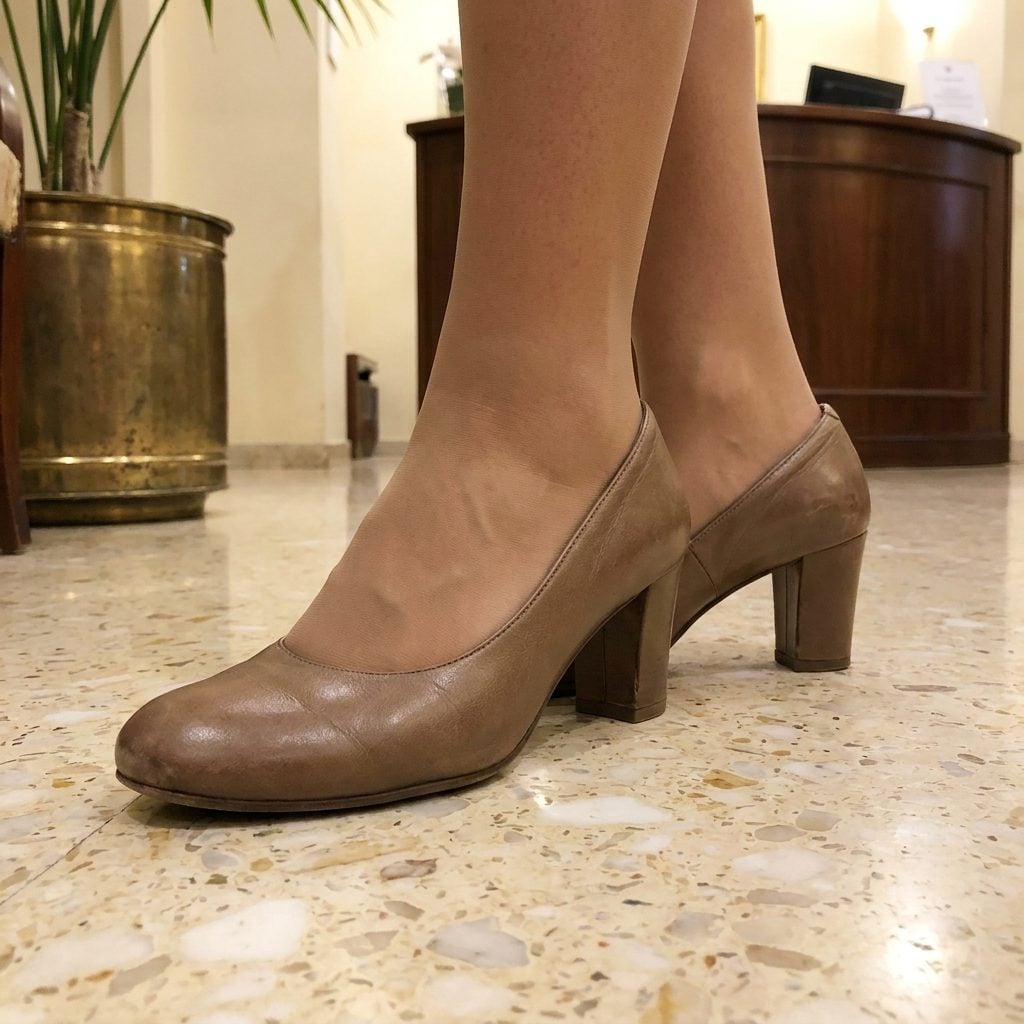
Not stilettos. Never stilettos. The 1980s office pump lived in a very specific zone: high enough to look dressed, low enough to walk from the parking garage to the fourteenth floor without wincing. Two inches, maybe two and a half. A heel you could stand in during a forty-five minute presentation without shifting your weight.
Taupe leather went with everything. Navy went with the navy suit. Black went with the black suit. Most women owned all three. You bought them at Naturalizer or Nine West, got them resoled once, and retired them when the leather cracked at the toe crease. They weren’t exciting. They weren’t supposed to be. They were the foundation, literally, that everything else stood on.
28. Silk Blouses in Jewel Tones, the One Place Color Was Allowed
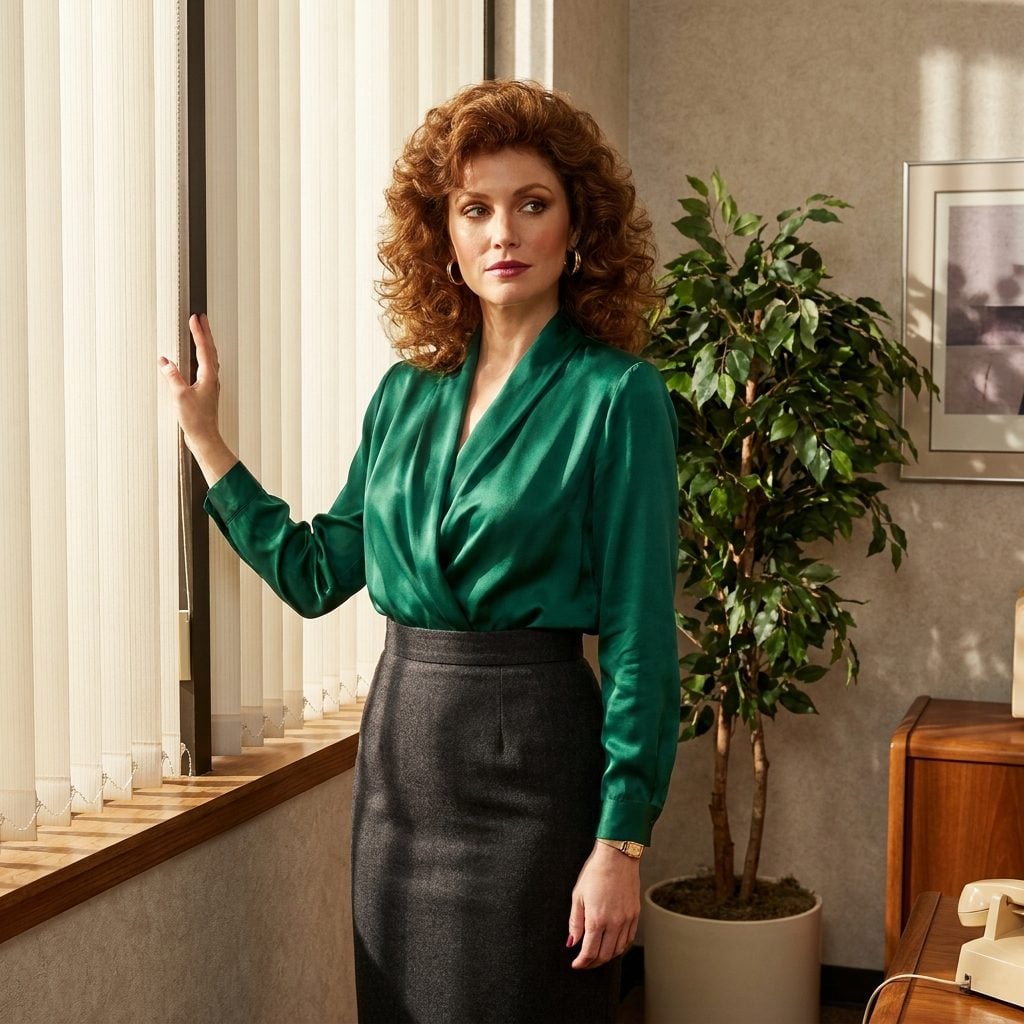
In a wardrobe built on charcoal, navy, and black, the jewel-tone silk blouse was the one controlled burst of personality. Emerald. Sapphire. Deep amethyst. Ruby if you had the nerve. The color peeked out from under a dark blazer like a secret you were choosing to reveal.
Real silk caught the light in a way polyester never could, and everyone in the conference room knew the difference even if nobody said it out loud. You hand-washed them in Woolite in the bathroom sink on Sunday nights. You hung them on padded hangers. These were investments, not impulse buys, and a single blouse from Talbot’s or Jones New York could eat a week’s lunch budget.
27. The Double-Breasted Blazer That Meant Business Before You Said a Word
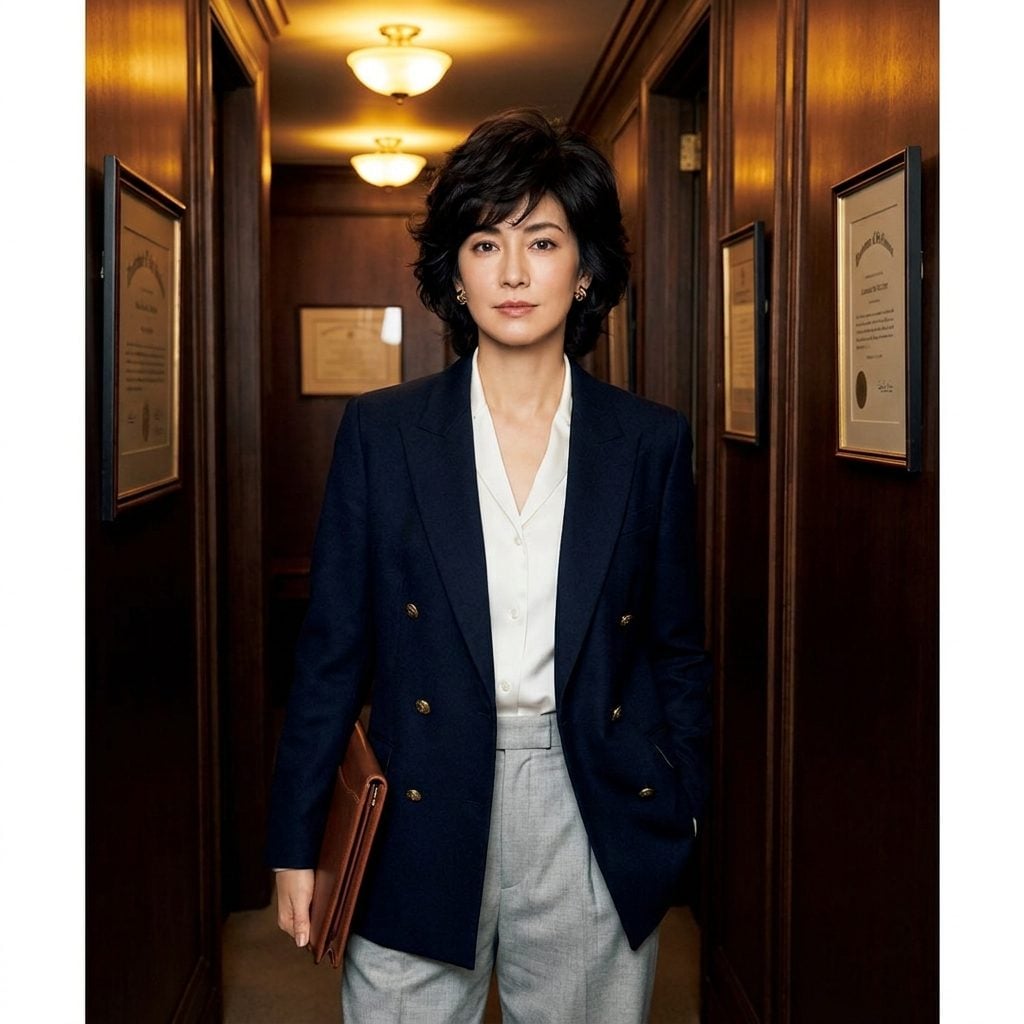
Six buttons, two columns, gold tone. The navy double-breasted blazer was borrowed directly from menswear, and that was the entire point. It said authority in a language the office already understood.
The fit mattered enormously. Too boxy and you disappeared inside it. Too tight and the overlap pulled at the buttons, which was a disaster because those buttons were load-bearing, both structurally and symbolically. You needed it to close cleanly, sit flat, and move when you moved. A good one felt like wearing a promotion.
Ralph Lauren made the aspirational version. Evan Picone made the one most of us could actually afford. Both looked serious in a meeting. Both looked equally good thrown over the back of a restaurant chair at 6:30 p.m. after the kind of day that earned a glass of wine.
26. Wide Leather Belts Cinched Over Everything That Held Still
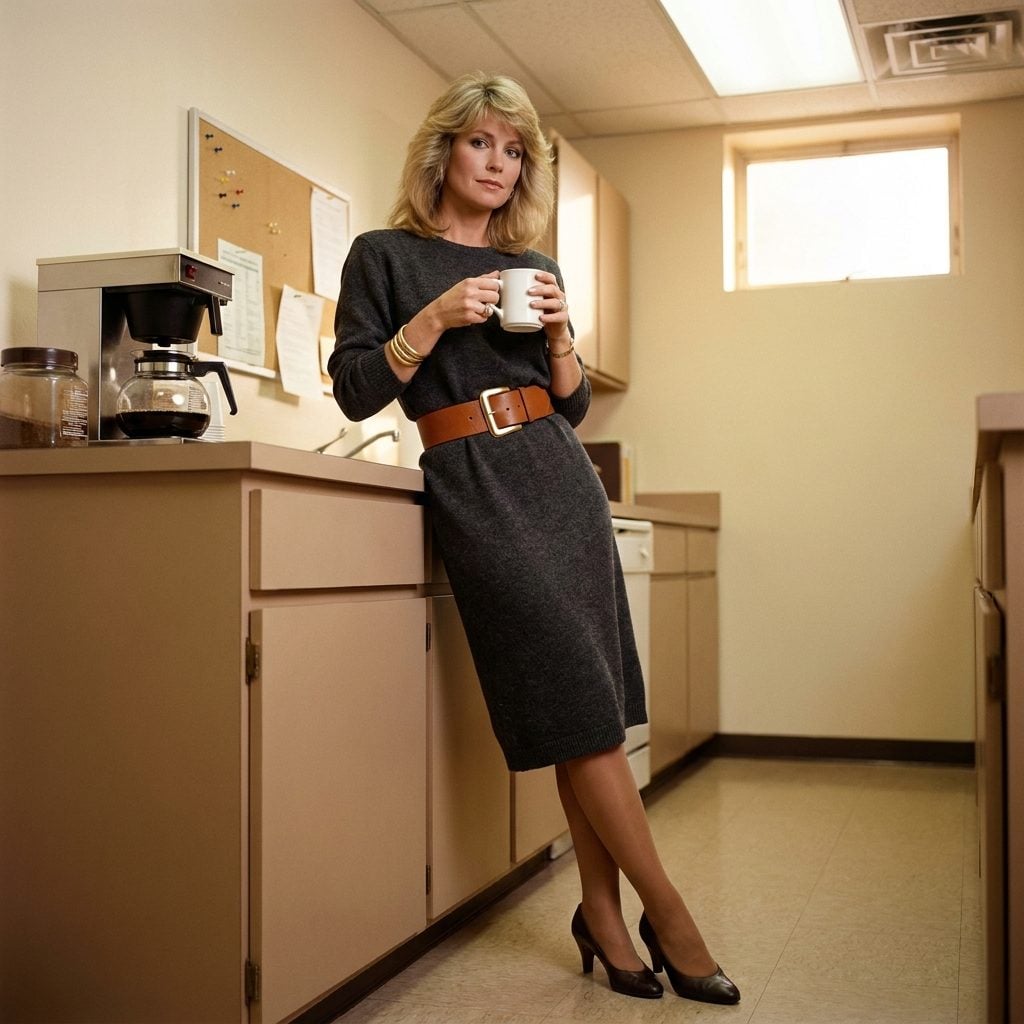
Over the blazer. Over the sweater dress. Over the oversized blouse. The wide leather belt went over everything because it did something no other accessory could: it created a waist where the 1980s silhouette had deliberately erased one. All that shoulder padding and oversized fabric needed a counterpoint, and a three-inch belt with a gold buckle was it.
Cognac was the color. Always cognac, or something close to it.
25. High-Waisted Pleated Trousers With Room to Actually Move
Would you like to save this?
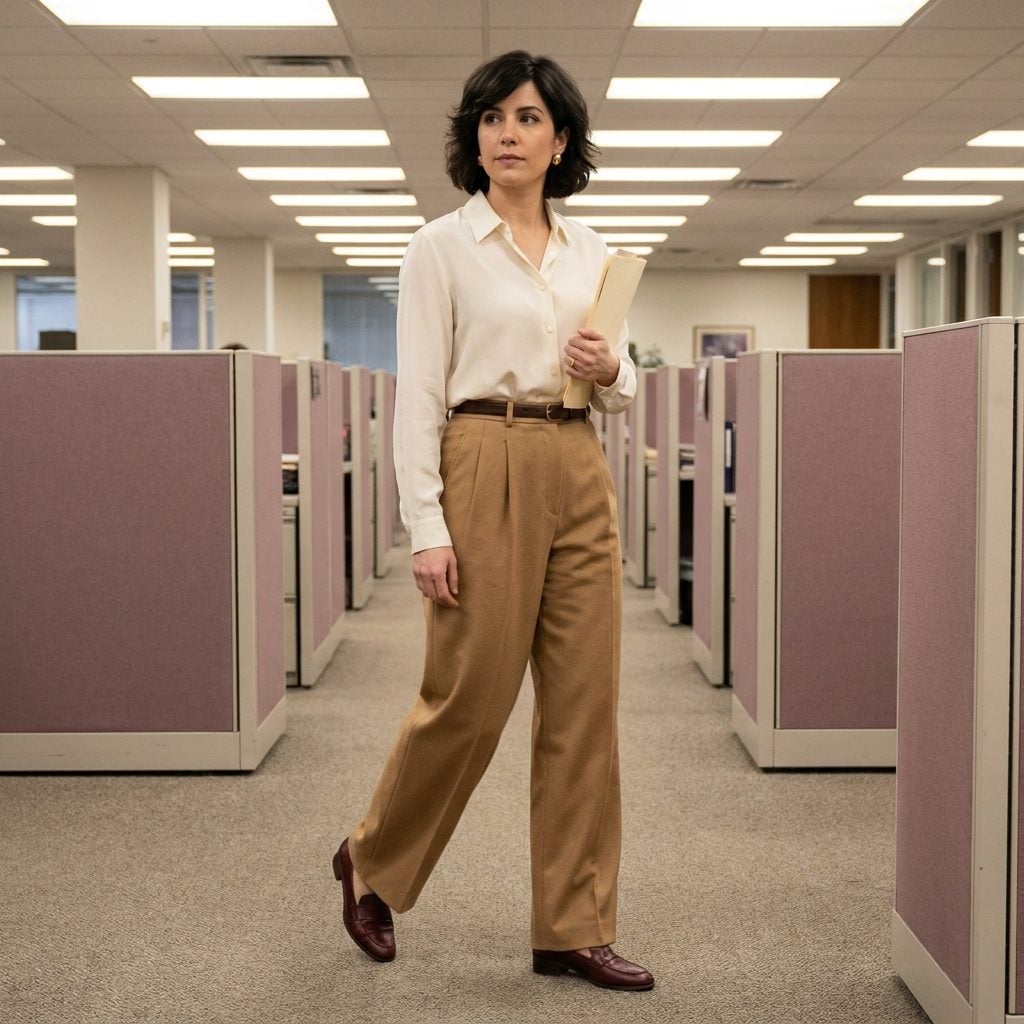
The waistband sat where waistbands used to sit: at the actual waist. Not the hip. Not some ambiguous zone below the navel. The waist. And from there, the camel pleated trousers fell in clean lines, the double pleats giving just enough room through the hip to sit, stand, walk, and carry a stack of binders to the third-floor conference room without anything binding.
These trousers were everywhere by 1984. Liz Claiborne practically built an empire on them. They worked with silk blouses, with knit turtlenecks, with blazers of every cut. They were the most democratic garment in the 1980s office: flattering at every size, appropriate at every level, comfortable enough to forget you were wearing them by mid-morning.
24. Loafers, the Quiet Rebellion Against Everything Uncomfortable
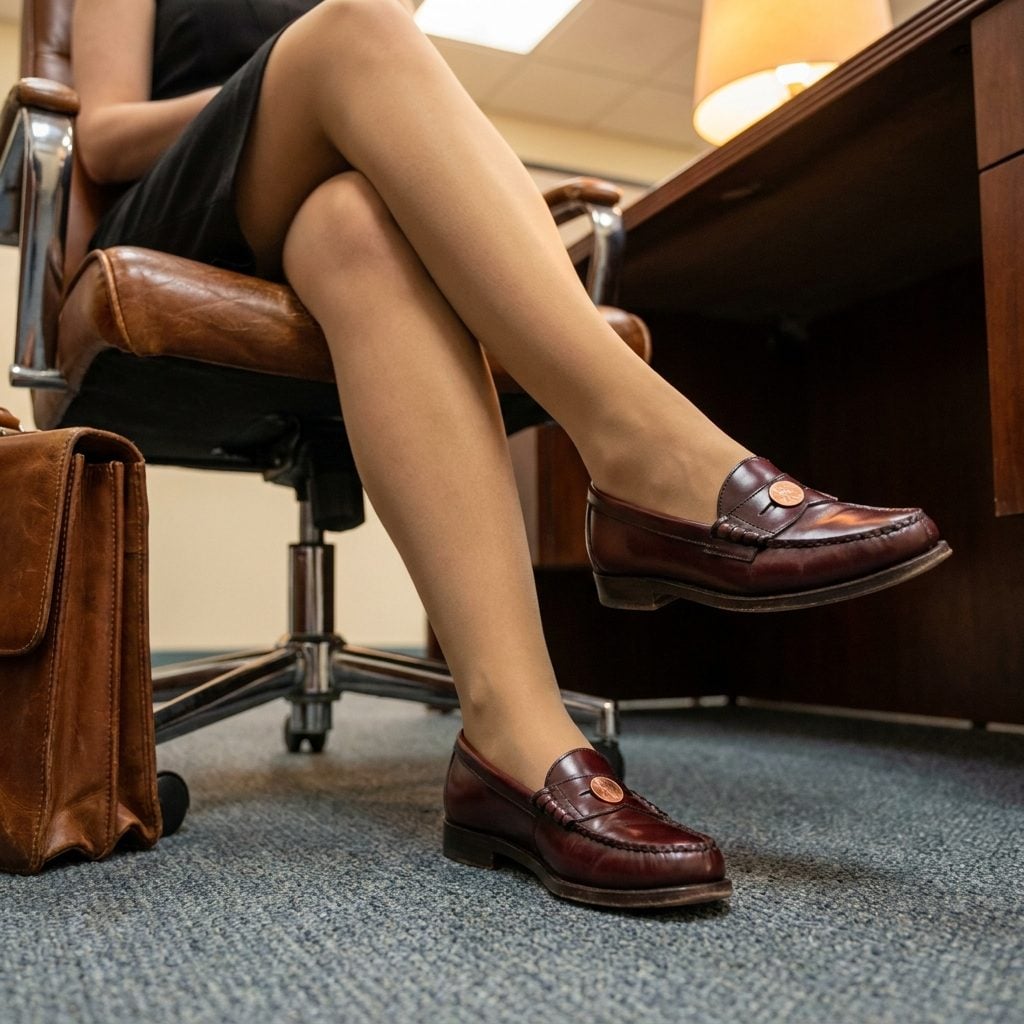
Some women reached a point, usually around Wednesday of a long week, where the pumps stayed in the desk drawer and the burgundy leather loafers came out. It wasn’t giving up. It was strategy.
Penny loafers, specifically, with an actual penny tucked into the leather strap because someone had done it once and it became permanent. Bass Weejuns were the original. Cole Haan made a version that felt more polished if you were worried about looking too casual, which some of us absolutely were. The loafer walked a careful line: comfortable enough to survive back-to-back meetings, serious enough that nobody could call it a sneaker.
And honestly, there was something grounding about a flat sole after days in heels. You walked differently. A little looser. A little more like yourself.
23. The Matching Skirt Suit in Navy or Gray That Meant You Were Serious
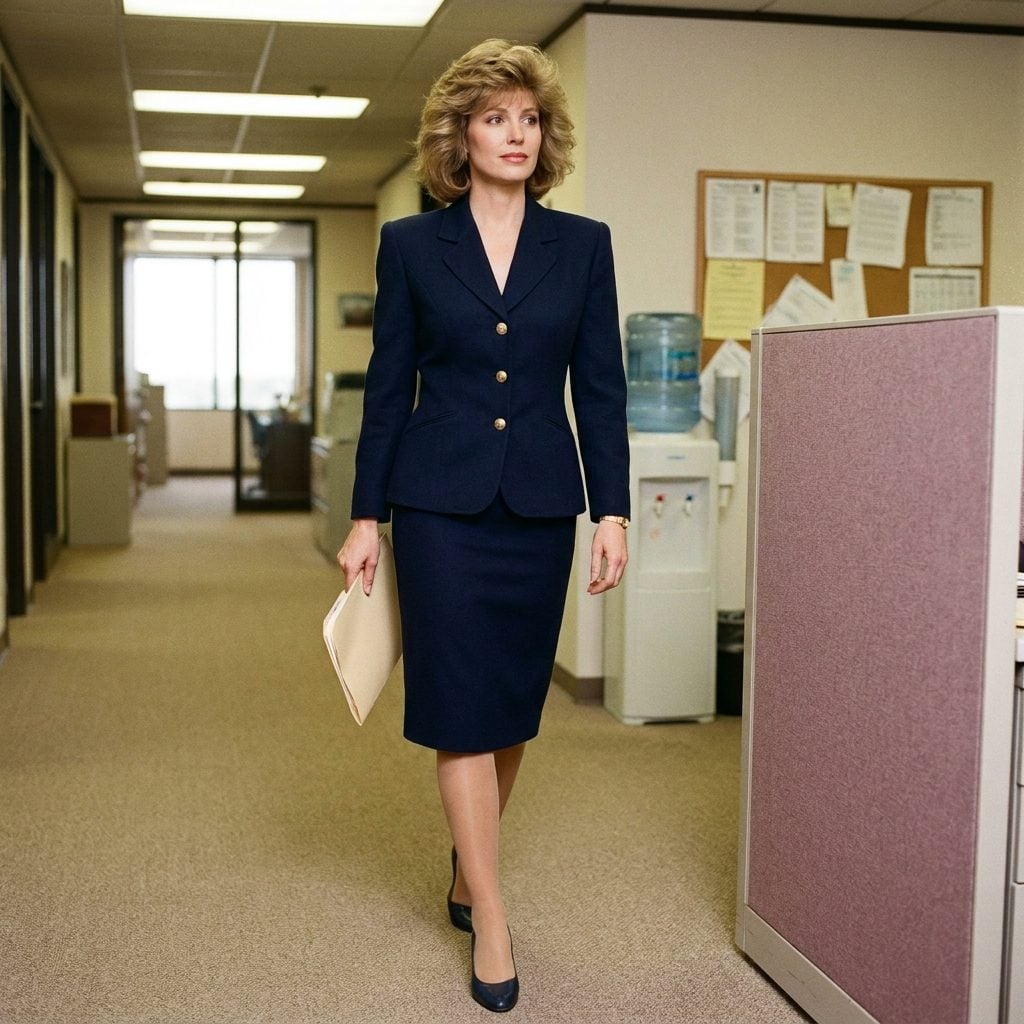
Before “business casual” dismantled the dress code, there was one uniform that said you belonged in the room: a matched skirt suit in navy or gray wool. Not charcoal, not slate. Gray. The pencil skirt hit just at the knee, lined in slippery polyester that stuck to your pantyhose by 2 p.m. The blazer had real structure, not the soft unlined drape you see today. Shoulder pads built into the seams, a single vent in back, two or three buttons that actually closed.
You bought yours at Casual Corner or maybe Peck & Peck if you’d landed something in finance. The whole point was to look like you hadn’t spent a single second thinking about clothes, which of course meant you’d spent an entire Saturday finding exactly the right one. It was armor that looked like conformity, and every woman who wore one knew the difference.
22. The Oversized Shoulder Bag That Doubled as a Briefcase (and a Gym Bag, and a Lunch Box)
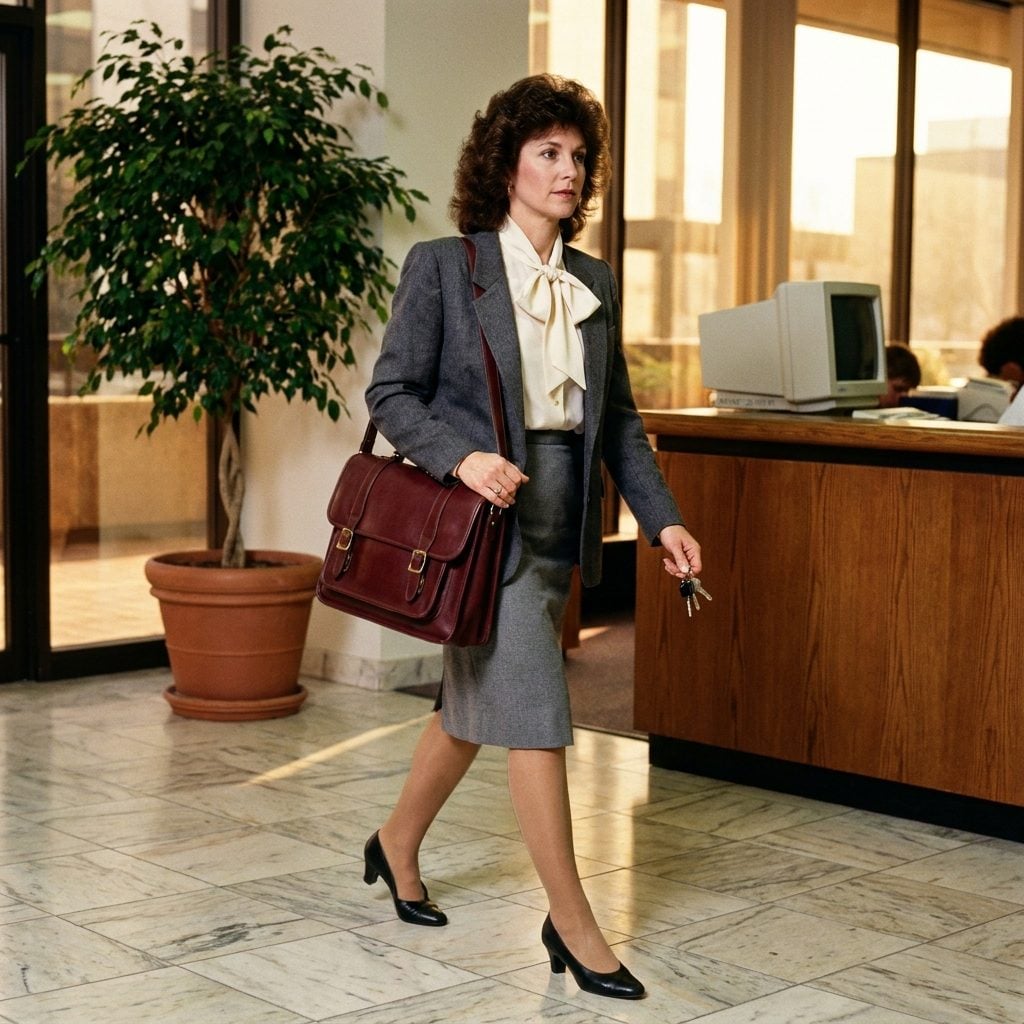
Structured, enormous, and heavy enough to leave a red mark on your shoulder by noon. The 1980s office bag wasn’t a purse. It was a portable filing cabinet with a snap closure and a leather smell that announced itself when you set it down on the conference table.
Most were burgundy or cognac leather, sometimes black if you worked someplace conservative. Brands like Etienne Aigner and Coach before Coach went logo-crazy. The interior was one cavernous compartment, maybe a single zip pocket. You carried your Filofax, your compact, a pair of flats for the commute, half a sandwich in foil, and whatever else your life required that day. The bag held all of it without complaint, and the strap wore a permanent groove into your shoulder pad.
21. Gold-Tone Chain Necklaces Layered Right Over the Blouse

Not tucked under the collar. Not peeking out discreetly. Worn right on top of the fabric, resting against silk or polyester like the blouse was a backdrop and the necklace was the main event. That was the move.
A gold-tone chain, usually rope or herringbone, 18 to 24 inches long, sitting flat against a buttoned-up blouse. Sometimes two chains at different lengths if you were feeling bold on a Friday. Monet and Napier made the versions most of us actually owned. The gold wasn’t gold, of course. It was plated brass that turned your neck green if you sweated through a long meeting. Nobody cared. Against a jewel-toned blouse, that chain looked like authority.
20. The Statement Brooch Pinned to Your Lapel Like a Medal of Honor
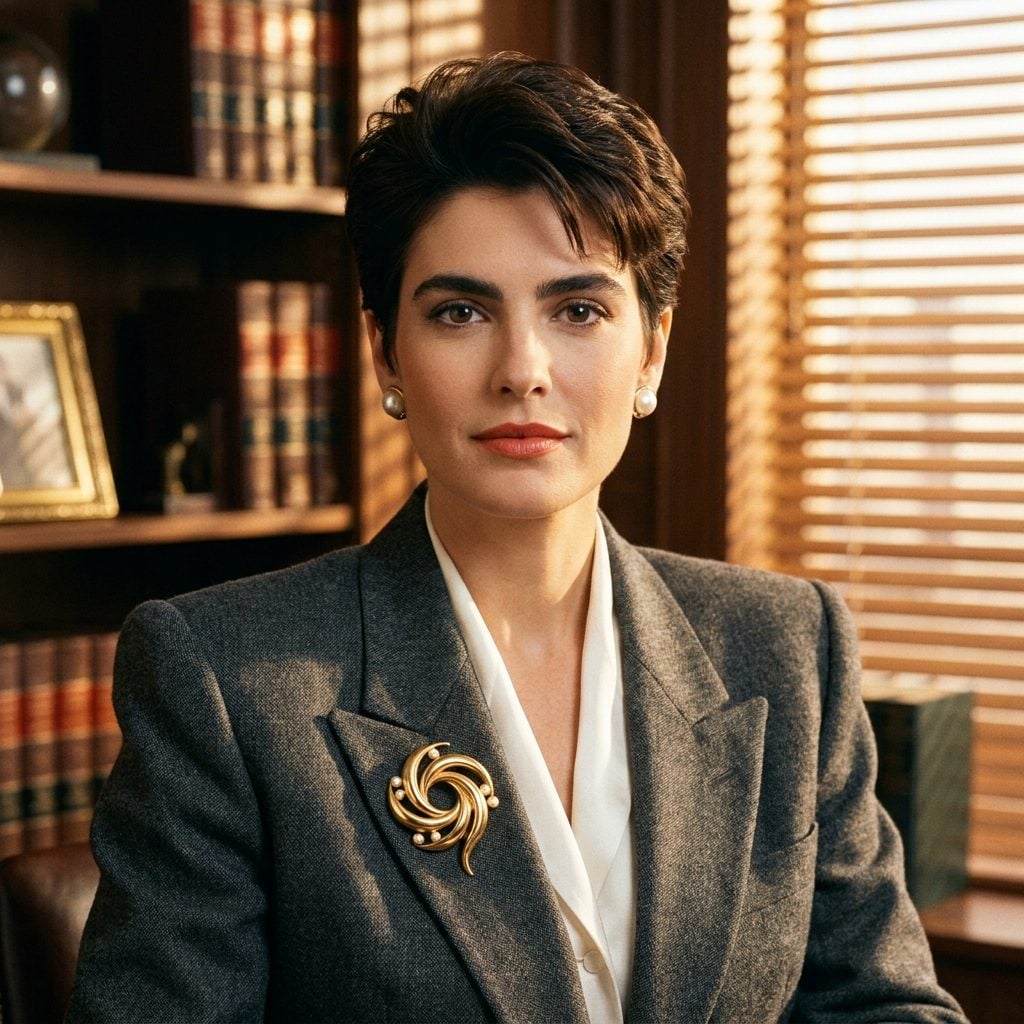
Somewhere between a piece of jewelry and a personality test. The brooch on the left lapel was the one place in an otherwise regimented office wardrobe where you could say something without opening your mouth.
Some women wore abstract gold knots from Trifari. Others pinned on enameled flowers, art deco geometric shapes, or oversized faux pearl clusters. The woman in accounts receivable who wore a jeweled panther on Mondays? You remembered her. The whole point was controlled flamboyance: everything else was regulation navy and gray, but that two-inch piece of costume jewelry on your jacket told people you had taste, or humor, or both.
I’ll say this: there’s something about a single, deliberate accessory on an otherwise restrained outfit that no amount of layered necklaces can replicate. It’s the confidence of choosing one thing and committing.
19. Chunky Clip-On Earrings That Left Dents in Your Earlobes by Five O’Clock
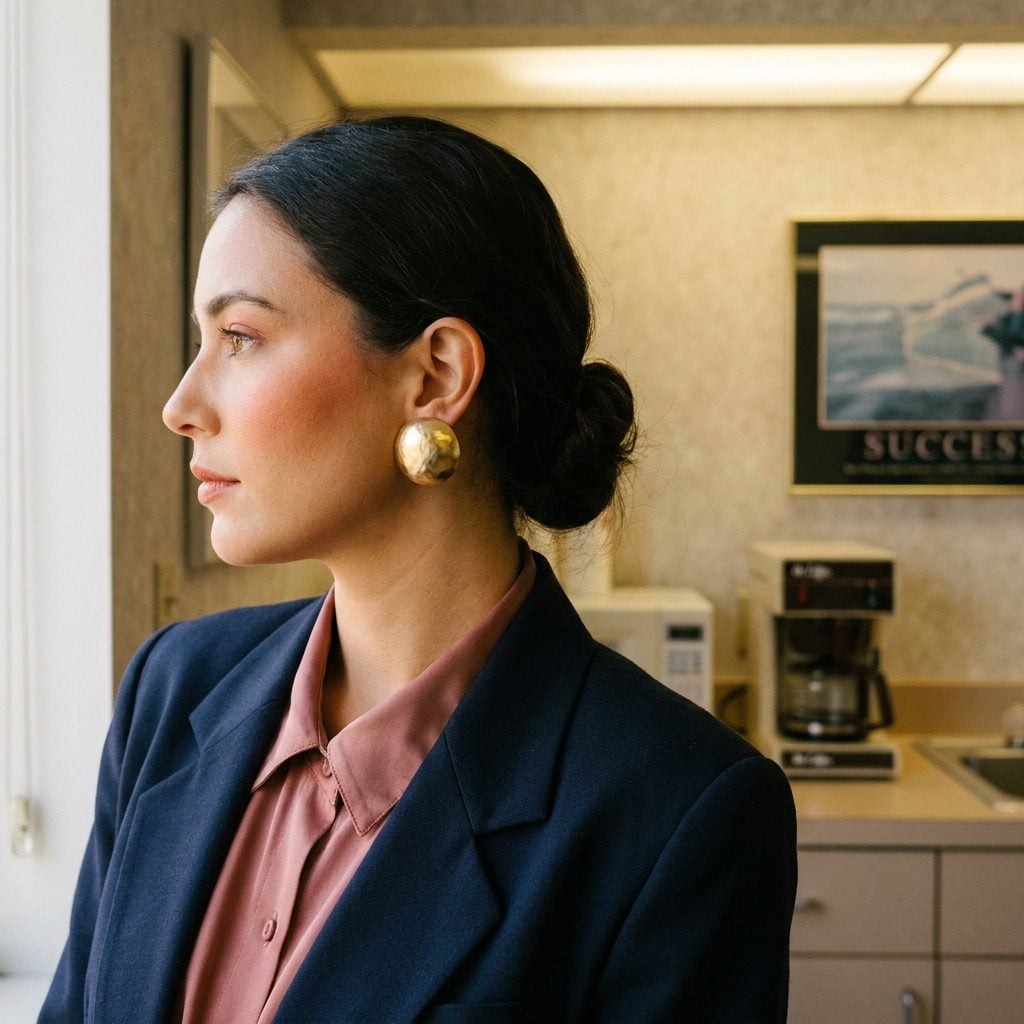
The spring tension on those clips was ruthless. By lunch you’d forgotten they were there. By 4 p.m. you felt every ounce. By the time you pulled them off in the car, the relief was almost spiritual, and the angry red marks on your lobes lasted another hour.
But you wore them anyway, because chunky gold clip-ons were non-negotiable. Domed buttons, hammered discs, oversized knots, sometimes with a matte brushed finish that looked more expensive than it was. They came from department store jewelry counters, little velvet trays at Nordstrom or JCPenney, and every single pair pinched. The women who actually had pierced ears still bought clip-ons because the 1980s office earring needed to be big enough to register across a conference table, and posts couldn’t support that kind of weight.
18. Pearl Earrings for the Corner Office (or the Interview to Get There)

Pearl studs were the earring equivalent of a firm handshake. You wore them to your first interview, to client meetings, to anything involving someone two levels above you. They communicated competence without trying, which was the entire strategy.
Small, round, usually set in gold-tone posts. Majorica made convincing faux pearls that every woman’s mother recommended. Real ones, if you had them, were saved for exactly these moments. The genius of the pearl earring in a 1980s office was its invisibility. Nobody noticed you were wearing them. That was the point. In a decade of big accessories and louder-is-better jewelry, the pearl stud was a quiet refusal to compete on those terms, and it worked precisely because it didn’t try.
17. The Fine-Gauge Turtleneck Worn Under a Blazer Like Professional Armor
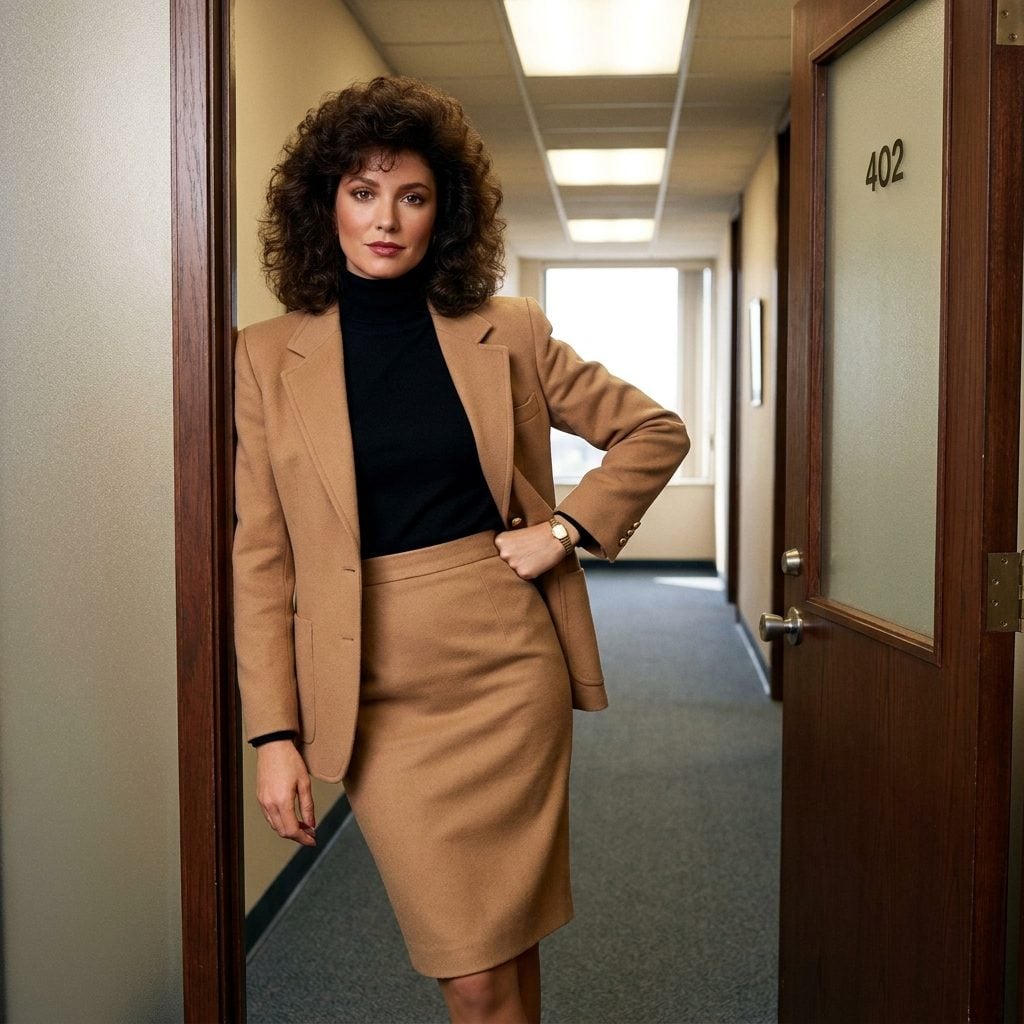
Forget the bulky cable-knit. The 1980s office turtleneck was thin. Paper thin. A fine-gauge merino or silk-blend knit that lay completely flat under a blazer, adding warmth without bulk and covering your neck in a way that read as polished rather than casual.
Black was the obvious choice, but burgundy, forest green, and cream all made regular appearances. You tucked it into your skirt or trousers with military precision, smoothing any bunching at the waist because the line had to be clean. The turtleneck-under-blazer combination did something specific: it closed the neckline completely, removing the question of what blouse to wear, what necklace to pair, how many buttons to leave open. All those decisions, gone. Just a clean column of fabric from chin to hem. There was real freedom in that simplicity, even if it didn’t look like freedom.
16. The Longline Blazer That Hit Mid-Thigh and Made Every Outfit Look Intentional
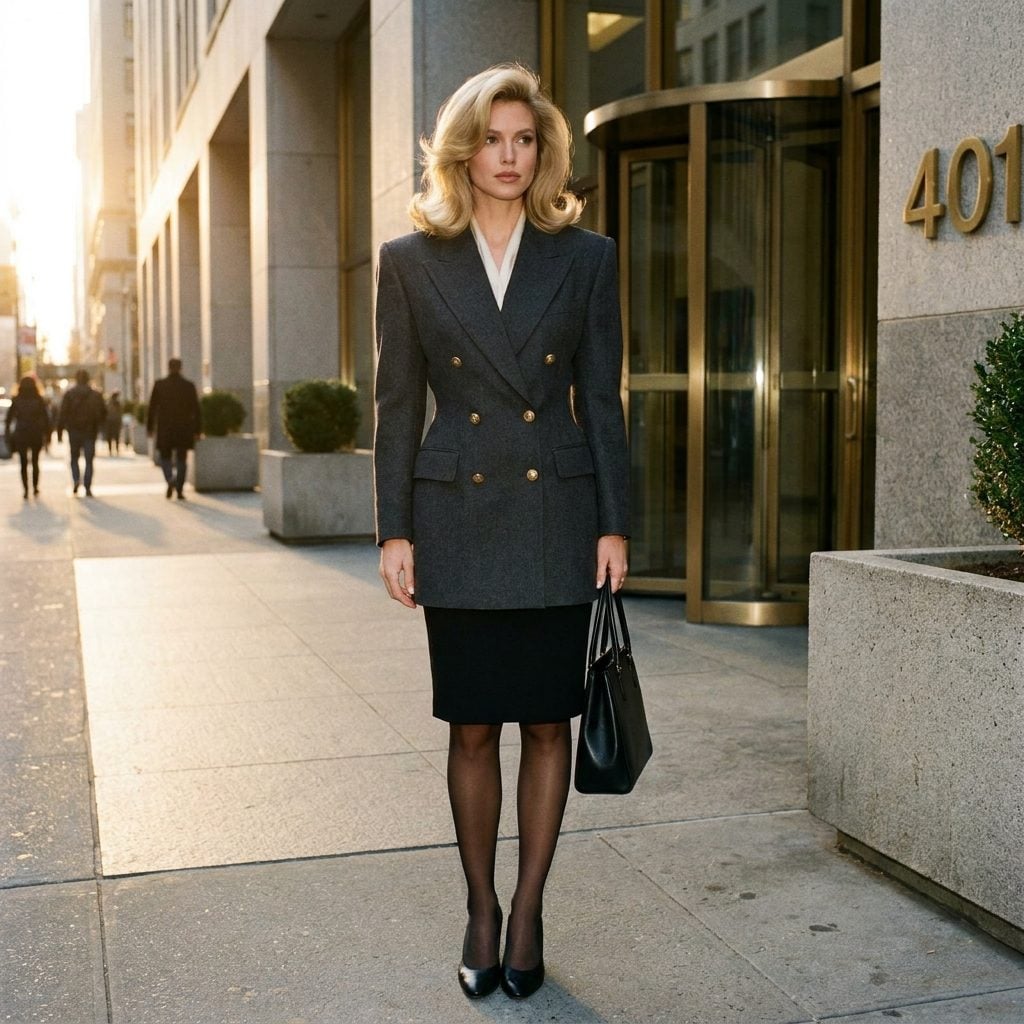
Regular blazers ended at the hip. This one kept going. The longline blazer dropped four, five, sometimes six inches below the natural waist, hitting mid-thigh or just above the knee, and it changed the entire silhouette of whatever you wore underneath.
With a pencil skirt, it created a sleek, unbroken line. With trousers, it gave the proportions of someone who actually thought about proportion. Liz Claiborne sold millions of them. Anne Klein made versions in better wool. The construction was serious: real shoulder pads, a nipped waist if it was double-breasted, and fabric heavy enough that the hem didn’t flip up when you walked. You could wear this blazer over almost anything in your closet and it pulled everything into a single cohesive idea.
15. The Slim-Band Wristwatch You Checked Twelve Times a Day
Would you like to save this?
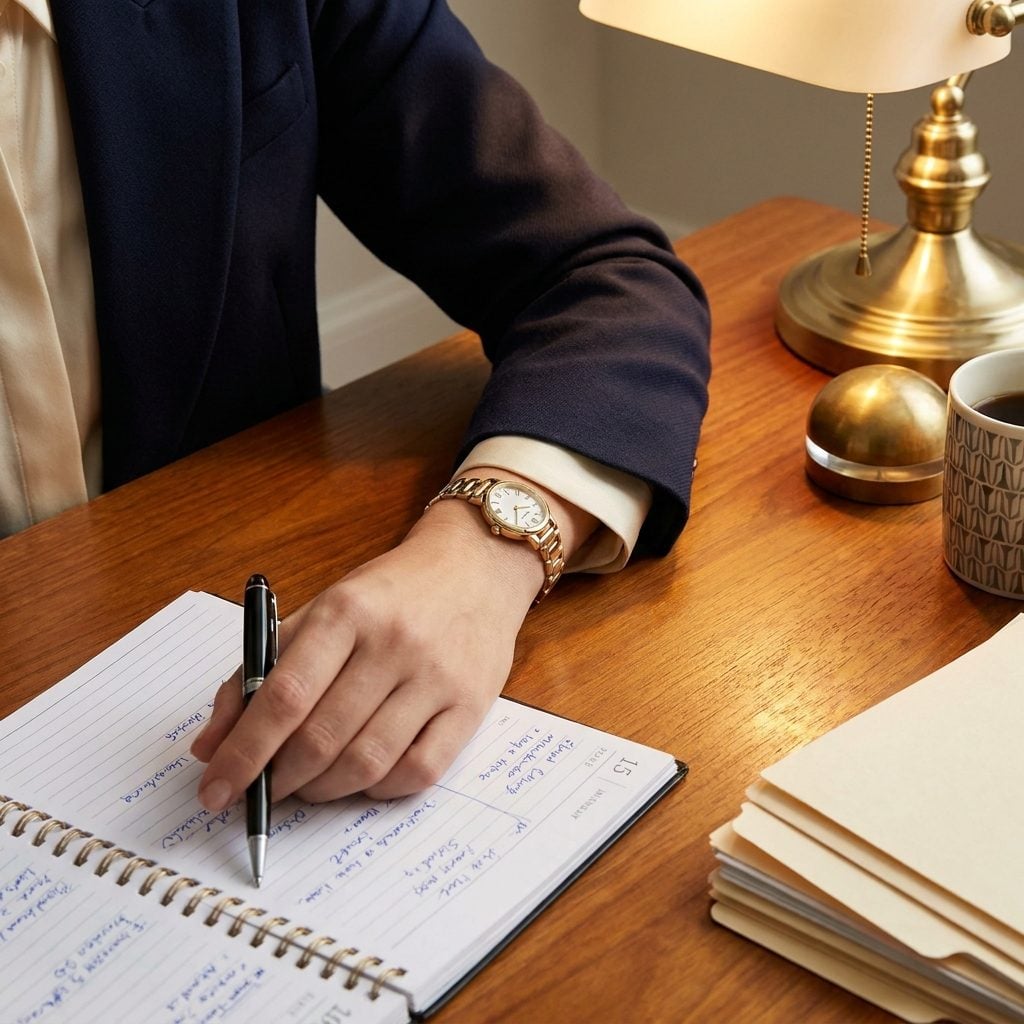
Before phones told time, before meetings sent calendar alerts, your slim gold or silver wristwatch was the only thing standing between you and being late to the 3 o’clock. And you glanced at it constantly.
The face was small, sometimes barely bigger than a dime. Seiko, Citizen, Pulsar for the everyday version. A Cartier Tank if you’d arrived somewhere significant. The band was thin, flexible, usually a linked bracelet style that slid slightly down your wrist when you typed. Gold-tone for warm skin, silver for cool, and everyone somehow knew which camp they belonged to without anyone explaining the rules.
What made these watches beautiful was proportion. A delicate band on a wrist that also wore a structured blazer with commanding shoulder pads. The contrast between the small, precise watch and the big, architectural clothing around it was one of the quiet pleasures of 1980s office dressing.
14. Wide-Leg Dress Slacks That Swung When You Walked Down the Hall
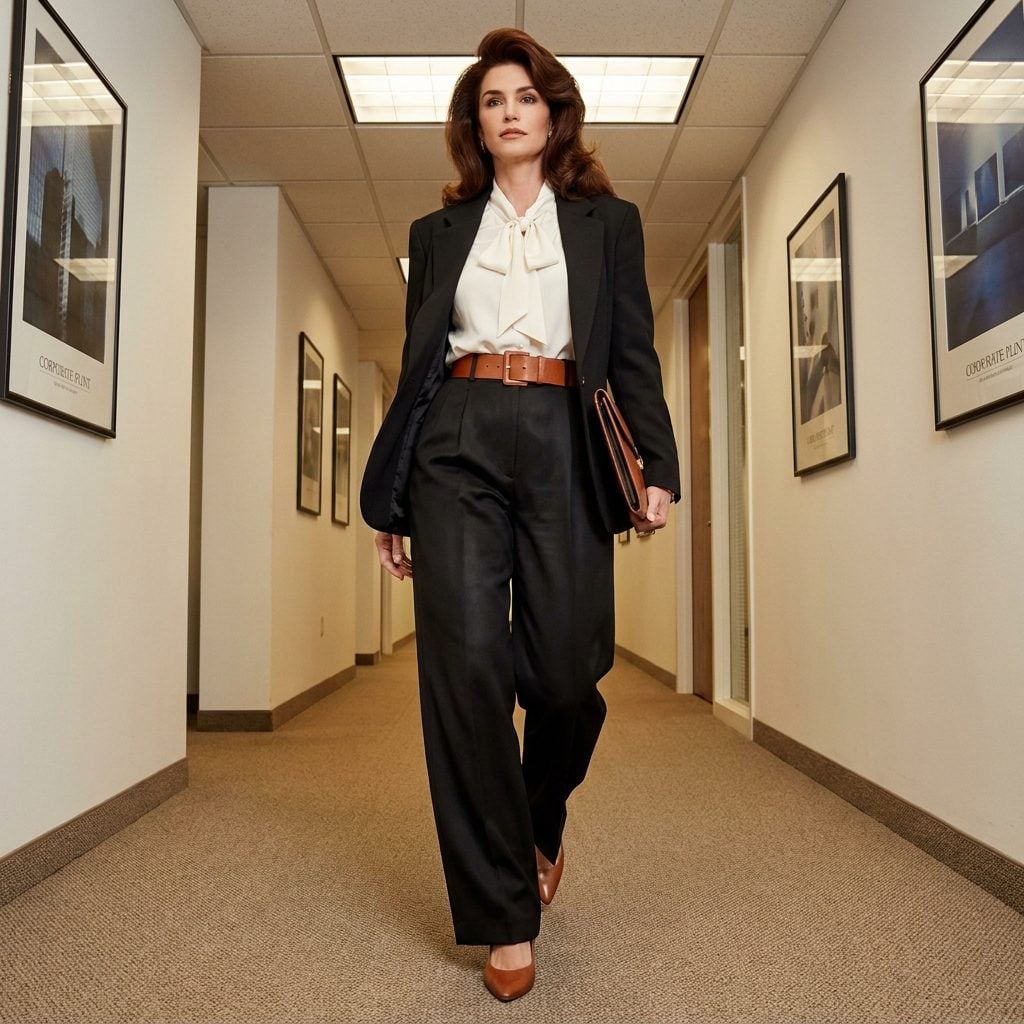
The movement was the whole point. Wide-leg trousers in crepe or gabardine, high-waisted with a single pleat at the front, falling in a clean line from hip to shoe without touching the leg anywhere below the thigh. When you walked, the fabric moved. When you stood still, it draped. There was nothing casual about them.
These weren’t palazzo pants. The leg was generous but controlled, usually in black, charcoal, or winter white. Paired with a tucked-in blouse and a wide leather belt, they gave you an entirely different silhouette than the pencil skirt: broader, more commanding, taking up space in a way that felt deliberate. Some offices considered them too progressive in the early part of the decade. By 1987, nobody questioned them anymore.
13. The Office Dress With Shoulder Pads Built Right Into the Seams
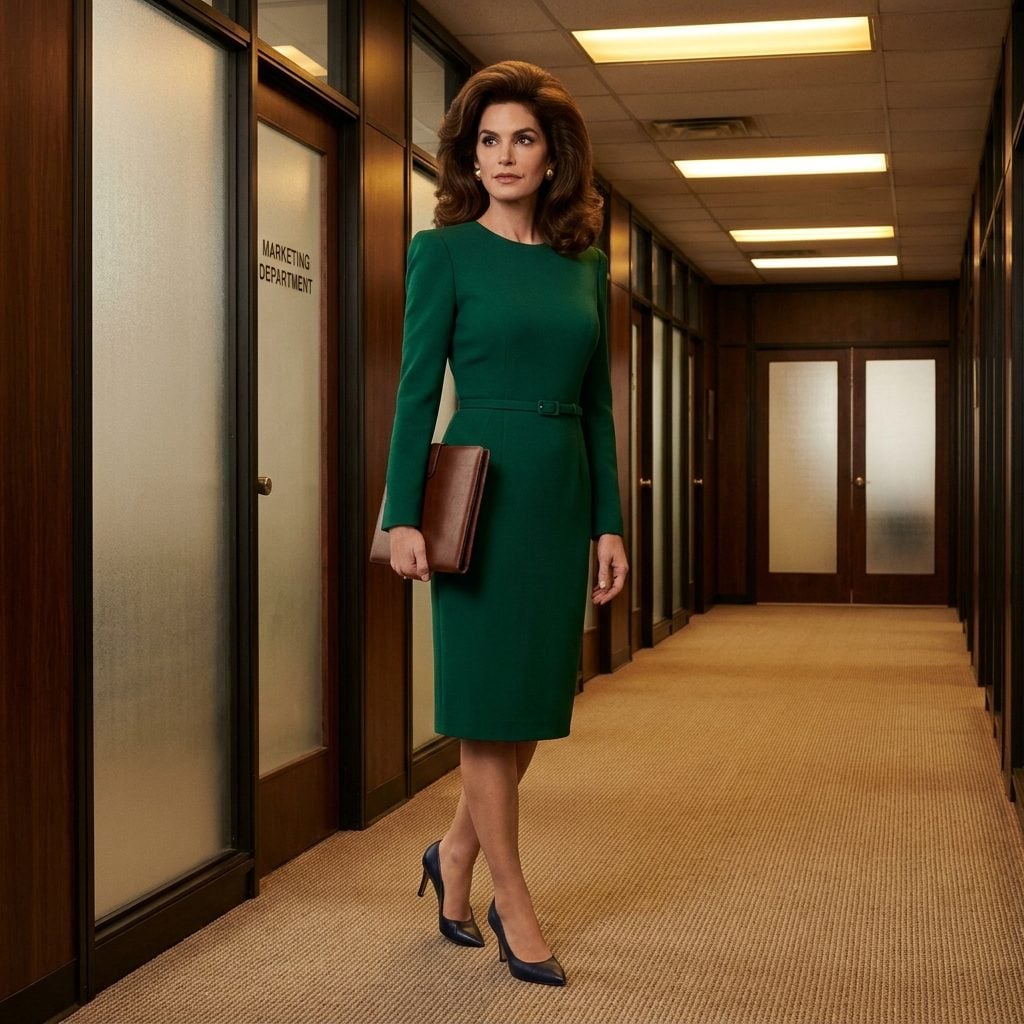
That extra inch of structure at each shoulder did something specific: it made the waist look narrower and the posture look decisive. These weren’t clip-in pads you stuffed into a jacket. The padding was sewn directly into the dress lining, and the best ones had a gentle slope that followed the natural shoulder line before extending it just far enough to read as authority.
A solid-color structured sheath dress in jewel tones — ruby, emerald, deep teal — got the most mileage. Paired with a slim belt at the waist and simple gold earrings, the silhouette created a clean inverted triangle that said “I run this meeting” without a single word. You found them at Casual Corner, at Gantos, sometimes at JCPenney if you caught the career section on a good day.
12. Leather Pumps in Navy, Black, or Burgundy, The Holy Trinity of Office Shoes
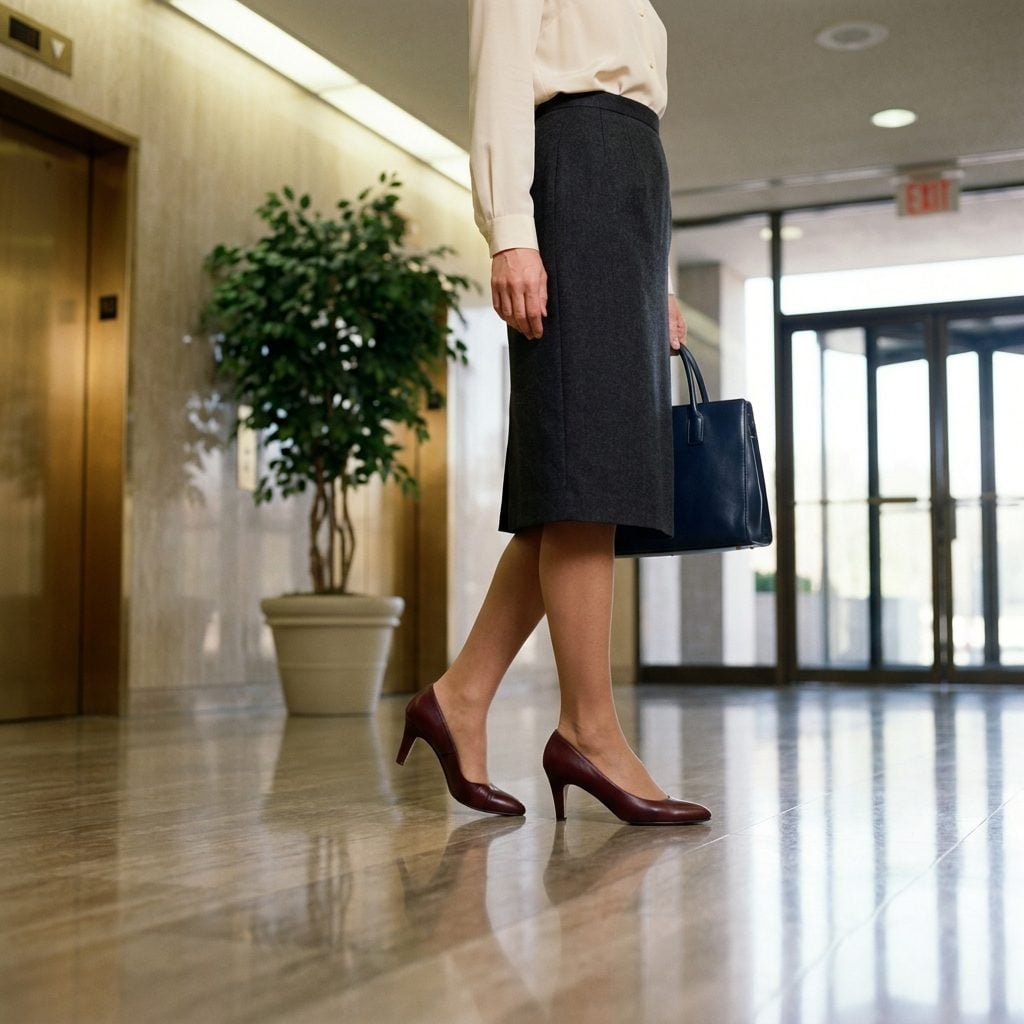
Three colors. That was your entire weekday shoe wardrobe. A pair of burgundy leather pumps with a two-inch heel, a black pair for court dates and client lunches, navy for everything in between. Stiff for the first week, then the leather molded to your foot in a way no synthetic shoe has ever come close to replicating.
Naturalizer and Amalfi made the versions your feet could survive in. Evan Picone if you wanted the sleeker toe. And that click of a leather heel on marble lobby tile — every woman in every office tower in America recognized it instantly. You heard it and you knew someone was on her way somewhere, and she wasn’t uncertain about the destination.
11. The Patterned Silk Scarf Tied at the Neck Like a Soft Declaration of Rank
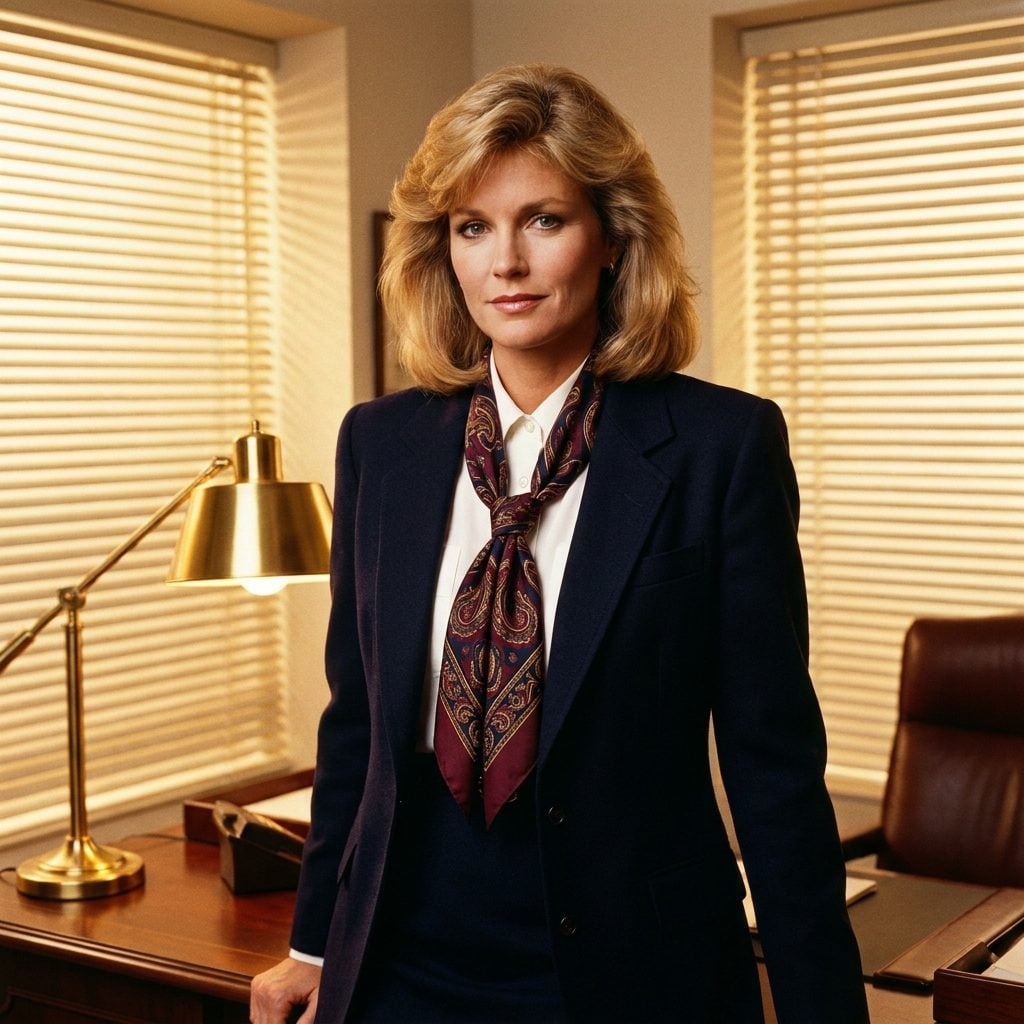
Before statement necklaces, there was this: a square of printed silk, folded into a triangle and knotted just below the collar. Paisley, equestrian prints, abstract geometrics in burgundy and navy and forest green. A plain white blouse became something considered with one of these tied right, and the women who wore them well had a specific way of tucking the tails inside the collar — both casual and exact at once.
You bought the good ones at department store scarf counters. A genuine silk square scarf from Echo or Anne Klein ran maybe twenty dollars. The aspirational ones were Hermès, and everybody knew the difference. Silk held perfume in a particular way, so the scarf became the thing you remembered someone by: that knot of color at the throat, the faint trace of Chanel No. 5 or Arpège still hanging in the conference room after she’d already gone.
10. The Sweater Set: Matching Cardigan and Shell Top, Always in Soft Neutrals
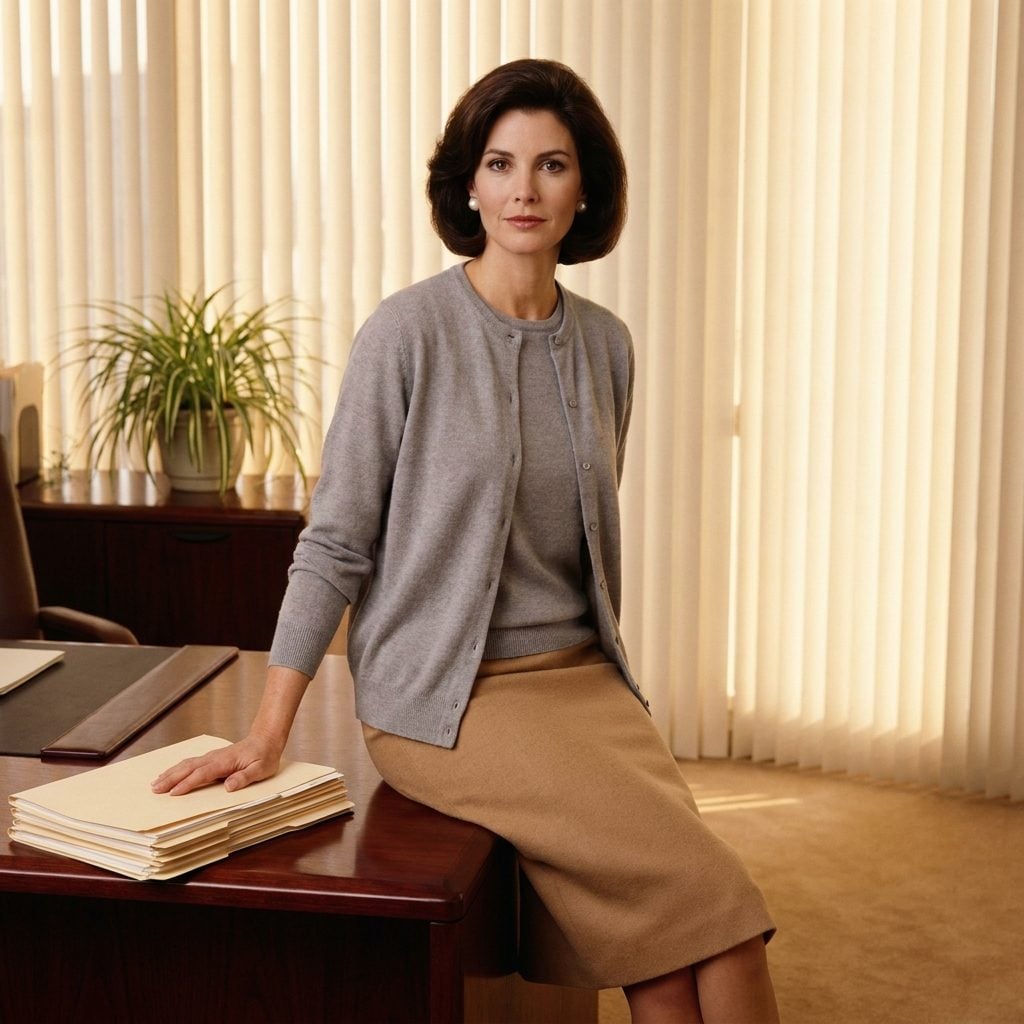
Coordinated knitwear said something specific in 1985. It said: I planned this. The matching cardigan and shell in camel, dove gray, or pale blush was the uniform of the woman who ran the department but didn’t need to broadcast it. You buttoned the cardigan in the morning for the walk from the parking garage, then draped it over your chair, and the shell underneath was polished enough for any meeting that materialized.
Talbots or Ann Taylor supplied the good ones, in fine-gauge merino or cotton-silk blends. The feel of that fabric against your collarbone — soft, light, slightly warm — was the tactile opposite of a power suit. And that was precisely the appeal. Power doesn’t always need lapels.
9. Muted Plaid Blazers That Smelled Like Wool and Quiet Confidence
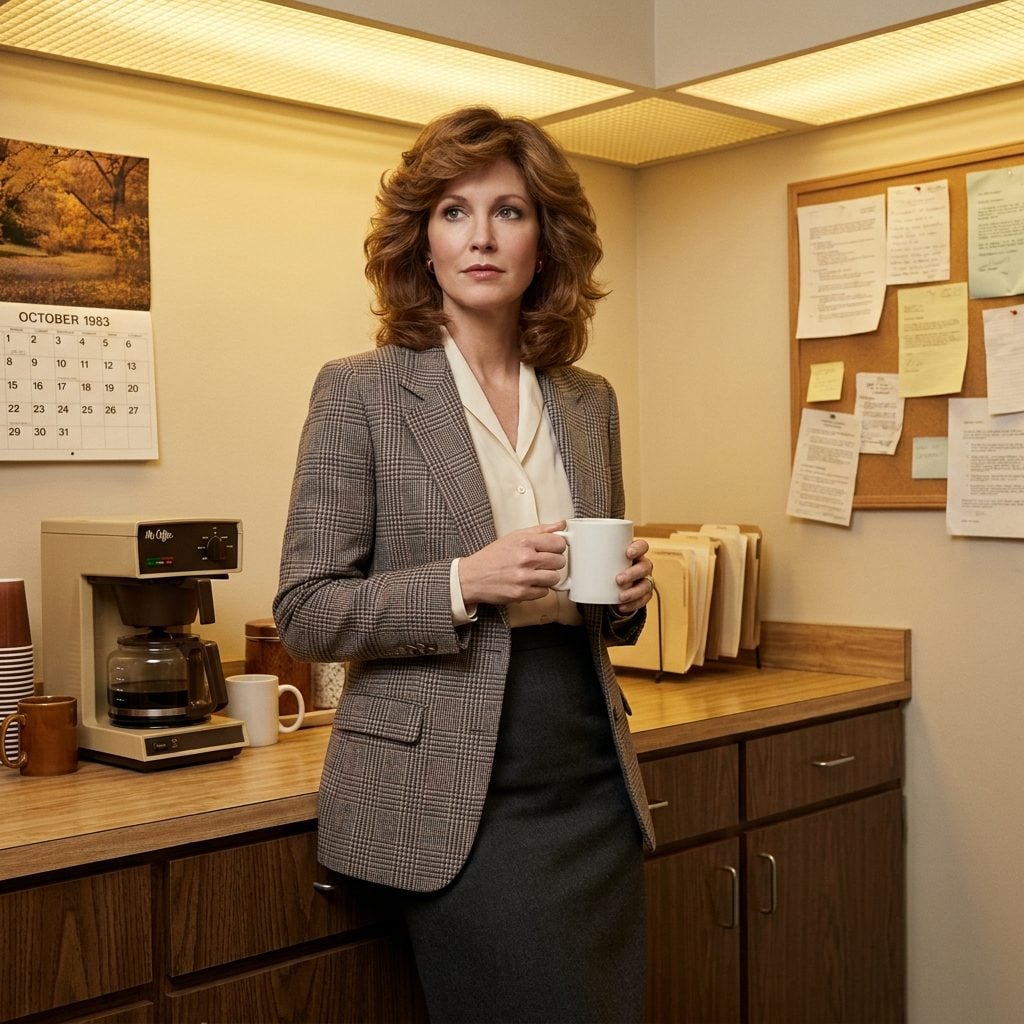
The Blazer That Wasn’t Trying Too Hard
Glen plaid. Windowpane check. Subtle tartan in mushroom and slate and faded burgundy. The muted plaid blazer bridged the gap between a full suit and something more personal — you wore it with a solid skirt, usually in a color pulled from the quietest thread in the plaid, and the whole outfit looked like you’d been dressing yourself well for decades even if you were twenty-six.
Real structure lived inside these blazers. Lined in rayon or silk, with actual horn or brass buttons, and shoulder pads that gave the plaid pattern a clean canvas to drape across. Pendleton made the workhorse versions. Evan Picone and Liz Claiborne made the ones that felt a little more polished.
The weight of a wool blazer on your shoulders in October was its own kind of comfort. Not heavy. Just present. You knew you were wearing something real, and honestly, that mattered on mornings when nothing else felt certain yet.
8. The Pinstripe Suit That Made You Feel Like You Could Take on Wall Street
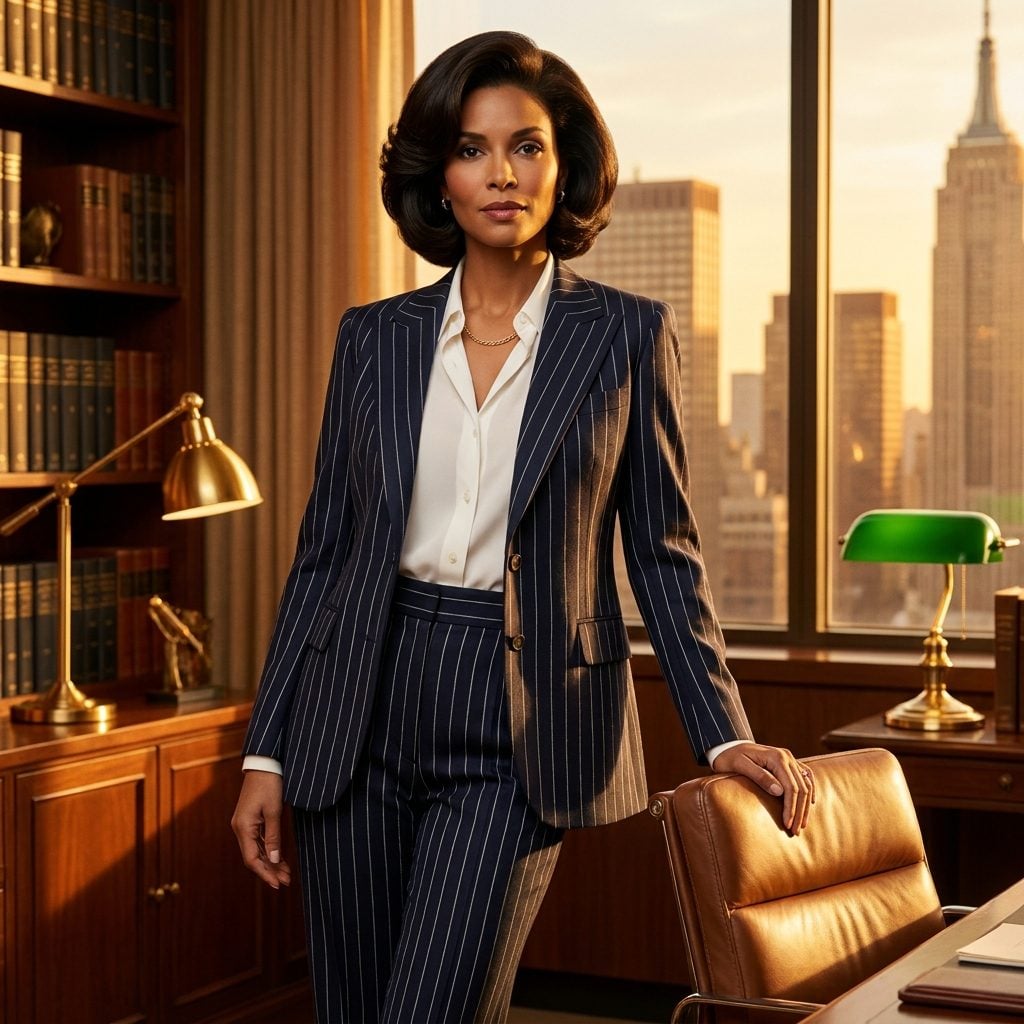
Chalk pinstripes on charcoal or navy wool. Double-breasted or single, with trousers that broke clean over the shoe. Sigourney Weaver wore it in Working Girl. Diane Keaton made it look effortless. Every woman in finance or law or advertising coveted one from about 1984 onward, and the ones who had one walked differently the first time they put it on.
The psychological weight of a pinstripe suit was real. You weren’t borrowing from menswear — you were claiming it. The fit was different: waist nipped, trousers tapered slightly, and the whole thing communicated something no floral print ever could in a boardroom full of men who expected you to be taking notes.
7. Kitten Heels, The One-Inch Rebellion Against the Power Pump
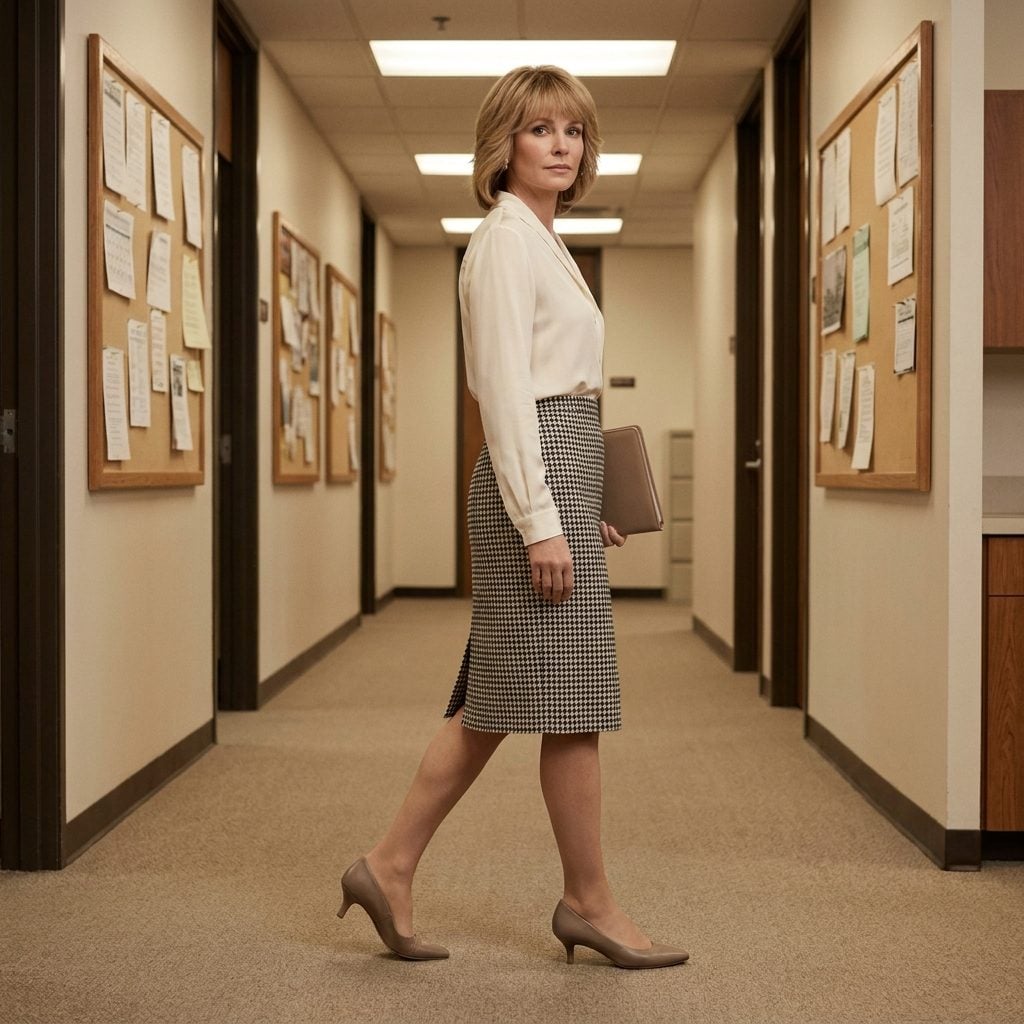
Not every woman wanted to negotiate a parking garage in three-inch heels at 7:15 in the morning. The kitten heel was the quiet solution nobody judged you for — an inch and a half, maybe less, enough to change the line of a calf without ruining your ability to walk six blocks to a lunch meeting and back.
Ferragamo popularized the shape, but the kitten heel pumps most women actually owned came from Nine West or Bandolino. Every sensible color. They wore down at the tip of the heel in a way that was annoying but also oddly satisfying — proof that you’d been somewhere, repeatedly, on your own two feet. You didn’t throw them out when the tips wore. You took them to the shoe repair guy in the lobby, paid a few dollars, and kept going.
6. Opaque Tights in Black, Navy, and Charcoal When October Rolled Around
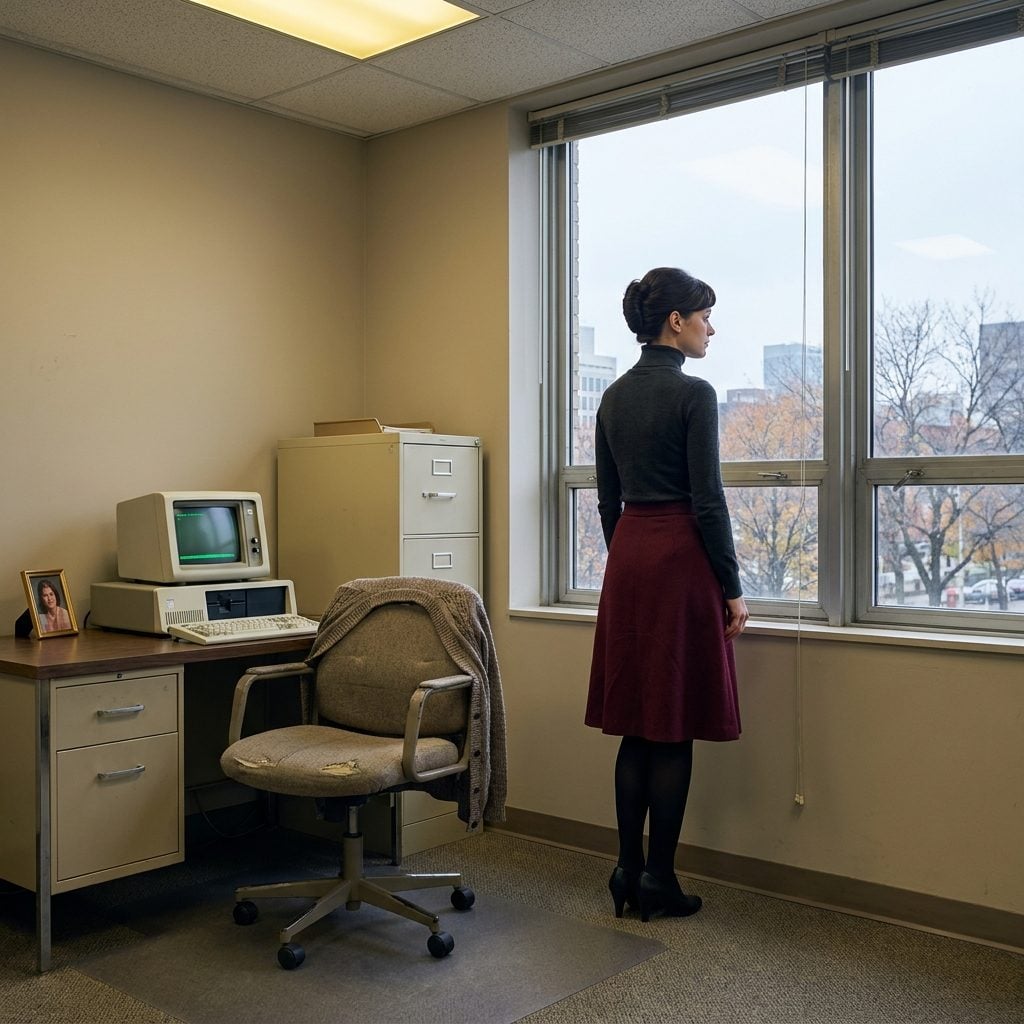
The first cold morning of fall, you opened the hosiery drawer and made the switch. Sheer pantyhose went to the back. Opaque tights in sixty or eighty denier came forward, and the legs disappeared into a clean column of color that made every skirt and every pump look more deliberate.
Hanes and L’eggs made the drugstore versions. Department store brands — Givenchy, Donna Karan’s bodywear line — cost more but lasted longer before the inevitable run appeared. You kept a spare pair in your desk drawer. Everyone did.
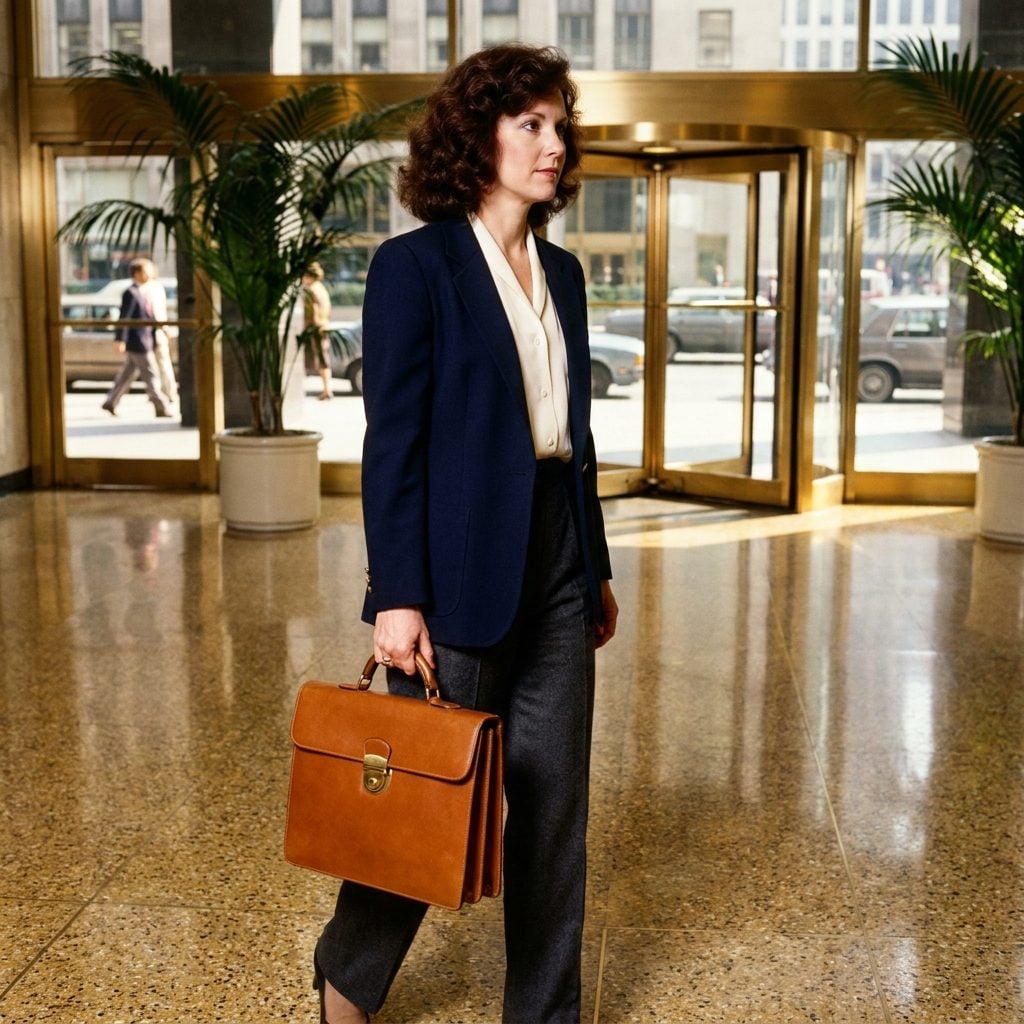
5. The Briefcase-Style Handbag That Meant You Had Somewhere Important to Be
Would you like to save this?
Soft-sided, structured, with a flap closure or a brass clasp and a single top handle. Call it what it was: a leather briefcase bag sized for a woman’s hand, carrying everything — your Filofax, your compact, a granola bar, the quarterly report you’d annotated in red pen on the train.
Coach made the definitive version in British tan or black. Dooney & Bourke offered the pebbled leather option with that duck insignia that was everywhere from 1983 to about 1989. Here’s the detail that mattered more than you’d think: the bag sat upright on its own when you set it down beside your chair in a meeting. It looked like it belonged at the table. So did you.
4. Blouses With Subtle Puff Sleeves and a Bow You Tied Fresh Every Morning
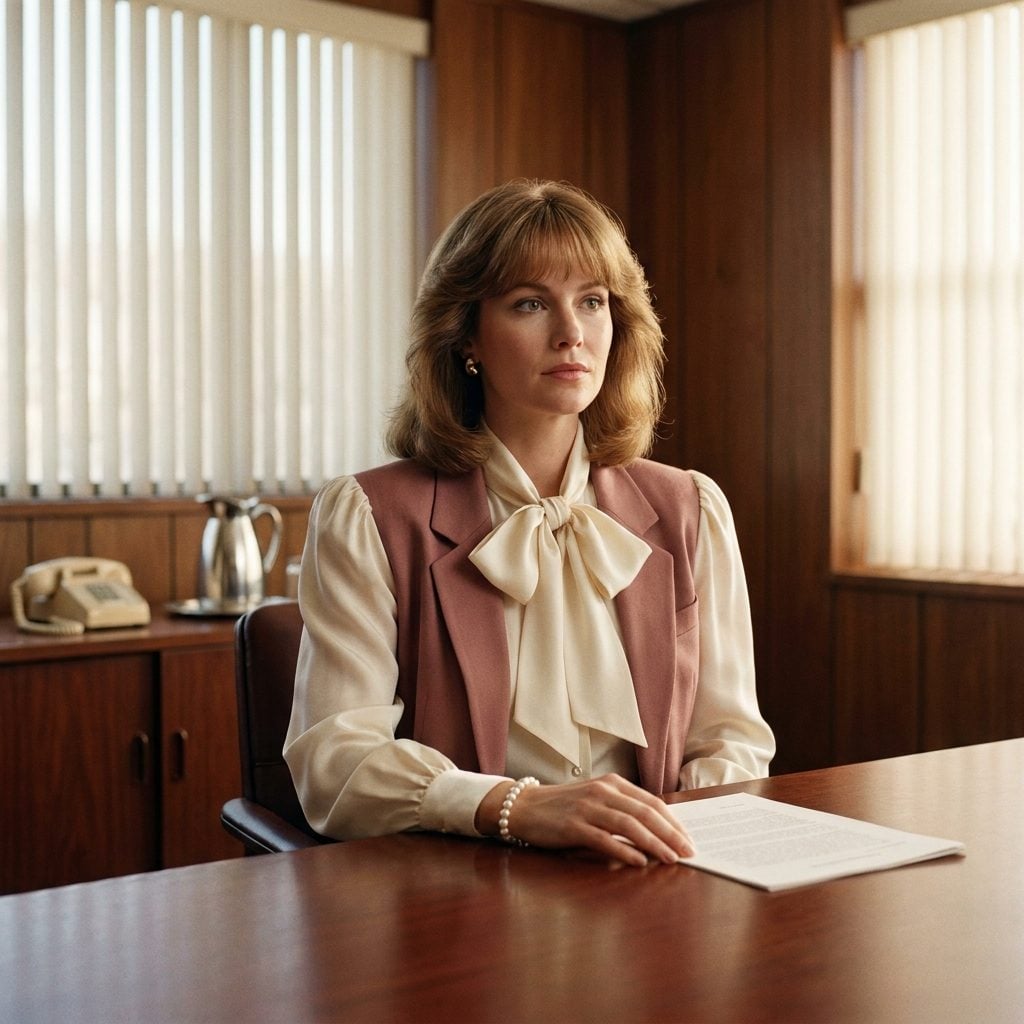
The sleeves gathered just slightly at the shoulder seam — a soft puff that was barely there but changed the entire shape of the blouse. Below the collar, a long ribbon of matching fabric you tied into a bow before you left the house, retied after lunch, and sometimes abandoned entirely by 3 p.m. when the day stopped cooperating.
Silk bow blouses in cream, dusty rose, or pale blue were the default under every blazer in every law office and accounting firm from roughly 1982 to 1988. The bow was the soft counterpoint to the structured jacket above it, and the puff sleeve kept the whole thing from reading as a men’s dress shirt with a ribbon attached.
I know women who ironed those bows every single morning with a travel iron the size of a paperback novel. That level of daily maintenance for a piece of silk that spent most of its life hidden under a blazer lapel — it tells you everything about how seriously the details were taken. The bow wasn’t decoration. It was discipline, and it was the first thing that came undone when someone finally had a bad enough afternoon.
3. The Camel Hair Coat Draped Over Your Shoulders Like You Owned the Building
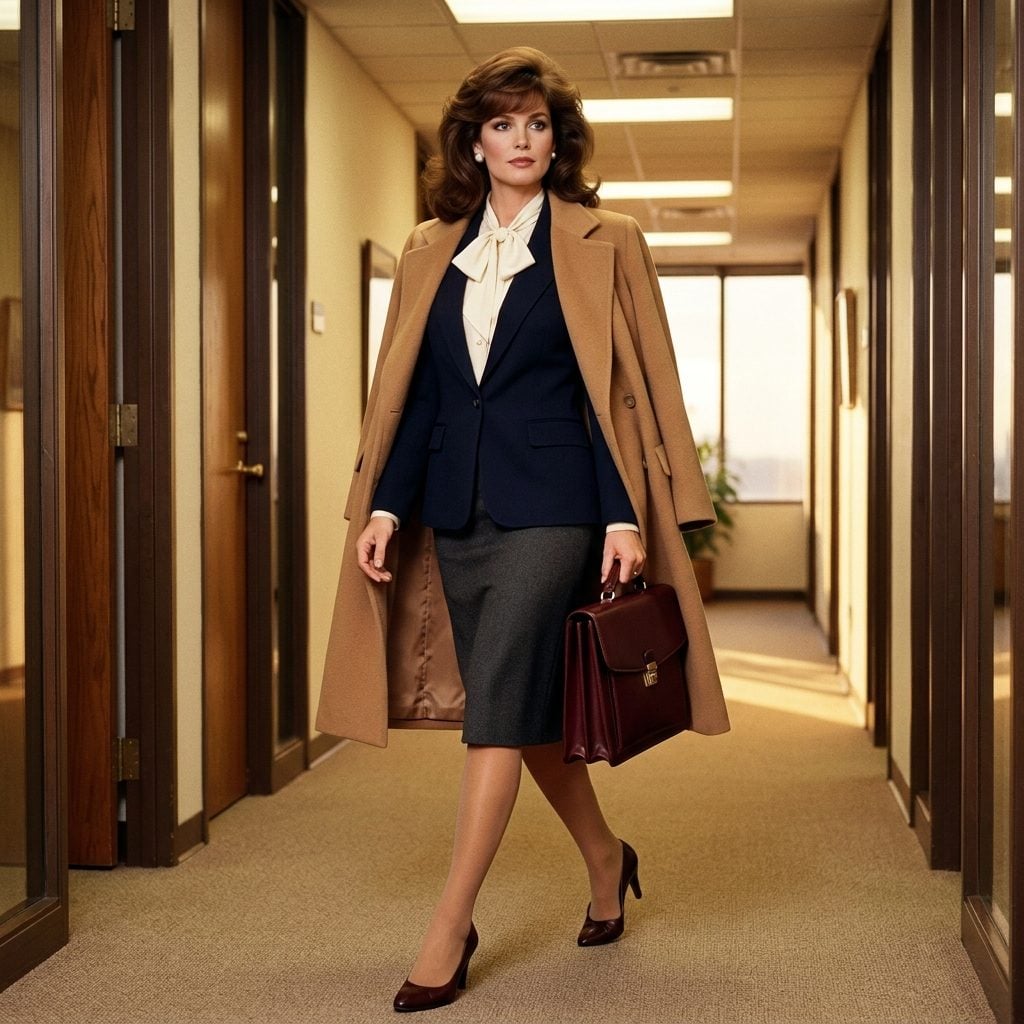
Nobody actually put their arms through the sleeves. A camel hair coat slung across the shoulders, lapels against your collarbone, the rest of it swinging behind you like a cape on the walk from elevator to desk. A power move borrowed straight from Joan Collins on Dynasty — and every woman in every office tower from Atlanta to Minneapolis understood exactly what it communicated: I am not cold, I am not warm, I am in charge.
Brooks Brothers or Talbots supplied the good ones, sometimes Anne Klein. The fabric had this particular softness, almost like felt but heavier, and the color landed somewhere between butterscotch and sand. Over a navy wool blazer and a silk blouse, the whole composition looked like a boardroom scene from a film nobody had made yet.
The shoulder-drape required a specific walk. Too fast and the coat slid off — too slow and you looked unsure. You had to hit the pace that said you’d done this a hundred times, even when it was a Tuesday and you were just heading to a staff meeting about nothing.
2. Gold Initial Pendants and Monogrammed Jewelry You Never Took Off
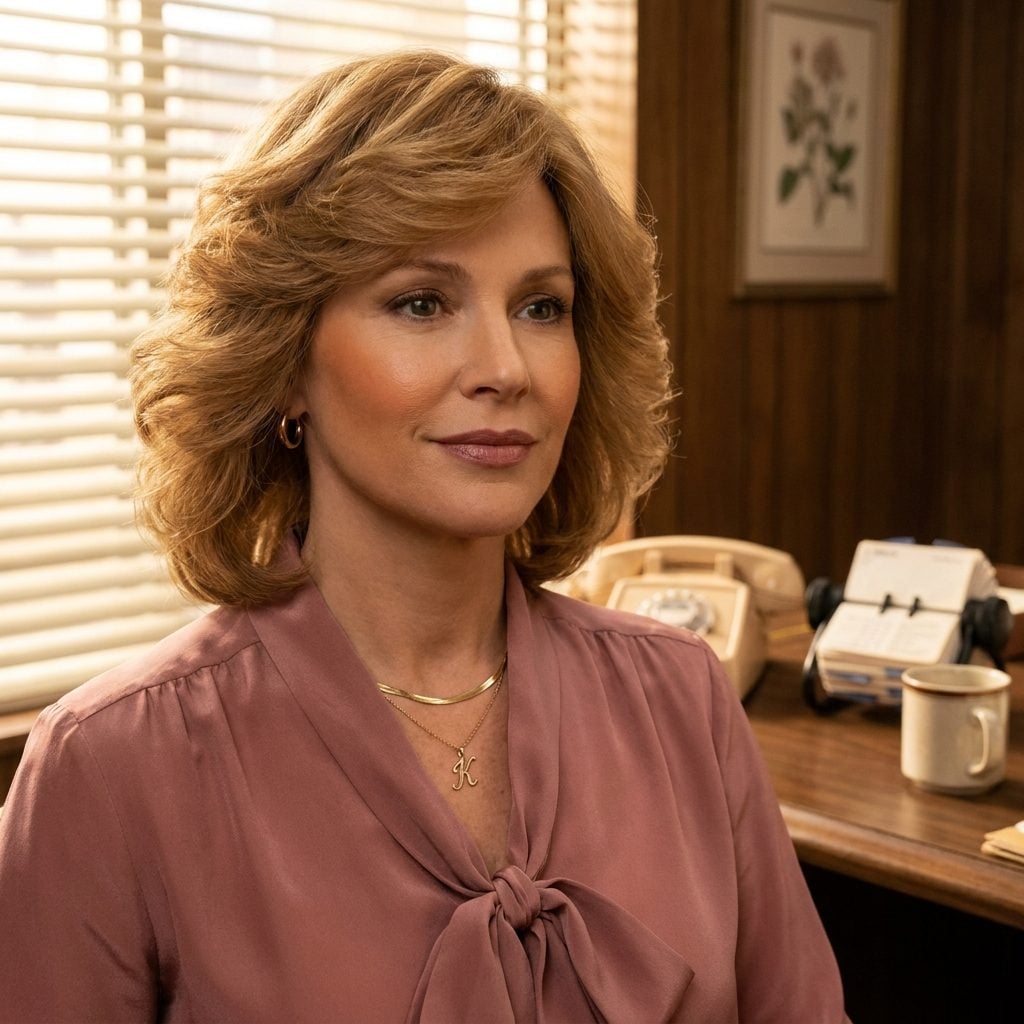
Long before anyone slapped a label like “personal branding” on it, there was just a gold initial pendant resting against the third button of your blouse. Your mother might have given it to you. Or you bought it yourself at Zales on your lunch break, the salesperson sliding it across the glass counter in a tiny velvet box that made even a modest necklace feel like an occasion.
The letter sat in script — sometimes cursive, sometimes block — always 14-karat or at least gold-plated enough to pass. You wore it every single day. With the silk bow blouse, with the turtleneck, with the Christmas party dress. Your letter. Your name. A small gold declaration of self tucked against your sternum while you answered phones, filed reports, and sat through meetings where nobody once asked your opinion. That daily constancy was the real luxury of the thing, not the metal or the karat weight, but the fact that it never left you.
Some women layered a thin gold herringbone chain underneath it — its own quiet gesture, barely visible but deliberate.
1. Oversized Eyeglass Frames That Took Up Half Your Face (and All of the Attention)

The frames were the face.
Forget everything you know about the current trend toward big glasses — the 1980s version was a completely different creature. Frames that started at the cheekbone and nearly reached the eyebrow, in translucent burgundy or tortoiseshell or that dusty mauve plastic that existed nowhere else in nature. Gloria Vanderbilt put her name on a pair. So did Liz Claiborne. You bought them at LensCrafters, which had just opened in seemingly every mall in America, and the optician never once suggested something smaller.
They rearranged the whole geometry of your head. With those oversized frames on, your features organized themselves around the lenses — the first thing anyone noticed, the last thing they forgot. Something genuinely liberating about that. You weren’t hiding behind them. You were walking into a room face-first, leading with two enormous panes of tinted glass and daring anyone to look away.
Sally Jessy Raphael wore the red ones. Your accountant wore the brown gradient pair. Your boss had the ones with the tiny gold flourish at the temple. Everybody owned a pair, and everybody’s said something slightly different — which is probably why nobody ever complained about uniformity.