
Would you like to save this?
If you’ve ever heard someone say they bought a house for the price of a new pickup truck, this list explains why. We dug into nationwide U.S. averages from authoritative sources including the U.S. Bureau of Labor Statistics (BLS), U.S. Census Bureau, Federal Reserve Economic Data (FRED), U.S. Postal Service, Department of Labor, and other government datasets to compare what Americans actually paid for everyday goods and services in 1970 versus today.
While food, stamps, and household basics have certainly become more expensive, the real eye-openers are the big-ticket items. Homes, vehicles, rent, and especially college tuition have increased so dramatically that it’s easy to see why so many households feel financially squeezed despite earning far more dollars than previous generations. Some of the numbers below are so startling they almost look like typos, but they’re a powerful reminder of just how much the cost of modern life has changed.
Ordered from smallest to biggest price increase (as a percentage).
30. A Gallon of Whole Milk for $1.32, and Nobody Thought Twice About It
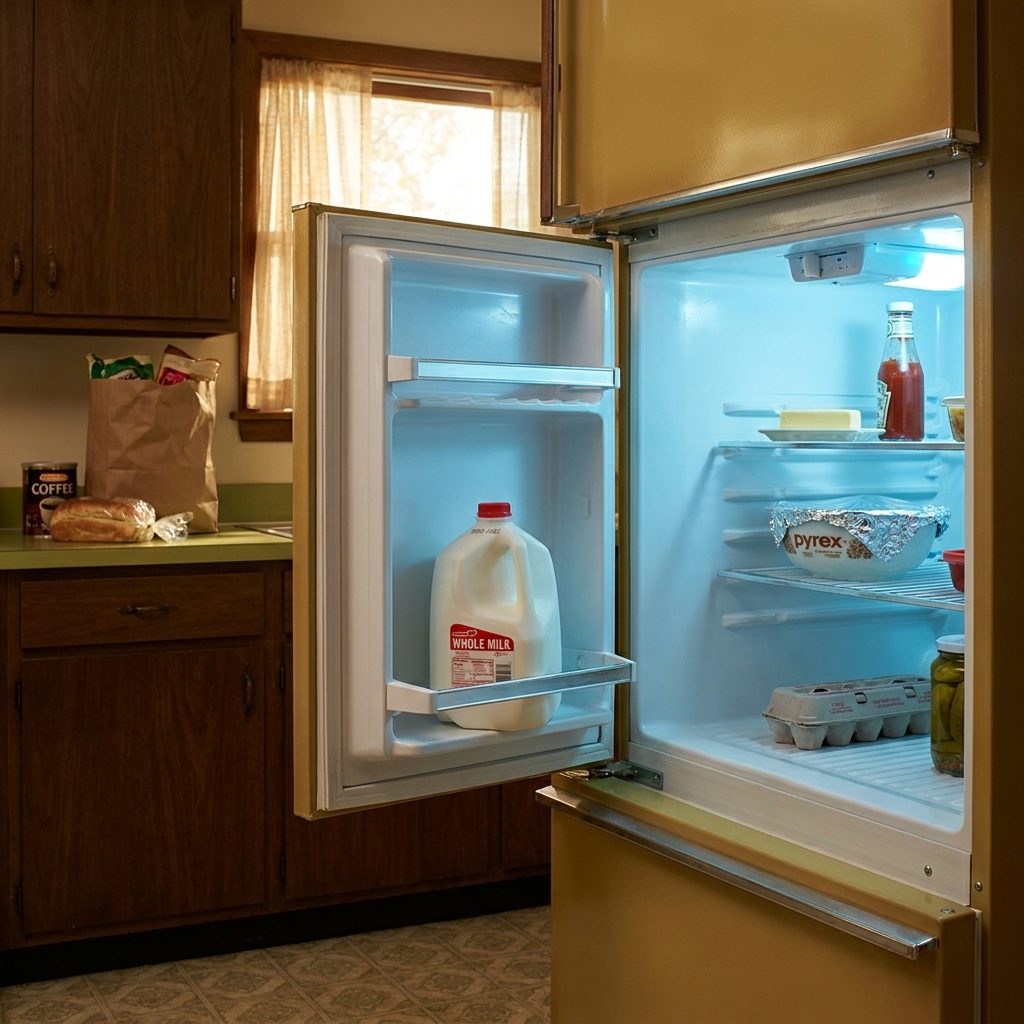
That glass gallon jug with the red cap, cold and sweating on the counter because someone forgot to put it back. In 1970, $1.32 bought you a full gallon of whole milk, and it showed up in everything: cereal bowls, cake batter, the pot of cocoa your mom made when it snowed. Nobody agonized over the price. It was just milk.
Today that same gallon runs about $4.14, a 214% increase. Adjusted for inflation, the 1970 price would be roughly $10.35 in today’s dollars, so milk has actually gotten cheaper in real terms. But the sticker shock still hits when you remember handing a cashier a single bill and getting change back from a gallon of the stuff.
29. Eggs: 61 Cents a Dozen, Right There in the Styrofoam
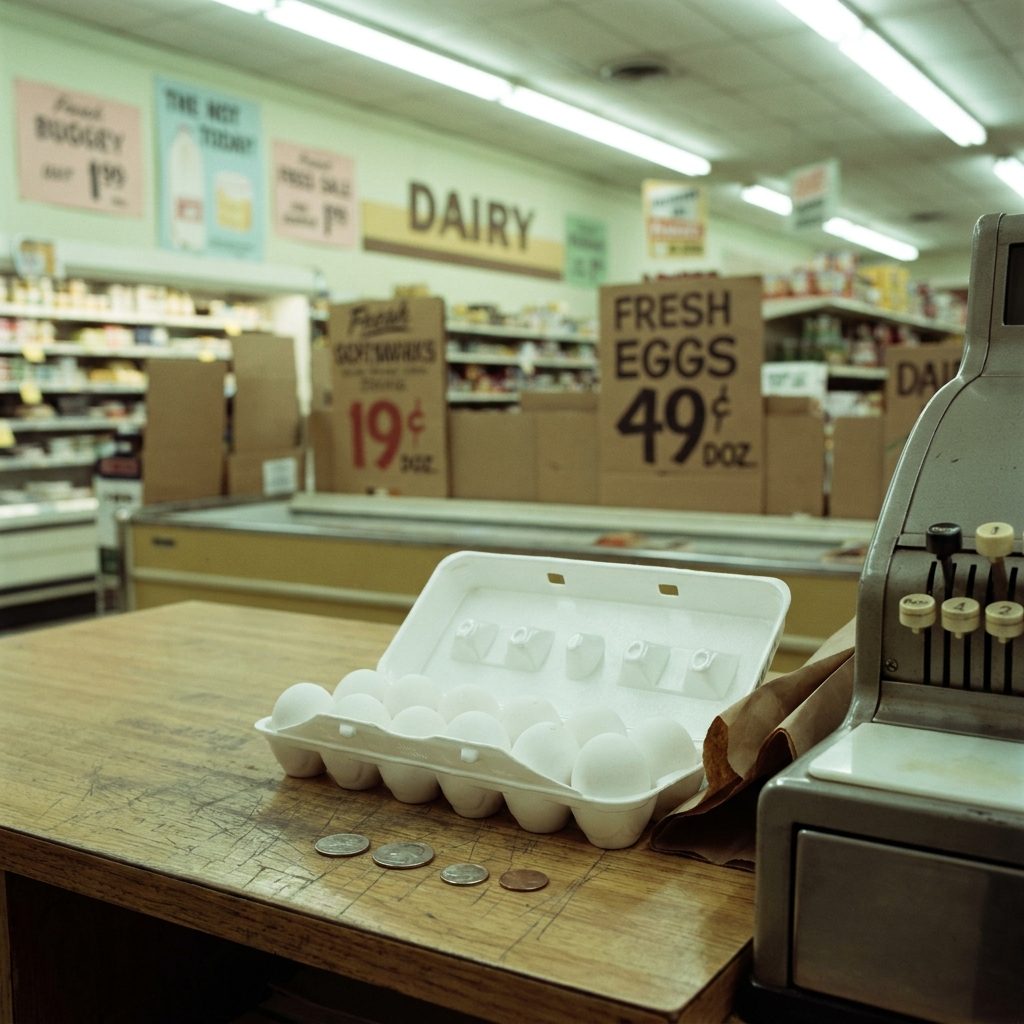
Sixty-one cents. That’s what a dozen eggs cost in 1970. You could buy two dozen, hand the cashier a dollar and a quarter, and walk out with change jingling in your pocket.
The styrofoam carton was always the same: white, lightweight, with that satisfying little snap when you closed the lid. Your mom opened it right there in the aisle to check for cracked ones, every single time, because that’s what you did. Those eggs ended up in Saturday-morning scrambles, in the pound cake recipe taped inside the cabinet door, in the egg-salad sandwiches that filled brown bags all week long.
At roughly $2.25 a dozen in 2026 (and sometimes much higher depending on the month), eggs have jumped 269%. I still open the carton in the store to check for cracks, though. Some rituals survive any economy.
28. Twelve Cents a Pound for Flour, the Backbone of Every Kitchen Cabinet
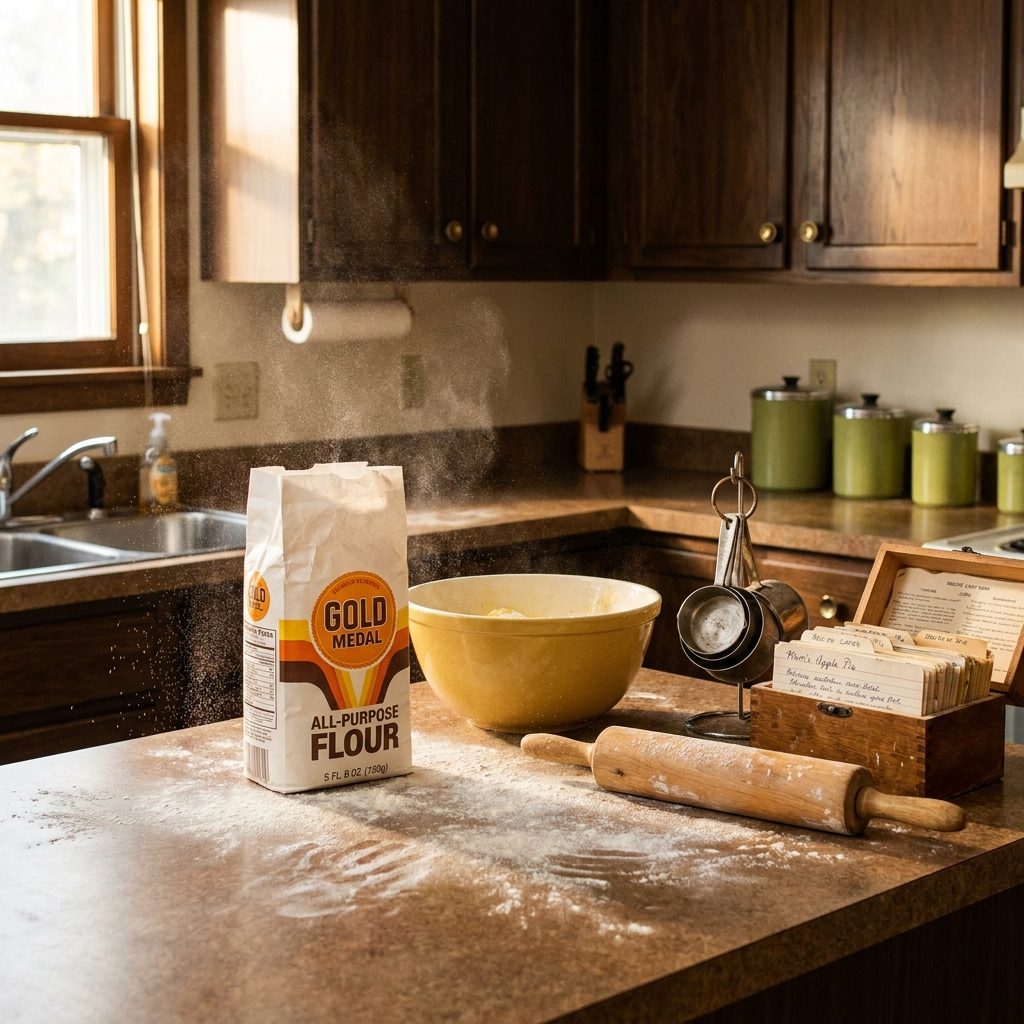
Twelve cents. For a pound of flour. That number barely registers as a price today. It’s what you’d find between couch cushions.
But in 1970, flour at 12 cents a pound meant that baking wasn’t a hobby or an Instagram event. It was just what happened on a Tuesday. Biscuits for dinner. A birthday cake from scratch because the box mix cost more. Pie crusts rolled out on a floured countertop with a wooden rolling pin that had been your grandmother’s. The five-pound bag lived in the cabinet like a permanent resident, replaced without ceremony the moment it ran low.
At 54 cents a pound in 2026, flour has climbed 350%. Still one of the cheapest staples in the store, but the gap tells a story about how every small cost compounds when you’re feeding a family.
27. The Federal Minimum Wage Was $1.60 an Hour, and It Actually Bought Something
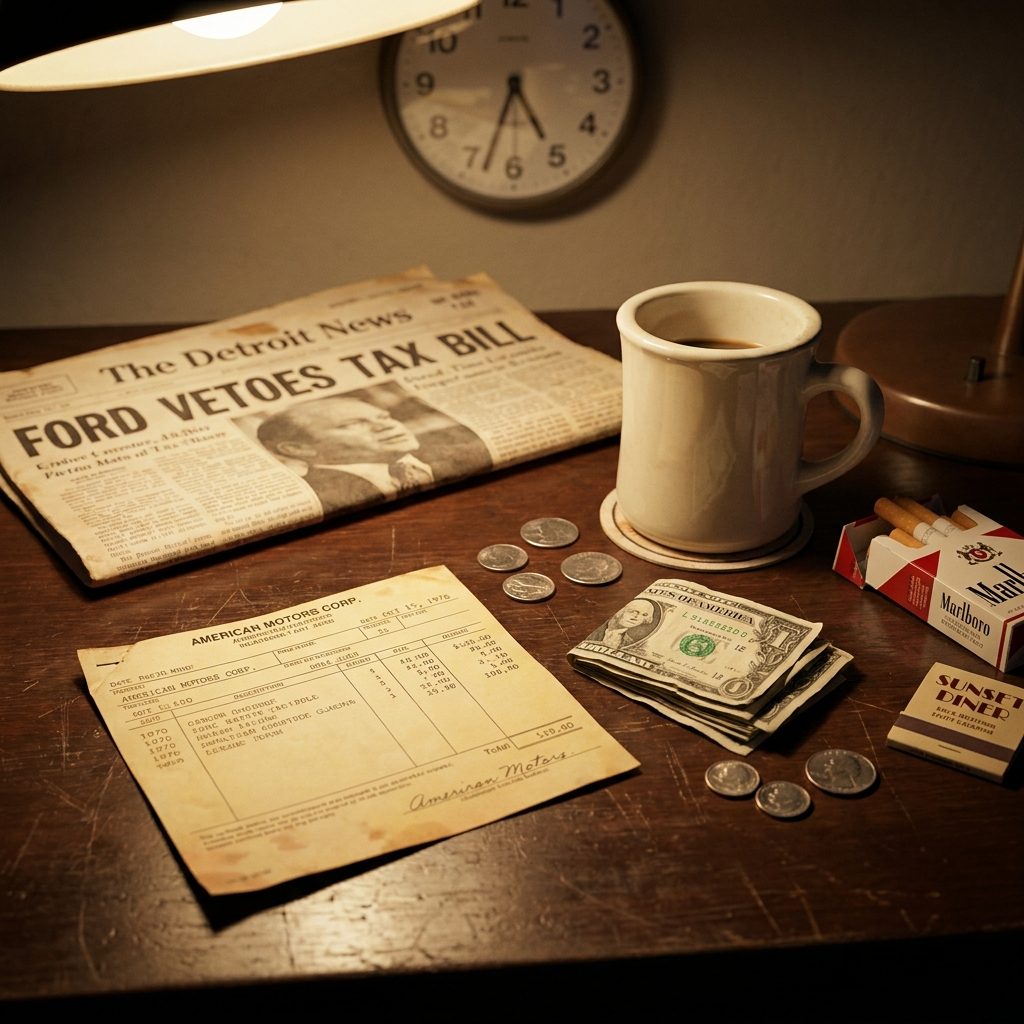
Here’s where the math gets uncomfortable. In 1970, the federal minimum wage was $1.60 an hour. That doesn’t sound like much until you realize that an hour of work at minimum wage could buy a gallon of milk and a dozen eggs with change left over. Try doing that with today’s $7.25.
The minimum wage has risen 353% since 1970. But as every other item on this list makes clear, the cost of simply existing has outpaced it by a wide margin. A minimum-wage worker in 1970 could work one hour and buy nearly seven pounds of chicken. In 2026, that same hour buys about three and a half.
26. Chicken at 43 Cents a Pound, the Weeknight Dinner That Cost Almost Nothing
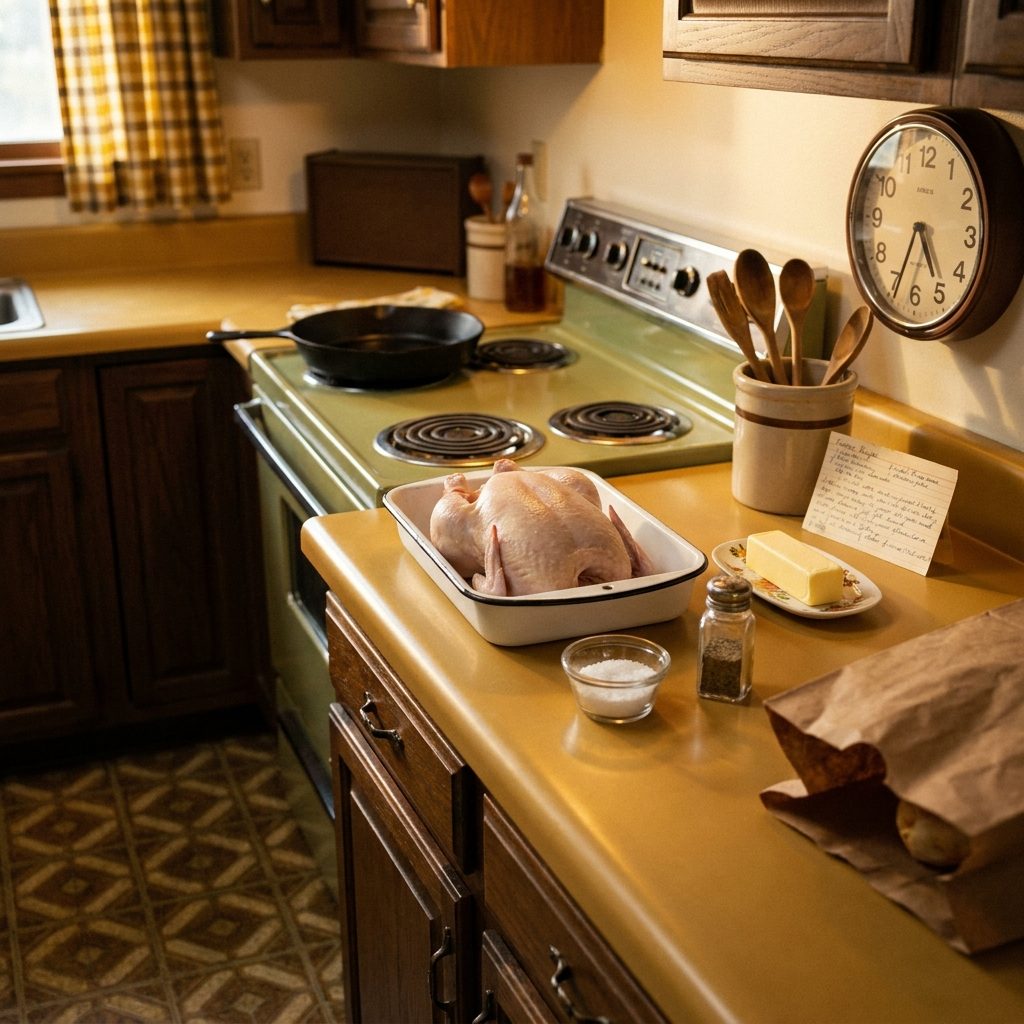
Forty-three cents a pound. For chicken. A whole bird cost less than two dollars.
Chicken was the default. Not a dietary choice, not a lean-protein strategy. Just the cheapest, most reliable protein a family could put on the table five nights a week without thinking about it. Baked with butter and salt. Fried in a cast iron skillet on Sunday. Boiled into soup on Monday with whatever was left on the bones.
At $2.03 a pound in 2026, chicken has climbed 372%. It’s still considered the budget meat, but budget means something different when a single whole chicken can run eight or nine dollars. In 1970, that same amount of money bought four of them.
25. Bananas at 12 Cents a Pound, the Fruit That Was Practically Free
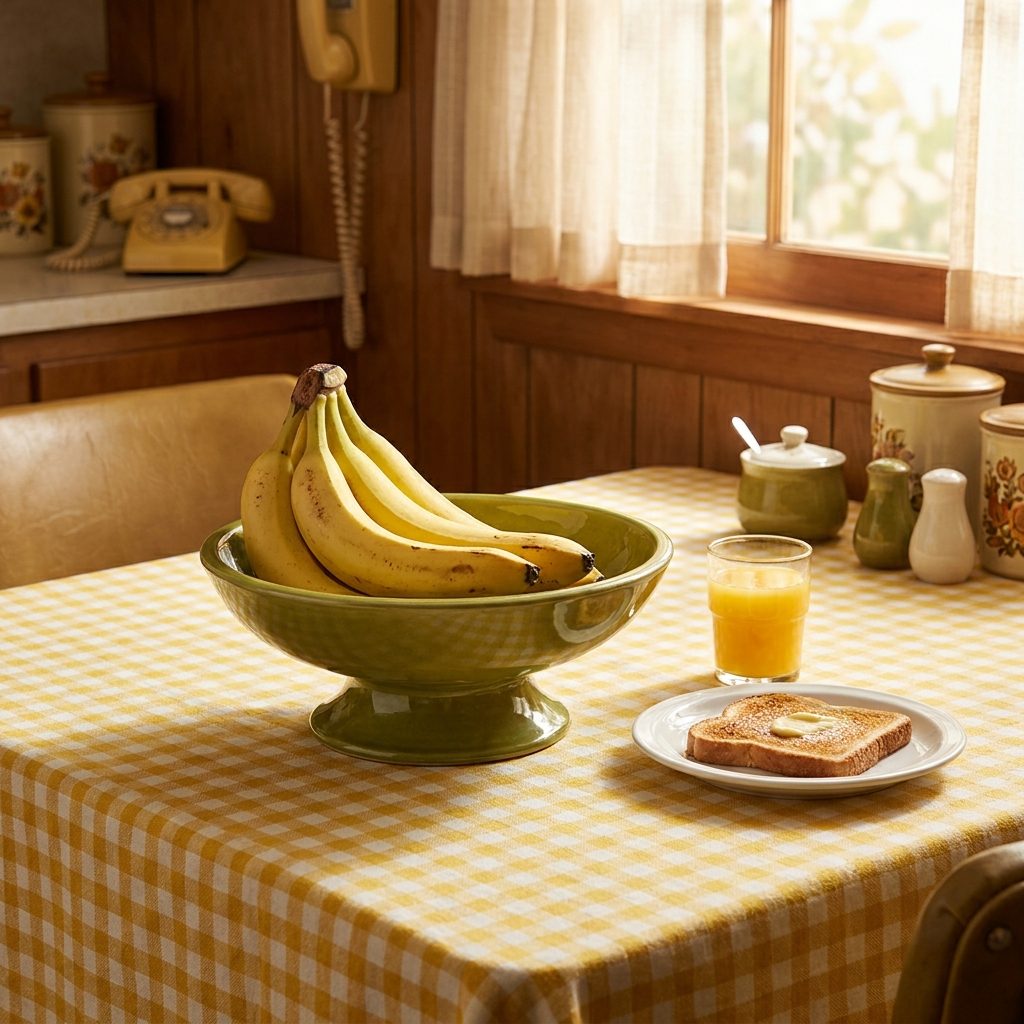
Twelve cents a pound for bananas. The same price as flour. You could buy five pounds of bananas for sixty cents and nobody in the household would finish them before they went brown, which meant banana bread, which cost almost nothing to make because flour was twelve cents too.
Bananas were the fruit you never worried about. They showed up in lunch bags, on cereal, sliced into Jell-O molds. At 65 cents a pound in 2026, they’ve jumped 442%, and they’re still one of the cheapest fruits in the produce aisle. The fact that even bananas have quintupled tells you something about the distance between 1970 and now.
24. A Movie Ticket for $1.55, Date Night for Less Than a Gallon of Gas

A dollar fifty-five. That’s what it cost to sit in a darkened theater with a bucket of popcorn (also cheap) and watch a movie on a screen the size of a wall. Two people could go to the movies, buy snacks, and spend less than five dollars total. A Friday-night date that left money in your wallet for the drive-in next weekend.
At roughly $10.00 per ticket in 2026, movie tickets have surged 545%. And that’s before the $8 popcorn and the $6 soda. The total cost of a movie night for two now runs close to $50, which in 1970 would have covered tickets for the entire month.
23. Bacon at 95 Cents a Pound, When Breakfast Didn’t Require a Budget Meeting
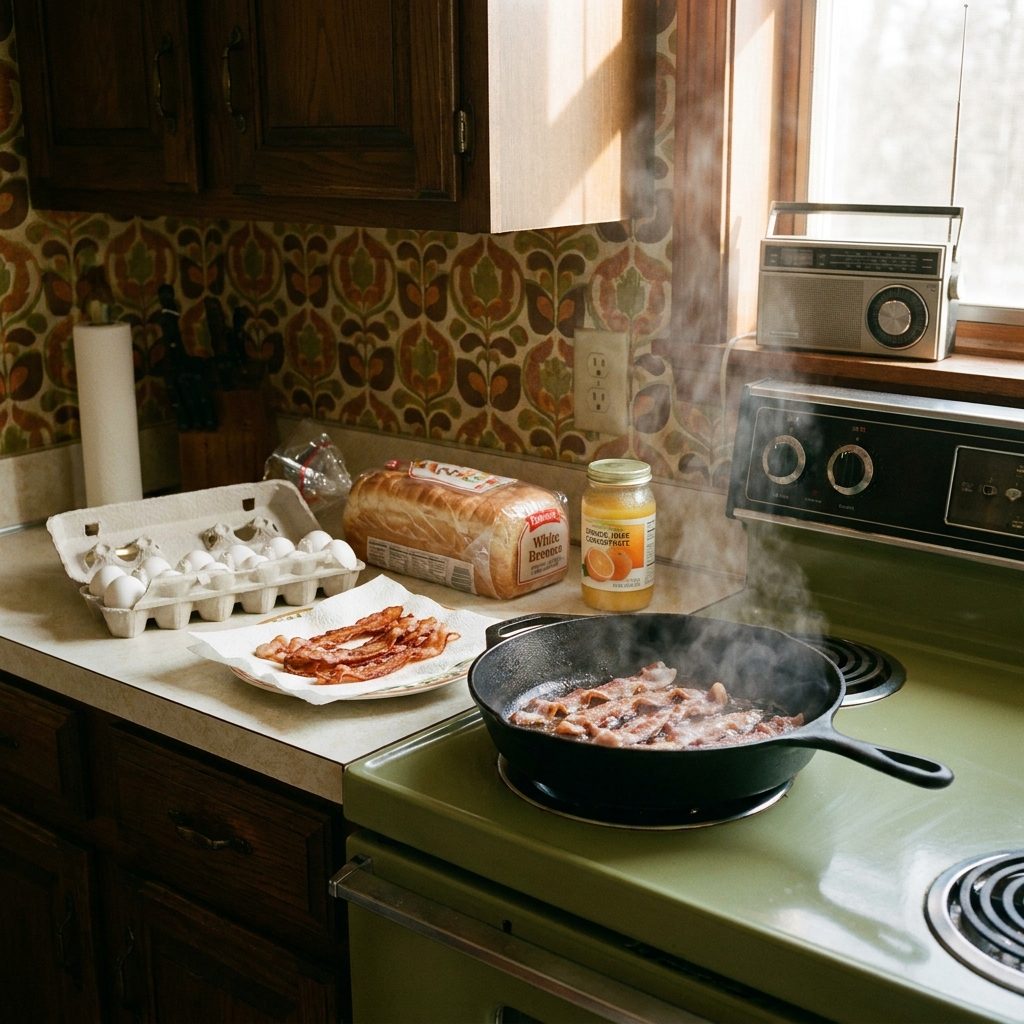
Under a dollar. For a full pound of bacon.
That fact alone explains why bacon appeared at breakfast without anyone doing mental arithmetic first. It sizzled in the skillet on Saturday mornings while the radio played. It went into BLTs in the summer. It wrapped around water chestnuts at parties. Bacon wasn’t a luxury ingredient or a trendy flavor additive. It was just there, because at 95 cents a pound, there was no reason for it not to be.
At $6.83 a pound in 2026, bacon has climbed 619%. A single package now costs what an entire week’s worth of breakfasts did in 1970. The skillet’s the same. The math is not.
22. Round Steak at $1.30 a Pound, the Everyday Beef That Wasn’t a Splurge
Would you like to save this?
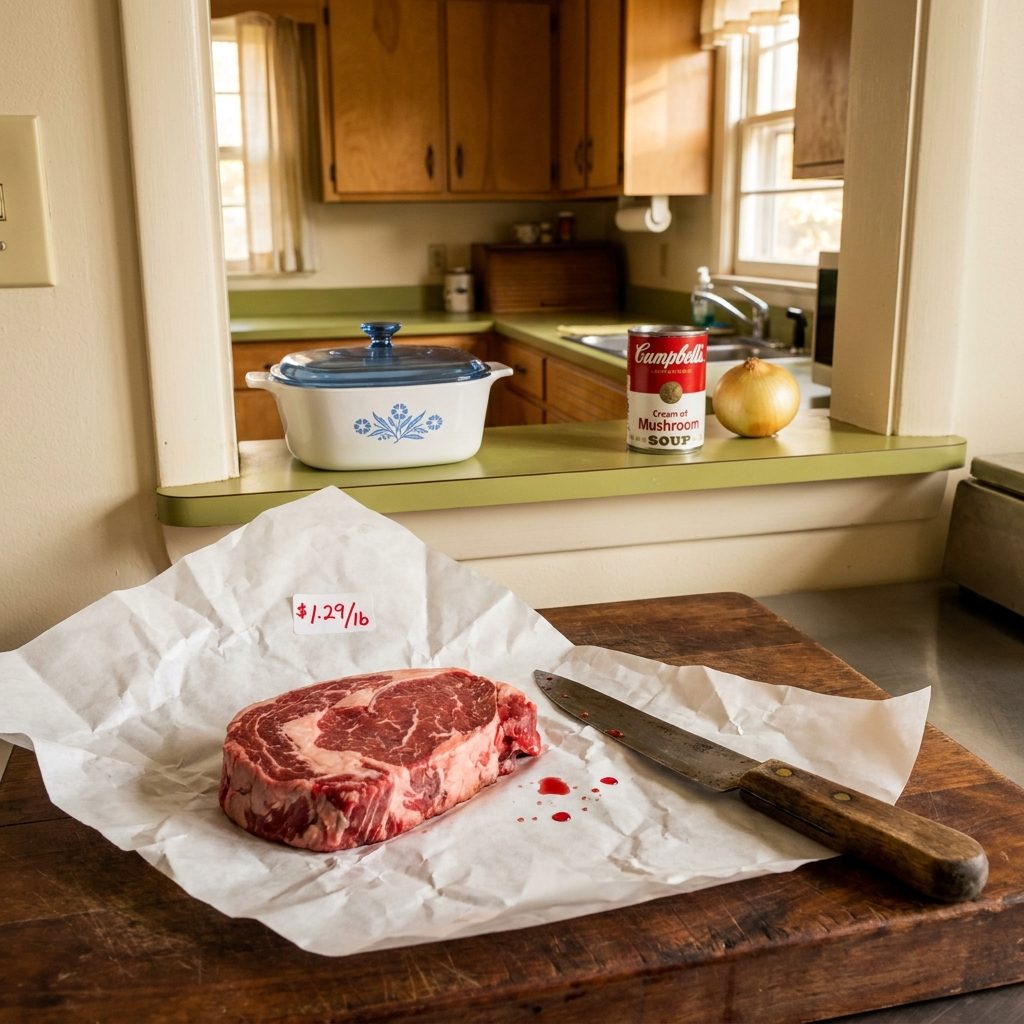
Round steak. Not filet mignon. Not a special-occasion cut. Just solid, dependable beef that showed up in weeknight dinners across the country, pounded flat with a meat mallet and braised in a Corningware casserole with a can of cream of mushroom soup and some onions. Swiss steak, they called it, and it fed a family of five for about three dollars.
At $1.30 a pound in 1970, beef was a regular Tuesday ingredient. At $9.83 a pound in 2026, that same cut has jumped 656%. Round steak has become the kind of purchase you plan around. In 1970, it was the kind of purchase you didn’t even remember making.
21. White Bread at 24 Cents a Loaf, the Price That Tells the Whole Story
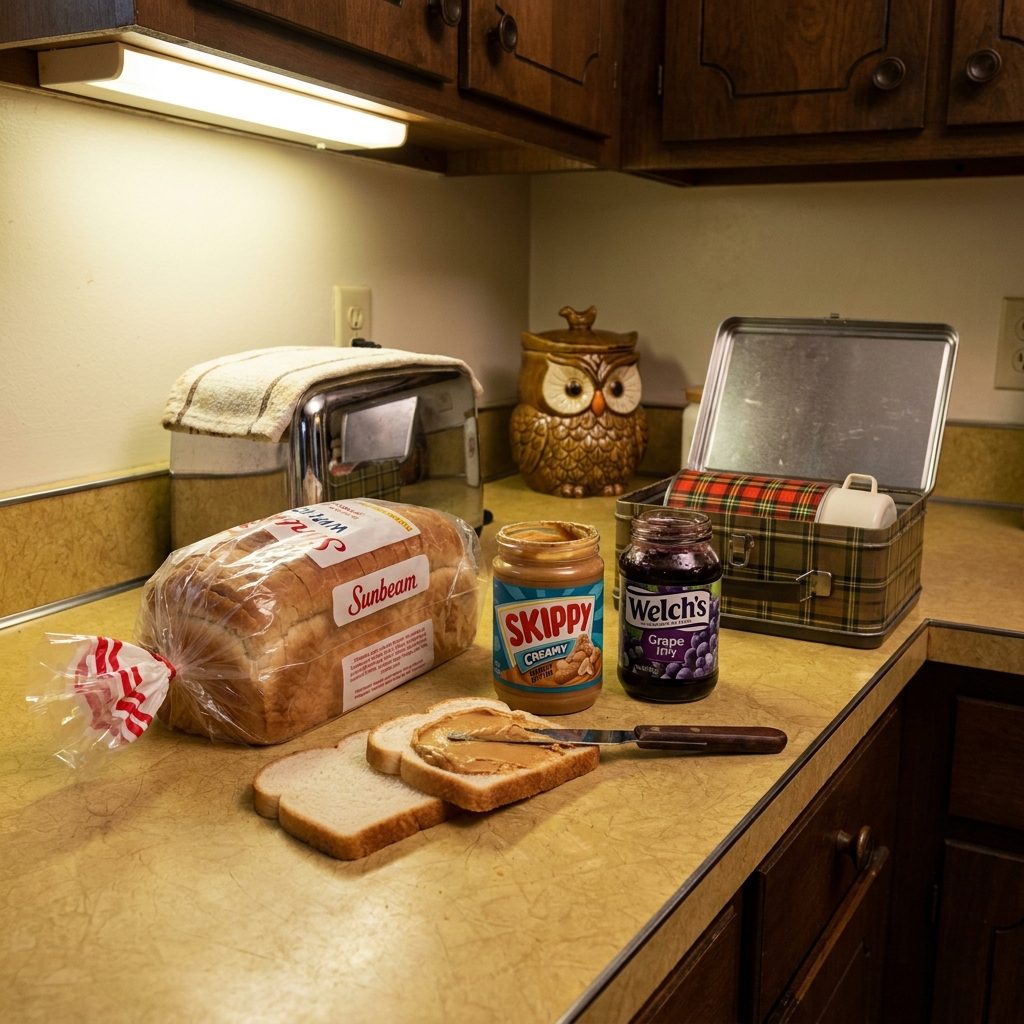
Twenty-four cents. For a whole loaf of bread. Not artisan sourdough. Not multigrain with flax. Just plain white bread in a plastic bag with a twist tie, the kind that built peanut-butter-and-jelly sandwiches by the thousands, that got toasted under the broiler for open-faced cheese sandwiches, that turned into bread crumbs when it went stale because nobody threw food away.
White bread was the most democratic food in America. Every kitchen had it. Every lunchbox carried it. And at 24 cents, it was almost an afterthought on the grocery list.
At $1.87 a pound in 2026, bread has risen 679%, the steepest climb on this entire list. The loaf that once cost less than a quarter now costs nearly two dollars. And somehow, it’s still the same bread. Same plastic bag. Same twist tie. The only thing that changed is what you hand the cashier.
20. Cheddar Cheese at 77 Cents a Pound: When the Cheese Drawer Was Never Empty
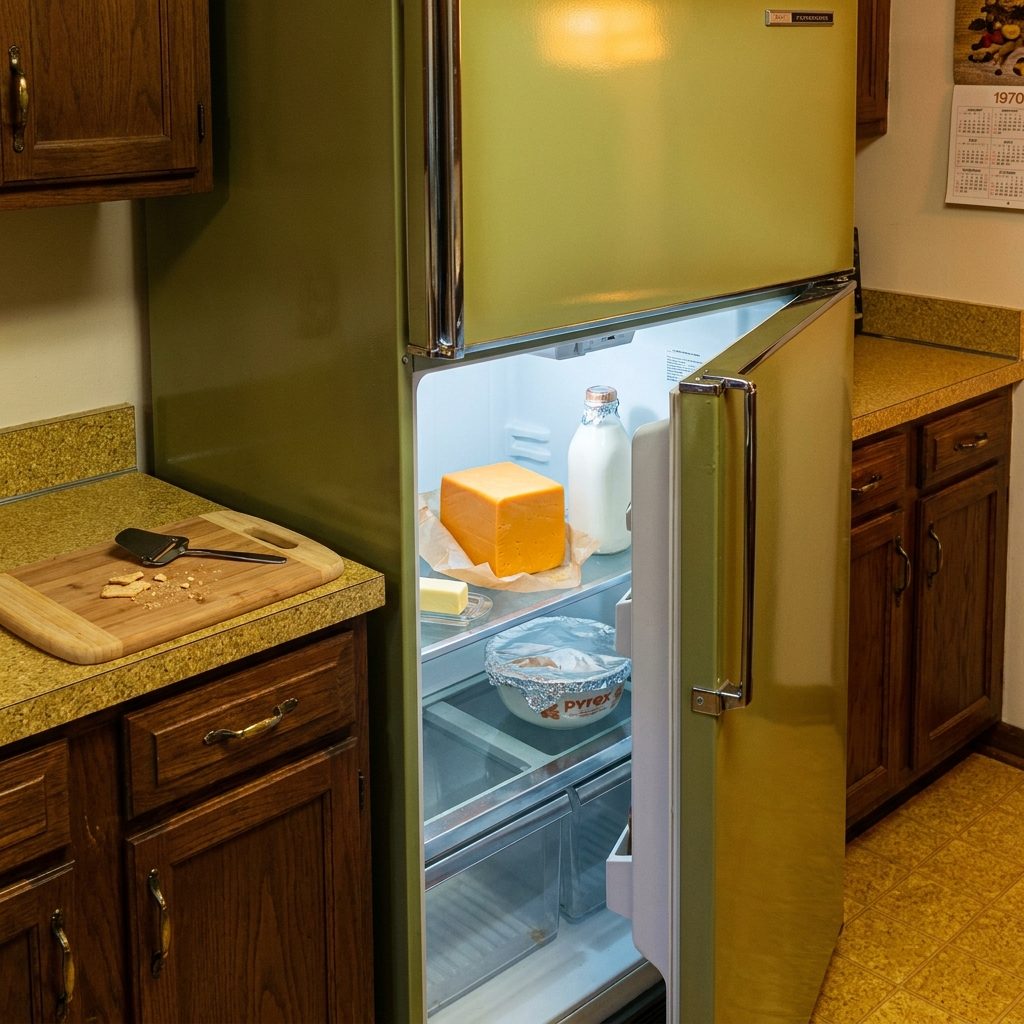
Seventy-seven cents. That bought a full pound of sharp cheddar in 1970, enough to top a week’s worth of casseroles, fill a dozen grilled cheese sandwiches, and still leave a wedge for dad to slice off while standing at the counter after work. Nobody rationed it. Nobody thought twice about shredding half a block over Tuesday’s tuna noodle bake.
Today that same pound runs about $6.03. A 683% increase. The cheese drawer in the fridge used to be packed, a tumble of wax-paper-wrapped blocks and foil-covered wedges. Now a single block of decent cheddar costs more than a gallon of gas did back then. I’m not saying we took it for granted, but we absolutely took it for granted.
19. A Half-Gallon of Ice Cream for 79 Cents, Back When It Actually Was a Half-Gallon
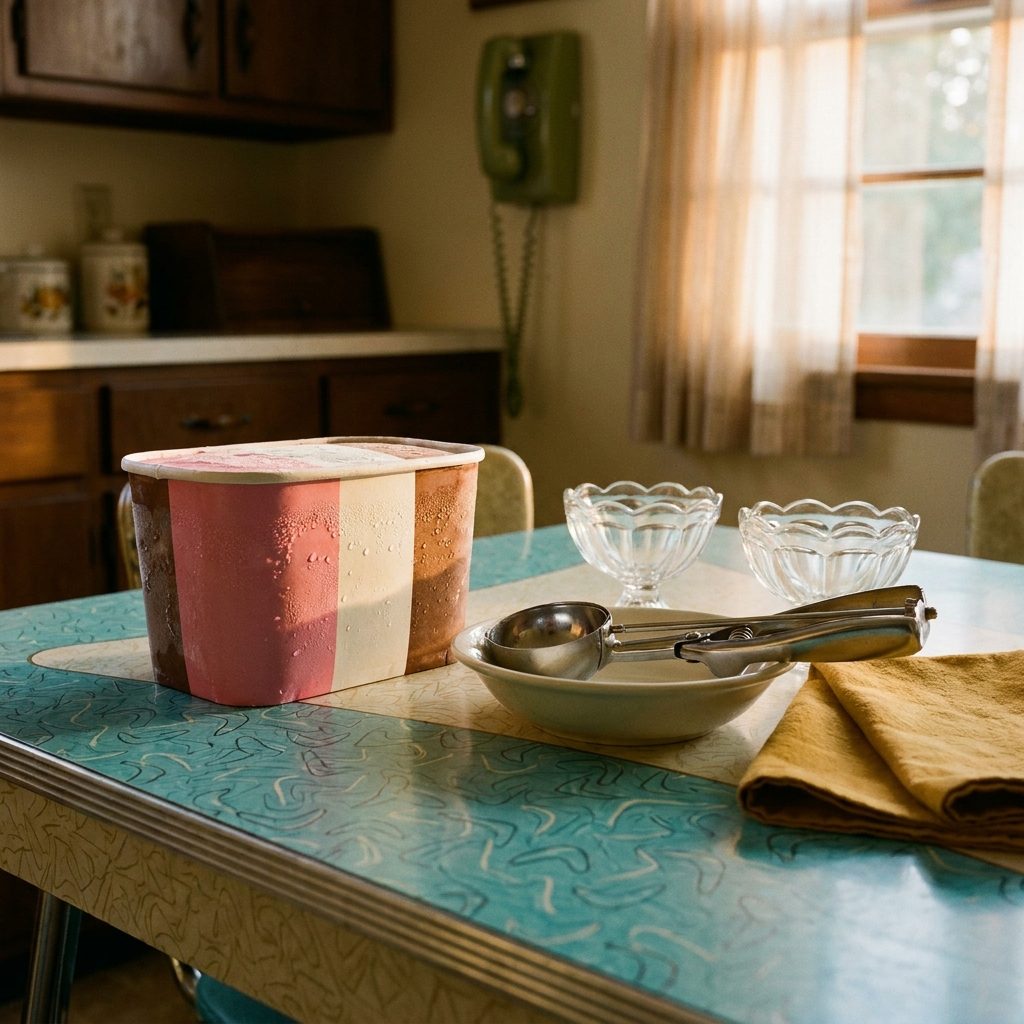
Before the quiet shrinkflation that shaved containers down to 1.5 quarts and then 1.25, a half-gallon meant a half-gallon. Sixty-four honest ounces of Neapolitan or butter pecan in a rectangular cardboard carton that sweated through the paper bag on the drive home. Seventy-nine cents.
You didn’t deliberate over flavors the way people do now. The freezer had room, the price didn’t sting, and the metal ice cream scoop with the thumb trigger lived in the second drawer down. At $6.24 for today’s smaller container, that’s a 690% price jump on less product. The math is genuinely depressing if you sit with it too long.
18. Tomatoes at 33 Cents a Pound: The Summer When Every Neighbor Had Extra
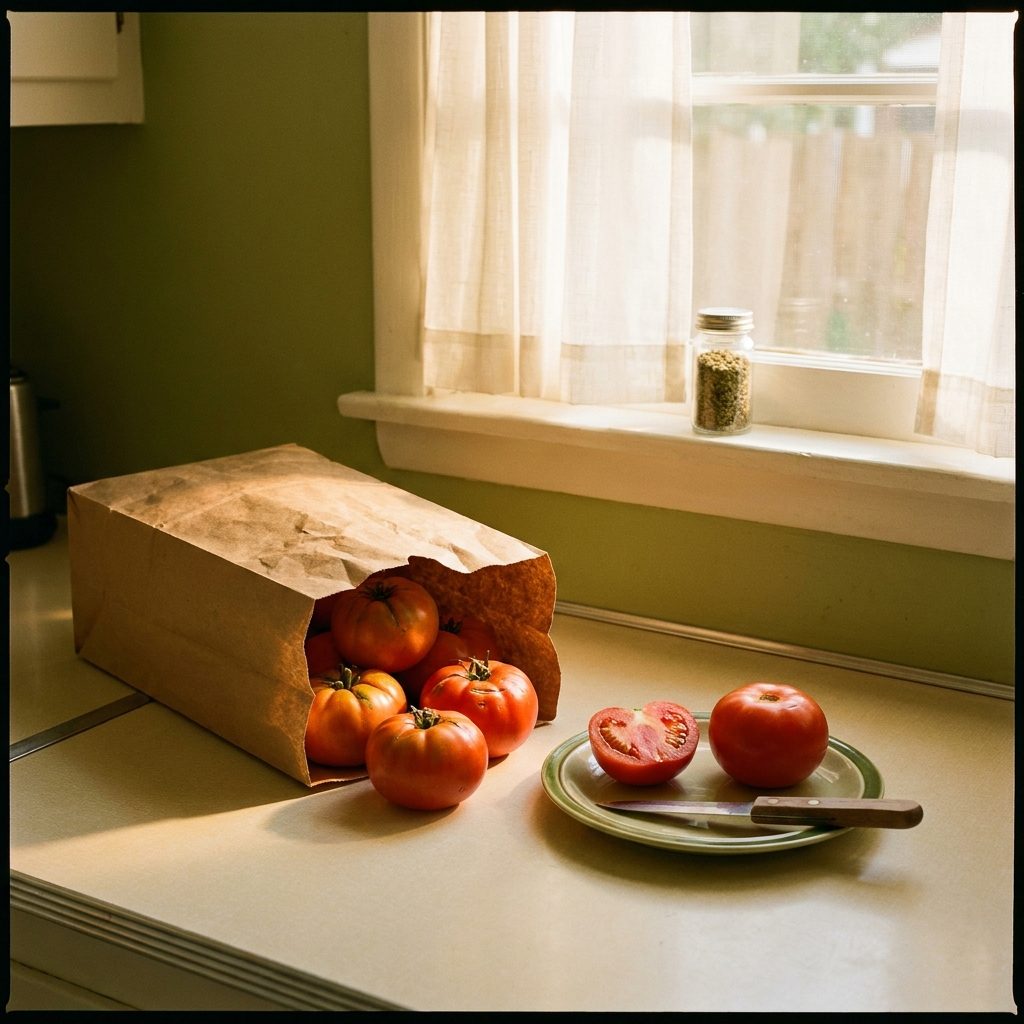
Thirty-three cents a pound at the grocery store, and that was for the ones shipped from Florida in January. In summer, half the neighborhood was trying to give tomatoes away. Paper bags of them appeared on porches uninvited. The price at the store was almost beside the point from June through September.
Now they’re $2.69 a pound, which is 715% more, and the ones at the supermarket in February taste like they were grown under fluorescent lights in a filing cabinet. Even the good summer tomatoes at the farmers’ market cost more per pound than ground beef did in 1970. That sentence shouldn’t be true, but it is.
17. Sugar at 12 Cents a Pound: The Ingredient Nobody Budgeted For
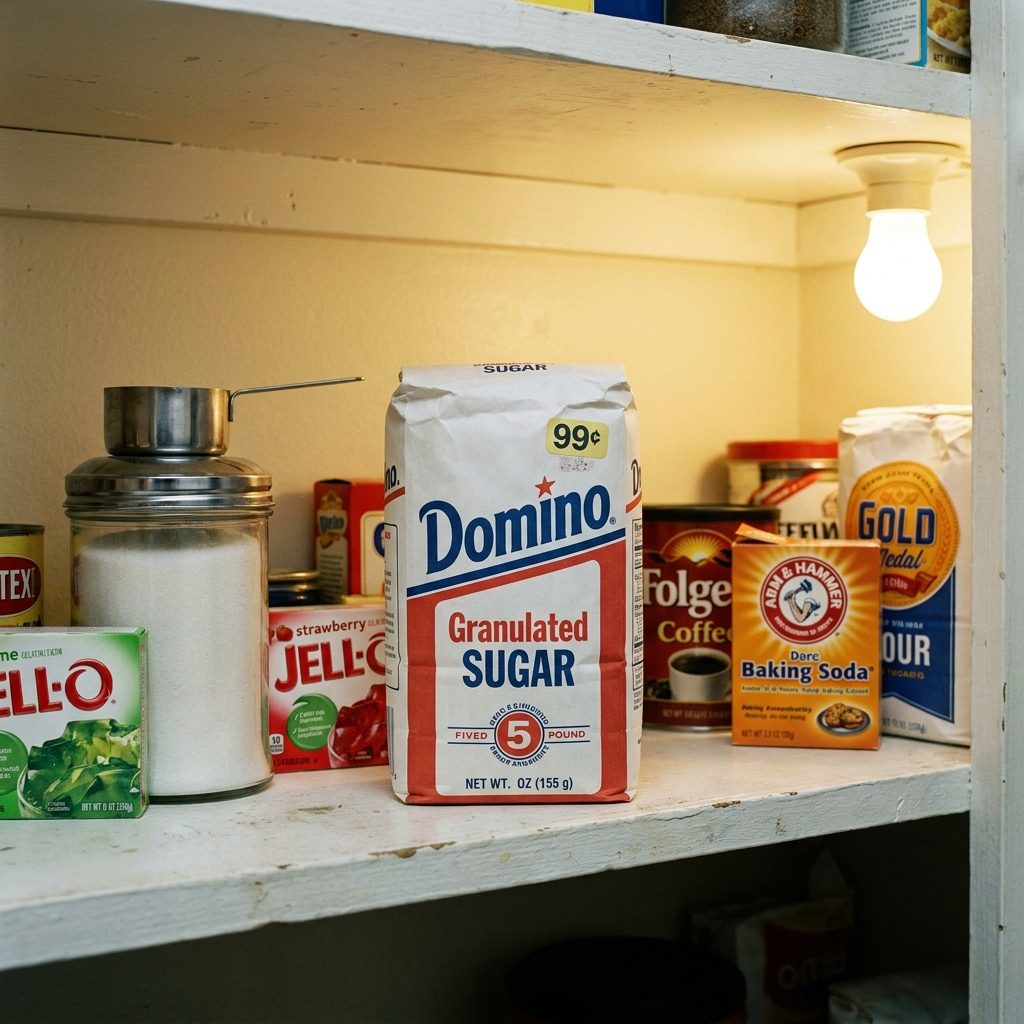
Twelve cents. A five-pound bag of granulated sugar cost sixty cents in 1970. It sat in the cabinet like a utility, no more remarkable than salt or flour. Mom bought it without looking at the price tag because there was no reason to look at the price tag.
That same pound now runs about $1.01, a 742% increase, and the five-pound bag pushes past five dollars in most stores. The shift rewrites the economics of home baking. Every batch of cookies, every pitcher of Kool-Aid, every canning session with strawberry preserves, all of it carried a sugar cost so low it was functionally invisible. Try making a full batch of jam today and the sugar alone costs more than the whole project did in 1970.
16. Electricity at Two Cents Per Kilowatt-Hour: When Leaving the Lights On Was No Big Deal

“Turn off the lights when you leave a room” was less an economic imperative in 1970 and more a philosophical stance. At roughly two cents per kilowatt-hour, electricity was so cheap that running a window air conditioner all summer barely registered on the household budget. The average monthly electric bill hovered around $20.
The quiet cost that changed everything
Today’s rate sits near 18 cents per kWh. That’s an 800% increase, and it ripples through every other price on this list. Refrigeration, heating, cooling, cooking, lighting. Every product that needs to be manufactured, stored, or transported carries today’s electricity costs baked into its price. This is the invisible multiplier nobody talks about when they compare old grocery prices to new ones.
Your dad was right to yell about the porch light, but in 1970, his argument was moral, not financial.
15. Potatoes at 9 Cents a Pound: The Side Dish That Practically Paid You to Eat It
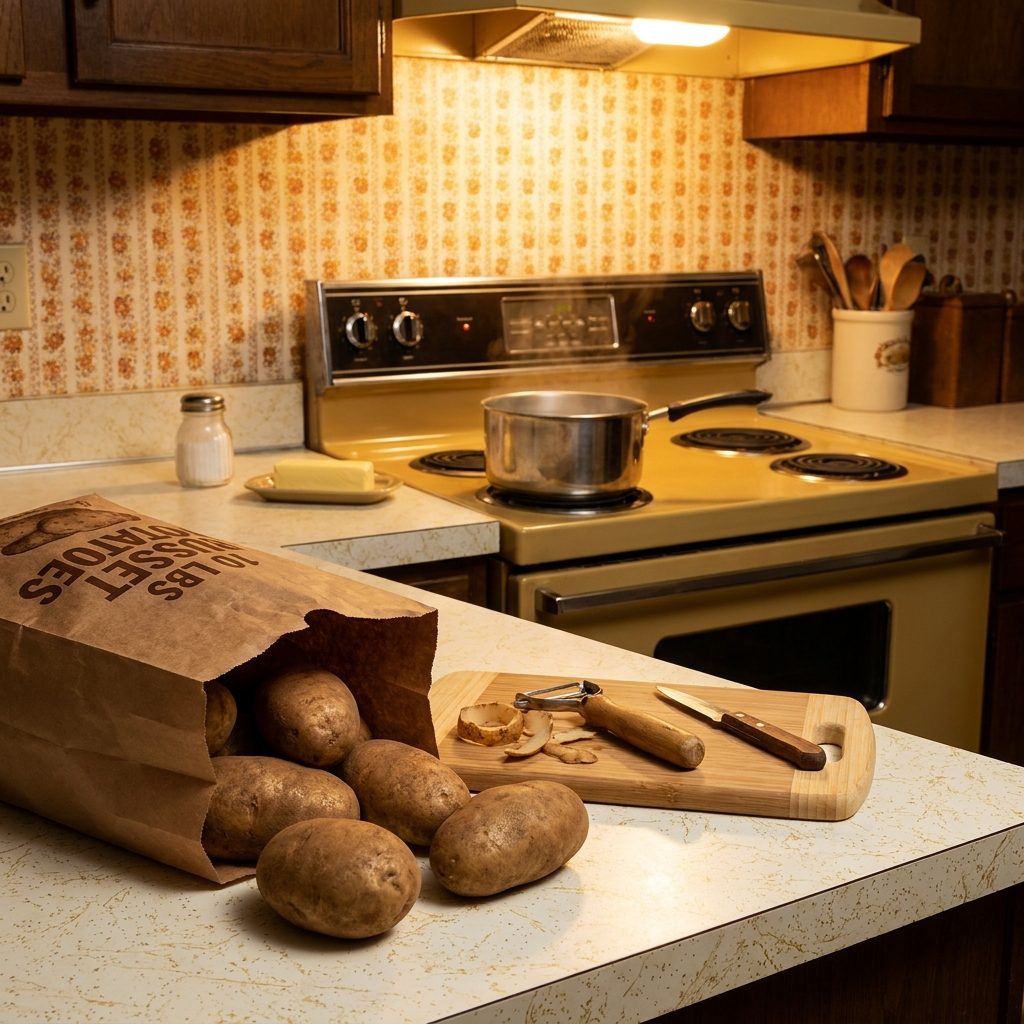
Nine cents a pound. A ten-pound bag of russets cost less than a dollar. Potatoes were so cheap they functioned as an economic cushion, the thing you ate more of when money was tight because buying more of them barely cost anything. Baked, mashed, fried, scalloped, au gratin with that Velveeta sauce, hashed and browned in a cast iron skillet on Saturday morning.
At 86 cents a pound today, that’s an 856% increase. A ten-pound bag now runs $4 to $5, which still makes potatoes one of the better deals in the produce aisle. But nine cents. That number belongs to a different country.
14. Ground Beef at 66 Cents a Pound: When a Family of Five Ate Well on a Dollar’s Worth of Meat
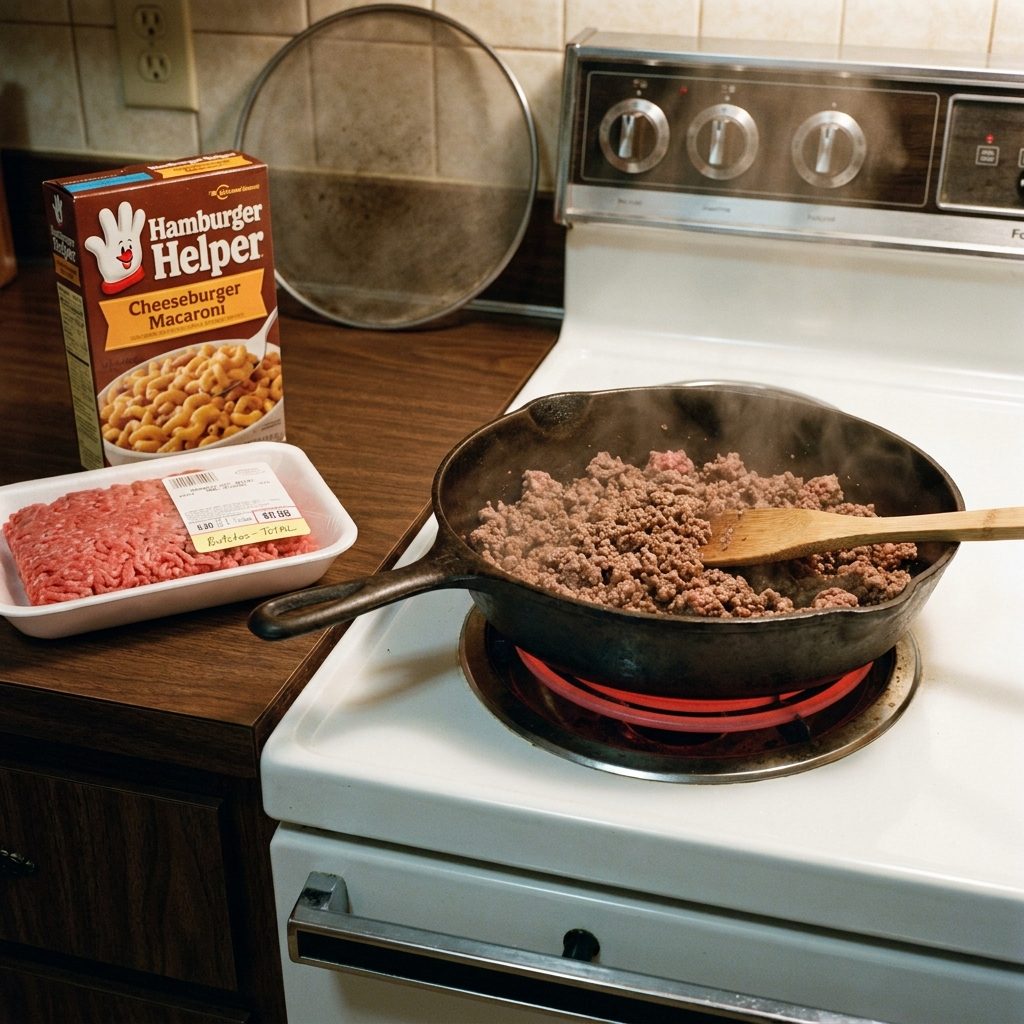
Sixty-six cents bought a pound of ground beef and a pound of ground beef made a meal. Meatloaf on Monday. Hamburger Helper on Wednesday. Sloppy Joes on Friday. Tacos on Saturday if mom was feeling adventurous. The hamburger was the workhorse protein of every middle-class kitchen, and at that price, you could brown two pounds without blinking.
Now it’s $6.90 a pound. A 945% increase. That Wednesday-night Hamburger Helper, which used to cost maybe $1.50 for the whole skillet including the boxed mix, now runs close to $12. The economics of the one-pound-of-ground-beef dinner have fundamentally broken.
I think about this every time I see a vintage Betty Crocker recipe card that calls for “1 lb. ground beef” like it’s nothing. In 1970, it was nothing.
13. Coffee at 91 Cents a Pound: The Three-Cup Morning That Cost Almost Nothing
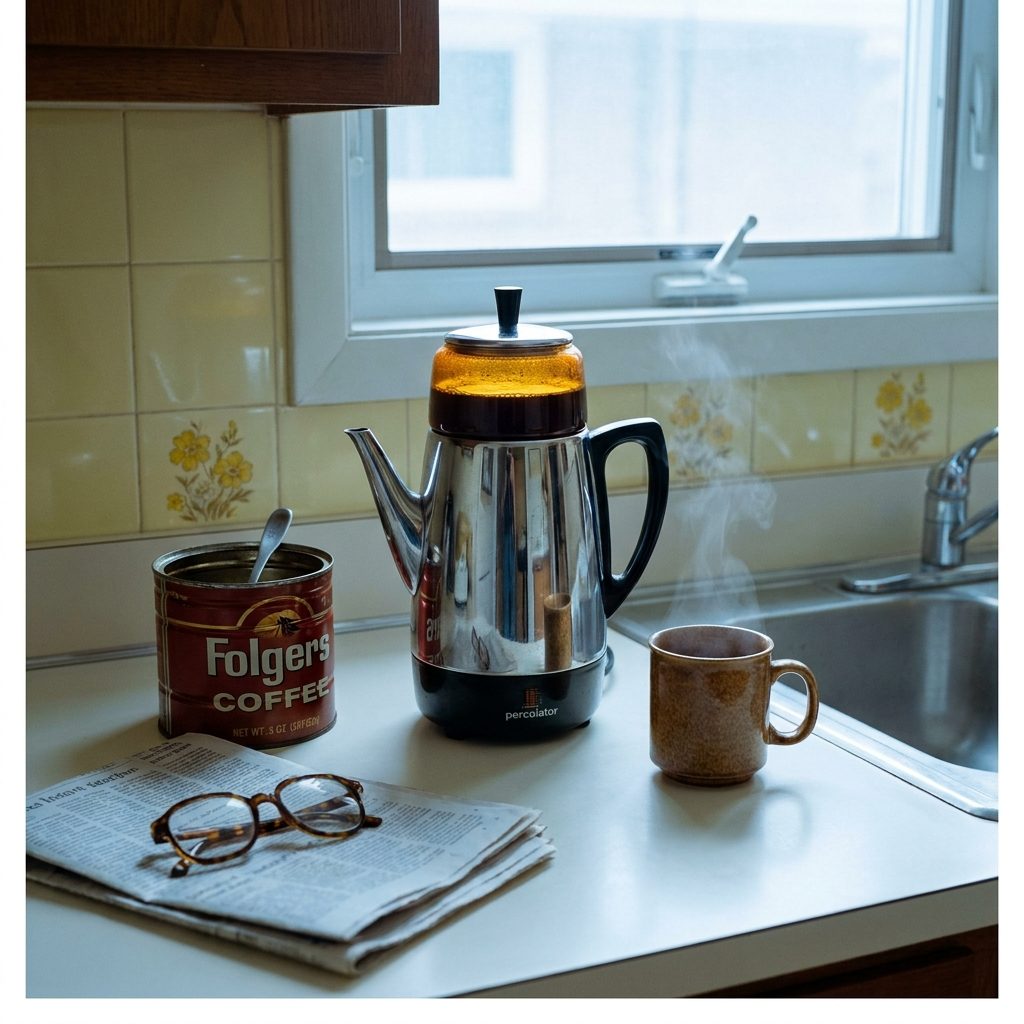
The percolator started before anyone was awake. That burbling sound, that smell filling the house from the kitchen outward. A pound of Folgers or Maxwell House ran 91 cents and lasted the better part of two weeks if it was just mom and dad drinking it. Three cups a day, every day, for pennies.
Today a pound of ground coffee averages $9.72. That’s a 968% increase, and it doesn’t even account for the cultural shift toward $6 lattes. But forget the coffee shops. Just brewing a pot at home, with a bag from the grocery store, now costs ten times what it did. The morning ritual is the same. The economics behind it aren’t.
12. Gasoline at 36 Cents a Gallon: When Filling the Tank Cost Less Than Lunch
Would you like to save this?
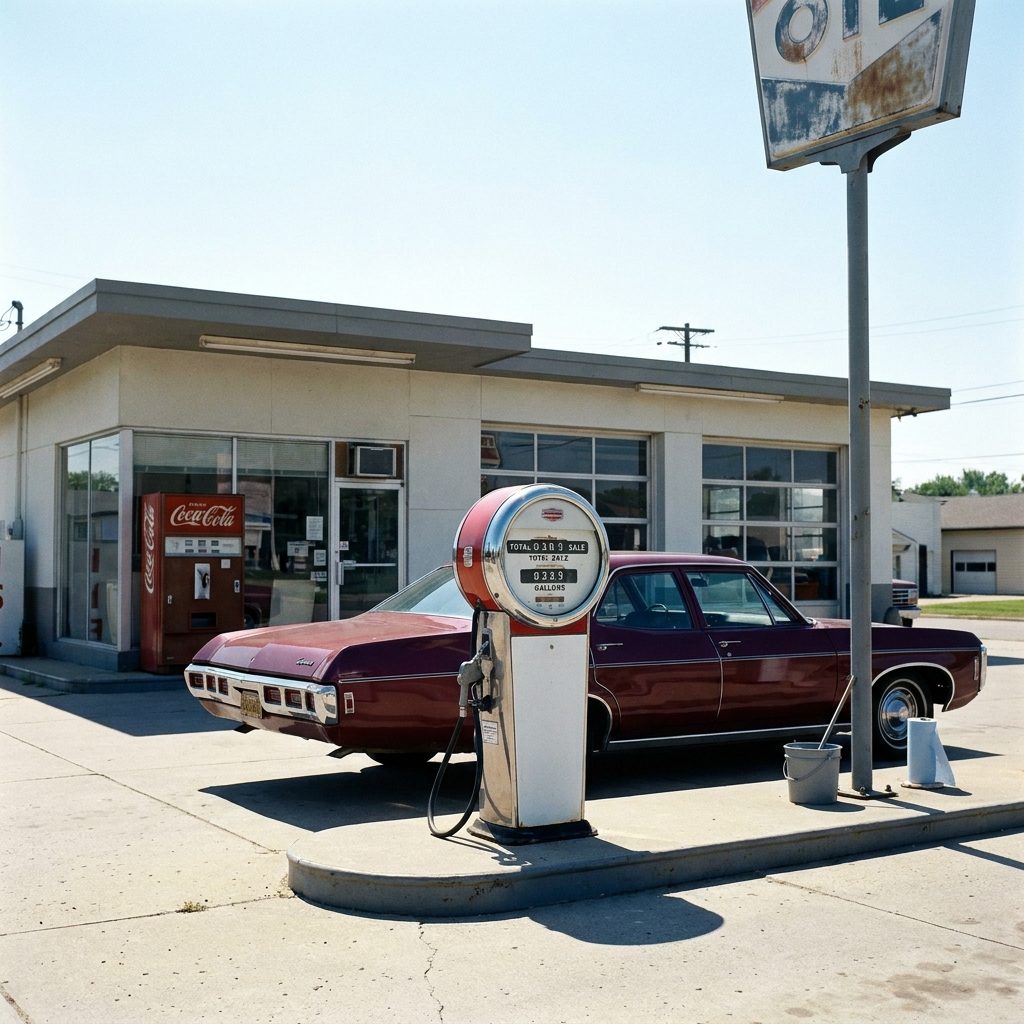
Thirty-six cents a gallon. A twenty-gallon tank cost $7.20 to fill. Seven dollars and twenty cents for a full tank of gas. That number is so far from current reality that it almost doesn’t register as real. But it was real. You pulled into a station, an attendant came to your window, pumped the gas, washed your windshield, checked your oil, and the whole transaction, including a tip, might have run eight dollars.
At $4.26 a gallon today, that same fill-up costs $85.20. A 1,083% increase, the steepest on this entire list. Gas at 36 cents a gallon meant the family road trip was essentially free transportation. You packed sandwiches, sure, but the driving itself was almost an afterthought in the budget.
The 1973 oil crisis would end this era brutally and permanently. But for those few years at the start of the decade, the American road was as close to free as it ever got.
11. A Postcard Stamp Cost a Nickel in 1970, and You Actually Mailed Postcards
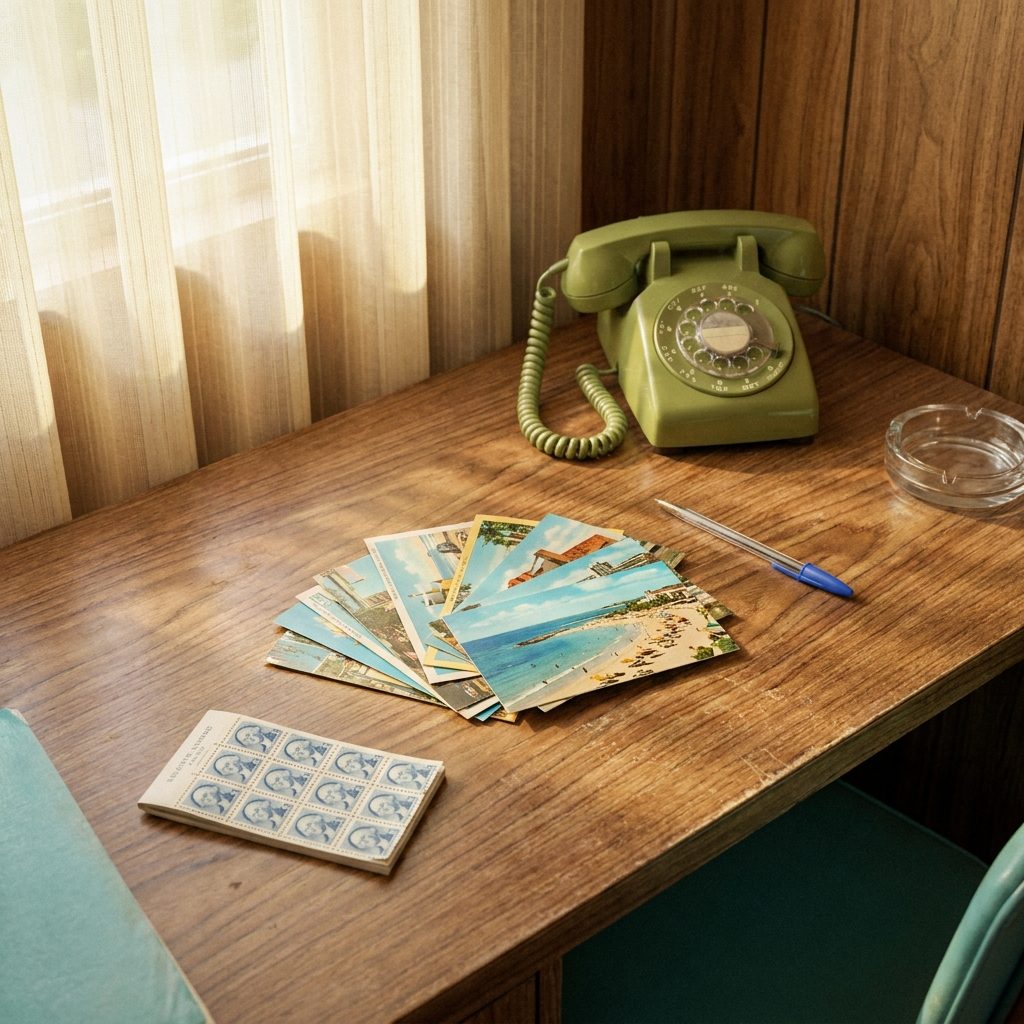
Five cents. That’s what it cost to drop a postcard into the blue mailbox on the corner, the one with the pull-down handle that clanked when you let it go. Five cents to tell your aunt in Michigan that the beach was nice, the kids were sunburned, and you’d be home Tuesday. Nobody called it “staying connected.” You just bought a vintage postcard at the gift shop, scribbled on it with a ballpoint at the motel desk, and stuck a stamp on it.
Today that same stamp runs sixty-one cents, a 1,120% increase. The postcard itself probably costs more than the stamp did in 1970. And the blue mailbox on the corner? Good luck finding one.
10. First-Class Stamps Were Six Cents, and Letters Were How You Lived Your Life
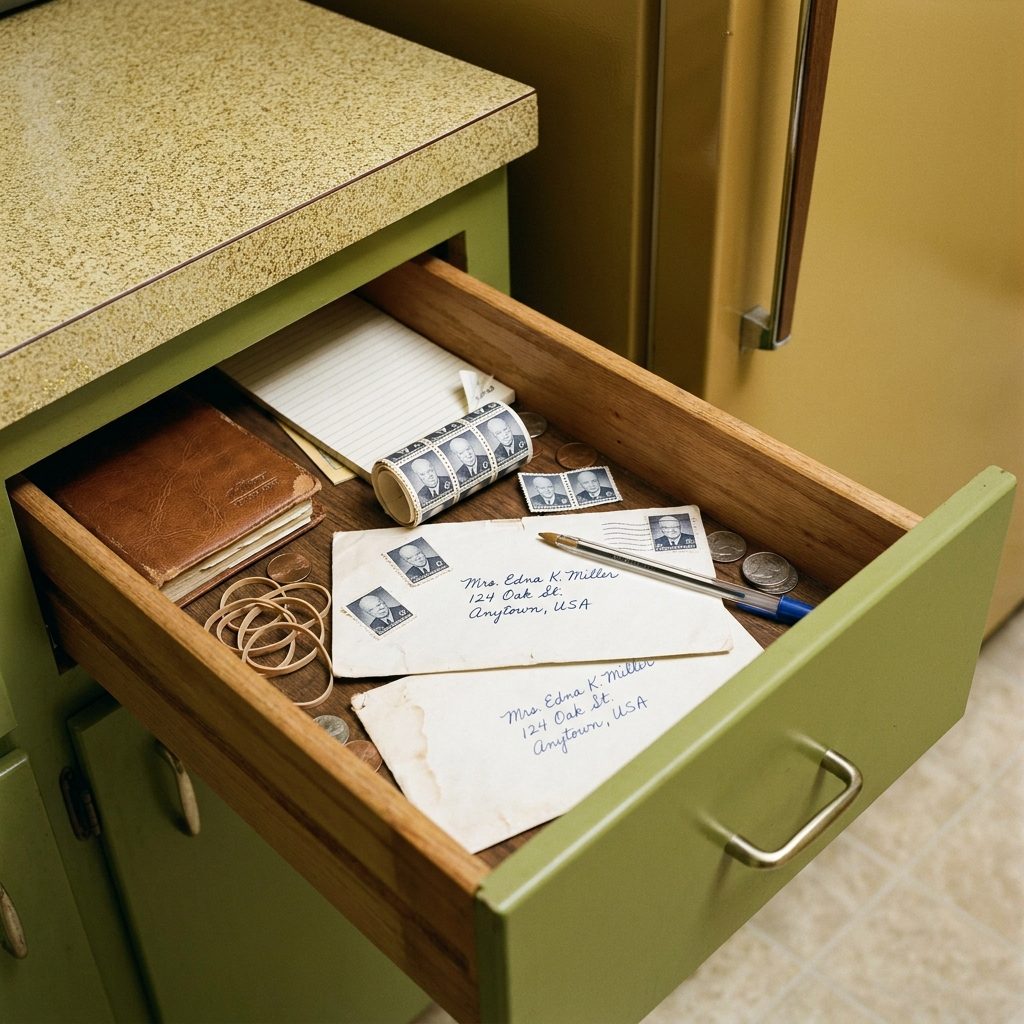
Six cents carried a birthday card, a love letter, a thank-you note, an electric bill payment, a college application, a complaint to Sears, and a chain letter your cousin guilted you into forwarding. Every household had a roll of stamps in the junk drawer, and nobody thought twice about the cost. You licked them. They tasted like library paste and obligation.
At seventy-eight cents today, that’s a 1,200% climb. But the real shift isn’t the price. It’s that we stopped needing them. The six-cent stamp wasn’t just postage. It was infrastructure for ordinary life, the way you paid your bills, kept your friendships, and argued with your insurance company.
9. A Brand-New Car for $3,500, and Your Dad Paid Cash for It
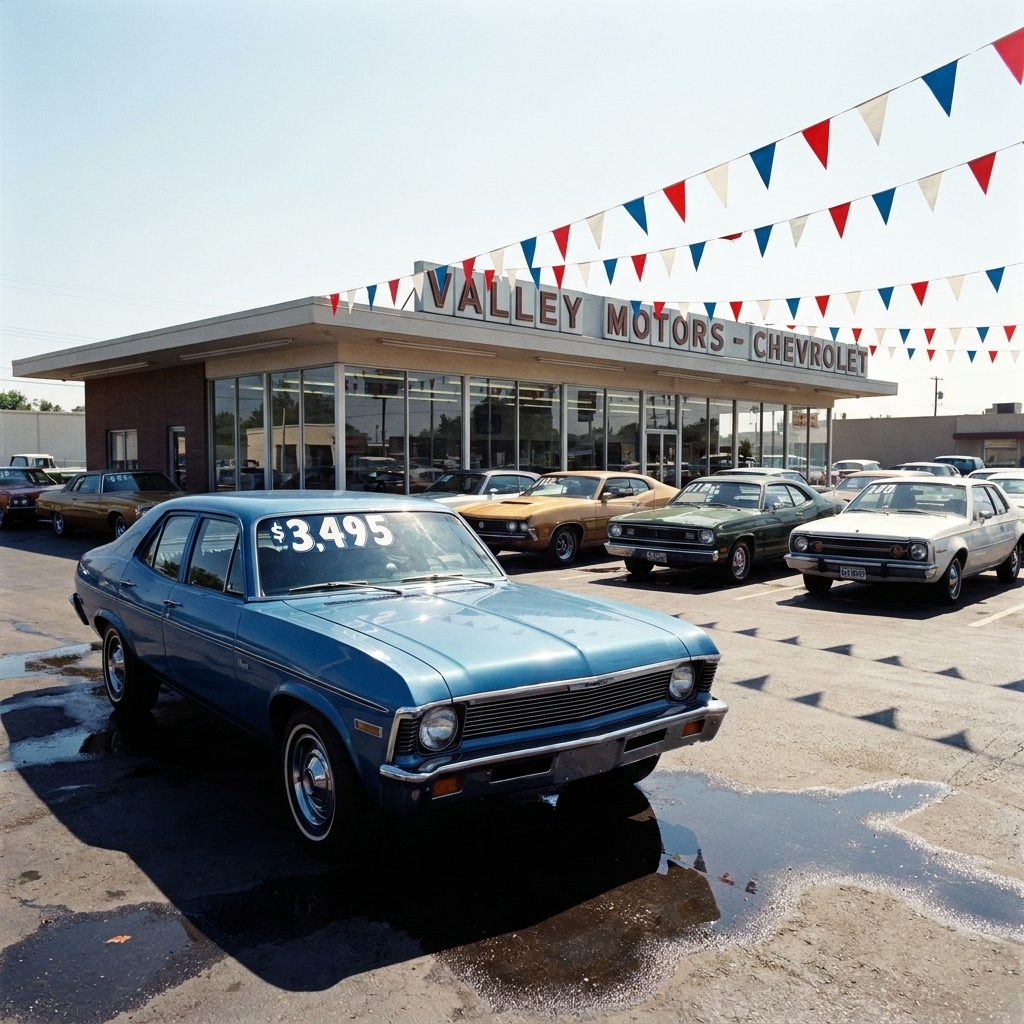
Three thousand five hundred dollars. A four-door sedan, probably a Ford Maverick or a Chevy Nova, driven off the lot the same afternoon. Your father might have written a check. Not a deposit. The whole thing. Car loans existed, sure, but plenty of families in 1970 simply saved up and bought the car outright, the way you’d buy a washing machine.
The average new car in 2026 sits around $51,000, which is a 1,357% increase and, more to the point, roughly a year’s take-home pay for a median household. In 1970, median household income was about $9,870. That $3,500 car was roughly four months of earnings.
Four months versus twelve. That math tells you more about the cost-of-living shift than any inflation calculator ever could.
8. A Haircut for $2.50, With the Barber Who Knew Your Name

The barber shop had a spinning pole outside and a transistor radio inside tuned to the ballgame. You sat in a chrome-and-leather chair, and the barber, who’d been cutting hair in that same spot since Eisenhower, threw a cloth cape around your neck and asked how short. Two dollars and fifty cents later, you walked out smelling like Barbicide and talcum powder, with a clean line at the back of your neck and maybe a Tootsie Pop if you were under twelve.
Today’s average haircut runs about $37.50. That’s a 1,400% increase, and it doesn’t include the “styling consultation” or the product upsell at checkout.
7. Apartment Rent Was $108 a Month, and That Included Heat
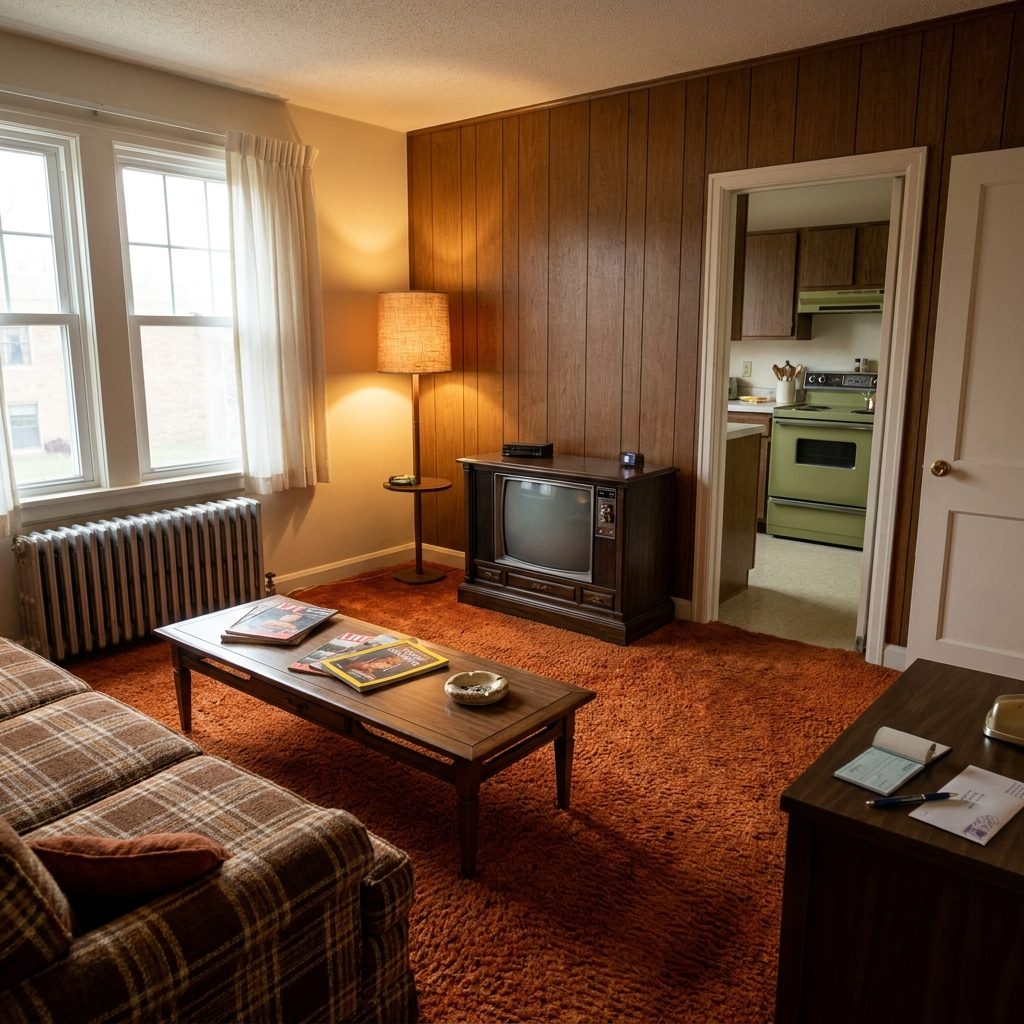
One hundred and eight dollars. Median gross rent in the United States, 1970. A one-bedroom in a decent neighborhood, maybe with wall-to-wall carpet in burnt orange and a kitchen where the stove and fridge came in matching avocado. Utilities were often bundled in. You mailed the rent check on the first, and your landlord was a guy named Lou who lived on the ground floor and fixed the radiator himself.
Median gross rent in 2026 hovers around $1,700 a month. That’s 1,474% higher. But the number alone undersells the difference. In 1970, median household income was roughly $9,870, so rent ate about 13% of gross pay. Today, rent commonly devours 30% to 40% of a household’s income. The apartment didn’t get twice as nice. The math just broke.
6. Coca-Cola From a Vending Machine: Twelve Cents and Ice Cold
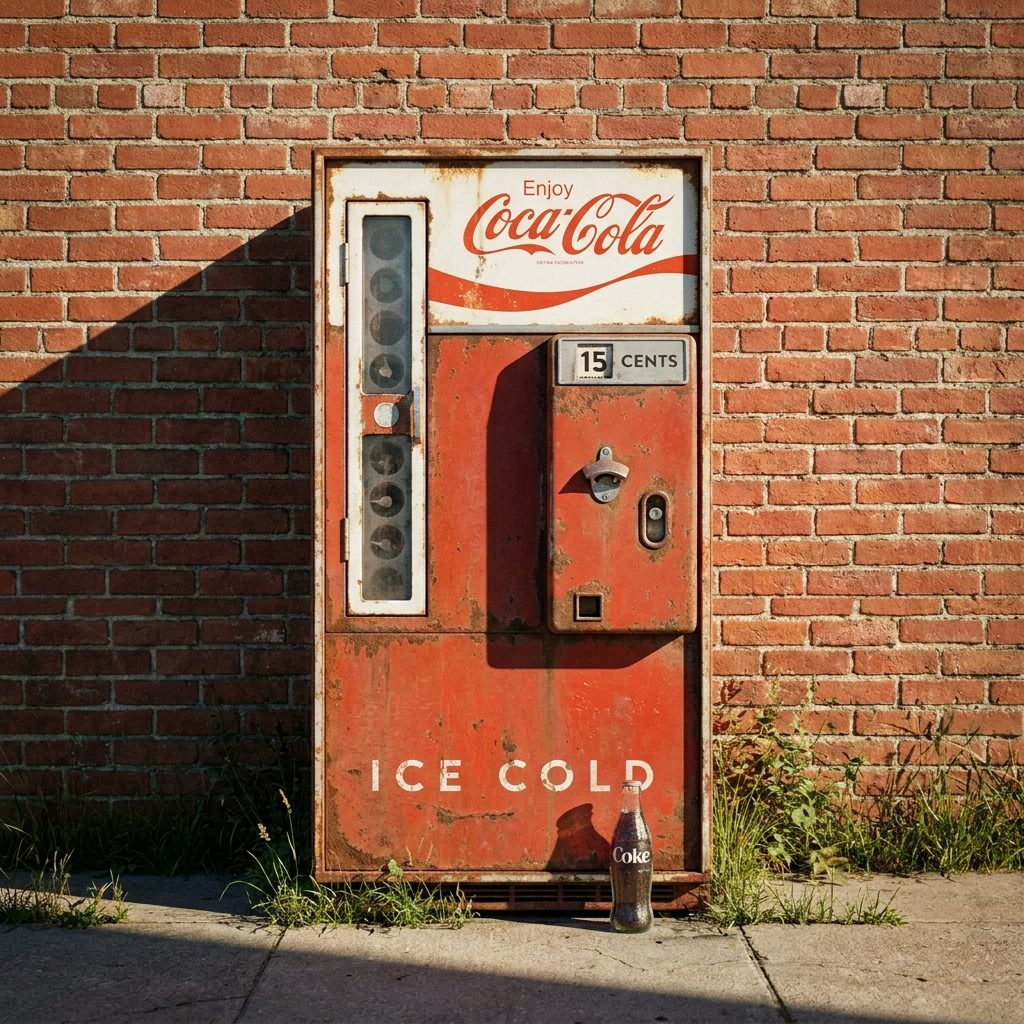
The machine was tall, red, and humming. You fed it a dime and two pennies, heard the internal clunk, and a glass bottle rolled down into the chute. Not a can. Not a plastic bottle. A heavy glass bottle, cold enough that condensation ran down the sides the second it hit air. There was a bottle opener bolted right to the machine.
A Coke from a vending machine in 2026 costs about two dollars, a 1,500% jump. The bottle opener is gone. So is the glass bottle. So is the satisfying mechanical clunk. What you get instead is a plastic bottle and a digital payment screen.
The twelve-cent Coke wasn’t just a drink. It was a ritual, a reward, the punctuation mark at the end of a hot afternoon.
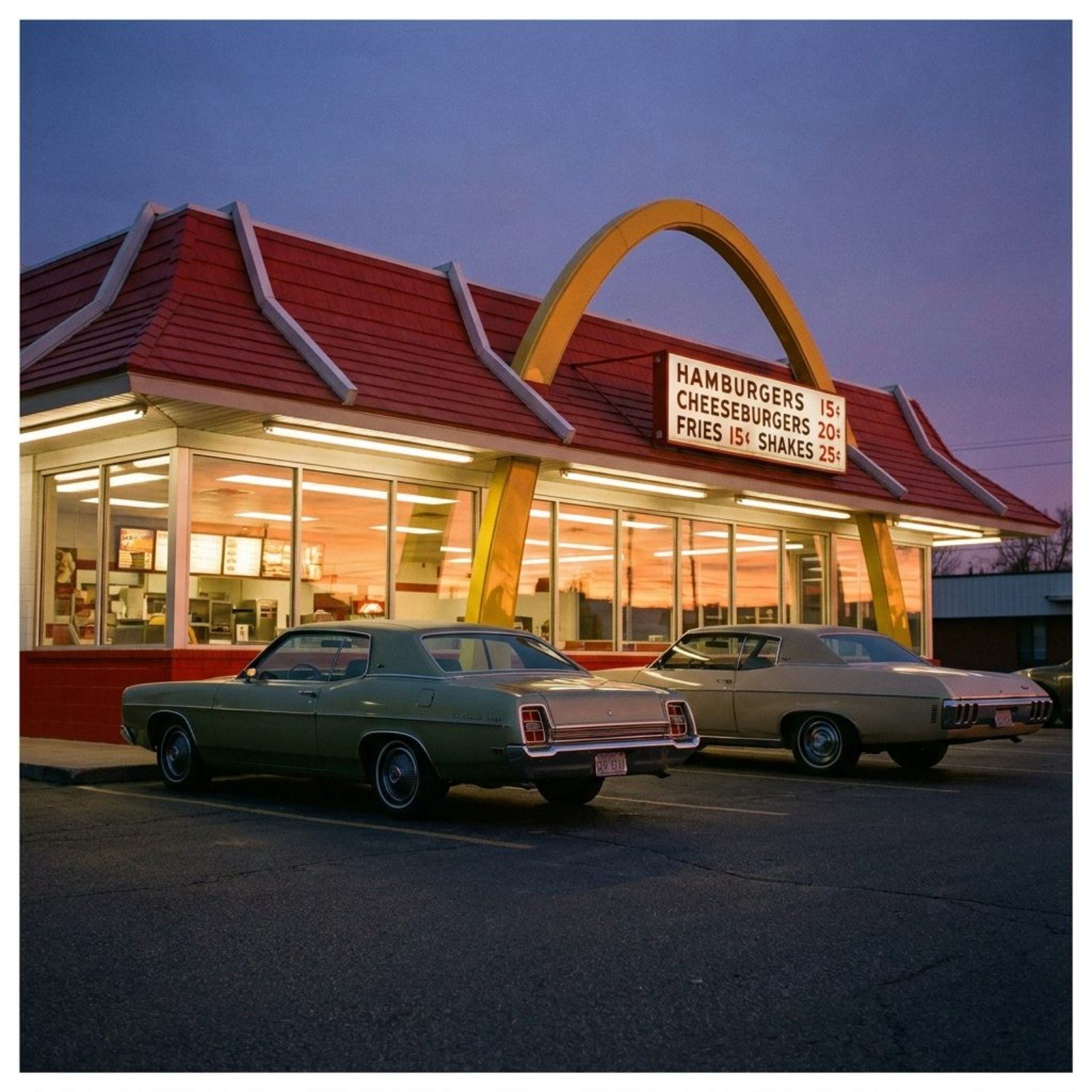
5. A McDonald’s Hamburger for Fifteen Cents, Under the Golden Arches That Actually Counted
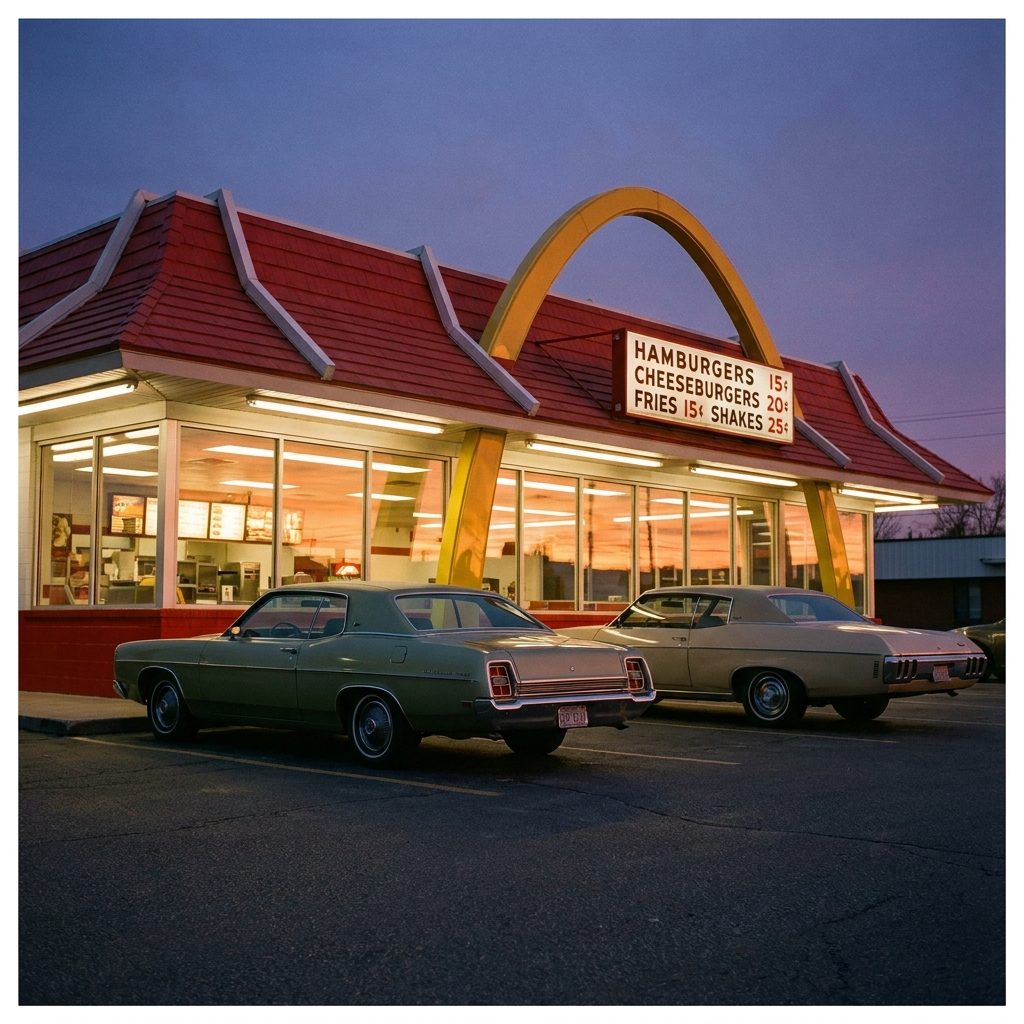
Fifteen cents. Not the Big Mac, not the Quarter Pounder. The plain hamburger: a thin patty, ketchup, mustard, pickle, onion, on a soft bun. It came in a paper wrapper, not a box, and you ate it in the car in the parking lot because most McDonald’s in 1970 didn’t have indoor seating. The sign out front told you how many millions had been served, and the number was still low enough to update.
That same basic hamburger runs about $2.50 now, a 1,567% increase. I’d argue the patty got thinner.
4. A New House for $23,400, With a Yard and a Two-Car Garage

Twenty-three thousand four hundred dollars. That was the median price of a new home in the United States in 1970. Not a shack. Not a fixer-upper. A new house, three bedrooms, a yard, a garage, probably in a subdivision with names like Brookfield Estates or Meadowview Heights. The kitchen had Formica counters and linoleum floors. The living room had wall-to-wall carpet. The mortgage payment was maybe $150 a month, and the family had one income.
The median new-home price in 2026 is roughly $422,500. That’s a 1,706% increase. But here’s the part that stings: median household income rose only about 600% in the same period. The house didn’t become seven times nicer. The Formica just got replaced with granite, and somehow that justified a 17x price tag.
Your parents’ generation didn’t have a secret. They had a ratio that worked.
3. Private College Tuition Was $1,700 a Year, and a Summer Job Could Cover It
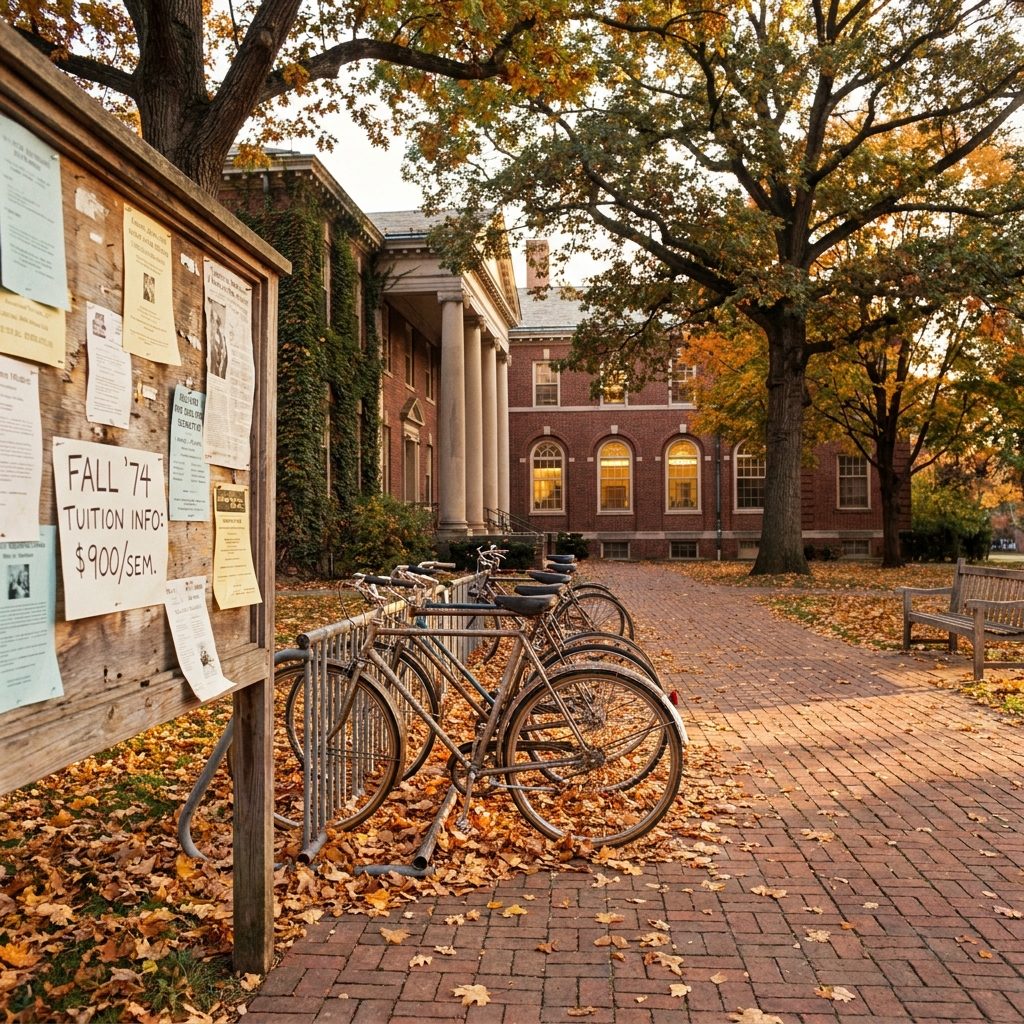
Seventeen hundred dollars for a full year of tuition and fees at a private four-year college. Not community college. Not a state school. A private university. Your parents might have helped, sure, but a student working full-time over the summer at minimum wage ($1.60/hour in 1970) could earn about $640 in ten weeks, which covered a substantial chunk of the bill. Add a part-time campus job during the school year, and you graduated with little or no debt.
Private college tuition in 2026 averages about $43,000 per year. That’s a 2,429% increase. A student working full-time at today’s federal minimum wage over the summer earns roughly $4,350 before taxes. That covers about 10% of annual tuition.
The Math That Changed Everything
In 1970, tuition was roughly 17% of median household income. In 2026, it’s closer to 55%. The degree didn’t change. The leverage did. Student loan debt in the US now exceeds $1.7 trillion. In 1970, the concept barely existed.
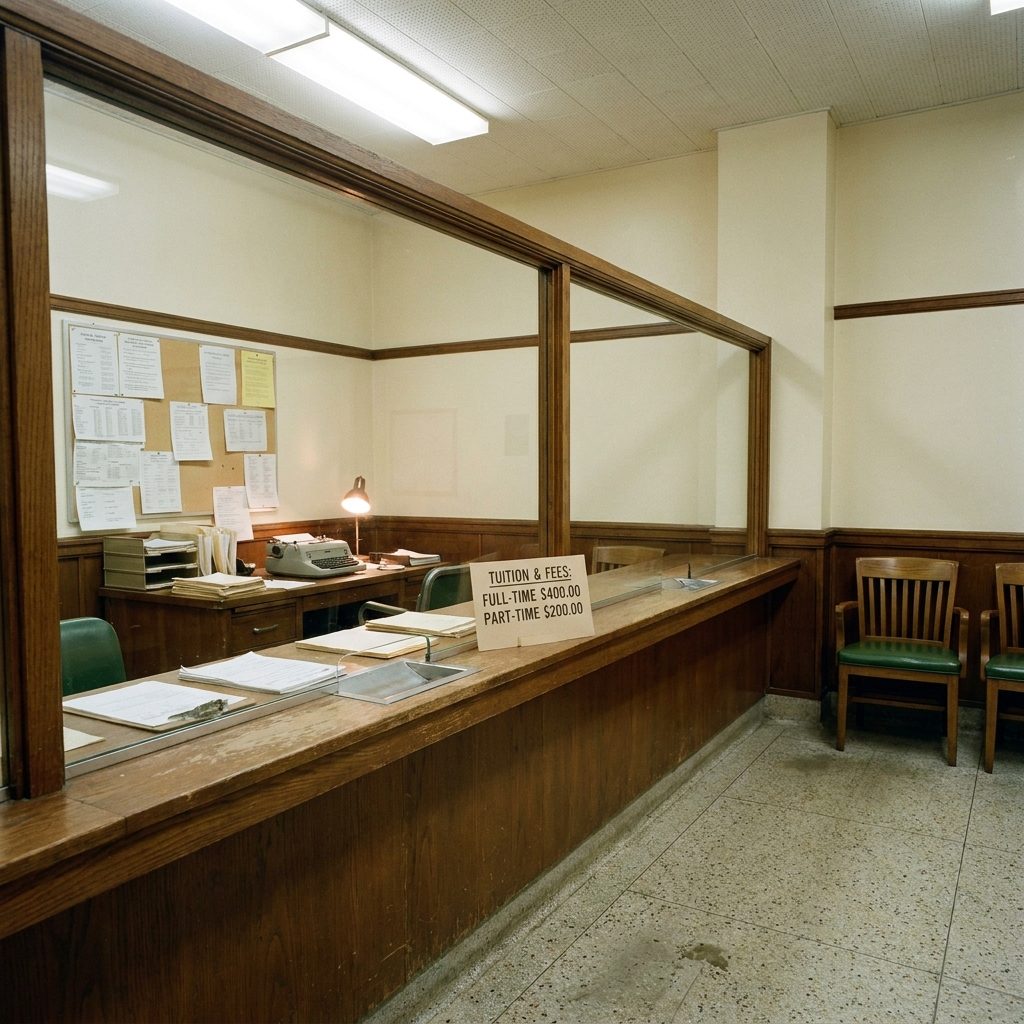
2. Public College Tuition Was $400 a Year, and Nobody Thought That Was Unusual
Would you like to save this?
Four hundred dollars. A year. At a state university. That bought you lectures, labs, library access, and a seat in a hall where a tenured professor taught the class, not a teaching assistant. Four hundred dollars was two weeks of take-home pay for an average worker. You could literally work fourteen days and pay for an entire year of higher education.
Public college tuition and fees in 2026 average about $11,000 per year for in-state students. That’s a 2,650% increase, the largest percentage jump on this entire list. And it represents one of the most profound shifts in American economic life: the moment higher education stopped being a public good that cost roughly the same as a used car and became a financial commitment that shapes decades of a graduate’s life.
Nobody in 1970 talked about “student debt” at the dinner table. There wasn’t enough of it to talk about.
1. The Daily Newspaper for a Dime, Tossed Onto the Porch Before Dawn
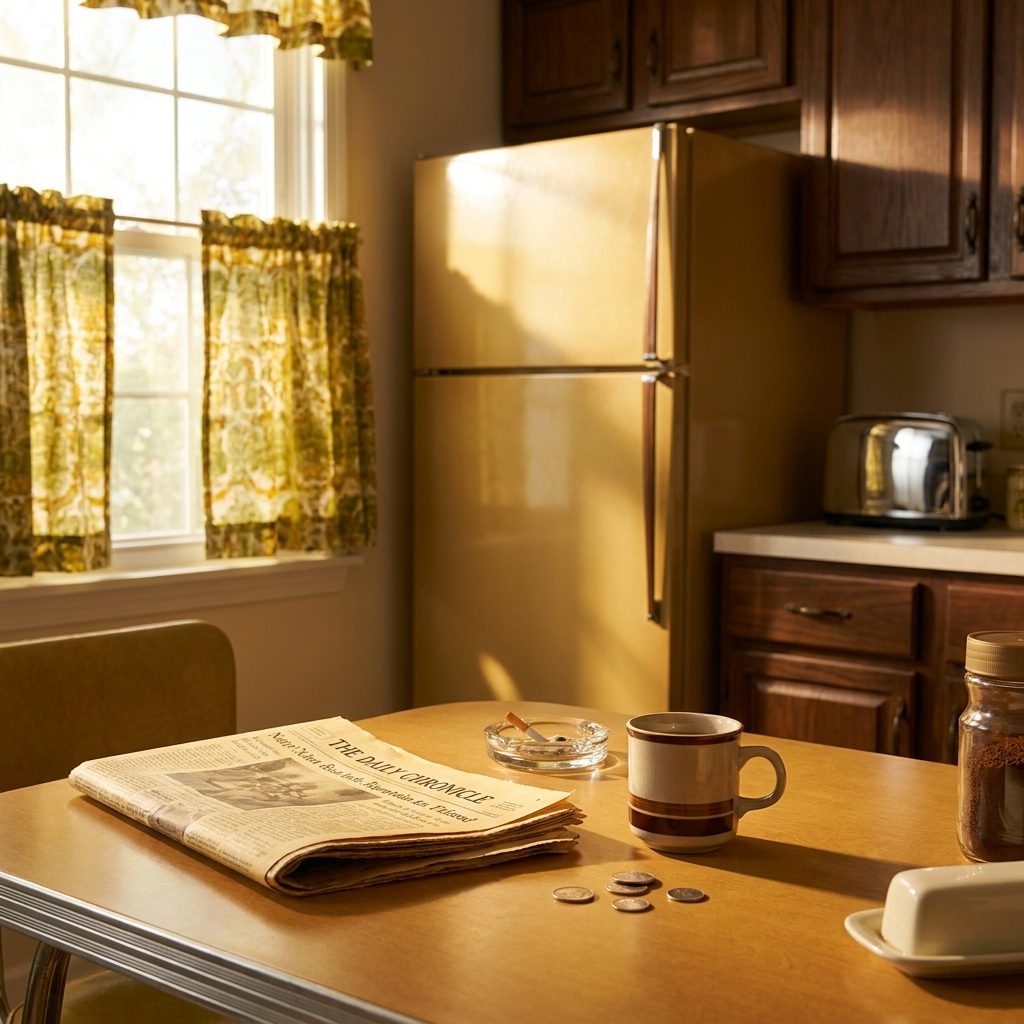
A dime. You slid it across the drugstore counter and walked out with a full daily paper — sports scores, obituaries, comics, classifieds, and enough editorial venom to ruin a perfectly good breakfast. In 1970, ten cents bought you the entire local world, folded in half and rubber-banded to your screen door by 6 a.m.
The paper boy collected weekly, sometimes monthly. The whole arrangement ran on trust and loose change, and nobody gave the cost a second thought because it barely registered. A quarter covered the paper and still left you enough for a pack of gum.
Good luck finding that deal now. If your daily still prints a physical edition — big if — the newsstand wants around three dollars for it. And honestly, the sticker shock stings worse when you remember how thick those papers used to be. The Sunday edition alone could wedge open a stubborn back door, or flatten a kid under its weight if he carried more than four on his route.