
Would you like to save this?
The milk was on the porch before anyone in the house was awake. A man had driven it there, in a truck he knew every rattle of, on a route he could run in his sleep. That job paid his mortgage. What follows is a list of careers that did exactly that in the 1950s: put food on the table, kept the lights on, sent kids to school, and then disappeared so quietly most people forgot they ever existed.
The Fuller Brush Man Who Knocked on Every Door in the Neighborhood
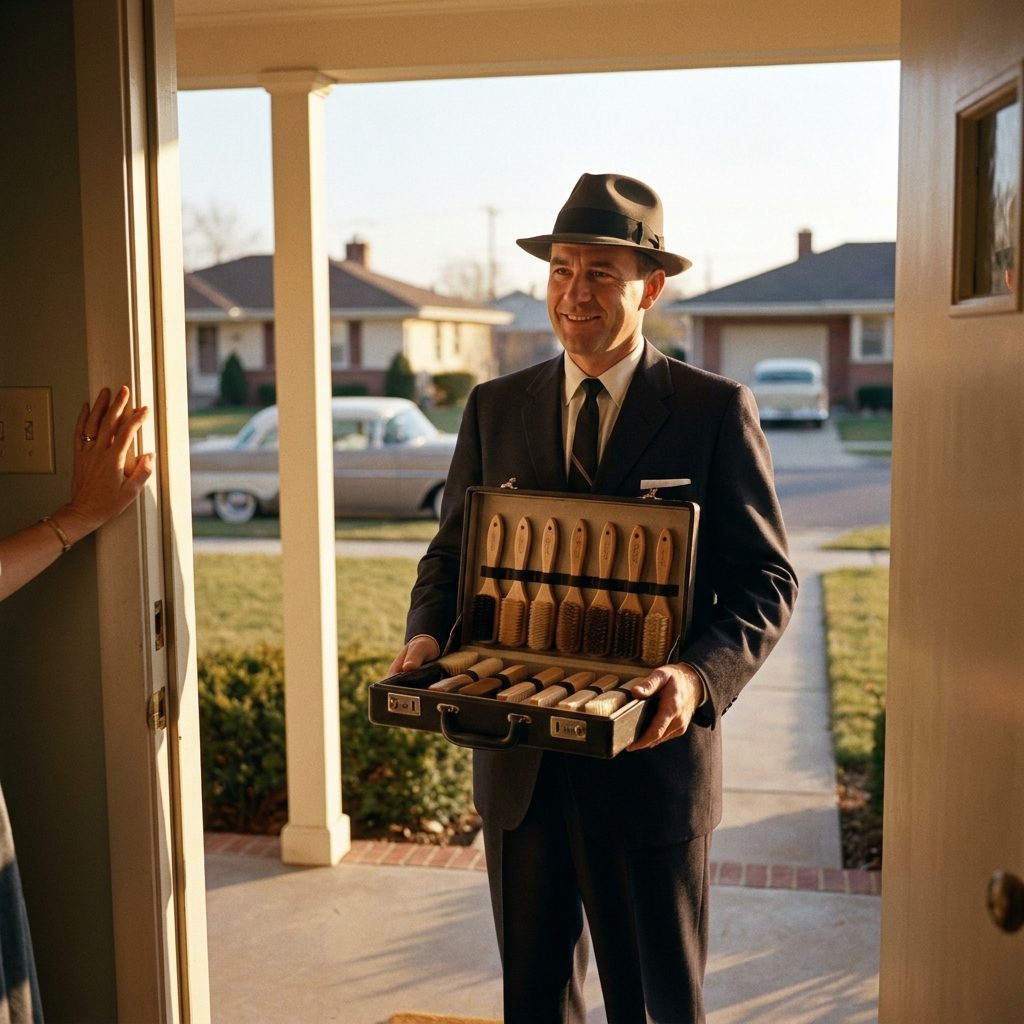
He came on Tuesdays, or maybe Thursdays. Nobody quite remembered, but the sound of that sample case clicking open on the porch railing was its own kind of appointment. Fuller Brush salesmen worked commission-only routes, sometimes the same streets for a decade, learning which houses ordered the same horse-hair scrub brush every spring and which ones just wanted to talk. A good route paid enough to carry a mortgage, a car payment, and three kids in Catholic school. The job vanished slowly, then all at once, as supermarkets put the same brushes on pegboard racks for less money than a doorstep conversation cost.
The Railway Mail Clerk Who Sorted Letters at 60 Miles Per Hour
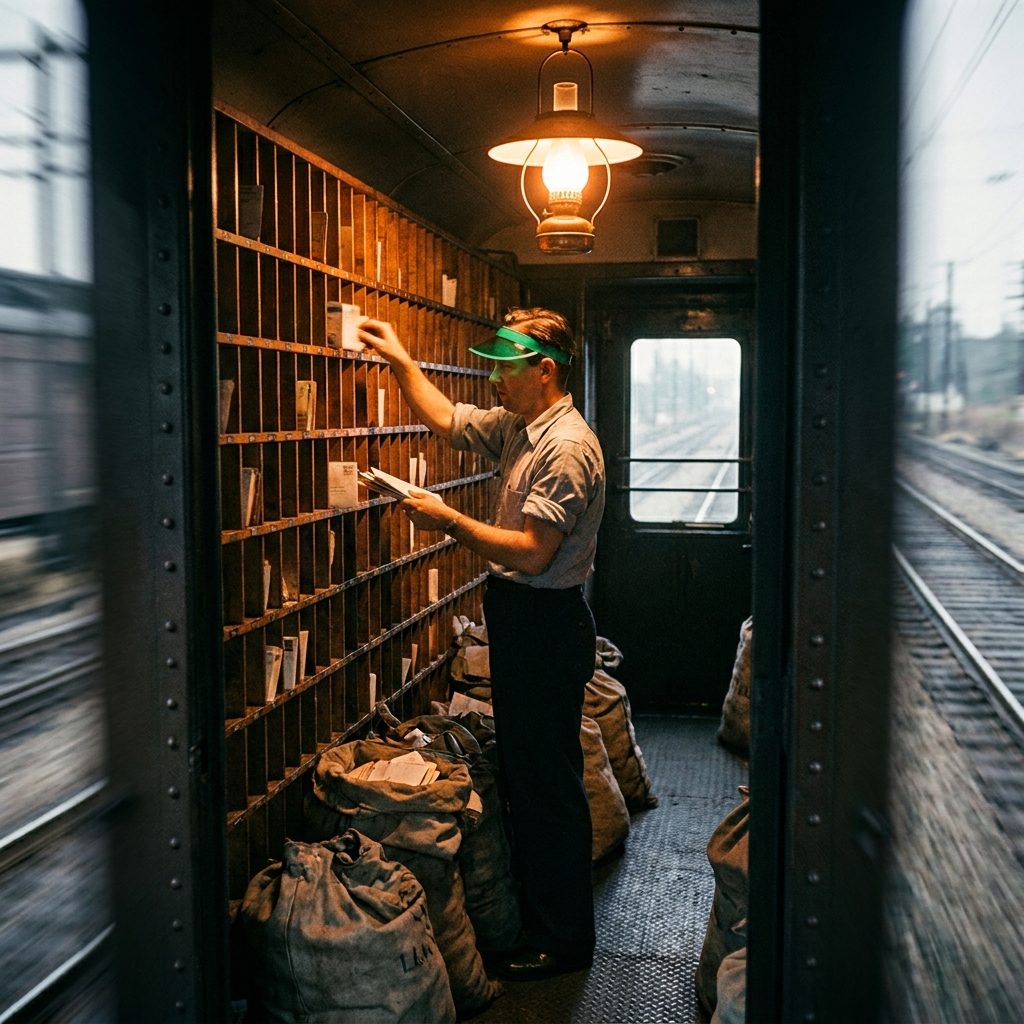
While passengers slept in the Pullman cars behind him, the Railway Post Office clerk was sorting mail at track speed, canceling postmarks by hand, and making sure a letter dropped in a small-town slot at dusk was ready for delivery in a city two states away by breakfast. The job required a civil service exam that covered thousands of postal routes and city street grids from memory. Clerks trained for months before they ever touched a live bag of mail.
The RMS handled around 93 percent of all first-class mail by the early 1950s. Congress killed the Railway Mail Service in 1977, replacing it with trucks and sorting machines. A skilled clerk who could work the case flat-out never made the news when he retired. He just stopped showing up, and the car sat in a siding somewhere and rusted.
The Soda Fountain Pharmacist Who Mixed Your Malted and Filled Your Prescription
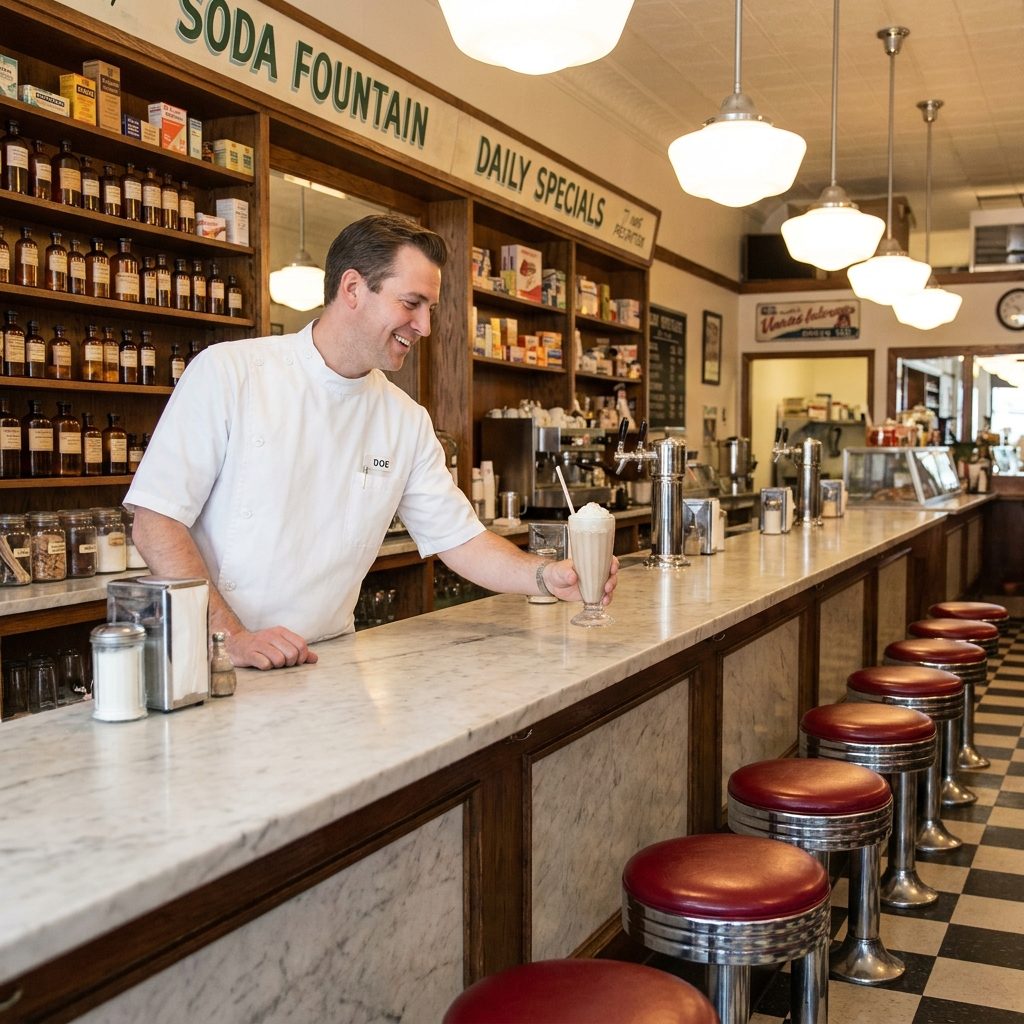
The same man who counted out your penicillin tablets could also hand you a cherry phosphate and a ham sandwich. Drugstore soda fountains weren’t a side business, they were the business. The foot traffic they generated paid the rent, which made prescriptions affordable, which kept the neighborhood coming back. It was a circular economy small enough to fit inside one storefront.
The pharmacist-as-soda-jerk setup sounds odd now, but in 1952 it made complete practical sense. Chains like Walgreens built their entire early expansion around the fountain model. When supermarkets and fast-food counters pulled lunch traffic away in the late 1950s, the fountains closed one by one, the stools came out, and the pharmacist retreated behind a raised counter with a glass partition. The job got quieter and a lot less interesting.
The Ice Man Who Hauled Frozen Blocks Up Three Flights Before Breakfast
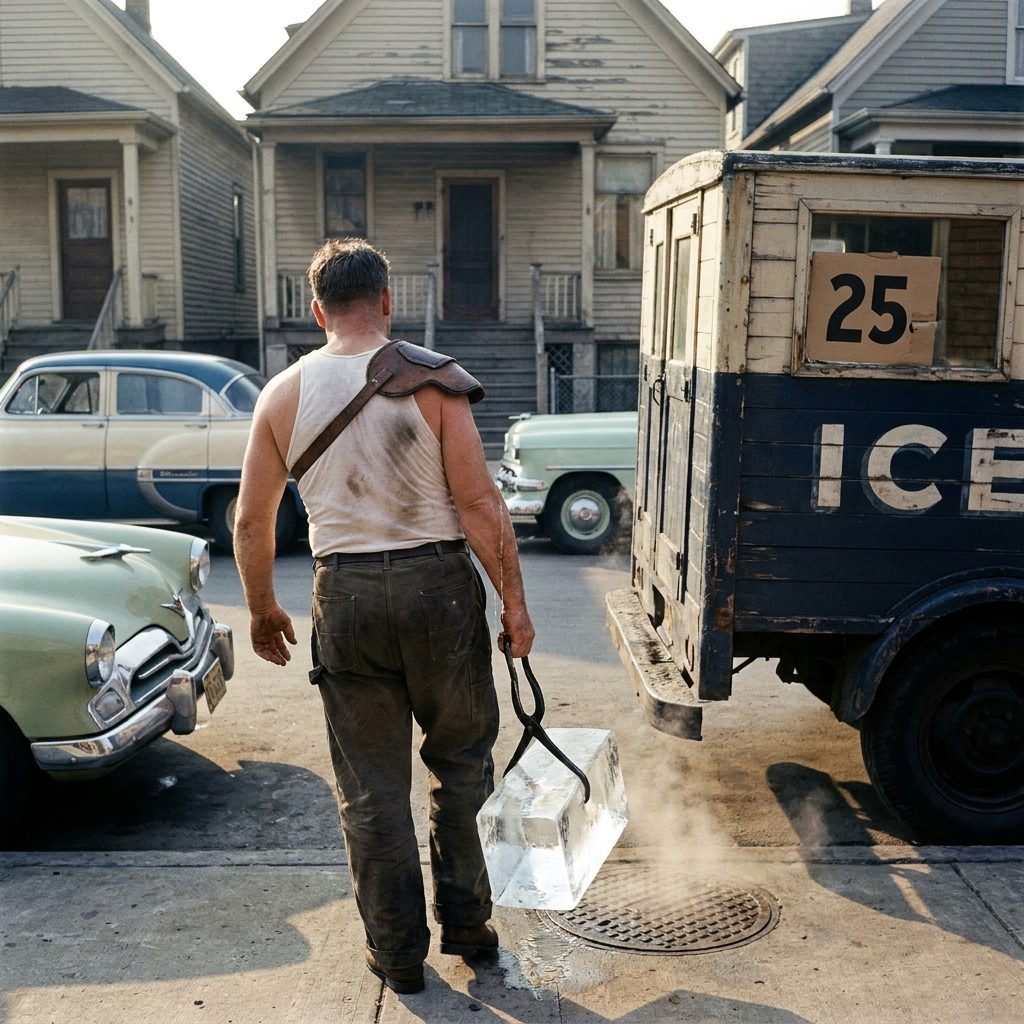
An ice man could haul a fifty-pound block up to a third-floor walk-up before most people had finished their coffee. He did it six days a week for wages that kept a wife home and three kids in school shoes. The tongs, the shoulder pad, the sawdust-lined truck, the little cardboard sign in the kitchen window telling him how many pounds you wanted today — a whole choreography, running on muscle and memory.
Electric refrigerators finished the trade off. By 1960 the ice man was a memory, and the shoulder pad was in somebody’s attic next to the butter churn.
The Milkman Who Knew Which House Wanted Chocolate on Fridays
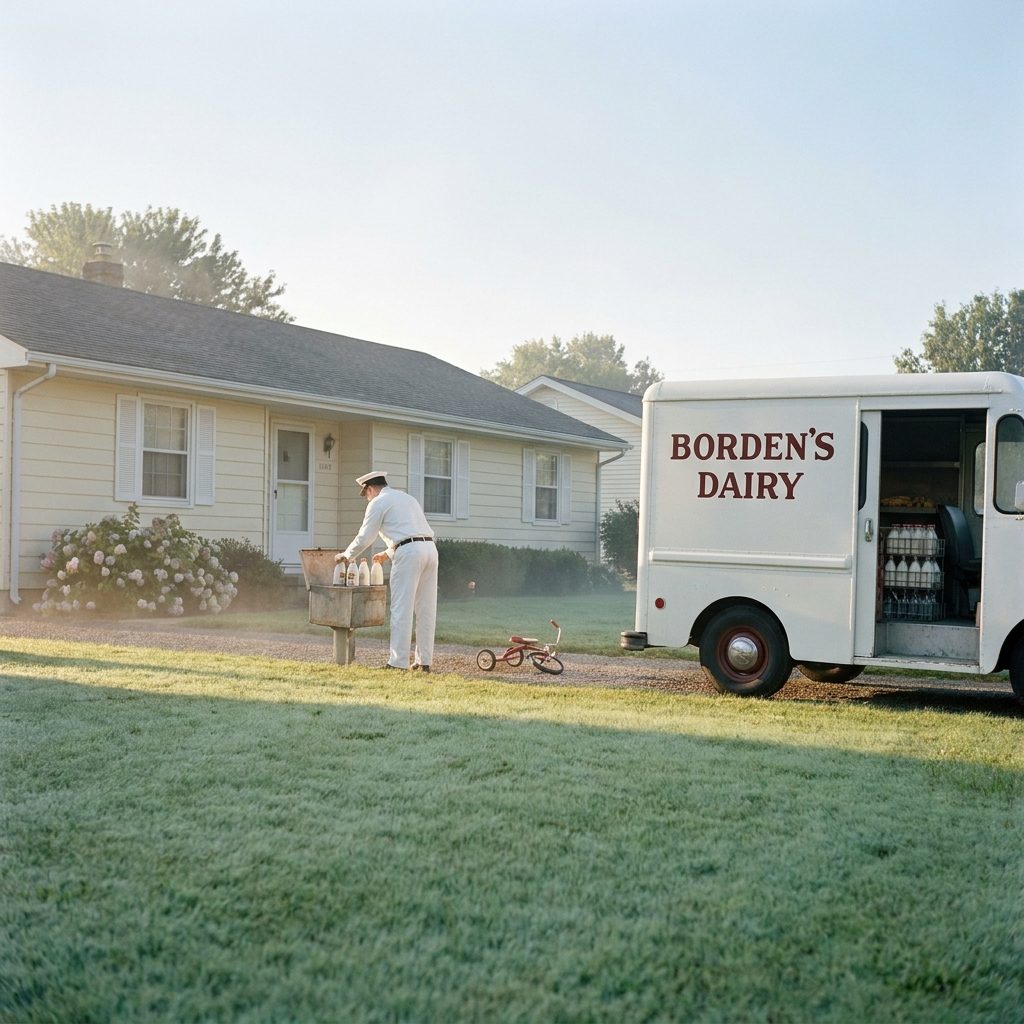
Standing orders ran the whole business. Two quarts of whole milk on Tuesday and Friday, a pint of heavy cream on Saturday, chocolate for the kids on the weekends because Betty had earned it. The milkman kept every household in his head — no clipboard, no route sheet visible, just muscle memory built over years of the same porches at the same hour.
He earned a solid working-class wage, got a route bonus at Christmas, and half the neighborhood tipped him in December. One paycheck bought a small house, a Chevy, and Catholic school for the middle kid. Then supermarkets figured out refrigerated dairy cases and the whole thing collapsed by the mid-sixties.
The Elevator Operator Who Called Out Floors Like a Conductor
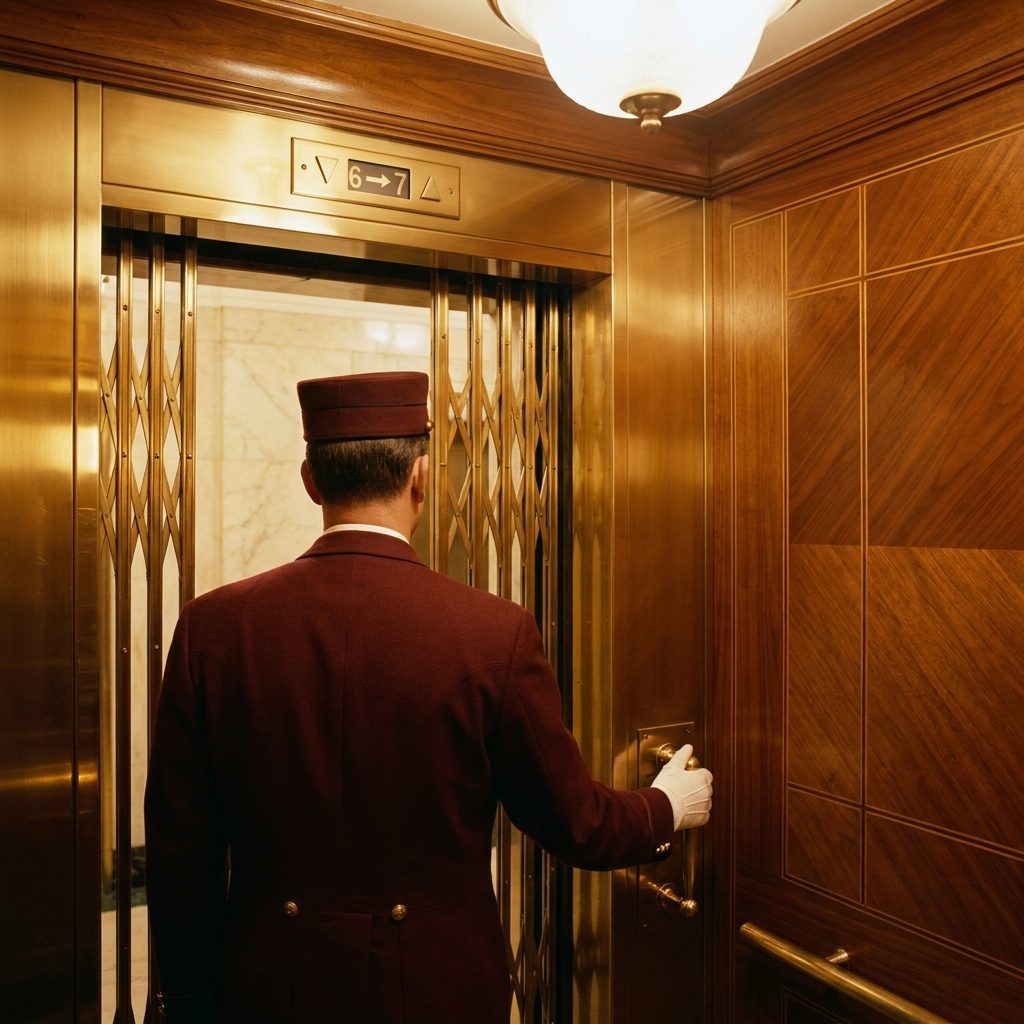
Six, going up. Ladies’ hosiery on eight, please watch your step.
An elevator operator worked a twelve-hour shift standing on a rubber mat inside a brass box, moving a lever with the finesse of a tugboat captain to land the car level with the floor. Off by an inch and someone tripped. Off by three and someone sued.
The job paid enough to keep a family fed in a rented flat in Queens or the South Side, and it came with a union, a pension, and a uniform the company cleaned. Automatic elevators had existed for decades, but riders didn’t trust them — and that mistrust employed thousands of men and women until the late fifties, when a single strike in New York forced everyone to try the button. They pushed it. It worked. The job vanished within a few years.
The Linotype Operator Who Set Tomorrow’s Newspaper in Molten Lead
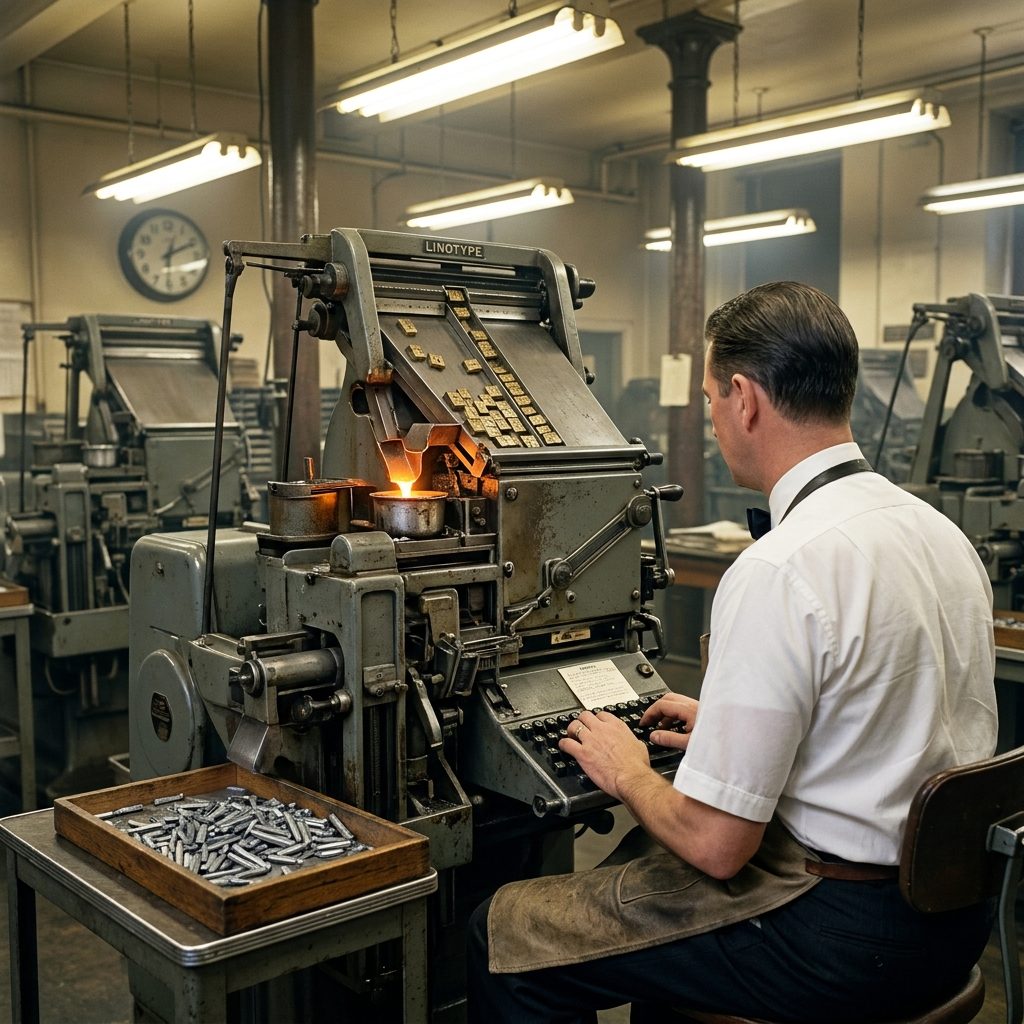
The Linotype was a piano-sized machine that turned typing into hot metal, and the men who ran them were among the best-paid blue-collar workers in the country. A union Linotype operator in 1954 could out-earn a schoolteacher, a bank clerk, and sometimes even the reporters whose columns he was setting.
The work required a strange kind of dyslexia to master. You read the copy, hit the keys, watched brass matrices fall into a line, sent them off to be cast in molten lead, then broke them back down for the next line. All day. Every day. Backwards and mirrored where it counted.
Phototypesetting gutted the trade in the sixties and computers finished the job. The last Linotype at a major American paper was retired in 1978. Every operator on the floor walked out with a pension, a gold watch, and a skill nobody would ever pay for again.
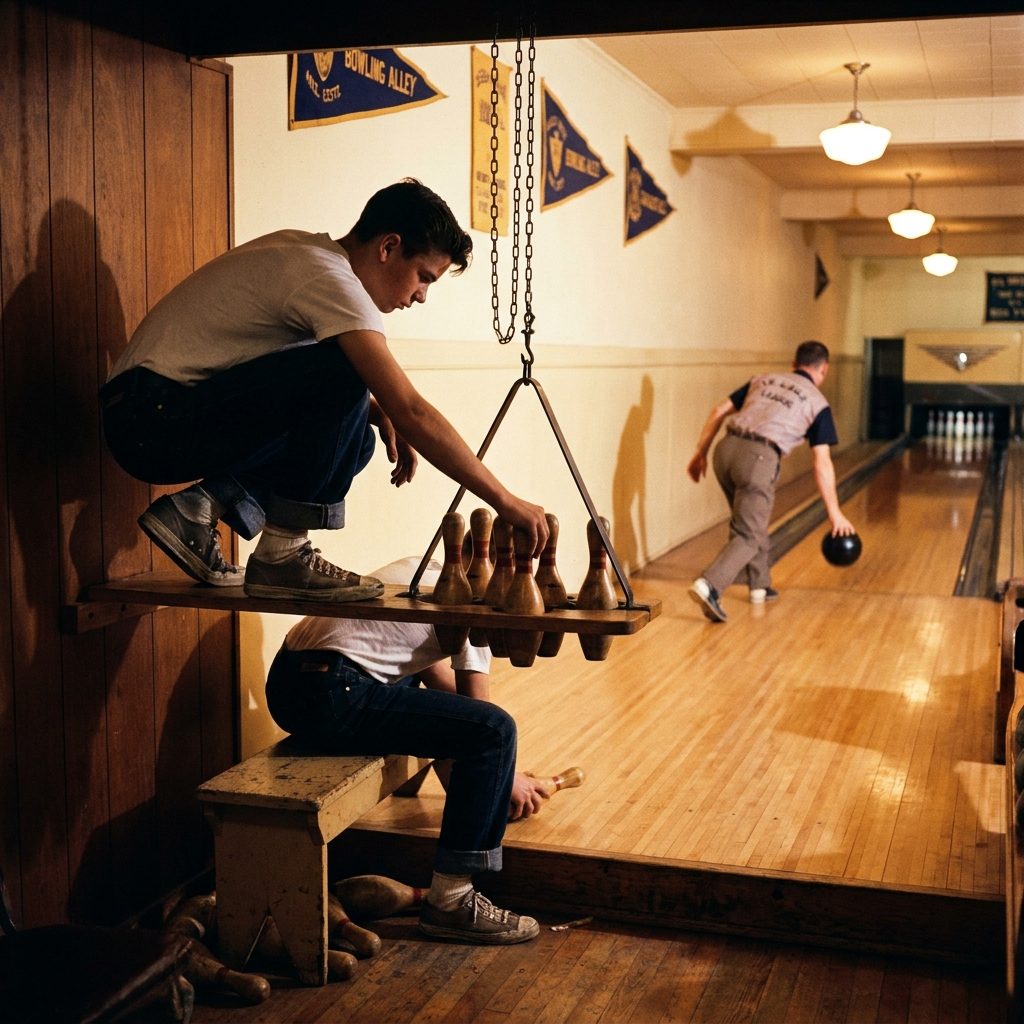
The Pinsetter Boy Who Reset Bowling Pins by Hand in the Back of the Alley

Before automatic pinsetters took over the alleys, a kid sat on a plank above the pit and did it by hand. Two pins in each grip, set the triangle, jump back before the next ball came screaming down the lane at thirty miles an hour. A quick pinsetter could rack a full frame in seconds.
Most cities paid a dime a line, plus tips if the bowlers were feeling generous — or drunk enough to be. A fast kid working league night could clear more than his father made at the plant. Hot, loud, dangerous work, and almost every teenage boy in a bowling town did a stint back there.
AMF’s automatic pinsetter hit the market in 1952 and within a decade the job had all but vanished. A whole rite of passage, packed up in less than ten years.
The Full-Service Gas Station Attendant Who Checked Your Oil While He Filled the Tank
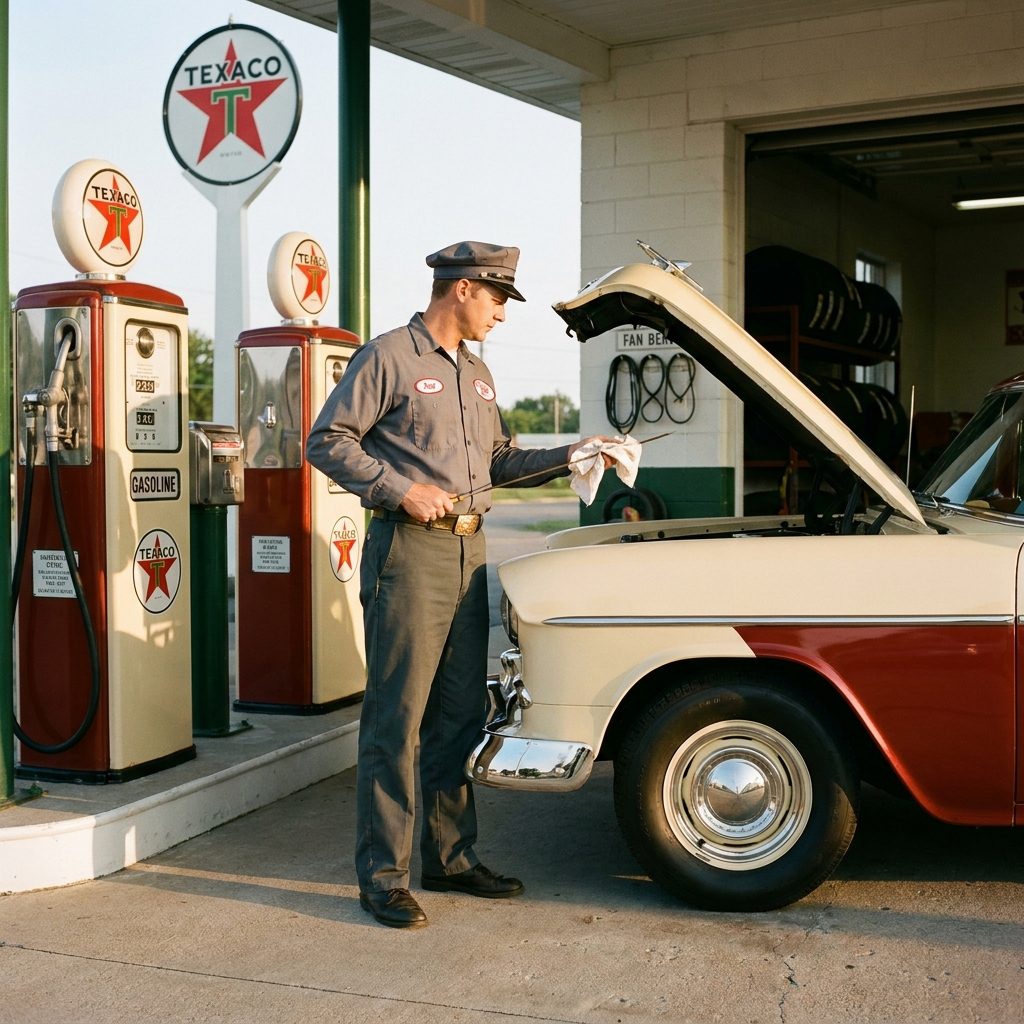
Would you like to save this?
The Diaper Service Driver Who Picked Up the Pail and Left Fresh Cotton on the Porch
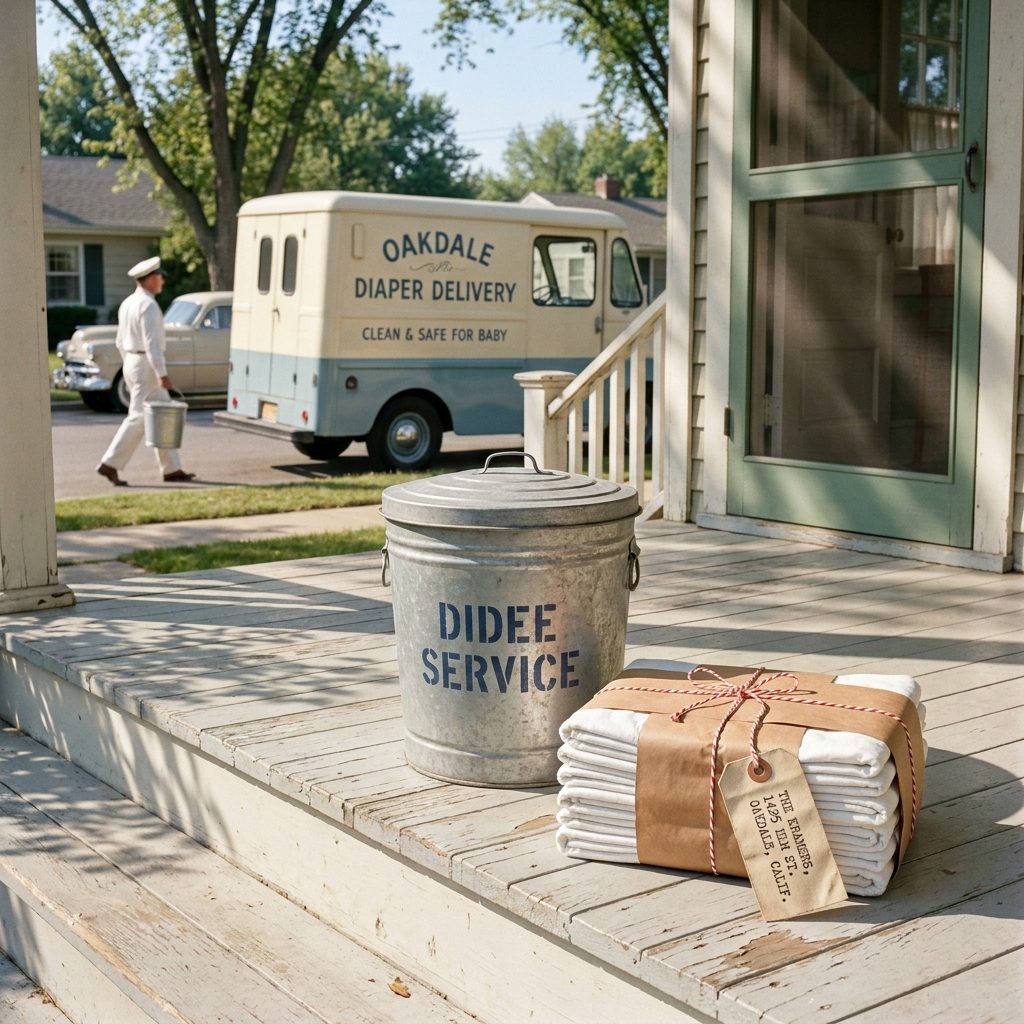
Cloth diapers came clean because someone else washed them. Twice a week a truck rolled up, the driver hauled off the reeking pail from the back porch and left a stack of soft folded cotton wrapped in butcher paper. Ninety seconds, start to finish.
For roughly the price of a nice dinner out each month, a young mother could keep an infant in clean diapers without ever touching a washboard. No wringer wrestling. No February clothesline. No scraping. Disposables gutted the trade by the late sixties, and with it went one of those quiet arrangements that made a single paycheck stretch far enough to raise a family.
The Bowling Alley Pinboy Who Wasn’t Yet Replaced by a Machine
The Encyclopedia Salesman Who Sold You the Whole World for $9.95 a Month
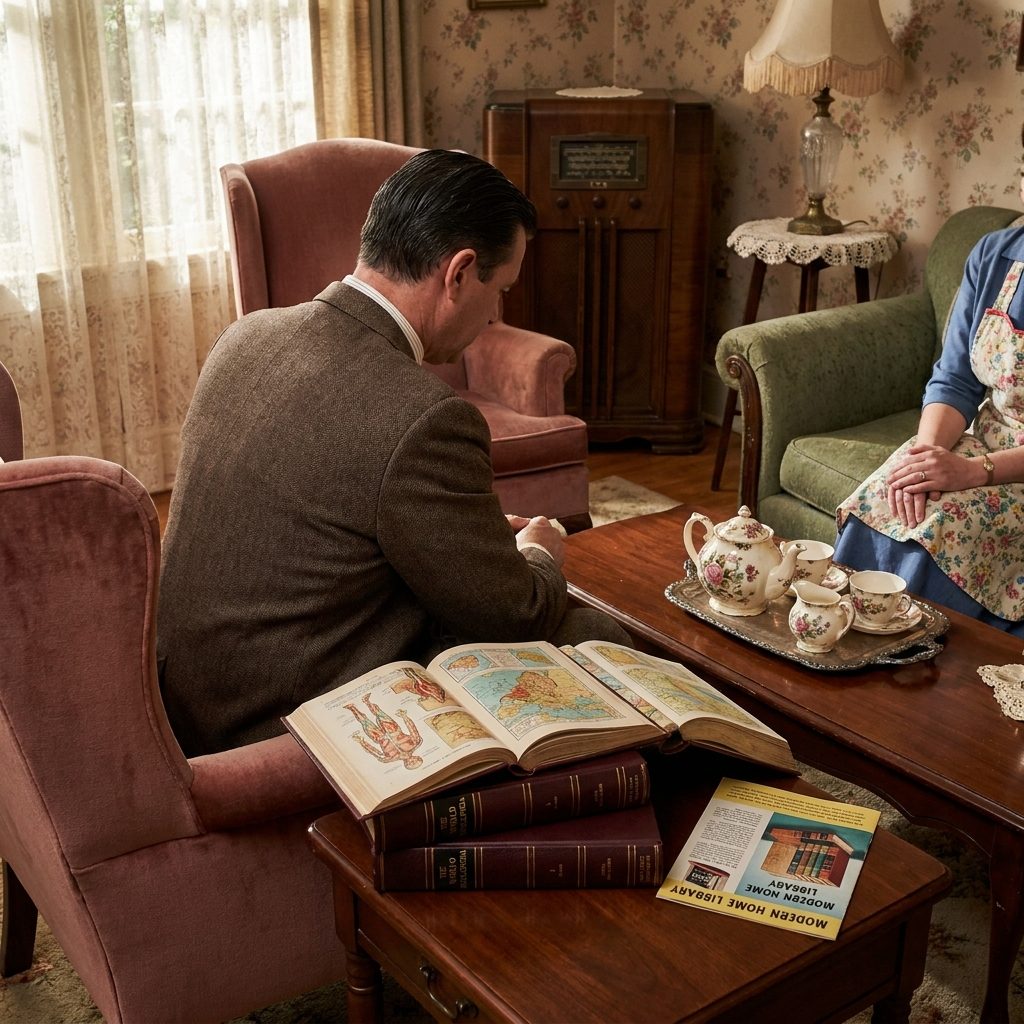
He came to the door with a briefcase and left with a signed contract for the World Book or Britannica, financed over three years. Parents bought because the pitch worked on every anxiety a postwar family carried about class, college, and whether their kid would end up ahead or behind — your child cannot succeed without these books.
The commissions were real. A good salesman could clear enough in a year to put a family into a three-bedroom ranch, which is more than most middle-management jobs paid at the time. Then the internet arrived and flattened the entire trade in about six years.
Every American living room with a matched set of encyclopedias was, on some level, an act of faith in the future.
The Telegraph Boy Who Sprinted Bad News and Good News to the Same Front Doors
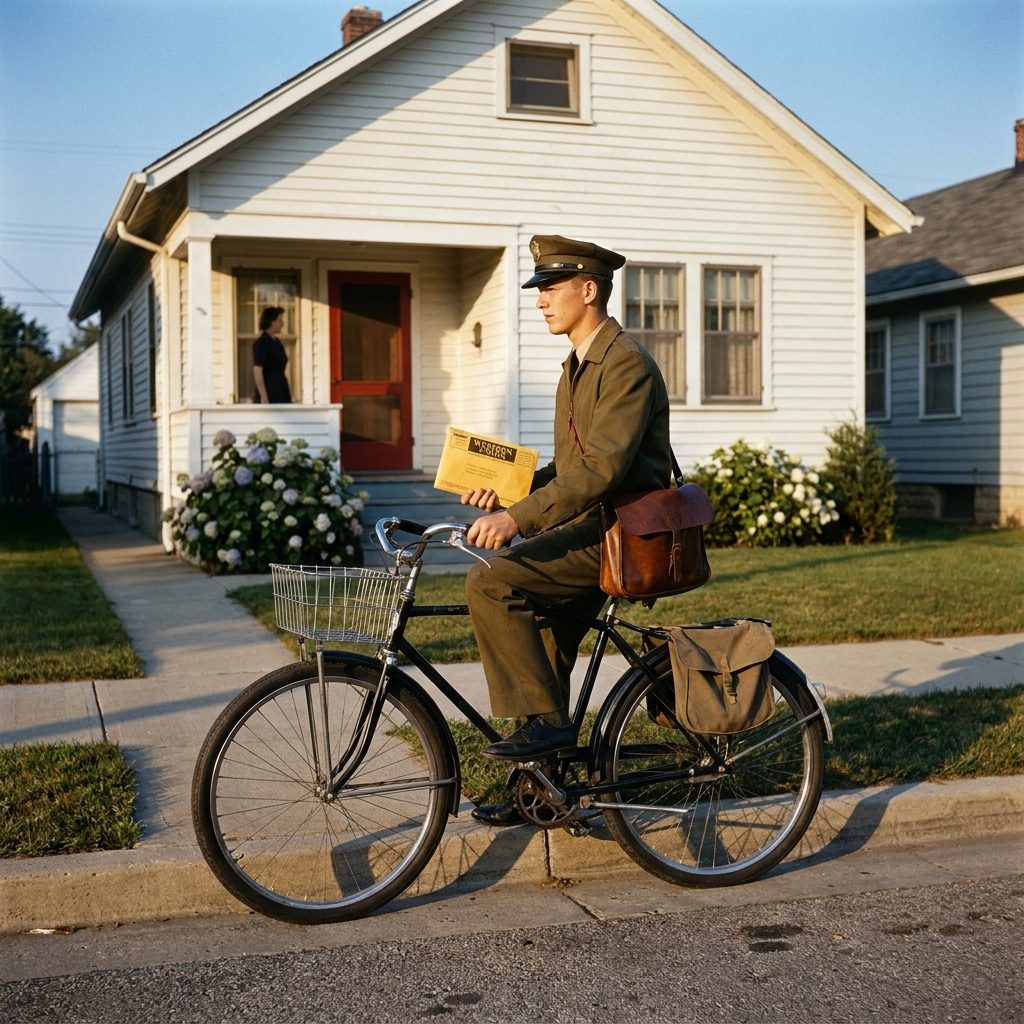
The Lector Who Read Novels Aloud to Cigar Rollers All Day Long
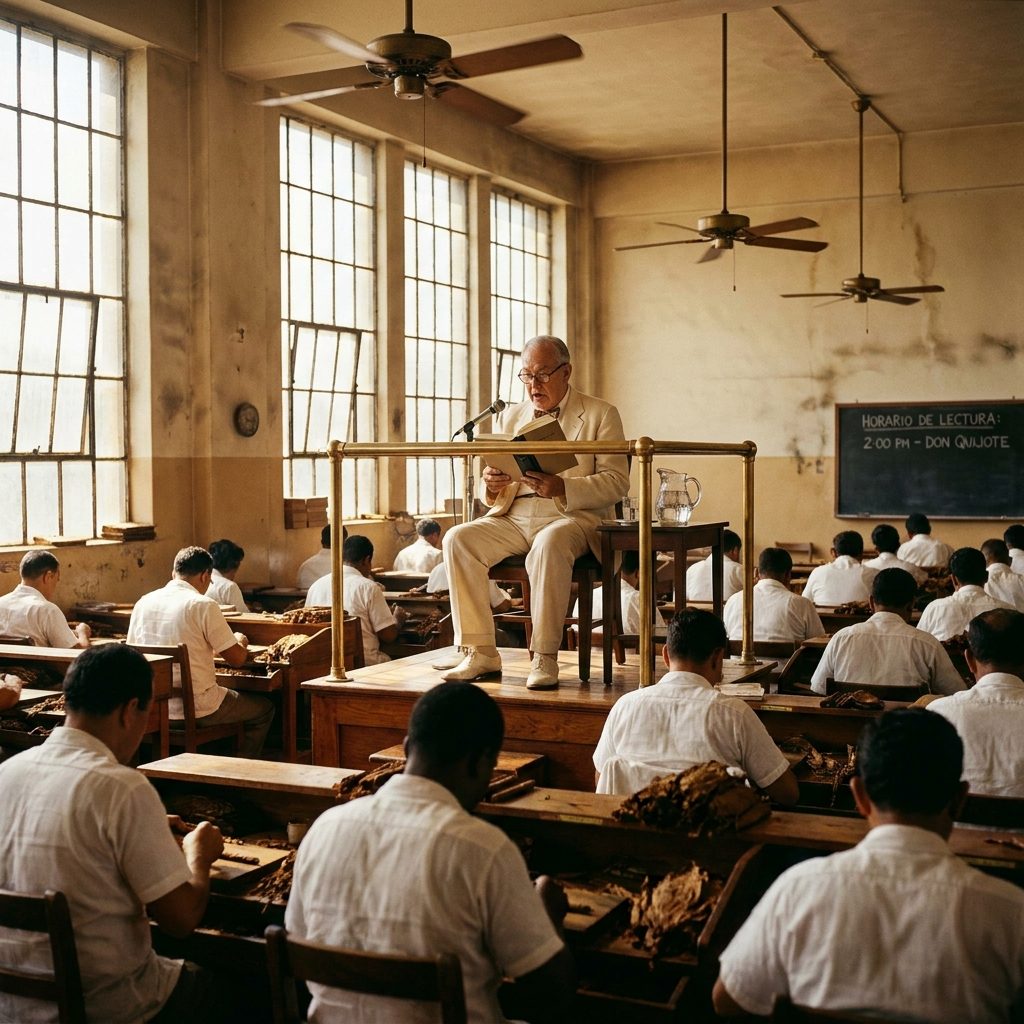
The lector sat on a raised platform and read aloud for eight hours a day — newspapers in the morning, novels after lunch. Dumas was popular. Tolstoy too. The rollers voted on what he read next, and they paid his salary directly out of their own wages. Real money in 1952.
Here’s the wild part: he earned more than the workers underwriting him. A good lector could support a family, own a house, put kids through college. His whole job was keeping two hundred people from losing their minds during eight hours of repetitive manual labor, and the tool he used was literature.
The Rag and Bone Man Who Bought Your Junk by the Pound
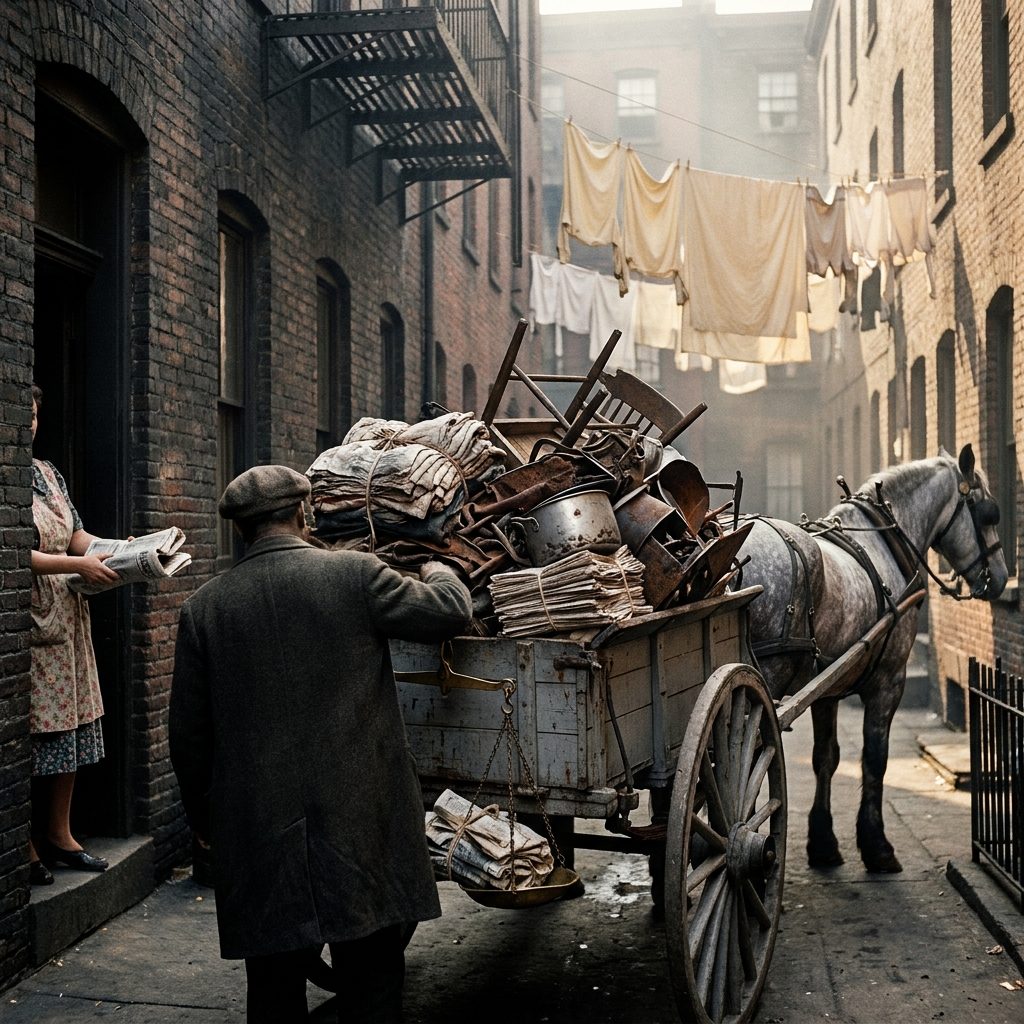
He came down the alley yelling a call that had been passed father to son for a hundred years. In some neighborhoods it sounded like singing; in others, closer to a chant. Kids learned to recognize it before they could read.
You brought him old rags, scrap metal, bones from the butcher, broken tools, worn-out shoes, and he weighed everything on a brass hanging scale and paid in coins. Rags went to paper mills. Bones went to fertilizer plants. Metal went to foundries. Nothing was wasted because nobody could afford to waste anything.
A rag and bone man with a decent route and a healthy horse cleared enough to feed six kids and keep a small house in Queens. By 1960 the routes were gone — municipal garbage collection scooped up the scraps for free, and paper mills switched to wood pulp.
The Knocker-Upper Who Woke Half the Neighborhood Before Dawn
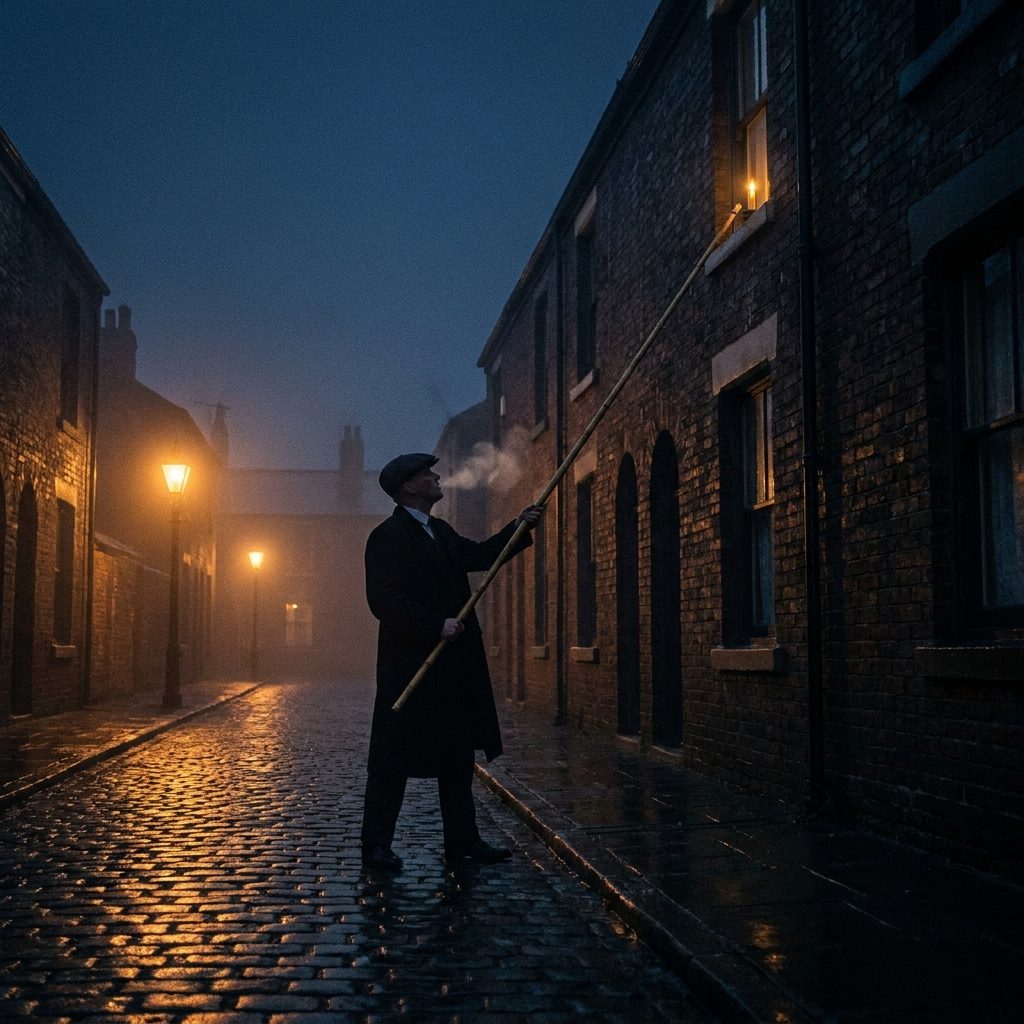
Before alarm clocks were cheap and reliable, whole neighborhoods paid a man to wake them up. He carried a long bamboo pole with wires on the end and tapped on bedroom windows — 4am, 4:15, 4:30, whatever hour you’d contracted for. A shilling or two a week bought the service. He kept a written schedule in a small notebook and never tapped a wrong window.
The job survived longest in mill towns and dockside neighborhoods where shift work started brutally early and being late meant forfeiting the day’s wages. The knocker-upper himself was up at 3am. Nobody knows who woke him.
The Human Computer Who Did NASA’s Math with a Pencil and a Slide Rule
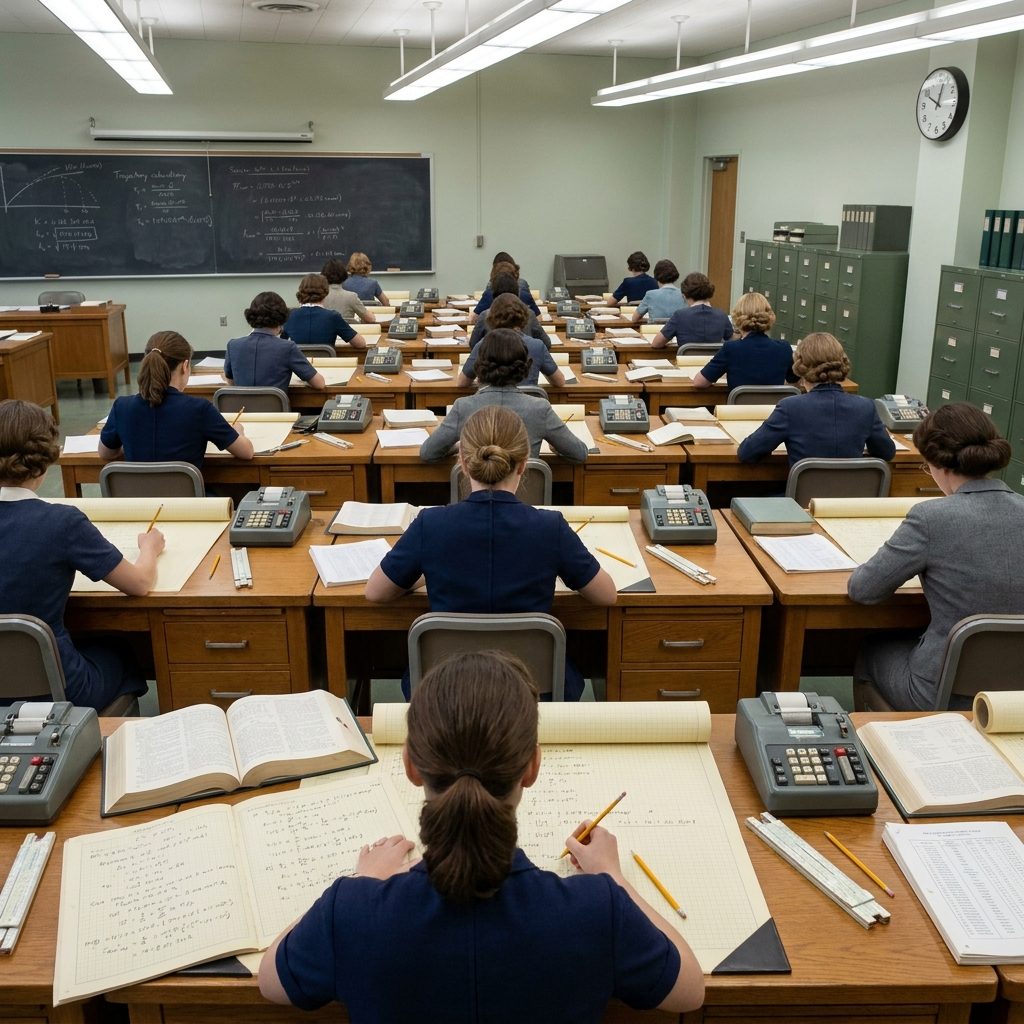
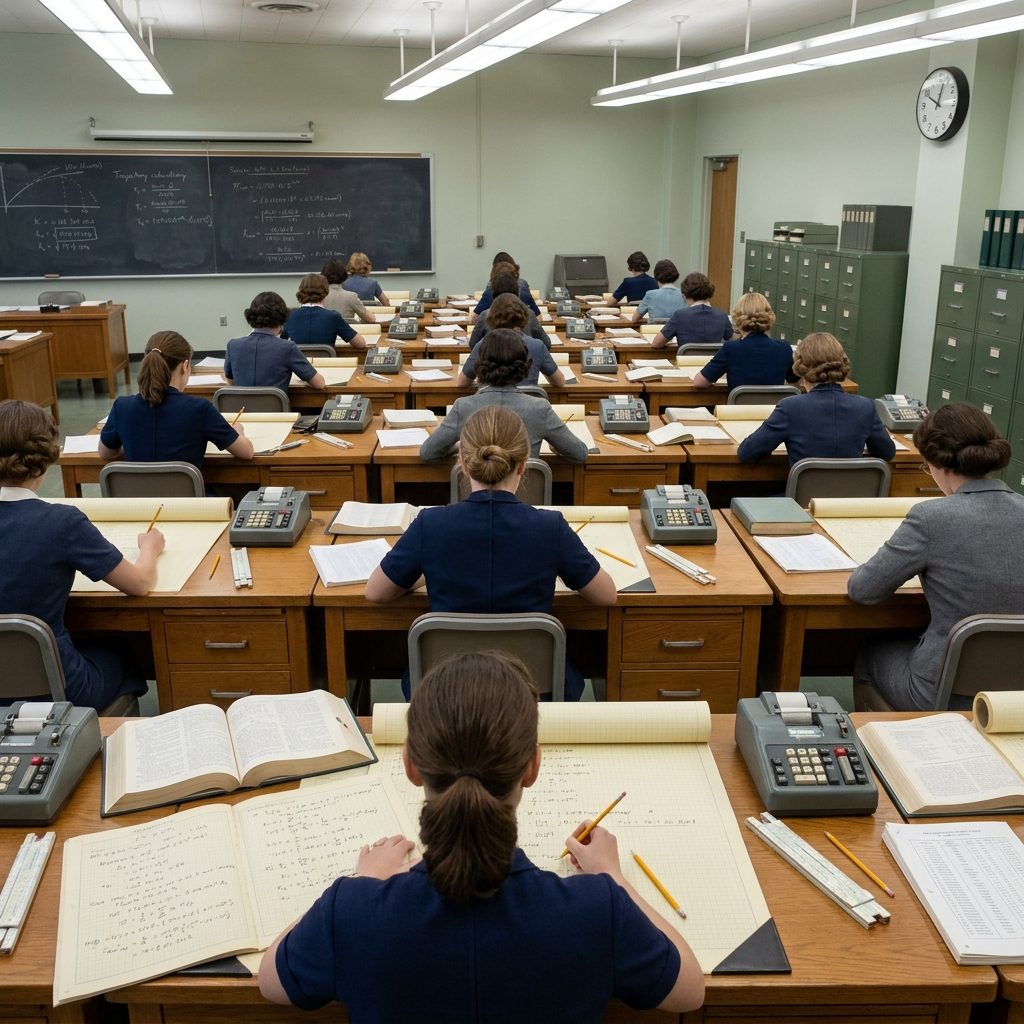
Before “computer” meant a machine, it meant a person — and most of them were women. They calculated flight trajectories, wind tunnel data, and eventually rocket paths, all by hand, with slide rules and pencils. A single trajectory could eat days of work. Everything was checked, rechecked, and it had to be perfect.
Government human computers earned decent civil service salaries — enough to support a family in postwar Virginia, own a modest house, put a car in the driveway. Katherine Johnson was one of them. So were hundreds of others whose names you’ll never know because the work was classified, or credited to the men who supervised it.
The IBM 704 arrived at Langley in 1958. Within a decade the job was gone.
The Bowling Alley Mechanic Who Kept the Pin Machines Running All Night
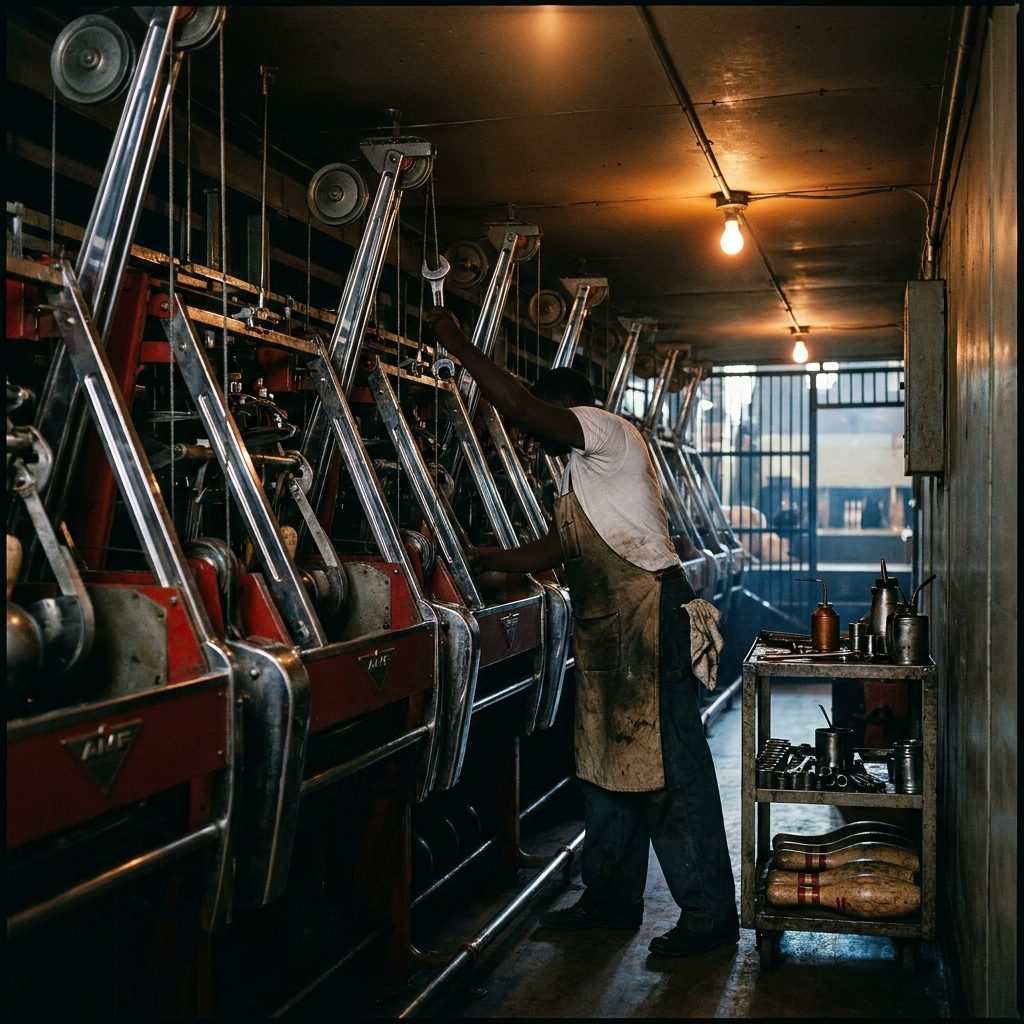
When Brunswick and AMF automated the pinsetter in 1952, they didn’t eliminate labor — they just changed the job. Every alley needed a mechanic on duty every night, because those machines broke constantly. Cables snapped. Sweep bars jammed. Pins got wedged in ways only a human hand could free.
A good pin mechanic worked long union hours, owned a house in the suburbs, and put two kids through Catholic school on what the alley paid. He knew every squeak and rattle of eight lanes by feel. When a machine died mid-frame, he could have it back up before the bowler finished his beer.
The Switchboard Operator Who Physically Connected Every Phone Call in Town
Would you like to save this?
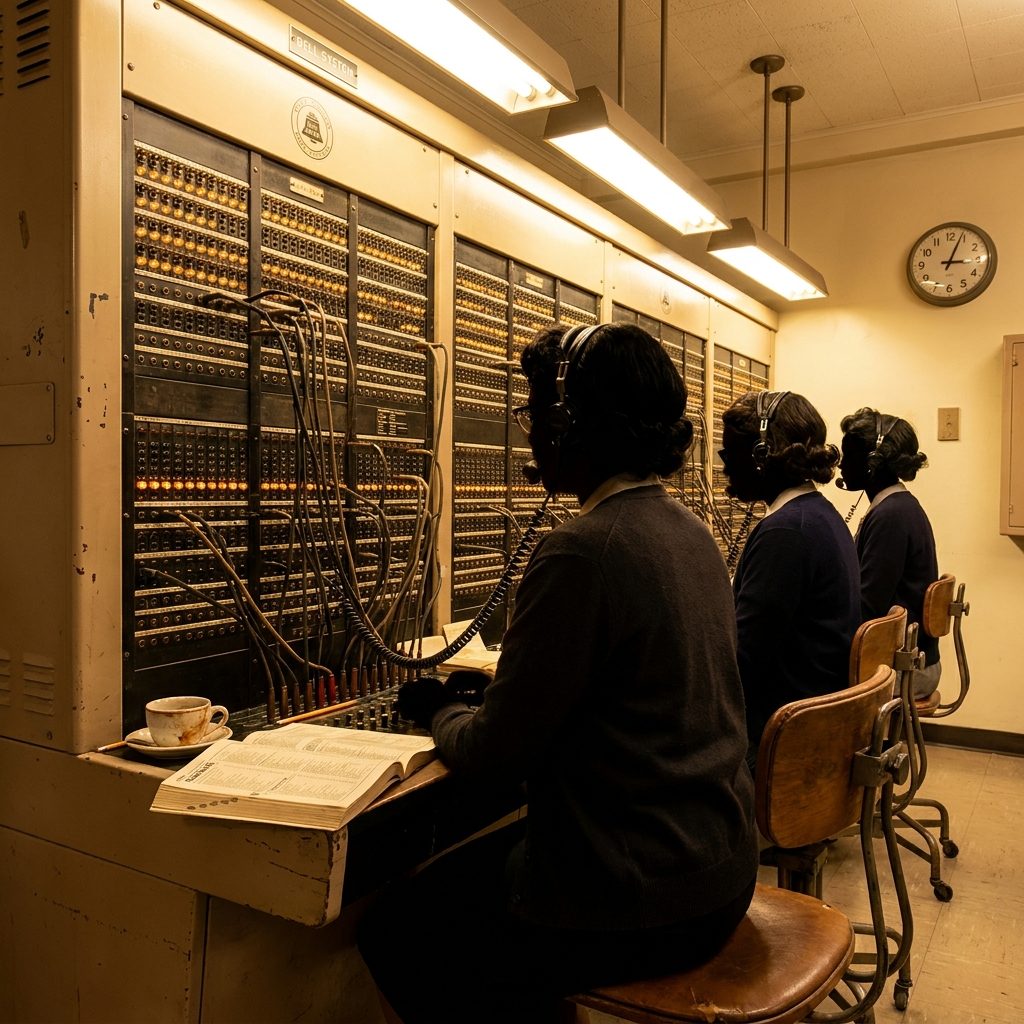
She said “number please” ten thousand times a day and knew every household in town by voice alone. Want to reach your sister across the county? She plugged the cord into the right jack with her own hands. Long distance meant she stayed on the line, watching the light, timing the call for billing.
Then direct dialing arrived and the whole job vanished. A woman who had supported three kids on that paycheck woke up one morning to find the switchboard gone.
The Door-to-Door Encyclopedia Salesman With a Sample Volume Under His Arm
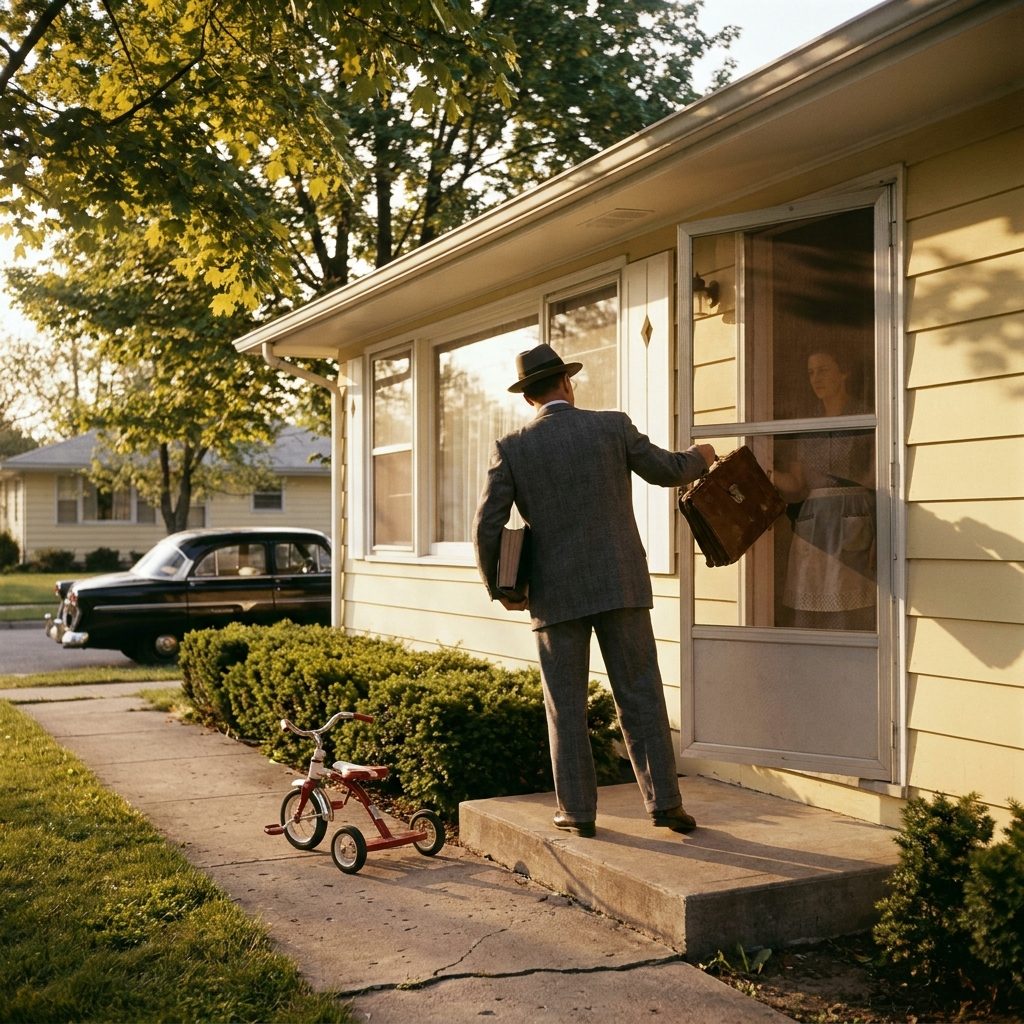
He hit forty houses between lunch and dinner — World Book, Britannica, Collier’s, all sold on the installment plan by men in suits who could recite the table of contents from memory. The pitch was aspirational: your kid needs this to compete. A few dollars a month for two years bought you twenty leather-bound volumes of authority for the living room shelf.
Commission-based work. Brutal. But a good closer could out-earn a factory foreman, and the internet ended the whole trade in about a decade.
The Cigarette Girl Working the Nightclub Floor With a Tray Around Her Neck

“Cigarettes! Cigars! Chocolates!”
She walked the floor of every hotel bar and supper club in the country, her tray lit from below like a small stage. Tips were where the money lived, and a pretty girl on a Saturday night could clear more than the bandleader.
Federal cigarette regulations, shifting social mores, and the slow death of the supper club as an institution ended the job by the late sixties. A vending machine bolted to the wall took her place.
The Traveling Watch Repairman Who Kept a Whole County on Time
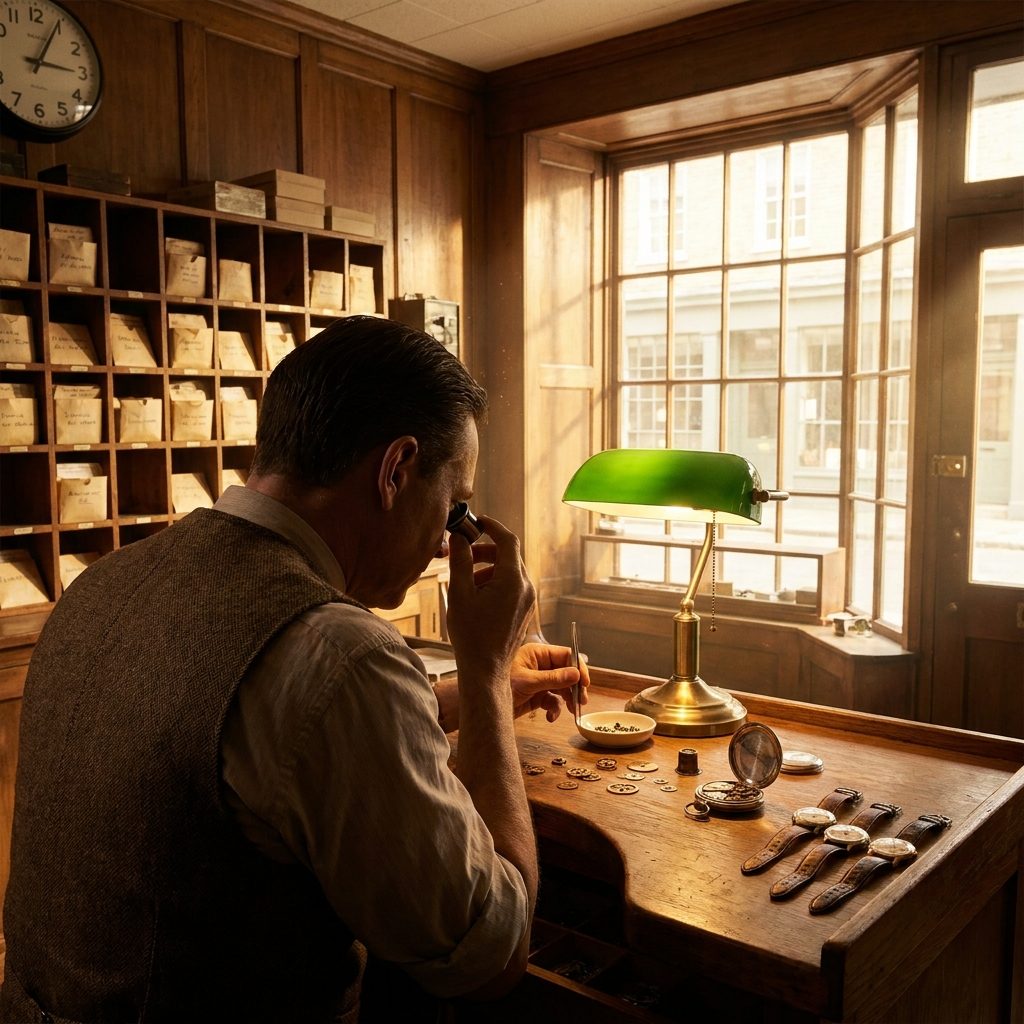
Every watch in America needed cleaning, oiling, and mainspring replacement on a regular schedule. He drove a circuit between small towns, set up in the back of a jewelry store or a hardware shop for two days at a stretch, and cleared a stack of watches before rolling on to the next town. Quartz movement in the 1970s ended his trade in a handful of years.
The Housewife Who Took in Laundry and Ironing to Make the Mortgage
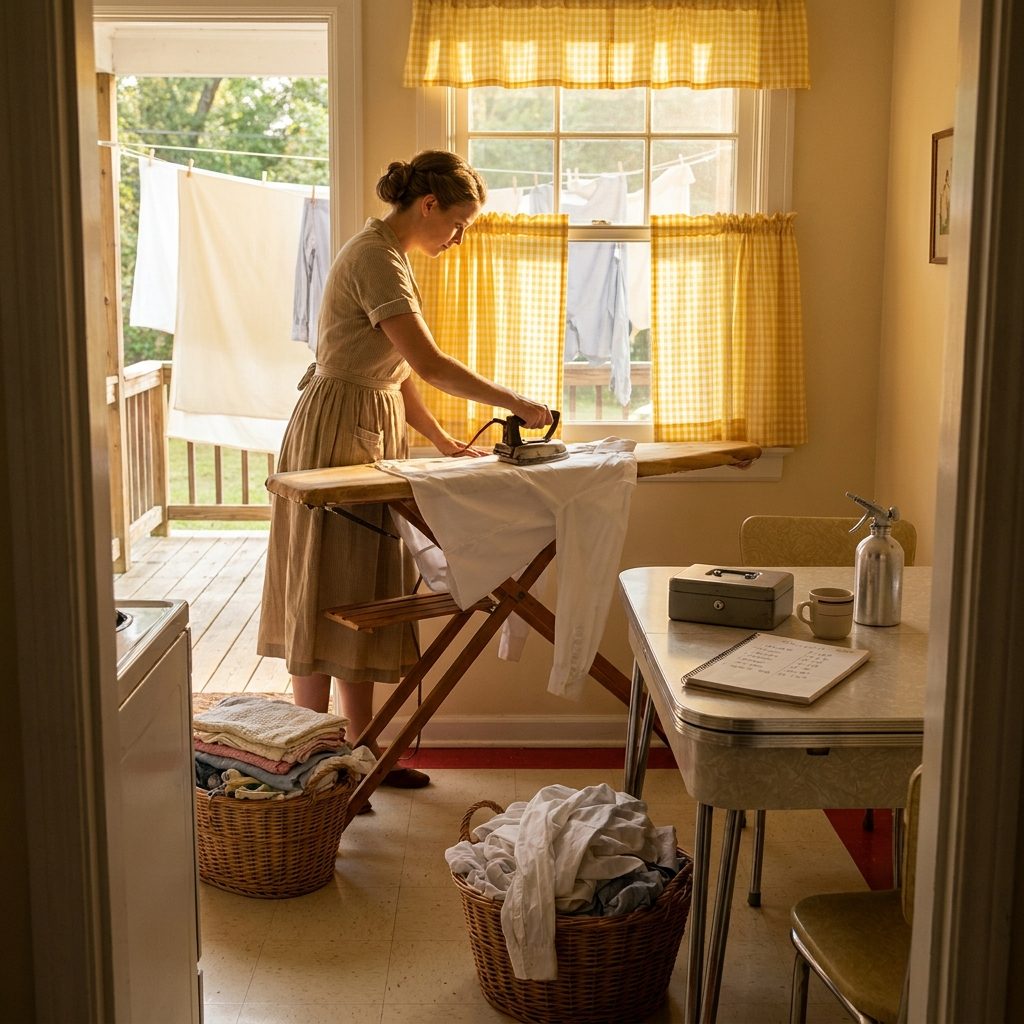
She took in the shirts of eight bachelor factory workers and two widowed neighbors down the block. A handful of pennies a shirt, starched collar and cuffs extra. Monday wash, Tuesday iron, Wednesday deliver, cash tucked into a small tin in the pantry.
Nobody called it a small business. They called it making ends meet. Automatic washing machines and permanent-press fabrics ended the whole informal economy of neighborhood laundries by the mid-sixties.
The Radio Repair Technician Who Fixed the Family Console in Your Living Room
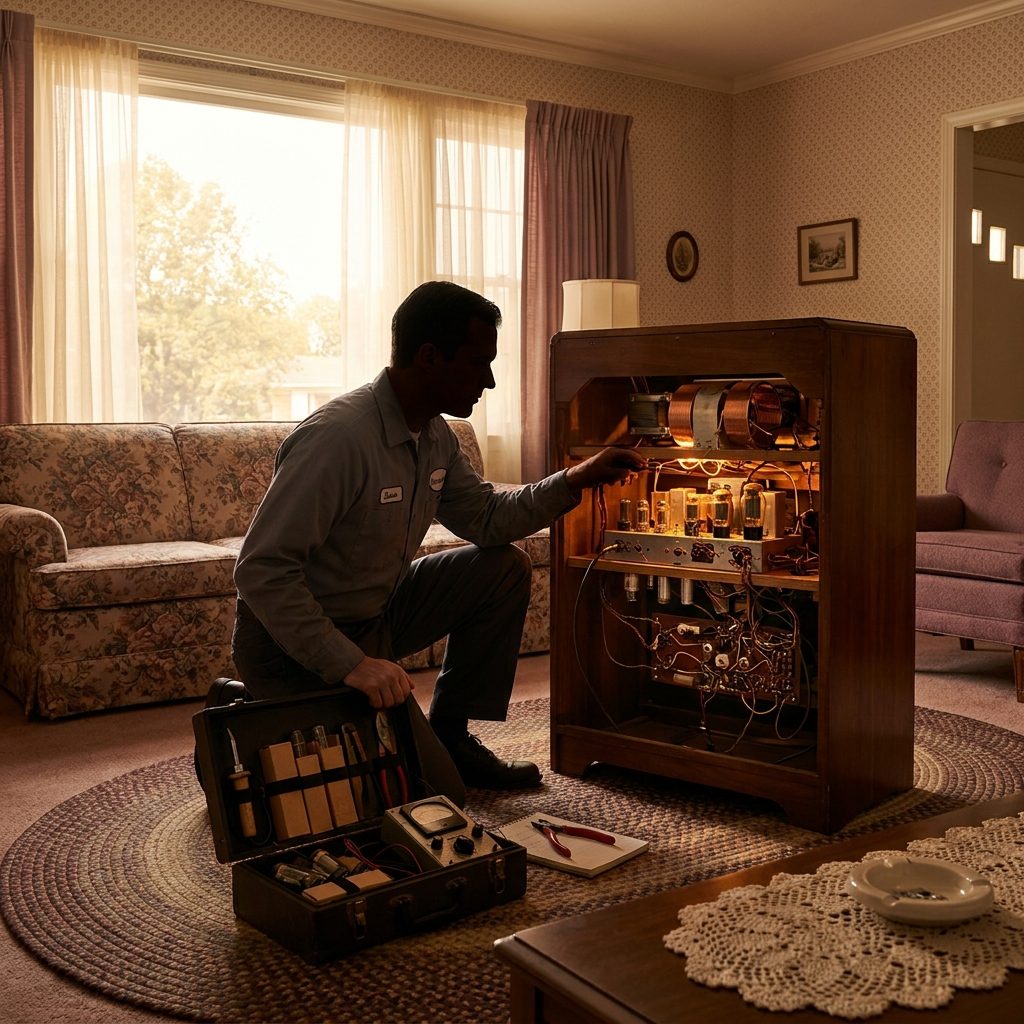
Vacuum tubes burned out. Capacitors dried up. The big walnut console in the living room went dead sometime after dinner, and you called Frank, who showed up Tuesday with a tester and a case full of spare tubes. House call, cash on the coffee table.
Solid-state transistors killed the trade by 1970. When something broke, you threw it out — and that was new.
The Neighborhood Butcher Who Cut Your Steak From a Whole Side of Beef
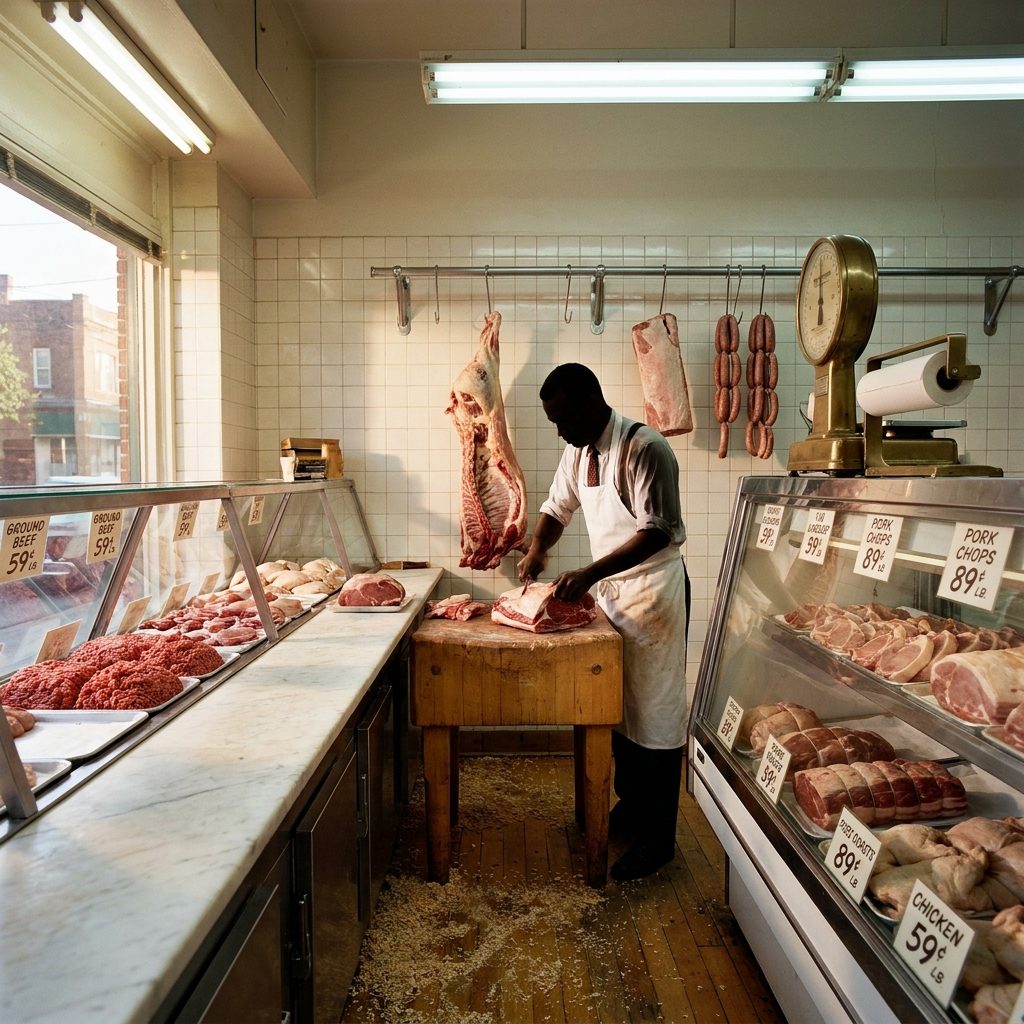
He broke down a whole side of beef every Tuesday and knew what cut you wanted before you asked for it. Your ground chuck came from the cow whose shoulder he’d shown you the week before. He’d trim, wrap in white butcher paper, tie with string, mark the weight in grease pencil, and hand it across the counter with a nod.
Supermarket meat departments and central processing plants gutted the trade by 1970, closing neighborhood shops one at a time, block by block.
The Traveling Sewing Machine Salesman With a Singer in the Trunk
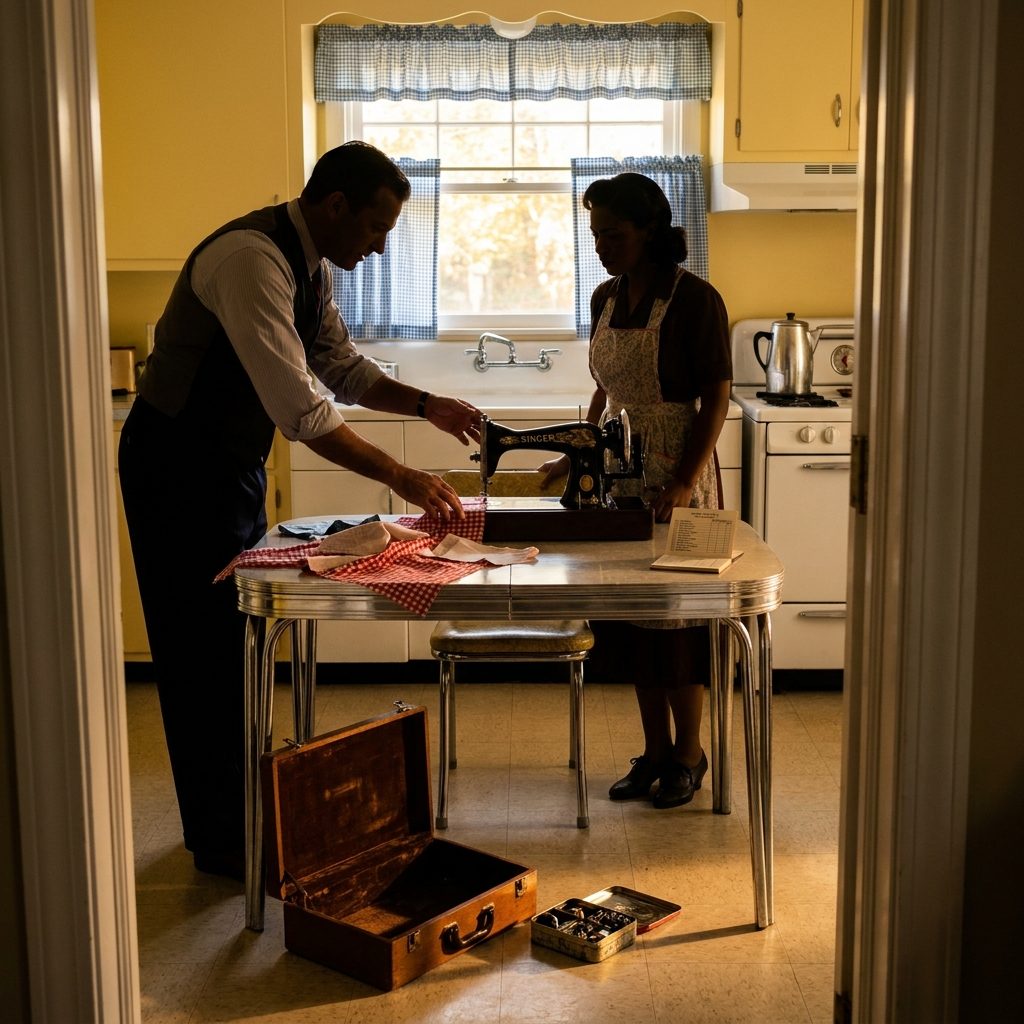
He set the machine up right on your kitchen table and sewed a straight seam through denim to prove it wouldn’t jam. Small weekly payments for a year and the machine was yours. He sold the attachments, the thread, and later came back to service it — a whole relationship built around one black-and-gold Singer.
Then ready-to-wear clothing at rock-bottom prices ended home sewing as a household necessity, and with it the door-to-door sewing machine trade. He got out around 1968.
The Coal Delivery Man Who Filled the Basement Bin Through a Chute in the Sidewalk
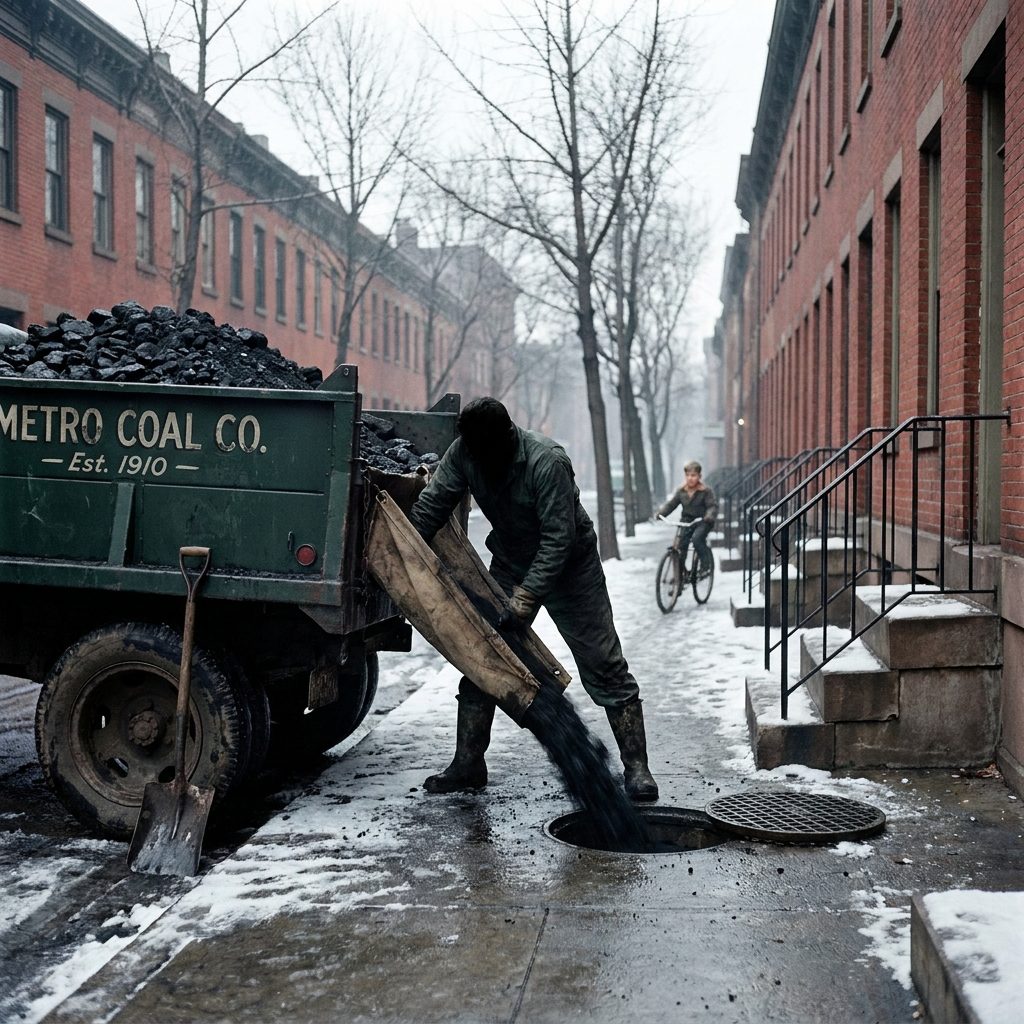
Coal came twice a winter. He’d back the truck to the curb, lift the round iron cover in the sidewalk, run the canvas chute down into the basement bin, and let a ton of anthracite thunder into the dark below. You paid him in cash from a Mason jar on the kitchen shelf.
Oil and natural gas heating pushed him out of business through the fifties and sixties. By 1970 the coal chute in the sidewalk was just a mystery to the new owners.
The Bank Runner Who Carried Cash and Checks Between Branches on Foot
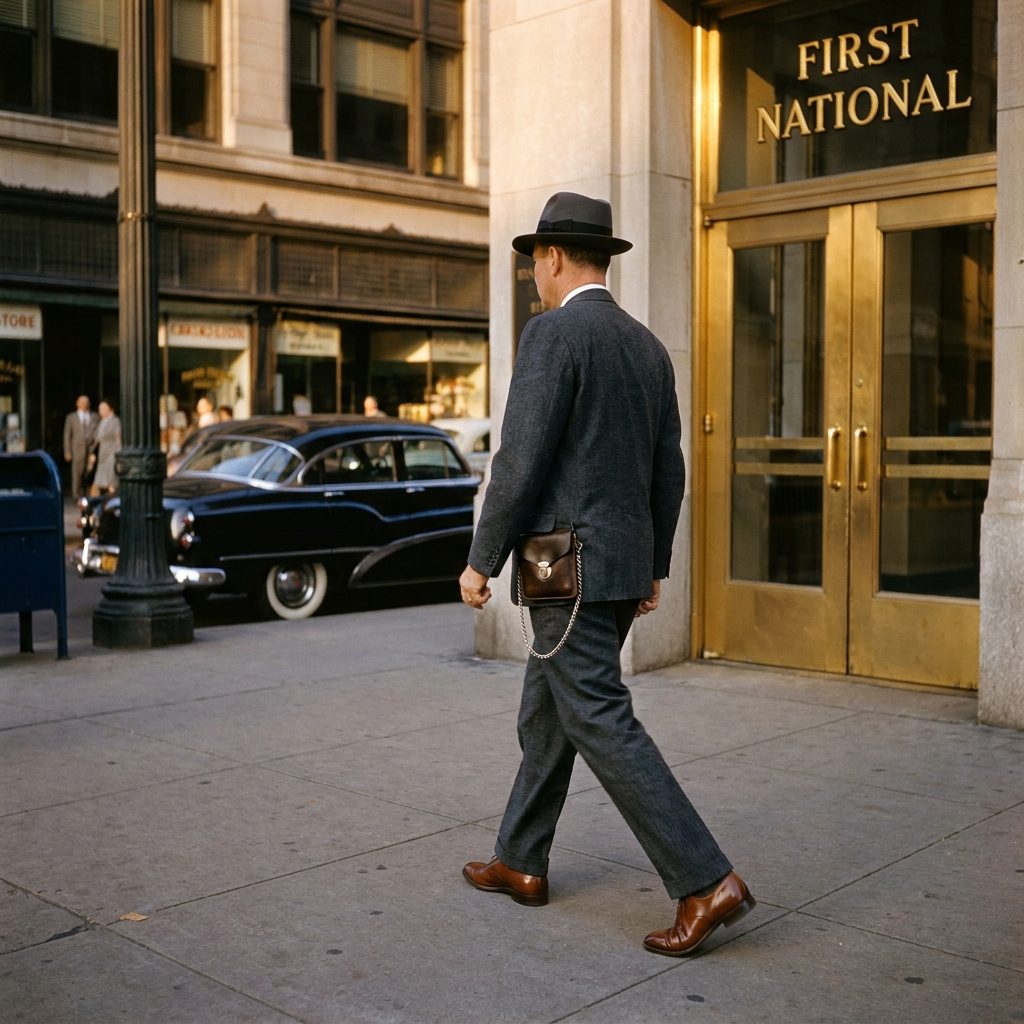
Cash and paperwork had to move between branches every business day, and it moved on the soles of a young man’s shoes. He walked downtown routes with a locked leather pouch, checks tucked inside, carrying enough entrusted responsibility to make a modern compliance officer faint dead away.
Pay was steady. The uniform was your own suit, kept pressed, and if you did the job well for a few years you got bumped to a teller window, then a loan desk, then maybe your name on the door someday. A whole career built on being reliable on foot.
The Shoe Shine Man Who Held Down the Corner Outside the Train Station
Would you like to save this?
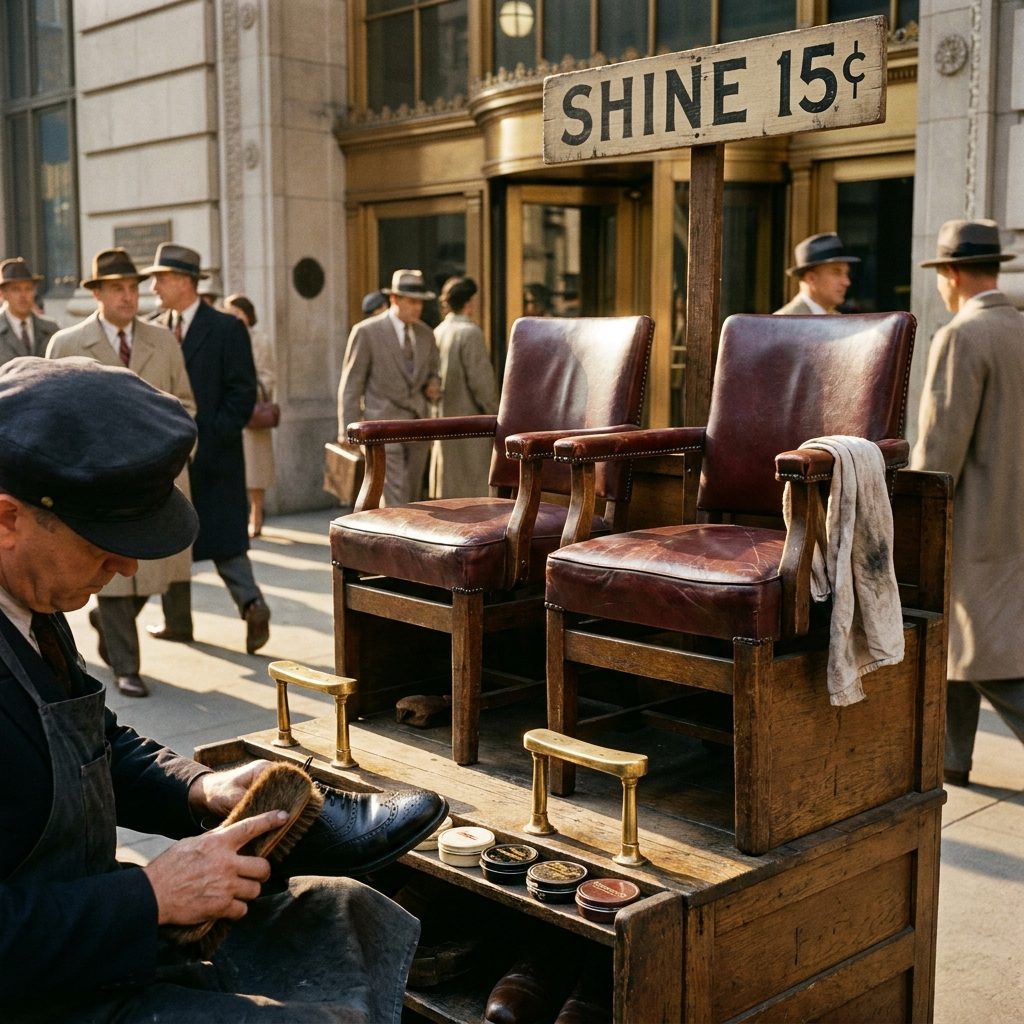
You paid a dime, sometimes fifteen cents, and walked out with shoes that looked like a promotion. The shine man knew every regular by the sole of their shoe — who was courting, who was interviewing, who had a funeral that week.
Own your own stand on the right corner and it was a job you could raise a family on. Six days a week. Morning rush, evening rush, plus lunch. Tips were where the real money lived.
The Traveling Bible Salesman Who Worked Rural Routes All Summer
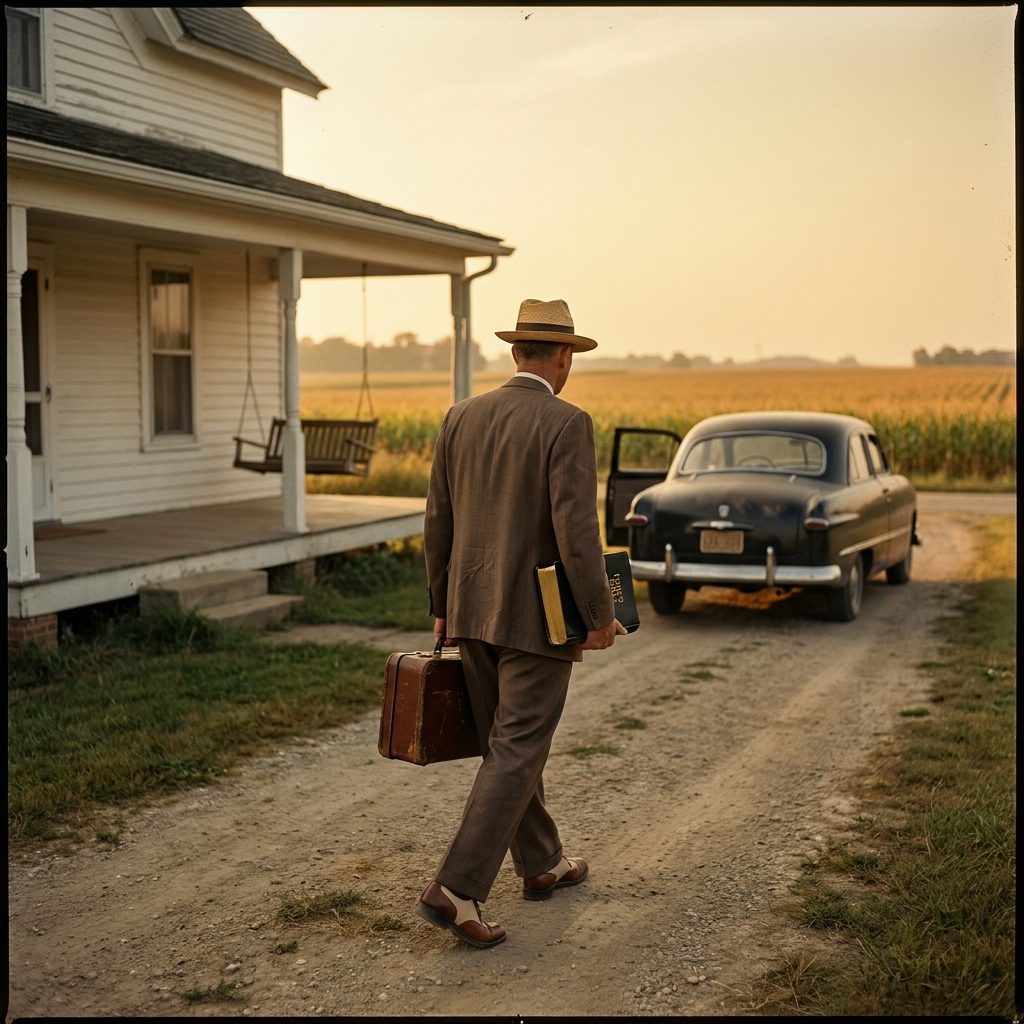
College boys did it for the summer. Career men did it for life. The route ran from farmhouse to farmhouse across three or four states, and a good closer could pay off a mortgage on one summer’s commissions.
Gilt-edged, thick as a brick, priced high enough that families paid it off across the better part of a year. You slept in boarding houses and ate in diners. You learned the difference between a slammed door and a maybe, and you learned it fast.
The Meter Reader Who Walked Six Miles a Day Reading Gas and Electric Dials
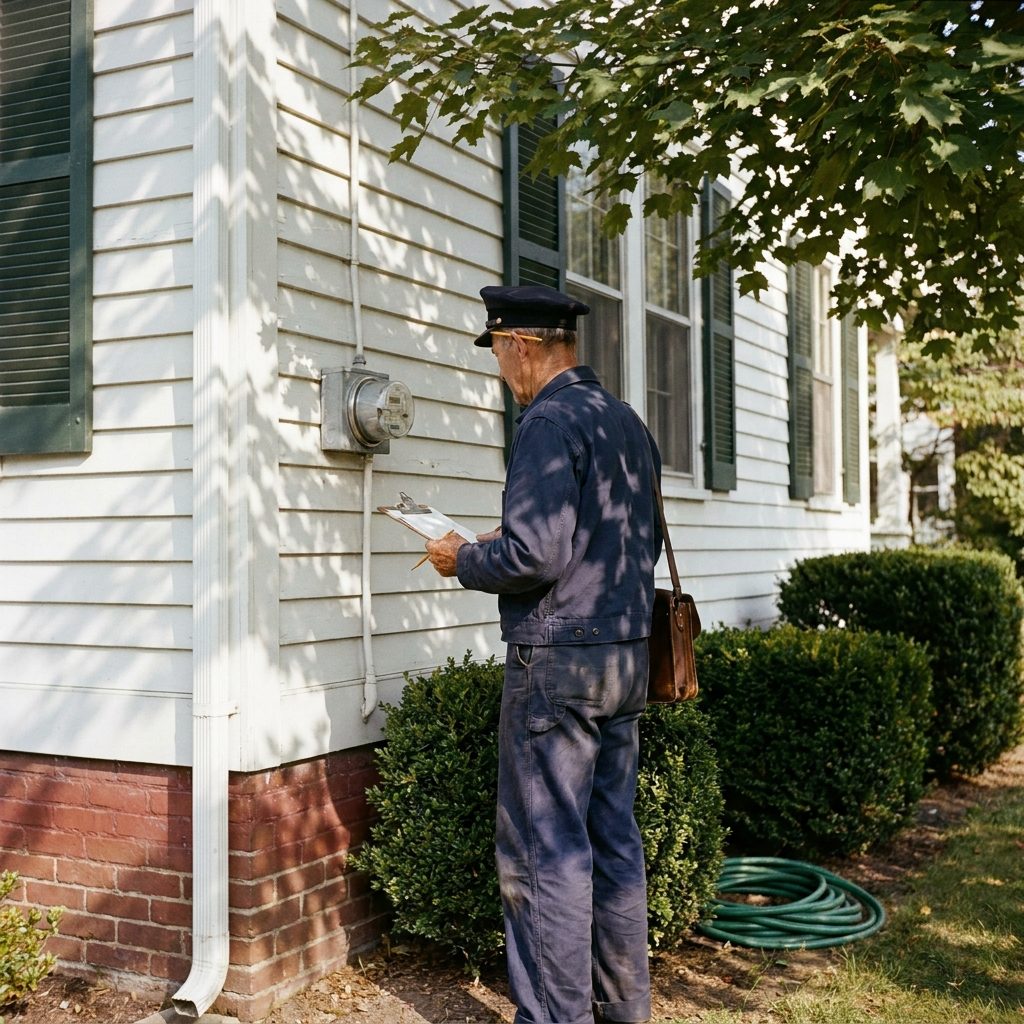
Rain, snow, dogs, angry retirees, locked gates. A meter reader walked two hundred houses a day, writing every reading down on a clipboard in longhand with a stubby #2. No wireless anything, no estimated bills — just a man and a satchel.
The utility pension was the real prize. Thirty years of walking got you a check for life and, if you were lucky, a company-issued gold watch that still ran when you buried it with your father.
The Sewing Machine Repairman Who Made House Calls for Broken Singers
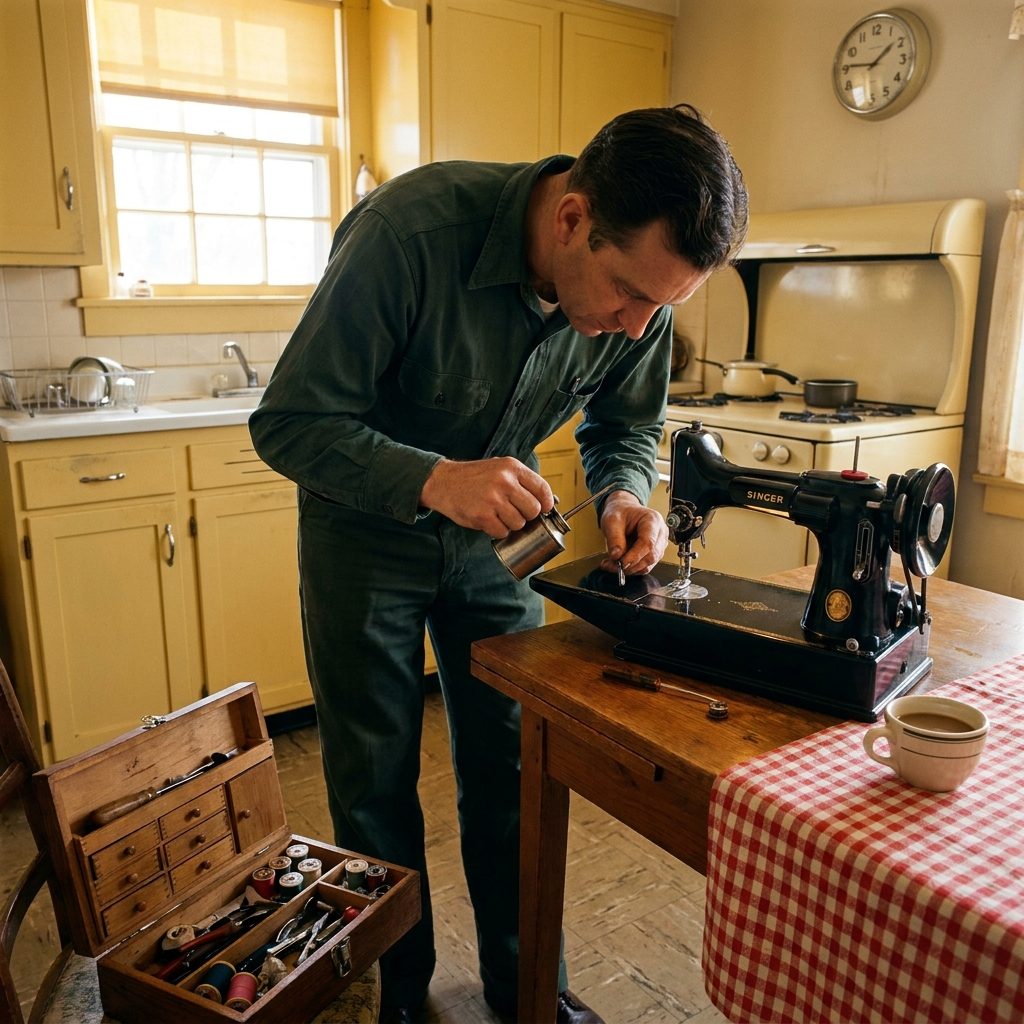
A housewife’s sewing machine was capital equipment. It produced the children’s clothes, the curtains, the tablecloths, and the mending that kept the family looking respectable on one paycheck. When it broke, you called the man from Singer.
He carried a case of tiny parts, oiled every joint, adjusted the tension, and left the machine humming a smoother stitch than the day it was bought. Fifteen dollars, cash on the table. Four calls a day and home for supper.
The Neighborhood Bookie Everyone Pretended Not to Know
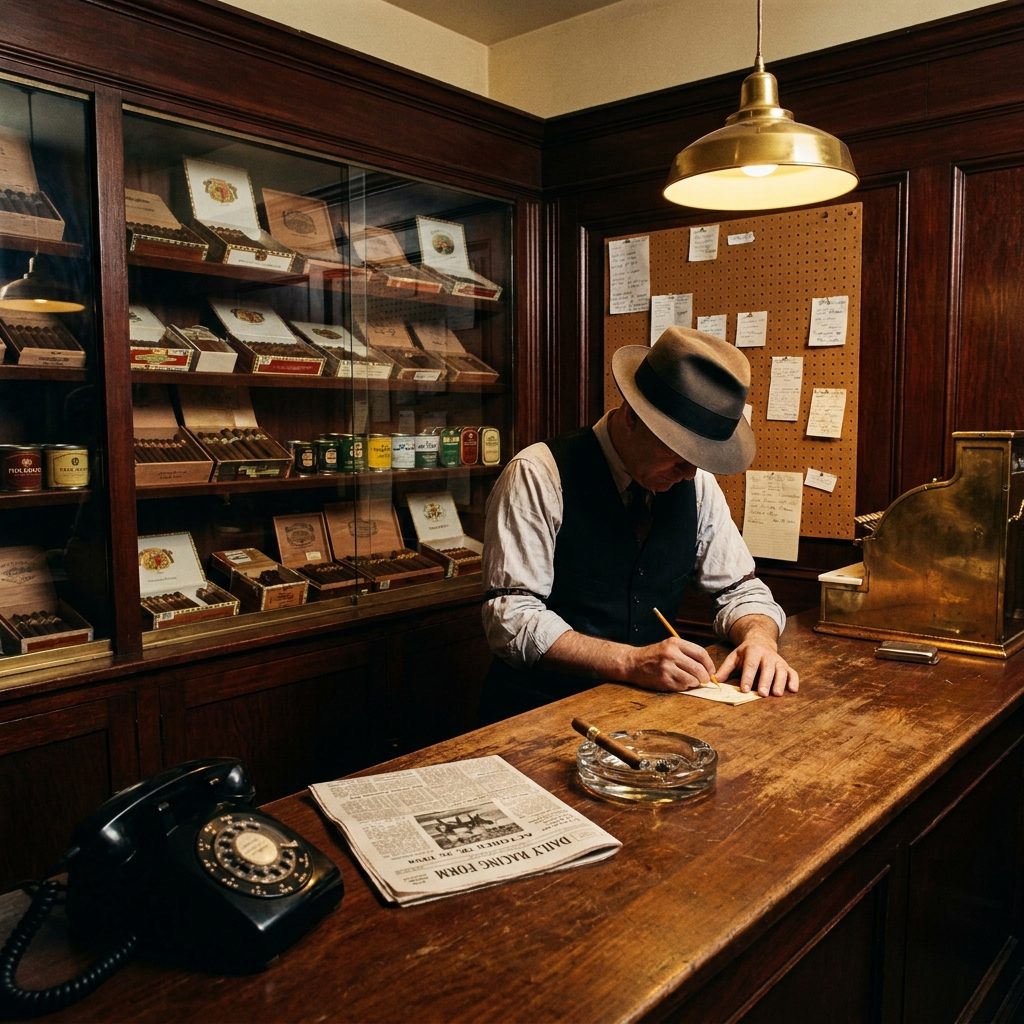
He worked out of a cigar shop, a barbershop, or the back booth at a diner. He knew the horses, the fights, and the Friday numbers, and he fronted his own bank and paid winners in cash out of a rolled wad thick enough to prop open a door.
Two dollars on a horse. A dime on the number. The neighborhood pretended he was just some friendly guy who happened to hang around, and the neighborhood ate well for it. State lotteries, off-track betting, and eventually online sportsbooks put every last one of them out of business.
The Steam Locomotive Fireman Who Shoveled Coal by the Ton
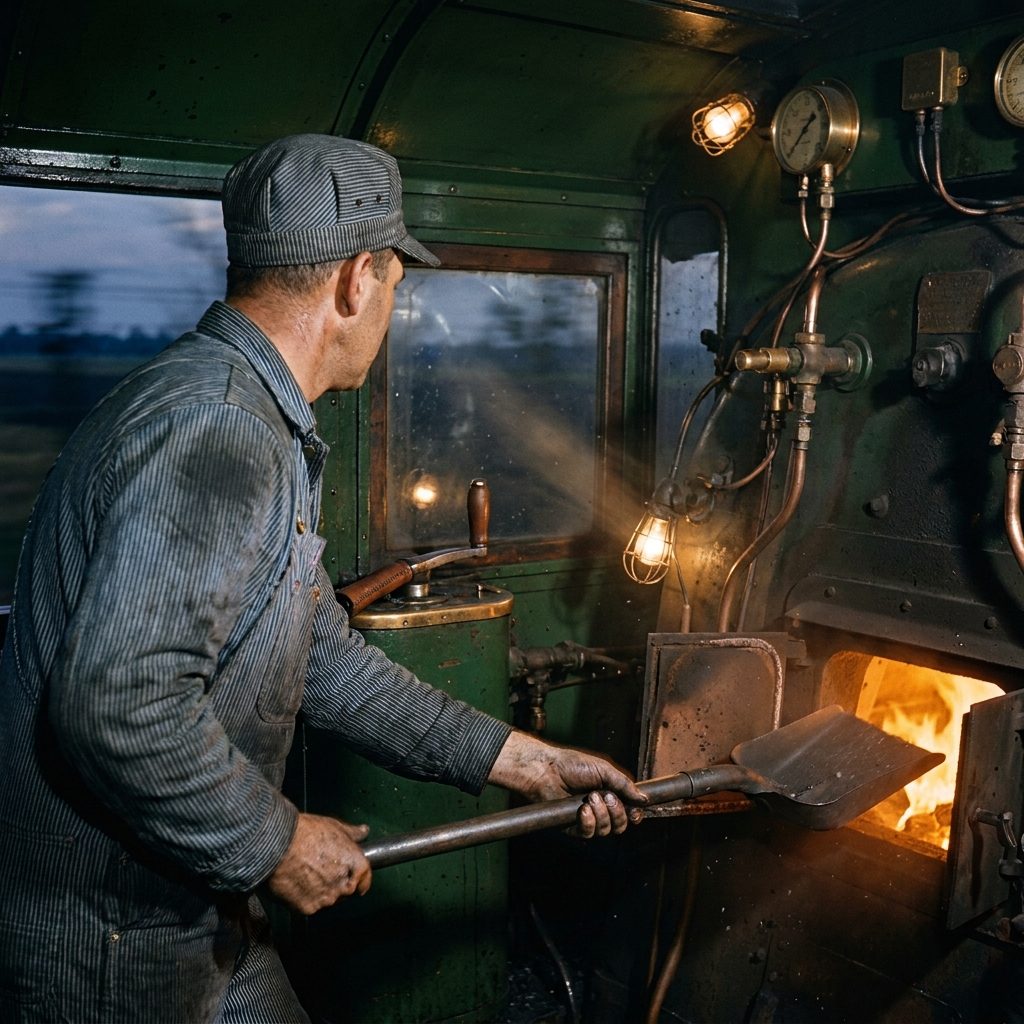
Shovel. Aim. Toss. Ten to twelve tons of coal into the firebox on a single run between St. Louis and Chicago, the fireman working shoulder to shoulder with the engineer — shirt soaked, back on fire, ears full of the roar.
Union pay bought a pension that meant something, a house on a quiet street, a wife who did not work outside the home, and three kids who assumed college was possible because their dad shoveled coal into a firebox for eight hours a shift.
Diesel-electrics were already coming when the decade began. By the end of the sixties, the last steam fireman was drawing his pension and telling his grandkids about the fire.
The Iceman’s Cousin, the Coal Trimmer Who Leveled Your Winter Supply
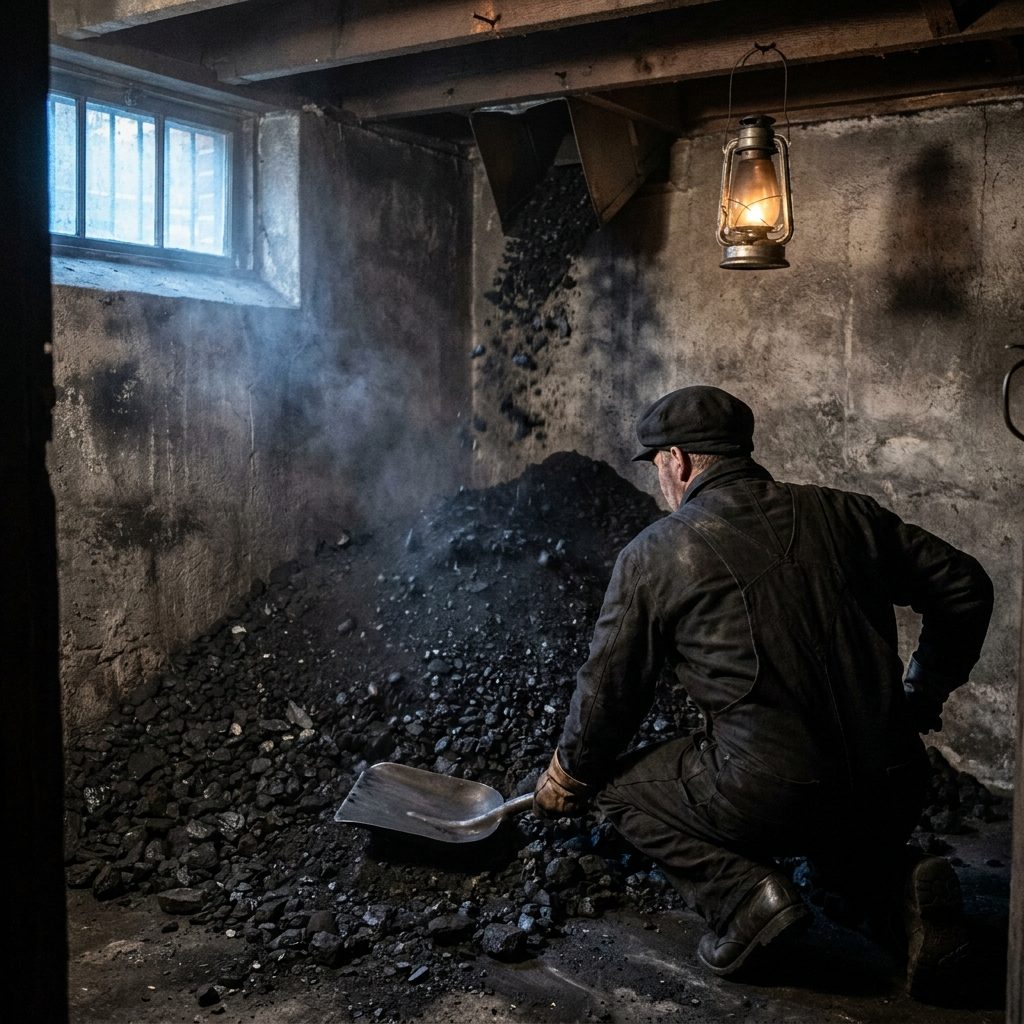
The delivery man dumped the load; the trimmer came behind him and spread it right. Left in a heap, coal would settle wrong and burn uneven all winter long. Spread properly, it fed the furnace clean through March.
A subcontractor’s gig. Young man’s work. Paid by the ton. A strong trimmer could do four houses before lunch and still be home in time to catch the radio serial with his kids.
The Piecework Seamstress Who Ran a Shop Out of Her Own Kitchen
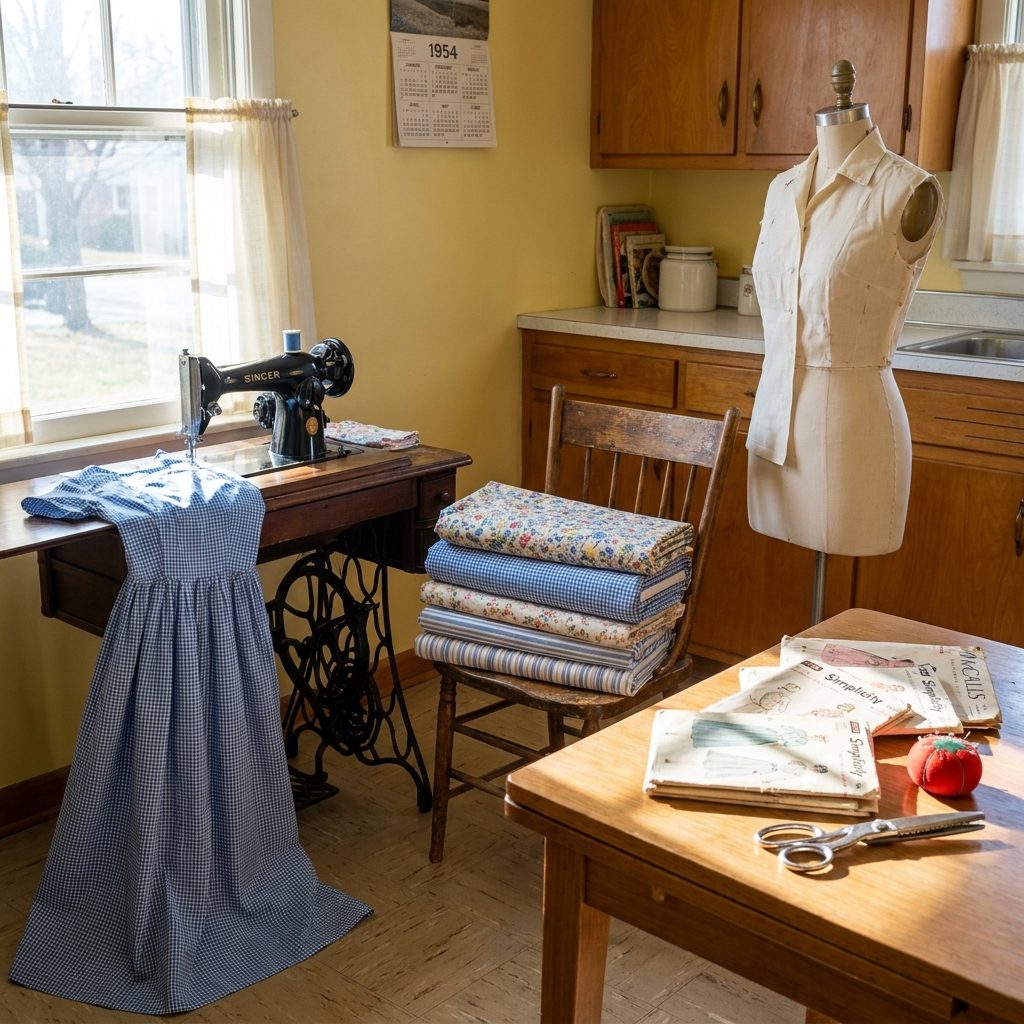
She was not paid a salary. She was paid per garment — six dresses a week for the neighborhood dress shop, twelve pairs of curtains for a decorator across town, a wedding gown every June. Her kitchen table was the factory floor.
Piecework money added up fast. In plenty of supposedly one-paycheck households, hers was the paycheck that bought the second car, sent the oldest to state college, or covered the down payment on the house.
The Company Draftsman Who Drew Every Blueprint by Hand at a Tilted Table
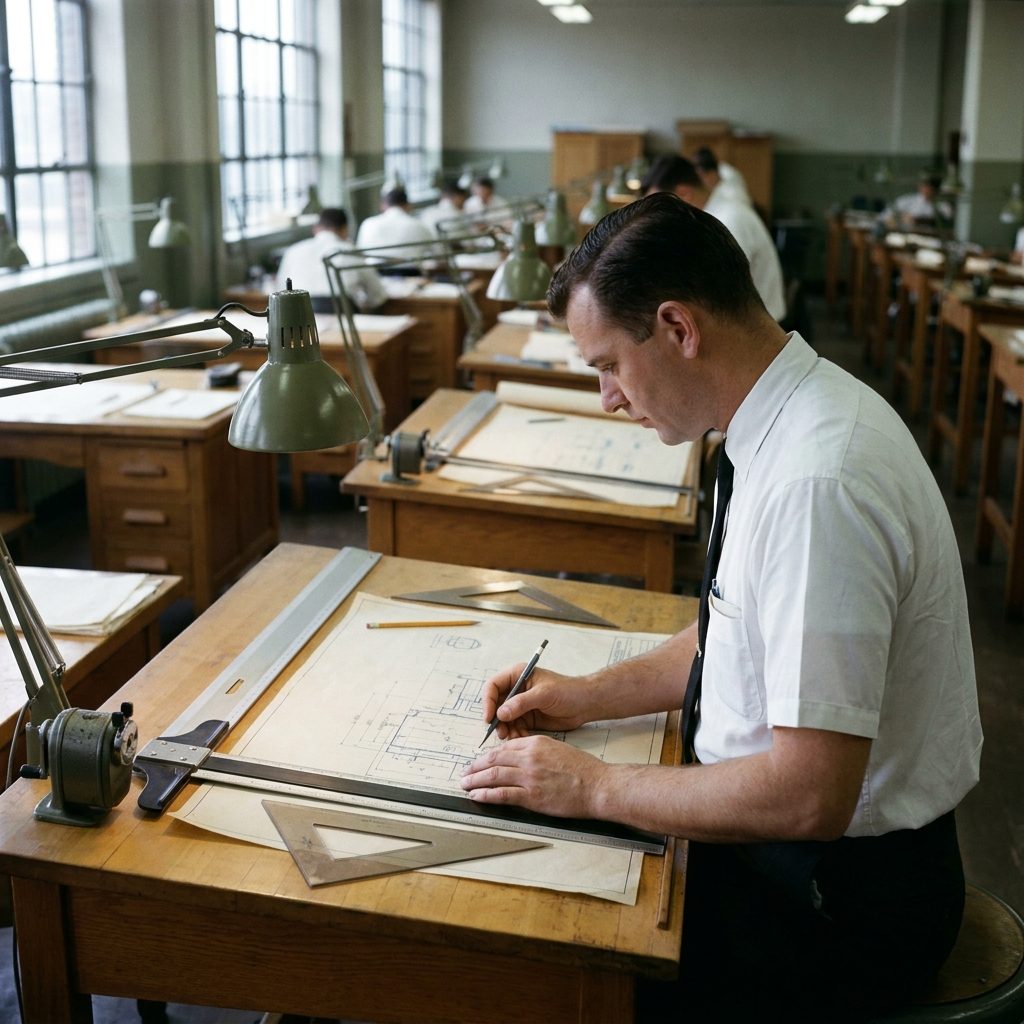
Every bridge, engine, house, and appliance in America came off a drafting table drawn by hand. A draftsman spent decades learning to draw a straight line, hatch a section view, and letter neat block capitals without a ruler.
One company, whole career. He had a title, a badge number, a locker, and a spot at the annual picnic. CAD software started arriving in the 1980s, and by 1995 the drafting room stood empty. Tables went to auction. Lamps ended up in antique stores.