

Would you like to save this?
The debt in the kitchen drawer had names on it. Not account numbers, not routing codes, not a login. Names. Dr. Halloran. Mel at the Chevy lot. The milkman, whose first name half the neighborhood knew and half didn’t. Paying it off meant seeing those people, standing in front of them, counting bills onto a counter while somebody wrote in a book. Here’s how families actually cleared what they owed before any of it went digital.
Paying the Milkman’s Weekly Tab at the Door Every Friday Morning
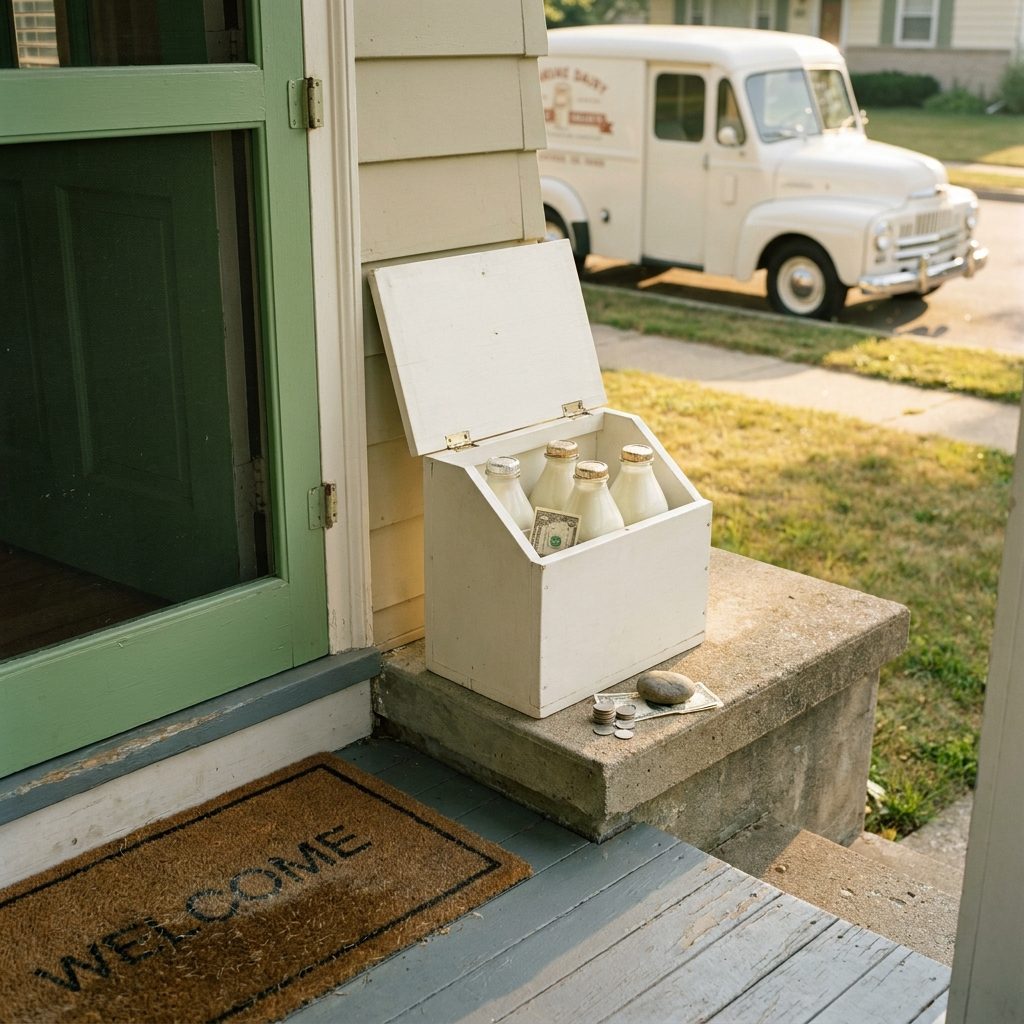
The milkman was a person before he was a service. He knew which house wanted the cream on Tuesdays and which one had a new baby and needed the delivery quiet. The tab ran a week, sometimes two. Friday morning you left the money in the box or met him at the door in your robe and settled up.
Cash. Coins if that was what the week had left. He would lick the tip of a pencil, mark the ledger, tear off a receipt from a little pad, and tip his cap. Next week started clean.
Walking Into the Bank to Make a Loan Payment in Cash
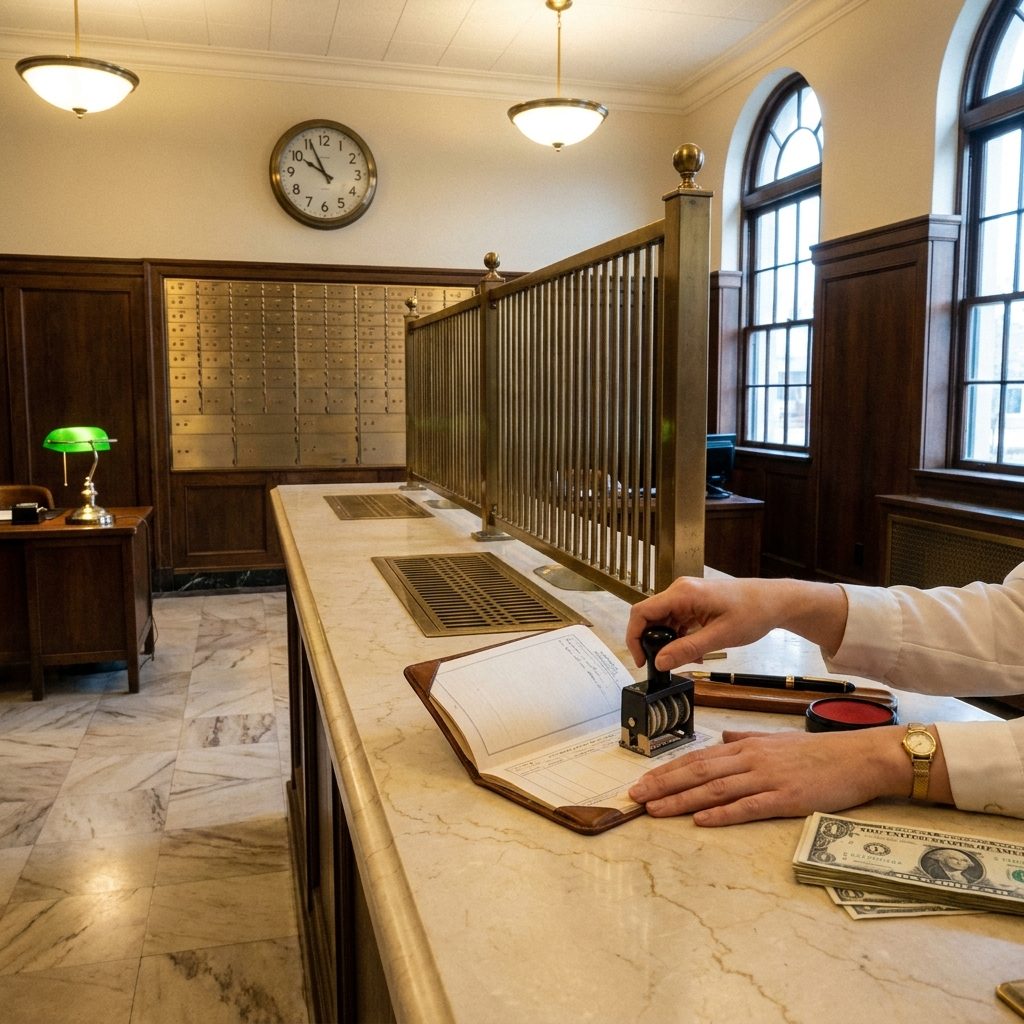
Loan payments happened in person because everything happened in person. You dressed for it — not a suit, but a clean shirt and shoes that had seen a brush that morning. The teller knew your name and your father’s name and probably which pew you sat in on Sunday.
The passbook came out of your inside pocket. She stamped it, wrote the balance in blue ink, slid it back across the marble. You watched her do the math and she watched you watch. That was the whole transaction, and it took about ninety seconds.
Handing Cash to the Same Furniture Store Clerk Every Month
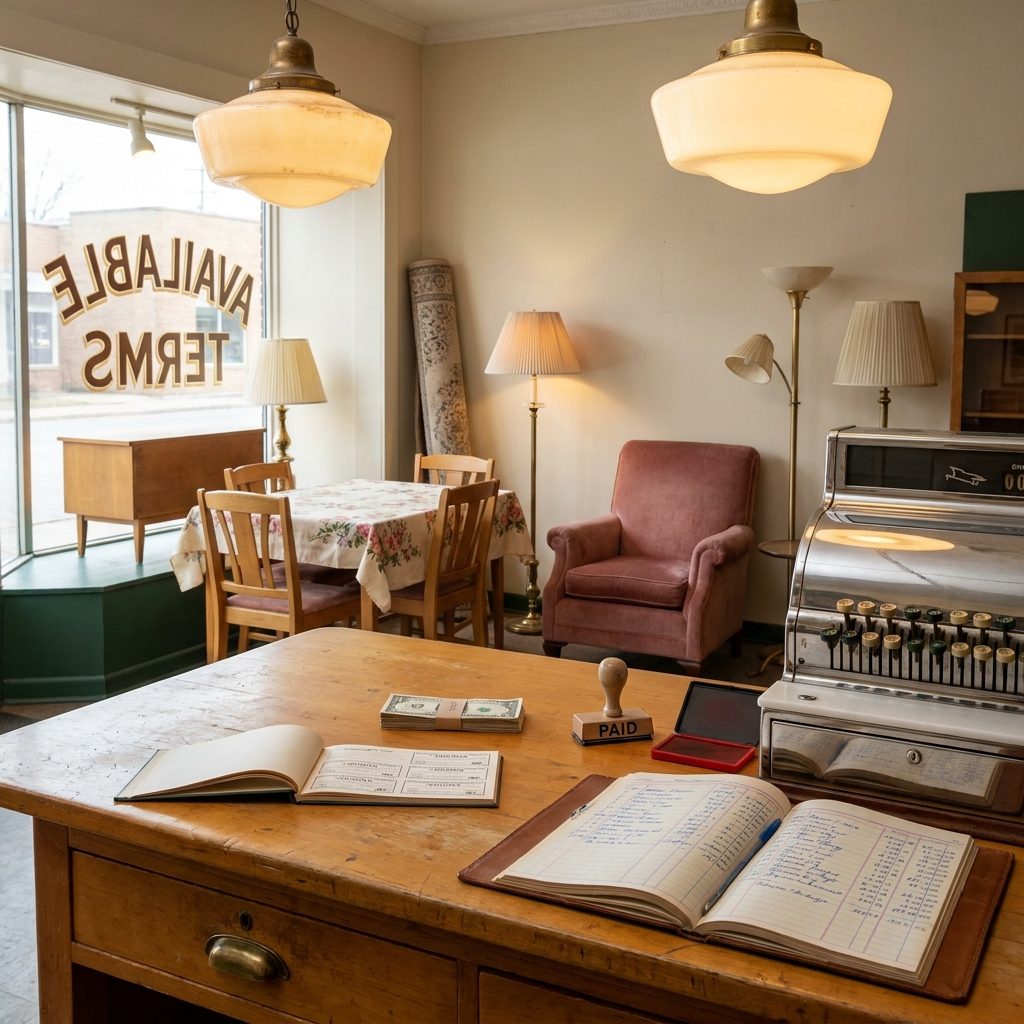
You bought the couch on terms and the terms had a face. His name was Ray or Ed or Mr. Kowalski, and he sold you the couch, wrote up the payment book, and then took the payment every month for the next eighteen months.
Walking in with the envelope was almost social. He’d ask about the kids, stamp the coupon, tear it out, slide the book back. You would leave with a receipt, a slightly lighter feeling, and sometimes — if you had timed it right — a cup of coffee from the pot he kept in the back.
Sending a Money Order Through the Post Office for Anything by Mail
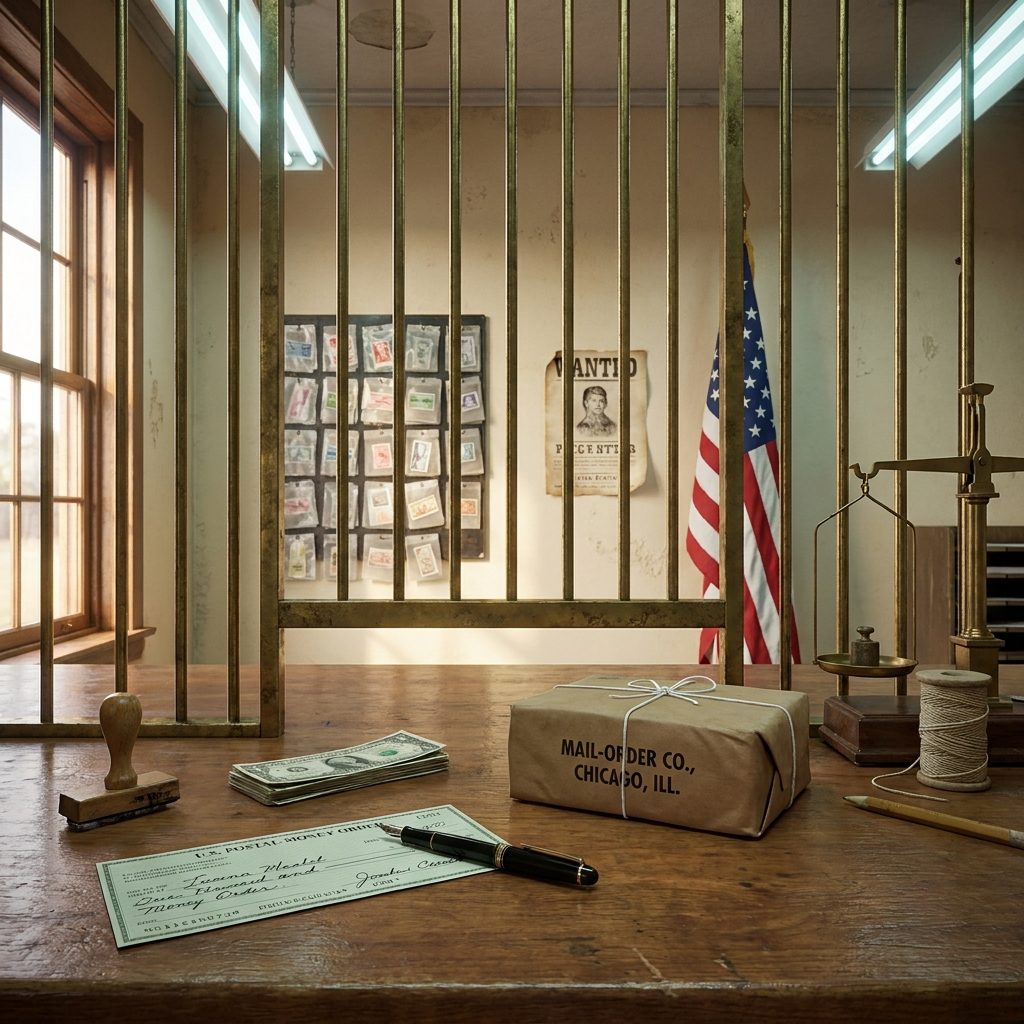
A personal check from a stranger was a bet the seller did not want to take. Bounced checks were a real problem and prosecuting one wasn’t worth the stamp. So the post office solved it.
You stood in line, filled out the money order, paid in cash plus the fee, and mailed the little green slip with your order form. The company cashed it the day it arrived. No account numbers exchanged, no risk on either side, no way to reverse it once it left your hand — which was, honestly, part of the calm of it.
The Debt Ledger in the Kitchen Drawer, Written in Pencil
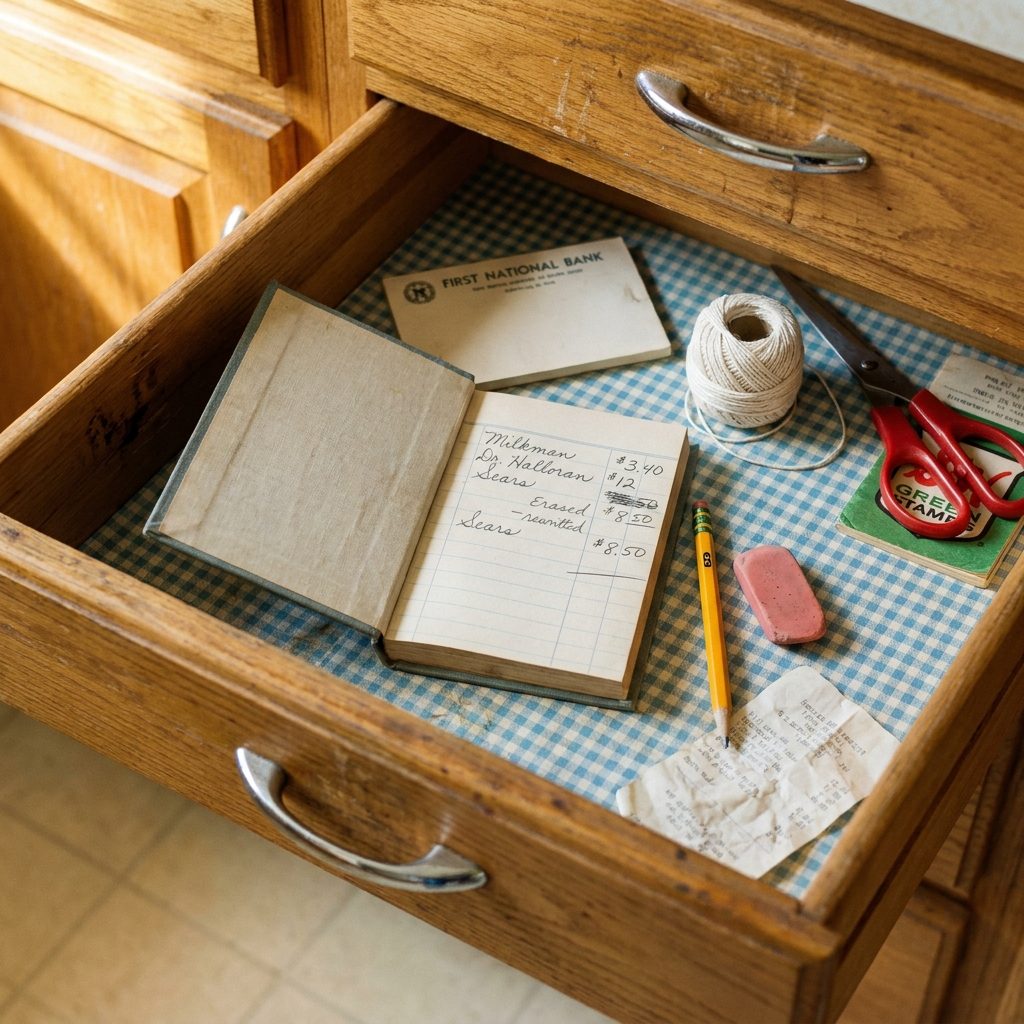
Pencil was the whole point. Ink was for when the debt was settled and you copied it into the permanent record. Pencil meant you were still negotiating with the number.
Every household had one — a little book, a notepad from the bank, a legal pad folded in half, tucked in the kitchen drawer, under the phone, in the desk with the bills. Erase, rewrite, erase, rewrite. The eraser wore down faster than the pencil.
Paying Off the Car at the Dealership With the Salesman Who Sold It
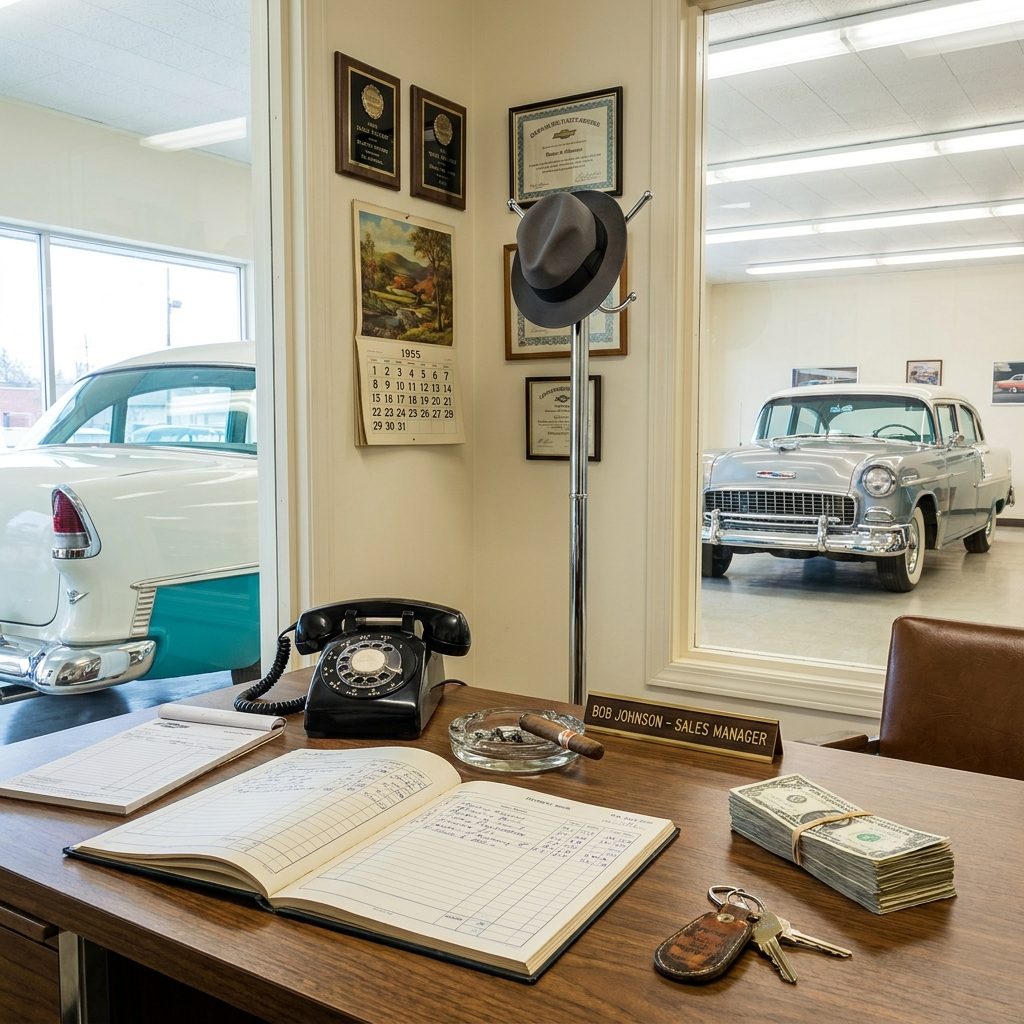
He sold you the car, financed the car, and took the payment on the car. The whole loop closed in the same building with the same person for the whole life of the loan.
You’d walk in on the first of the month, envelope in your jacket pocket. He would come out from behind the desk, ask how the Bel Air was running, take the cash, stamp the book, and tell you about the new models coming in the fall. Sometimes he tried to sell you the next one before you had paid off this one. That part hasn’t changed.
Talking a Creditor Down to a Reduced Payoff, Face to Face
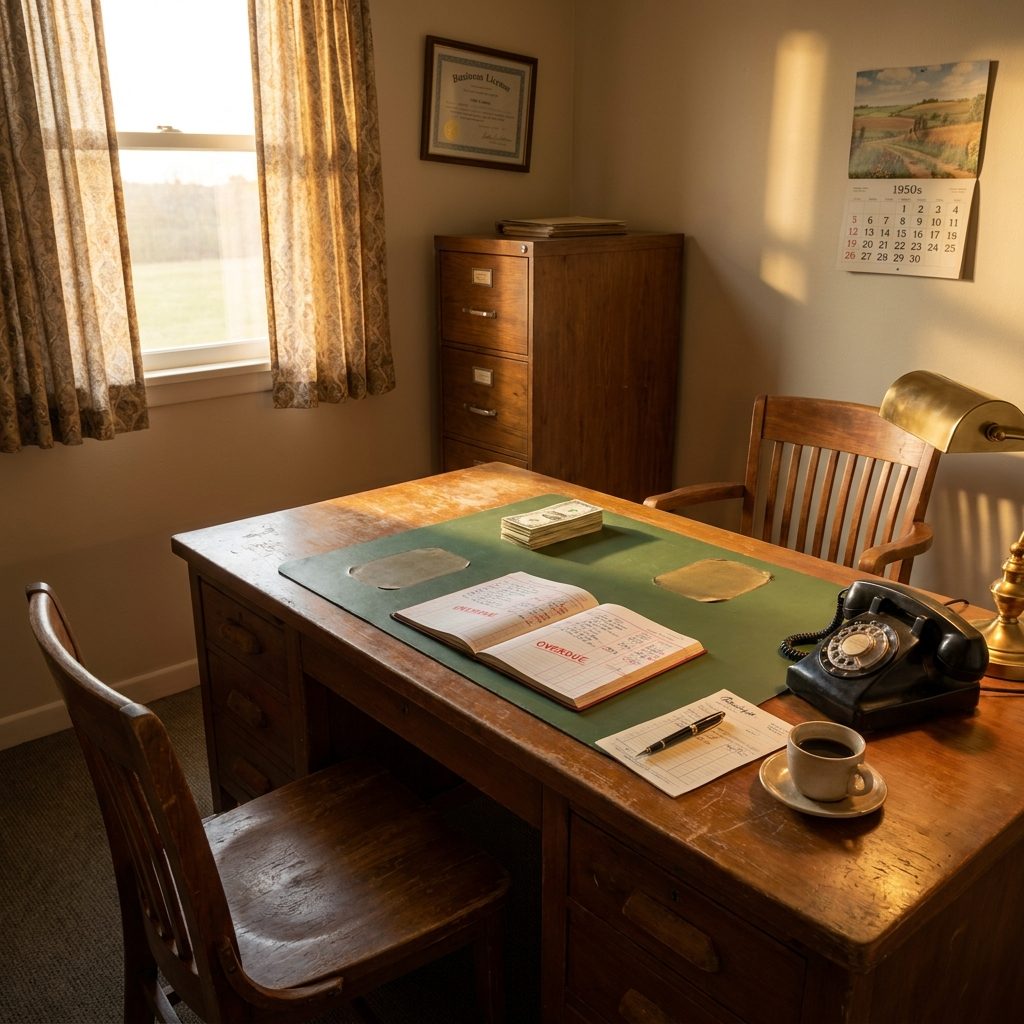
Something is better than nothing was not a slogan. It was math. The creditor knew that a court case cost more than the debt, that garnishing wages was slow, that a bankruptcy wiped him out entirely. So he took the offer.
You walked in with what you had. Cash, ideally. You said the number. He said a bigger number. You met somewhere honest. He wrote PAID IN FULL across the ledger line, initialed it, shook your hand.
Trading Labor With a Neighbor to Chip Away at What You Owed

He lent you sixty dollars in March. In June you painted his garage. He crossed out thirty dollars in his notebook, poured you a beer, and that was that.
Nobody called it barter — it was just how neighbors handled it. Your husband fixed the transmission, his wife sewed the curtains, somebody’s kid mowed the lawn all summer. Debts got smaller sideways. Cash never had to change hands and the friendship survived the loan, which is more than you can say for most modern loans.
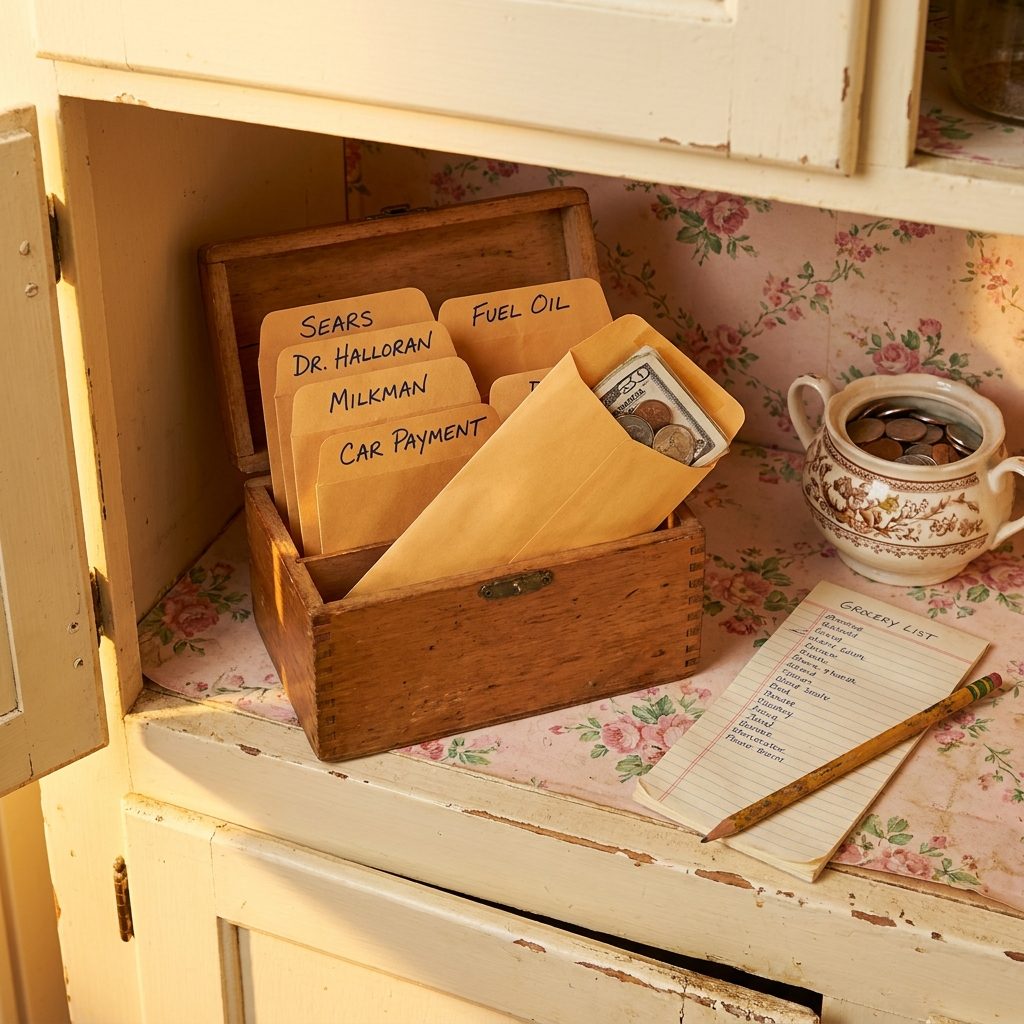
The Envelope in the Kitchen Cabinet Labeled With the Creditor’s Name
Would you like to save this?
Every payday, the cash came home and got sorted before dinner. Rent envelope first. Then groceries. Then the labeled ones — Sears, the furniture store, the doctor. Each one got its share, no matter how small.
The trick was that once the money went into the envelope, it wasn’t household money anymore. It belonged to the name on the envelope. Borrowing from it to cover something else was not something a serious household did, and if you did it once, you told your spouse, and you put it back.
The Finance Company Storefront Where the Clerk Knew Your Kids’ Names
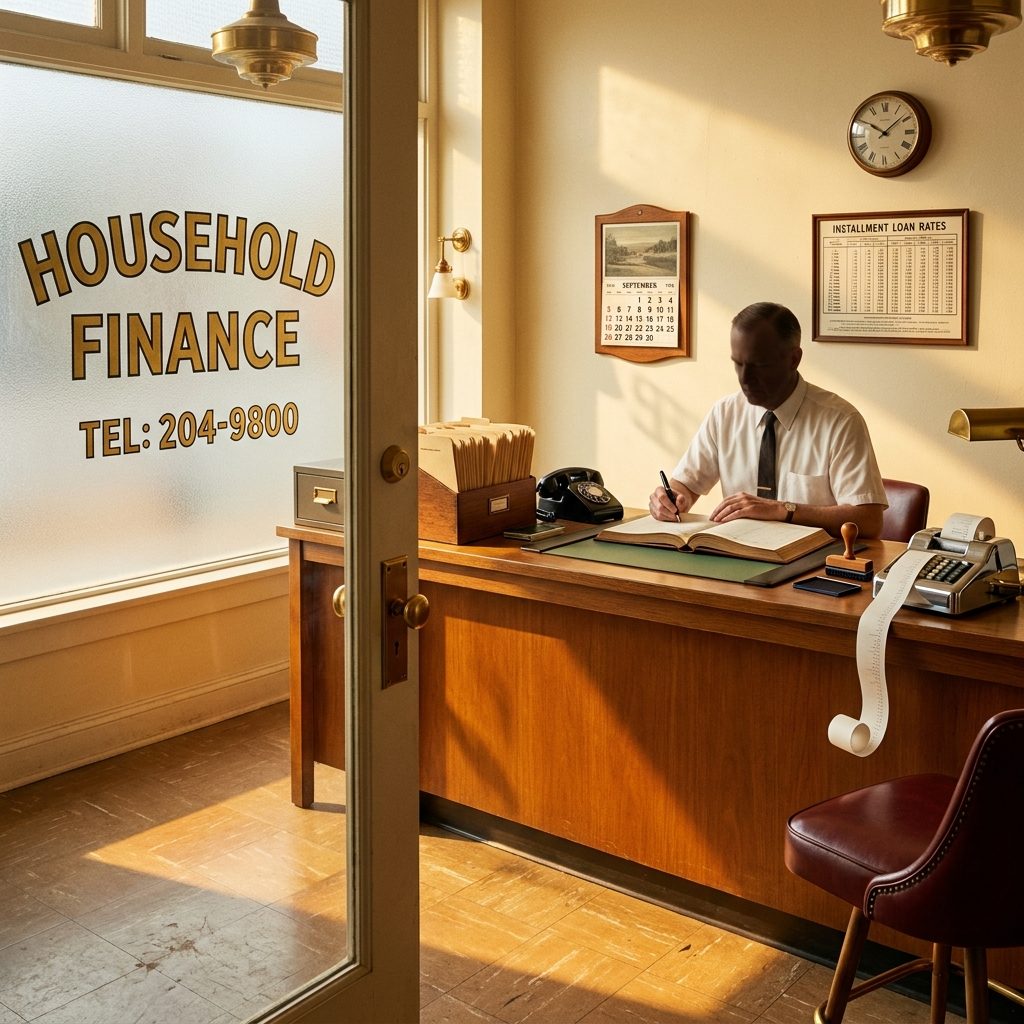
Every second Friday, walking to the finance company office was as routine as picking up bread — the clerk kept a wooden card file with the family’s payment record and pulled the buff-colored ledger card before the door had swung shut. He knew the husband’s shift schedule, the daughter’s name, and roughly what the family owed to the penny.
Payments went across the counter in cash. He’d stamp the card, initial it, pencil in the new balance, and hand you a carbon receipt. Twelve minutes. Maybe fifteen if the weather was worth discussing.
Paying Down the New Fridge at the Same Counter Where You Bought It
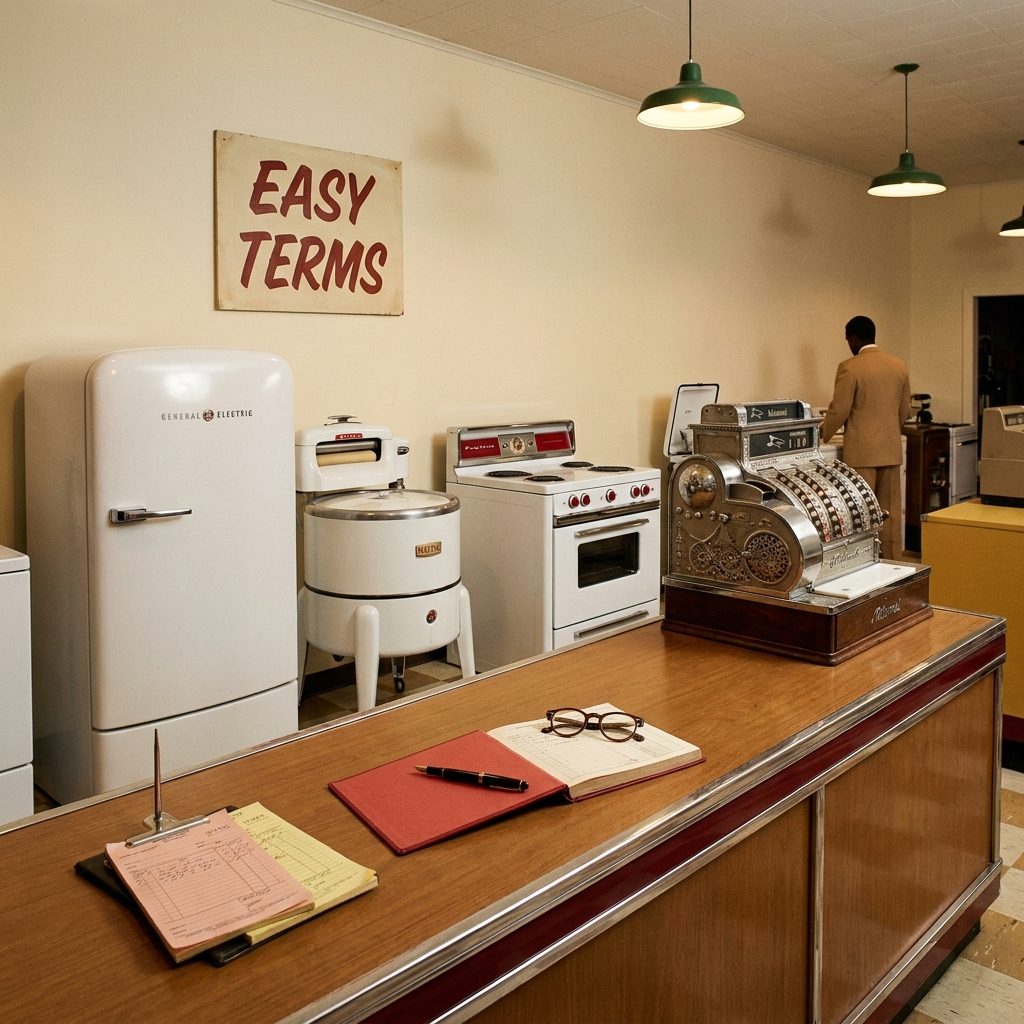
The refrigerator came home in June, and the payments came back to the store every month for the next twenty-two months — same door, same counter, sometimes the same salesman who’d sold it to you, now stamping your little red payment book.
Something about it felt honest. You saw the store. You saw the other appliances behind the counter, the ones the neighbors were still saving for, and you made your payment, watched the balance shrink in the clerk’s handwriting, and walked out having done a small correct thing.
Settling a Debt With a Handshake and a Promise to Mow the Lawn All Summer

Cash was short. The debt was real. So the arrangement got made on the porch: mow the lawn every Saturday through October, help stack the winter wood, and the twenty dollars was considered paid.
Nothing signed, nothing filed. Both men remembered the terms and both men kept them, and if someone had suggested drawing up a contract it would have been taken as an insult by everyone involved, including the neighbors who weren’t there.
Placing a Classified Ad to Sell the Dining Room Set for the Exact Balance Owed
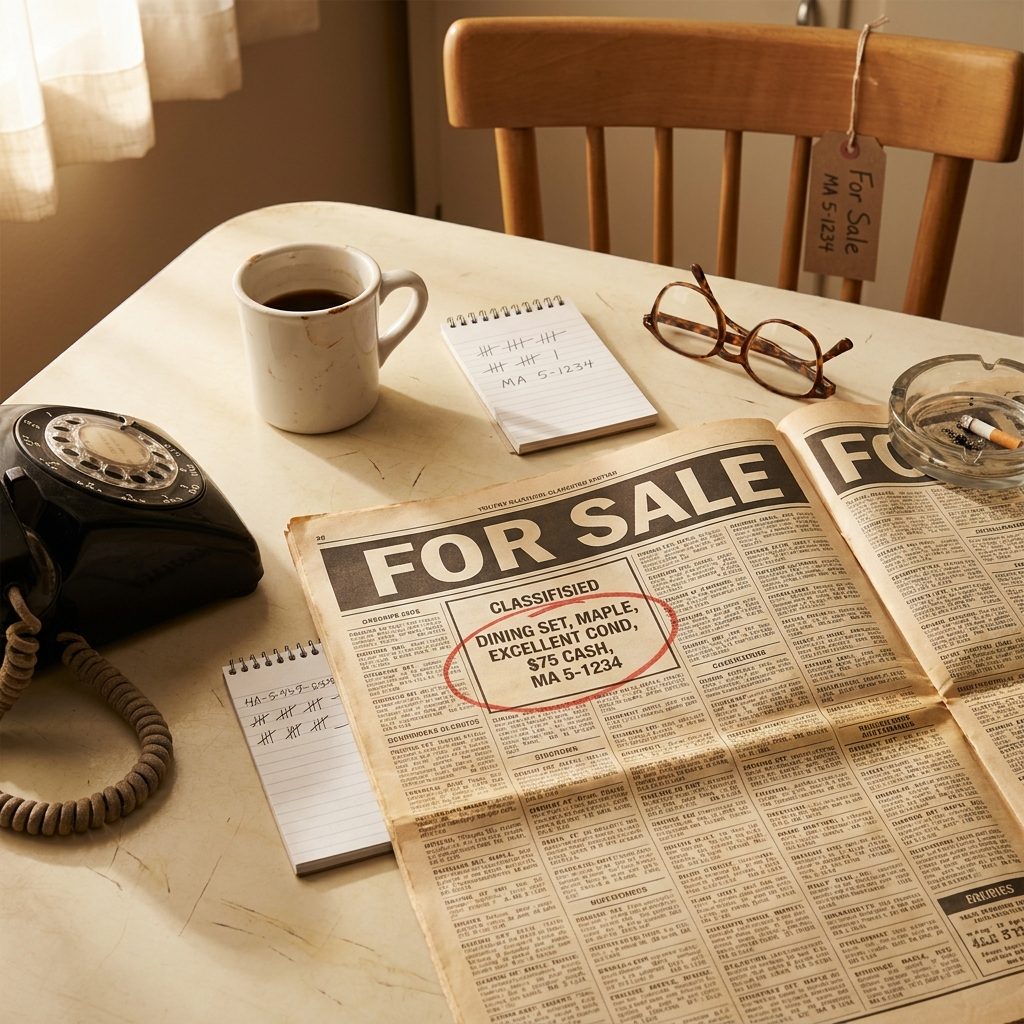
The math was simple. Last payment on the tractor was seventy-five dollars, the dining room set was worth seventy-five dollars, and the classified ad cost forty cents to run for three days.
By Saturday afternoon a stranger was loading maple chairs into a pickup, and the debt closed by Monday morning. The family ate dinner at the kitchen table for six years after that. Nobody complained once, because the balance was zero and the tractor was theirs.
Paying the Coal Man in Installments He Wrote Down in a Pocket Notebook

A hard winter’s coal bill could crush a household budget in a single line, so the driver, who’d been delivering to the same neighborhood for fifteen years, worked it out with you at the truck.
Ten dollars now. Ten more the first of the month. The rest by April. He’d write the schedule in a black notebook he kept in his coat pocket, tear off a duplicate on a carbon slip, and hand it over with a coal-dusted glove — that was the contract, and nobody defaulted, because everybody knew he’d remember and everybody knew he had to eat too.
Sending the Kids Down the Block With an Envelope of Counted Cash for the Neighbor’s Loan

Mom counted the bills twice on the kitchen table — three fives and a two, folded once, slipped into a plain envelope with the neighbor’s last name pencilled on the front.
Then it went in the hands of a nine-year-old, who walked six houses down and rang the bell. The neighbor took the envelope, said thank you, and closed the door. No receipt. No signature. The kid walked home and reported that the delivery was complete, and that was the entire ledger entry.
Settling the Doctor’s Bill in Installments Negotiated Right There in the Office

Insurance covered less and cost less, and the doctor knew both of those things. If the bill came out to forty dollars and you had eight, you said so. Right there. In the office. With the door closed.
He would look at the ledger, tap a pen against his teeth, and suggest five dollars a month for eight months. You would agree, or counter with four, and he would nod and write it down. No collections agency, no credit report. Just a handshake and a note in his book with your name and a number.
Taking a Saturday Job at the Gas Station to Kill Off the Hospital Bill

The daughter’s tonsils came out in March, the hospital bill ran to two hundred and eighty dollars, and Dad started pumping gas Saturdays at the Texaco on Route 6, from seven in the morning until they closed.
Every dollar earned there went straight into a coffee can labelled HOSPITAL, and nothing else was allowed to touch it — not the car repair, not the Christmas fund, not the offering plate. When the can filled, he counted it out, paid the bill in full, and quit the Saturday job the next weekend. Then he moved on to the next debt with the same coffee can and a new label.
Paying Down the Company Credit Union Loan Straight Out of Friday’s Paycheck
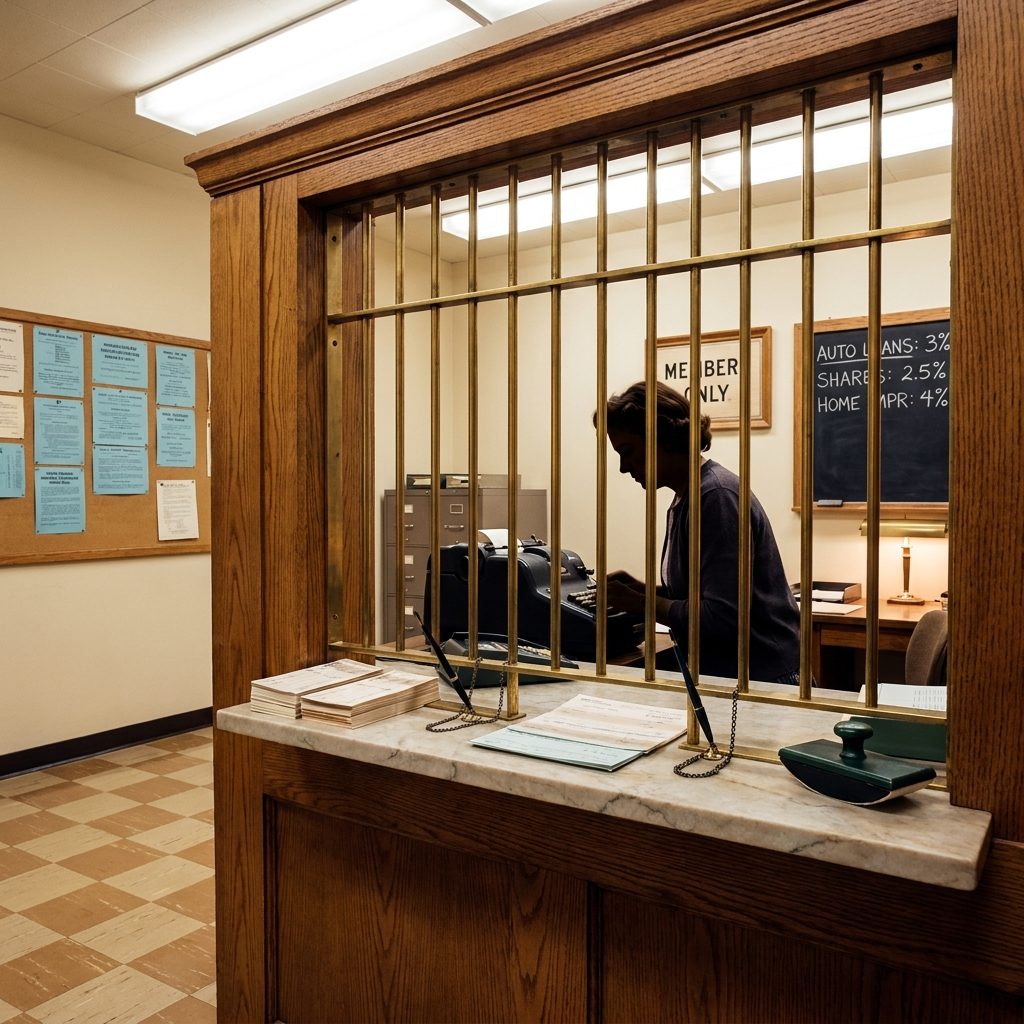
The credit union sat in a converted broom closet off the payroll office. Membership cost a dollar and required nothing but a badge number.
You took a loan against future wages, and payroll deducted the payment before the check ever hit your hand. Once a month you’d stop by the teller window to check the balance on your passbook, watch her stamp the new figure, and walk back to the shop floor with the loan a little smaller than it was on Monday.
Keeping the Whole Loan Verbal Between Two Front Porches

Would you like to save this?
He loaned forty dollars. No note. No date.
Payments came back a dollar or two at a time, whenever the borrower had a spare buck in his pocket and remembered to walk it over — some weeks nothing, some weeks five dollars. Neither man kept a written record, because keeping a record would have suggested one of them might forget, and neither one would, and both of them knew it. Took fourteen months. The debt closed the same way it opened: on the porch, with a nod.
Asking the Feed Store to Wait Until After the Harvest and Being Told That’s Fine

Feed had to be bought in spring, money didn’t come in until fall, and every farmer in the county lived inside that six-month gap. Every feed store in the county understood it too.
You’d walk up to the counter, tell the owner you’d settle after the harvest, and he’d write it in the ledger — no interest, no paperwork, just a line in a book and a nod. Come October you’d come back with cash from the crop and pay the whole thing off in one visit. He’d draw a diagonal line through the entry and say see you in the spring.
The Dentist’s Handshake Payment Plan Signed in the Waiting Room

The bill came on stationery so thin you could see through it. Dr. Riley wrote six numbers down the margin of his appointment book, dated each one the first of the month, and a handshake sealed it. No credit check. No interest. Nothing sent anywhere.
Families paid in cash on the way in for the next appointment, and the receptionist marked the ledger with a small check and initialed it. Miss a month and you got a polite phone call at supper — the kind that made you find the money by Friday.
Building the Whole Month Around One Debt Payment on the First
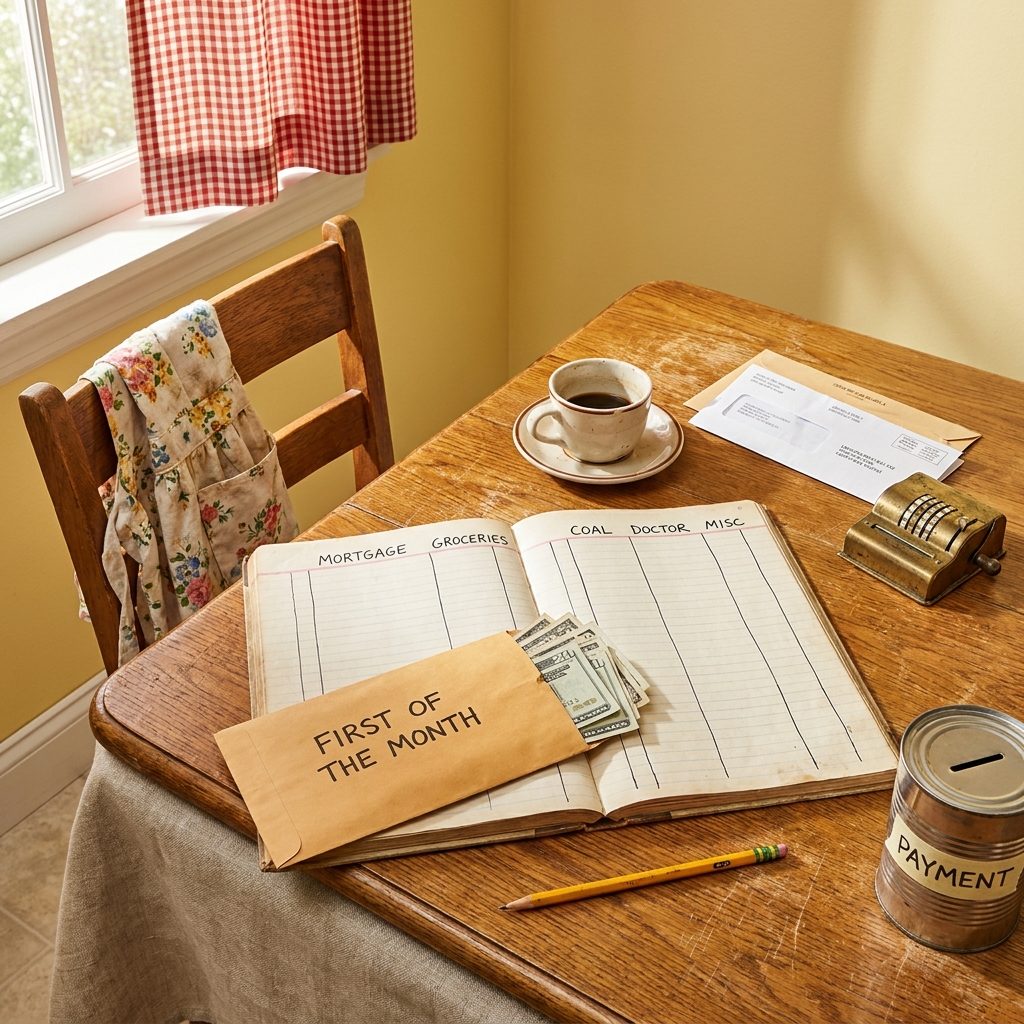
Rent or the mortgage note came first. Everything else waited its turn.
Families set aside the payment before groceries, before coal, before the phone bill. If the note ran $47 and payday brought home $62, then fifteen dollars ran the household for two weeks — beans stretched, meat became a Sunday thing, and the first of the month was sacred. Nobody argued with it.
Kids learned the calendar by watching their mother count out bills at the kitchen table on the last Friday before the first. She would lick her thumb, count twice, slide the money into a brown envelope, and tuck it behind the flour tin until Monday morning.
The payment was not a bill. The payment was the point around which the month rotated.
Working Off a Hardware Store Bill with a Saturday of Sweat
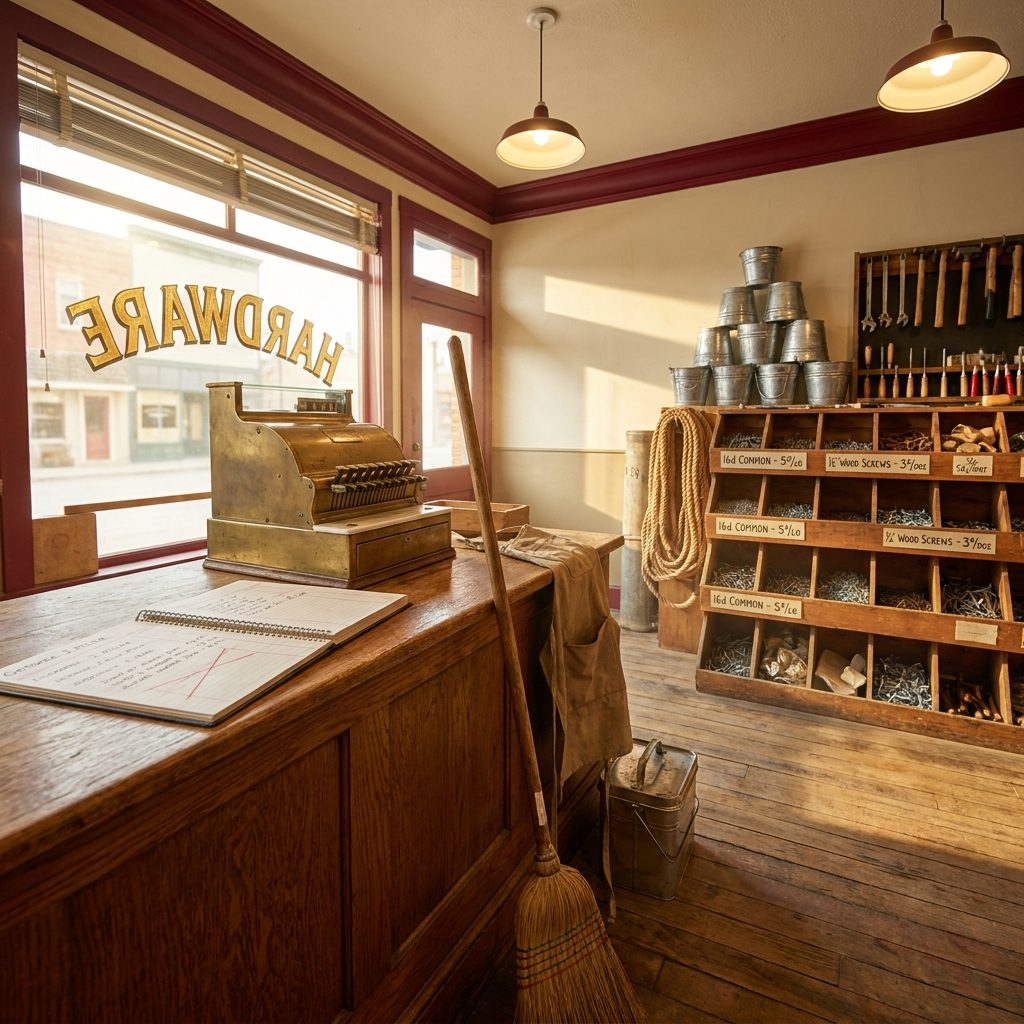
Rarely was the arrangement written down anywhere formal. A neighbor bought a new furnace on account, fell behind on the payments, and offered to sweep the back room every Saturday until the balance came down. The owner nodded once and that was the contract.
Kids worked off their fathers’ bills too. A twelve-year-old stocking shelves for two hours after school could knock a dollar off the ledger. The store owner kept the tally in pencil so he could adjust it when the work was good, and by the end of the season the customer walked out with a clean account and a handshake that meant something.
The Insurance Man Who Knocked on Thursday for His Nickels

He came every Thursday — same time, same route, same worn leather book with everyone’s name in it. Fifteen cents this week for the burial policy, a quarter for the accident rider, all of it entered in careful pencil and initialed on the customer’s own copy of the card.
Housewives kept the money in a jar on the windowsill and counted it out into his palm at the door. Some weeks the jar was short, and he would say I’ll catch you next Thursday and mark the book anyway. He knew everyone’s kitchen. He knew whose husband had been laid off. He was the debt collector, the record keeper, and the neighborhood memory all at once.
Selling Preserves at the Fence Line to Chip Away at the Doctor’s Bill
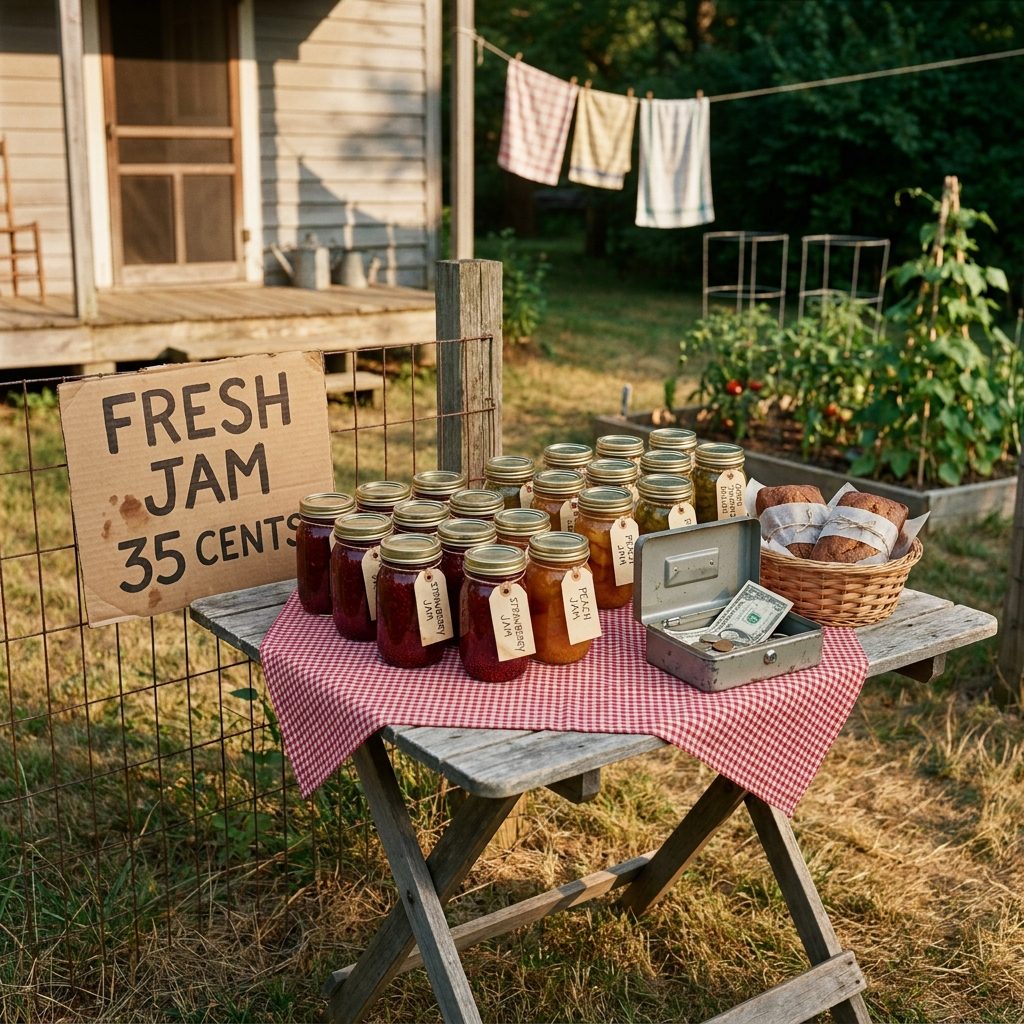
A hospital bill of $110 was a year’s work if you had to raise it in nickels. So mothers put the strawberries up in June, the peaches in August, the tomatoes in September. Every jar had a target attached to it.
Neighbors bought them at the fence line. A housewife might set the table up on a Saturday morning and clear seven or eight dollars before lunch, then come inside, wipe her hands on her apron, and add the amount to the little notebook on top of the icebox where the bill was being killed one jar at a time.
Sitting Down with the Hospital Billing Clerk in Person

You made an appointment, put on your good coat, and sat across from a woman named Mrs. Doyle who had been running the billing office since the hospital opened. Then you told her the truth about what you could pay.
She wrote it up on a payment agreement, two carbons underneath, and slid the top copy across for you to sign. Twelve dollars a month for a year, mailed to her attention. No interest. No collections agency. If something went wrong, you were expected to call her before the first, not after.
The whole system ran on the assumption that you were a person of your word until you proved otherwise. Most people never did.
Paying Down the Burial Insurance at the Lodge Every Wednesday

The Moose, the Elks, the Odd Fellows, the Knights of Columbus. Every town had them, and most working men belonged to one. You paid your dues on Wednesday night, and if you had taken a small loan from the mutual aid fund, you paid that down at the same meeting.
The treasurer entered it in the book and handed you a receipt. Everyone knew everyone else’s balance, which was less embarrassing and more motivating than you might think — nobody wanted to be the man carrying a balance three months in a row.
Christmas Bonus Straight to the Debt Before a Single Present
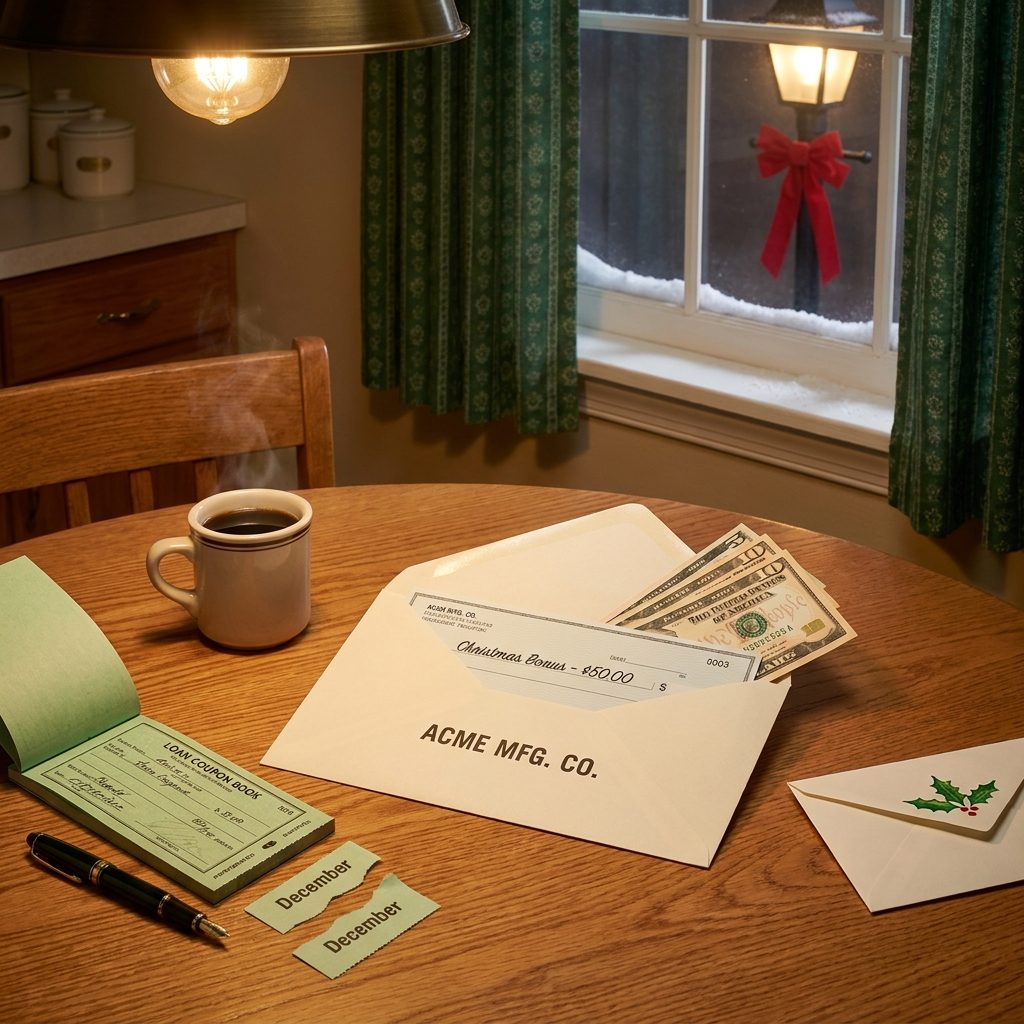
The bonus came in a small envelope on the last Friday before Christmas. Maybe fifty dollars, maybe two hundred if you had been at the plant twenty years.
It did not go to presents. It went to the appliance loan, or the doctor, or the note on the second car. The wife would sit at the kitchen table that same evening, write out the payment coupon, seal it in an envelope with a three-cent stamp, and drop it in the mailbox on the corner before the presents were even a conversation. Whatever was left over paid for Christmas — and if nothing was left over, then Christmas was oranges and a pair of mittens knitted in October.
The bonus was not extra money. It was the debt payment the whole year had been waiting for.
The Mortgage Ate First and Everyone Else Ate What Was Left

Would you like to save this?
Losing the house was the worst thing that could happen to a family in 1954. Worse than a hungry week, worse than shoes with cardboard inside them, worse than skipping the doctor for a cough that would probably clear up on its own anyway.
So the mortgage got paid first, every month, no discussion. Fathers took second jobs on weekends. Mothers stretched a chicken across four dinners. Kids wore hand-me-downs a full size too big and grew into them by spring. The savings and loan passbook sat on top of the icebox, the payment went into the little slot on the first — always the first — because the house was the one thing that made the rest of it survivable.
Paying Back the Loan from Your Brother Before You Bought a Soda

A loan from family was heavier than a loan from a bank. The bank sent letters. A brother looked you in the eye at Thanksgiving.
So you paid him back before you bought yourself anything at all — no new hat, no trip to the movies, no bottle of Coca-Cola from the corner store on a hot afternoon. The money in the envelope in the drawer was already spoken for, and it stayed spoken for until the last dollar went back to the person who had lent it.
When the debt was finally cleared, you brought the money over in person and put it in his hand. He counted it once out of habit, folded it, said we’re square, and you went home lighter than you had felt in months.
Walking Into the Bank and Telling the Manager the Truth
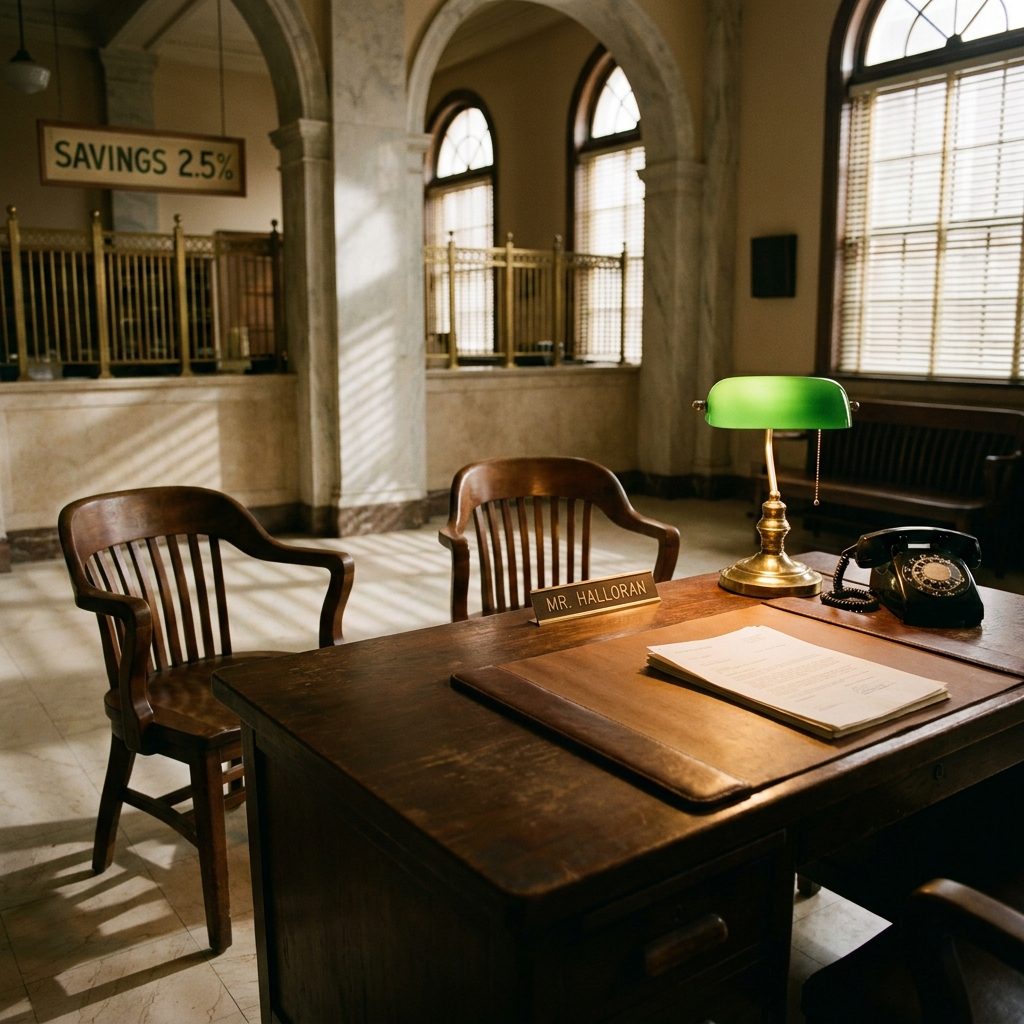
The 1950s borrower did something the modern borrower almost never does. When the money ran short, he put on a jacket, walked into the bank, and asked to see the manager face to face.
No dodged calls, no unopened envelopes piling up on the counter. He sat down across the desk from a man who probably knew his father, laid out the numbers in plain language, and asked for time. The manager wrote notes on a legal pad. Sometimes he said yes; sometimes he said no. Either way, the borrower walked out with a real answer instead of a growing pile of shame gnawing at the back of his mind every time the phone rang.
The Pencil Chart Taped Inside the Kitchen Cabinet Door
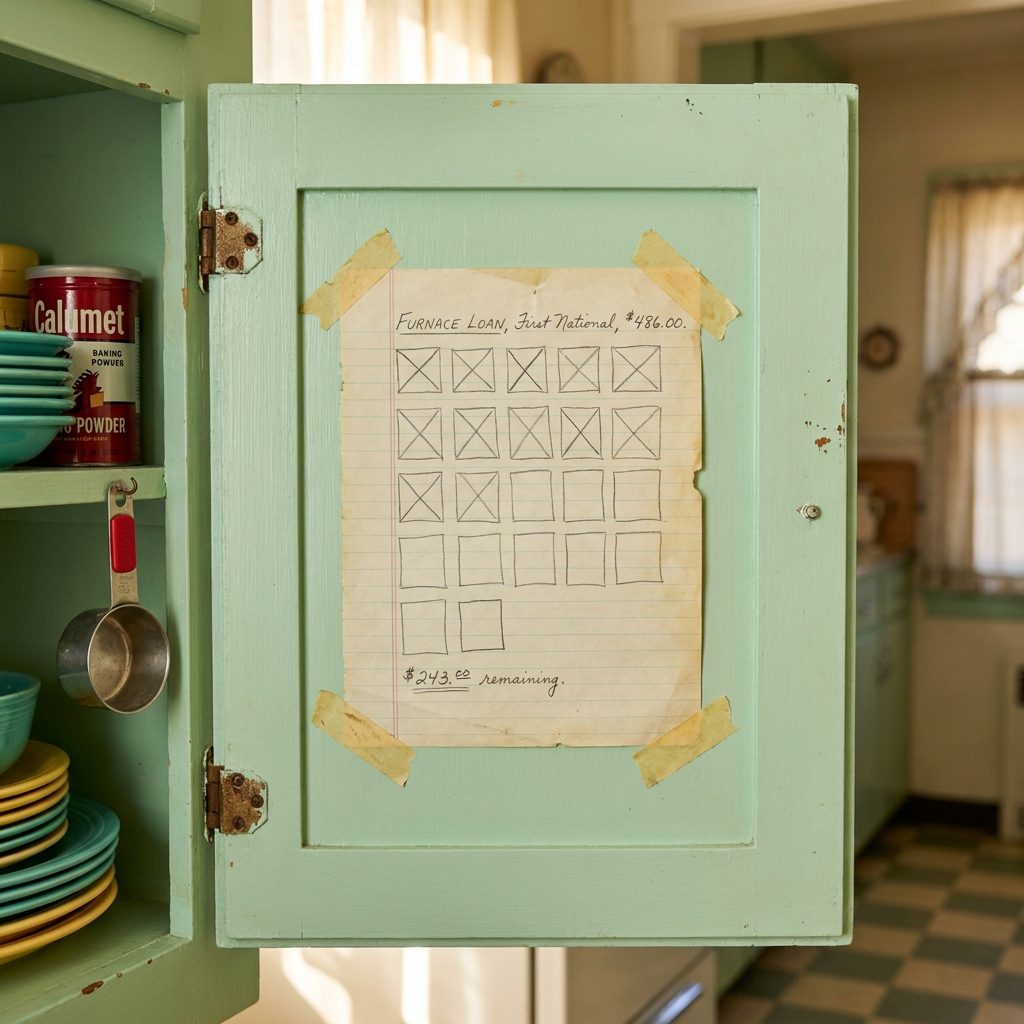
Somewhere between a household ledger and a prayer, the cabinet chart did what apps do now — only better, because you saw it three times a day. Every coffee cup, every cereal bowl, every glass of water for a sick kid at midnight. There it was.
The pencil mattered. Ink would have felt too final for a family still finding its footing. Pencil meant the payment was earned, the box was filled, and the number below shrank by whatever amount had gone in that month. Kids learned to count backward from the balance. Wives kept track of the totals while their husbands were at work. It was one of the few forms of family accounting everyone in the house actually understood.
A debt you can see every morning is a debt that gets paid faster than one hiding in a drawer.
The Hand-Written Extension Letter Delivered in Person
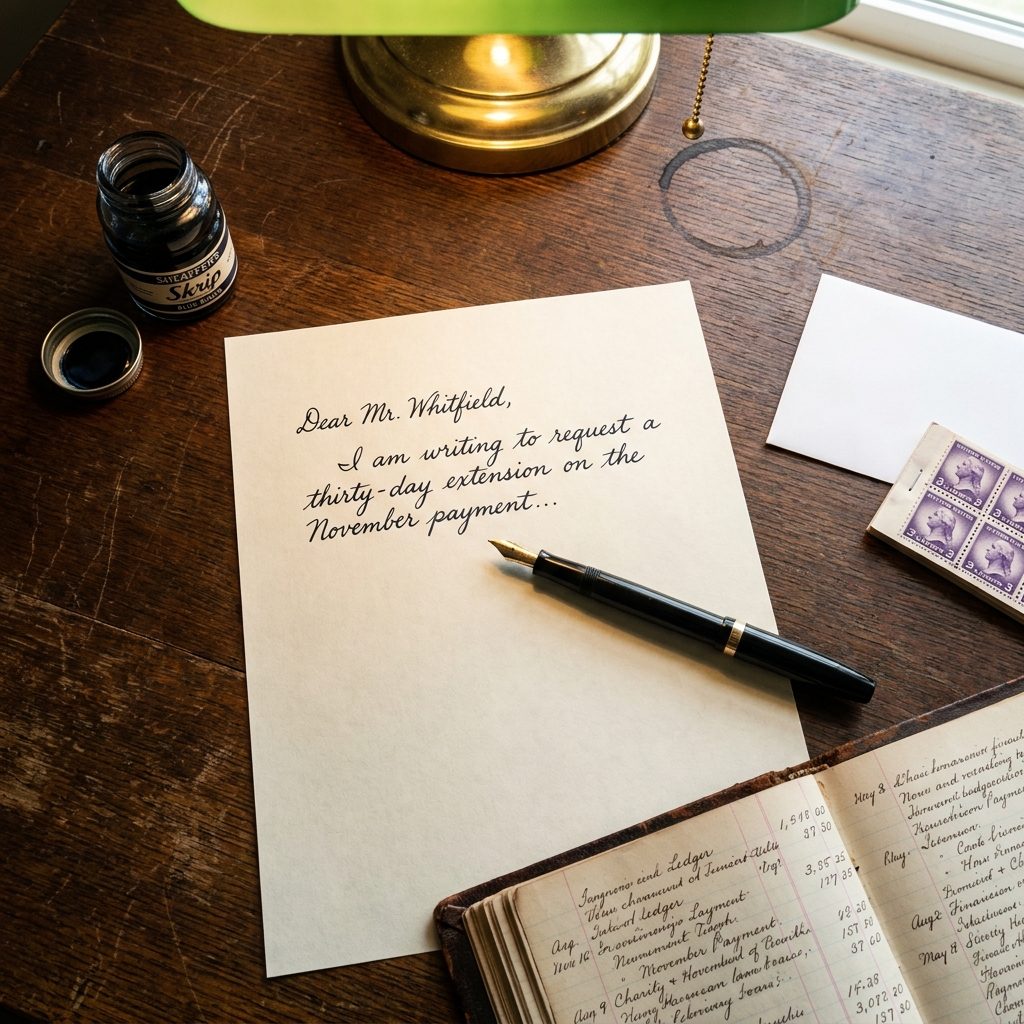
Before an extension was a checkbox on a website, it was a letter. Written by hand, on decent paper, in the best cursive the borrower could manage after a full shift.
The letter pulled triple duty. It gave the creditor a paper record, it showed the borrower took the debt seriously enough to sit down with a pen, and it created a small ceremony of accountability a phone call never could. When possible, the letter was walked in and handed over at the counter rather than mailed. You looked the man in the eye when you asked for grace.
Overtime Hours Sealed in an Envelope Marked With the Debt’s Name
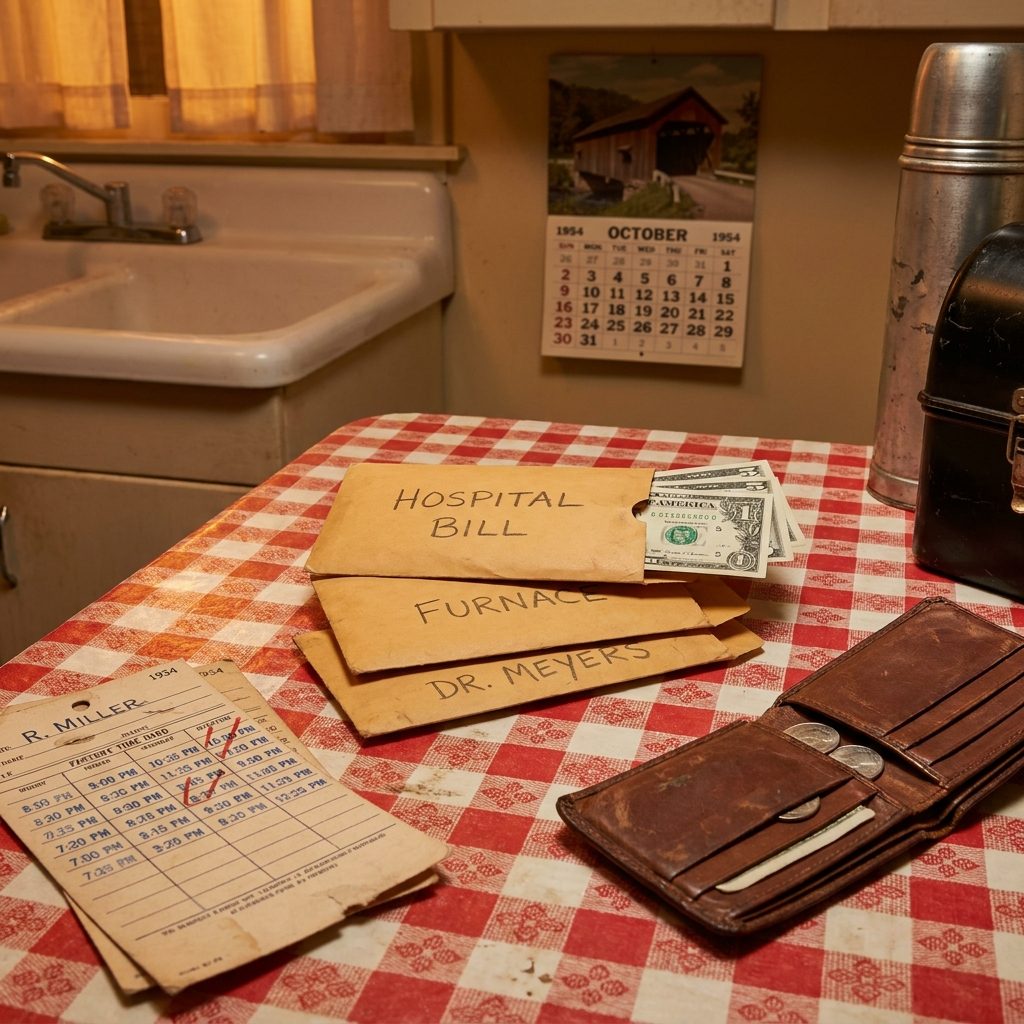
Every extra hour had a name attached to it.
The Saturday shift didn’t go into the general household pot where it could accidentally turn into groceries or a movie ticket. It went straight into the envelope labeled for whichever debt the family was hunting that season — hospital bill, car note, furnace loan. The envelope sat on top of the refrigerator or inside a drawer, and it was not opened for any reason other than making the payment.
The rule was simple and almost never broken. Base pay ran the house. Overtime killed the debt. Families who followed it cleared balances in a year that would have taken five otherwise.
Making the Final Layaway Payment Before the Store Closed on Christmas Eve
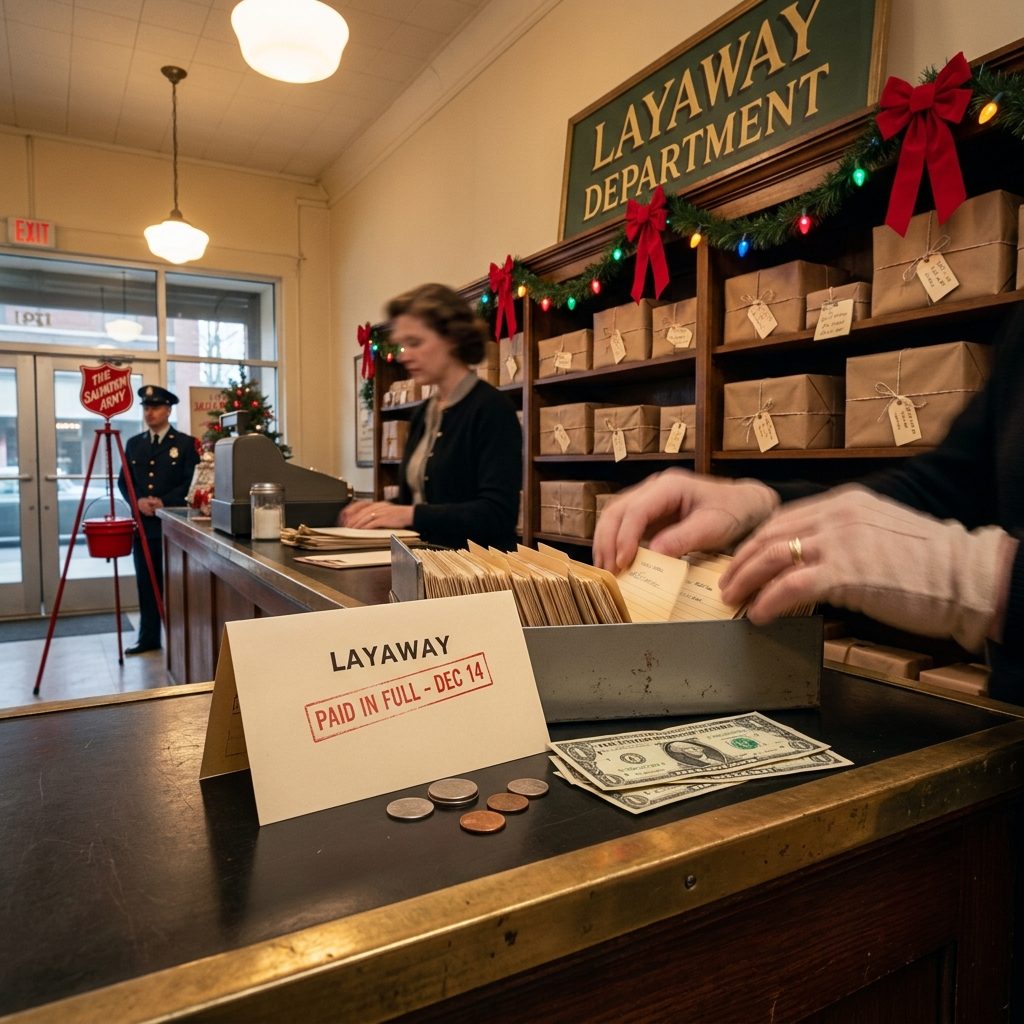
Layaway was the honest man’s credit card. You picked the item in October, paid a little each week, and the store held it in the back with your name on a tag. No interest, no fees. But one hard rule: finish paying before Christmas Eve or lose the item, and sometimes the payments already made along with it.
Families budgeted around the deadline. The last payment often came from a rolled-up bill kept in a coffee can, or from Dad’s Christmas bonus if he was lucky enough to get one. Walking out of the store with the boxed bicycle or the console radio, fully paid, was the closest thing to victory a working family knew. You had wanted the thing, waited for it, paid for it in full. And now it was yours.
Squaring Up a Neighbor’s Loan With a Bushel of Tomatoes and Half a Hog

The neighbor loan was its own economy. Ray down the road spotted you forty dollars in September when the car needed a new starter, and no paper was signed. It didn’t need to be. Both men knew.
Come November, after slaughter day, half a hog went across the fence line — tomatoes canned in August, potatoes dug in October, maybe a jar of apple butter from your wife’s kitchen thrown in for interest. Neither man called it barter. It was just how things got settled between people who lived close enough to see each other’s porch lights.
Loan cleared. Friendship intact. Everyone ate well that winter.
Lining the Debts Up Smallest to Largest and Killing Them One at a Time
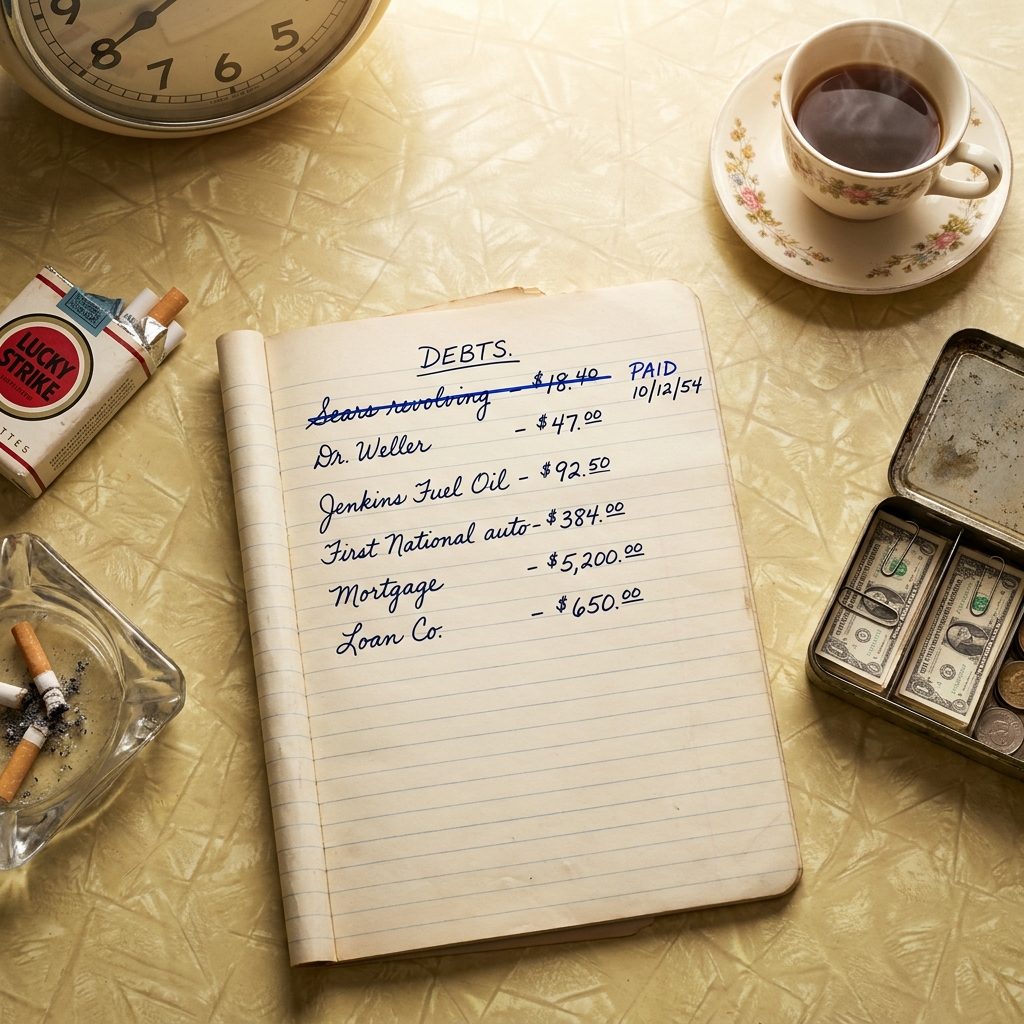
Decades before the personal-finance world named it a strategy and put it in books, families in the 1950s were already doing the debt snowball. They just called it common sense.
The smallest bill got killed first — not because it saved the most in interest, but because crossing something off the list was the fuel that kept the whole project moving. The Sears balance died in a month. Then the doctor bill. Then the fuel oil. Each victory freed up a few dollars aimed at the next line down, and by the time the family reached the car note or the mortgage, they had built the muscle to finish the job.