
Would you like to save this?
The sound hits first. A room full of IBM Selectrics clacking in unison, phones trilling on three different lines, the wheeze of a fax machine warming up in the corner. Somebody’s ashtray is full. Somebody’s coffee has been sitting since nine. The carpet is brown for reasons nobody can explain. That was work in 1980. It looked nothing like what you’re doing right now, and the gap between those two rooms is wider than most people remember.
Before: Rows of Typewriters Filled the Office | After: Nearly Every Desk Has a Laptop
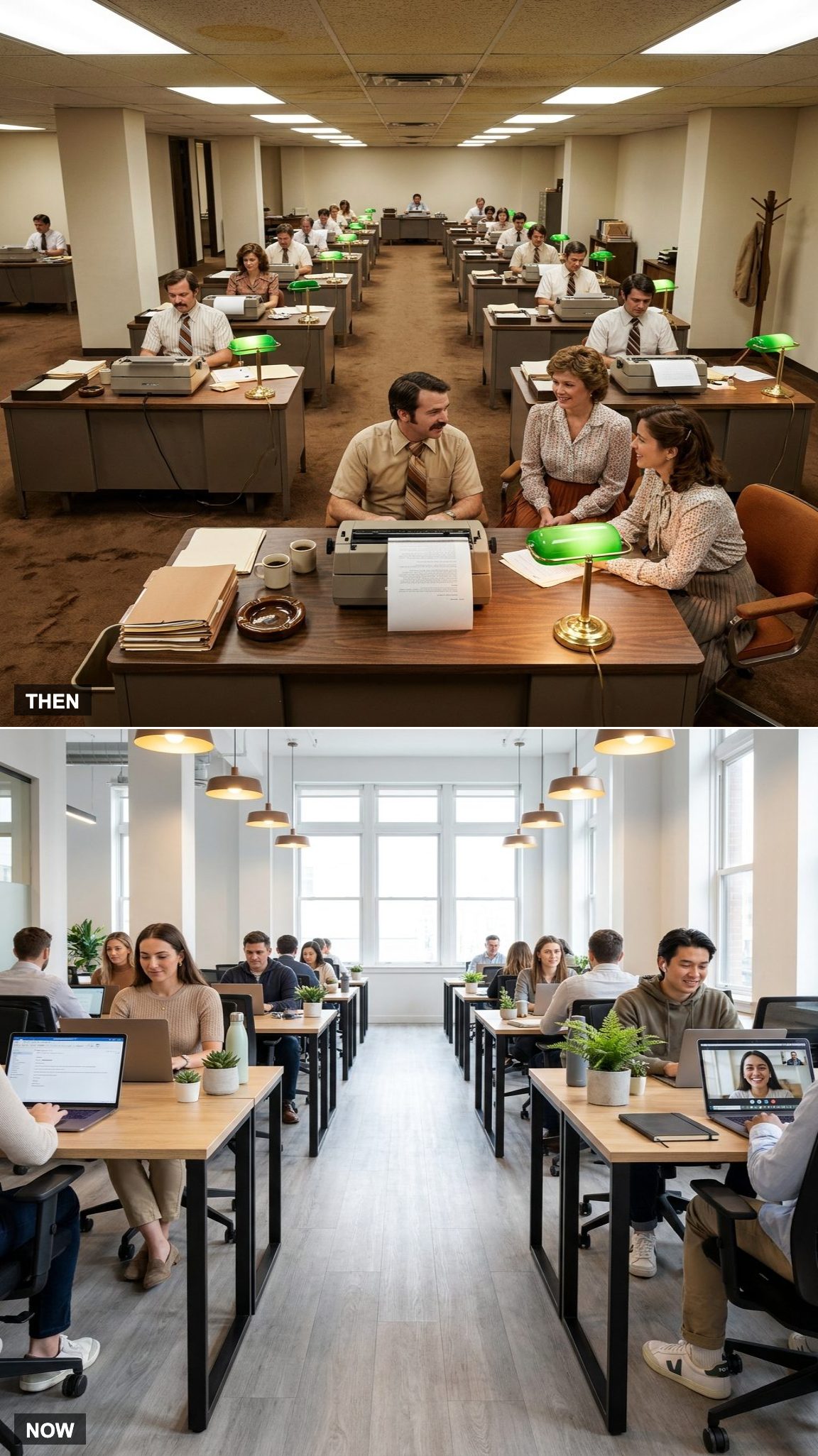
The Selectric was the queen of the room. Thirty-odd pounds of humming machinery, a typeball spinning at speeds that felt violent, and the smell of warm ink ribbon that anyone over fifty can still summon on command. You didn’t just type on it. You committed. Mistakes cost you correction fluid, a fresh sheet, and your dignity.
Now the same desk holds a laptop that weighs less than the Selectric’s cover. It goes home with you, which is either freedom or a trap depending on the week. Nobody misses the wrist strain. A few of us miss the sound.
Before: Filing Cabinets Covered Entire Walls | After: Most Documents Live in the Cloud
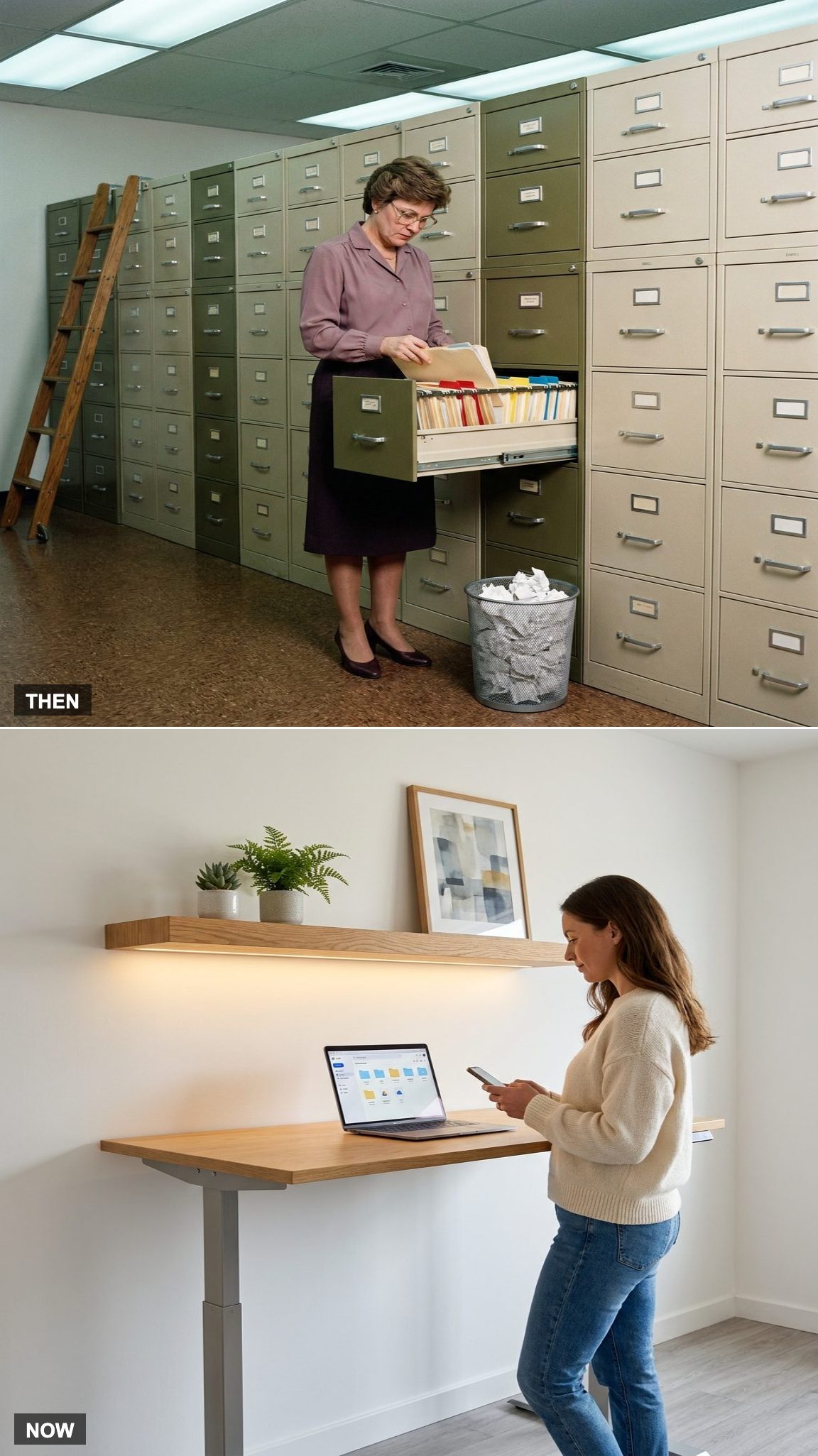
An entire wall. Sometimes an entire room. Sometimes an entire floor in the basement with its own climate control and a woman named Doris who knew exactly where everything was and would find you a 1974 invoice in ninety seconds flat.
The cabinets are gone. So is Doris, mostly, which is a real loss nobody has fully reckoned with. The files live on a server in Virginia now, searchable in half a second, until the day the server goes down and everyone remembers what a filing cabinet was actually for.
Before: Rolodexes Held Every Business Contact | After: Contacts Sync Automatically Across Devices
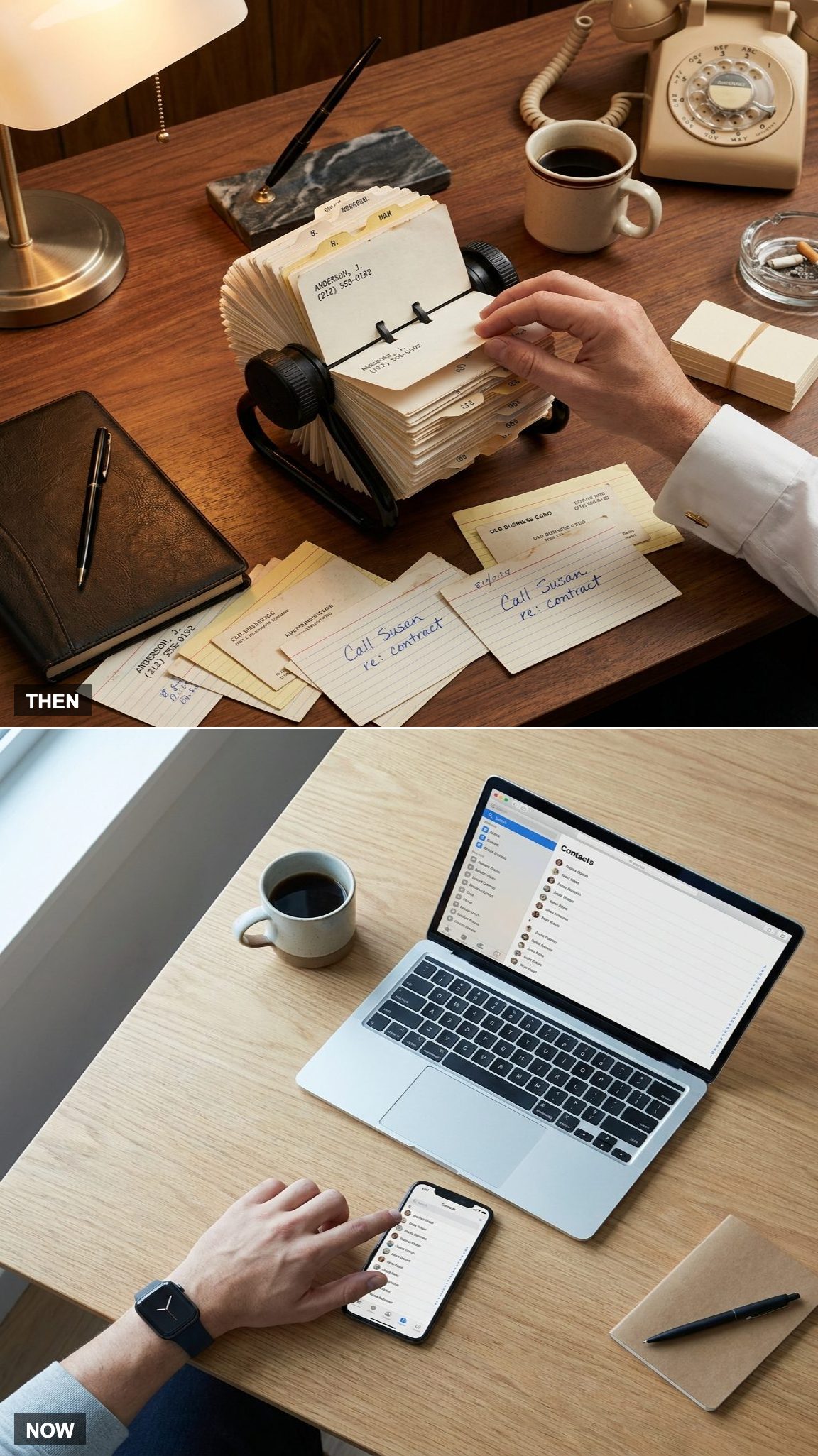
Losing your Rolodex was a career event. People kept them locked in desk drawers. Some executives left one company for another and the first thing they took, before the framed diploma, before the coffee mug, was the wheel.
Now your contacts follow you across four devices without you doing anything. Lose your phone in a cab and the whole list is waiting on the next one. Convenient, yes. Also strangely weightless. Nobody has ever been fired for stealing a synced contact list, which is either progress or a sign that the list matters less than it used to.
Before: The Few Office Computers Used Bulky CRT Monitors | After: Nearly Every Desk Has a Slim Screen
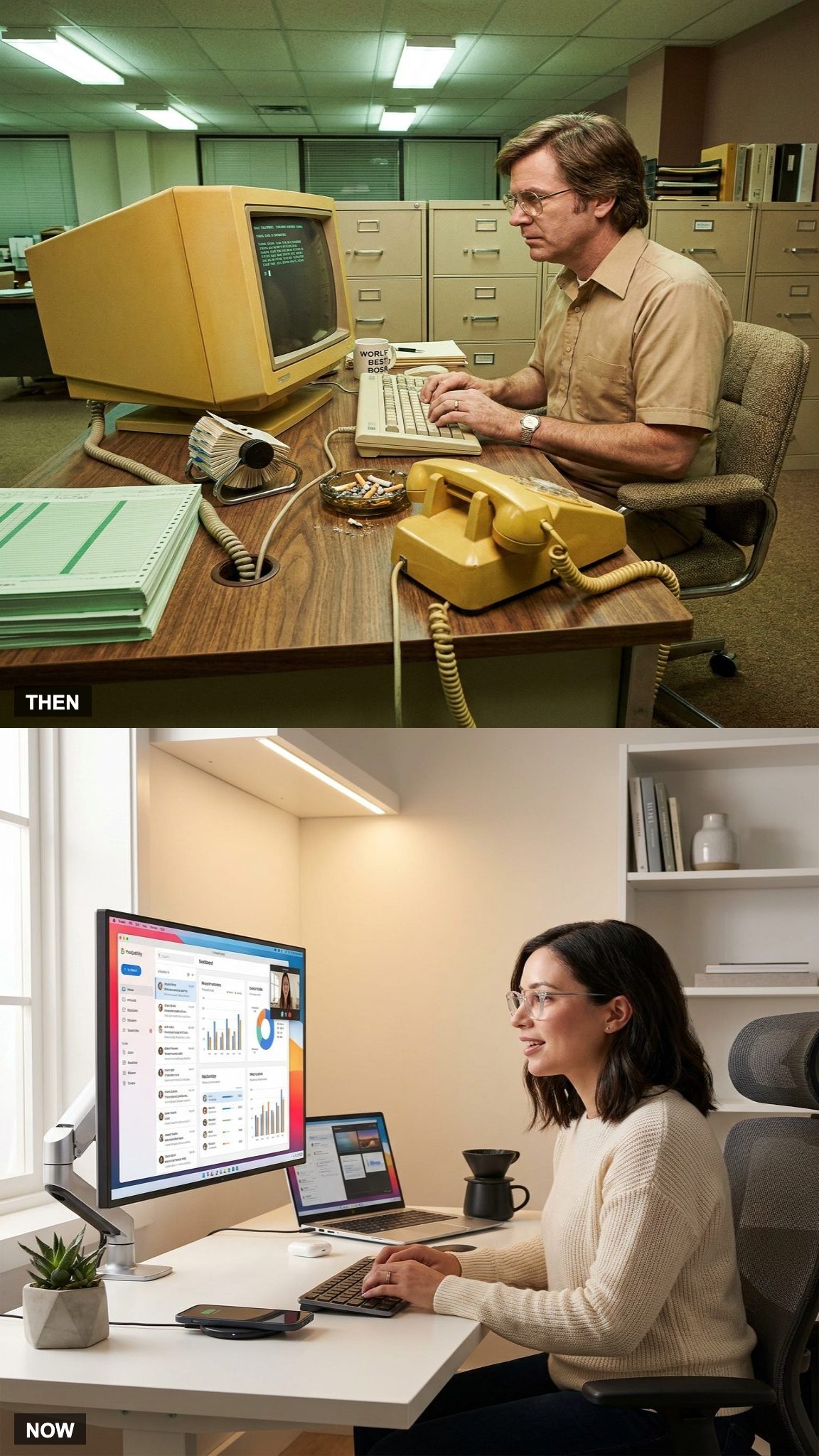
The CRT was furniture. You did not casually rearrange your desk because the monitor weighed forty pounds and you had cables threaded through drilled holes in the woodgrain laminate. The screen glowed green or amber, and if you stared at it for eight hours your eyes felt like they’d been rolled in sand.
Today’s monitor is thinner than a paperback and shows sixteen million colors nobody’s grandmother has names for. You can pick it up with one hand. The glow is easier on the eyes. The workday is longer, though, so it evens out.
Before: Fax Machines Were Mission-Critical | After: Digital Signatures Replace the Paper Trail
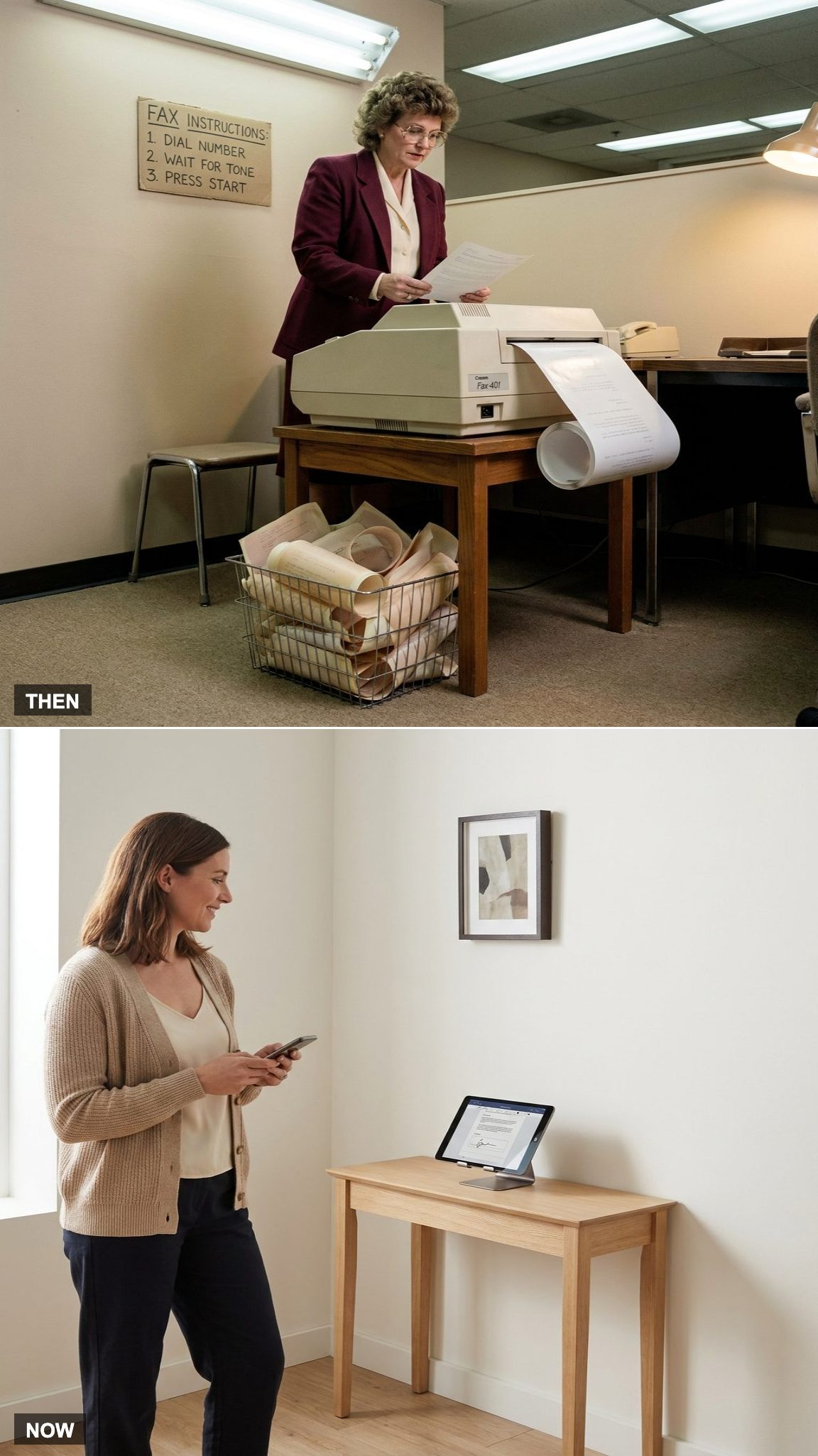
The fax machine had its own phone line, its own table, and often its own weather system, because that thermal paper curled up like a scared animal the second humidity changed. When it worked, it felt like magic. When it didn’t, someone was calling the manufacturer.
DocuSign killed it. A signature that used to require three phone calls, a printer, a fax, and a followup fax to confirm the fax now takes eleven seconds on a phone. Progress, mostly. Though nothing has ever quite matched the drama of a fax coming through at 4:59 on a Friday.
Before: Smoking Was Allowed in Many Offices | After: Smoke-Free Workplaces Are the Norm
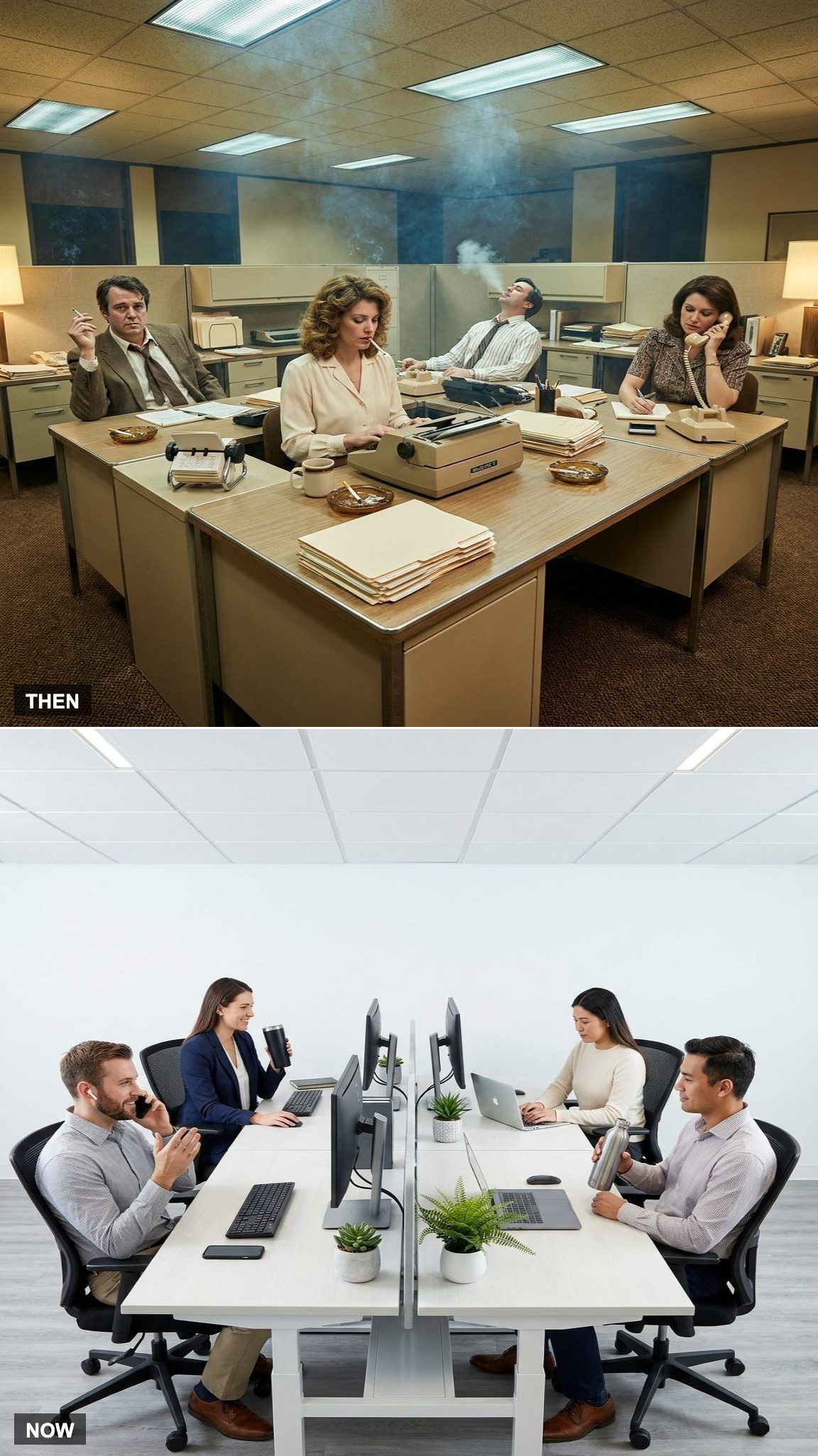
The air was blue. You’d walk into a conference room after a two-hour meeting and it looked like a diner in a mob movie. Ashtrays on every desk. Cigarette burns in the carpet, in the arm of every upholstered chair, in the veneer of the credenza. Your coat smelled like the office for three days after.
The Surgeon General had been telling everyone this was a bad idea since 1964. It took another twenty-five years for most offices to listen. Now the smokers stand outside in a small huddle by the loading dock, which is somehow both healthier and lonelier.
Before: Secretaries Typed Every Letter | After: Employees Create and Send Their Own Documents
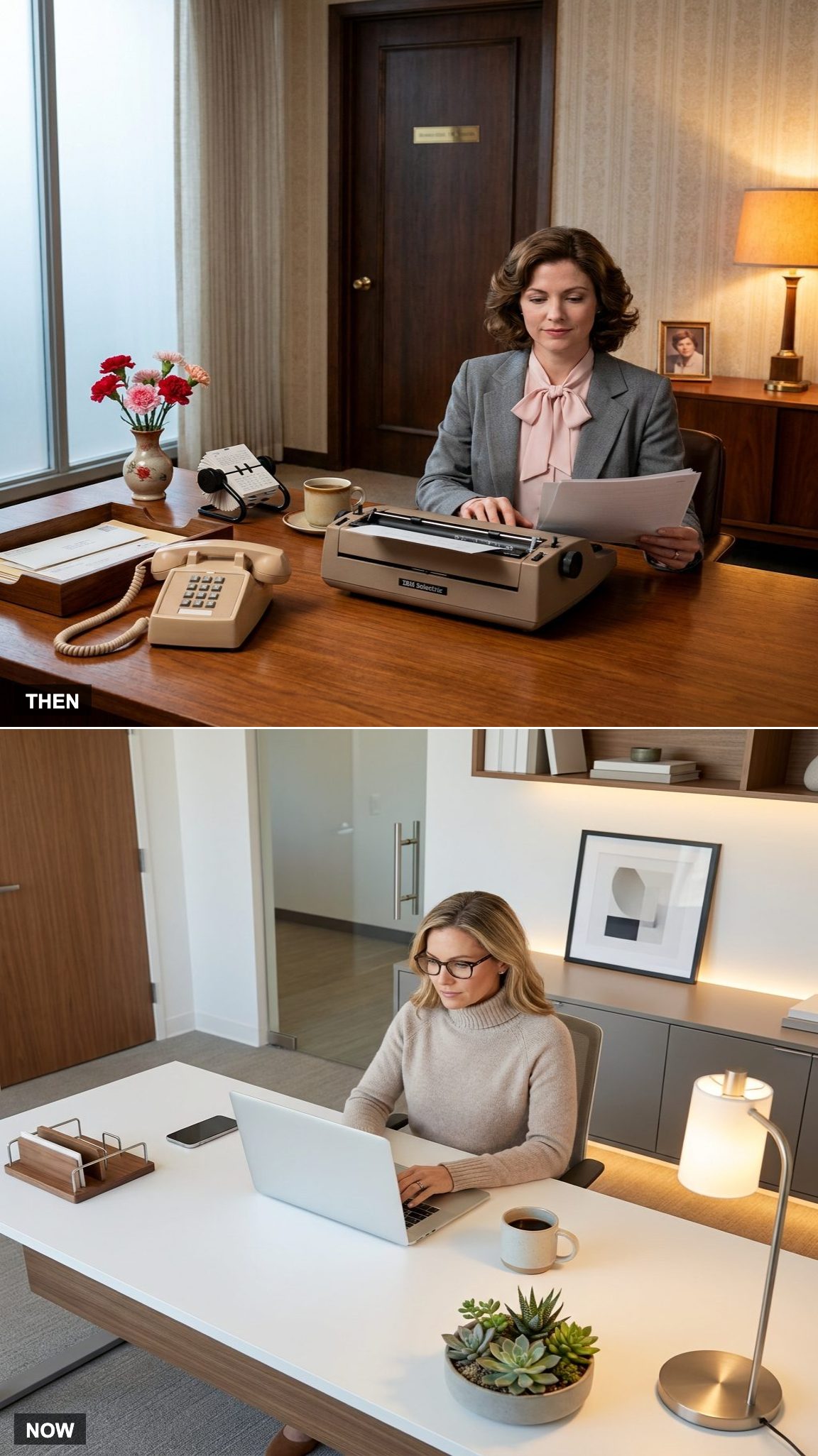
A vice president in 1980 did not know how to type. He didn’t need to. He dictated into a Dictaphone or scrawled on a legal pad, and by three in the afternoon it came back to him on letterhead, ready to sign. Somebody in a soft blouse did all of it, and she was often the smartest person on the floor.
That role disappeared. The VP now types his own emails, badly, at eleven at night, with typos his old secretary would have caught in her sleep. Something was gained and something was quietly lost, and anyone who worked in that world knows exactly what.
Before: Interoffice Memos Traveled on Paper | After: Instant Messaging Delivers Updates in Seconds
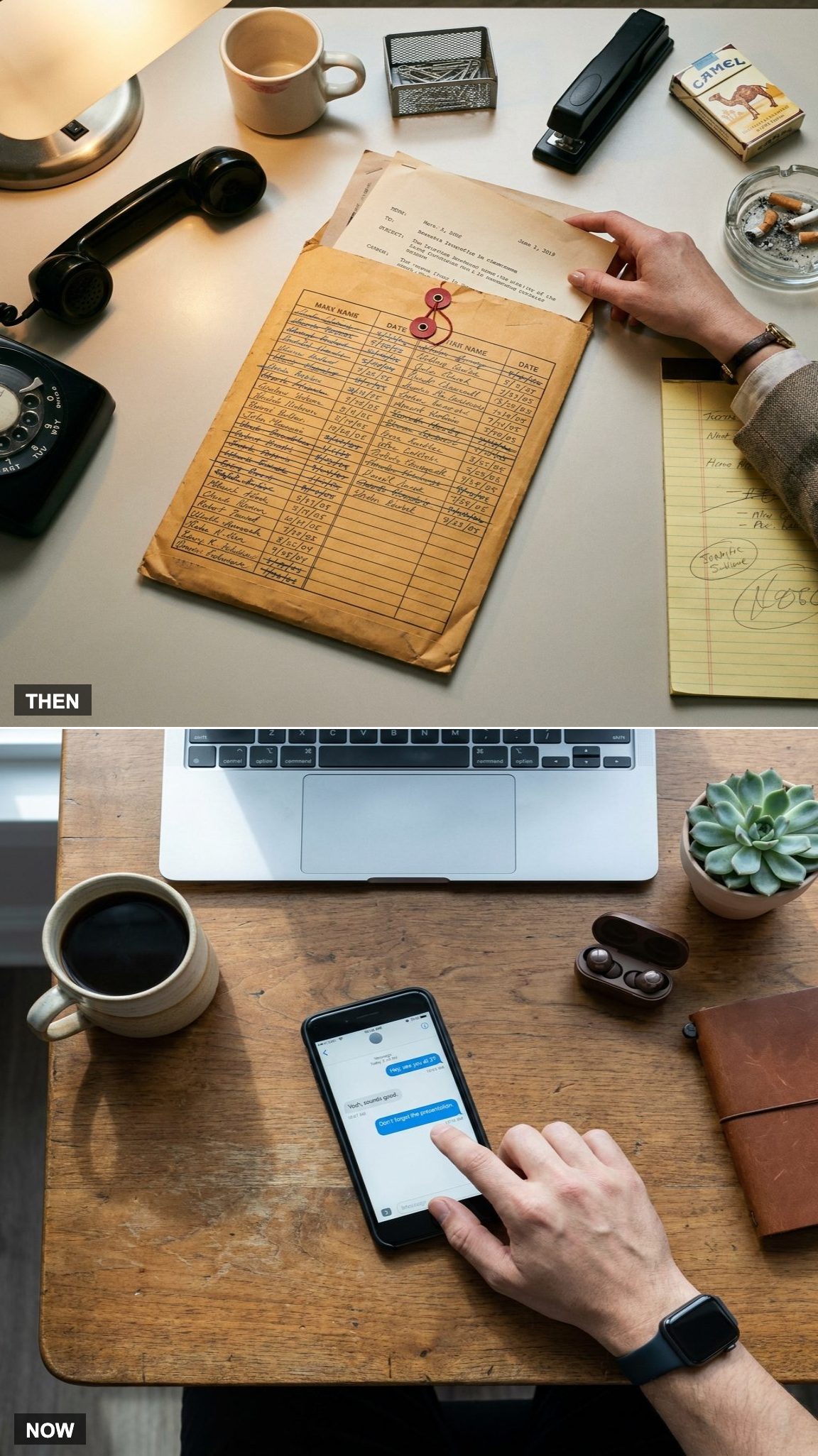
The interoffice envelope was the group chat of its era. Manila, string-tied, gridded with a column of names to cross out as it made its rounds. You could tell how old a memo was by how many people it had visited. The paper had a life.
Slack replaced the manila envelope and then kept going. Now the memo lands in twelve seconds. Then another one lands. Then forty-seven more before lunch. The old paper flow had a natural pace to it. The new flow has no pace at all, and that is either its greatest feature or its biggest problem depending on who you ask.
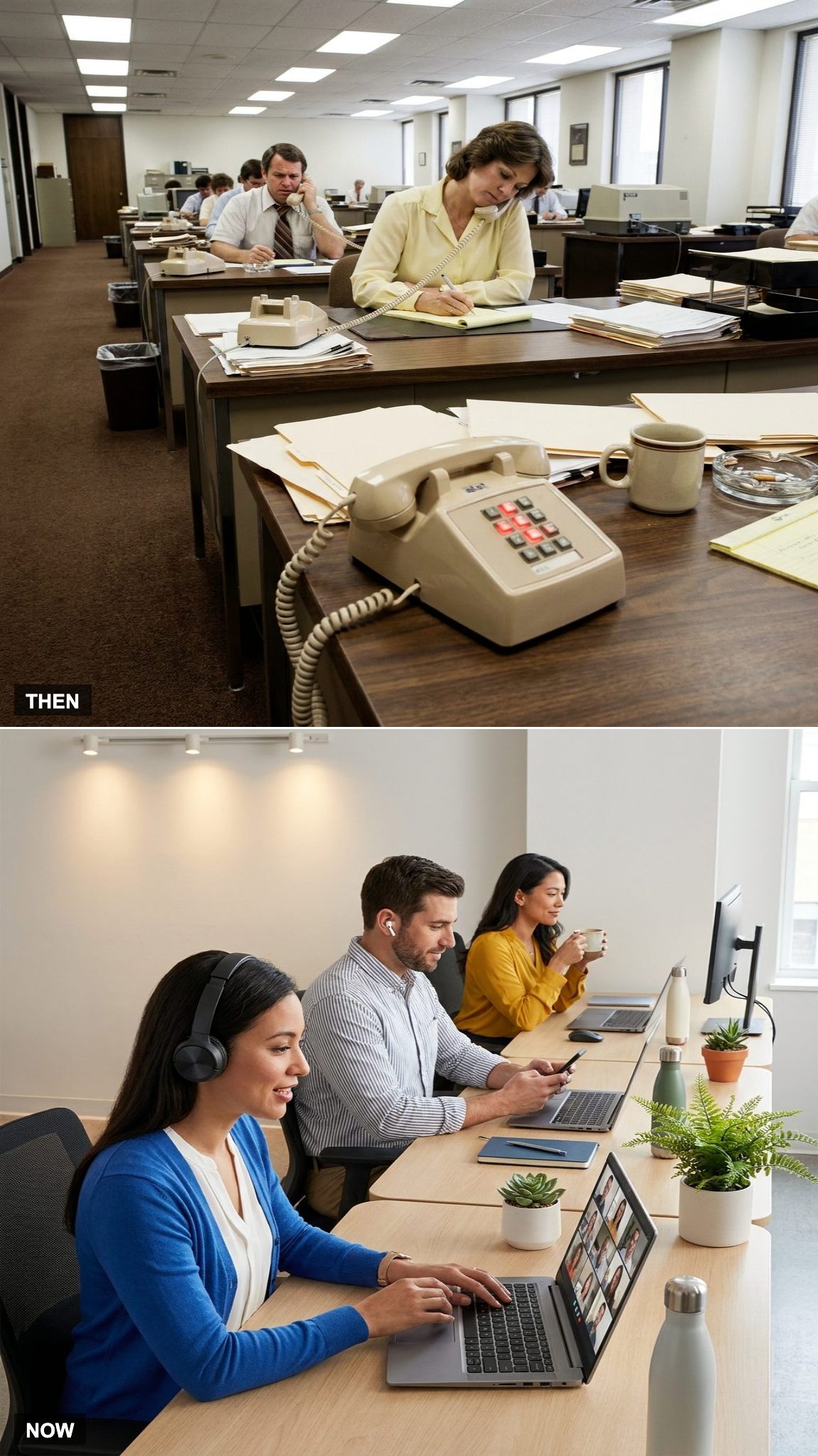
Before: Landline Phones Never Stopped Ringing | After: Video Calls and Mobile Apps Handle Most Meetings
Would you like to save this?
Ring ring. Ring ring. Somebody pick up line two. The 1980 office had a soundtrack, and it never stopped. Landline phones with coiled cords that stretched clear across the room while you paced. Voicemail wasn’t standard yet. If you missed the call, you missed it, and the little pink While You Were Out slip was going to tell you so.
The phones are quiet now. The meetings moved onto a screen. You can see everyone’s kitchen, everyone’s dog, the framed print behind them that they picked out during lockdown. It’s more intimate and somehow more exhausting, and nobody has quite figured out why.
Before: Carbon Paper Made Copies | After: One Click Creates Unlimited Duplicates
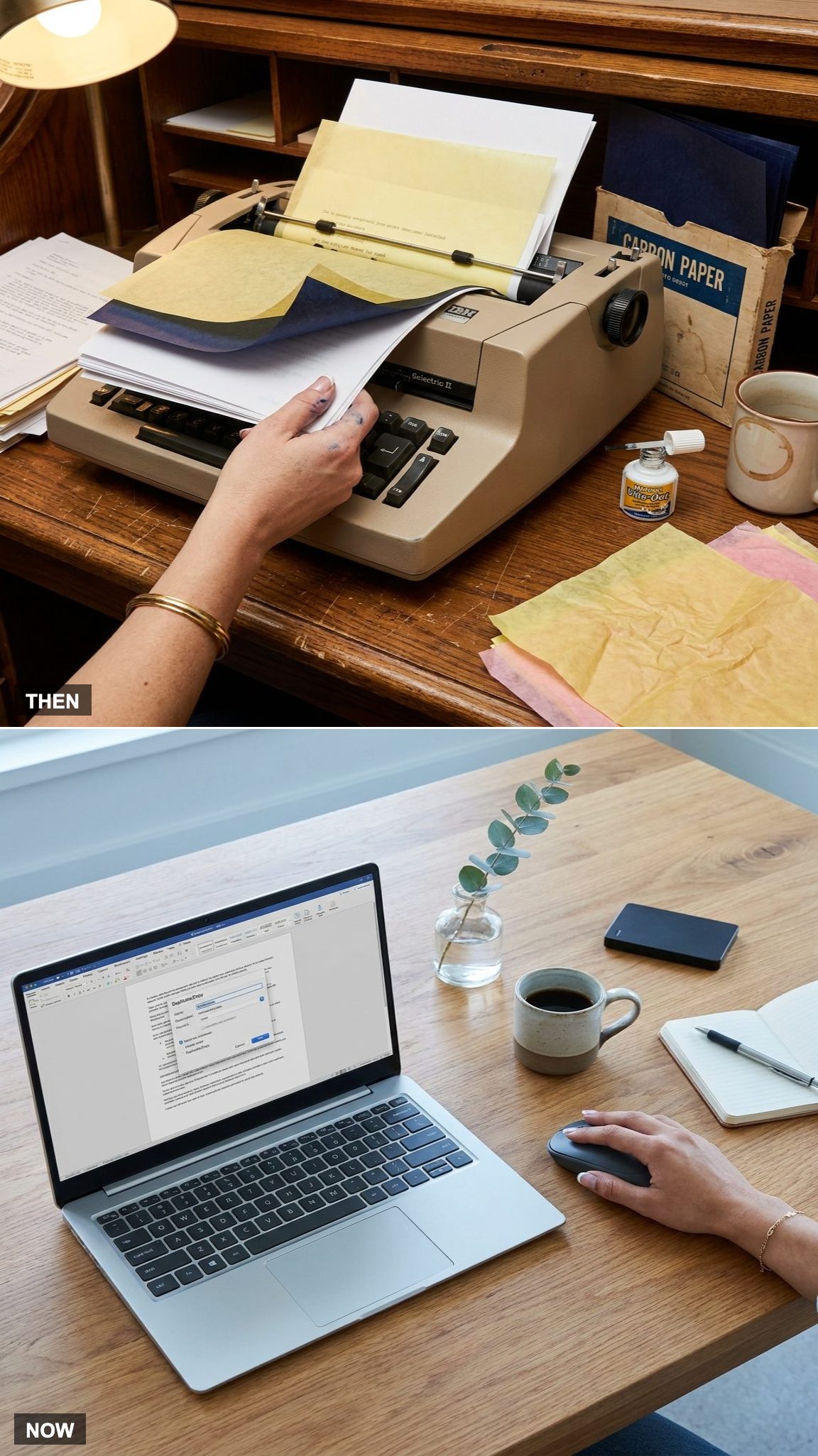
Carbon paper was violent. It stained fingers, blouses, and the corners of white shirts you thought were safe. It smelled faintly chemical. The blue copy underneath was always a little blurry, and if you made a typo, you were correcting it on three sheets at once with three separate dabs of Wite-Out, and if you were unlucky the pink flimsy underneath just had to live with the mistake.
Command-D. Command-D. Command-D. That’s the whole story now. Infinite copies, zero smudges, and a filing system that doesn’t need Doris.
The Wall Calendar That Ran the Whole Company
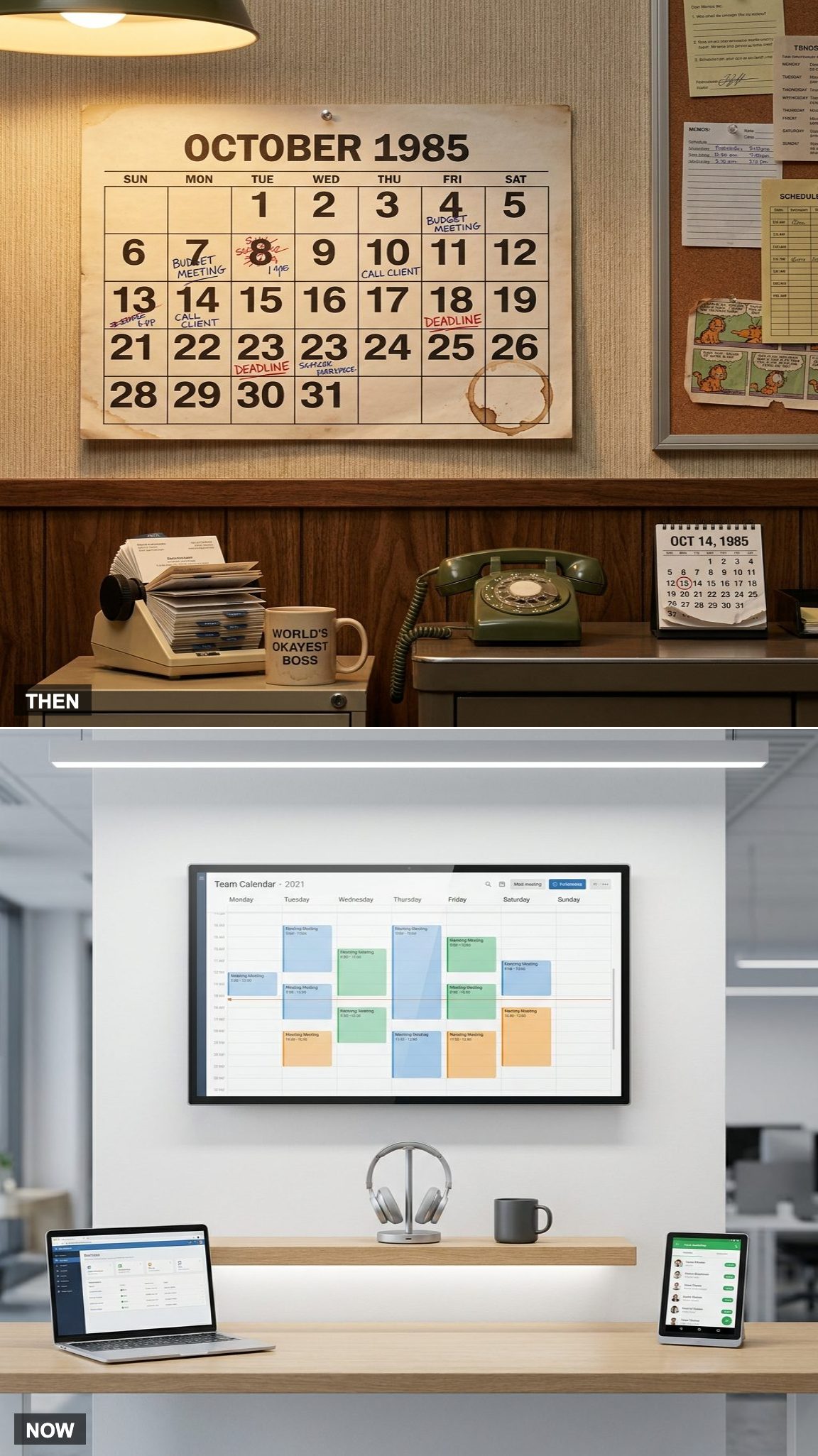
One paper calendar ran the entire department in 1980. Blue pen for regular business, red pen for emergencies, and a coffee ring in the corner that had been there since Reagan was elected. Sharon in accounting forgot to write down the budget review? Then the budget review did not exist.
Your calendar now lives everywhere at once. Phone knows. Laptop knows. Your coworker in Denver knows about the dentist appointment at 2:15 because someone accidentally set it to public. Nothing slips anymore, which is both the upside and the whole problem.
The Supply Drawer That Held a Small Fortune
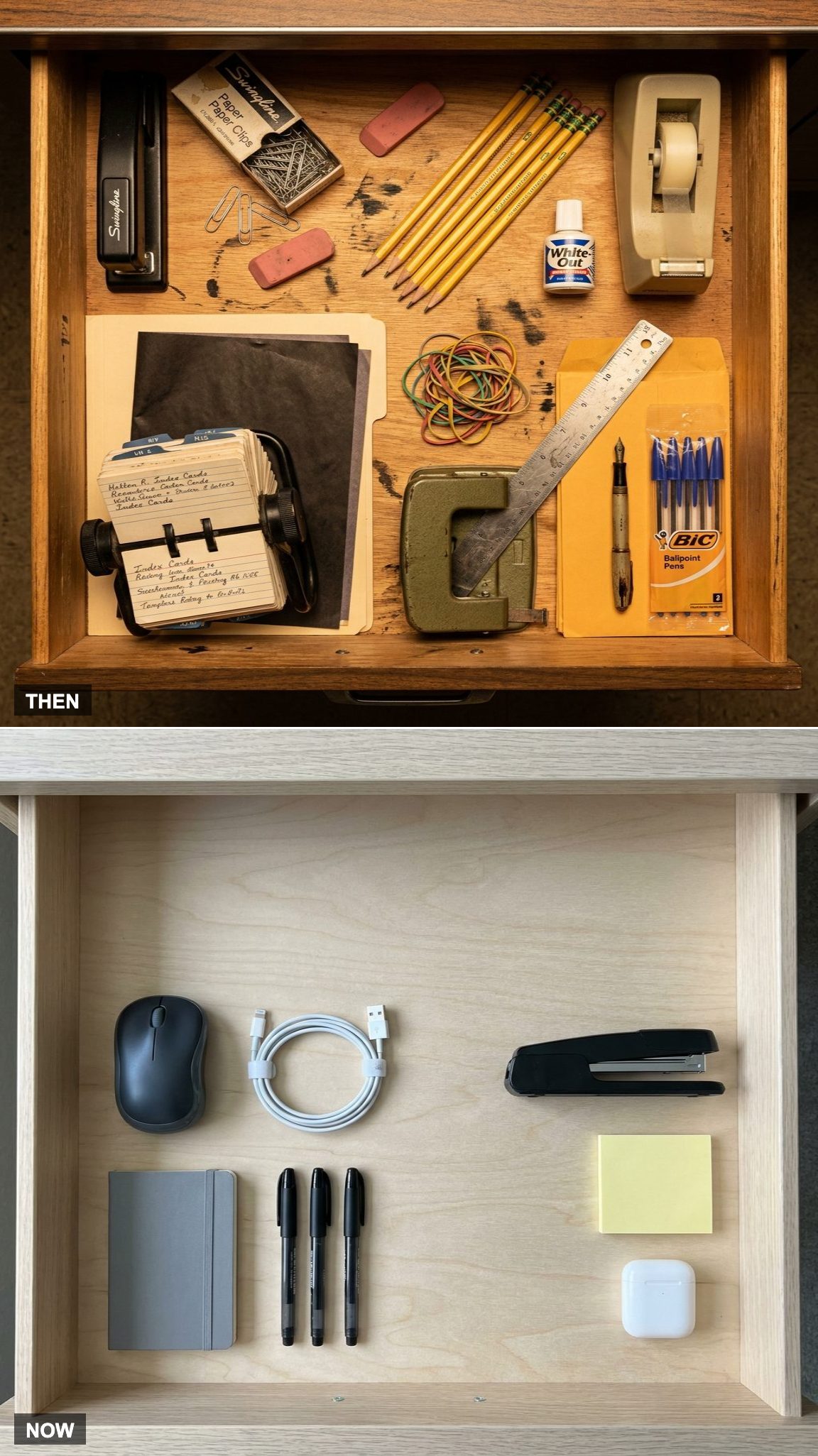
The supply drawer was a small hardware store. Staplers heavy enough to break a toe, White-Out that dried into little crusts around the cap, carbon paper that turned your pinky blue if you were not careful, and every task had its own physical object with its own weight and smell.
Now the drawer holds a charging cable and some regret. The stapler survived. Everything else got absorbed into software you cannot see, cannot smell, and cannot throw across the room when it jams.
The Meeting That Required a Whole Room
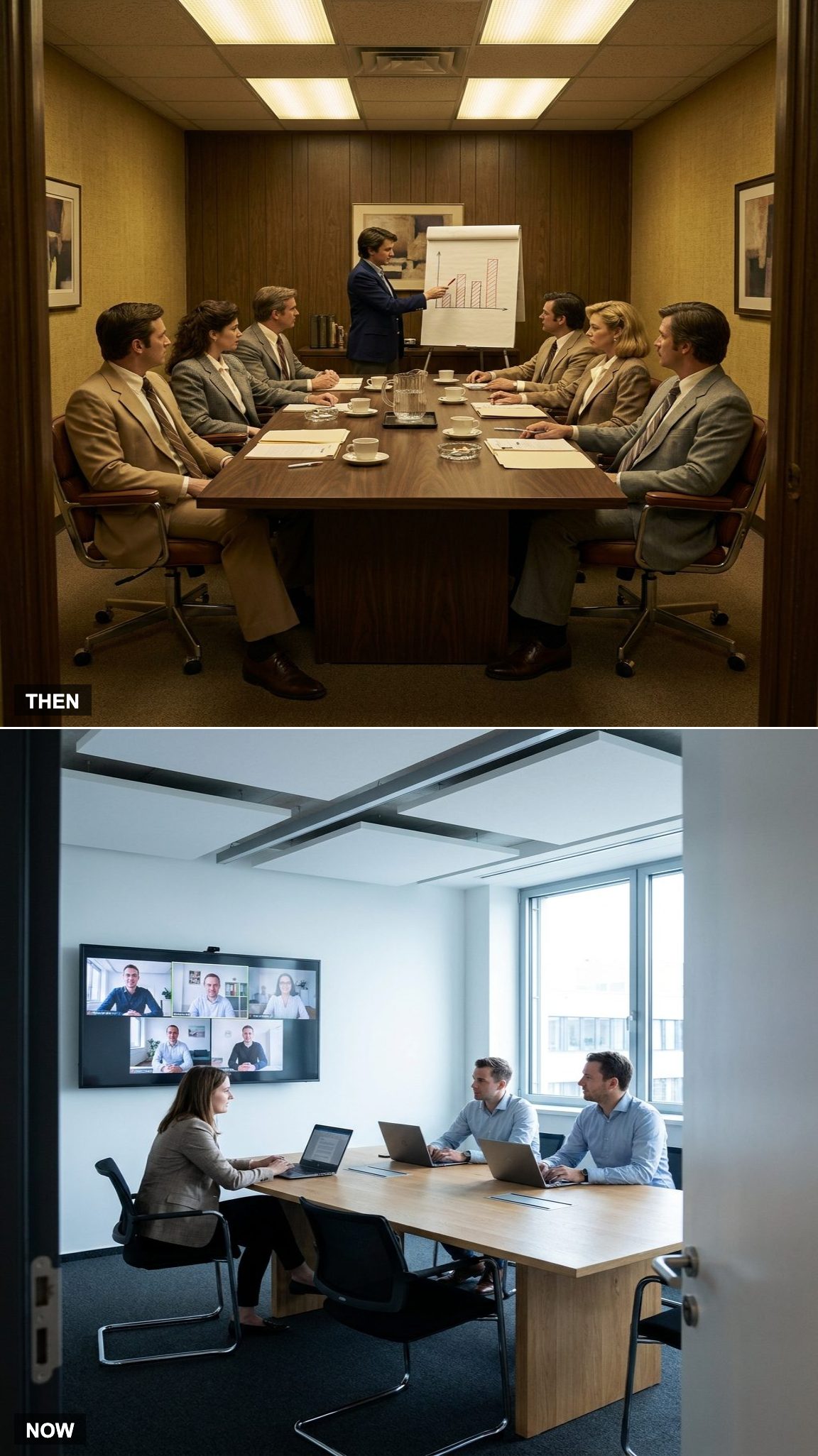
A meeting once meant gathering everyone around the same table. Legal pads opened. Coffee poured. The department head took the chair at one end, and nobody started until the final person had hurried in carrying a folder and an apology.
The room did more than hold people. It established the hierarchy. Who sat beside the boss mattered. Who got stuck near the door mattered. Side conversations happened in glances, not private messages, and the temperature was always wrong for at least half the group.
Now the room is optional. Some people sit around the table while the rest appear in small rectangles on a screen, each joining from a different city, time zone, or spare bedroom. The discussion travels farther with less effort. What gets lost is the part that happened before and after—the five-minute exchange in the hallway where the real decision was often made.
The Computer Nobody Owned
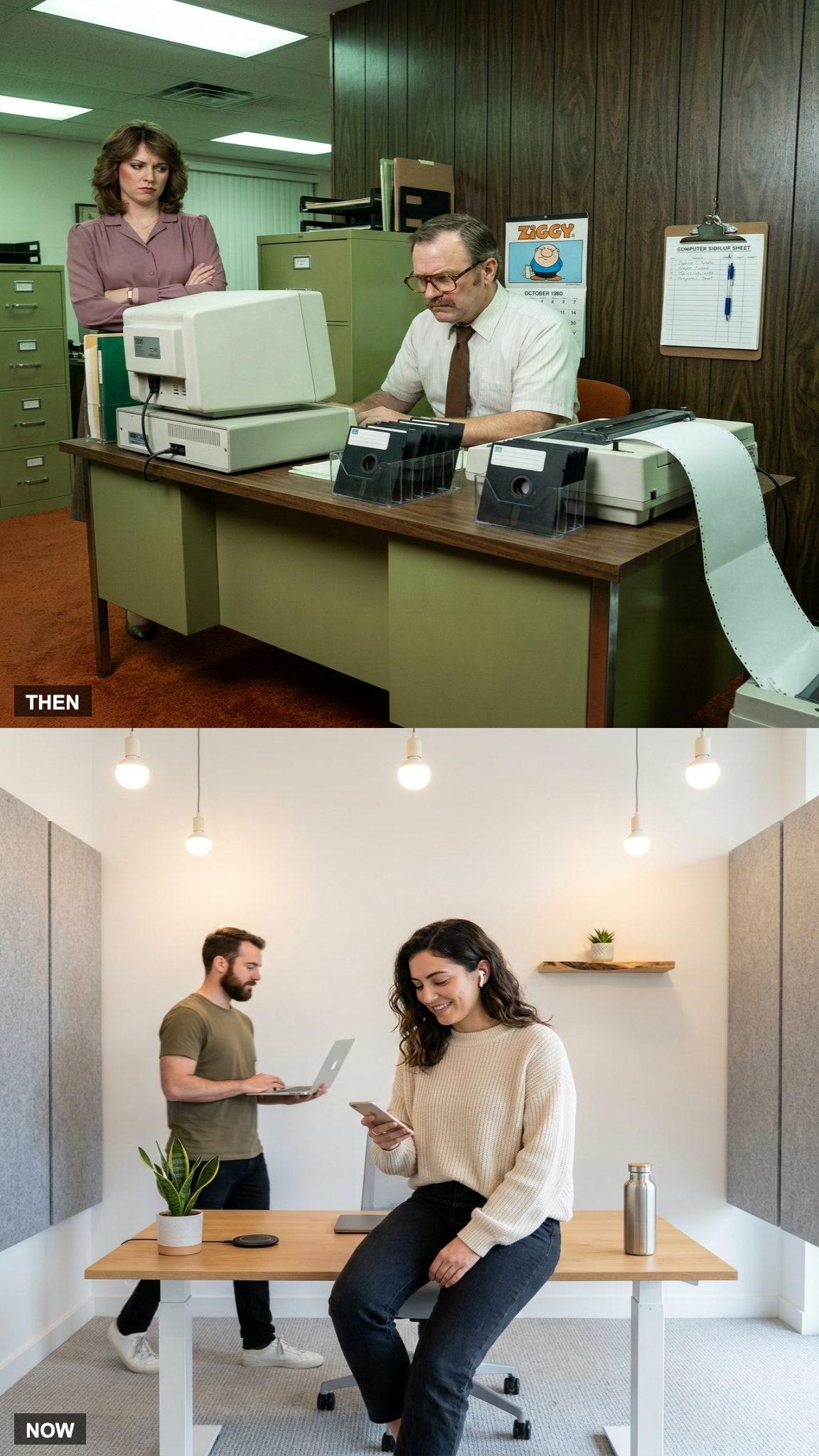
There was one computer. It sat in the corner of the office like a temple, and you signed up on a clipboard for time on it. If your name landed after Bob’s and Bob was elbow-deep in a spreadsheet, you waited for Bob.
The entry-level intern now has more processing power in a pocket than the entire office had in 1981. Not hyperbole. Arithmetic.
The Long-Distance Call That Came With Guilt
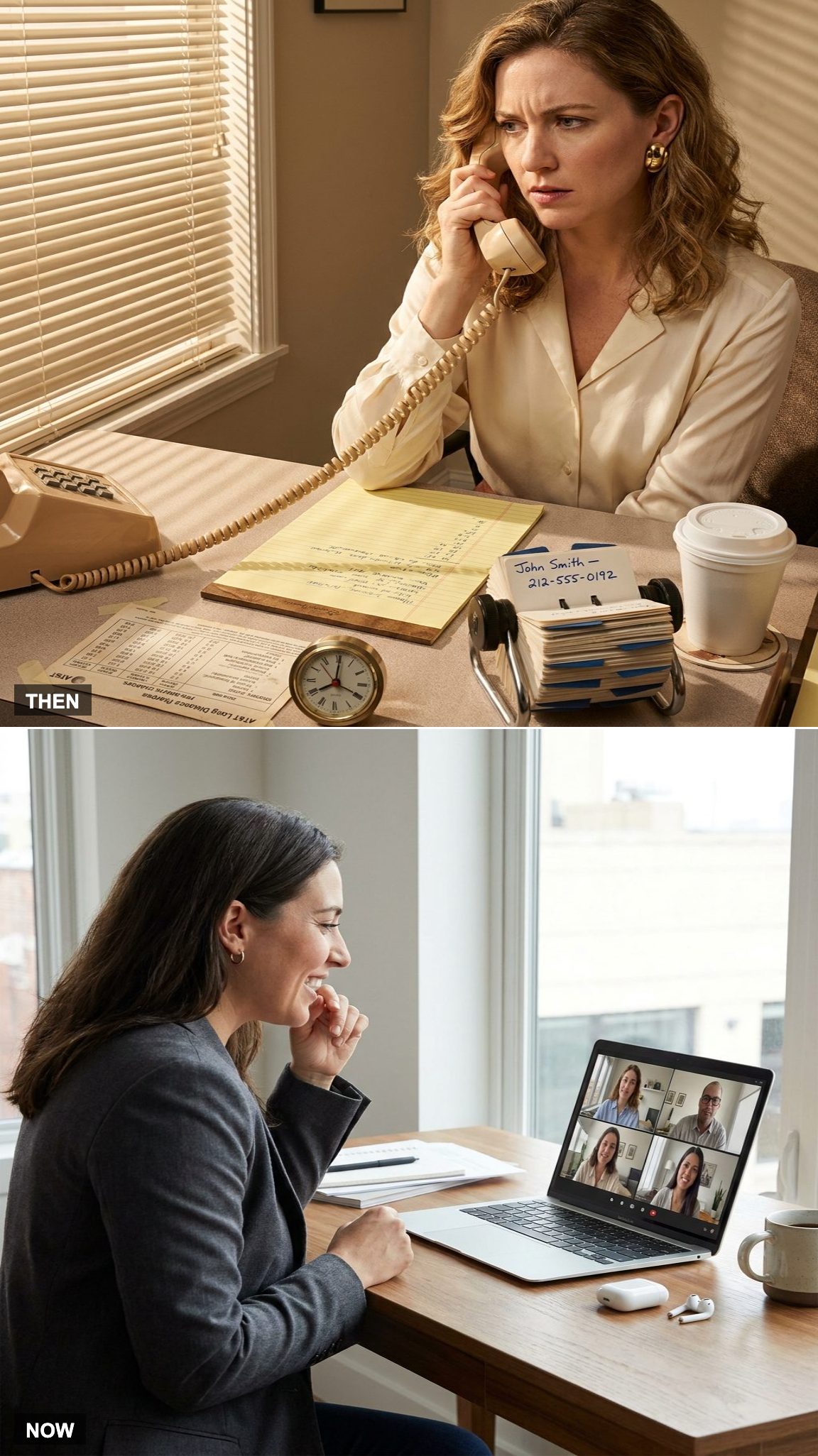
Calling the London office was a decision. You planned it. You wrote down what you needed to say beforehand so you were not wasting expensive minutes fumbling for words. Some companies required managers to approve international calls in advance.
Now you video call Tokyo from the kitchen for free while wearing pajama pants below the frame. The cost of talking to another human on the other side of the world has collapsed to essentially zero, and we still find reasons not to pick up.
The Cubicle Farm With No Escape
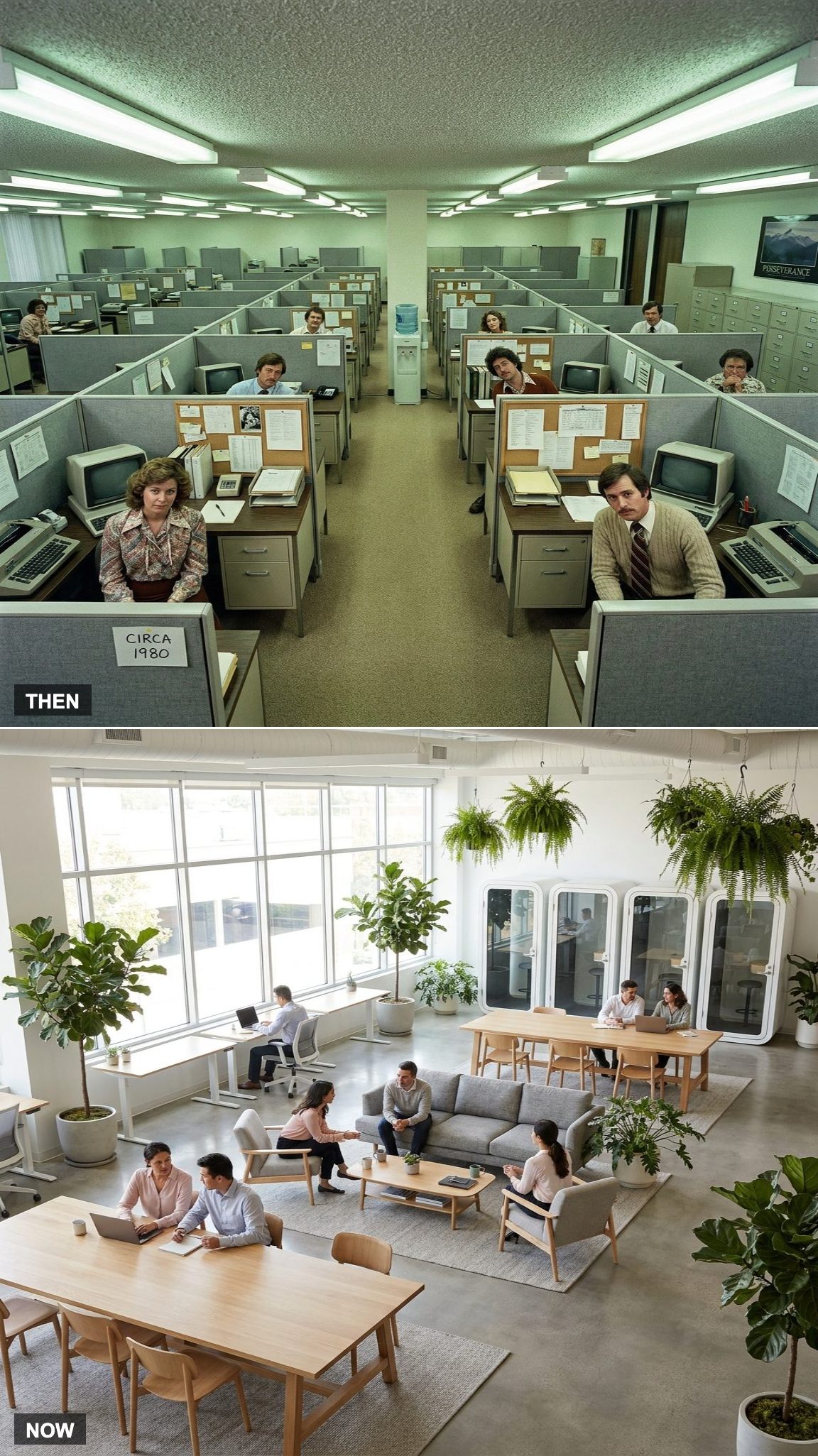
The cubicle was invented to give workers privacy and dignity. That was the original pitch, anyway. Then landlords and CFOs got hold of it and turned it into a fabric-walled maze that reduced human beings to fluorescent-lit gophers popping up to ask about the coffee.
The pendulum swung. Then swung back. Then swung sideways for good measure. Today’s office looks more like a boutique hotel lobby than a workplace, which is either progress or a very expensive way of admitting we still have not figured this out.
The Overhead Projector With the Warm Whir
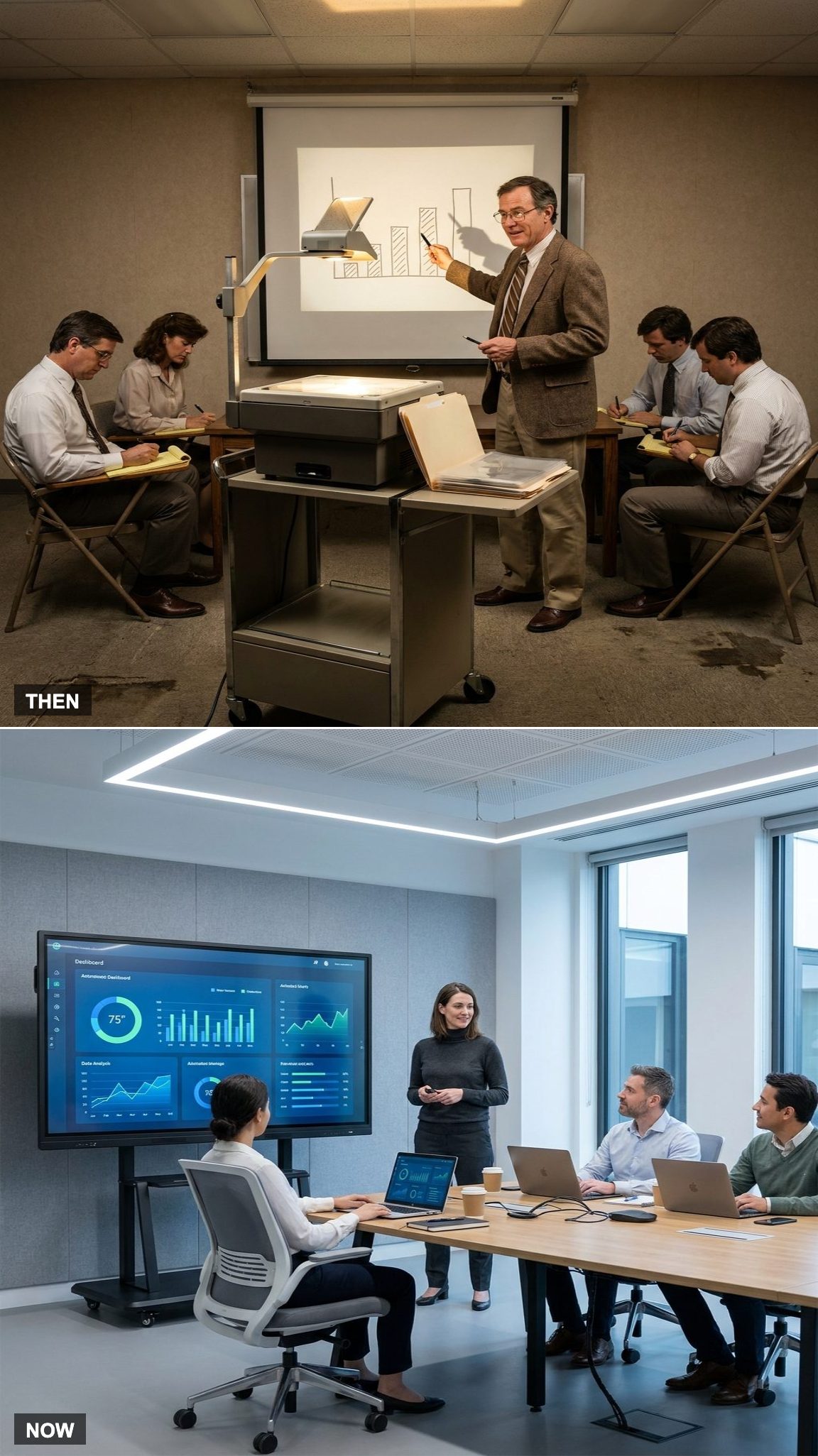
The overhead projector had a specific sound. A warm mechanical whir with a little wobble in it, audible from the hallway, and you knew a presentation was happening before you turned the corner. The transparencies smelled faintly of solvent. Drop the stack out of order and you were done.
Now the presenter walks in, opens a laptop, mirrors the screen wirelessly, and starts talking within eight seconds. Nobody hears anything. Nobody smells anything. The magic is gone, but so is the moment the bulb burned out mid-slide and the whole room groaned in unison.
The Mailroom That Ran on Paper Cuts
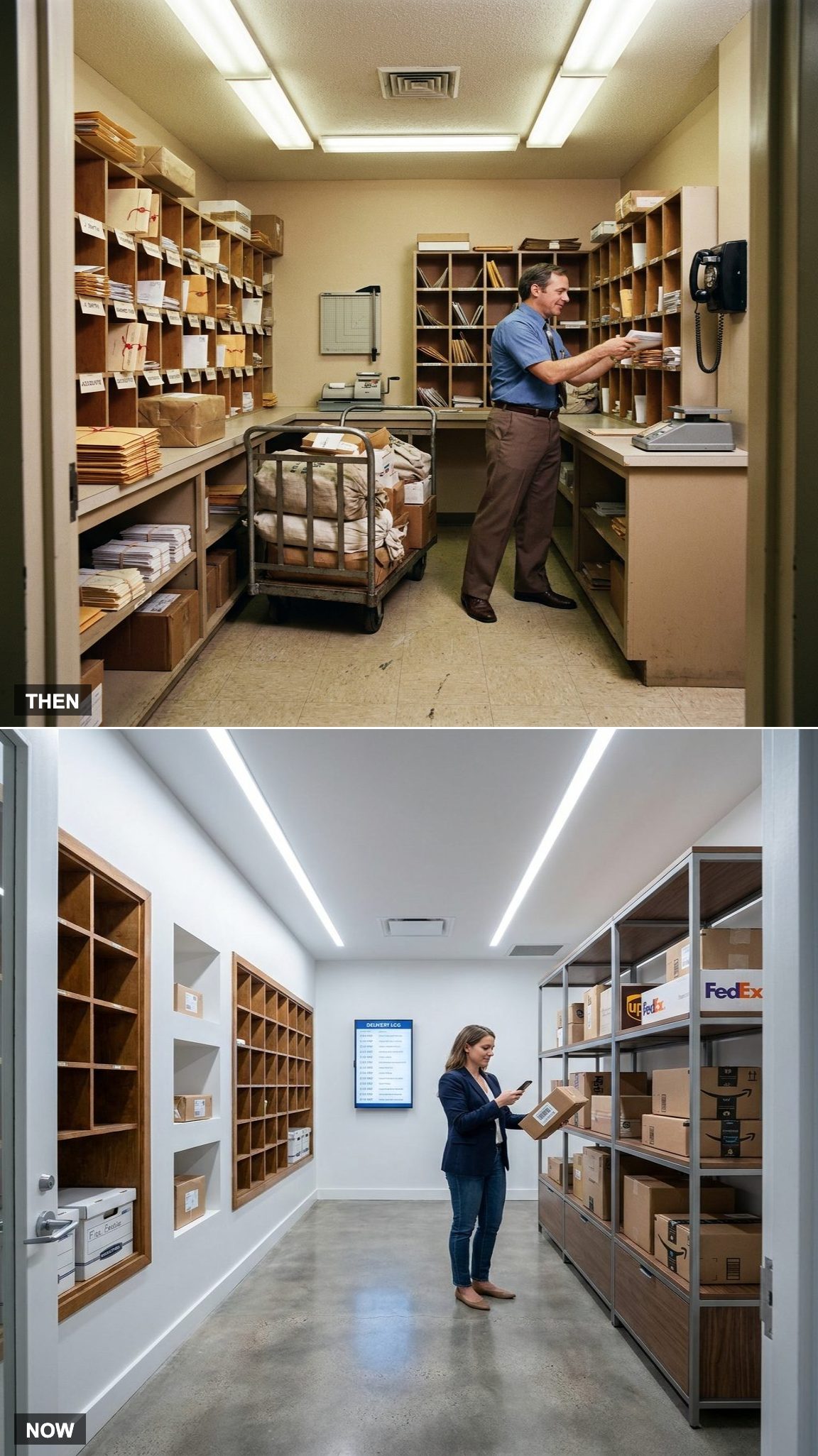
The mailroom was a whole ecosystem, and the guys who had worked there for twenty years knew everyone’s handwriting on sight. Interoffice memos moved through those pigeonholes like blood through veins. Get on the mailroom guy’s bad side and your Christmas bonus notification would somehow arrive on December 27th, in a crumpled envelope, addressed to a former employee.
Now the mailroom is a shelf. Occasionally a package lands on it. Everything else moves through inboxes at the speed of light and piles up at exactly the same rate paper used to.
The Punch Clock That Owned Your Morning
Would you like to save this?
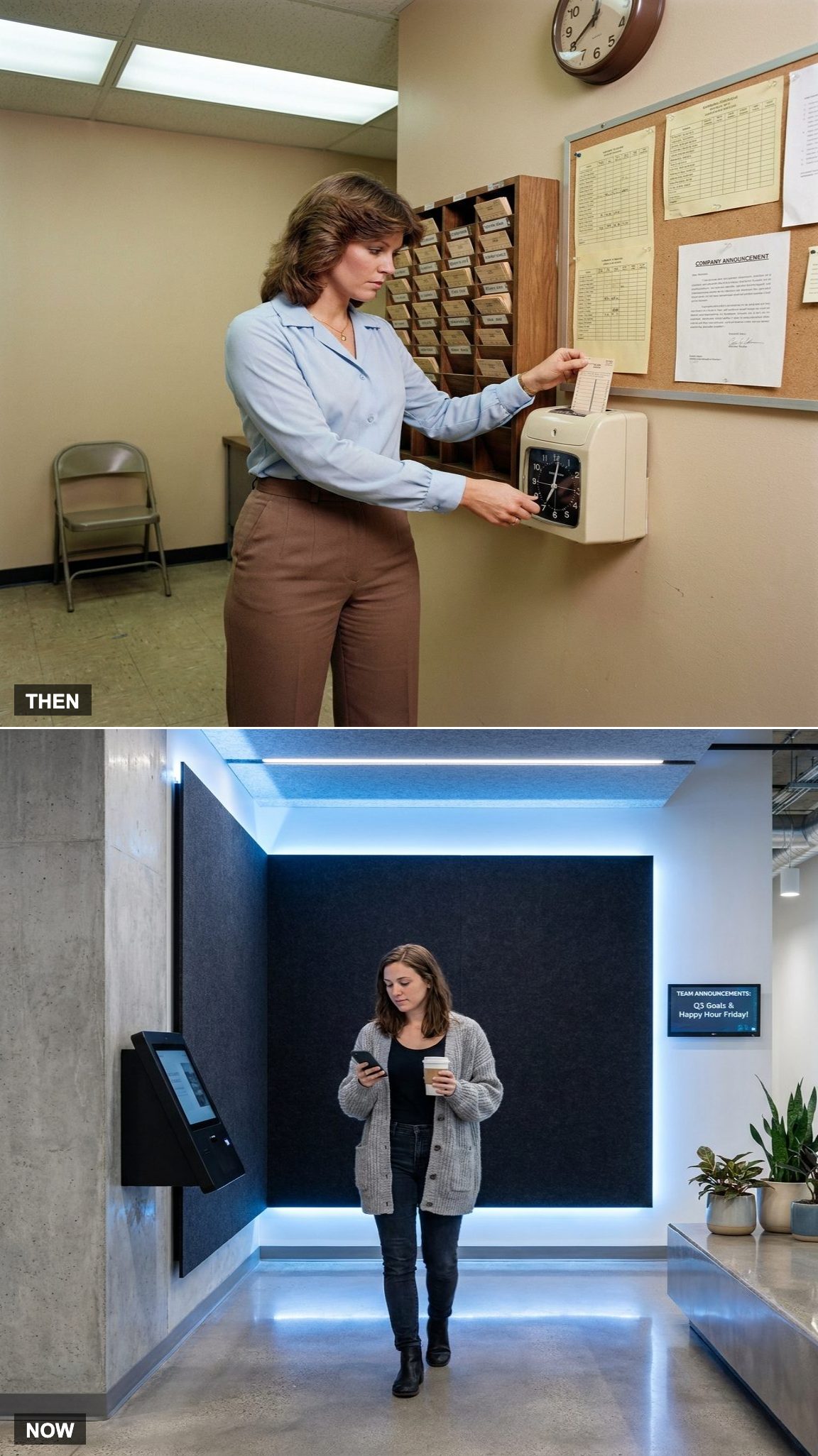
The punch clock did not care about traffic, a sick kid, or the fact that your car would not start. It clicked, it stamped, and the ink smudge on your card was the objective truth of your working life.
Some people now log in at 6am and finish by 2pm. Others start at 10 and stop at 8. The clock still exists somewhere, but it has stopped being the boss.
The Reference Library on the Third Shelf
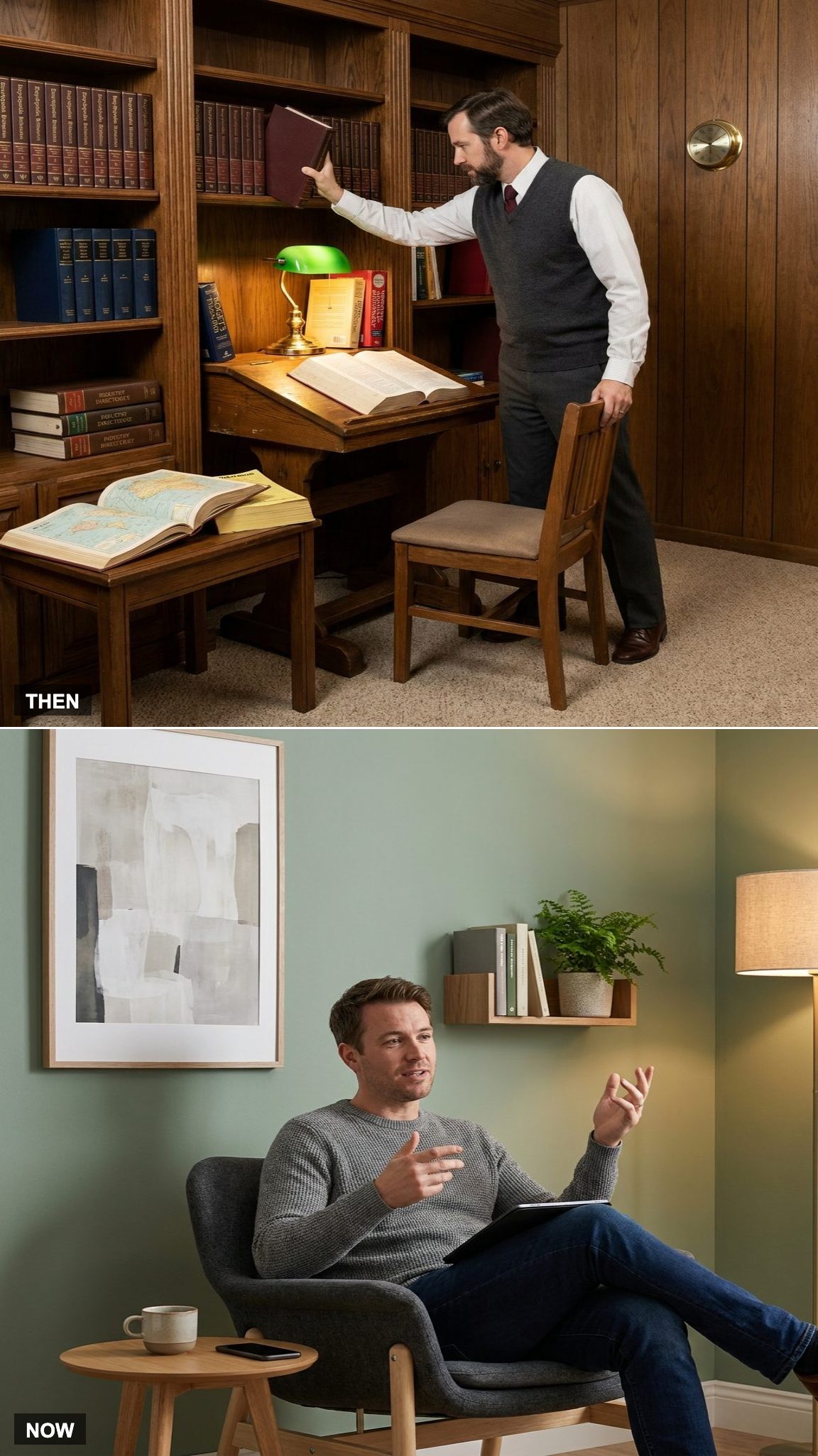
Every office had a shelf. Encyclopedia Britannica in matching maroon spines, a dictionary big enough to concuss someone, and a Yellow Pages that weighed more than a toddler. Need the capital of Botswana? You walked to the shelf and you found out.
Ask the little speaker on your desk now and the answer arrives in three seconds. The shelf became decorative, then vanished entirely. We gained speed. We lost the small pleasure of pulling a book down, opening it, and stumbling onto something you were not looking for on the way to what you were.
The reference shelf was the last place in the office where you could get productively lost.
The Desk: From Paper Avalanche to Clean Slate
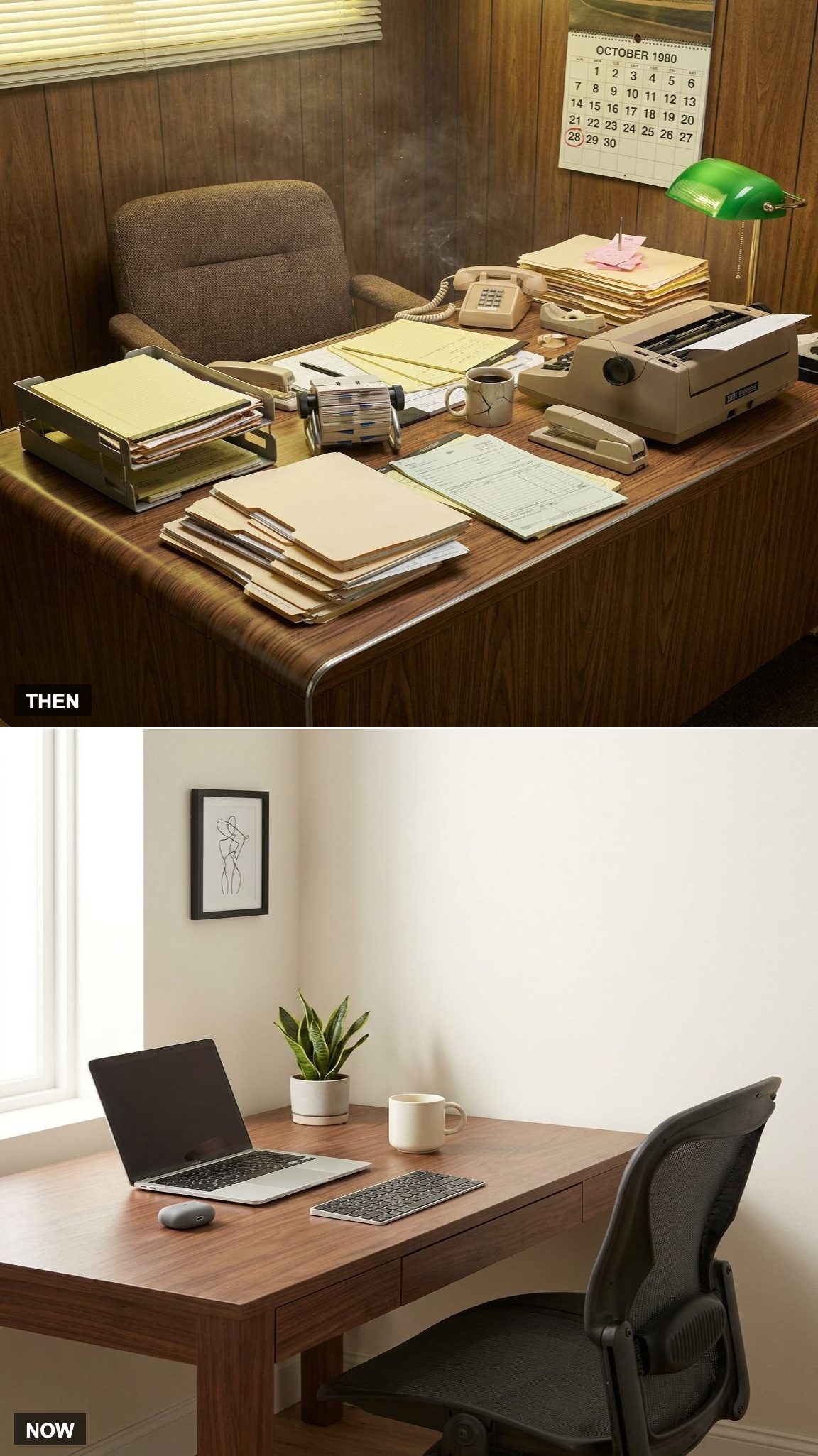
The 1980 desk was a paper landfill with a person attached to it — manila folders three deep, a Rolodex thicker than a paperback, carbon-copy forms in triplicate, and a spike full of pink message slips that meant someone somewhere was waiting for a callback. Months could pass before you saw the wood grain again.
The modern desk has almost nothing on it. A laptop, a mug, maybe a plant. The clutter didn’t vanish — it moved into the machine.
The Copier: Warm Machine, Cold Sweat
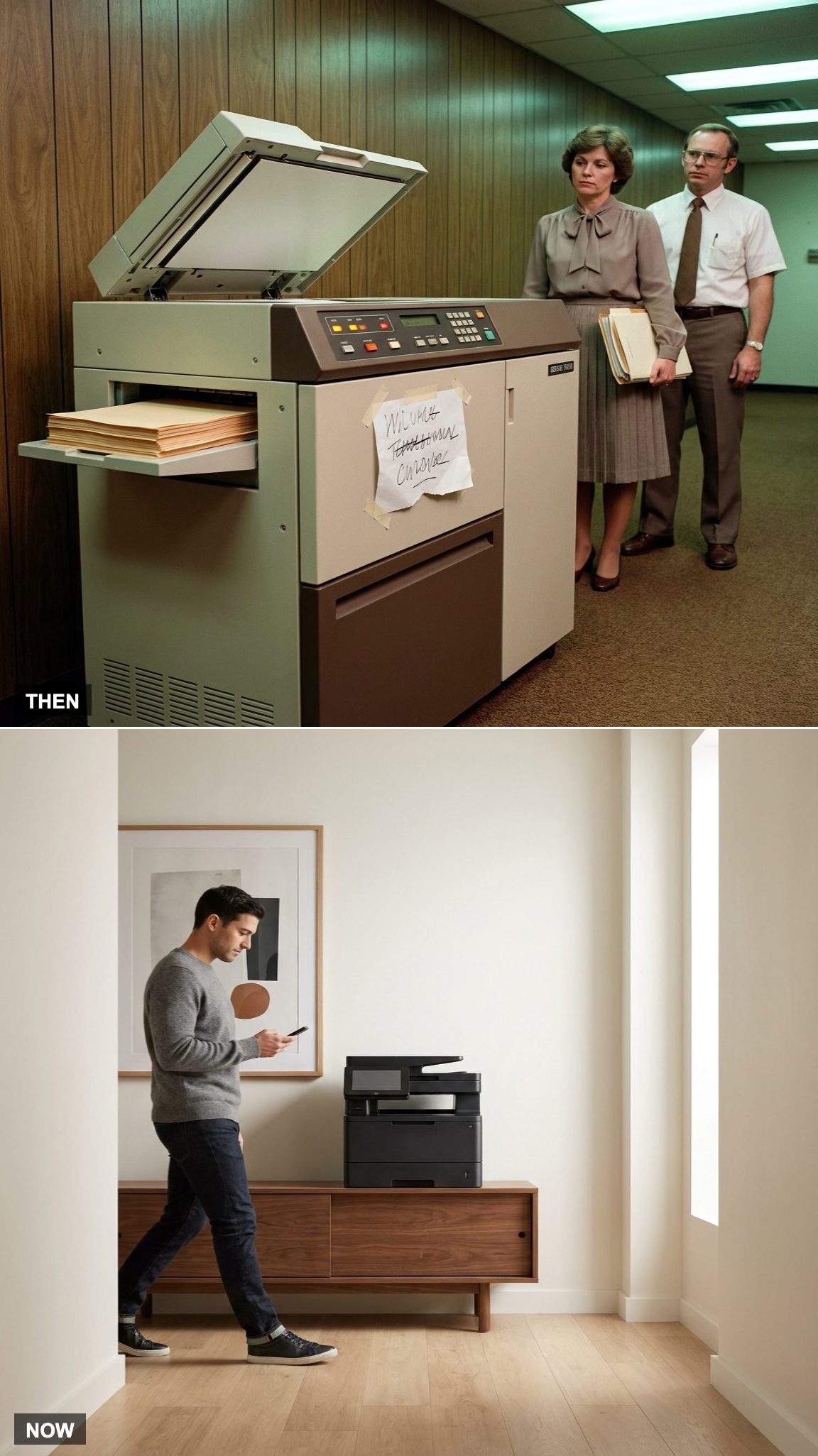
The copier had its own weather system — warm to the touch, faintly chemical, and it jammed at the worst possible moment every single time. You learned which tray to pull, which lever to lift, how to fish a shredded original out of the rollers without tearing it worse. A whole skill set, gone.
Now the printer sits in the corner like a houseplant nobody waters. Most days, nothing. When it does run, one person walks over, picks up two pages, walks away.
The Client Meeting: From Red-Eye Flight to Video Call
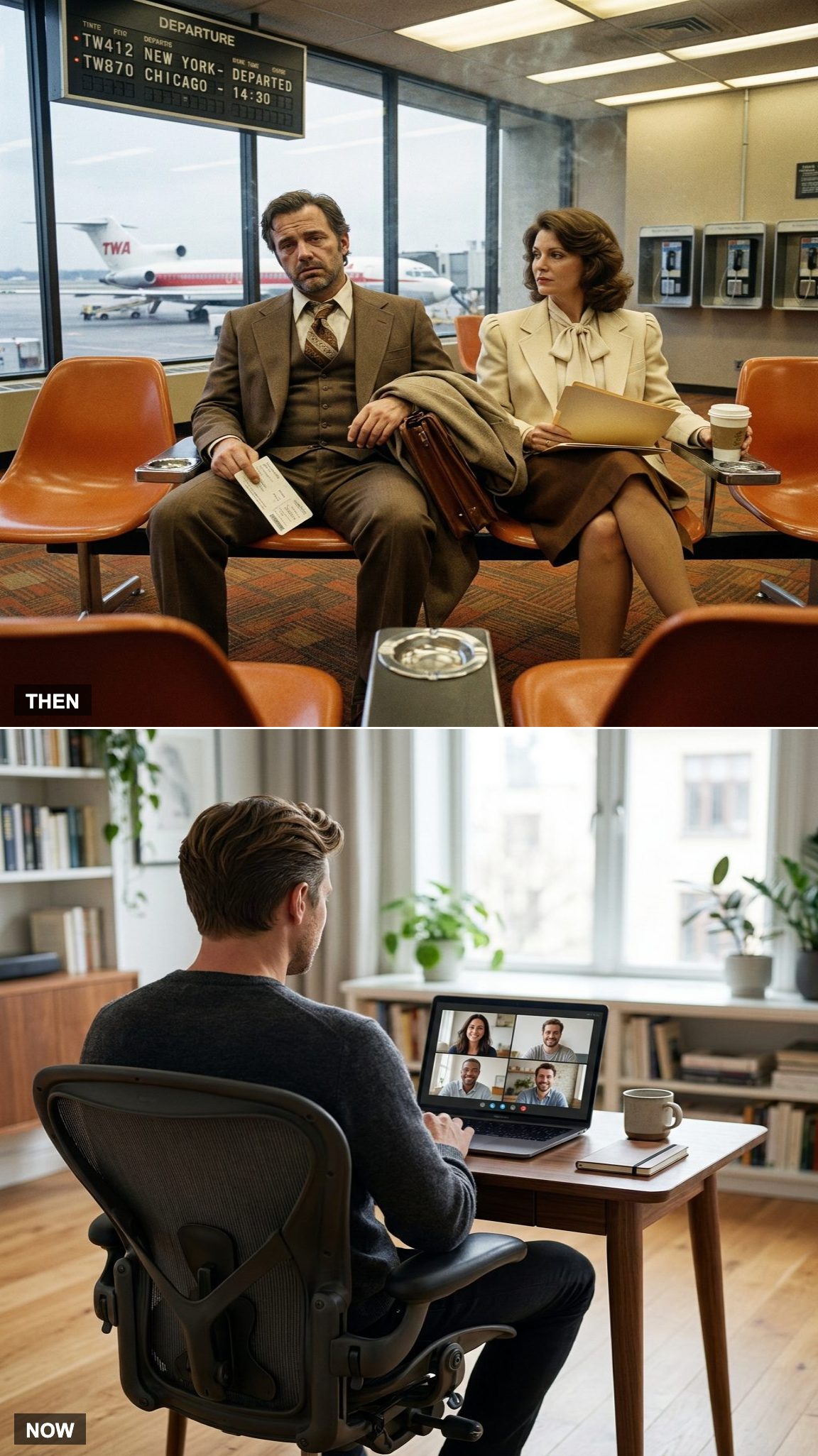
In 1980, closing a deal meant getting on a plane. You flew Sunday night, took the meeting Monday morning, ate a hotel steak, and flew home Tuesday looking like you’d been through a war. The briefcase weighed twelve pounds because it was full of paper you couldn’t fax.
Now the same conversation happens from a spare bedroom in socks, and the deal closes just the same. Steak optional.
The Dress Code: Suits, Ties, and the Death of the Necktie
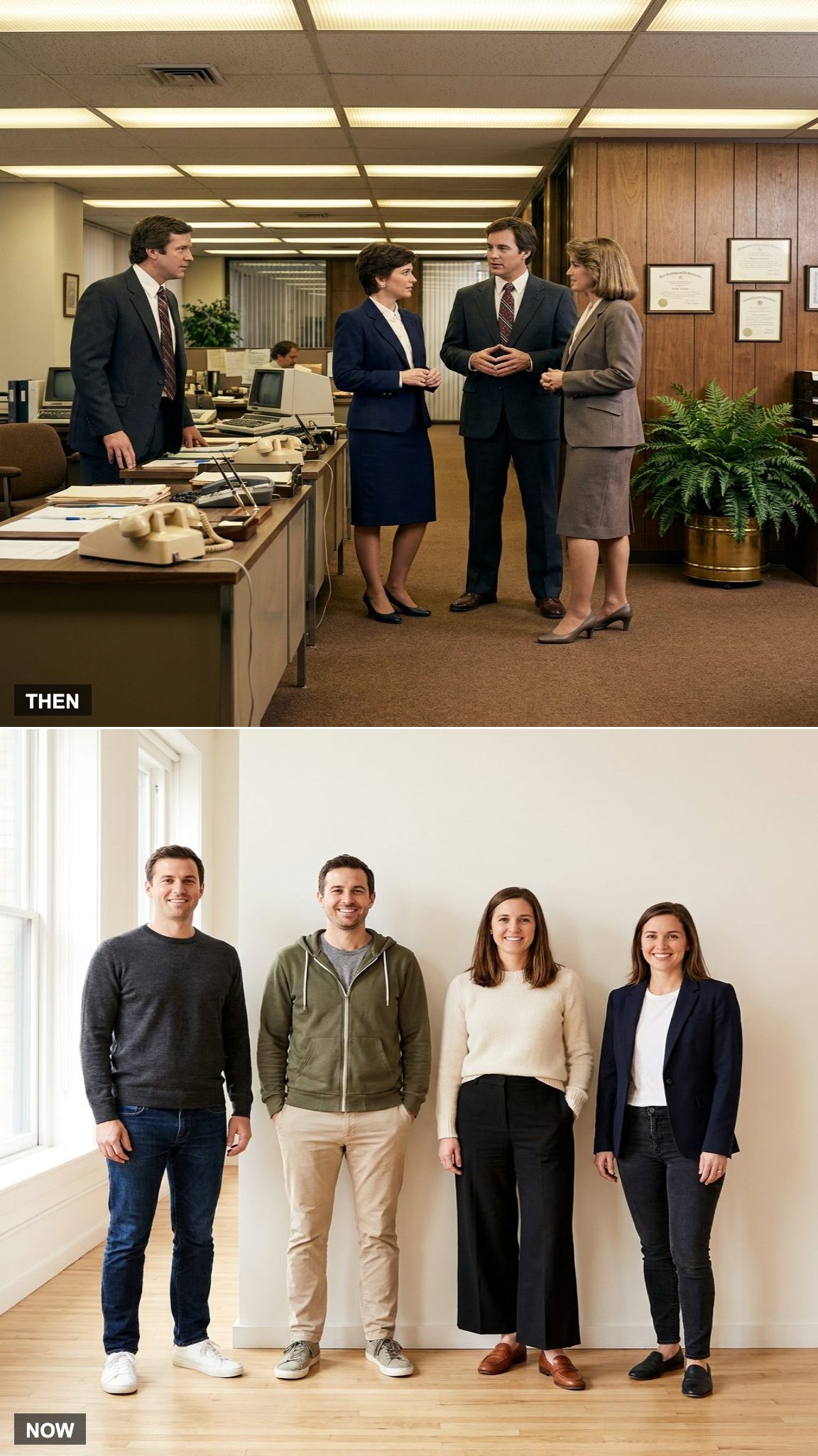
The 1980 dress code wasn’t negotiable. Suit, tie, polished shoes, a haircut that said you took yourself seriously. Women wore shoulder pads that could take an eye out and hosiery in July. Casual Friday didn’t exist — suggest it and HR would write you up.
Now a founder can pitch a nine-figure round in a hoodie and nobody blinks. The tie became a costume, worn on purpose, usually at a funeral or a wedding.
The Water Cooler: Where the Real Meetings Happened
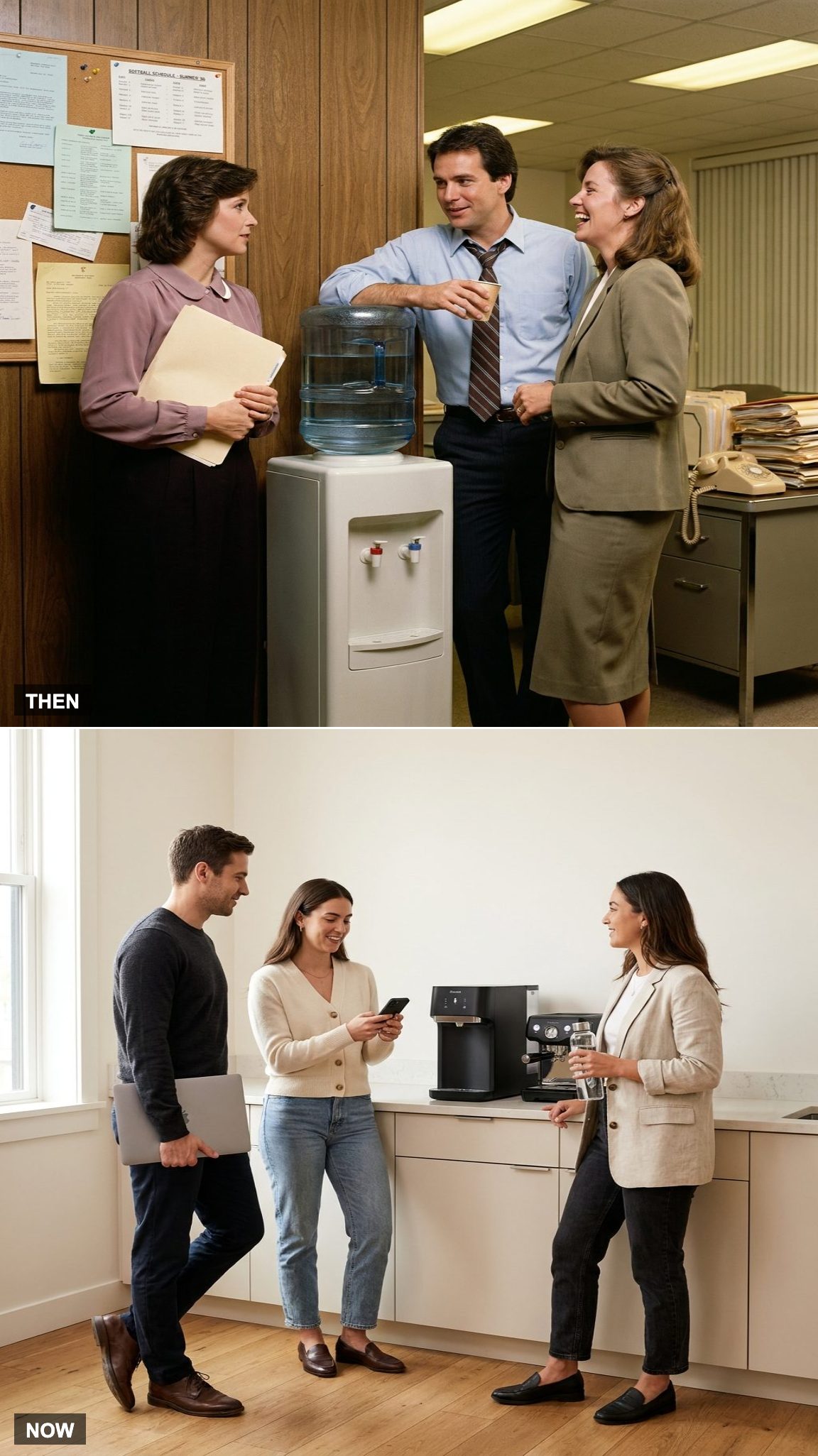
The water cooler was the real headquarters — where you learned who was leaving, who was sleeping with whom, and what the boss actually thought of the reorg. Paper cone cups held about two sips, so you kept coming back, which was the point.
Now the gossip lives in a private channel called something like #watercooler with a coffee emoji. Same content, different container.
The Filing Cabinet: When Finding One Document Took a Whole Body
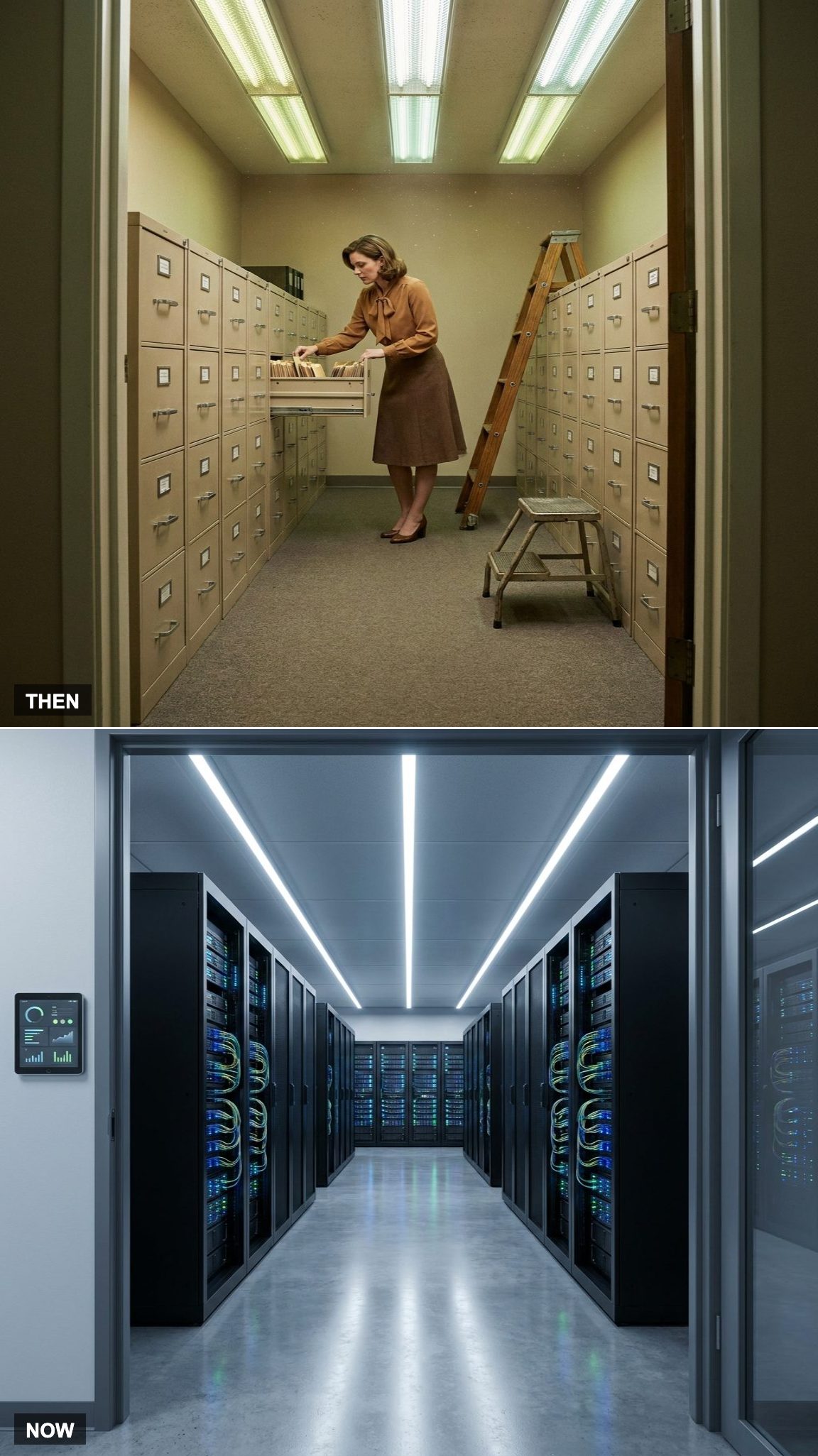
A filing cabinet made information physical. You bent, pulled, flipped, crouched, and sometimes dragged an entire drawer open with both hands because somebody had packed it past capacity. The folder you needed was never quite where the label said it would be, and every search came with the faint threat of pinched fingers.
Digital files removed the lifting. Type a name, add a date, hit enter. The record appears without dust, metal rails, or Doris quietly judging the way you filed it last time.
The old system was slower, but it left evidence of the search behind: an open drawer, a stack on the desk, a yellow folder waiting to be returned. Now a document can be found, forwarded, altered, and forgotten without anyone in the room moving at all.
The Front Desk: From Ledger and Smile to Tablet and Badge
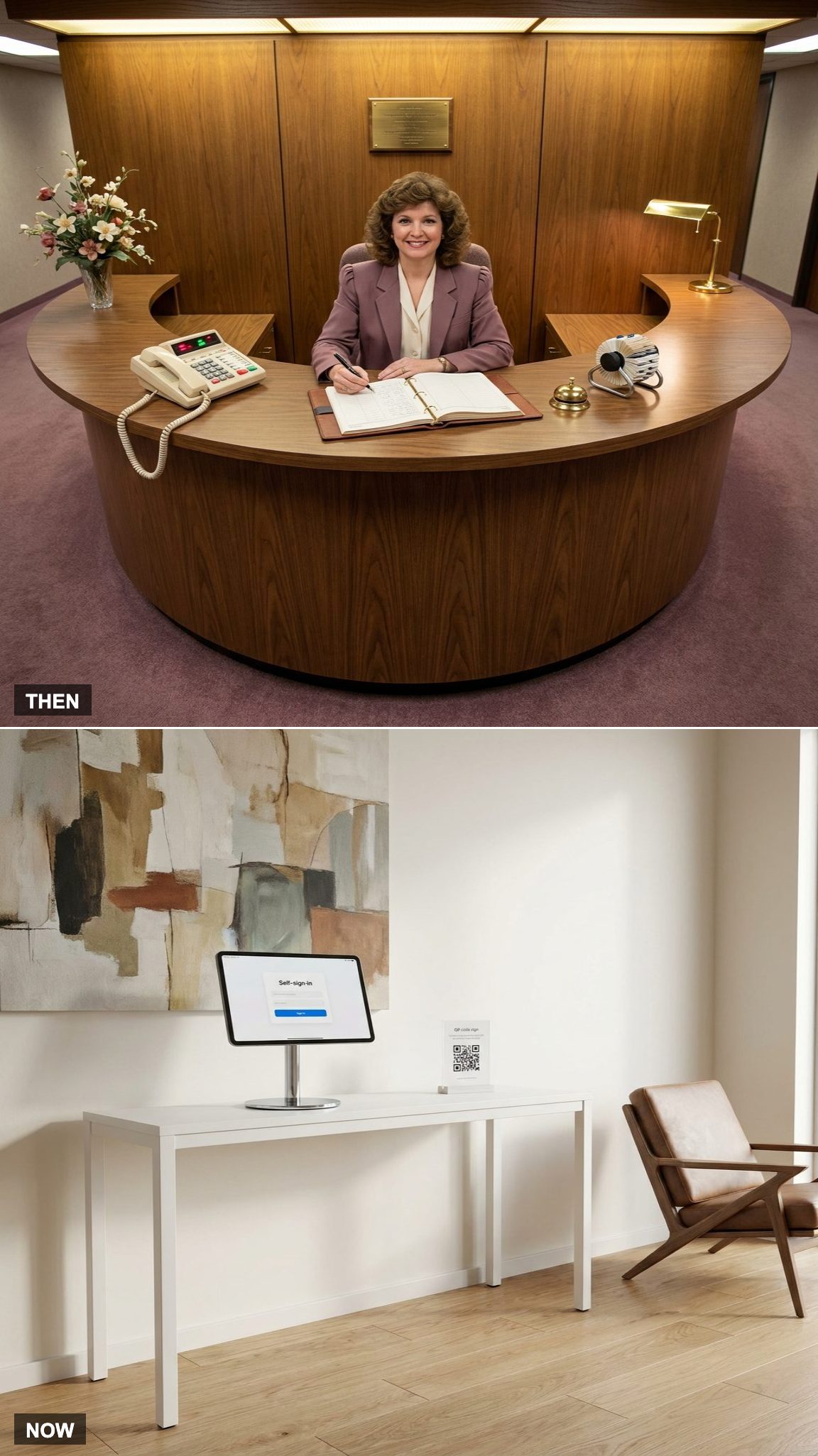
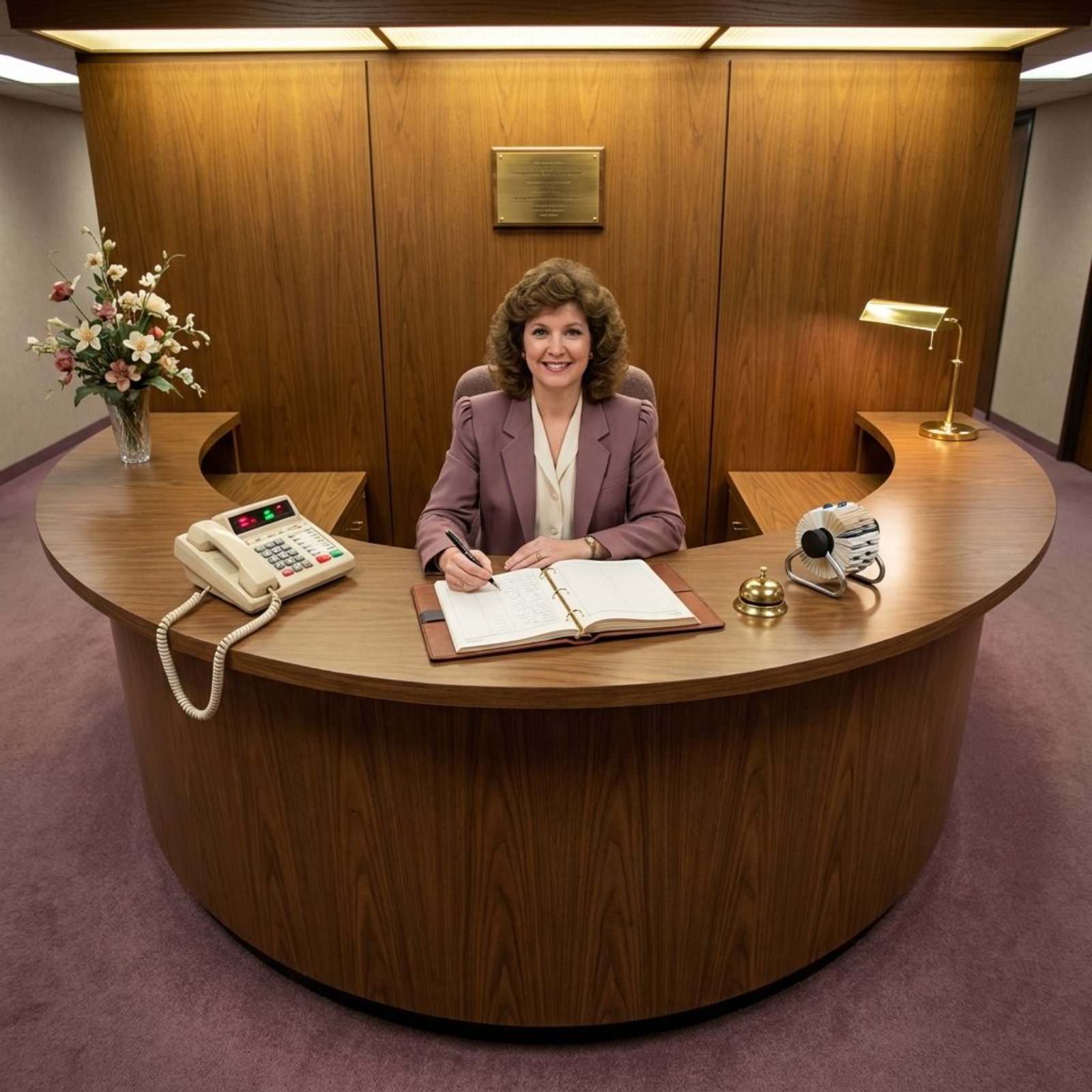
The receptionist ran the place and everybody knew it. She remembered your name, your boss’s name, and which client you were expecting on Thursday. She signed for the FedEx, watered the plants, knew where every key in the building lived, and could tell from your voice whether you needed coffee or a lawyer.
Now a tablet asks who you’re here to see and prints a sticker. Efficient. Nobody would ever describe it as warm.
The 5 O’Clock Whistle: When Work Actually Ended
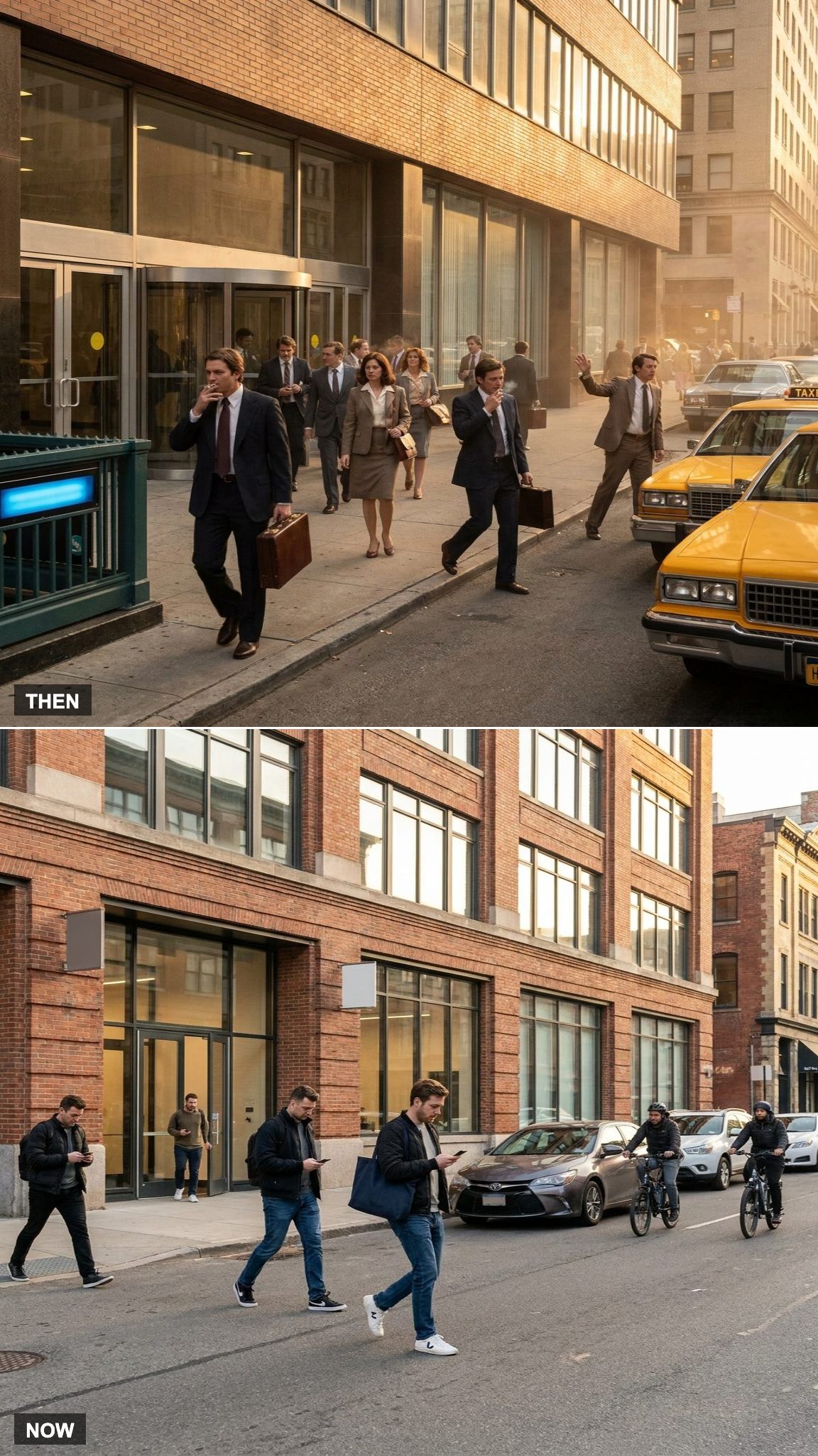
Five o’clock used to mean something. The elevators filled, the lobby emptied, the building went quiet by five thirty, and whatever was on your desk stayed on your desk until Monday. If a client needed you at eight at night, they had to know your home number — and most didn’t.
Now the day never really ends. It gets softer around the edges. You close the laptop. But the phone in your pocket is the same laptop, smaller.
Promotion Logic: From Face Time to Output
Would you like to save this?
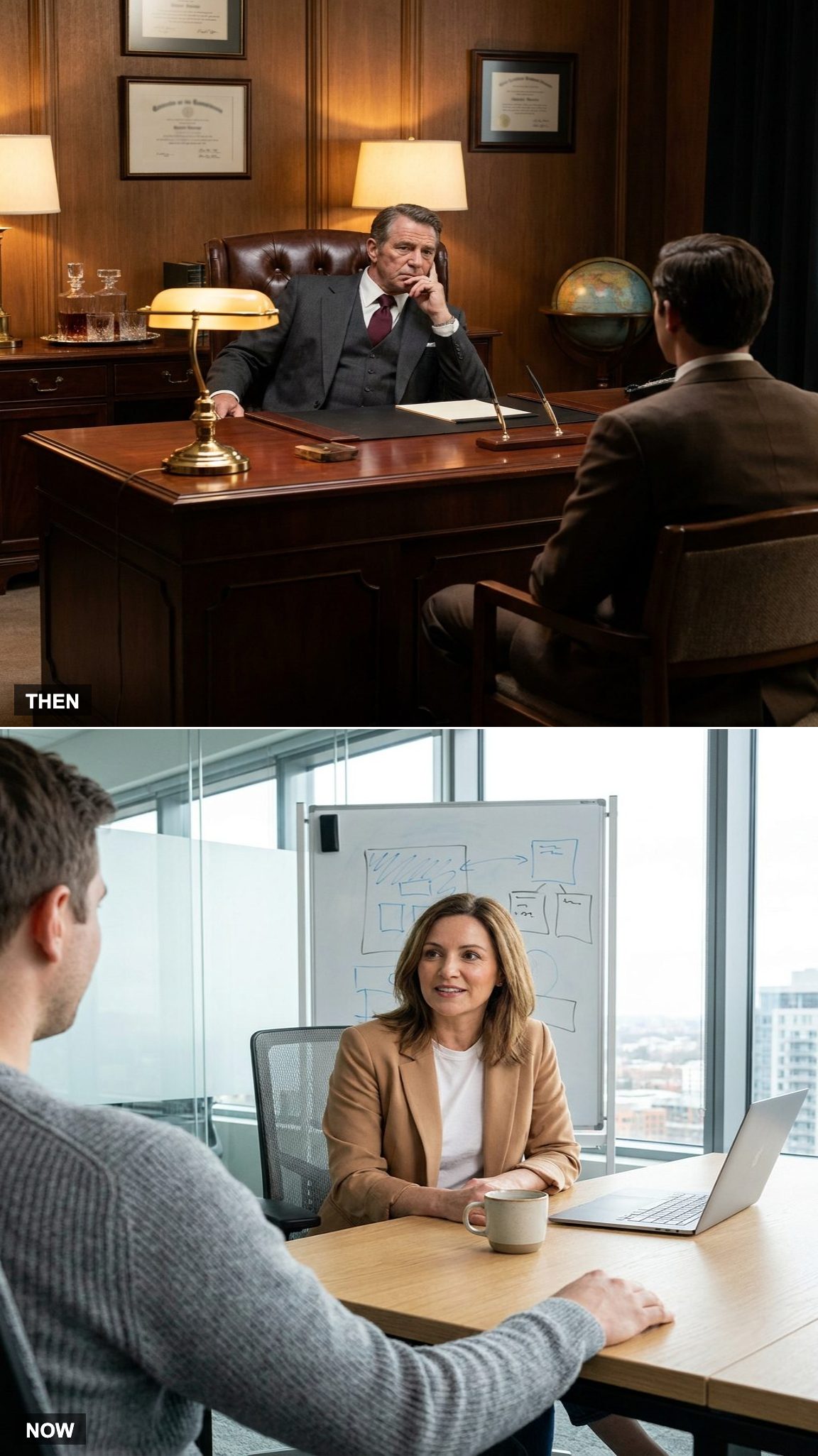
Getting ahead in 1980 meant being seen — first in, last out, jacket on the back of the chair even when you were down the hall. The boss walked by, noticed you at your desk, and that was half the review. Actual output was harder to measure, so proximity became the proxy.
The proxy has cracked. Managers with hybrid teams can’t count who is at their desk, so they’ve had to learn to count what actually ships. Some are worse at it than they thought.
The Office Itself: From Work Container to Work Environment
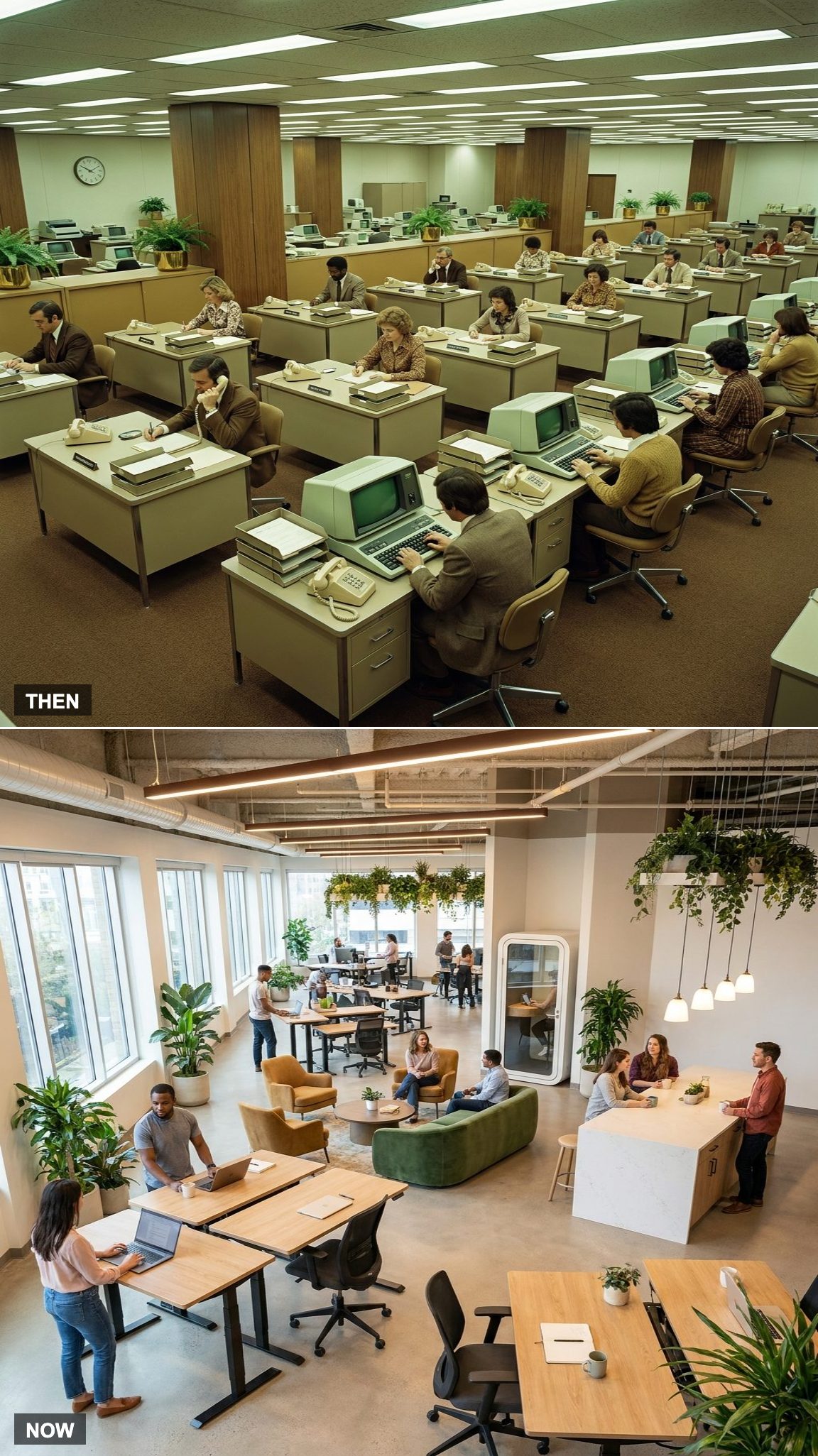
The 1980 office was a container. Rows of desks, a floor plan drawn to fit as many bodies as fire code allowed, and a color palette that seemed engineered to make Tuesday feel like Thursday. You showed up because the phone, the typewriter, and the files lived there. Take those away and the room had no reason to exist.
The modern office has to earn its keep. If people can work from a kitchen table, the space needs to offer something a kitchen table can’t — a real conversation, a whiteboard covered in a real argument, coffee somebody else made. It stopped being the default and became a choice, which means it finally has to be good.
Take away the phone, the typewriter, and the files, and the 1980 office had no reason to exist. The modern one has to earn it.