
Would you like to save this?
In 1984, the average 30-year fixed mortgage rate was close to 14 percent. Passbook savings accounts paid real interest. Credit cards charged heavily and offered little in return. In that environment, rules such as never carry debt, pay cash, keep money in the bank, and own your house outright made practical sense.
Then the environment changed. Interest rates fell for decades. Rewards cards became common. Traditional savings accounts stopped paying much. Housing, college, health care, and retirement all shifted more responsibility onto the individual.
The old rules were not always foolish. They were often written for numbers that no longer exist. These 17 examples show where the advice still helps, where it breaks down, and what deserves a fresh calculation.
“Always Pay Cash” Ignores Rewards, Fraud Protection, and Grace Periods

Paying cash made obvious sense when credit cards charged high rates and offered no meaningful rewards.
A modern rewards card changes the calculation for someone who pays the full statement balance every month. A 2 percent cash-back card used for $3,000 in ordinary monthly spending can return $720 over a year. The cardholder may also receive purchase protections and a clearer dispute process than a cash transaction provides.
None of that makes credit-card debt harmless. A rewards rate of 2 percent cannot compete with an annual percentage rate above 20 percent. One month of interest can erase months of rewards.
The useful rule is not always pay cash. It is never pay interest merely to earn rewards.
Paying Off a Low-Rate Mortgage Early Is Not Always the Best Use of Cash

When mortgage rates were in the mid-teens, every extra dollar applied to principal produced a large, guaranteed reduction in future interest. Paying the loan down quickly was a rational priority.
A homeowner with a 3 percent fixed mortgage faces a different choice. Extra principal still provides a guaranteed return equal to the interest avoided, but that money may also be needed for retirement contributions, emergency savings, home repairs, or other debts carrying higher rates.
Comparing a mortgage with stock-market returns requires caution. Mortgage savings are guaranteed. Market returns are not.
Paying the mortgage early can still make sense when the rate is high, retirement is close, cash flow is secure, or the peace of mind matters more than the spreadsheet. The decision should follow the actual loan rate and household priorities, not a rule inherited from 1981.
“Never Finance a Car” Depends on the Loan Offer

High-rate auto loans can make a modest car far more expensive. In that situation, paying cash or choosing a cheaper vehicle may be the better move.
Promotional financing changes the equation. Manufacturers sometimes offer qualified buyers rates below ordinary bank and credit-union loans, although those offers may apply only to certain models, terms, or buyers. They may also replace a cash rebate.
The comparison needs to include the loan rate, taxes on any interest earned elsewhere, lost rebates, required down payment, and the value of keeping cash available.
A 2.9 percent loan may be sensible. An 11 percent used-car loan may not be. “Never finance” is too broad to cover both.
Cutting Up a Credit Card Is Not the Same as Closing the Account

Destroying the physical card can reduce temptation. Closing the account is a separate decision.
Closing a paid-off card can reduce total available credit and raise the utilization ratio on remaining cards. That may lower a credit score, especially when the closed account has a large limit.
A closed account in good standing does not necessarily vanish from a credit report right away. Its history may remain for years, but the lost credit limit can affect utilization once the closure is reported.
Someone who struggles with spending can lock the card through the issuer, remove it from digital wallets, freeze the physical card, or keep it out of reach. The behavior problem deserves a solution. The solution does not automatically require closing the account.
The 50/30/20 Budget Is a Framework, Not a Test
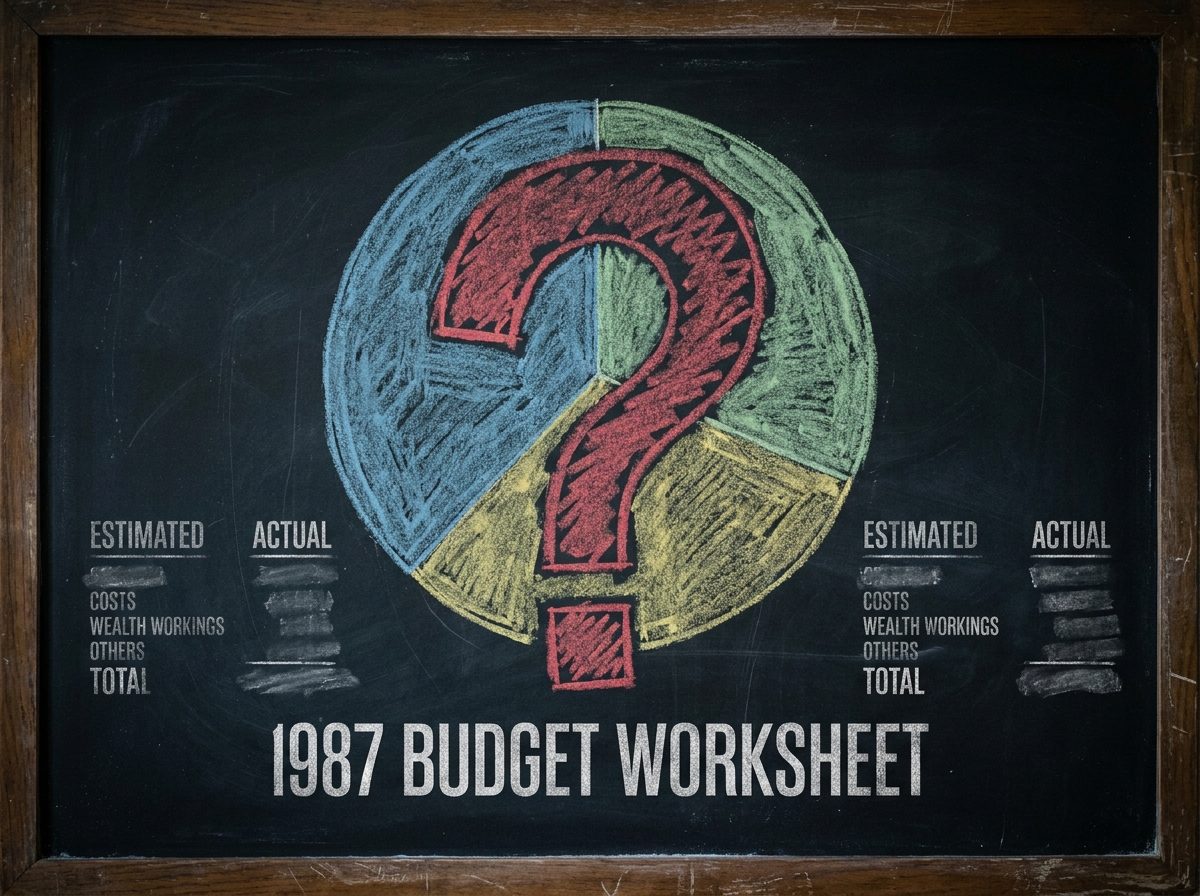
The familiar formula assigns 50 percent of take-home pay to needs, 30 percent to wants, and 20 percent to savings and debt reduction.
It can be useful as a quick diagnostic. It is not a universal measure of discipline.
Housing, health insurance, child care, student loans, transportation, and local taxes can push the needs category far above 50 percent before a household makes a single discretionary purchase. A person in a high-cost city may not be failing to budget. The percentages may simply be unrealistic for that market.
Use the framework to see where the money is going. Then adjust the categories to fit actual obligations, goals, and income.
Keeping Savings at a Familiar Bank Can Cost Real Money

Traditional branch banks often pay very little on standard savings accounts, while online banks, credit unions, money-market accounts, and Treasury products may pay substantially more.
The gap adds up fast. On $25,000, a difference of several percentage points can mean hundreds of dollars in a year.
Rates change, and the highest-paying account is not always the most convenient. Transfer speed, withdrawal access, fees, customer service, and deposit insurance all belong in the comparison.
There is no need to move every financial relationship. Keep checking where it works. Move idle savings when the difference is large enough to matter.
Renting Is Not Automatically Throwing Money Away

Rent buys shelter, flexibility, and freedom from many repair costs. A mortgage builds equity, but ownership also comes with interest, property taxes, insurance, maintenance, transaction costs, and the risk of a poorly timed move.
The break-even point varies by market. It depends on the purchase price, rent, mortgage rate, down payment, expected length of stay, maintenance, taxes, insurance, appreciation, and what the renter does with money not tied up in the home.
Buying can be an excellent long-term decision. Renting can also be the financially stronger choice for someone who expects to move, values flexibility, or would need to stretch too far to buy.
Rent does not simply disappear, and a mortgage payment is not simply an investment. What matters is which arrangement delivers the better combination of cost, stability, and flexibility for the household making the choice.
The Cheapest Item Can Cost More Over Time

Terry Pratchett’s famous boots example made the point clearly: a person who can afford one durable pair may spend less than someone forced to replace cheap pairs repeatedly.
The principle is useful, but price alone does not prove quality. An expensive coat can fail early. A modest one can last for years.
Compare cost per use, repairability, warranty, materials, and how often the item will actually be used. Spend more where durability matters and where replacement would be expensive or disruptive.
The lowest sticker price is not always the cheapest choice. Neither is the highest price automatically the smartest.
An Emergency Fund Should Match the Risks in Your Life

Would you like to save this?
Three to six months of essential expenses is a useful starting range, not a number with one proven historical origin.
A household with two stable incomes, strong insurance, and low fixed costs may need less. A self-employed sole earner supporting a family may need more.
The fund also needs a definition. Job loss, urgent medical costs, essential home repairs, and a failed transmission belong in the conversation. A vacation upgrade does not.
Start with the largest expense that could arrive suddenly, the time required to replace lost income, insurance deductibles, and the amount of reliable support available from another household earner or other confirmed resources. Build the number around those risks.
Credit Scores Reward Responsible Use, Not Interest Payments

Modern credit scoring changed how lenders evaluate borrowers. Payment history, amounts owed, account age, credit mix, and recent applications all matter.
Several myths followed. A person does not need an auto loan to achieve an excellent score. A zero statement balance is not automatically harmful. Carrying a balance from one month to the next does not improve a FICO score.
The useful distinction is between a balance that appears on the statement and debt that revolves past the due date. A cardholder can let ordinary purchases appear on the statement, pay the full statement balance by the due date, avoid interest, and still demonstrate regular use.
Keep utilization modest, pay every account on time, and avoid opening unnecessary credit. The scoring system does not require paying interest.
“Never Borrow Money” Is Too Broad for Modern Costs

Avoiding unnecessary debt remains good advice. Treating every form of borrowing as equally harmful does not.
A mortgage, student loan, medical payment plan, credit-card balance, and business loan carry different rates, risks, protections, and possible returns. Borrowing for an asset or credential that may improve future earning power is not guaranteed to pay off, but it is not the same decision as financing consumption at 24 percent.
The right questions are practical: What does the debt cost? Is the payment affordable? What happens if income drops? Does the purchase create lasting value? Is there a cheaper alternative?
Debt is a tool with a price. The price and purpose matter more than the word itself.
Retirement Rules Built Around Pensions Need Updating

Defined-benefit pensions promised a regular payment for life. Defined-contribution accounts such as 401(k)s place more investment and longevity risk on the worker.
That shift changes the planning problem. A retirement account must support an unknown lifespan, survive market declines, account for inflation, and cover health-care and long-term-care costs that may arrive late in life.
Rules such as save 10 percent or retire at 65 can provide a starting point, but they cannot replace a projection based on current savings, expected benefits, spending, taxes, and retirement age.
Treat the old benchmark as a prompt to run the numbers, not as a verdict on whether the plan is adequate.
Every Couple Does Not Need the Same Banking System

Joint accounts can simplify shared bills and encourage transparency. Separate accounts can preserve independence and make sense when partners bring different assets, children, obligations, or businesses into the relationship.
Many couples use a hybrid system: joint money for housing, groceries, insurance, and family costs; individual accounts for personal spending and assets owned in one name.
The arrangement itself is less important than the clarity around it. Both partners should understand the accounts, debts, beneficiaries, retirement plans, and emergency access.
One legal point remains important: retirement accounts such as IRAs belong to individuals. A spouse may contribute under spousal IRA rules, but the account still has one owner.
Building Credit in Your Own Name Is Financial Protection

The Equal Credit Opportunity Act of 1974 prohibited discrimination based on sex and marital status, following years in which women often faced serious barriers to obtaining credit independently.
That history still shapes the stakes today. Someone who relies entirely on a spouse’s primary accounts may have less independent credit than expected if the relationship ends or the spouse dies.
An authorized-user account can help in some cases, but a primary account in one’s own name provides clearer independence. It can be used lightly and paid in full every month. There is no need to carry interest-bearing debt.
The goal is not secrecy or mistrust. It is making sure both adults can qualify for housing, utilities, insurance, and credit without depending on the other’s file.
Saving Every Raise Is Not the Only Responsible Choice

Saving part of each raise can prevent lifestyle costs from absorbing every increase in income. Saving all of it is not automatically the right answer.
A raise may need to cover higher housing, food, insurance, care, education, or transportation costs. It may also fund a retirement contribution, emergency reserve, or goal with a fixed deadline.
Decide what the raise should do before it disappears into ordinary spending. A portion can strengthen long-term savings. Another portion can address current obligations or improve daily life.
The useful habit is deliberate allocation, not pretending the raise never happened.
Minimum Payments Are a Warning, Not a Target

The minimum payment printed on a credit-card statement can become an anchor. Once the issuer presents a number, some borrowers begin to treat it as the correct payment rather than the smallest amount the account will accept.
Paying only the minimum can keep a balance alive for years and produce substantial interest charges. The exact payoff period depends on the annual percentage rate, minimum-payment formula, new purchases, and whether the minimum has a dollar floor.
Treat the minimum as the smallest permitted payment, not evidence that it is an affordable repayment plan. Stop new charges when possible, calculate a fixed payoff amount, and automate a payment large enough to reduce principal meaningfully.
The Best Money Rule Is to Understand the Trade-Offs
The most dangerous financial rules are the ones that replace calculation with morality. Cash is not always virtuous. Debt is not always reckless. Homeownership is not always superior. Renting does not automatically waste money.
Before making a decision, write down the rate, fees, tax effects, risks, time horizon, and cost of the alternative. Include the value of liquidity and the possibility that circumstances change.
A 0 percent offer may be useful, but only when the fee structure and payoff plan are clear. A low-rate mortgage may be worth keeping, but only when retirement and emergency savings are on track. A rewards card may return money, but only when the statement is paid in full.
Rules of thumb can start the conversation. Your own numbers should finish it.
Calculation beats slogans every time. The right answer rarely begins with “always” or “never.” It begins with what this specific decision actually costs.