

Would you like to save this?
The alarm went off at 5 a.m., and it was your alarm, nobody else’s. Before school, before cartoons, before the rest of the house stirred, a kid was outside in the blue dark hauling a canvas bag heavy enough to leave a groove in one shoulder. This was not a chore. It was a business, and the customer was the man in the bathrobe waiting for his sports page.
Routes varied by newspaper and town, but the basic education was remarkably consistent. You handled inventory, remembered customer preferences, collected money, absorbed mistakes, and learned exactly how much work stood behind every dollar in your pocket. What follows is everything the neighborhood paper route quietly taught about earning, owing, saving, and getting paid.
31. Landing Your First Paper Route—and Waiting for a Kid to Quit
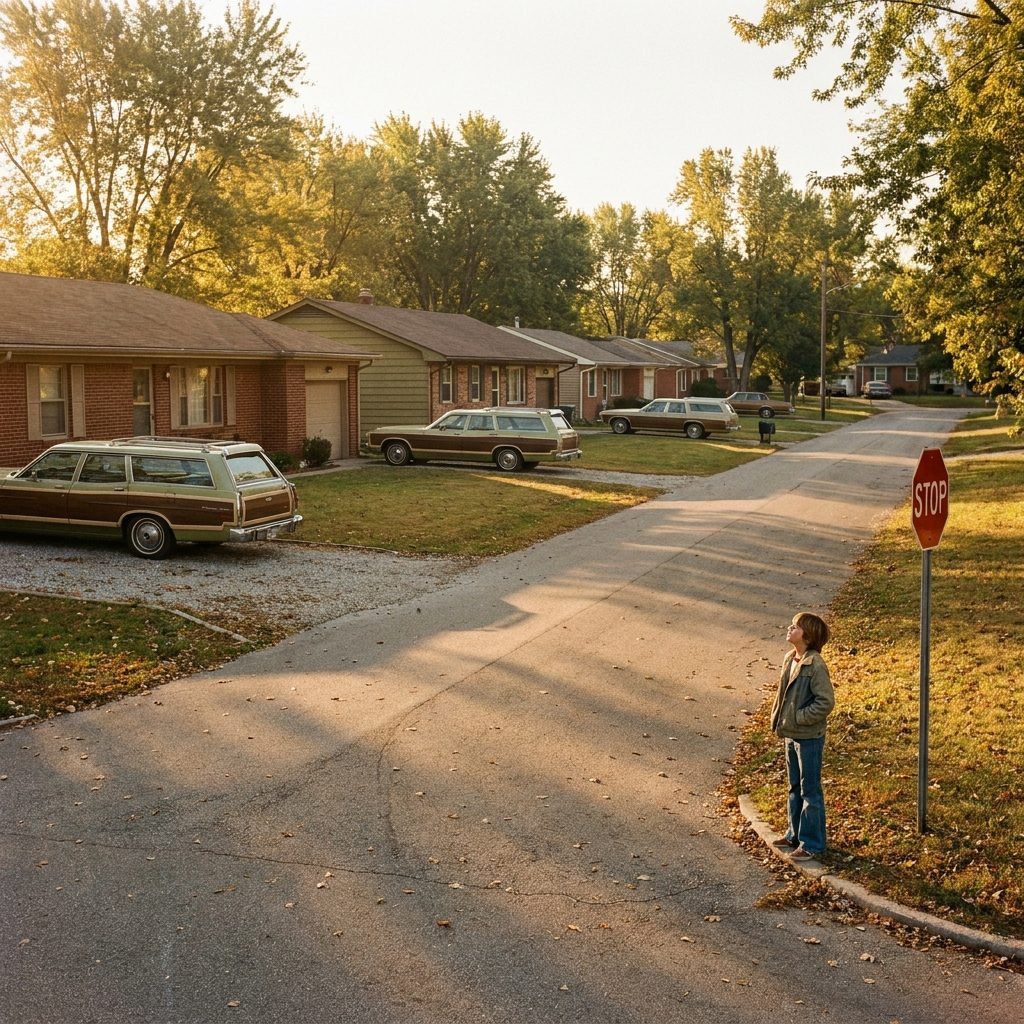
You did not apply for a paper route so much as inherit one. A kid three streets over turned sixteen, found an after-school job, and suddenly there was an opening. Word traveled through the neighborhood faster than the paper itself.
The branch manager sized you up as though the entire circulation system depended on your bicycle. Could you get up at five? Could you handle money? Did you have a bike that would survive winter? Your first lesson arrived before you folded a single paper: opportunity went to whoever was ready when the opening appeared.
30. Picking Up the Morning Bundle Before Sunrise

The bundle landed with a thud at a designated corner sometime before you arrived, dropped by a driver who might never learn your name. Wire, straps, or heavy twine held the stack together, so cutters became part of the equipment.
Then came the count. A missing paper meant a missing customer unless you caught the shortage early and contacted the branch. That was the first inventory check of the morning, performed under a streetlight by a child who had not yet eaten breakfast.
29. Folding Newspapers by Hand Until It Became Muscle Memory
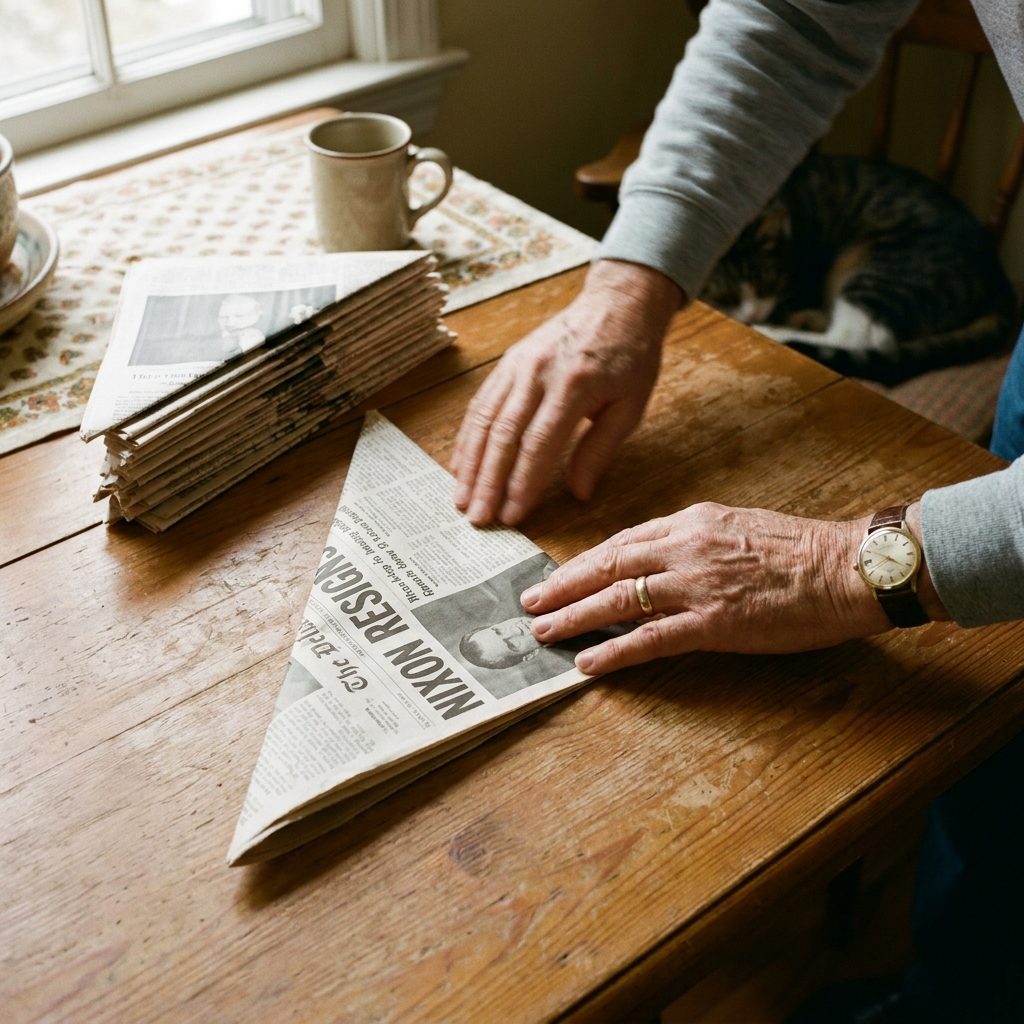
There was a fold, and there was the fold. The good one held the paper tightly enough to throw without letting the sections fan open in flight. You practiced on the garage floor until your hands could do it while the rest of you was still waking up.
Ink traveled everywhere—under the nails, across the knuckles, onto the school shirt you had been specifically warned not to wear.
A well-folded paper flew straight. A sloppy one opened over the lawn and announced exactly who had rushed the job.
The lesson was small but durable: presentation was part of the work. Nobody paid extra for a complete newspaper scattered across three shrubs.
28. Packing the Canvas Bag in the Exact Order of the Route
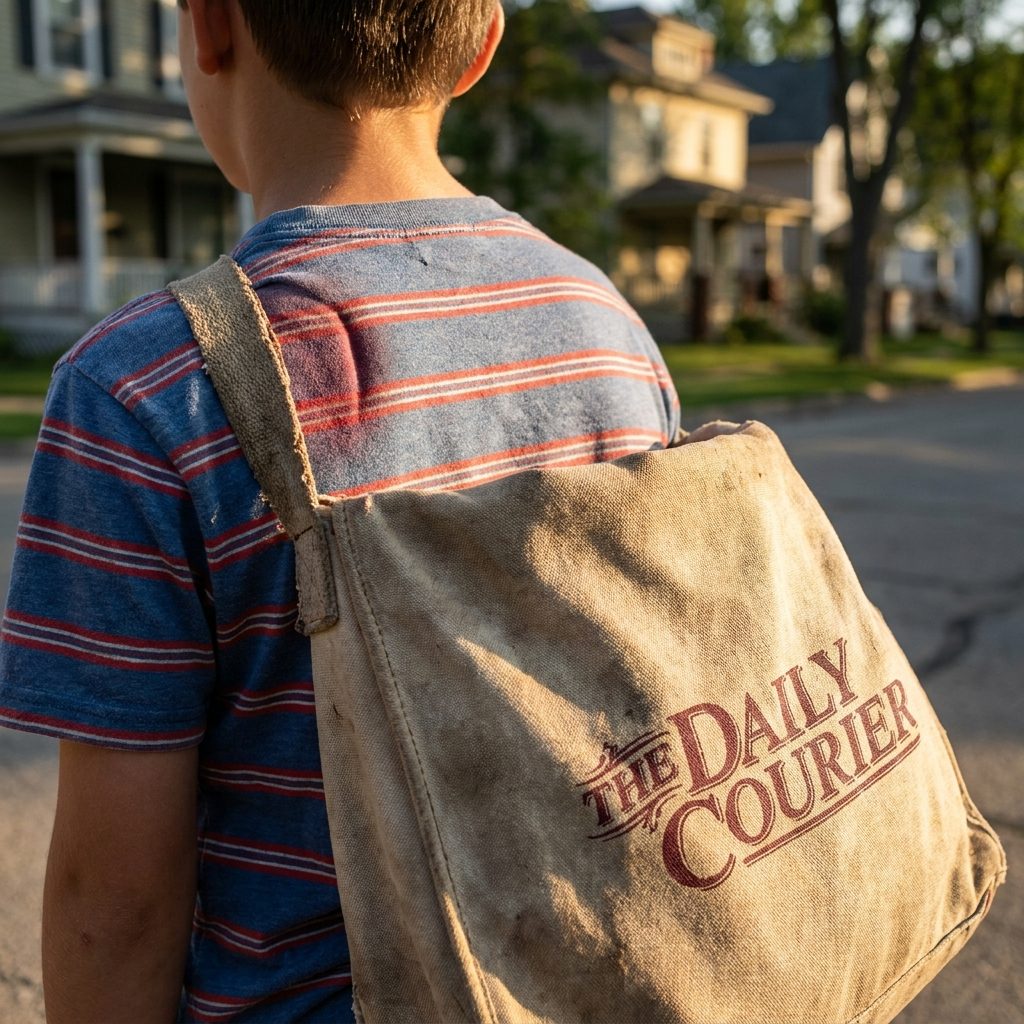
Full, the bag felt as though it weighed more than you did. The strap dug a red line across one shoulder that remained visible through second period. Load it badly and it swung against your hip like a wrecking ball. Distribute the weight properly and it settled close enough to manage.
The order mattered too. First houses near the top, last houses farther down, Sunday supplements balanced so one side did not drag lower than the other. Nobody handed you a route-optimization chart. One miserable morning of digging for the next paper beneath forty others usually settled the matter.
27. Using a Bicycle as Delivery Equipment
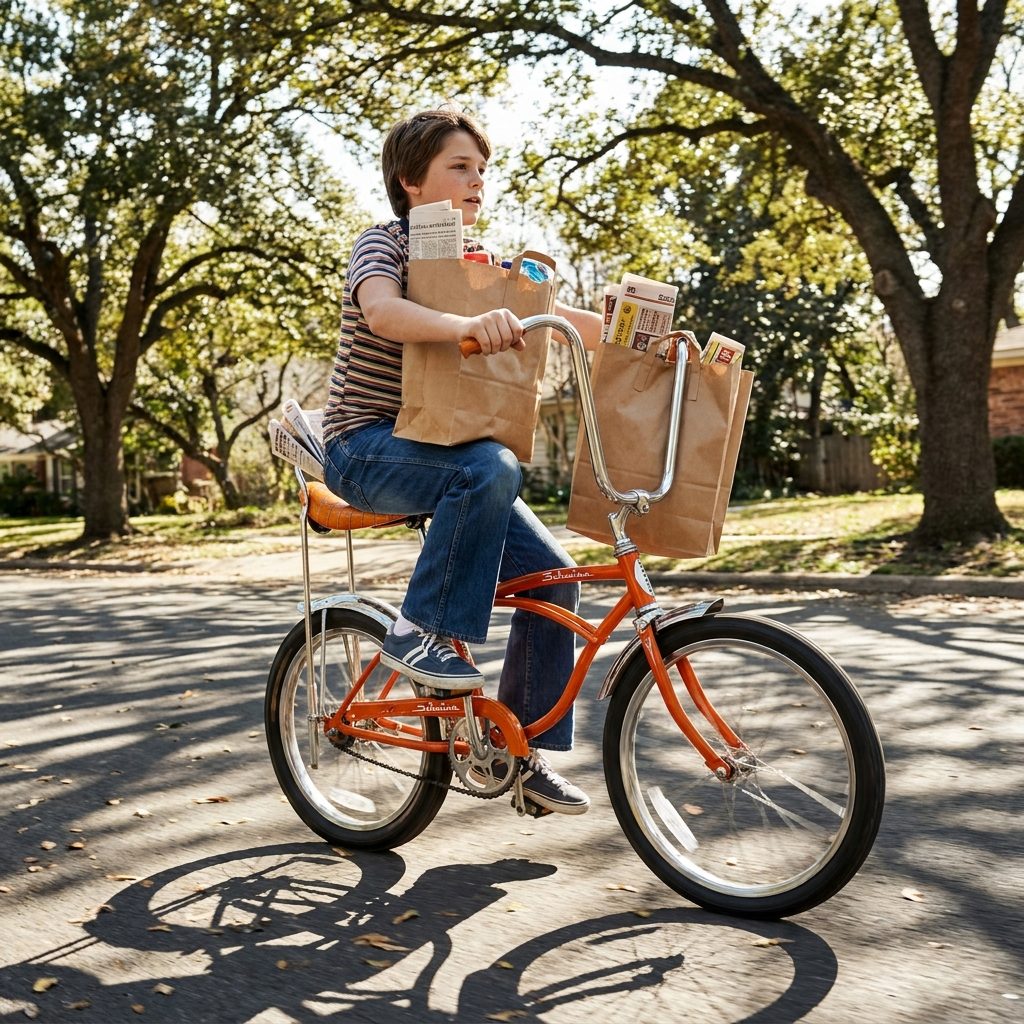
The bicycle was not transportation. It was equipment. A Schwinn with bags slung over the handlebars could carry more papers and cover more houses, provided the rider respected the extra weight and did not pretend a loaded bicycle handled like an empty one.
You learned the route’s geography down to the cracked sidewalk squares. Which driveway had the dog. Which hill allowed a long coast. Which intersection saved time when you caught the light just right.
Efficiency was not a word most carriers used, but every morning involved the same calculation: fewer stops, cleaner throws, no missed houses, and enough time left to get home before school.
26. Protecting the Papers When the Weather Turned
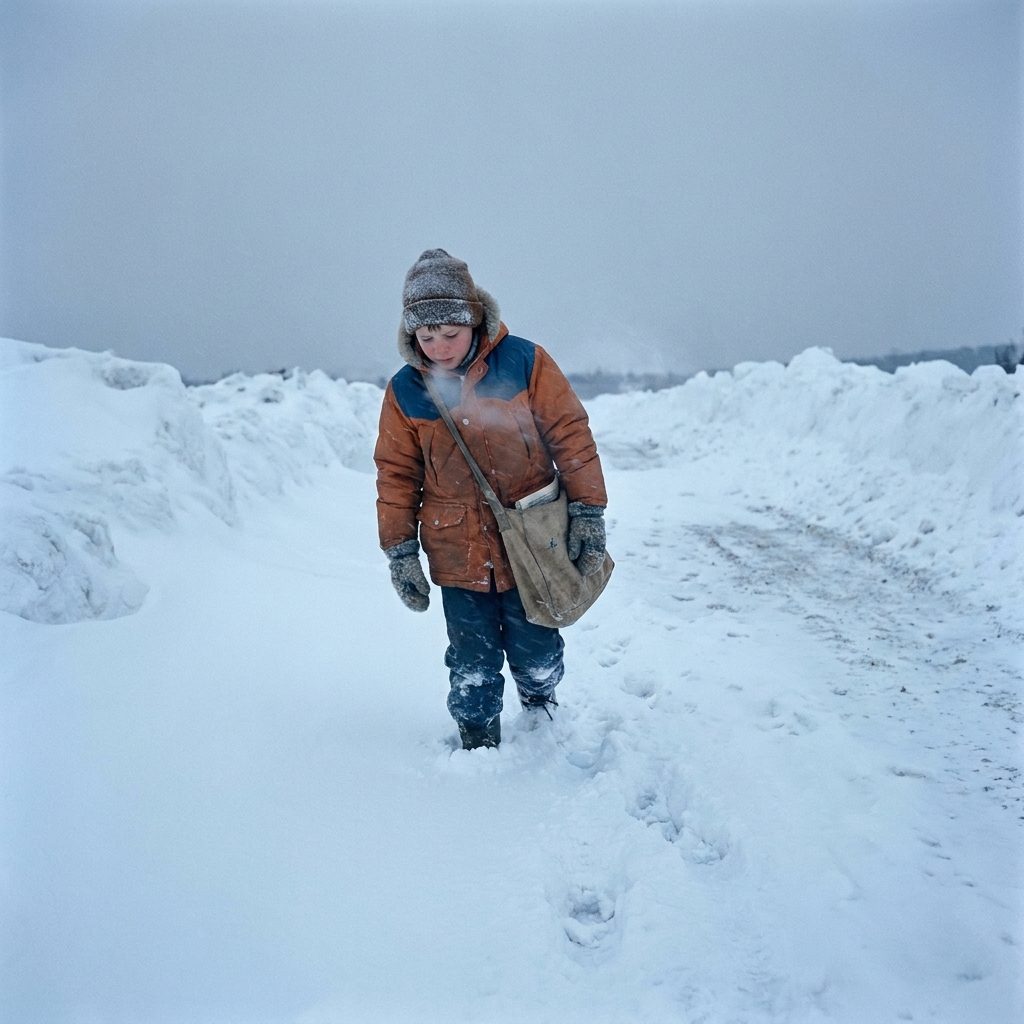
Rain changed the entire operation. Papers went into plastic sleeves, the canvas bag needed covering, and every porch overhang suddenly mattered. Snow slowed the route. Ice changed where you could ride. Wind punished any fold that had not been tucked tightly enough.
The job was no longer simply delivering the news. It was delivering the news dry.
That distinction separated carriers who kept customers from carriers who collected complaints. The weather was not impressed by effort, and neither was a subscriber holding a newspaper that had absorbed half the morning storm.
25. Learning Every Customer’s Quirks and Preferences
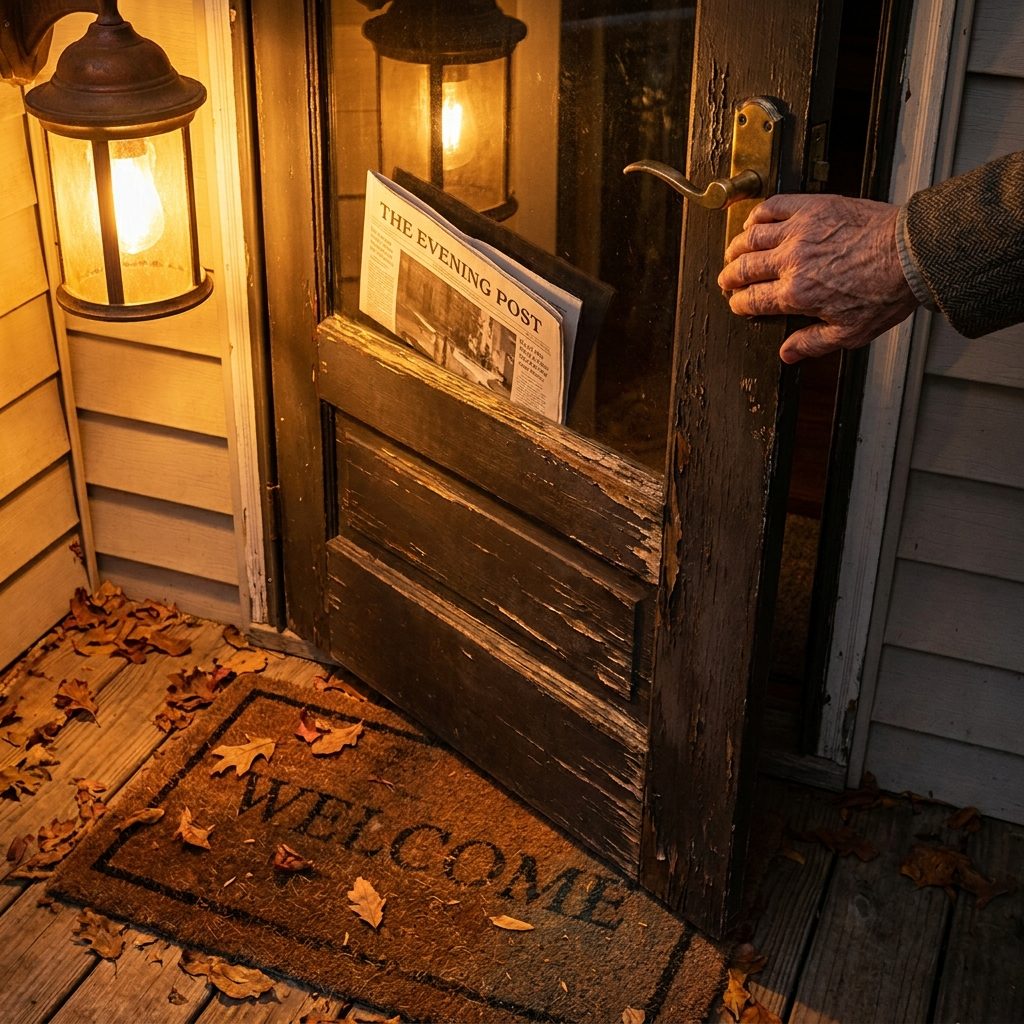
Mr. Kowalski wanted his paper inside the storm door. The house on the corner expected it dead center on the mat. The woman with the roses would call the branch if one landed in her flower bed.
You kept those details in your head or in a battered notebook. The list became a map of small promises: porch, tube, side door, top step, beneath the bench.
A satisfied customer stayed, tipped, and occasionally recommended the route to a neighbor. An annoyed one called. A child with a canvas bag quickly understood that people remembered how reliably they had been treated.
24. Throwing the Perfect Paper Onto the Welcome Mat
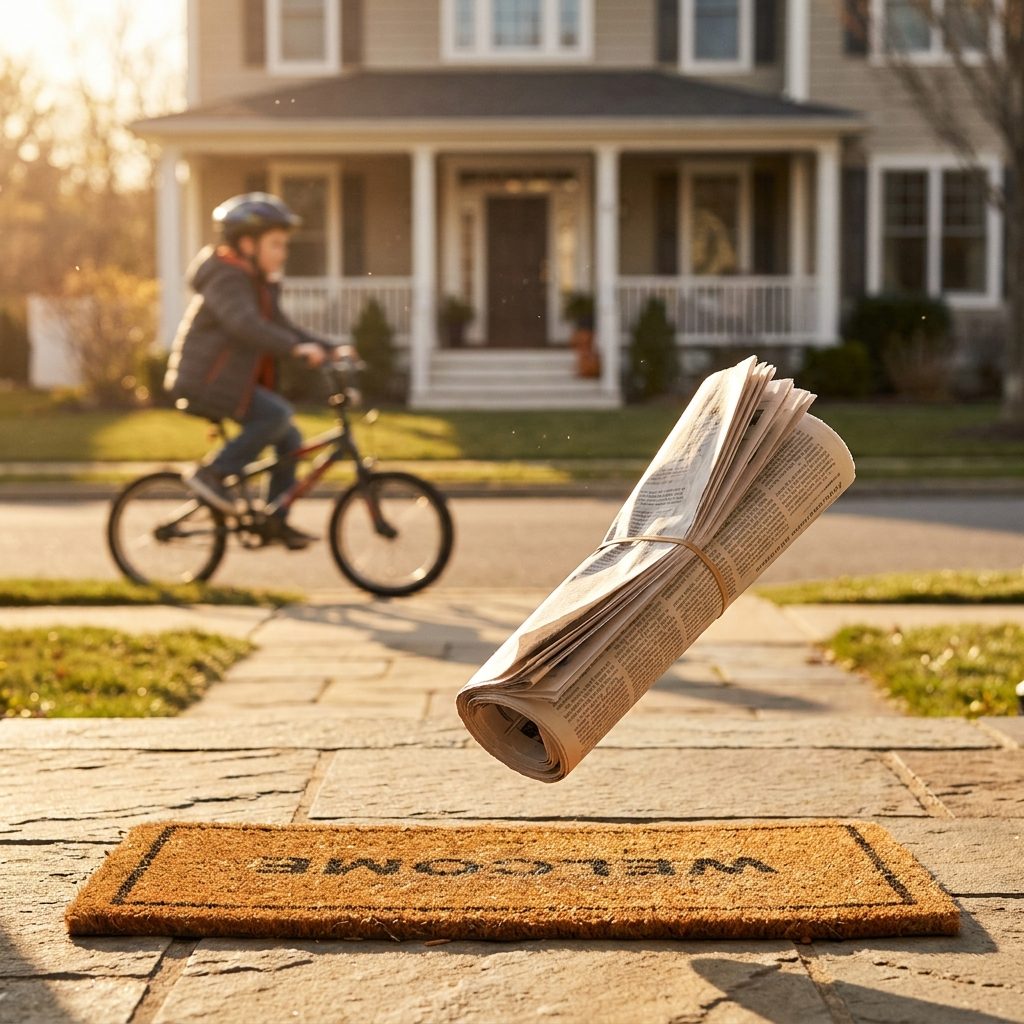
A great throw carried its own quiet satisfaction. One flat sidearm motion sent the paper onto the mat without forcing you to stop, dismount, or double back. You could feel a clean release before the paper landed.
A bad one found the gutter, a hedge, or—on one memorable morning—the roof.
The skill was not speed alone. It was speed joined to accuracy. Carriers who mastered both finished earlier without creating a trail of wet papers and irritated customers behind them.
23. Porch Deliveries Versus Curbside Newspaper Tubes
Would you like to save this?
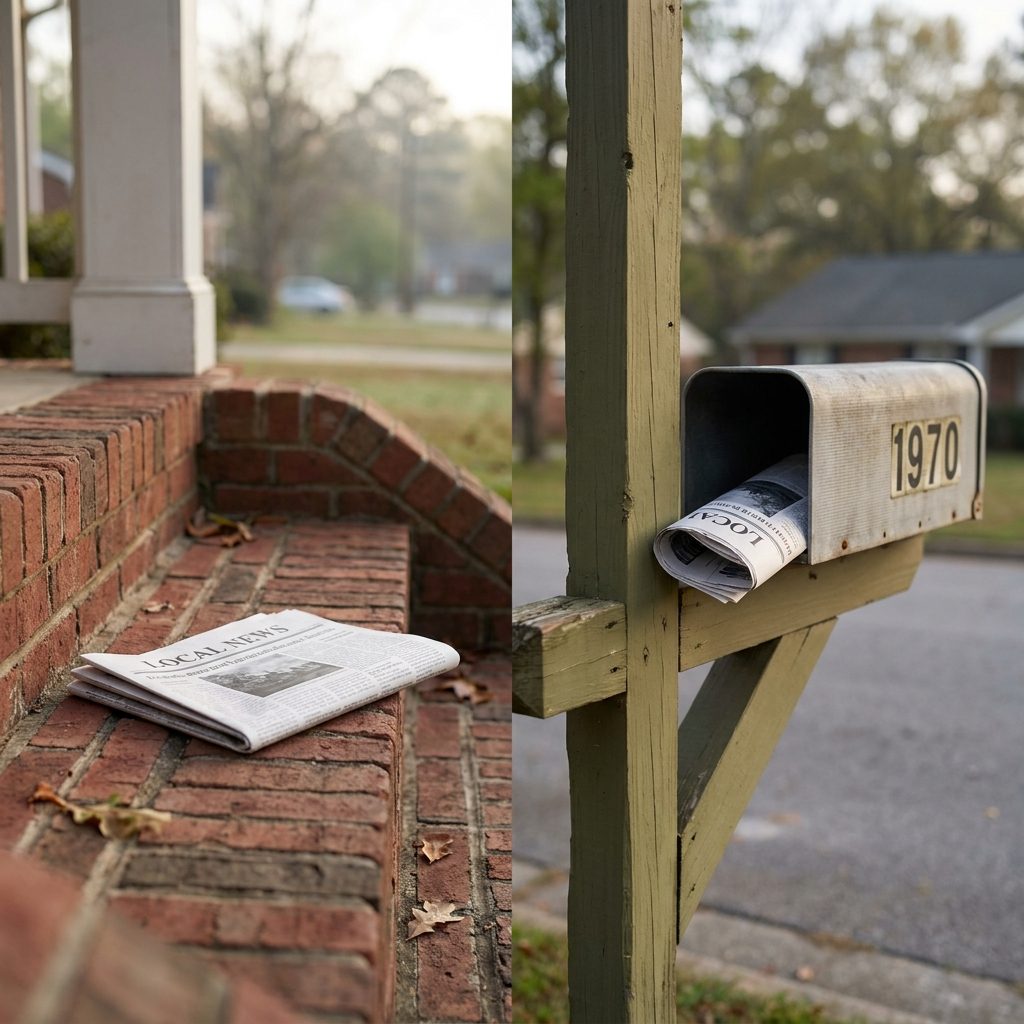
Some customers wanted the paper on the porch. Some had a separate newspaper tube mounted near the mailbox post. A few older subscribers needed it placed on a bench or hung from the doorknob so they would not have to bend down.
Each preference changed the rhythm. A curbside tube could be handled quickly. A protected porch meant leaving the sidewalk and climbing steps. A storm door required stopping altogether.
You began to understand that twenty houses did not necessarily mean twenty equal deliveries. Each one had its own cost in distance, time, and attention—a ledger carried entirely in your head.
22. Collecting Weekly Payments Door to Door

This was the part nobody mentioned when you accepted the route. Delivery happened before dawn, but collection happened face to face. On Friday evening you returned with a ticket book, knocked on the same doors, and asked adults to pay what they owed.
Some had exact change ready. Some paid for several weeks at once. Others said, “Catch me next Friday,” often with a confidence suggesting next Friday would solve everything.
On routes where carriers owed the branch regardless of whether every subscriber had paid, late accounts were not an abstract inconvenience. They were money missing from the carrier’s pocket.
When the money collected was not the money earned: You counted the week’s receipts, subtracted what was owed for the newspapers, and discovered the difference between revenue and profit without ever using either word.
21. Learning to Ask for Money Without Apologizing
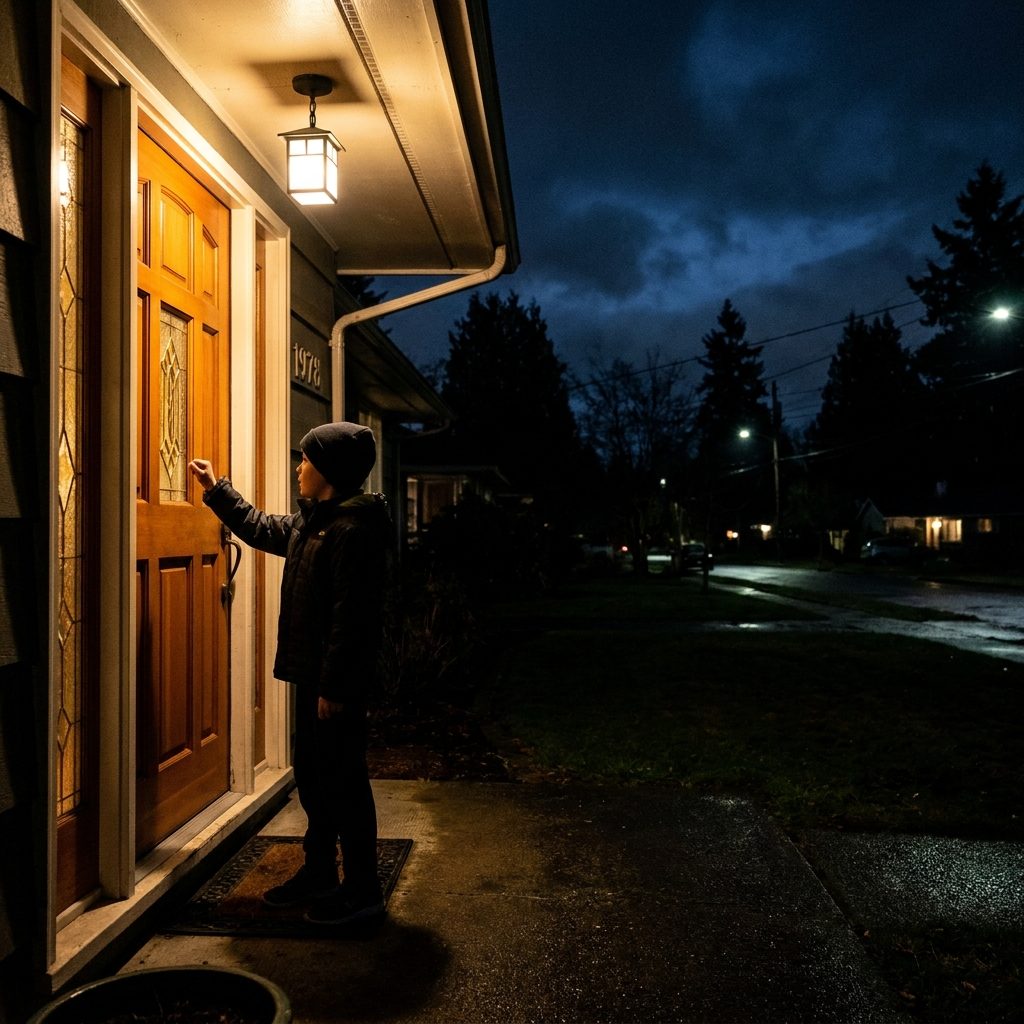
The first few collection nights were uncomfortable because children were usually taught not to bother adults, interrupt dinner, or discuss money. The route required all three.
You learned to state the amount clearly, wait while someone searched for a wallet, and avoid shrinking your voice as though asking for money that was genuinely owed were rude. When a subscriber stalled, you stayed polite without pretending the balance had vanished.
That was different from merely knocking on doors. It was the first practice many kids had in saying, calmly and directly, “This is what you owe.”
20. Keeping a Payment Ledger in a Little Spiral Notebook
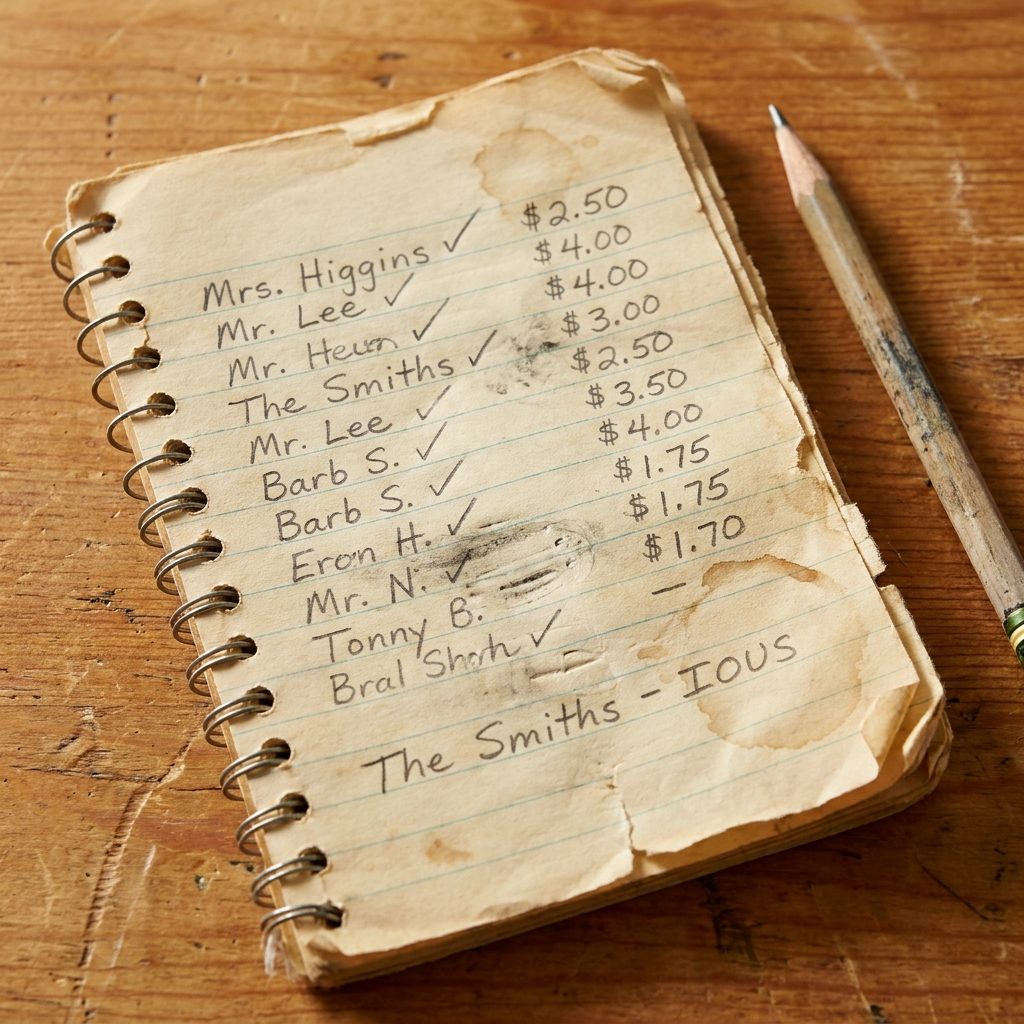
The entire operation lived in a spiral notebook small enough to fit in a coat pocket. Names ran down the left side. Dates, checkmarks, and dollar amounts filled the right, sometimes in handwriting that became less legible as the fingers got colder.
Miss one entry and you could return to the same house the following week, certain the customer had not paid while the customer was equally certain that they had.
So you became careful. You marked payments at the door, checked totals at home, and stopped trusting yourself to remember twenty separate transactions. The notebook was not sophisticated. It was simply the difference between a record and an argument.
19. Counting Cash and Coins at the Kitchen Table
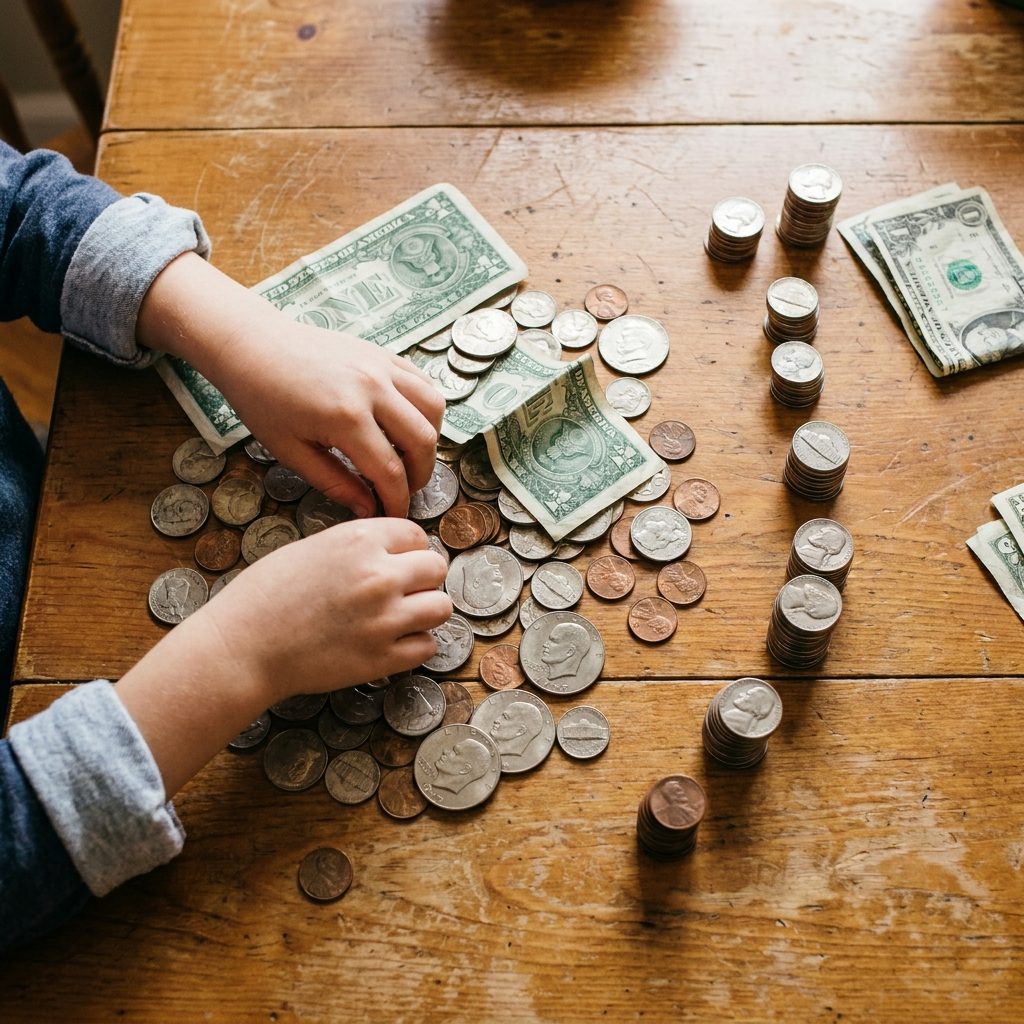
Then came the ritual. The collection bag was emptied onto the kitchen table. Crumpled dollar bills were flattened. Quarters rose in small towers. Dimes and nickels formed their own piles.
There was a particular weight to a week’s earnings when much of it arrived in coins. You could feel the labor before you finished counting it.
The total was not yet yours. First came the amount owed for the papers. What remained afterward was the actual return on the week. The pile taught the difference between money collected and money kept years before most carriers heard the phrase “cost of goods sold.”
18. Making Change in Your Head With No Calculator in Sight
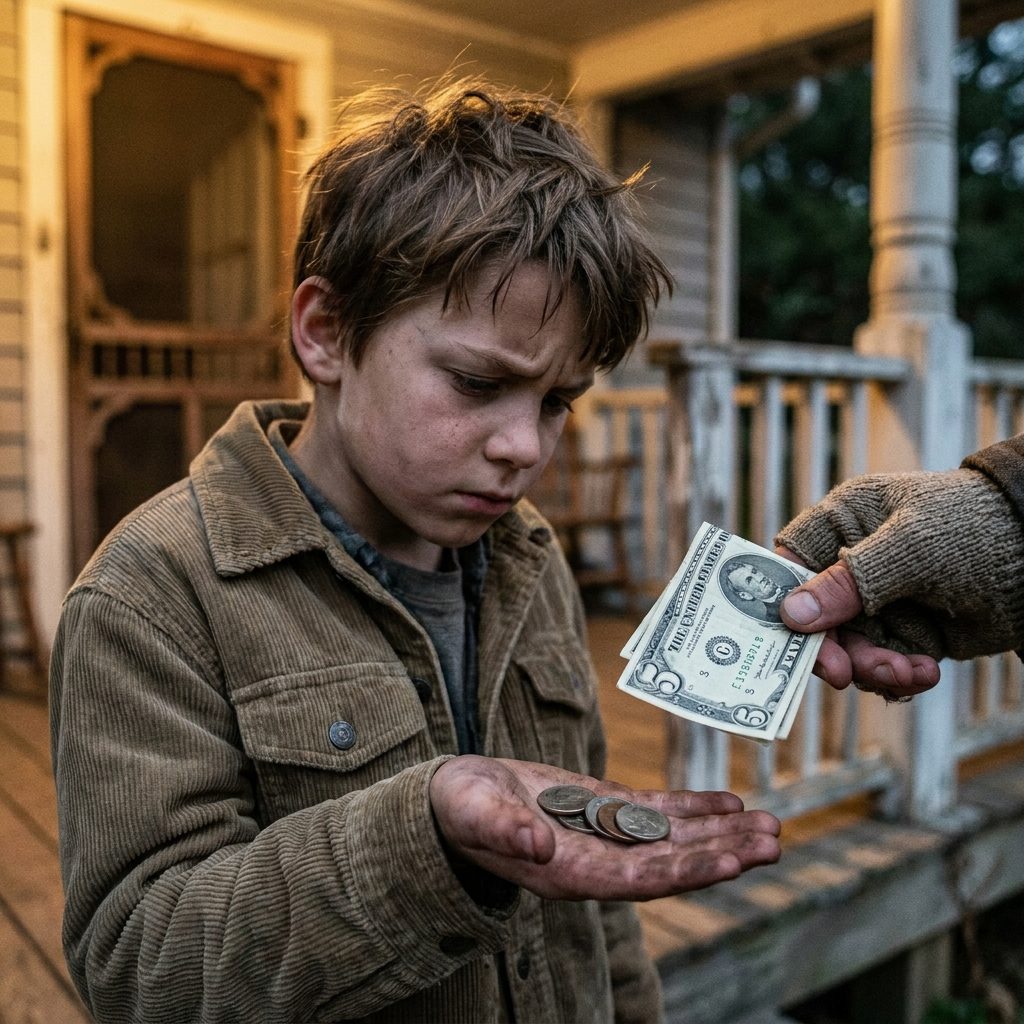
A customer owed $1.75 and handed you a five. No phone waited in your pocket. No register displayed the answer. There was only your brain, a handful of coins, and a subscriber standing on the porch.
You counted upward from the amount owed: a quarter made two dollars, then three one-dollar bills made five. Change due: $3.25.
The arithmetic became quick because hesitation felt enormous when an adult was watching. After enough Friday nights, making change stopped feeling like calculation and started feeling like reflex.
17. Dividing the Weekly Take Before You Spent It
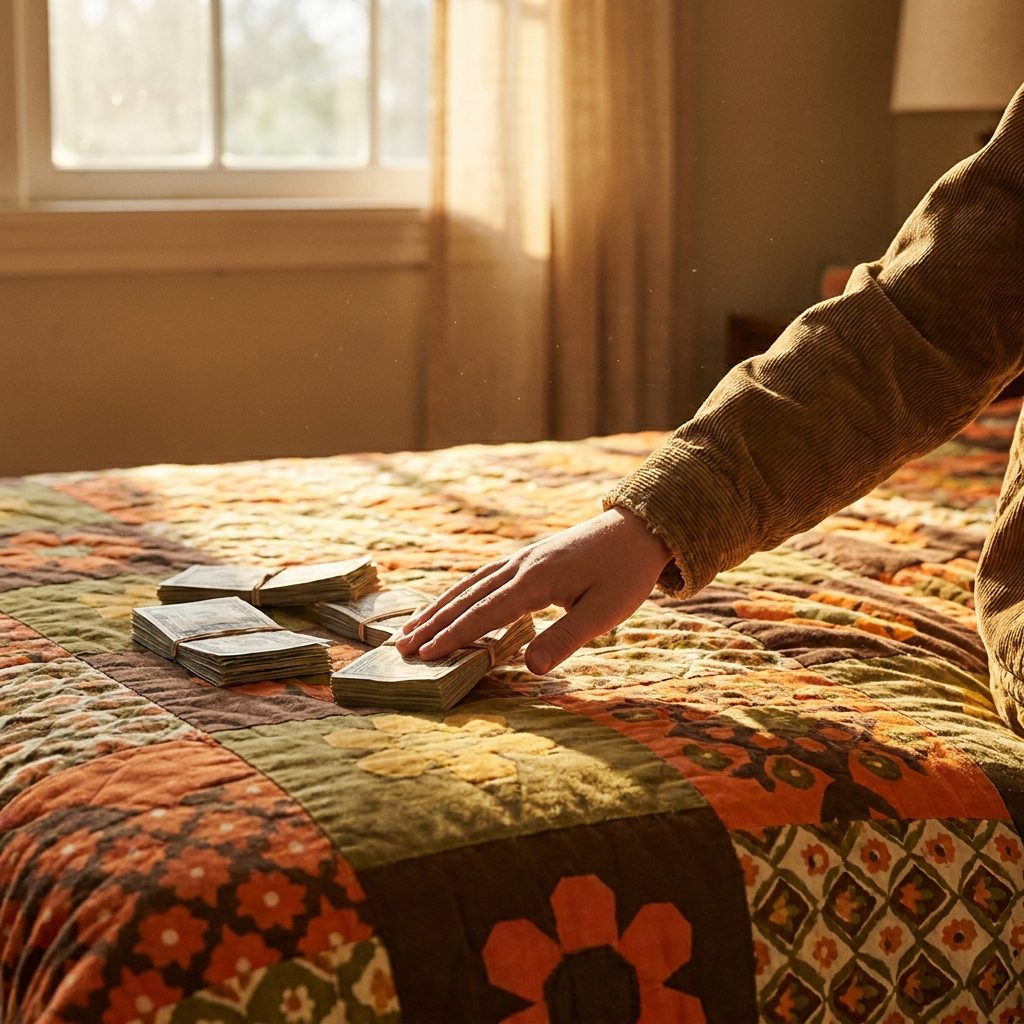
Now came the difficult part. You had actual money and approximately one hundred ideas for using it.
Some went into an envelope for a bicycle. Some stayed available for candy, records, comics, or the Saturday movie. A little might be left untouched simply because the previous week had proved how quickly a pocketful of money could vanish.
It was basic envelope budgeting, though nobody called it that. The system had one purpose: preventing Friday’s triumph from becoming Tuesday’s bankruptcy.
16. Saving for the One Thing You Really Wanted

There was always one thing. A ten-speed with chrome fenders. A record player. A baseball glove hanging in the sporting-goods window. Sometimes the catalog page was torn out and pinned to the wall as evidence of why you were riding through freezing rain.
Saving for it taught patience by inches. Every deposit made the goal more visible, while every candy counter offered an immediate and much cheaper argument against it.
When you finally bought the thing, you knew exactly what it had cost. Not only the price on the tag, but the number of dark mornings, wet sidewalks, and Friday-night doorsteps required to reach it.
15. Opening Your First Passbook Savings Account
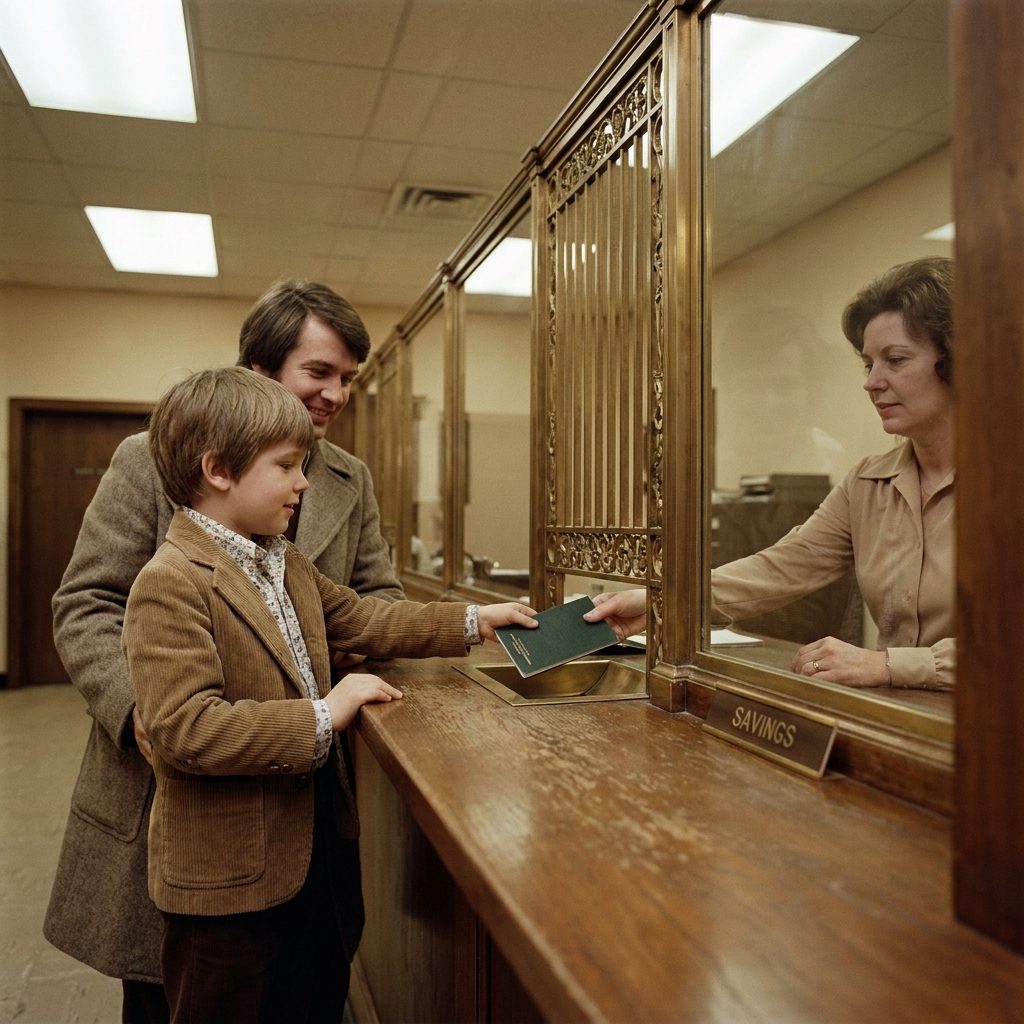
One day, usually with a parent nearby, you walked into the neighborhood bank and opened an account. The teller entered the first deposit into a small passbook, and you carried it home as though the booklet itself contained the money.
The entries made saving visible. Deposits appeared one beneath another. Withdrawals left evidence. Interest arrived as another line in the book rather than an invisible adjustment somewhere behind a screen.
Passbook accounts have largely disappeared from everyday banking, but the lesson was beautifully concrete: savings had a history, and you could hold that history in your hand.
14. Learning That Money Spent Was Money Gone
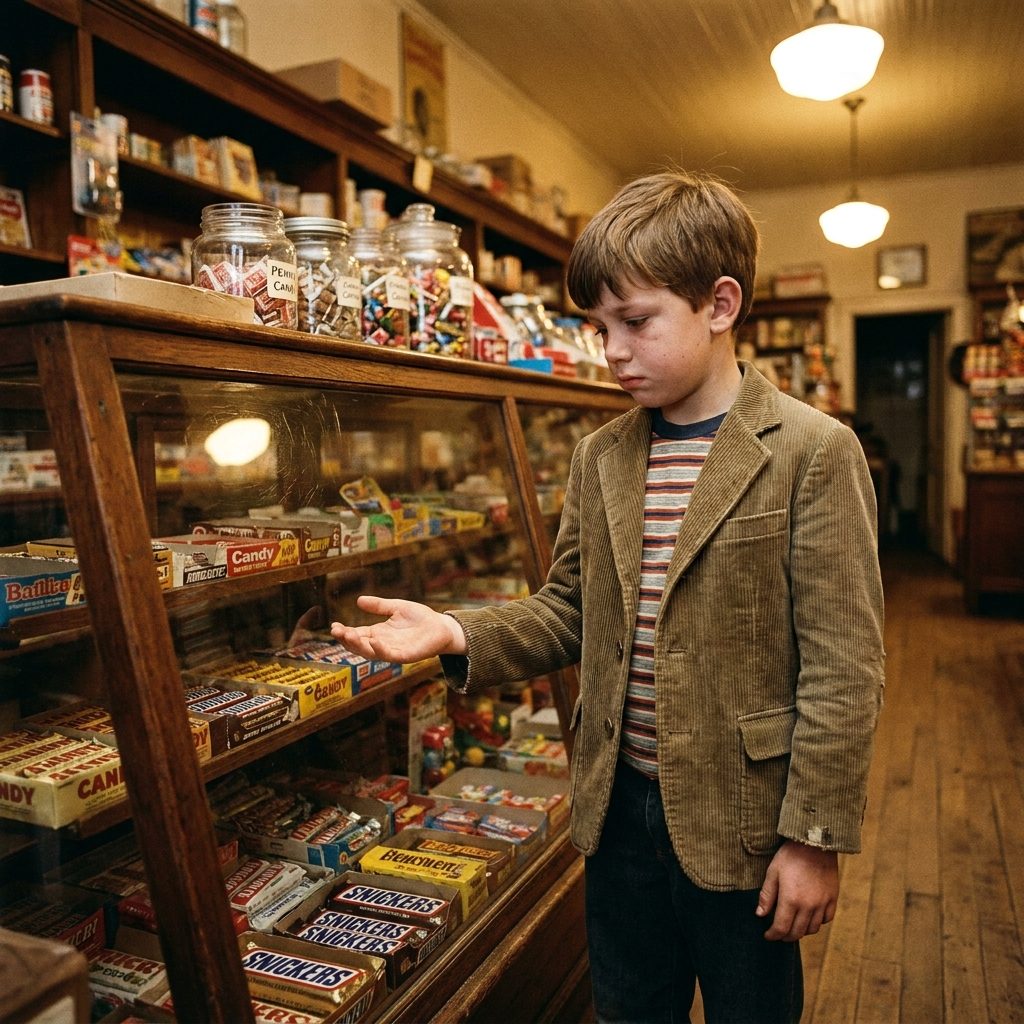
You had no credit of your own and no app offering to divide a purchase across later months. When the coins in your palm were gone, they were gone.
Spend the week’s loose money on wax bottles, a comic, and a record, and the pleasure came with a calculation. Those purchases represented a certain number of folded papers, climbed steps, and awkward collection calls.
The route connected labor and spending with unusual clarity. Every purchase had a visible amount of work standing behind it.
13. Receiving a Tip for Doing the Job Well

Would you like to save this?
Occasionally a customer pressed a little extra into your hand and said to keep the change. It was not part of the subscription price and not guaranteed by the newspaper. The customer had simply noticed.
The houses most likely to tip were often the ones where the paper consistently arrived dry, landed where requested, and appeared before breakfast without drama.
Good service could put a little extra in your hand, even when nobody had promised that it would.
12. The Christmas Tips That Felt Like Hitting the Lottery
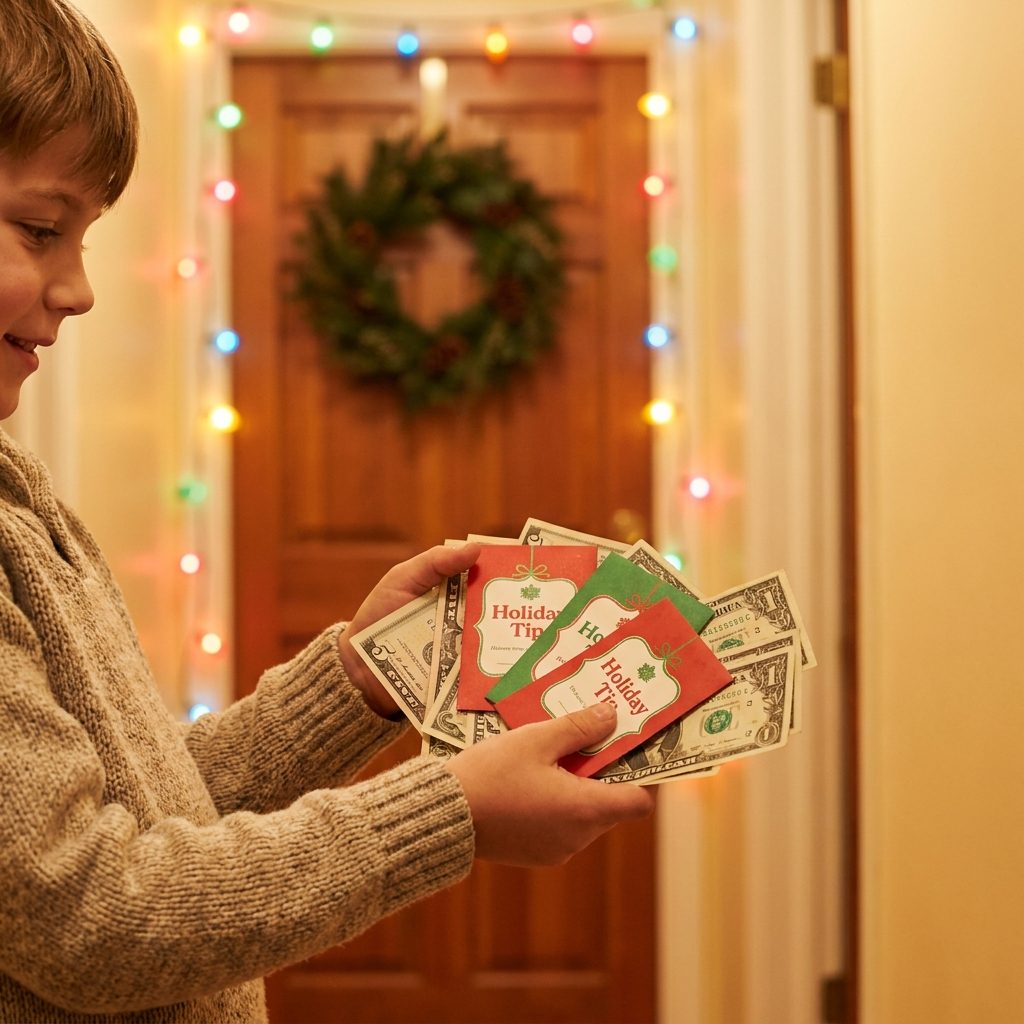
Then December arrived. Ordinary collection week suddenly included holiday cards, folded bills, and customers who wanted to acknowledge an entire year of papers appearing in the dark.
A five-dollar bill felt enormous. Several of them in one evening felt almost impossible.
You finished with cheeks red from the cold and envelopes stuffed into coat pockets, understanding that the tips were not payment for one delivery. They were recognition of hundreds of mornings when nothing had gone wrong. Reliability had accumulated quietly all year and finally appeared as cash.
11. Keeping Spare Papers for the Deliveries That Went Wrong
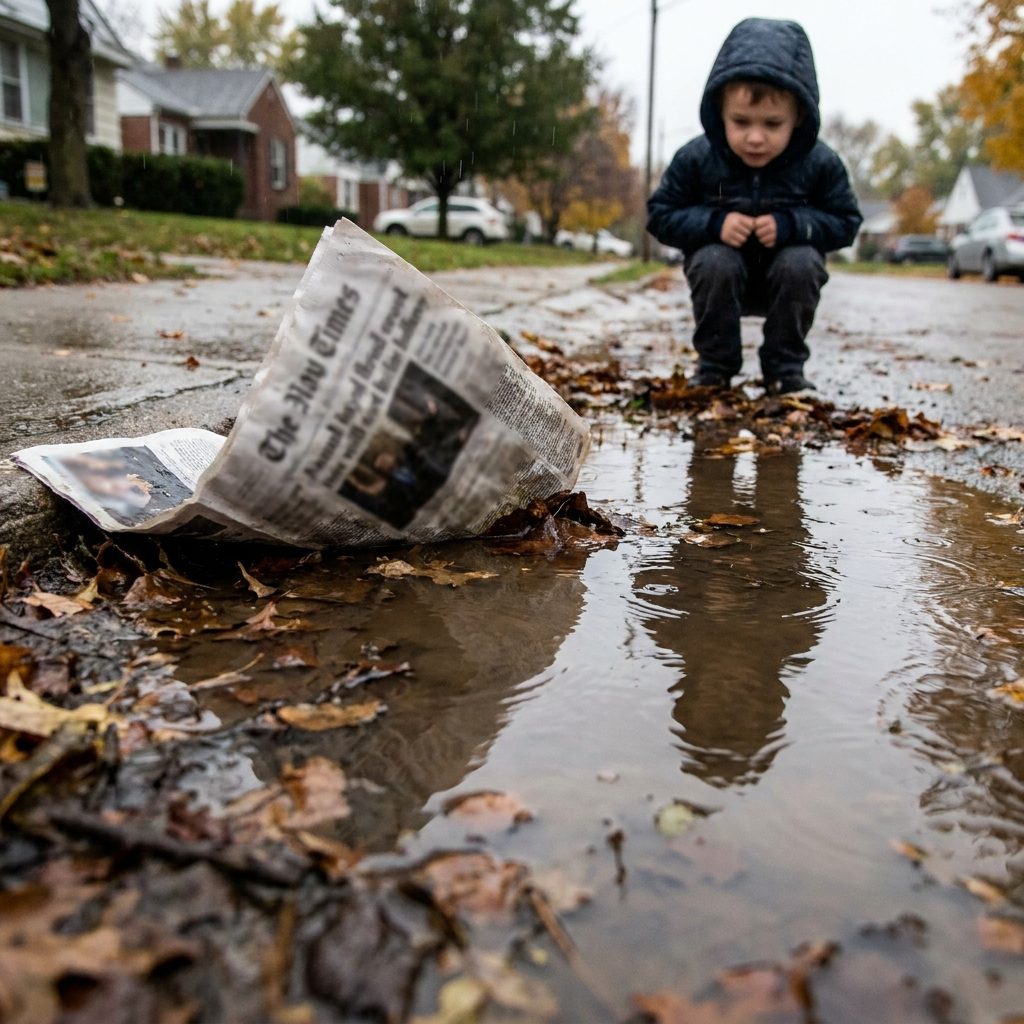
Sooner or later, a paper landed in a puddle, tore open on the sidewalk, or disappeared onto a roof. The throwing lesson had already been learned. The next lesson was preparing for the mistake that would happen anyway.
Experienced carriers tucked a few spare copies into the bag, along with extra plastic sleeves and rubber bands. A replacement could be made immediately instead of discovered later through a complaint call.
The reserve cost weight and space, but it protected the route. You learned that avoiding every mistake was impossible. Recovering quickly was something you could plan.
10. Finding Someone to Cover the Route When You Were Sick

The paper still had to arrive when the carrier had a fever, a family trip, or a morning when leaving bed was not sensible. That meant finding a substitute.
A sibling might take the bag. A parent might drive. Another carrier could cover the street in exchange for help on a later weekend. The substitute needed the customer list, route order, special instructions, and collection details.
This was not a lesson in dragging yourself outside while seriously ill. It was a lesson in contingency planning. Being responsible did not always mean doing everything yourself. Sometimes it meant making sure someone else could step in without the entire operation collapsing.
9. Preparing the Route in the Same Order Every Morning

Bundle, count, inserts, fold, sleeve, load. By the second month, the sequence became as fixed as tying your shoes. Each step prepared the next one, and changing the order usually meant discovering halfway down the street that something had been missed.
The routine mattered most on mornings when you were tired. You did not have to remember the entire operation from scratch. Your hands moved through the sequence while your brain caught up.
That was the hidden advantage of repetition. A dependable routine protected the route from the version of you who had slept badly, misplaced the cutters, or stared at the bundle for several seconds before remembering what came next.
8. Getting the Whole Route Done Before the School Bell

The clock controlled everything. School might begin at eight. The papers had to arrive before then. Breakfast, changing clothes, and reaching the bus stop still had to fit somewhere between those two facts.
You found the fastest loop. You identified the streets where several deliveries could be made without crossing traffic. You learned which houses took extra time and where a short delay could make the final ten stops feel impossible.
Time management was not a workshop. It was thirty-eight houses, a cooling bowl of cereal, and a bus that would not wait.
7. Discovering That the Route Was Yours to Manage
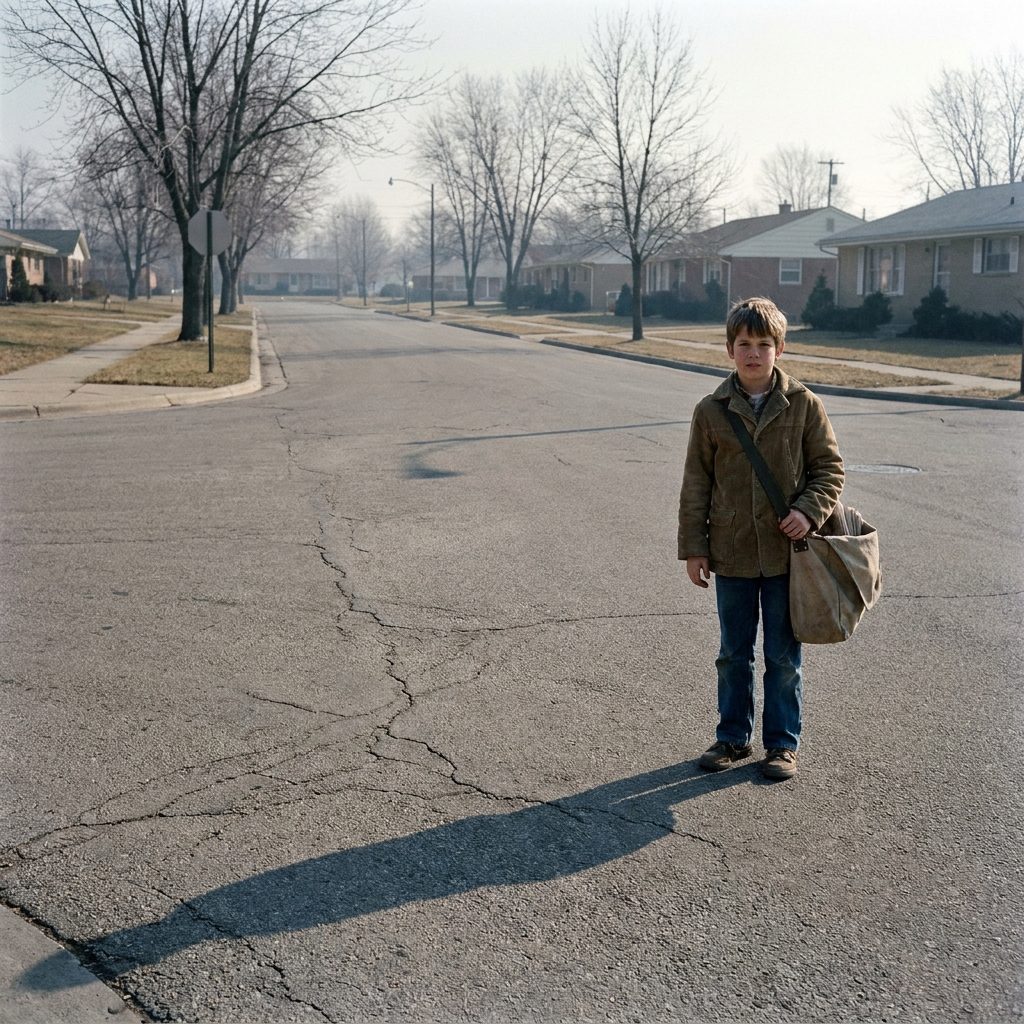
Parents appreciated this part more than children did. The route had your name attached to it. The customers knew you. The notebook belonged in your pocket. Complaints, missed collections, and forgotten instructions followed you home.
Adults might help when something genuinely went wrong, but they could not fold every paper, remember every storm door, or keep the ledger straight without taking over the job entirely.
The route was not necessarily something you owned, but it was something you controlled.
The route was the first thing many kids managed that could genuinely go wrong on them.
6. Racing the Carrier Two Streets Over
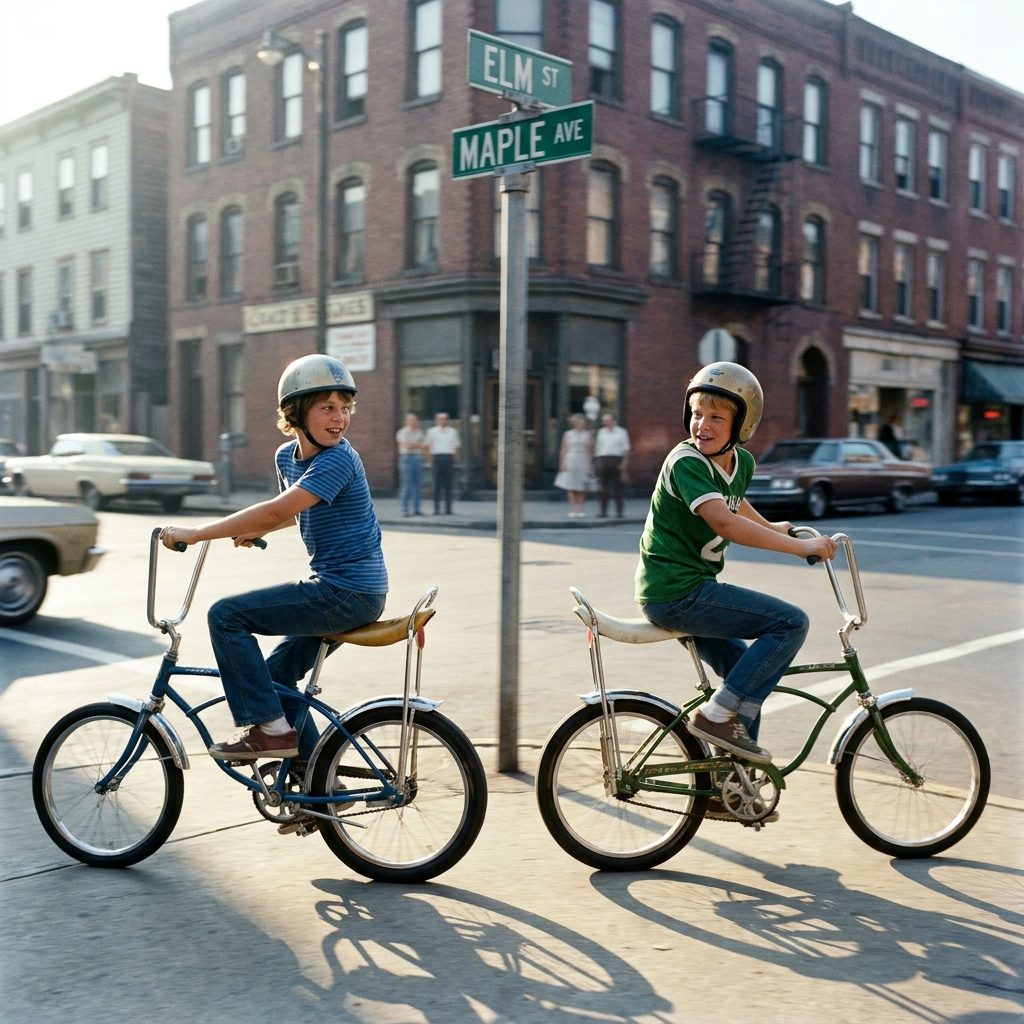
Every neighborhood seemed to have more than one carrier, and each knew where the other route began. You compared finish times, bag weights, Christmas tips, and spectacular throwing failures.
The rivalry was usually friendly. Still, watching the carrier on the next block complete a route cleanly had a way of sharpening your own attention. Nobody wanted to be remembered as the kid who missed the same porch three mornings in a row.
The useful part was not beating someone else by four minutes. It was discovering that another person’s technique could expose where your own routine was wasting time.
5. The Subscription Contest That Dangled a Ten-Speed in Front of You
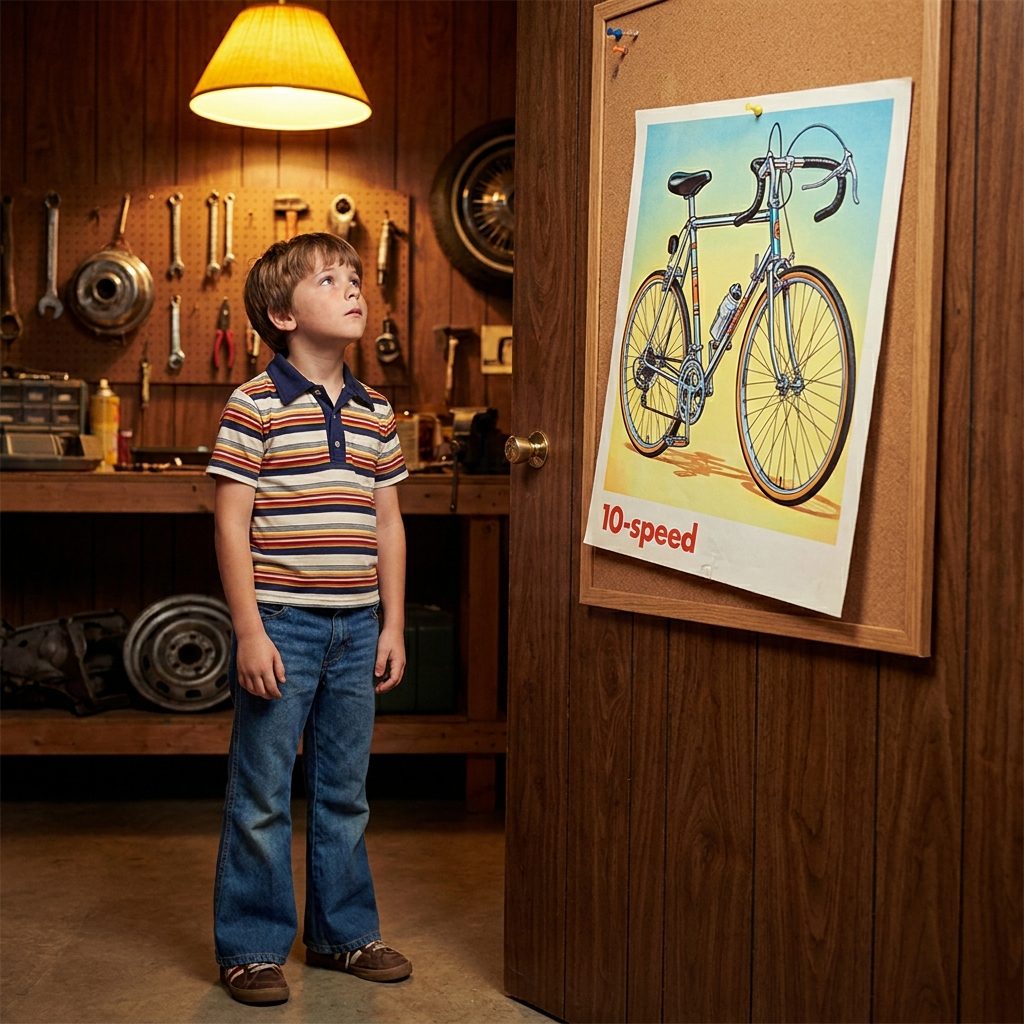
Sign up ten new subscribers and win a bicycle. That was the pitch, and children understood it immediately.
New subscriptions earned points. Points led to radios, baseball gloves, cash bonuses, amusement-park trips, or the ten-speed pictured on the poster. Suddenly a delivery route included knocking on unfamiliar doors and explaining why a household should start taking the paper.
The contest revealed a different kind of earning. Delivering the existing route produced regular money. Expanding it offered a prize large enough to see from across the branch office.
4. The First Money Connected Directly to Your Work

Allowance might have come from the family and sometimes required chores of its own. Route money came through a different chain: papers folded, houses served, customers collected, branch paid, remainder counted.
That connection changed the feeling of the cash. You could point to where it had come from. A stack of bills represented a month of mornings, not an unexplained amount handed over by an adult.
Some children spent it immediately. Others saved nearly everything. Either way, the link between doing the work and holding the result had become unmistakable.
3. The Slow Disappearance of the Neighborhood Paper Carrier
Would you like to save this?
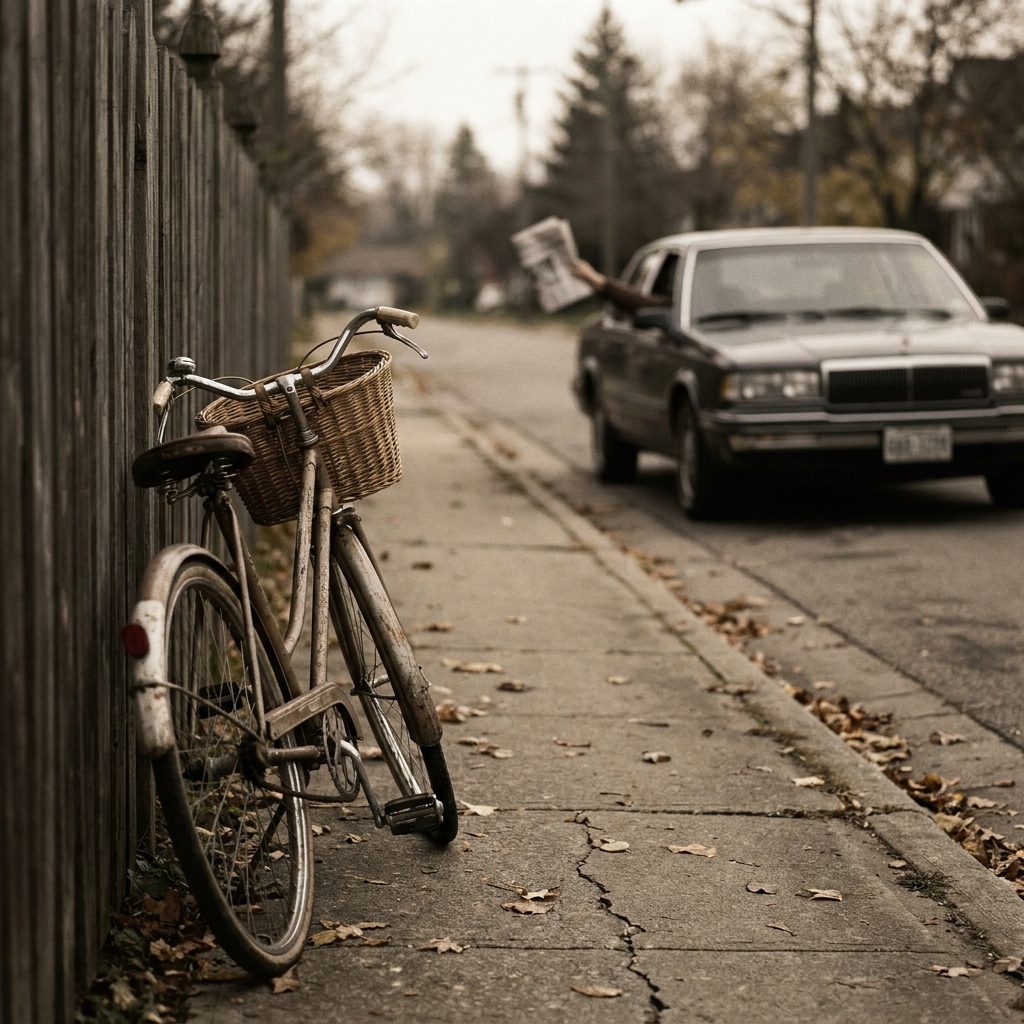
The child carrier did not disappear everywhere at once. The change arrived town by town and newspaper by newspaper. Adult drivers began covering larger motor routes. Earlier delivery deadlines favored cars. Safety, liability, and labor concerns made publishers less comfortable relying on children before dawn.
Then newspaper circulation declined and more readers moved to screens. Fewer printed subscriptions meant fewer compact neighborhood routes that a child could cover on foot or by bicycle.
A familiar first job gradually became less common. The morning paper still arrived in many places, but increasingly from a car moving through several neighborhoods rather than a kid who knew every porch on one block.
2. The Three Rules Every Carrier Carried Into Adulthood
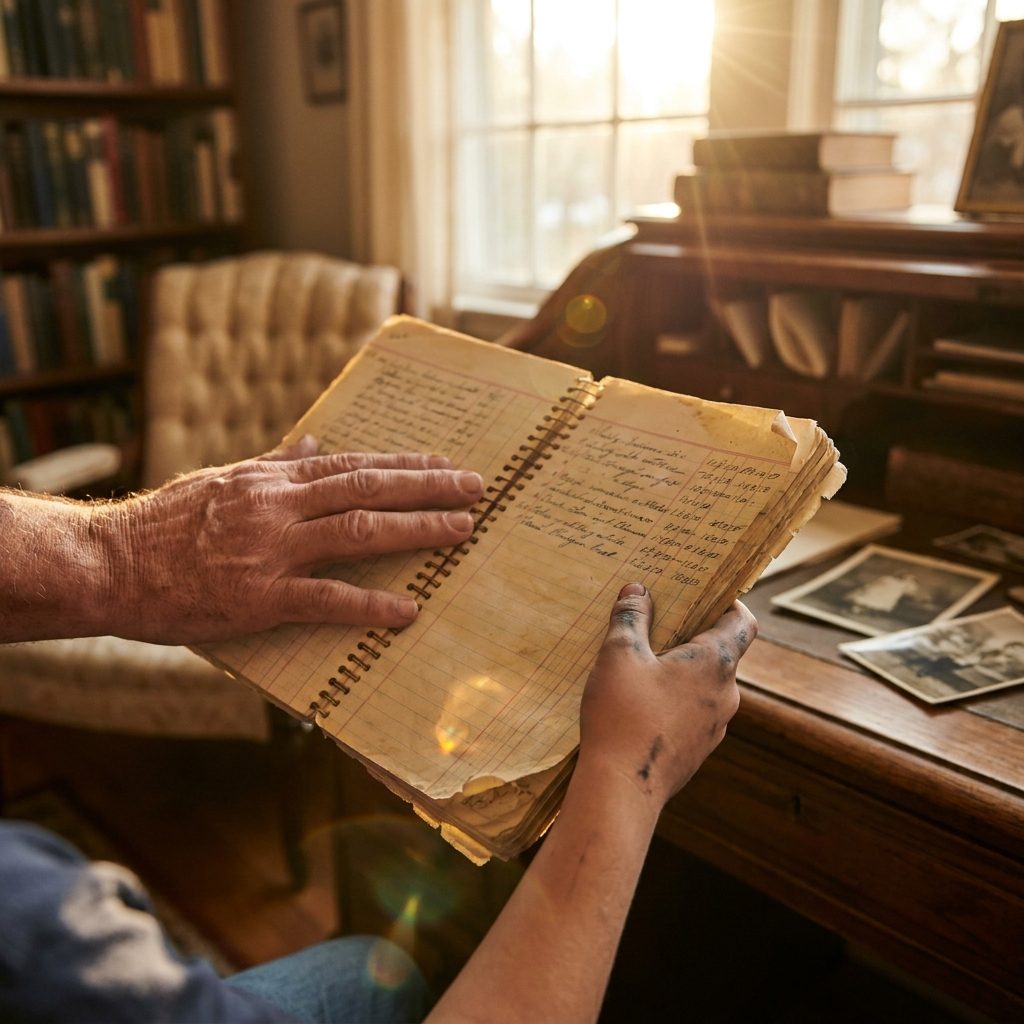
Ask former carriers what stayed with them, and the answers usually return to three things.
- Show up because somebody is counting on the delivery.
- Know the difference between money collected, money owed, and money actually earned.
- Do the small job carefully because reputation is built one morning at a time.
Those were not exclusively paper-route skills. They were adult habits learned through a child’s job, with enough real money and customer pressure to make the lessons stick.
The paper arrived because someone had prepared the route in darkness, remembered the storm door, protected the sports section from rain, and reached the final house before the school bell.
1. Why the Paper Route Became a Rite of Passage

The route occupied an unusual space between a household chore and an adult job. Children too young for most formal employment could still serve paying customers, handle cash, maintain records, and experience consequences outside the family.
The work was local enough to be possible and serious enough to matter. A missed bedroom chore disappointed a parent. A missed house created a complaint from someone who had paid for the paper.
That difference gave the route its power. Responsibility was not explained in a speech. It arrived as a bundle before dawn and waited on the corner.
Ask anyone who carried one. The first memory may be the strap cutting into a shoulder, the dead weight of the Sunday edition, or the sound of coins hitting the kitchen table. Underneath it sits the lesson that connected them all: the paper did not reach the porch until somebody made sure it did.