
Would you like to save this?
The doors sighed open and the air hit you first: cool, carrying the faint damp smell of the fountain, with sugar and hot pretzel dough drifting from somewhere near the escalator. Music came from ceiling speakers nobody could see while brass railings caught the skylight. A mall in 1985 was the town square with a roof over it, the place where teenagers disappeared for four hours and somehow returned to the correct entrance when it was time to go home.
Some of those buildings still stand. Others have been renovated, partially emptied, or rebuilt around an entirely different idea of what a mall should be. These 30 before and afters show what changed.
30. Mall Entrances and Grand Facades
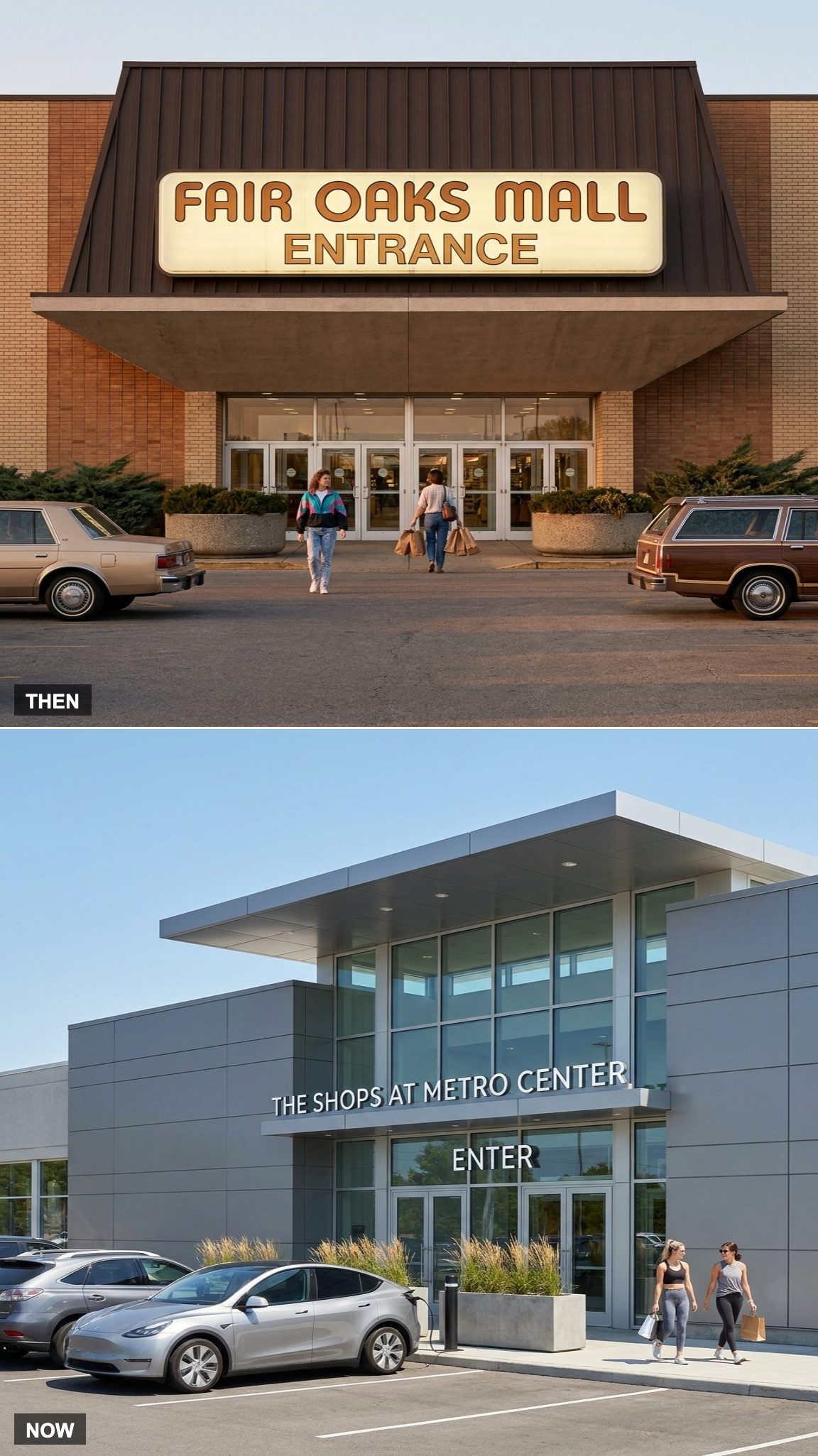
A mall entrance in 1985 announced itself. Rust-brown brick, a concrete overhang thick enough to land a plane on, and a backlit plastic sign glowing softly above the doors. The whole thing looked like a suburban cathedral built for spending money, which was not far from the truth.
Many renovated entrances now rely on broad sheets of glass, composite panels, shallow canopies, and thin illuminated lettering. The newer facade may be brighter and easier to maintain, but the old one made arrival feel like an event.
29. Anchor Department Stores
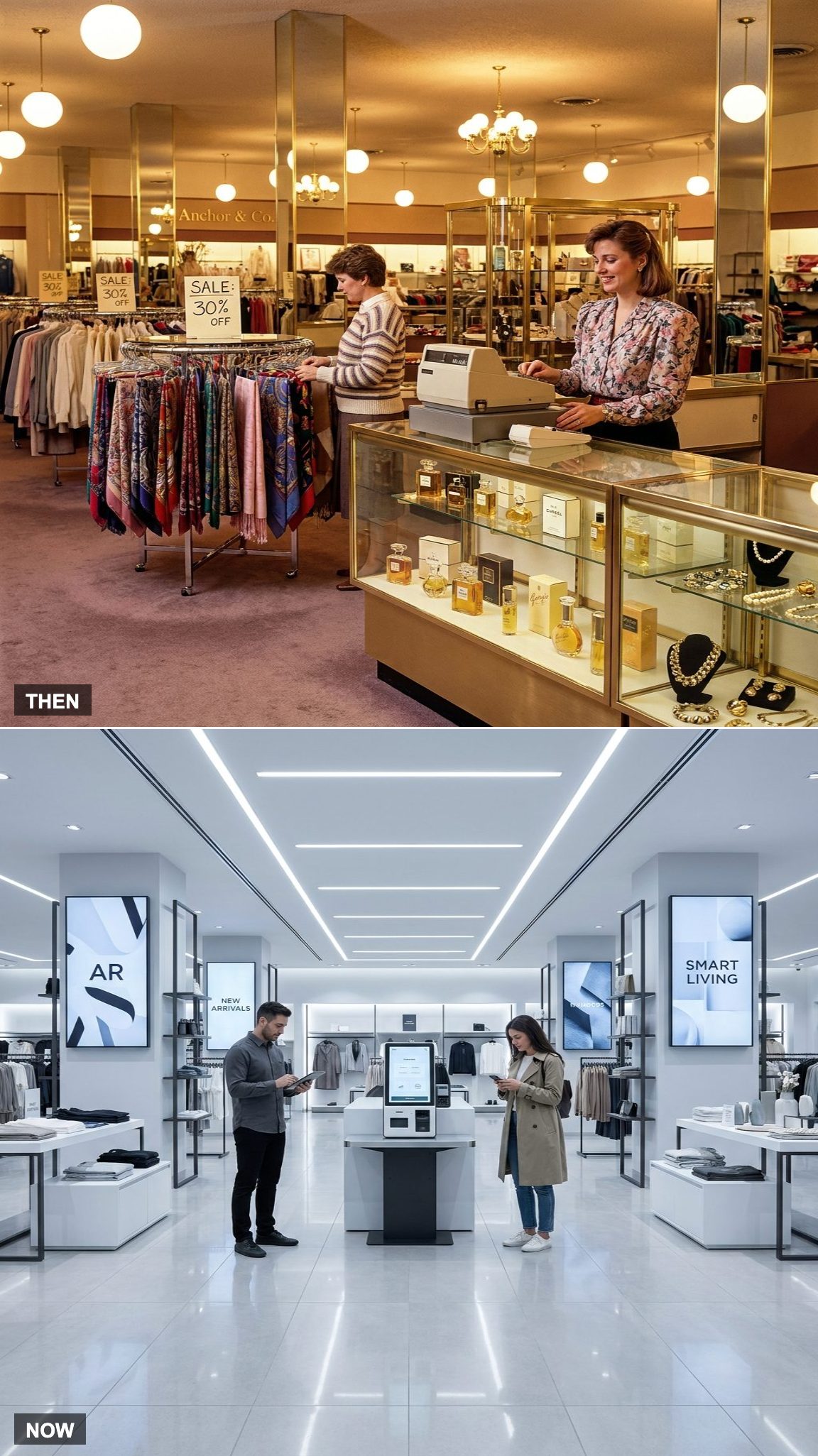
The anchor store supplied the mall’s gravity. Two or three stood at opposite ends, and you walked the whole length of the building just getting from one to another. Inside were brass trim, mirrored columns, mauve carpet, cosmetics counters, and a perfume floor that hit you like a wall.
A woman in shoulder pads worked a register that went ka-chunk, while entire departments stretched farther than you could see.
Many former anchors now sit dark, have been divided among smaller tenants, or are being converted into offices, apartments, entertainment venues, and other uses. Surviving department stores often look lighter and less crowded, with open aisles, mobile checkout, and fewer mountains of merchandise.
The stores that once overwhelmed you now have to work harder just to register.
28. Multi-Level Atriums
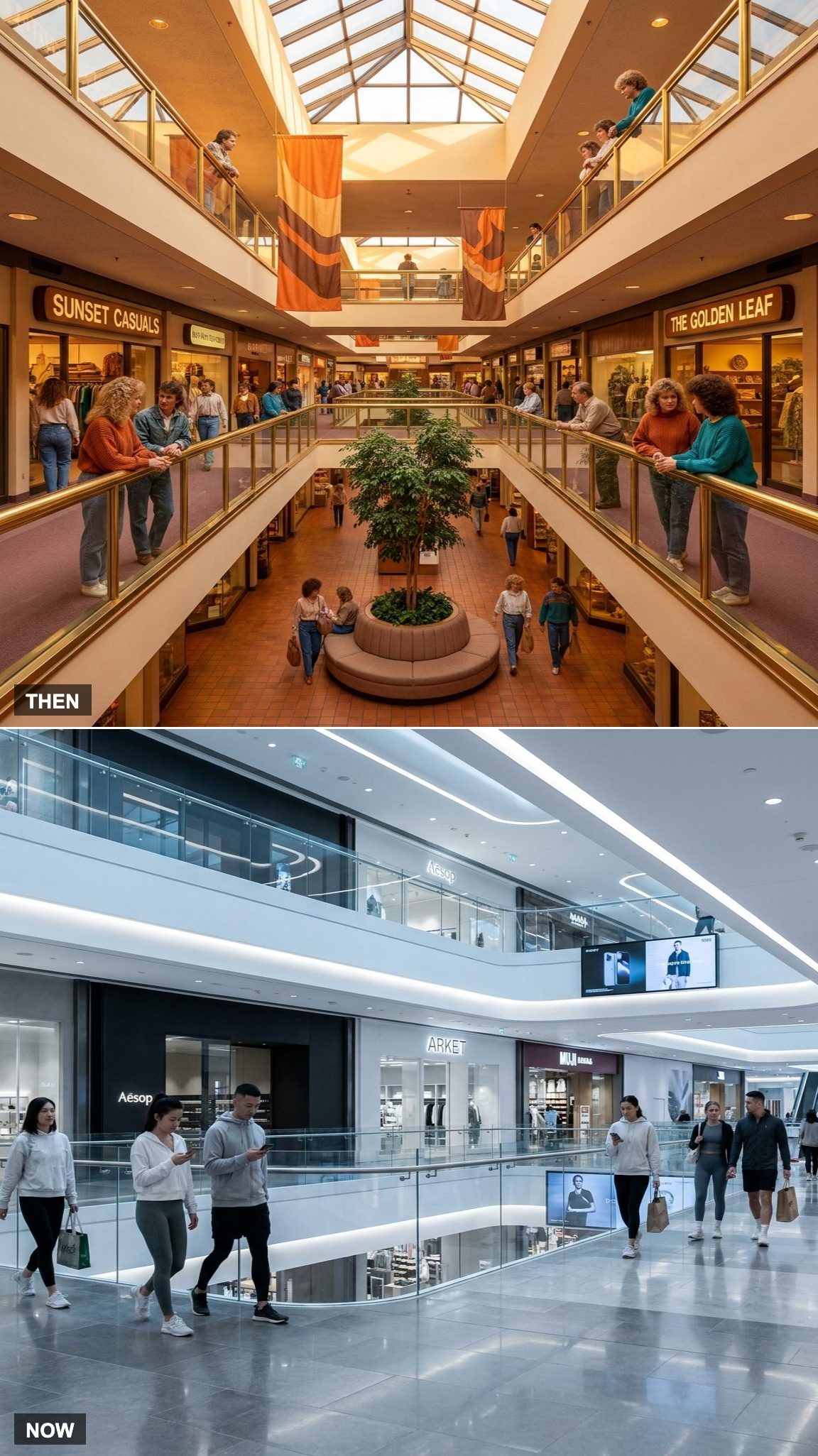
Stand at the bottom of a 1985 atrium and look up. Two levels of open balconies, brass railings warm beneath your hand, terracotta tile below, and mauve carpet above. Fabric banners in orange and brown moved gently in air that never seemed to come from anywhere.
The architectural bones often remain. Frameless glass may replace the brass, dark storefronts replace the warm wood, and a digital advertising screen occupies the space where a banner once swayed.
The newer atrium is easier to update. Honestly, I still miss the banners.
27. Glass Elevators and Escalators
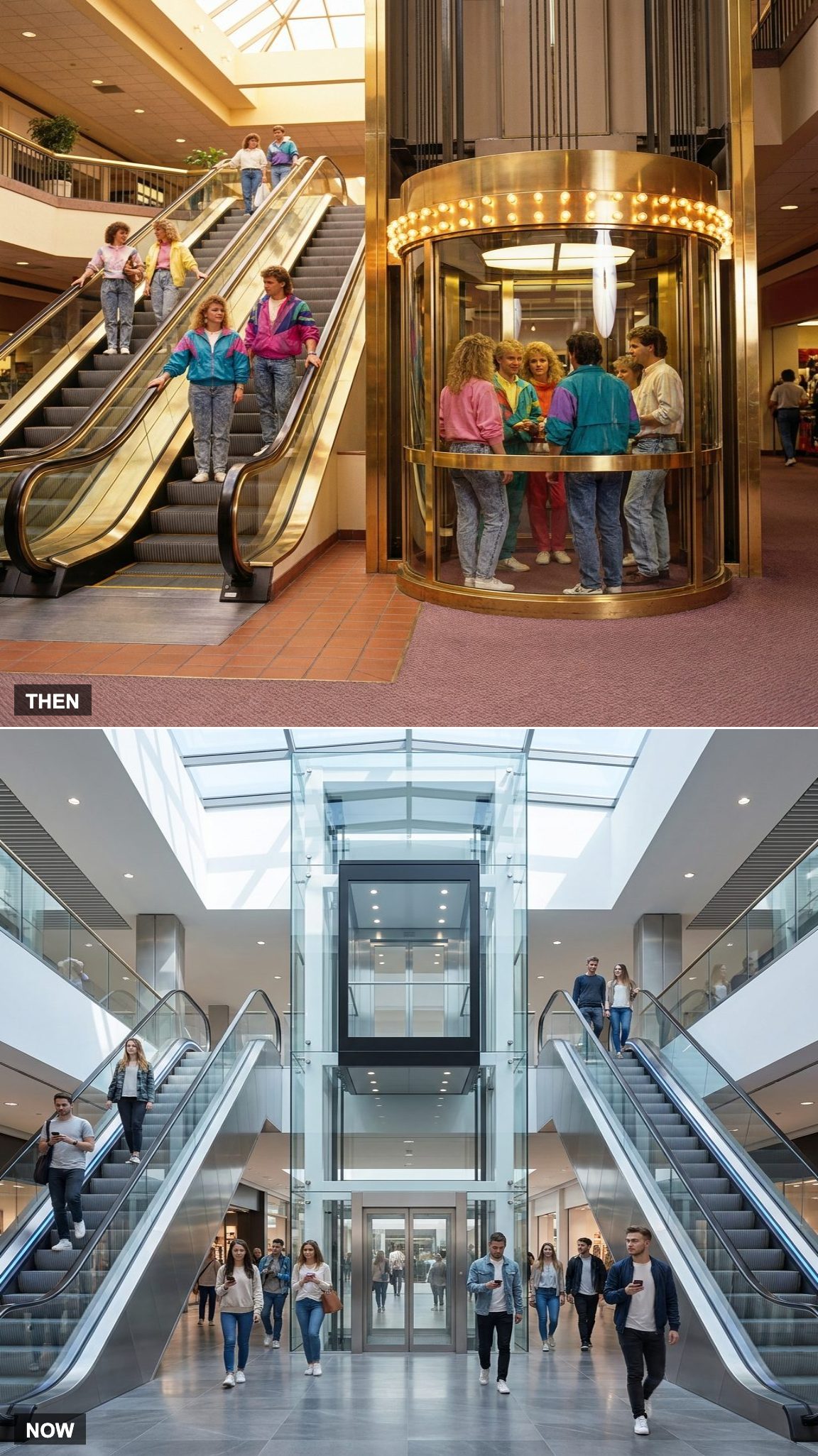
The glass elevator was a ride. A rounded capsule with brass framing and small accent bulbs moved through the atrium like something from a hotel in Las Vegas. You rode it even when the escalator would have been faster.
The escalators had polished metal sides and dark rubber handrails that always felt slightly tacky. Going upstairs became part of the spectacle.
Today’s glass elevator is more likely to be a clean rectangular shaft with slim framing, clear panels, and unobtrusive lighting. It moves quietly, arrives efficiently, and attracts almost no attention.
It gets you up one floor, and that is the entire review.
26. Indoor Fountains
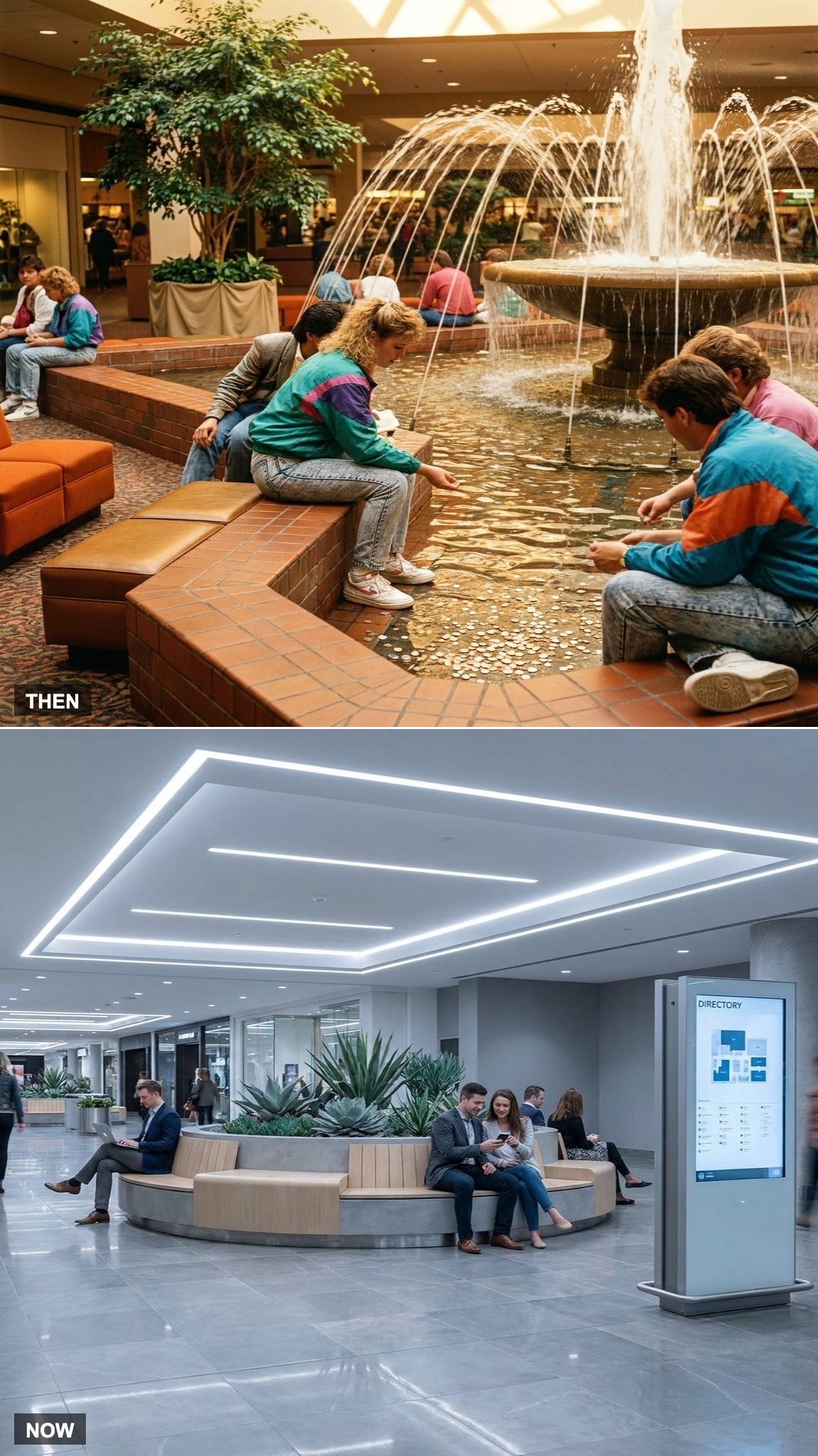
Every good mall seemed to have one. A broad tiered fountain sent water arcing toward the skylight while pennies collected across the bottom from a thousand small wishes. Its brick or tiled edge doubled as a bench.
“Meet me by the fountain” was a coordinate everybody understood.
Many fountains disappeared during renovations. Maintenance, water use, wet floors, climbing children, mechanical repairs, and pressure to make the space more flexible all worked against them.
Where the water once moved, you may now find movable seating, a temporary display, a charging table, or a large planter. All of those uses make sense. Nobody makes a wish at a charging table.
25. Skylights and Natural Light
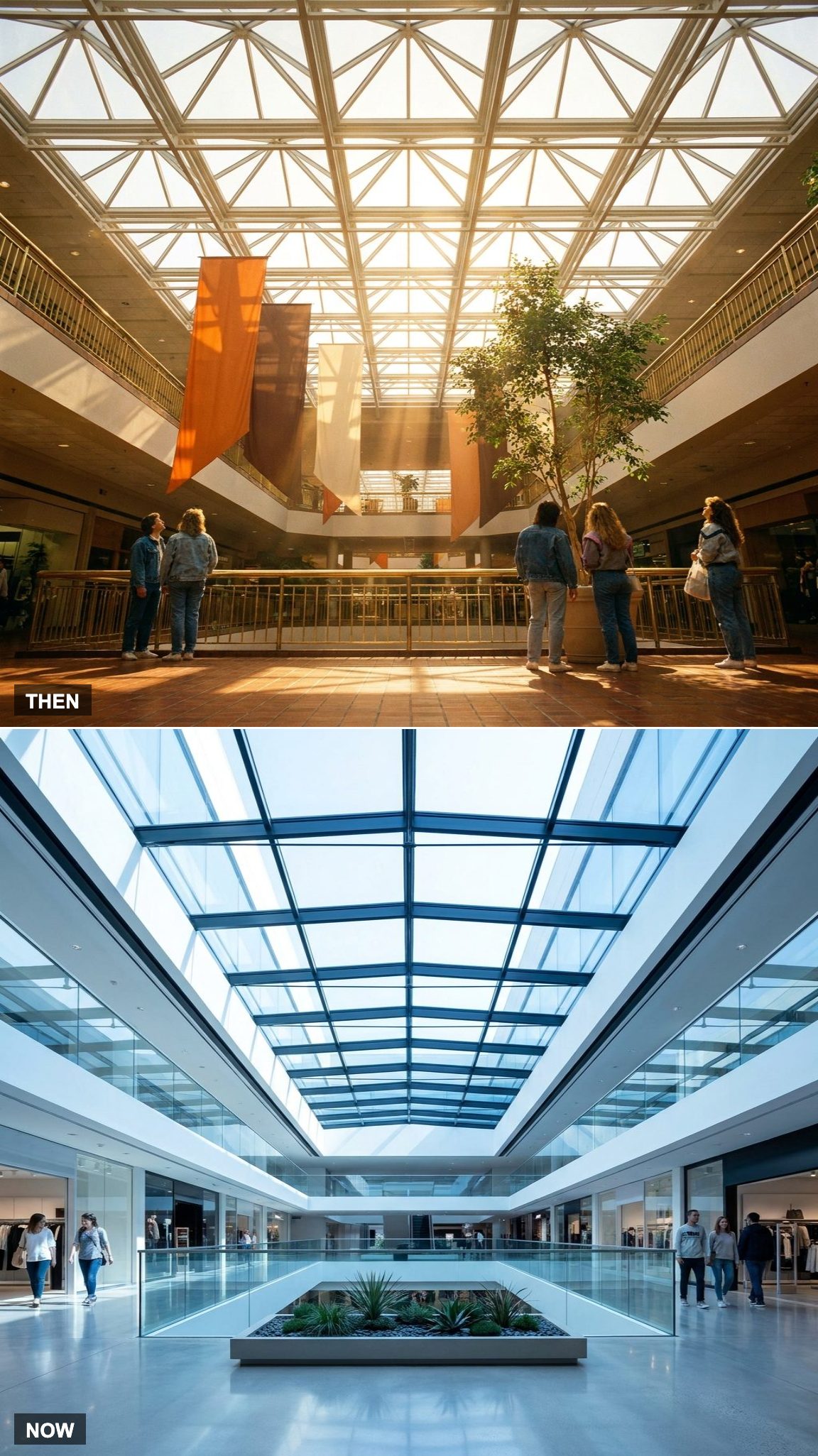
Look up in an ’85 mall and the ceiling could appear to be made of light. Angular skylights with white framing dropped warm afternoon sun across terracotta floors and broad-leaved plants.
The effect made the building feel less like a sealed retail box and more like a greenhouse for people.
Many renovated malls retained or enlarged their skylights. Dark framing, pale flooring, cooler artificial lighting, and different glazing can make the same daylight feel less golden than it once did.
The sun did not change. Everything around it did.
24. Carpeted Seating Areas
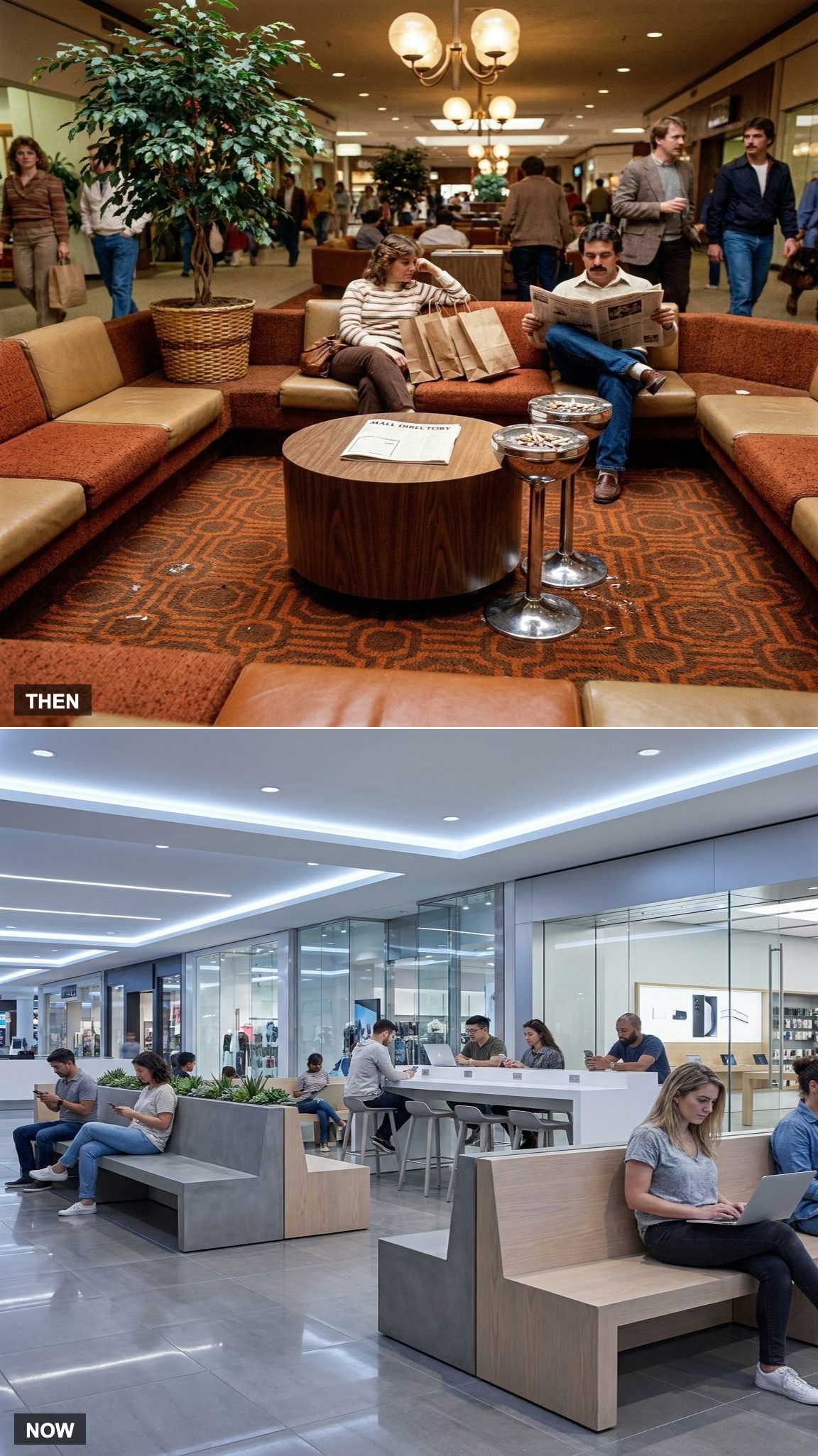
There seemed to be a spot in every mall where the walking stopped. A carpeted lounge, burnt-orange pattern underfoot, low tan vinyl benches, perhaps a chrome ashtray and a wood table with the mall directory folded across it.
Dads parked there. So did grandparents, tired children, and anyone whose feet had surrendered. It was ugly, and it was heaven.
Carpet disappeared from many common areas because hard flooring is easier to clean and replace. The current version may offer porcelain tile, upright benches, movable chairs, and a communal table fitted with outlets.
You sit long enough to charge your phone, then move on.
23. Indoor Trees and Planters
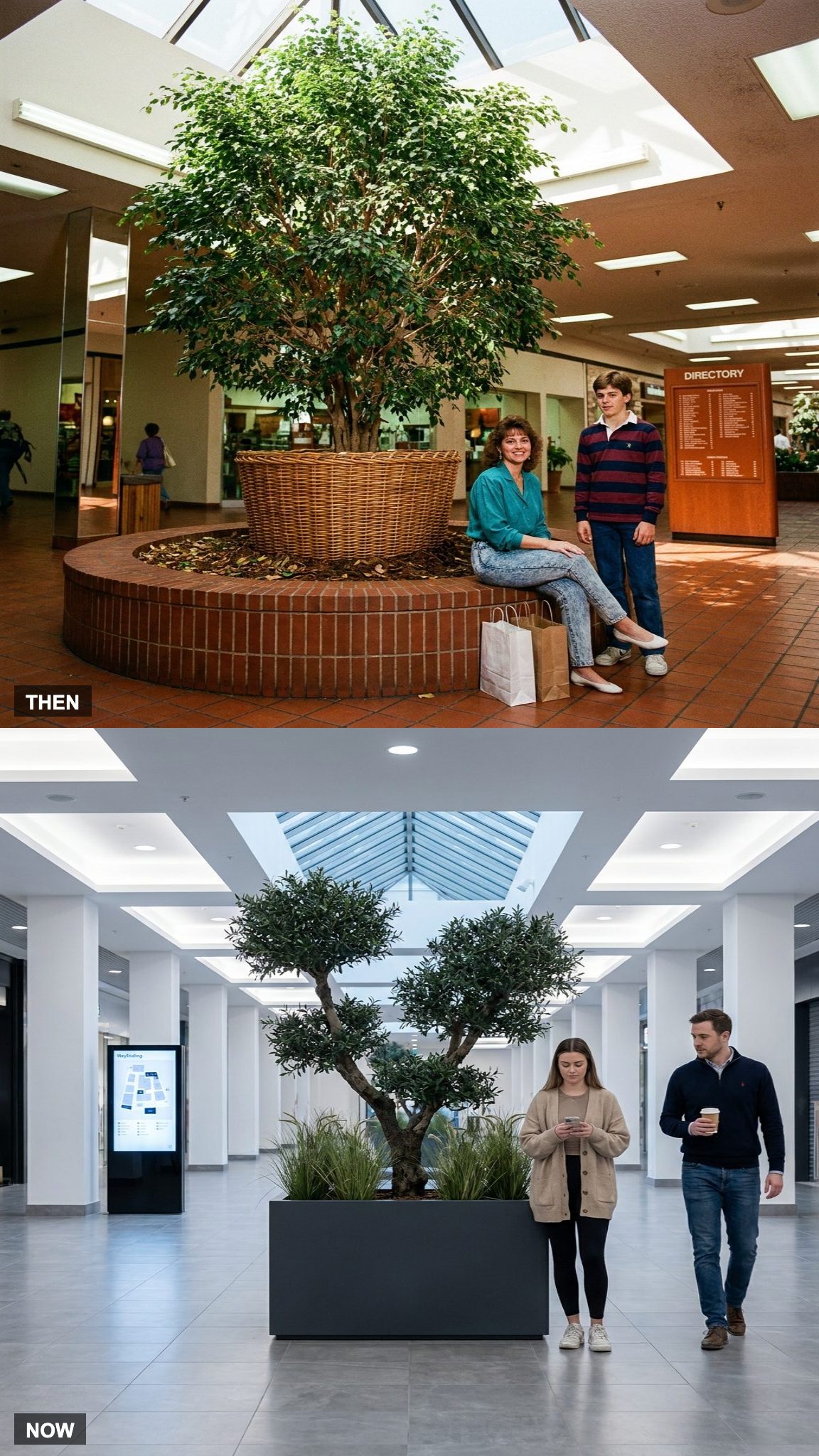
Many malls filled their atriums with live ficus trees, palms, scheffleras, and other plants capable of surviving beneath skylights. Some reached toward the second level from wide brick planters whose edges became unofficial seating.
Under all that fluorescent commerce, someone had decided the place needed a little jungle. Near the larger planters, you could sometimes smell damp soil.
Contemporary landscaping is often more controlled: ornamental grass, compact trees, sculptural planters, or artificial greenery that never grows beyond its assigned shape. The arrangement is neater and easier to maintain.
It is also harder to mistake for a jungle.
22. Food Courts
Would you like to save this?
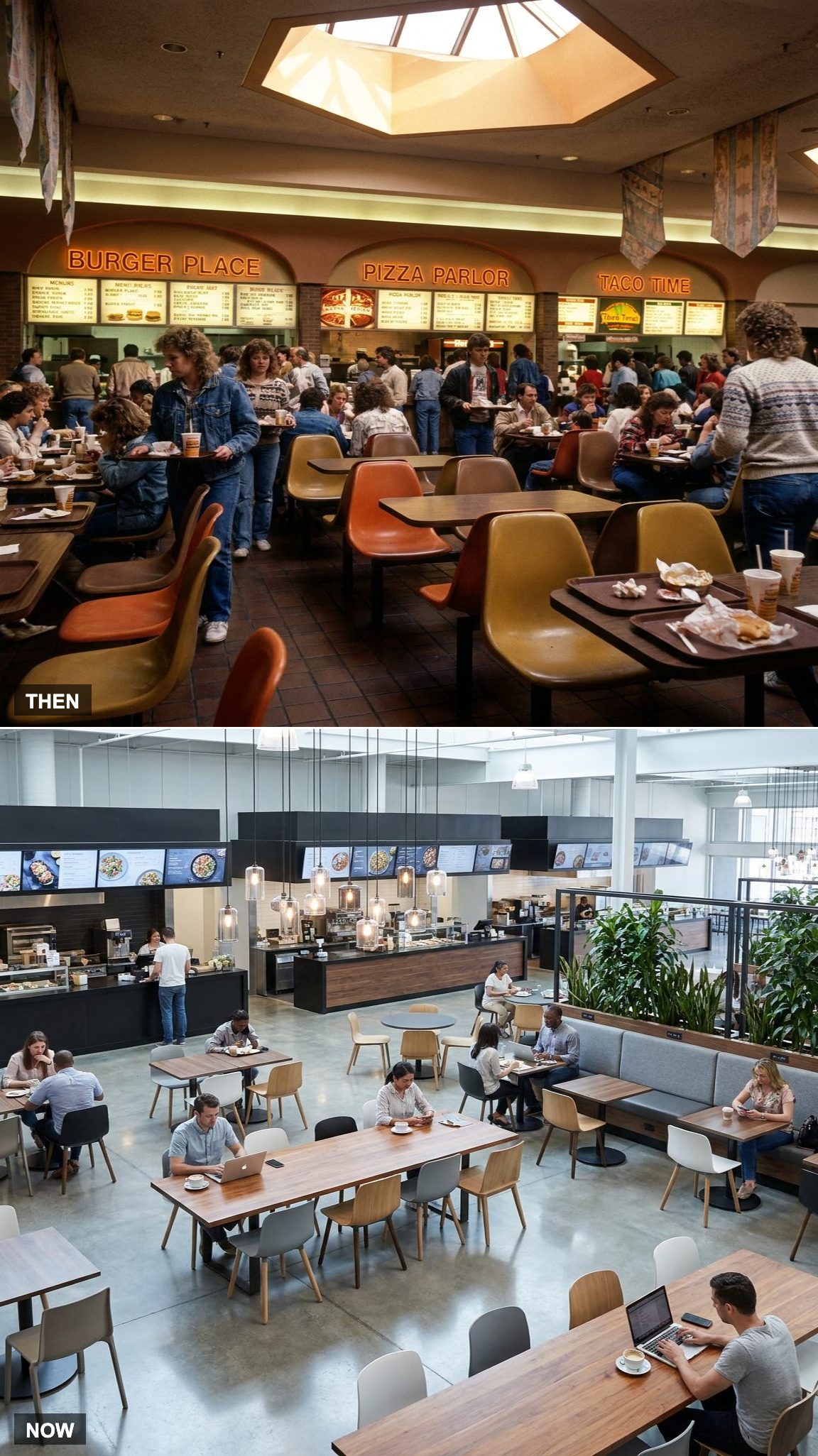
The 1985 food court did not pretend to be a restaurant. Molded plastic seats in orange and mustard were bolted to quarry-tile floors beneath backlit menu boards.
You carried lunch on a brown tray, found a seat that was already warm, and ate beneath a skylight surrounded by hundreds of strangers doing the same. It was loud, crowded, and somehow perfect.
Traditional food courts still exist, while some renovated malls have added food halls with specialty vendors, loose furniture, communal tables, plants, pendant lights, and menus designed to keep people around after they finish eating.
The old food court felt like organized chaos. The newer version sometimes feels like a coffee shop that serves everything.
21. Orange Julius and Snack Counters
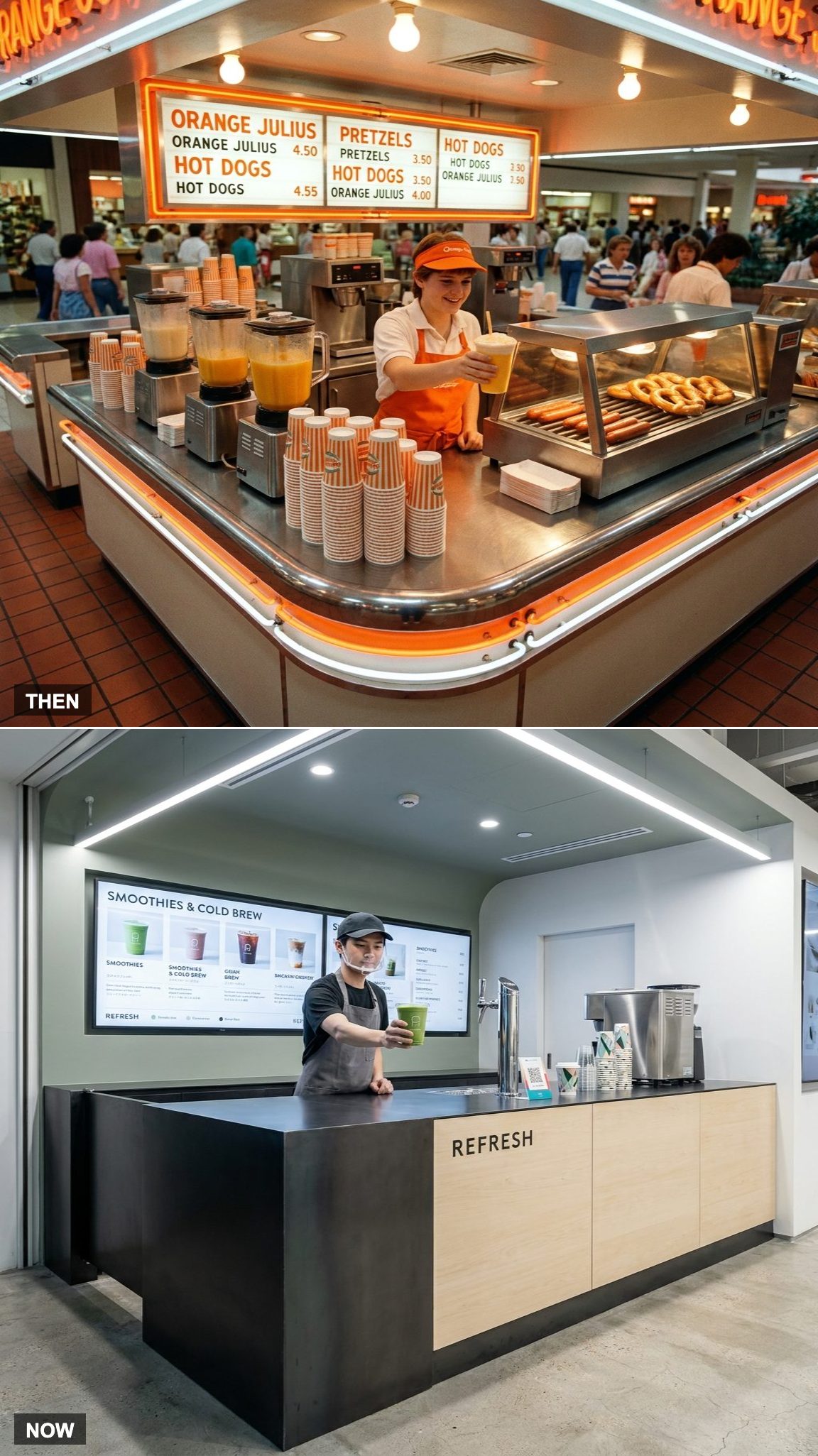
You could hear the blenders before you saw the counter. That frothy orange drink, somewhere between a creamsicle and a science experiment, arrived in a waxed cup from a teenager wearing a visor.
Nearby, pretzels waited beneath heat lamps and hot dogs rolled endlessly behind glass. Pure sugar and salt, and the whole reason some kids agreed to go shopping.
Some snack counters survived almost unchanged. Others adopted cold-brew taps, smoothie machines, digital menus, and the polished finishes of newer cafés.
The ingredients may be more fashionable now. They will never taste exactly like being twelve with four dollars in your pocket.
20. The Arcade Game Center
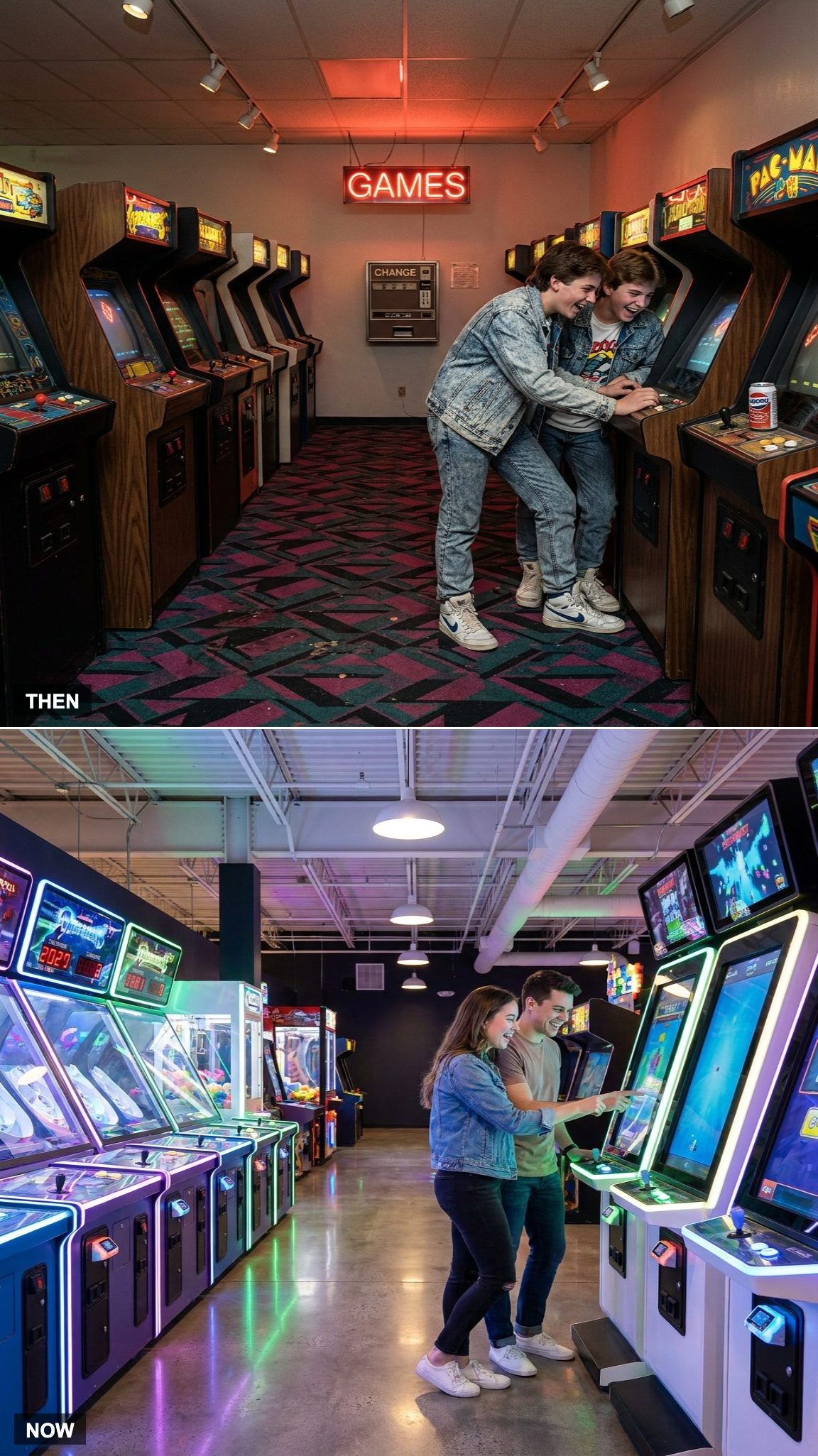
You heard it before you saw it: electronic bleeps, quarters dropping, buttons snapping, and a kid two machines over yelling because he had lost his last life on Galaga.
The 1985 arcade was dark, carpeted, and packed with glowing cabinets. A few dollars in quarters could last a skilled player far longer than anyone waiting outside considered reasonable.
Many current arcades use reloadable cards, touchscreen readers, brighter lighting, and games that dispense digital points or paper tickets. The payment became invisible, the machines grew larger, and the chaos acquired a management system.
19. The Record Store
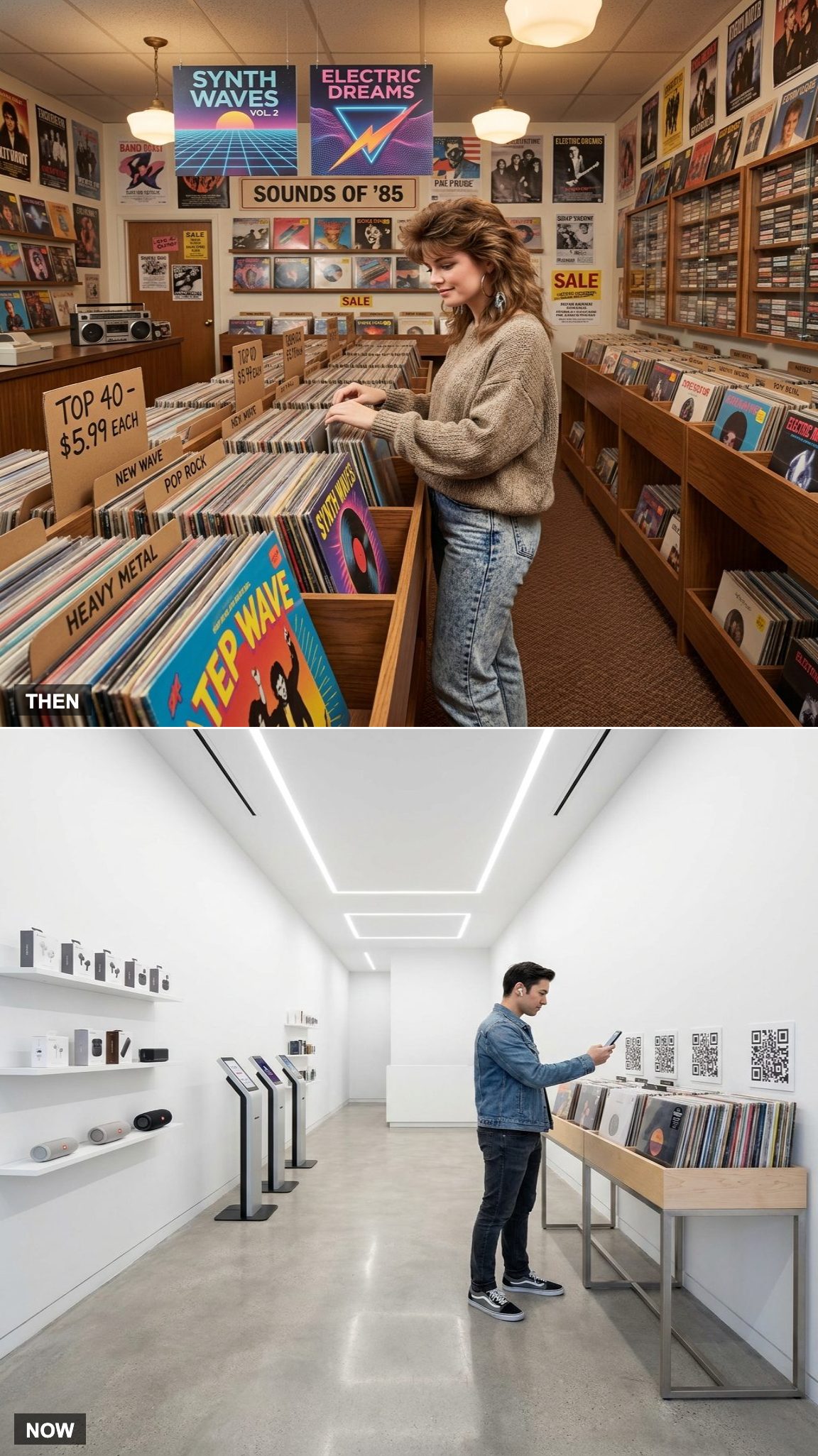
Flipping through record bins was a full-contact sport. Your fingers walked the sleeves one cardboard tab at a time, and finding the album you came for felt like winning something.
The 1985 music store was loud and gloriously overfilled with LPs, cassettes, posters, buttons, and headphones attached to displays that had survived several teenage experiments.
Most mall music chains disappeared. Surviving record shops tend to be smaller and more specialized, with vinyl occupying space once divided among records, cassettes, compact discs, and music videos.
You no longer need to browse to find a song. That was exactly why browsing once led you somewhere unexpected.
18. The Bookstore
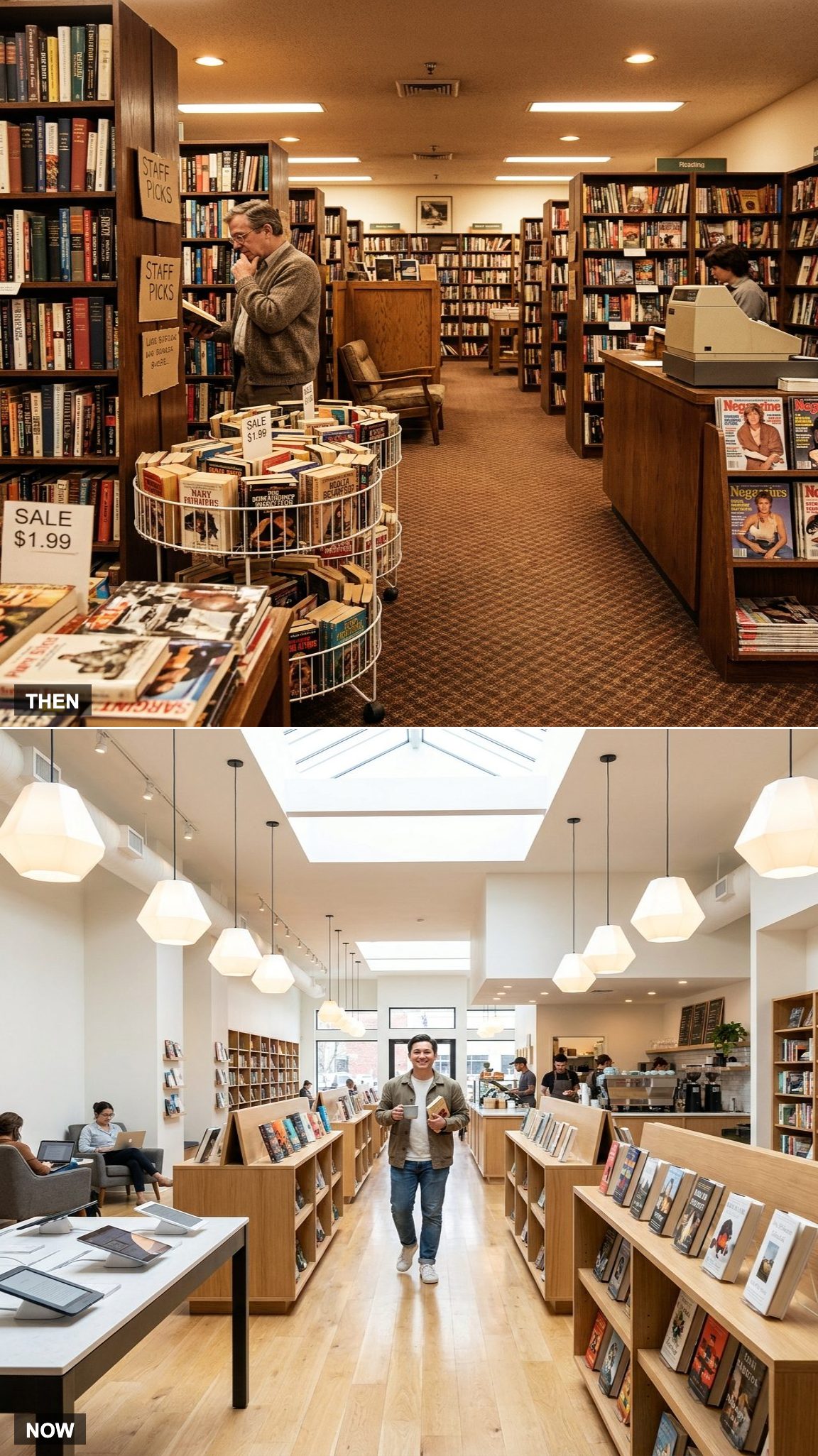
The 1985 mall bookstore packed narrow aisles beneath shelves that seemed to reach the ceiling. A spinning paperback rack stood near the entrance, new releases crowded the tables, and the entire place smelled of paper, ink, and glue.
You could lose an hour there without noticing because finding a book required wandering past books you had not known existed.
Modern chain bookstores often use wider aisles, larger feature tables, cafés, gifts, games, and comfortable places to sit. The store may be easier to navigate, but the old version felt more like a hunt.
17. The Toy Store
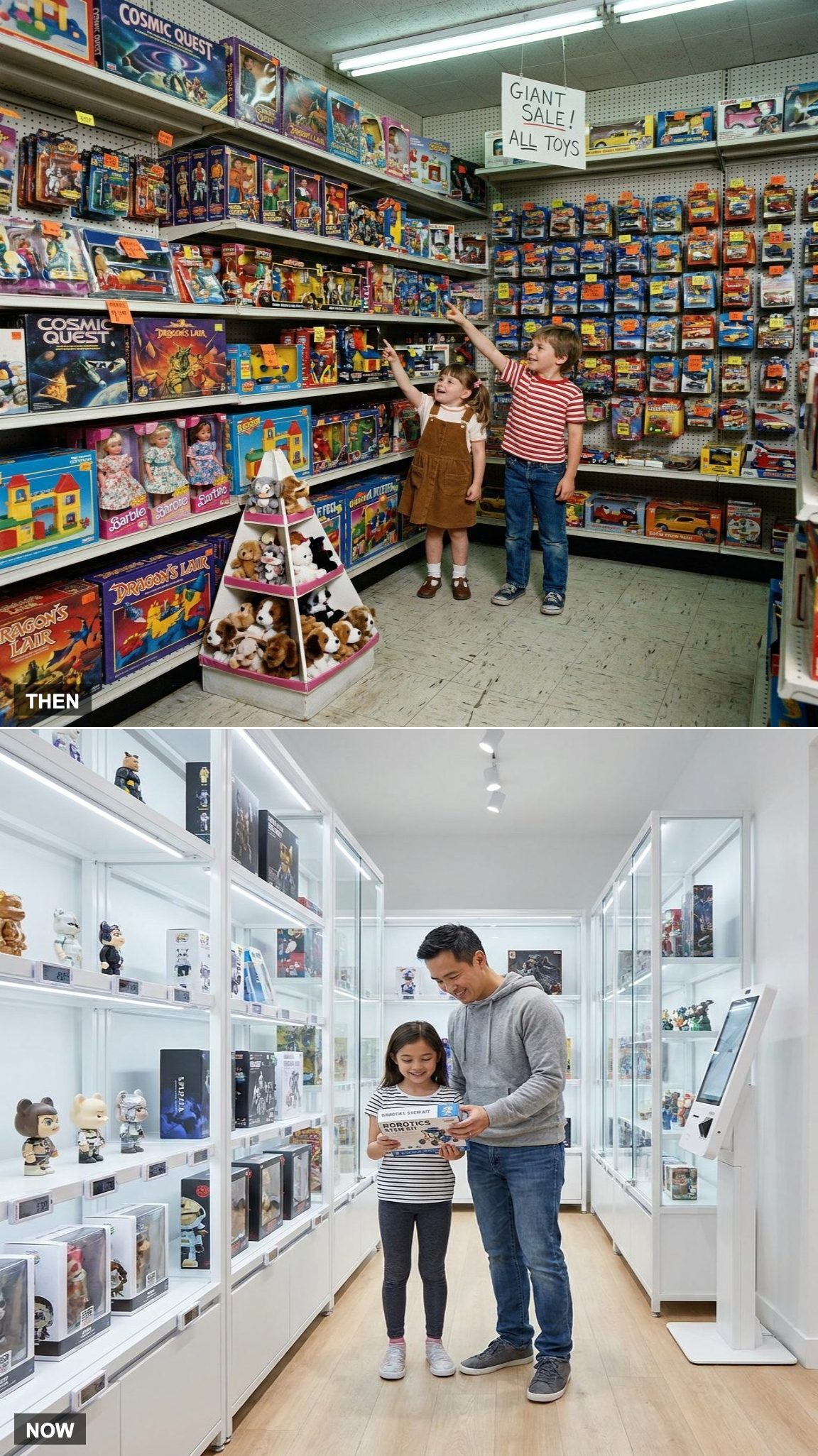
Every shelf shouted for attention. Boxes rose toward the ceiling, primary colors collided in every aisle, and a wall of action figures confronted you with the specific agony of having enough allowance for only one.
The 1985 toy store was chaos, and children loved it for exactly that reason.
Some surviving mall toy stores still embrace that noise. Others shifted toward collectibles, glass cases, limited editions, and adult buyers willing to spend more than an entire childhood allowance on one figure.
The store can look less like a playroom and more like a gallery. You may admire everything. Touching it is another matter.
16. The Electronics Store
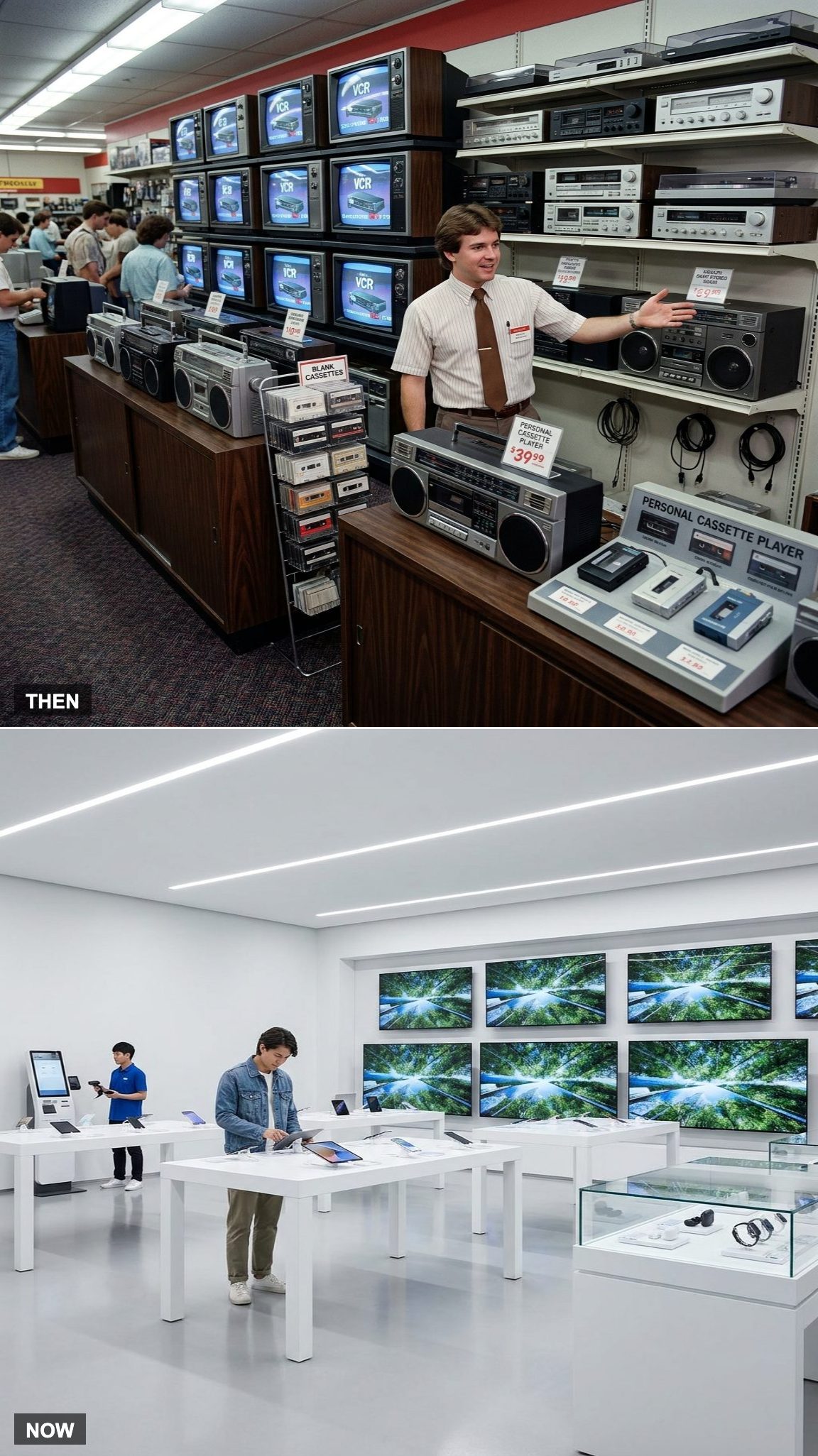
The wall of televisions all showed the same channel, and somehow that was mesmerizing. Boxy CRT sets formed a pyramid beside silver stereo receivers with dozens of switches and personal cassette players that required months of saving.
A salesman in a clip-on tie explained wattage as though he were reading scripture.
Now the televisions are thin enough to hang on walls, while phones, tablets, watches, and earbuds sit tethered to display tables. Staff carry handheld scanners, and much of what once filled the electronics store now fits inside one device.
The screens got sharper. The wall of machines lost some of its mystery.
15. The Fashion Boutique
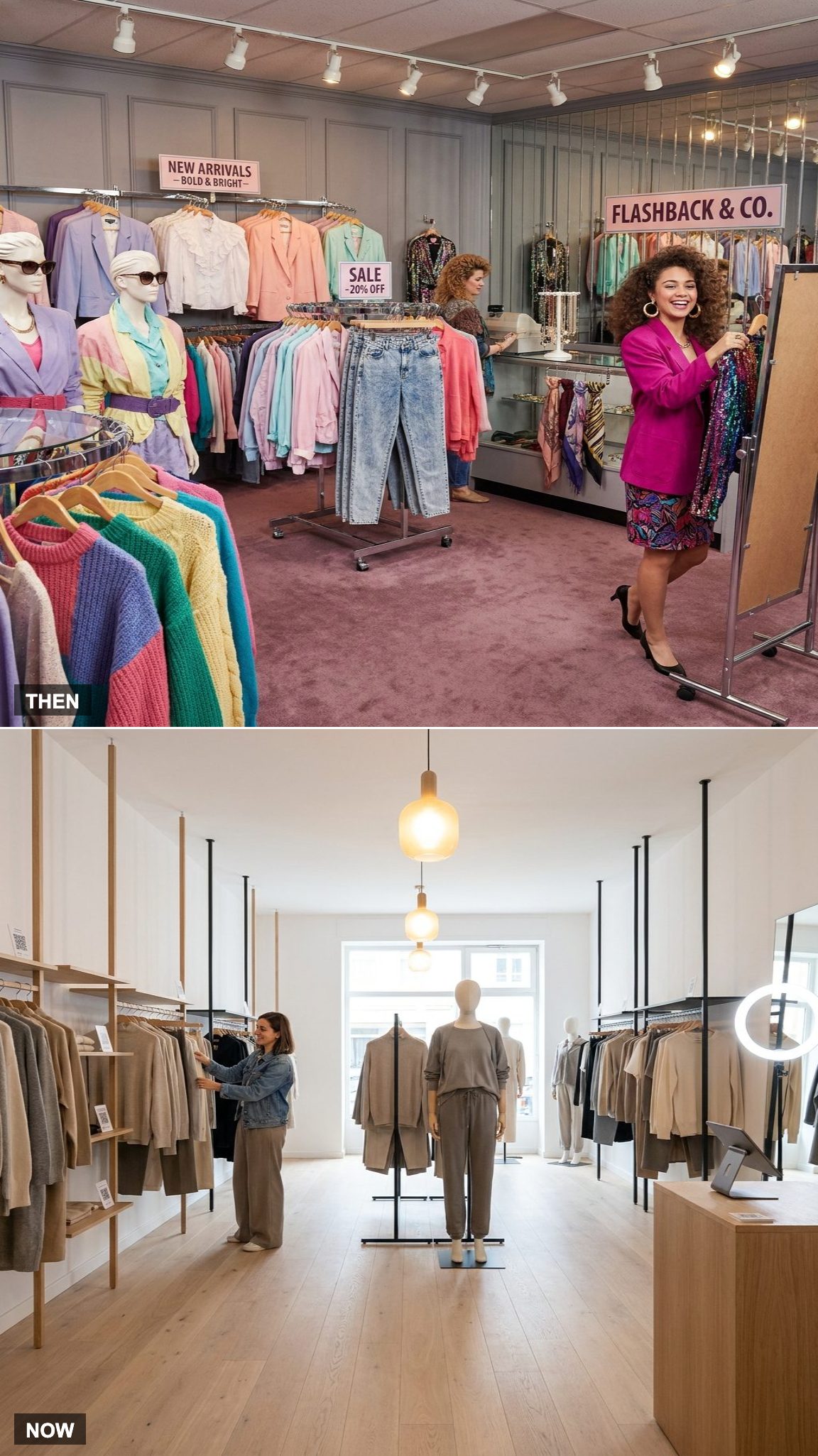
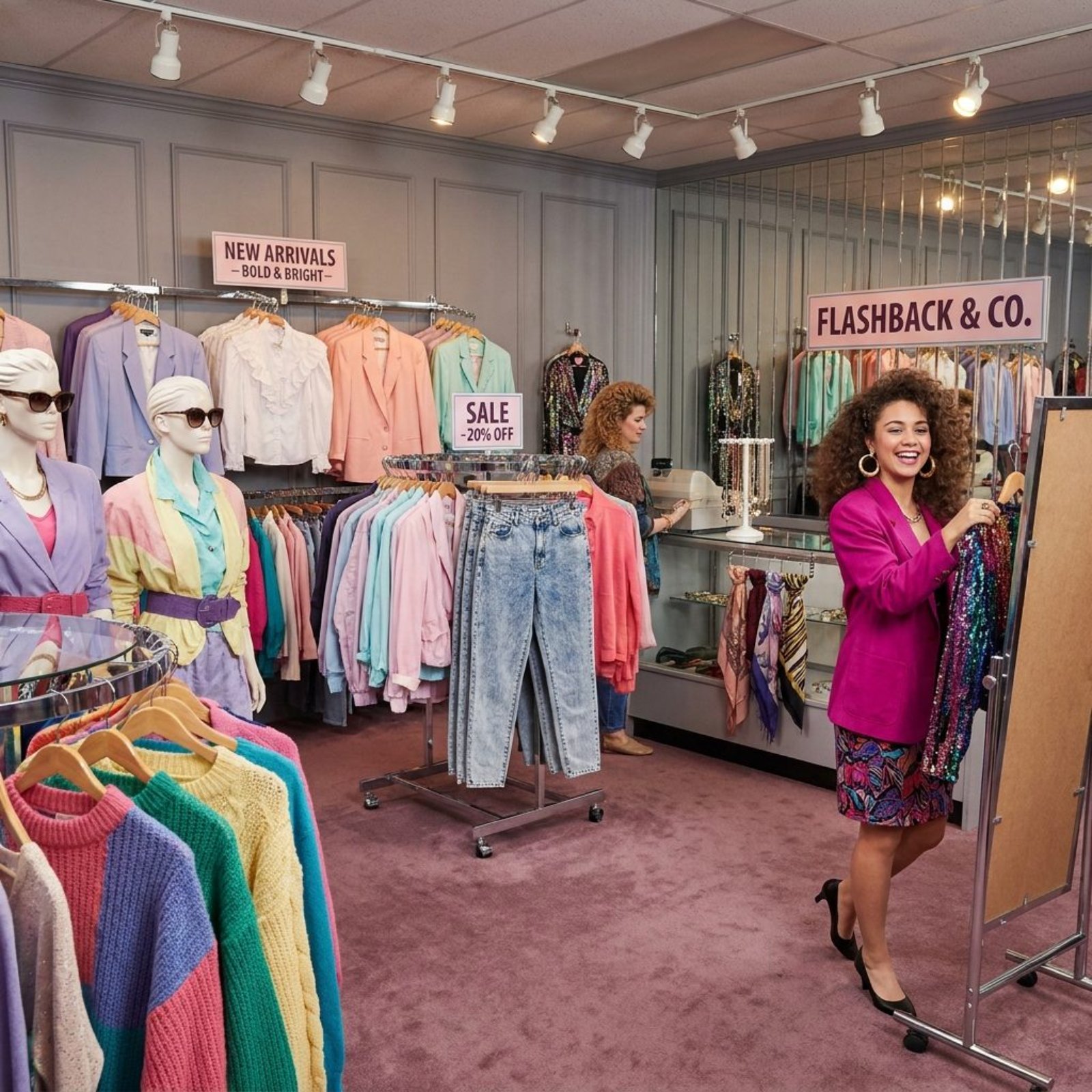
Shoulder pads did the heavy lifting, chrome racks were packed tightly enough to require wrestling a hanger loose, and the color palette could be seen from the opposite end of the corridor.
The 1985 boutique had opinions: neon, acid wash, bright jewelry, mirrors on every wall, and a display by the register for whatever accessory had become essential that month.
Many modern boutiques show fewer pieces with more space around them. Muted clothing hangs against pale floors and neutral walls, while a carefully lit mirror waits for the photograph.
The room grew calmer. It also lost some of that loud 1985 nerve.
14. The Jewelry Store
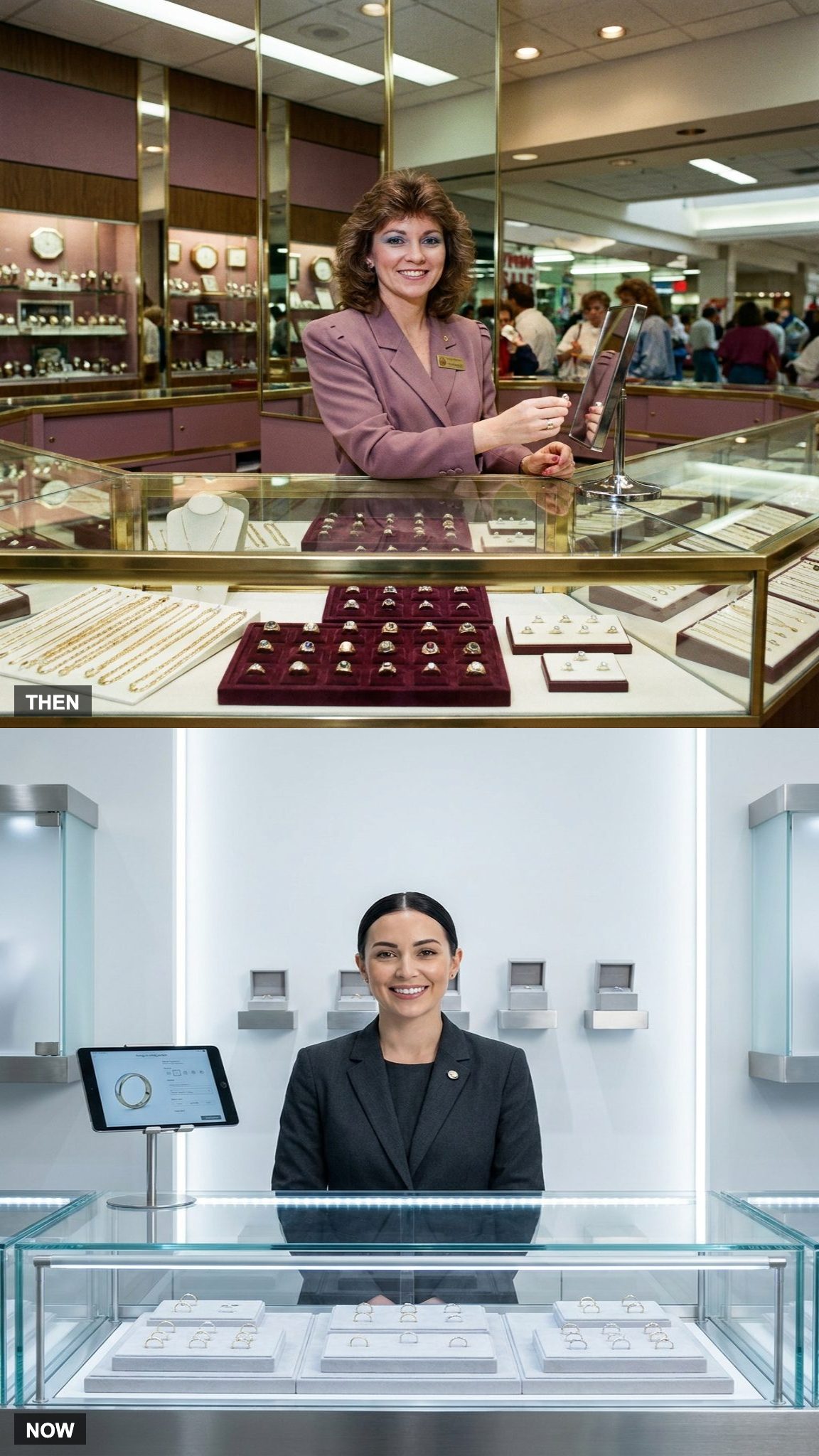
Gold glinted beneath warm spotlights, and everything rested on burgundy velvet as though it mattered.
In 1985, the mall jewelry counter was where high school students ordered class rings and nervous boyfriends placed layaway payments on something small in a box. By the third visit, the salesperson might recognize both the customer and the ring.
Current jewelry stores often use white cases, bright LED lighting, digital catalogs, and tablet tools that let customers change stones, metals, and settings on-screen.
The romance did not disappear. It simply gained a configurator.
13. The Hallway Kiosk
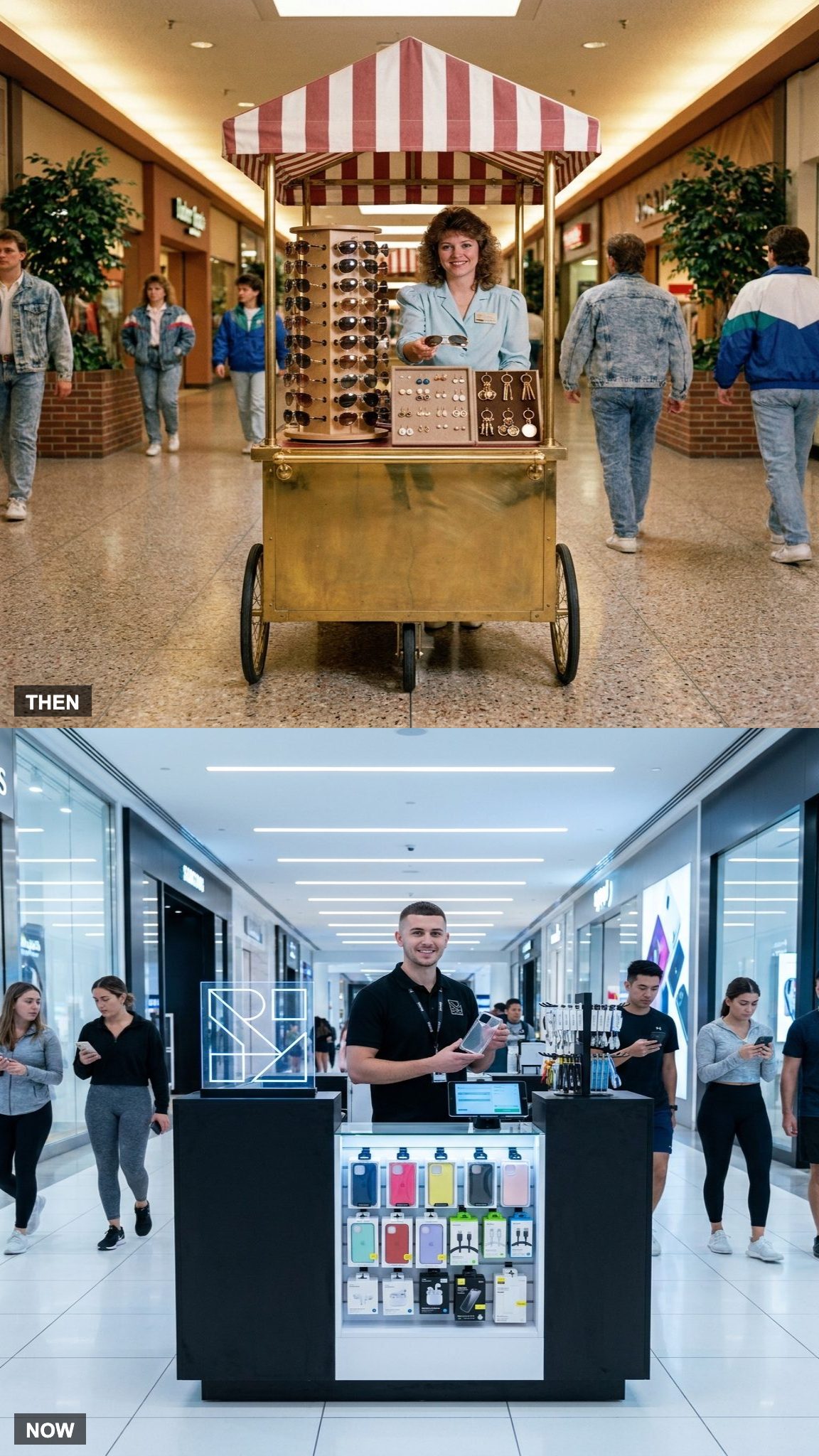
Temporary carts and small corridor stands appeared in some 1980s malls, selling sunglasses, costume jewelry, engraving, keychains, and other impulse purchases.
A wheeled brass cart or compact stand could occupy the middle of the walkway, staffed by someone determined to make eye contact before you escaped. The corridor became an obstacle course of determined salesmanship.
The kiosk survived. The merchandise changed.
Phone cases, screen protectors, charging cables, beauty products, and small electronics now sit beside a tablet used for payment. Same patch of floor. Different century of things you did not know you needed.
12. The Mall Directory
Would you like to save this?
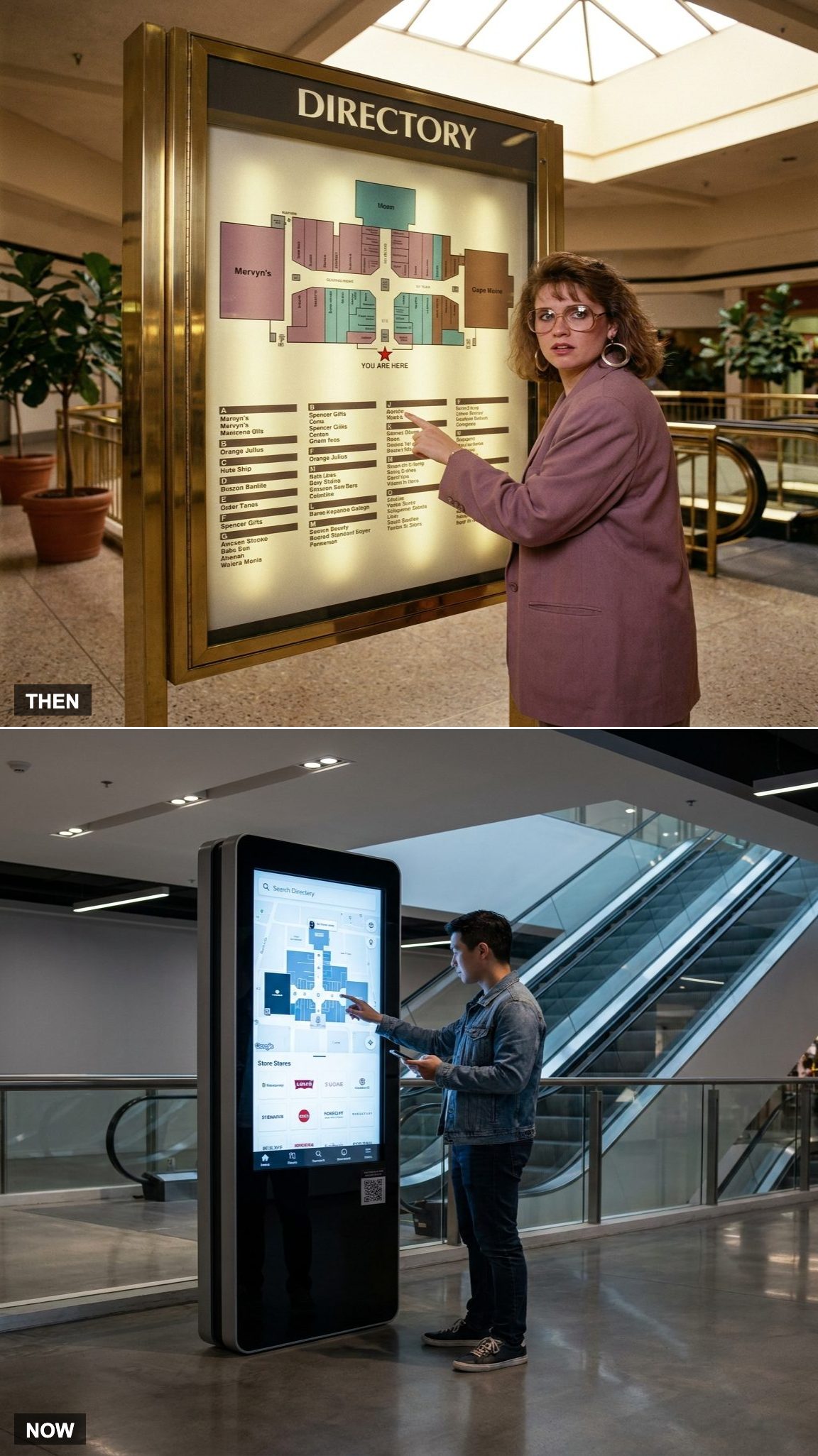
The crowd funneled toward the giant backlit map near the escalator. It glowed behind plexiglass with color-coded levels and one reassuring arrow: YOU ARE HERE.
You traced the route with a finger, found the store, and forgot every turn the moment you stepped away.
Many directories are now touchscreens. Search for the store, view a walking route, or scan a code to move the directions onto your phone. The information is easier to update and harder for a whole family to examine at once.
Nobody crowds around the screen arguing about whether the food court is left or right.
11. Pay Phones and Public Seating
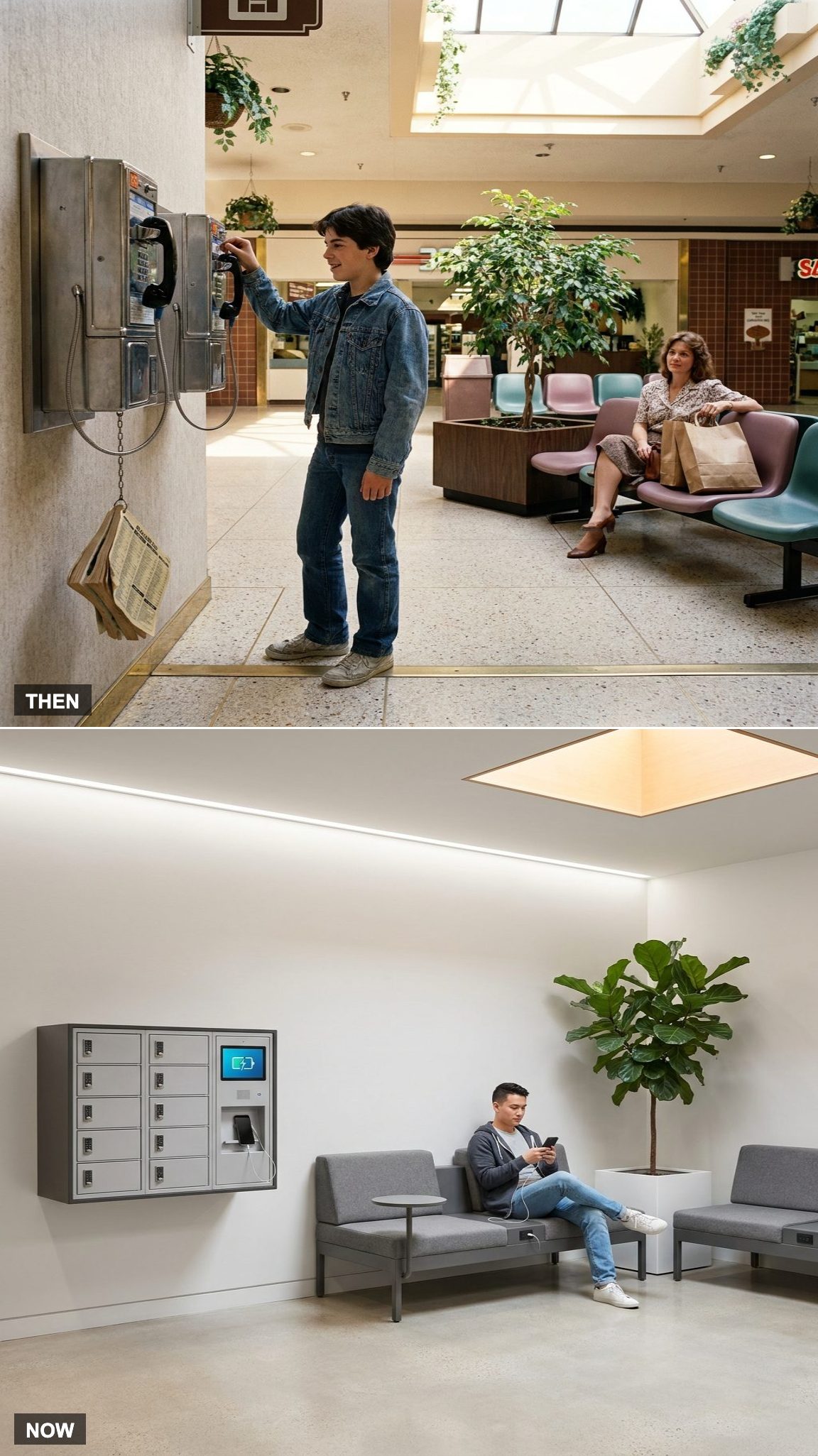
There was a ritual to making a call. You found the required coins, lifted a heavy handset, untangled the metal cord, and stood beside the phone while someone waited behind you.
Many malls had a bank of pay phones near vinyl benches, sometimes with a battered phone book hanging from a chain.
The phones vanished because nearly everyone began carrying one. Public seating remains, but people now use it to check messages, arrange pickup, or search for the store they could once have located on the wall map.
Being unreachable for an hour at the mall was once completely normal. Nobody filed a missing-person report because you had wandered into the record store.
10. Holiday Decorations and Giant Christmas Displays
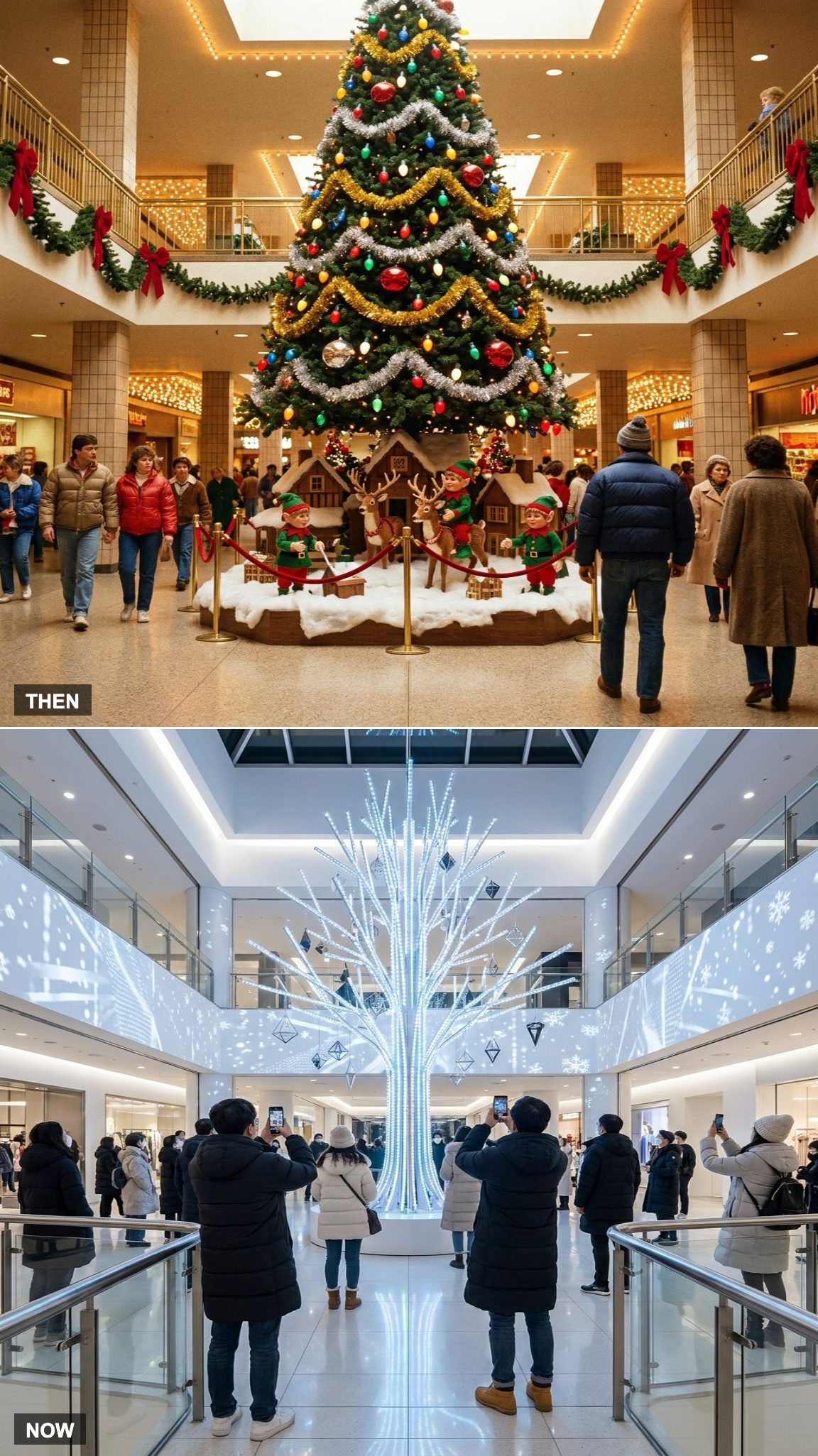
At the largest malls, the Christmas tree could rise through several levels of the atrium, covered in fat incandescent bulbs that gave off real heat.
Mechanical elves repeated the same small tasks beneath it while cotton snow fooled nobody and delighted nearly everyone. The display smelled faintly of warm plastic, winter coats, and mall pretzels.
Current displays may use cool-running LEDs, projection effects, synchronized music, and ornaments chosen partly for how they appear in photographs. The engineering is smarter and the programming more elaborate.
What technology has not recreated is the smell.
9. Santa Photo Sets
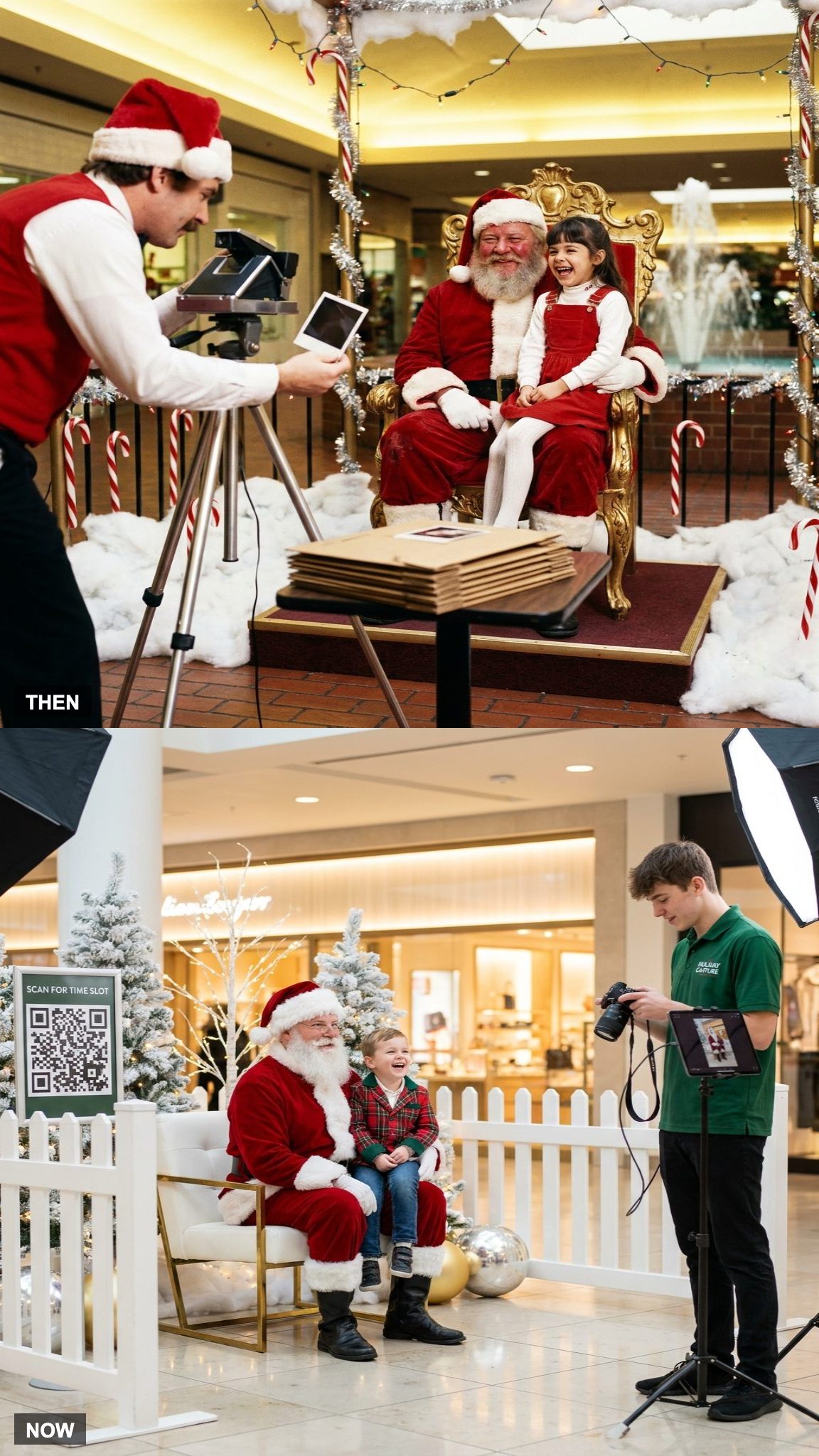
You waited in line for a single photograph that slowly appeared inside a cardboard folder. The child might smile, cry, stare at the camera in terror, or manage all three before the photographer pressed the button.
Some operations used instant photography, while others processed the picture elsewhere. Either way, the family usually left with only a small number of frames and no opportunity to inspect every expression first.
Many Santa sets now offer timed reservations, digital cameras, on-screen previews, several poses, and files delivered electronically. The line may be shorter, the exposure is better, and somebody still cries.
8. Mall Security and Information Desks
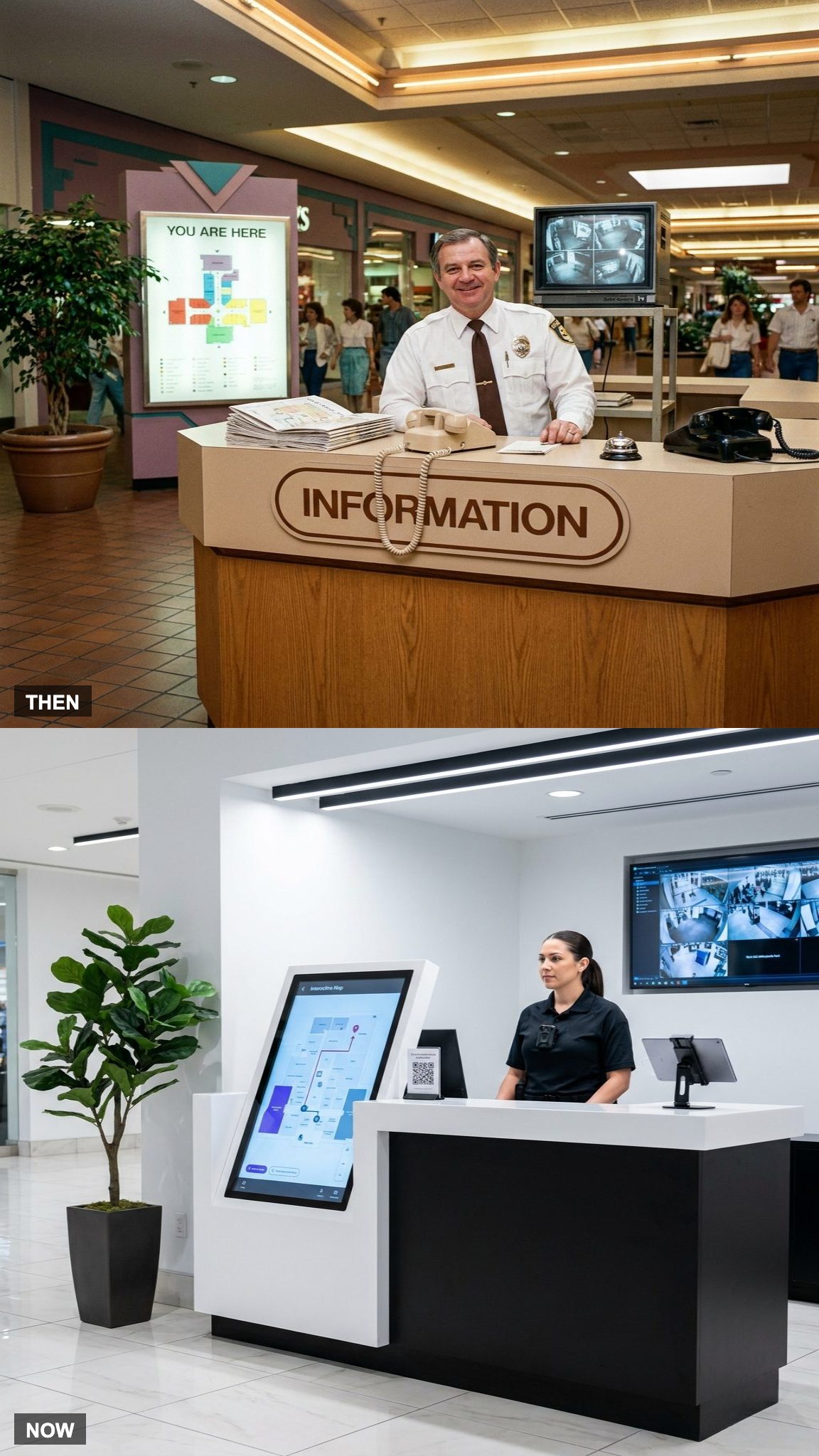
The 1985 information desk ran on paper, memory, and patience. Employees gave directions, handed out foldable maps, answered courtesy phones, paged missing relatives, accepted lost wallets, and reunited children with parents who had begun imagining the worst.
Security guards knew which service corridors connected the building and which teenagers had been asked to leave the arcade twice that month. Camera systems existed, but coverage and picture quality varied widely.
Many current malls have reduced or removed staffed information counters. Security remains, supported by radios, digital camera systems, and mobile devices, while wayfinding has shifted toward kiosks and phones.
A touchscreen can identify the fastest route to a store. It cannot calm a lost six-year-old.
7. Storefront Signage
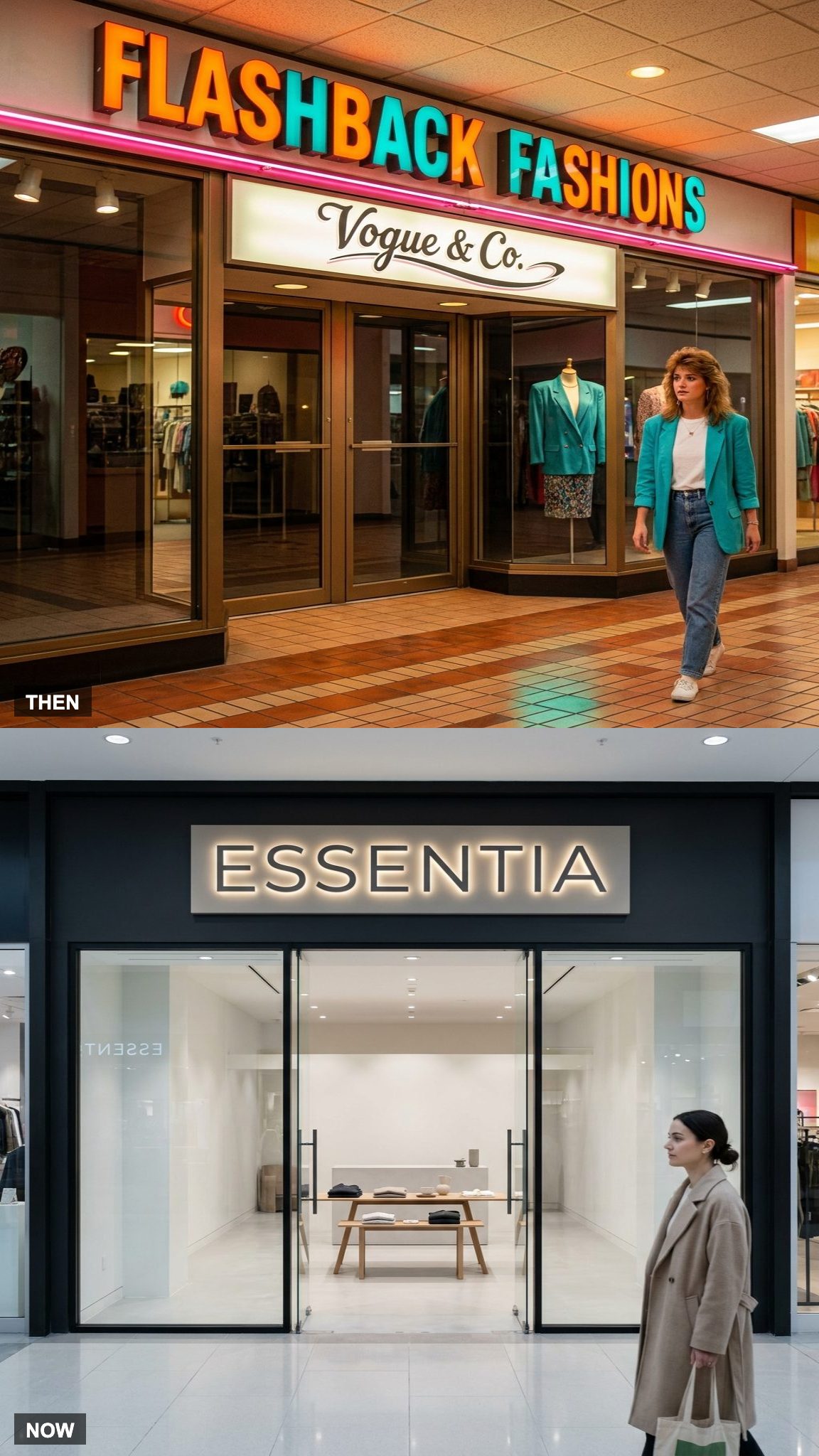
Storefront signs in 1985 shouted. Chunky plastic channel letters glowed orange and teal, script logos wore swooshes underneath, and a neon stripe appeared whenever the store wanted to look especially modern.
Every shop wanted to be recognized from the far end of the corridor, and nearly every one succeeded.
Many current storefronts use thinner lettering, restrained lighting, and floor-to-ceiling glass that allows the merchandise and interior design to carry more of the identity.
Restraint reads as expensive now. In 1985, expensive often meant adding another illuminated stripe.
6. Parking Lots and Pickup Zones
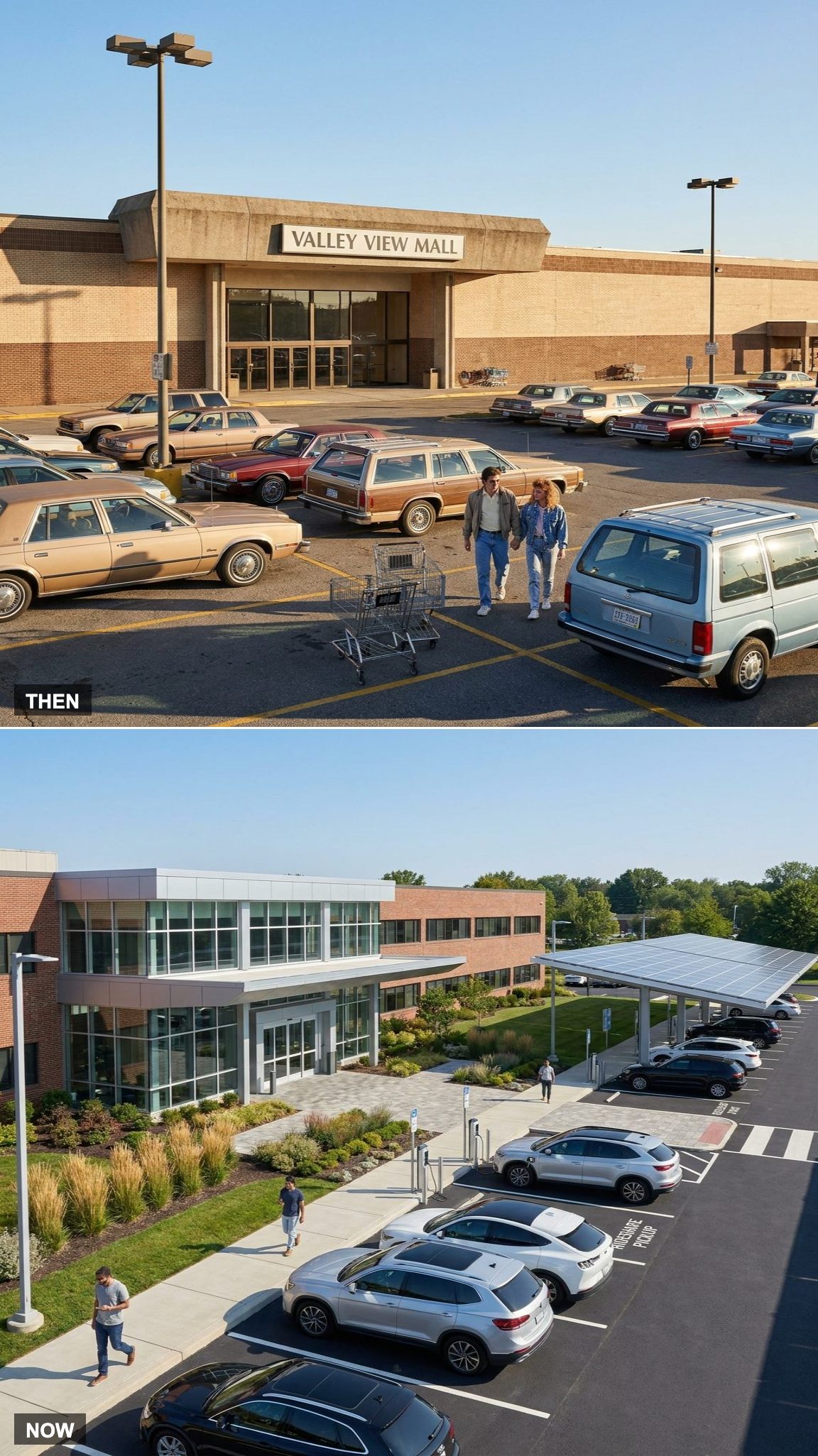
The 1985 parking lot was an ocean of boxy metal: wood-paneled wagons, maroon sedans, hatchbacks, and the family minivan parked crookedly across the line.
You memorized the row by a numbered light pole because the landscape offered few other clues. Forgetting where the car sat could add another half hour to the trip.
Current lots include crossovers, electric-vehicle chargers, more clearly marked accessible spaces, curbside pickup stalls, and designated areas where rideshare drivers wait. You photograph the aisle number before walking inside because experience has made you cautious.
At struggling or redeveloping malls, underused sections of surface parking may be converted into housing, hotels, public space, offices, or additional retail. The asphalt that once supported the mall can become the land that saves it.
5. Crowded Weekend Shopping
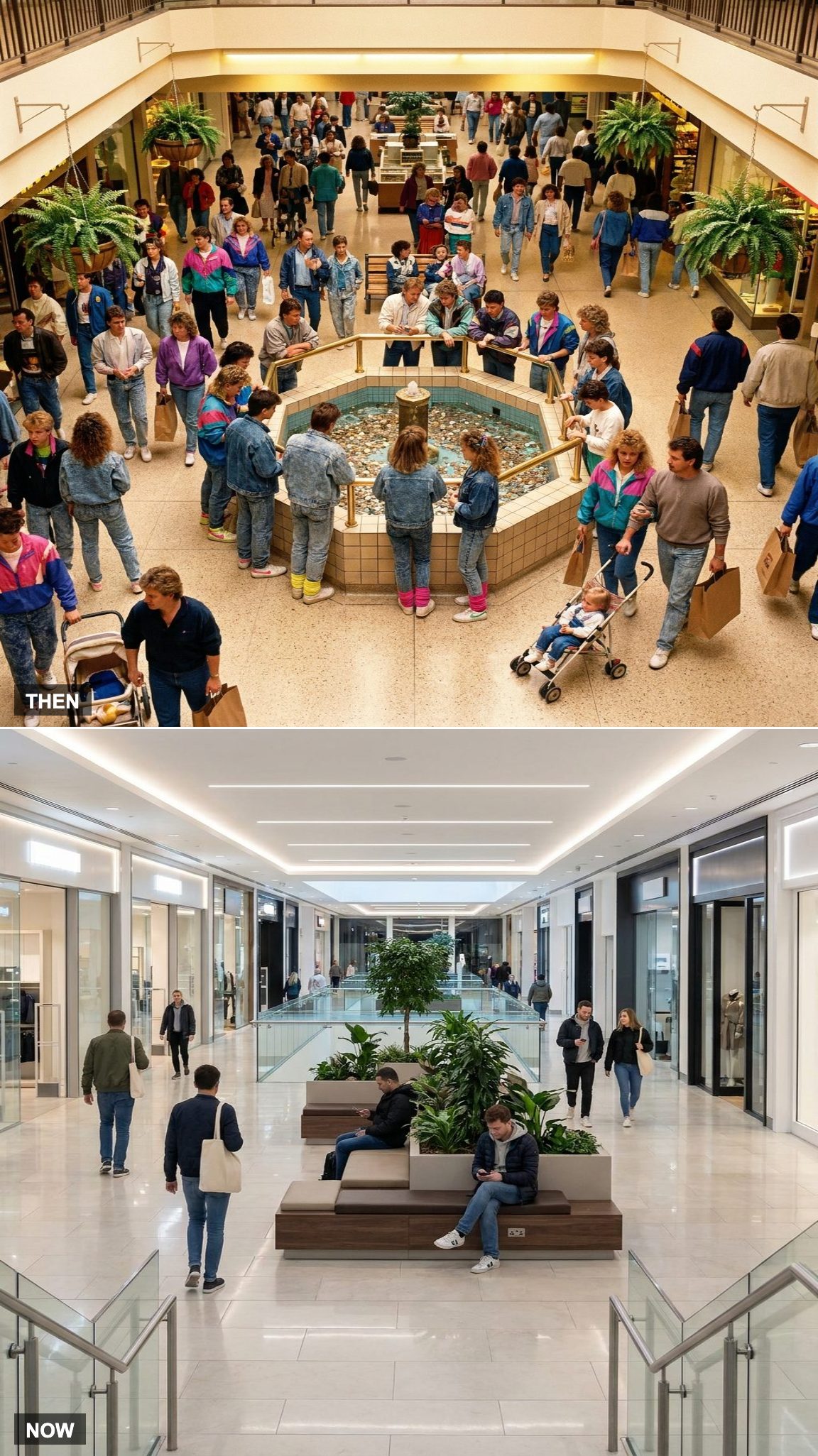
Saturday at the mall in 1985 could feel like a full-contact sport. Shoulder pads and feathered hair moved between families with strollers, teenagers clustered beside railings, and a thousand conversations bounced off tile and glass.
Buying something was often secondary. The crowd itself was part of the destination.
High-performing malls can still draw heavy crowds, especially during holidays and major events. Struggling properties tell a different story. Walk one of those corridors on a Saturday and you may hear individual footsteps where the noise once blended into a roar.
The shopping did not simply stop. Much of it moved somewhere the mall could not see.
You did not always go to the mall because you needed something. Sometimes you went because you needed somewhere to be.
4. Empty Storefronts and Vacant Wings
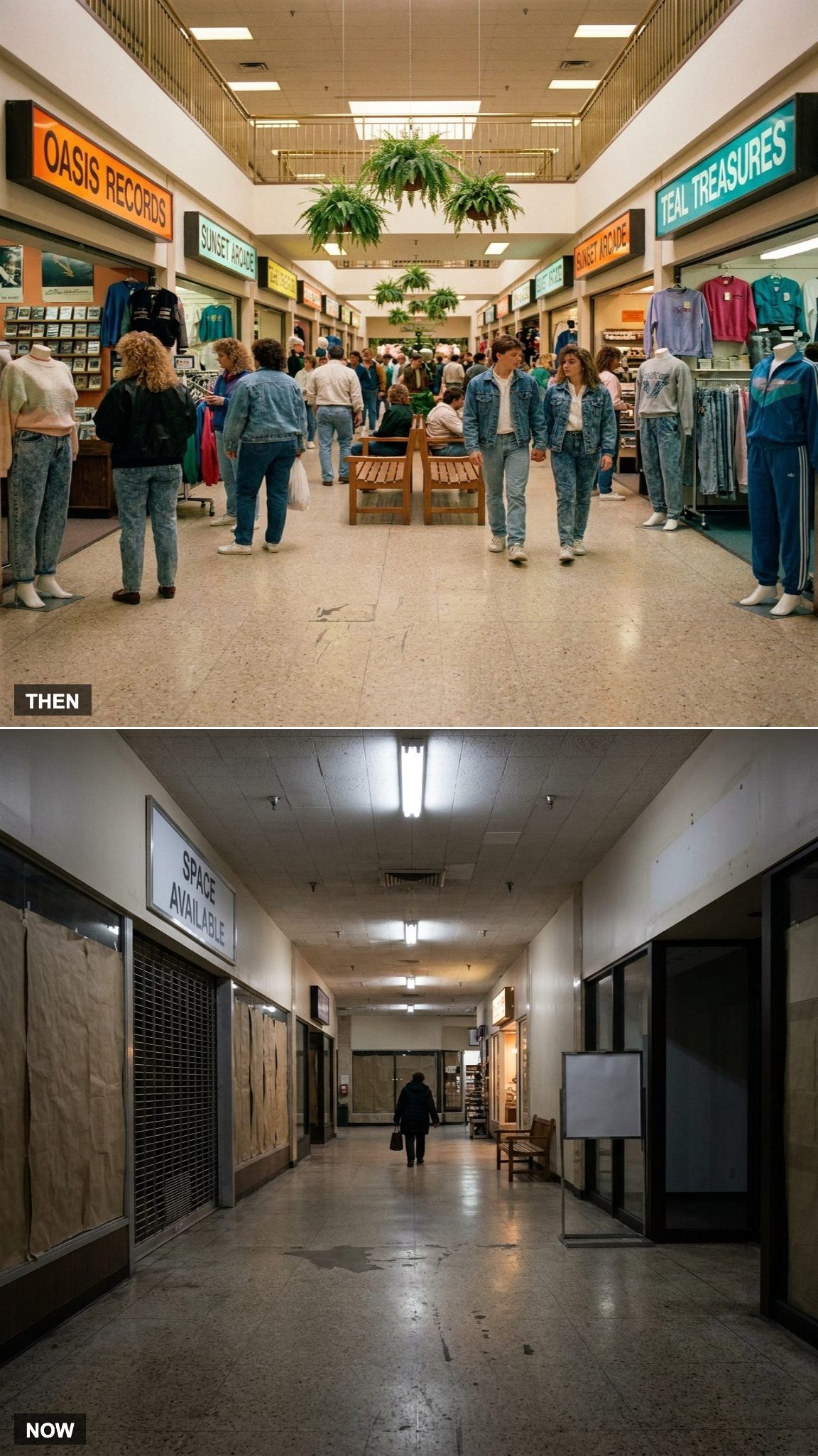
In a thriving 1985 mall, an empty storefront felt temporary and conspicuous. Paper might cover the windows for a few weeks before another tenant arrived with fresh paint and a new sign.
At distressed malls today, entire sections can sit behind brown paper and pulled-down gates. An anchor closes, foot traffic drops, and smaller stores lose the customers who once passed their doors on the way to somewhere else.
Nobody wants to photograph this part. A gate half-lowered over the shop that once sold cassette tapes can hit harder than any polished nostalgia clip.
3. The Quarter Arcade vs. the Entertainment Complex
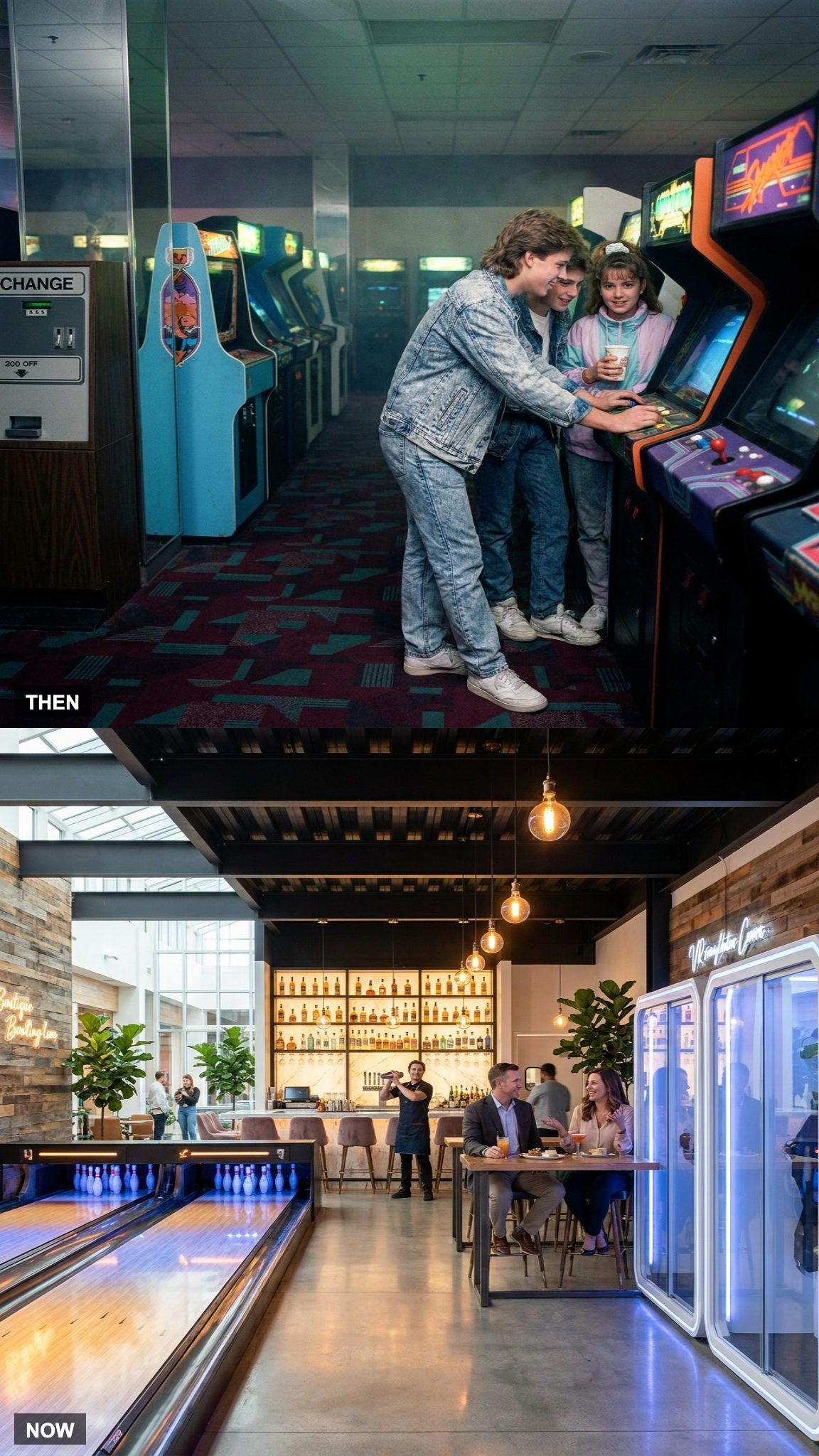
The old arcade asked for a pocket of quarters and as much time as your parents would allow. The games were the attraction, and everything else—the dark room, worn carpet, and cluster of spectators—grew around them.
Many malls now devote far more space to entertainment. Bowling, virtual-reality games, climbing walls, escape rooms, theaters, full-service restaurants, and licensed bars turn a visit into an evening rather than a shopping trip.
The logic changed. Instead of competing directly with online retail, the mall offers experiences that still require people to leave the house.
2. Buy Online, Pick Up in Store Areas
Would you like to save this?
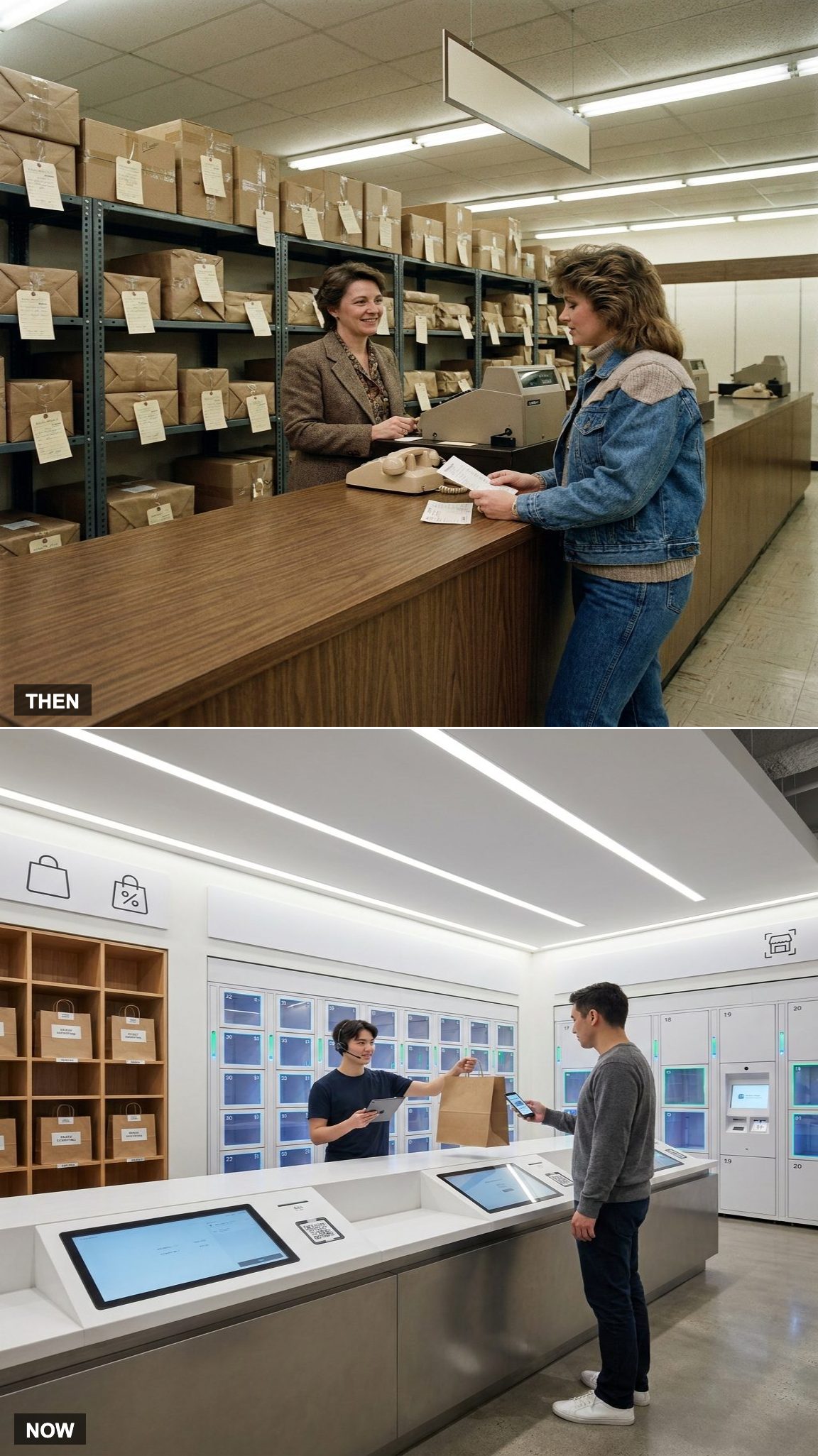
The 1985 version of reserving an item was layaway. You selected the product, paid a portion over time, and left it in the store until the final payment cleared.
The package waited on a back-room shelf with paperwork attached, safely out of reach until it officially belonged to you.
Buy online, pick up in store reverses the timing. You pay through a browser, visit later, scan a code or show an order number, and collect a labeled bag from a counter or locker.
Both systems rely on an item waiting in the back. Layaway held it while you finished paying, while pickup service holds it after the purchase is already complete.
1. The Overall Mall Experience
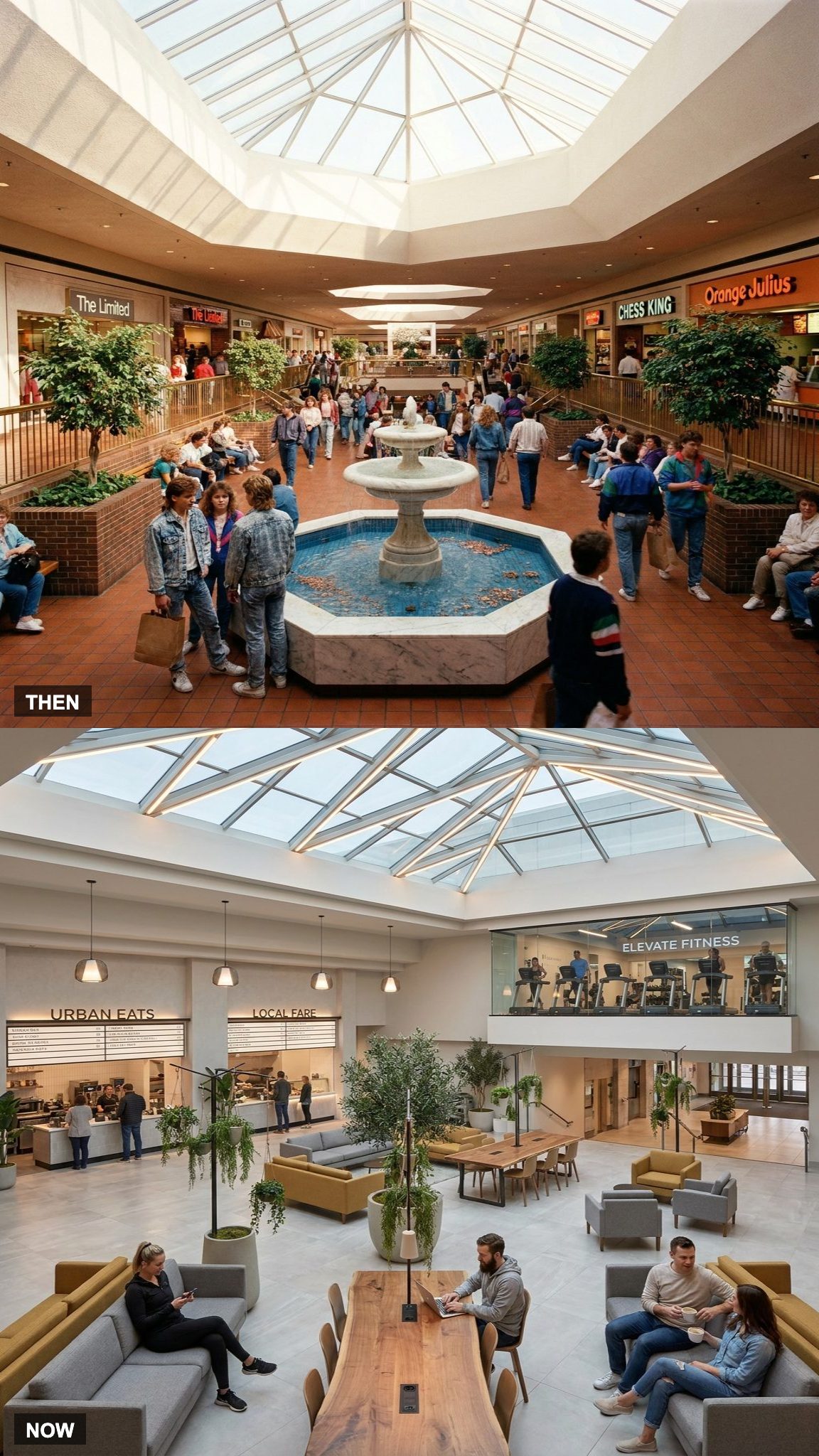
The 1985 mall offered far more than shelves of merchandise. Teenagers circled without buying anything, parents rested while children watched the fountain, and families ate beneath the same skylights where neighbors stopped to talk.
Shopping gave everyone a reason to enter, but the building supplied the larger experience.
The mall standing today may include a gym, restaurants, medical offices, apartments, entertainment, coworking space, or events intended to fill the corridors after ordinary retail hours. Some properties are succeeding. Others have slipped too far into vacancy to recover without being rebuilt.
The malls finding new life are not trying to reproduce 1985 exactly. They are trying to recover the part that mattered: a reason for people to share the same place.
The architecture changed. The stores changed. The fountain disappeared. A whole generation still remembers exactly how those coins sounded when they hit the water.