
Would you like to save this?
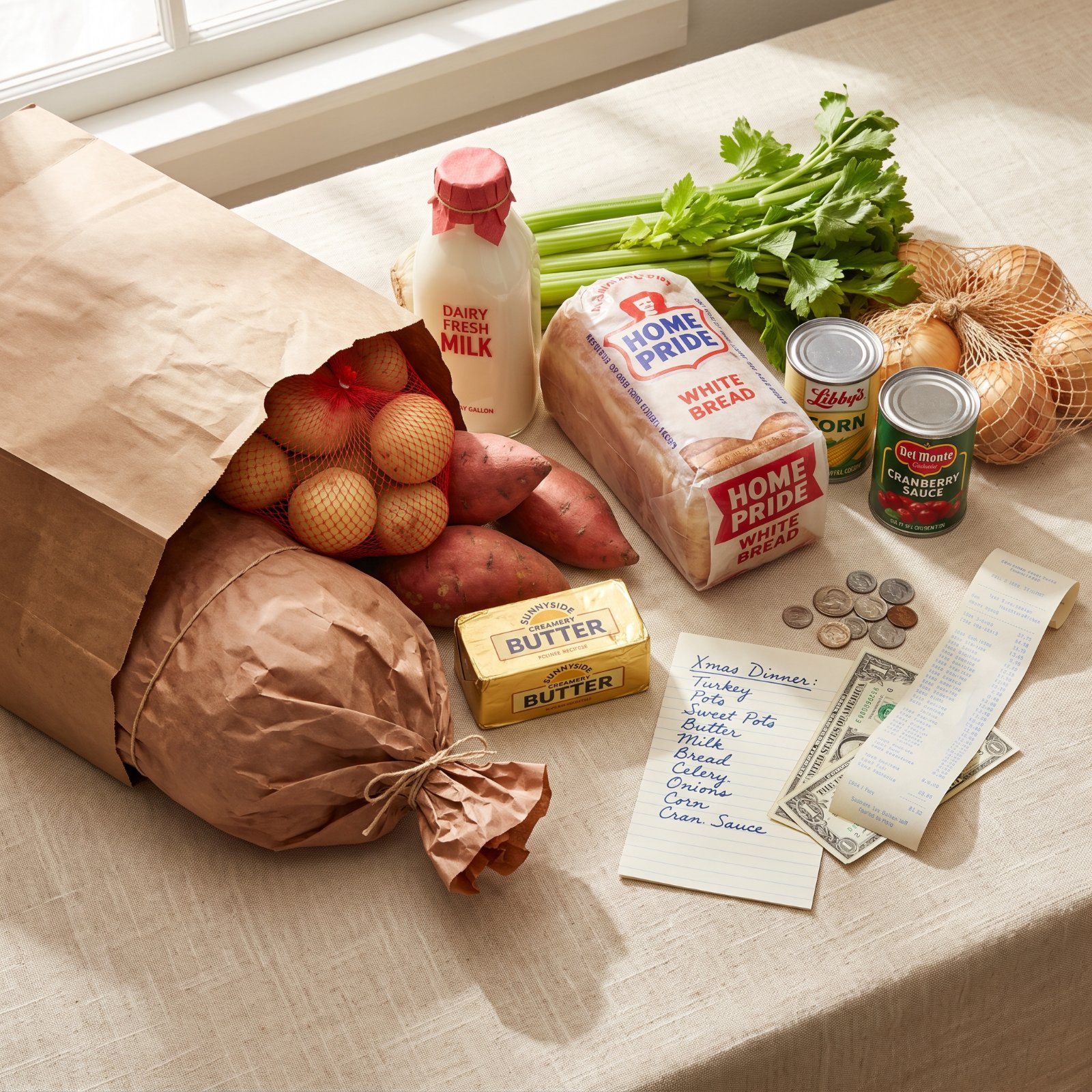
A twelve-pound turkey ran about forty cents a pound in 1965. Read that again. The bird for a family of four, the centerpiece of the whole meal, cost about five dollars, roughly two hours of factory wages. But before you get too jealous, remember the man of the house was likely bringing home around $100 a week, and plenty of women weren’t paid a dime for the labor of cooking this whole spread. Here’s the full grocery basket, priced the way it rang up at the register that December.
40. A 12-Pound Frozen Turkey: About 39 to 45 Cents a Pound
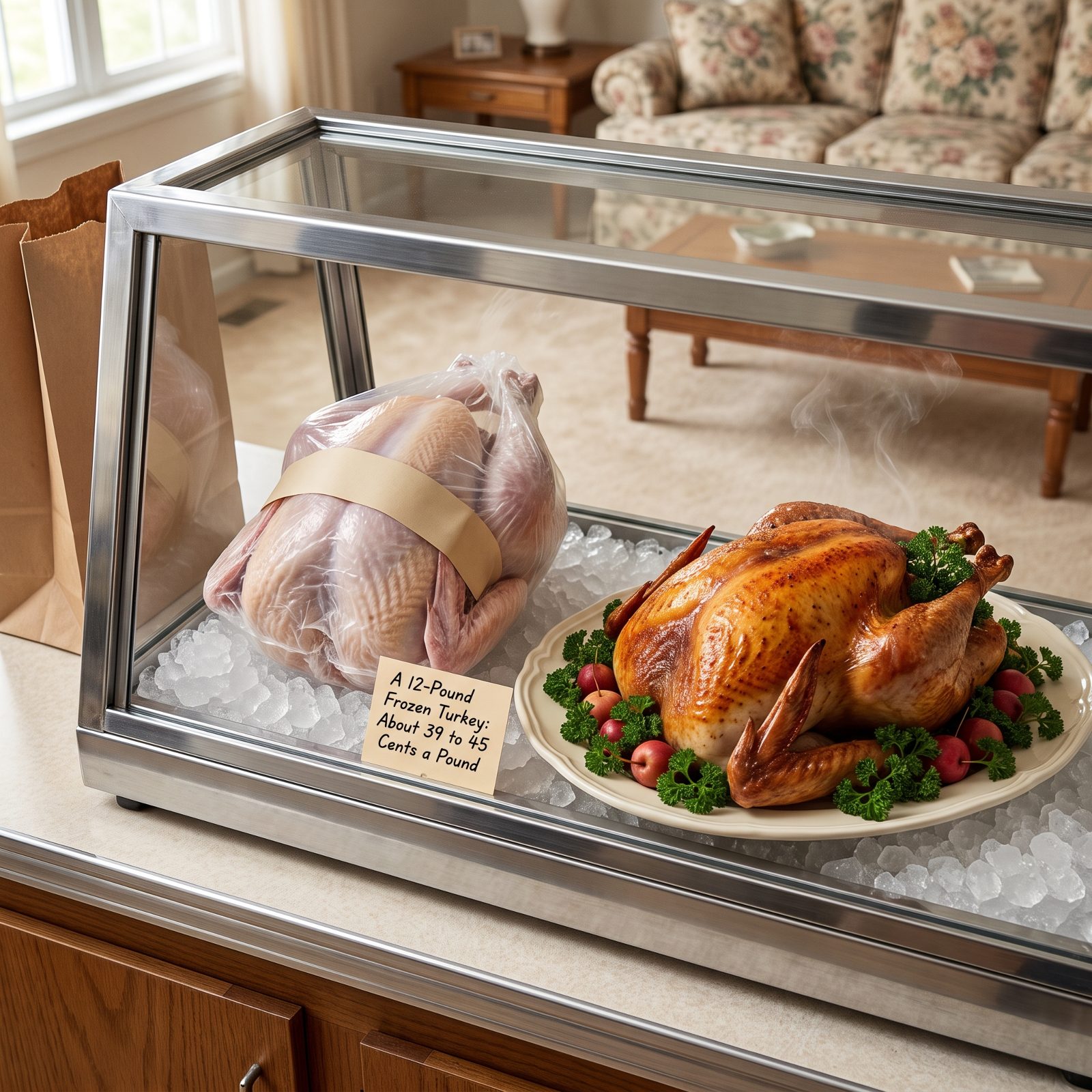
The turkey was the bargain of the whole basket. Grocers used the holiday bird to pull you through the door, so a 12-pounder rang up around five bucks, give or take, depending on your city and whether you caught the pre-Christmas sale. Some stores dropped the per-pound price low enough to hurt.
Now hold that against the paycheck. A factory worker earned somewhere around a couple dollars an hour back then, which means the entire turkey cost about two hours of standing at the line. Two hours of work today barely covers the tip on takeout.
39. A Ten-Pound Bag of White Potatoes: Around 59 Cents
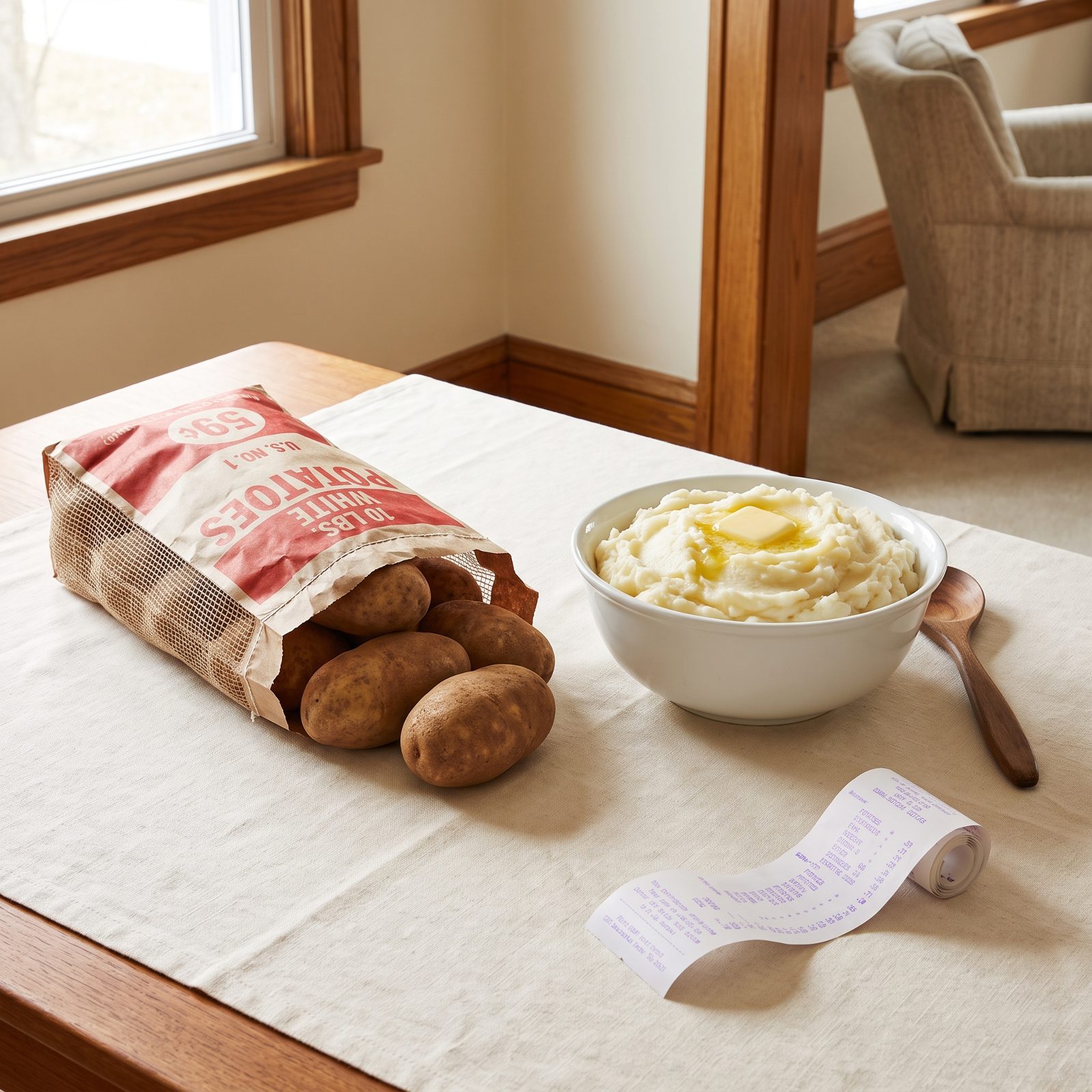
Ten pounds of potatoes for right around 59 cents, which sounds like a typo now. Potatoes were the workhorse of the American table, and a bag this size fed a family through Christmas dinner with plenty left over for hash the next morning.
For the Christmas mash you’d use maybe three or four pounds, call it a quarter of the bag, so about fifteen cents of potato actually made it to the plate. The rest sat in the pantry for weeks. Cheap, filling, forgiving — I’d take that trade today.
38. Three Pounds of Sweet Potatoes: Roughly 39 Cents
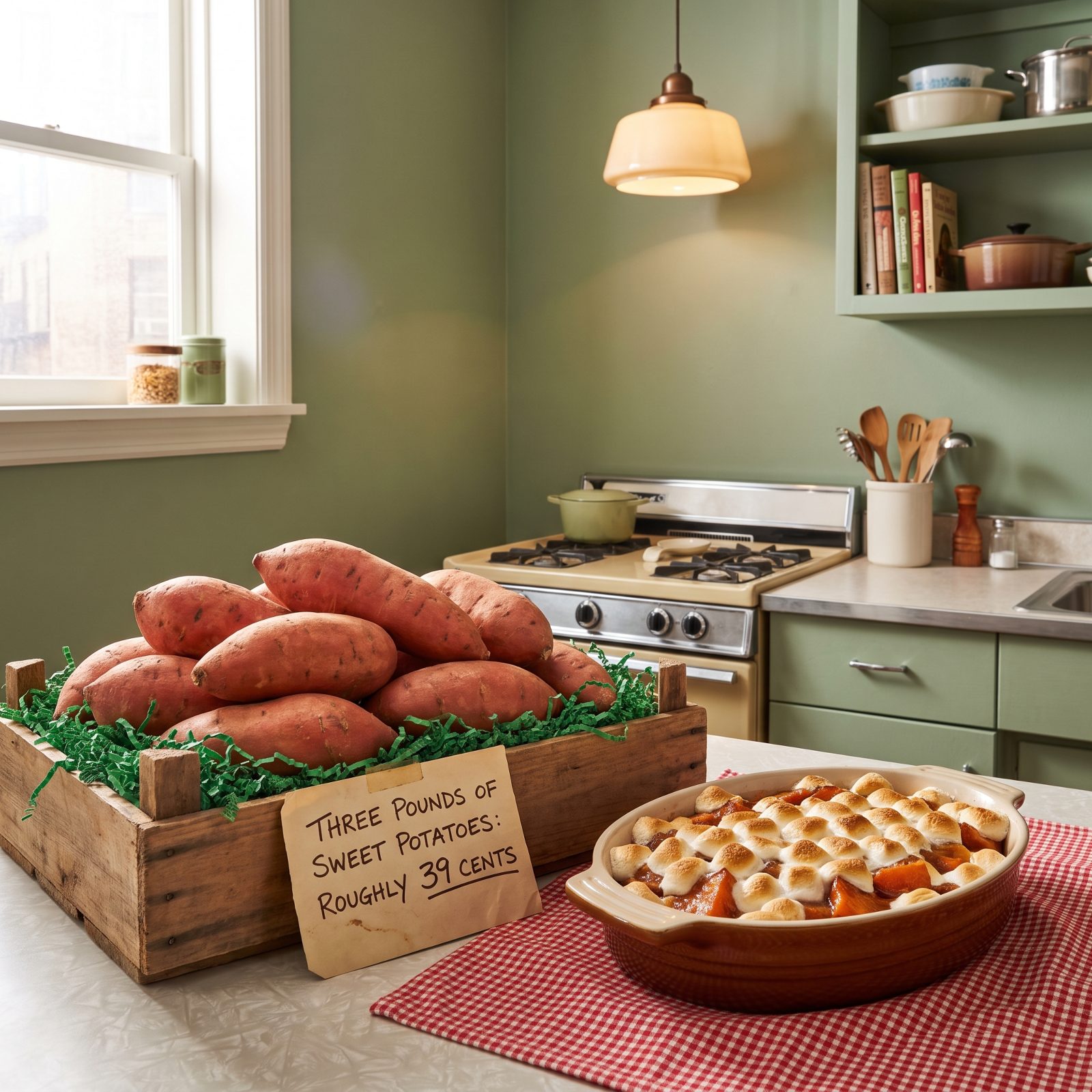
Sweet potatoes ran a little over a dime a pound, so three pounds came to around 39 cents. That covered a full candied casserole with marshmallows browned on top, already a fixture on the holiday table by the mid-sixties.
The marshmallows themselves cost nearly as much as the potatoes — a bag ran about a quarter. There’s something backwards about the topping almost matching the vegetable, and we love it for that.
37. A One-Pound Package of Butter: About 75 Cents
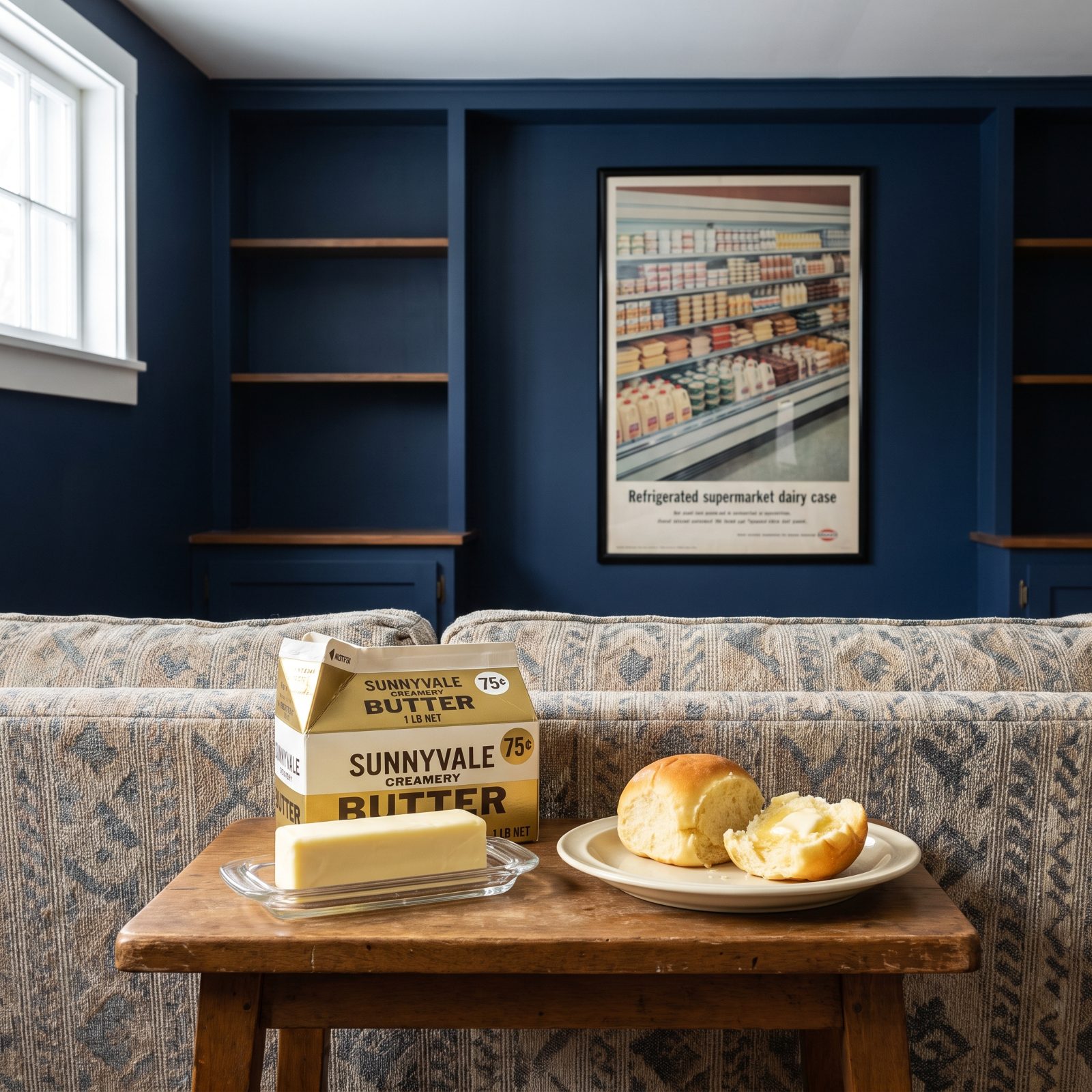
Real butter was one of the pricier items in the cart at roughly 75 cents a pound. That’s why so many households kept margarine in the fridge for everyday and saved the good butter for company. And Christmas counted as company.
You’d burn through most of a pound between the mashed potatoes, the rolls, the sweet potato glaze, and basting the turkey. Butter was one of the few things where you actually spent the whole package on a single meal. Worth it.
36. A Half-Gallon of Whole Milk: Around 48 Cents
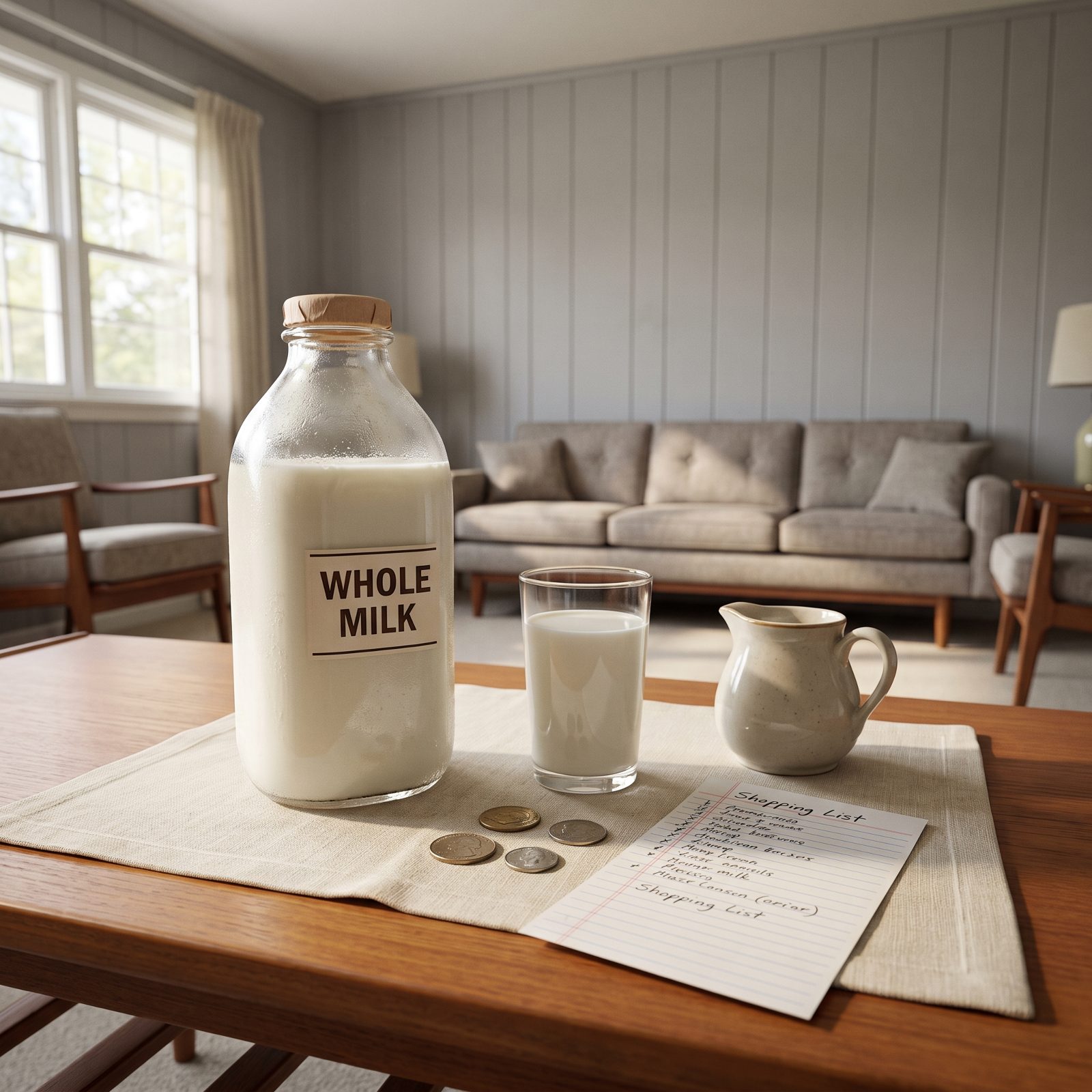
A half-gallon of whole milk went for about 48 cents at the supermarket, a little more if the milkman still delivered it to your porch in glass bottles. Plenty of families in 1965 got it both ways depending on the week.
For dinner you’d splash some into the mashed potatoes and pour glasses for the kids, so call it a third of the bottle gone by dessert. Whole milk, always whole. Skim existed, sure, but nobody serving Christmas dinner gave it a second thought.
35. A One-Pound Loaf of White Bread: About 21 Cents
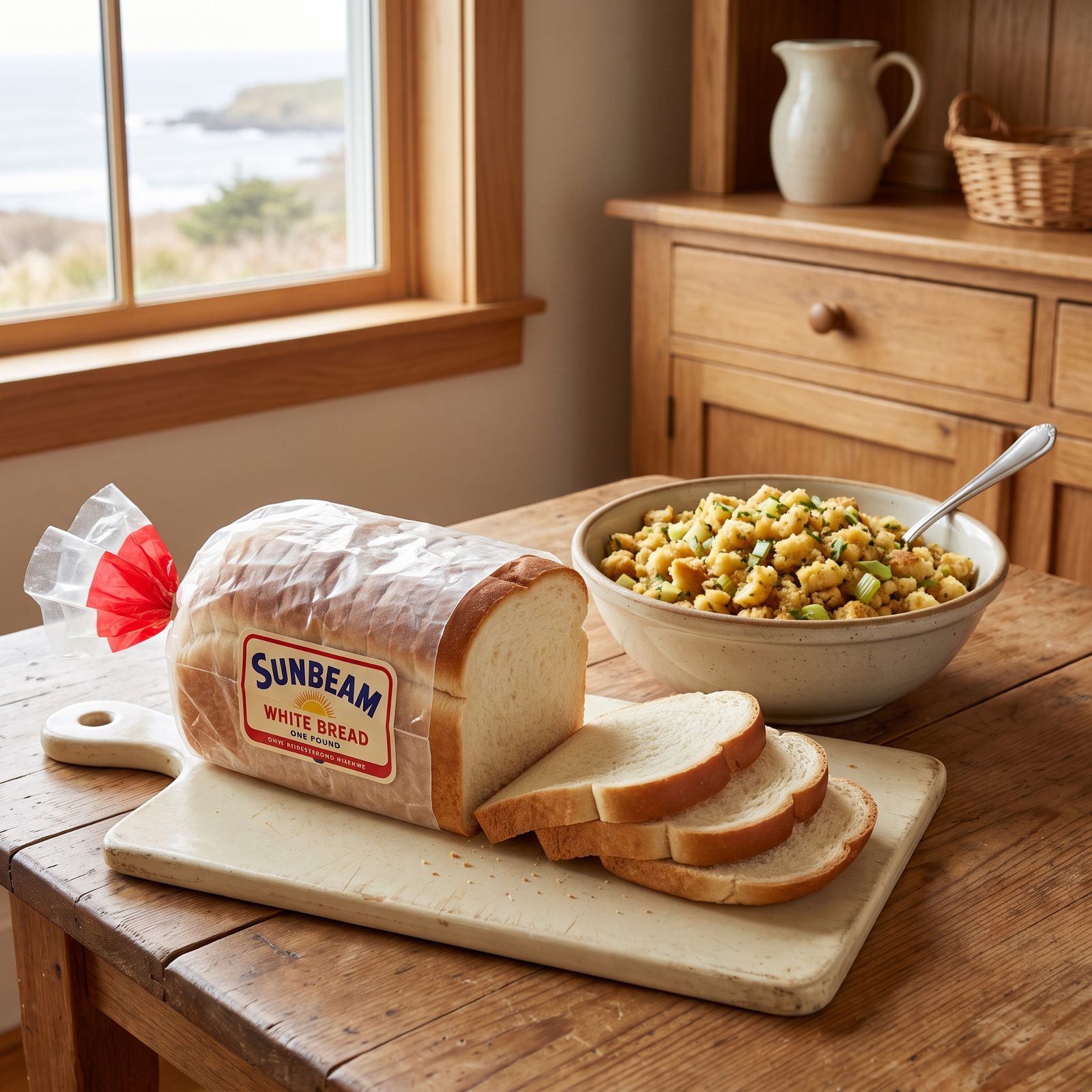
Twenty-one cents for a loaf of white bread — the kind of number your grandmother would repeat until you rolled your eyes. But bread really was that cheap, and it pulled double duty at Christmas: sandwiches for the days after, and the guts of the stuffing that went inside the bird.
Half the loaf, dried out overnight and mixed with onion, celery, and sausage, became the dressing. The other half fed everyone leftover turkey sandwiches for three straight days. No loaf worked harder.
34. A One-Pound Roll of Pork Sausage: Roughly 59 Cents
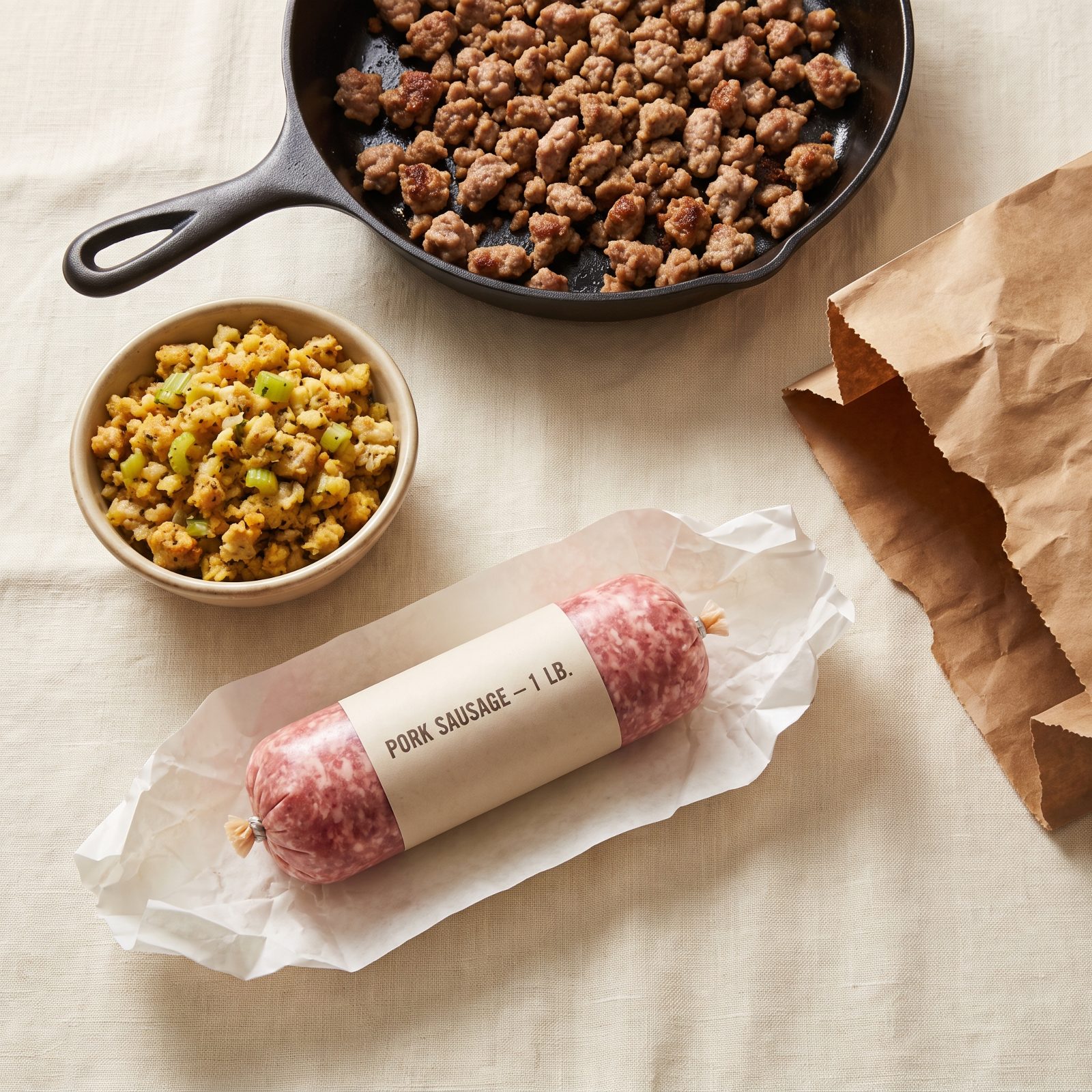
A one-pound roll of fresh pork sausage cost about 59 cents, and it was the quiet secret in a lot of family stuffing recipes. Brown it, crumble it, fold it into the bread and onion and celery, and suddenly the dressing tasted like somebody’s grandmother had a hand in it.
You’d use the whole pound in one big batch. Sausage felt like a small splurge but stretched a long way once it hit the mixing bowl.
33. One Bunch of Celery: About 19 Cents
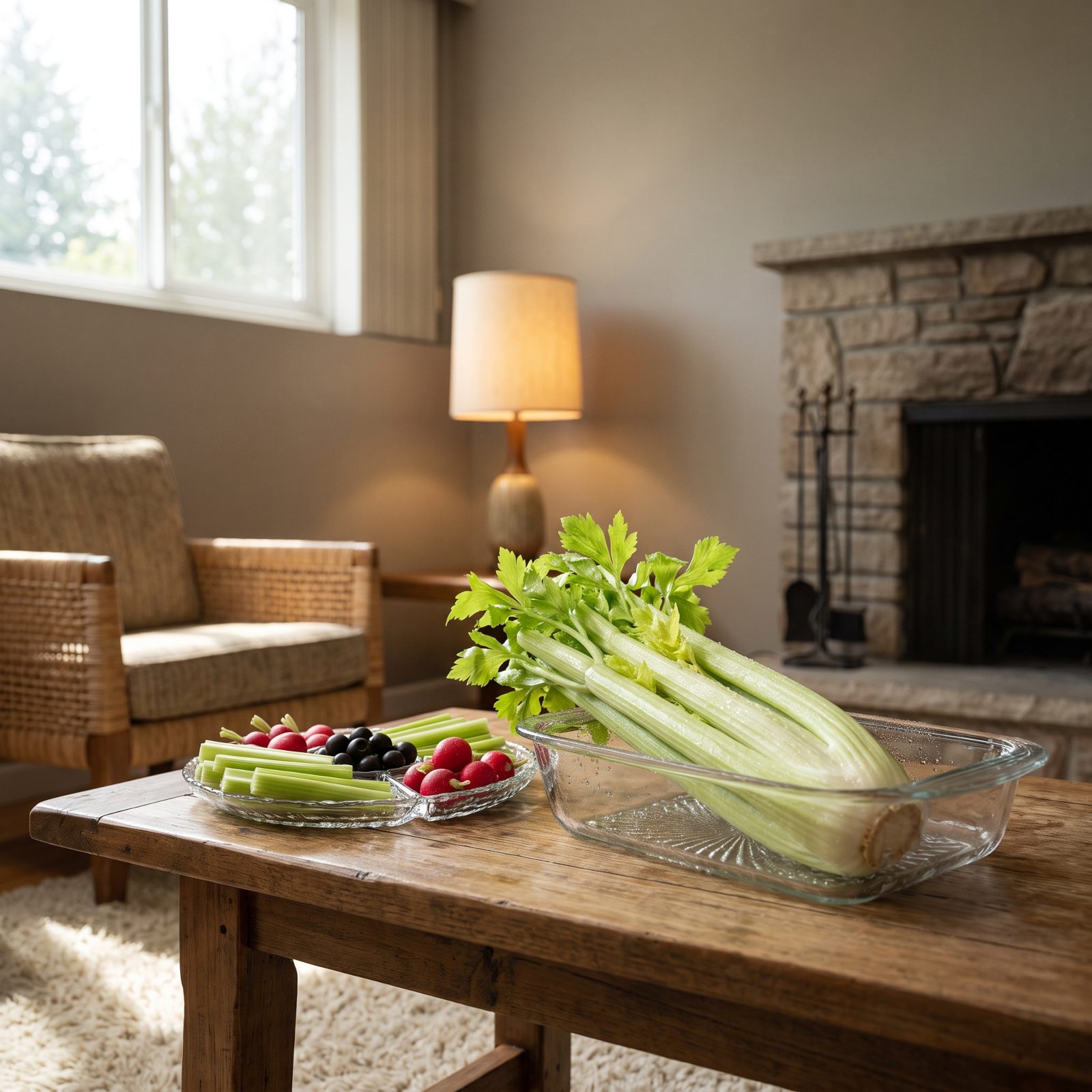
A whole bunch of celery for 19 cents. It pulled a lot of weight in 1965 — into the stuffing, into the gravy base, and out onto the relish tray, where it sat in a pressed-glass dish next to olives and radishes for guests to nibble before dinner.
That relish tray was its own small ritual. Somebody in the family always insisted on it, and celery was the cheap backbone holding the whole spread together.
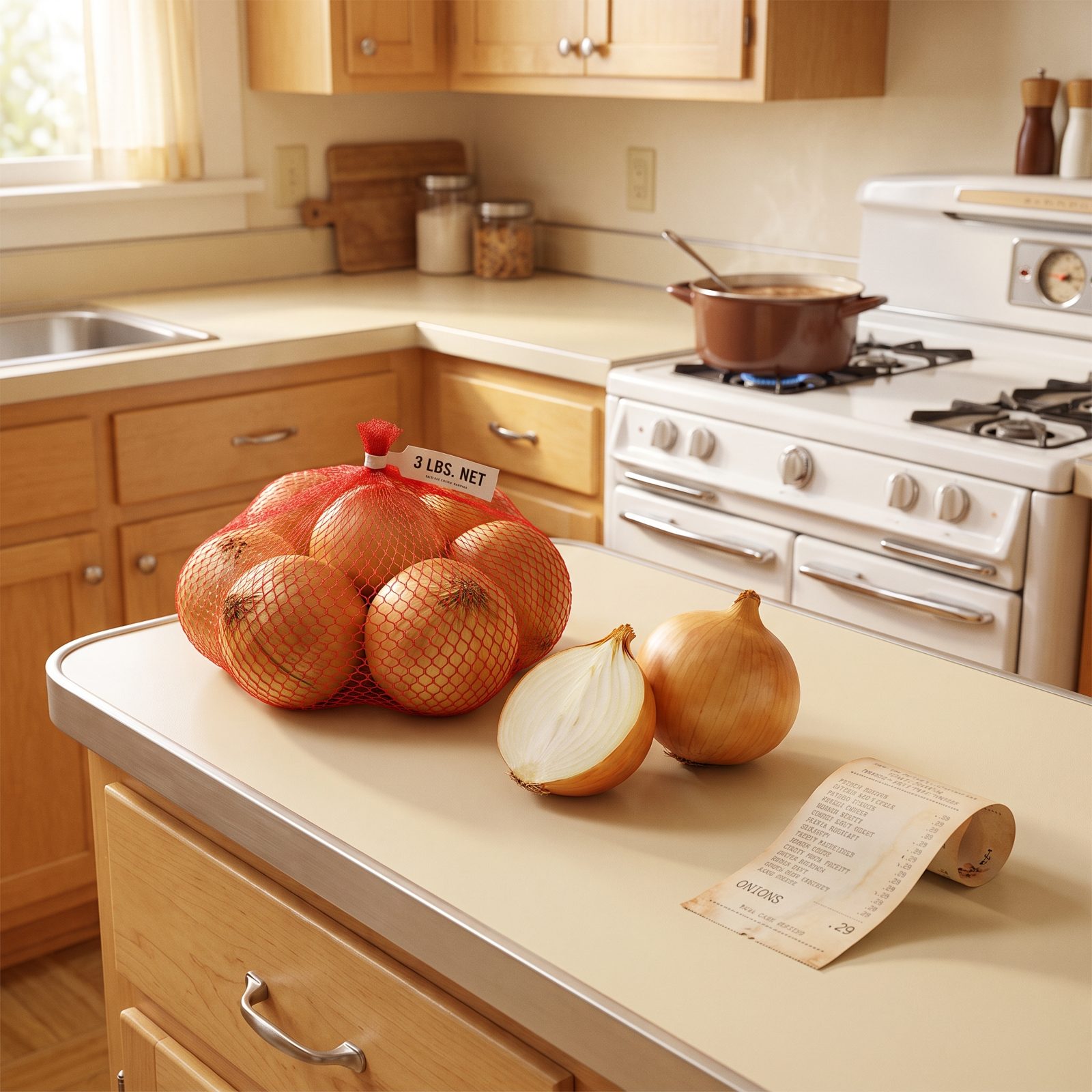
32. A Three-Pound Bag of Yellow Onions: Around 29 Cents
Would you like to save this?
Three pounds of yellow onions for about 29 cents, and you needed maybe one or two of them for the whole dinner. They went into the stuffing, the gravy, and the giblet base, so a couple got chopped and the rest went back in the bin.
Nobody bought three pounds of onions for a single meal on purpose. That’s just how they came. You paid a quarter and change and had onions for a month.
31. Two Cans of Chicken Broth: About 24 Cents Total
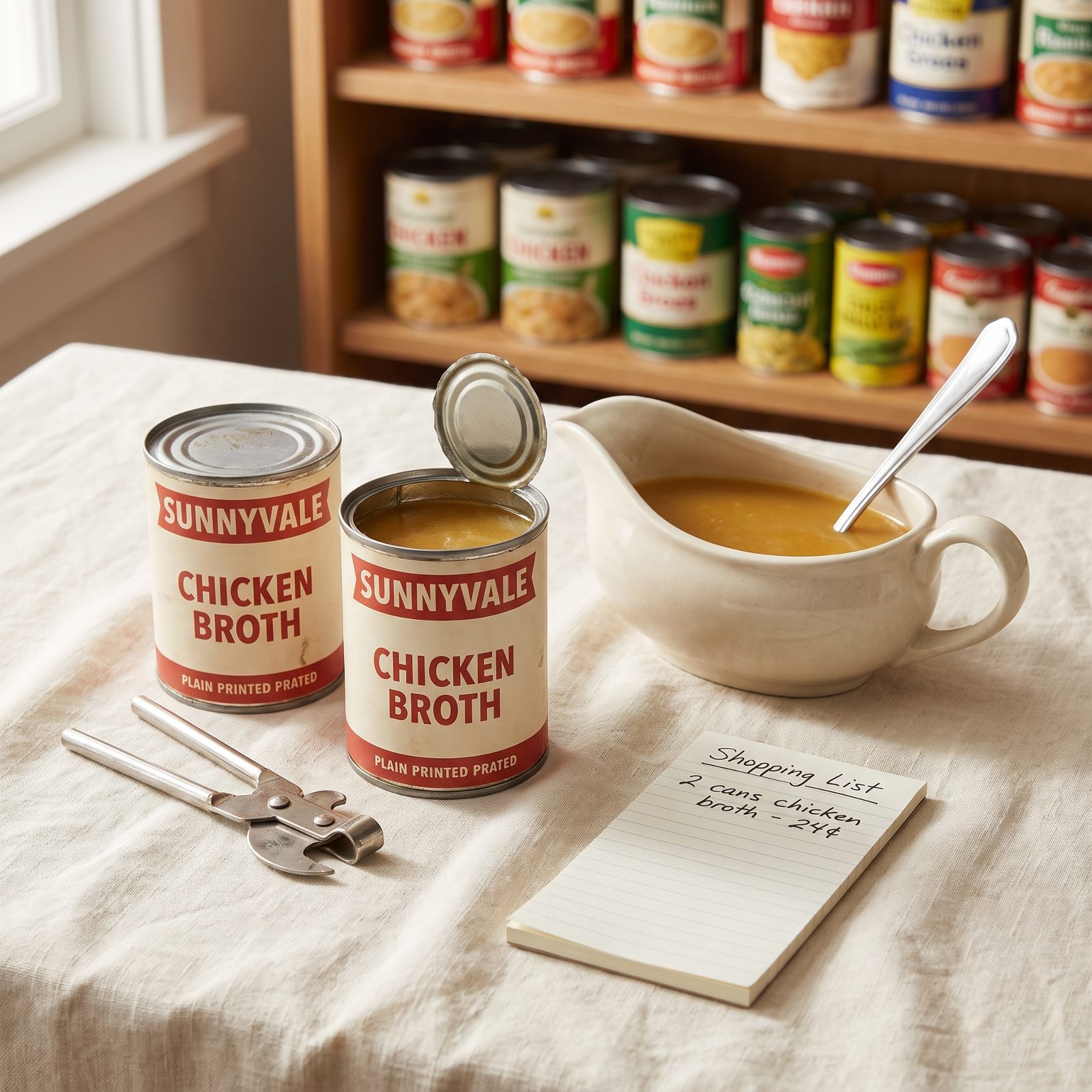
Two cans of chicken broth ran about a dime each, so a couple dimes to round out the basket. Broth from a can was the shortcut that made gravy possible when the pan drippings didn’t stretch far enough, and by 1965 canned soup and broth had become pantry staples in most American kitchens.
Now add up the whole cart. Turkey, potatoes, sweet potatoes, butter, milk, bread, sausage, celery, onions, broth — it all lands somewhere around eight or nine dollars, and you’d have leftovers spilling out of the fridge. Call it three or four hours of factory wages for a Christmas dinner that fed four and kept feeding them for days.
30. A Box of Cornbread Mix: About 15 Cents in 1965
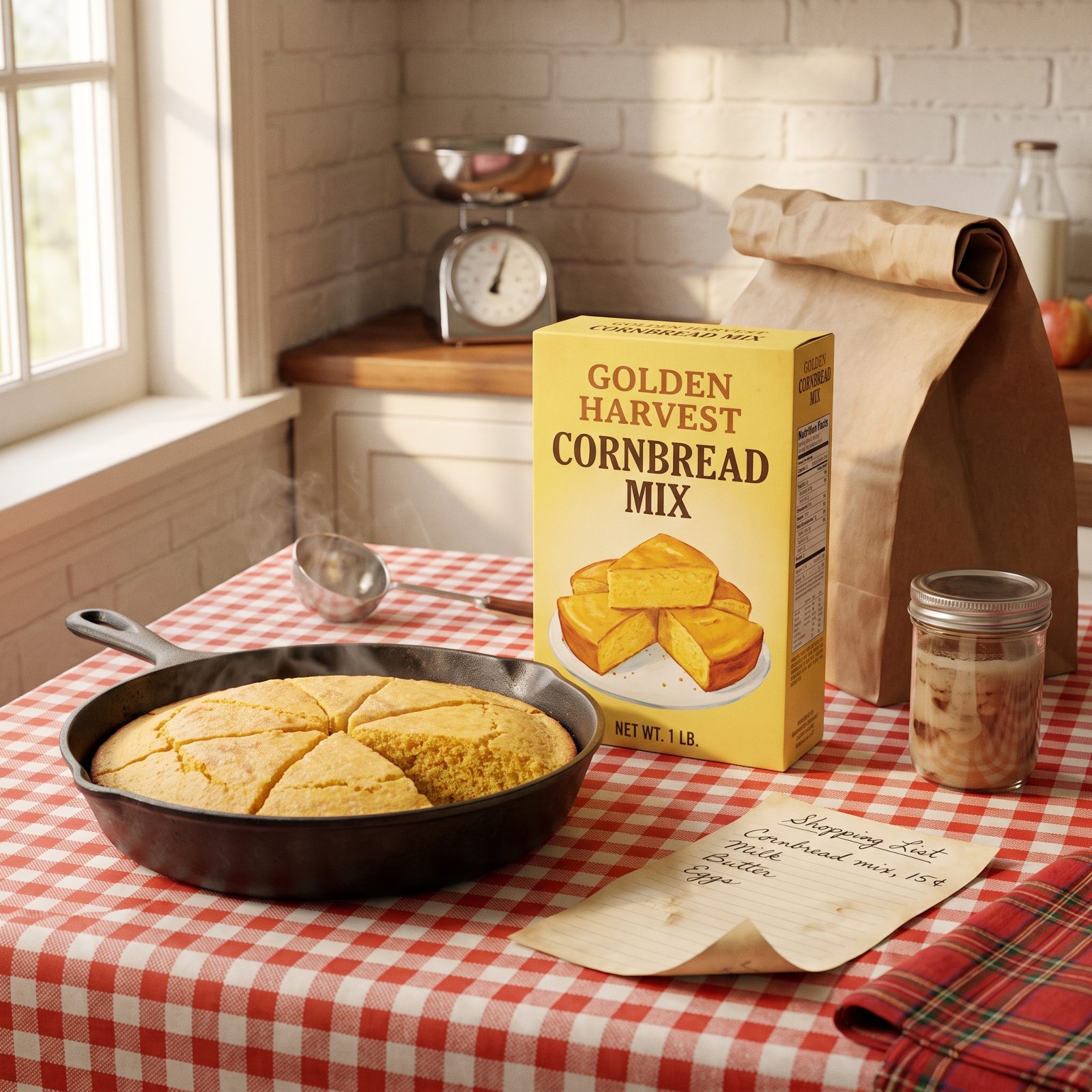
Fifteen cents. That’s roughly what a box of cornbread mix ran in 1965, and for the family-of-four holiday table it was the quiet workhorse that became the base of the stuffing or a pan of skillet bread on the side.
Put that against a factory wage hovering around a couple bucks an hour and the math gets almost funny. A few minutes of work bought the whole box. You didn’t budget for cornbread — you grabbed it on the way past the baking aisle.
29. A Jar of Poultry Seasoning: Around 19 Cents in 1965
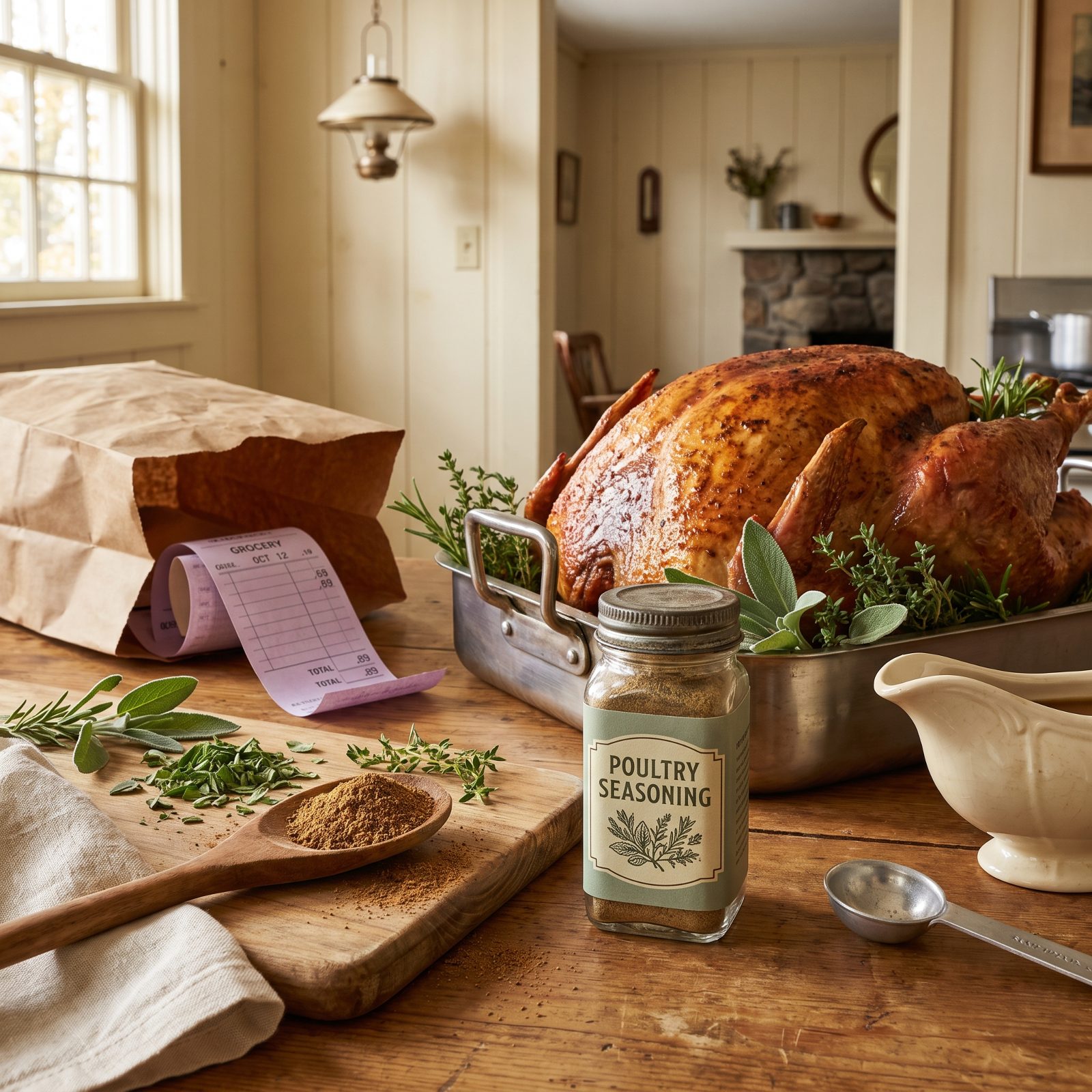
The whole holiday bird tasted like Christmas because of a jar that cost under twenty cents. Poultry seasoning — that sage-and-thyme blend — ran about 19 cents in 1965, and a single jar handled the turkey, the gravy, and the stuffing with plenty left over for New Year’s.
Spice prices bit harder back then, at least relative to a paycheck. Seasonings still got shipped, ground, and jarred with far less automation, so a jar of anything exotic could set you back real money. Poultry seasoning stayed cheap because it was domestic sage and thyme, nothing hauled across an ocean.
28. Two Cans of Cut Green Beans: About 12 Cents Each
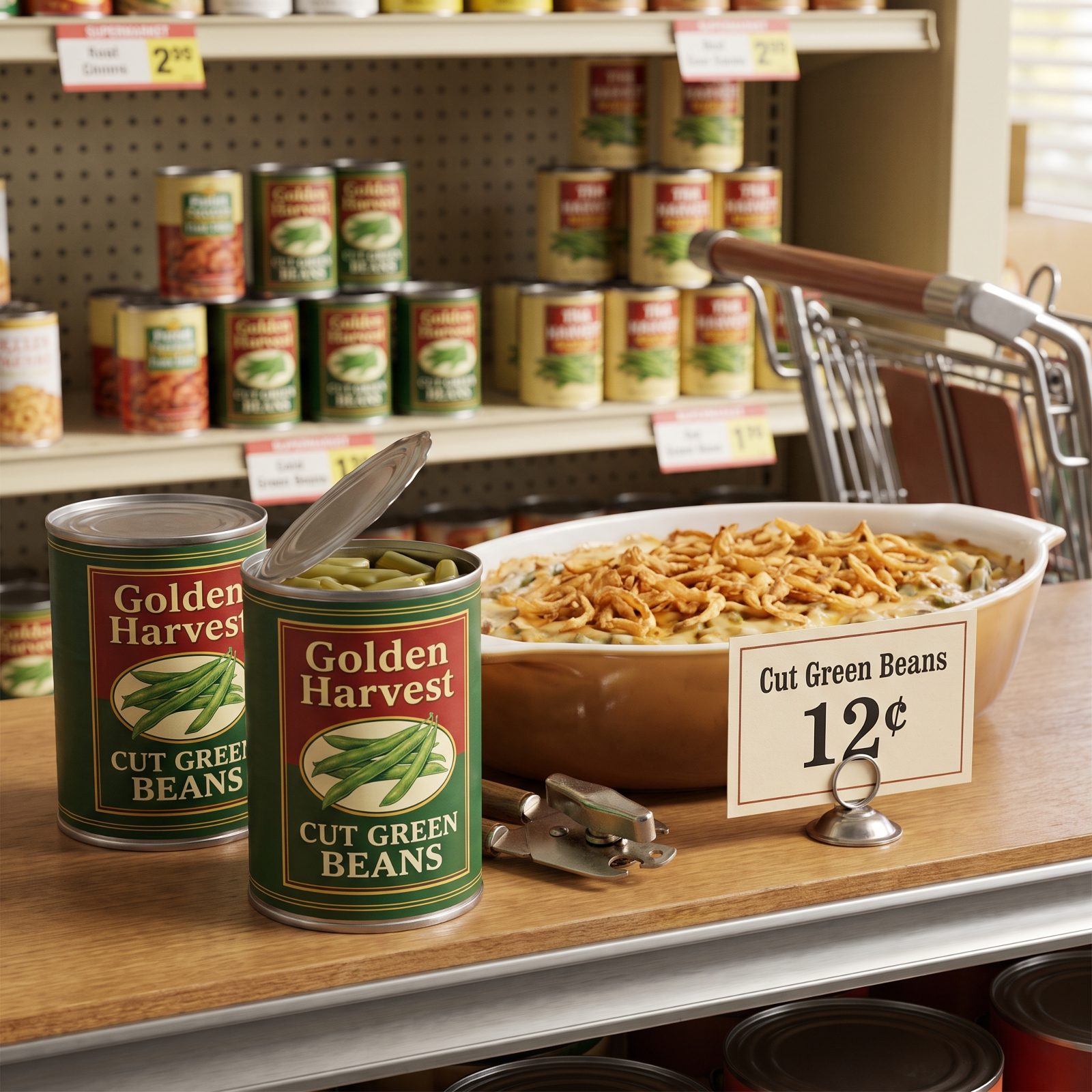
Twelve cents a can, so a quarter and change bought both cans the green bean casserole needed. Canned vegetables were the backbone of a 1965 holiday plate, and green beans were the cheapest reliable green in the store come December.
Fresh green beans in winter? Practically nonexistent unless you lived somewhere warm and paid a premium. The can was the answer, and nobody apologized for it. I’ll say this plainly: the casserole those cans built has outlived every fresh-is-better sermon since.
27. A Can of Cream of Mushroom Soup: Roughly 15 Cents
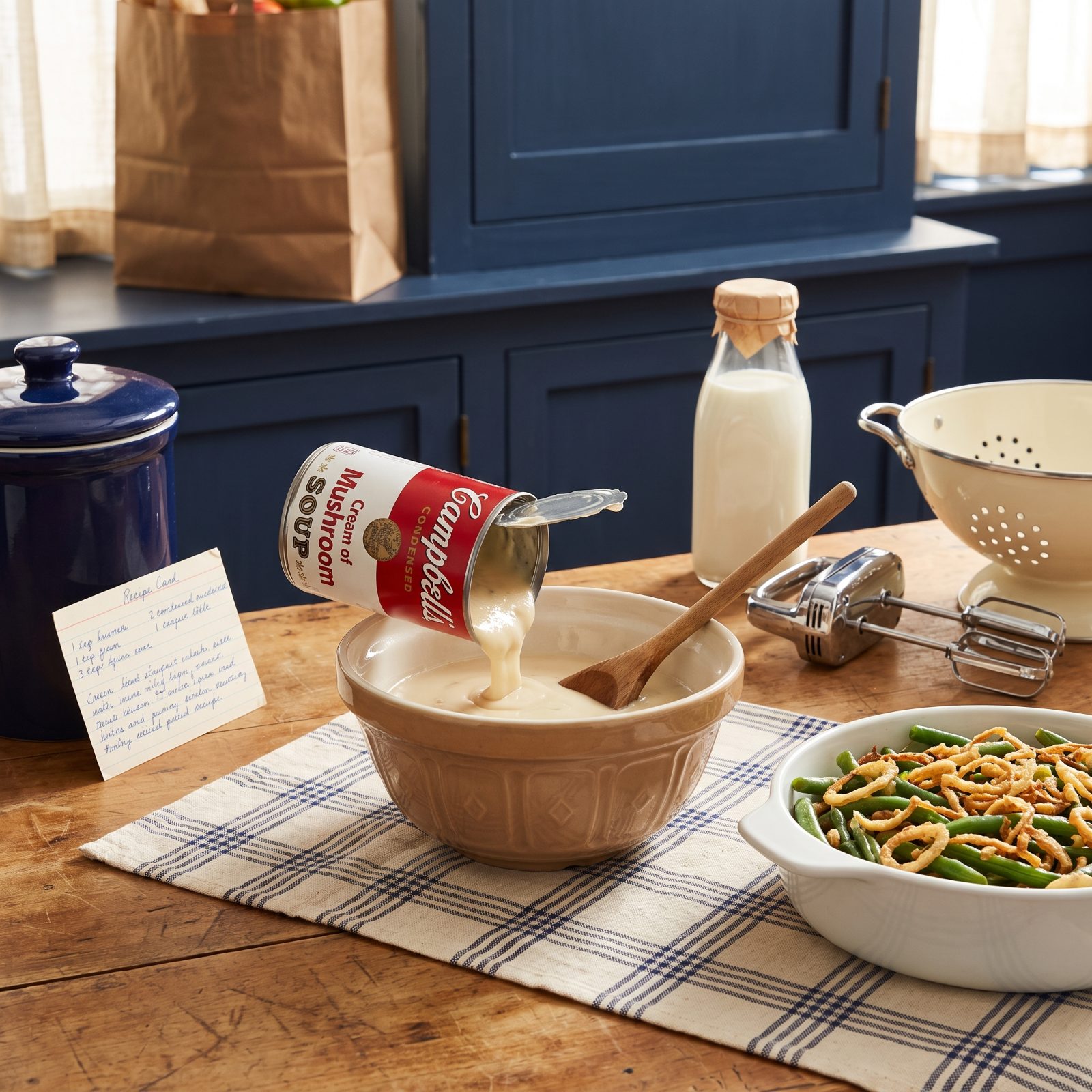
The little red-and-white can, about 15 cents, was less an ingredient than a strategy. Cream of mushroom soup bound the casserole, thickened the gravy, and stretched leftover turkey into a Monday-night hot dish. One can did all of it.
At fifteen cents against a couple dollars an hour, you bought it without a second thought and probably had three more in the pantry already. That’s what shelf-stable convenience cost the American family the year The Sound of Music was in theaters.
26. A Package of Crispy Fried Onions: About 29 Cents
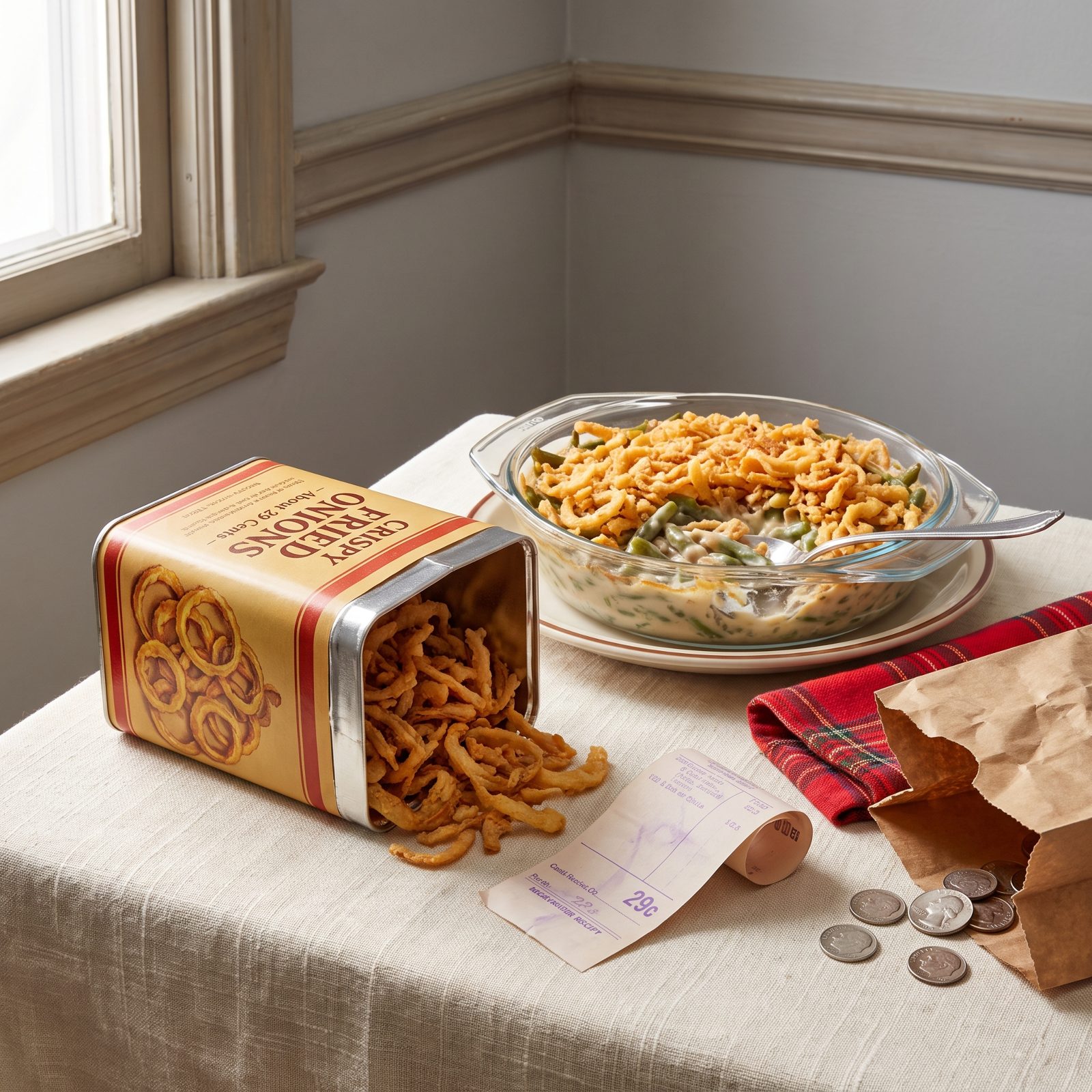
Twenty-nine cents made this the splurge of the green bean casserole. The crispy fried onions were the topping that turned a bowl of beans and soup into something you’d actually set in front of company.
One can handled the family-of-four dish — half stirred into the mix, the rest scattered on top for the last ten minutes in the oven. Skip them and you had a fine casserole. Add them and you had the one people remembered.
The onions were never the cheapest thing in the basket, and they were always the part people fought over.
25. A Can of Whole-Kernel Corn: Around 14 Cents
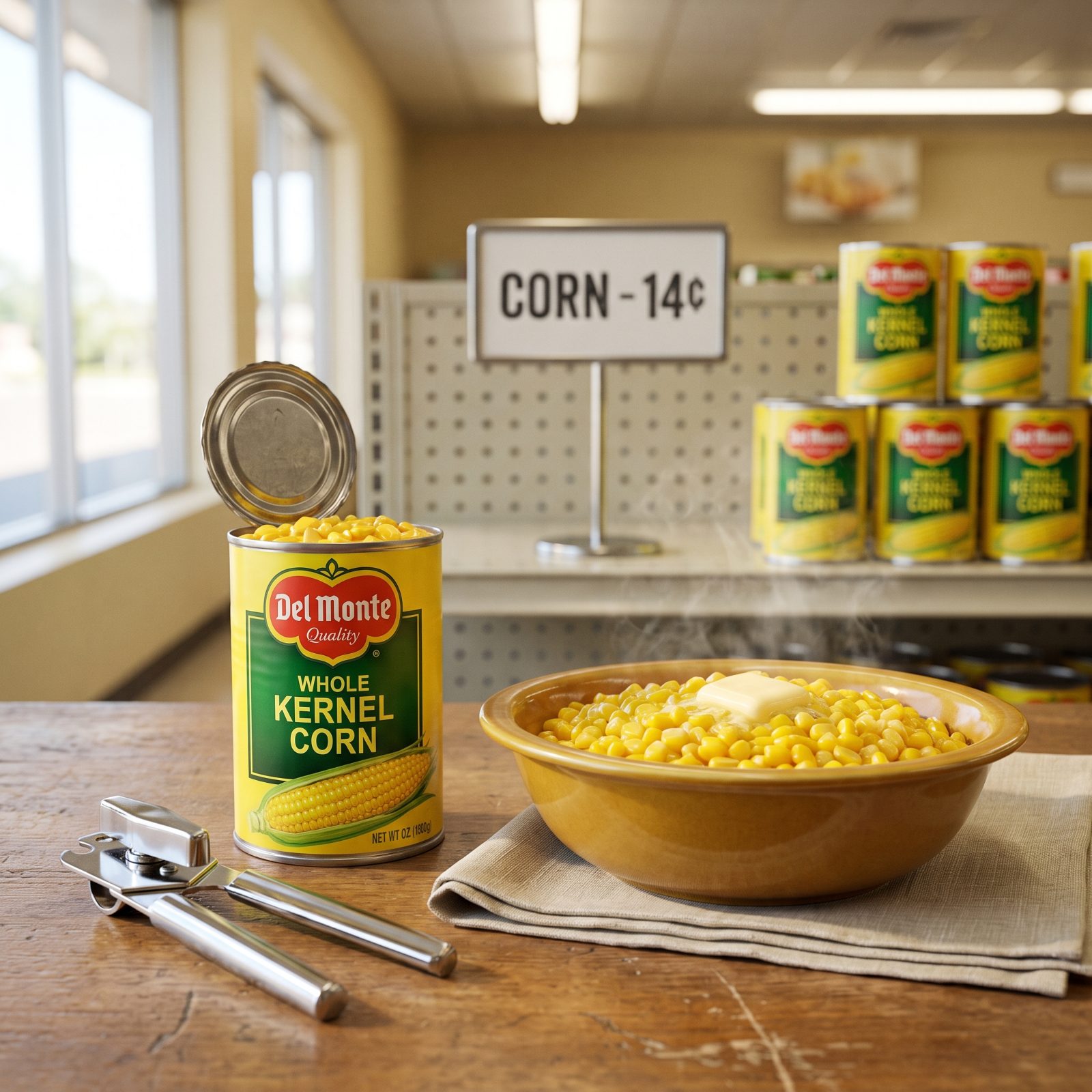
Fourteen cents got you a can of whole-kernel corn, the side dish that took thirty seconds and made a plate look finished. Butter it, salt it, done — a bright yellow spot next to the browns and creams of everything else.
Corn was cheap because America grew mountains of it, and by the mid-sixties the canning industry had the process down cold. Here’s the odd part: lower price didn’t mean lower quality. Canned corn in 1965 tasted about like canned corn does now. Some things the food industry just figured out early and left alone.
24. A Can of Jellied Cranberry Sauce: About 17 Cents
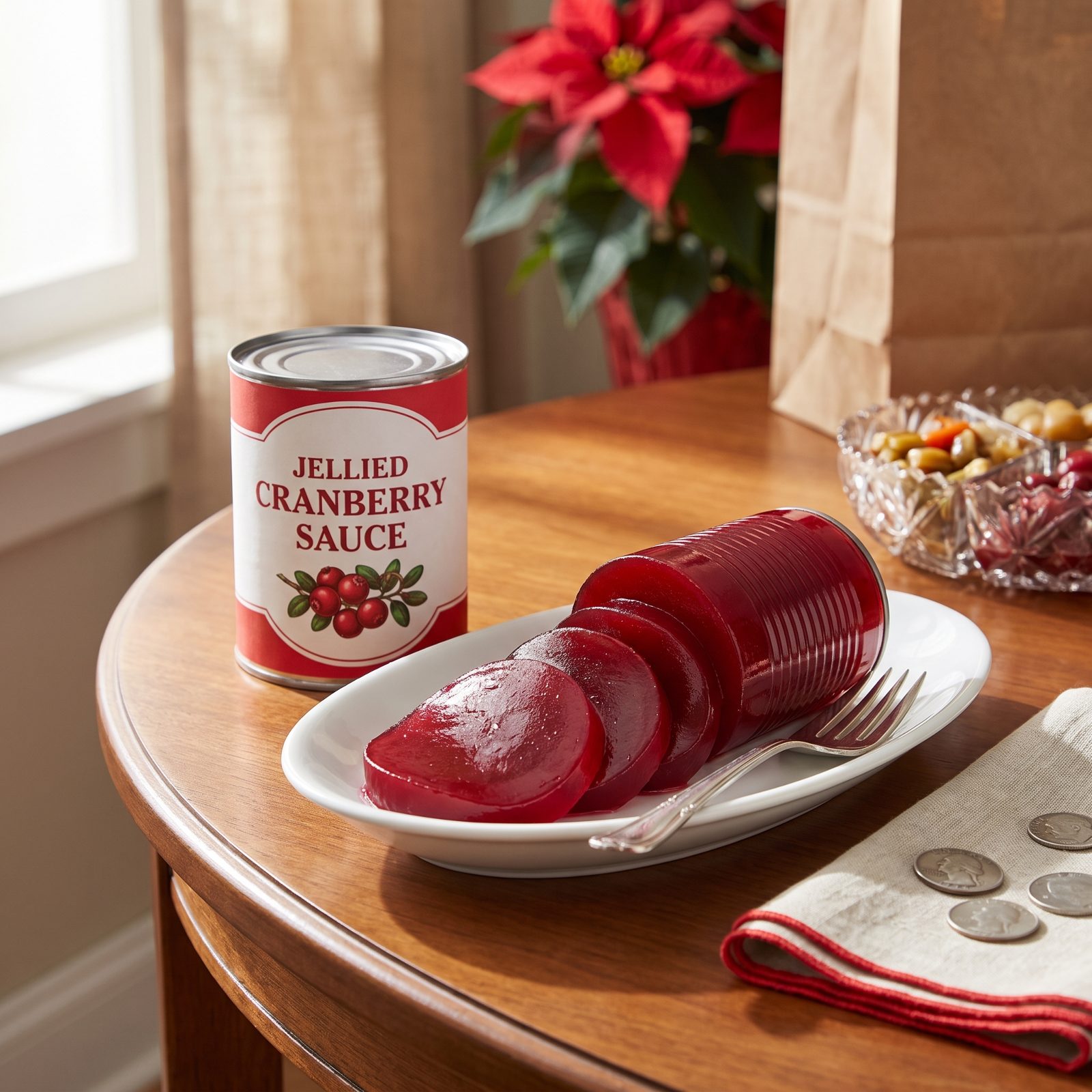
Seventeen cents for the can that made a sound. You know the one — that suck of the vacuum releasing as the jellied cranberry slid out in a perfect ribbed cylinder onto the plate, and someone at the table always insisted on serving it with the ridges still showing.
Fresh cranberries existed. Almost nobody bothered. The jellied can was faster, cheaper, and honestly it was what the family expected. I’ve made cranberry sauce from scratch, and I’ll admit the ridged log holds a spot in my heart it hasn’t earned on flavor alone.
23. A Two-Pound Bag of Carrots: Roughly 19 Cents
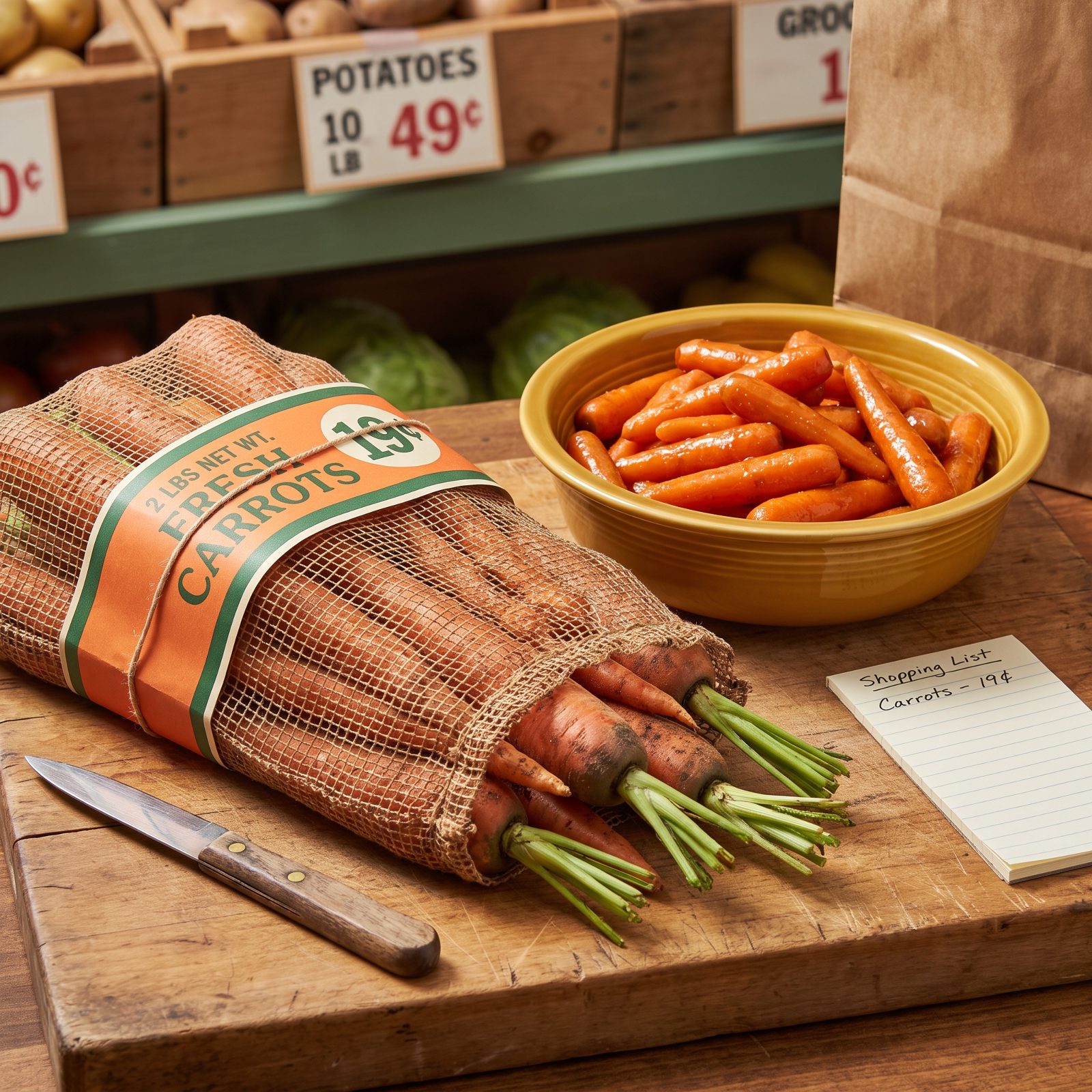
Nineteen cents for two pounds of carrots — one of the few genuinely fresh things in a 1965 holiday basket. Glazed with butter and a little brown sugar, they were the color the plate needed and the vegetable the kids might actually eat.
Carrots kept well, shipped cheap, and stayed on the shelf all winter, which is why they showed up on the Christmas table when most other fresh produce had priced itself out of reach. Two pounds fed a family of four with a handful left for snacking.
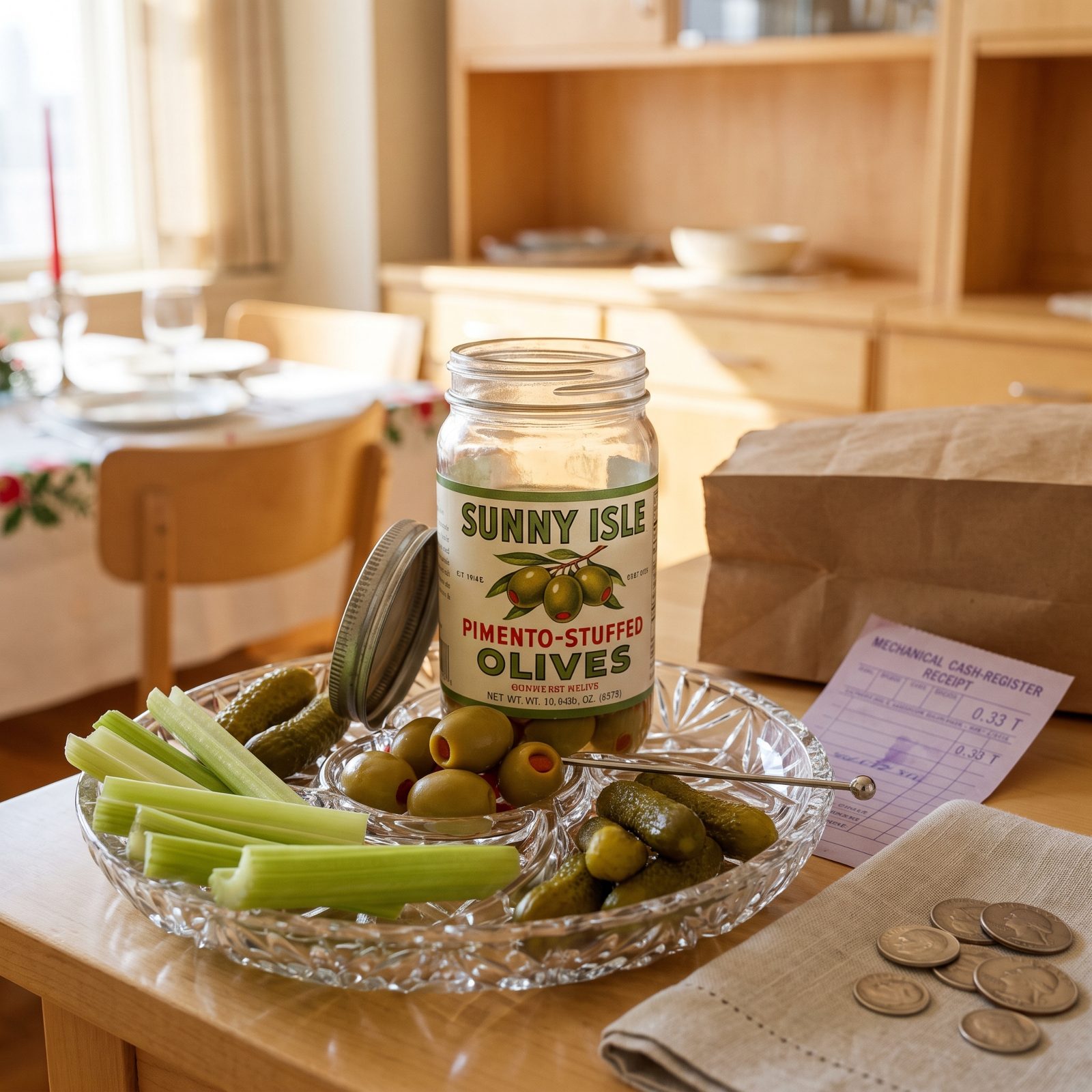
22. A Jar of Pimento-Stuffed Olives: About 33 Cents
Would you like to save this?
Thirty-three cents made the olives one of the pricier little luxuries in the cart, and they earned it. Pimento-stuffed green olives were the centerpiece of the relish tray — that divided cut-glass dish that appeared only on holidays and sat next to the celery and the pickles like it was somebody important.
The relish tray was pure hospitality theater, and I mean that as a compliment. A dollar or so to assemble, and it made the whole spread feel generous before anyone even sat down.
21. A Jar of Sweet Gherkin Pickles: Around 29 Cents
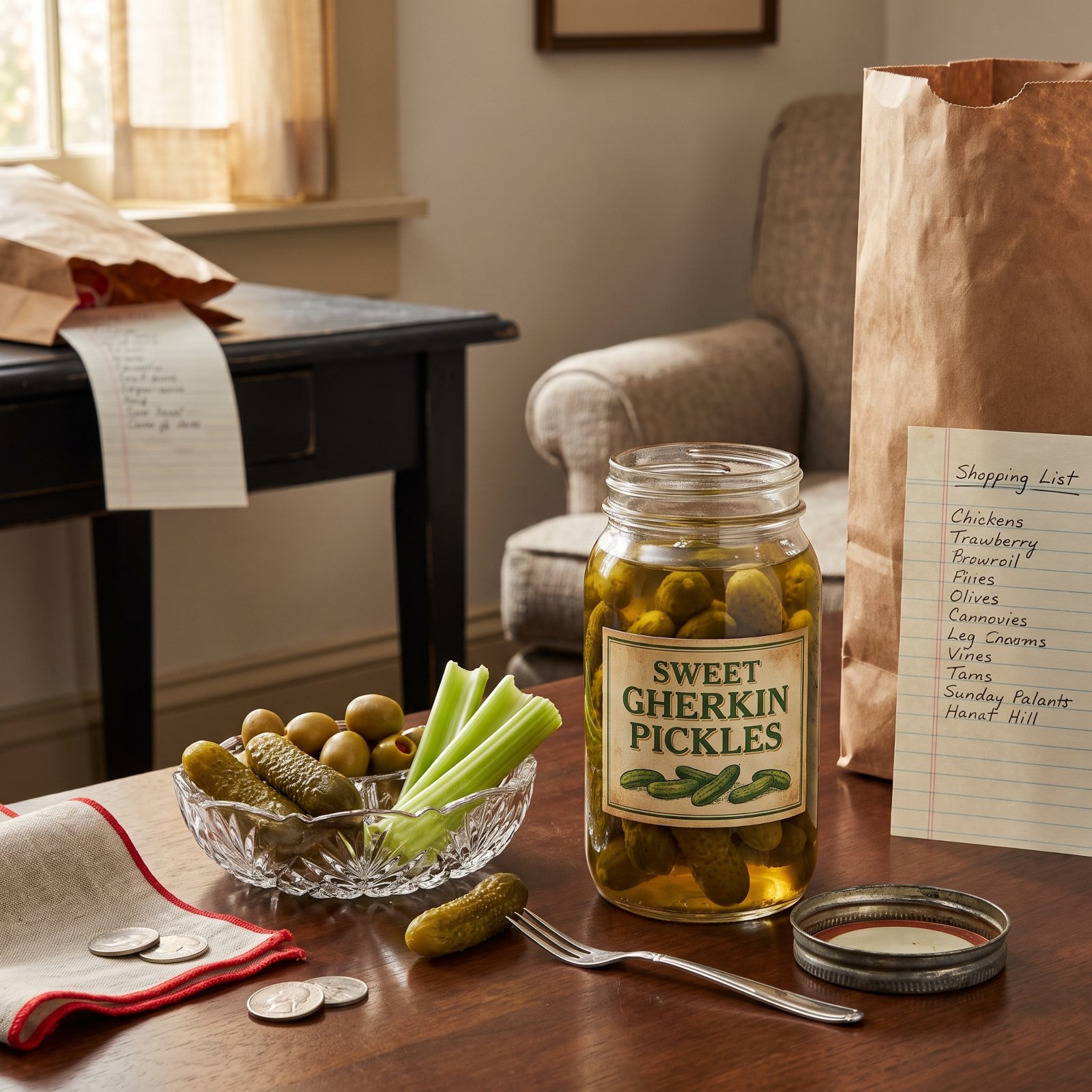
About 29 cents, and the piece that completes the relish tray. Sweet gherkins — those tiny crinkle-cut pickles — sat in the third compartment of the cut-glass dish and vanished faster than anyone planned for.
So there’s the side-dish stretch of the 1965 Christmas dinner basket. Add it up — cornbread, seasoning, beans, soup, onions, corn, cranberry, carrots, olives, gherkins — and the sides and trimmings came in right around two dollars, before the turkey. A factory worker earned that in under an hour.
Now the catch, the part nobody likes to hear. That same worker’s whole day paid for far less house, far less car, far less doctor than it does today. Prices were low and so were the paychecks, and the honest picture only makes sense when you hold both numbers at once.
20. A One-Pound Block of Cheddar Cheese: About 49 Cents in 1965
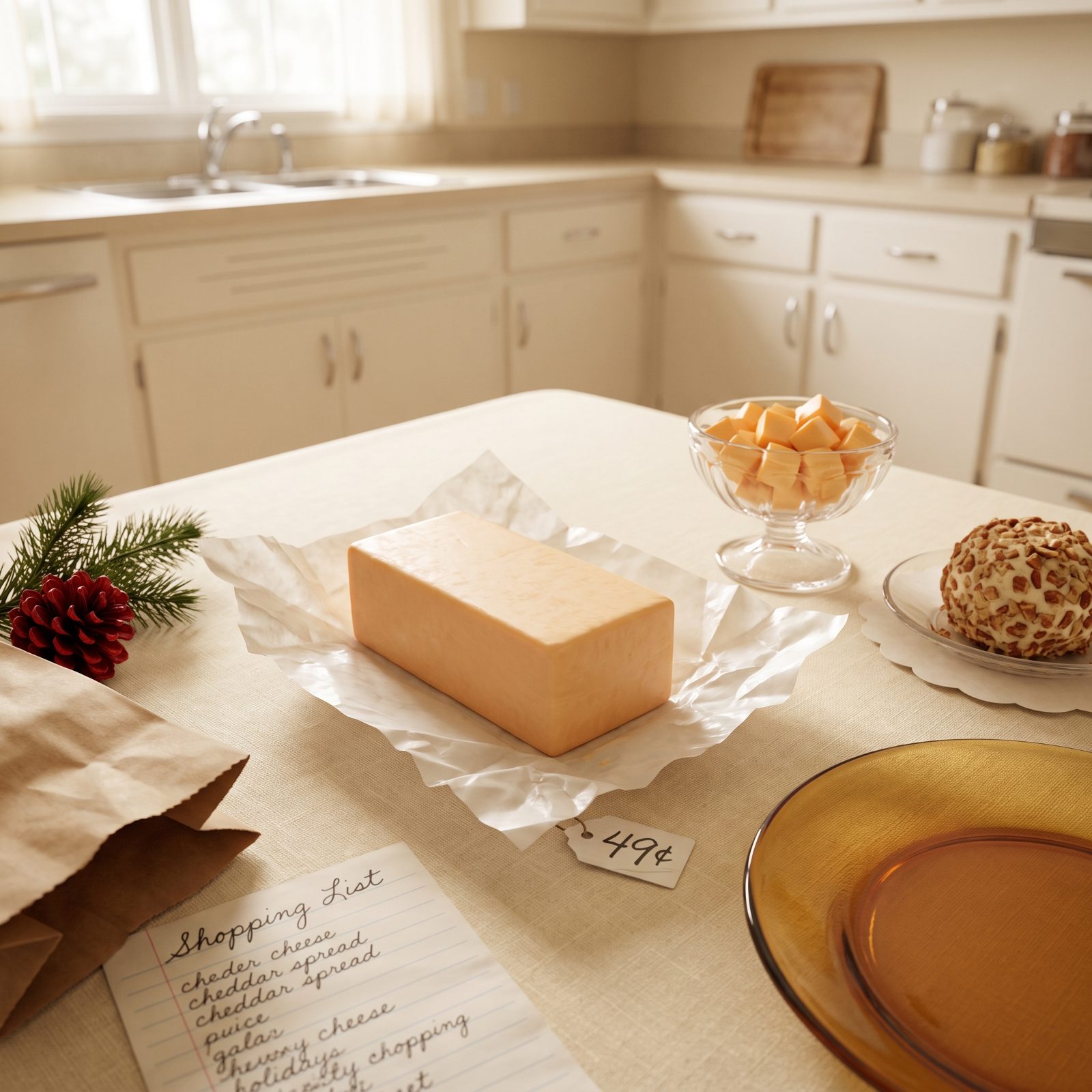
Cheddar ran about 49 cents a pound in 1965, sometimes closer to 39 if your store ran a Christmas special. A working man earning around $2.50 an hour bought that pound in roughly twelve minutes of work.
You didn’t buy pre-shredded bags back then. They didn’t exist. You bought the block and grated it yourself over the cheese ball or the scalloped potatoes, half the pound going into the appetizer and the rest into the casserole. And I still think block cheddar tastes sharper than the pre-grated stuff. I’ll die on that hill. That plastic anti-caking dust does nobody any favors.
19. A One-Pound Box of Crackers: Roughly 29 Cents
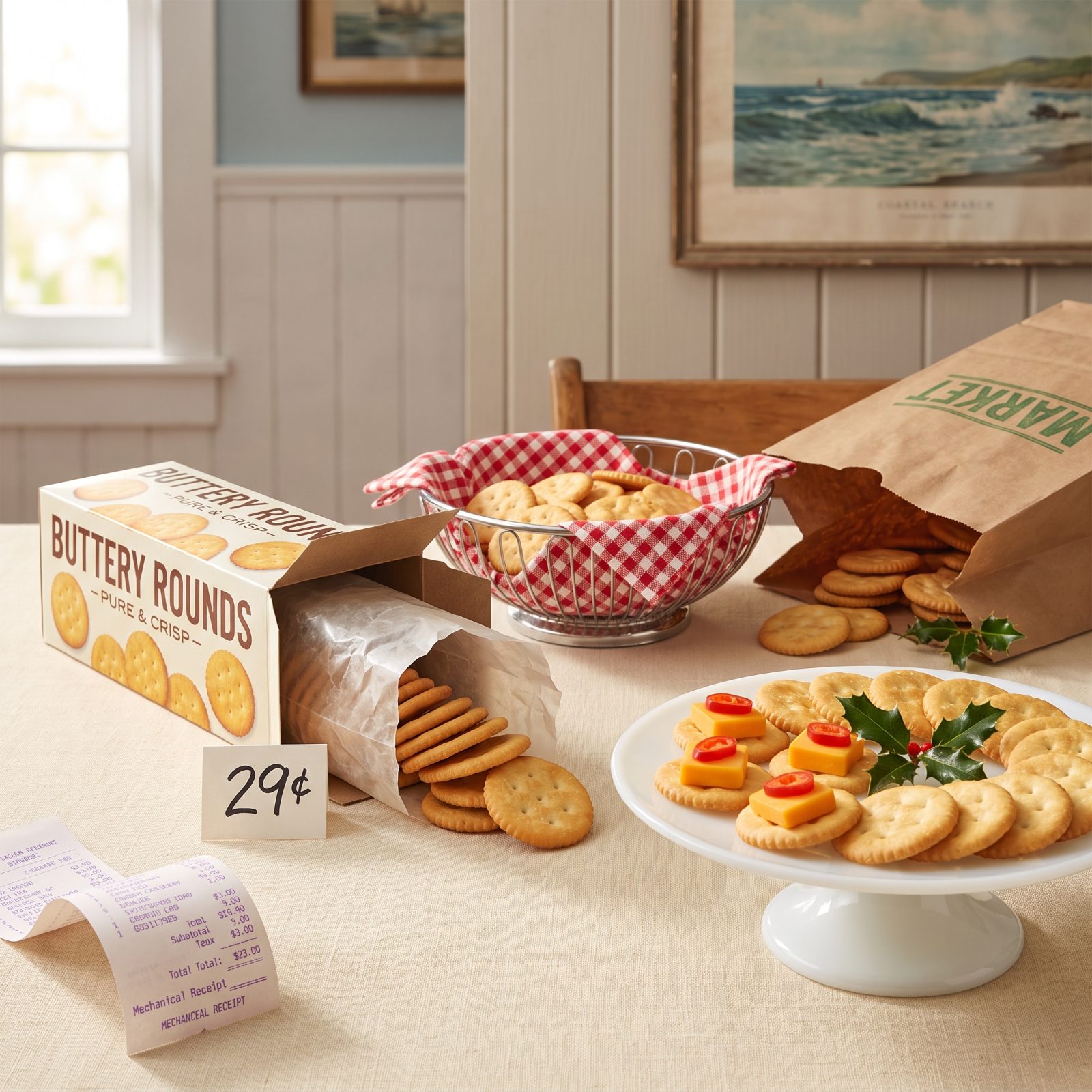
A box of crackers set you back about 29 cents. Cheap even then, and it did double duty on the Christmas table as a base for the cheese, filler crushed into the stuffing, and a little something for the kids to nibble while dinner ran late.
Nobody thought of crackers as a splurge. They were the quiet workhorse of the pantry, the thing you always had a box of, sometimes two. A quarter and change. You didn’t even round up in your head.
18. A Can of Pumpkin Purée: Around 25 Cents
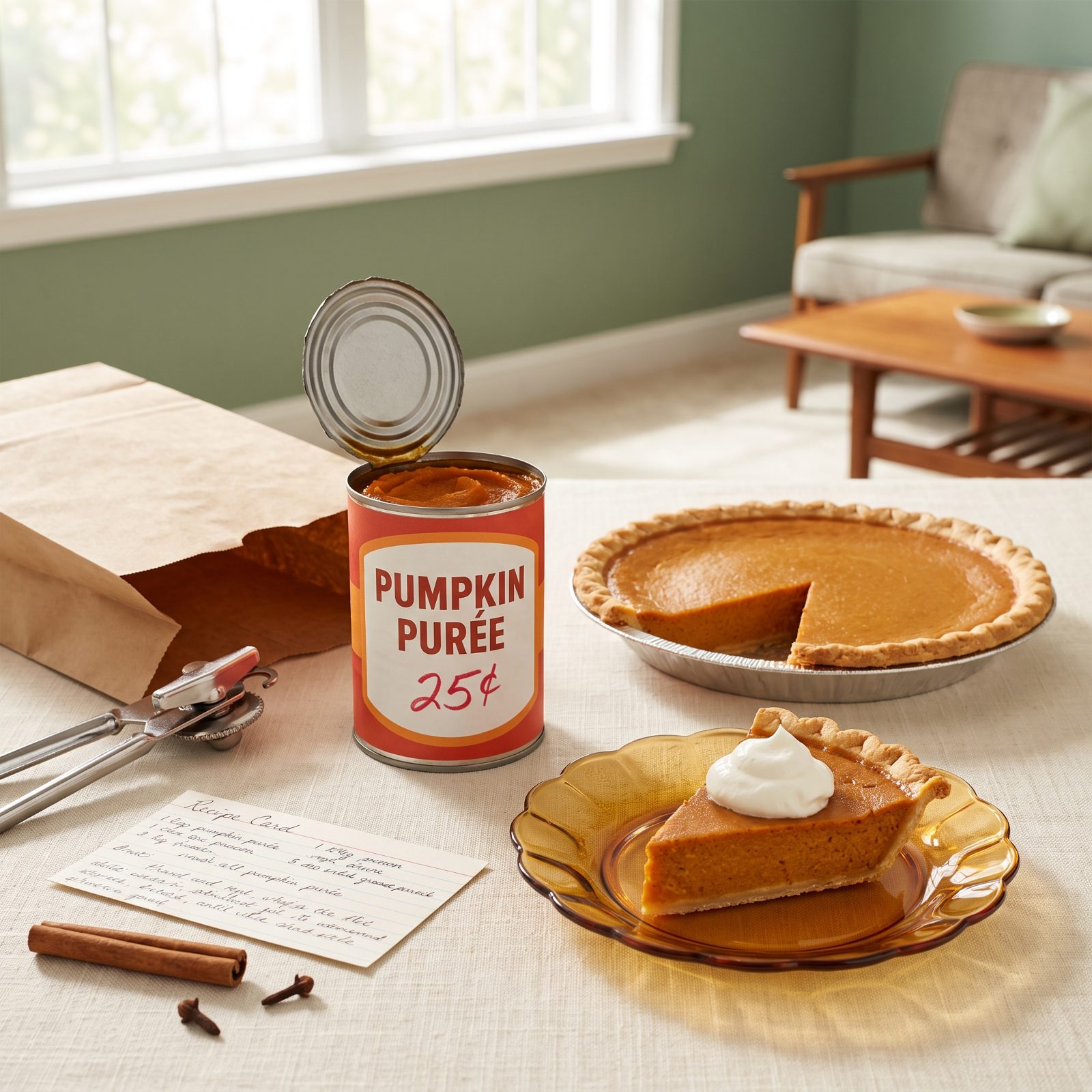
A can of pumpkin ran about a quarter. That single can was the whole reason the pie existed, mixed with the evaporated milk, eggs, sugar, and spice into the custard that poured into the shell.
People forget this part: you bought the plain purée, not the pre-spiced pie mix, if you knew what you were doing. The mix cost a few cents more and let the company decide how much cinnamon you got. Grandma didn’t trust a company with her cinnamon. Neither do I.
17. A Can of Evaporated Milk: About 15 Cents
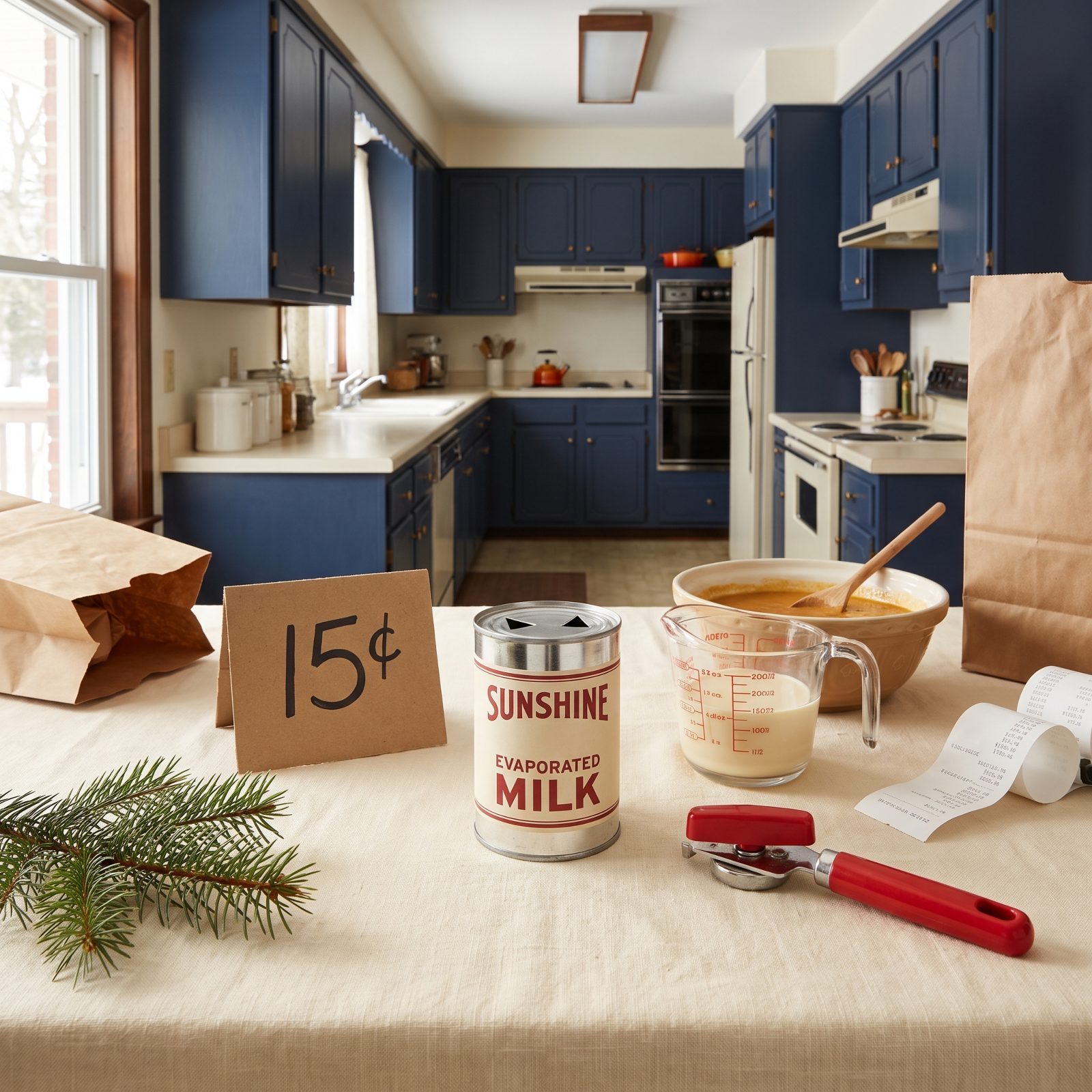
Fifteen cents, maybe a nickel more. Evaporated milk was the pantry insurance policy of the era, shelf-stable and always ready when the fresh milk ran short, and into the pie it went to give that custard its silk.
You opened it with two triangle punches, one to pour and one to let air in. If you’ve ever done it, you remember the sound. That little can also stretched into the mashed potatoes and the creamed onions — fifteen cents doing three jobs at once.
16. A Dozen Grade A Eggs: Roughly 53 Cents
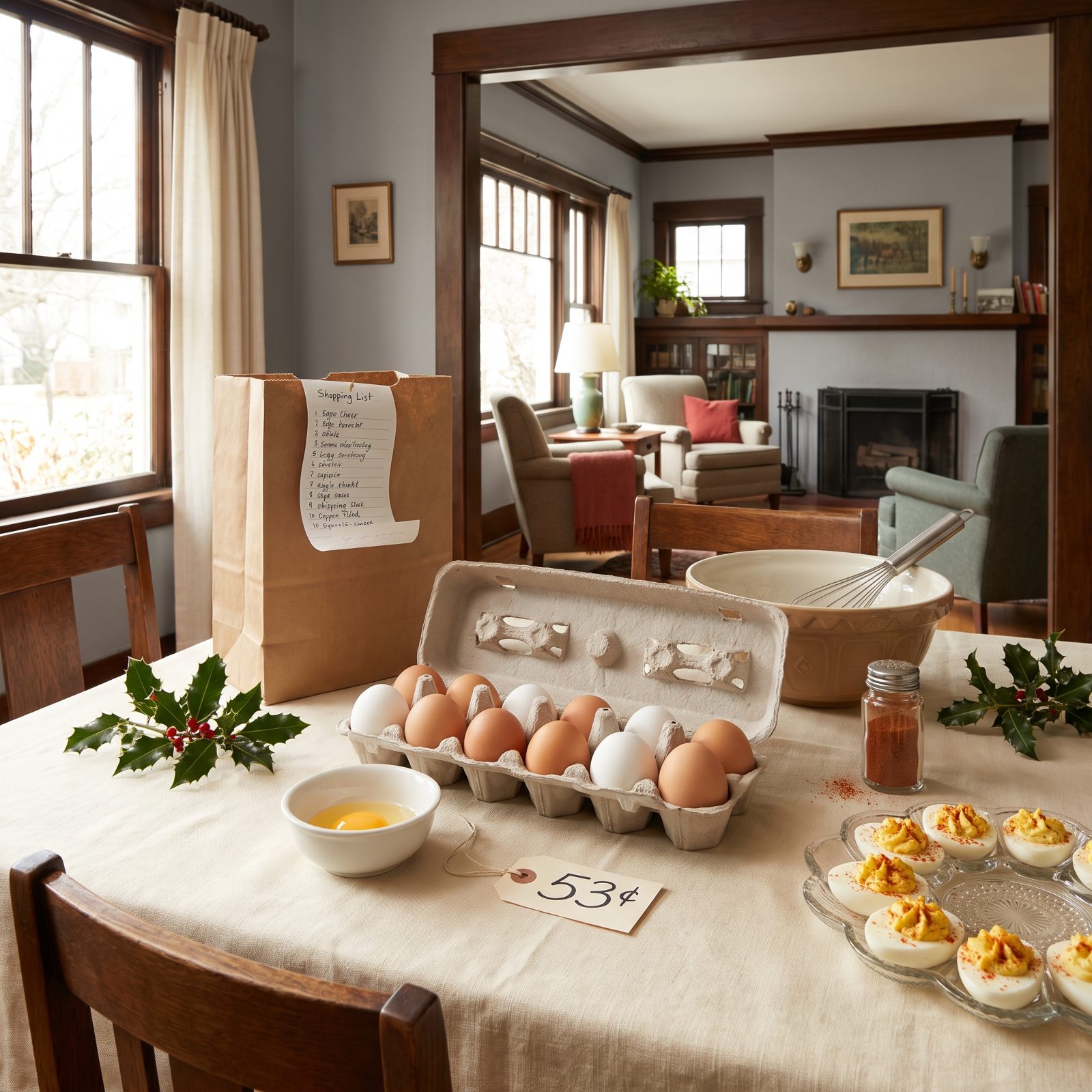
A dozen eggs sat around 53 cents in 1965, one of the pricier basics in the basket, and they pulled real weight on Christmas: two into the pie, more for deviled eggs on the pressed-glass plate, a couple to bind the stuffing.
Eggs touched everything. You never bought just one carton in December. And the deviled egg plate — that scalloped glass dish with the little egg-shaped wells — came out exactly once or twice a year before going straight back into the china cabinet. I bet yours is still in there.
15. A Five-Pound Bag of Granulated Sugar: About 59 Cents
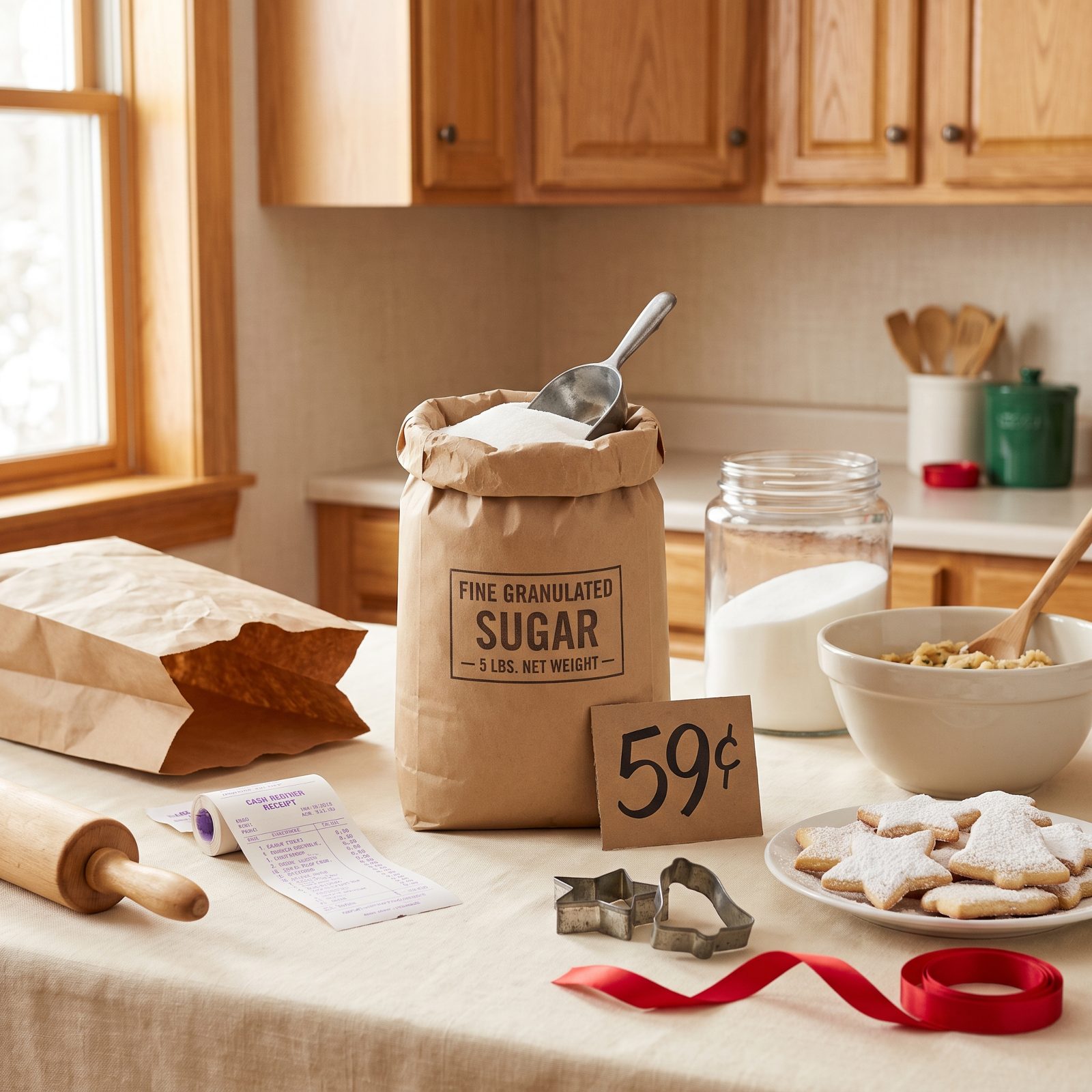
Five pounds of sugar for about 59 cents. A big bag, and Christmas ate into it fast: the pie custard, the cranberry sauce, the cookies, and the sweet potato dish somebody insisted on making with marshmallows.
Sugar was one of those staples you bought in bulk and never quite ran out of. Until December, when you suddenly did. Everyone remembers the paper sack that always split at the wrong corner and left a little trail across the counter.
14. A Five-Pound Bag of All-Purpose Flour: Around 55 Cents
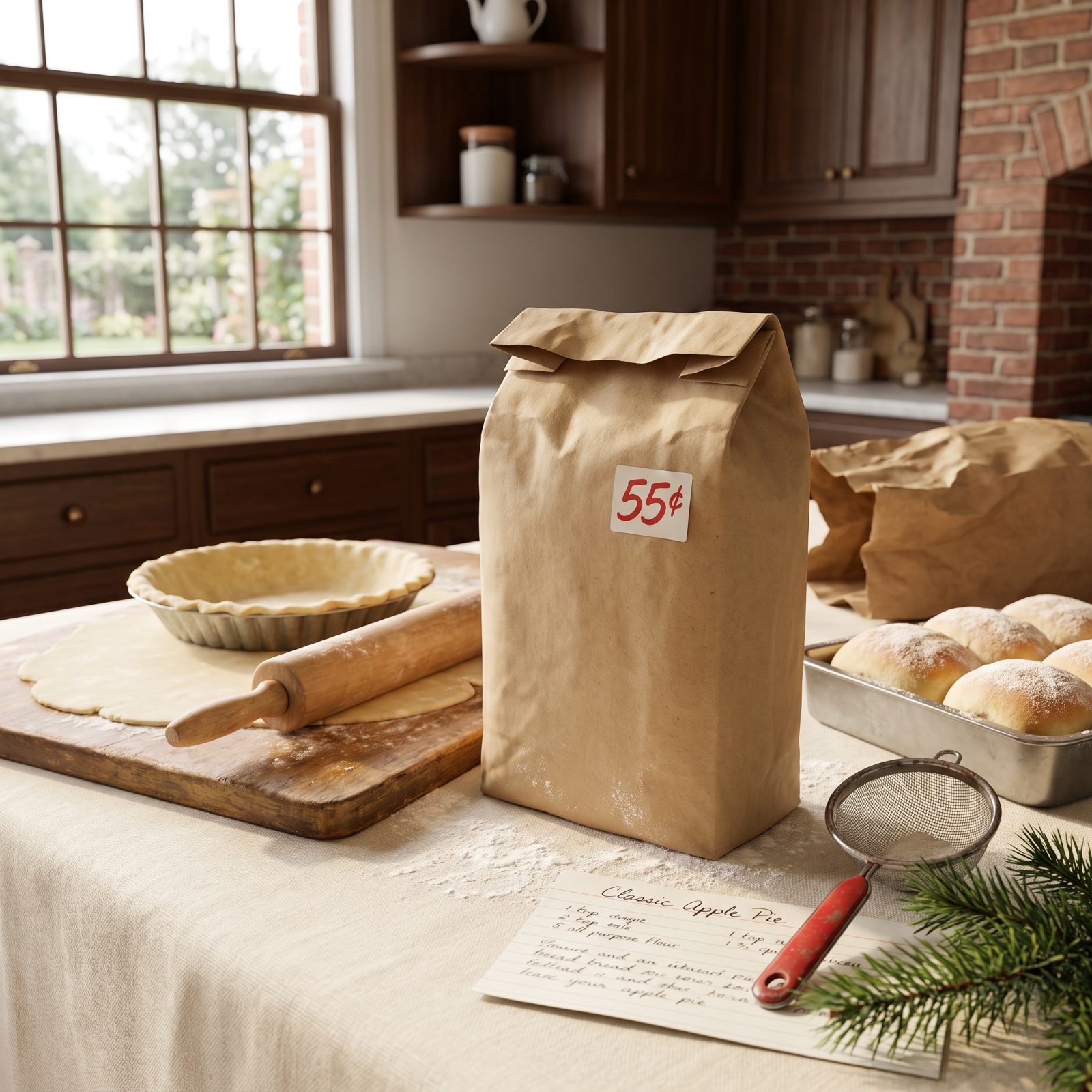
Flour ran about 55 cents for five pounds. It became the crust under the pie, the biscuits, the gravy thickener, and the dinner rolls if your family baked their own instead of buying the brown-and-serve kind.
Homemade pie crust was still the norm in most households, not the frozen shell. That meant flour, shortening, ice water, and a rolling pin that had belonged to somebody’s mother. The whole pie, crust and filling both, came in under a dollar of ingredients. Try that this December.
13. A Three-Pound Can of Vegetable Shortening: About 83 Cents
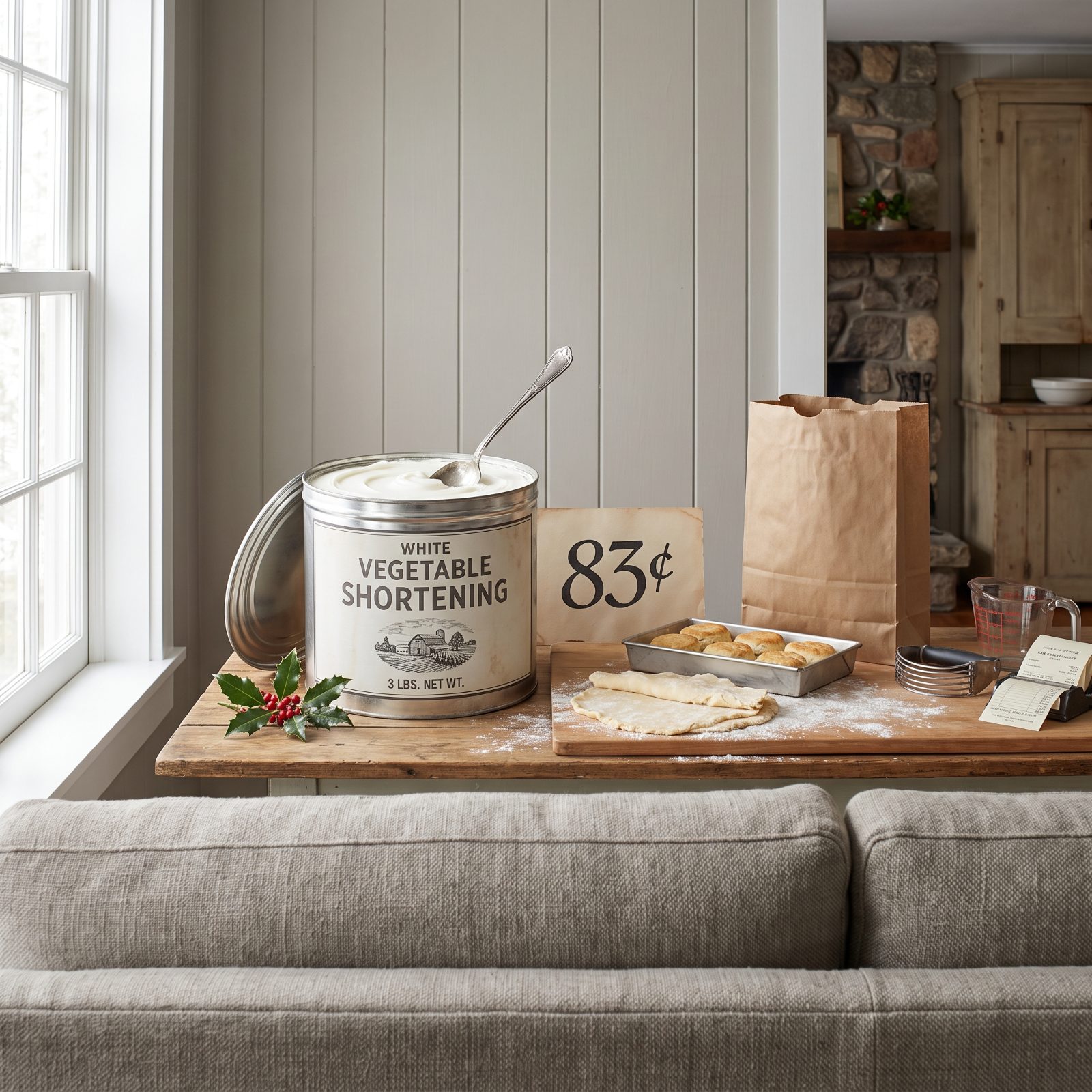
The big three-pound can of shortening cost around 83 cents, one of the heftier line items but a can that lasted for months. It was the fat that made the crust flaky, the biscuits tender, and the leftover turkey hash fry up crisp the day after.
Nobody in 1965 was fretting over what that shortening was made of. It sat in the cupboard between uses, no refrigeration needed, ready for whatever needed frying or flaking. That heavy can with the plastic lid pressed back on top is a texture memory all its own.
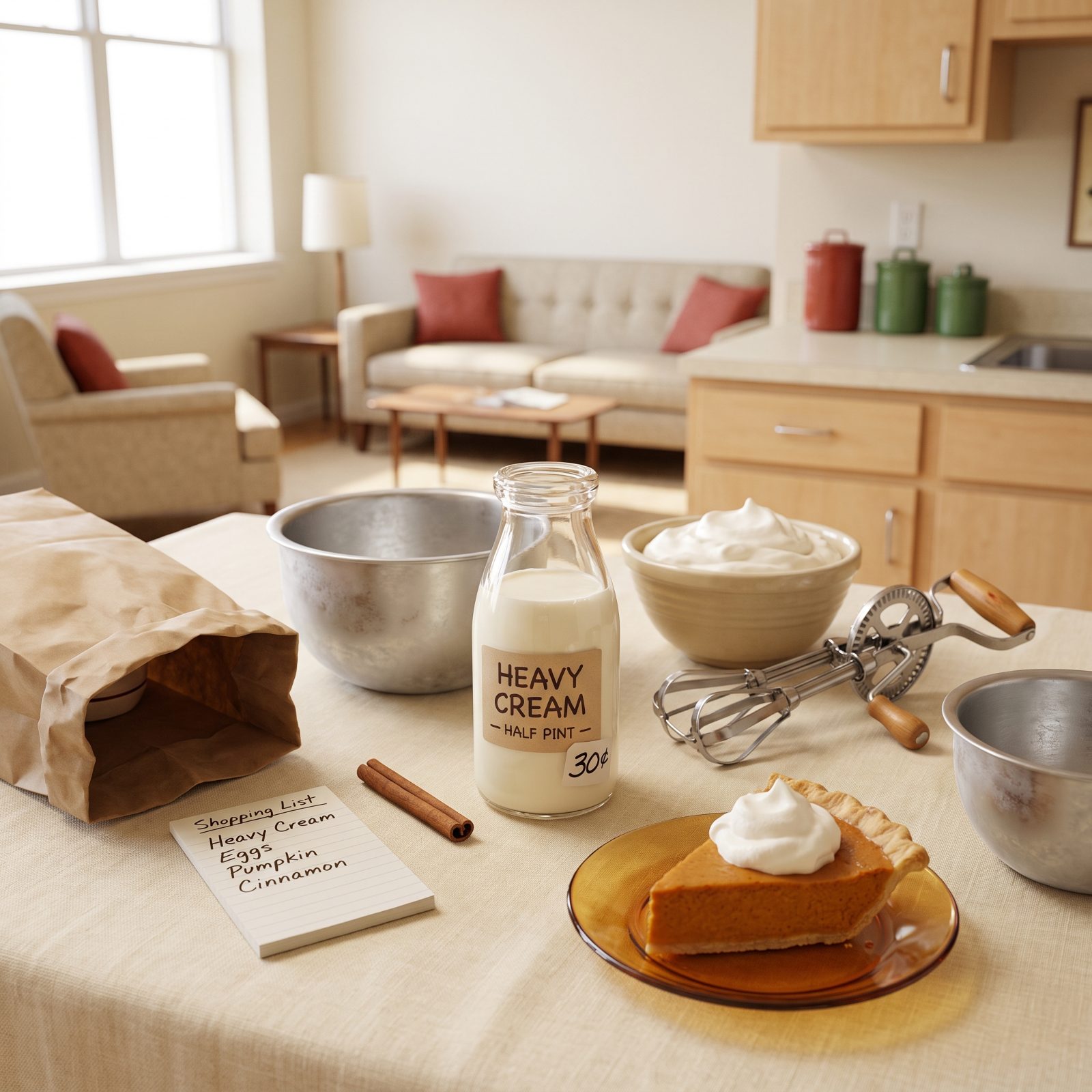
12. A Half-Pint of Heavy Cream: Roughly 30 Cents
Would you like to save this?
A half-pint of heavy cream, about 30 cents, and you whipped it yourself with a hand-crank beater or an early electric mixer if your kitchen had splurged on one.
Canned pressurized whipped cream existed by 1965, but plenty of families still made the real thing for the pie, folding in a little sugar and vanilla. It took five minutes of arm work and tasted like nothing that comes out of a can. Worth every crank.
11. A One-Pound Bag of Pecans: About 69 Cents
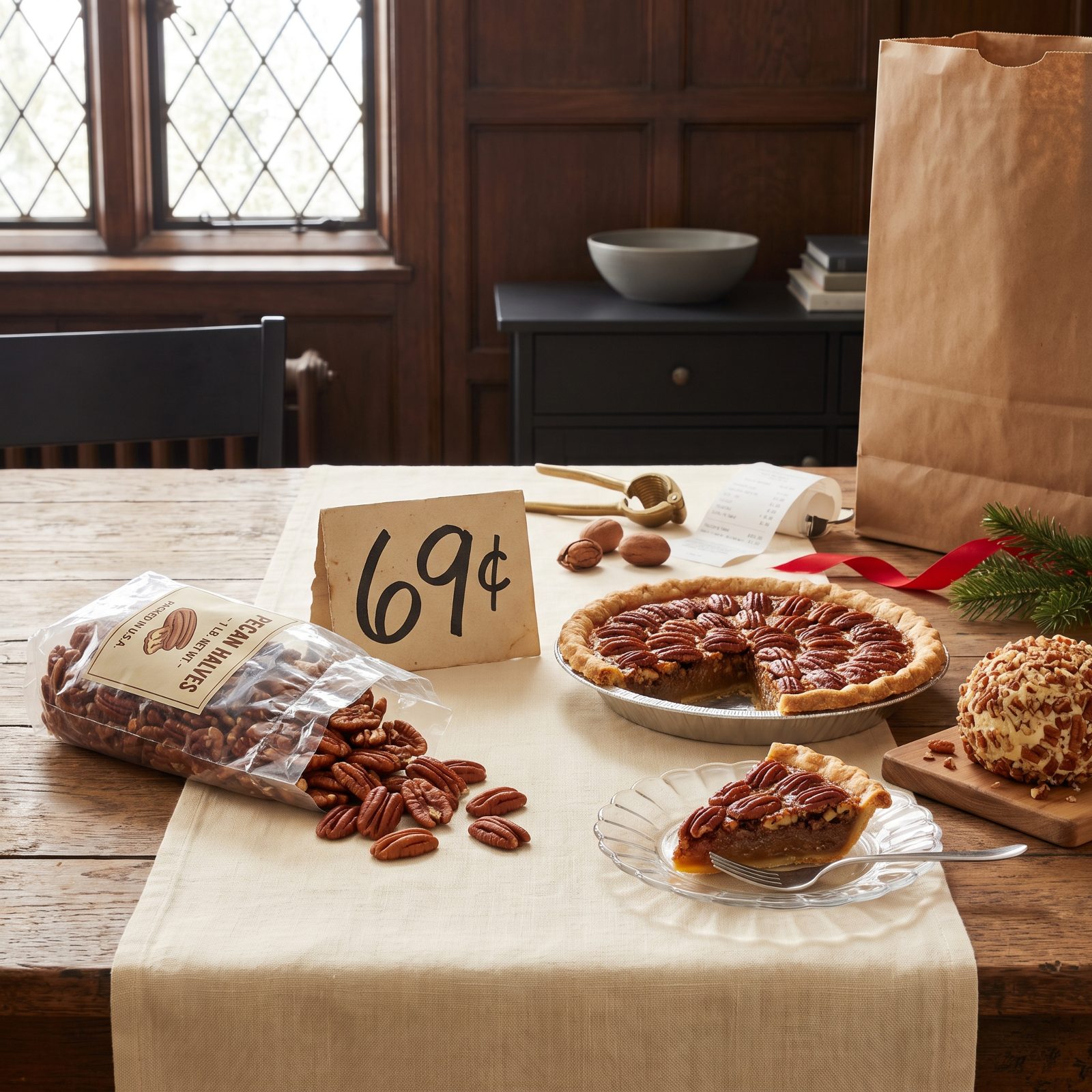
Pecans were one of the pricier things in the basket at roughly 69 cents a pound, and they earned it. They crowned the pecan pie, coated the cheese ball, studded the sweet potatoes, and filled the nut bowl by the tree.
Cheese ran 49 cents, eggs 53, but the nuts cost more than either. That tells you exactly how far a modest holiday budget stretched. Pecans were the one small extravagance, the ingredient you counted out rather than poured.
10. A Bag of Miniature Marshmallows: About 25 Cents in 1965
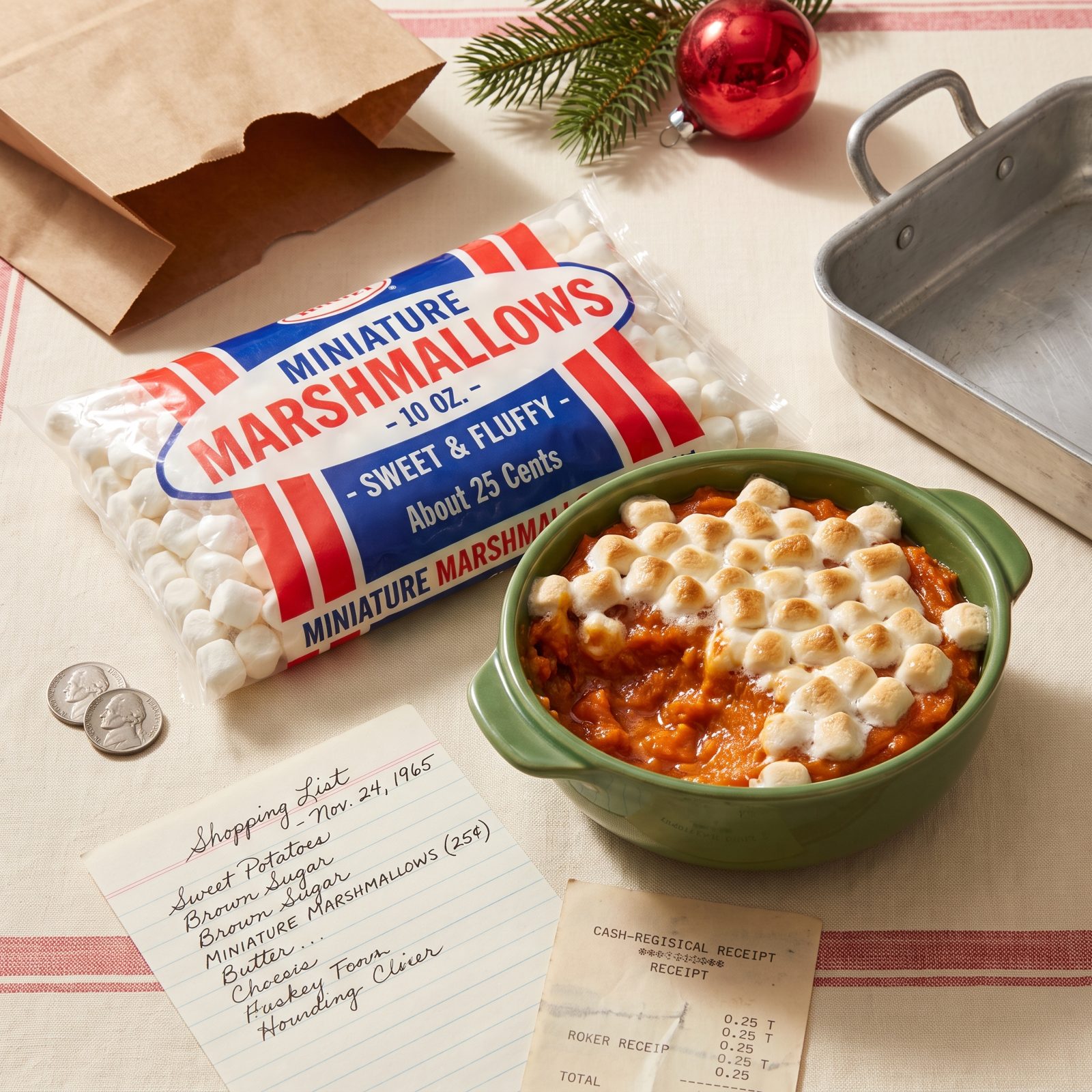
Roughly a quarter bought you a bag of miniature marshmallows in 1965, and that bag pulled double duty. Half went on top of the sweet potato casserole, and the other half vanished into a fruit salad that also wanted the gelatin, the pineapple, and the cherries further down this list.
A quarter sounds like nothing now. It wasn’t nothing then. A factory worker earning around $2.50 an hour spent about six minutes of labor on a single bag — cheap, but hardly free. Marshmallows were a treat food, and stretching one bag across two dishes was exactly the kind of quiet accounting a 1965 household did without thinking about it.
9. A Box of Flavored Gelatin: Around a Dime in 1965
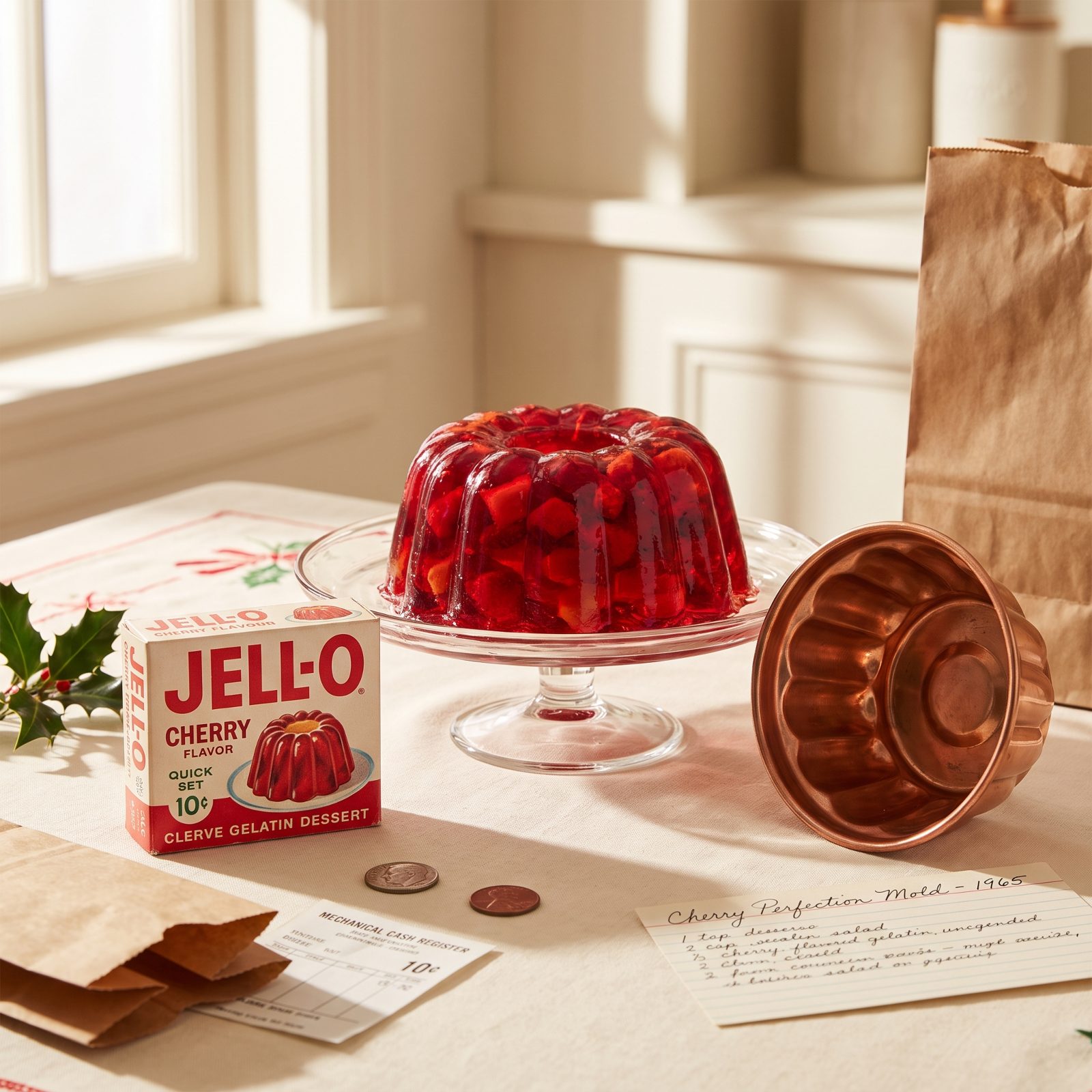
A box of flavored gelatin ran about ten cents in 1965. Ten cents. Practically pocket lint, even by the standards of the day.
That price is why the congealed salad ruled the era. Cheap base, unlimited variations, and it looked impressive coming out of a copper ring mold. Drop in the canned pineapple, fold in a handful of those mini marshmallows, suspend some cherries, and you had a centerpiece that cost under a dollar and glinted like something out of a jeweler’s window.
8. A Can of Pineapple Slices: Roughly 30 Cents in 1965
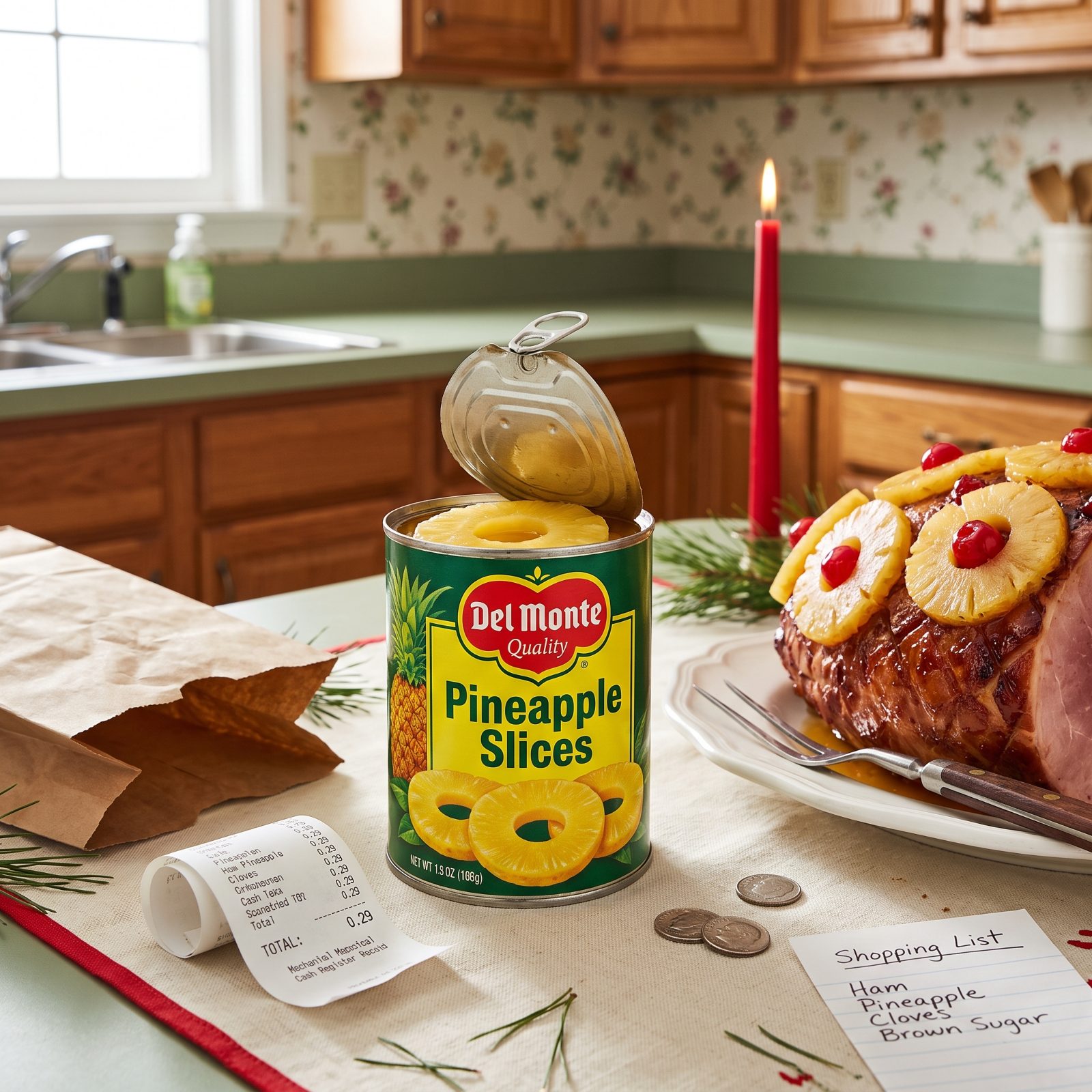
A can of pineapple slices cost around thirty cents in 1965, and that can worked harder than almost anything else in the basket. The rings went on the ham, the chunks went in the gelatin salad, and the syrup got poured into the glaze so nothing went to waste.
Canned pineapple felt a little luxurious back then — tropical fruit landing on a December table in the middle of an Ohio winter. That was the whole appeal. Thirty cents brought a taste of somewhere warm to a house where the windows had frost on them.
I’ll admit the pineapple-and-cherry-studded ham looks dated now. It also tasted good, and it fed a whole family off one can and one ham. Say what you want about the aesthetics.
7. A Jar of Maraschino Cherries: About 35 Cents in 1965
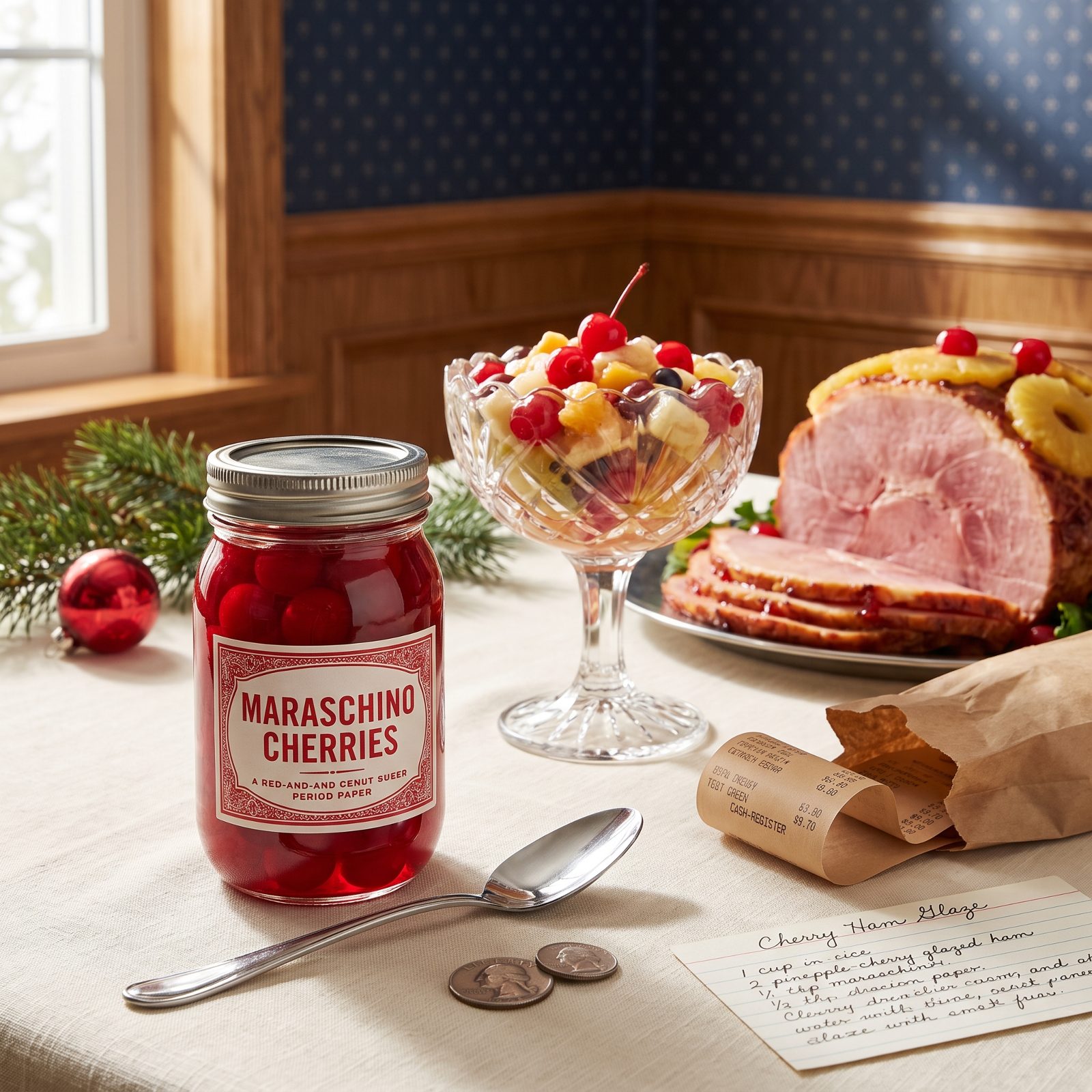
A jar of maraschino cherries set a family back about thirty-five cents. Not a staple, exactly. But no self-respecting holiday table went without them.
Those impossibly red cherries were the finishing touch on everything. They sat in the gelatin, crowned the ham, dotted the fruit salad, and floated in a punch bowl if the occasion called for it. A little glamour in a jar, and that jar lasted well past Christmas.
6. A Five-Pound Bag of Oranges: Around 59 Cents in 1965
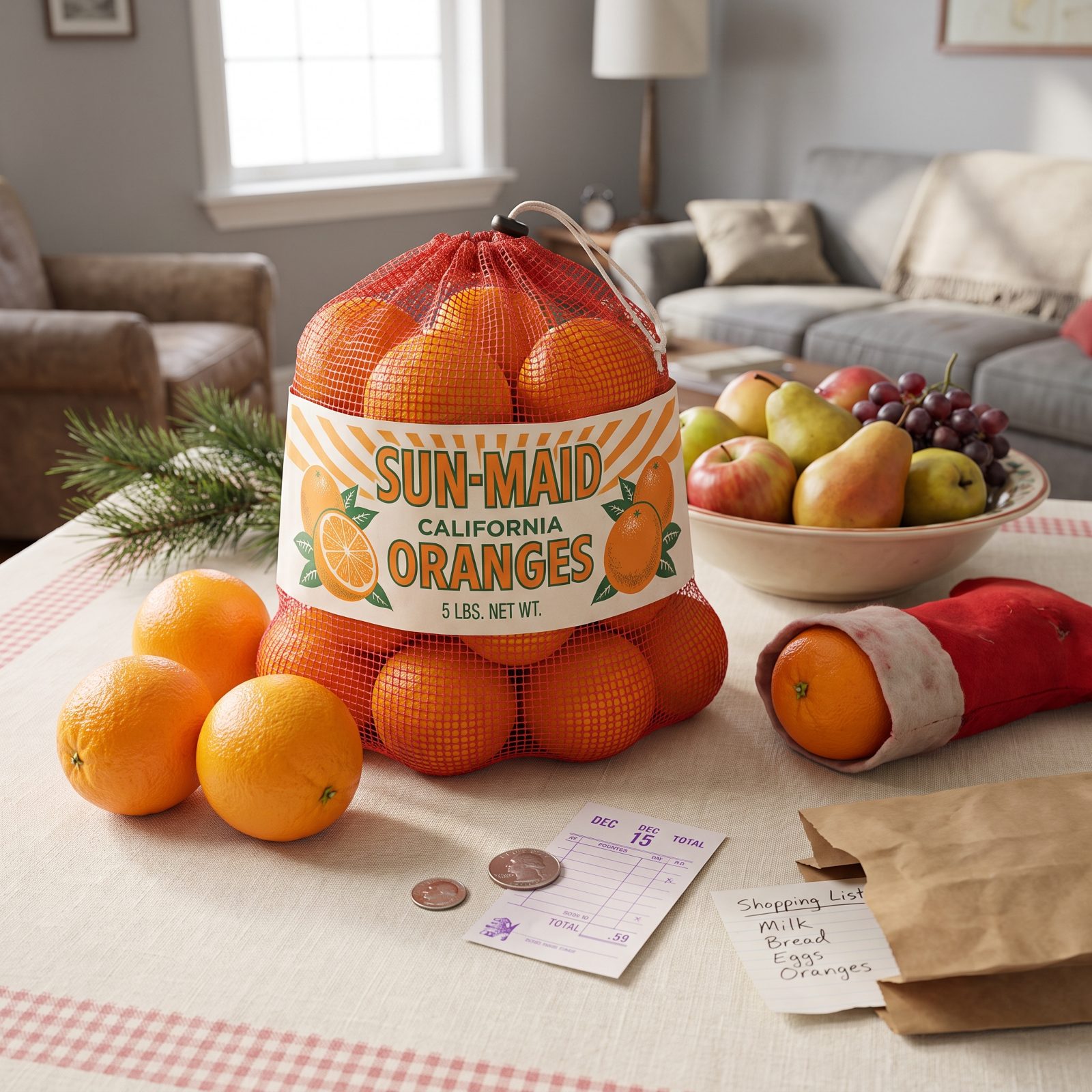
A five-pound bag of oranges cost roughly fifty-nine cents in 1965, and oranges meant something at Christmas that they simply don’t anymore.
An orange in the toe of a stocking was a genuine treat, a bright winter fruit that had traveled a long way to a cold house. Grandparents who grew up during the Depression remembered getting one orange for the whole holiday. By 1965 you could buy five pounds for under sixty cents, and that abundance still felt like a small miracle to anyone old enough to remember when it wasn’t.
The rest of the bag became juice, snacks, and a bowl on the counter that got picked over all week. Sixty cents, stretched across a household for days. That’s the whole era in one mesh bag.
5. A Three-Pound Bag of Apples: About 49 Cents in 1965
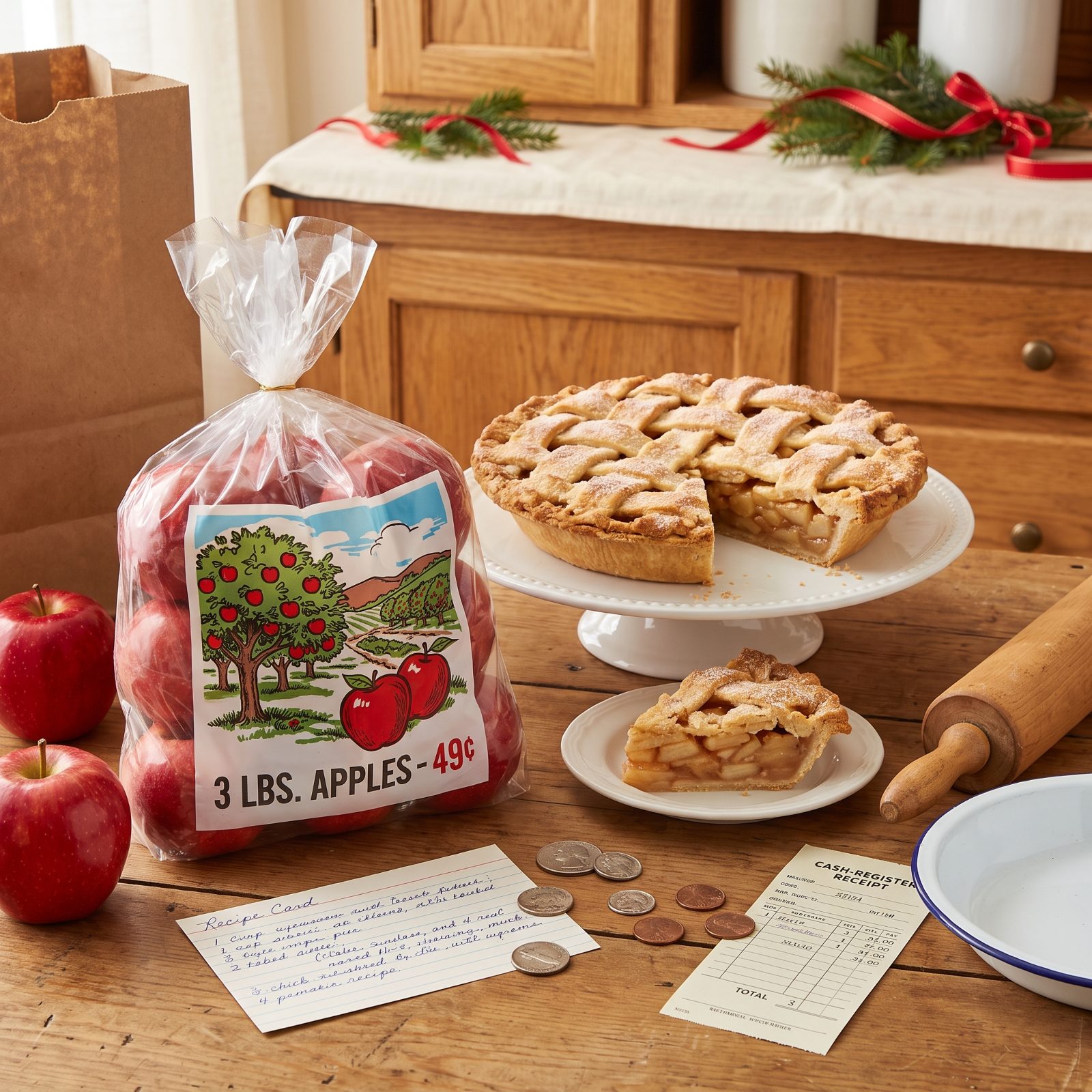
Three pounds of apples went for about forty-nine cents. Enough for a pie with fruit left over for the bowl.
Apple pie was the frugal dessert, the one you made when you weren’t springing for the fancier stuff. The apples were cheap, the crust was flour and shortening you already had, and the result fed a family and left a house smelling like cinnamon for the rest of the afternoon.
4. A One-Pound Can of Ground Coffee: Roughly 83 Cents in 1965
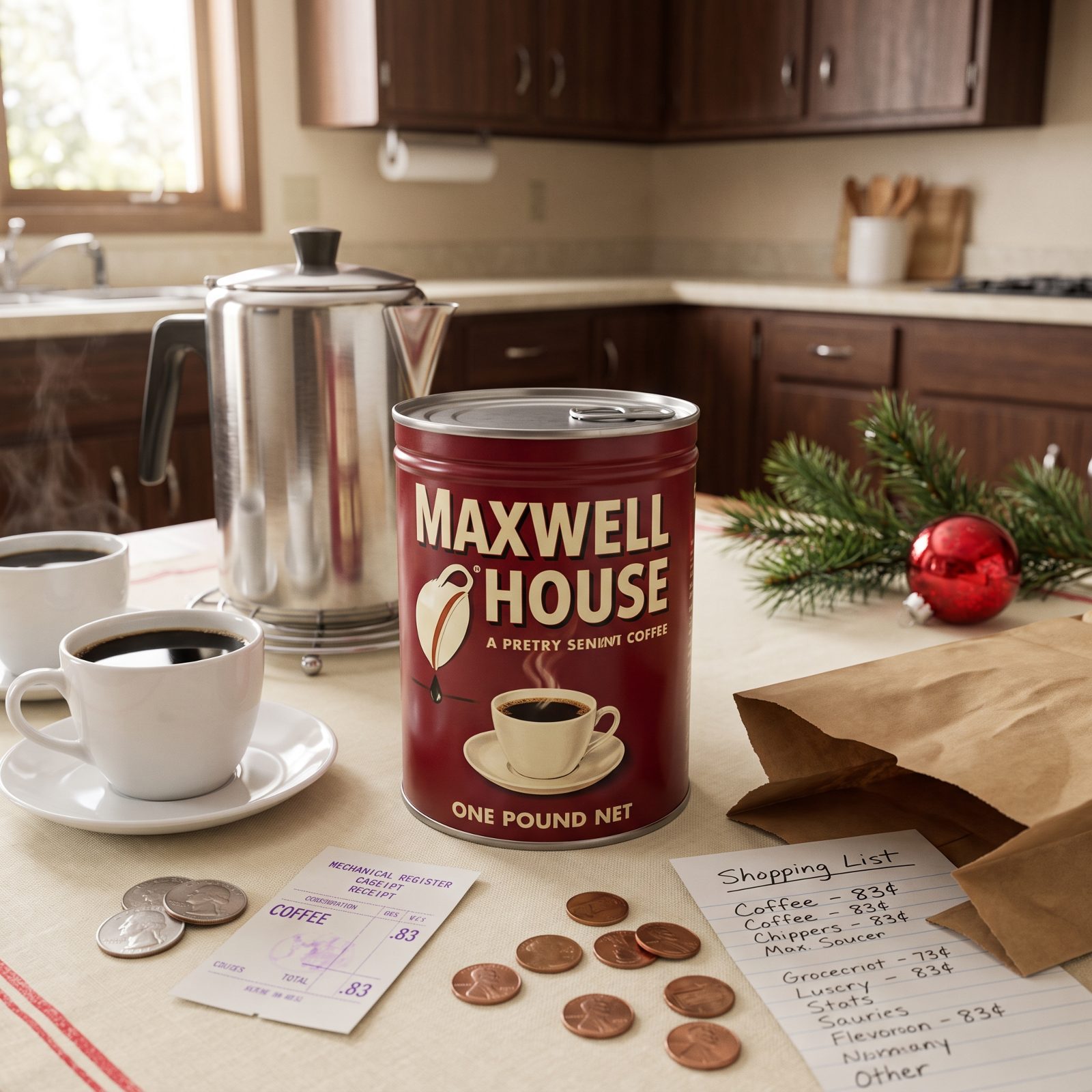
Here’s where the basket gets expensive. A one-pound can of ground coffee cost around eighty-three cents in 1965, one of the priciest single items in the whole shop.
Coffee was the engine of the holiday. The percolator ran all day, refilled for every wave of relatives, poured black into cup after cup while the pie cooled and the dishes waited. Nobody thought of it as a splurge because it was as automatic as breathing. But at eighty-three cents a can, it cost more than the apples and the gelatin combined.
3. A Large Bottle of Ginger Ale: About 39 Cents in 1965
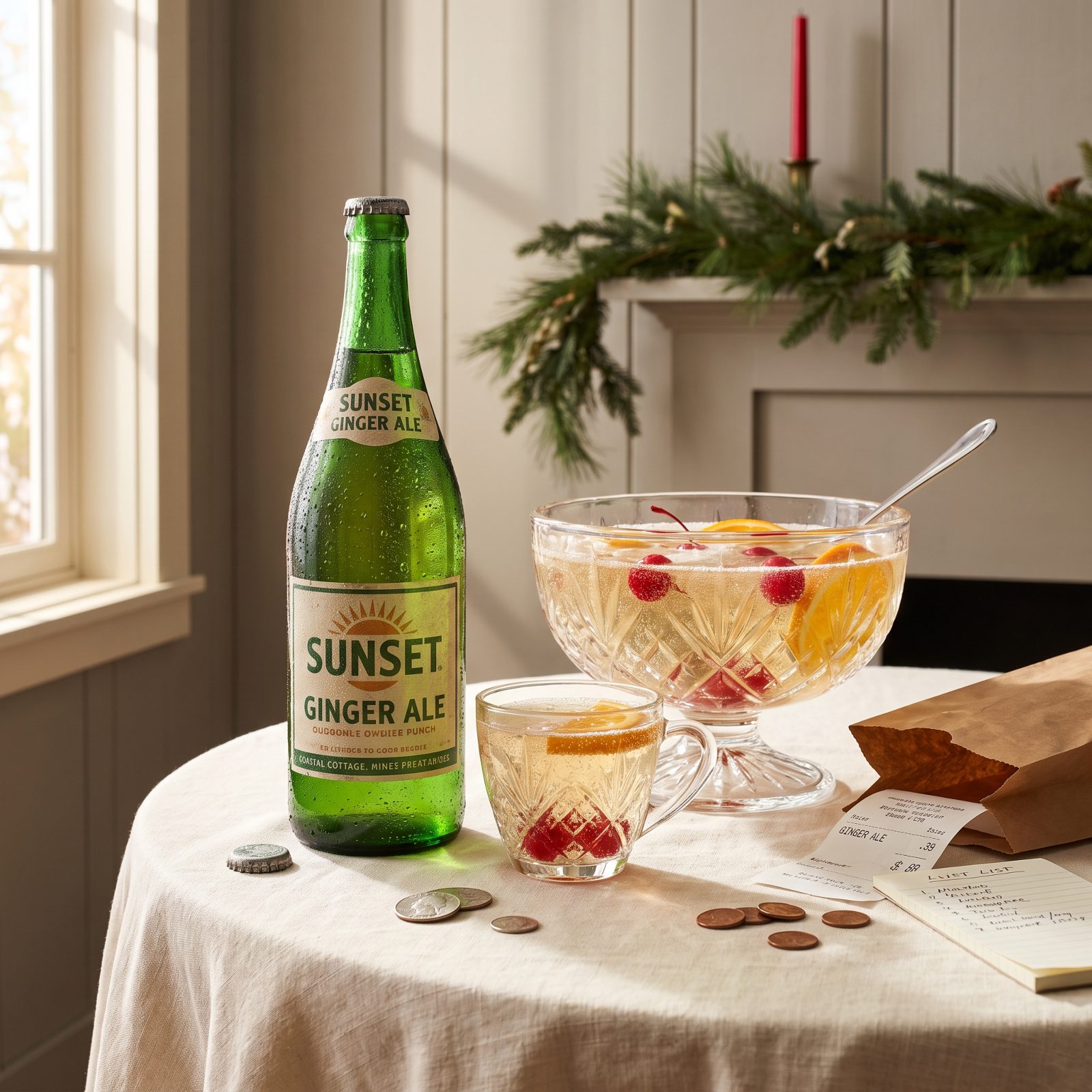
A large bottle of ginger ale cost about thirty-nine cents in 1965, and it was the workhorse of the punch bowl.
Soda was still a bit of an occasion in a lot of households, so the ginger ale came out for company. Pour it over a scoop of that vanilla ice cream and you had a float. Combine it with the pineapple juice and a few maraschino cherries and you had punch. One bottle made a modest gathering feel like a party.
Thirty-nine cents for fizz felt indulgent to a family that mostly drank water and coffee. Which was exactly why you bought it in December.
2. A Half-Gallon of Vanilla Ice Cream: Around 79 Cents in 1965
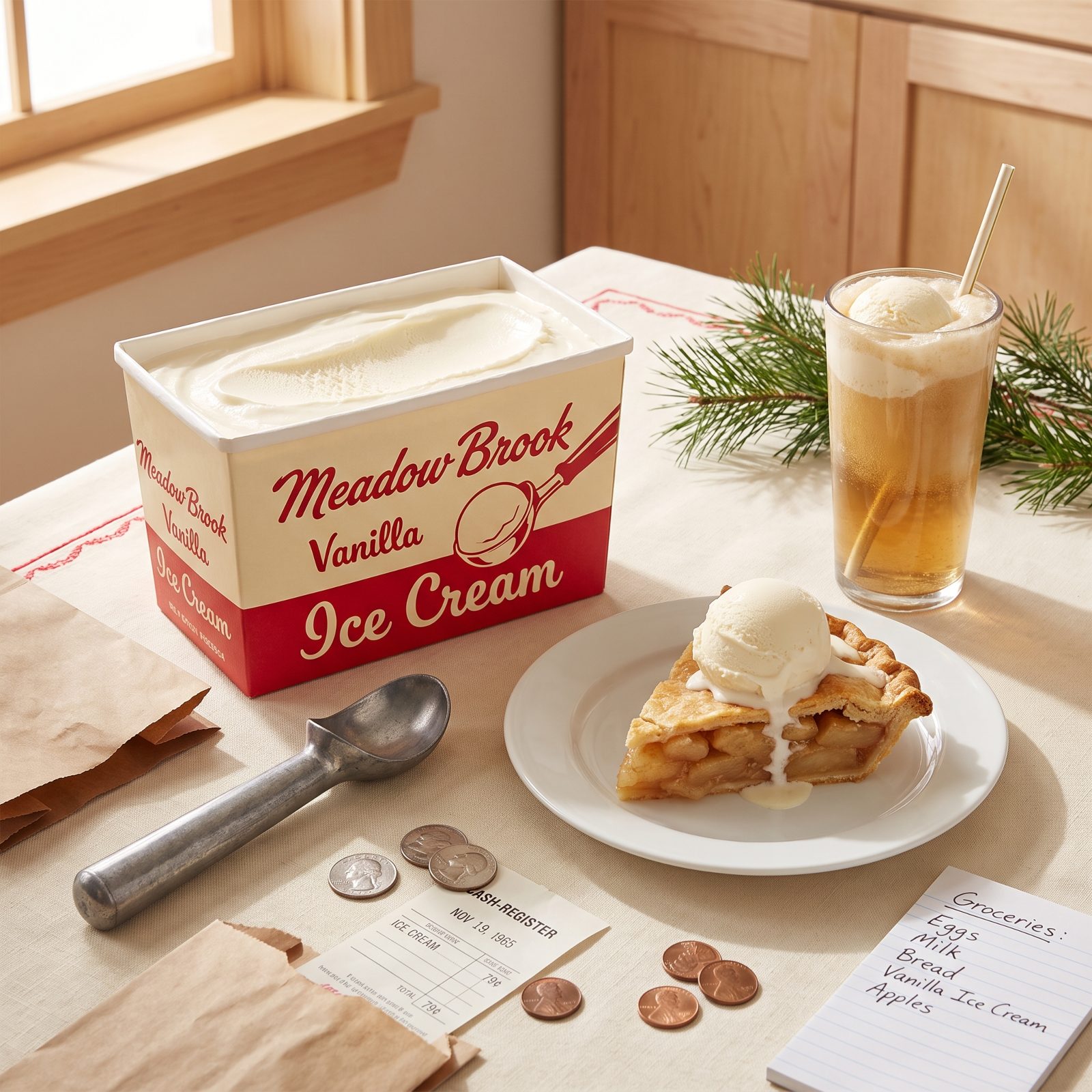
A half-gallon of vanilla ice cream ran about seventy-nine cents in 1965, right up there with the coffee as one of the bigger-ticket items in the cart.
Vanilla was the diplomat of desserts. It went on the apple pie, floated in the ginger ale, and topped the mincemeat pie for anyone who found that too intense on its own. One carton covered every dessert on the table and kept the kids quiet, which was arguably worth the price all by itself.
1. A Jar of Prepared Mincemeat: About 45 Cents in 1965
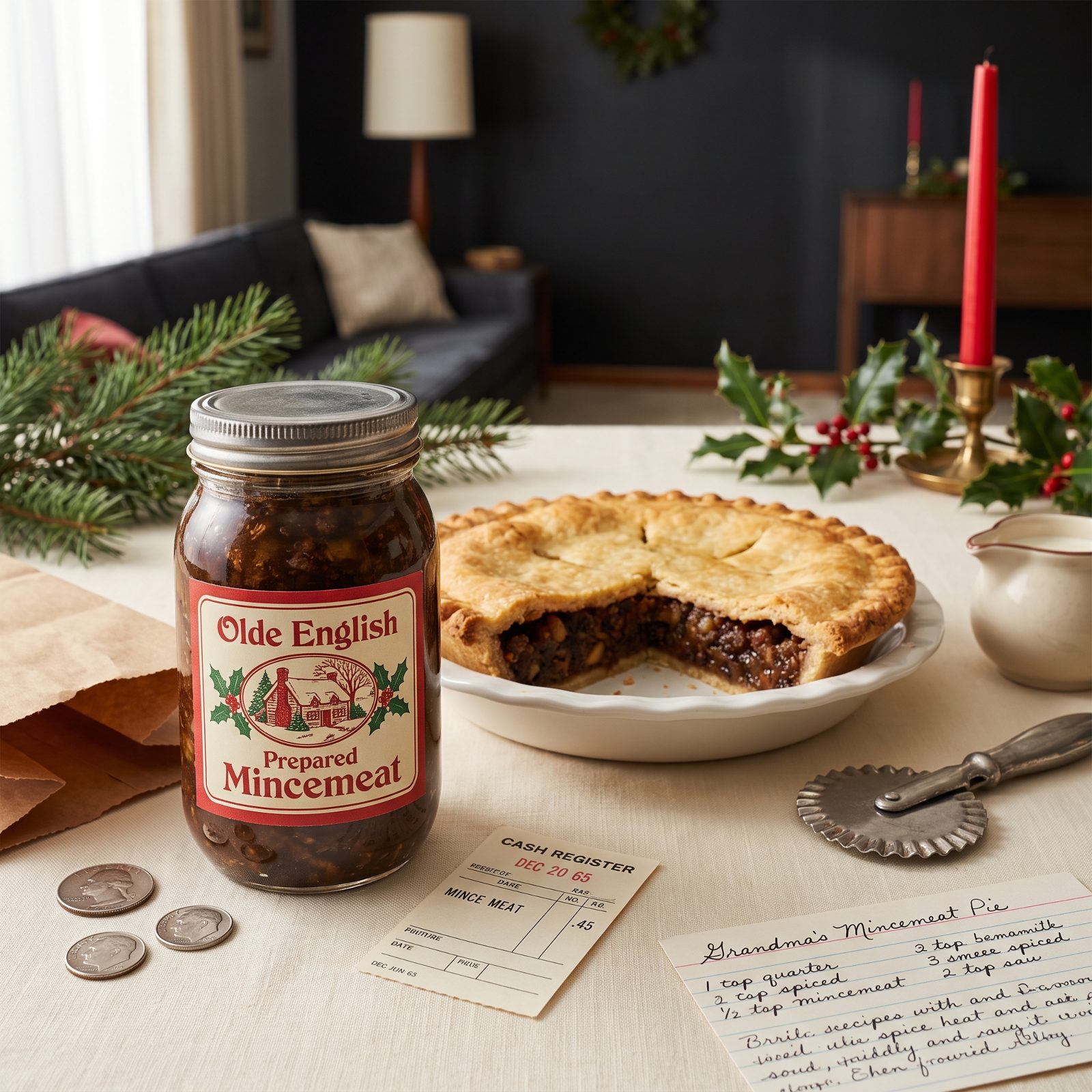
A jar of prepared mincemeat cost around forty-five cents in 1965, and it closed out the basket the way it closed out dinner: with something old and a little divisive.
Mincemeat pie was the traditionalist’s dessert, dark and spiced and heavy with dried fruit. Some tables wouldn’t have Christmas without it. Others quietly steered everyone toward the apple pie instead. The prepared jar meant nobody had to spend a week making it from scratch anymore, and that’s how a labor-intensive old recipe survived into the convenience era.
Add up the whole basket and the family-of-four Christmas dinner came in around twenty dollars in 1965. Sounds impossibly cheap until you remember that a factory paycheck was about $2.50 an hour, so twenty dollars was a full day of somebody’s work. Cheaper prices, smaller paychecks. The trade was always there. It just wore a nicer label.