
Would you like to save this?
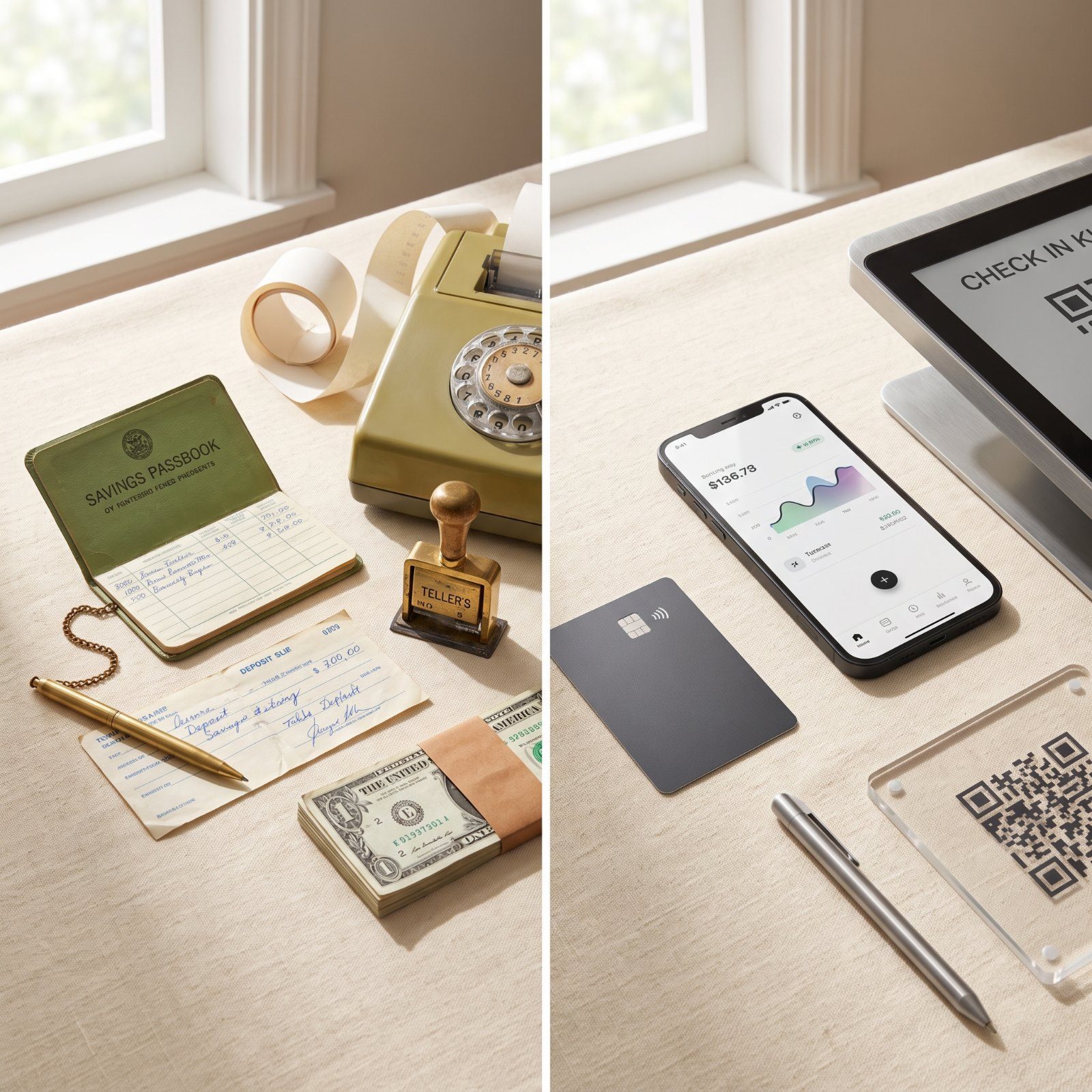
The hush of a 1970 bank hit you before anything else. Marble underfoot, your heels clicking across it, the low murmur of tellers counting cash out loud behind brass bars. A pen on a chain, a deposit slip you filled out standing up. Money felt heavy and serious then, like a church collection plate. Now you tap a screen, nod at a greeter, and you’re done before the coffee cools. Here’s how the American bank changed, one marble floor and brass cage at a time.
50. The Marble Banking Hall
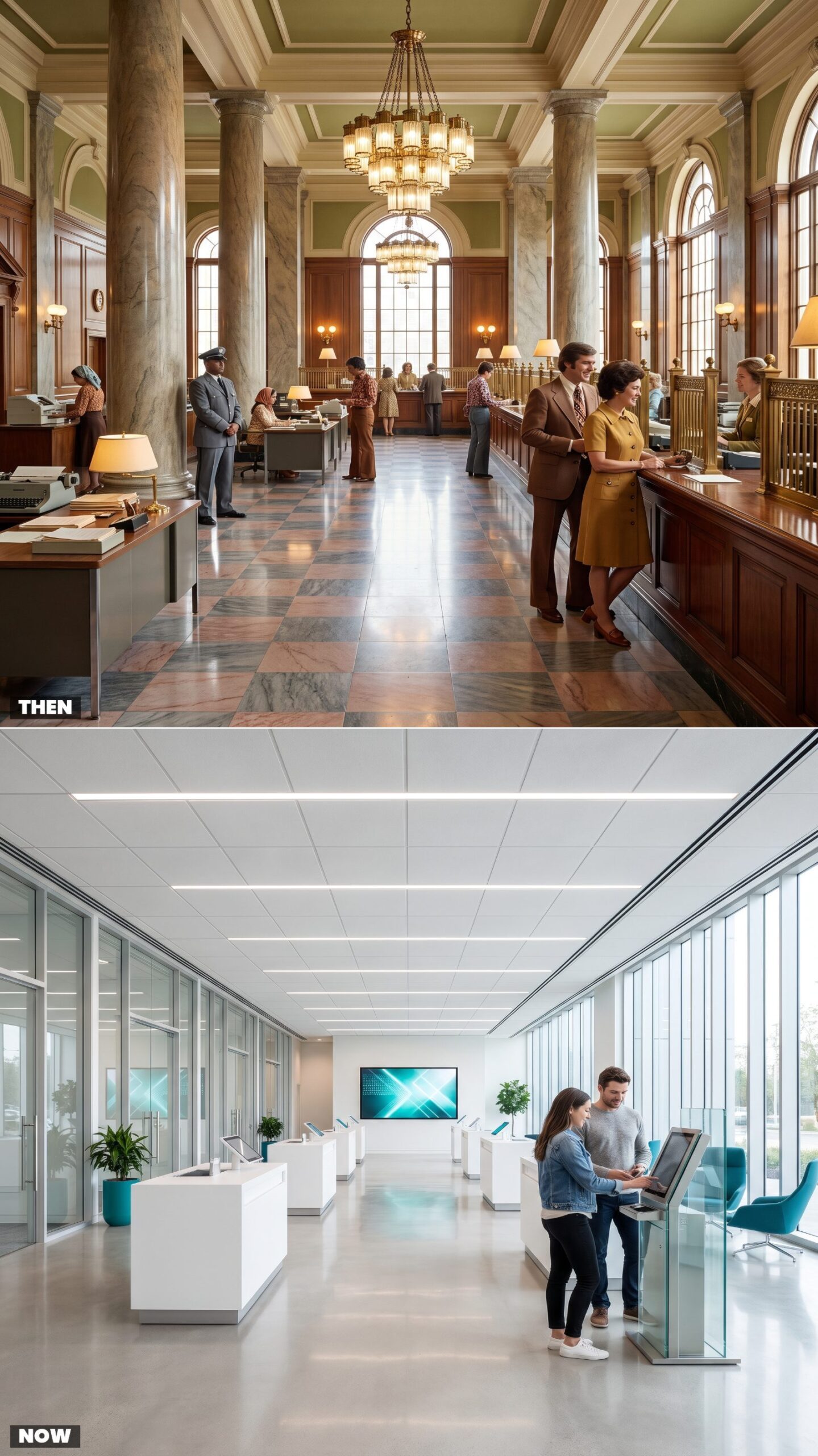
You walked into a 1970 bank and the building told you money mattered. Pink marble floors buffed to a mirror, columns thick as tree trunks, a ceiling so high your voice disappeared into it. The whole place was built to look like it would outlast you, your kids, and probably the government.
Now the hall is bright, flat, and open — polished concrete instead of marble, glass walls instead of walnut panels. The grandeur is gone, and honestly, so is the intimidation. Nobody whispers in a bank anymore.
49. Brass Teller Cages Became Open Banker Pods
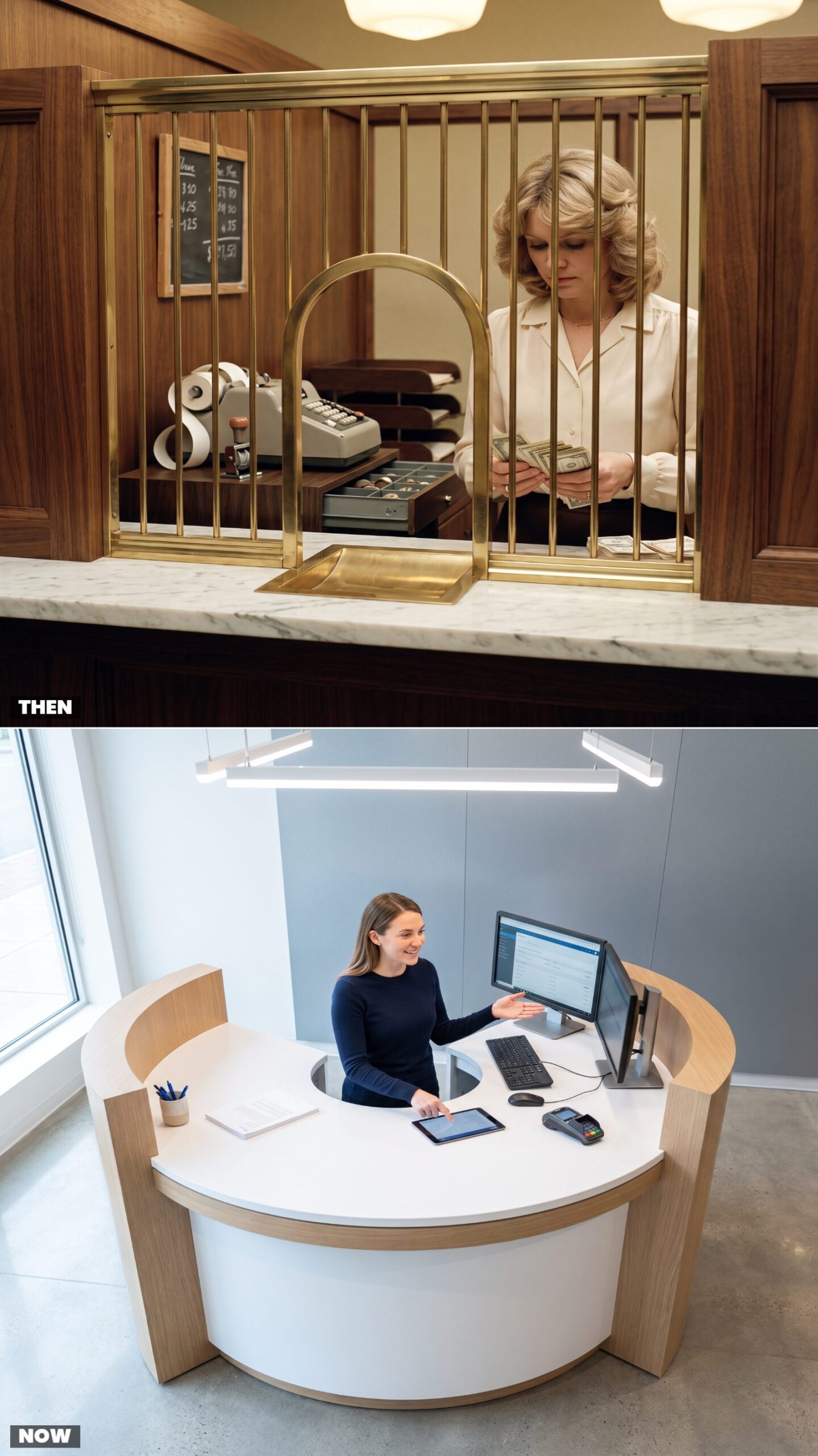
The brass cage made a point: you on one side, the money on the other. The teller counted cash out loud behind the grille, stamped your slip with a thunk, and slid it back through a slot barely wide enough for your hand.
Today the cage is gone. You sit across from one person at an open pod, and that person does everything — deposits, loans, a new card, the works. They call it a universal banker. The bars came down, and the job description got a whole lot longer.
48. The Downtown Bank Building Exterior
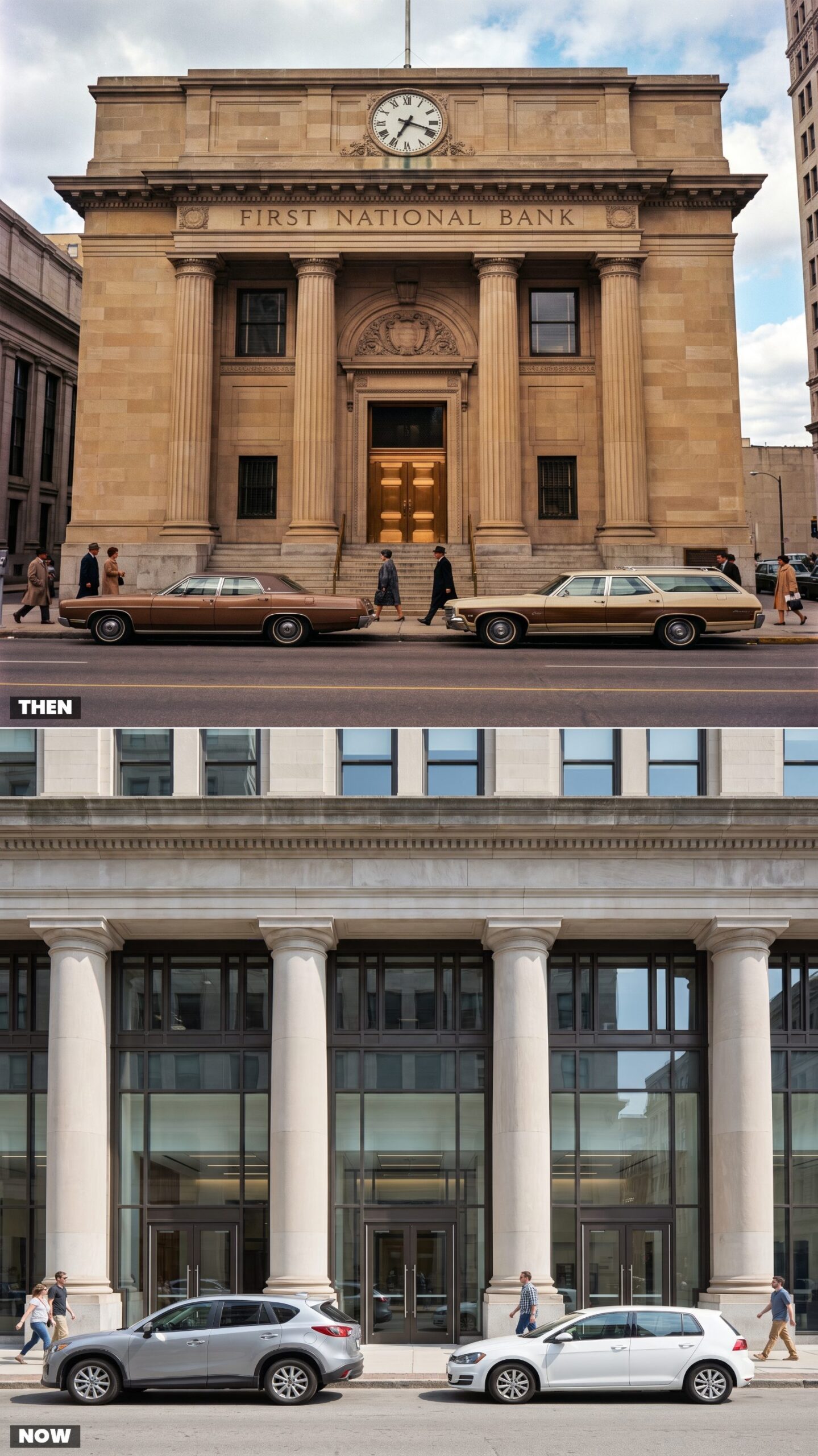
A downtown bank in 1970 looked like it could survive an earthquake and a coup. Limestone columns, bronze doors heavy enough to need both hands, and a stone staircase that made you climb up to your money like you were approaching something important.
The old stone shell often survives today, but the ground floor got gutted and glassed in. Now you see straight through to the ATMs. From the second floor up it still looks like a fortress. At street level? Phone store.
47. The Suburban Branch Exterior
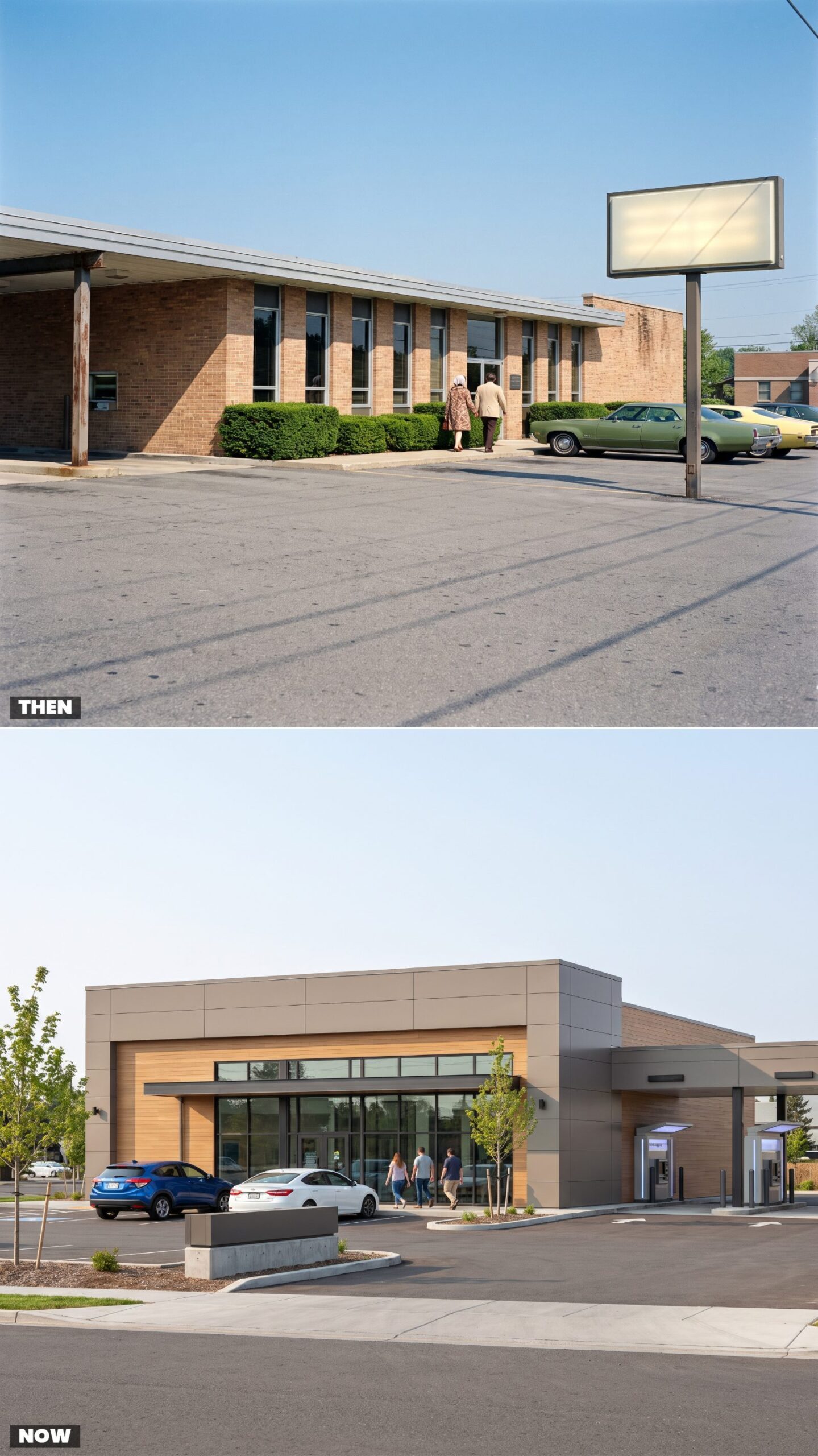
The 1970 suburban branch was all brick and drive-through, low and boxy and thrown up fast to catch the families moving out of the city. A canopy covered the drive-up lane where a teller leaned out a sliding window to grab your slip. Parking everywhere, because everybody drove.
Same footprint today, totally different face. Grey composite panels, big glass fronts, and a standalone ATM island that does what three tellers used to. The drive-through survived. The teller leaning out the window did not.
46. The Glass Entrance Vestibule
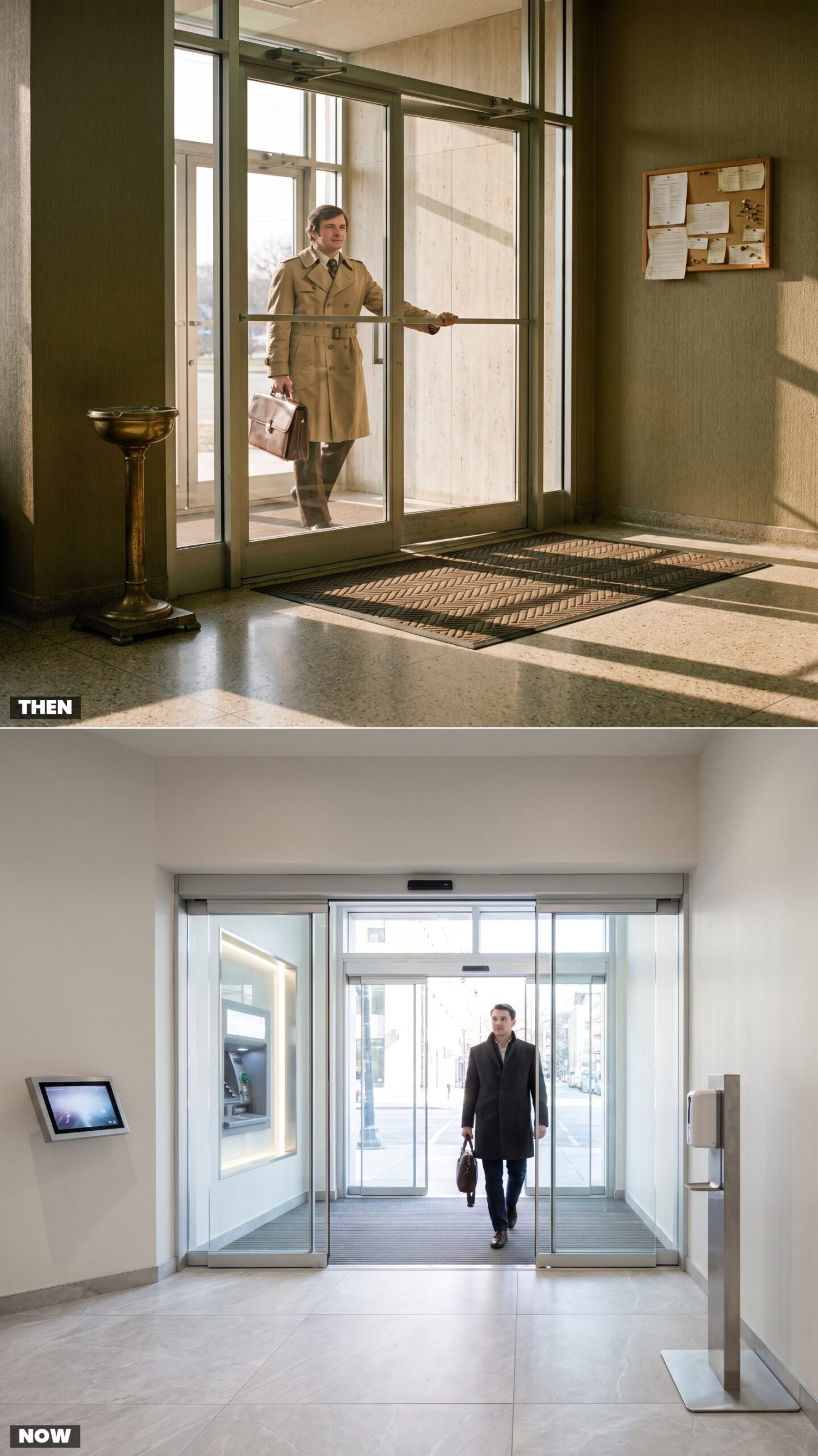
There was a whole little room between the sidewalk and the lobby back then. Heavy glass doors you had to pull. A rubber mat. A tall ashtray, because yes, people smoked walking into the bank. And a bulletin board pinned with notices about the church bake sale and somebody’s lost dog.
Now the doors open themselves, the ashtray is a distant memory, and the bulletin board gave way to a 24-hour ATM alcove you can see through the glass. You barely slow down going in.
45. The Bank Name and Hours Sign
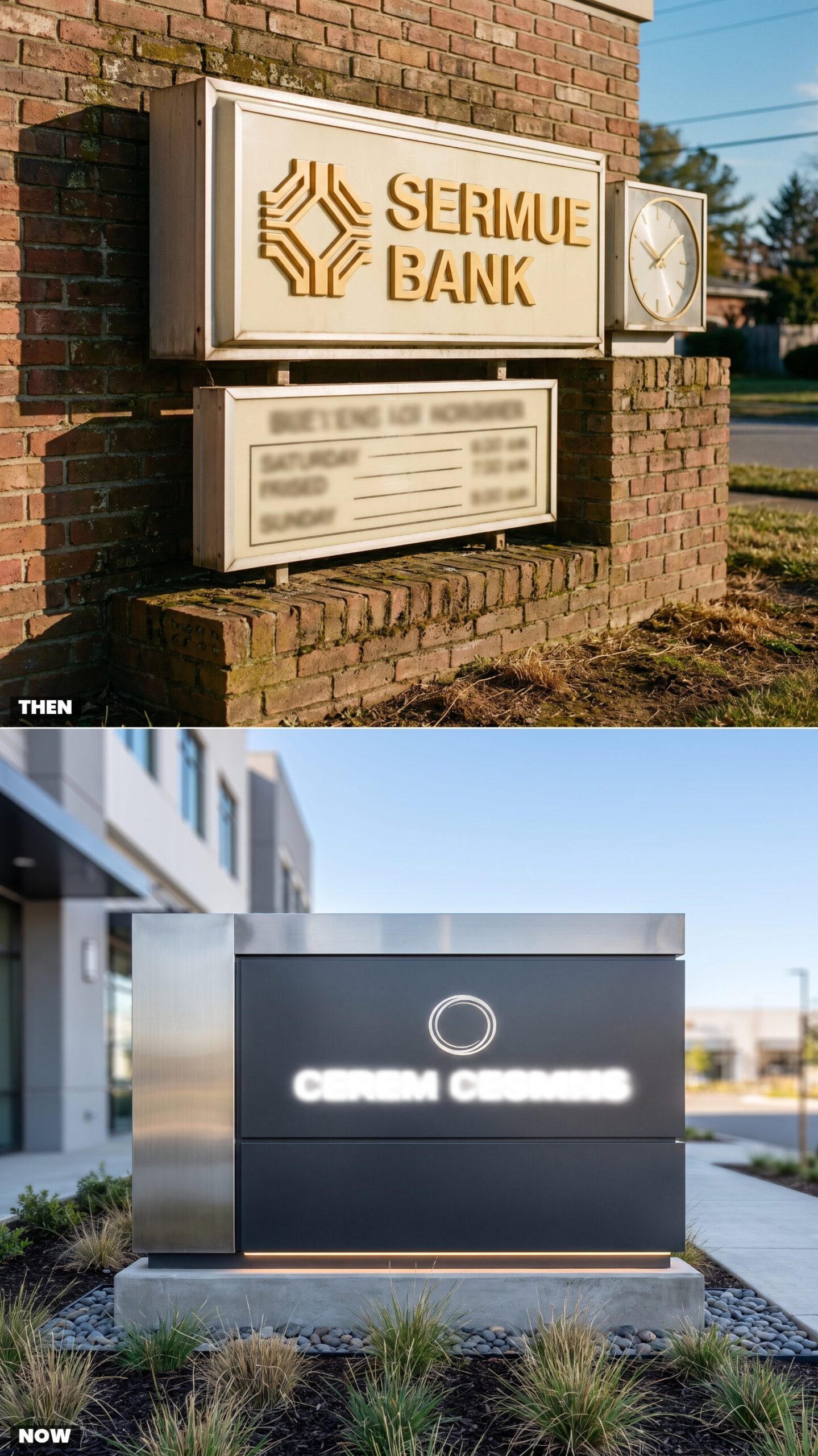
The old sign spelled it all out: bank name in raised plastic letters, a little geometric emblem, and a panel listing the hours — nine to three, closed Saturdays. Banker’s hours were a real thing, and that sign was the proof. A clock usually hung right beside it, because telling you the time was a public service the bank proudly provided.
The modern version is a low monument sign in brushed metal, quiet and minimal. The hours panel shrank, because the hours barely matter now. The bank in your pocket is open at 2 a.m., and it never puts up a sign.
44. Roped Lines Turned Into Check-In Kiosks
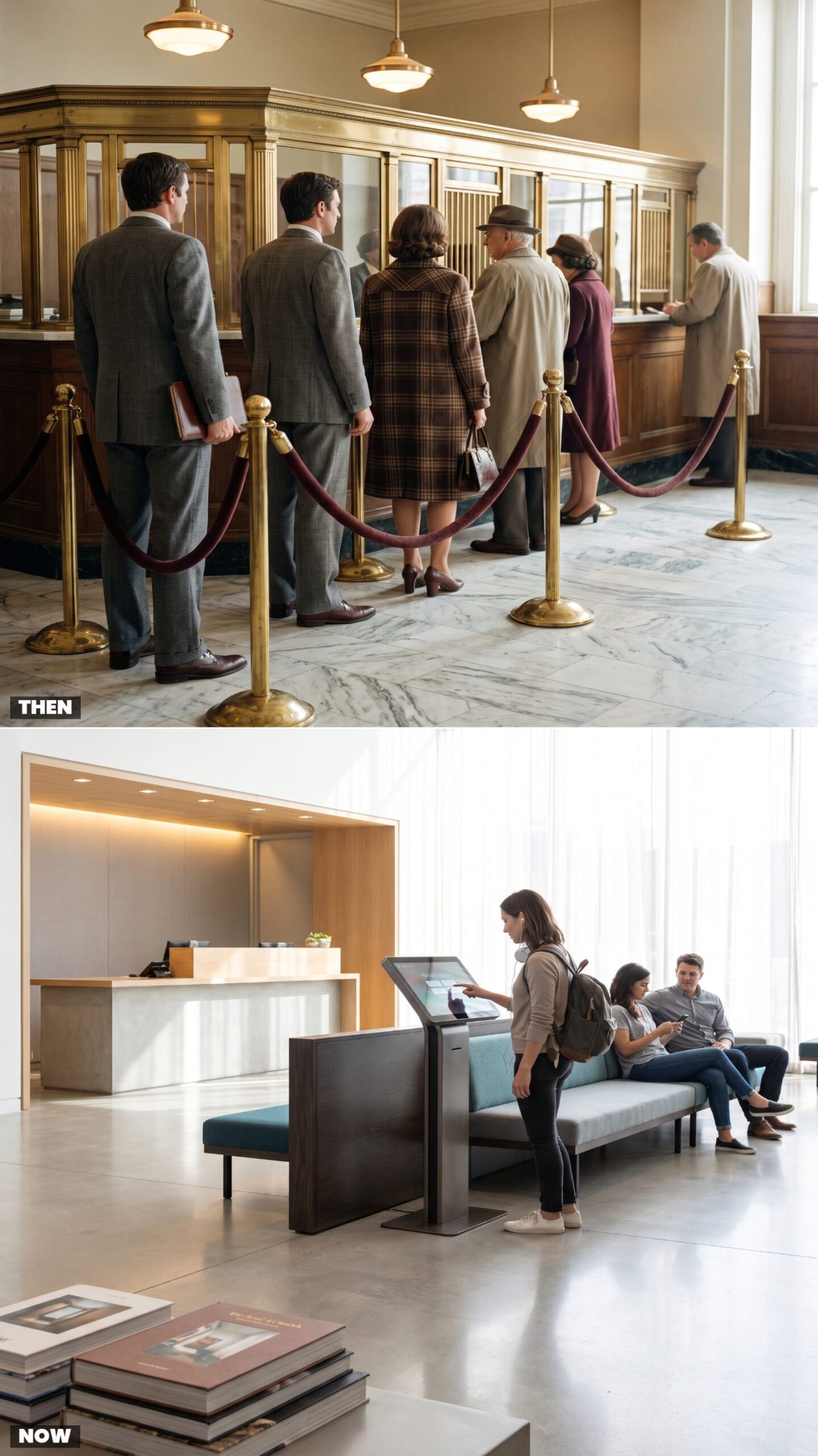
Friday afternoon in 1970 meant the velvet rope line. Brass stanchions, maroon ropes, everybody shuffling forward one step at a time toward the cages. People read the newspaper standing up. You knew the regulars by their coats.
Now you walk in, tap a screen, and sit down. The kiosk takes your name and what you need, then texts you when it’s your turn. No rope, no shuffling. Most people don’t even come in — they tapped their deposit in from the car.
The line used to be the social event. You’d run into your neighbor, your kid’s teacher, the guy who fixed your transmission. Now the line is a notification on your phone.
43. The Deposit-Slip Writing Desk
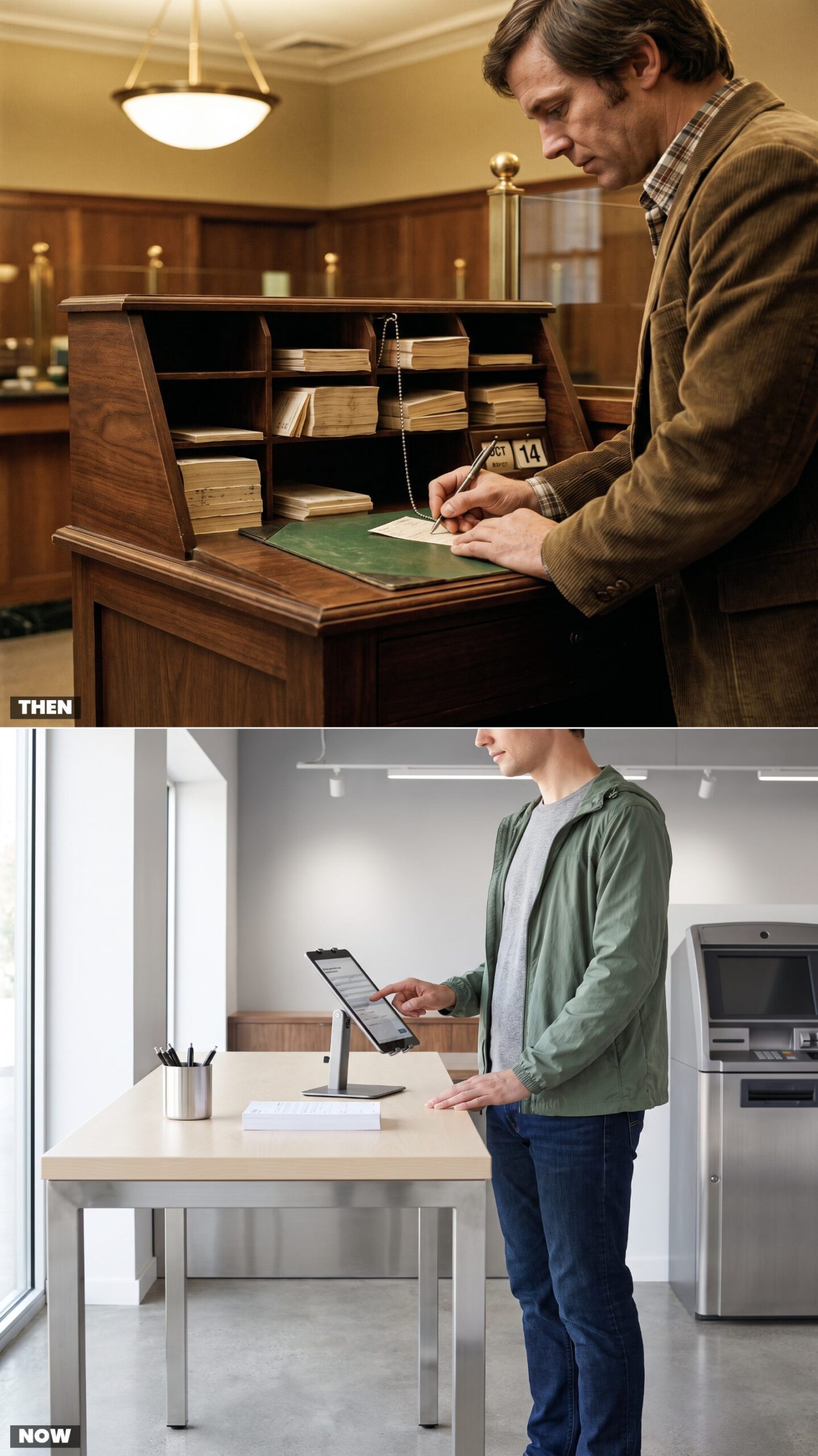
The writing desk was the busiest piece of furniture in the building. A walnut island stocked with deposit slips, withdrawal slips, and a pen chained down because people walked off with everything that wasn’t bolted to the floor. You stood there, bent over, printing your account number from memory.
The desk is nearly extinct now. A slim counter with a mounted tablet handles what the slips used to, though you’ll still find a chained pen here and there, mostly out of habit. And that account number you knew by heart? Autofilled before you’ve even sat down.
42. The Paper Rate Board Became a Digital Lobby Screen
Would you like to save this?
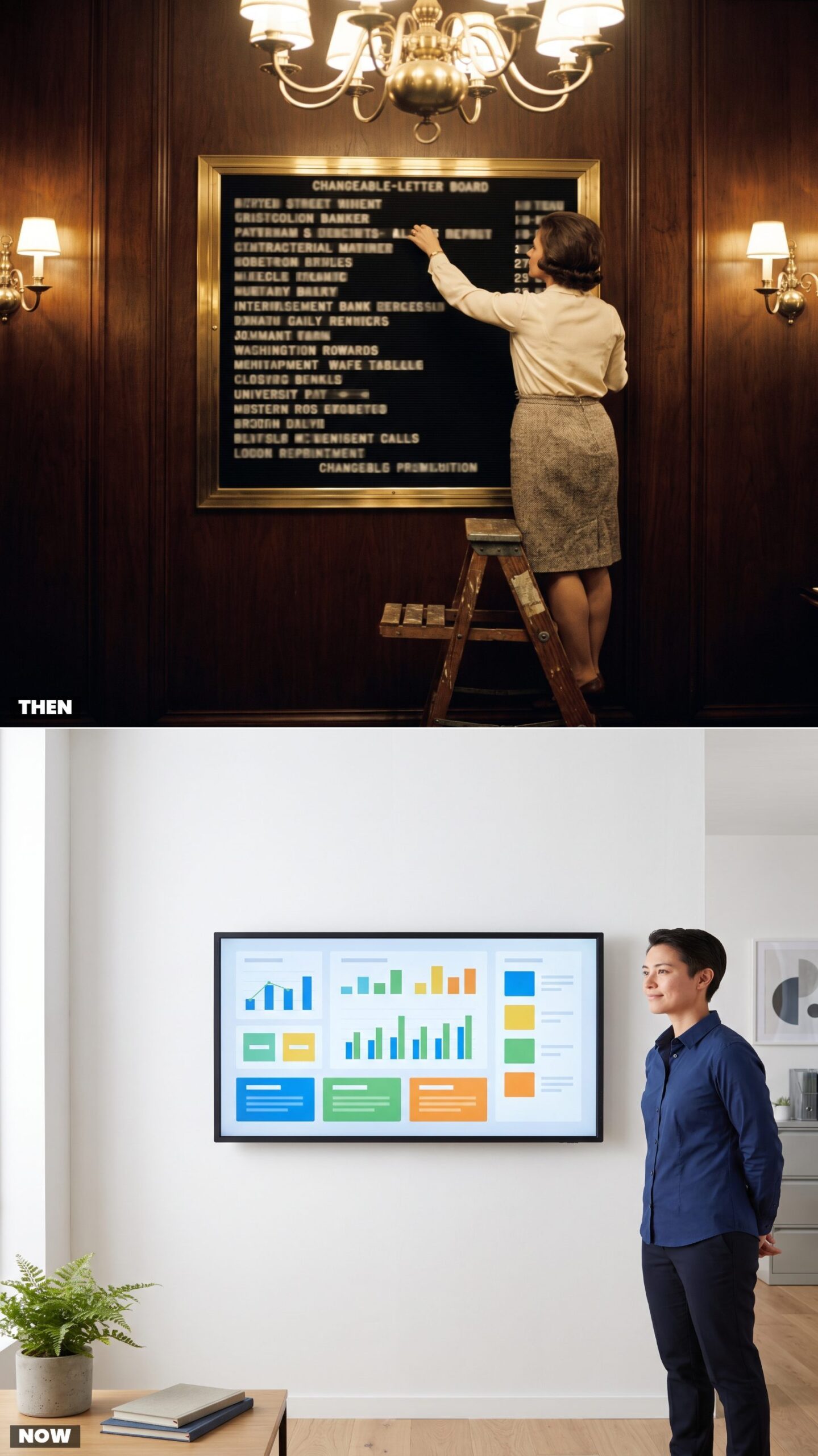
Interest rates lived on a felt board with little white push-in letters, like a church marquee. When rates changed, somebody climbed a stool and reset the whole thing by hand, one plastic number at a time. It took forever. And the sevens always went missing.
That board is a bright digital screen now, cycling through rates, offers, and the occasional stock photo of a happy family. It updates itself the second a decision comes down from headquarters. Nobody climbs a stool. Nobody loses the sevens.
41. The Printed Service Brochure Rack
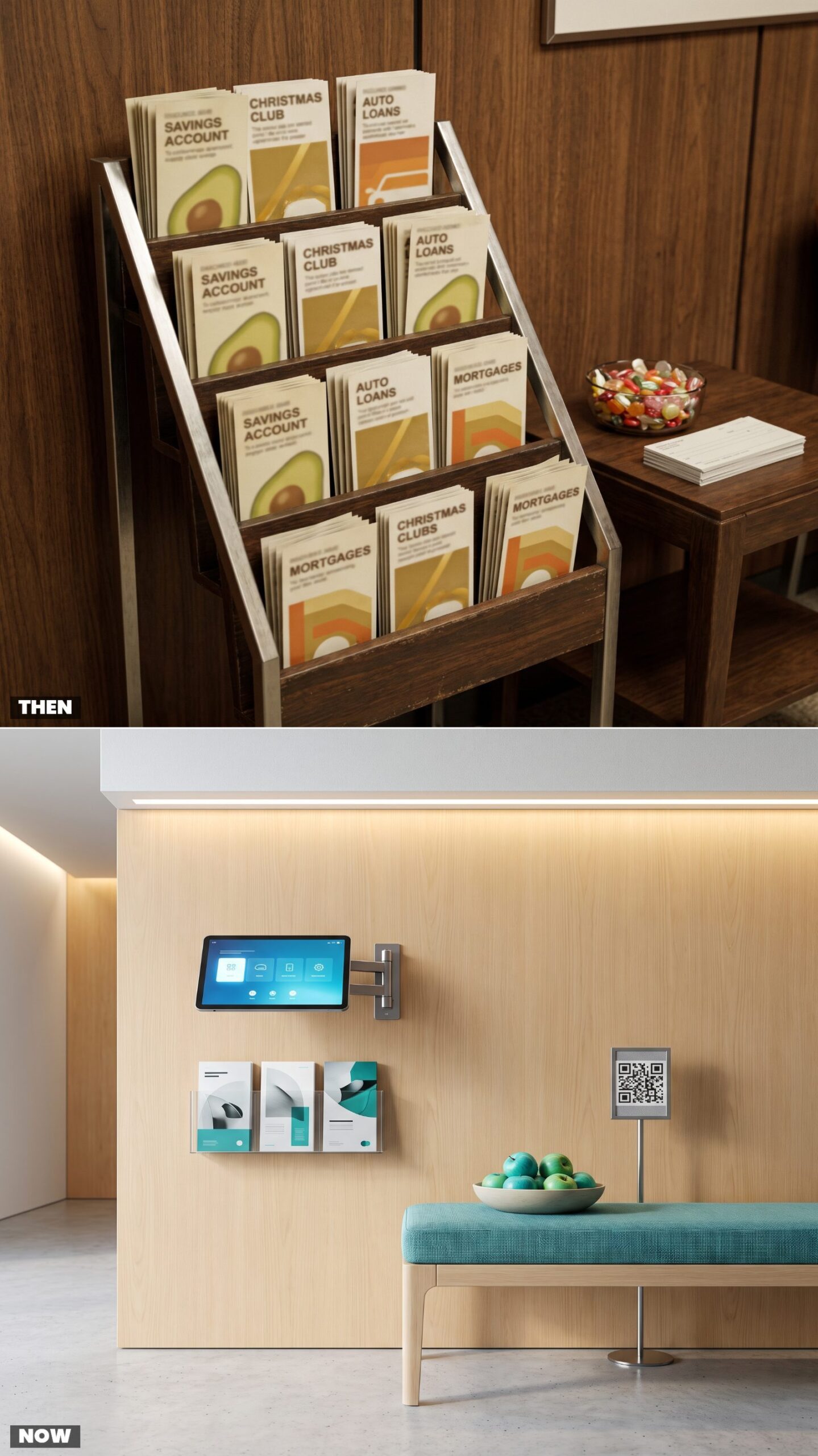
The brochure rack was a wall of paper possibility. Tri-folds for savings accounts, the Christmas Club, car loans, your first mortgage — each one with a cheerful avocado-and-orange cover and a picture of a beaming family. You grabbed a handful to read at the kitchen table, next to the dish of free hard candy.
Today the rack is almost bare: a couple of flyers, a tablet, and a QR code placard that dumps everything onto your phone. The candy’s gone too. We’ve all stood in front of the old rack, grabbed three brochures we never read, and pocketed a butterscotch on the way out.
40. The Paper Passbook With Stamped Entries
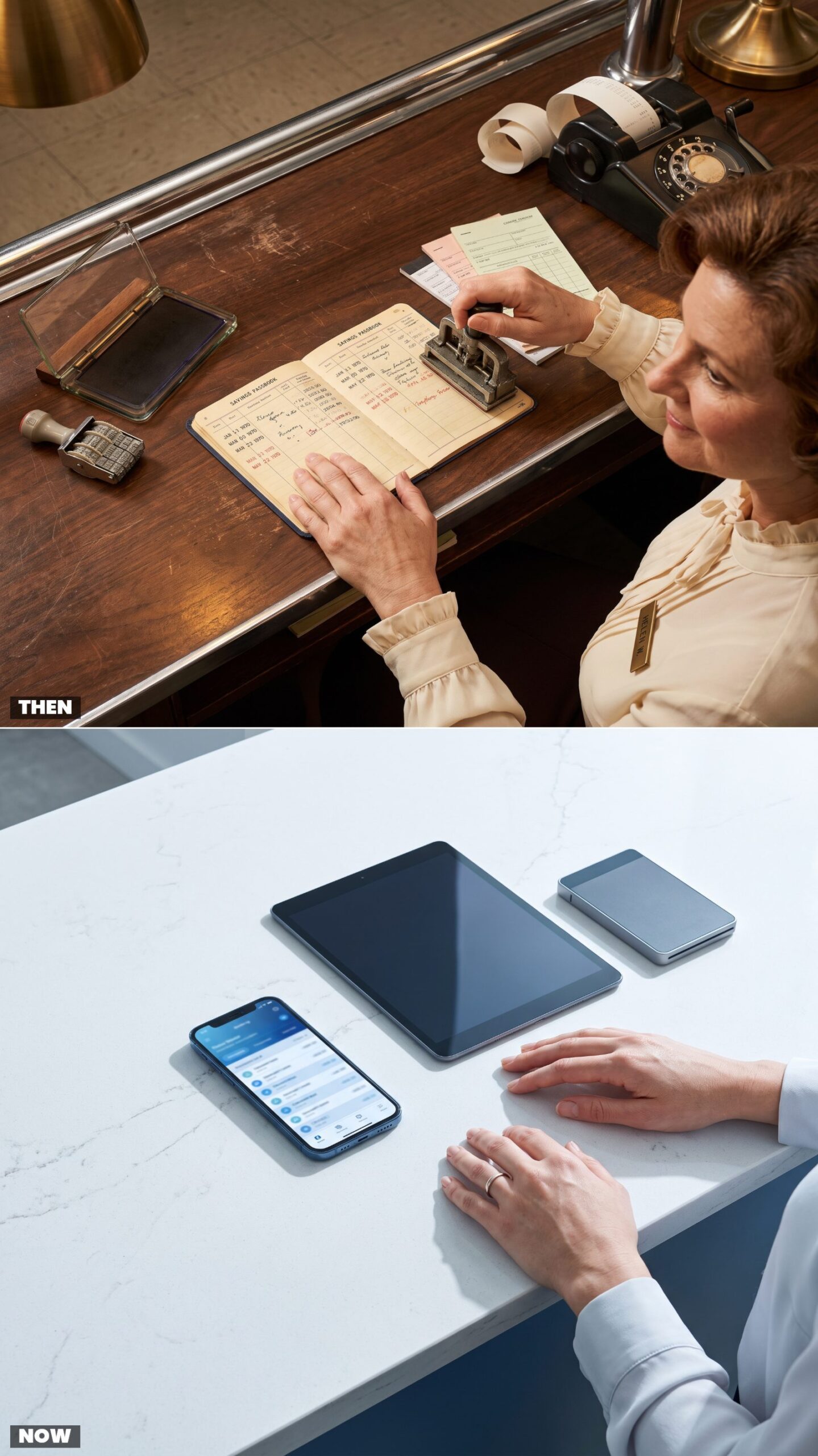
In 1970, your savings lived in your pocket as a little navy booklet. You handed it across the counter, the teller slid it into a posting machine, and it came back warm with a fresh stamped line. No printout, no login, just ink and a date and a running balance you could run your thumb over.
Now the whole thing is a glowing rectangle that updates the second a deposit clears, and nobody stamps anything. Faster, sure. But you can’t tuck a push notification into a sock drawer the way your grandmother tucked her passbook.
39. Account-Opening Desk to Tablet-Based Sign-Up
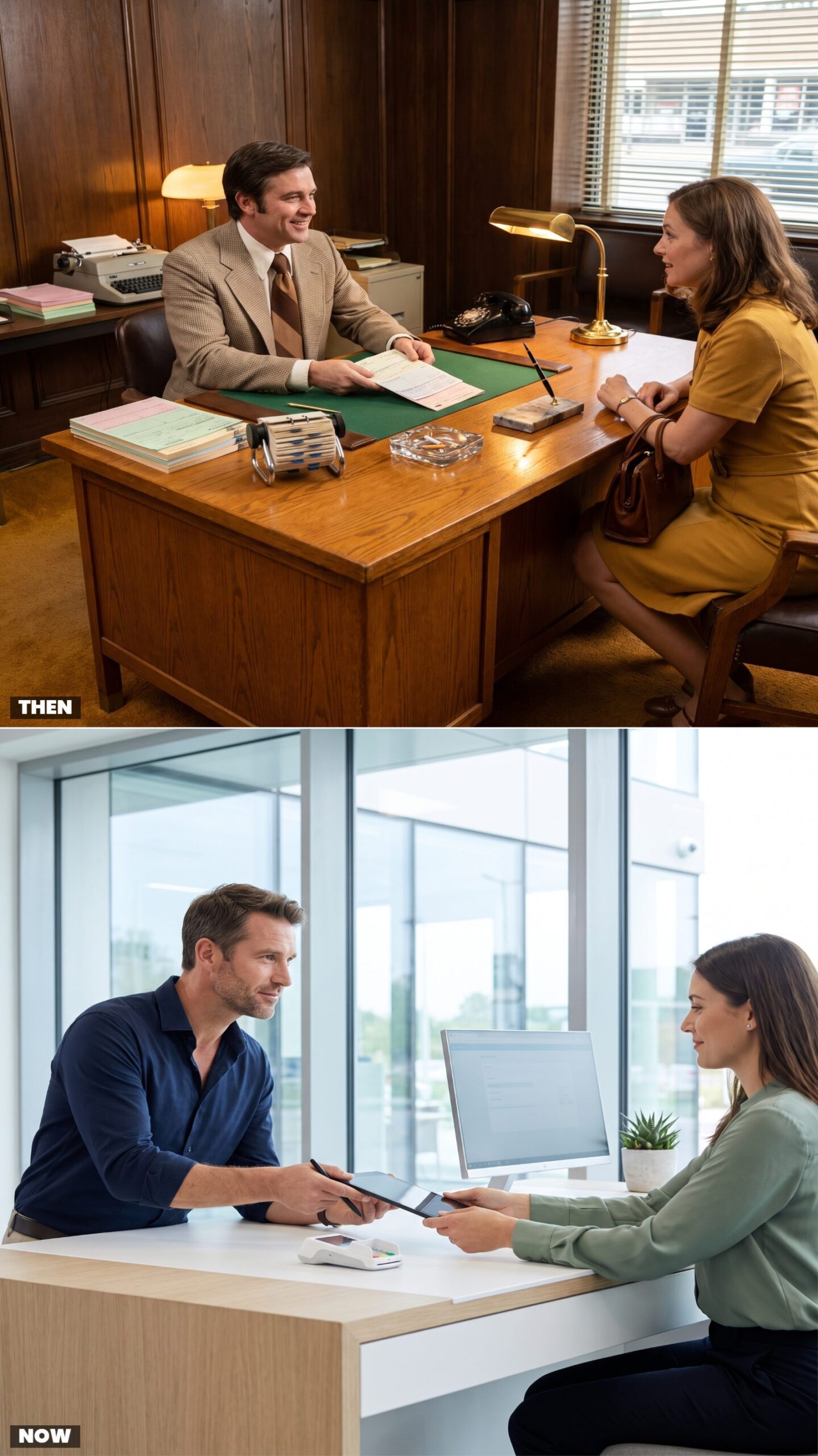
Opening an account in 1970 meant sitting down for a while. The officer pulled signature cards and triplicate forms, cranked up a typewriter, and you pressed hard enough for the carbon copies to take. Three signatures. Then you watched him file your card in a steel drawer that held the whole town’s handwriting.
Today the same thing happens on a tablet before your coffee goes cold. Sign with a fingertip, snap a photo of your ID, done in minutes. Fewer forms, less ceremony, and no drawer full of signatures for anyone to lose.
38. The Loan Officer’s Private Office
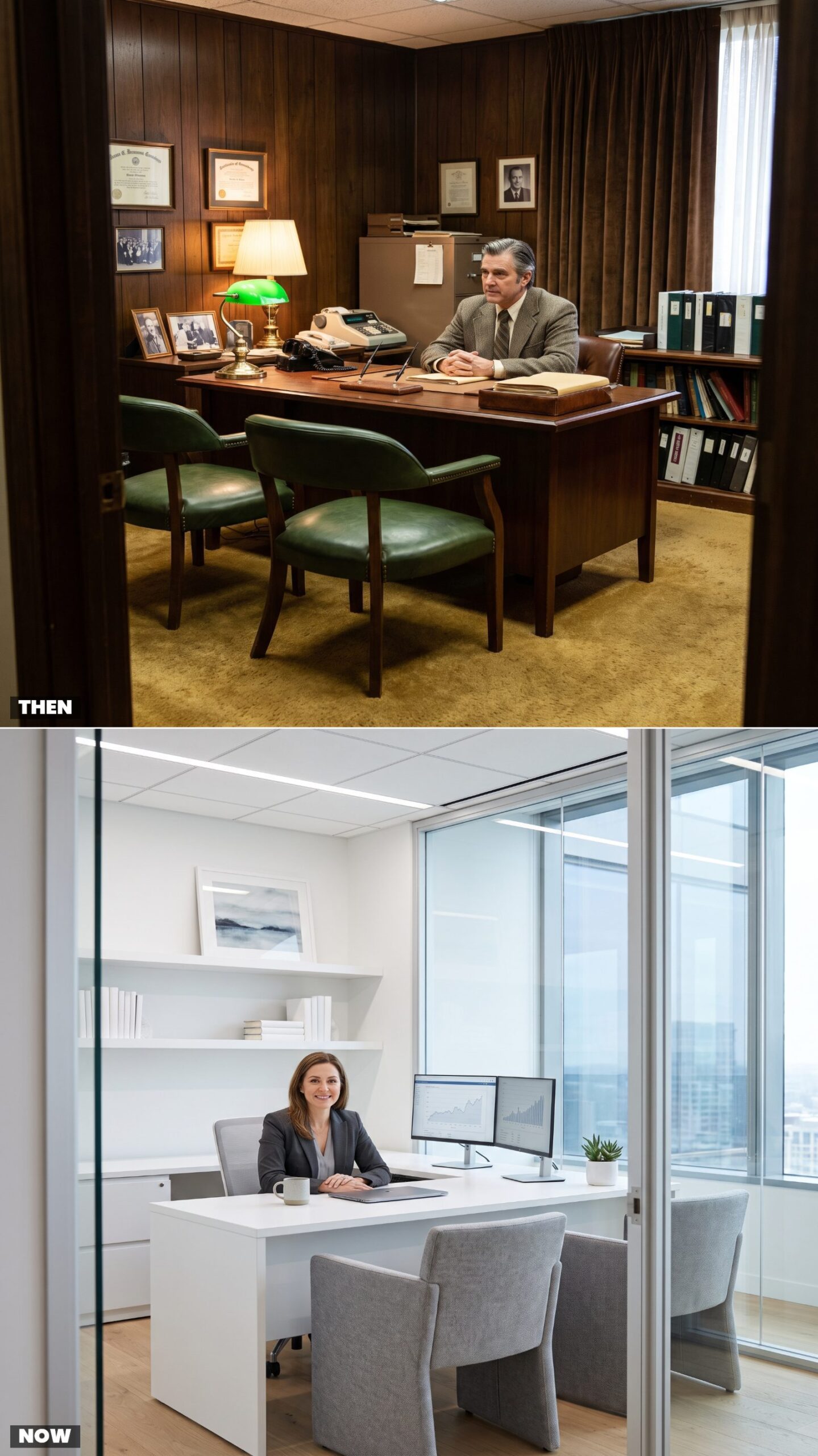
The 1970 loan office was built to make you feel the weight of the ask. Mahogany desk. Green leather chairs. A man behind a stack of files who knew your father and would decide, face to face, whether you got the money. The decision could take days, and it lived entirely inside his head.
Modern loan offices run lighter. Glass walls, two monitors, a credit algorithm that’s already half-decided before you sit down. The gravity is gone, and so is the paneling.
37. The Trust Department Reception Area
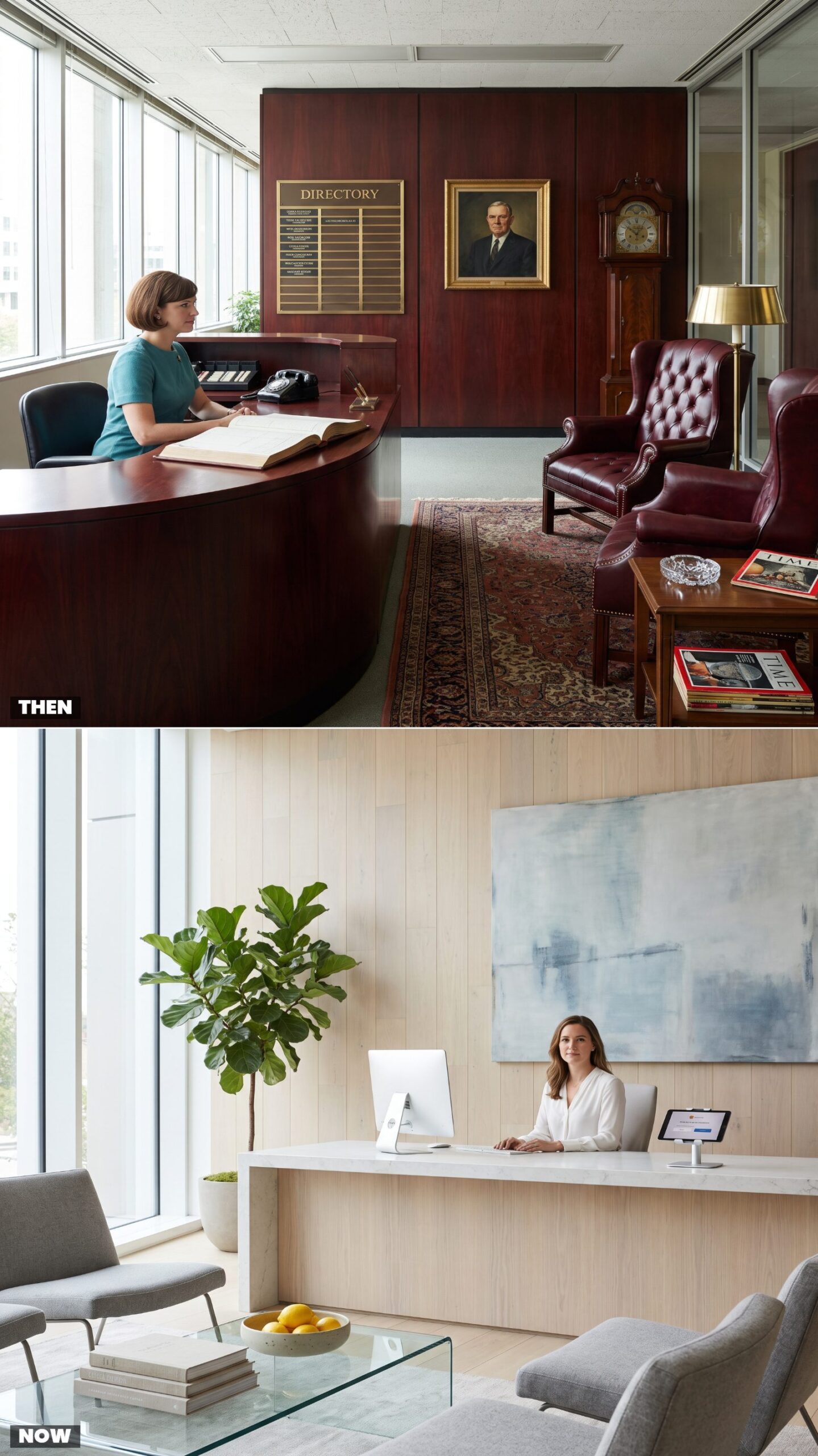
You know the room. Oxblood wing chairs, a grandfather clock ticking louder than the conversation, an oil portrait of some long-dead founder watching you sign for your inheritance. The 1970 trust department was quiet money made visible, and everything smelled like leather and furniture polish. You lowered your voice without being told to.
The modern version swapped the gravitas for daylight. White stone desk, a tablet to check you in, low grey lounge chairs, one enormous painting that cost more than the whole 1970 lobby. Still serious money. It just stopped dressing like a funeral.
36. The Safe-Deposit Box Vault
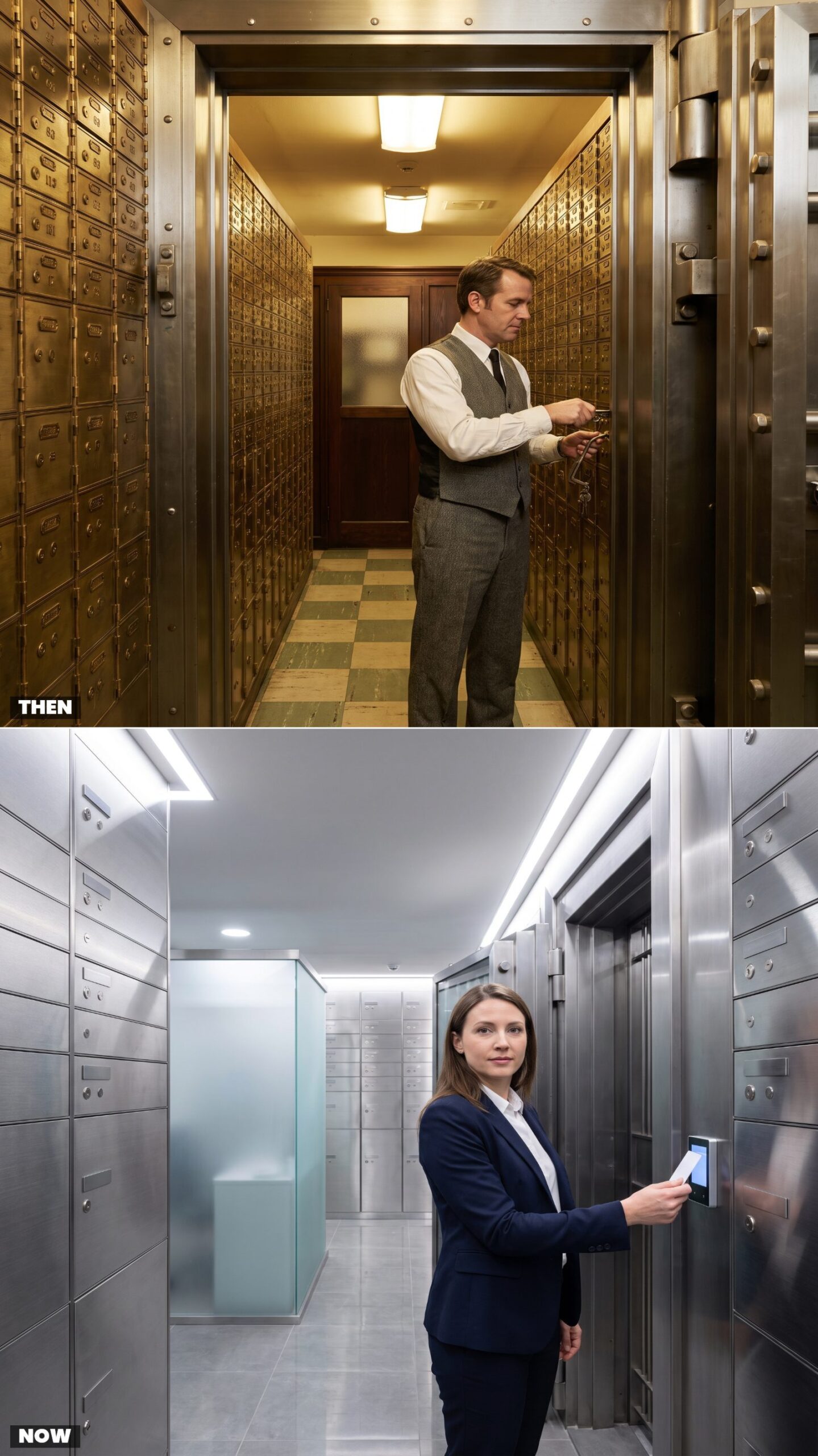
Two keys, always. Yours and the guard’s, turned together in a little brass door no bigger than a mail slot. The 1970 safe-deposit vault was a wall of them, humming with everybody’s secrets: deeds, war medals, a ring somebody wasn’t wearing anymore. The attendant walked you in, turned his key, and stepped away so you could open yours in private.
Vaults today still use real keys, but getting to them starts with a keycard and an electronic log. Stainless steel instead of brass, porcelain floors instead of worn linoleum. The idea hasn’t changed in a century. The lighting just got brighter.
35. The Main Cash Vault Door
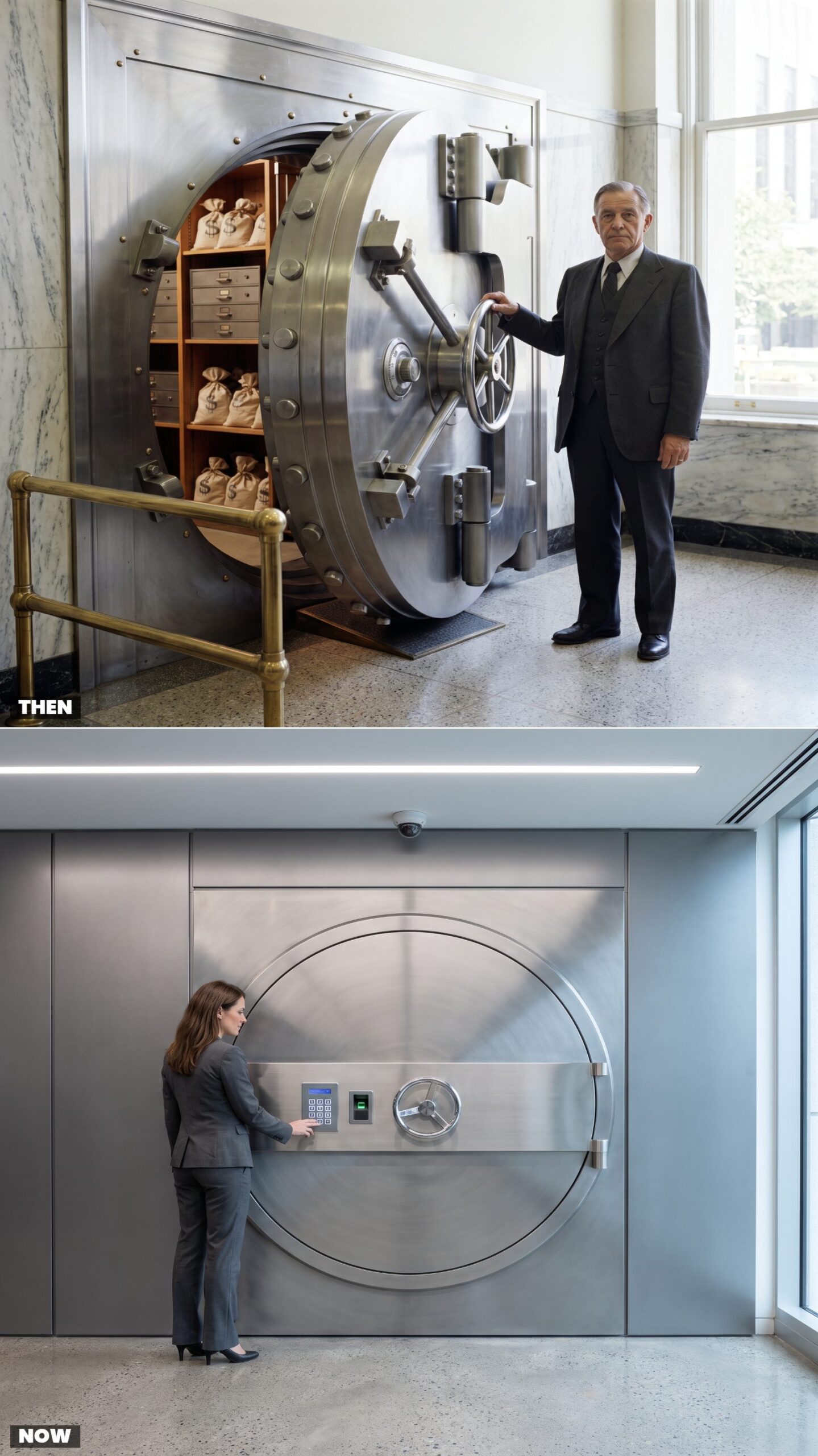
Nothing said “your money is safe here” in 1970 like the vault door itself. A slab of polished steel, a spoked wheel, a combination dial, boltwork thick as your wrist. They left it open during business hours on purpose, so you’d see the thing and feel better. Reassurance you could look at.
The door’s still there today, but the drama moved to a keypad and a fingerprint reader. Same steel, quieter theater. A camera dome does the watching now.
34. Coin-Counting Station to Self-Service Coin Kiosk
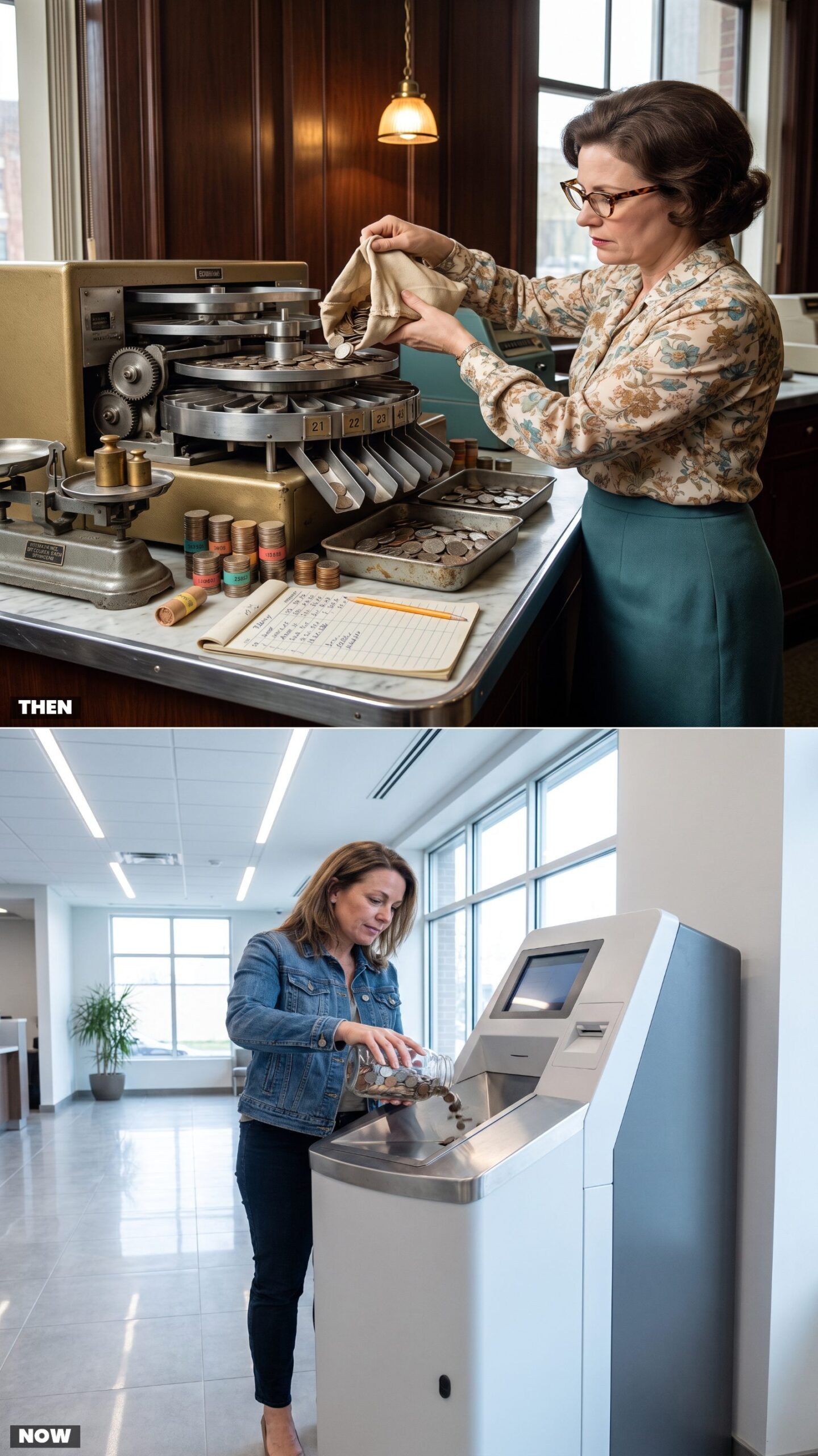
Somebody counted your change by hand in 1970, or close to it. The teller poured your coffee-can savings into a sorting machine with spinning trays, caught the output in paper wrappers, weighed the rolls, and tallied it all on a sheet. It took time. You waited while she licked her thumb and kept counting.
Now you dump the jar into a kiosk yourself and walk away with a receipt. The machine counts in seconds and sometimes takes a cut for the privilege. Faster, less human, and nobody wraps your nickels anymore.
33. The Night Depository Slot
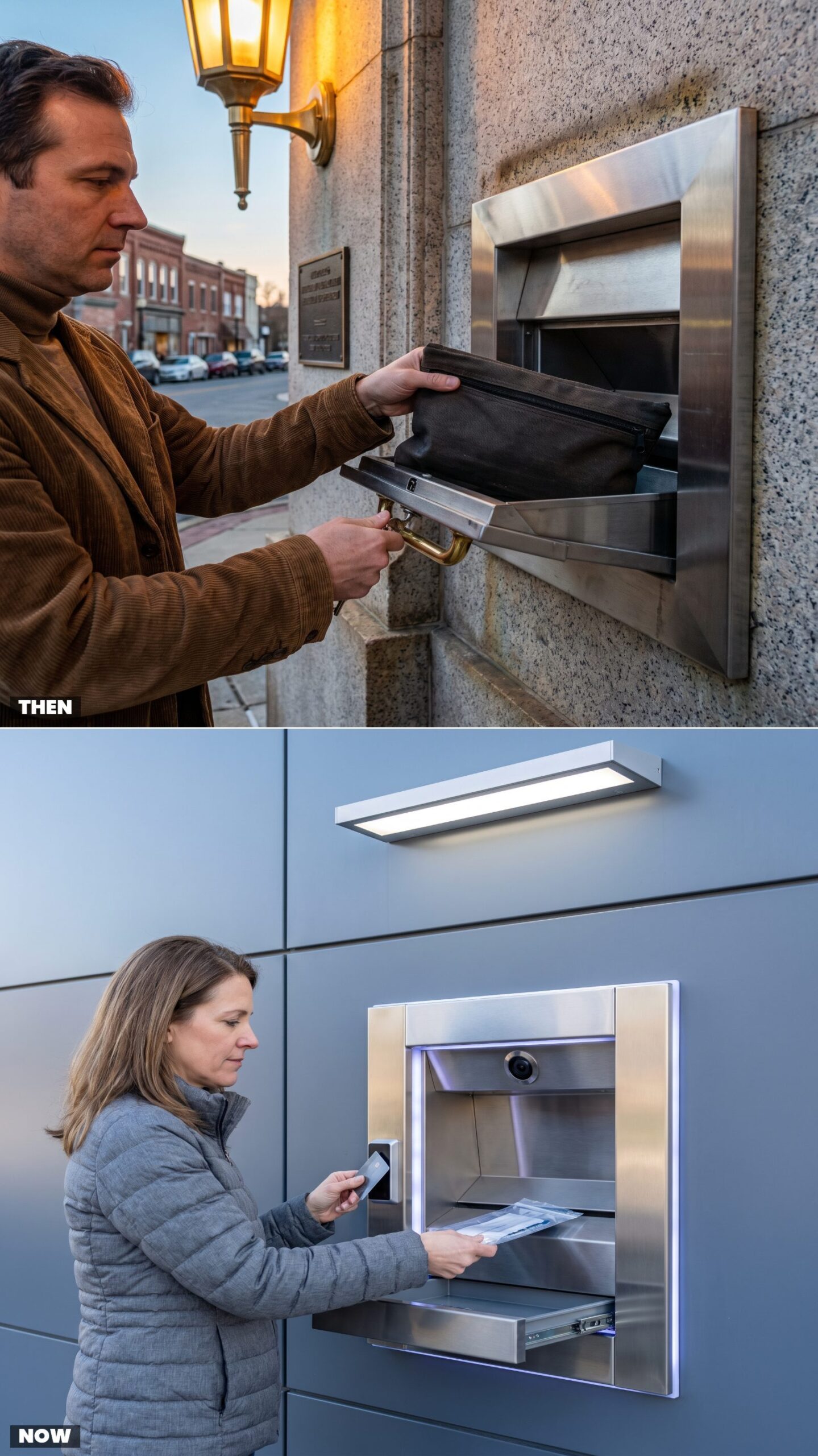
Every small-business owner in 1970 knew the walk. Lock the shop, carry the day’s take in a zippered canvas bag, feed it into the steel slot in the bank’s wall after hours. One key, one drawer, a satisfying clunk. You trusted a hole in a stone wall with your Friday night.
The slot survives, but it got smart. Card taps, cameras, LED lighting, sealed plastic pouches instead of canvas. Plenty of merchants skip it entirely and deposit from a phone. The clunk, though, was oddly reassuring. Nothing digital clunks.
32. The Pneumatic Drive-Through Tube
Would you like to save this?
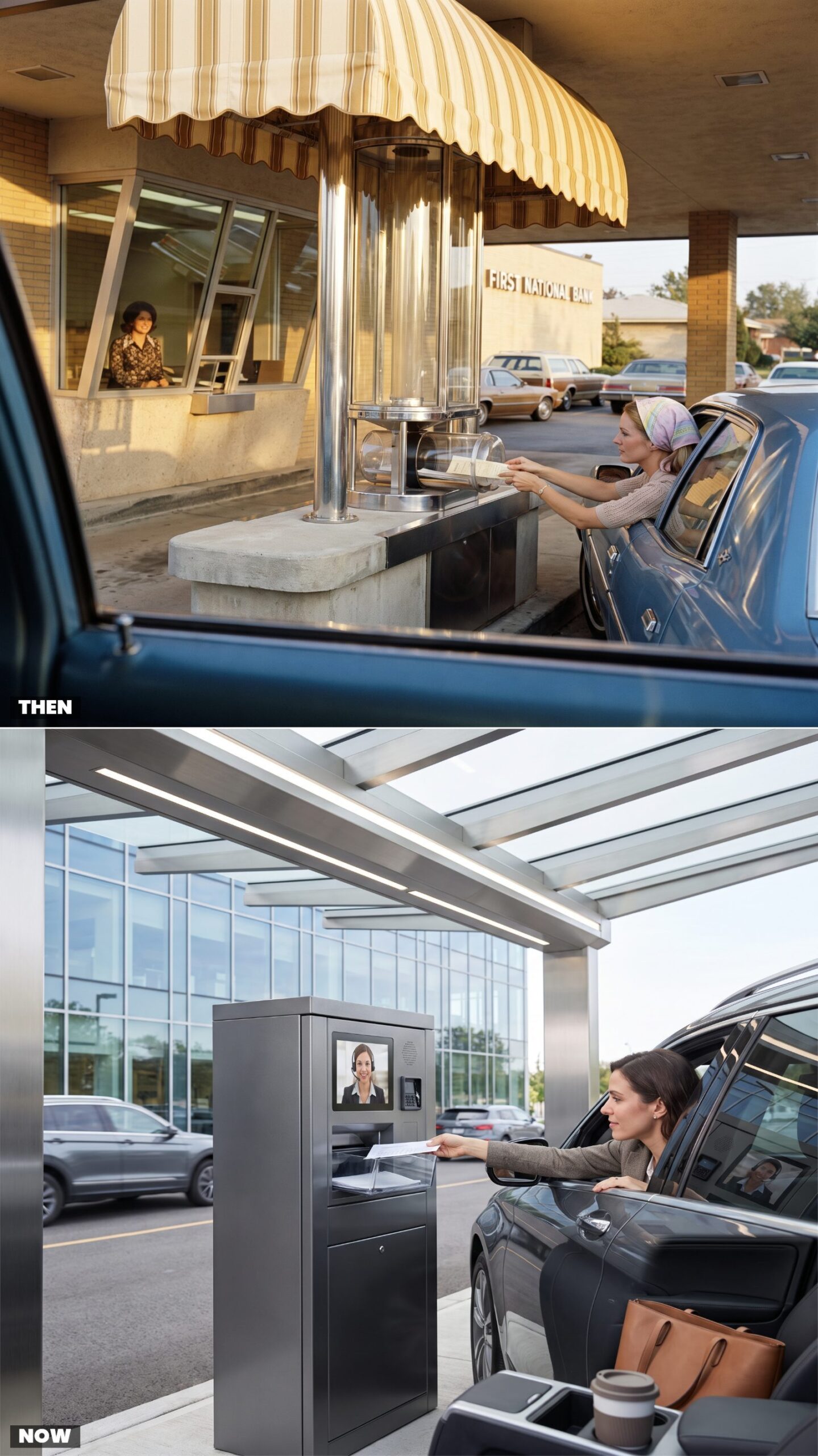
The best part of banking as a kid? The tube. You pulled up to the island, the teller sent a clear capsule rocketing through a chrome tube with a whoosh and a thunk, and somehow that beat a roller coaster. In 1970 the drive-through was pure mechanical spectacle, and the canister was the star of the show.
The tubes still exist at plenty of banks, which is a small miracle. But now there’s a video screen with a live teller, a card reader, maybe a chip prompt. Same whoosh. More buttons.
31. The Walk-Up Banking Window
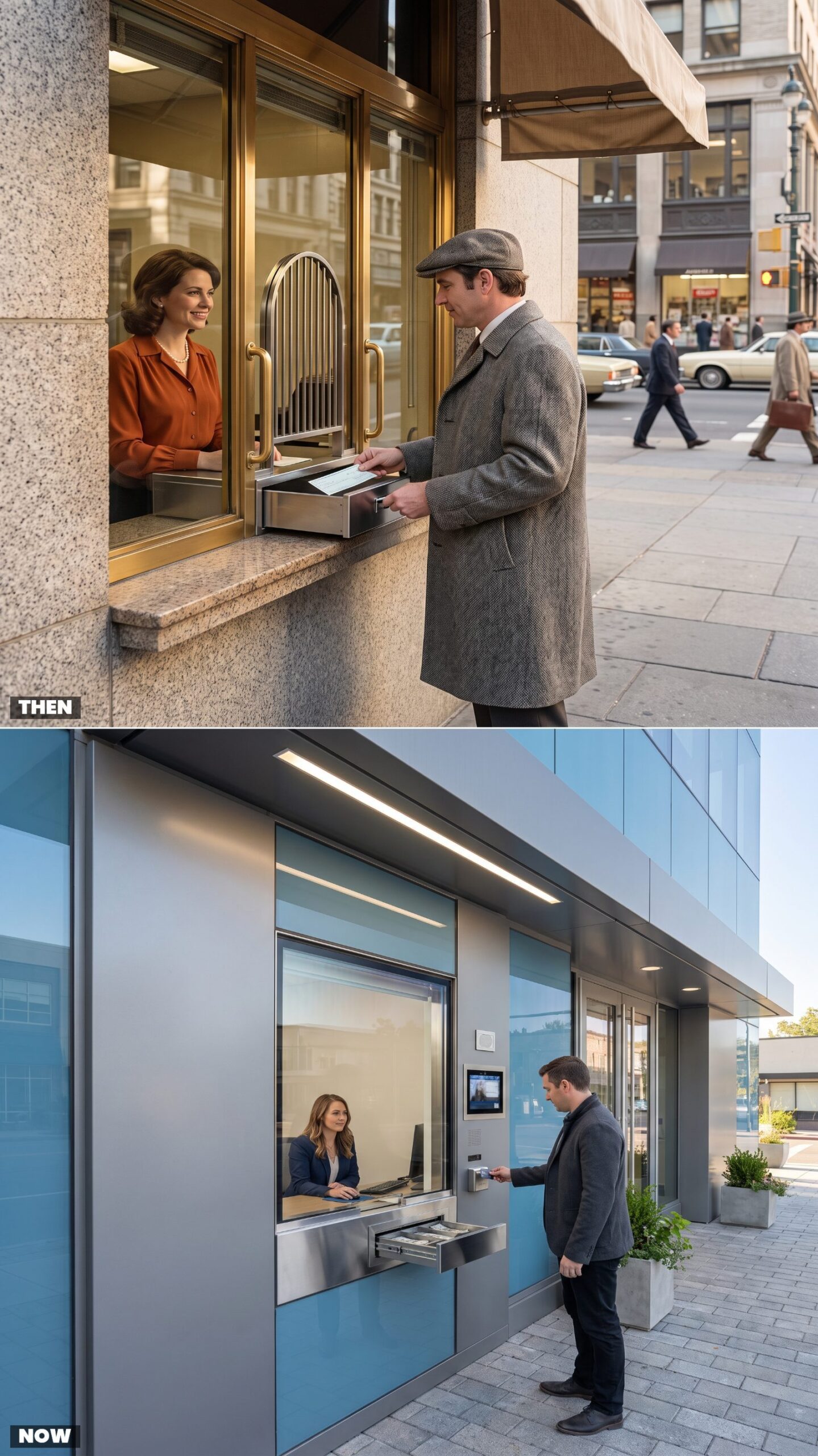
Before ATMs took over the sidewalk, there was the walk-up window. A brass-framed grille in the side of the building, a little stainless drawer at the bottom, a teller you talked to through the metal. You cashed a check on your lunch break without ever going inside. She counted it out loud, slid it through, and told you to have a good day like she meant it.
The window’s mostly gone now. A screen, an intercom, a card tap. A few still have a live teller behind glass. But the voice through the brass grille, the counting-out-loud, the small daily kindness of it, none of that made the upgrade.
30. The Bank Lobby Seating Area
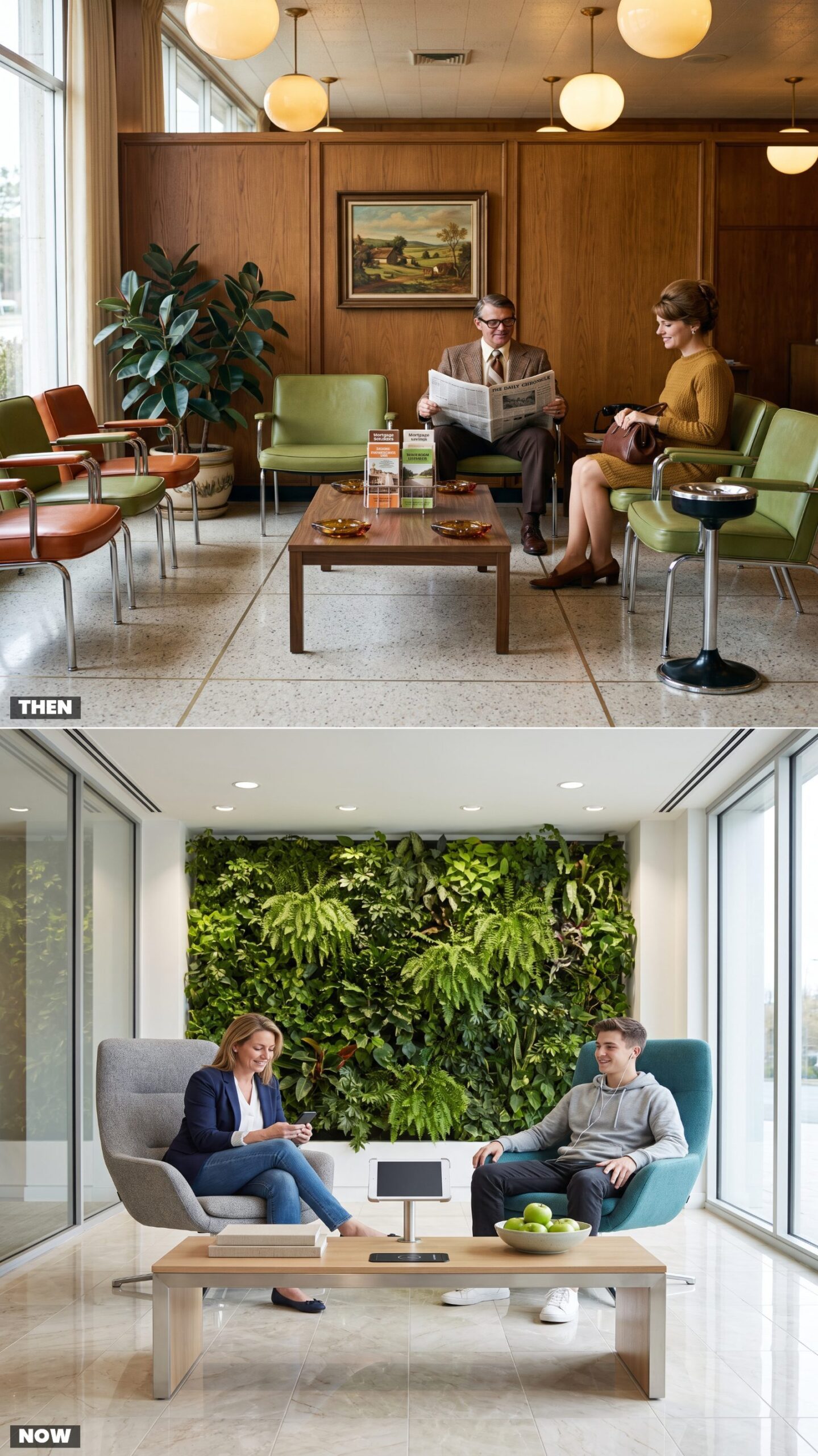
In 1970 the bank lobby asked you to sit a while. You got vinyl chairs the color of avocado and pumpkin, a coffee table stacked with Christmas Club brochures, and an ashtray within arm’s reach because of course there was. Everyone waited. Waiting was the deal.
Now the seating area is half lounge, half charging station. Teal fabric chairs, a tablet kiosk, maybe a wall of real plants pretending the building has a soul. Fewer people sit because fewer people come in. The chairs are nicer and nobody’s in them.
29. The Mechanical Adding Machine
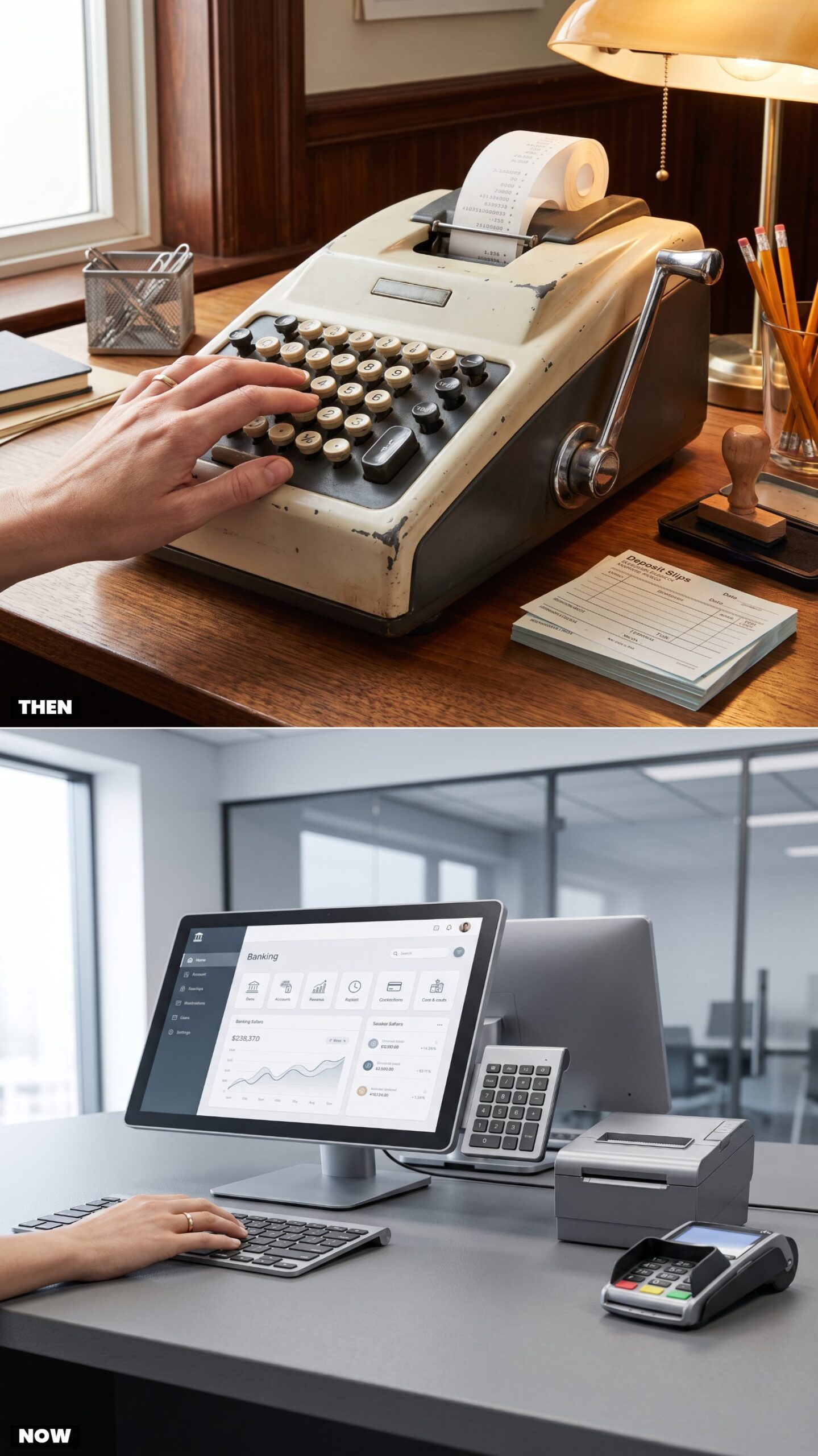
The sound is what you remember. That chunky mechanical clack and the yank of the chrome lever, a ribbon of paper tape spooling out with every total. A 1970 teller could run your deposit through by feel, keys worn smooth, the whole machine heavy enough to anchor a boat.
Today it’s a numeric keypad and a touchscreen that totals before your eyes can follow. Faster, silent, and somehow less satisfying. Nobody misses the weight, but a lot of us miss the noise.
28. The Desktop Posting Machine
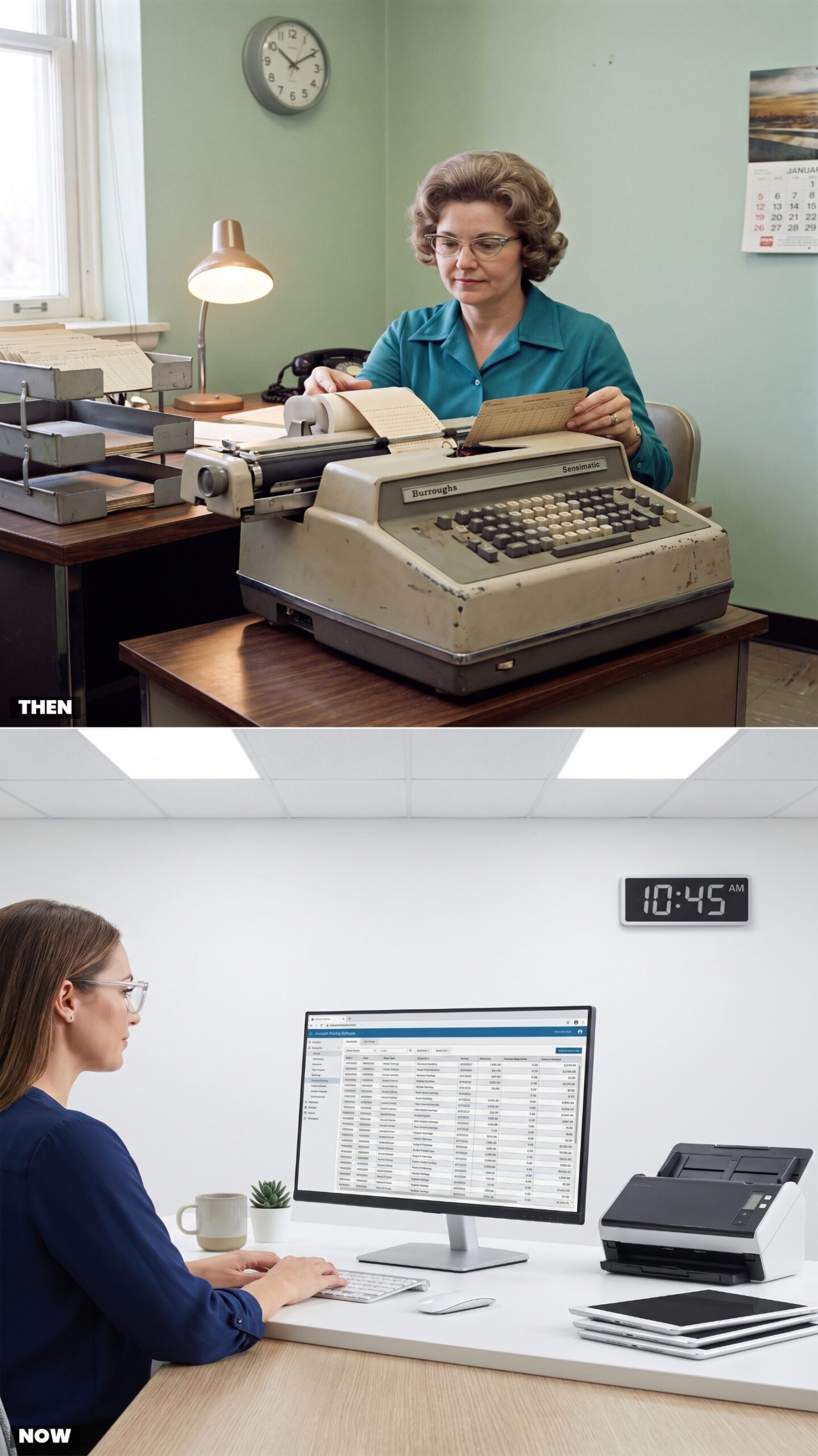
Half typewriter, half calculator, built like a tank: the desktop posting machine was where your account balance actually lived in 1970. A bookkeeper fed a stiff ledger card in, the carriage slammed across, and your new balance printed right onto the card. One machine, one clatter, one entry at a time.
Now that whole operation is a spreadsheet grid on a widescreen monitor, every account updated the instant a transaction clears. The beige behemoth is gone. So is the person who knew your balance before the machine did.
27. The Ledger Book Workstation
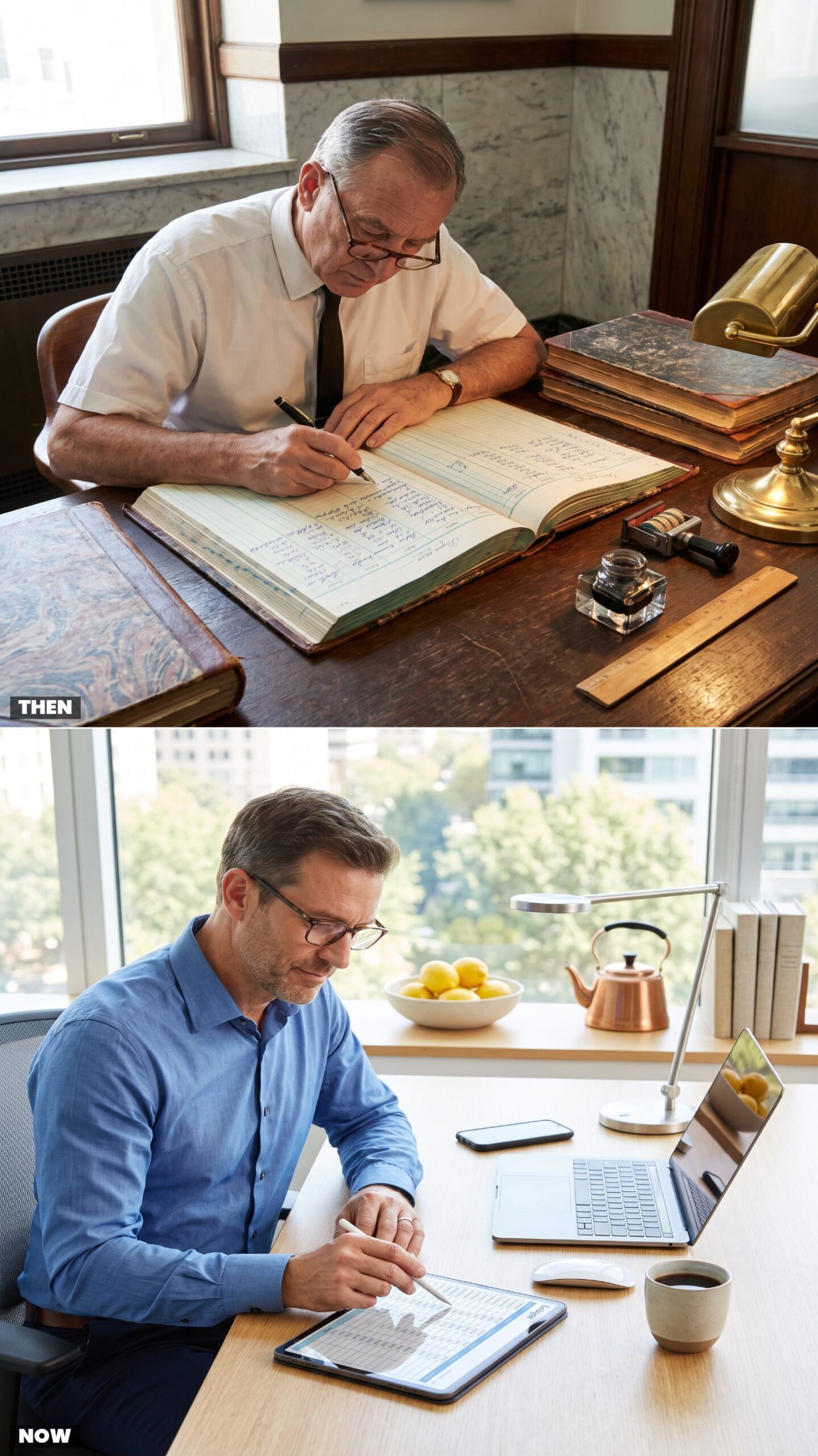
Your money used to be a line of ink in a book. The old-school ledger workstation was the beating heart of a branch: green-ruled columns, fountain pen entries, a bookkeeper who wrote your balance by hand and could spot a mistake because he’d made that exact entry a thousand times before.
The modern version fits on a tablet, a digital grid updating in real time with no ink to smudge and no blotter to blame. Cleaner, faster, and a little sad if you ever watched someone balance a ledger by candle-steady hand.
A single misplaced decimal in that book could take three clerks and a long afternoon to hunt down. The software finds it in a blink and tells no one how annoyed it is.
26. The Canceled-Check Sorting Room
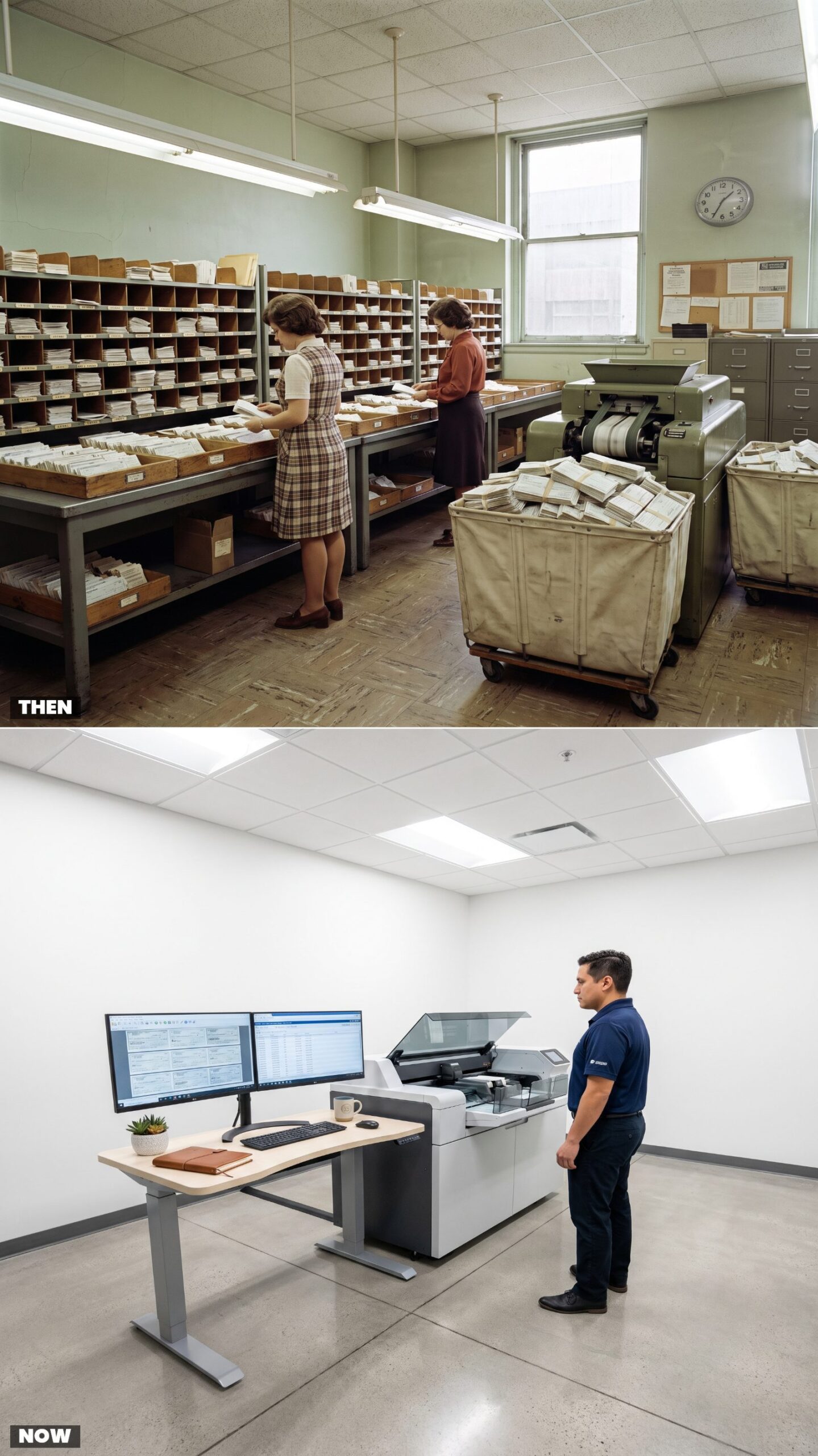
Every canceled check came home in 1970, which meant somebody had to sort them first. Rooms full of clerks and pigeonhole racks, checks tied in rubber-band bundles, canvas bins rolling between tables. It was loud, it was paper everywhere, and come statement day the whole thing had to balance to the penny.
Image scanners killed the room. A single machine now photographs piles of checks an hour, and your “canceled check” is a PDF you’ll never print. The clerks are gone. The rubber bands are gone. The ankle-high drifts of paper are, mercifully, also gone.
25. The Microfilm Records Station
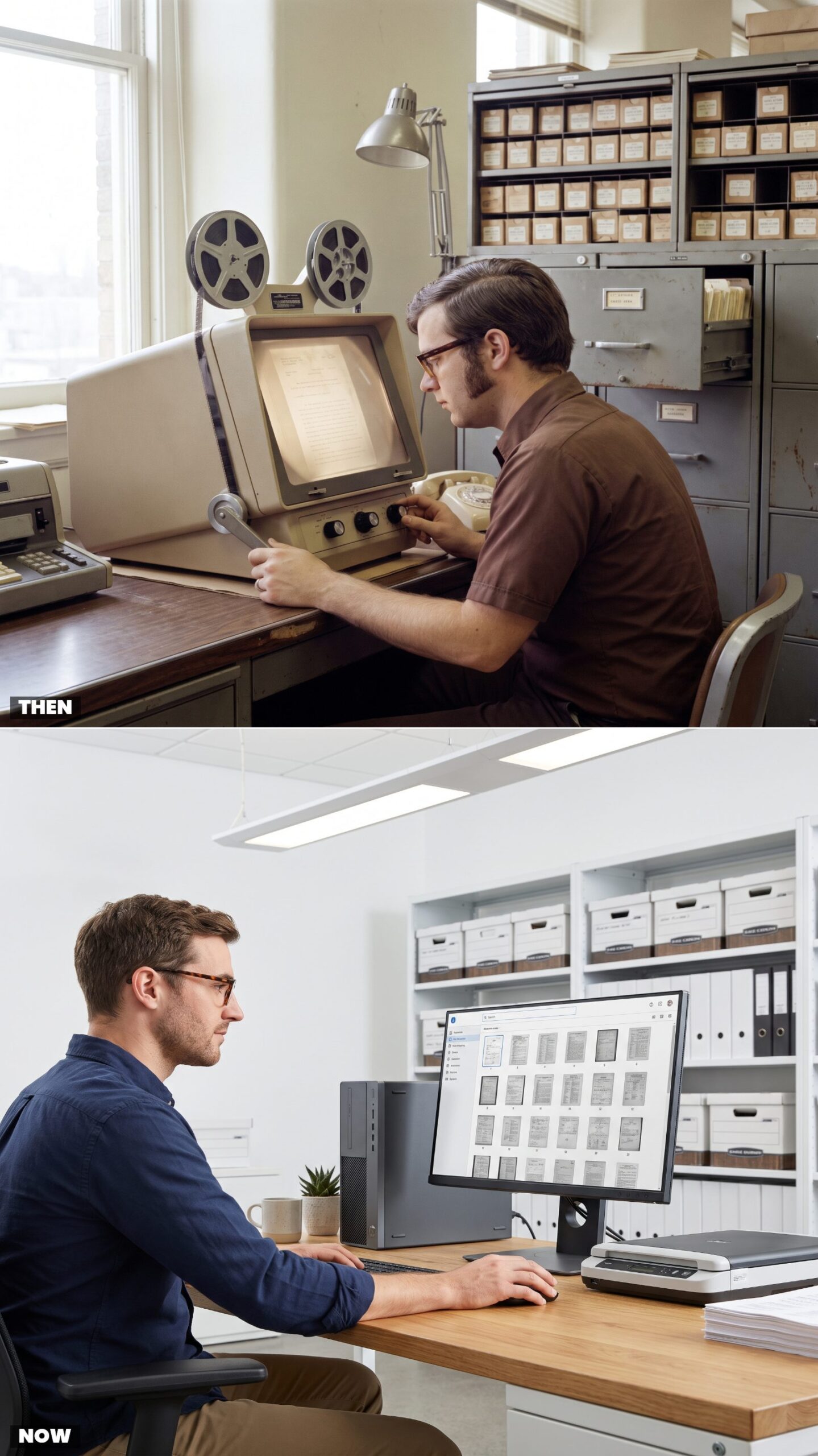
Need a record from three years back? In 1970 you went to the microfilm room, found the right little cardboard box, threaded the reel, and cranked through frames on a glowing screen until the document swam into focus. Slow work, and your eyes ached by lunch.
Now you type a name into a search box and the record appears before you’ve finished the keyword. The whirring reels and the backlit squint are gone. What’s lost is the strange patience that old process forced on everyone involved.
24. The Punch-Card Data Processing Room
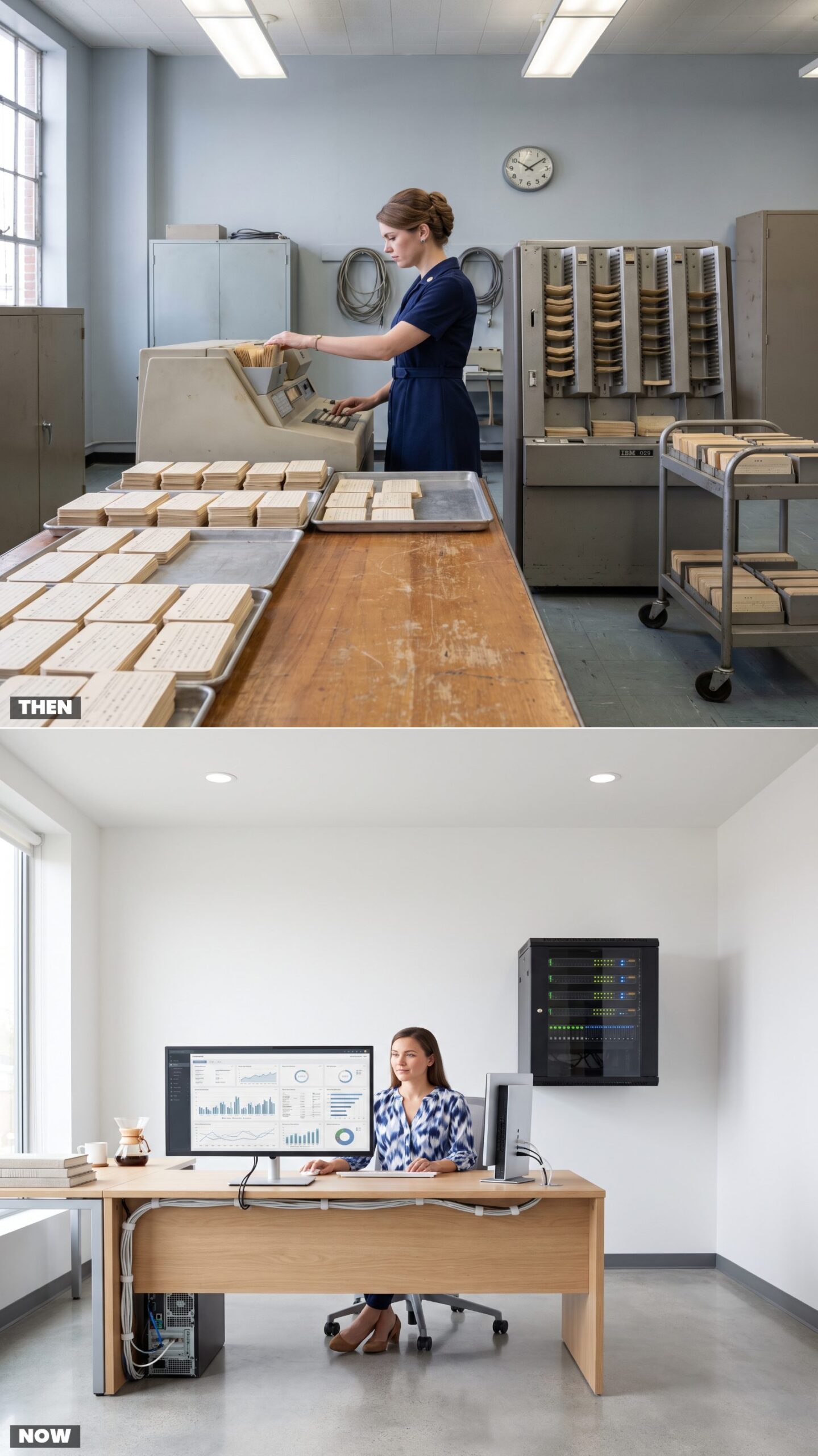
Before data was invisible it was cardboard. A bank’s transactions in 1970 got punched into manila cards, hole by hole, by operators who could type a card without looking. Drop a tray and your afternoon was over. The sorter clattered through them into output pockets, and the whole room smelled faintly of machine oil and warm paper.
Today that entire operation is a quiet data dashboard and a server rack blinking in the corner. No cards, no trays, no dread of a dropped box. Just a hum you barely notice.
23. The Mainframe Computer Room
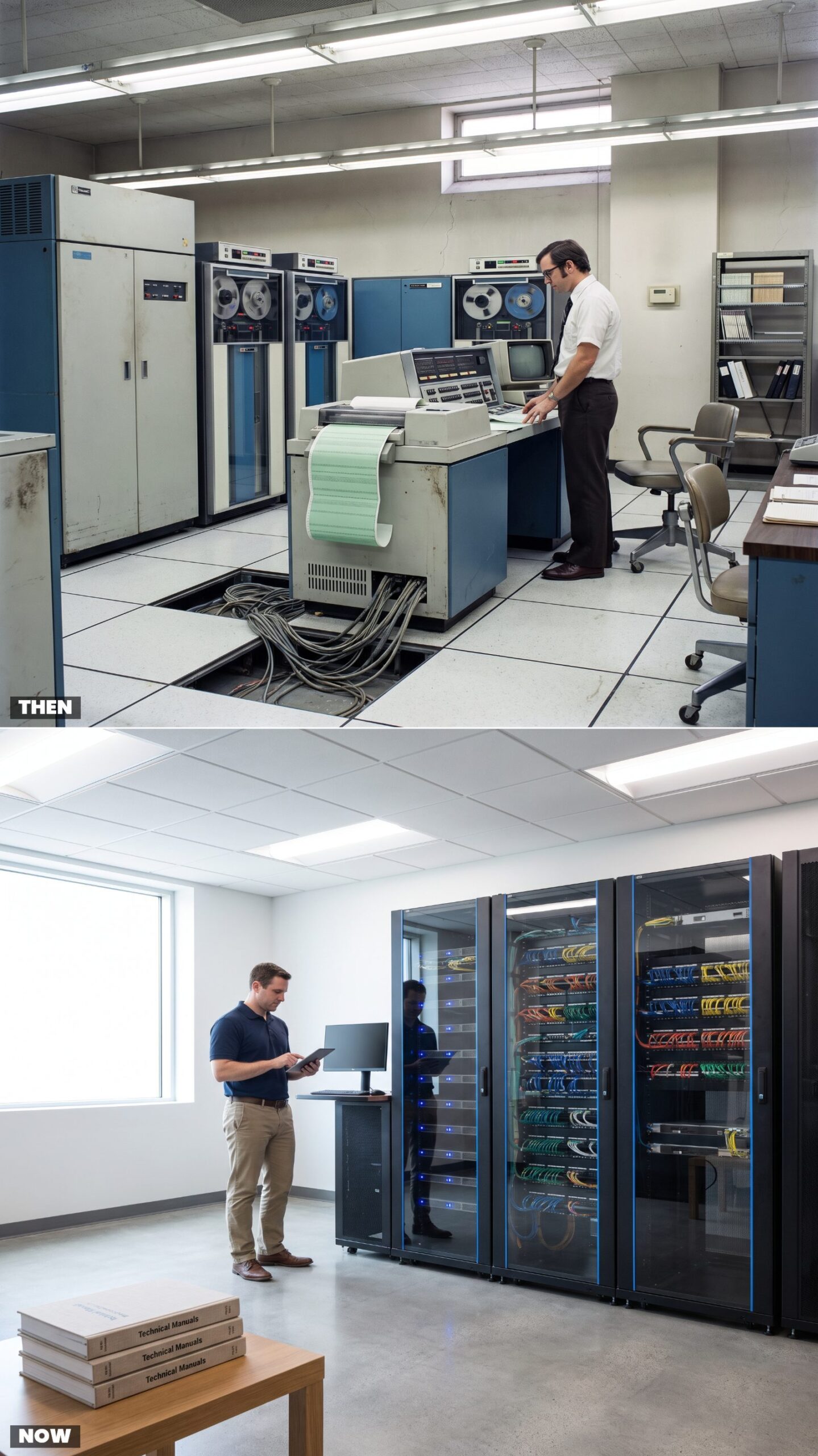
The mainframe room was the bank’s secret engine in 1970, and it looked the part. Refrigerator-sized cabinets, reel-to-reel tapes spinning behind glass, a raised floor hiding a jungle of cables, and a line printer firing out green-bar paper at a frankly intimidating speed. It had its own room, its own cooling, and its own priesthood of operators.
That whole wall of machines now fits in a handful of server racks, quieter and cooler and running far faster. The blinking lights are prettier now. The sense of standing inside something vast is mostly gone.
22. The Telephone Switchboard
Would you like to save this?
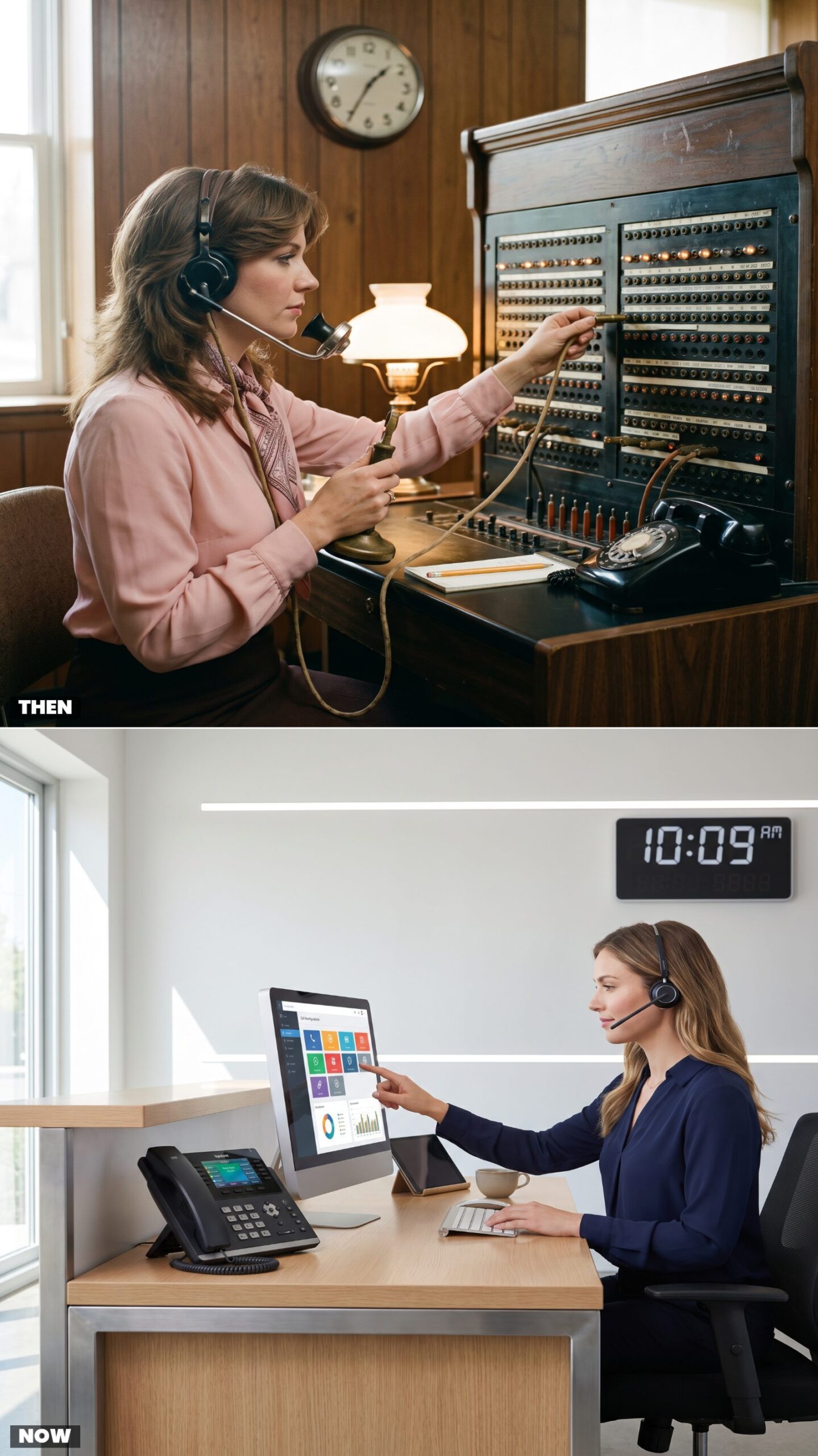
Call the bank in 1970 and a real person answered, then physically connected you. The switchboard operator sat behind a wall of jacks and weighted cords, plugging you through to the loan desk or the branch manager with a flick of the wrist and a voice that never lost its patience.
Now a call routes itself through a menu, and if you’re lucky a VoIP dashboard points you at a human eventually. The cords are gone. So is the one person who knew everyone’s extension by heart.
21. The Manual Typewriter Desk
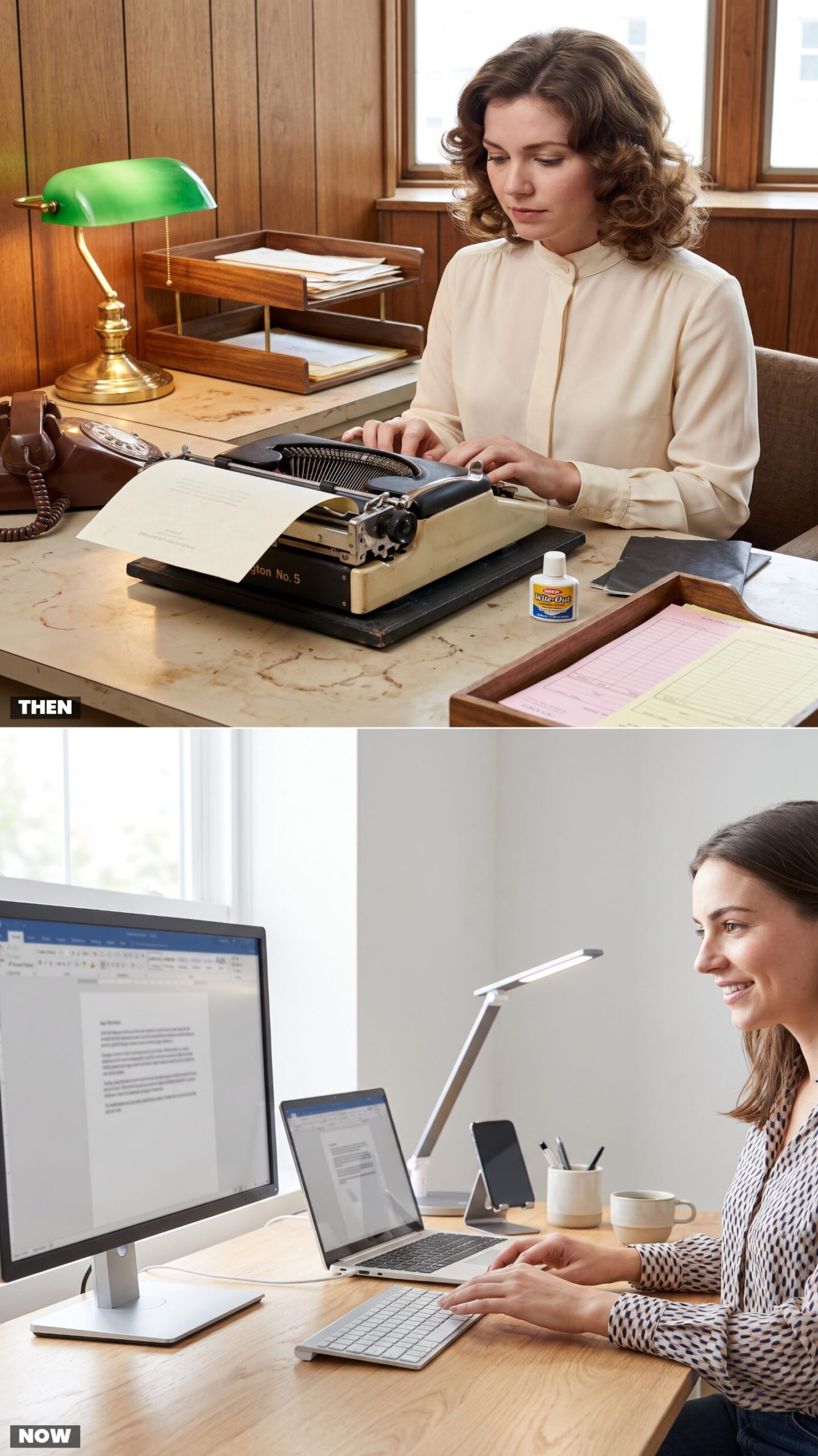
One typo and you reached for the correction fluid. The manual typewriter desk of 1970 ran on muscle: the thunk of the keys, the ding at the margin, the two-handed shove of the carriage return, and carbon paper underneath making three copies whether you wanted them or not.
A laptop does all of it now, undoing mistakes before they exist and printing as many copies as you like without a whiff of correction fluid. Faster, cleaner, no inky fingers. But there’s no satisfying ding when you finish a line, and honestly that was half the fun.
20. The Banker’s Workstation: Ledger Cards vs. Dual Monitors
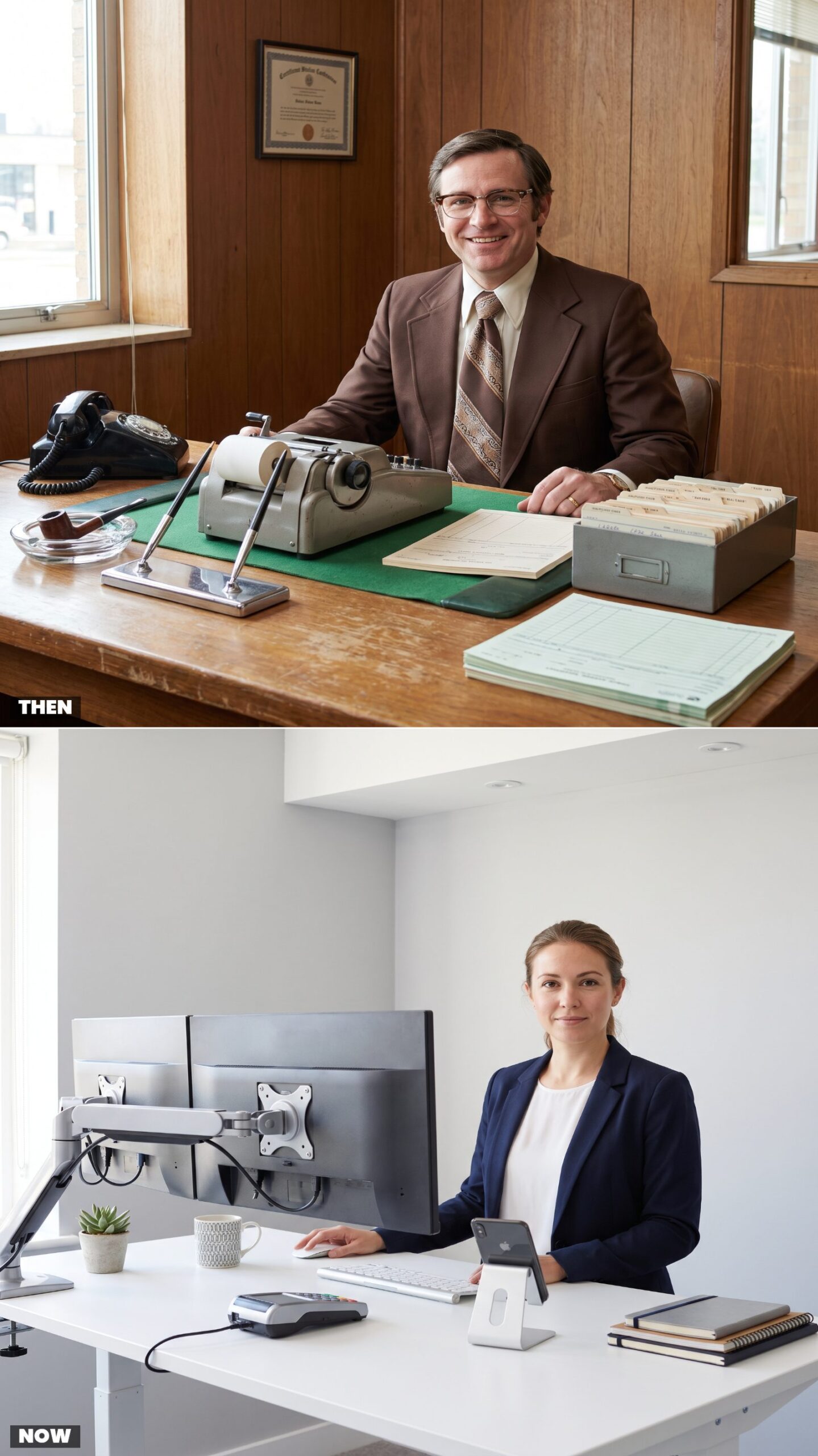
In 1970, your banker’s most powerful tool was a metal box of ledger cards and a mechanical adding machine that chunked out a paper tape. Every account lived on a physical card, pulled by hand, updated in pencil, and filed back by someone who knew the alphabet cold. If the card was out being posted, your balance was simply unknown until it came back.
Today two monitors glow in front of a banker who can see your entire financial life in seconds. The card file is gone. So is the adding machine, the carbon paper, and that particular smell of a filing drawer opened forty times a day.
19. The Personal Checkbook and Register
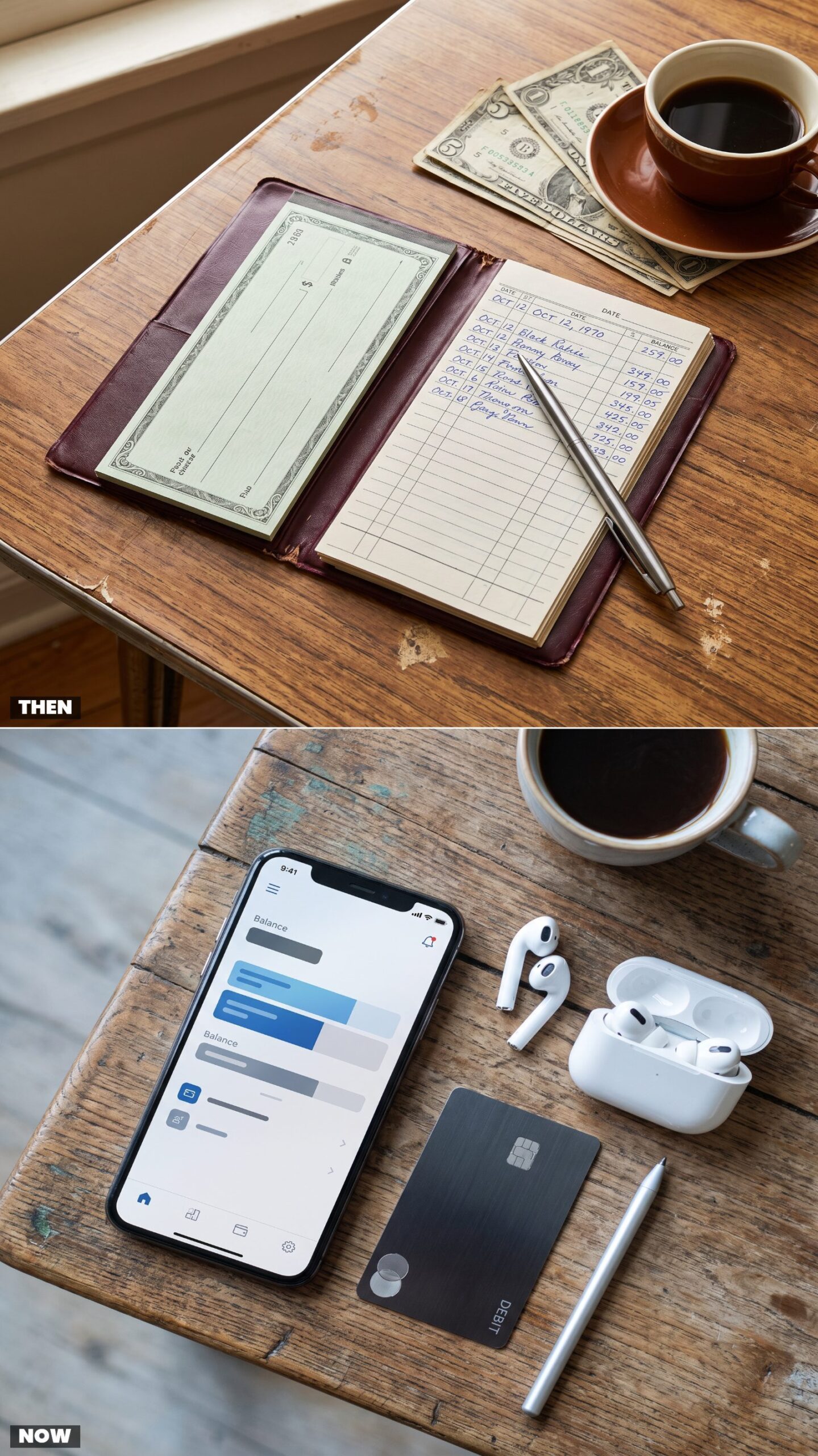
Balancing a checkbook in 1970 was a monthly ritual with its own quiet dread. You wrote the check, logged it in the register, subtracted in your head or on scrap paper, and prayed your arithmetic matched the bank’s when the statement showed up. One transposed digit could haunt you for weeks.
Now the register updates itself the second the card swipes, and nobody carries a running balance in their head anymore. We’ll admit we miss almost nothing about that paper register. Except maybe the strange satisfaction when it finally reconciled to the penny.
18. The Paper Bank Statement
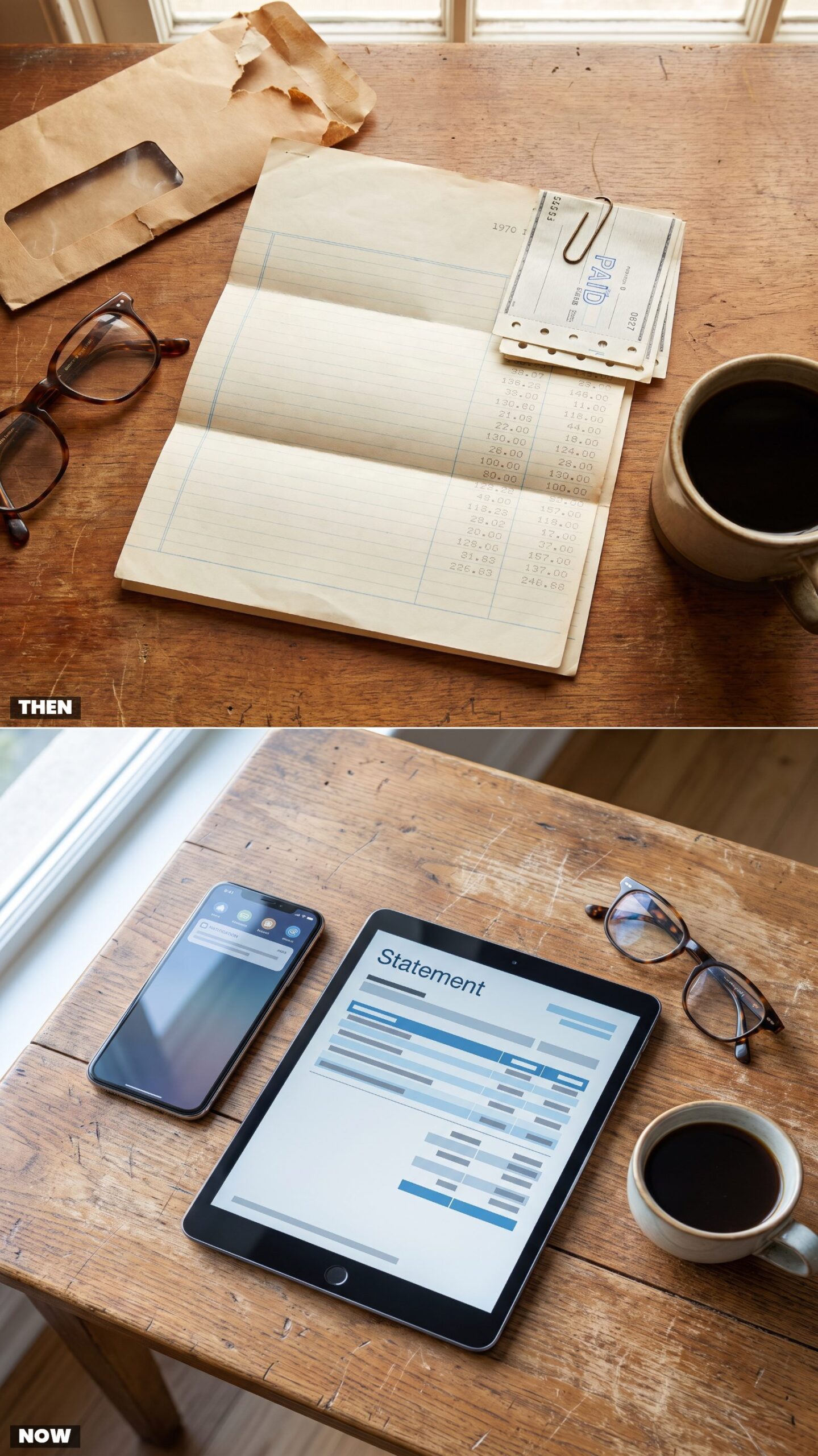
Every month a thick envelope landed in the mailbox, heavy with your own canceled checks returned to you, each one stamped, perforated, and smelling faintly of ink. People kept them in shoeboxes. They actually held onto the paper proof that a check cleared, because that paper was the only proof there was.
Today the statement is a PDF you open once a year, if that. The canceled check came back to you for a reason in 1970. Now it’s a line on a screen you scroll past without reading.
17. The Payroll Check-Cashing Counter
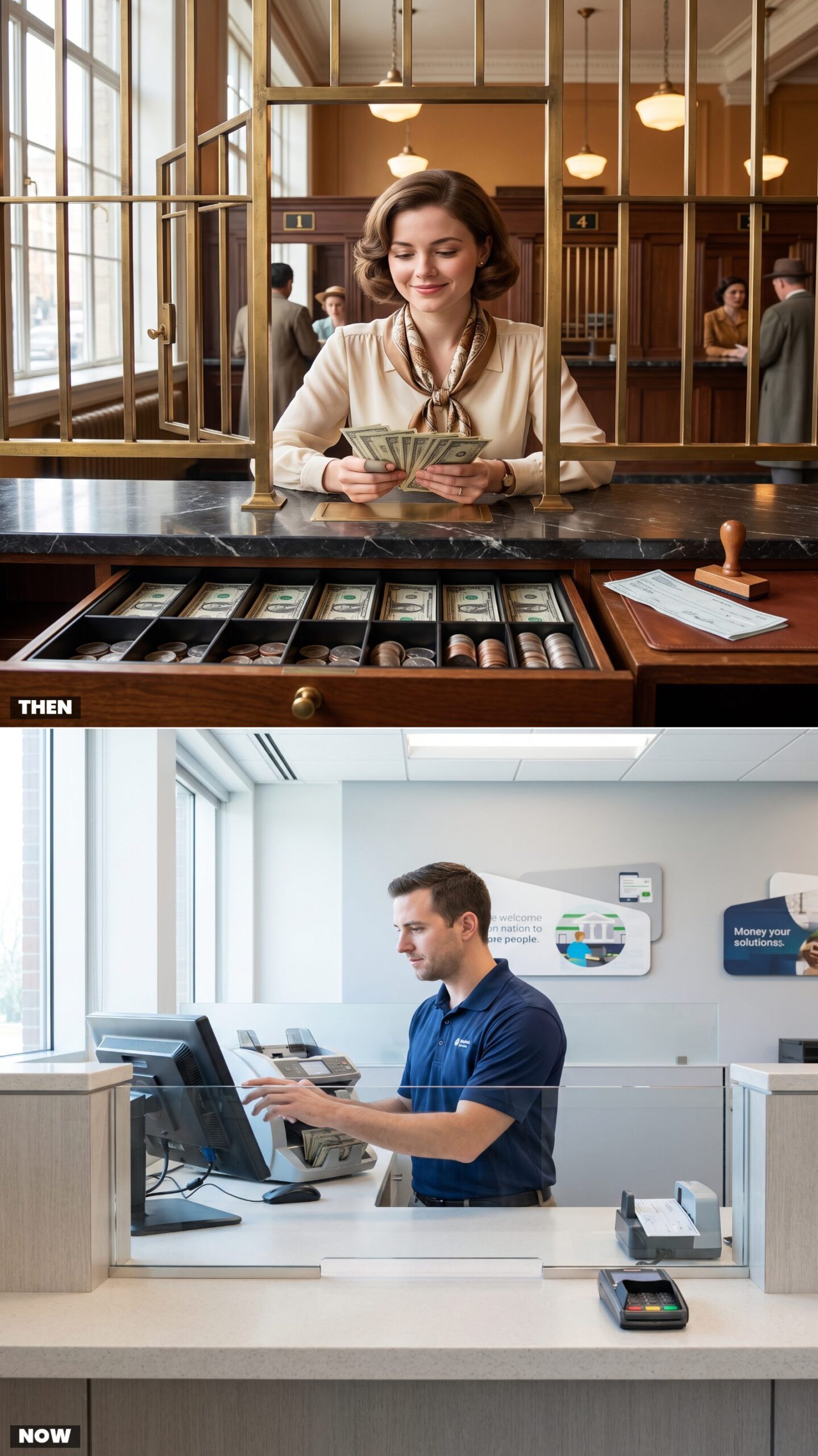
On Fridays in 1970, the line stretched to the door. Factory workers, clerks, and shift staff brought their paper paychecks to cash, and the teller counted every dollar out by hand, snapping the bills and licking a rubber thumb tip between the tens and the twenties.
Direct deposit erased most of that line. The counter’s still there, but the Friday crush is a memory. A machine counts the cash now, faster, and without the showmanship of a good teller who could fan a stack of twenties like a card dealer.
16. The Traveler’s Check Desk
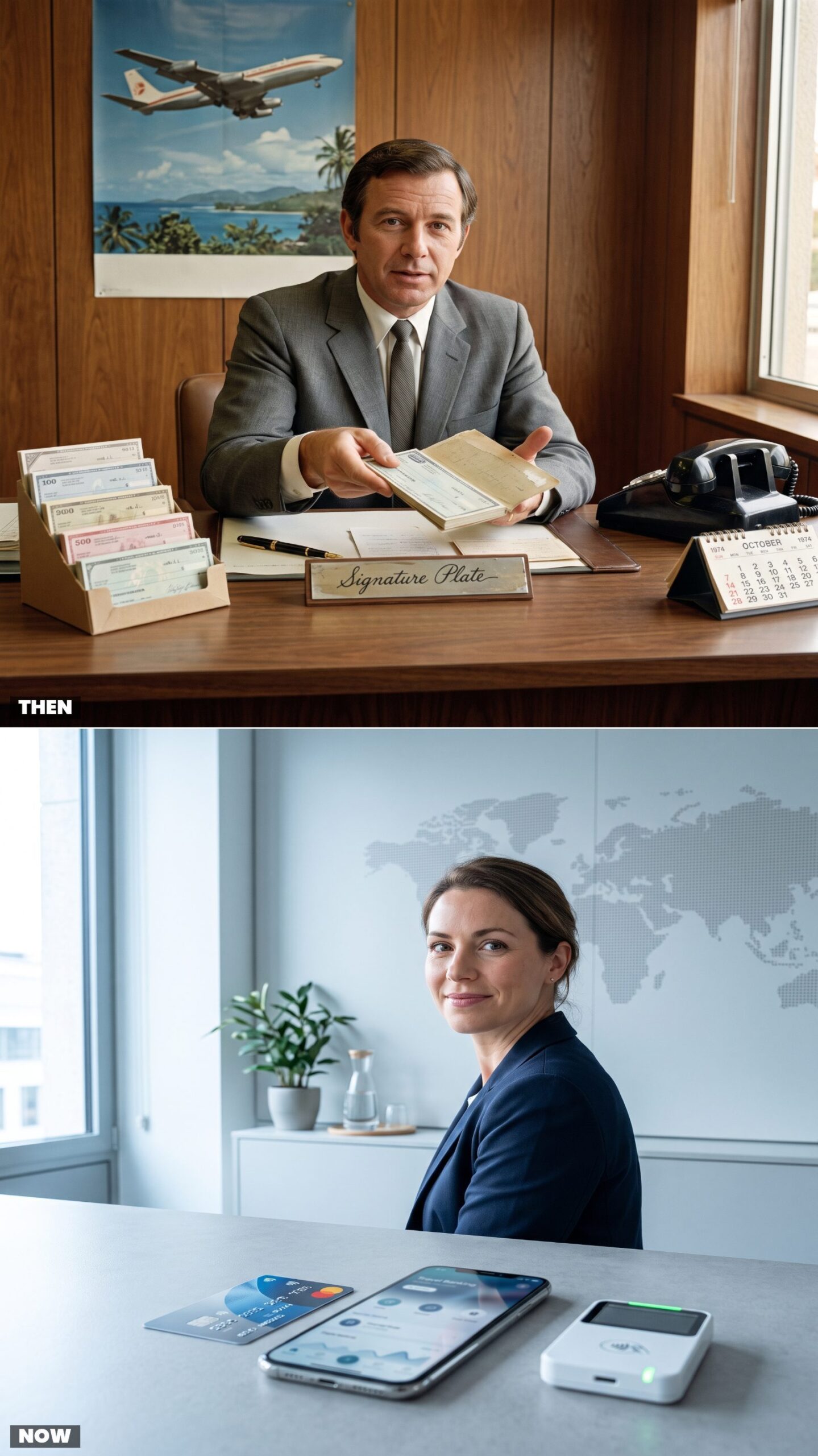
Before a big trip, you stopped at the bank and bought traveler’s checks, signing each one in the top corner right there at the desk while the clerk watched. Abroad, you’d countersign the bottom to prove it was really you. Lose them and the company replaced them, which was a genuinely good pitch for its day.
The desk is gone now, replaced by a travel card you load through an app in two minutes. Traveler’s checks still technically exist. Try spending one and watch the cashier’s face.
15. The Bank Draft and Money Order Counter
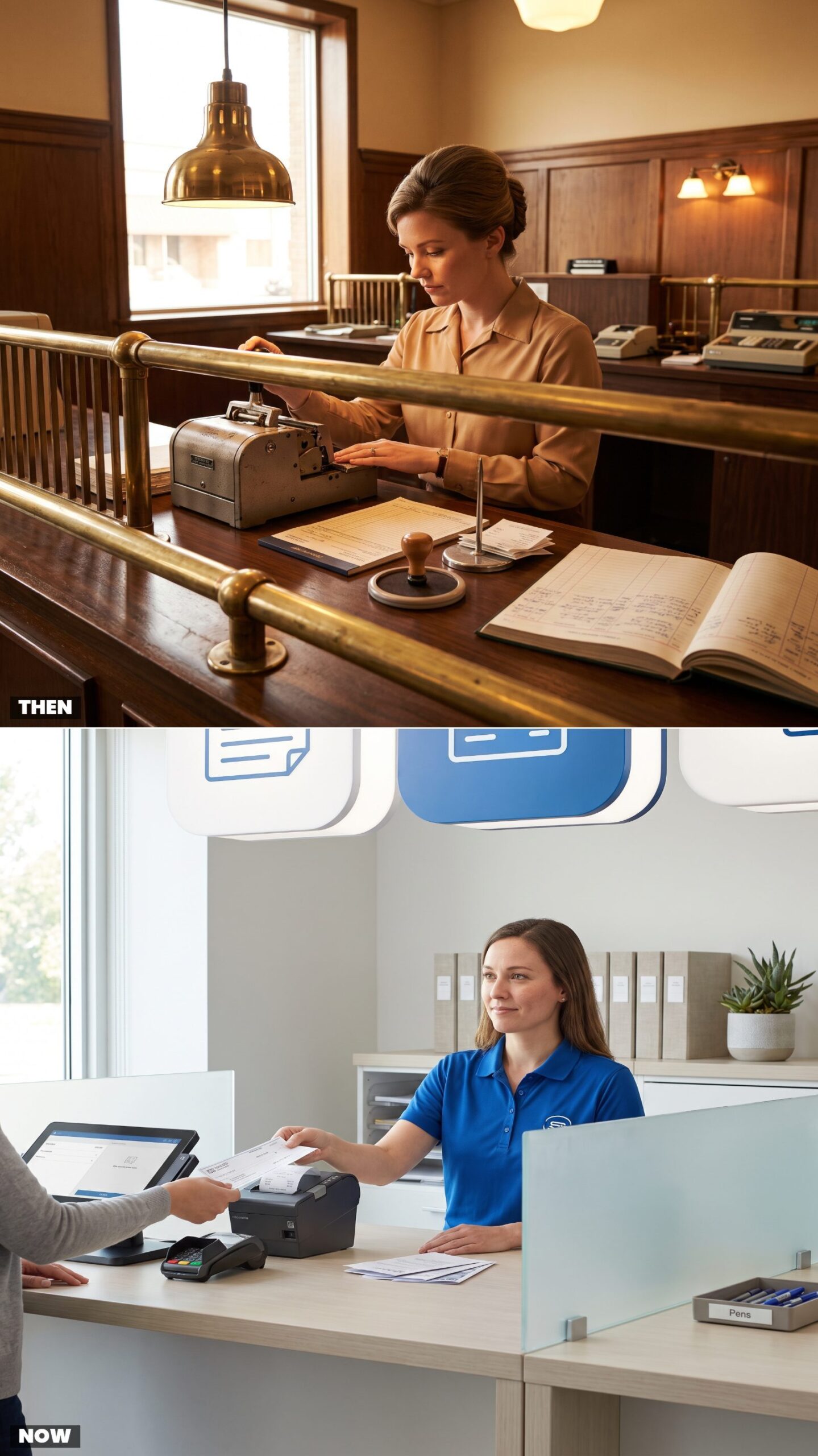
Need to pay rent or send money safely in 1970? You bought a money order or a bank draft, and the clerk fed the form into a machine that physically embossed the amount into the paper so nobody could alter it. That clunk of the imprinter was the sound of a guaranteed payment.
Now a thermal printer spits one out in seconds, or the whole thing happens on a phone and no paper exists at all. The embossed number was security you could feel with your thumb. Hard to get misty-eyed over a receipt printer.
14. The Christmas Club Account Display
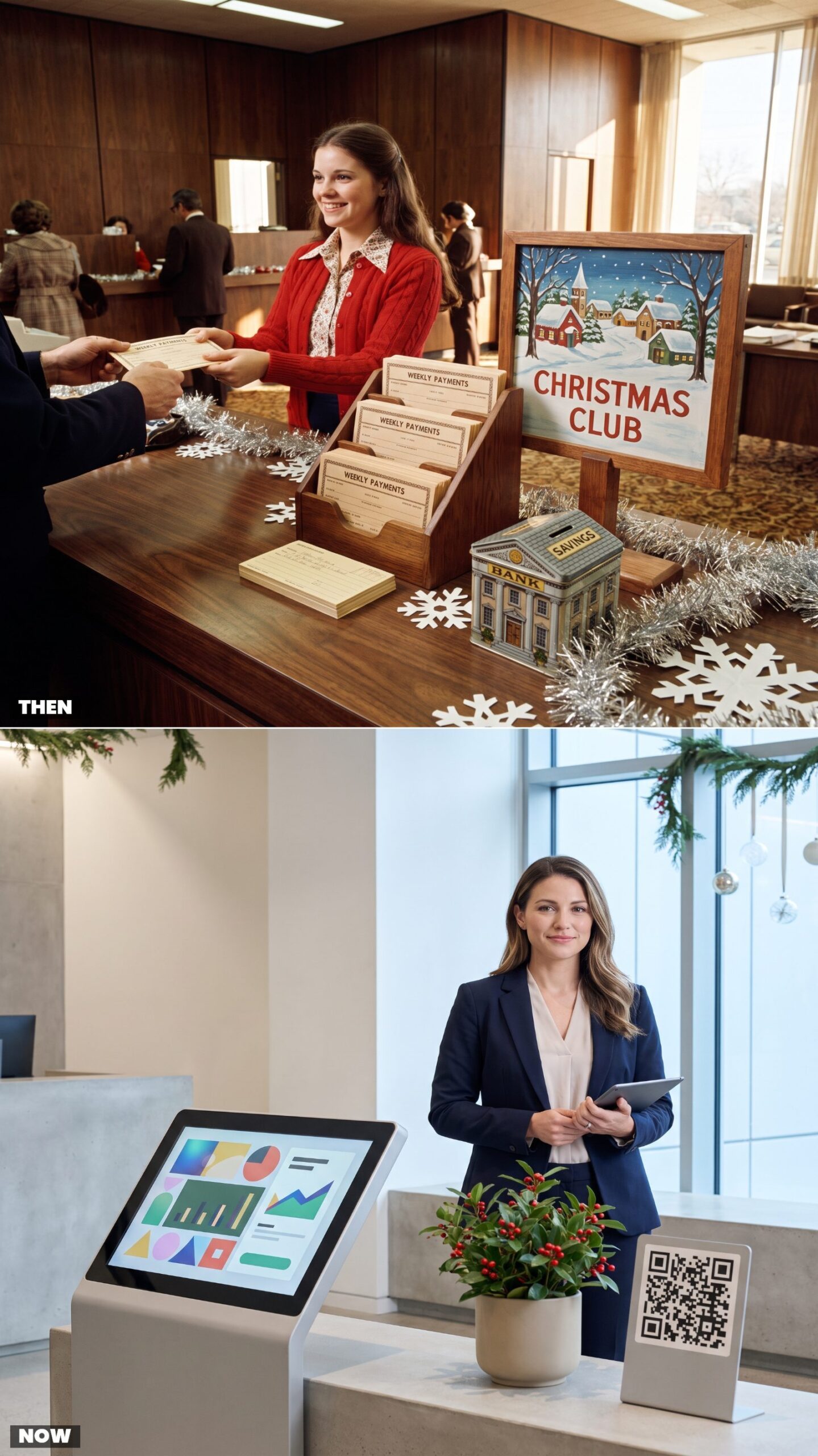
The Christmas Club was genius in its simplicity. All year you dropped a few dollars a week into a special account, the teller stamped your coupon book, and come November the bank mailed you a check for the whole saved-up sum. People furnished entire holidays with it.
And that little tin coin bank shaped like a building? Kids filled them up and dumped the coins at the counter. A savings app pulls the same forced-saving trick today, with an automatic transfer and a progress bar standing in for the stamp.
13. The Savings Bond Sales Counter
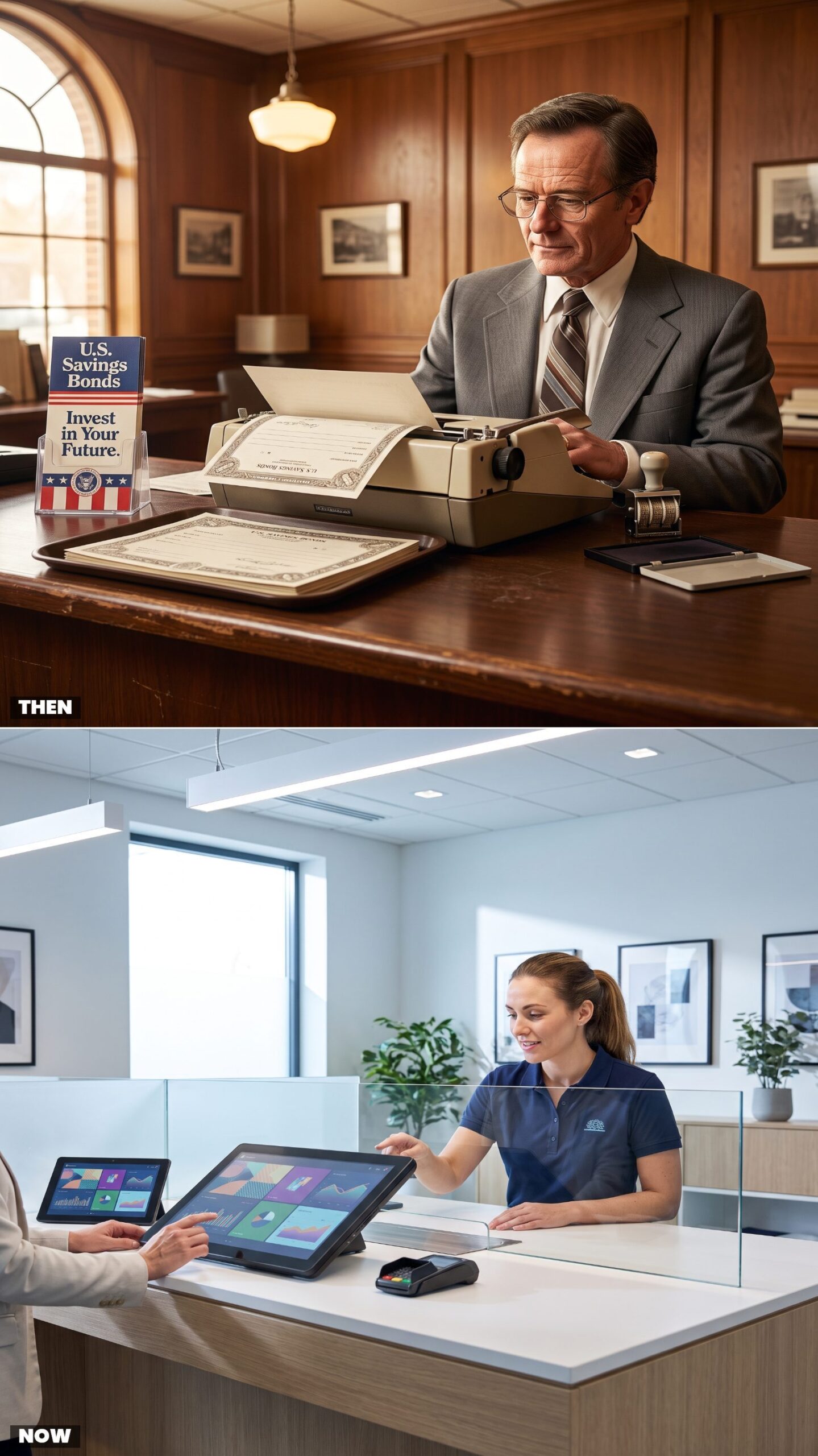
Buying a savings bond in 1970 meant walking out with an actual engraved certificate, ornate as a diploma, printed on heavy paper with a face value you wouldn’t collect for years. Grandparents bought them for grandkids. You’d tuck it in a drawer, forget it, then discover it decades later worth double.
Paper bonds are mostly gone. You buy electronically through a government website now, and the bond is just a number in an online account. Nothing to tuck in a drawer, nothing for a kid to find in an attic forty years from now. Honestly, that feels like a small loss.
12. The Foreign Currency Exchange Window
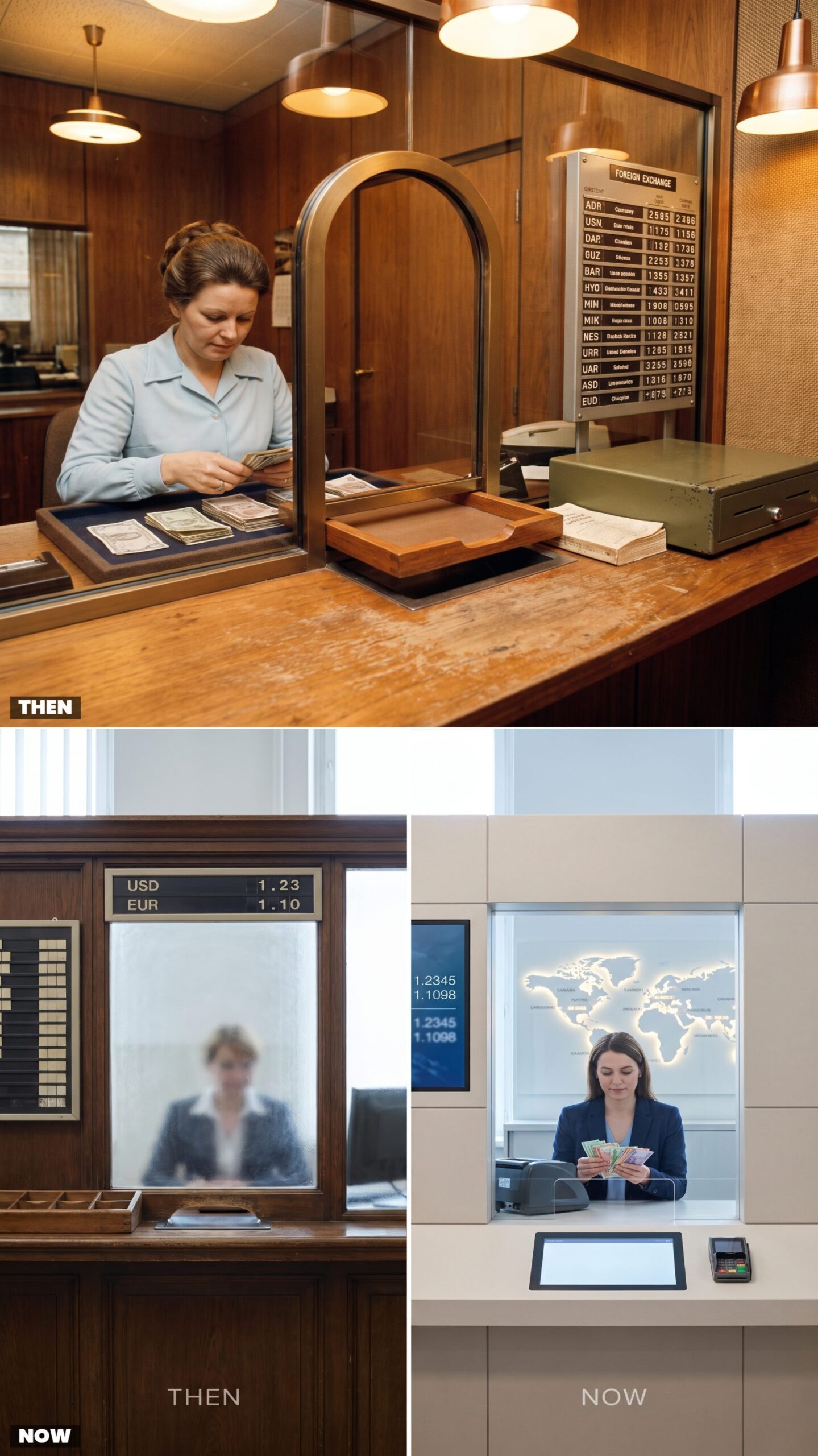
The exchange window had a certain glamour in 1970. The rate board clicked over with little sliding tiles while the teller laid out foreign banknotes in colors and sizes you never saw at home. You exchanged before you left, because once you landed abroad your options narrowed fast.
Now the rate updates live on a screen, and most people just tap their card at the destination and let the app handle the conversion. The window still turns up at airports. That sliding-tile rate board? Collectors buy it on sight.
11. The Bank-by-Mail Envelope Display
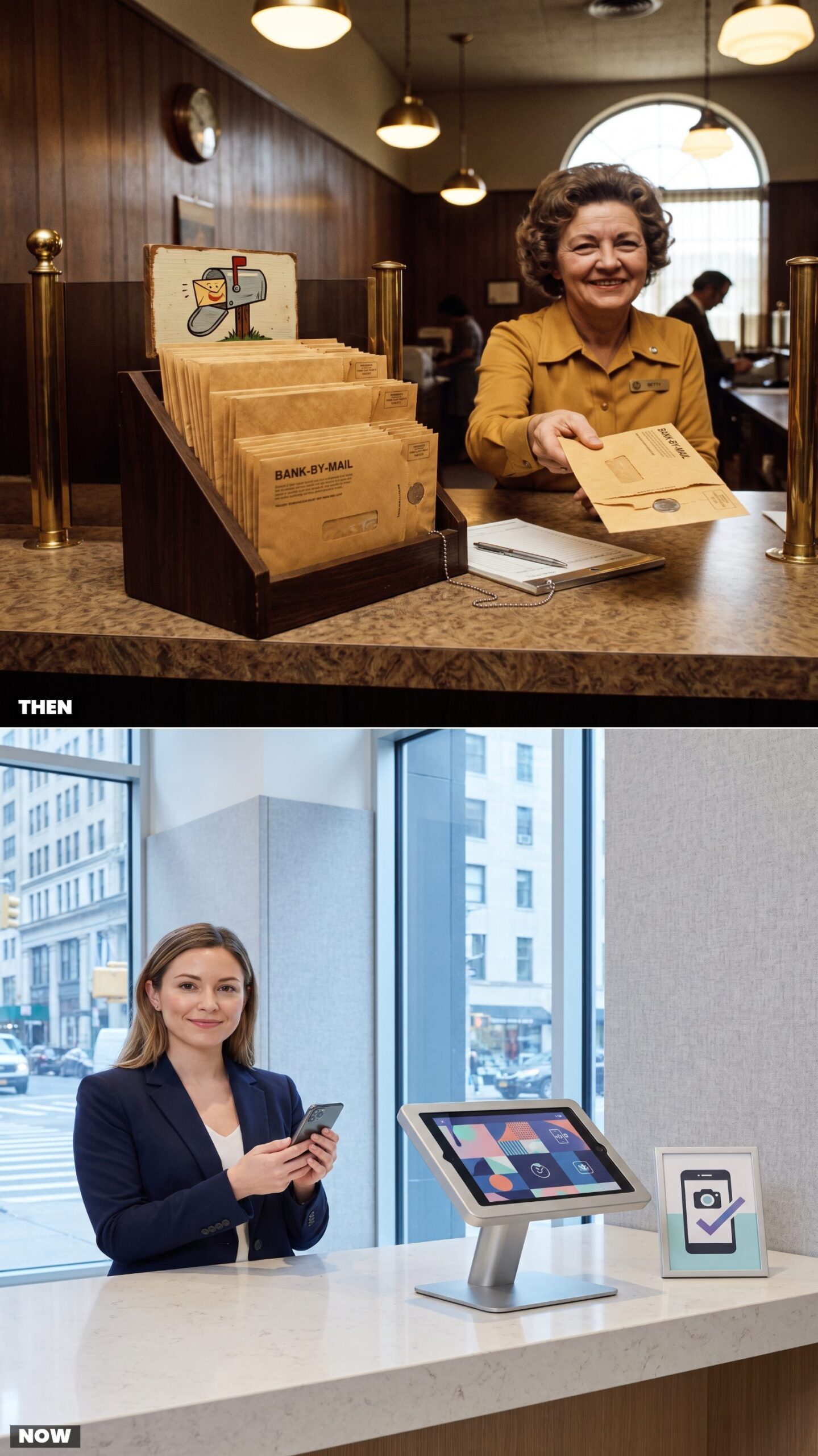
Couldn’t make it to the branch? In 1970 the bank handed you a stack of postage-paid deposit envelopes, each with a little reinforced pocket for coins and a tear-off slip. You sealed your check inside, dropped it in the mailbox, and waited two or three days hoping it arrived before a payment bounced.
Mobile deposit buried that whole system. You photograph the check with your phone and it posts before you’ve set the phone down. The two-day wait, the sealed envelope, the faith it took to mail your money away, all gone. Good riddance, though we’ll give those coin-pocket envelopes their due as a clever little piece of design.
10. Customer Identification Check
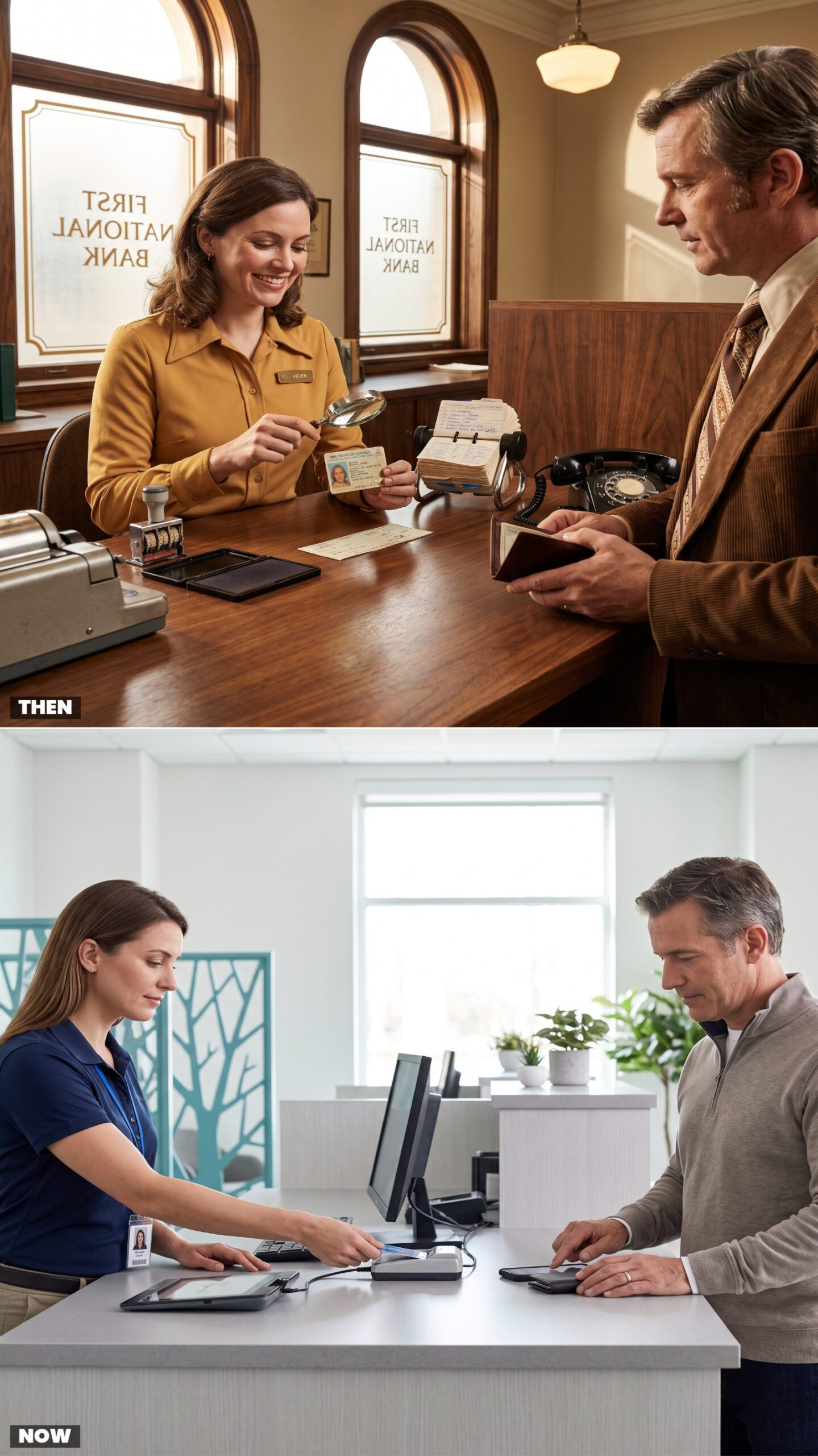
In 1970, proving you were you meant sliding a paper driver’s license across the counter and hoping the teller recognized your face from last Tuesday. She’d glance at the photo, maybe pull a signature card from a drawer to compare, and wave you through. Small towns ran on familiarity more than documentation.
Now a plastic ID gets scanned and cross-checked against a database, sometimes paired with a fingerprint or a text to your phone, before anyone touches your money. Faster, colder, much harder to fake. The teller doesn’t need to know your face anymore because the system already does.
9. The Signature-Card File
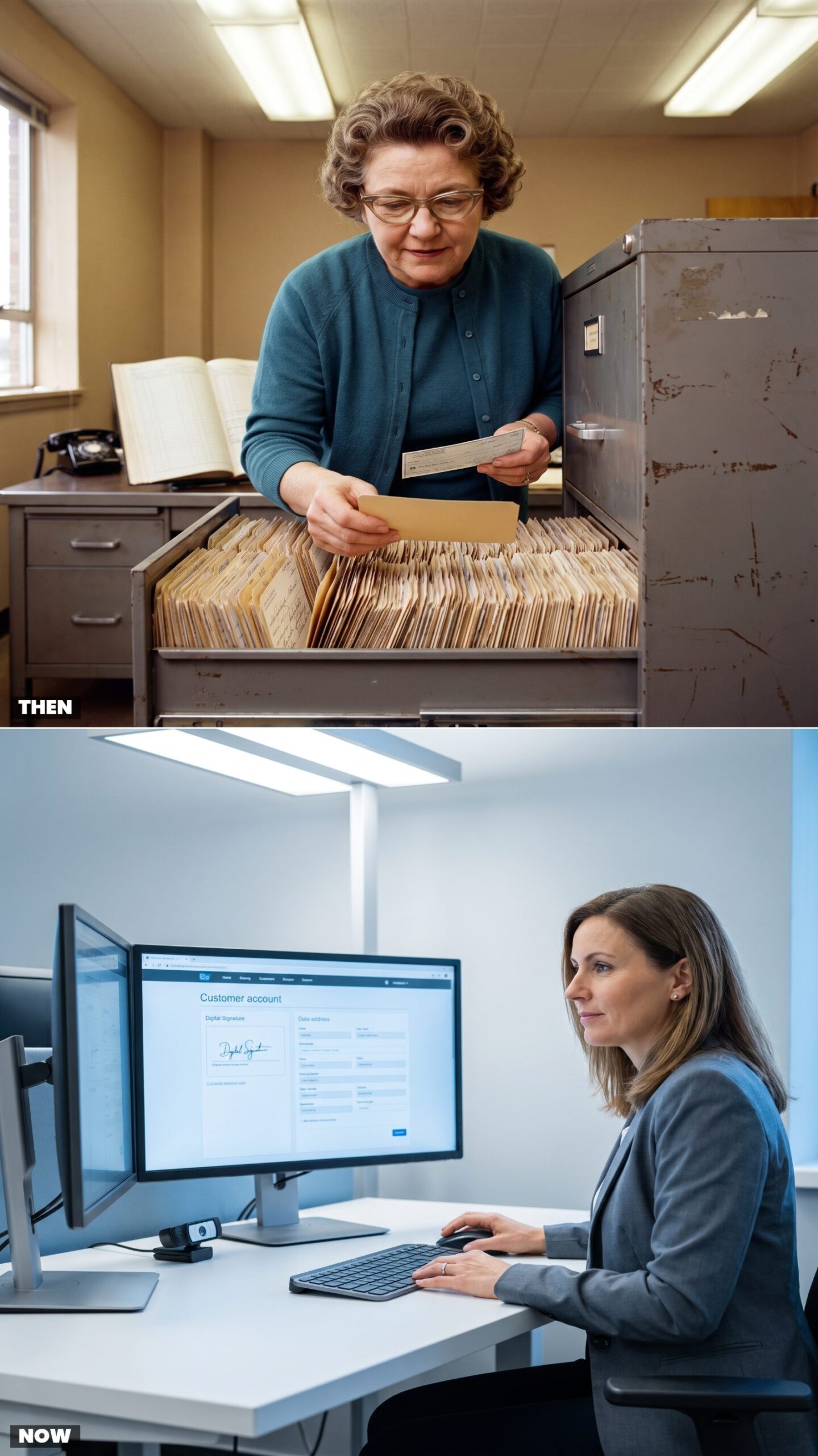
Before computers, the signature-card file was the beating heart of trust. Every account holder’s handwriting lived on a manila card in a steel drawer. When a check came in, someone physically pulled your card to match the loops and slants of your name against it.
That whole universe fits inside a database field now. Your signature is a scanned thumbnail, called up in half a second next to your transaction history, your photo, and a fraud-risk score. Nobody flips through drawers anymore. Honestly? We kind of miss the drawers. There was something human about a clerk squinting at your penmanship like it meant something.
8. The Security Guard Station
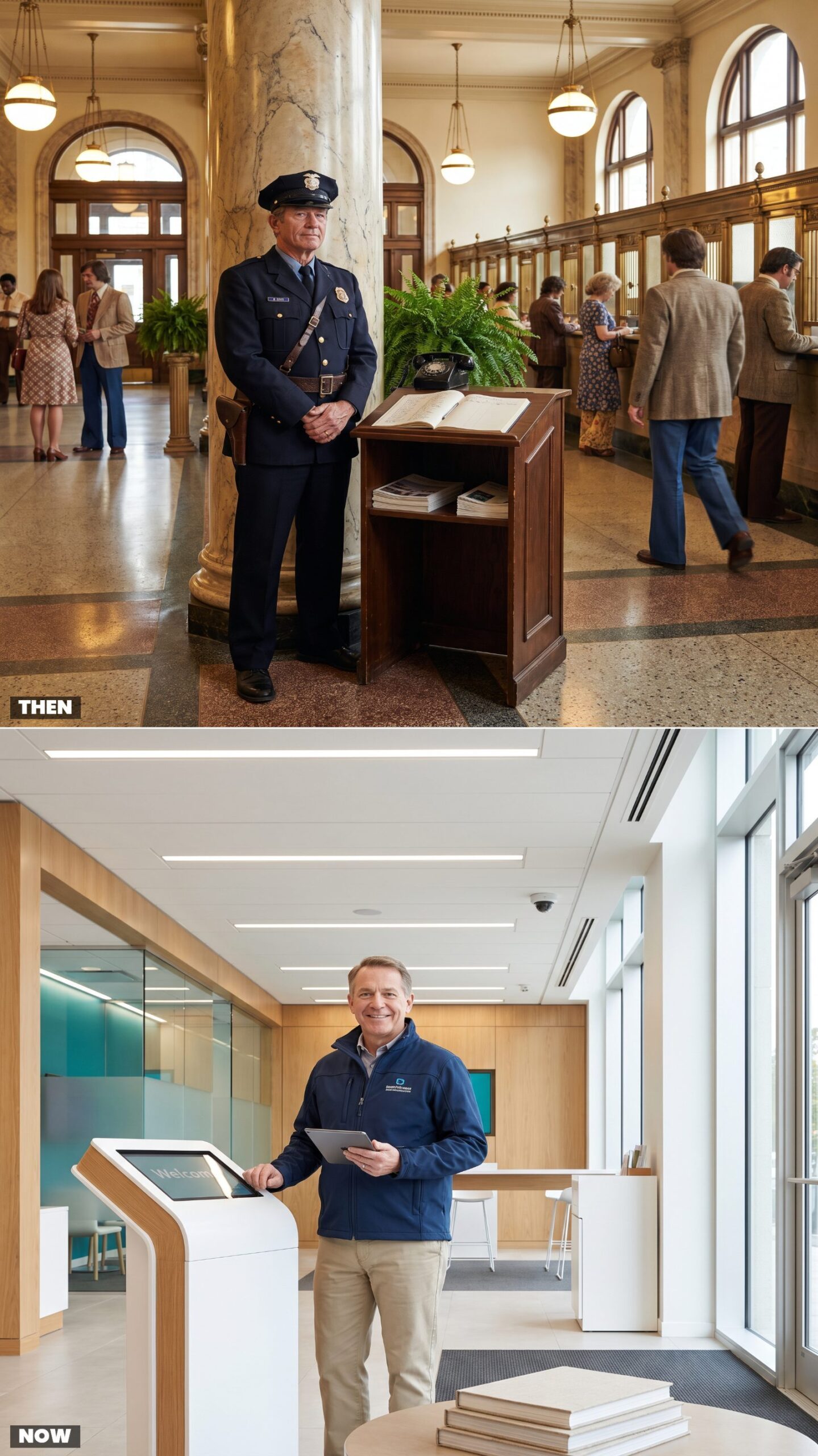
You remember the bank guard. Navy uniform, peaked cap, hands folded, watching everyone who walked in. He was equal parts deterrent and doorman, and in 1970 his presence was the whole security plan.
These days that spot by the door usually gets a greeter with a tablet, routing you to the right person while the cameras handle the watching. The uniform softened into a branded jacket. The holster became a touchscreen. And the job shifted from stopping robbers to shortening your wait.
7. The Ceiling-Mounted Surveillance Camera
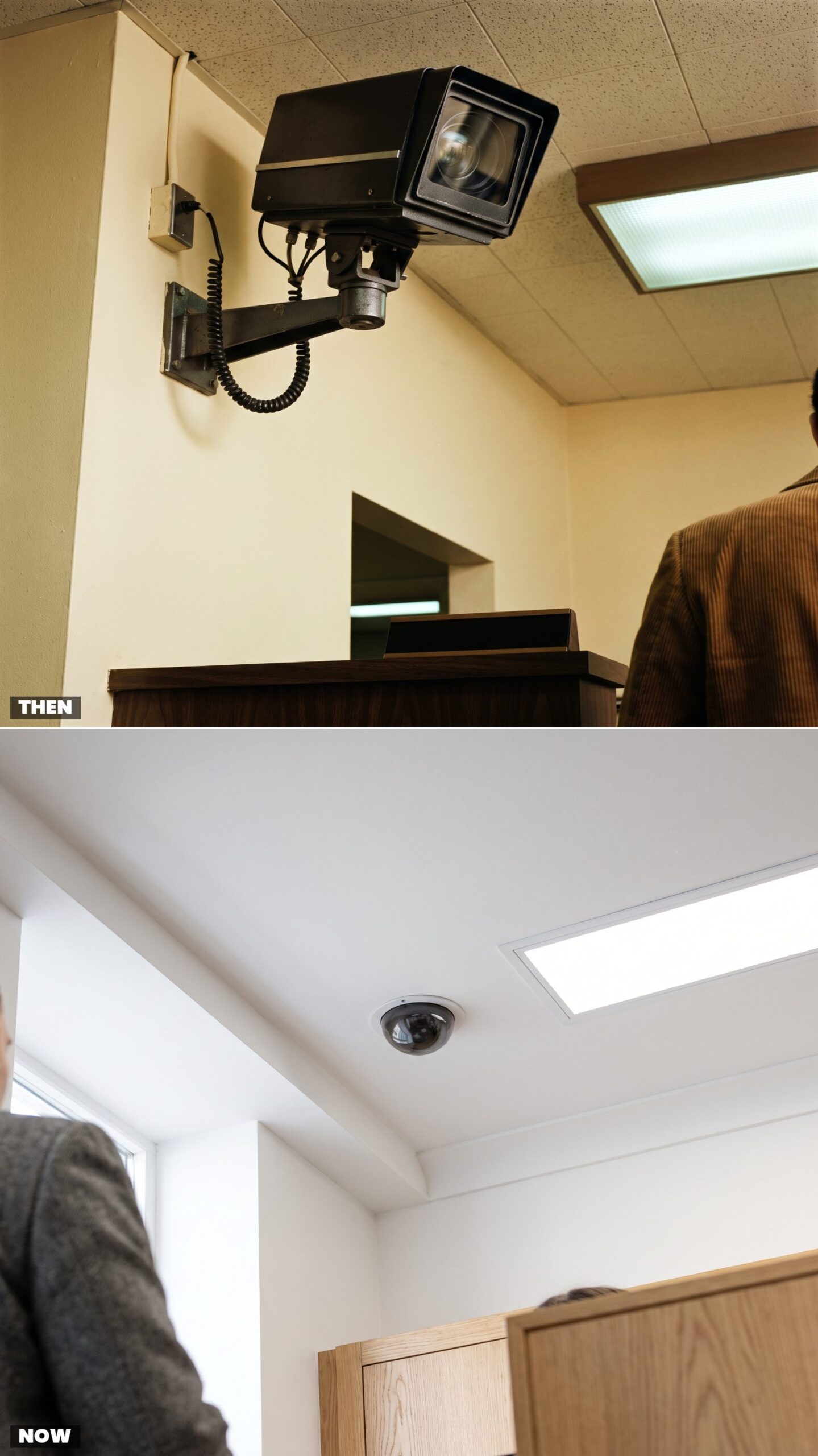
The old surveillance camera didn’t hide. A chunky metal box bolted to the ceiling corner, lens pointed down at the teller line, recording grainy black-and-white footage onto reel-to-reel tape that someone had to physically swap out. You could see it watching you, which was sort of the point.
The modern version is a tinted dome the size of a saucer, flush with the ceiling, feeding high-definition color video to a server you’ll never see. Records continuously. Never needs a tape change. Can probably read the brand on your coffee cup.
6. The Time-Lock Vault Mechanism
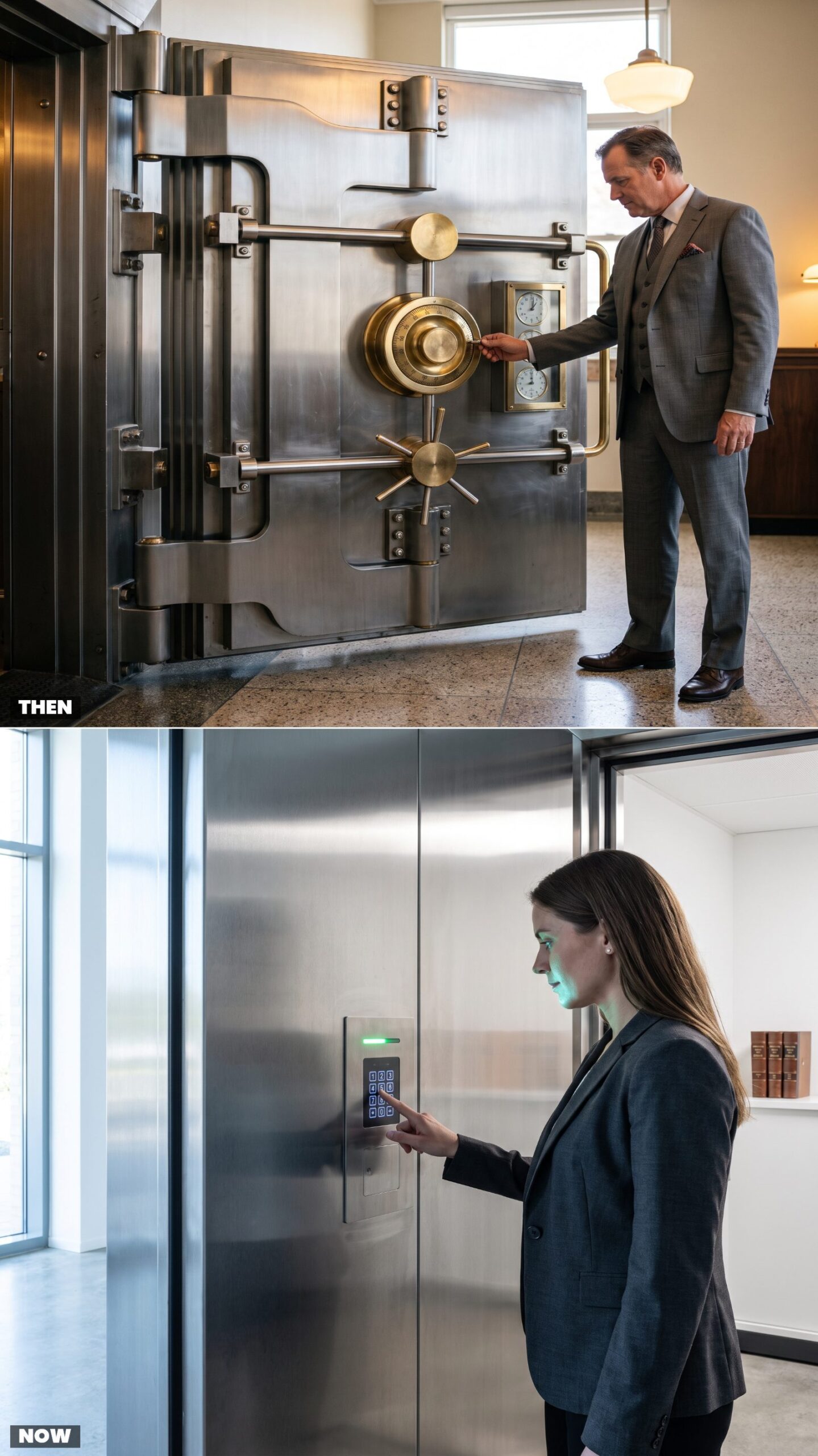
Inside the 1970 vault door sat a thing of pure mechanical beauty. A time-lock with tiny clock faces ticking behind glass, wound by hand, set to keep the door sealed until opening hours no matter who turned up with a dynamite charge and a bad idea. Brass dial, heavy bolts, the satisfying thunk of steel.
Now it’s a keypad and an LED. Codes change on a schedule, audit trails log every entry, the whole thing can be managed remotely. Efficient, obviously. But those little clocks had a quiet drama to them that a backlit number pad will never match.
5. The Bullet-Resistant Teller Barrier
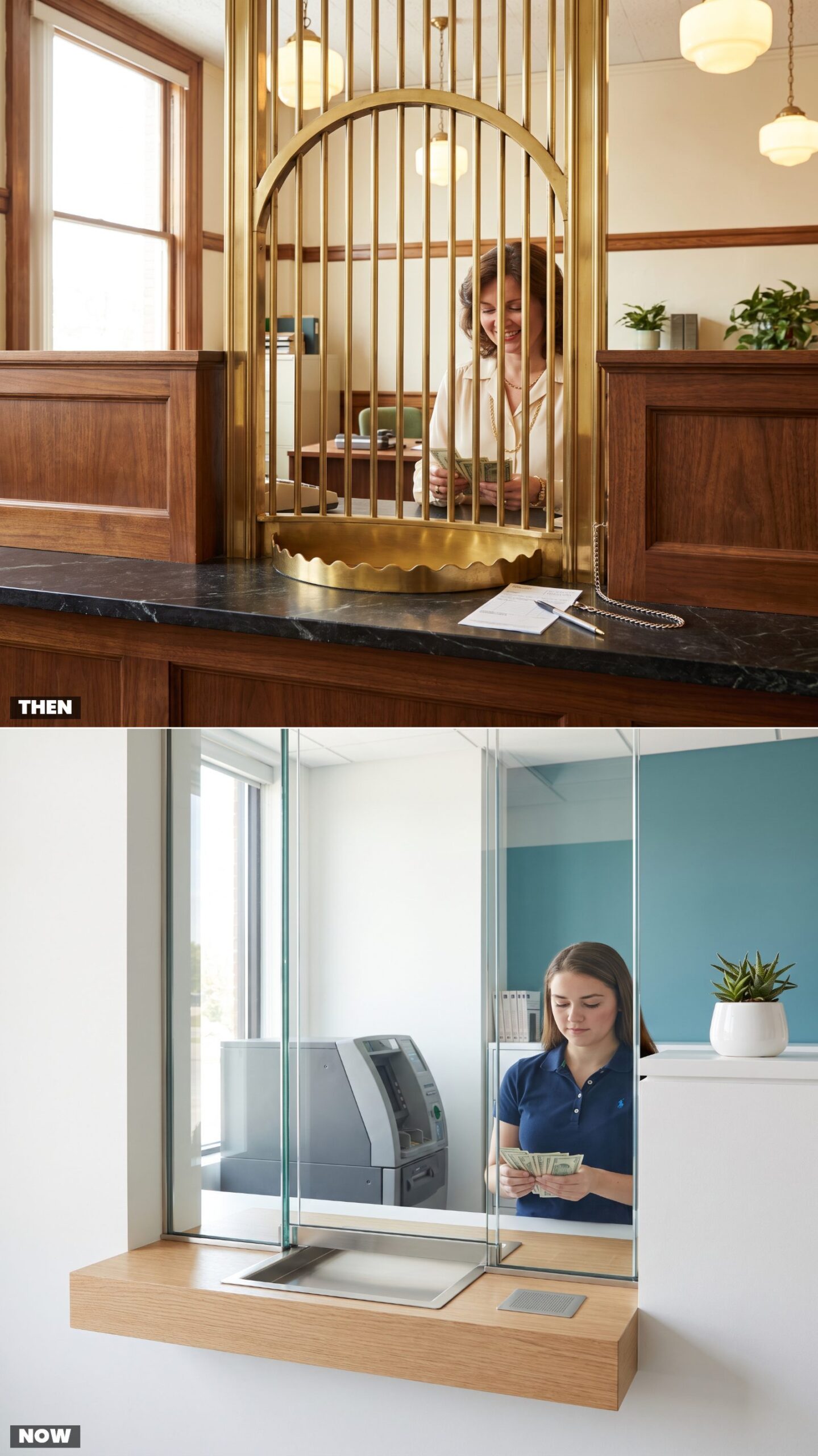
The brass cage was unmistakable. Vertical bars rising from a marble counter, a little arched window to speak through, a scalloped tray to slide your cash across. It looked like a confessional for money, and it made every transaction feel slightly ceremonial.
Modern protection went invisible on purpose. A sheet of bullet-resistant glass you can barely see, a flush speaker, a stainless tray, and a teller who looks like she’s just standing at a desk. The security got stronger and the theater disappeared. Branches want you to feel welcome now, not frisked.
4. From Outdoor ATM to 24-Hour ATM Lobby
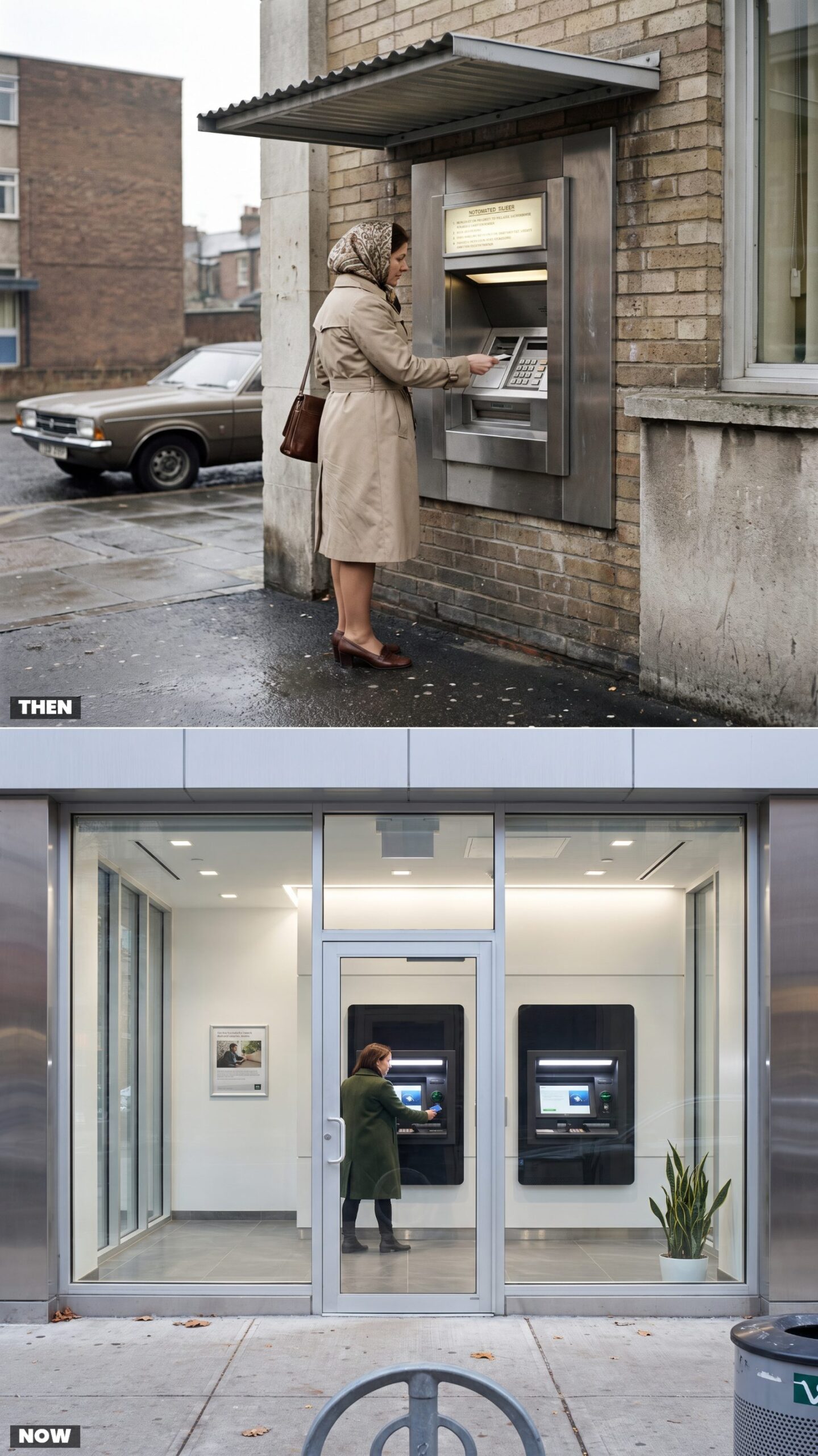
Early cash machines were lonely little boxes punched into a brick wall, exposed to the weather and the night. You stood on the sidewalk in your coat, worked the stiff mechanical buttons, and got a fixed amount of cash if you were lucky and the thing didn’t eat your card.
That single wall slot grew into a heated, glass-walled lobby you badge into after hours. Multiple touchscreen machines that deposit checks, dispense exact amounts, accept a tap of your phone. The sidewalk ritual moved indoors, and the machine learned to do nearly everything a teller once did.
3. The Video Teller Machine
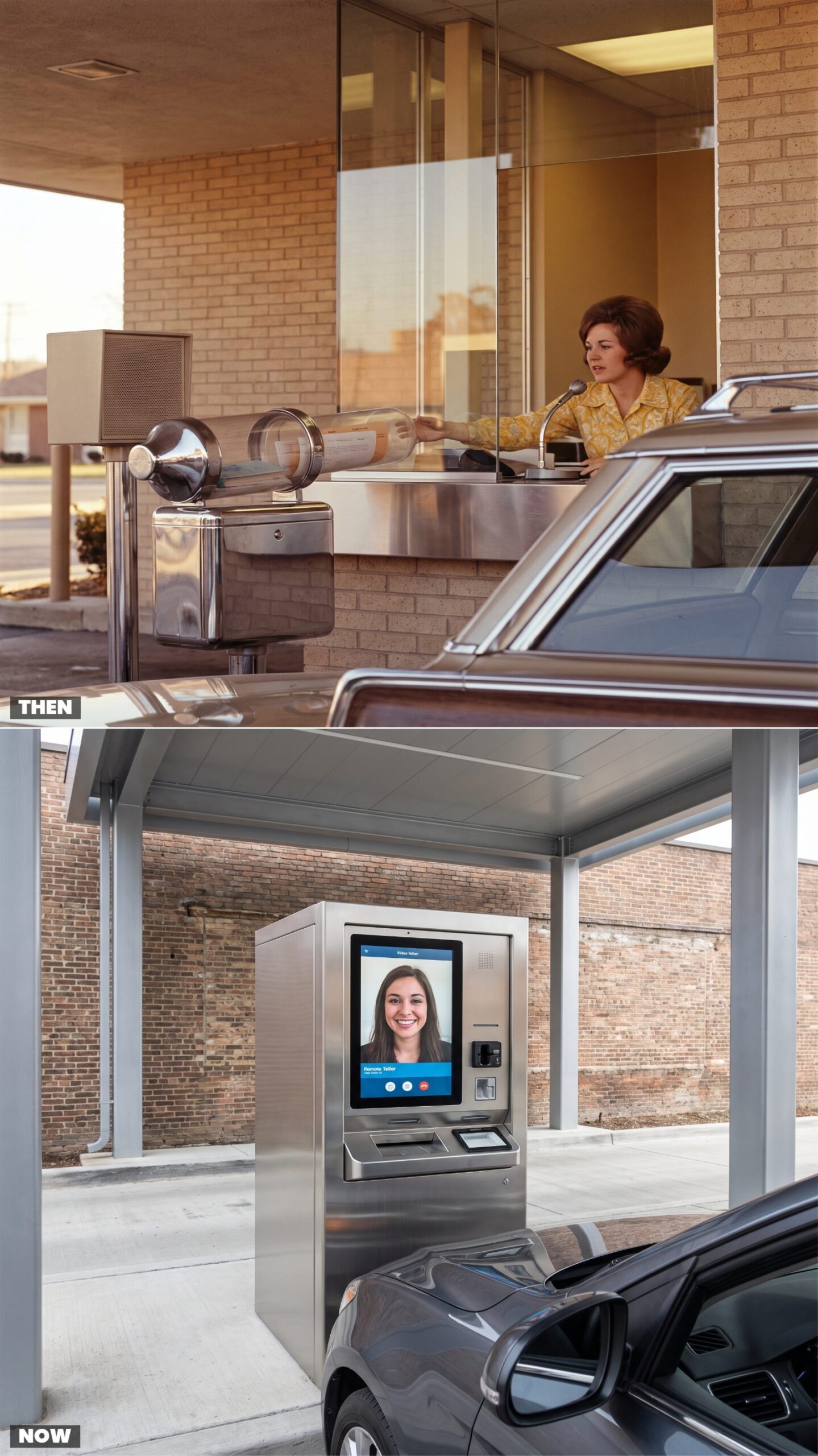
The 1970 drive-up ran on pneumatic tubes. You pulled up, dropped your deposit into a clear plastic capsule, sent it whooshing through a vacuum pipe, and talked to the teller through a crackling speaker box while she worked behind thick glass a few feet away.
The modern version put her face on a screen and moved her miles away. Video teller machines connect you by live video to a real person sitting in a remote call center who handles your deposit, your withdrawal, even opening a new account, all without anyone physically present at the branch. The tube whoosh is fading. The human stayed, just relocated.
2. The Wheelchair-Accessible Service Counter
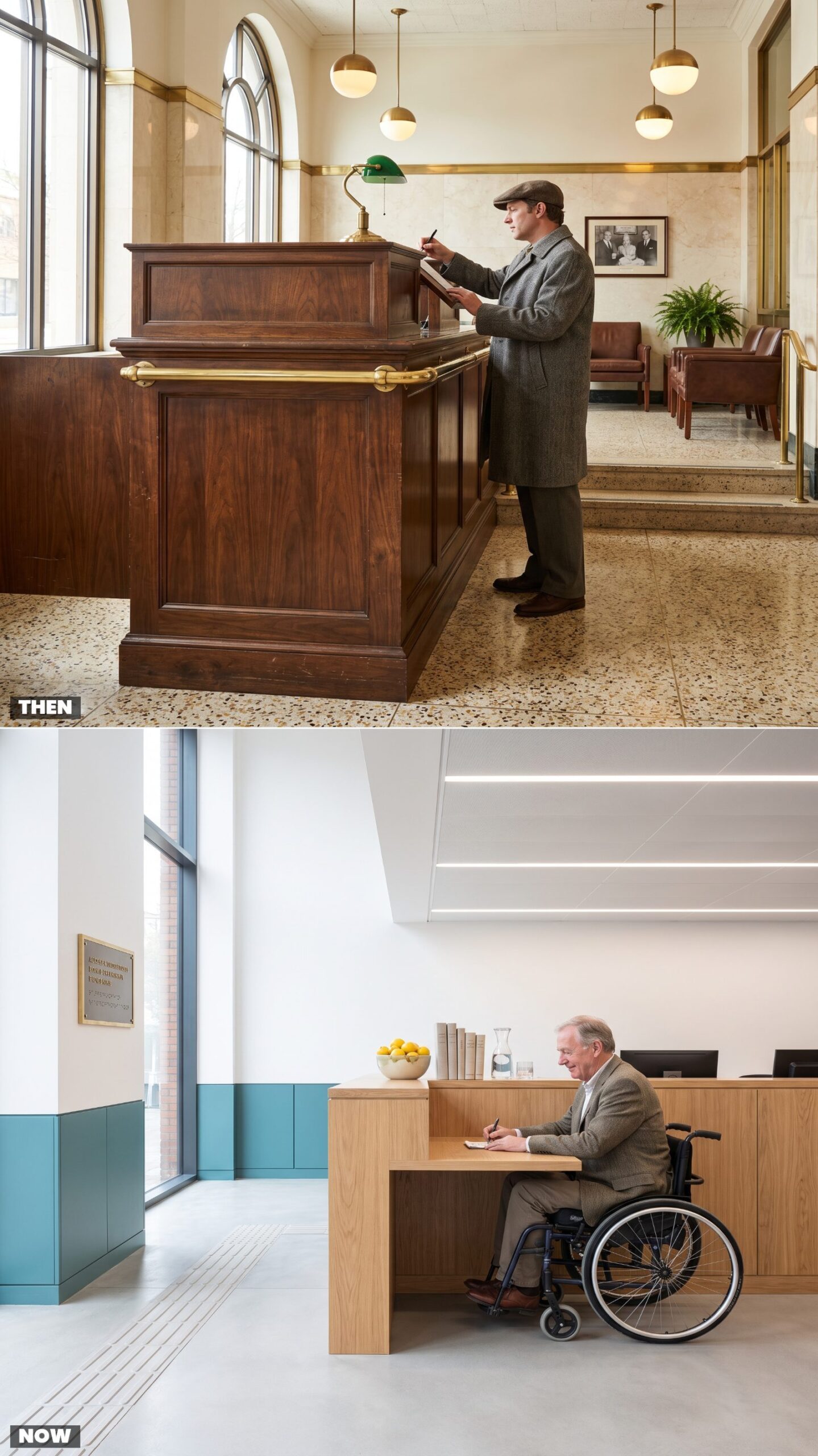
Look at an old bank counter and you’ll notice something: it was built for a standing adult of average height and nobody else. Tall walnut ledges, a step up to the platform, no lowered section, no ramp. If you used a wheelchair in 1970, a simple withdrawal could mean reaching over your head or asking a stranger to write for you.
A lowered counter section with open knee space, step-free floors, tactile signage on the wall — standard now, much of it driven by the Americans with Disabilities Act. The counter finally bent down to meet the customer instead of making the customer reach up.
1. The Small Cashless Bank Branch
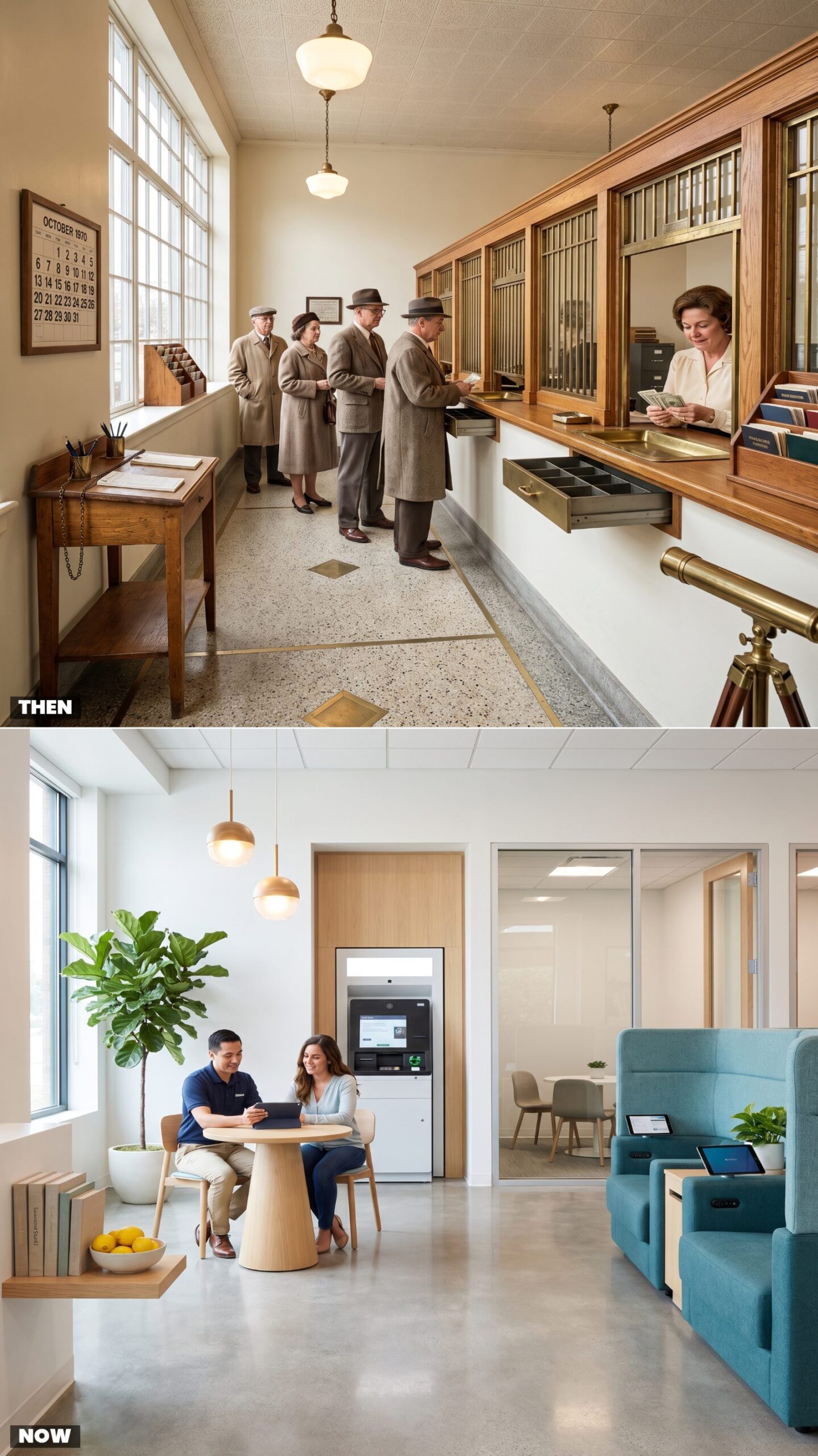
A 1970 branch existed to move paper money. Three caged windows, cash drawers clacking, tellers counting bills by hand, a line of people clutching passbooks and deposit slips. The whole room was built around the physical act of handing over currency.
The newest branches barely hold any cash at all. One self-service kiosk against the wall handles the rare withdrawal, while the floor opens into seating pods and a glass advisory office where a staffer walks you through a mortgage or a retirement question over a tablet. The tellers didn’t vanish. The job became conversation instead of counting.
The room used to be built around cash. Now it’s built around advice, and the drawers full of bills are the first thing to go.