

Would you like to save this?
The ibuprofen in the fancy red bottle and the ibuprofen in the plain white one roll off the same line, in the same factory, from the same chemical, and you pay double for the color of the label. We’ve tested, compared, and read enough ingredient panels to say it flat: a lot of what you’re buying is confidence. These are the products where the store brand does the exact same job, sometimes better, and the reason never changes. Chemistry doesn’t care what the box looks like.
Please note that some of the images in this article were created with the assistance of AI.
29. Store-Brand Pain Relievers (Ibuprofen, Acetaminophen, Aspirin)
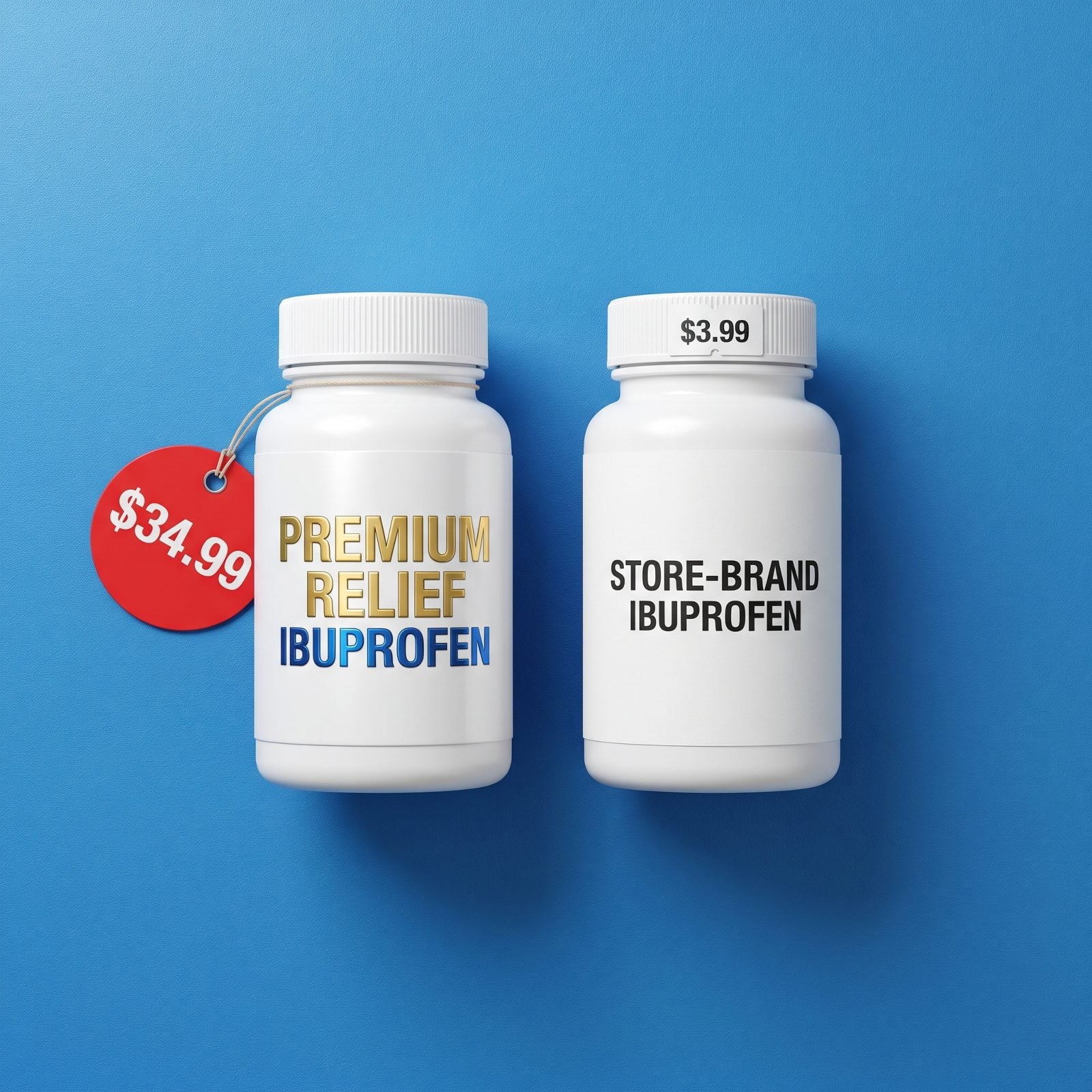
This is the easiest money you’ll ever save, and the one people resist hardest. The FDA requires generic drugs to carry the same active ingredient, in the same amount, with the same strength and absorption as the name brand. Ibuprofen is ibuprofen. The molecule is identical by law, full stop.
So what’s the extra cash for? Marketing, a logo you recognize, maybe a different dye in the coating. Store-brand pain relievers often run half the price or less, pill for pill.
28. Generic Prescription Medications

When a brand-name drug’s patent expires, other manufacturers can make the same active ingredient, and the FDA holds those generics to the same standard for strength, purity, and how fast they work in your body. The price gap tends to be enormous. All the research and advertising that justified the original price was already paid for, so a generic can cost a fraction of what the brand charges.
Ask your pharmacist directly whether a generic exists for what you take. Most will tell you plainly. Most doctors are fine signing off.
The hesitation is psychological, not medical. We trust the familiar name because we’ve seen the ad a hundred times — but your body doesn’t read ads.
27. Plain Baking Soda
Baking soda is sodium bicarbonate. One compound, one formula, and no premium version of a single chemical, no matter what the fancy box whispers at you.
That orange-box brand you grew up with and the generic bag on the bottom shelf are chemically identical. Baking, deodorizing the fridge, scrubbing a pan, softening laundry water — they perform the same, and you’re often paying triple for the nostalgia.
26. Plain White Vinegar for Cleaning
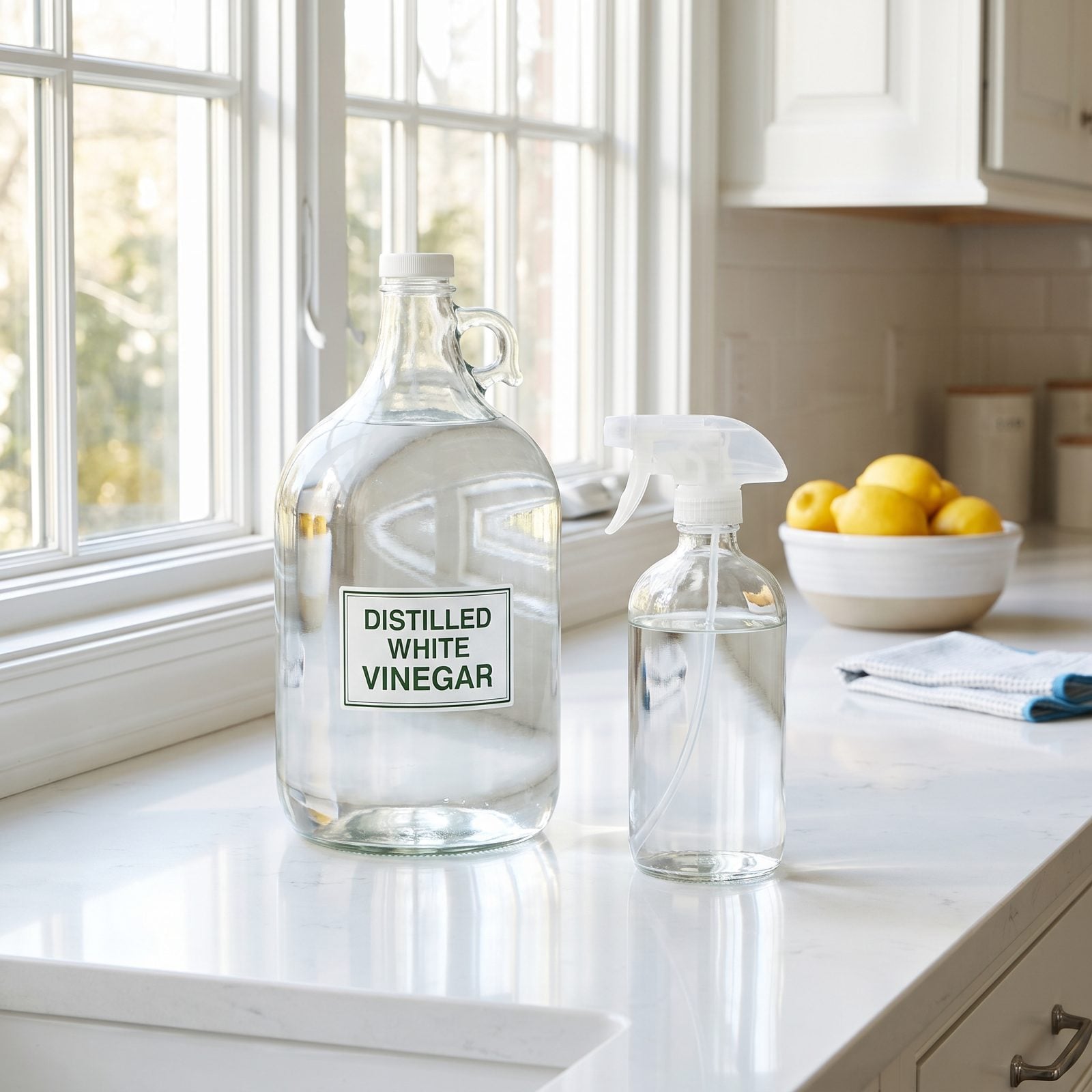
Distilled white vinegar is roughly five percent acetic acid in water. That’s the whole product. The cheapest jug and the specialty cleaning vinegar do the same job because, at the core, they’re the same acid at nearly the same concentration.
It cuts grease, dissolves hard-water scale, deodorizes drains. The pricier cleaning versions sometimes bump the acidity a little higher, but for everyday wiping and rinsing, the gallon jug from the baking aisle handles it.
We buy it by the gallon and refill a spray bottle. Costs almost nothing. Never run out mid-scrub.
25. Generic Sunscreen with the Same SPF and Active Ingredients
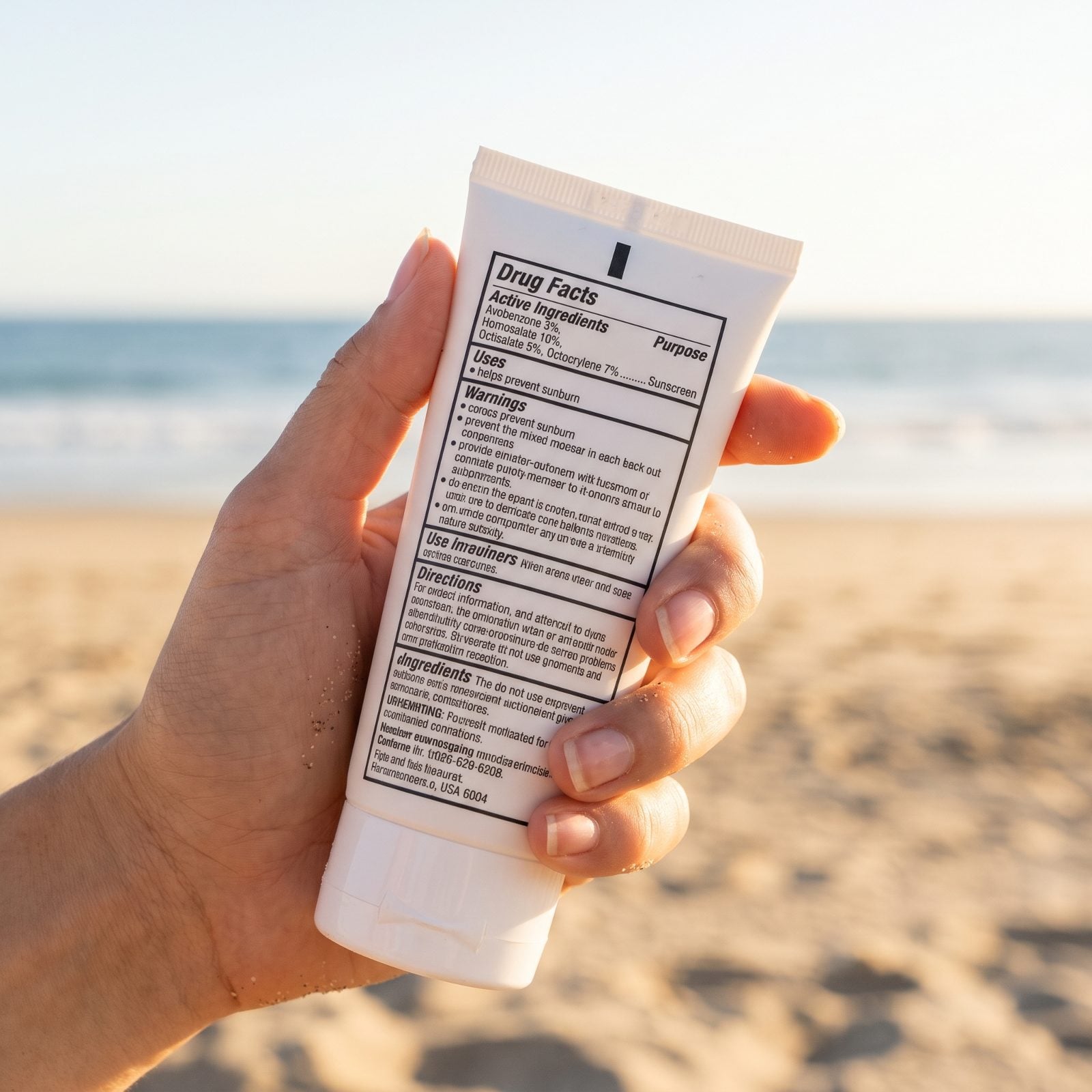
Flip the tube over and read the active ingredients. Sunscreen is regulated as an over-the-counter drug, so the SPF number and the protective ingredients — zinc oxide, avobenzone, octocrylene and the like — are listed and standardized.
Same active ingredients at the same percentages and the same SPF? Then it protects your skin the same way. What separates a drugstore house brand from a designer bottle is usually the texture, the scent, and the price per ounce.
One honest caveat: if a cheaper formula feels greasy and you skip reapplying because of it, the expensive one you’ll actually use wins. Protection you apply beats protection you avoid.
24. Store-Brand Allergy Medication (Loratadine, Cetirizine, Diphenhydramine)
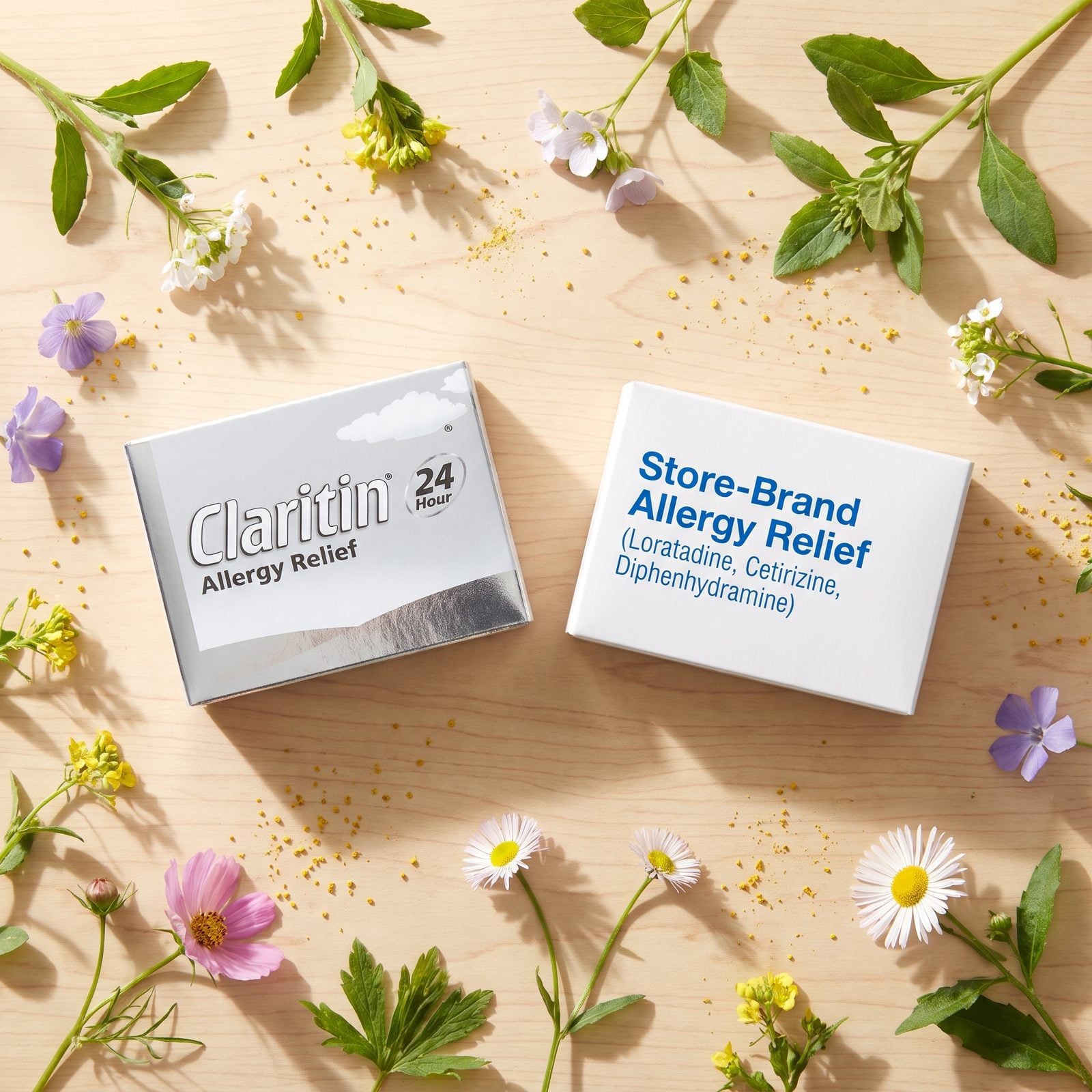
The brand-name allergy pills you grab in spring share the same active ingredients as their generics, and each product contains just one of them: loratadine, cetirizine or diphenhydramine. Same dose, same relief, often a quarter of the price.
A box of name-brand 24-hour allergy tablets can cost several times what the identical generic runs for the same count. During peak pollen season, when you’re blowing through them fast, that gap turns into real money fast.
Read the active ingredient line and match the milligrams. If they match, you’ve found your cheaper bottle. Done.
23. Generic First-Aid Supplies (Bandages, Gauze, Antiseptic)
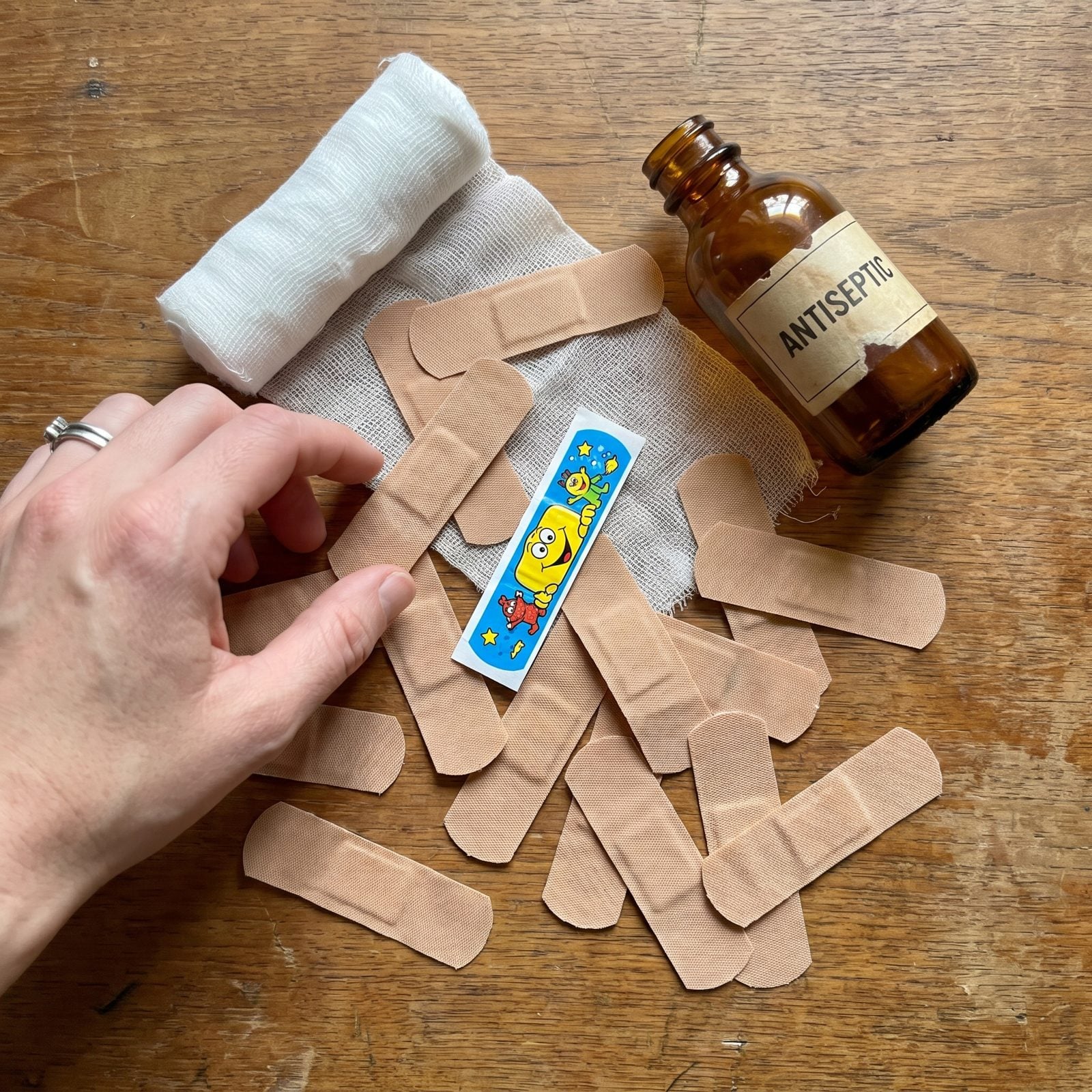
A bandage sticks to your skin and keeps dirt out of a cut. That’s the whole job, and the plain adhesive strip does it as well as the famous flesh-colored one does.
Gauze is gauze. Medical tape holds. Antiseptic wipes with the same active ingredient clean the same way. The name-brand box earns its premium almost entirely from a logo you’ve known since childhood.
22. Store-Brand Milk
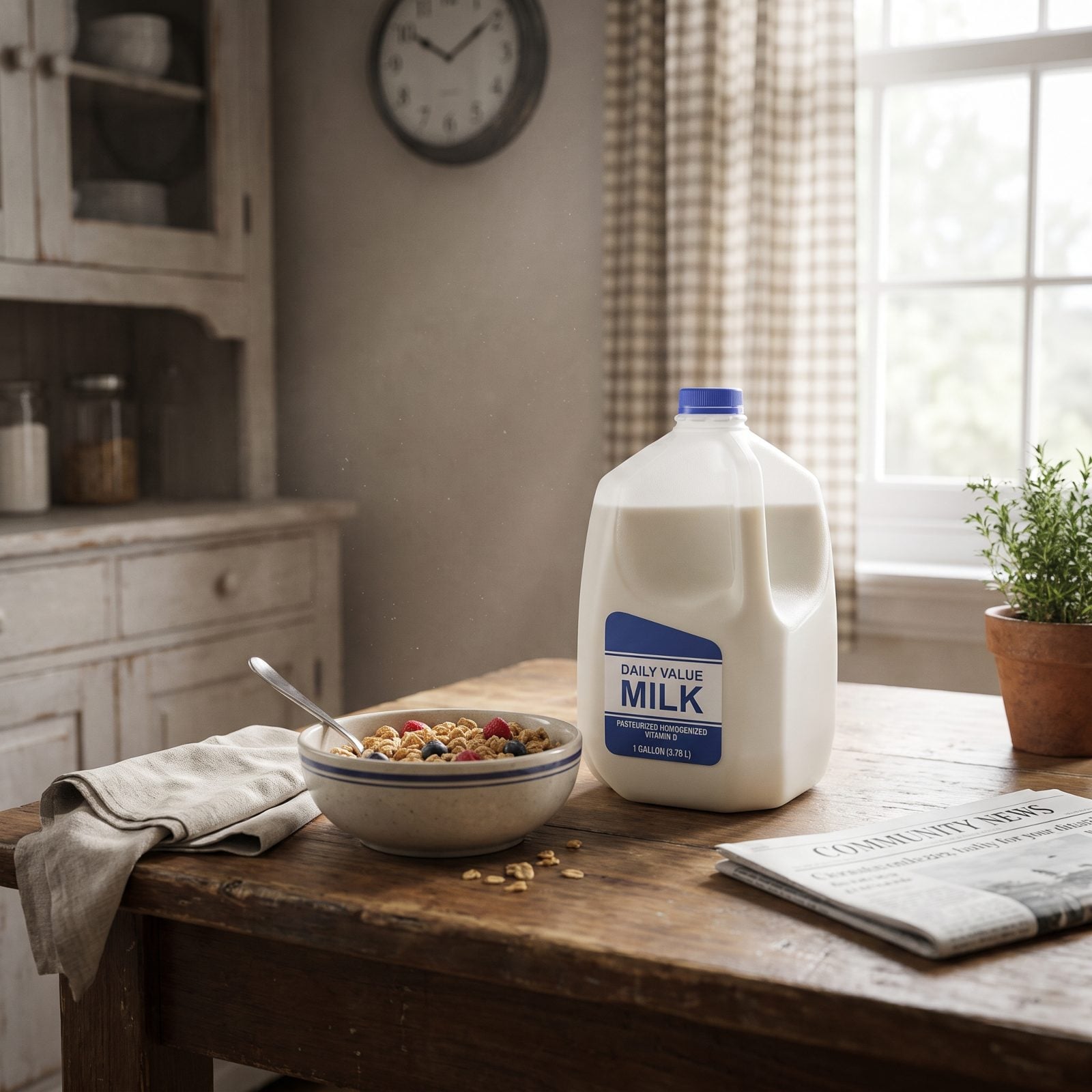
Milk is one of the most tightly regulated foods there is. Whole, two-percent, and skim all meet federal standards for fat content, and every carton gets pasteurized under the same safety rules.
Here’s the part that gets people: the store-brand gallon and the national-brand gallon frequently come from the same regional dairy — sometimes the exact same tanker — then get split into different jugs. The cow didn’t check whose logo was going on it.
If the fat percentage matches and both are fresh, they taste the same, because they often are the same. Buy the cheaper jug and spend the difference on something that actually varies.
21. Plain Rice and Dried Pasta

Would you like to save this?
Dried pasta is wheat and water. White rice is a milled grain. About as basic as food gets, and the premium versions rarely justify the markup for everyday cooking.
The store-brand box of spaghetti cooks up the same, holds sauce the same, feeds the same table. Now, imported bronze-die pasta does have a rougher texture that grips sauce a touch better, so splurge on that for a special dinner if the mood strikes. On a random Tuesday? The house brand is genuinely fine.
The grain doesn’t know it was cheap. It cooks exactly the same.
20. Store-Brand Pantry Staples (Flour, Sugar, Salt)
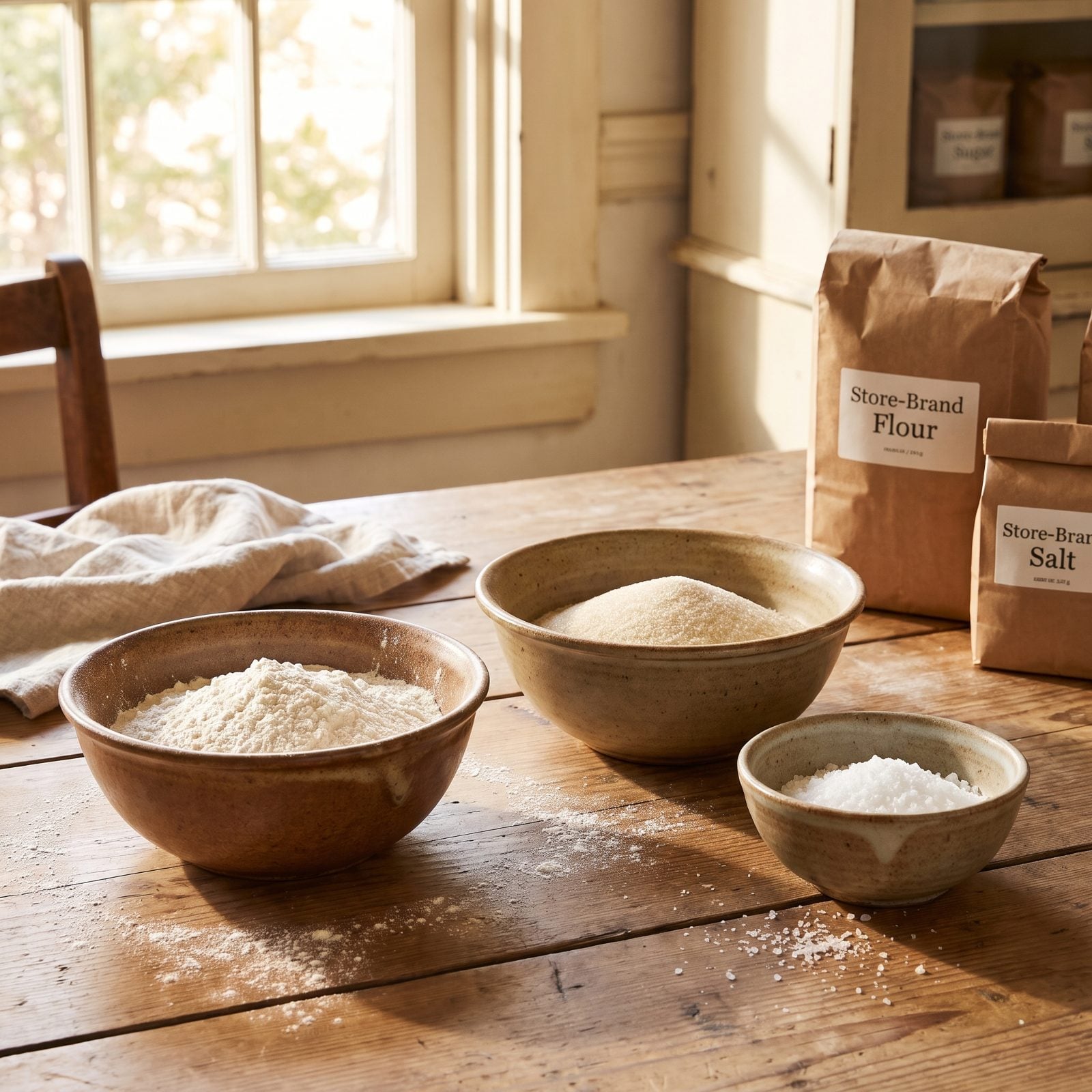
All-purpose flour is milled wheat. Granulated sugar is refined sucrose. Table salt is sodium chloride, usually with a little iodine added. Commodity ingredients, defined by standards, with very little room for one brand to pull ahead of another.
Your cookies don’t know whose flour went into them, and your coffee doesn’t taste the logo on the sugar bag. For plain baking and cooking, the house-brand staples behave the same in the recipe.
19. Generic Bleach: The Same Sodium Hypochlorite, Half the Price
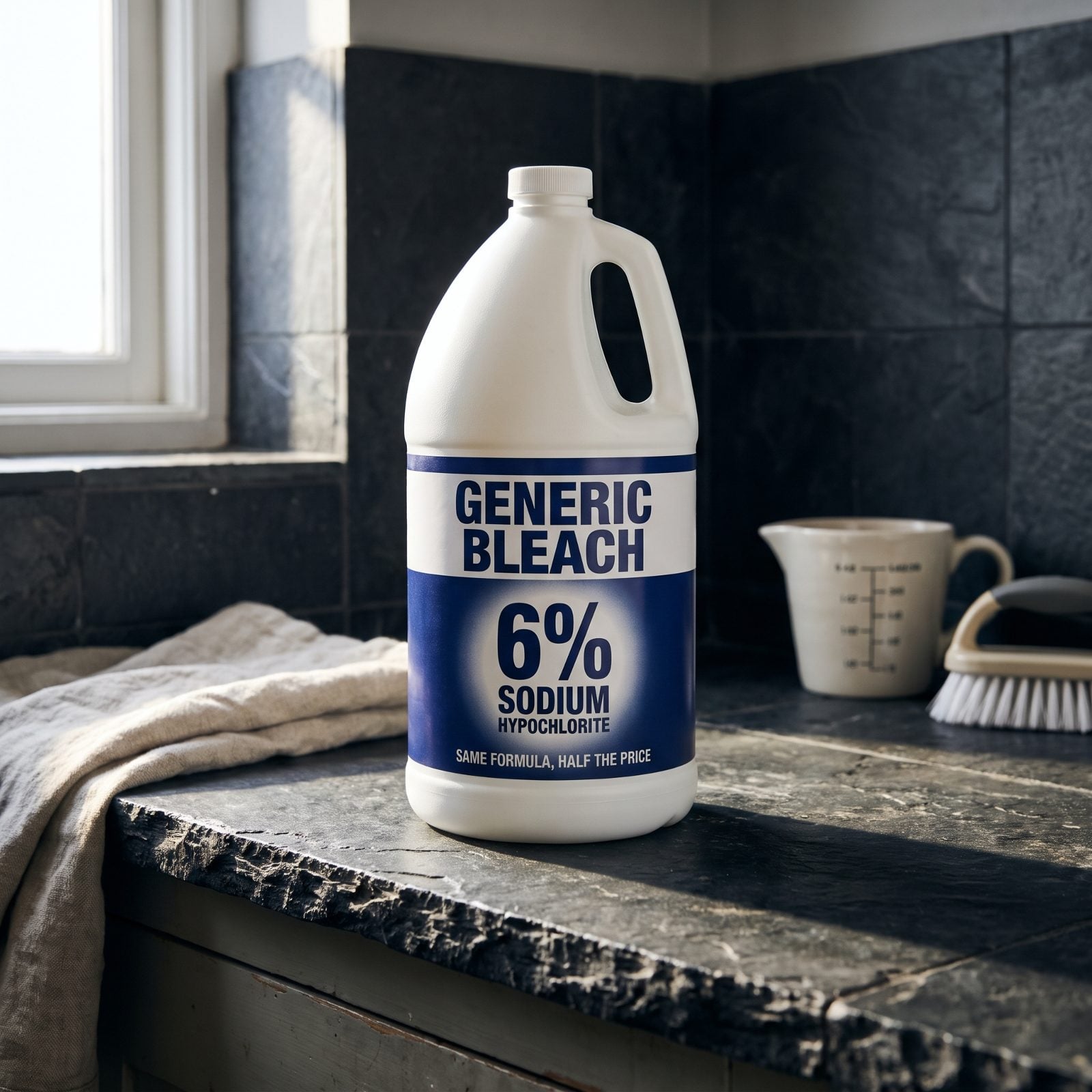
Bleach is bleach. The active ingredient is sodium hypochlorite, and the concentration sits printed on the back of every bottle, with premium brands and store brands landing in the same range of roughly 6 to 8 percent. Match the number and you’ve matched the product.
What’s the markup actually buying you? A name, and sometimes a thicker-feeling formula with a splash of fragrance. Neither disinfects better, and the cheap gallon on the bottom shelf whitens your whites and sanitizes your counters exactly the same.
18. Store-Brand Canned Beans and Vegetables: Same Field, Different Label
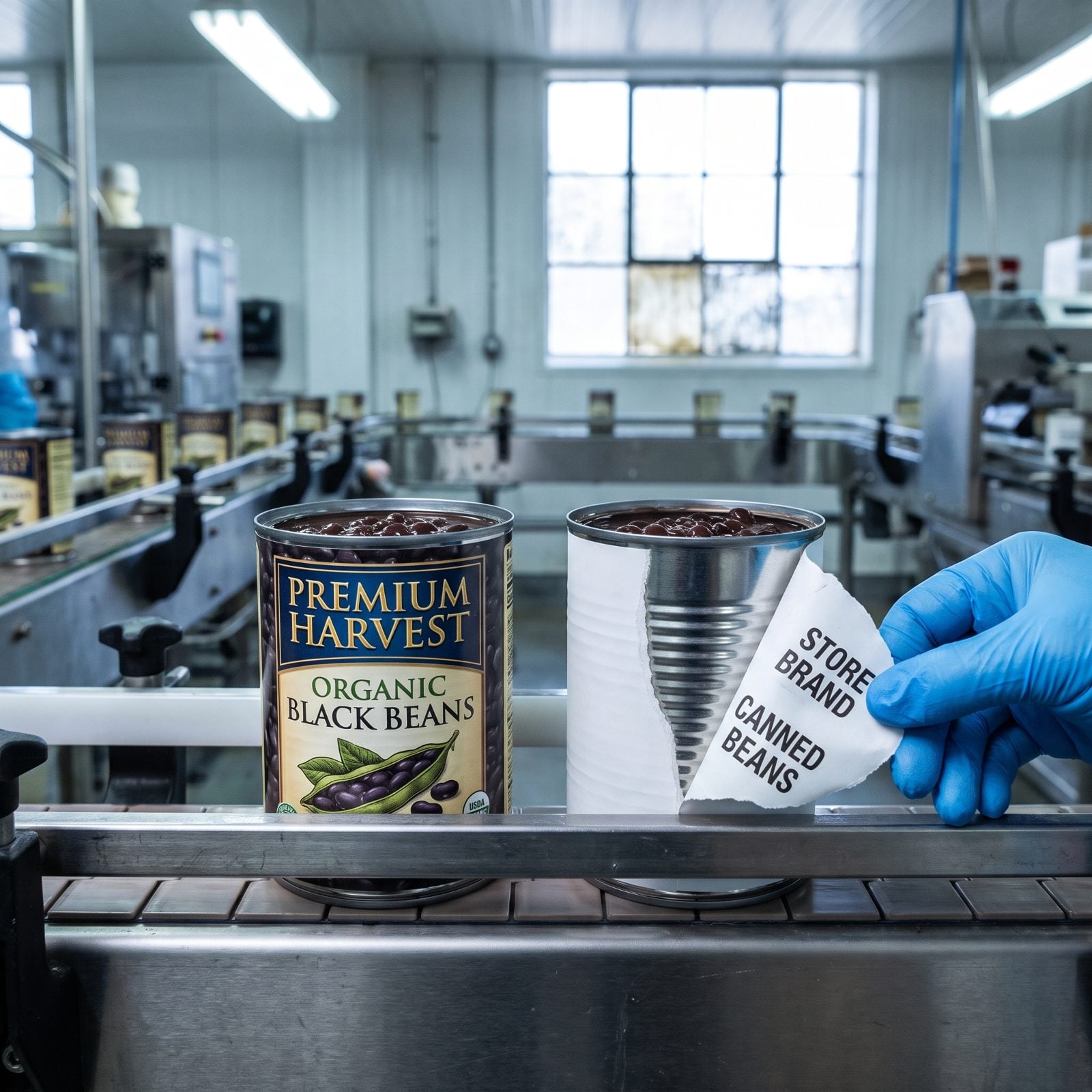
Nobody mentions this at the grocery store: the same cannery often packs beans and vegetables for the premium label and the store label on the same day, from the same crop, then splits the run at the end of the line and slaps a different sticker on each.
So you’re comparing a green bean to the identical green bean wearing a cheaper outfit. Drain, rinse, taste. We’ve run the blind test with black beans more than once and never once called it right.
17. Generic Rubbing Alcohol and Hydrogen Peroxide: Chemistry Doesn’t Care About Branding
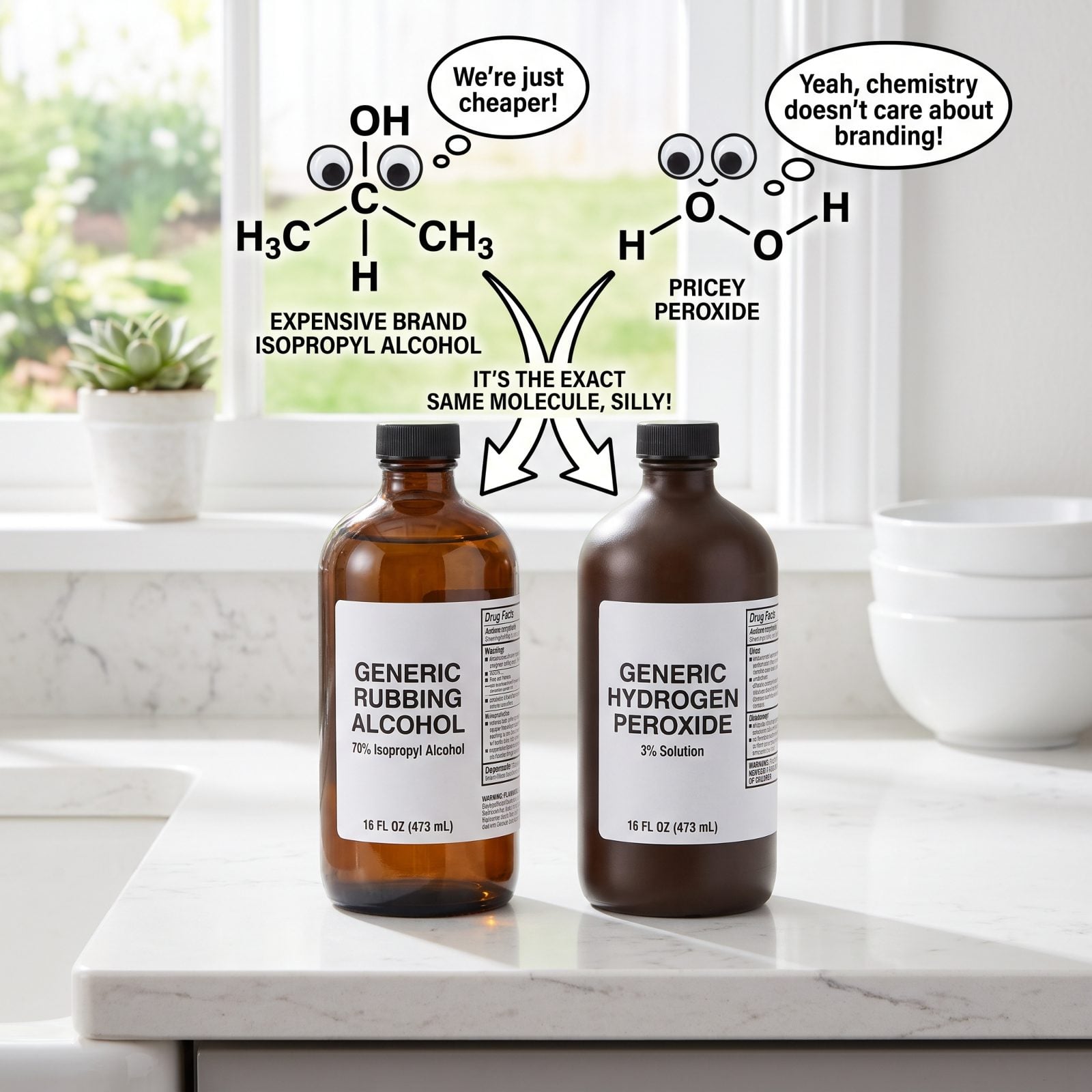
Isopropyl alcohol at 70 percent is isopropyl alcohol at 70 percent. Hydrogen peroxide at 3 percent is the same molecule in every bottle on the shelf. These are commodity chemicals, held to one standard no matter whose name is stamped on the front.
The pharmacy’s own line of each costs a fraction of the branded bottle on the same shelf. Check the percentage, grab the cheap one, walk away.
16. Plain Olive Oil for Cooking: Save the Expensive Stuff for Raw
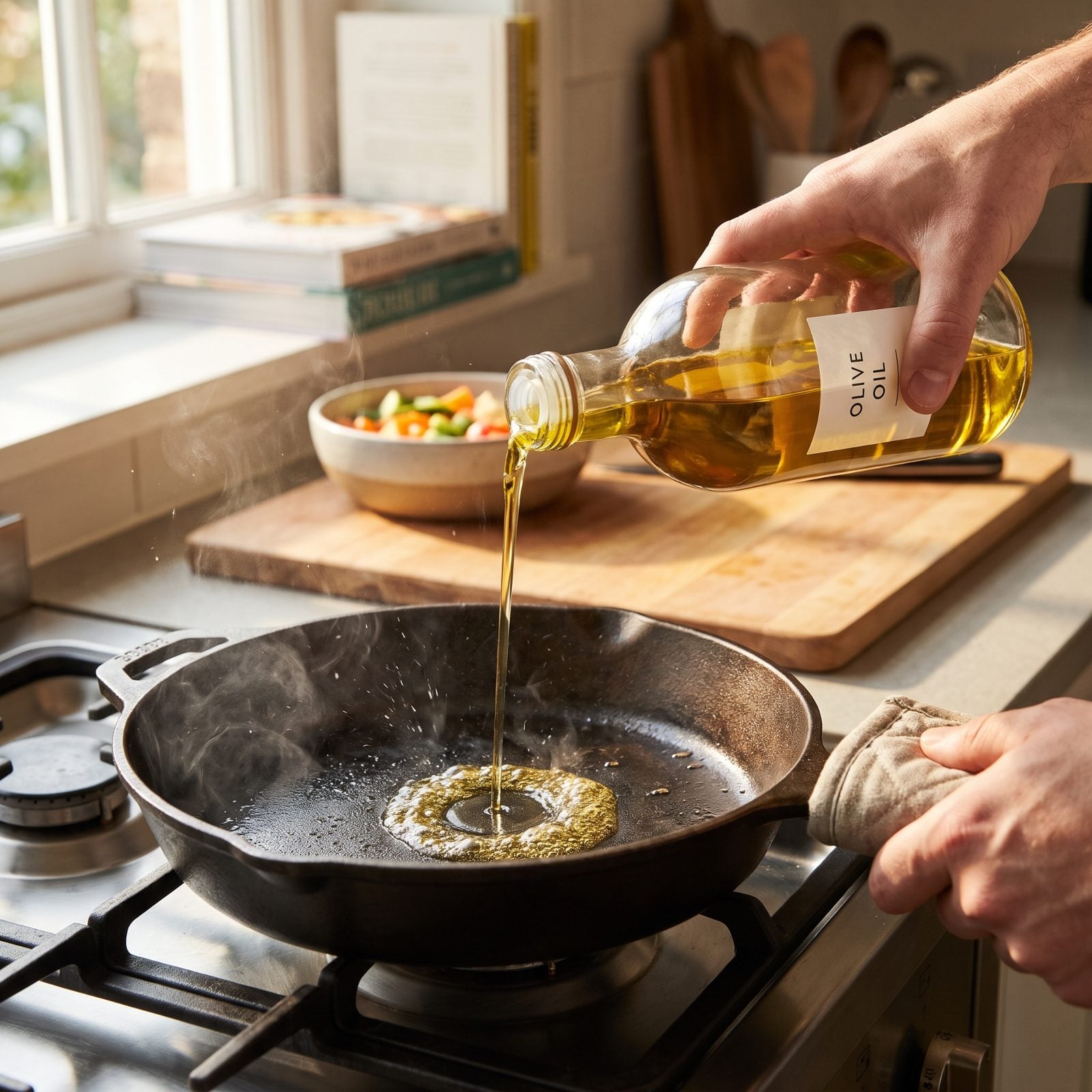
Heat is the great equalizer. The moment olive oil hits a hot pan, most of the delicate flavor compounds you paid a premium for cook right off, which means sautéing onions in a twenty-dollar bottle is burning money, literally.
Save the fancy single-estate oil for raw work. Drizzle it on finished food, whisk it into dressing, let those grassy, peppery notes actually land on your tongue. For the cooking you do every night, the plain bottle does the job and your palate won’t know the difference once the burner’s on.
15. Generic Cooking Spray: Propellant and Oil, Nothing Fancier

Inside the can it’s oil and a propellant that pushes it out as a fine mist, with a bit of lecithin tossed in so the nozzle doesn’t gum up. That’s the whole technology.
The generic coats your pan with the same even spray as the name brand. Eggs slide, cakes release, and nobody at the table can tell which can did the work. The only difference is the eighty cents you pocketed.
14. Store-Brand Butter: Government-Graded and Honestly Delicious
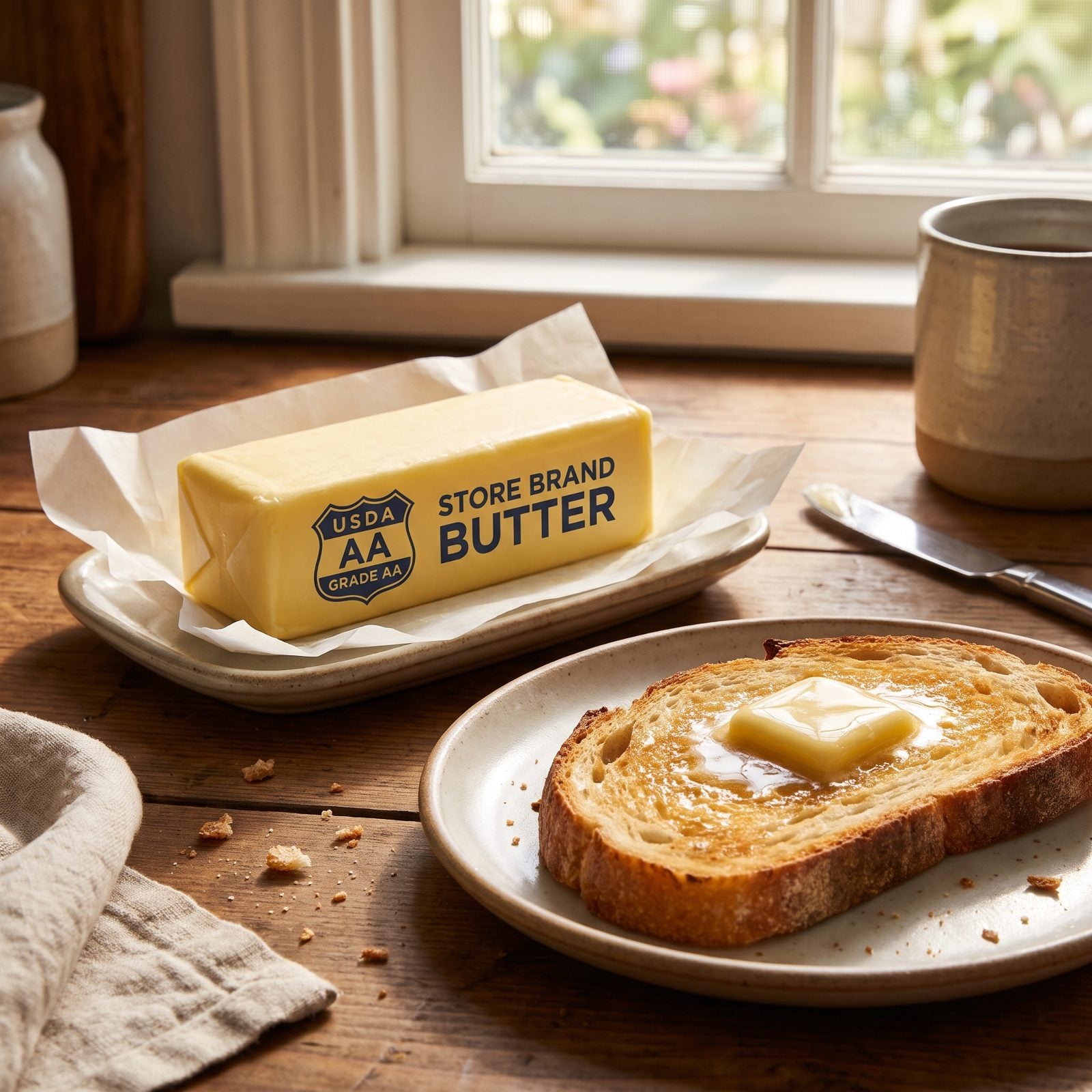
Butter gets graded by the USDA, and the top grade stays the top grade regardless of whose name goes on the box. A stick of AA store-brand sweet cream butter meets the same standard as the premium one.
Where you might taste a real gap is European-style cultured butter with higher fat content. That’s a genuinely different product, worth the splurge for a slice of toast or a pie crust. For melting into vegetables, greasing a pan, or everyday baking, though? The store brand holds its own.
13. Plain Cotton Balls and Swabs: Cotton Is Cotton
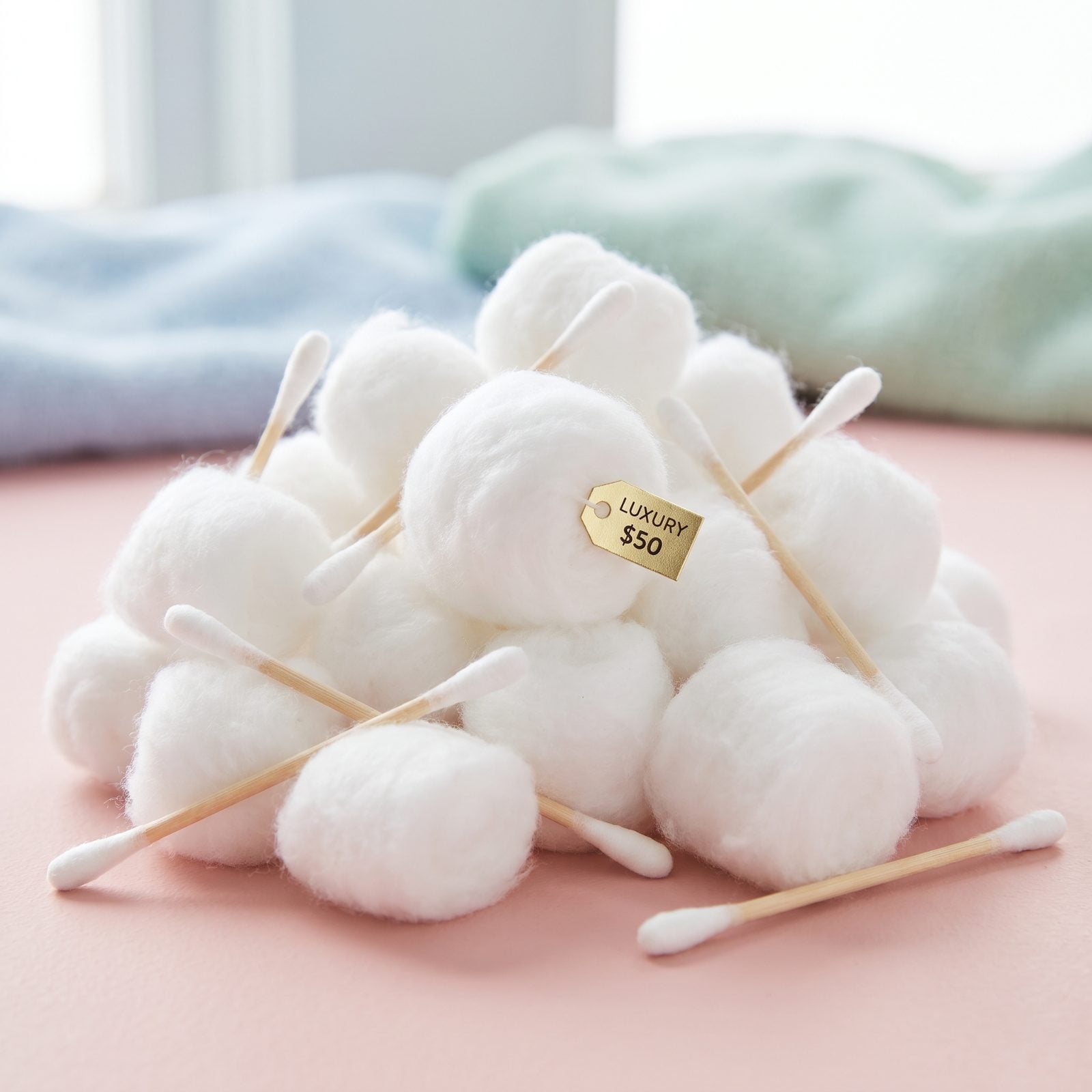
A cotton ball has one job, and it does that job whether it cost two cents or five. You’re dabbing on toner or wiping off polish, and the premium bag isn’t softer in any way your skin can register.
Swabs tell the same story. The paper-stem generics work exactly like the branded paper-stem ones. Grab the big bag and put the difference toward something that actually varies.
12. Generic Spices and Dried Herbs: It’s All About the Jar Date, Not the Brand
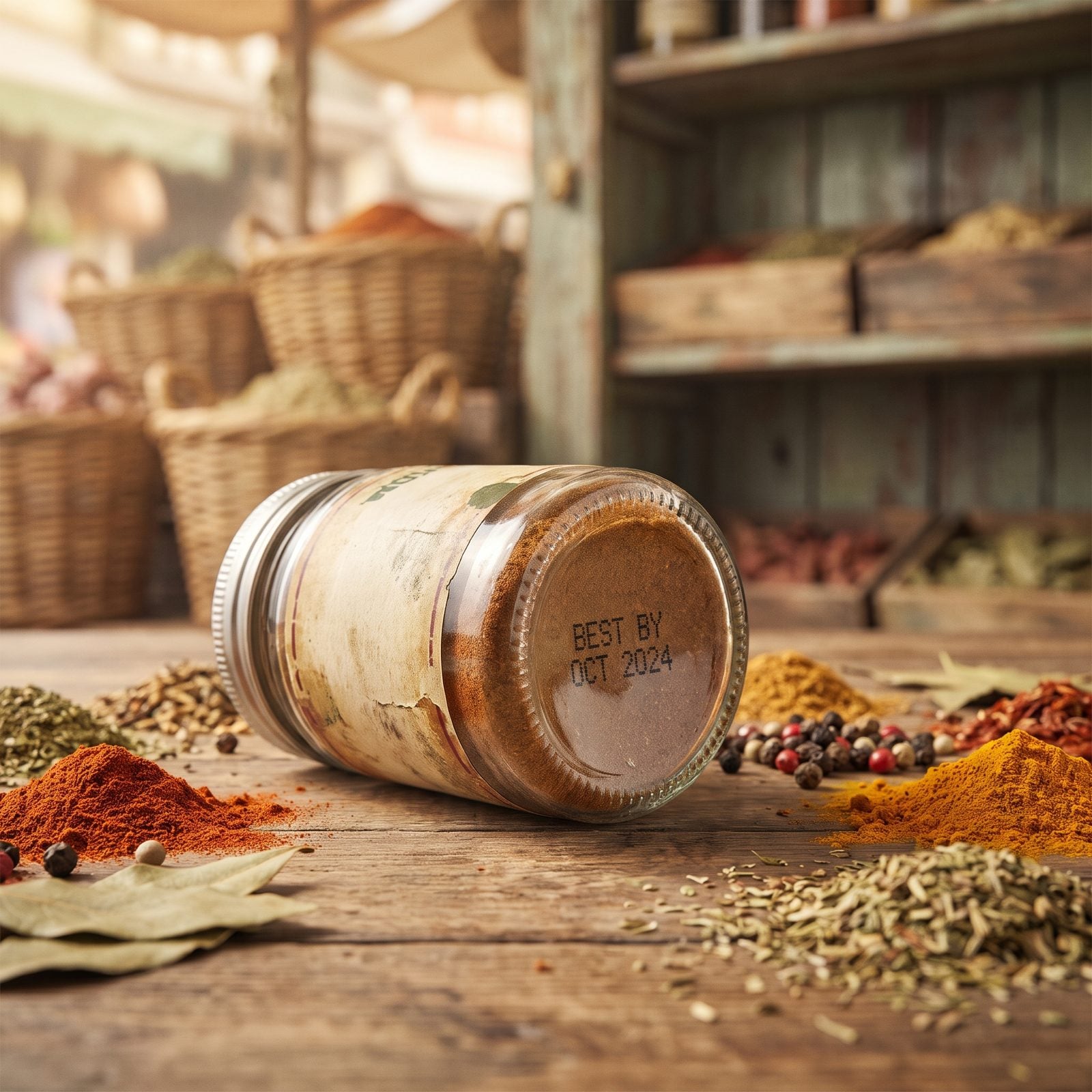
What kills a spice isn’t the brand. It’s age. Ground spices start losing flavor the moment they’re jarred, and a tin of paprika that’s been camped in your cabinet for three years is weak no matter how premium the label looked.
Store-brand and bulk-bin spices are frequently the identical product, and sometimes fresher, because they turn over faster. Buy small. Replace often. Spend your money on buying more frequently rather than buying fancier.
A cheap jar bought this year beats an expensive one bought during a previous presidency.
11. Store-Brand Dish Soap: Same Grease-Cutting Surfactants

Would you like to save this?
Dish soap works because of surfactants that grab grease on one end and water on the other, and store brands use the same workhorse surfactants the premium bottles do.
The gap, where one exists, is concentration. Some cheap soaps run a little more watered down, so you use a touch more per sink of dishes. Even then, the store brand wins on cost per wash. Squirt a little extra and call it even.
10. Generic Trash Bags: Thickness Is Printed Right on the Box
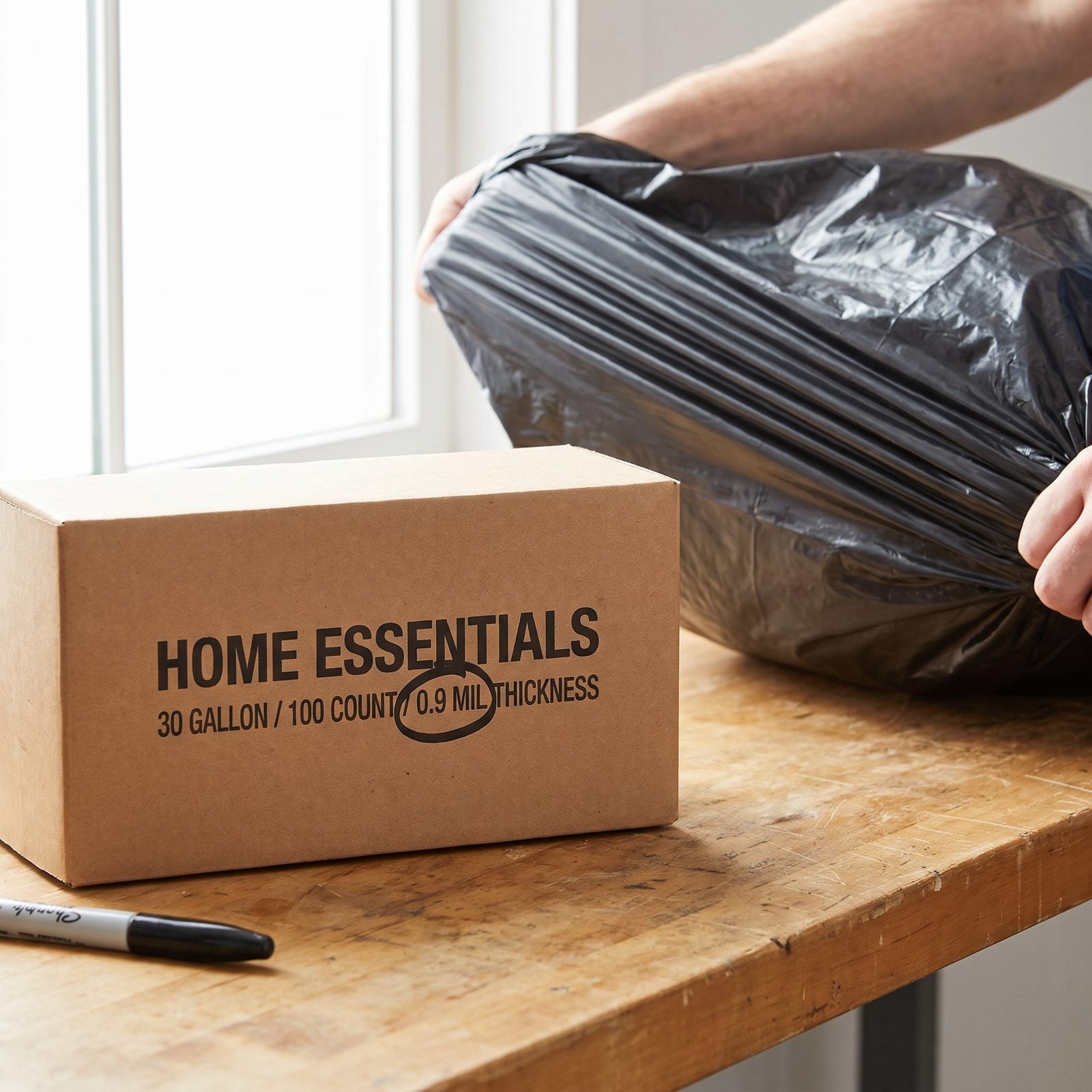
Trash bag strength comes down to one number: thickness, measured in mils, and it’s right there on the box. Match the mil rating and the gauge, and a generic bag holds your garbage just as well as the one in the flashy packaging.
Where people trip up is buying premium when they could simply buy the right thickness. A heavy-duty generic will out-haul a flimsy brand name every time. Read the box, ignore the name.
9. Store-Brand Bottled Water
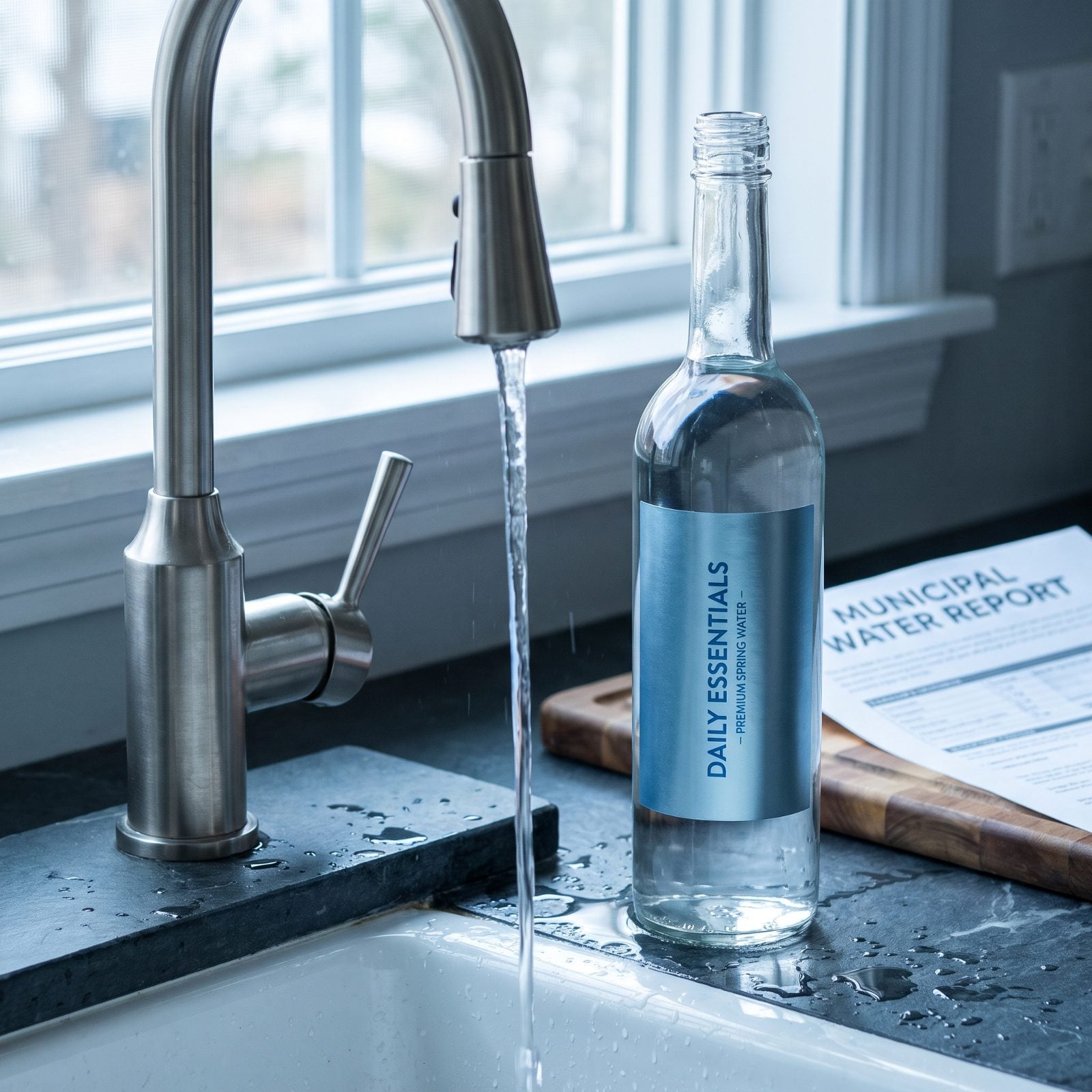
Nobody at the premium-water counter wants you to know that most bottled water is just filtered municipal tap, and the store-brand jug sitting beside the fancy one often rolls off the same line. The purification is regulated, boring, and nearly identical brand to brand.
What’s the extra dollar buying? The label and the curve of the bottle. Blind taste tests have embarrassed premium brands for decades, because your tongue can’t read a logo.
8. Basic Reading Glasses

Drugstore readers do one job: add magnifying power at a fixed strength. The lens in the $12 pair bends light exactly like the lens in the $300 designer pair, because physics doesn’t charge a premium.
Got a real prescription — astigmatism, two very different eyes? That’s a different conversation and you need an actual exam. But for plain age-related close-up blur, the spinner rack by the pharmacy register handles it just fine. We kept pairs in every room for years and lost most of them, which is honestly the best argument for buying cheap ones in the first place.
7. Basic Cast-Iron Skillet

A $20 cast-iron pan cooks exactly like a $200 one. It’s a lump of iron. That’s the whole technology, start to finish. The pricey heritage brands sell you a smoother machined cooking surface and a prettier handle, and the budget ones do arrive with a rougher sand-cast texture.
Here’s the part people miss. That rough surface smooths out on its own after a few months of cooking and seasoning — the oil fills the pores, the food stops sticking, and the cheap pan becomes indistinguishable from the fancy one. You just have to cook on it.
6. Store-Brand Vitamins and Supplements
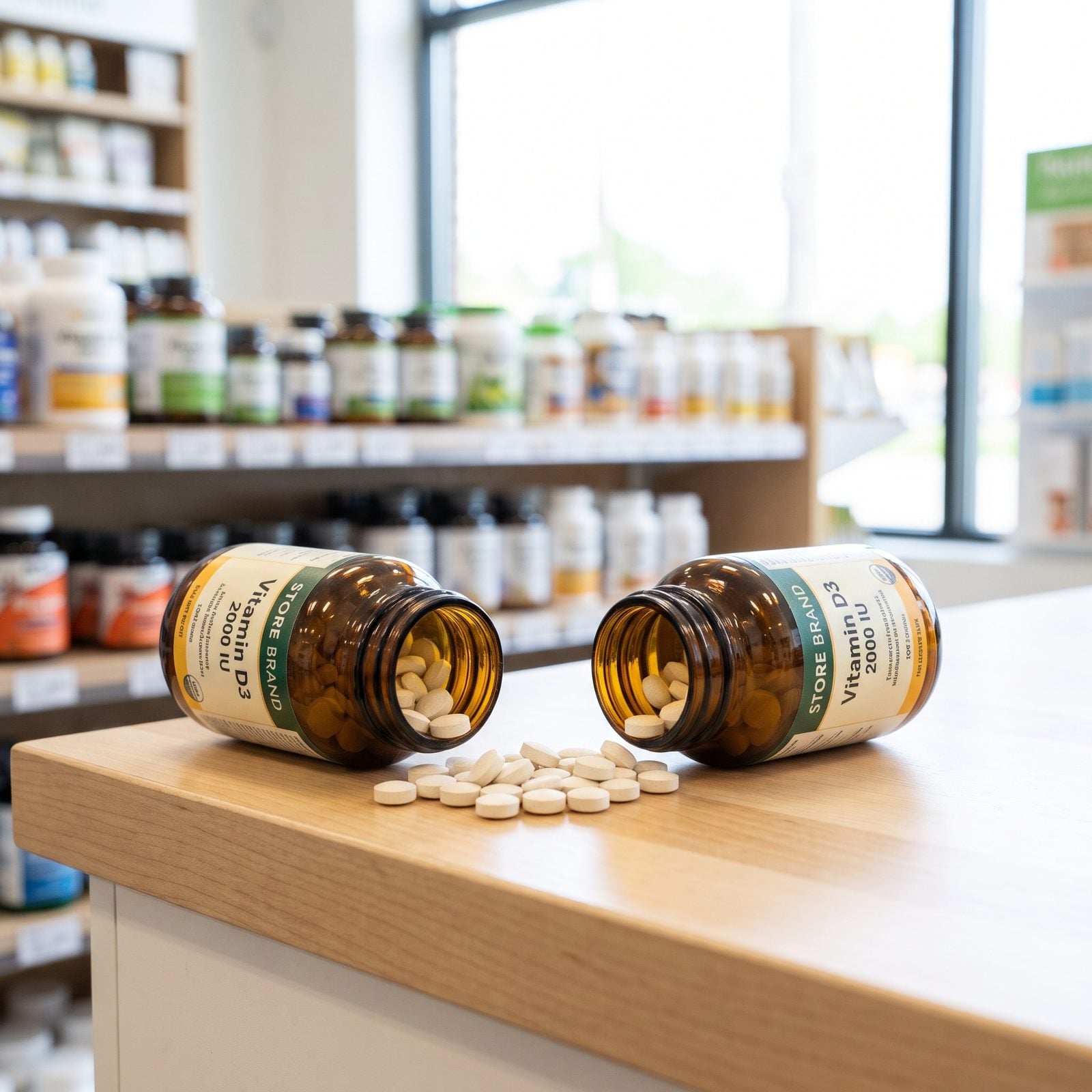
The active ingredient in a store-brand vitamin D tablet is the same compound as in the premium one, and both have to meet the same quality standards when they carry a USP verification mark. Plenty of generic supplements come out of the exact same facilities as the name brands, just packaged differently.
Hunt for the USP seal, not the price tag. That little mark tells you the pill contains what it claims, dissolves properly, and isn’t contaminated.
5. Generic Printer Paper
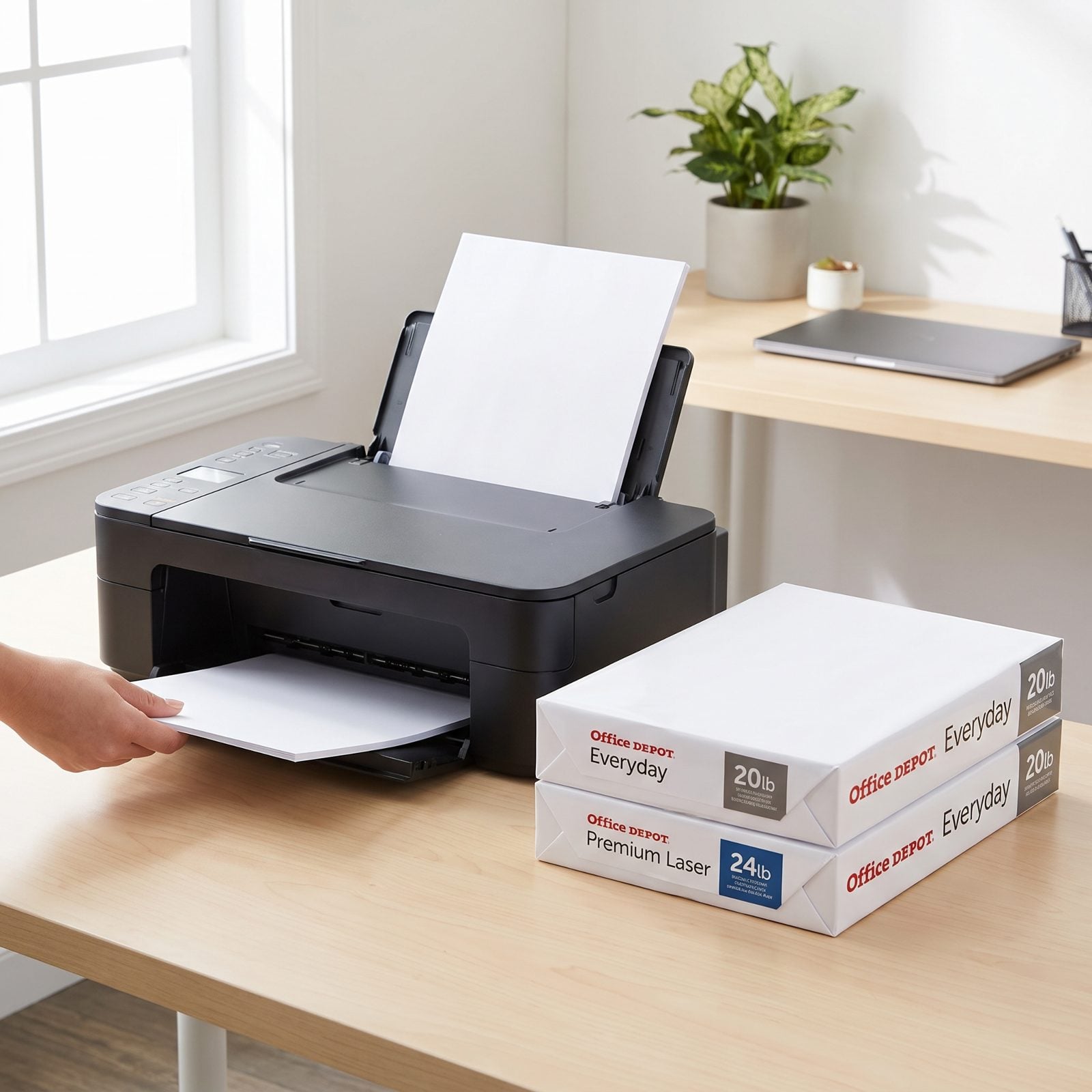
For home printing, generic multipurpose paper and premium paper are near twins where it counts. Both land around the standard 20-pound weight and 92 brightness, which is all a home inkjet or laser needs for sharp text.
The premium stuff charges you for marginally higher brightness and a smoother coating your eyes won’t register on a grocery list or a return label. Printing glossy photos? Buy actual photo paper. Otherwise the cheap ream is the right call. We bought the pricey reams once thinking they would help. They did not.
4. Plain Disposable Razors

The blade is the blade. A plain twin-blade disposable gives you a clean shave as long as it’s fresh, and the real enemy of a good shave isn’t the blade count or the vibrating handle — it’s a dull edge you’ve been dragging across your face for three weeks.
So buy the cheap multipack and swap blades more often. A fresh two-dollar razor beats a worn-out premium cartridge you’ve been nursing to save money. More blades don’t cut better. They mostly cut your wallet.
3. Store-Brand Coffee Filters
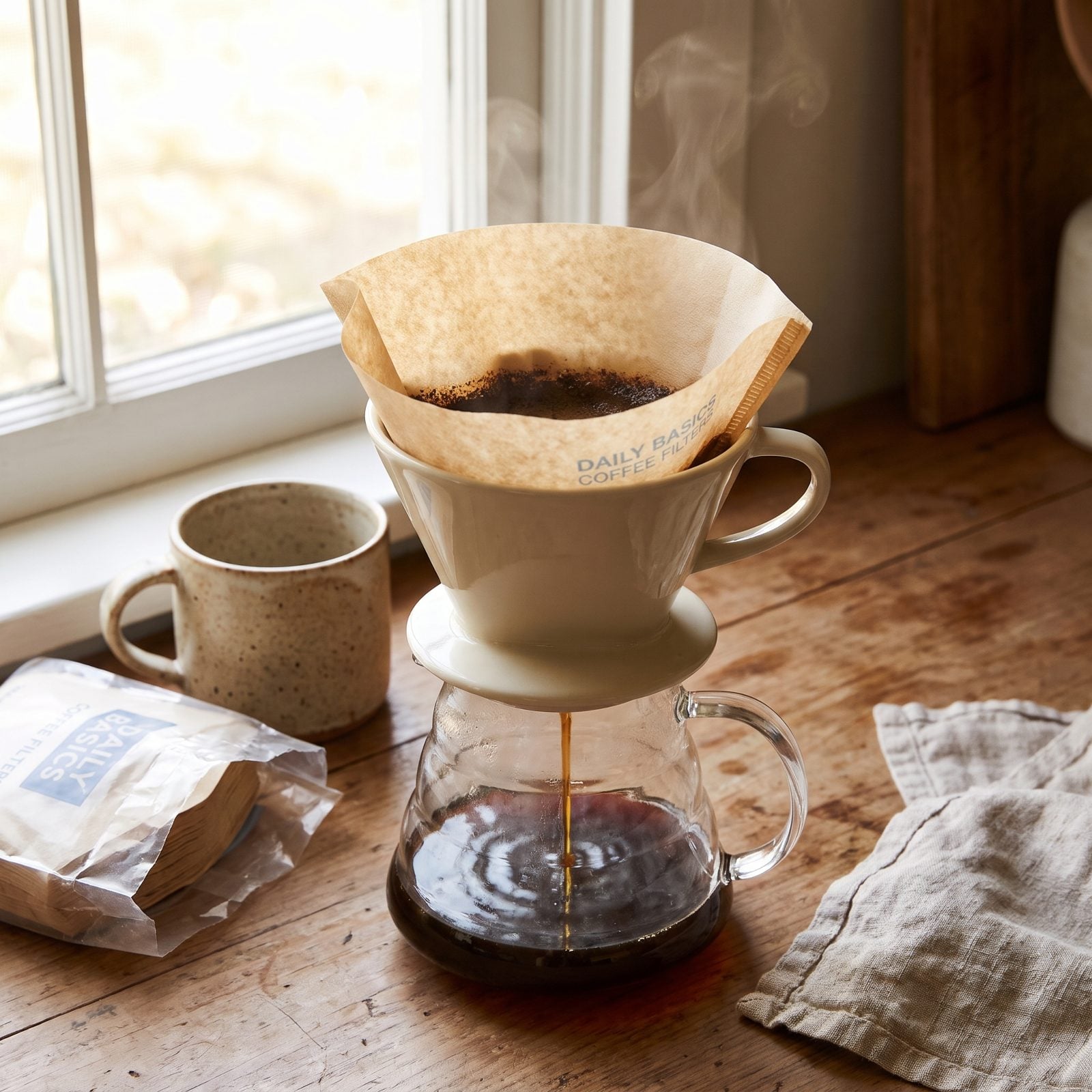
A coffee filter is a folded piece of paper whose only job is to hold grounds and let liquid through. The generic basket filter does this with the same cellulose and the same pore size as the name brand sitting right beside it.
You’ll sometimes hear that unbleached filters add a papery taste. Rinse them with hot water first and that vanishes. Buy the big cheap stack and never think about it again.
2. Generic Ketchup and Mustard
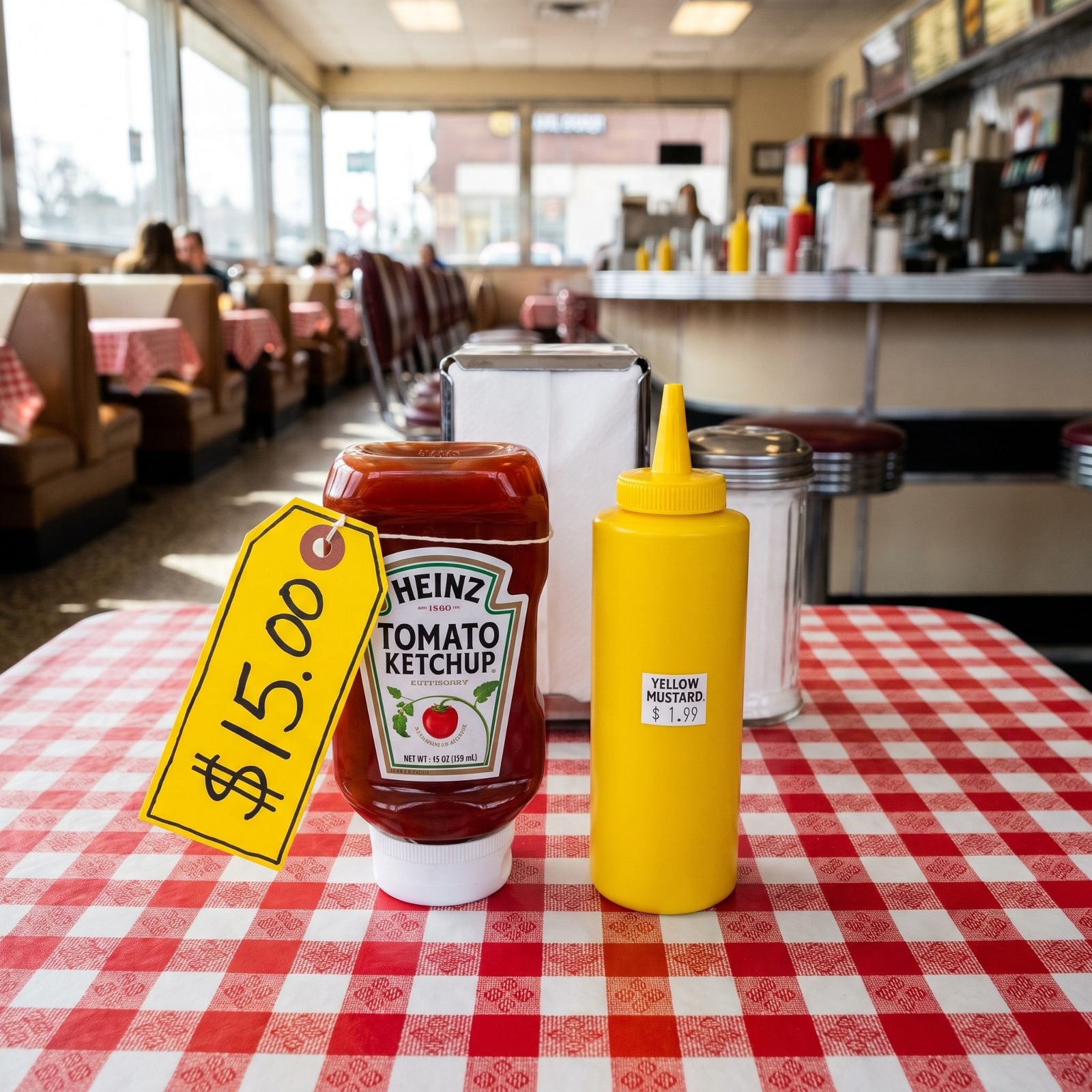
Mustard is where the premium markup gets genuinely silly. Yellow mustard is ground mustard seed, vinegar, water, turmeric, and salt — that’s it. The store brand and the famous squeeze bottle lean on nearly the same short list, and in blind tastes most people can’t reliably finger the expensive one.
Ketchup is where the name-brand price tag can get downright absurd, even if the leading national brand does run a thicker, sweeter profile that some palates genuinely prefer. But plenty of store brands match it closely, and once it’s on fries the difference drowns under the salt anyway. Try the cheap one once. Worst case, you’re out a couple of dollars.
1. Basic White T-Shirts in Multipacks
Would you like to save this?
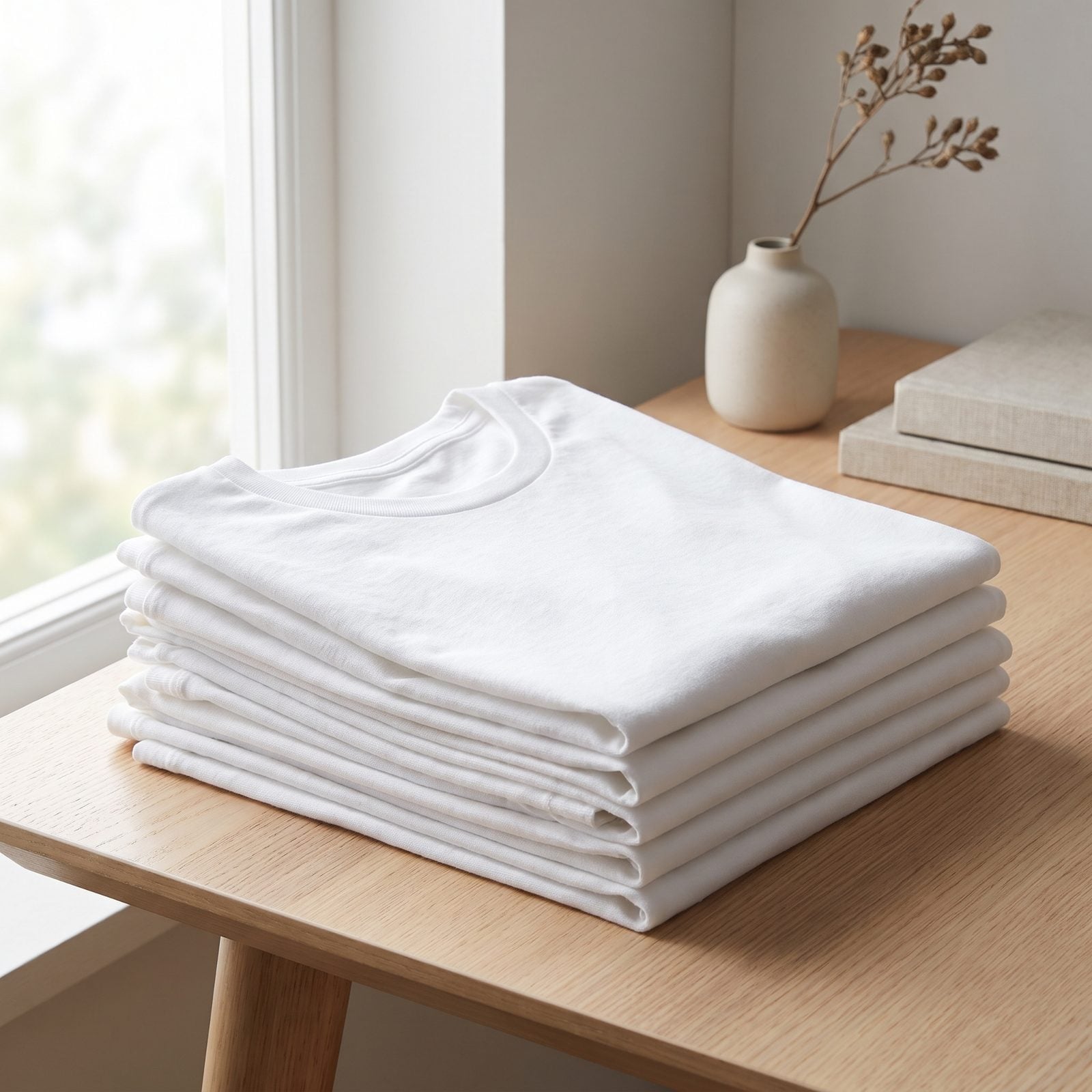
The humble three-pack of cotton crew-neck undershirts does one thing well for a few bucks a shirt. It lives under your sweater, soaks up the day, and goes in the wash with everything else.
A $40 designer white tee uses cotton that isn’t meaningfully softer once you’ve run the multipack through the laundry a couple of times. For a layering piece or a weekend-around-the-house shirt, the cheap ringspun cotton pack is the honest choice. Spend up only when the white tee is the whole outfit and the drape actually matters.