
Would you like to save this?
The jingle still lives rent-free in your head. You can smell the popcorn and plastic cartridge cases, hear the little bell at the teller window, feel the weight of a full Sears Wish Book pressing down on your lap. These stores weren’t just places you spent money — they were weekend rituals, first jobs, and the backdrop to a few thousand small memories. Here are the chains that defined how America shopped, what made each one unforgettable, and the quiet, painful reasons the lights went out.
Please note that some of the images in this article were created with the assistance of AI.
38. Toys ‘R’ Us: The Store That Made Kids the Boss
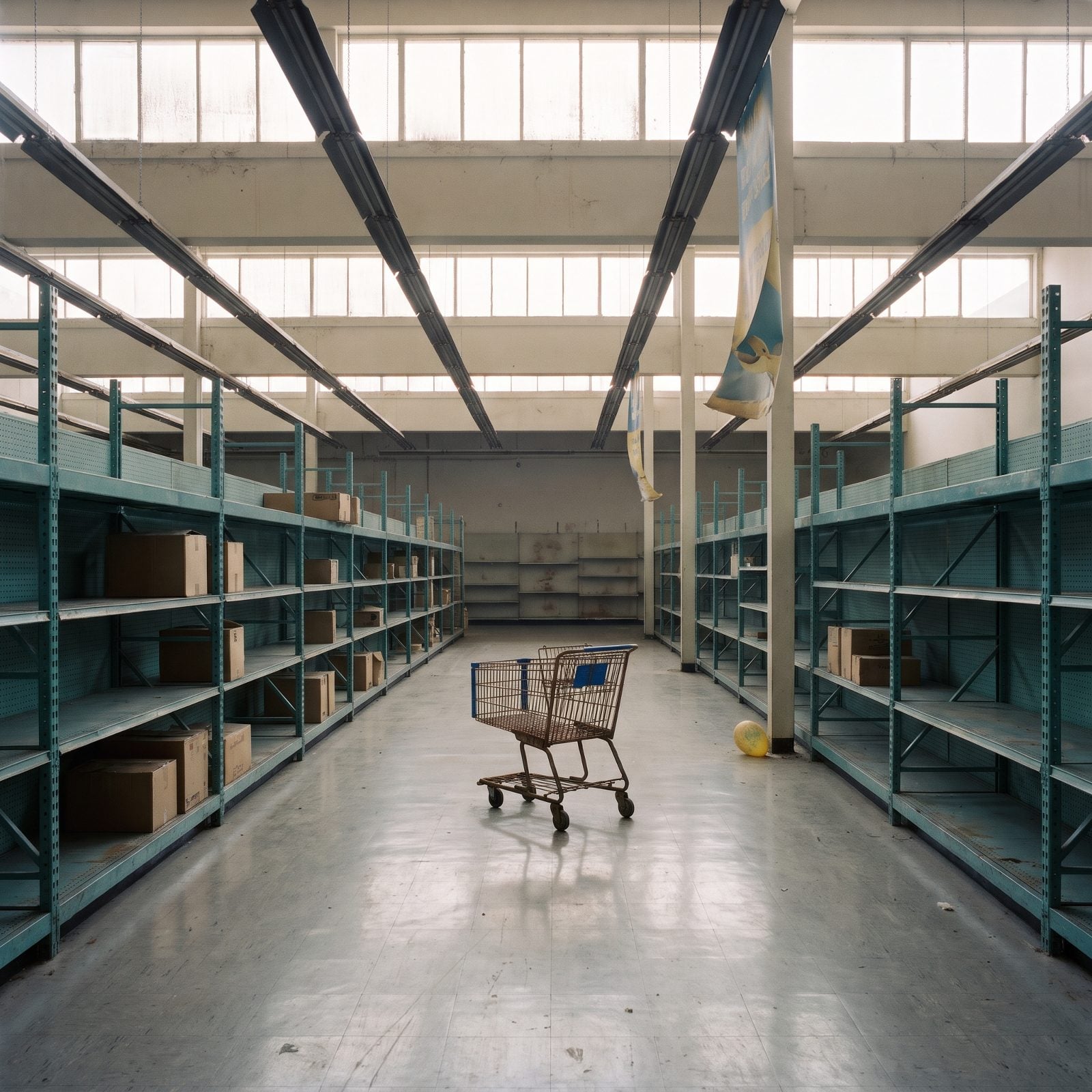
A quarter-mile of aisles, and every single one belonged to you. The scale was the magic. Bikes hung from the ceiling, a wall of board games loomed taller than your dad, and an entire section was devoted to things that rolled, bounced, or made noise your parents would regret by Tuesday.
Opened in 1957 and gone by 2018, the chain got squeezed from every direction. Walmart and Target undercut the prices while Amazon ate the convenience, and a crushing debt load from a leveraged buyout left no room to breathe. The stores didn’t lose their charm. They lost their math.
37. Blockbuster Video: Friday Night Had a Smell
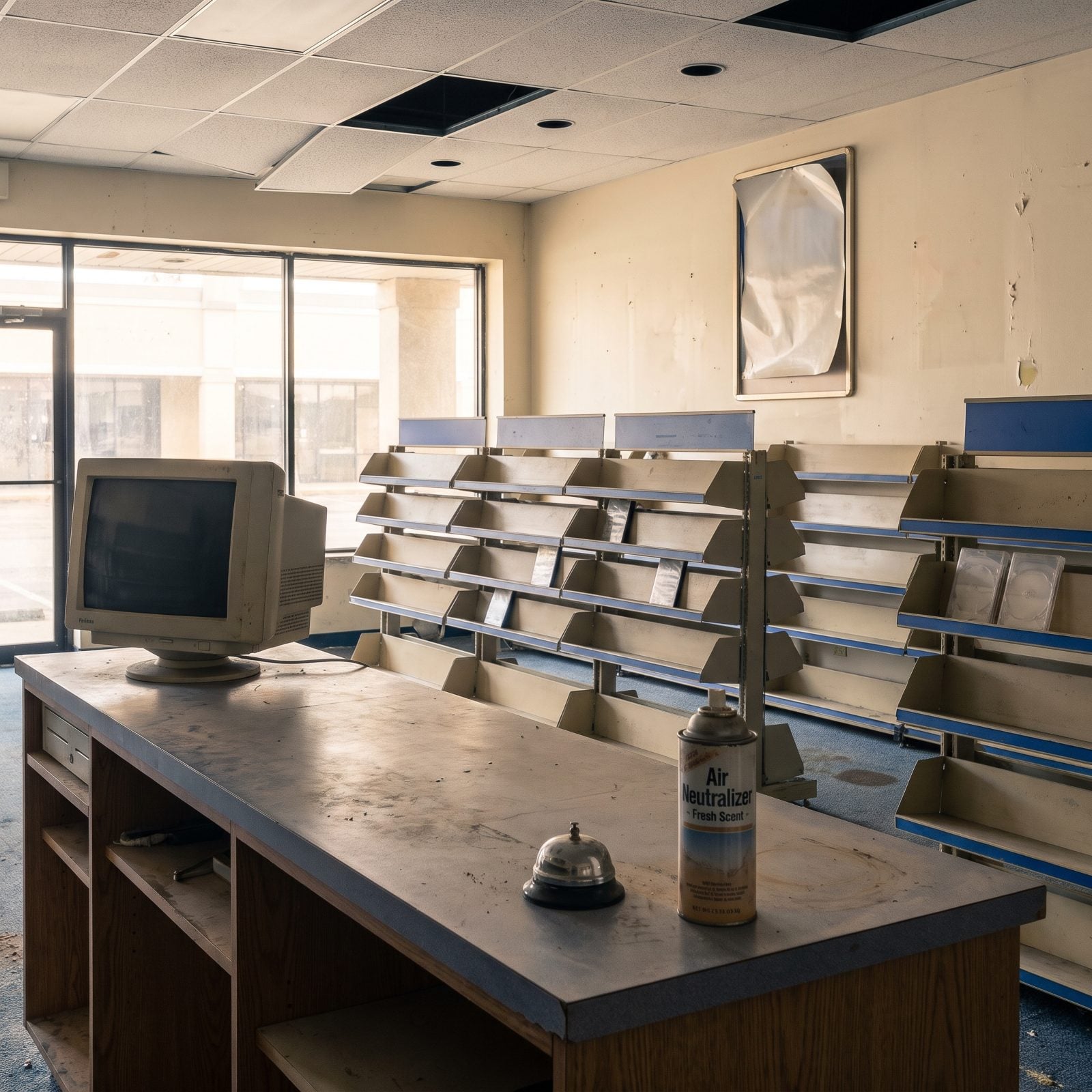
The ritual was everything. You wandered the New Releases wall three times, picked up a box, read the back, put it down, finally settled on something, then grabbed popcorn and a Raisinets at the register because they put it right there and they knew exactly what they were doing.
At its peak Blockbuster had thousands of stores and a market grip that felt permanent. It famously passed on buying Netflix in 2000. Late fees, a monster debt pile, and a world that stopped driving to the store did the rest. The last corporate location closed in 2013 — though one stubborn franchise in Bend, Oregon still rents tapes to this day.
36. Circuit City: Where You Went to Touch the Gadget First
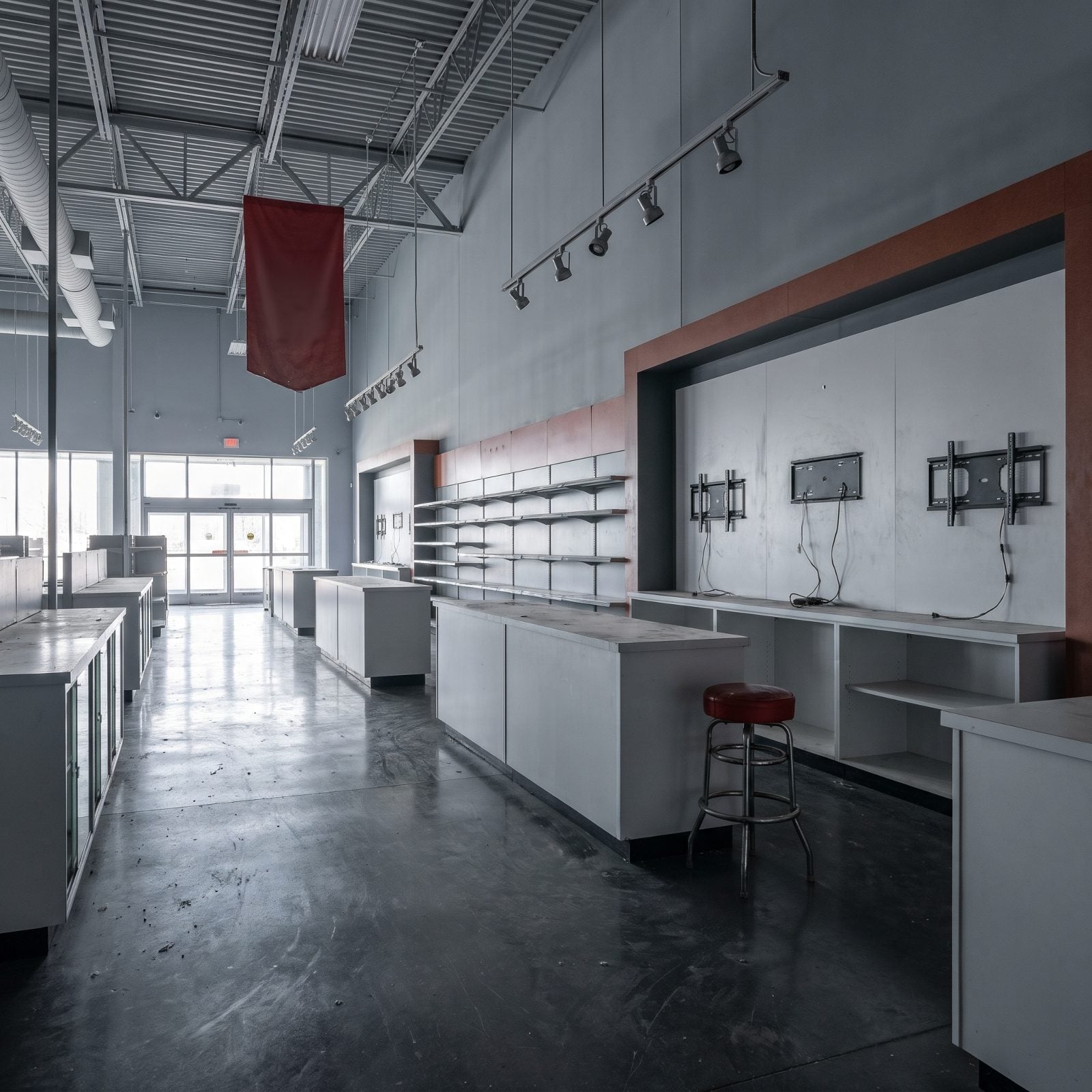
Big-screen TVs stacked into a wall of light. A car-stereo installation bay in the back. Red-shirted employees who actually knew the difference between the receivers. For a good stretch of the ’90s and early 2000s, Circuit City was where you went to make a real electronics decision.
Then it made a few of its own that it couldn’t walk back. In 2007 it fired thousands of its highest-paid, most experienced sales staff to cut costs, swapping expertise for cheaper labor right as the recession hit. Customers noticed the floor got dumber. The chain filed for bankruptcy in 2008 and liquidated every store by early 2009.
35. Sears: The Catalog That Could Build Your Whole Life
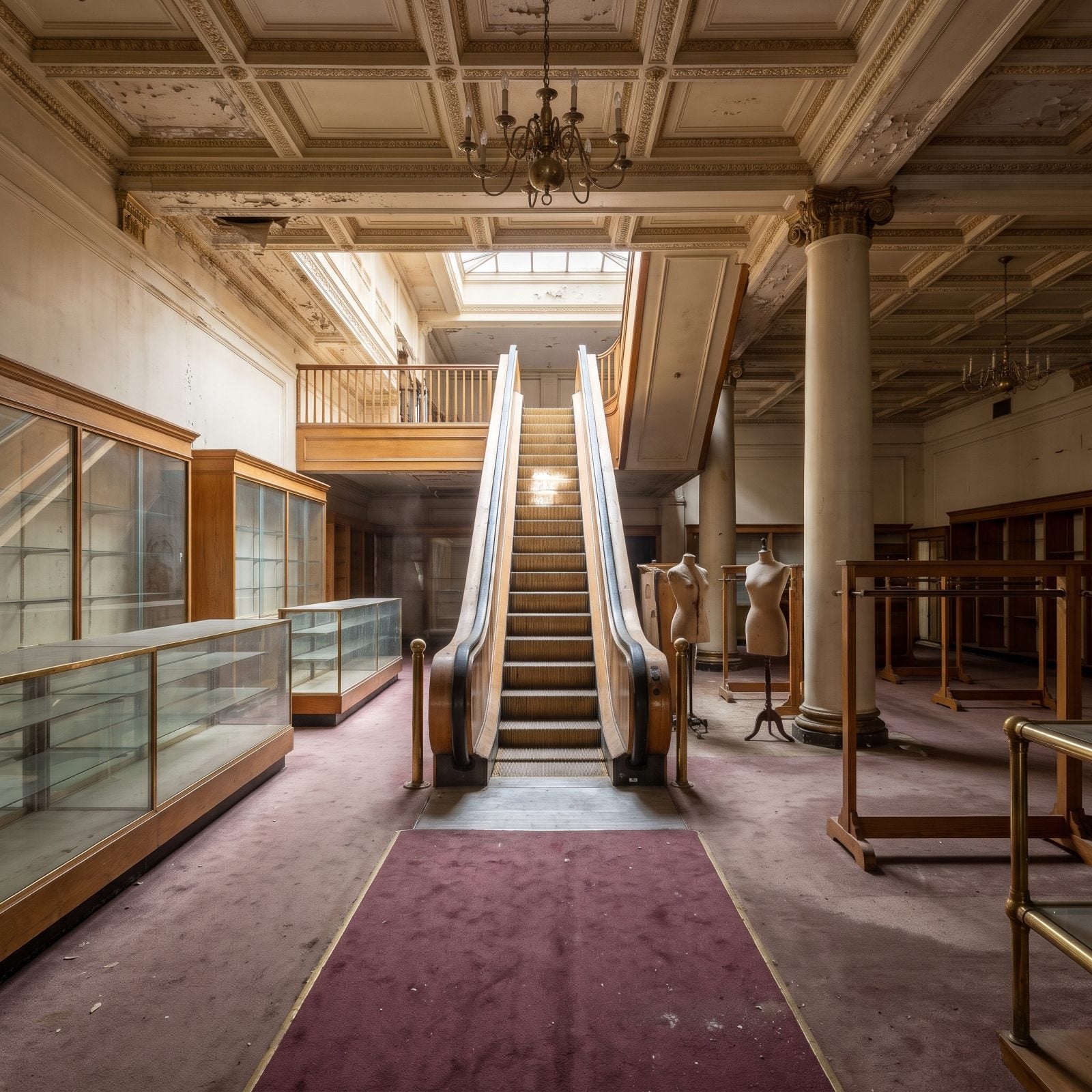
You could order a house from Sears. An actual house. Between 1908 and 1940 the catalog shipped tens of thousands of build-it-yourself homes by rail, numbered boards and all. That catalog, the famous Wish Book at Christmas, was the Amazon of its century before anyone needed a word for it.
At its height Sears was the largest retailer on earth — anchor of every mall, home of Craftsman tools and Kenmore appliances and a tire you could actually trust. The decline came slow and then all at once. It merged with Kmart in 2005 under a hedge-fund owner who sold off the valuable real estate, starved the stores of investment, and let the whole thing bleed out. Bankruptcy arrived in 2018.
34. Kmart: The Blue Light Was a Starting Gun
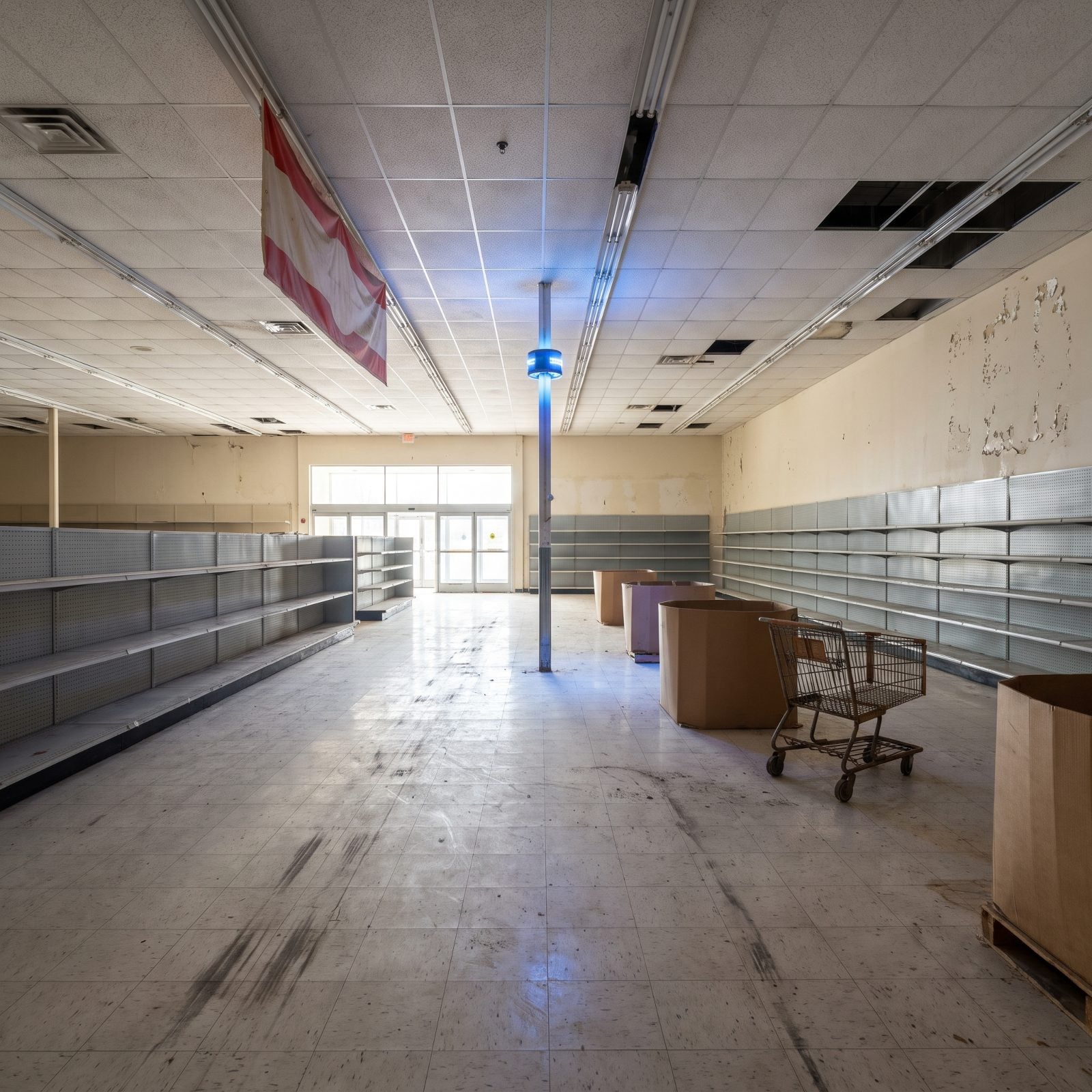
“Attention Kmart shoppers.” Those three words could turn a quiet aisle into a stampede. The Blue Light Special was retail as theater — a surprise flash sale announced over the loudspeaker while a spinning blue light marked the spot. You ran. Everyone ran.
Kmart opened its first store in 1962, the same year as Walmart and Target. But then it got stuck in the middle: never as cheap as Walmart, never as sharp as Target, keeping its stores tired while the competition got slick. The 2005 Sears merger was less a rescue than a shared deathbed. The last full-size store standing closed in 2024.
33. Borders Books: The Café, the Chairs, the Whole Afternoon Gone
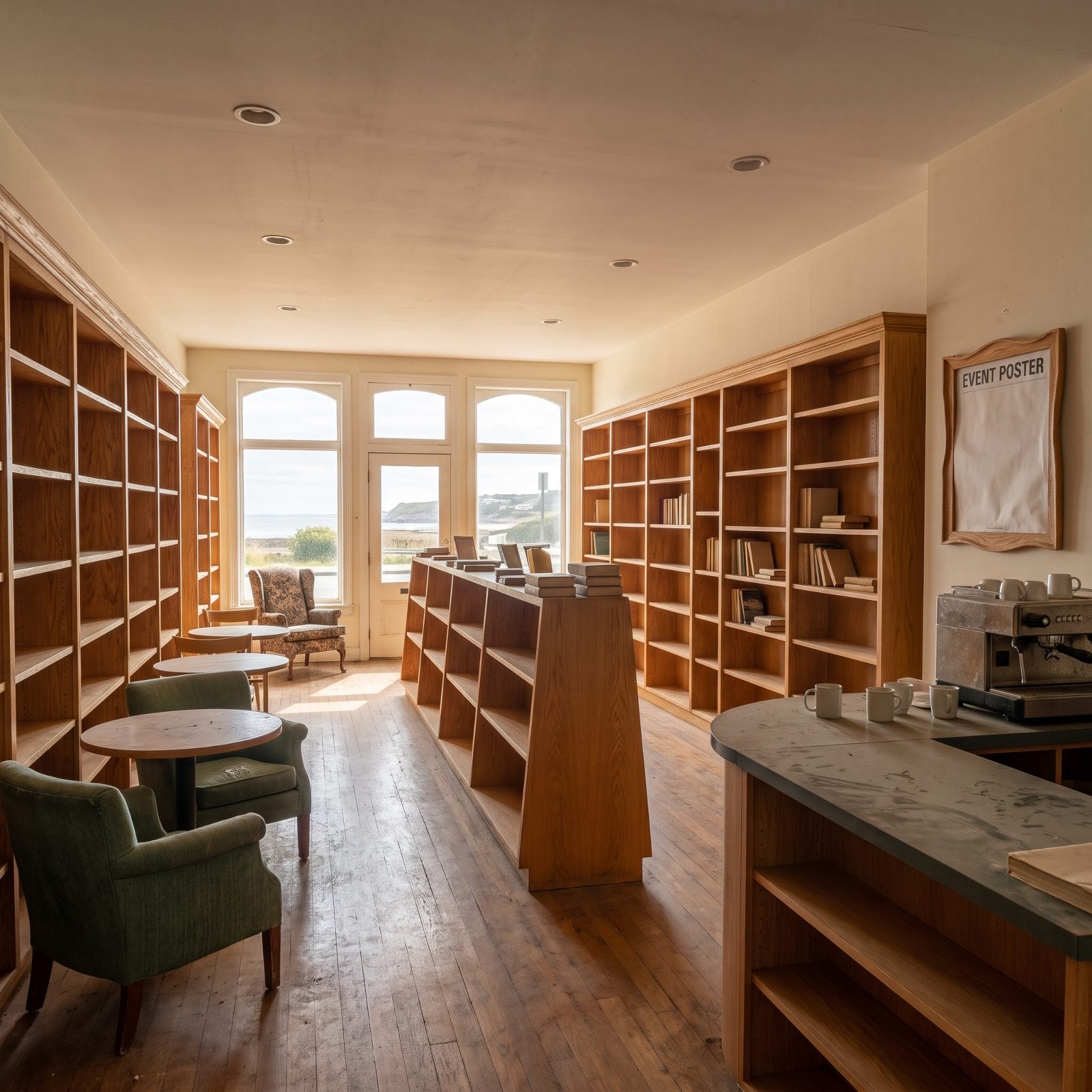
Borders sold you something Amazon never could: the afternoon. You went in for one book and left two hours later with a latte gone cold, a magazine you’d never finish, and three titles you didn’t know you wanted until you were sitting in that chair.
The atmosphere was the draw — armchairs by the window, a café counter, staff who read, listening stations where you could sample a CD before buying. But the company made catastrophic bets. It outsourced its entire online business to Amazon in 2001, handing its future to its killer, and poured money into music and DVDs just as both went digital. Borders filed for bankruptcy in 2011 and shuttered every remaining store.
32. RadioShack: The Store That Trusted You to Build Things
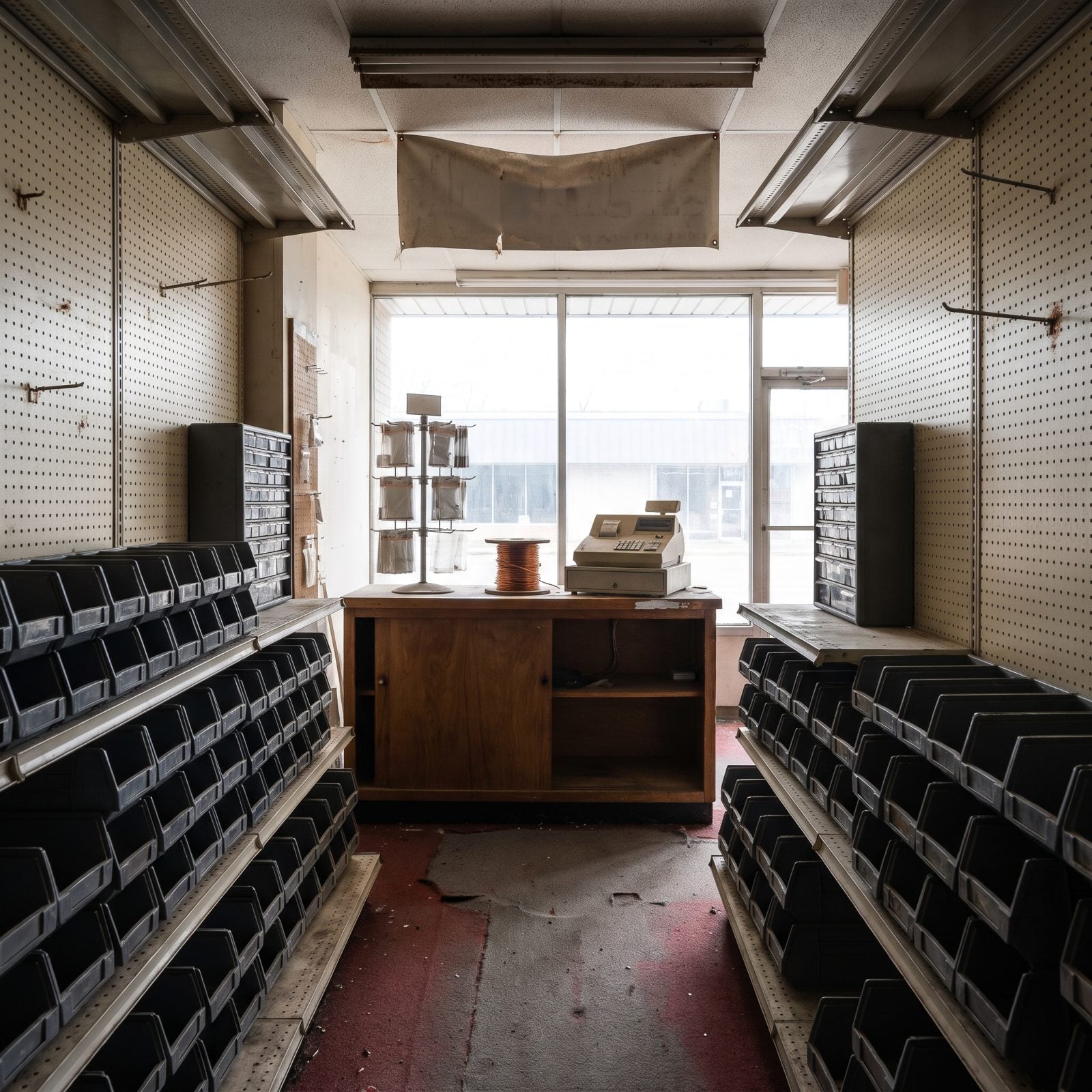
Need a specific resistor at 8 p.m. on a Sunday? RadioShack had you. Those little drawers of components, the soldering kits, the guy behind the counter who could tell you which cable fit what. For a generation of tinkerers it was the only place in town that spoke the language.
Founded in 1921, it rode the hobbyist boom and the early home-computer wave with the TRS-80. Then electronics got cheap, disposable, and un-fixable. Nobody repaired things anymore. The stores pivoted to selling cell phone contracts that muddied their own identity, and two bankruptcies — in 2015 and 2017 — finished most of it off.
31. Woolworth’s: The Lunch Counter and the Nickel Everything
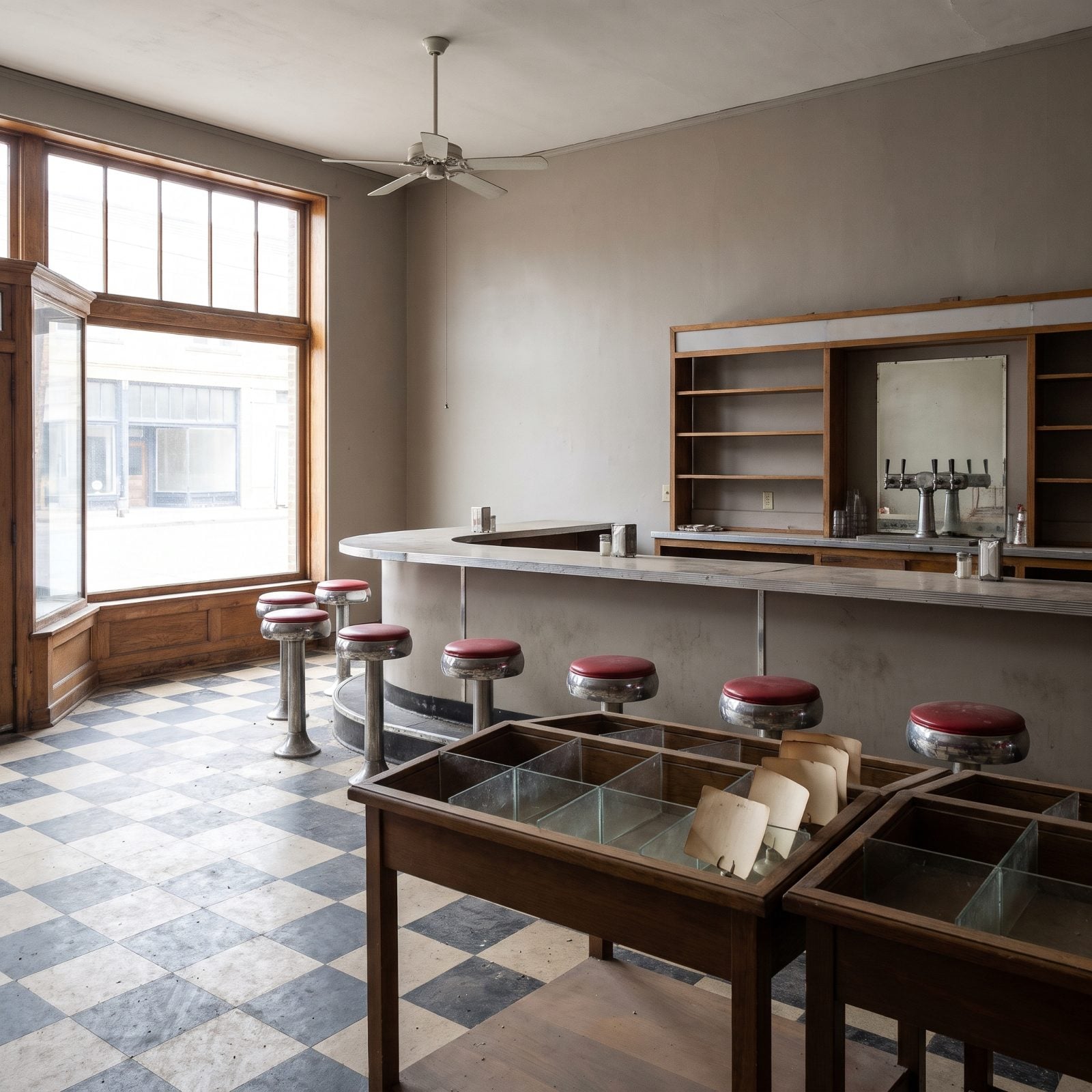
Before the mall, before the superstore, there was the five-and-dime. Woolworth’s sold a little of everything for a nickel or a dime, laid out on open tables you could actually touch — a radical idea in 1879, when clerks normally fetched everything from behind a counter.
The lunch counter is the part people remember most, and for good reason. It served grilled cheese and milkshakes to generations, and in 1960 the counter at the Greensboro, North Carolina store became the site of a pivotal civil rights sit-in. The chain simply aged out. Discounters swallowed the variety-store concept whole, and the U.S. stores closed in 1997 as the company pivoted to what became Foot Locker.
30. Montgomery Ward: The Catalog King That Invented a Holiday Icon
Would you like to save this?
Montgomery Ward beat Sears to the mail-order game, launching America’s first general-merchandise catalog back in 1872 with a single sheet of paper. For rural families with no store for forty miles, that catalog was a lifeline, and “Wards” stayed a household name for over a century.
And here’s the part nobody remembers. Rudolph the Red-Nosed Reindeer was born right here — a Wards copywriter named Robert May created him in 1939 as a free promotional coloring booklet to hand out to shopping kids. The company gave away millions of copies.
The retail side never fully adapted to the mall-and-discounter era, and after years of decline it closed all its stores in 2001. The brand limps on today only as an online catalog, a ghost of the empire it was.
29. Tower Records: The Cathedral of the Album
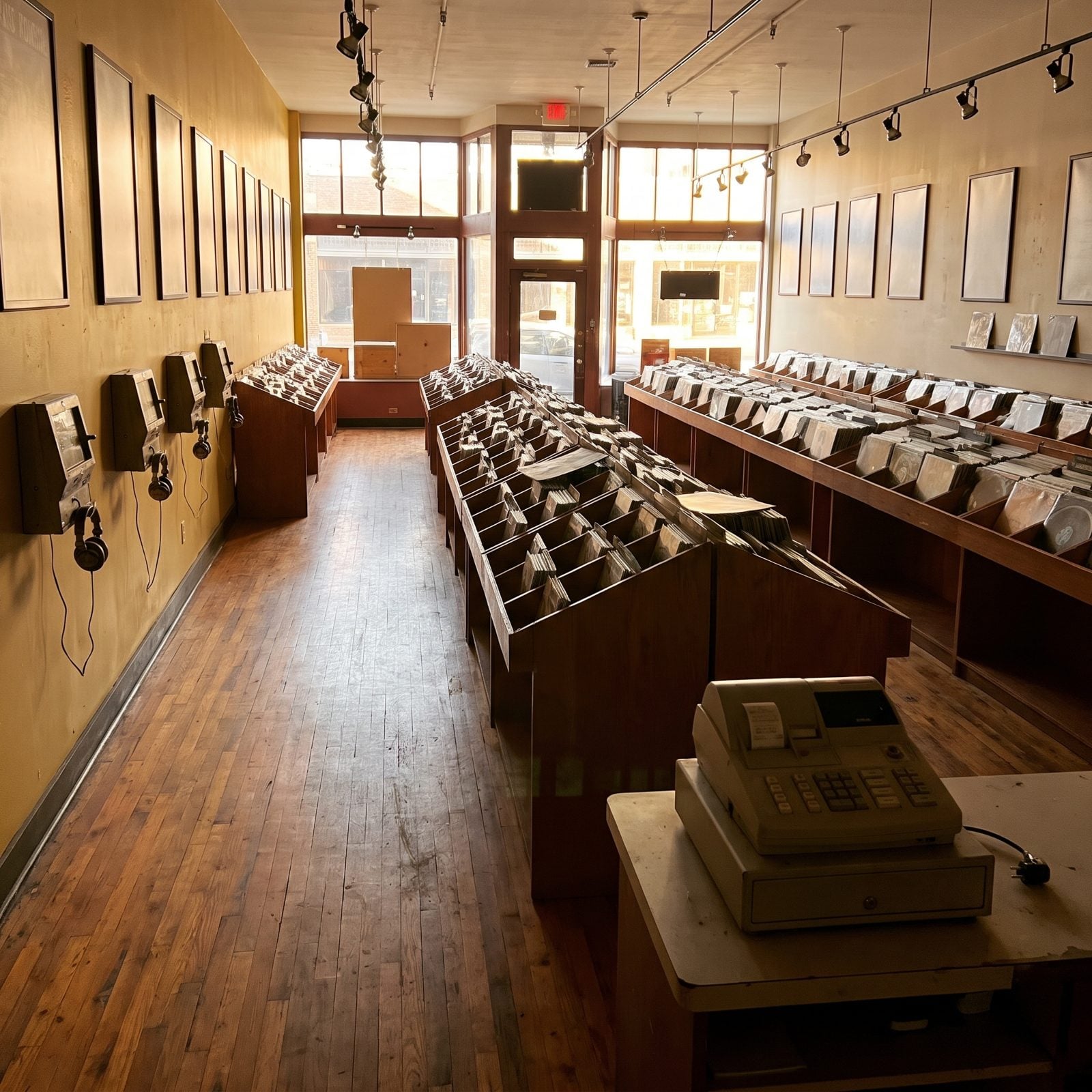
You could lose an entire Saturday in Tower. Flipping through bins, reading liner notes at a listening station, arguing with the clerk about whether the live album beat the studio cut. The staff were music obsessives, and their hand-written shelf recommendations carried real weight.
At its peak Tower was a cultural institution — on the Sunset Strip, in Tokyo, in London — the place you went to find the deep cut nobody else carried. Then Napster happened, then the iPod, then iTunes. CD sales collapsed, the company was buried under debt from overexpansion, and it liquidated in 2006.
The store didn’t just sell music. It told you what was worth hearing, and a download link never learned how to do that.
28. Sharper Image and the Massage Chair You Never Bought
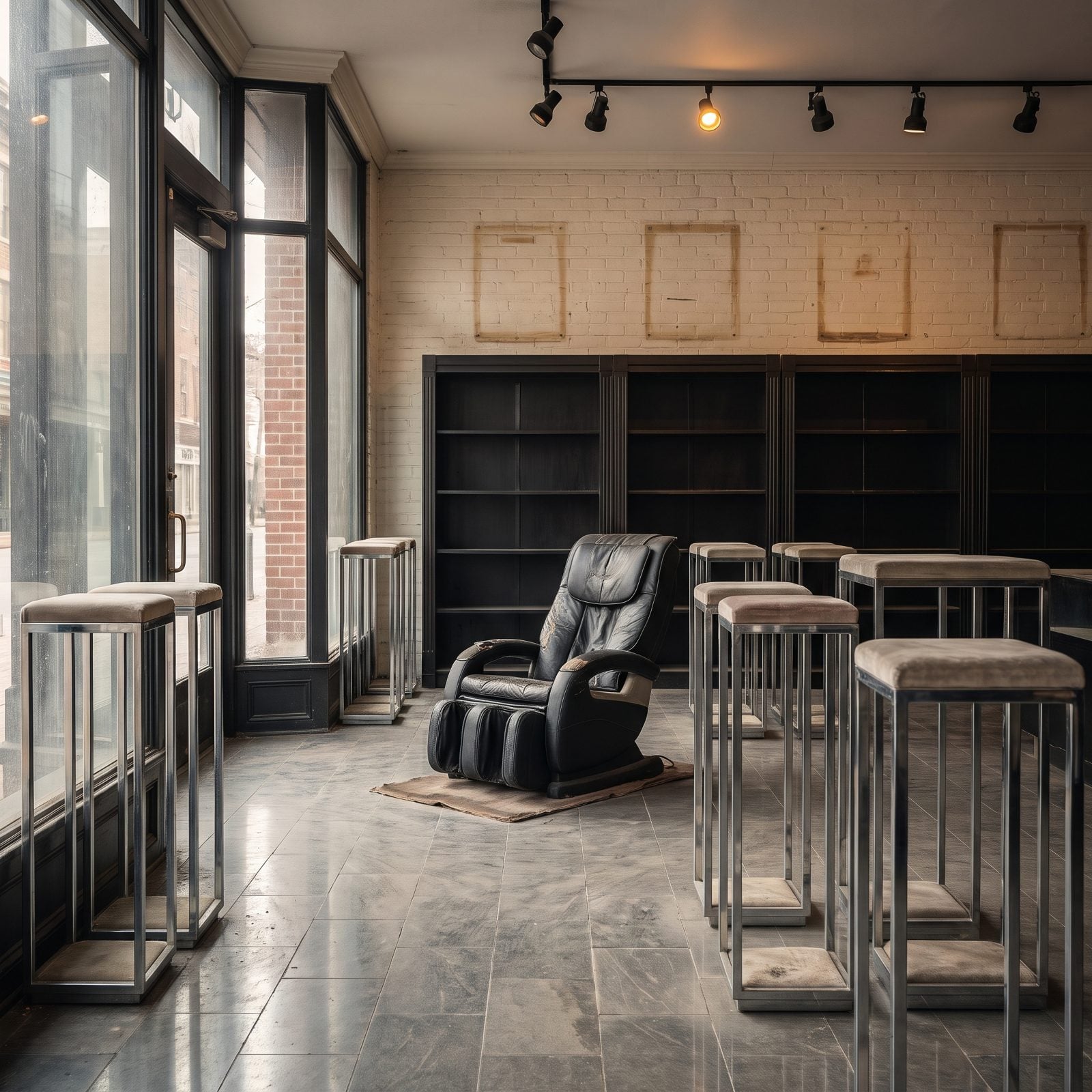
You knew the store by its smell before its sign — a whiff of ozone from the air purifiers mixed with that faint plasticky scent of things that lit up, buzzed, or hummed. Sharper Image was never where you actually shopped. It was where you went to play.
The massage chair was the whole point. You sat in it, pretended you might buy it, and let it knead your spine while a salesperson hovered a few feet away waiting for a credit card that never appeared. Nobody bought the chair that ran several thousand dollars. Everybody sat in it. Same with the levitating globe and the ionic breeze fan that got yanked from shelves after a 2005 Consumer Reports takedown.
That ionic breeze mess really hurt. Sharper Image sued over the bad review, lost, and watched its credibility walk out the door with the verdict. Bankruptcy came in 2008. The brand still floats around on other companies’ products now, but the actual store — the one with the sound machines and the robot dogs — is gone for good.
27. Pier 1 Imports, Where Every Trip Ended in a Papasan Chair
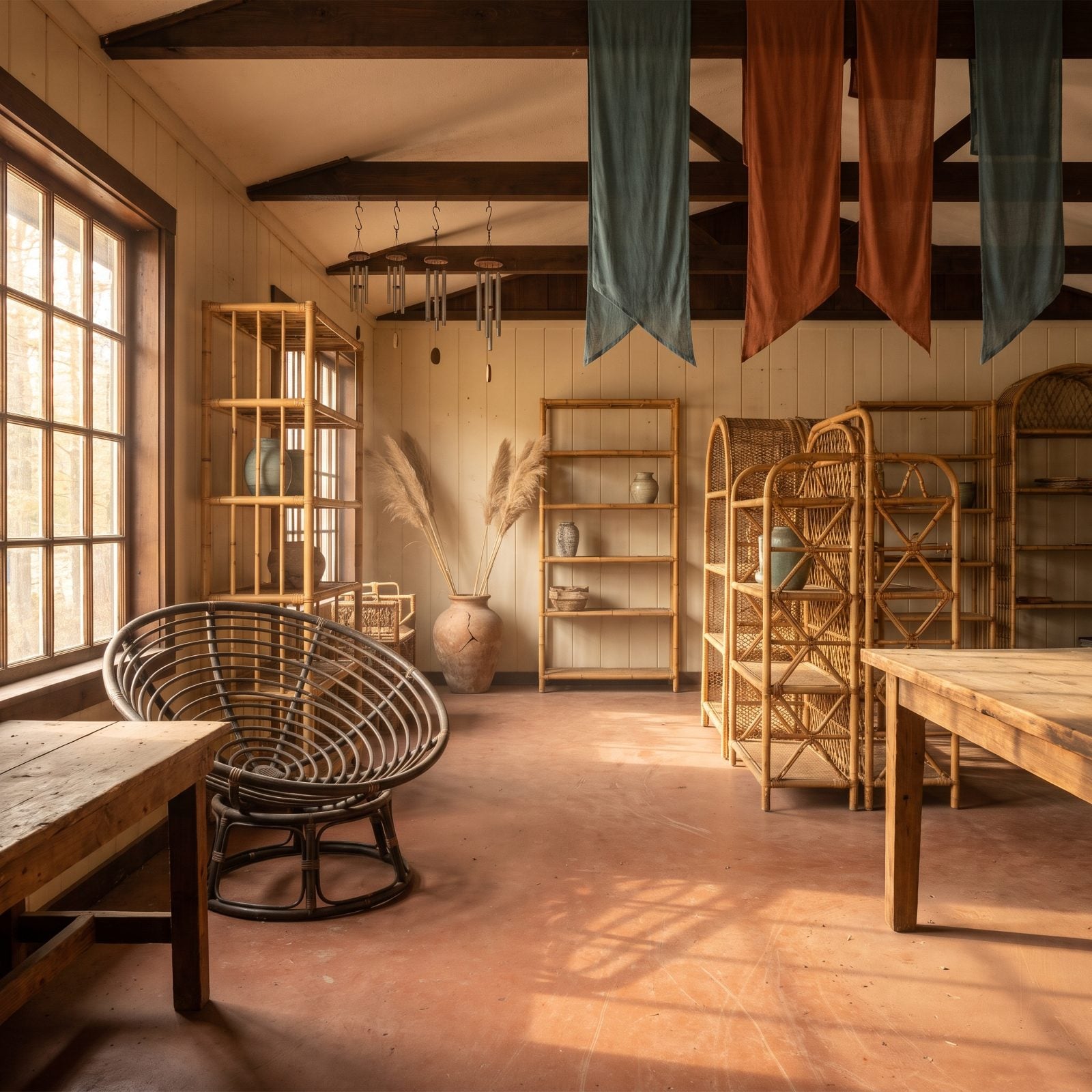
Nobody walked into Pier 1 for one thing. You went in for a candle and left with a wicker elephant side table, a set of cloth napkins, and three scented reed diffusers you absolutely did not need.
The place felt like a bazaar someone had organized just enough to shop in — beaded curtains, sea-grass baskets stacked to the ceiling, dishes in colors you couldn’t find anywhere else. And then there was the papasan chair, that giant round cushioned bowl every college dorm and first apartment seemed to require by law.
What killed it was slower and sadder than any scandal. Pier 1 got caught between Target below and West Elm above, never quite cheap enough or elevated enough to win either crowd. Debt piled up. The pandemic shoved it over the edge, and it closed every store in 2020 after nearly sixty years.
26. Bed Bath & Beyond and the Coupon You Were Still Finding in 2024
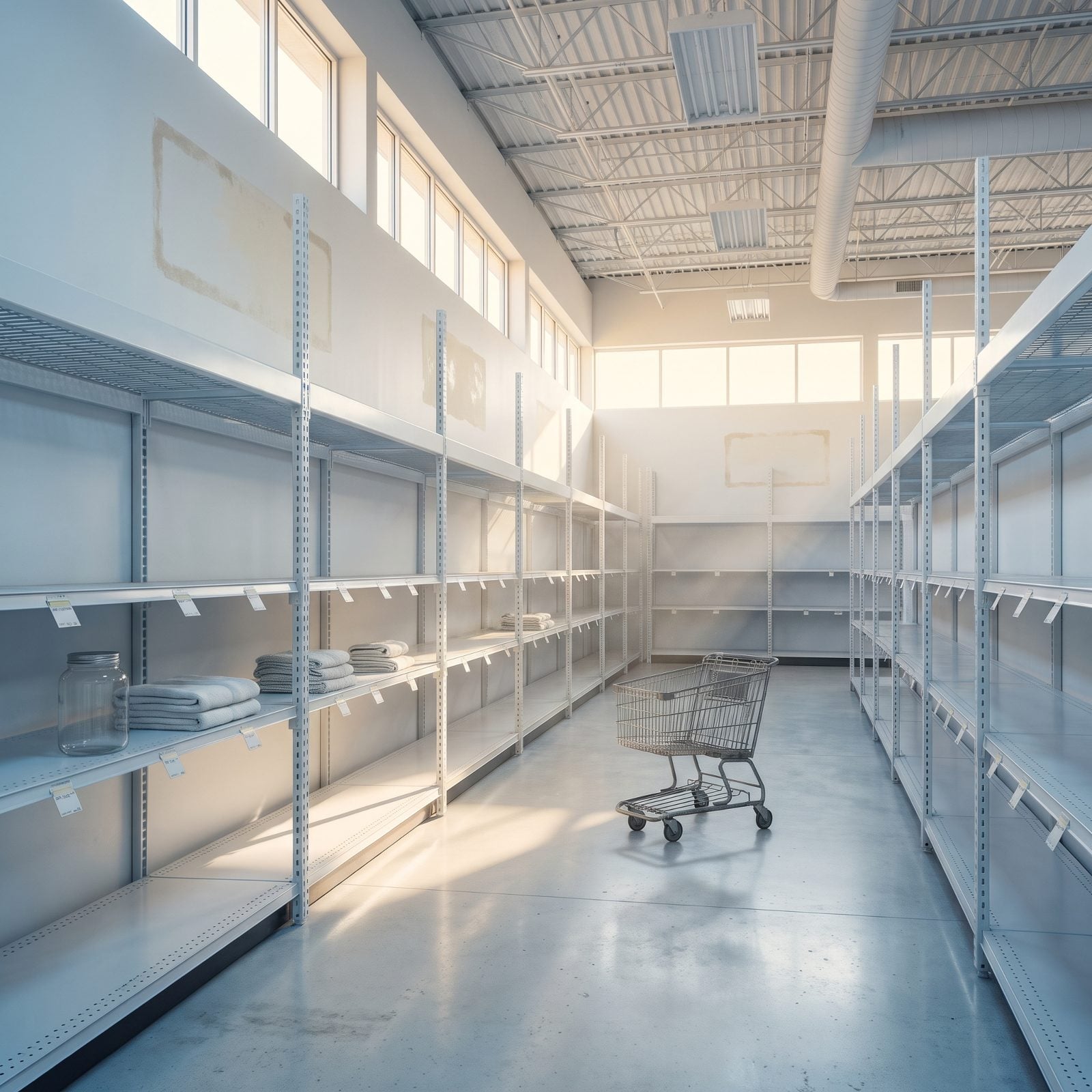
That big blue coupon. Twenty percent off, technically expired, universally accepted anyway. You had a drawer full of them, found them in coat pockets and the car and the junk mailer you almost tossed. The coupon basically was the brand.
Bed Bath & Beyond was where you solved problems you didn’t know you had — a gadget for pitting cherries, a towel warmer, an entire wall of mattress toppers. The stores were enormous and overstuffed and oddly satisfying to wander, even when you came for nothing in particular.
The ending was ugly. Years of mismanagement. A doomed push to shove cheap store brands in front of the name products people actually came for, a failed pivot, a meme-stock frenzy that fixed exactly nothing. The whole chain shut its doors in 2023. The name got bought and slapped onto a website, which isn’t the same thing and everyone knows it.
25. Service Merchandise and Shopping From a Catalog Inside the Store
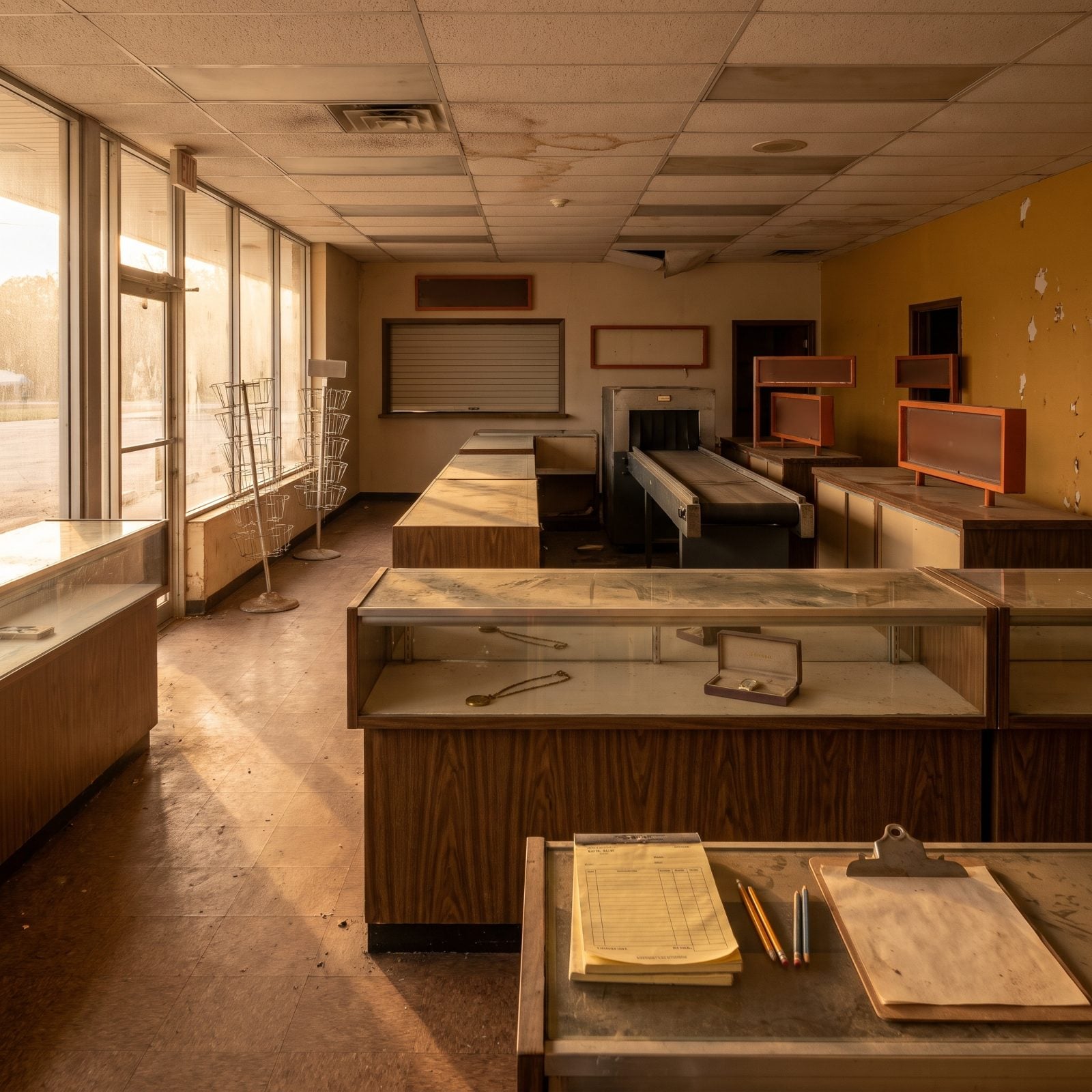
Possibly the weirdest shopping experience ever invented — and somehow it worked. You flipped through a giant catalog, scribbled the item number on a little slip with a golf pencil, handed it over, then waited by a conveyor belt for your stuff to come rumbling out on a chute.
It felt like ordering straight from a factory. Jewelry, electronics, luggage, small appliances, all displayed in glass cases and fetched from somewhere in the back. Service Merchandise ruled the catalog showroom in the ’70s and ’80s, the place you bought your wedding gifts and your first VCR.
Then regular discount stores and the early internet made the whole model pointless. Why wait by a conveyor when you could just grab it off a shelf? The company filed for bankruptcy and liquidated in 2002.
24. Lord & Taylor, the Department Store That Felt Like an Event
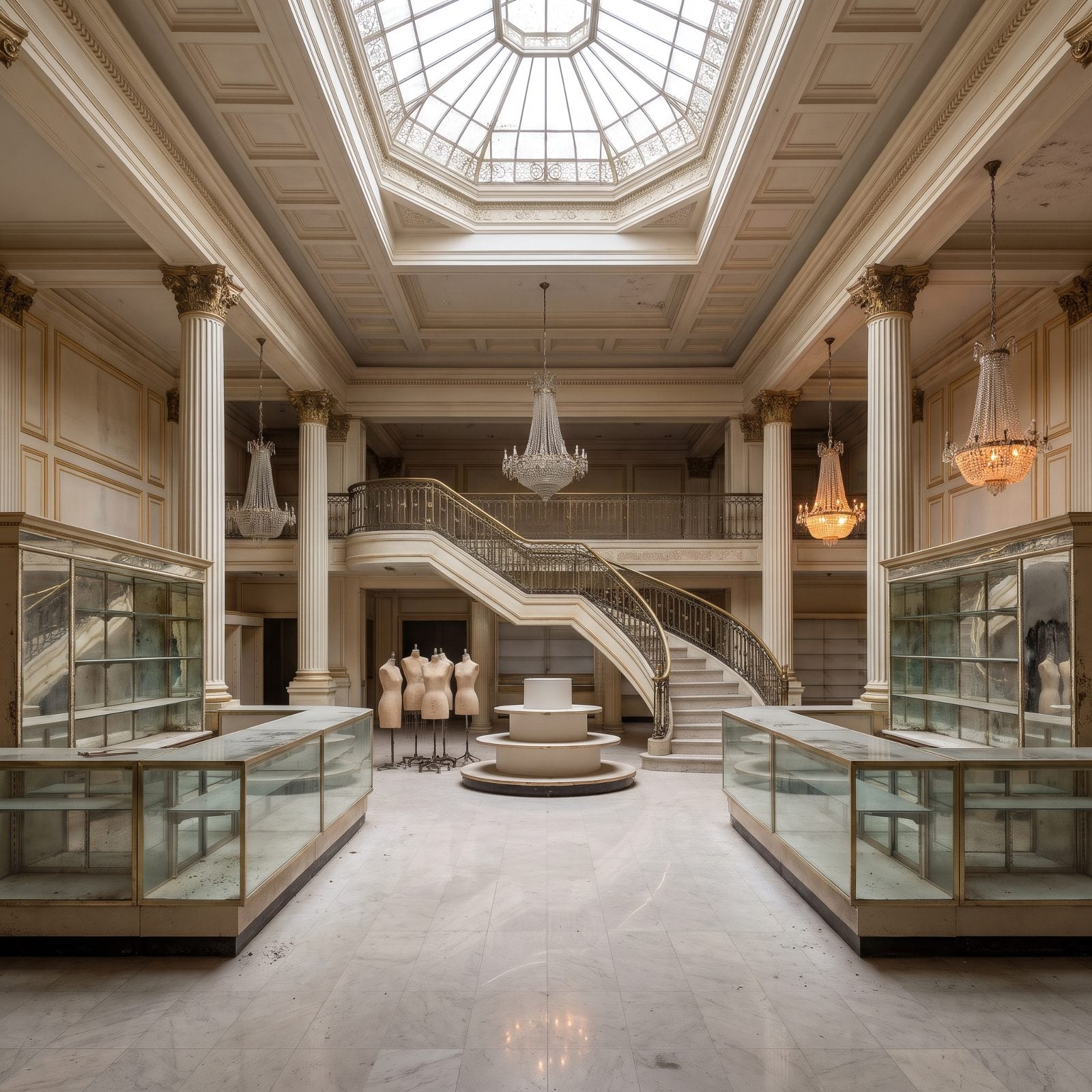
This was the store you dressed up to visit. Lord & Taylor had the gloss of old money — the chandeliers, the cosmetics counters that smelled like twelve perfumes at once, the Christmas windows on Fifth Avenue people stood in line to see.
Founded in 1826, it ranked among the oldest department stores in America. It pushed the radical notion of selling American designers back when everyone else worshipped Paris. A trip there felt ceremonial. The kind of place where a sales associate actually helped you find something.
The slow death of the full-line department store eventually caught up. Online shopping, discount competition, a parent company drowning in debt — the three of them together finished the job. The flagship sold off, the chain liquidated, and by 2021 the physical stores were done after 195 years.
23. Marshall Field’s and the Frango Mints People Still Mourn
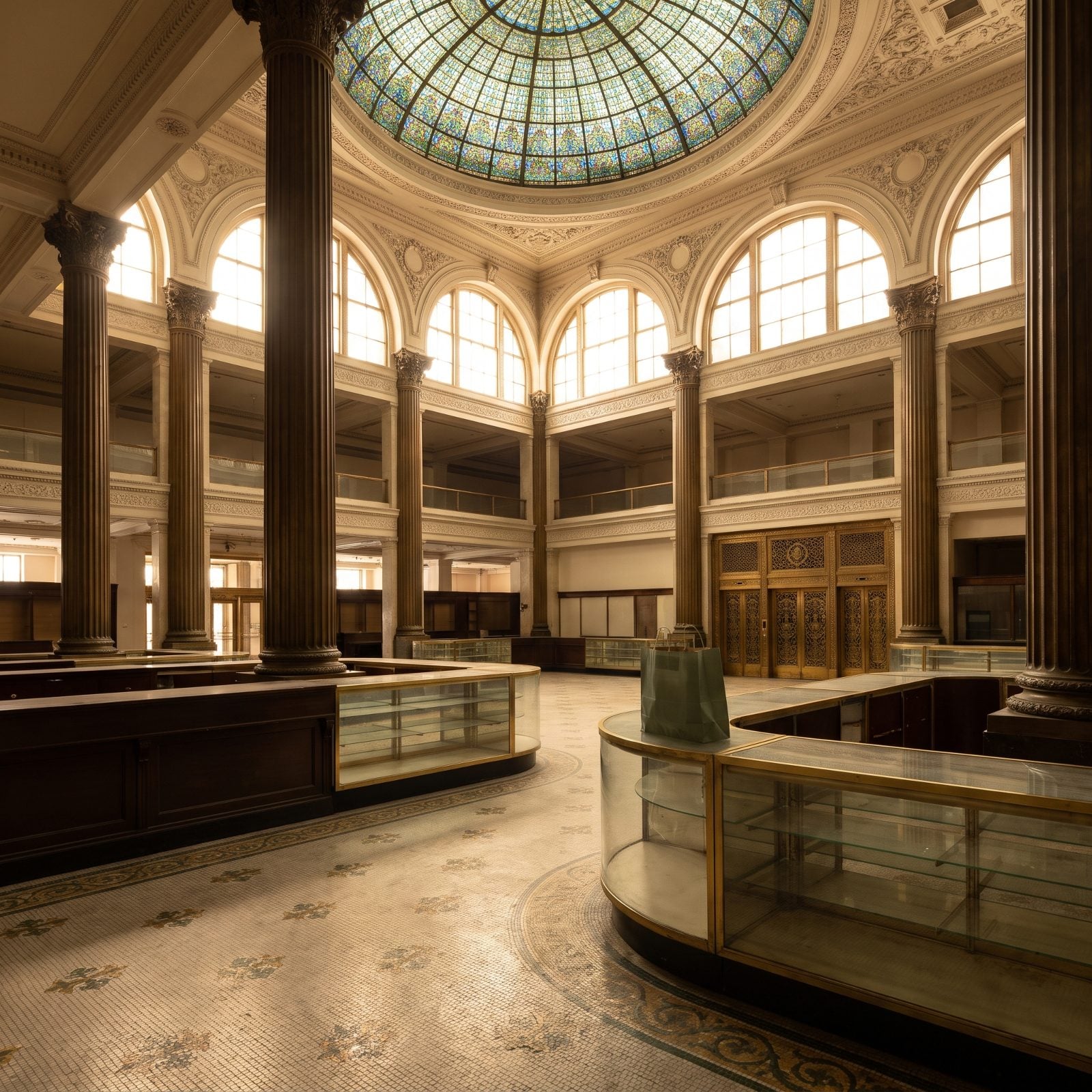
Chicago has never forgiven anyone for this one. Marshall Field’s wasn’t just a store — it was a civic institution, with the giant clocks on the corner, the Walnut Room restaurant and its towering Christmas tree, the Tiffany mosaic ceiling that made the whole place feel like a cathedral of shopping.
And the Frango mints. Those little chocolate squares were practically a Chicago birthright: handed out at holidays, packed in green boxes, hoarded.
What happened wasn’t really a closure. It was an erasure. In 2006 the new owner rebranded every Marshall Field’s store as Macy’s, and technically the building stayed open — but the soul did not. People protested, boycotted, grumbled for years. For a lot of Chicagoans, the name over the door is still flat wrong.
22. KB Toys and the Mall Trip That Was Really Just This
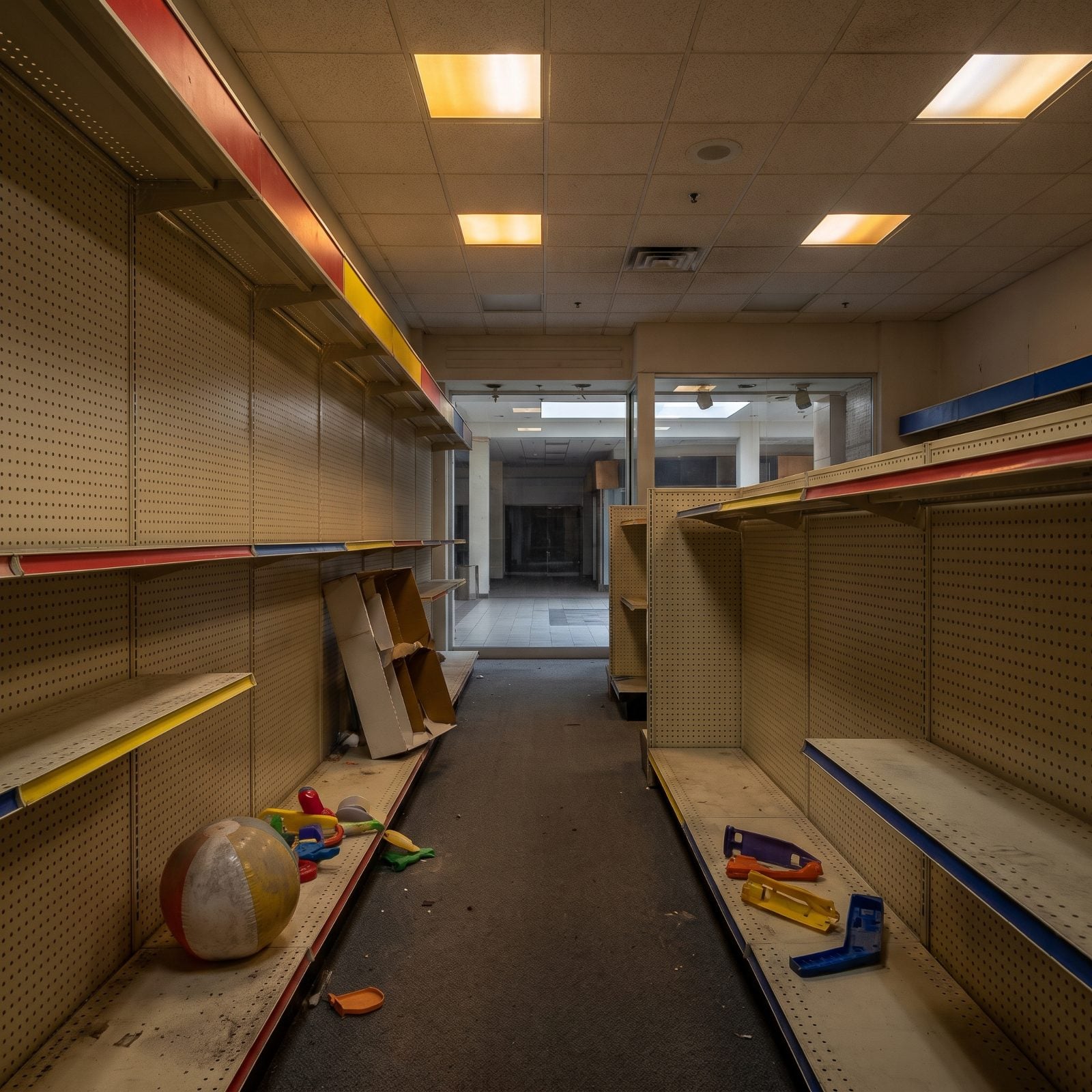
Small, loud, packed floor to ceiling. KB Toys was the mall toy store, the one you begged to visit while your parents shopped for boring adult things. It crammed more toys per square foot than seemed physically possible.
The clearance bins were the real draw. Action figures nobody wanted, puzzle boxes crushed at the corner, last year’s fad marked down to pennies — you dug through them like a pirate.
Most people miss how this one actually ended. KB didn’t lose to Walmart alone. It bought up the dying remains of a bigger toy chain, took on crushing debt, got squeezed by big-box pricing it could never match, and filed for bankruptcy twice before liquidating in 2009. The whole mall-based model was already dying out from under it.
21. Sports Authority and the Wall of Sneakers You Stared At
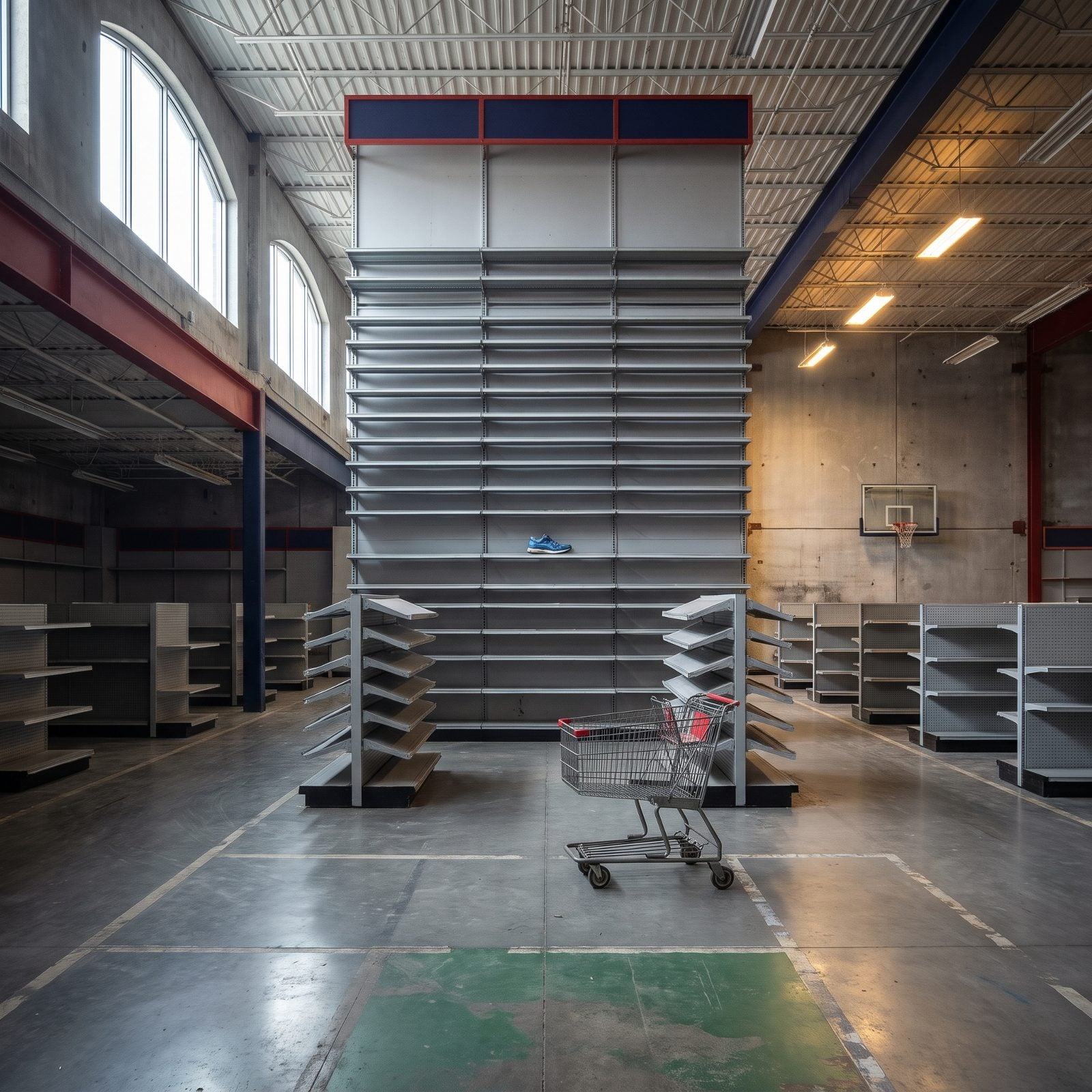
The sneaker wall. Two stories of them, or so it felt — every cross-trainer and cleat and running shoe staring back while you tried to decide. Sports Authority was where you bought gear for the sport you were definitely, absolutely going to start.
Treadmills you’d test-walk. Weight benches. Fishing rods, kayaks, team jerseys, a whole aisle of protein powder. A big-box temple to good intentions, basically.
The collapse was a classic retail squeeze. Dick’s Sporting Goods ate its lunch on one side, Amazon on the other, and a mountain of private-equity debt sat on top of the whole thing. Sports Authority filed for bankruptcy and liquidated every store in 2016.
20. Linens ‘n Things, the Underdog That Never Got a Coupon Legacy
Would you like to save this?
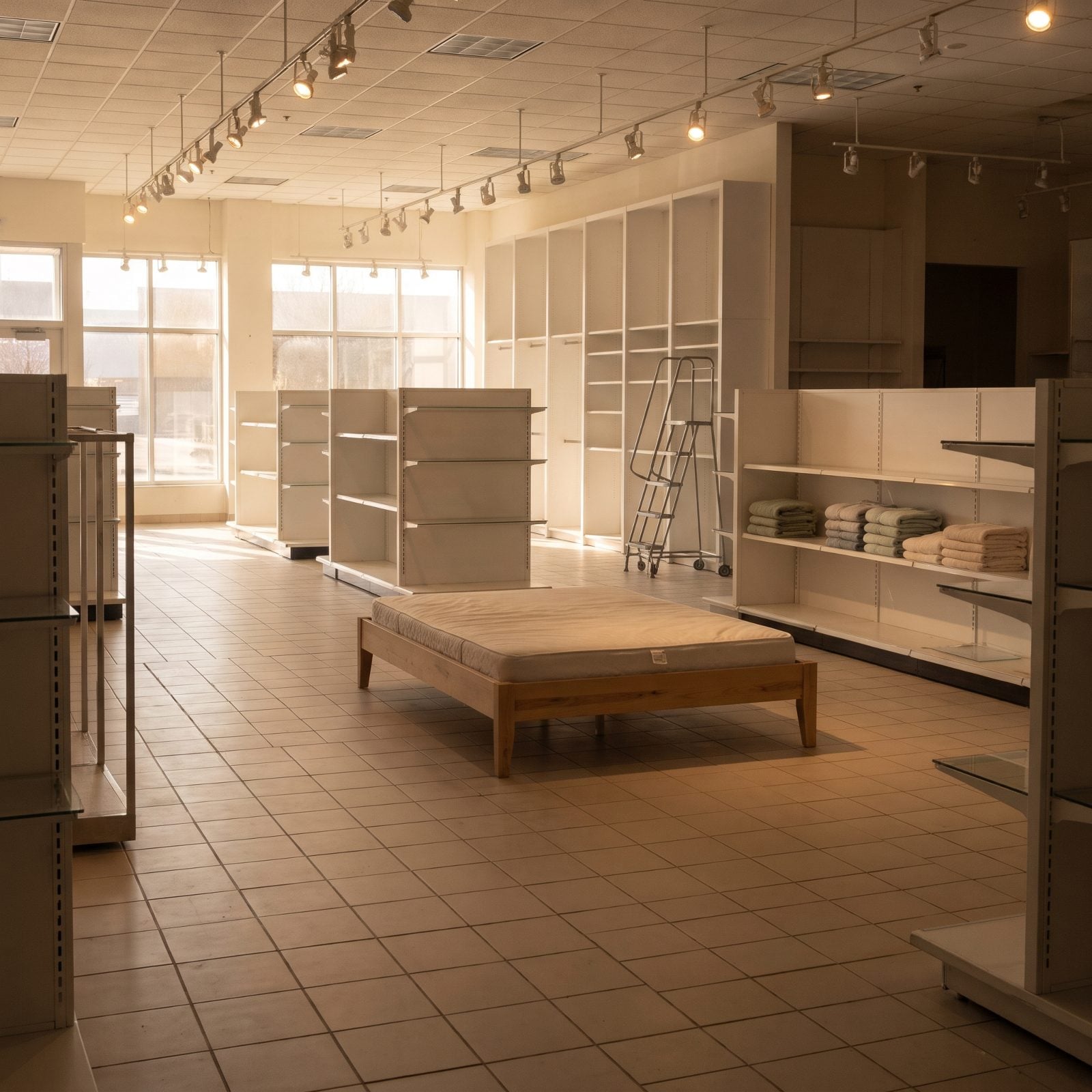
Always the runner-up. Linens ‘n Things did everything Bed Bath & Beyond did, sometimes better, and still lived permanently in that store’s shadow. Same towels, same storage bins, same wall of comforters, same gloriously confusing abundance.
It had its loyalists — people who swore the staff was friendlier, the layout easier, the coupons just as good. And honestly, for a lot of that stuff, it was a coin toss which store you ended up in.
Private equity loaded it with debt in a 2006 buyout, right before the economy cratered. Linens ‘n Things couldn’t carry the weight. It filed for bankruptcy and liquidated every store in 2008, a few years before its bigger rival even started wobbling. First to fall, least remembered.
19. CompUSA and the Days You Bought Software in a Cardboard Box
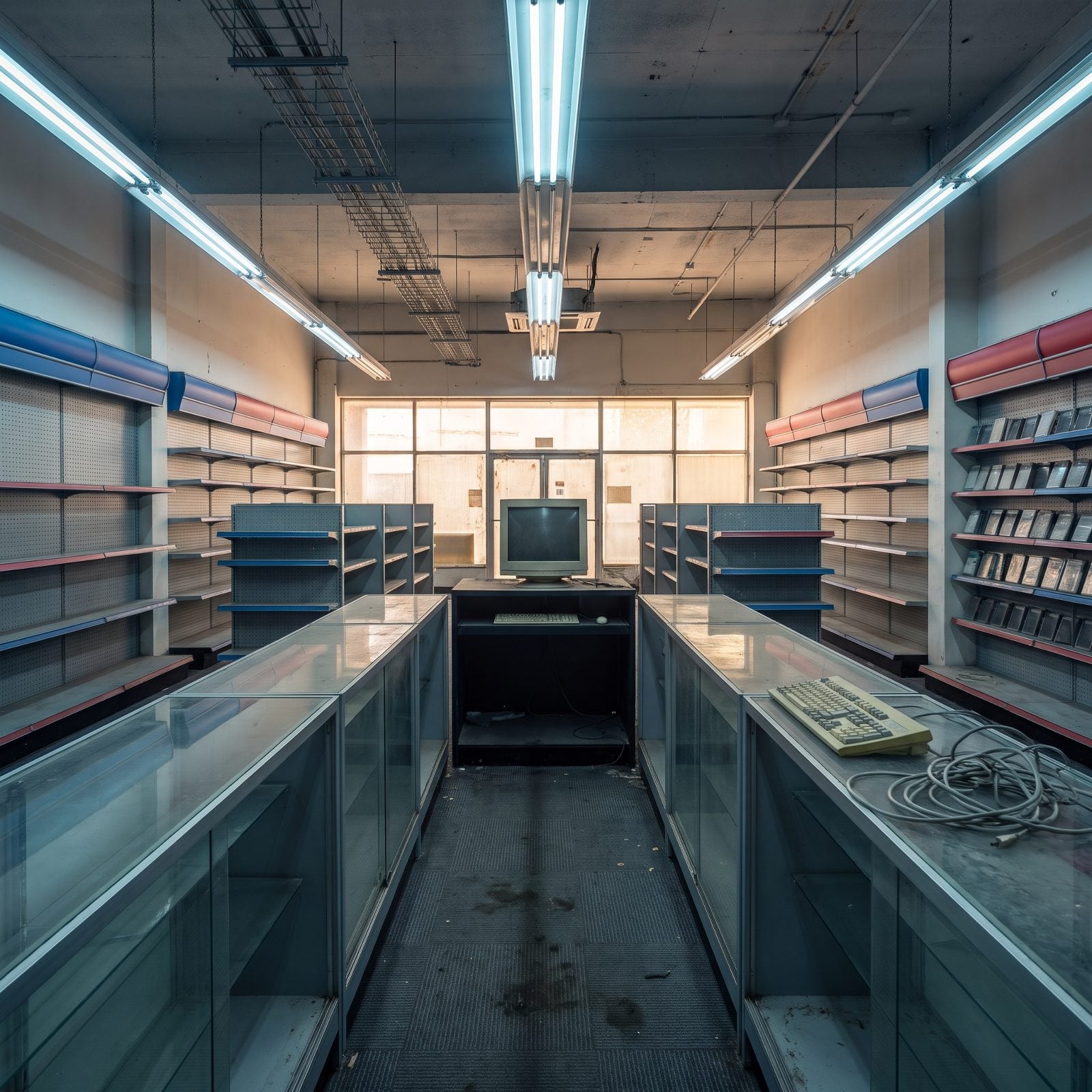
You bought software in a box. A heavy box. Shrink-wrapped, a thick manual tucked inside, a CD-ROM in a sleeve — you drove it home and installed the whole thing off a disc. CompUSA was ground zero for that era.
Rows of beige towers. Printers that weighed as much as a toddler. A software wall sorted by category, and a staff of guys who genuinely wanted to argue with you about RAM. This was where you went when you were finally buying a real computer.
Then the ground shifted completely. Dell sold direct, Best Buy undercut on price, and software stopped coming in boxes at all — you just downloaded it. A physical store full of shrink-wrapped programs had no reason left to exist. CompUSA shut most of its locations in 2007 and faded out over the following years.
18. Payless ShoeSource: The BOGO Sign That Shod a Generation
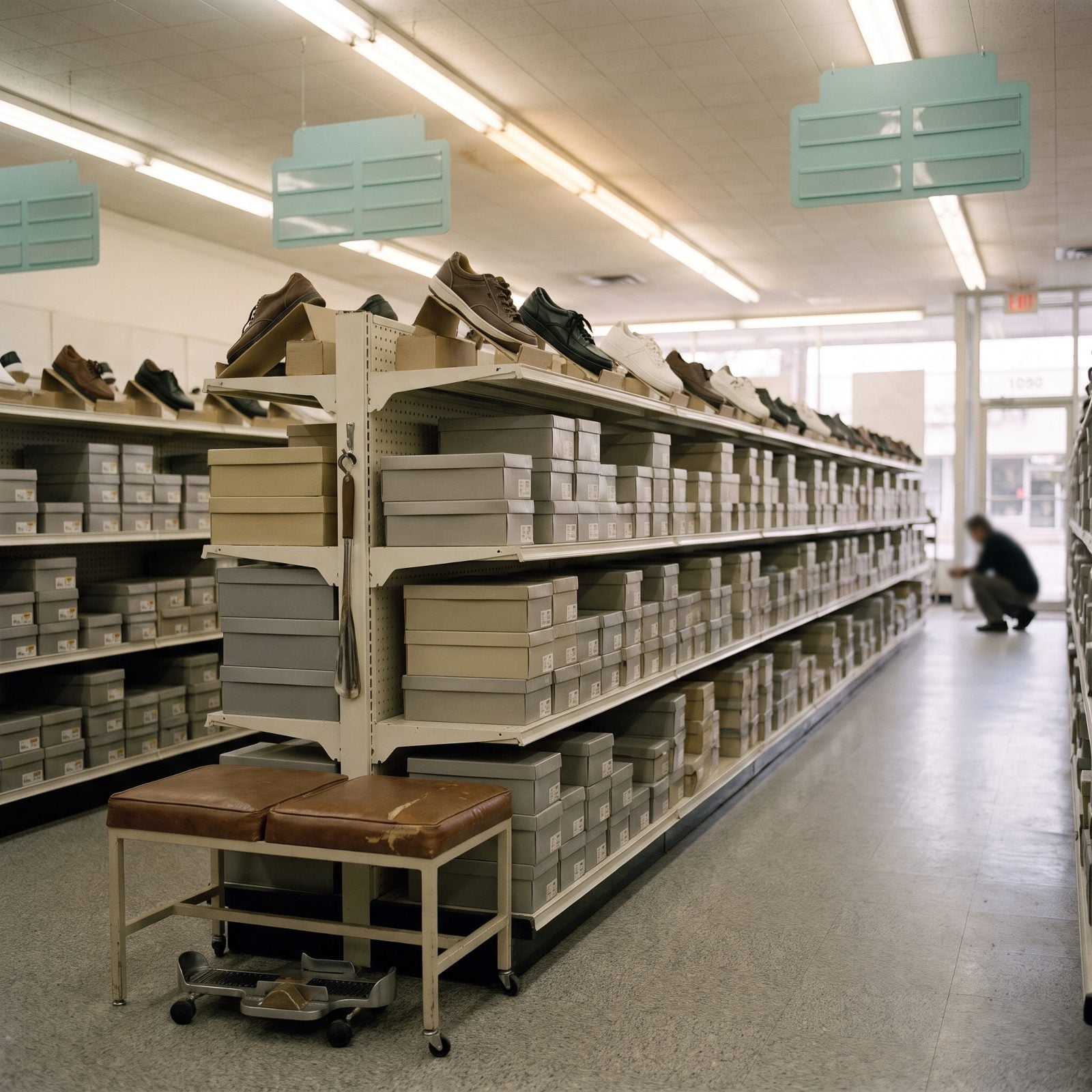
Self-service was the whole pitch. You grabbed the box yourself, sat on the little vinyl bench, and slid your foot into that cold plastic measuring tray while nobody hovered over your shoulder trying to sell you polish. Buy One Get One Half Off was basically the company’s heartbeat, the deal that drove the whole model. At its peak the chain ran thousands of stores, and it was where you went when school started and your kids had outgrown everything over the summer.
Then came the usual rot: too much debt, two trips through bankruptcy, and shoppers wandering off to the internet. North American stores closed in 2019. The brand still clings on in parts of Latin America and has flickered back here and there, but for most of us it’s gone the way the bench is gone.
17. Sam Goody: Where You Bought the Whole Album for One Song
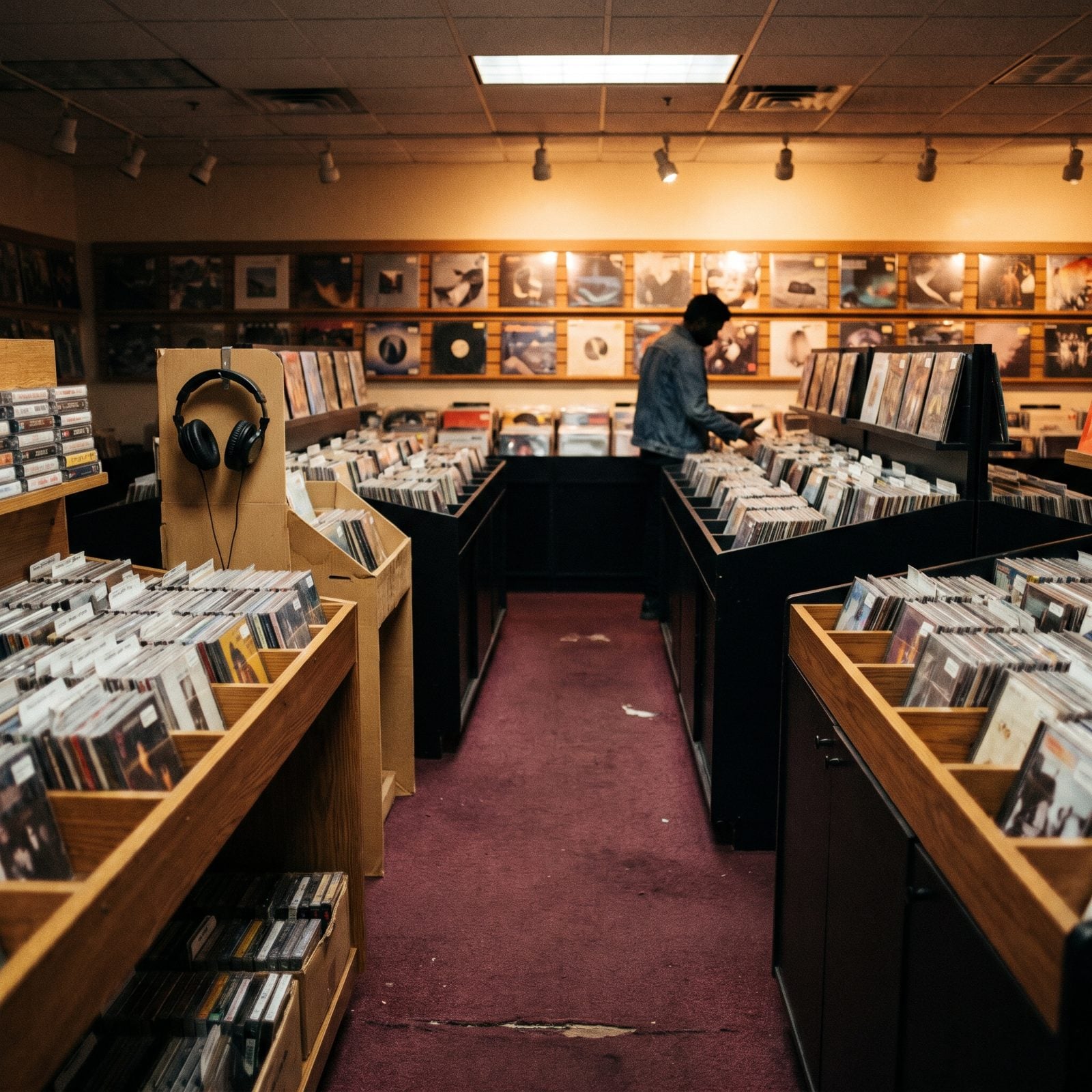
You flipped through those bins the way you scroll now, except your thumbs got dusty. Sam Goody lived in the mall, wedged between the pretzel smell and the arcade noise, and it was where birthday money turned into one cassette you’d already memorized off the radio. The headphones at the listening station weighed about a pound each and smelled like everyone’s ears, which somehow didn’t stop anyone from using them.
What killed it wasn’t one thing. Napster, then iTunes, then the slow dawning that nobody needed to buy twelve songs to get the one they actually wanted. The parent company stumbled through bankruptcies and the stores were mostly gone by the late 2000s. I still miss the physical act of choosing. A playlist doesn’t have a shrink-wrap crinkle.
16. Crazy Eddie: The Prices Were Insaaane (and So Was the Accounting)
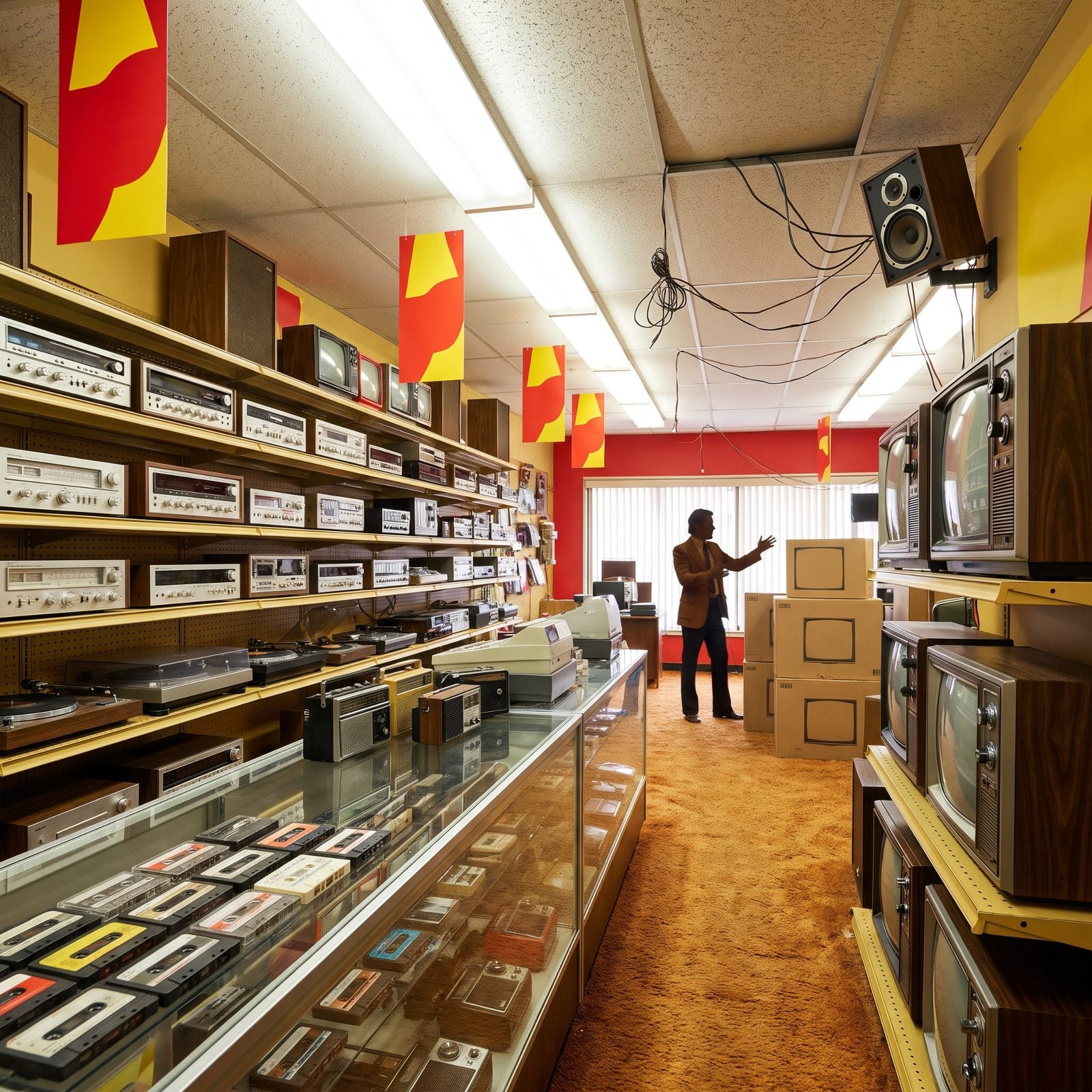
The commercials were the brand. A manic pitchman screaming that the prices were “INSAAANE,” running during every cheap late-night slot in the New York area. Crazy Eddie sold stereos and TVs cheaper than anyone, and for a while that felt like magic.
Turned out the magic was fraud. The whole operation ran one of the most notorious securities and accounting scams of the 1980s, skimming cash, faking inventory, and cooking the books before and after going public. Eddie Antar eventually fled to Israel and got dragged back. The stores collapsed in 1989. It’s the rare dead chain people remember less for the shopping and more for the spectacular way it all came apart.
15. Gimbels: The Department Store That Lost the Macy’s War
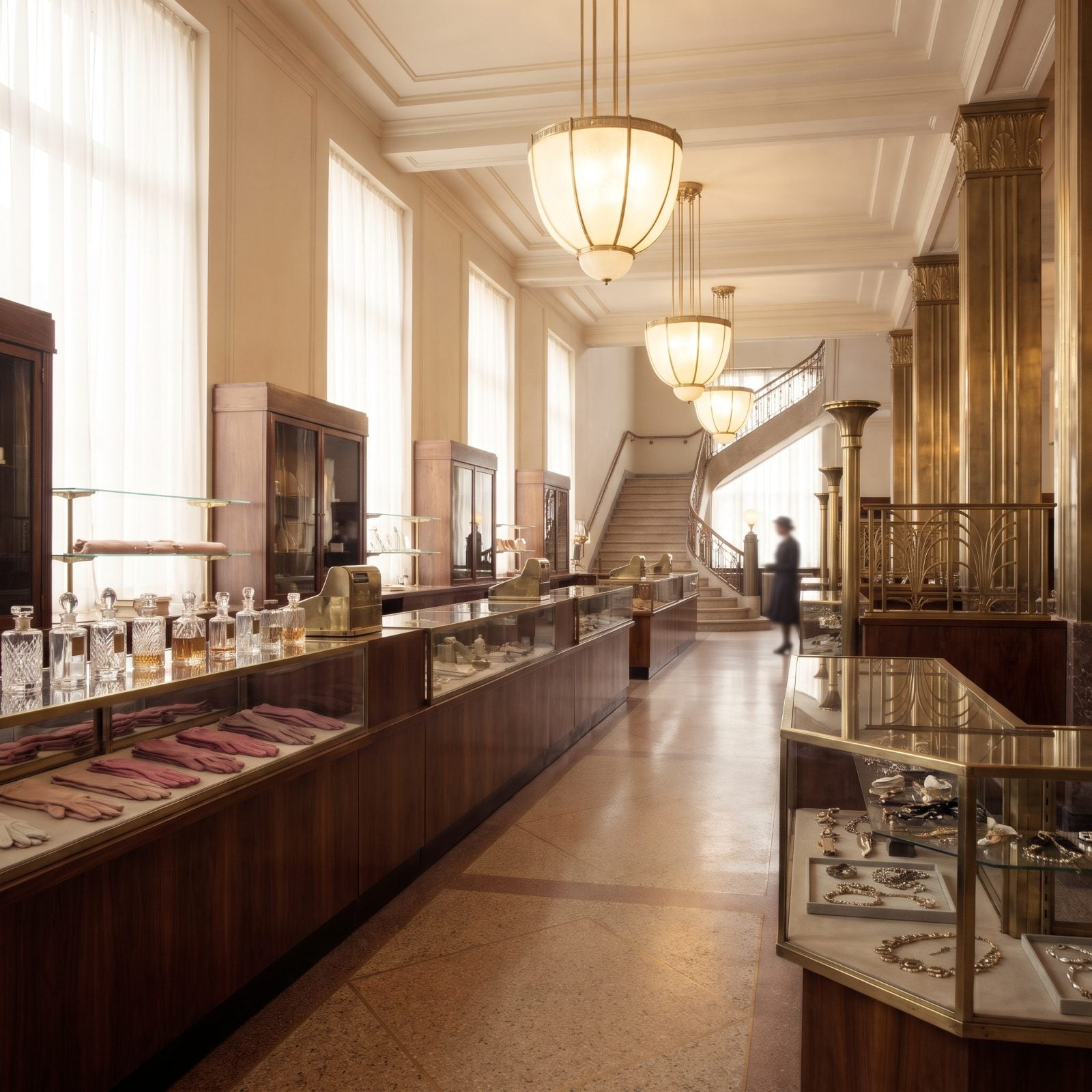
“Does Macy’s tell Gimbels?” The line became a national punchline because the two were the great rival department stores, side by side in Herald Square, clawing after the same shopper for decades. Gimbels was enormous in its day. It even owned Saks for a stretch.
Rivalries only matter until one side stops showing up. By the late 1970s and early ’80s Gimbels was tired, underinvested, and squeezed between the discounters below and the nicer stores above. The chain shut down in 1987. The building went to other uses, the name survives mostly in that old joke, and Macy’s, for the record, never did tell Gimbels anything.
14. Hollywood Video: Friday Night Was a Place You Drove To
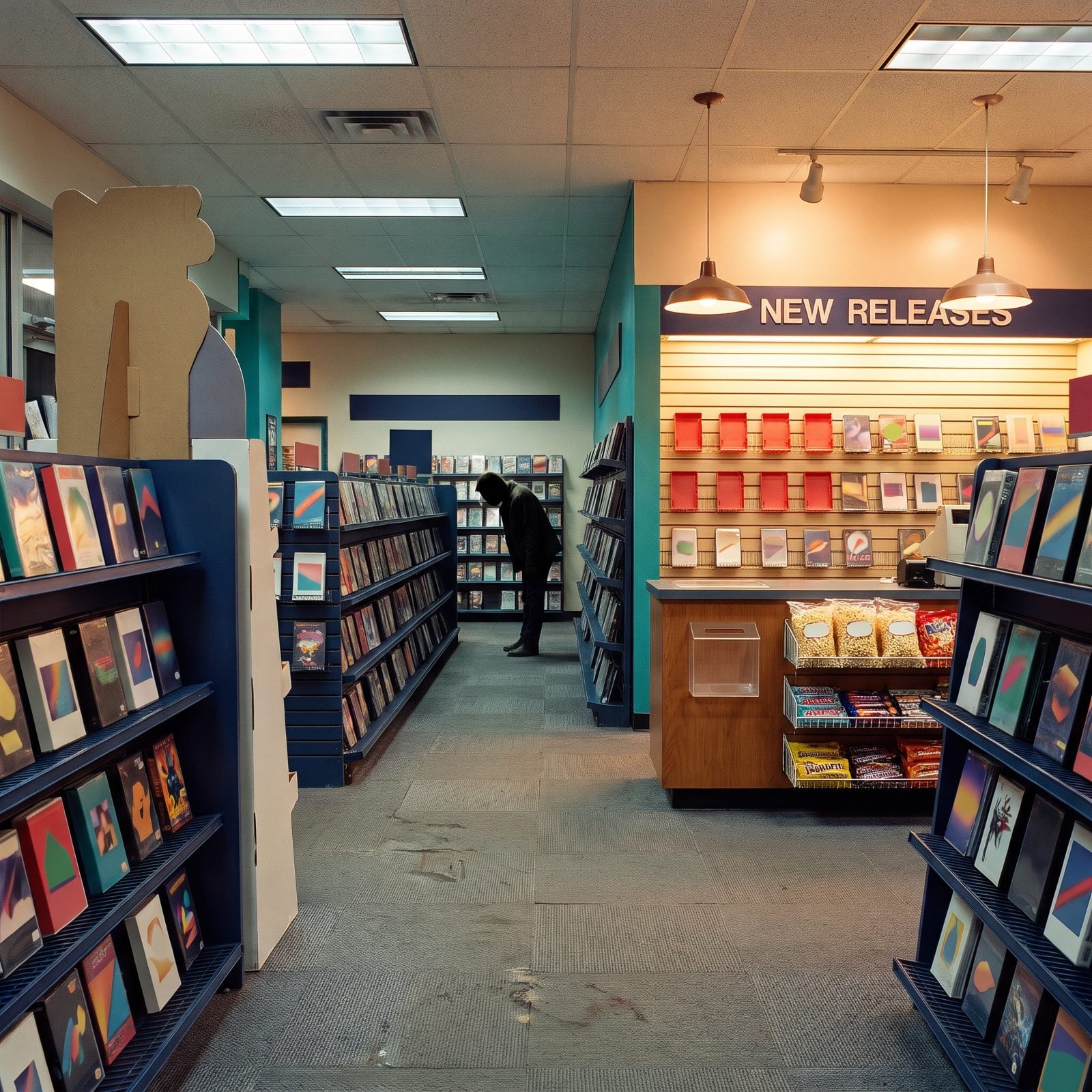
The ritual mattered more than the movie. You drove over, wandered the aisles, debated for twenty minutes, grabbed a bag of candy that cost more than the rental itself, and then committed to a film for three days with a late fee hanging over you like a small moral test.
Hollywood Video was the big challenger to Blockbuster, and for a decade that two-store scrap was how America got its weekend. Then the mailed red envelope showed up. Then streaming. The company went bankrupt and shut its remaining stores in 2010. The late fee died with it, and honestly, nobody wept over that part.
13. Mervyn’s: The California Middle That Got Squeezed Out
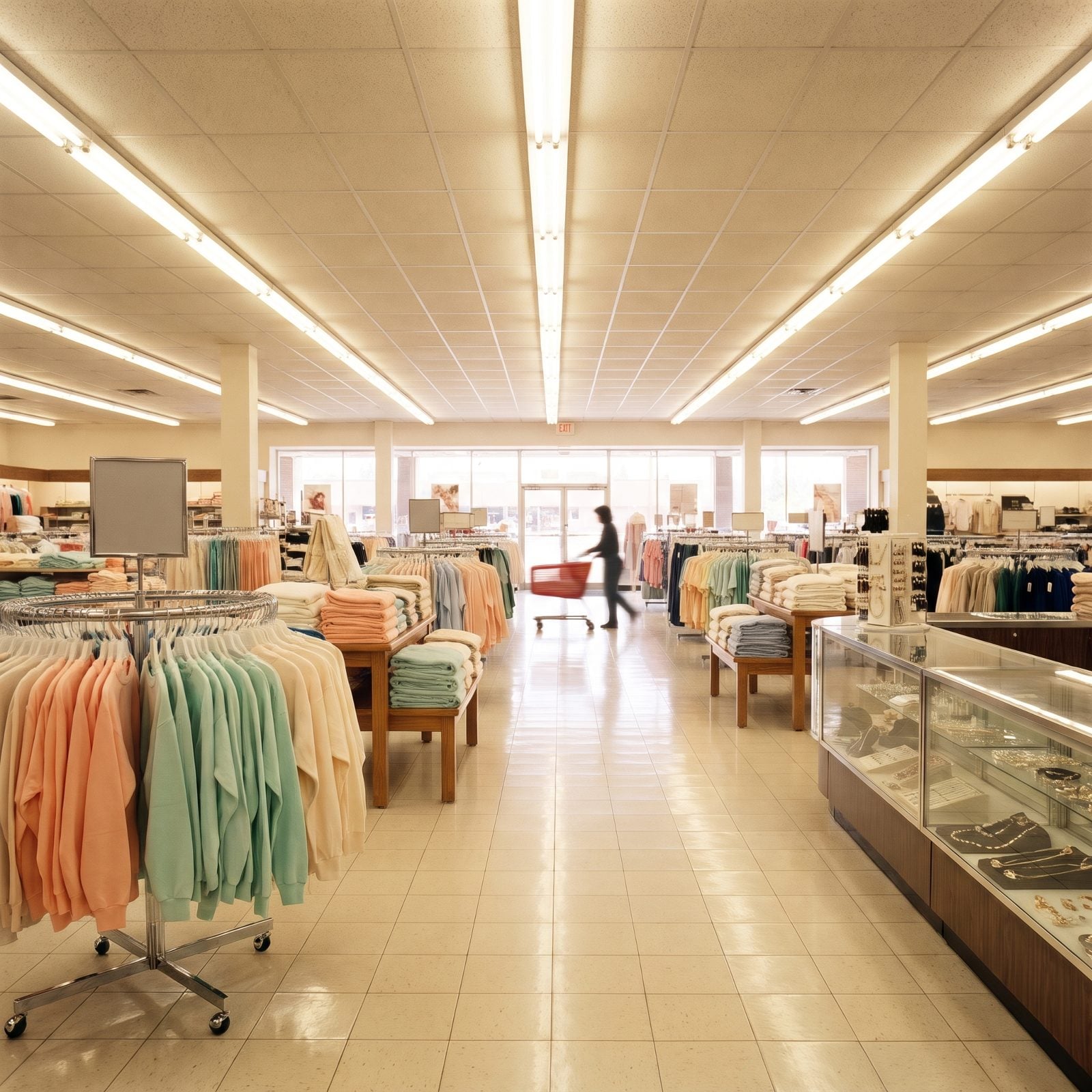
This was the store for back-to-school clothes, bath towels, and that weirdly specific category of “a decent shirt for a decent price.” A California-born chain that spread across the West and Southwest, Mervyn’s camped out in the comfortable middle, nicer than a dollar store and cheaper than a real department store.
The middle is a dangerous place to live. Target and Kohl’s pulled customers up, Walmart pulled them down, and private-equity owners loaded the company with debt and sold off its real estate for good measure. Mervyn’s filed for bankruptcy and liquidated in 2008, right as the recession hit. If you grew up out West, you can probably still picture the exact rack where your first-day-of-school outfit came from.
12. Caldor: The ‘Bloomingdale’s of Discounting’ That Ran Out of Road
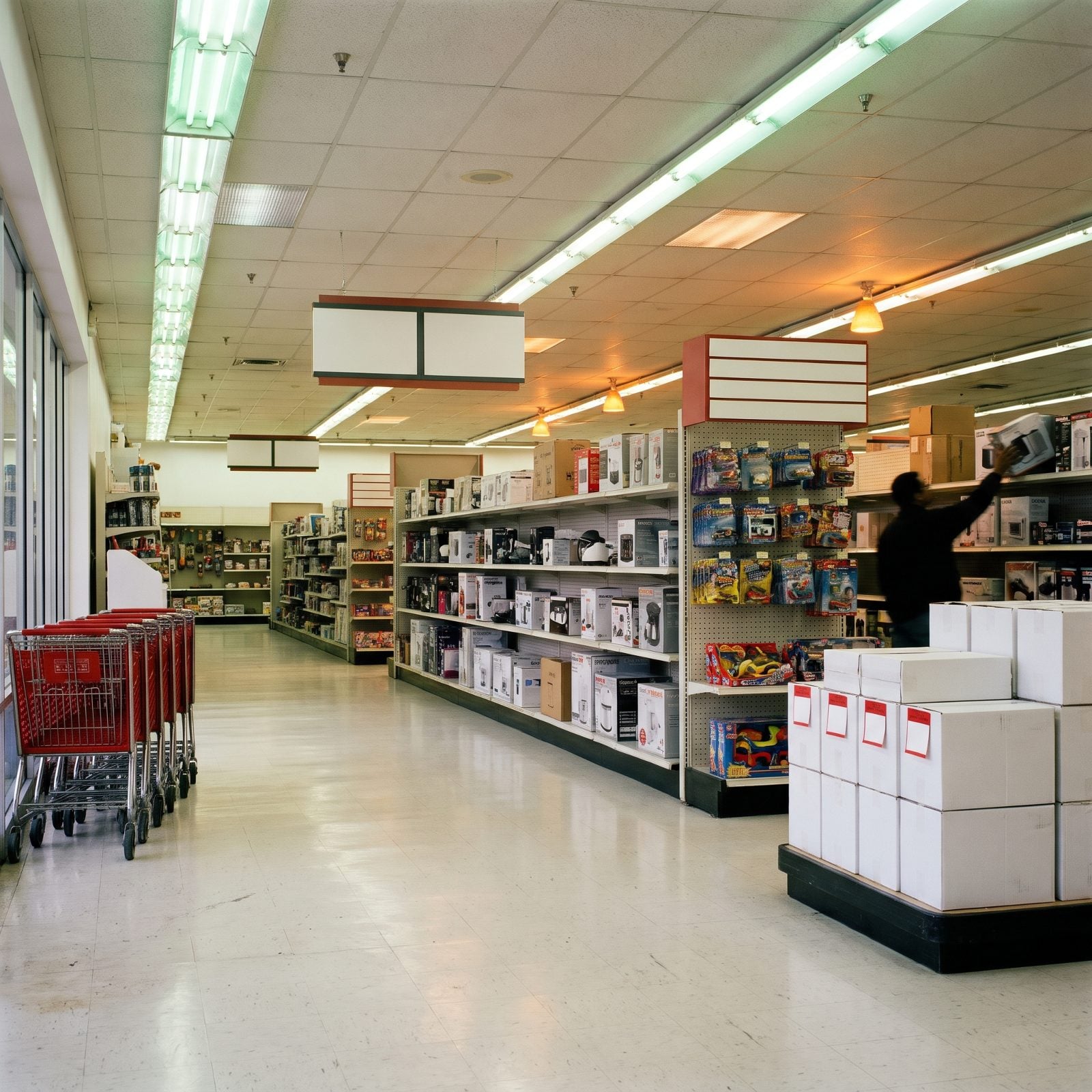
People liked to call it “the Bloomingdale’s of discounting,” which was generous but told you the vibe. Caldor tried to make bargain shopping feel a half-step classier than the competition, with wider aisles and a slightly better grade of stuff, spread all across the Northeast.
Discounting is a brutal math problem. Caldor kept losing it to the national giants, the ones with deeper pockets and cheaper supply chains. Expansion stretched the company thin, bankruptcy followed in 1995, and the last stores went dark by 1999. For a lot of New Englanders, Caldor is simply the childhood store, the one whose jingle still surfaces in your head at random moments.
11. Filene’s Basement: The Automatic Markdown That Was a Blood Sport
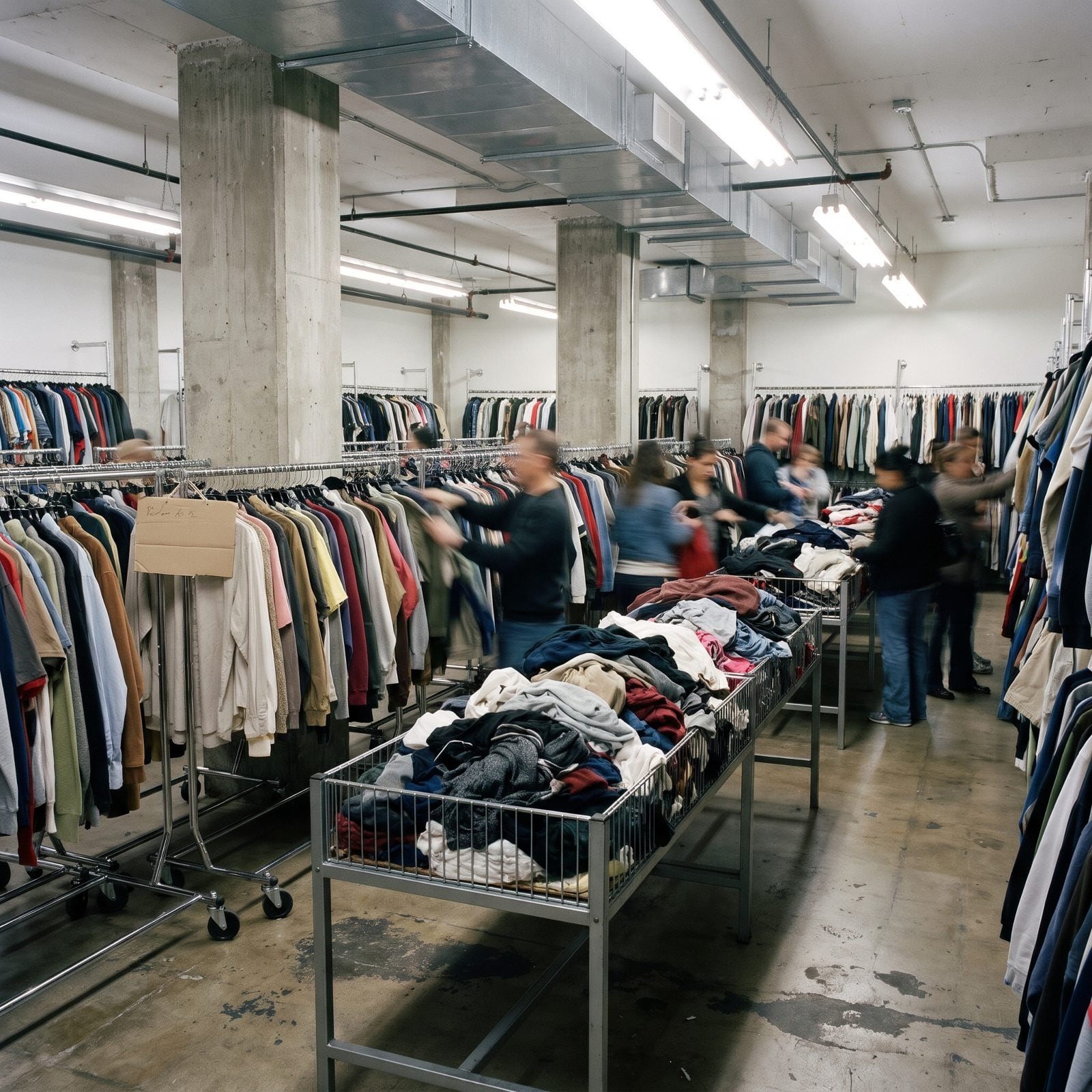
The markdowns ran on a clock, and shoppers knew it. The original Boston basement used an automatic price-reduction system where the longer something sat, the cheaper it got, until it was nearly free or just donated outright. That turned shopping into a genuine sport. Regulars tracked how long items had been languishing down there, and the running-of-the-brides sales became local legend, with women literally fighting over gowns.
Glorious concept. Cursed finances. Ownership changed hands, debt piled up, the parent companies struggled, and the whole operation finally liquidated in 2011. The original flagship had already closed years earlier when a building redevelopment went sideways. No app will ever replicate the thrill of watching a dress get cheaper while you stood there deciding.
10. Ames: The Small-Town Discounter That Overreached
Would you like to save this?
Ames served the towns too small for the big names. It planted itself in rural New England and spread across the Northeast and Midwest, the practical place for a lawn sprinkler, a package of socks, and a plastic kiddie pool in June.
Growth by acquisition was the trap. Ames bought up other struggling chains, including the remains of Zayre and later Hills, and swallowed more than it could possibly digest. Debt and integration headaches dragged it through bankruptcy twice. The final liquidation came in 2002, shutting hundreds of stores. It’s one of those names that means nothing to half the country and means childhood to the other half.
9. Bradlees: New England’s Discount Store That Couldn’t Outlast the Giants
If you came up in the Northeast, Bradlees sat in your memory right next to Caldor and Ames, the holy trinity of regional discounters you can no longer visit. It was the everyday store, the one for curtains and crayons and a new winter coat. Dependable. Unglamorous.
The pattern here will sound familiar, because it was the pattern for all of them. Walmart and Target arrived with the kind of scale and prices regional players just couldn’t touch. Bradlees went through bankruptcy, clawed its way back for a bit, then filed again and liquidated in 2001. The buildings became other stores, the signs came down, and a whole category of friendly middle-ground retail quietly vanished along with them.
8. FAO Schwarz: The Toy Store That Felt Like a Museum
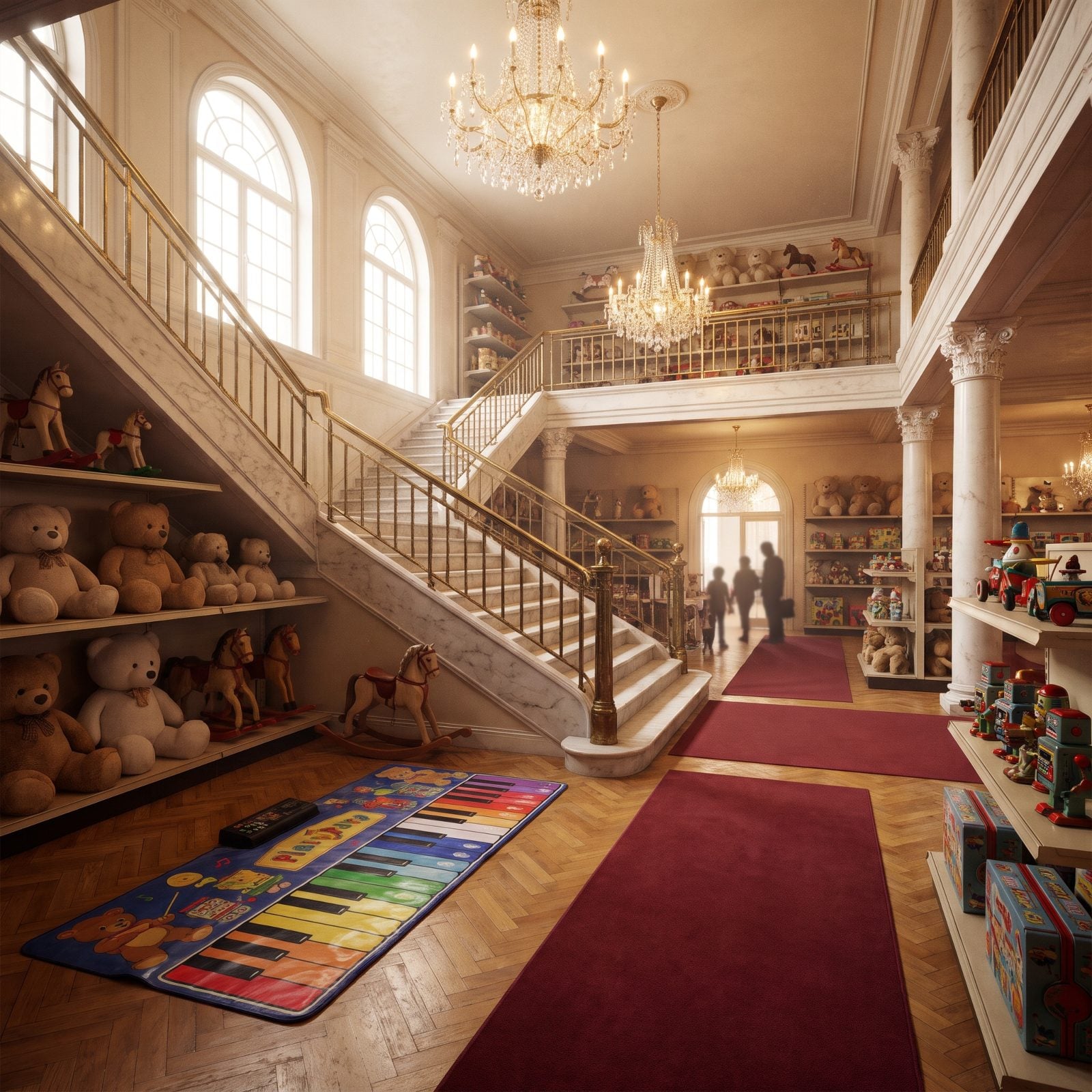
You walked in and forgot you were in a store. Marble staircase, two stories of ceiling, a colorful piano play mat on the floor you could actually stomp notes out of. FAO Schwarz opened in 1862 and spent more than a century turning toy shopping into an occasion rather than an errand, and that Fifth Avenue flagship was a full-on field trip.
What killed it was simple math. Rent on prime Manhattan real estate collided with discount chains and online ordering, and a store built around spectacle couldn’t beat a store built around price. The original flagship shut in 2015. A smaller version came back later, sure, but the one lodged in your memory — dancing piano, walls of stuffed animals taller than your kid — closed its doors and took the wonder with it.
7. Suncoast Motion Picture Company: The Mall Store for Movie People
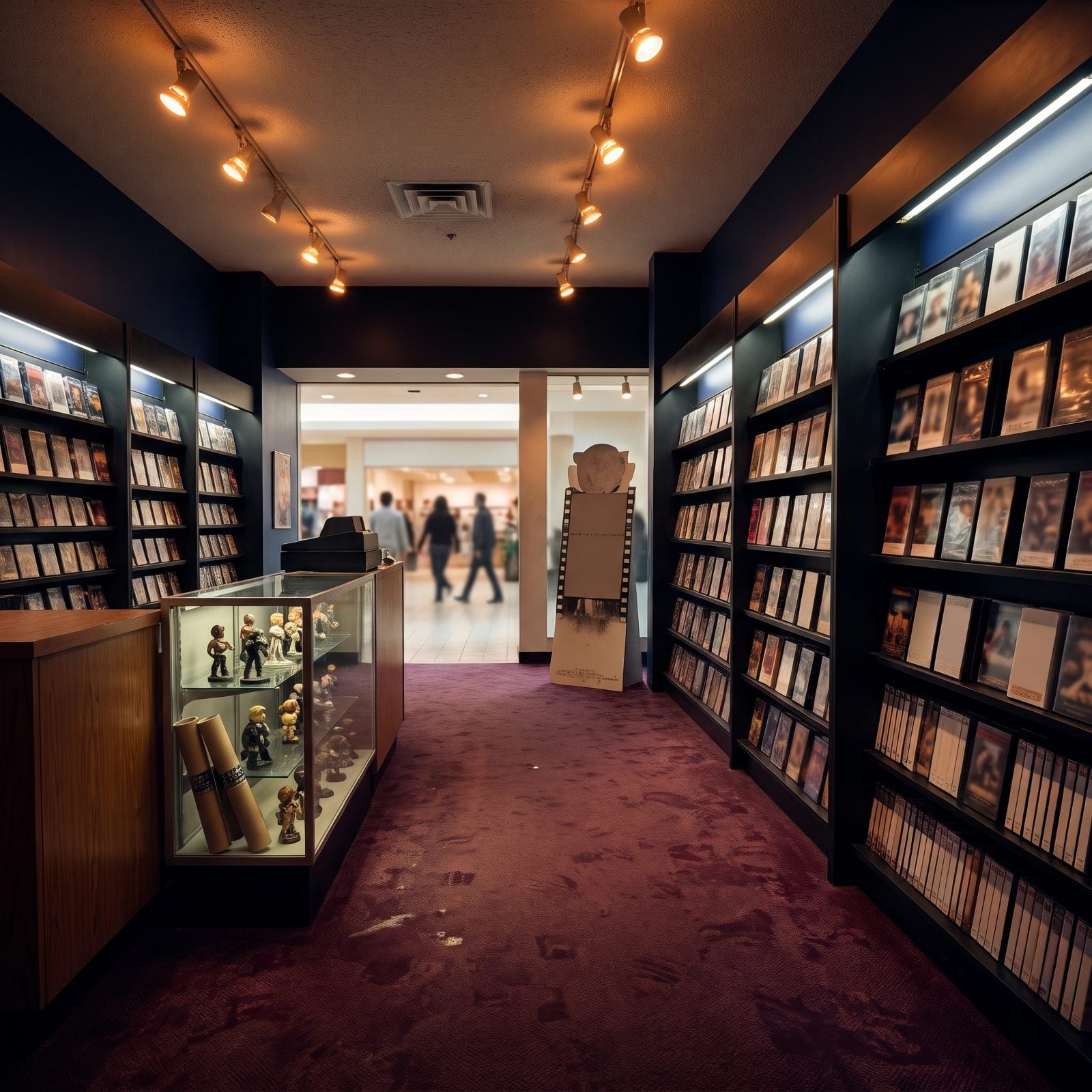
Suncoast was where you went when the regular video section at the department store wasn’t enough. Wall-to-wall VHS, then DVDs, plus the posters, the T-shirts, the collectible figures locked behind glass. This was a store for people who didn’t just watch movies — they collected them, alphabetized them, defended their favorites at dinner parties.
The chain peaked in the late ’90s with hundreds of mall locations. Then streaming arrived and physical media began its long slide, and by the time the last stores closed there was no reason to drive to a mall for a disc you could download from your couch.
Honestly? I miss the browsing. You’d walk in hunting for one thing and leave with three you forgot you wanted.
6. Korvette’s: The Discount Pioneer Before Discount Was Cool
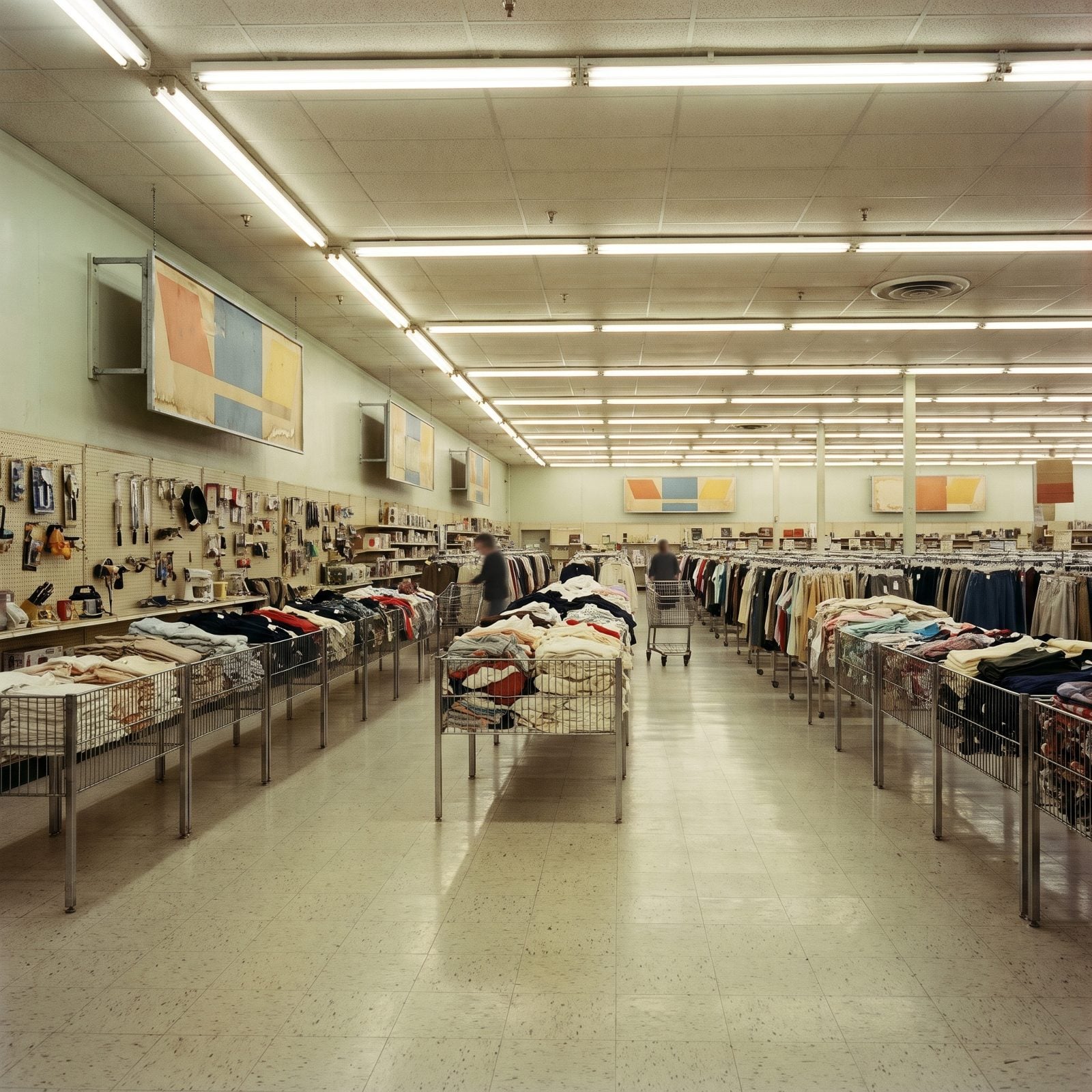
Before Walmart, before Target, there was Korvette’s. Founded in 1948, it pioneered the big-box discount model that every chain copied afterward. You could buy a television, a dress, and a set of dishes under one roof at prices that undercut the fancy downtown stores — and in the 1950s and ’60s that felt genuinely radical.
What took it down was overexpansion and a scattered identity. The chain grew too fast, tried to be everything to everyone, and lost the focus that made it work in the first place. Gone by 1980. Yet the model it invented outlived it by decades, which is a strange kind of legacy — you build the very thing that eventually buries you.
5. Levitz Furniture: The Warehouse Showroom That Changed How You Bought a Couch
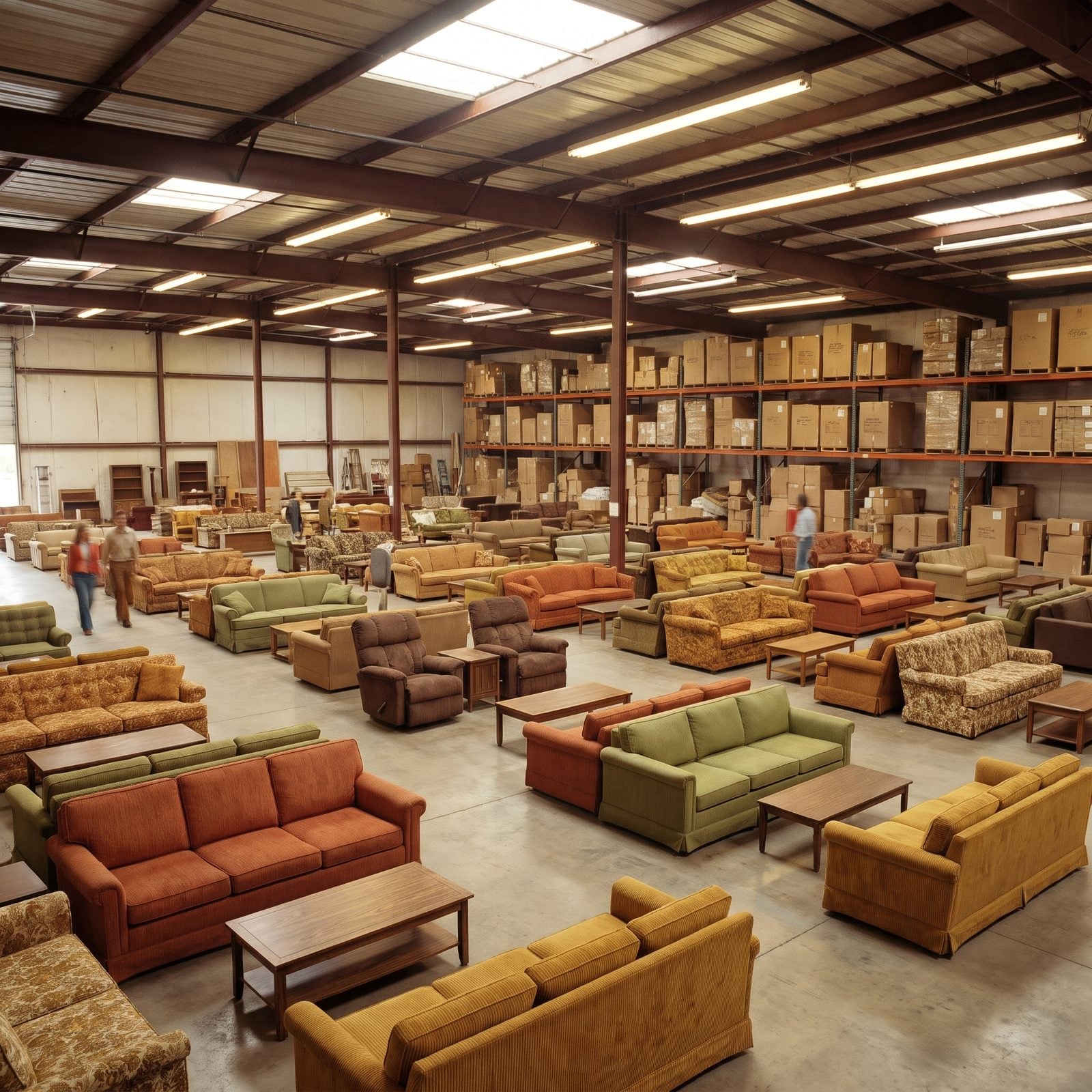
Levitz flipped the furniture-buying script. Instead of ordering from a catalog and waiting six weeks, you walked a giant showroom, picked your sofa, and hauled it home that same day from the warehouse out back. That combo of showroom and warehouse felt genuinely new in the 1970s, and for a stretch Levitz was the biggest furniture retailer in the country.
Then came the imitators, the recessions, and a wave of cheaper flat-pack rivals. The company filed for bankruptcy more than once and finally shut for good in 2008. See it, buy it, take it home today — that idea it popularized is now just how furniture works, and we stopped noticing because it stopped being special.
4. Bonwit Teller: Elegance That Lost Its Address
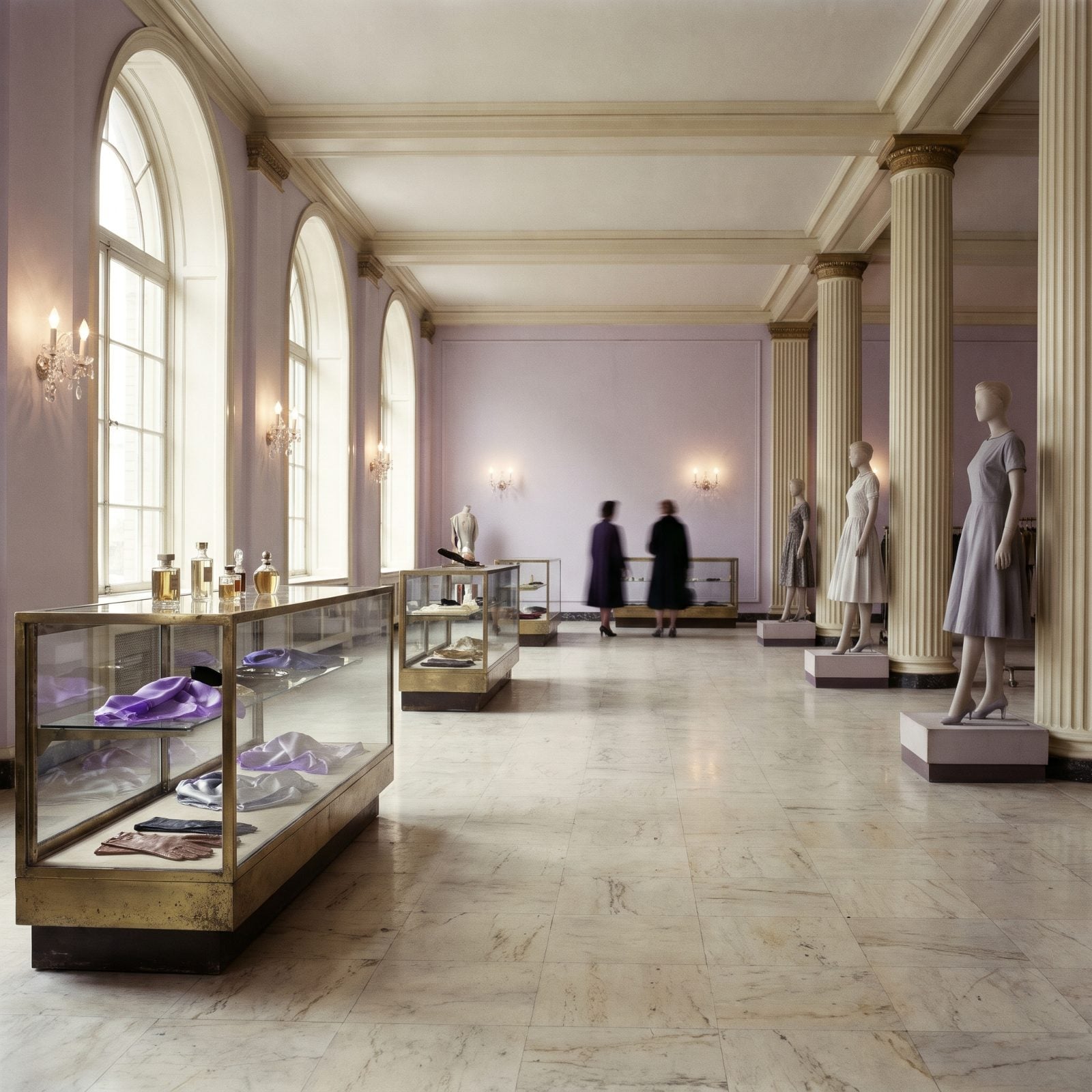
Bonwit Teller sold the kind of luxury that whispered. High fashion, fine fragrances, those famous violet-themed displays. For most of the 20th century it was one of the names that defined upscale American retail, and its Fifth Avenue flagship was as much an address as a store.
That address turned out to be its undoing. The flagship came down in 1980 to make room for a new skyscraper, and the chain — already fighting changing tastes and one ownership shuffle after another — limped through the ’80s before shutting entirely in 1990.
Some stores die slowly. Bonwit Teller lost its building first and never recovered its soul.
3. Zayre: The Neighborhood Discount Store with a Heart
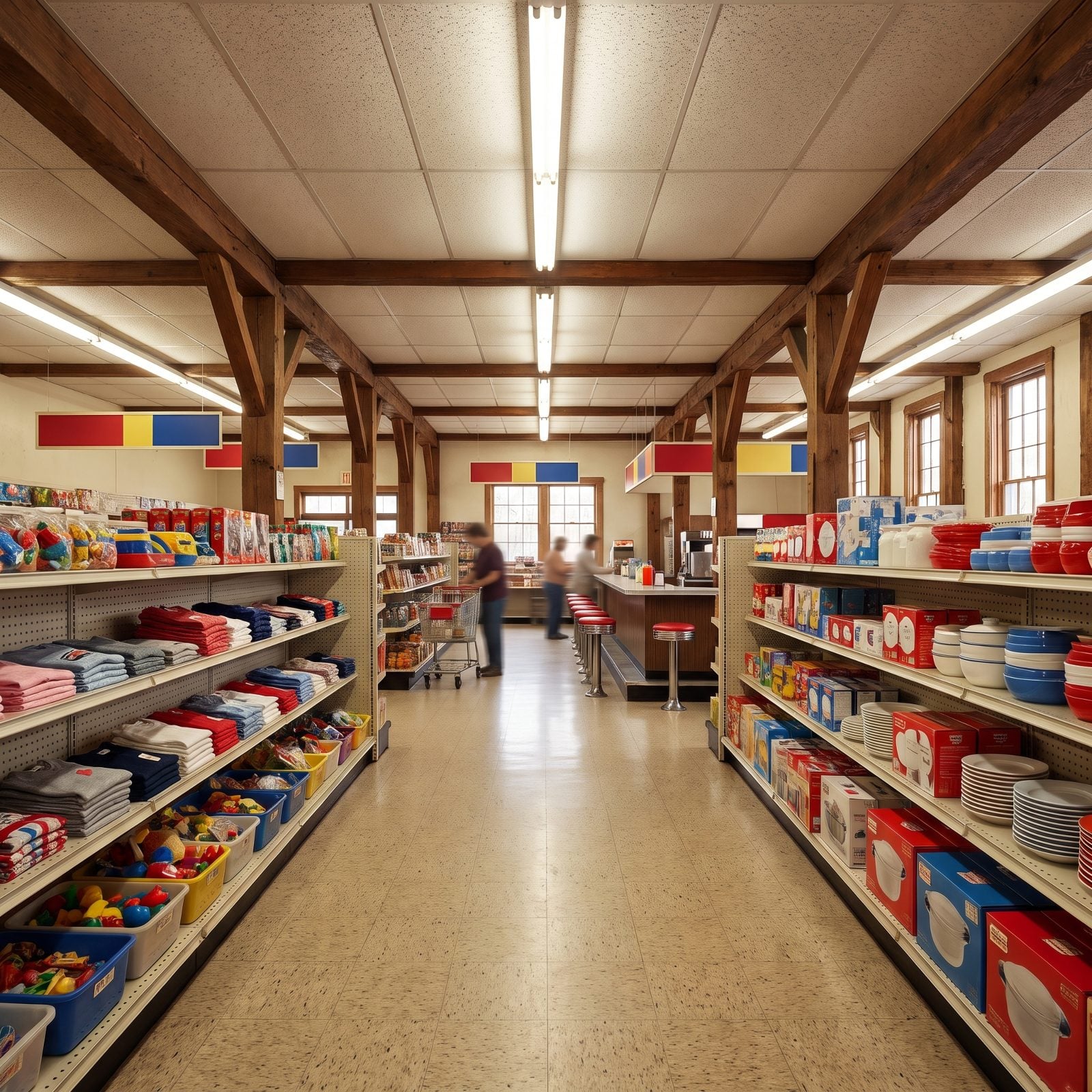
Zayre was the discount store for families who counted every dollar and still wanted a decent weekend outing. Toys, clothes, a snack bar for a quick hot dog. It never pretended to be fancy, and that was the whole appeal.
Now for the twist most people forget: Zayre didn’t exactly die. The company sold off its namesake stores in 1988 and poured everything into a side venture it had quietly launched years earlier. That side venture was TJ Maxx — still thriving. So the Zayre you remember vanished, but its corporate DNA lives on every time you dig through a clearance rack today.
2. W.T. Grant: The Five-and-Dime That Grew Too Fast to Survive
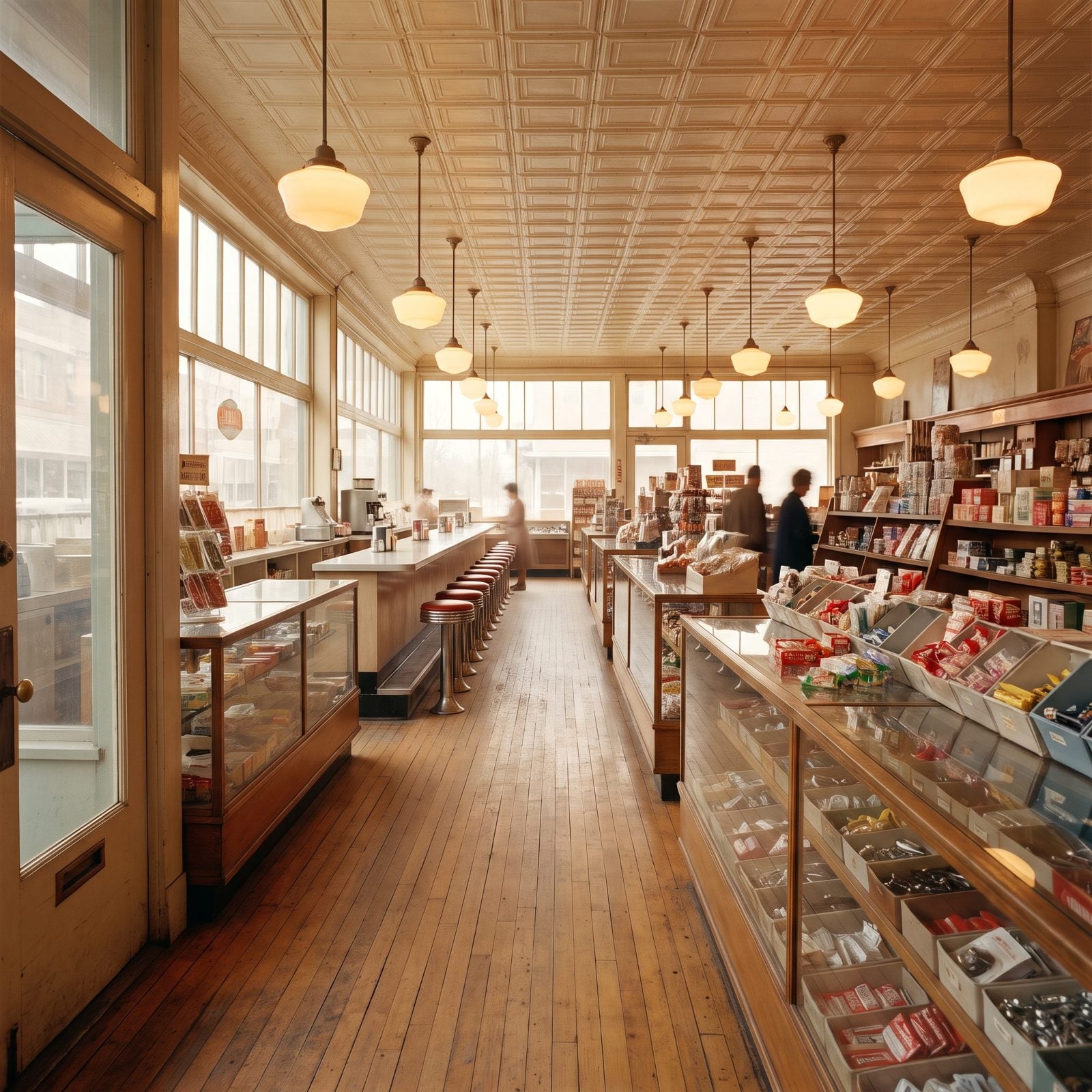
W.T. Grant anchored Main Street for generations. A variety store where you could grab thread, a toy, a bag of candy, and a sandwich at the lunch counter without ever leaving. Founded in 1906, it stood among the great five-and-dime chains that held down American downtowns.
Its collapse in 1976 was, at the time, one of the biggest retail bankruptcies in U.S. history — a cautionary tale still taught in business schools. The culprit? Reckless expansion fueled by too-generous store credit that customers couldn’t pay back. Grant grew itself to death, handing out credit like candy and then drowning in the bad debt that came back around.
1. Loehmann’s: The Treasure Hunt for the Fashion-Savvy
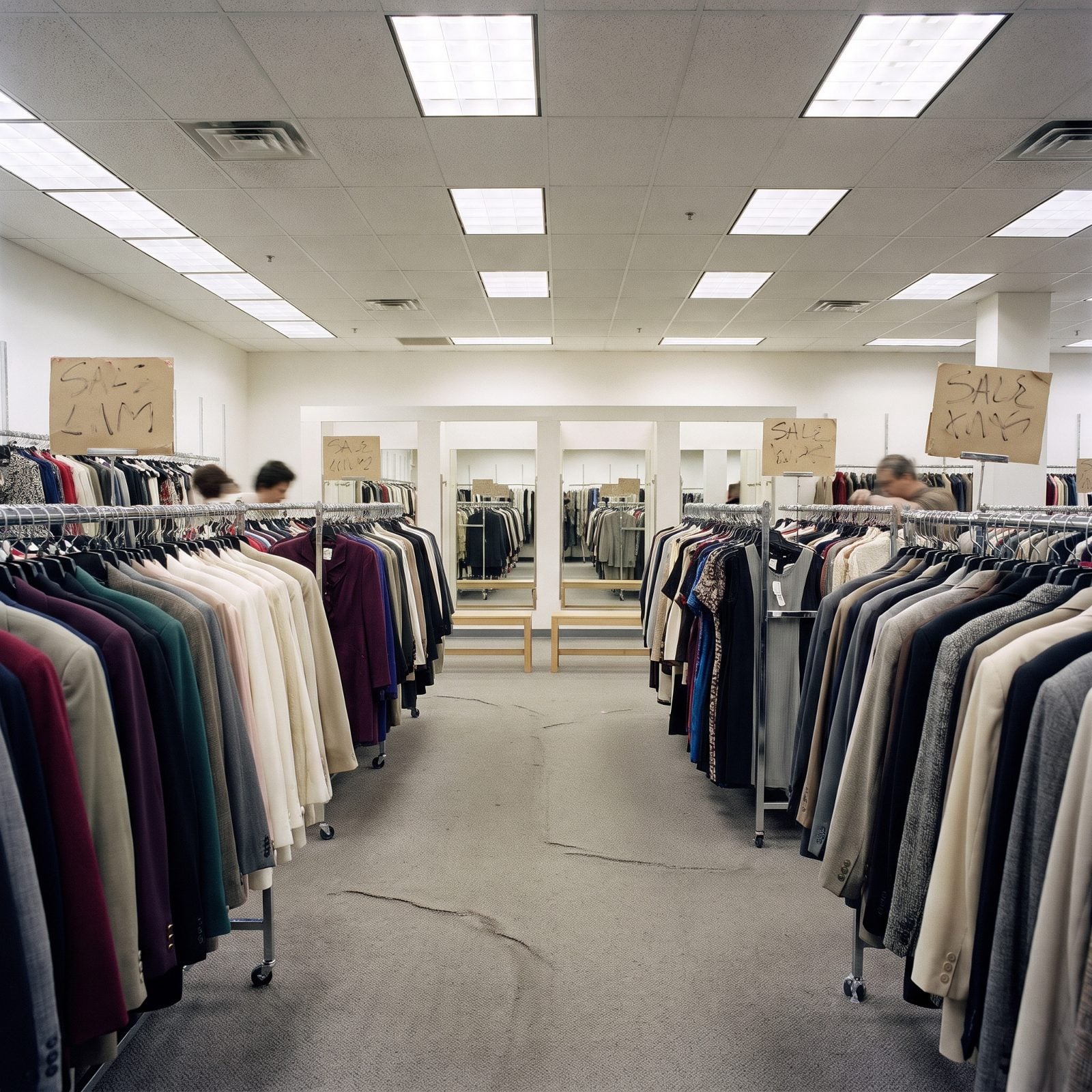
Loehmann’s was for women who knew labels, knew value, and flatly refused to pay full price for either. Designer pieces at steep discounts, sold on packed racks you had to dig through. The real initiation was the Back Room, where the serious bargains lived, and the communal dressing room, where strangers handed each other honest opinions in their slips.
Founded in 1921, it practically invented the upscale off-price model. But the competition it inspired — those big off-price chains that borrowed its whole playbook — eventually swallowed it. After multiple bankruptcies, Loehmann’s closed for good in 2014.
I’ll admit it. That communal dressing room was either the best or worst part, depending on the day. No in-between.