
Would you like to save this?
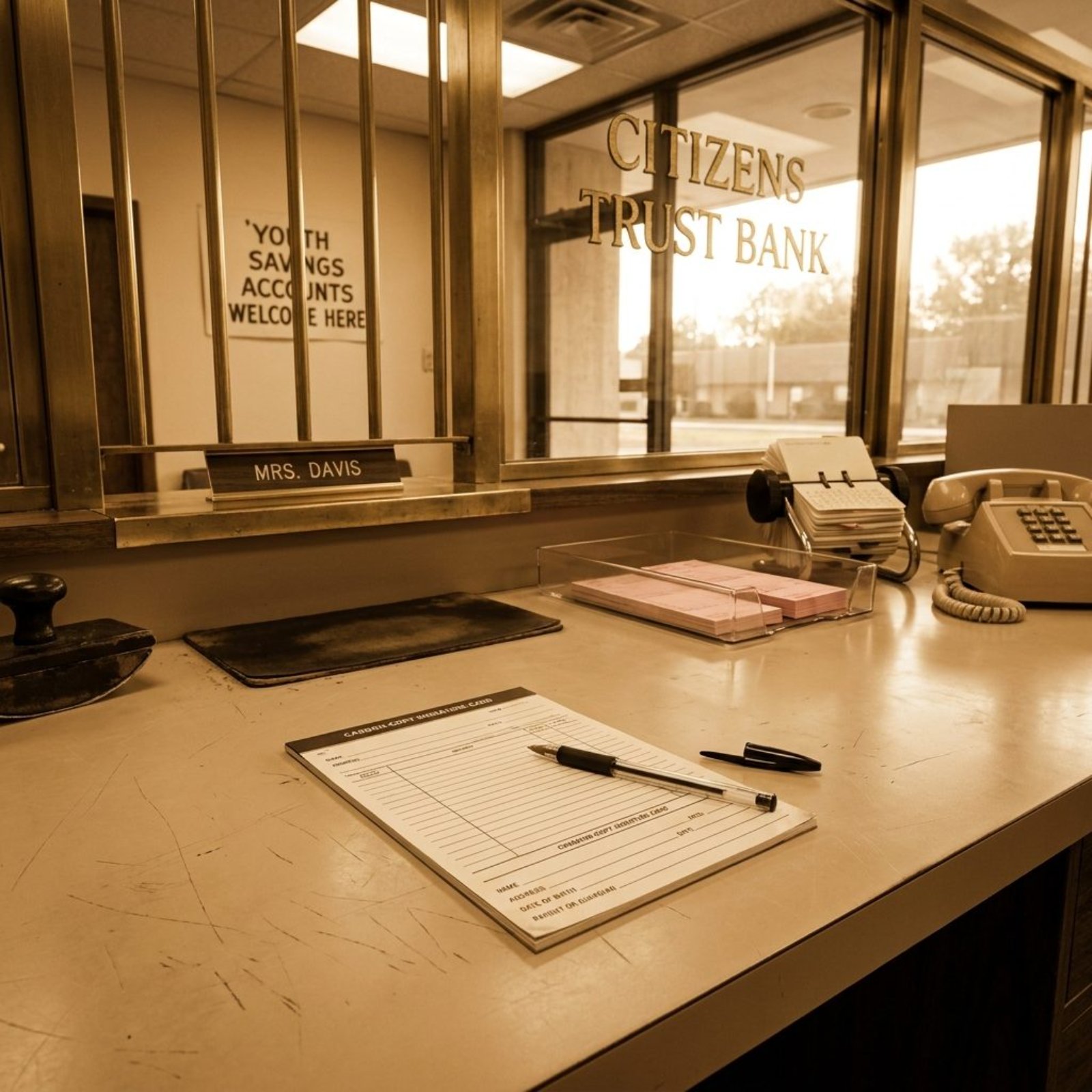
The teller knew your name. That alone felt like something. You pushed through the heavy glass door, gripped the little book in both hands, and slid it across the marble counter like you were conducting serious business, because you were.
The stamp came down. The numbers printed. Your balance grew by four dollars and change, and somehow that felt like proof that life was working. These are the small banking rituals every 1980s kid remembers.
Depositing Your Birthday Money Before You Had Time to Spend It on Anything Good
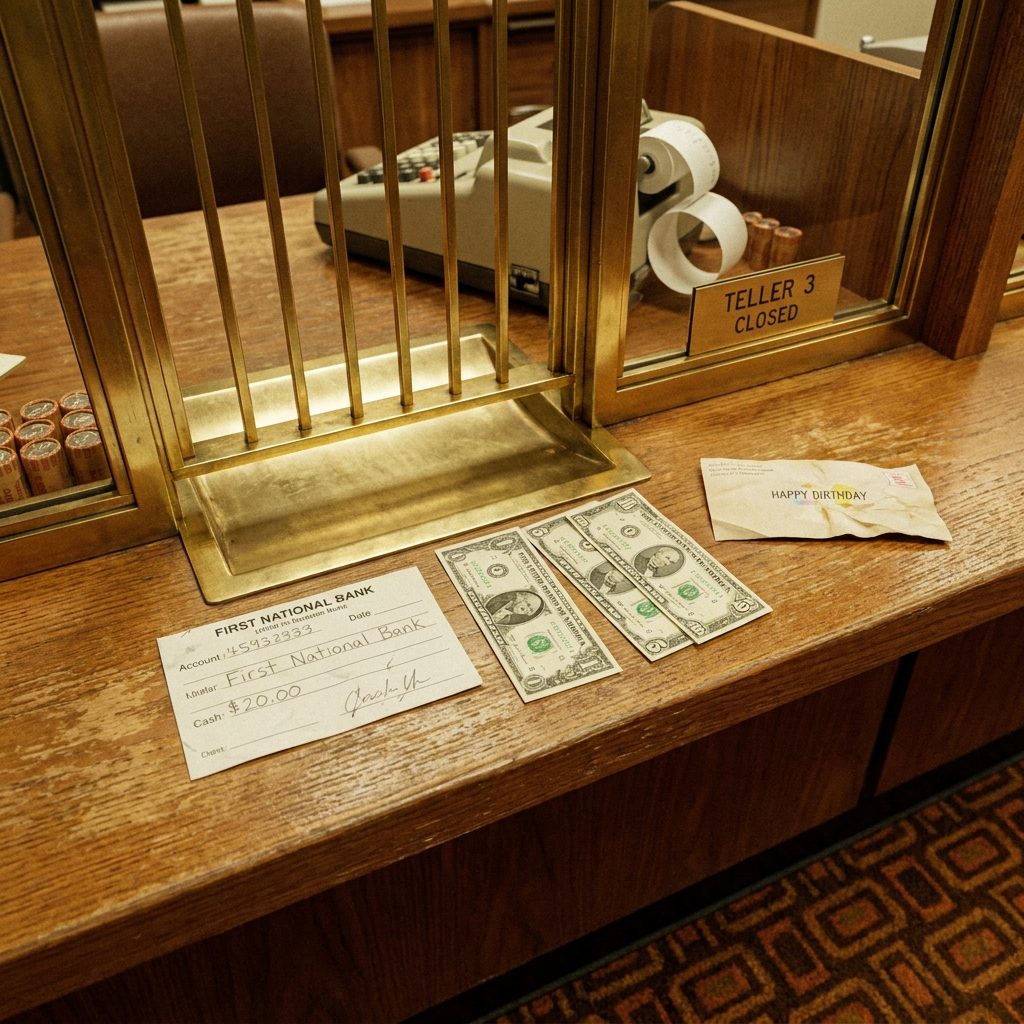
Every birthday meant the same negotiation with yourself, and you always lost. Grandma sent a check. An aunt tucked a twenty in a card. Your dad said ‘put half in the bank’ and somehow half became all of it. You’d walk to the branch on a Saturday, fill out the deposit slip in your own handwriting, and hand over the money before you’d even had a chance to want anything specific. The teller would smile like this was a good thing. It was. It did not feel like it.
The Bank’s Lobby Having a Bowl of Free Lollipops That Was the Entire Reason You Agreed to Come
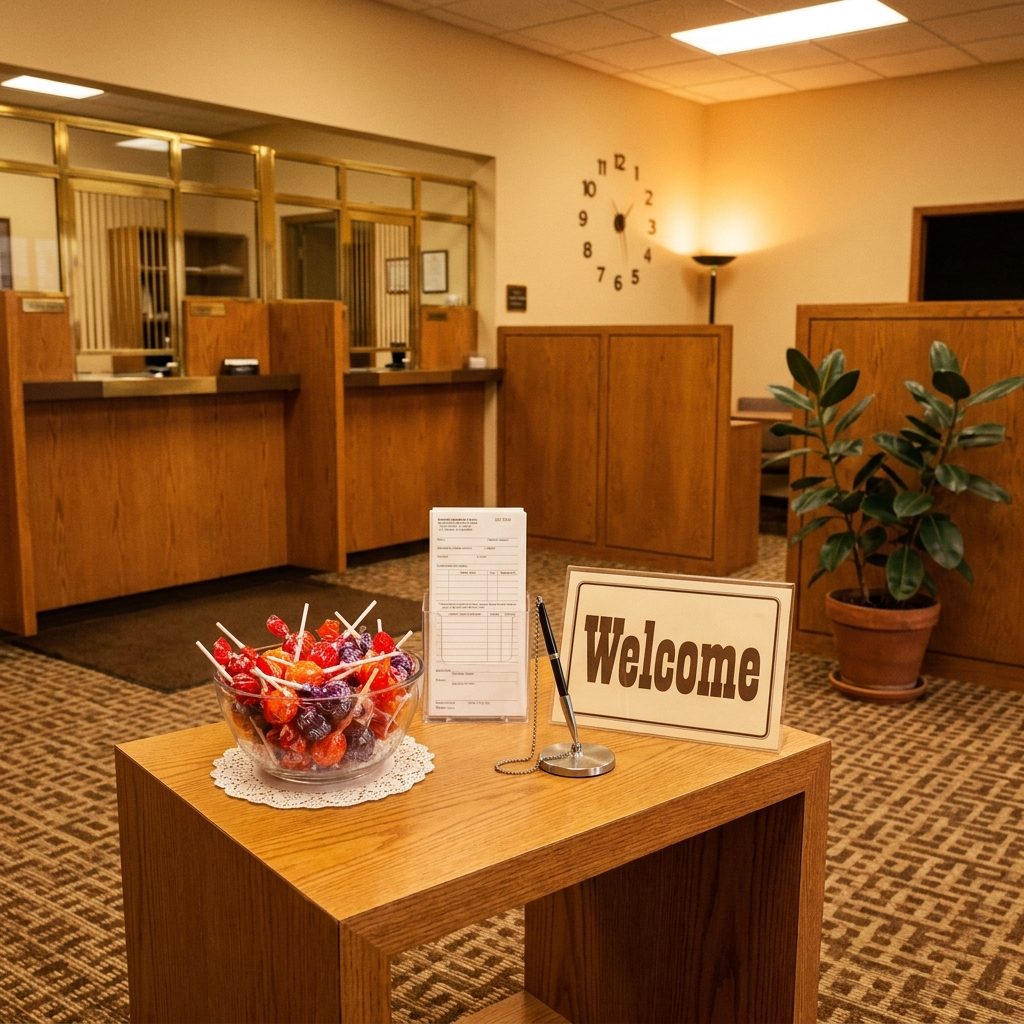
Nobody went to the bank voluntarily at age nine. But there was a bowl of lollipops on the counter by the door, and the deal was understood by everyone involved: you behaved while your mom talked to the teller, and you got a red one on the way out. The lollipops were probably the single most effective marketing tool that bank had. You still remember which flavor they stocked.
Watching the Teller Run the Passbook Through That Little Printing Machine Like It Was Computing Your Entire Net Worth
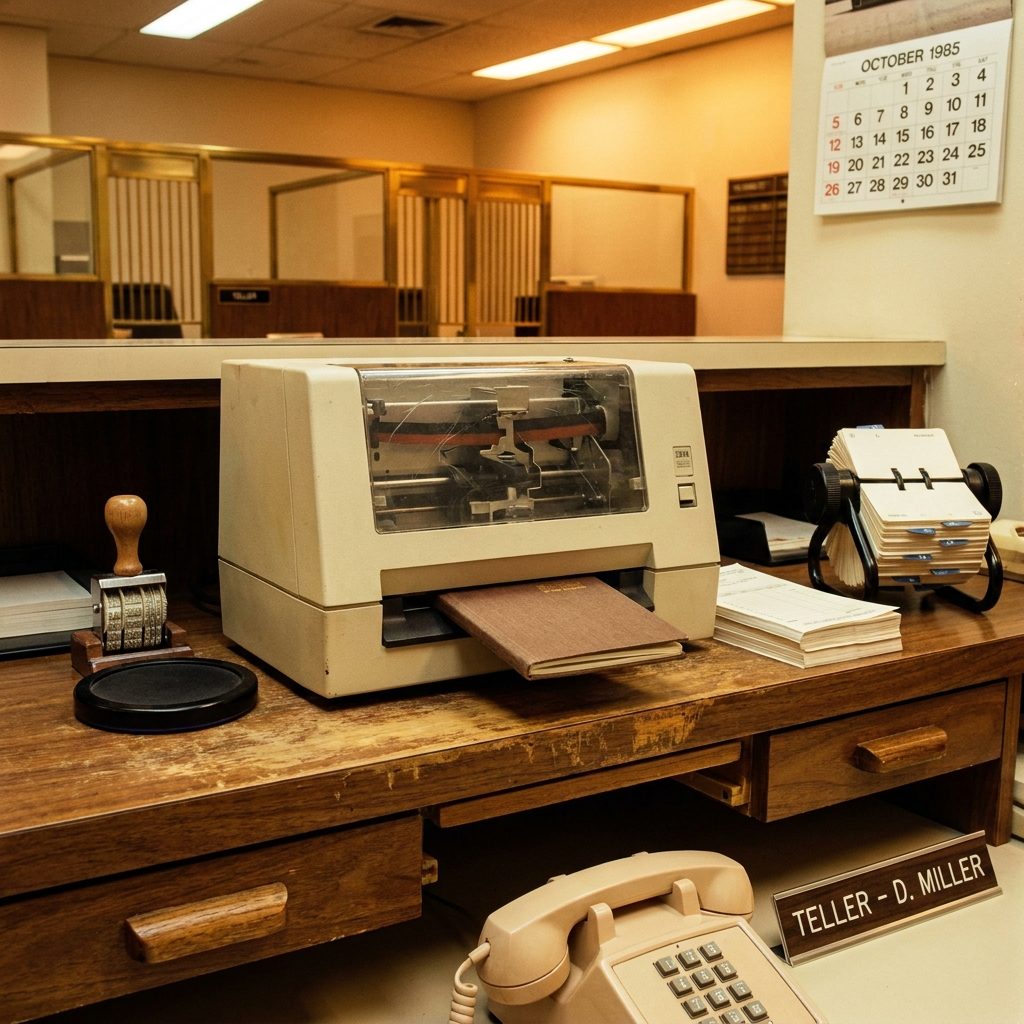
The machine made a specific sound, a kind of mechanical chattering like a tiny typewriter in a hurry, and then it spat your passbook back out with fresh ink on the page. You’d snatch it up and scan the new line before the teller had even pulled her hand back. Date. Amount deposited. New balance. The whole transaction documented in that slightly faded dot-matrix print that smelled faintly of ribbon ink. It felt like the bank had just officially acknowledged that you existed.
The Minimum Balance Warning That Made You Feel Like a Fraud With Your $12.47
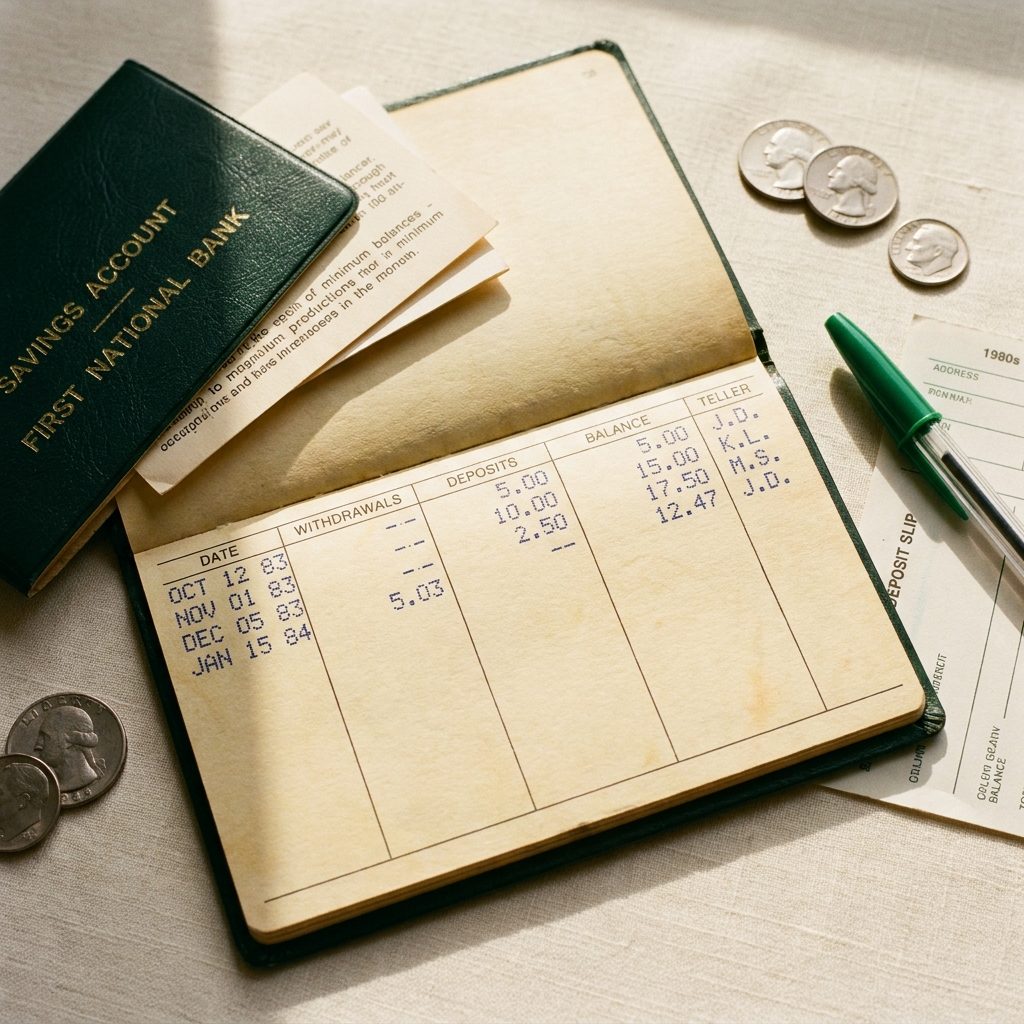
There was always a line in the account terms about a minimum balance, and for most of fifth grade yours hovered uncomfortably close to that number. You’d check the passbook balance and do the mental math. If you took out anything for the school book fair, you’d be dangerously close to whatever number the bank cared about. You didn’t entirely understand what happened if you fell below it. You weren’t sure you wanted to know. So you just didn’t touch it.
The Deposit Slip You Had to Fill Out Yourself Because Your Parents Said It Was Time to Learn
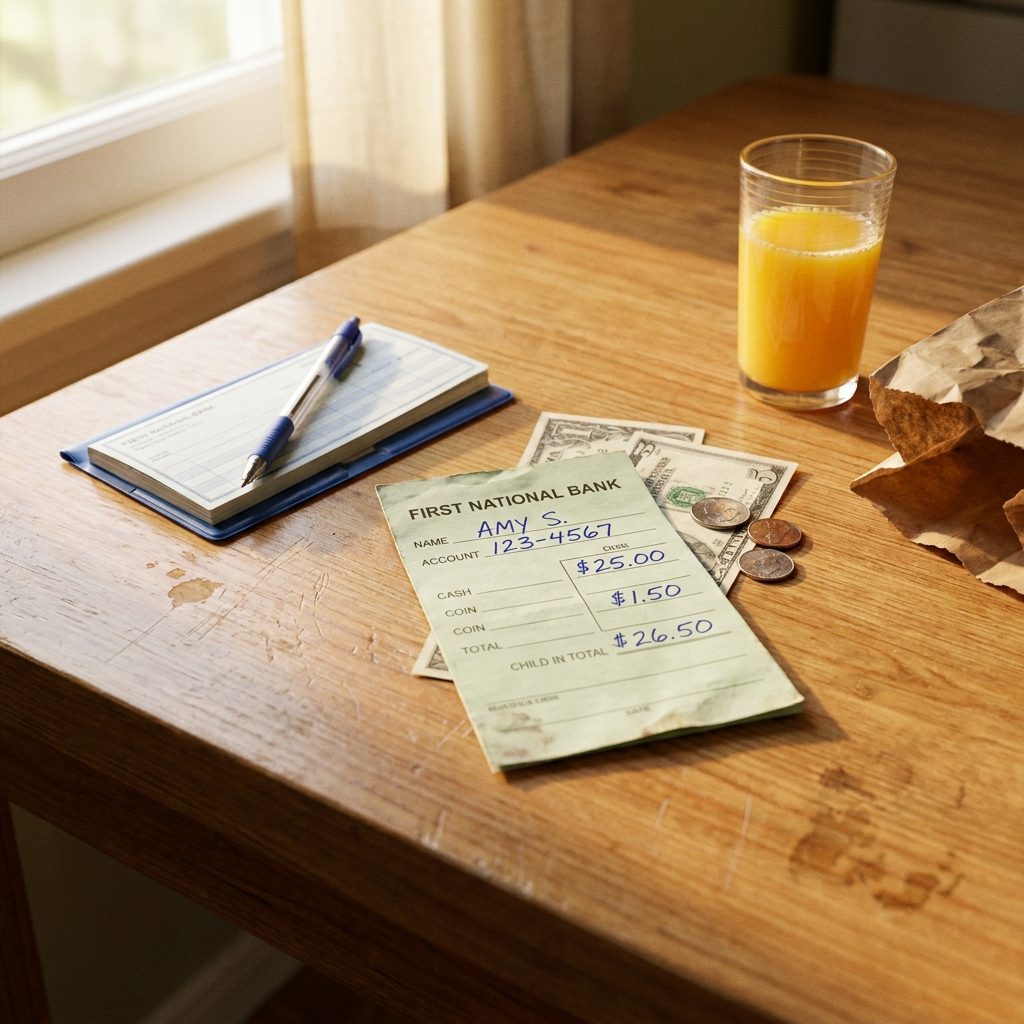
Your dad would hand you the blank slip and step back. You had to write your own name, your account number from memory (or from peeking at the passbook), and the exact amount in both the ‘dollars’ and ‘cents’ columns separately. If you messed it up, you got another slip. The teller was always patient about it in a way that made you want to get it right even more. Getting it right on the first try was a genuinely good feeling.
Picking Up the Bank’s Free Coin Wrappers and Feeling Like You Were About to Do Something Very Adult
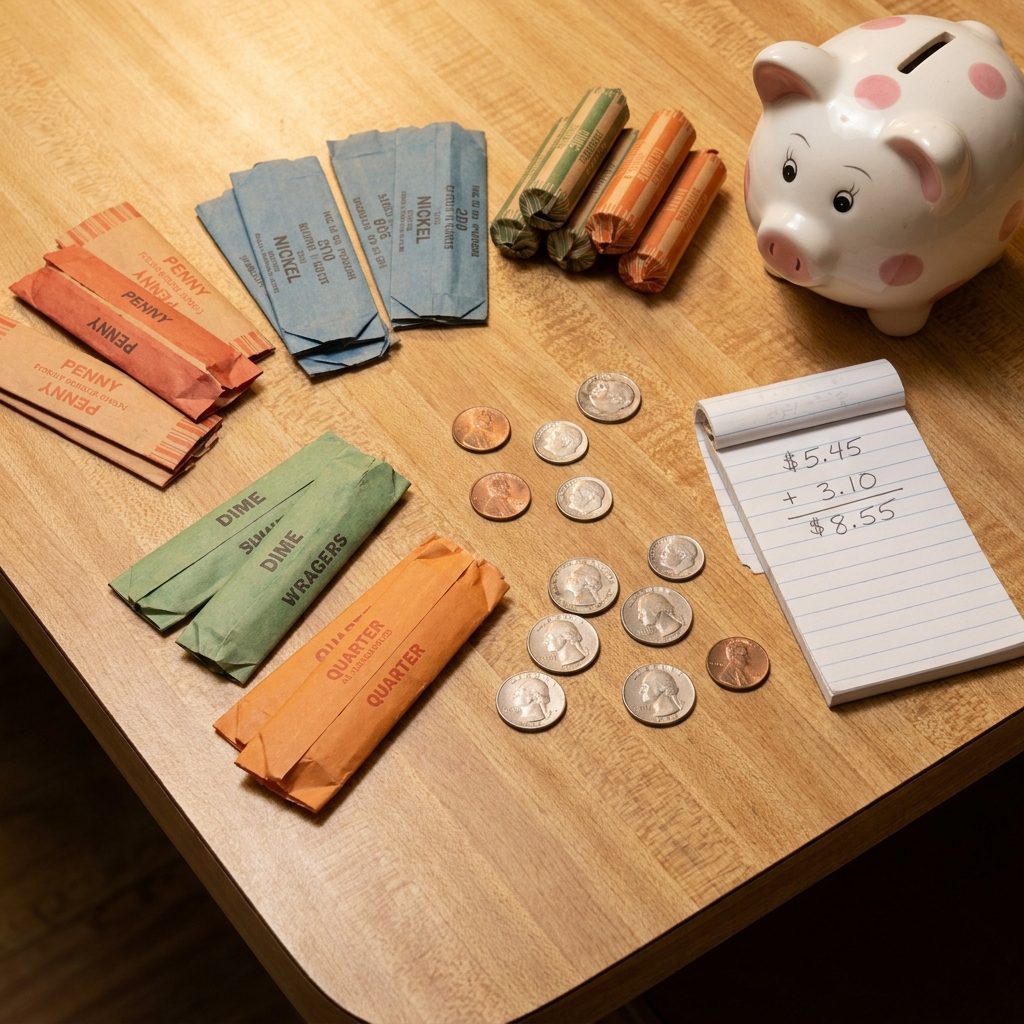
The bank gave them out for free at the teller window, a little stack of flat paper tubes in four colors, and you’d carry them home like you’d been entrusted with something important. Then came the ritual: dump the piggy bank, sort everything into piles, count the stacks, and roll them tight so the ends crimped correctly. Quarters were the exciting pile. Pennies took forever. When you brought the finished rolls back to the bank and the teller counted them out, it felt like cashing in on months of patience.
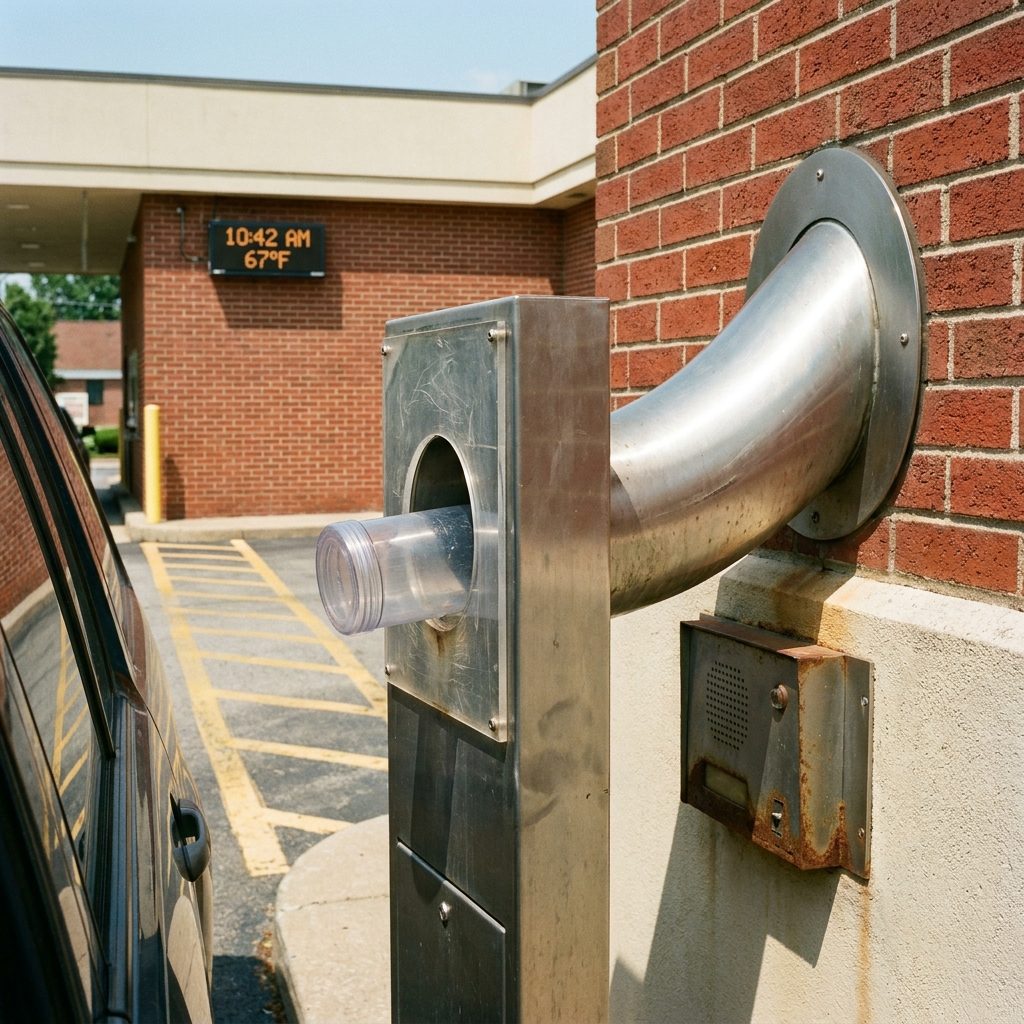
The Drive-Through Pneumatic Tube That Swallowed Your Deposit and Felt Like Pure Science Fiction
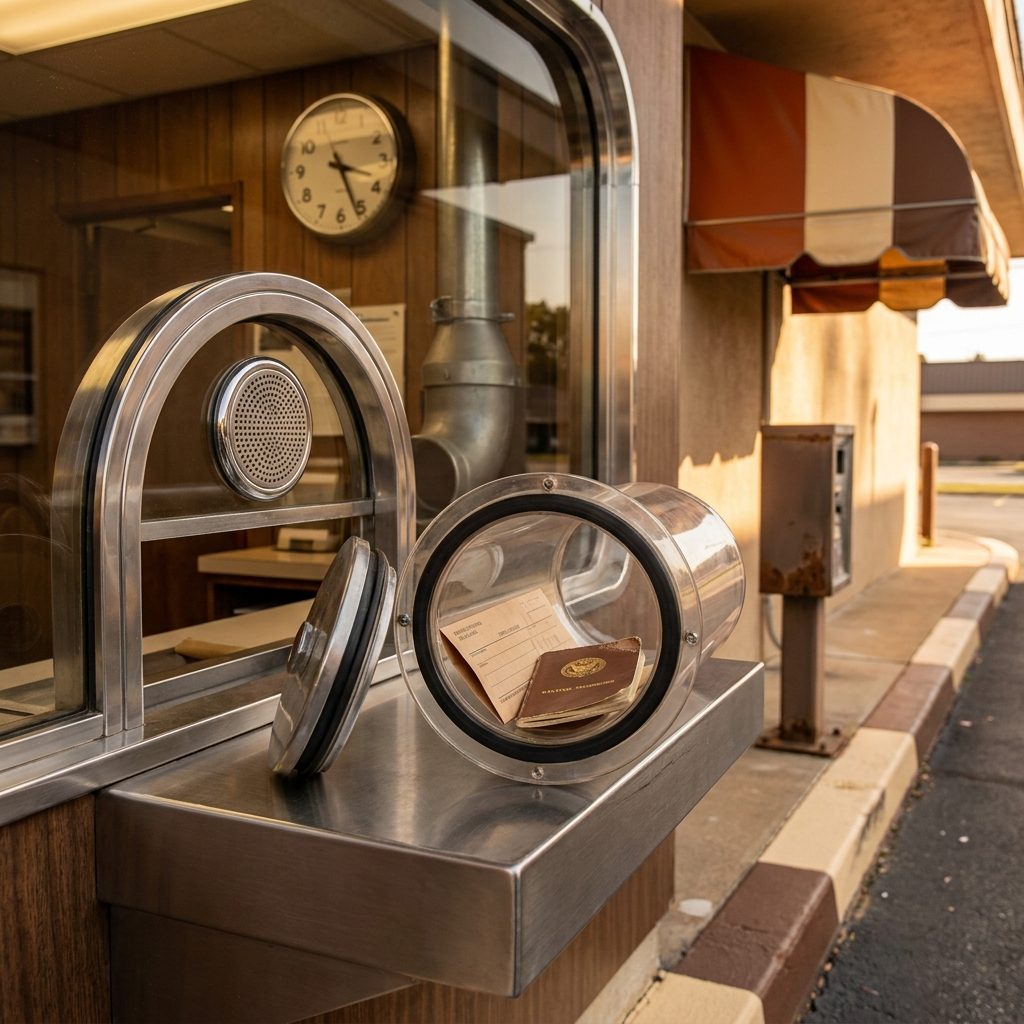
You’d put the passbook and the deposit slip inside the little plastic canister, screw the cap on, drop it in the tube, and then it was gone with a sound like the building just inhaled. The tube carried it somewhere mysterious inside the bank walls and then, a few minutes later, it came back with the passbook stamped and a receipt. To an eight-year-old who had seen approximately zero actual technology, this was the most impressive thing any institution had ever done. You’d have deposited money every single day if your parents had let you.
The Little Blue Book That Felt More Official Than Your Birth Certificate
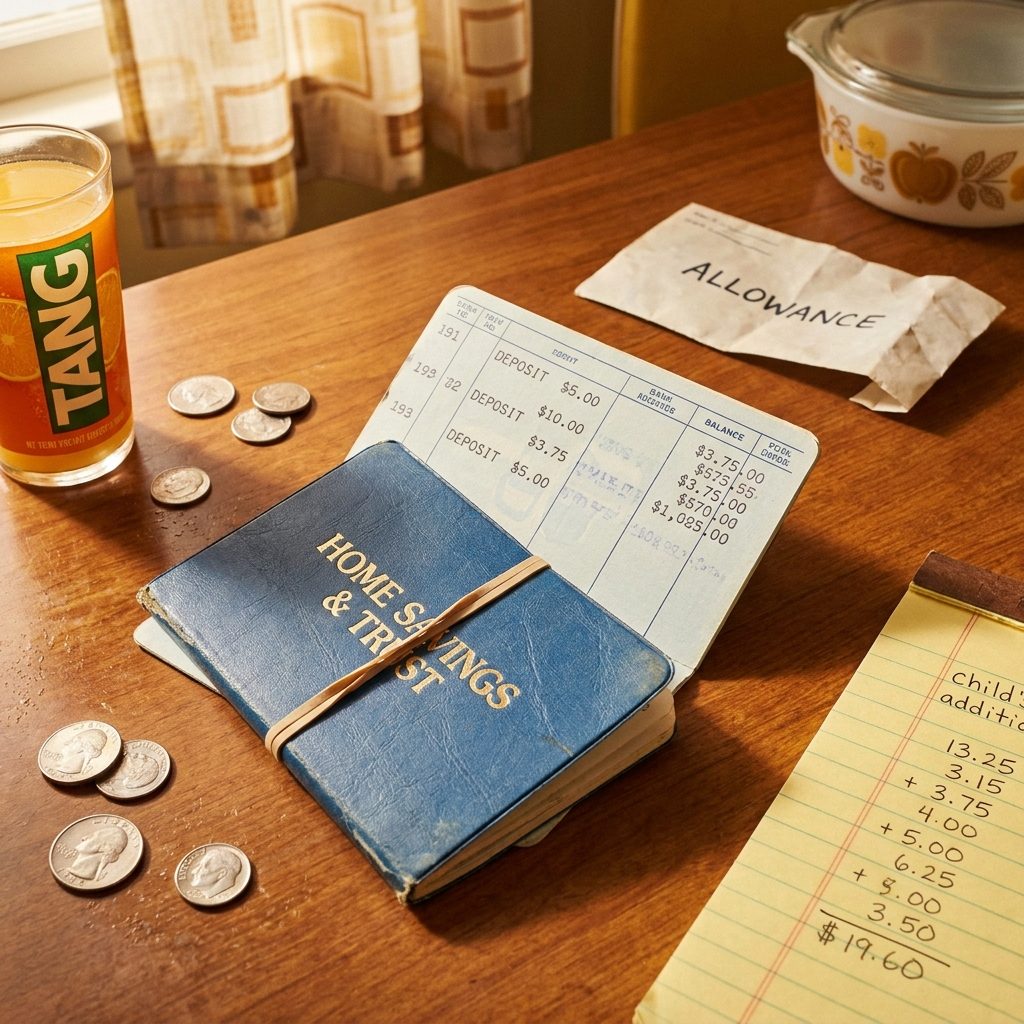
You carried it everywhere for about two weeks after opening the account. Not because you needed it. Because it had your name printed inside it by an actual machine at an actual bank, and that felt like documentation that you existed in a serious, adult way. The passbook was maybe four inches tall. It fit in a jacket pocket. It had a register of every transaction stamped in ink that smelled faintly of the bank lobby itself.
You were nine. You had $23.50 in savings. You were basically incorporated.
The Drive-Through Pneumatic Tube That Sent Your Deposit Canister Rocketing Into the Bank Like a Space Mission
Would you like to save this?
The thunk of the canister hitting the tube. The hiss. And then it was gone, sucked away through the wall of the bank like the building swallowed it. You pressed your face to the car window every single time. Your mom would hand you the deposit slip and the little plastic cylinder and let you load it yourself if you’d been well-behaved, which was a more effective bribe than most things she tried.
When it came back with the receipt and the lollipop, the whole transaction felt less like banking and more like you’d successfully communicated with a submarine.
Finding Out What ‘Interest’ Meant When Your Balance Grew Three Cents Without You Doing Anything
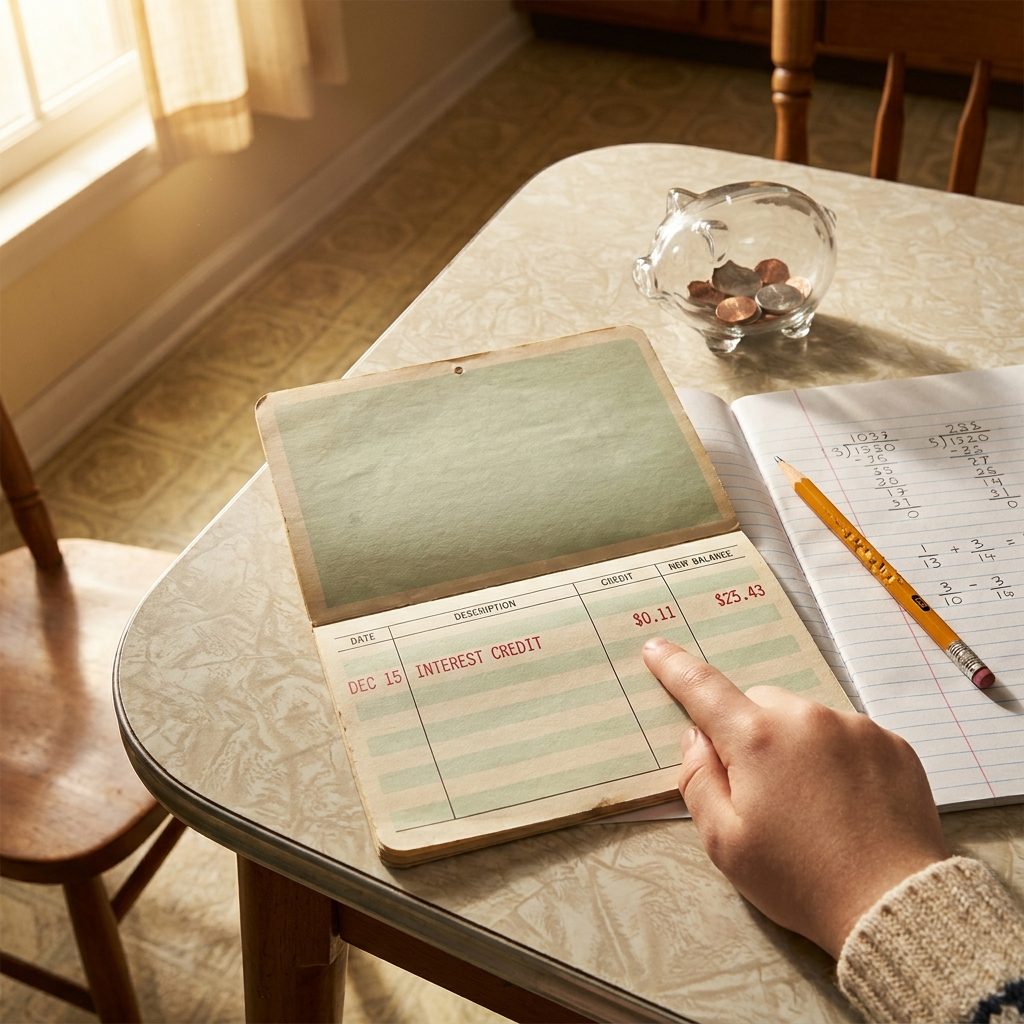
Nobody explained compound interest in third grade. So when you flipped open the passbook and the balance was somehow eleven cents higher than you left it, the only logical explanation was that the bank had made a clerical error in your favor and you should say nothing.
Then your mom explained interest. Free money, basically, for doing nothing except leaving your money there. You stared at the eleven cents like it was a philosophical revelation. You briefly considered never spending anything ever again. This feeling lasted approximately four days, until the ice cream truck came around.
The Signature Card You Signed at Account Opening That Made You Feel Like You Were Closing a Real Estate Deal
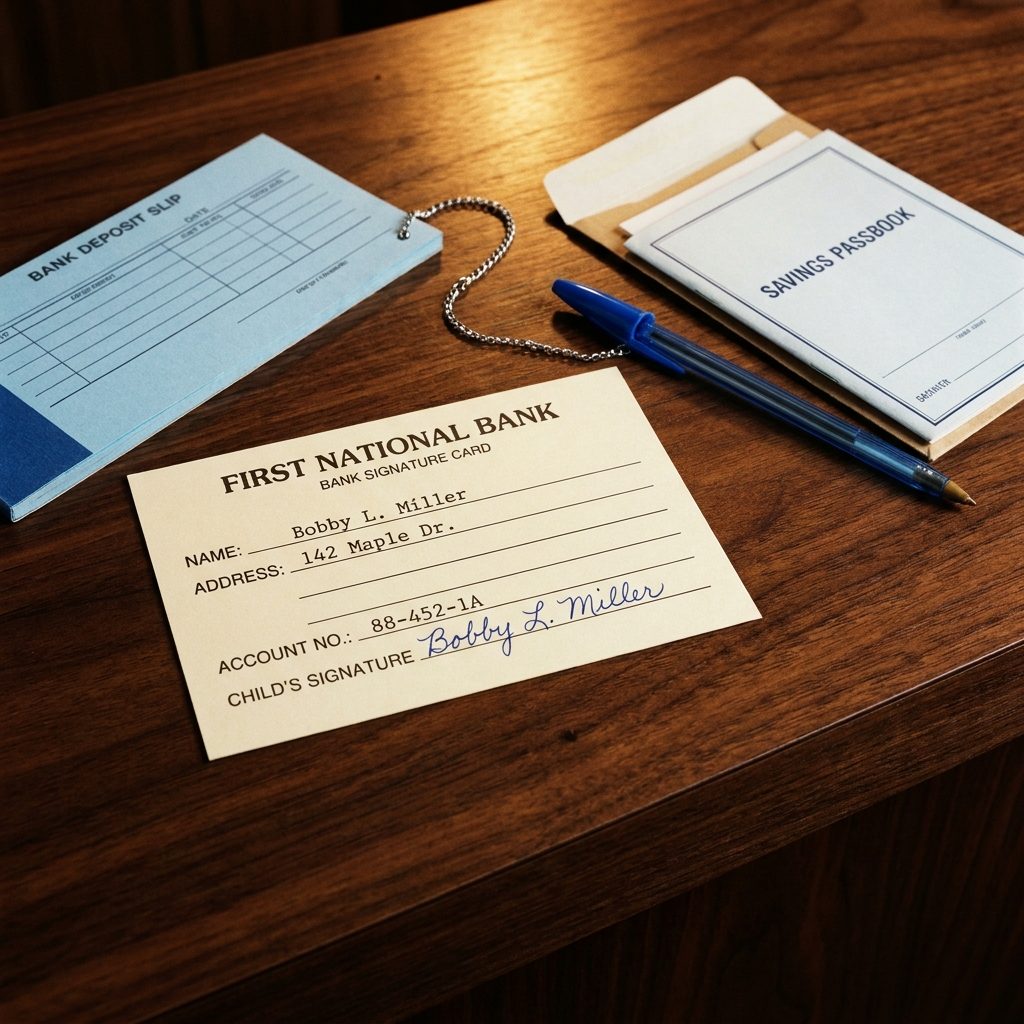
The bank officer slid the signature card across the counter and told you to sign your name the way you always signed it, because this was how they would know it was really you. You had never signed anything official in your life. You took the pen and wrote your name so carefully it looked like you were typesetting it by hand, each letter separated slightly from the next.
She said it was perfect. She did not tell you that nobody ever actually checked those cards. You didn’t need to know that yet.
The Way Your Mom Signed the Signature Card at the Branch and Suddenly You Were Official
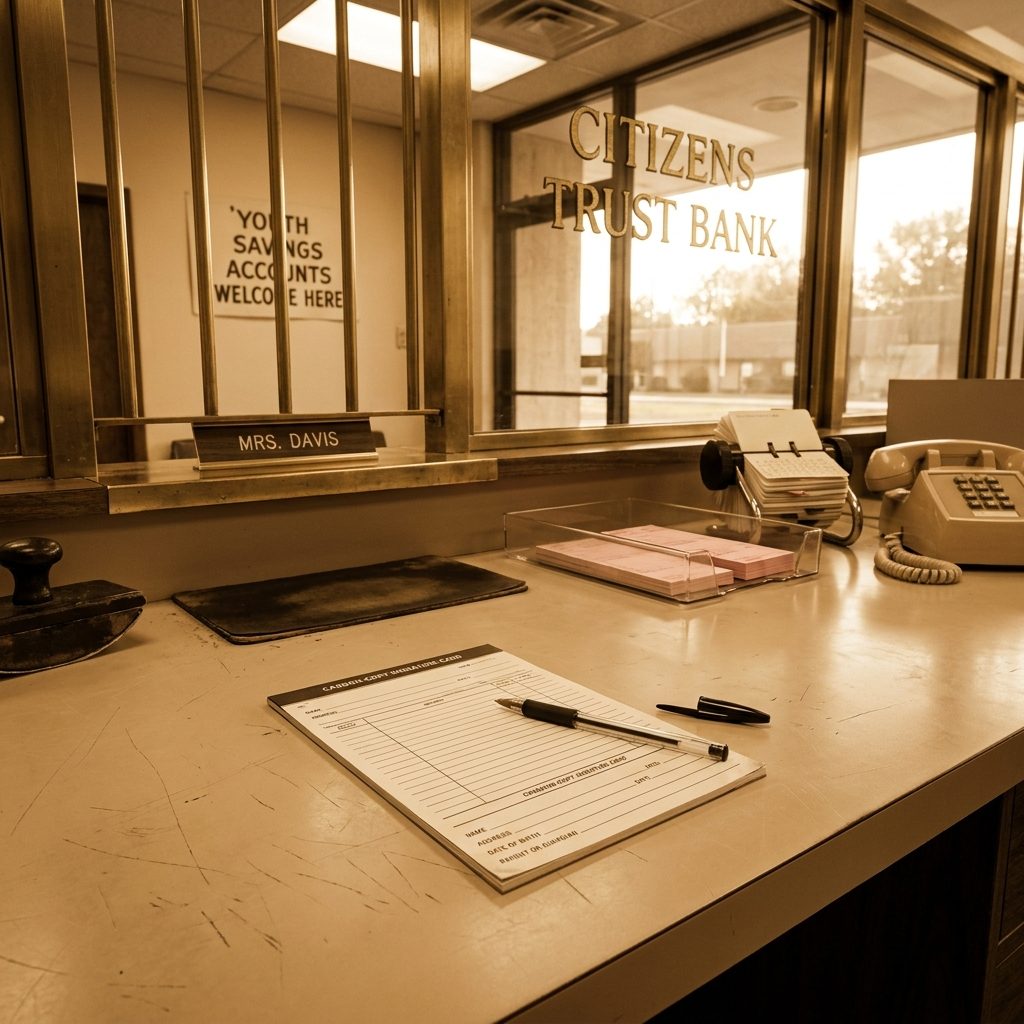
Your mom leaned over the counter and signed her name on the co-signer line, and the teller filed the card into a metal box like your entire financial existence now lived in a drawer somewhere in that building. You got to sign your own name too, right beneath hers, in whatever your best cursive was that year. For a kid who still printed everything, that signature felt serious. Official. You had a legal document somewhere with your name on it.
When Your Grandma Gave You a Savings Bond for Your Birthday Instead of a Real Present and You Had No Idea What It Was
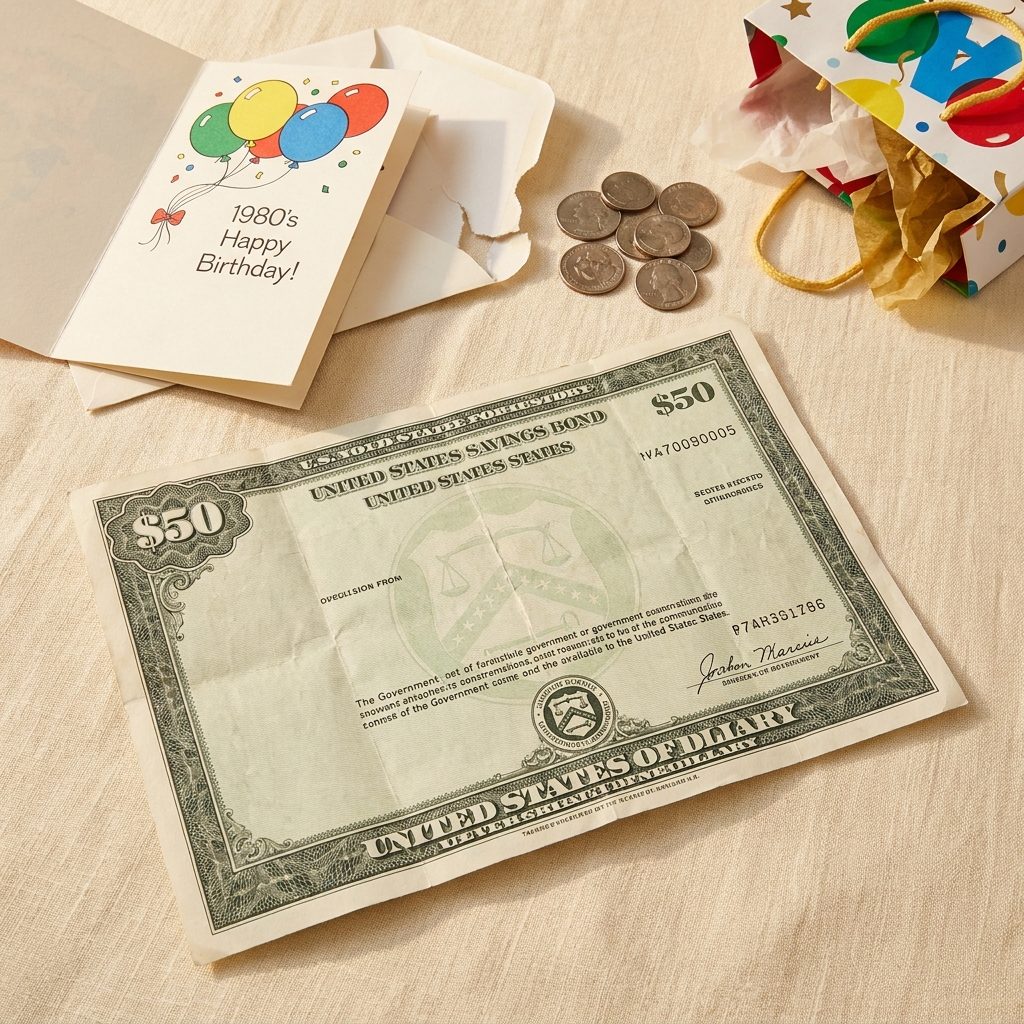
It was in the birthday card. You shook the card hoping cash would fall out. Instead: a stiff green government document that looked like something from a museum. Your grandma beamed. You said thank you with the exact energy of someone who had received a gift of twenty-five percent off a future dental cleaning.
Years later you cashed it and the money was genuinely useful in a way no toy ever was. Your grandma was right. You will never fully forgive her for being right.
The Deposit Slip You Had to Fill Out by Hand and the Line for ‘Coin’ That You Always Got Wrong
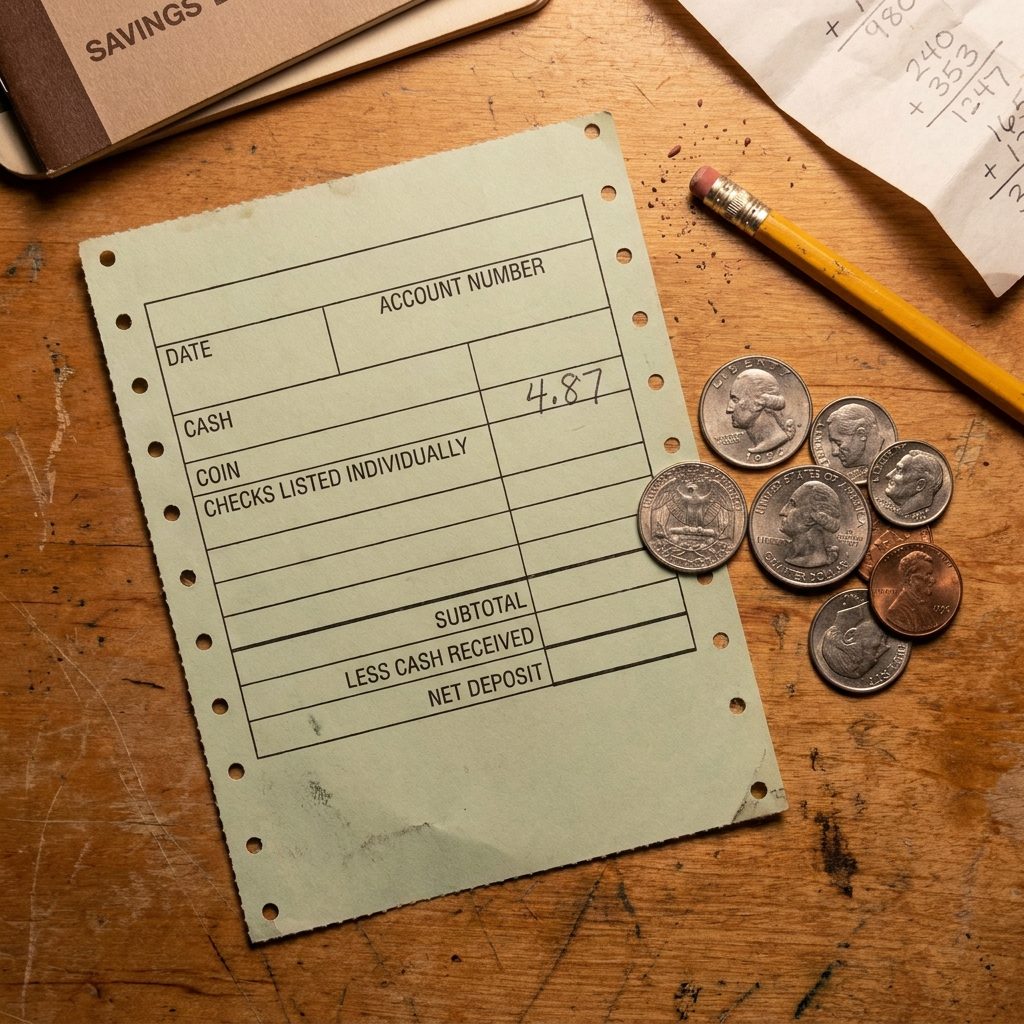
Cash went on one line. Coins went on another line. Checks each got their own line. Then you subtracted the cash back if you wanted cash back, which you did not because you were nine and your mom was watching. The deposit slip was a small standardized form that somehow managed to require four separate calculations and still send you to the teller with the wrong total.
The teller always fixed it without making you feel bad about it. That kind of grace deserves more recognition than it gets.
The Moment You Realized the Bank Was Closed on Sundays and That Felt Like a Personal Betrayal
You had $4 in your coat pocket from a birthday that needed to go into the account immediately, before you spent it on something. You rode your bike to the bank on a Sunday. The parking lot was empty in a way parking lots never are. The sign on the door listed hours that did not include Sunday in any capacity whatsoever.
It had simply never occurred to you that money could be unavailable. The bank held your money. The bank was closed. Therefore your money was closed. You stood there with your four dollars and a new and uncomfortable sense of how institutions worked.
Watching Your Mom Balance the Checkbook at the Kitchen Table and Knowing Not to Bother Her
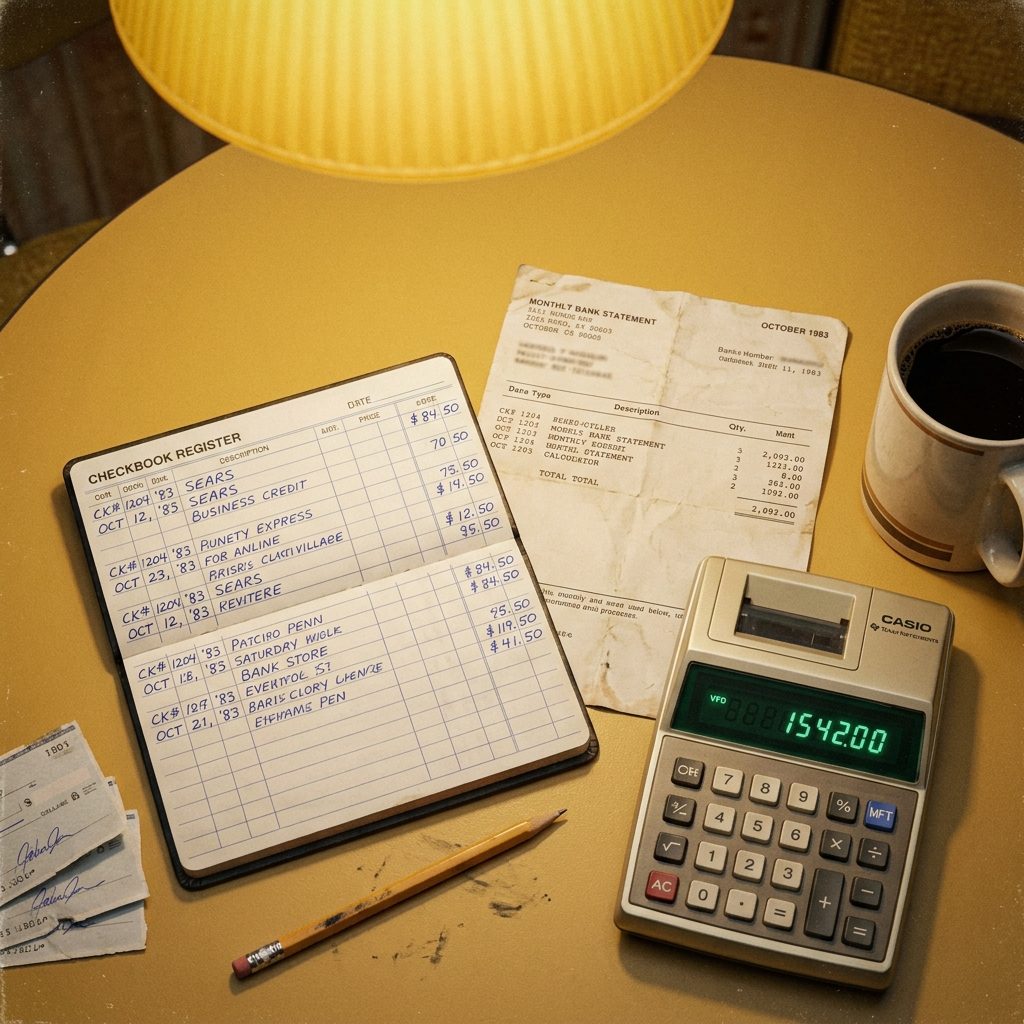
She spread everything across the table on a Tuesday evening: the statement, the register, the calculator, a pencil. She worked column by column, mouthing numbers slightly. If you interrupted, you got the quiet version of the look that meant come back later. If she said ‘huh’ to herself, something was off and the night was going to be longer than planned.
You didn’t understand what she was doing exactly. But you understood it was serious, and that money required this kind of attention, and that attention looked a lot like work. That was probably the most useful financial education you ever got, and it happened in complete silence.
The Moment the Teller Handed Back Your Passbook and You Checked the New Balance Like It Was a Report Card
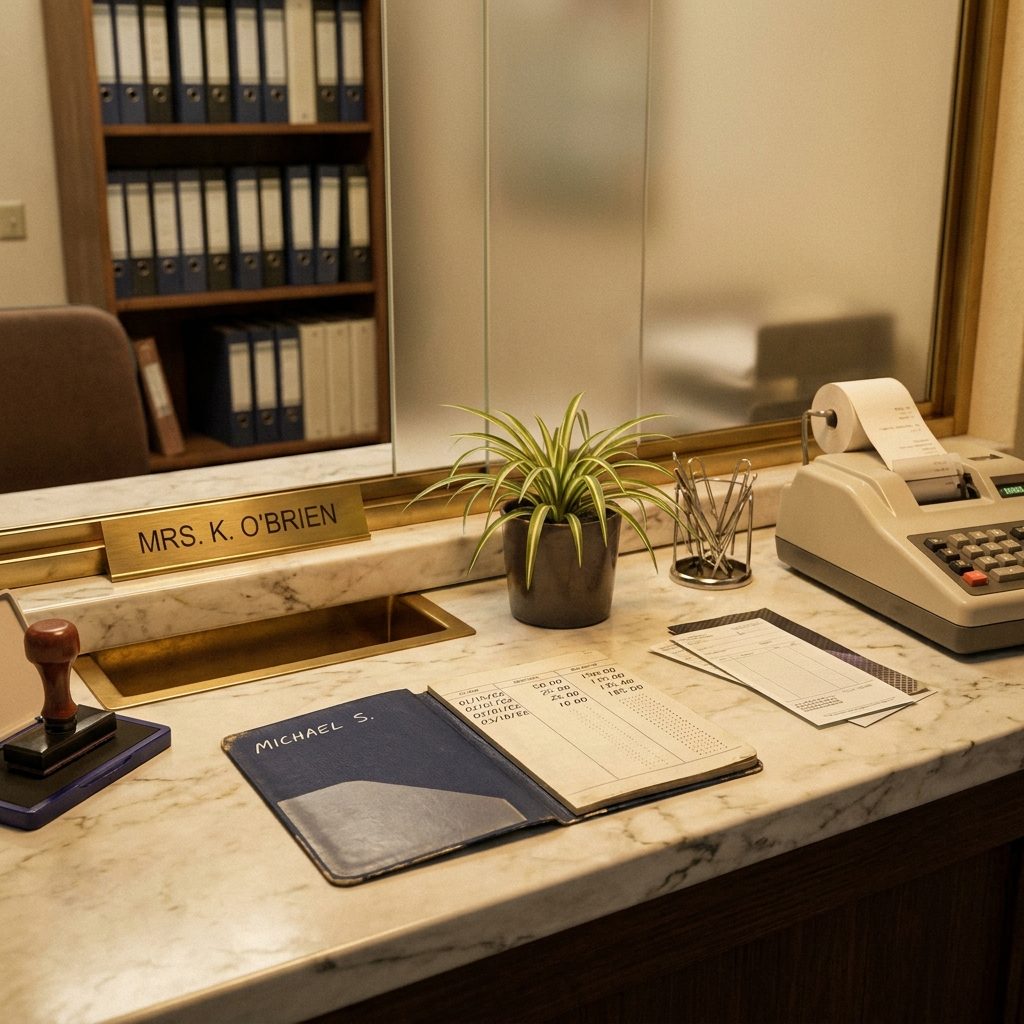
The teller stamped it, slid it back under the glass, and that was it. The transaction was done. But nobody closed their passbook right away. You stood at the counter and read every single line, even the ones you already knew, just to get to the new number at the bottom right. Twenty-two dollars and sixteen cents. Then twenty-six forty. The running balance column was the whole point. It was proof. Something had happened, something permanent, and it was printed right there in ink you could not argue with.
Kids in the 1980s learned compound interest not from a classroom but from watching that number creep upward over months. Slowly. Agonizingly. But it moved.
Telling Your Friends You Had a Savings Account Like It Made You Some Kind of Millionaire
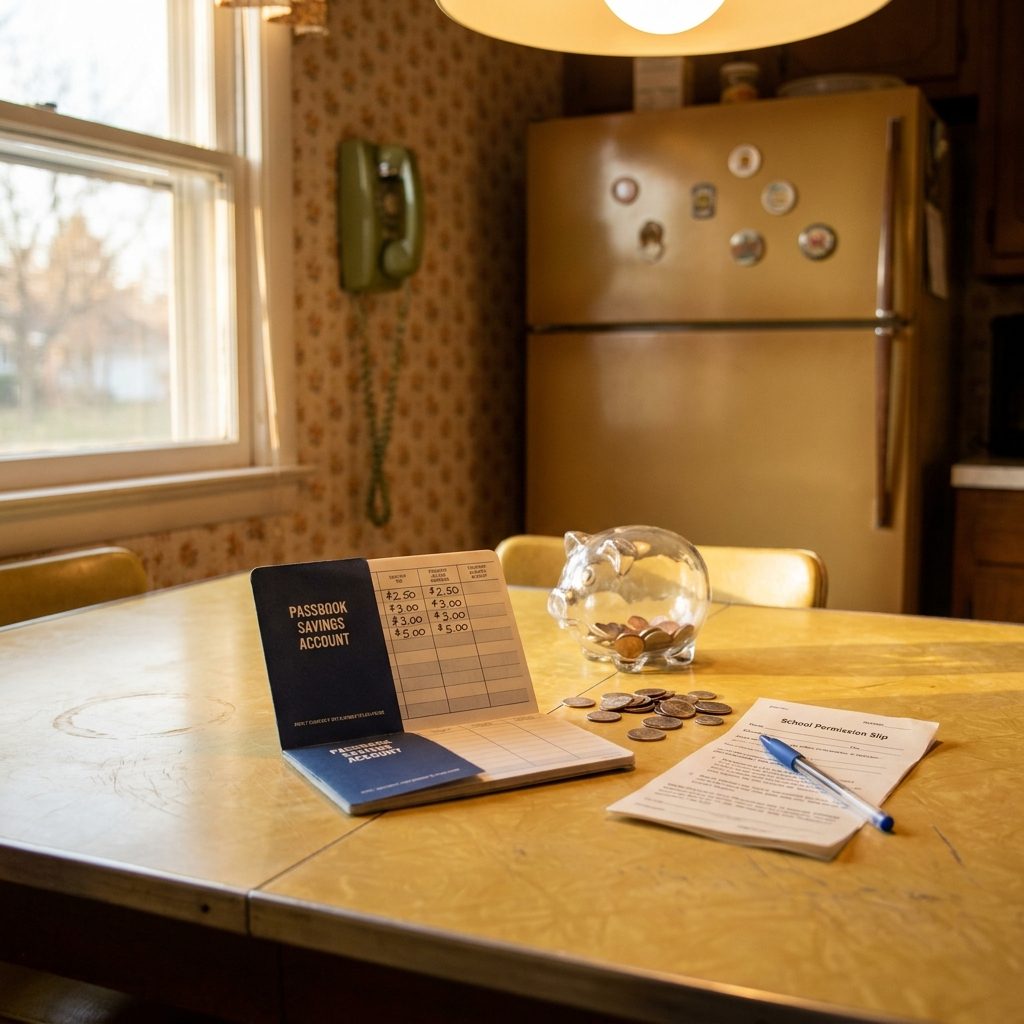
Having a savings account in 1983 when you were nine felt like a real credential. Not a toy account, not a piggy bank on a shelf. An actual account, at an actual bank, with your actual name on the passbook. You mentioned it. Maybe more than once. Your friend had a piggy bank. You had an institution.
The fact that the balance was fourteen dollars was beside the point. The structure was the thing. You were the kind of person who saved. It said so right there, stamped in the book. That identity stuck with a lot of 1980s kids longer than the account itself did.
The Pen on a Chain That You Had to Use Because Apparently Bank Pens Were Worth Stealing
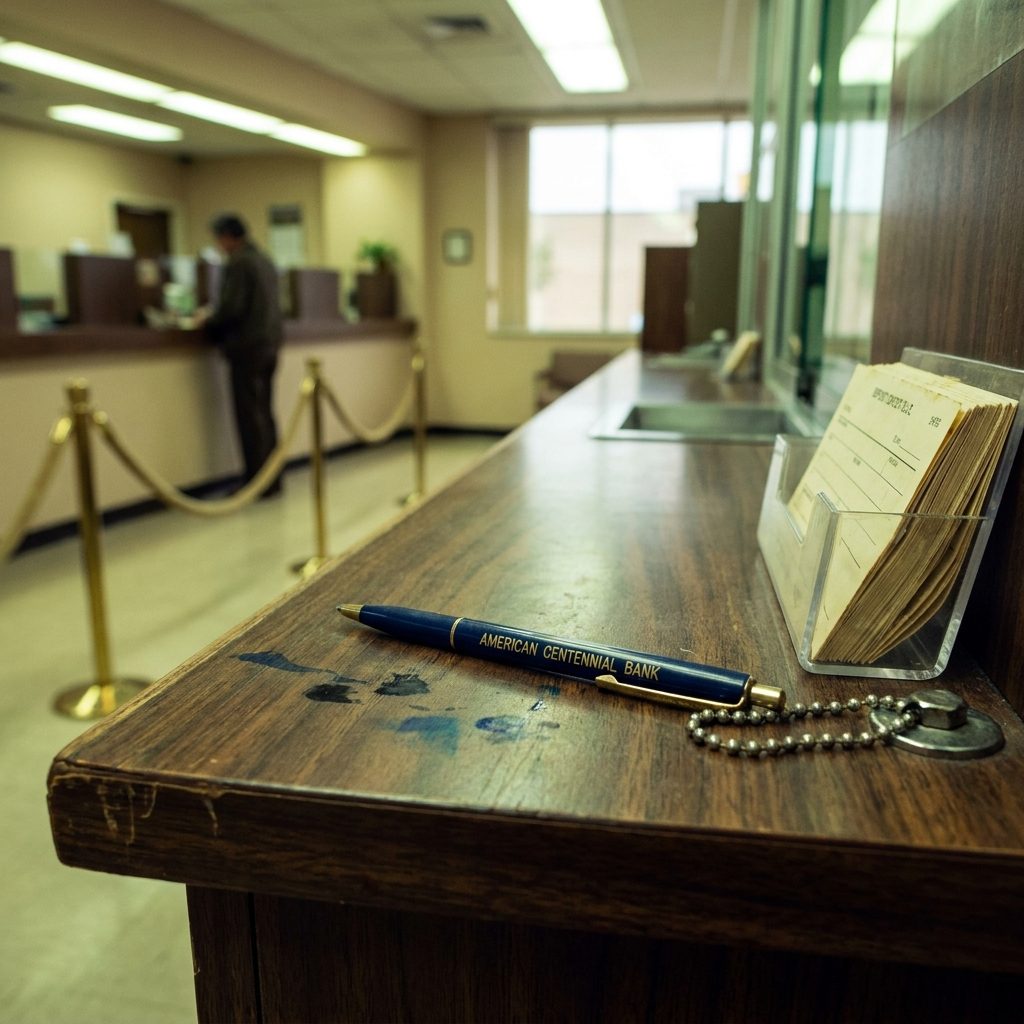
That pen was going nowhere. Bolted to the counter on a little beaded chain like exhibit A in a federal case, it gave you about eight inches of slack before going taut—enough to force you into a hunch over the deposit slip like you were performing surgery on it.
The ink was always half-dead. You’d scribble frantic circles in the margin of a blank slip, pressing harder and harder until the paper tore. Somehow the bank trusted you with their money but not with a forty-cent Bic.
Getting a Toaster or a Pocket Calculator for Opening an Account
Would you like to save this?
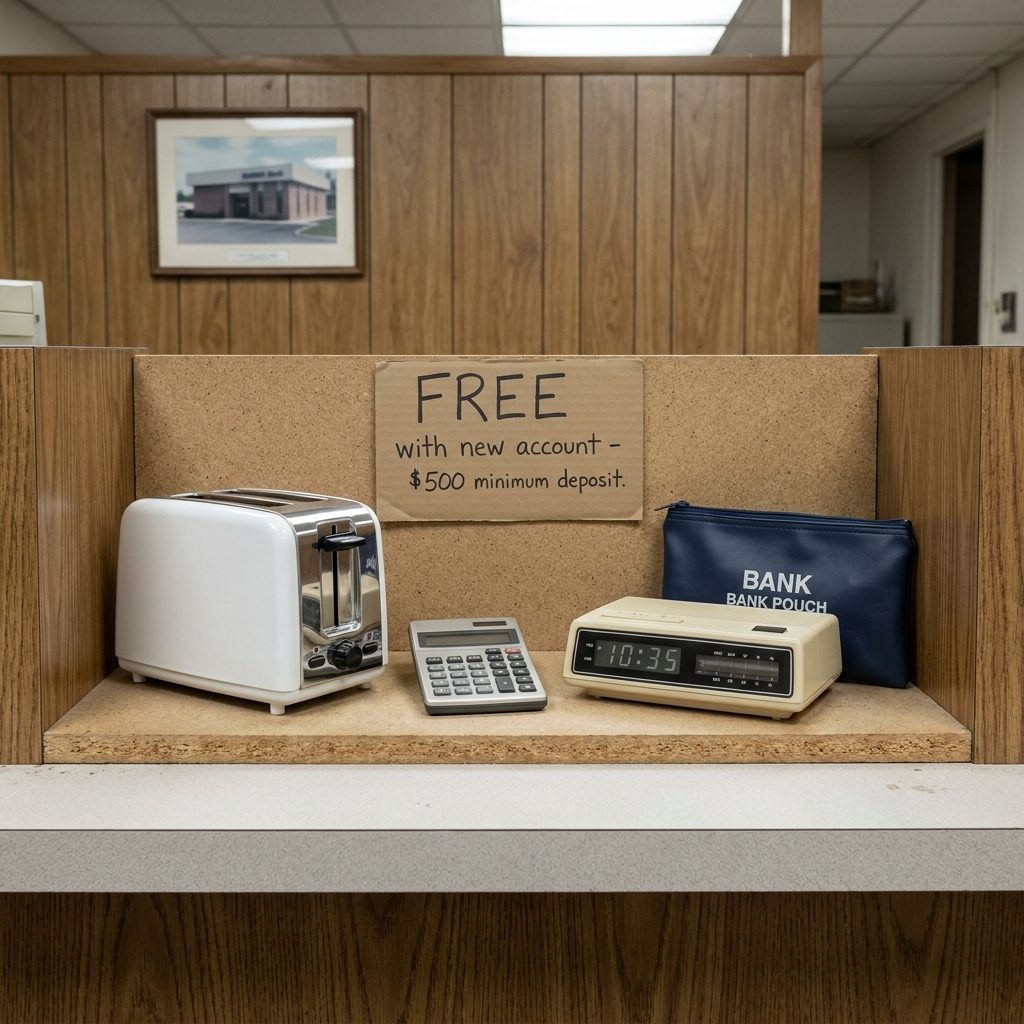
Banks in the 1980s bribed you. Open a savings account, get a toaster. A real toaster, in a box, handed to you like a trophy for having $500.
Your parents probably picked the calculator. You wanted the radio. Nobody ever picked the blanket. The whole display sat on a pressboard shelf behind the teller counter, and you’d stare at it while waiting in line, mentally spending money you hadn’t deposited yet. Saving money, the bank implied, should come with a physical reward—and that reward was a small appliance you could’ve grabbed at Kmart for practically nothing. Didn’t matter. It worked. We opened the accounts.
The Velvet Rope Line That Made You Feel Like You Were Waiting to See the Pope
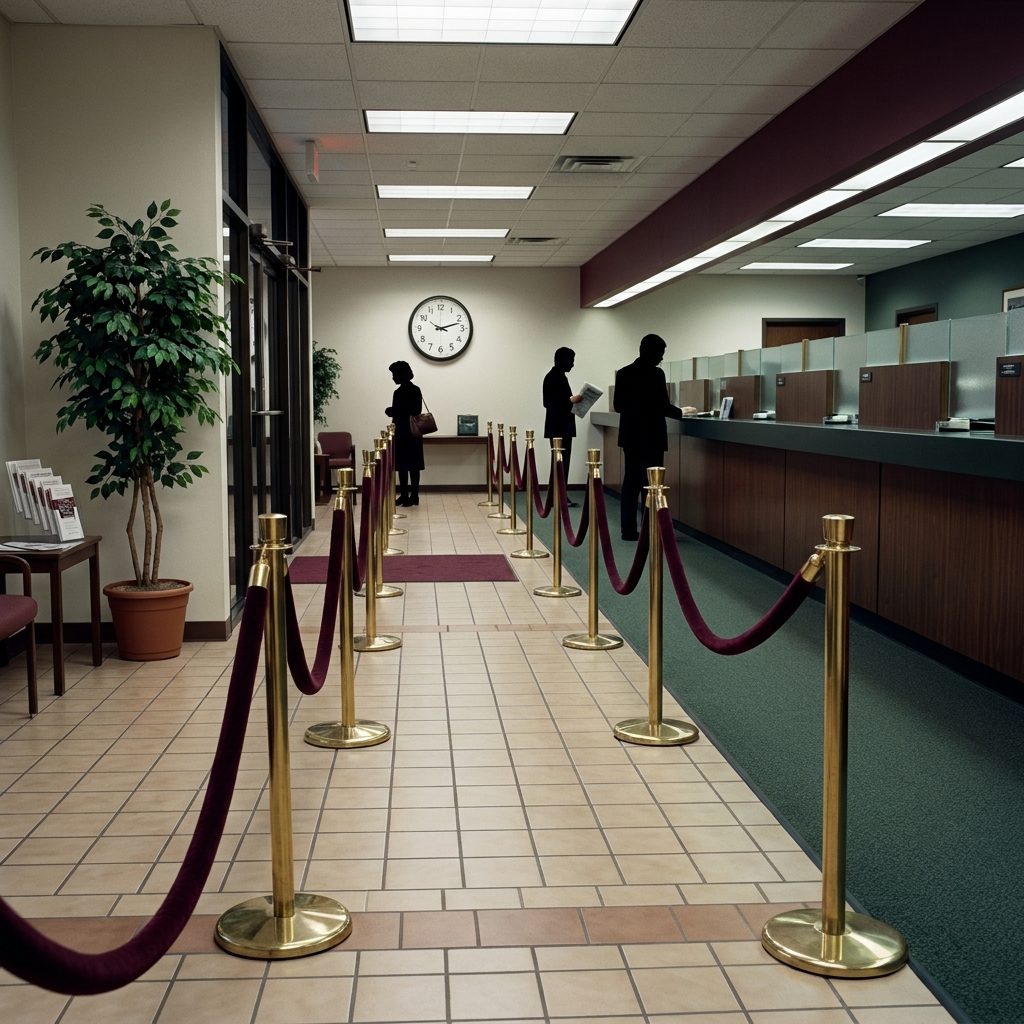
Three stanchions. Two ropes. One line that moved like cold honey.
You stood in that velvet rope queue behind adults who all seemed to have enormously complicated transactions. The man ahead of you had a folder. A folder. You had a birthday check and your passbook, and you were going to be standing here until Tuesday. The ropes smelled faintly like dust and old pennies. You’d swing one gently—just once—and your mom’s hand would land on your shoulder, which was the universal signal to stop immediately and never do it again.
The Way the Bank Smelled Like Carpet and Seriousness and Maybe a Little Bit Like Money
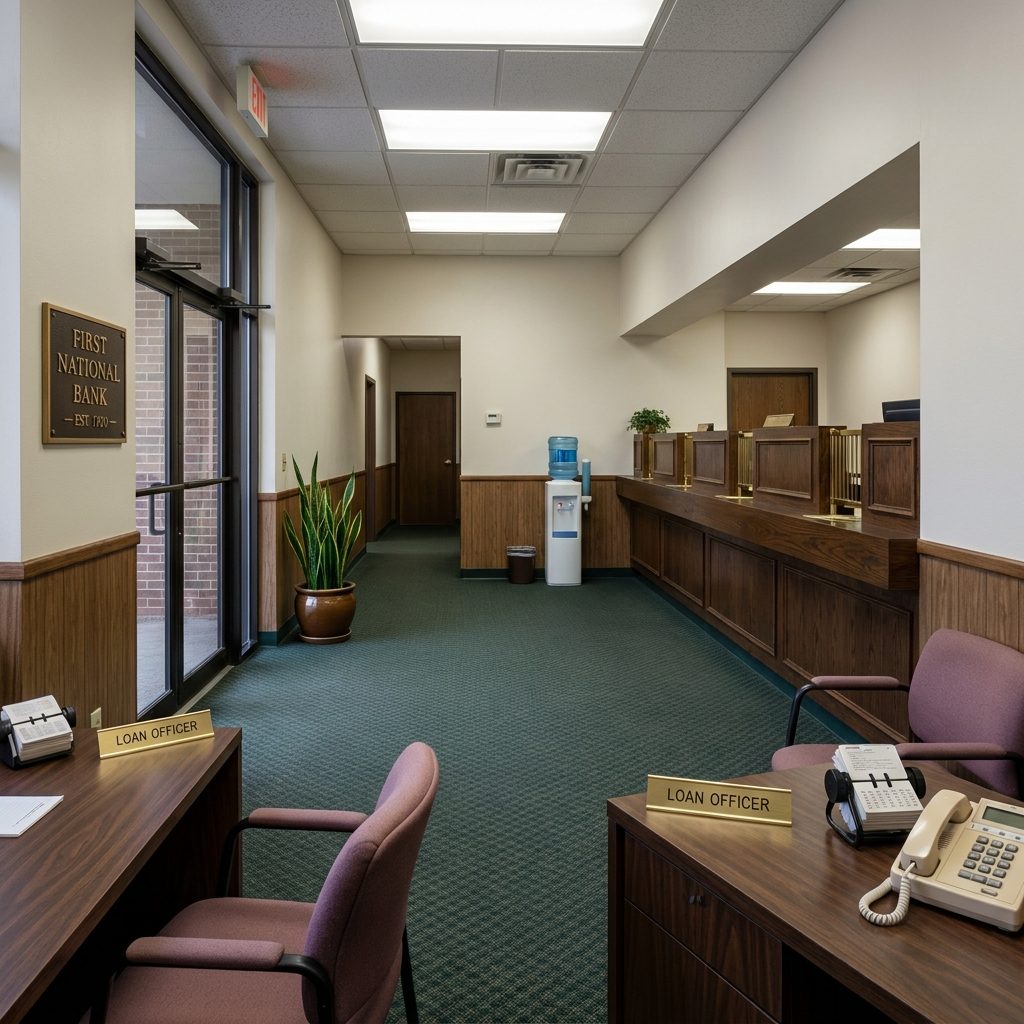
Every bank branch in the 1980s smelled exactly the same, and nobody has ever been able to name what it was. Part carpet cleaner, part paper, part the leather-bound nothing of a room where people whispered about money—it hit you the second the heavy glass door swung shut behind you.
Cold in summer. Warm in winter. Quiet in a way that made your sneakers on the tile sound obscene. You knew instinctively to lower your voice, even though no sign told you to. The bank taught you money was serious before anyone said a single word about it.
Your Account Number Being Your Social Security Number Because the 1980s Had Zero Concept of Identity Theft
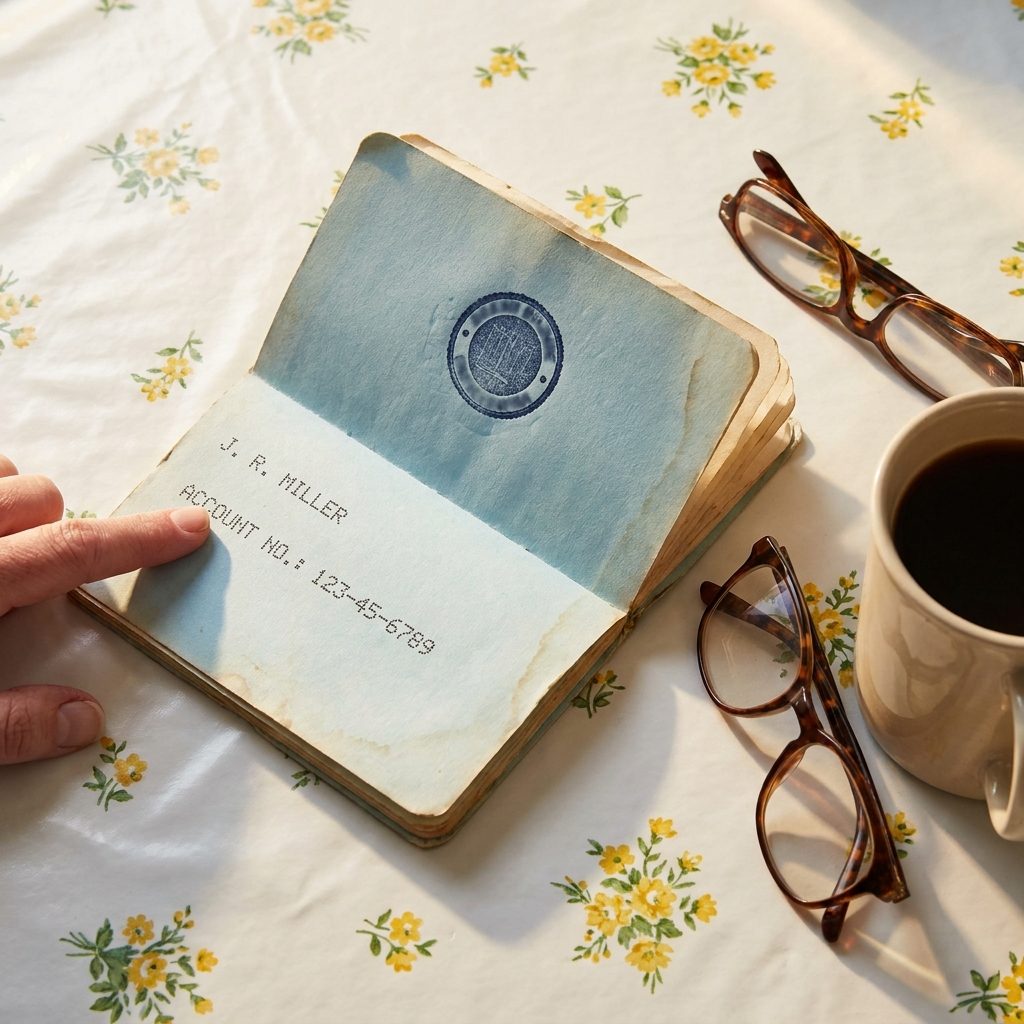
A sentence that would make a modern fraud-prevention team faint: your savings account number was your Social Security number. Printed right there on the passbook. On the deposit slips. On every piece of paper the bank generated. Like tattooing your house key on your forehead and calling it convenience.
Nobody thought twice. The concept of someone stealing your identity hadn’t really entered public conversation yet. Your nine digits floated around on carbon copies, sat in filing cabinets, rode in the purses of mothers everywhere—completely unprotected, for years, and nobody lost a minute of sleep over it.
The Saturday Morning Trip to the Bank That Was Somehow a Family Event
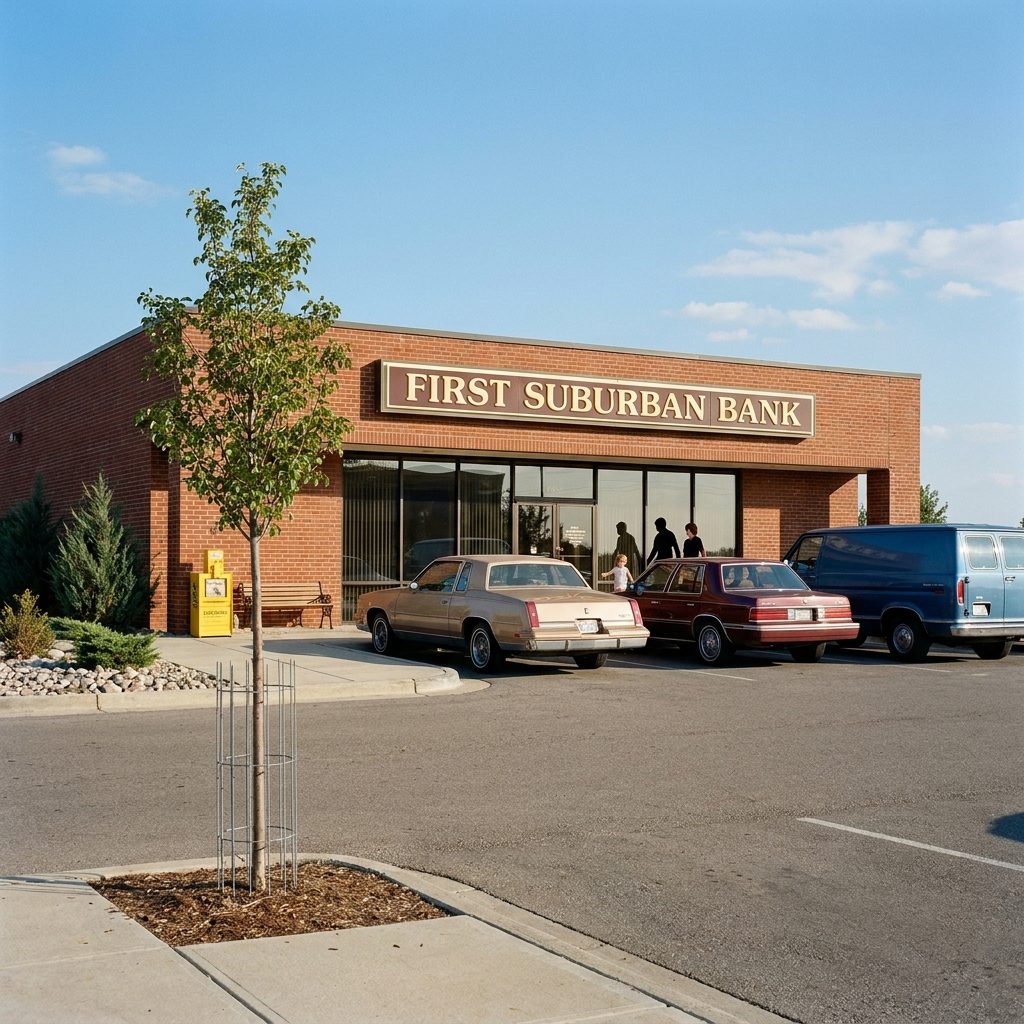
Saturday errands had a fixed route. Dry cleaner. Grocery store. Bank. Always squeezed in between, and you went because you were ten and had absolutely no say in the matter.
You didn’t hate it, though. The lobby was quiet, the lollipop bowl was full, and your mom did whatever mysterious thing she did at the counter while you stood there clutching your passbook like a tiny accountant waiting for your three-dollar deposit to process. Then everyone piled back into the car and drove to the grocery store, and the morning felt structured and correct in a way that’s hard to articulate now. Those Saturday banking trips were a ritual—and rituals hold a week together even when you’re too young to realize they’re doing it. I kind of miss that, honestly.
The Bank Calendar They Gave Out Every December That Hung in Every Kitchen in America
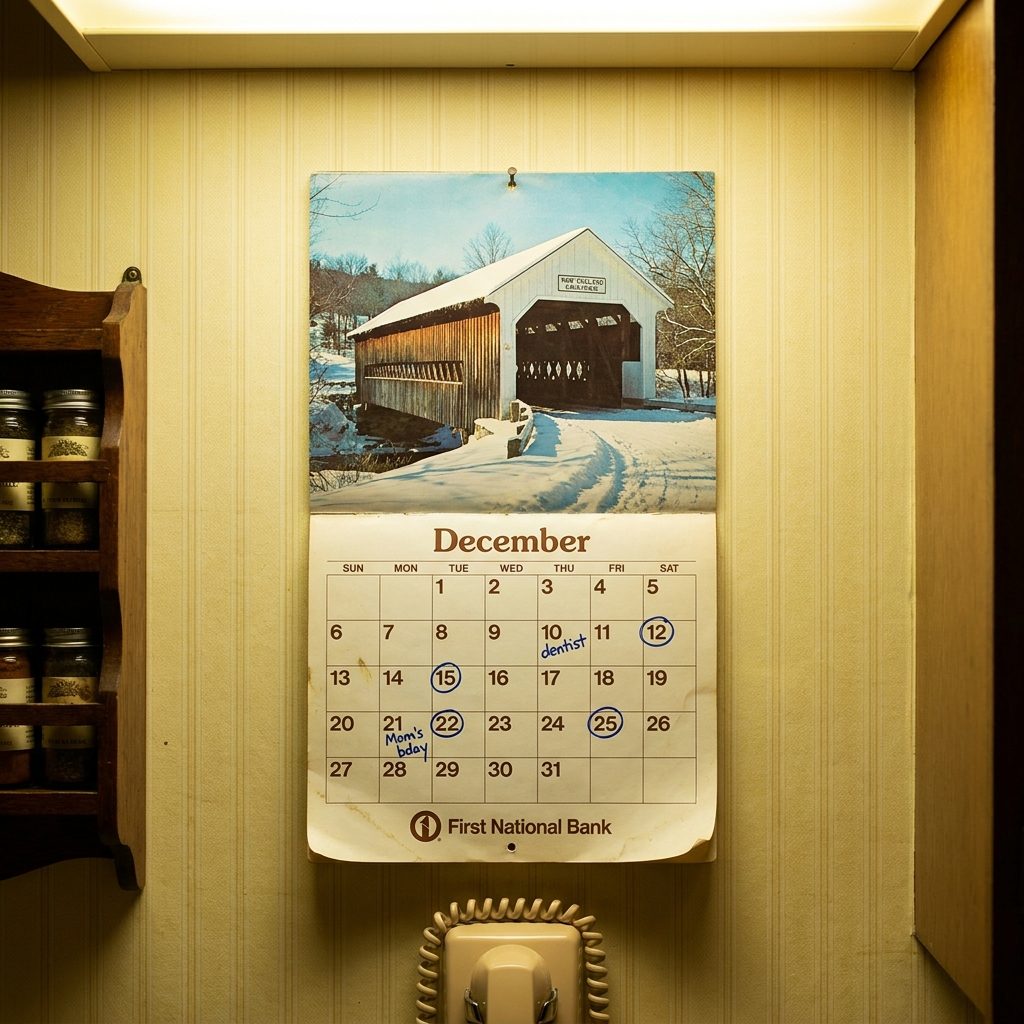
Free. Scenic. Enormous. Every December your branch handed out wall calendars with photos of covered bridges and lighthouses and autumn foliage, and by January 2nd every kitchen in your neighborhood had one on the wall.
Your mom wrote everything on that calendar—appointments, birthdays, the day the furnace guy was coming. It became the family’s command center, quietly sponsored by a savings institution that wanted twelve months of mental real estate. Brilliant move, honestly. Their name and logo sat at the bottom of every page, right next to your dentist appointment and your sister’s piano recital. You couldn’t have forgotten them if you’d tried. And the covered bridge photos? Gorgeous, in that slightly oversaturated way that screamed 1982.
The Moment You Realized Your Money Was Not Actually Sitting in a Vault With Your Name on It
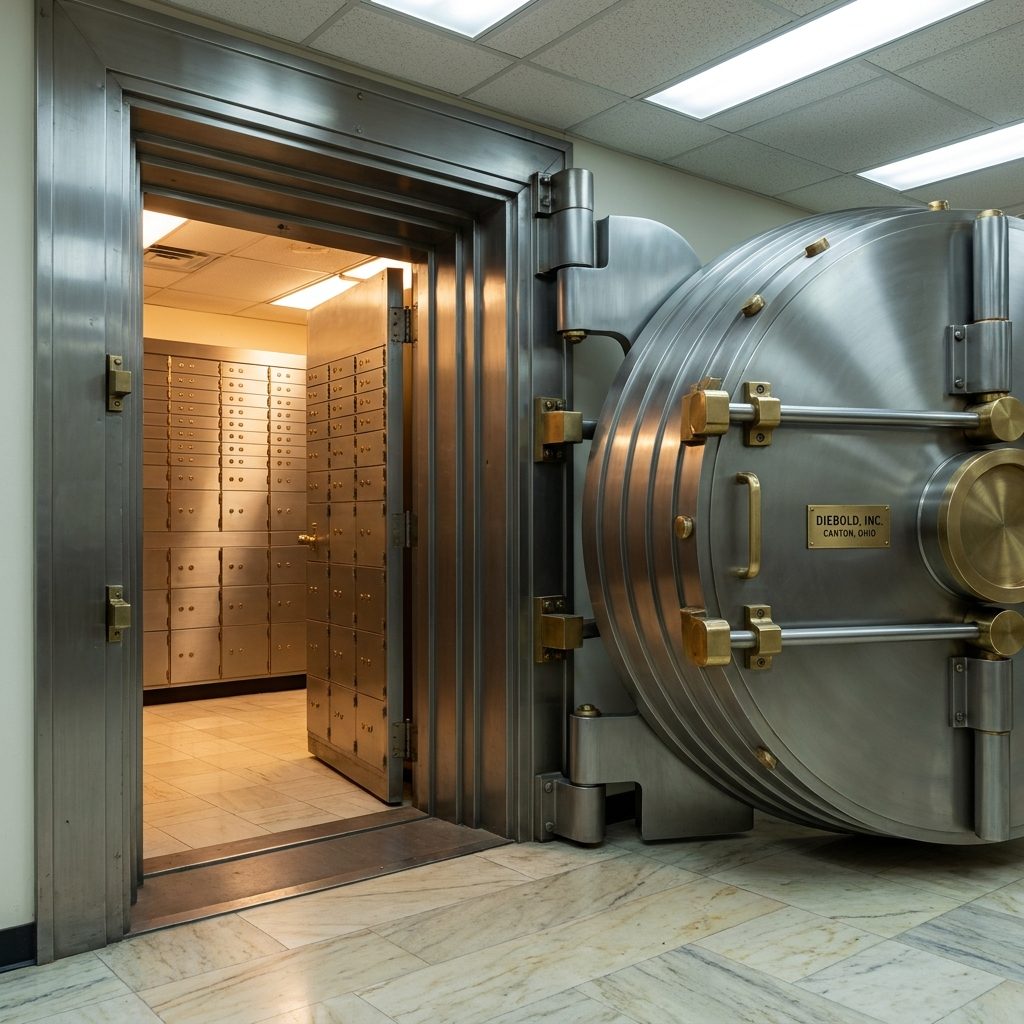
You pictured it so clearly. A little room in the back. A shelf. A pile of cash with a label that said your name—maybe in a canvas sack, like a cartoon. Your $47, sitting there, patient and loyal, waiting for you.
Then someone—probably an older kid or a know-it-all uncle—explained that the bank lends your money to other people. They use it. It’s not in a room. It’s not even necessarily in the building.
First financial betrayal. Not a devastating one, but the realization that your passbook balance was more of a promise than a physical pile of bills stashed somewhere changed a small, permanent thing in your understanding of how the world worked. You were eleven and had just stumbled into the concept of fractional reserve banking without anyone bothering to call it that. Strange education, a bank lobby.