
Would you like to save this?
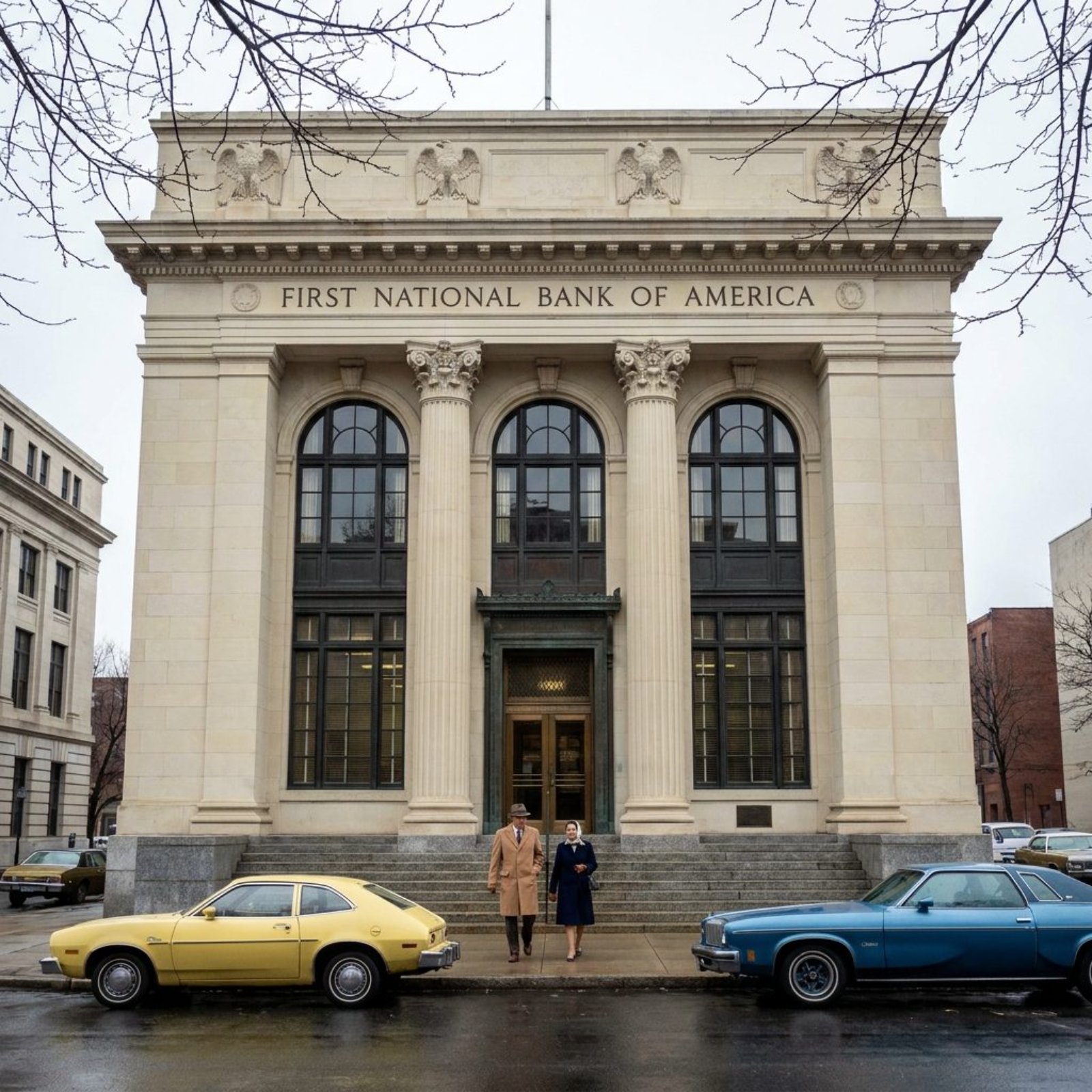
Push open the heavy brass-handled door in 1975 and the first thing you feel is the cool air off the marble. Then comes the sound: a low murmur, adding machines clicking, a chained pen scratching across a deposit slip. Somebody’s dad in a tie. A calendar from the local insurance agency on the wall.
Banks felt like courthouses back then, built to reassure you that your money was somewhere serious. Fifty years later, much of that grandeur has been renovated, digitized, or converted into something else. These 24 comparisons show what changed.
24. Marble Floors and Grand Columns vs. Retail-Store Branches
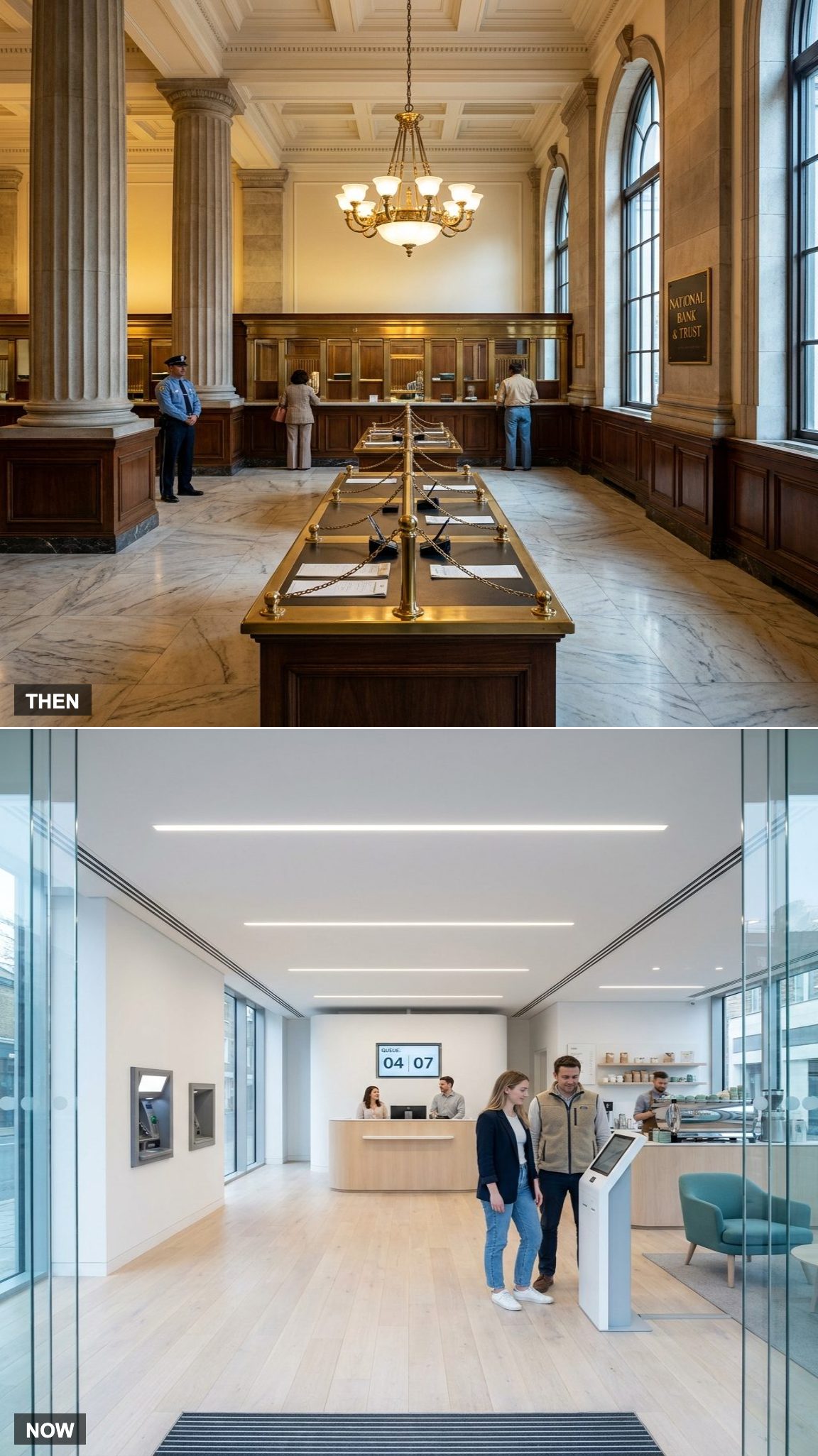
The 1975 bank lobby was built to intimidate a little. Marble that echoed, columns you could not have hugged if you tried, a ceiling high enough that voices got polite on the way up. The whole room was an argument: your money is safe here because look at this building.
Now the branch shares a strip mall with a nail salon and a Chipotle. Blond wood, LED strips, a coffee bar, a greeter with an iPad. It is friendly and forgettable, which is exactly the point. The bank moved its grandeur to the app.
23. Teller Lines Across the Lobby vs. Nobody in Line at All
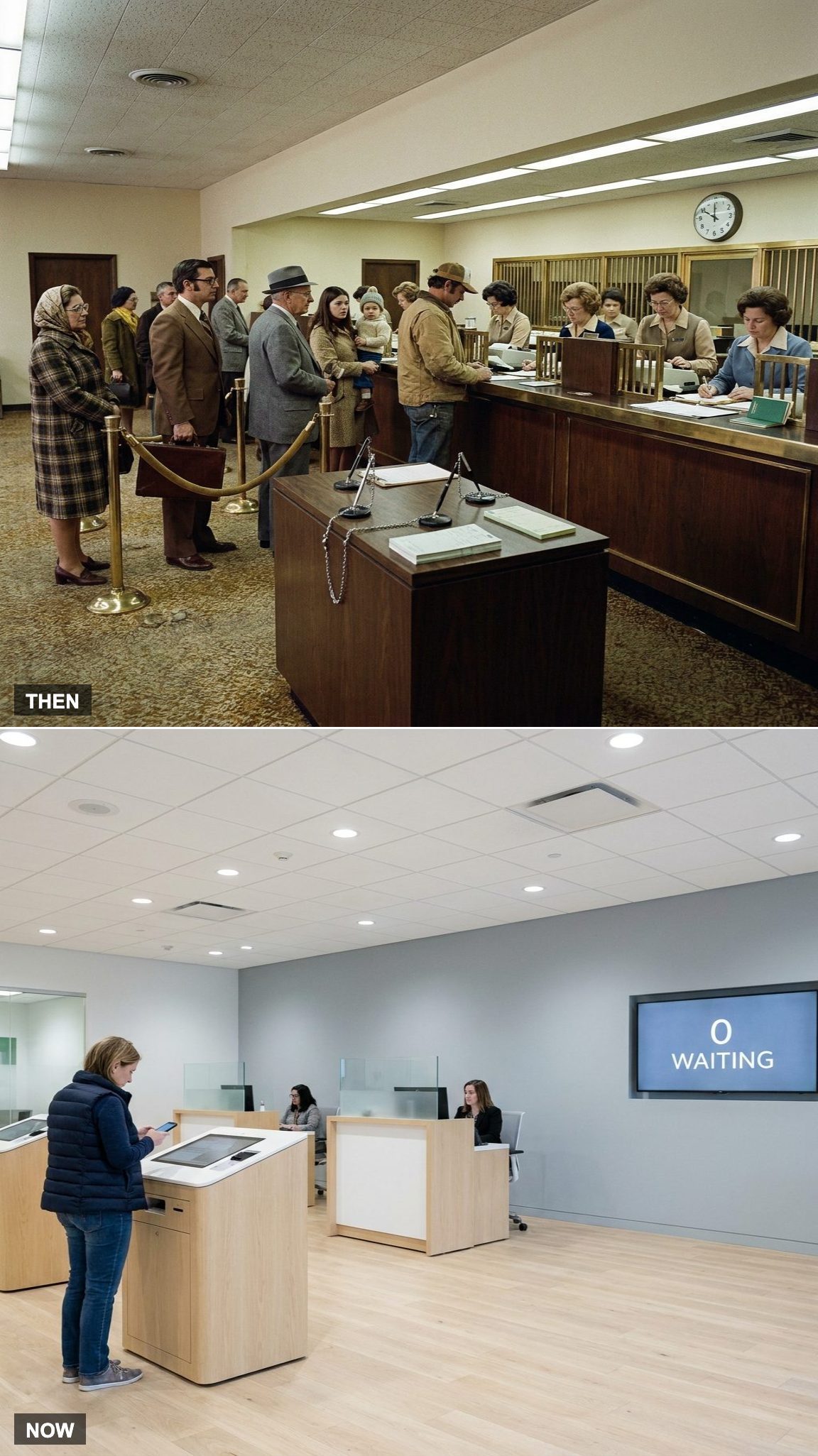
Payday Friday at a 1975 bank was a social event you did not want to attend. The line wrapped around the velvet rope twice, everyone holding a paper check, everyone with fifteen minutes to kill and no phone to kill it on. You made small talk with the guy behind you about the weather because there was nothing else to do.
Walk into a branch on a Friday now and it is often just you and the ficus. The line moved onto everybody’s phone.
22. Paper Deposit Slips vs. Depositing a Check With Your Phone
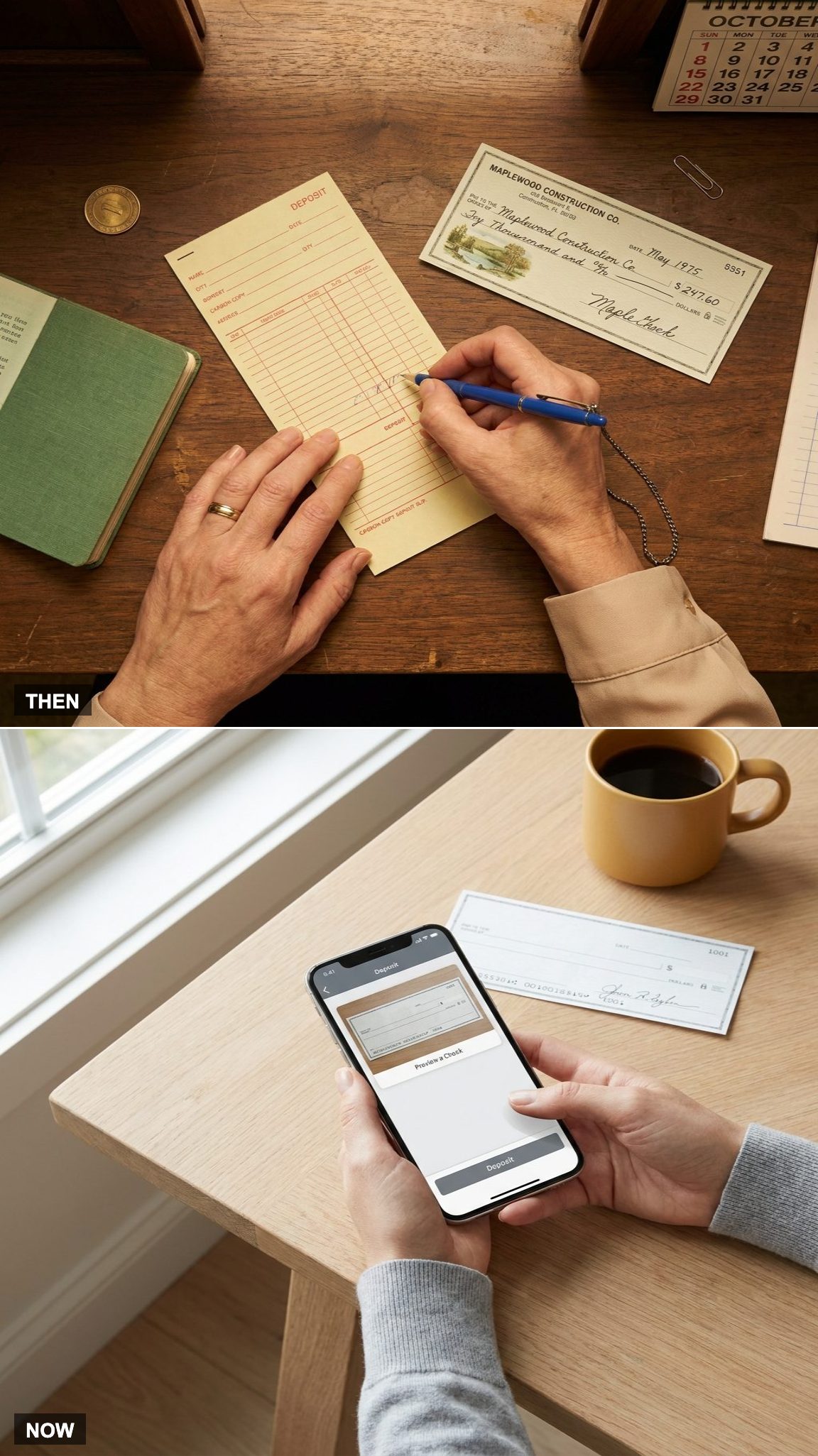
The pen was chained to the counter because people stole them. Not out of malice, just habit. You filled out the deposit slip, sometimes with one or more carbon copies, endorsed the back of the check, and handed the whole small paperwork ritual to a human being who stamped it and slid you a receipt.
Now you take a picture of the front, a picture of the back, and the money shows up before you have finished your coffee. The first time it worked, most people thought it was a scam. It was not. That was just the whole bank, folded into a phone.
21. The Vault Door as Theater vs. Encryption You Cannot See
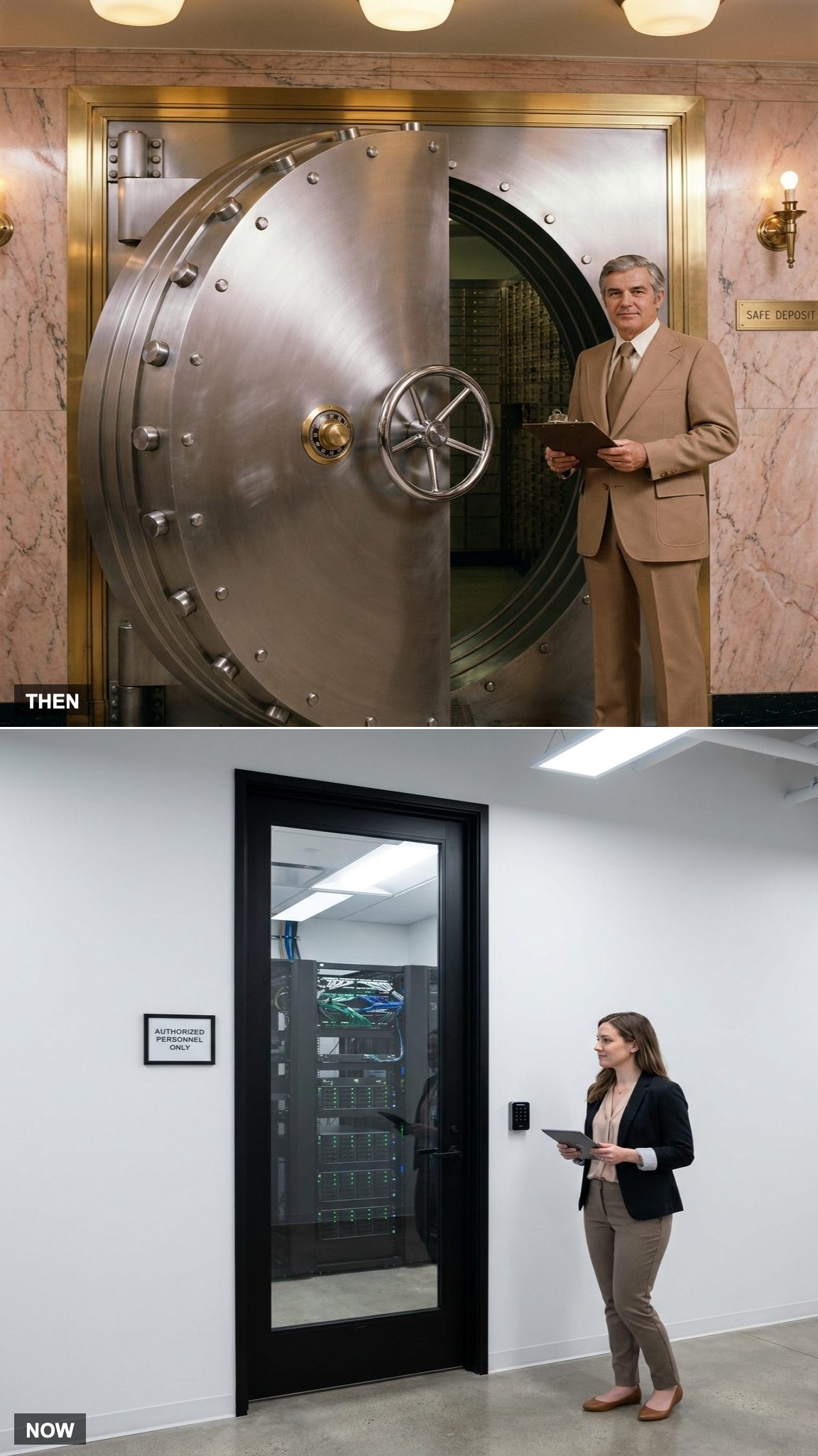
The vault door was the whole marketing campaign. A giant steel wheel, bolts thick as your forearm, a combination dial the manager spun with theatrical seriousness. You saw it every time you walked in and you felt better about depositing your paycheck.
The modern equivalent may not be inside the branch at all. Account records move through core banking systems, data centers, backups, and encrypted networks that customers never see. Security stopped looking like steel and started looking like access controls, monitoring, and layers of software.
20. Tellers Who Knew Your Name vs. Banking Without a Word
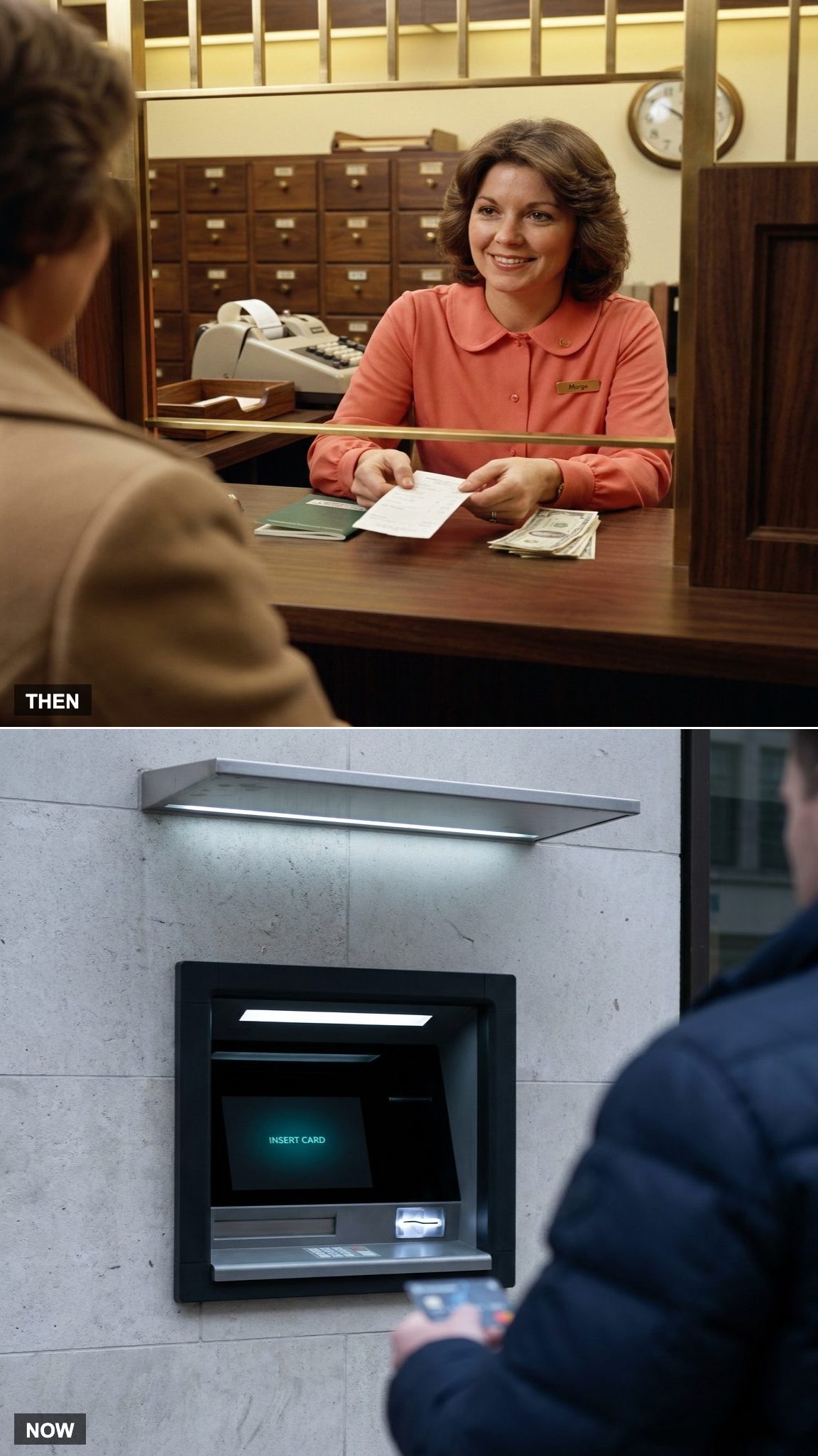
Marge knew you had a daughter in college. She asked about her. She knew your paycheck came in on the 15th and she asked how the new job was going. It was small talk, but it was also a relationship, and the relationship was part of what a bank was.
Now you can go weeks handling every dollar you earn without saying a single word to another human being. The convenience is real. So is the trade.
19. Passbooks by Hand vs. Balances That Update Before You Blink
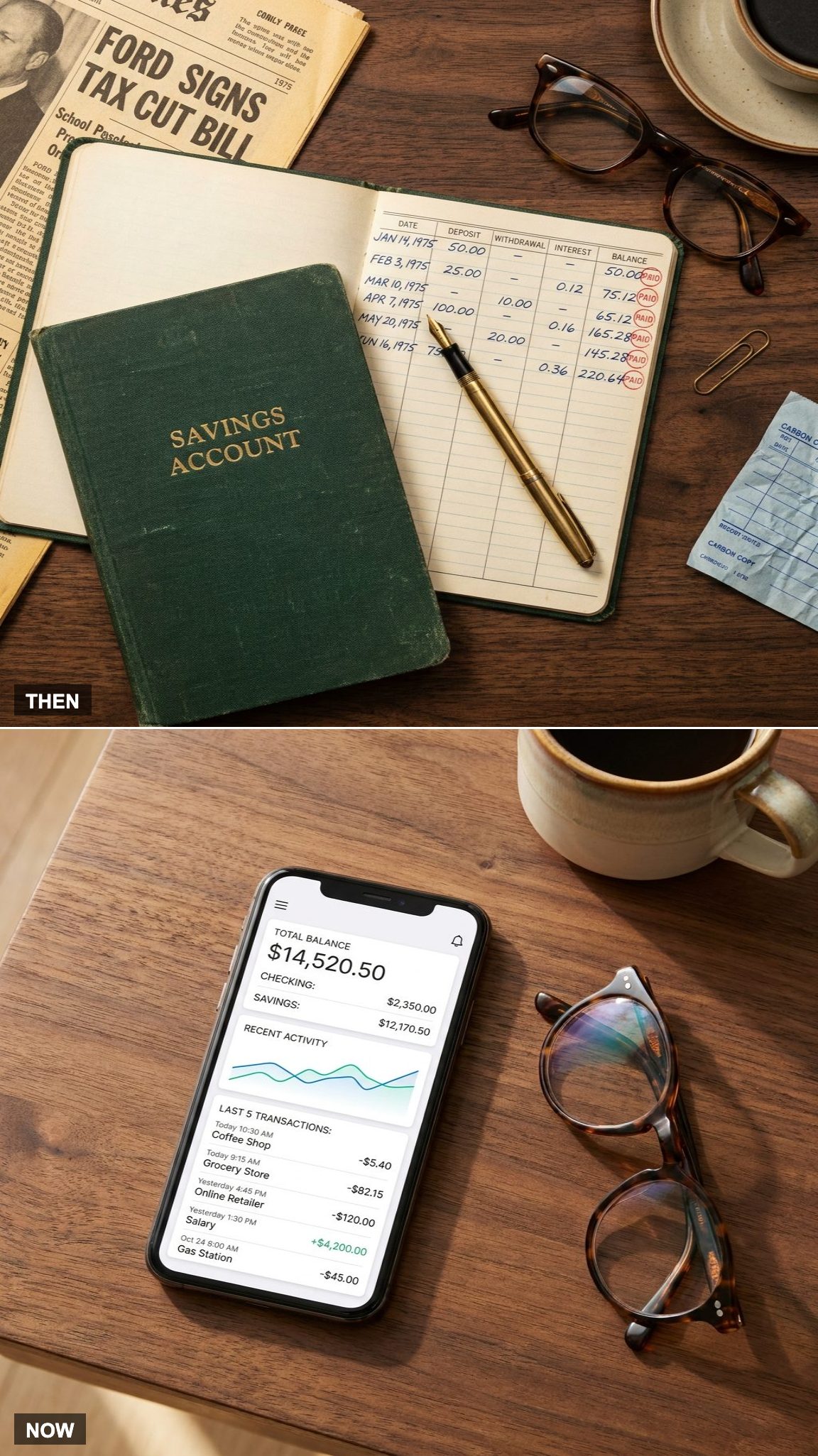
The passbook was a physical object you took home. Every deposit appeared on the page in ink or machine type, and interest payments were added at regular intervals. You could hold your savings and thumb through them. There was something almost pleasant about it, an emotion no mobile banking app has managed to inspire.
The app is faster and usually shows the available balance immediately, although pending transactions and holds can still complicate the number. It has yet to make me feel like my money exists in the physical world.
18. Writing a Check for Everything vs. Tapping a Phone
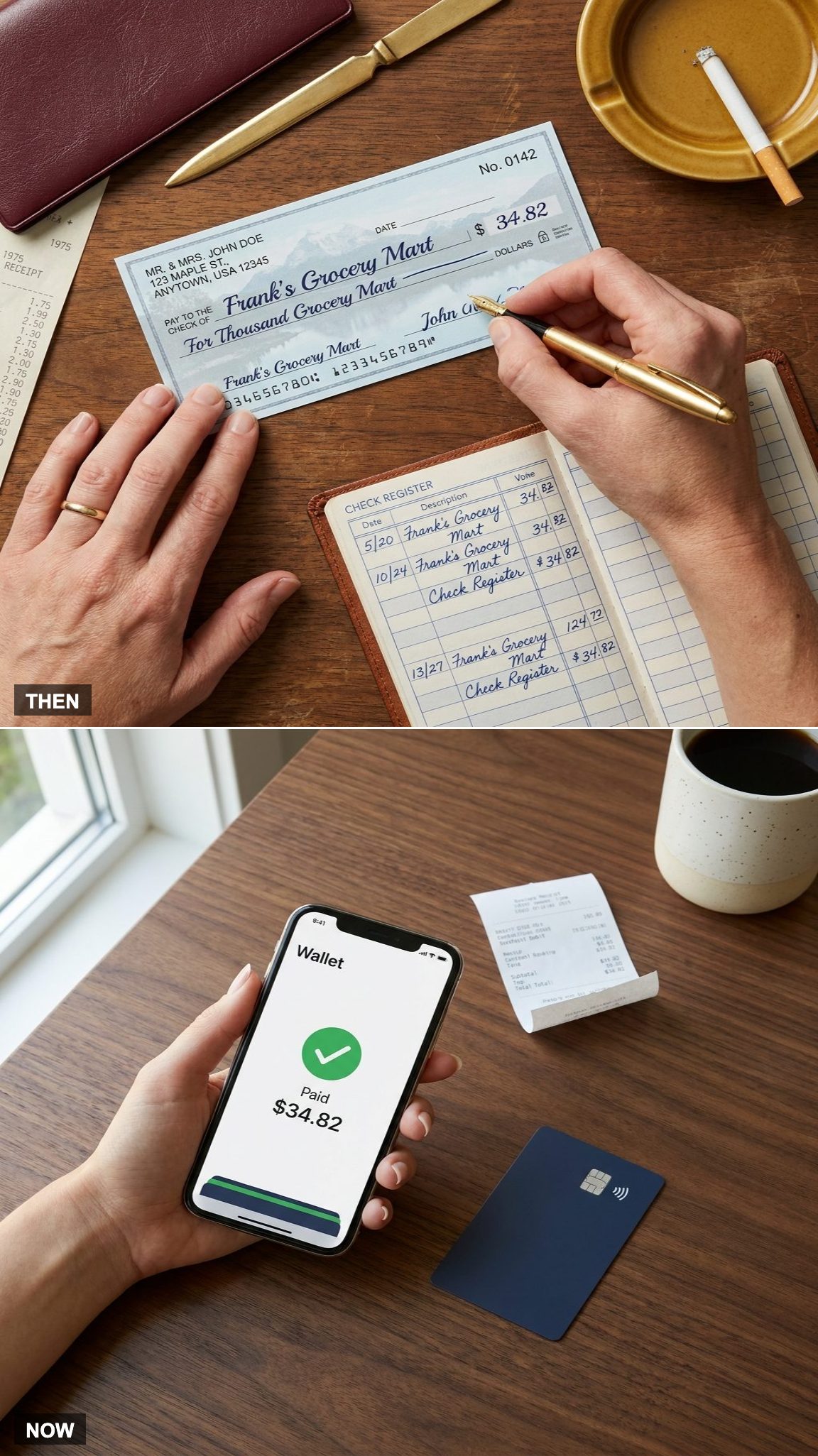
You wrote checks for the groceries. You wrote checks for the gas bill. You wrote a check to the babysitter and one to the paperboy. The check register in the back of the checkbook was the closest most households came to a spreadsheet.
The phone does all of it now, silently, and nobody balances anything against anything. Whether that is progress depends on how you felt about arithmetic.
17. The Manager’s Private Office vs. The Open Consultation Table
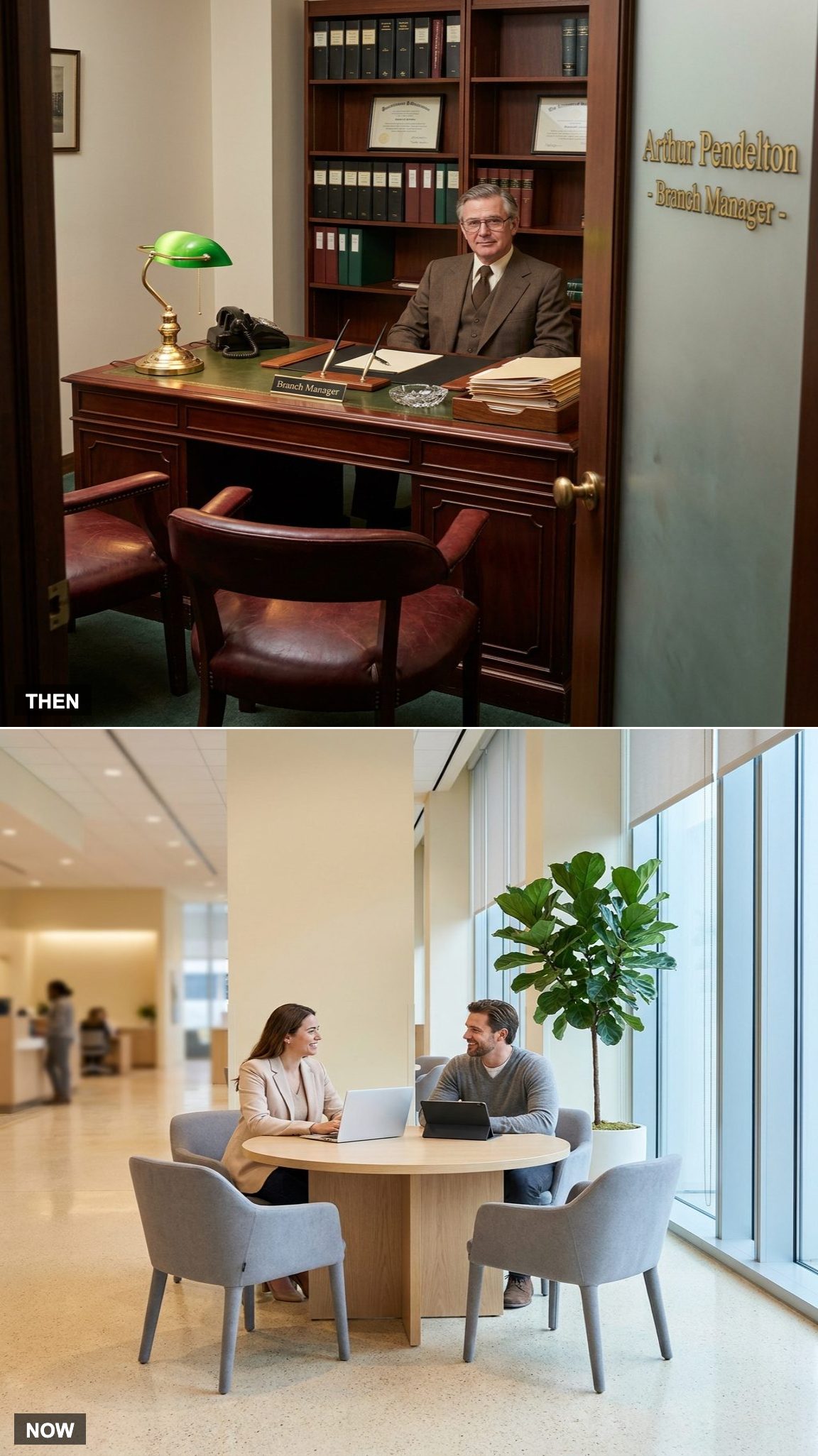
The manager’s office in 1975 was a room designed to make you sit up a little straighter. Frosted glass door with his name in gold, leather chairs, a green banker’s lamp, framed diplomas on the wall. You went in there to ask for a loan and you brought your best manners with you.
Now the loan conversation happens at a round oak table in the middle of the floor, next to the coffee bar, with a woman in a soft blazer showing you a screen. Less intimidating on purpose. The presentation changed because banks wanted the process to feel more open and less formal.
16. The Monthly Statement Arrived in a Windowed Envelope
Would you like to save this?
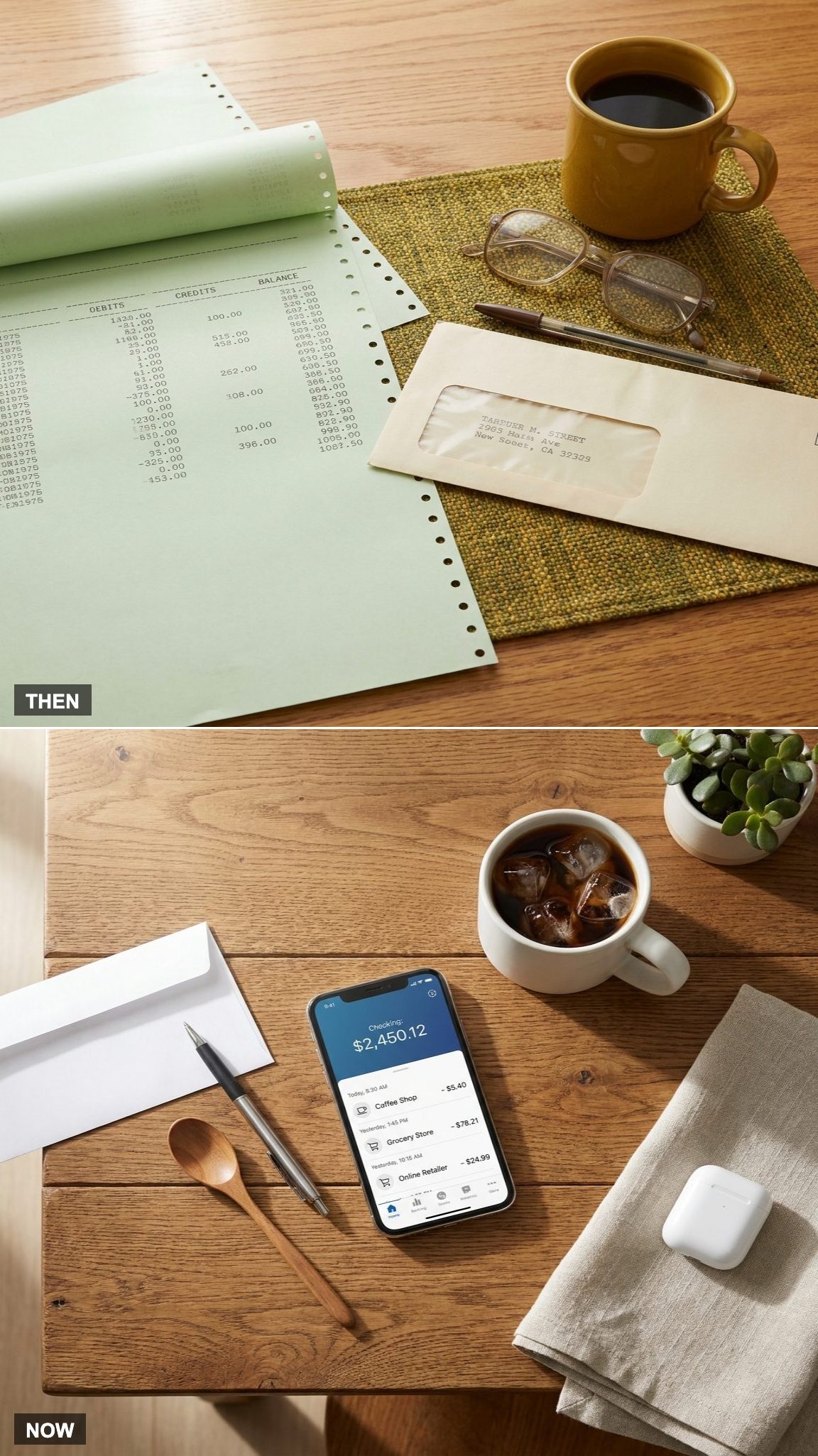
Statements came once a month and felt like a small event. You tore open the windowed envelope and saw several weeks of financial life arrive all at once: checks cleared, deposits posted, service charges, and interest.
Now the balance updates while the card is still in the reader. Every coffee, gas fill, and subscription renewal can appear within seconds. The old statement delivered delayed information in one concentrated dose. The app delivers a continuous stream.
15. The Safe-Deposit Vault Was a Room You Actually Entered
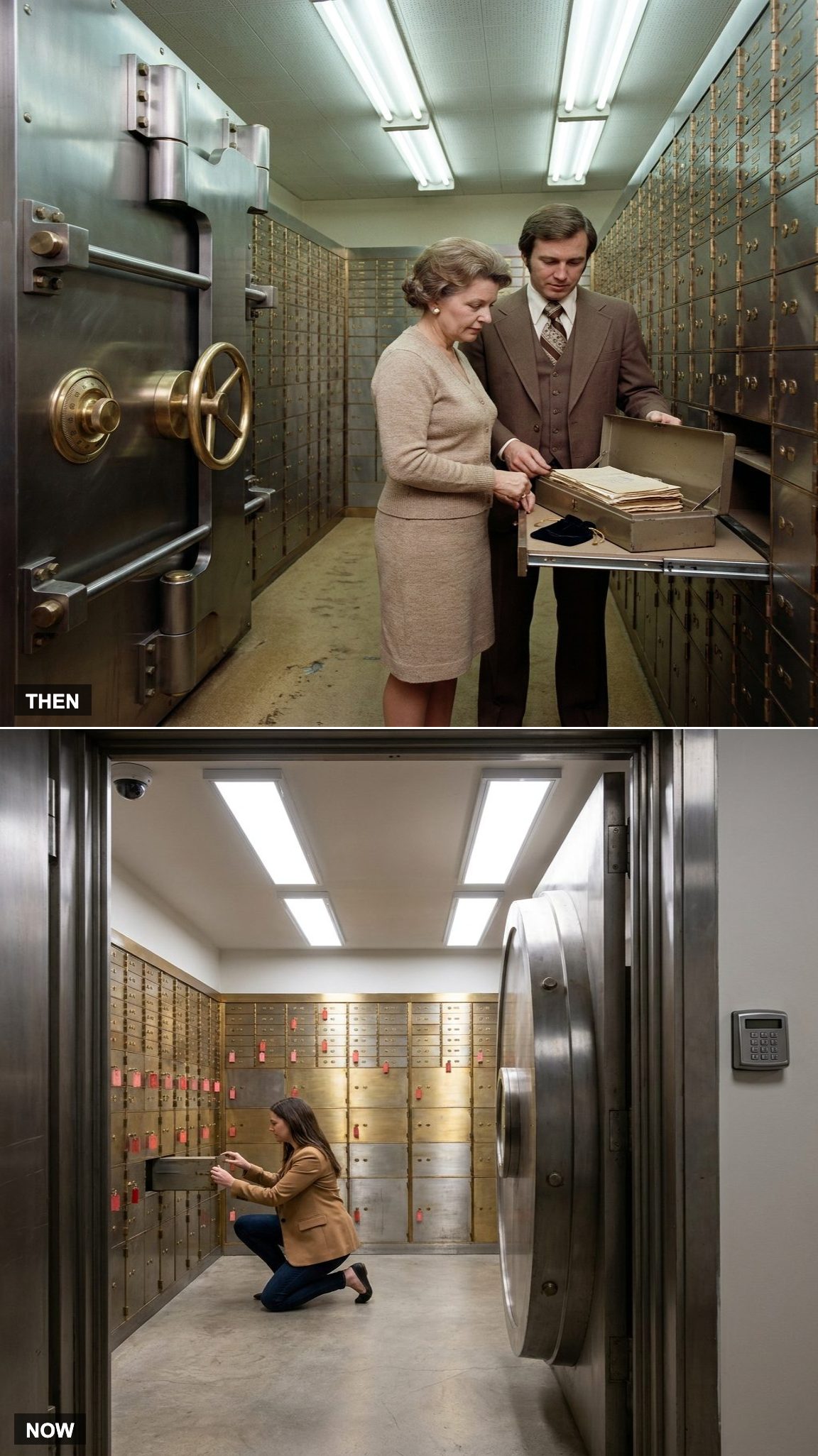
The vault was theater. Heavy door. Twin keys turning in unison. The private booth where you looked at your own things in silence. Families kept birth certificates in there, savings bonds, jewelry, deeds, and sometimes cash that nobody was supposed to know about, and getting into your box counted as a small ceremony.
Safe-deposit boxes are less central to everyday banking than they once were, and some newer branches do not offer them. Documents live in cloud folders, copies live on phones, and many families keep fewer physical records under lock and key. The steel did not fail. The habit changed.
14. Balancing the Checkbook Was a Monthly Sit-Down
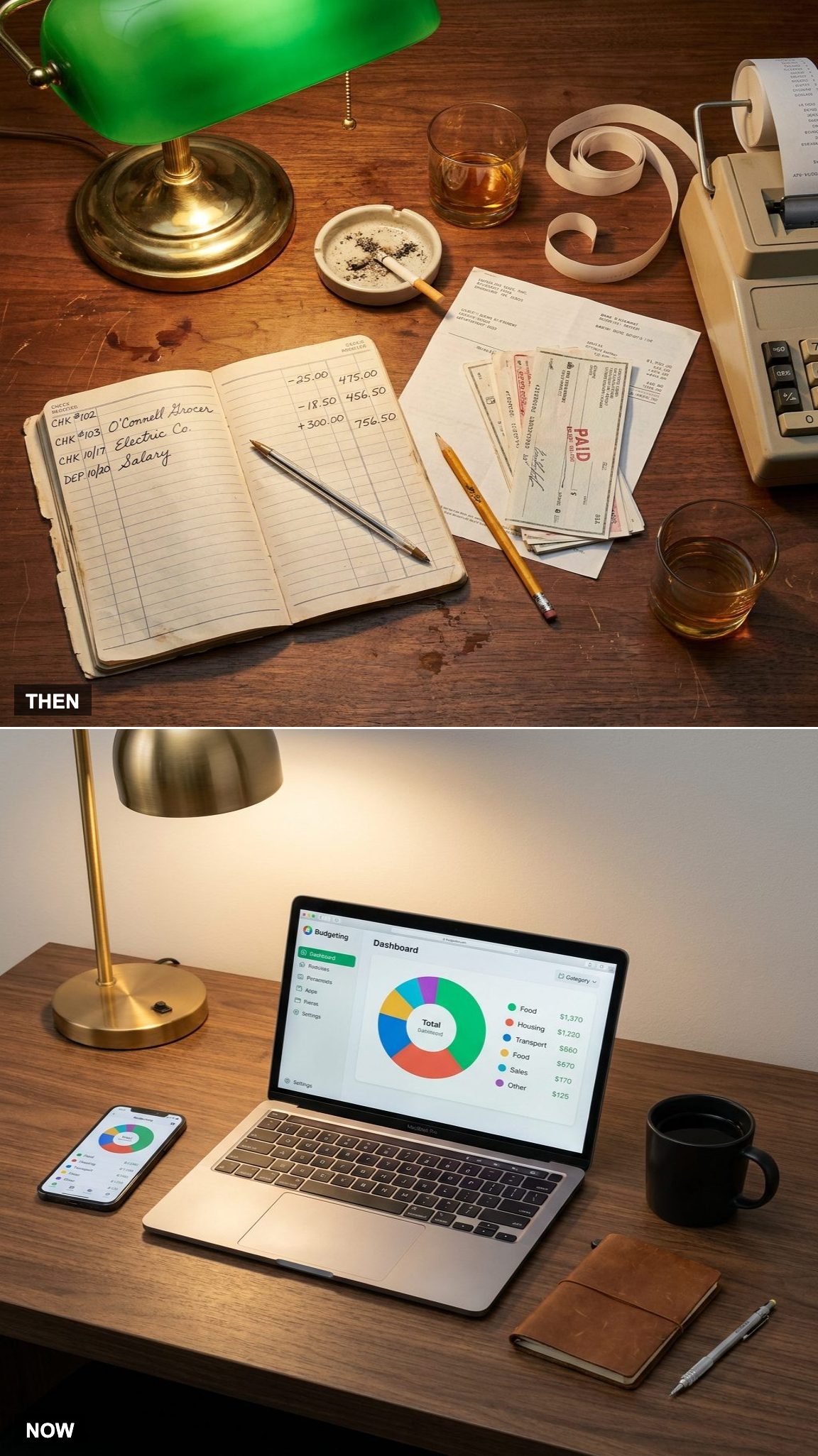
Once a month you sat down with the register, the statement, and the stack of canceled checks, and you made the numbers agree. Forty minutes if you were lucky, two hours if a check had cleared for the wrong amount and you were down to hunting a nickel with a sharpened pencil and a growing sense of grievance.
Budgeting apps categorize every swipe before you’ve cleared the parking lot. Faster, obviously. Fully automated finances create a different relationship with money from writing every check by hand and watching the balance drop in real ink.
13. Interest Rates Were Posted on a Felt Letter Board
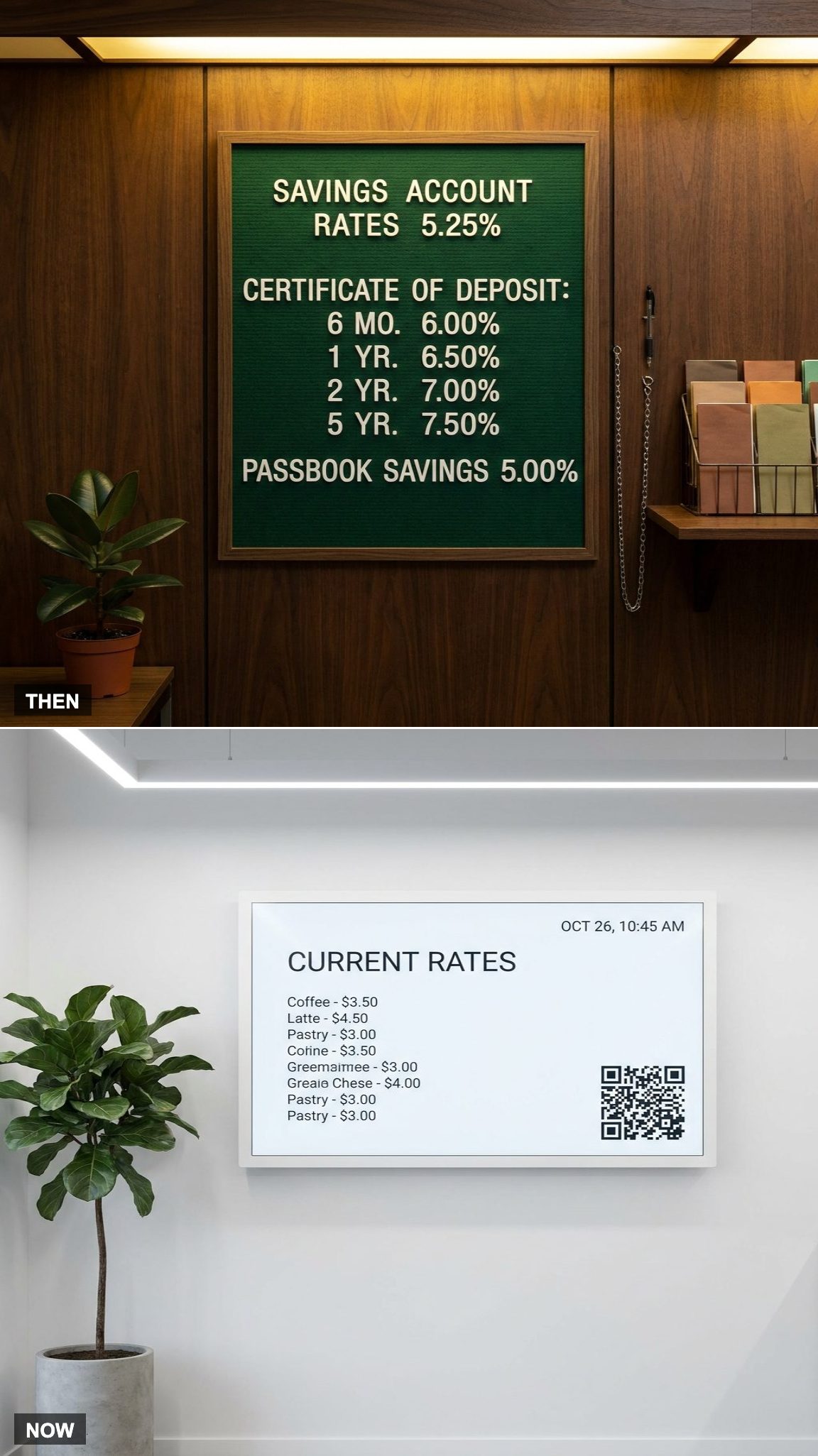
Rates lived on a green felt board with punch-in white letters, and somebody in the branch physically changed them whenever the bank adjusted its savings or certificate rates. The letters were often crooked. Sometimes a T fell off and hung by a thread until Tuesday, and nobody seemed to mind.
Rates change online in seconds now, pushed through systems nobody in the branch needs to update by hand. Shopping across a dozen banks takes thirty seconds. Gone with the felt board: the small satisfaction of watching a teller climb a step stool to update the CD rate by hand.
12. The Drive-Up Window Had a Real Person on the Other Side
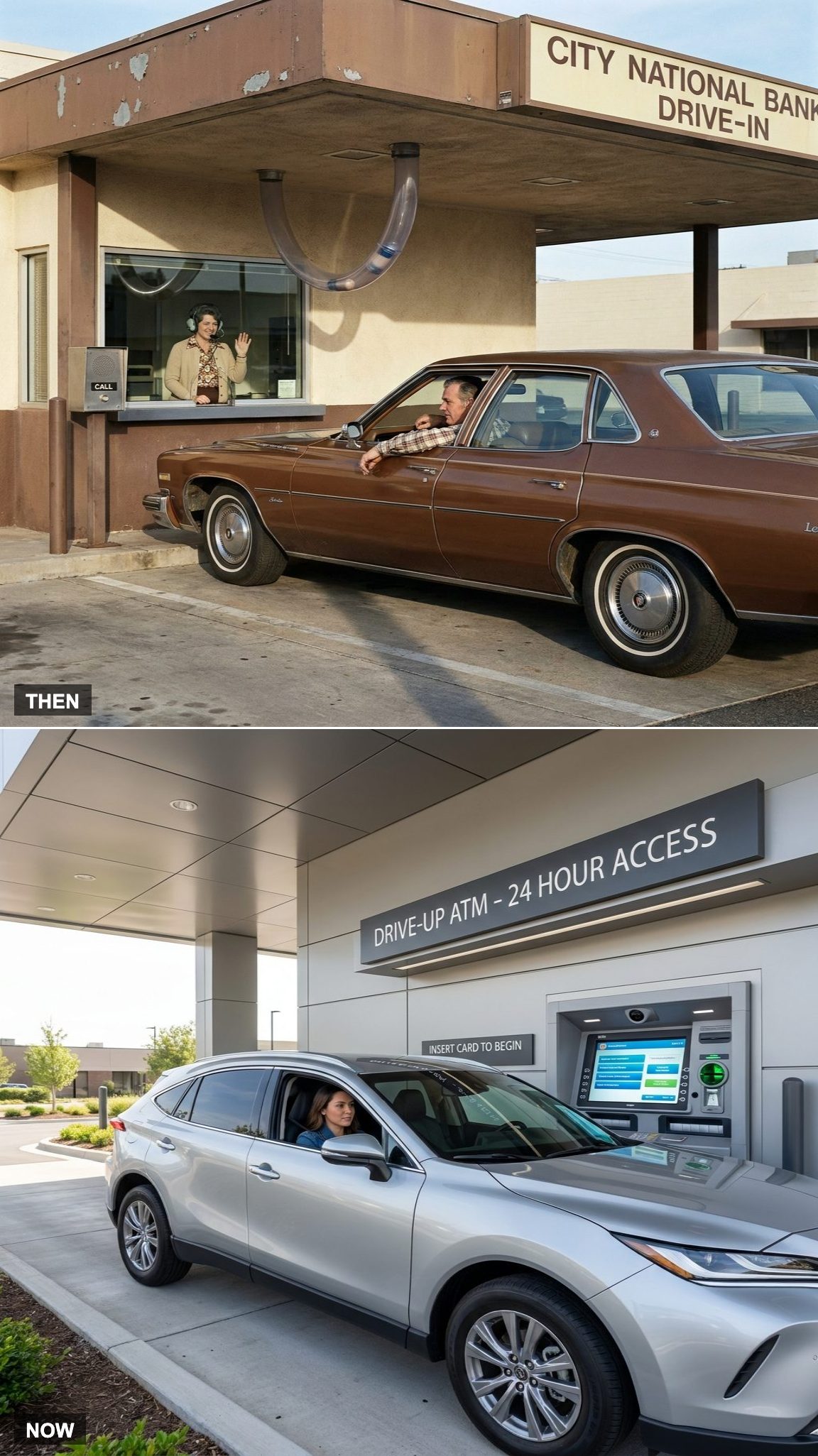
You pulled up, dropped your deposit slip and check into the pneumatic tube, hit the button, and watched the capsule get sucked away with a satisfying whoosh. Thirty seconds later a voice through the speaker confirmed the deposit and sent the capsule back with a receipt. Sometimes the teller still waved to the kids in the back seat.
Drive-up ATMs handle the whole transaction in under a minute. Faster. Cleaner. A little colder.
11. The Doors Locked at Three, and That Was That
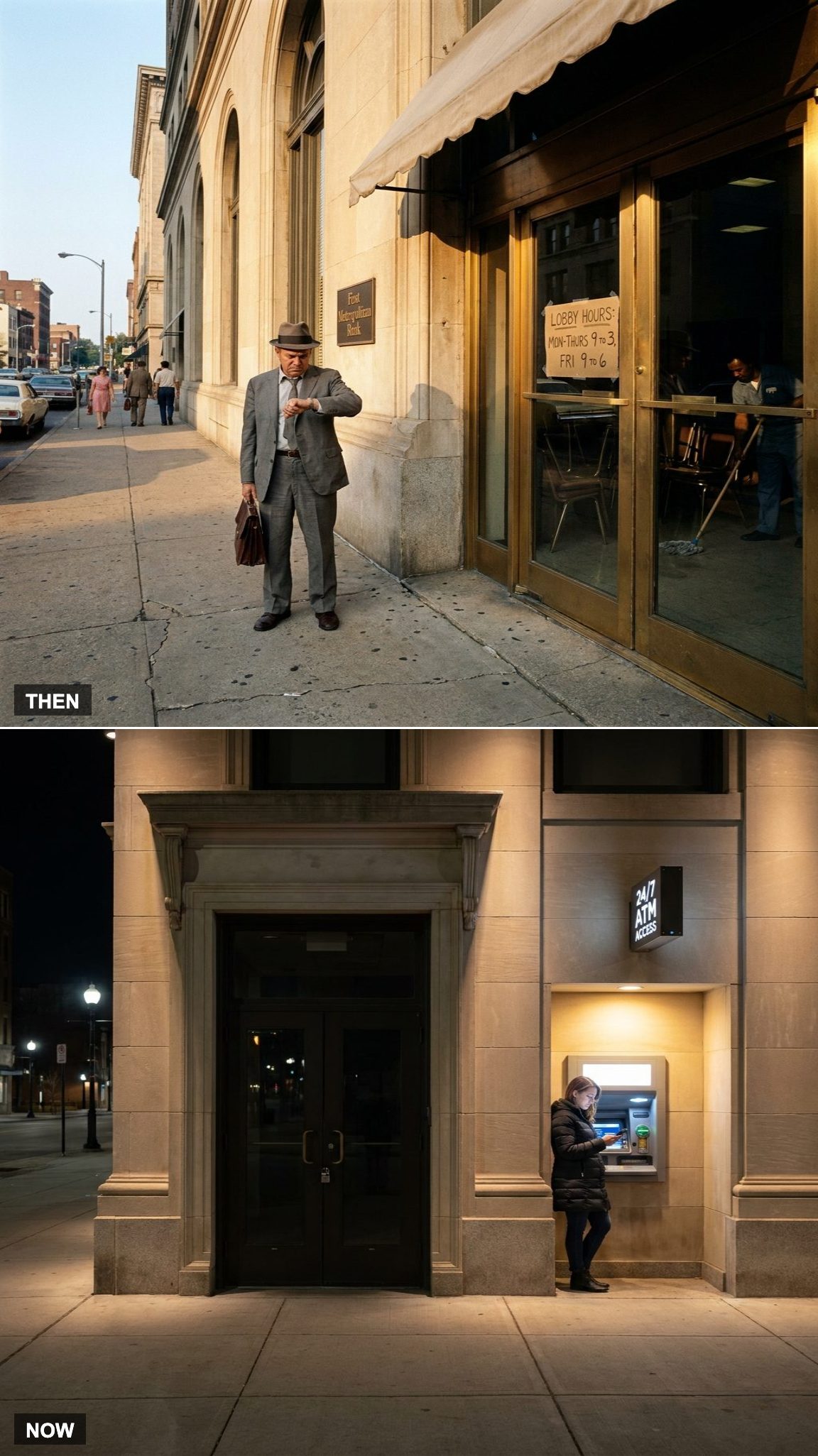
Bankers’ hours were real, and they could be brutal. Many branches closed by mid-afternoon, stayed shut on weekends, and offered one late day if you were lucky. Before ATMs became widely available, missing closing time could leave you short of cash until the branch reopened.
Banking never really closes anymore. The app is open at 2 a.m., the ATM lobby is lit all night, and instant or internal transfers can move on Sunday afternoons. The convenience is enormous, and yet there was something to a bank being closed that made money feel like it also got to rest.
10. A Loan Officer Sized You Up Across a Wooden Desk
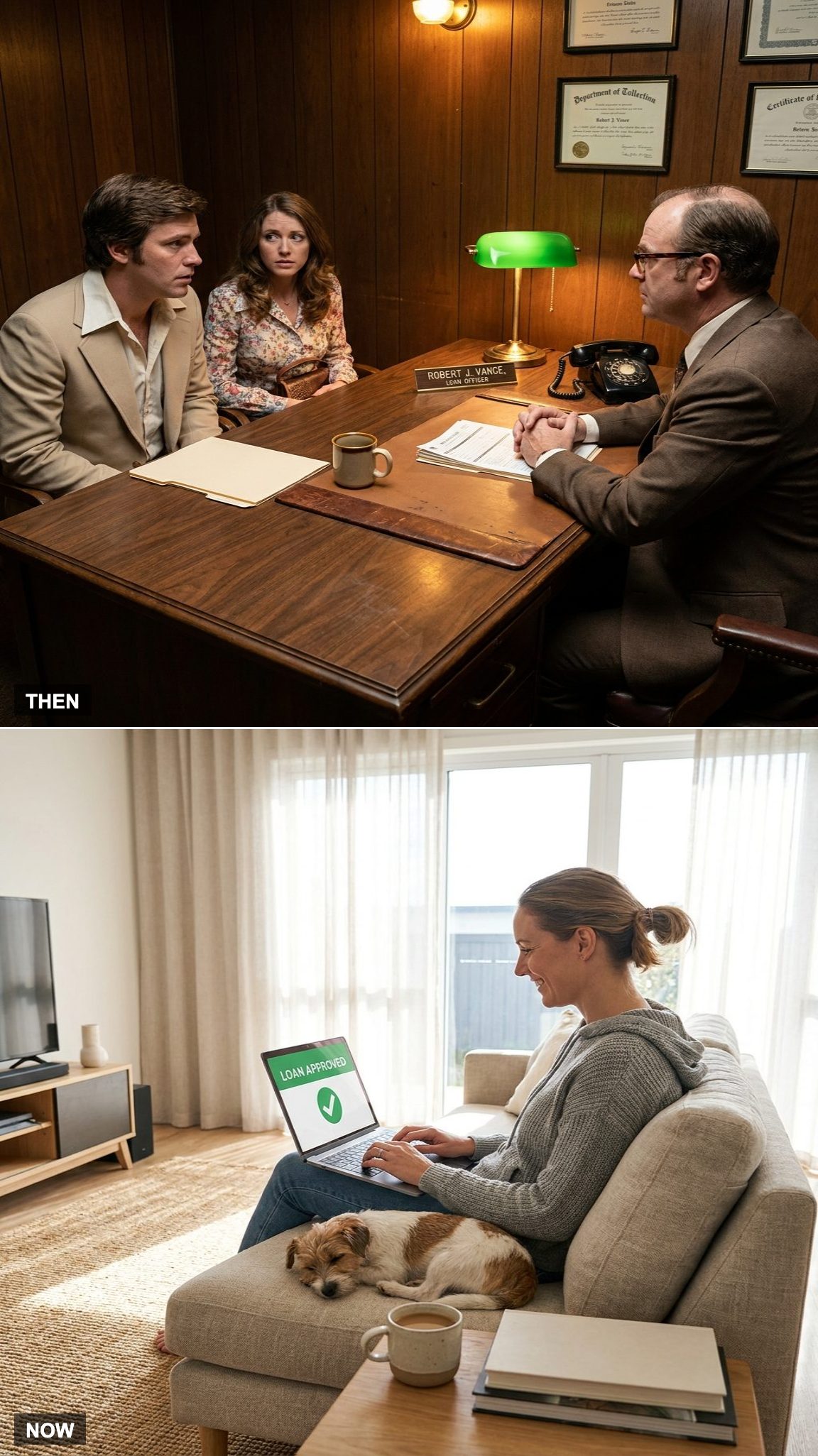
Many loans began with a meeting. You put on your good shirt, sat across a desk, and answered questions about your job, rent, savings, and plans. The process allowed room for judgment, which could help an unusual applicant and could also allow favoritism or discrimination.
Automated scoring now makes many routine decisions faster and more consistently, while unusual applications may still require human underwriting. The modern system can reduce some forms of personal bias, but it also struggles with circumstances that do not fit the model.
9. The Back Office Was a Wall of File Cabinets
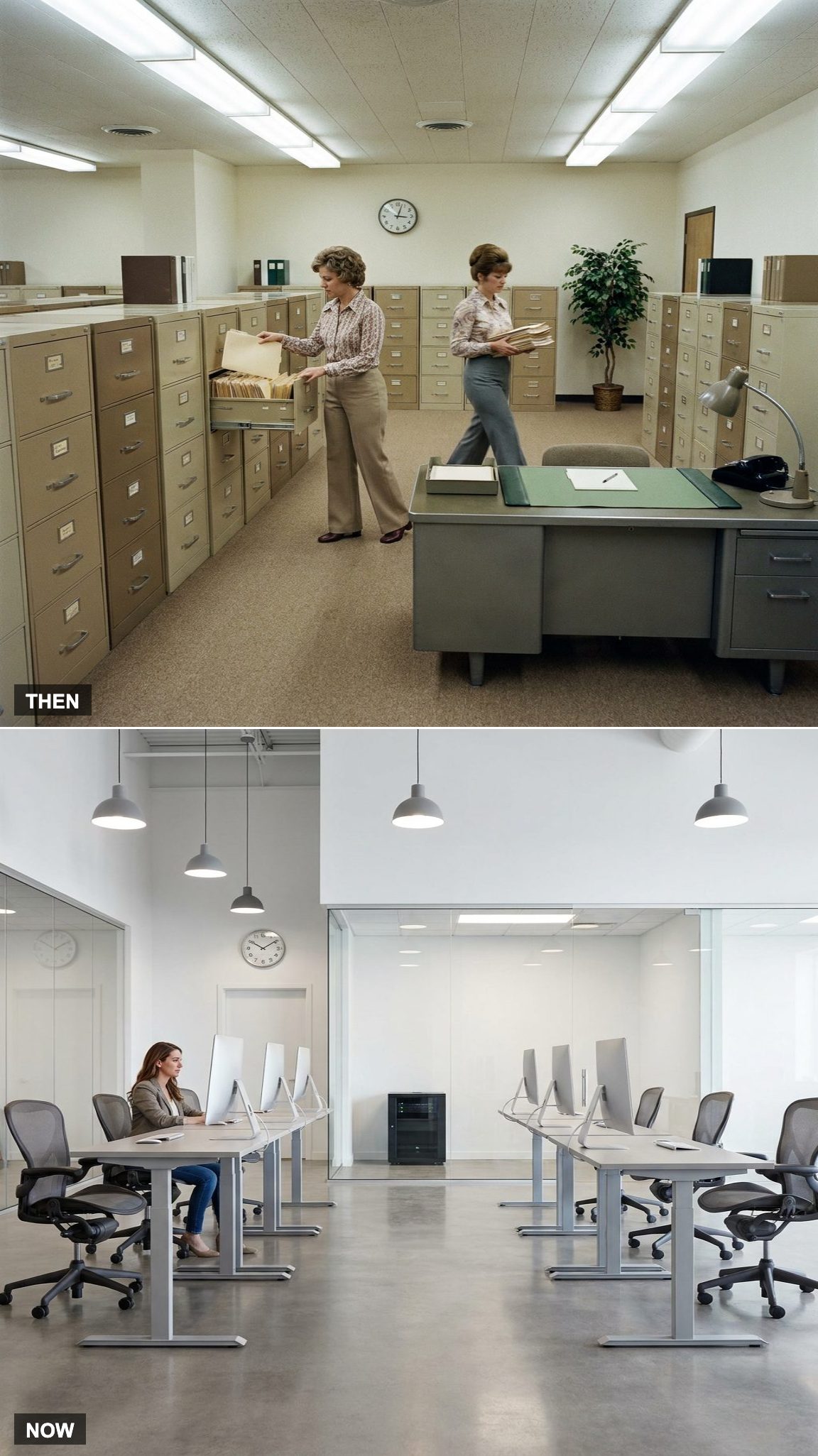
Every account, every loan, every signature card had a paper home. Whole rooms behind the teller line were nothing but cabinets, and there were people whose entire job was filing, retrieving, and refiling manila folders under a low fluorescent buzz. Need a document from 1962? Someone walked into a back room and physically found it.
Most of it now fits on servers or in digital archives. The back office is quieter, cleaner, mostly empty, and a whole category of steady, decent-paying clerical work for people without a college degree quietly vanished right along with the cabinets.
8. Every Transaction Came With a Carbon Copy
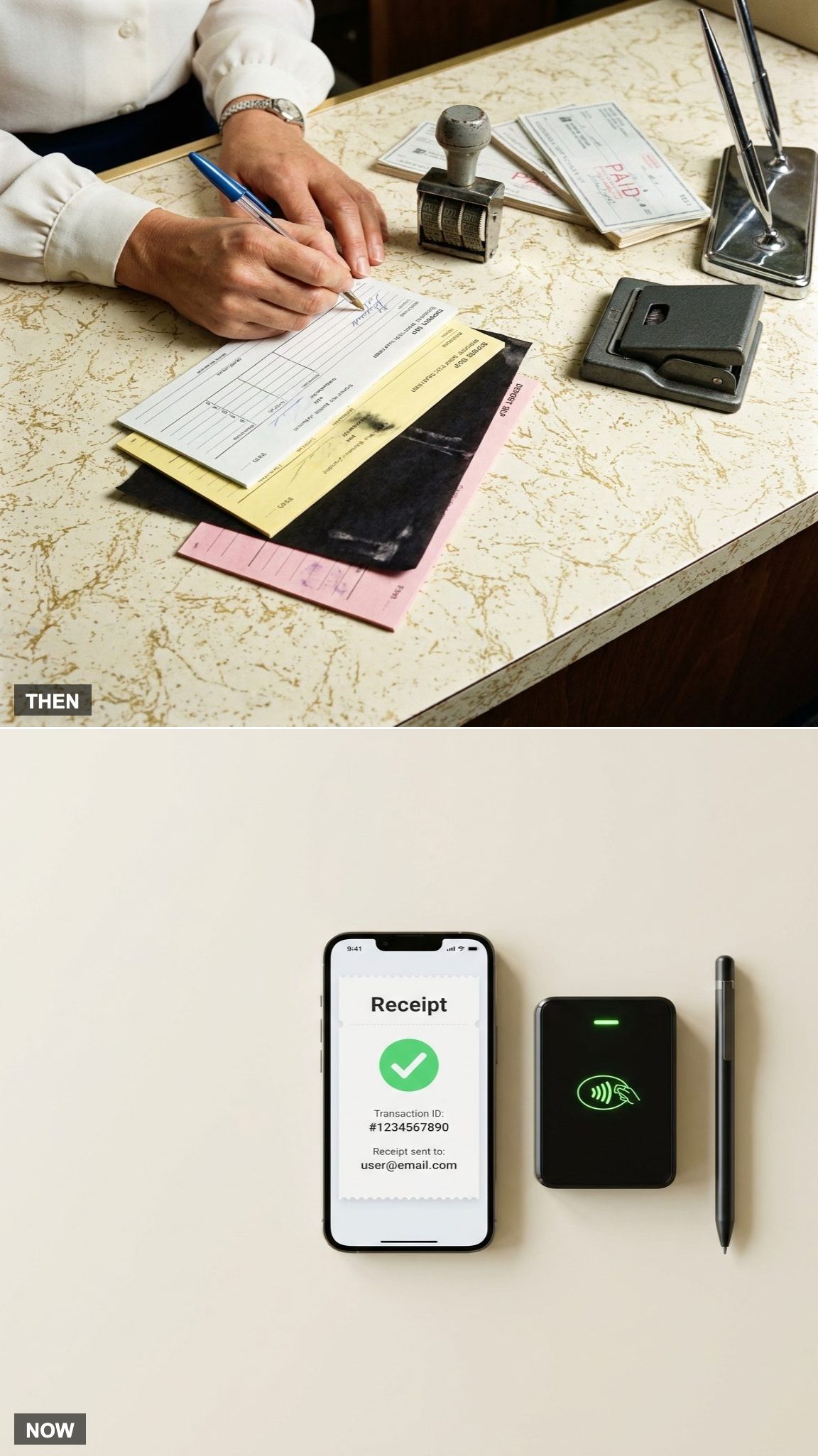
Many transactions produced multiple paper copies, often separated by carbon sheets that left blue-black smudges on your fingers when you pressed too hard. The exact colors and forms varied by bank, but every transaction seemed to leave a paper trail thick enough to trip over.
The receipt shows up in email before your card is back in your wallet. Nothing to file, nothing to lose, nothing to smudge. For customers raised on stamped paper, the absence of a physical receipt can still feel strangely unprovable.
7. The Guard by the Door Was the Security You Could See
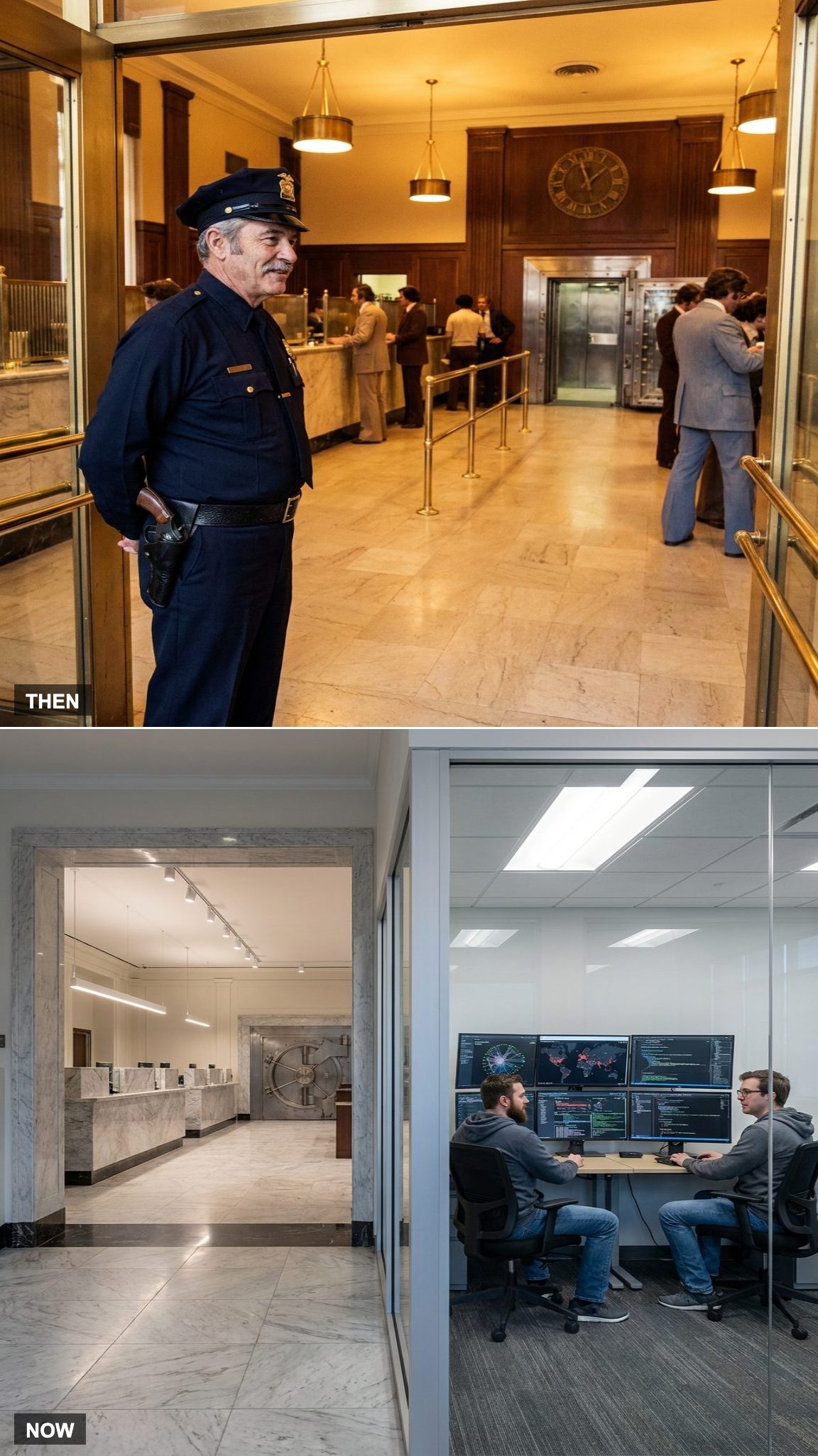
The guard by the door was the security customers could see. A uniform, a holstered revolver, a nod at the regulars. Behind him were alarms, cameras, procedures, timed locks, and a vault built to resist a physical attack.
Many of the largest modern threats arrive through networks rather than the front door. Banks now employ teams of cybersecurity engineers who never touch a lobby. A guard may still be present for reassurance, but much of the actual fight has moved somewhere he cannot follow.
6. Cash Was King and Everybody Carried It
Would you like to save this?
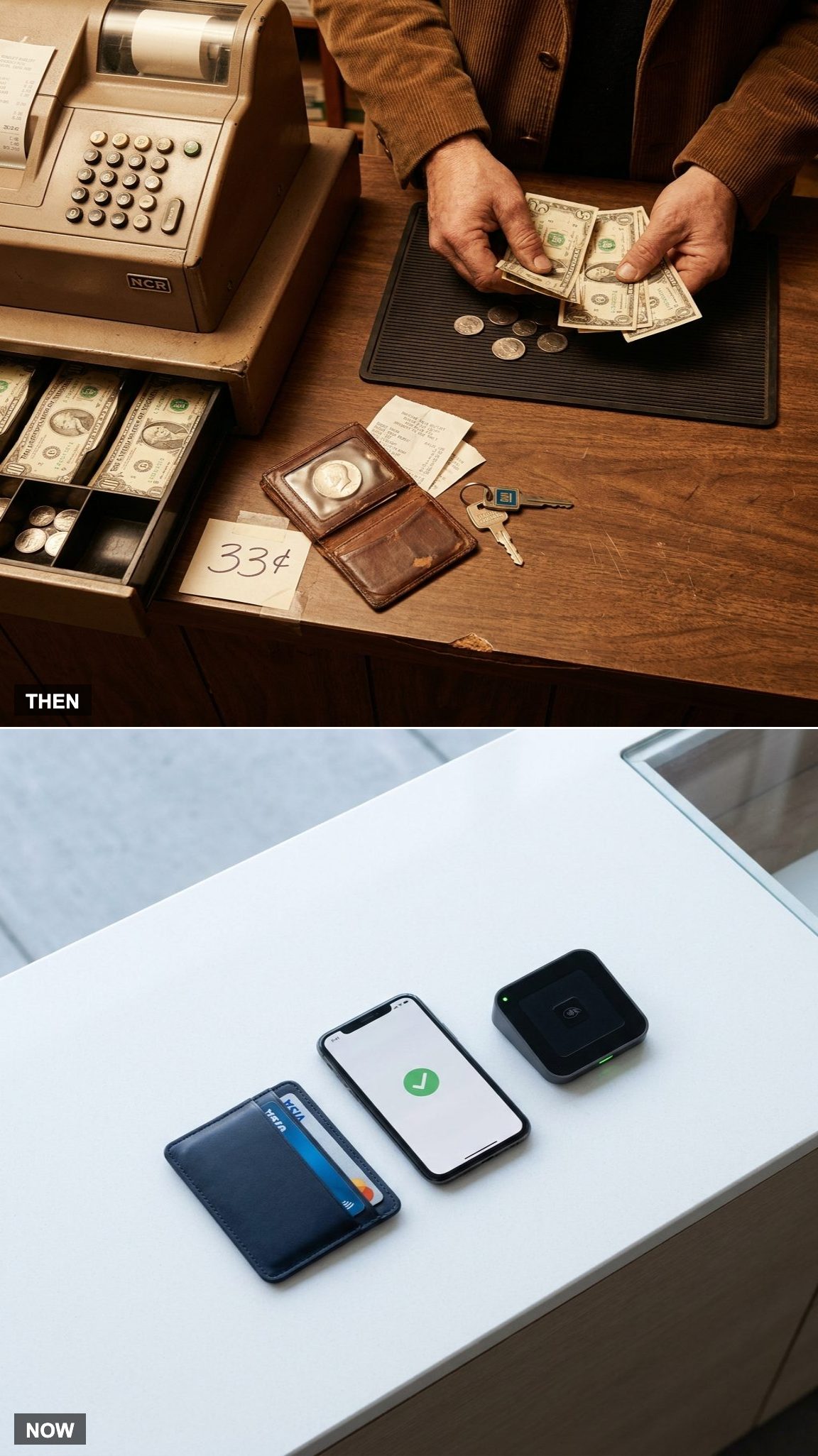
Payday in 1975 often meant a paper check, followed by a trip to the bank and more cash in your wallet than most people carry now. Grown men walked around with sixty, eighty, a hundred bucks folded in a bifold and nobody thought twice. It was just Tuesday. You paid the milkman, the paperboy, and the barber in cash, and he tucked the tip into his apron without breaking conversation.
Most people today would struggle to tell you what’s in their wallet without checking. A card, maybe two. Driver’s license. The phone handles the rest: contactless taps, split-the-check apps, autopay for bills that used to require a stamp. The cash economy didn’t collapse. It just quietly stopped being the default.
5. The Adding Machine Ruled the Back Office
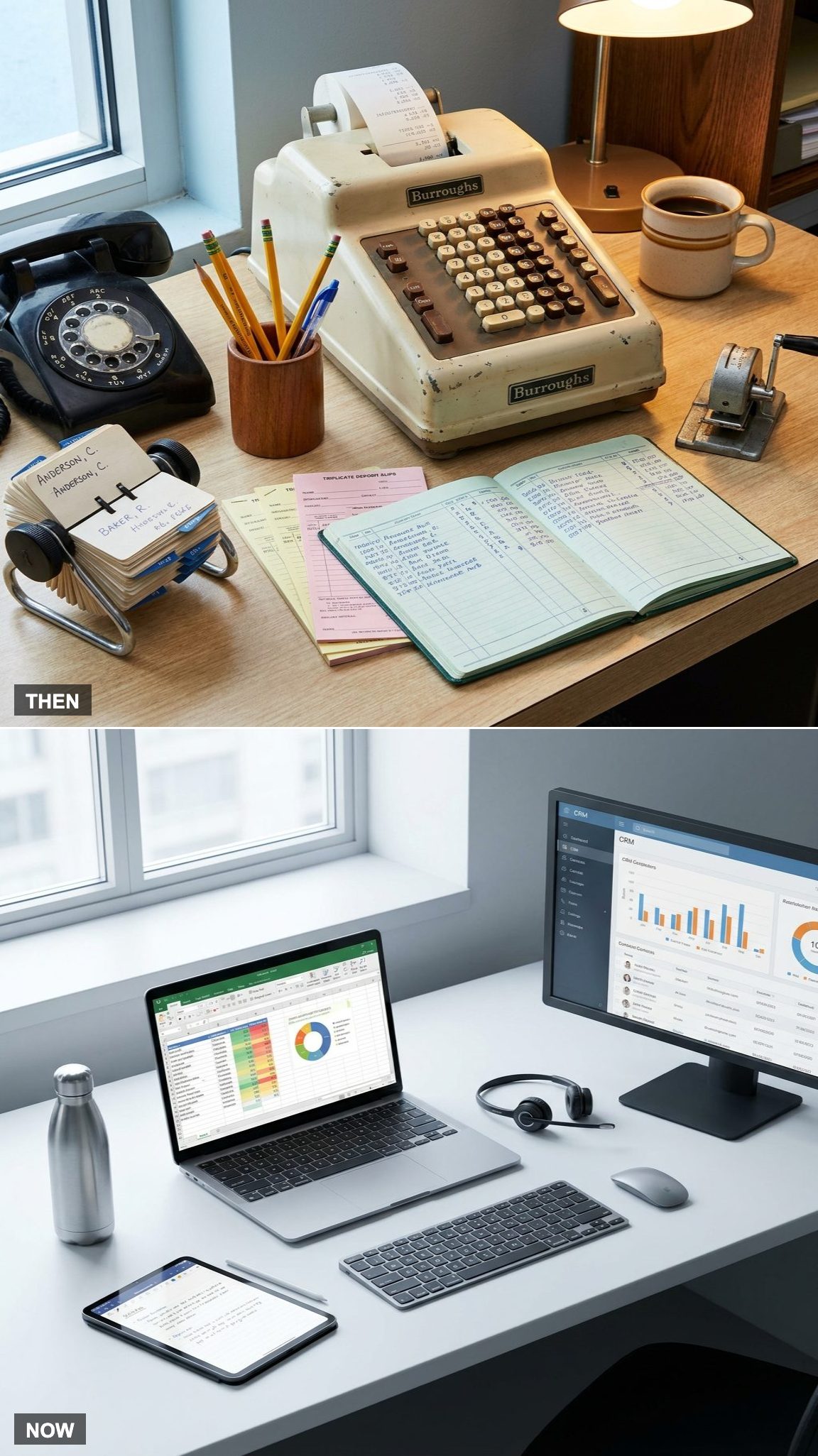
Every desk had one, Burroughs, Monroe, Marchant, whatever the branch bought in bulk. You could hear a bank before you could see it: mechanical keys clacking and paper tape whirring as tellers reconciled their drawers at end of day. A misplaced dime meant staying late. A missing dollar meant staying much later, sometimes past dinner, sometimes past patience.
Now the software runs reconciliation before the teller has finished her coffee, and errors get flagged in real time. Reconciliation that once consumed part of a workday now takes a processor milliseconds, and nobody thinks twice about it.
4. Signature Cards Were Compared by a Human Eye
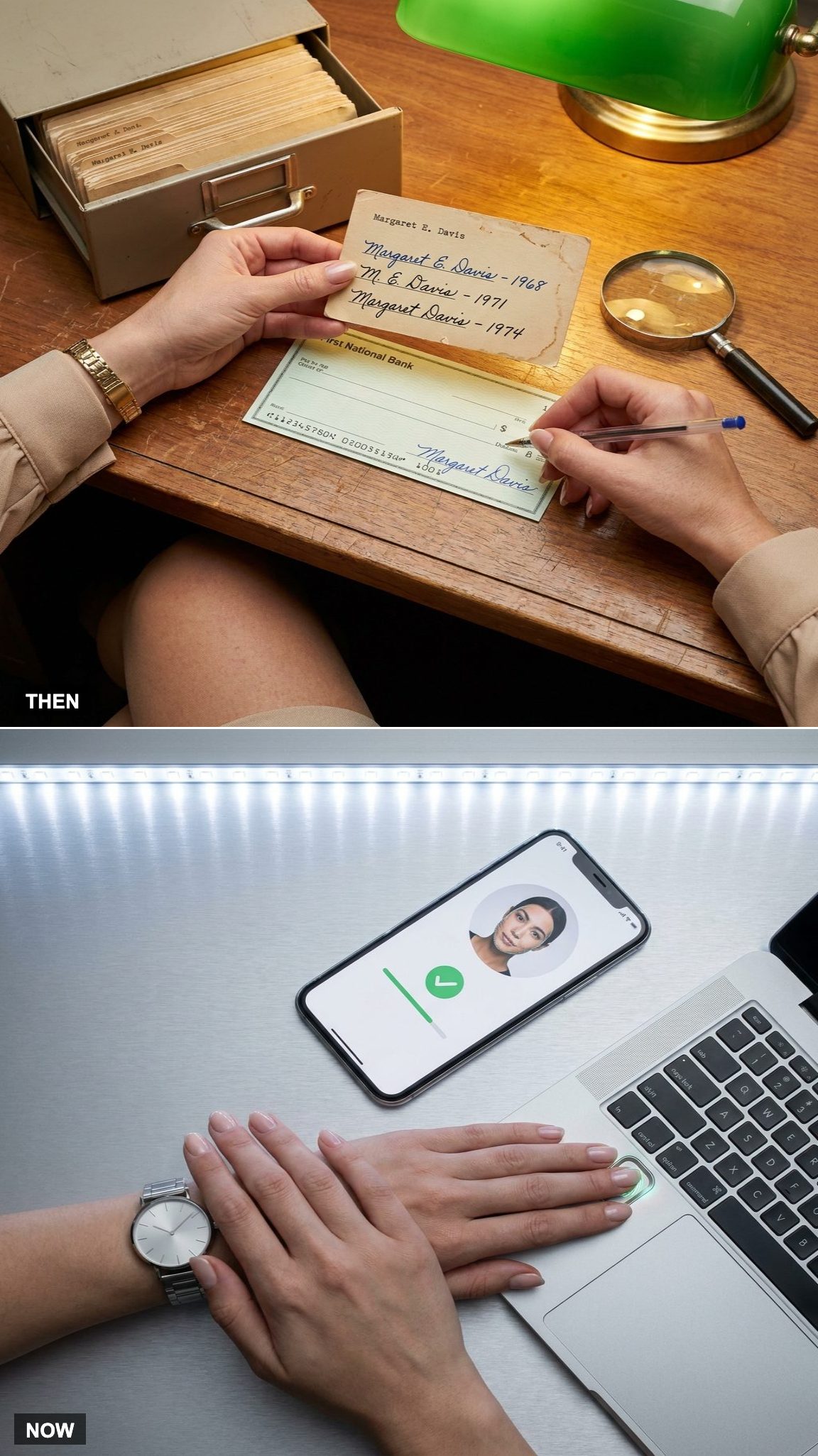
Signature verification was a small act of trust performed thousands of times a day. The teller pulled your card, held it beside your check, and made a judgment call. Sometimes she recognized the signature before she recognized the check. Sometimes she recognized you before she recognized the signature.
Digital authentication moved identity checks away from handwriting and toward passwords, device credentials, biometrics, and fraud-monitoring systems. Face ID may unlock the app, but the bank still uses several other signals to decide whether the transaction looks legitimate.
3. Banking Meant Getting in the Car
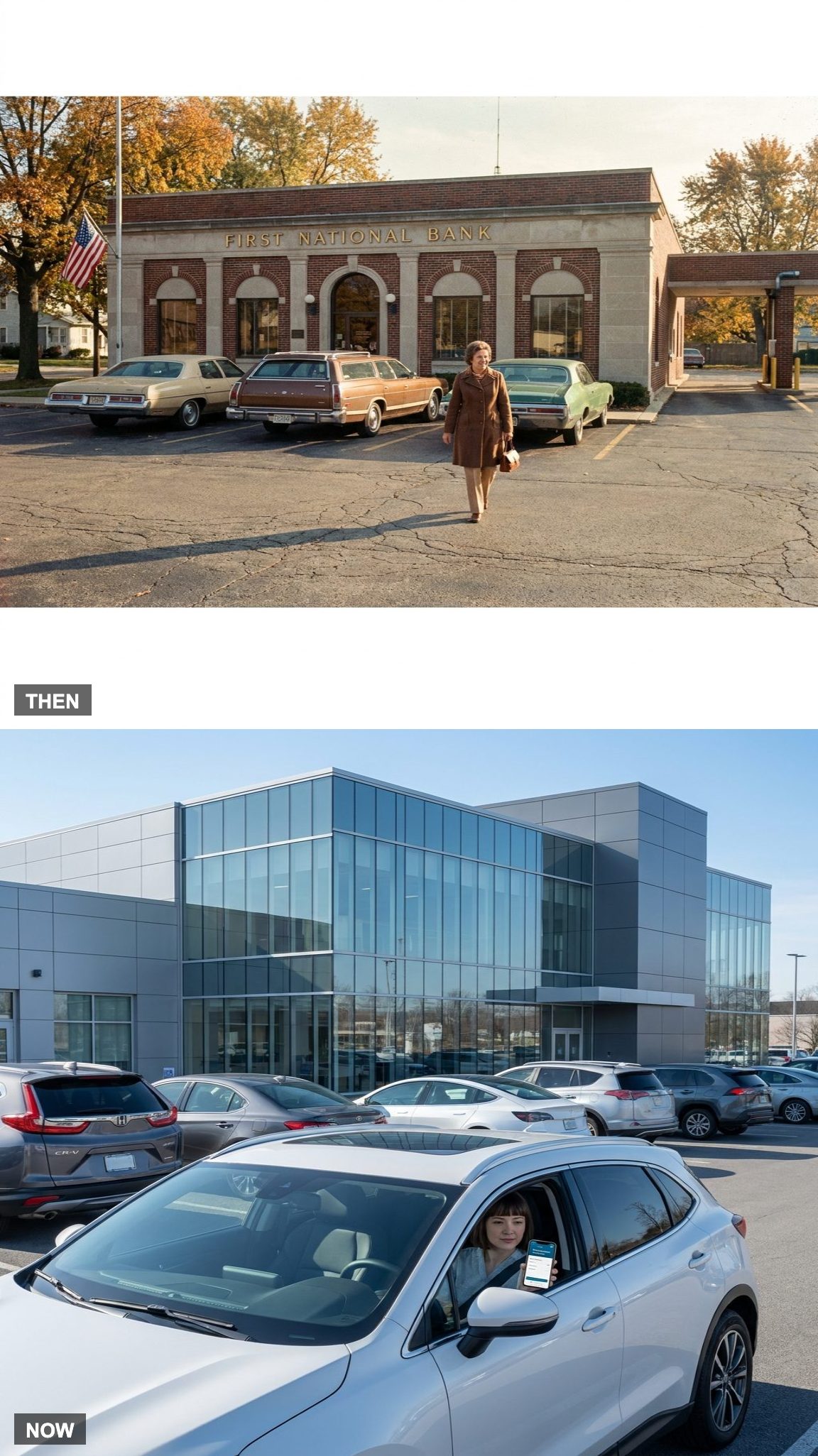
The bank was a place. It had an address, and it had hours, and those hours were shorter than yours, which is why the phrase banker’s hours entered the language as an insult. Before ATMs became widely available, needing cash on a Saturday afternoon could mean waiting until Monday morning, then standing in line with everyone else who had made the same mistake.
Now the bank lives in a pocket. You deposit a check from the driveway, send rent to a landlord you’ve never met in person, move money at two in the morning because you can’t sleep and remembered the credit card bill. The building did not disappear. It became a place for cash services, complex transactions, advice, identity checks, business banking, and the customers who still prefer a person.
2. You Made an Appointment to Ask a Question
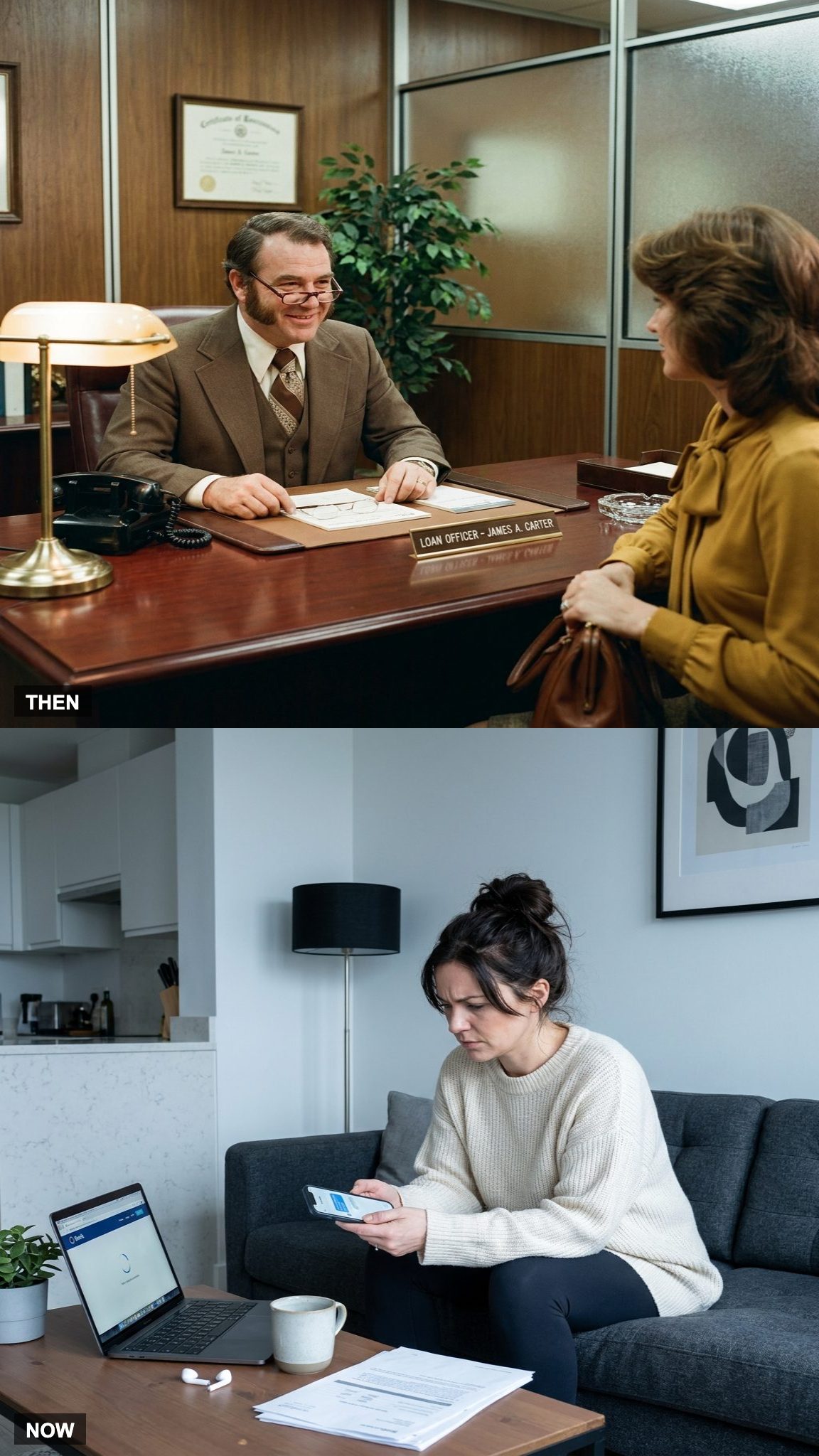
Wanted to know your balance? You called during business hours and hoped the switchboard put you through. Wanted to understand a fee or compare savings products? You waited for someone who could explain it, usually in the branch and on the bank’s schedule.
Answers live in a search bar now. Sometimes they’re correct. Sometimes the chatbot loops you back to itself for eleven minutes before offering a phone number that puts you on hold for another twenty. The person behind the desk was slower but more accountable. The search bar is faster but leaves you to judge the answer. Both have merit.
1. The Bank Wanted to Be Seen. Now It Wants to Disappear.
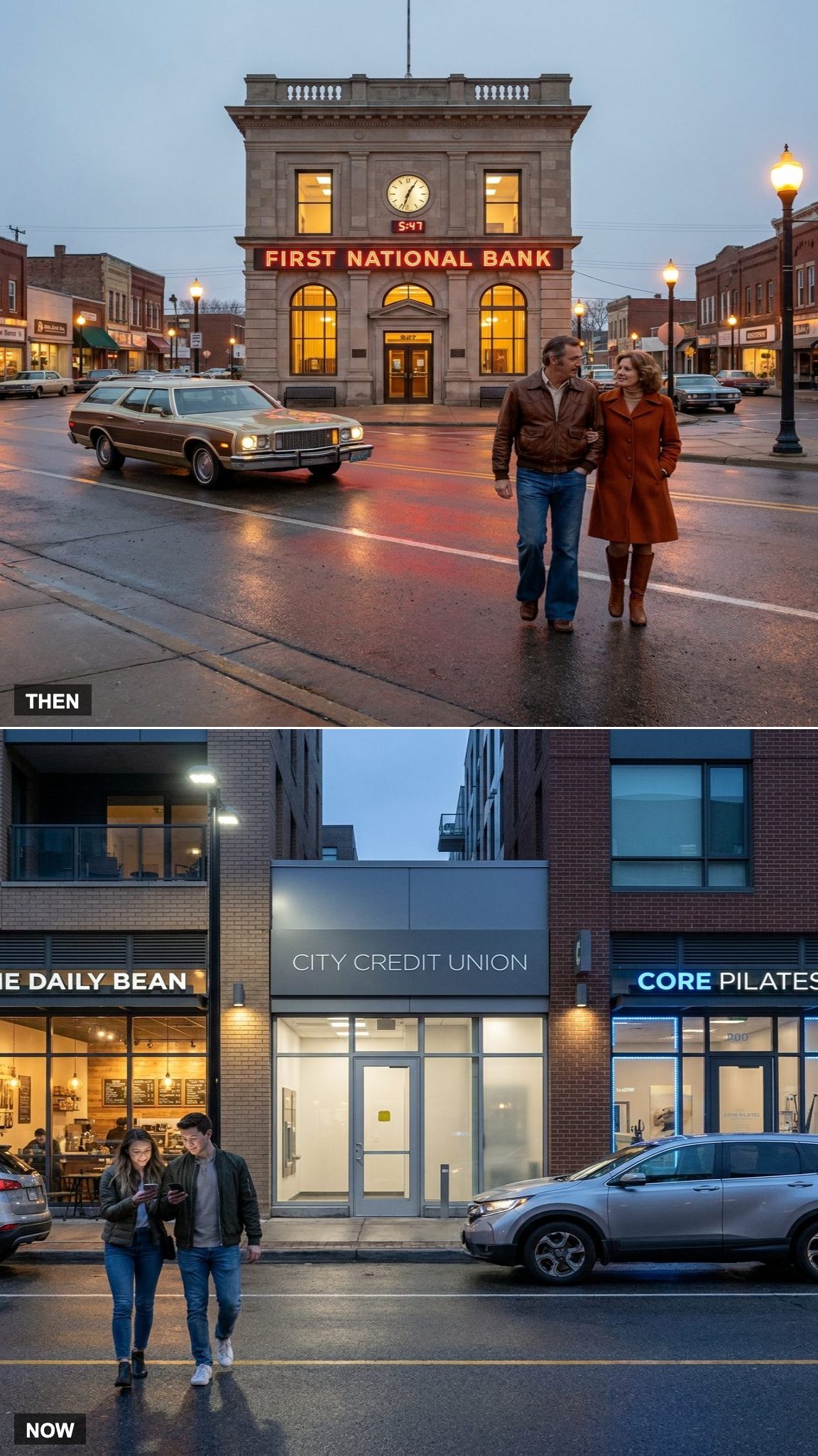
A 1975 bank wanted your eye. It stood taller than the buildings around it, had a clock on the front so the whole neighborhood ran on its time, and the sign stayed lit at night even when the bank was closed. The sign wasn’t for opening hours. It was for reassurance. There’s your money. Still there. Go home and sleep.
The modern branch is engineered to be invisible. It sits between a nail salon and a phone repair shop, and the phone repair shop has a louder sign. Which makes a certain kind of sense, because the bank isn’t really the building anymore. The building is just the emergency exit for a system that mostly lives on a server farm nobody has ever seen.
Old banks wanted you to look up. New banks want you to keep walking.