
Would you like to save this?
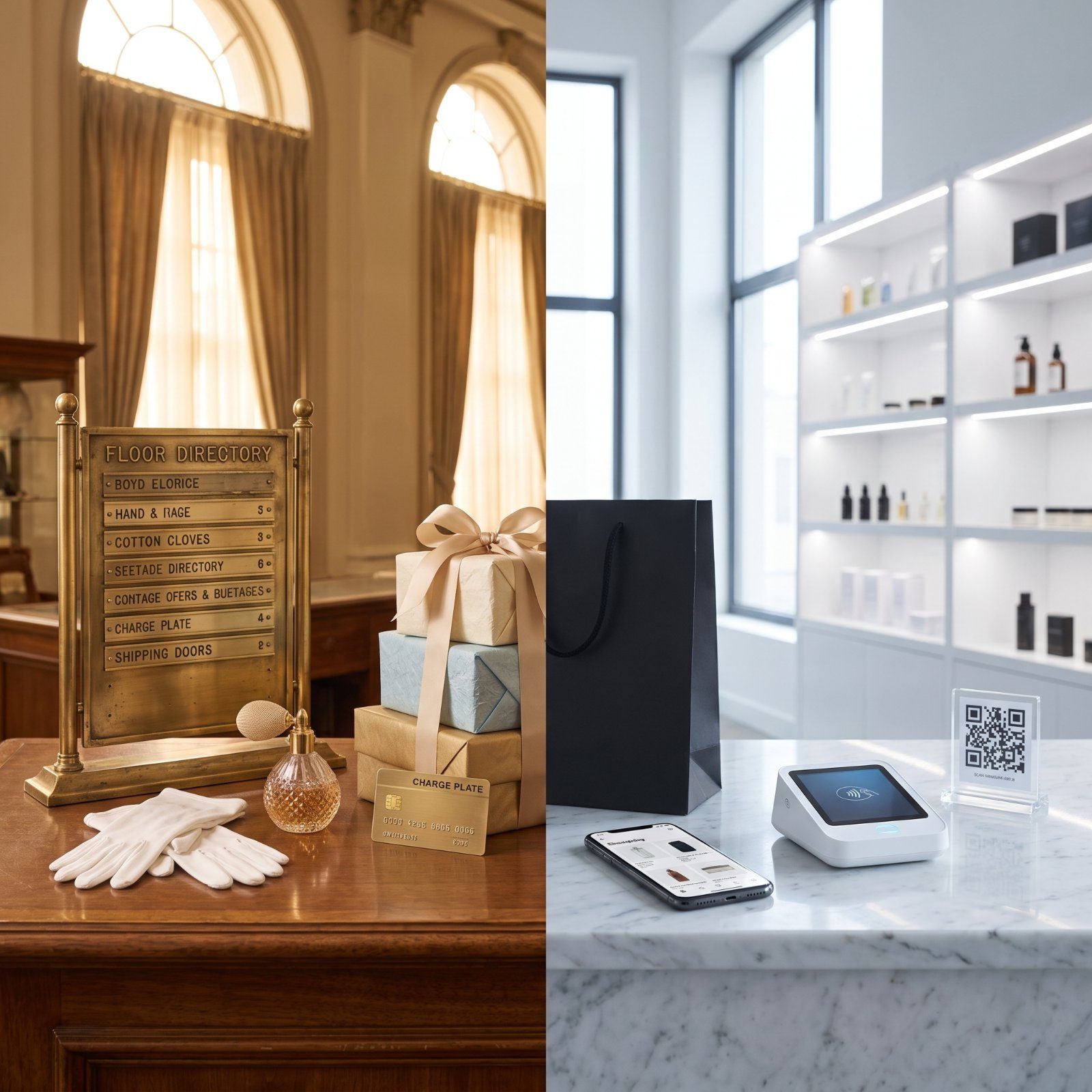
The smell hit you before the merchandise did. Perfume counters, floor wax, and somewhere the faint warmth of the coffee shop on the mezzanine. A department store in 1975 was a destination, not an errand. You dressed up. You stayed for hours. Marble floors, uniformed elevator operators, and window displays that stopped traffic on the sidewalk made the whole visit feel like an occasion. Fast forward fifty years and most of that theater has been swapped for self-checkout and clearance racks. These side-by-sides show exactly what got lost, and what quietly took its place.
50. The Street-Facing Department Store Façade
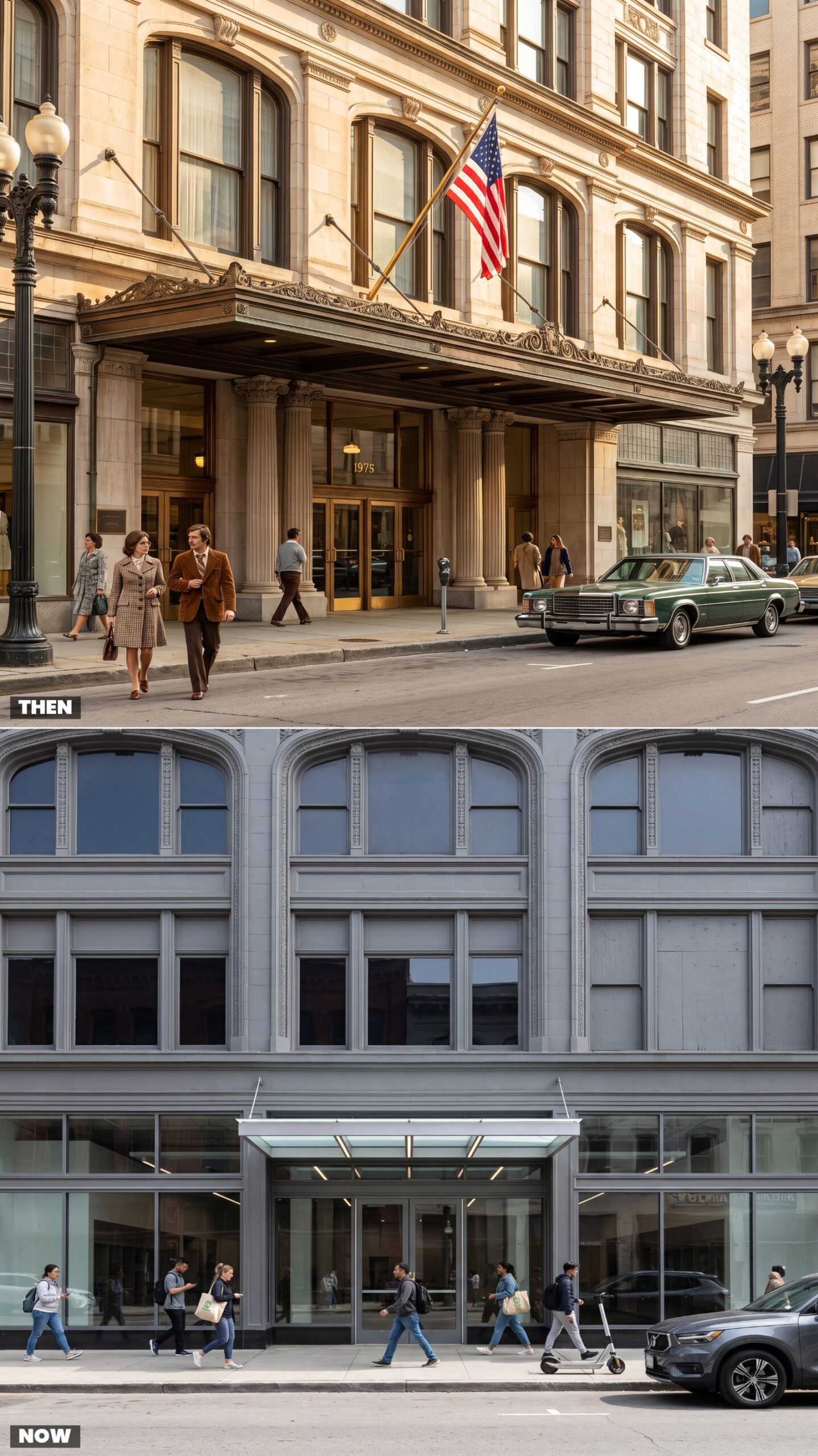
In 1975 the building itself did the advertising. Limestone, terracotta, a bronze marquee that told you something important happened inside. These stores anchored downtowns the way courthouses did, built to outlast everyone who ever shopped in them. You could read a city’s ambitions off the store on its main corner.
Now that same corner reads as generic. The ornate stonework gets painted flat gray, the marquee swapped for an aluminum canopy, the upper floors tinted or boarded up. The architecture used to say stay a while. The current version says get in, get out.
49. The Elaborate Display Windows
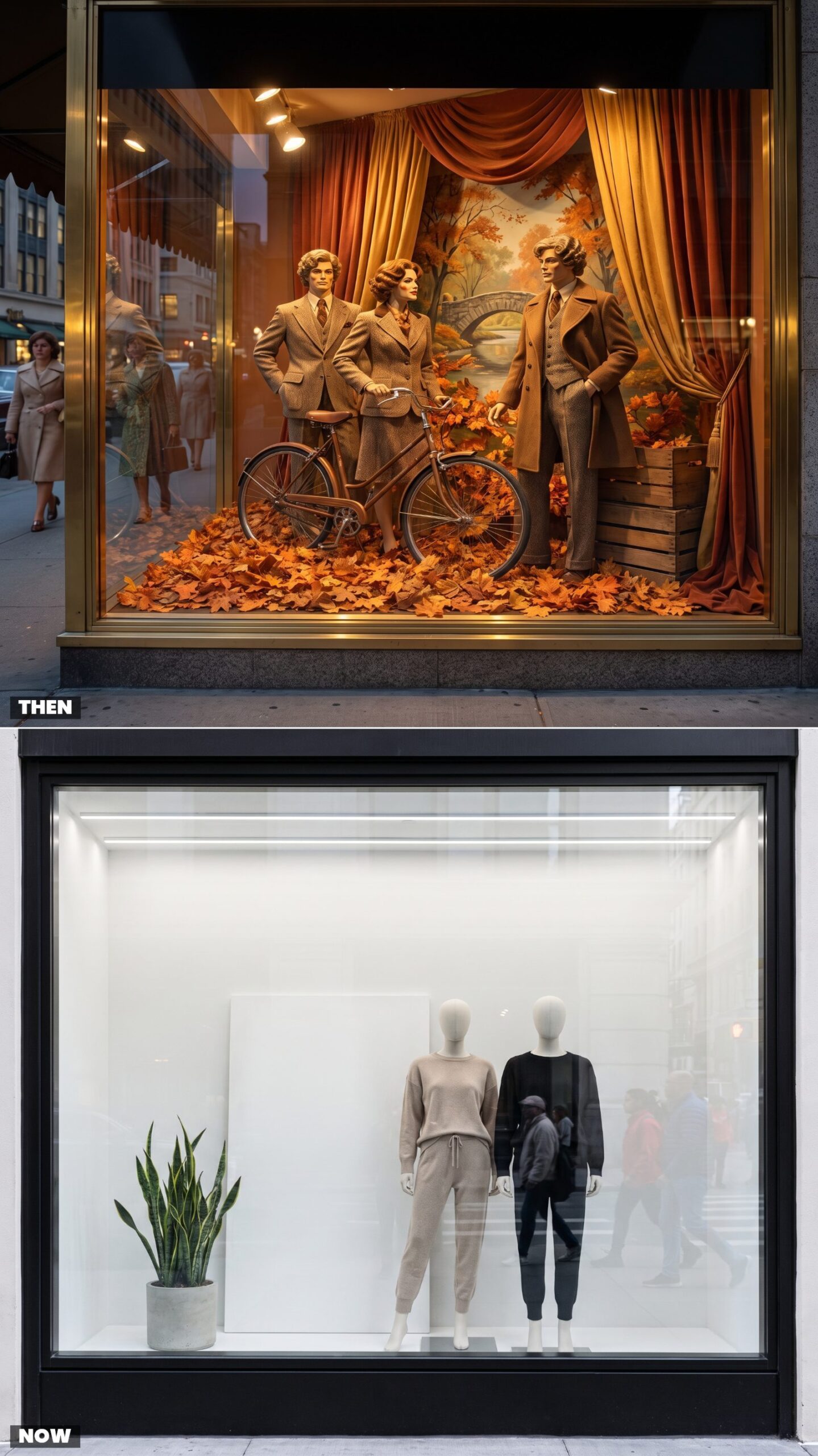
Store windows in 1975 were events. Teams of display artists spent weeks building the scenes, hauling in faux snow and moving parts and mannequins caught mid-conversation over a staged Thanksgiving table. People made a special trip downtown just to see them, especially at Christmas. Free entertainment and a sales pitch, all in one pane of glass.
Today most windows show two headless mannequins in beige loungewear and a blank promo panel. Efficient. Also forgettable. Nobody presses their nose to the glass anymore because there’s nothing staged to stop for.
48. The Revolving-Door Main Entrance
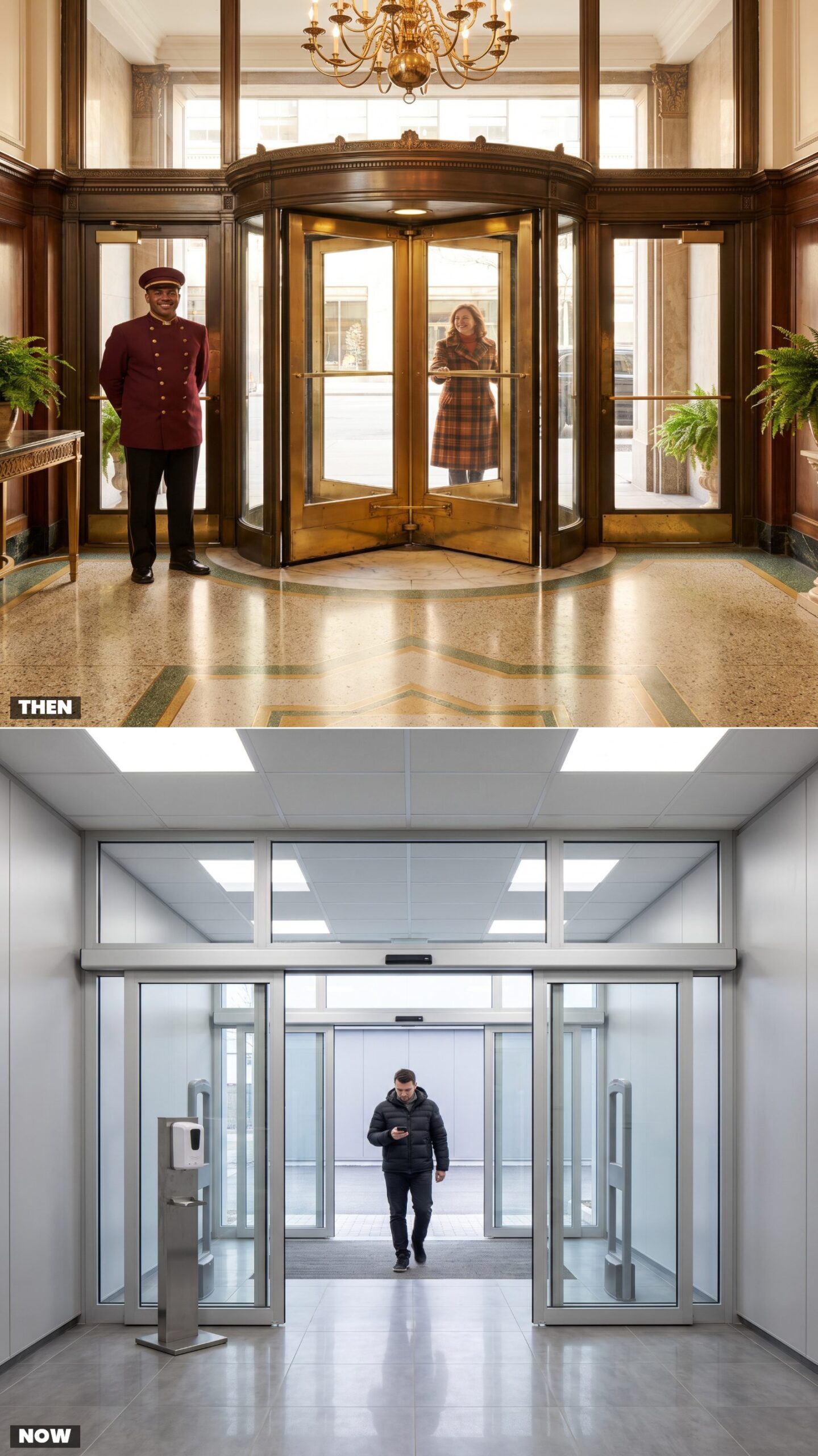
You didn’t just walk into a store in 1975. You were received. A doorman held the brass revolving door, your shoes hit a marble threshold, and the air changed the second you crossed inside. It made you feel like a guest, and that first impression was built to make you spend more. It worked.
Automatic sliding doors do the same physical job with none of the ceremony. No doorman, just a motion sensor and a hand-sanitizer stand. Efficient entry, zero welcome.
47. The Department Store Parking Garage
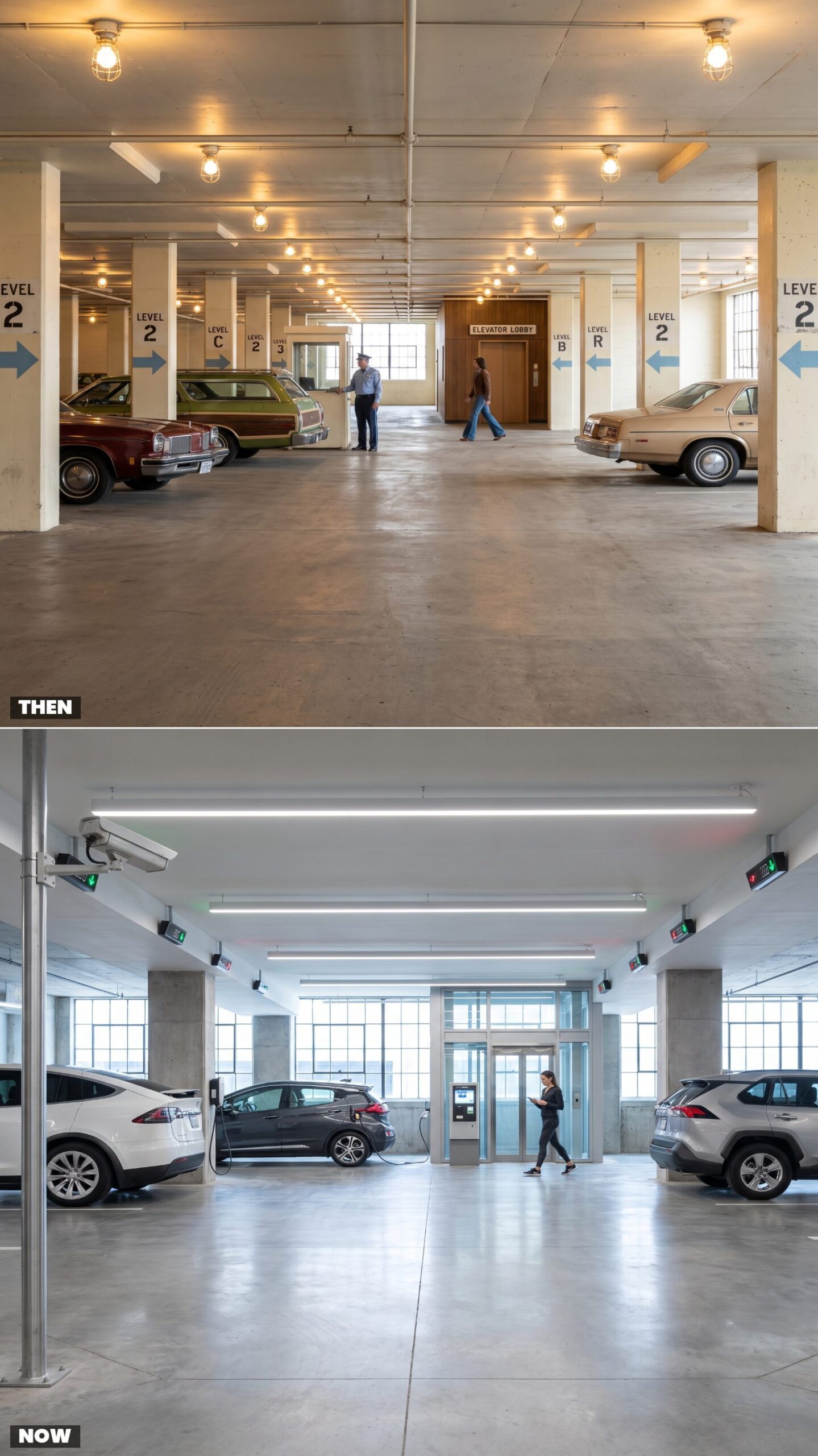
Even the parking had a person attached to it. An attendant in a booth, a ticket stamped by hand, and incandescent bulbs throwing warm light over rows of station wagons. Not glamorous. But it was staffed, and it worked.
The current garage runs on cameras that read your plate and a kiosk that takes your card. Faster, sure. Also the last bit of human contact on the way in got quietly deleted. Somewhere between the license-plate reader and the self-pay kiosk, that job disappeared and nobody threw it a party.
46. The Printed Floor Directory
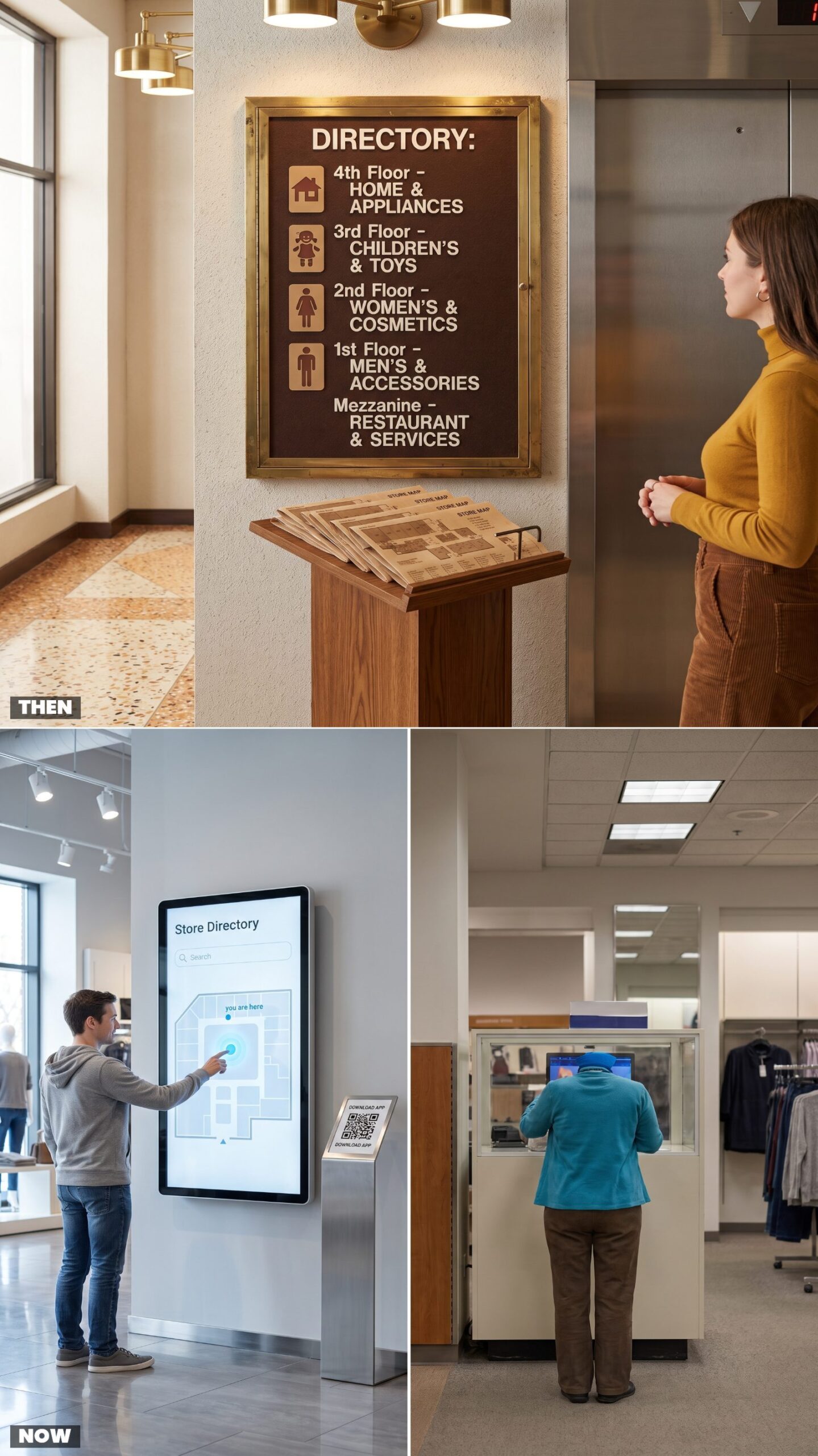
The directory board was pure satisfaction. White plastic letters snapped into dark felt, a brass frame, and a stack of paper maps you could fold into your pocket. You scanned it once, memorized your route, and off you went. Notions on three, menswear on four, restaurant on five.
Now it’s a touchscreen with a search bar and a QR code begging you to download the app. I’ll admit the search function is genuinely handy. But there was something honest about a board that laid the whole store out at a glance instead of making you type.
45. The Grand First-Floor Cosmetics Hall
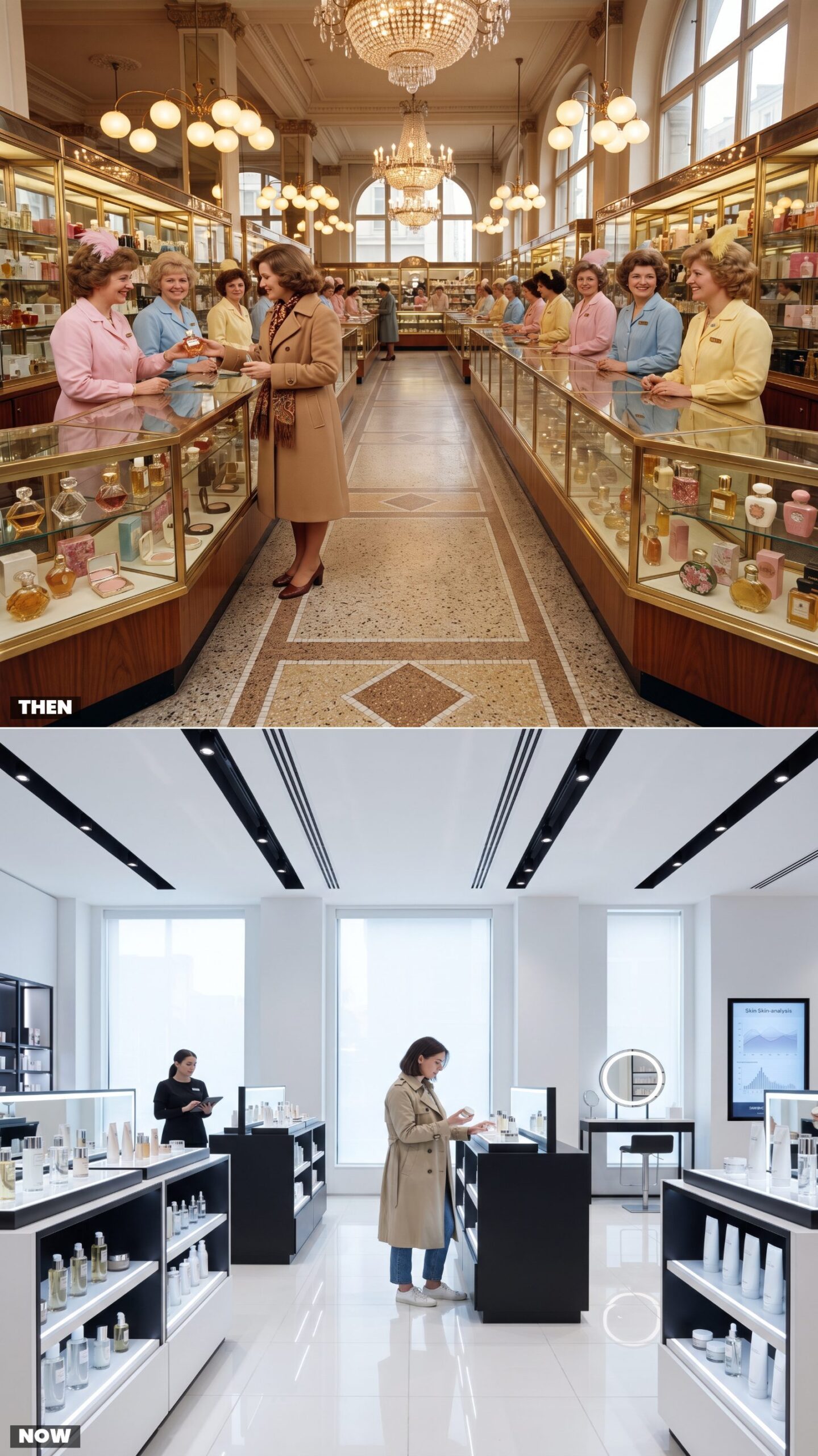
The cosmetics hall was the whole store’s opening act. Ground floor, front and center, glass counters glittering under chandeliers, saleswomen in matching smocks who remembered your shade. You couldn’t reach the elevators without walking straight through it, and that was no accident.
The modern beauty hall runs on open shelves and self-service testers. You swatch your own foundation, analyze your own skin on a screen, and check yourself out. More freedom, less magic. The chandeliers became LED spots and the woman who knew your name became a tablet.
44. The Central Promotional Display
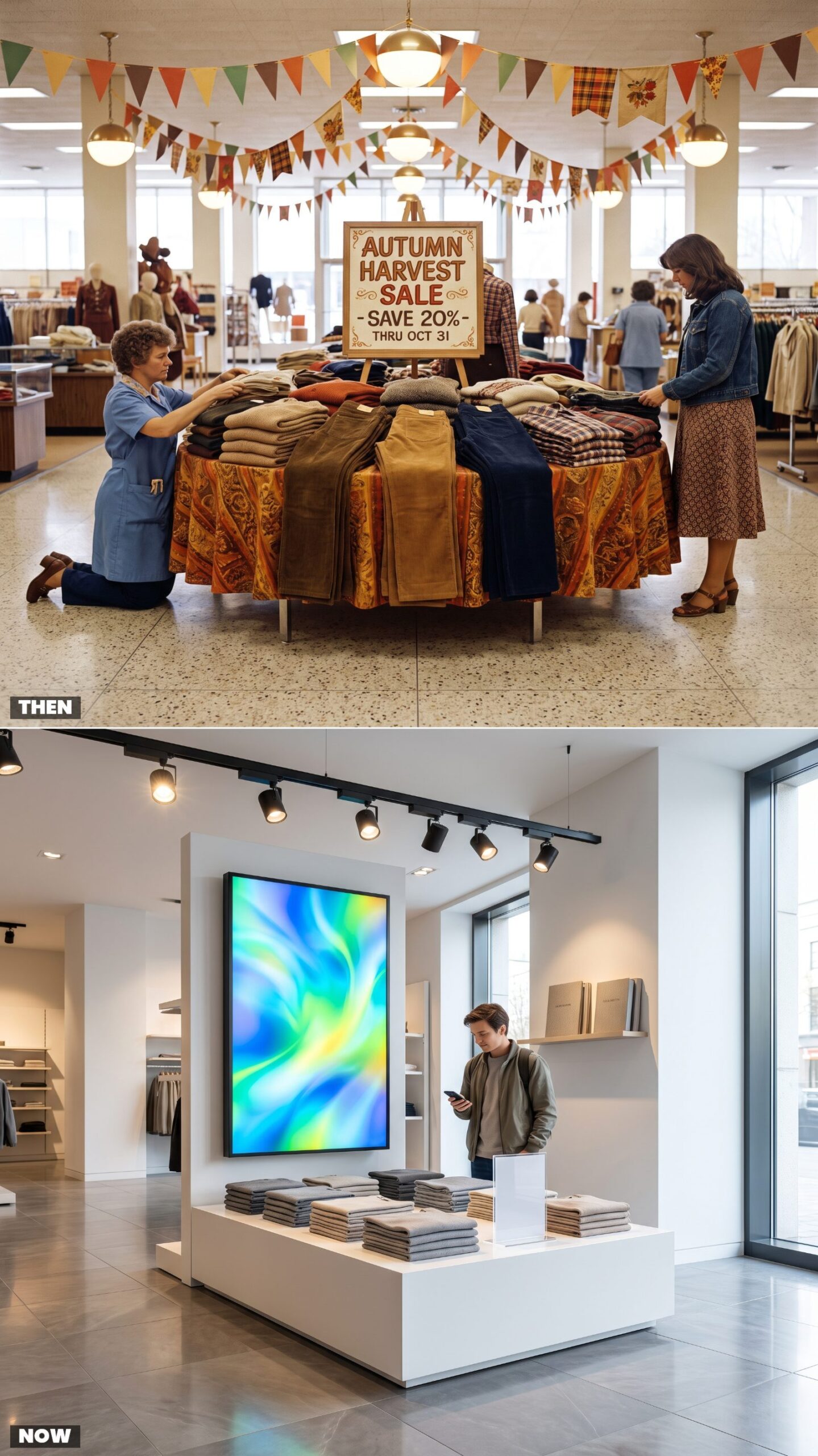
Right in the middle of the floor sat the promotional island: a round tiered table draped in fabric, stacked high, paper banners strung overhead, a hand-lettered sign propped on an easel. It felt like a small carnival stall dropped into the store. And somebody actually painted that sign by hand.
The replacement is a rectangular platform with a digital screen looping a promo graphic and merchandise stacked in a tidy grid. It moves product. It also has all the personality of a spreadsheet.
43. The Wide Main Shopping Aisle
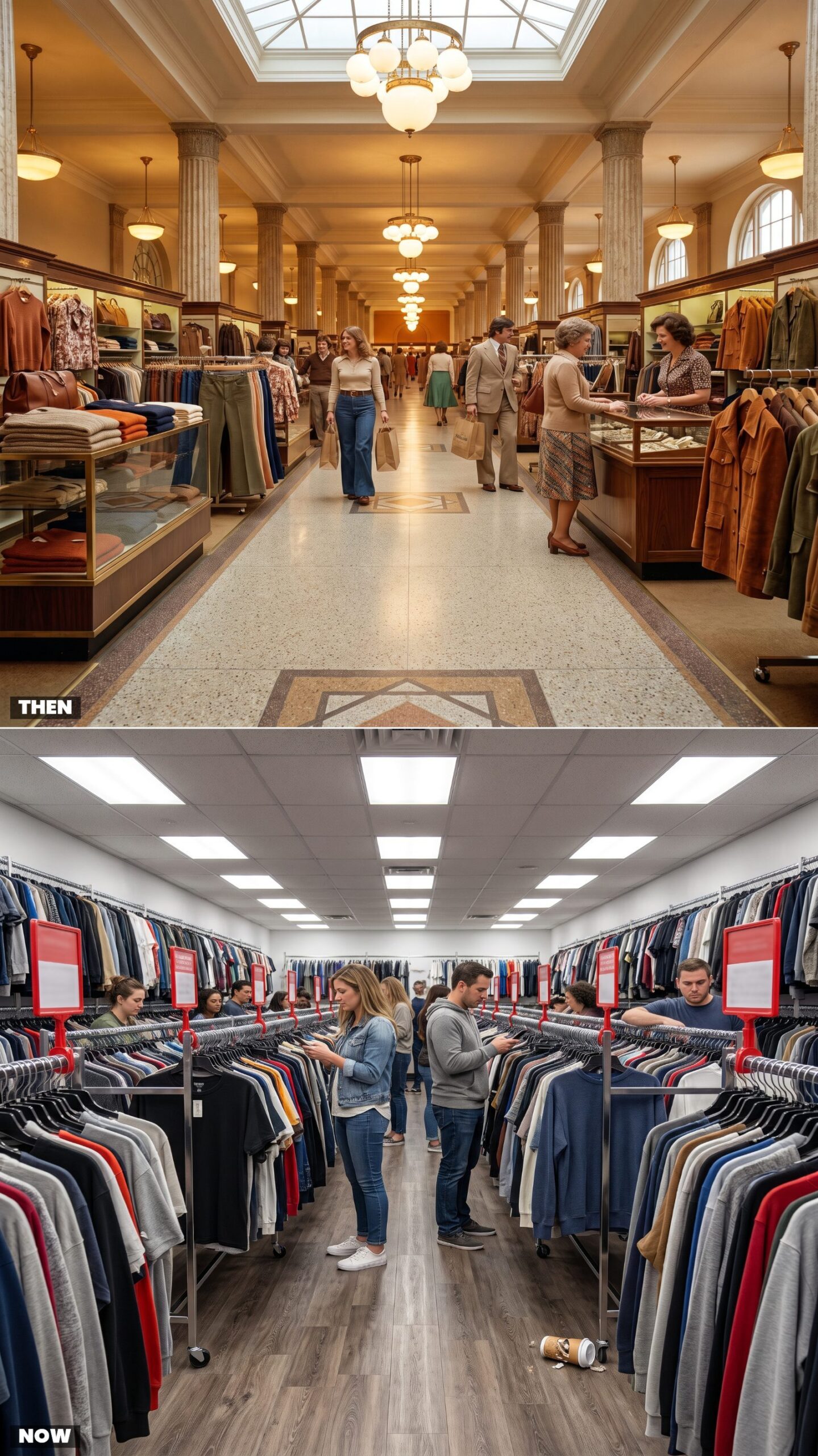
The main aisle in 1975 had room to breathe. Wide enough for two people abreast, terrazzo underfoot, counters instead of crammed racks, and a saleswoman within arm’s reach whenever you needed one. You browsed at a walking pace because the place was built for browsing.
Today that same aisle is packed with metal clearance racks under flat fluorescent light, red discount tags on every endcap, not a salesperson in sight. The space got sold off to inventory. Elegance lost to square-footage math, and honestly you can feel the difference in your shoulders as you squeeze through.
42. The Wood-and-Glass Escalator Bank
Would you like to save this?
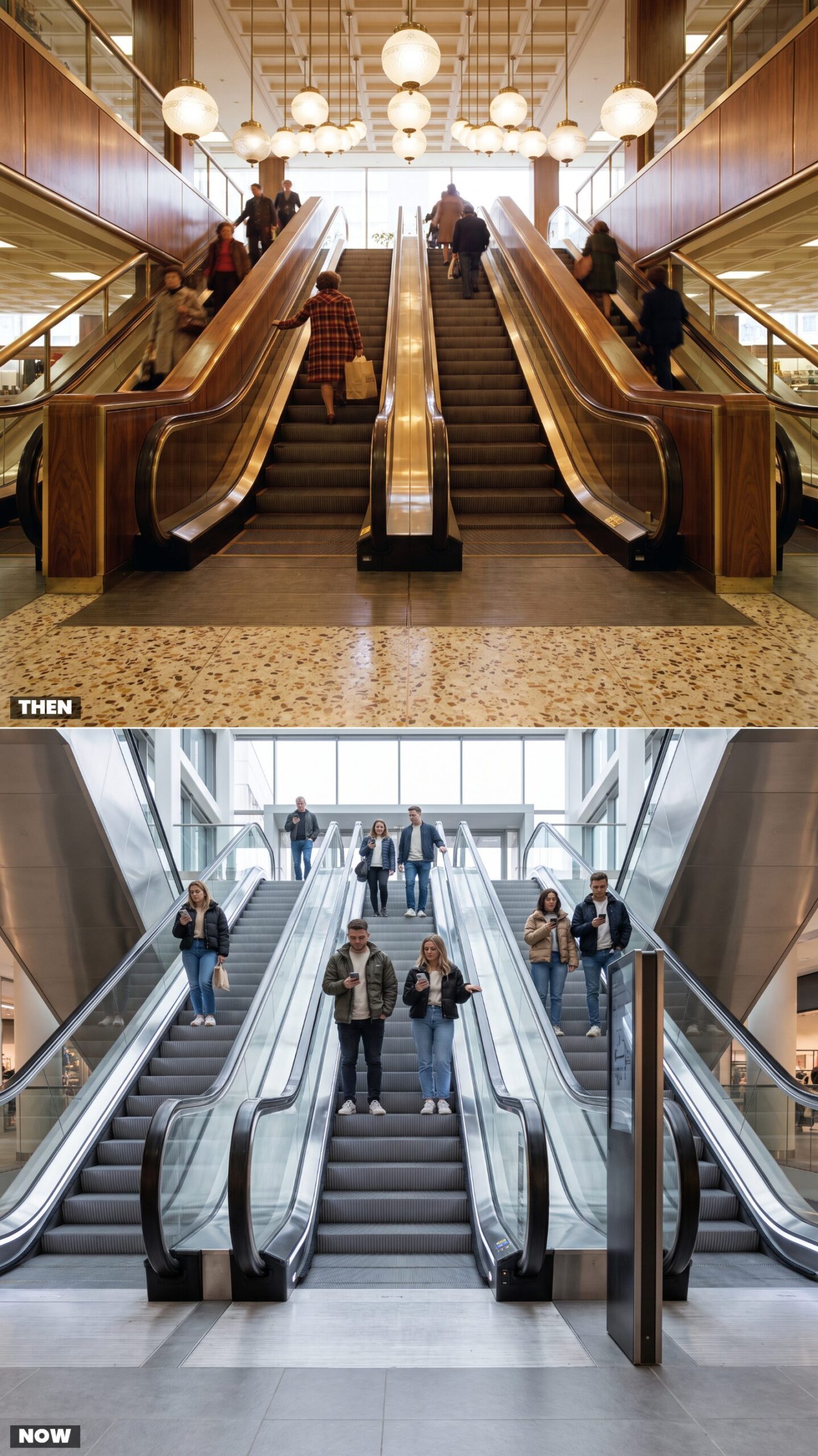
Escalators used to be furniture. Warm wood paneling, brass trim, glass balustrades, handrails lit softly from underneath. Riding up through a 1975 store felt like moving through a well-made piece of cabinetry, all the mechanics tucked away behind the craft.
Now they’re brushed stainless steel and black rubber, LED strips down the steps, all function and no warmth. They carry you just as reliably. They just don’t make you feel like anything on the way.
The old escalator was a ride. The new one is a conveyor belt with steps.
41. The Attended Passenger Elevator
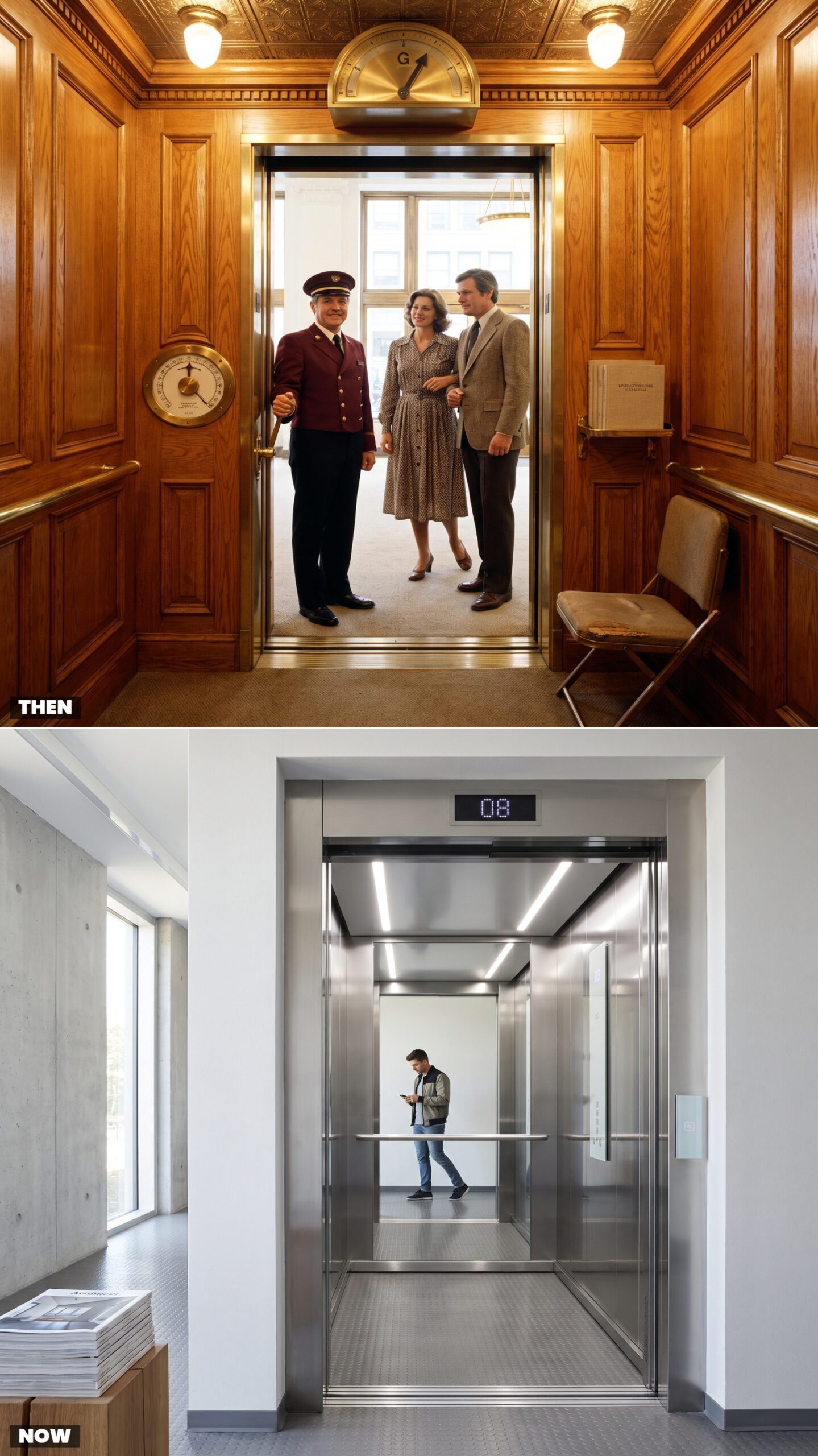
Someone ran the elevator. A uniformed operator with white gloves, a brass control lever, and a floor-indicator dial spinning overhead. “Fourth floor, ladies’ apparel and the tea room.” You rode up with a person whose entire job was getting you there smoothly, and it felt like a small luxury.
Now you step into a stainless-steel box, tap a flat button, and watch an LED count the floors while a mirror shows you standing there by yourself. The operator was one of the first store jobs automated away. And nobody announces the tea room anymore, mostly because there’s no tea room.
40. Terrazzo Sales-Floor Flooring
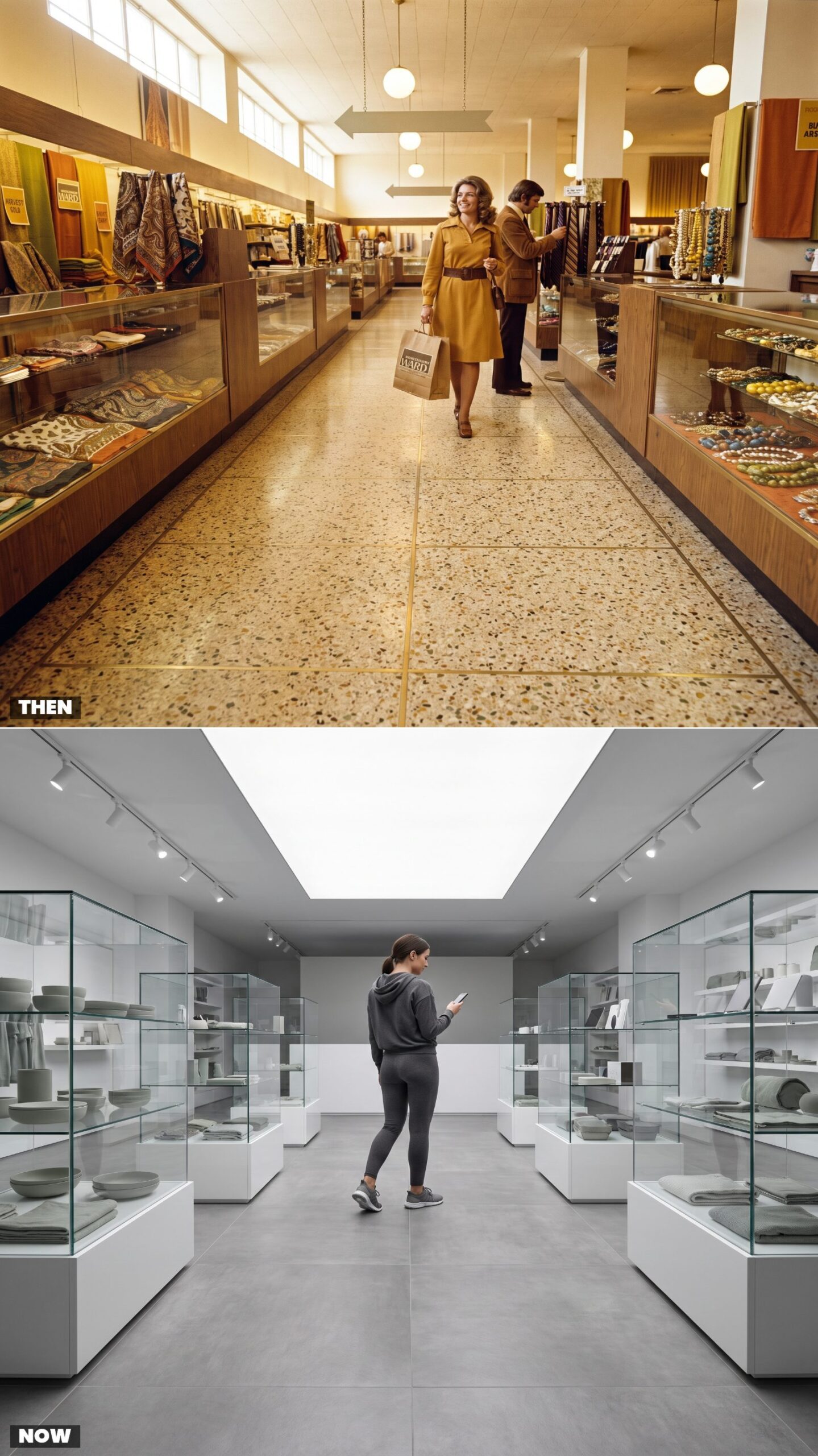
Terrazzo was the floor that meant a store took itself seriously. Poured in 1975 with real marble chips set in cement, ground smooth, then buffed until it threw back the glow of those globe lights overhead. It clicked under heels and held decades of foot traffic without showing it, and the brass dividers ran in perfect grids that somebody waxed before opening every single morning.
Now you walk on gray porcelain tile that looks fine and feels like nothing — uniform, replaceable, chosen off a maintenance spreadsheet. The floor stopped being part of the pitch.
39. Decorative Support Columns
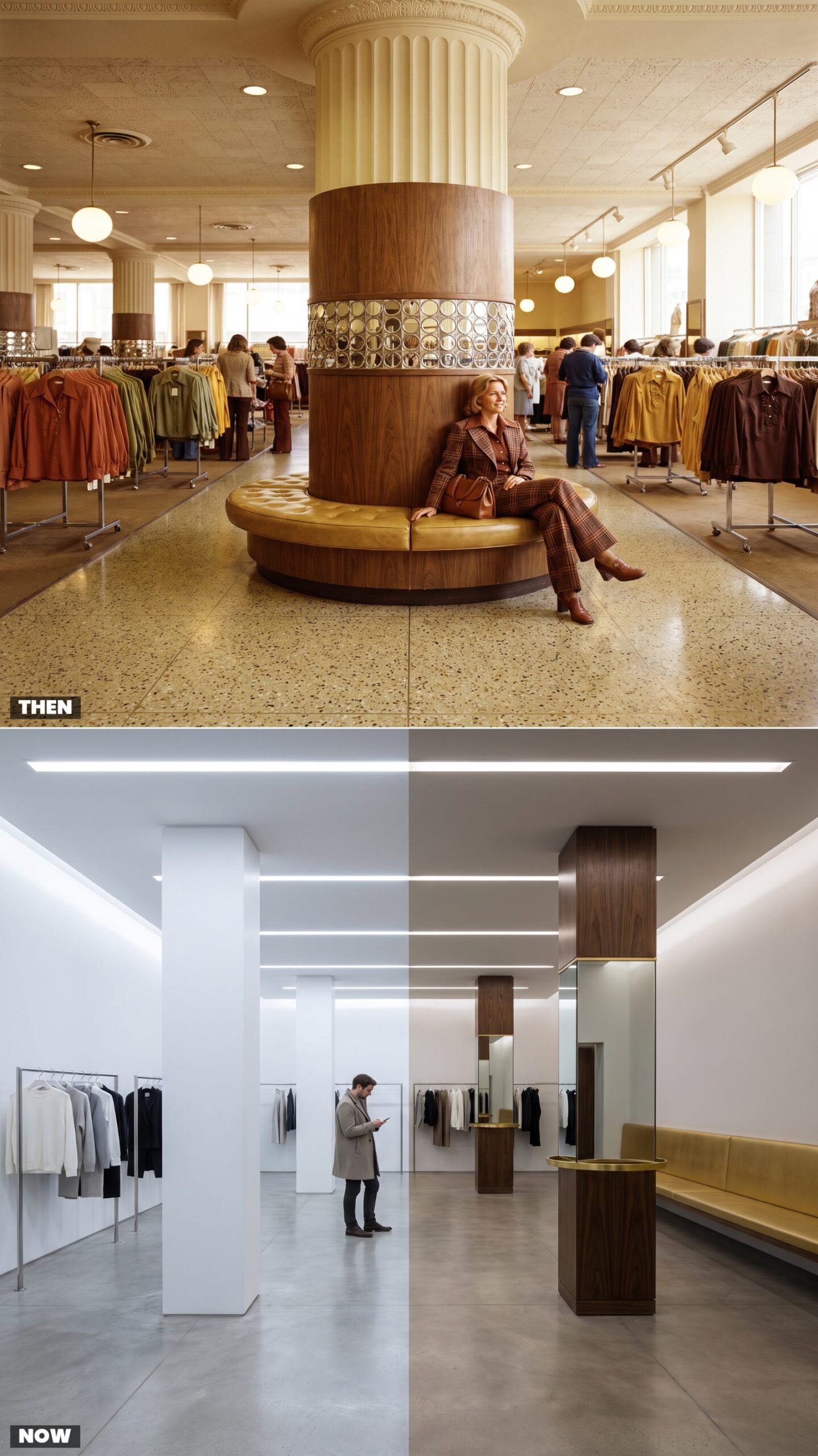
Columns held up the building, sure. But in 1975 nobody let a structural necessity go to waste — they wrapped it in walnut, banded it in mirror tiles, and set a padded gold bench around the base so tired feet had somewhere to land. The column doubled as furniture and turned into a landmark. “Meet me by the round column” actually meant something.
Today it’s a white box. Function stripped to the frame, mirrors gone, bench gone. You can’t lean on it, and honestly, you wouldn’t want to.
38. Gift-Wrapping Department
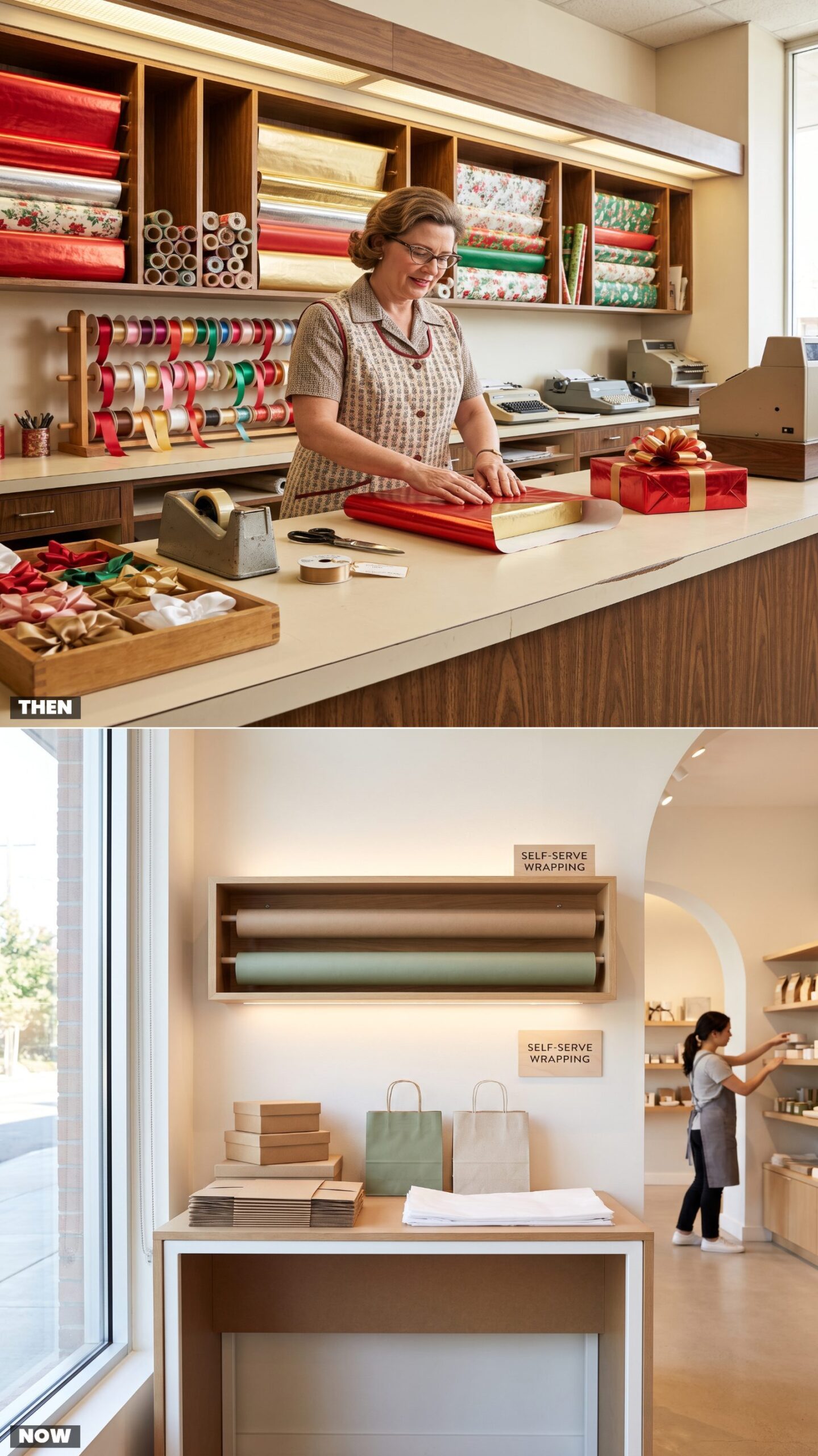
You handed over your purchase and walked away. Twenty minutes later it came back looking like someone had performed surgery on it: corners folded sharp enough to cut, ribbon curled against the blade of the scissors, a bow the size of a fist perched on top. The gift-wrap counter had its own staff, its own paper library, and its own smell of fresh tape and starched paper.
Now you get a kraft bag and a wad of tissue you stuff in yourself. If you’re lucky.
37. Layaway Service Desk
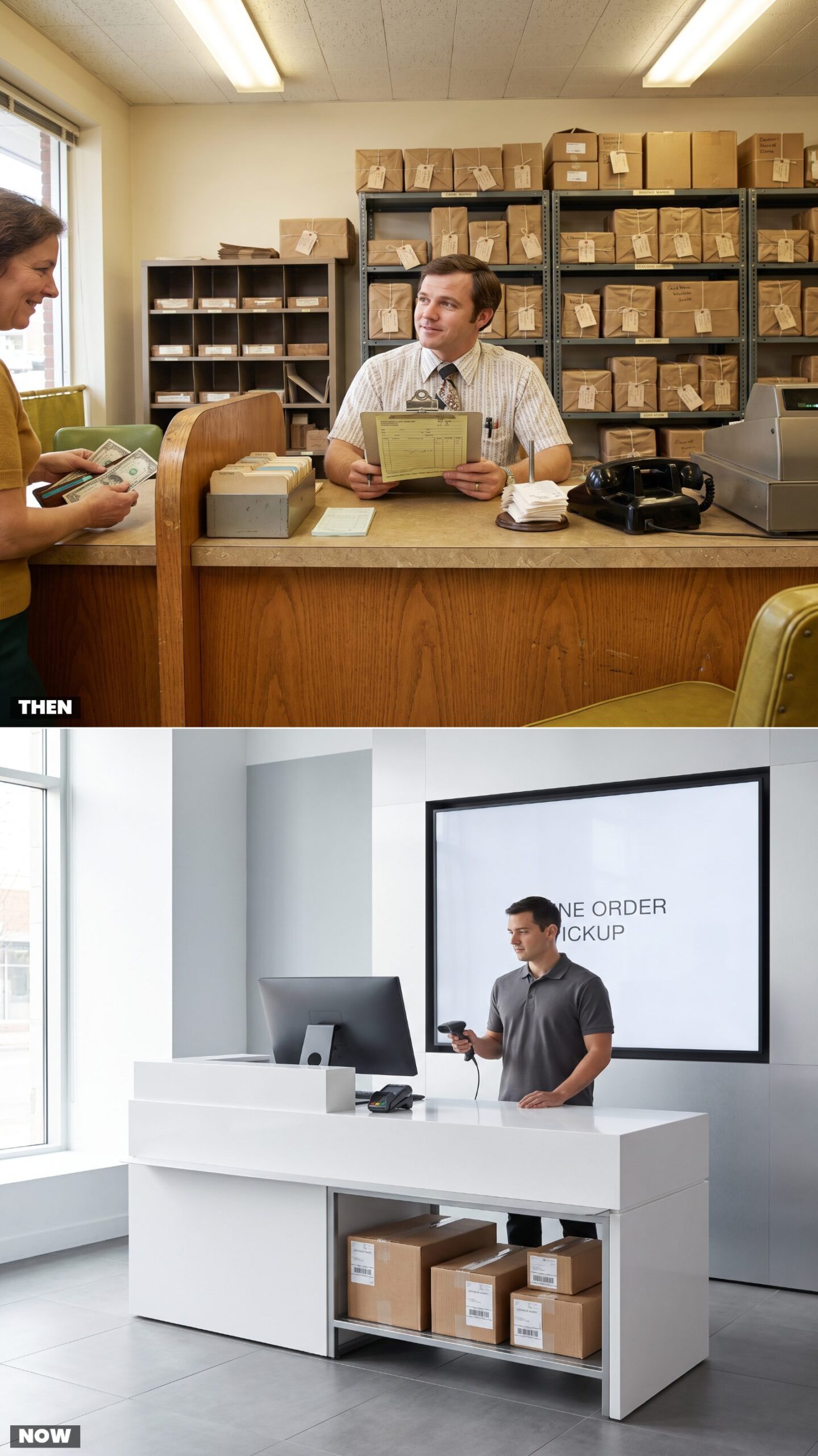
Before credit was easy, layaway was how a working family bought Christmas. You picked out the thing, paid a little down, and the store held it in the back on a shelf with your name stapled to it. Every payday you came in with a few dollars, the clerk pulled your carbon ticket from the card box, and you chipped away until the thing was finally yours.
The desk itself was plain oak. But the whole arrangement ran on trust and a spindle of handwritten receipts, and that system raised a generation without a single credit score involved.
36. Catalog-Order Counter
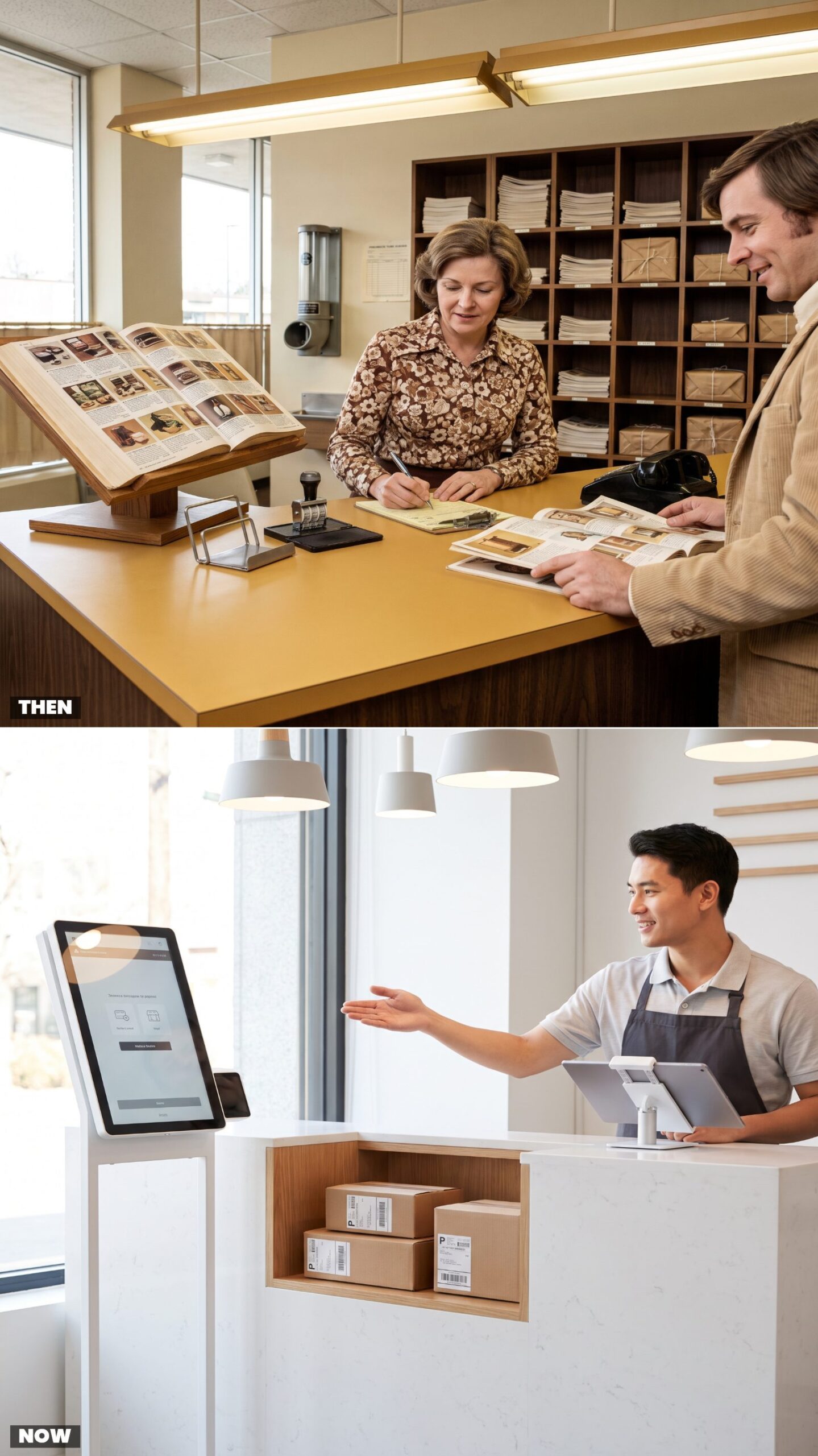
The catalog was the internet before the internet. Hundreds of pages, thousands of things, and if the store didn’t stock it on the floor, you flipped to the right page, pointed, and a clerk filled out a carbon order form in triplicate. Weeks later a brown-paper parcel showed up with your name on it.
The whole ritual took a patience nobody has anymore. A touchscreen does the same job in ninety seconds now, and the wait shrank from weeks to a day or two. Faster, yes. But you lost the ceremony of circling things in a big book by lamplight.
35. Check-Cashing Window
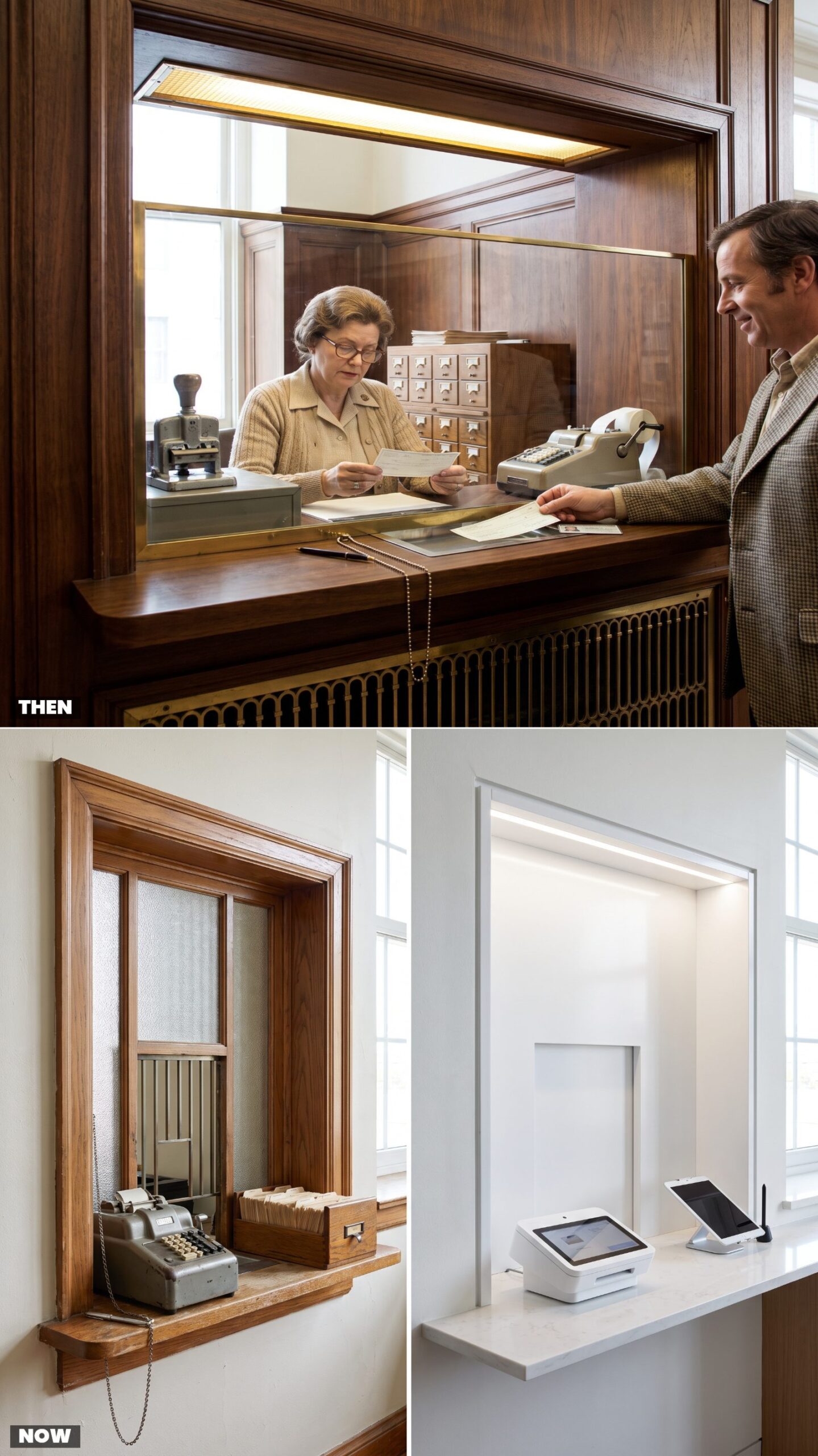
A department store used to cash your paycheck. Right there, behind a little grille, a clerk who half-knew your family would look at your check, look at you, stamp it, and count out bills through the slot. Stores kept card files of regular customers, and being “good for it” was a real thing recorded on an index card.
That window is bricked over now, one way or another. Your money moves through a chip and a tap, and no clerk anywhere knows your name well enough to vouch for you.
34. Cashier Station With Mechanical Register
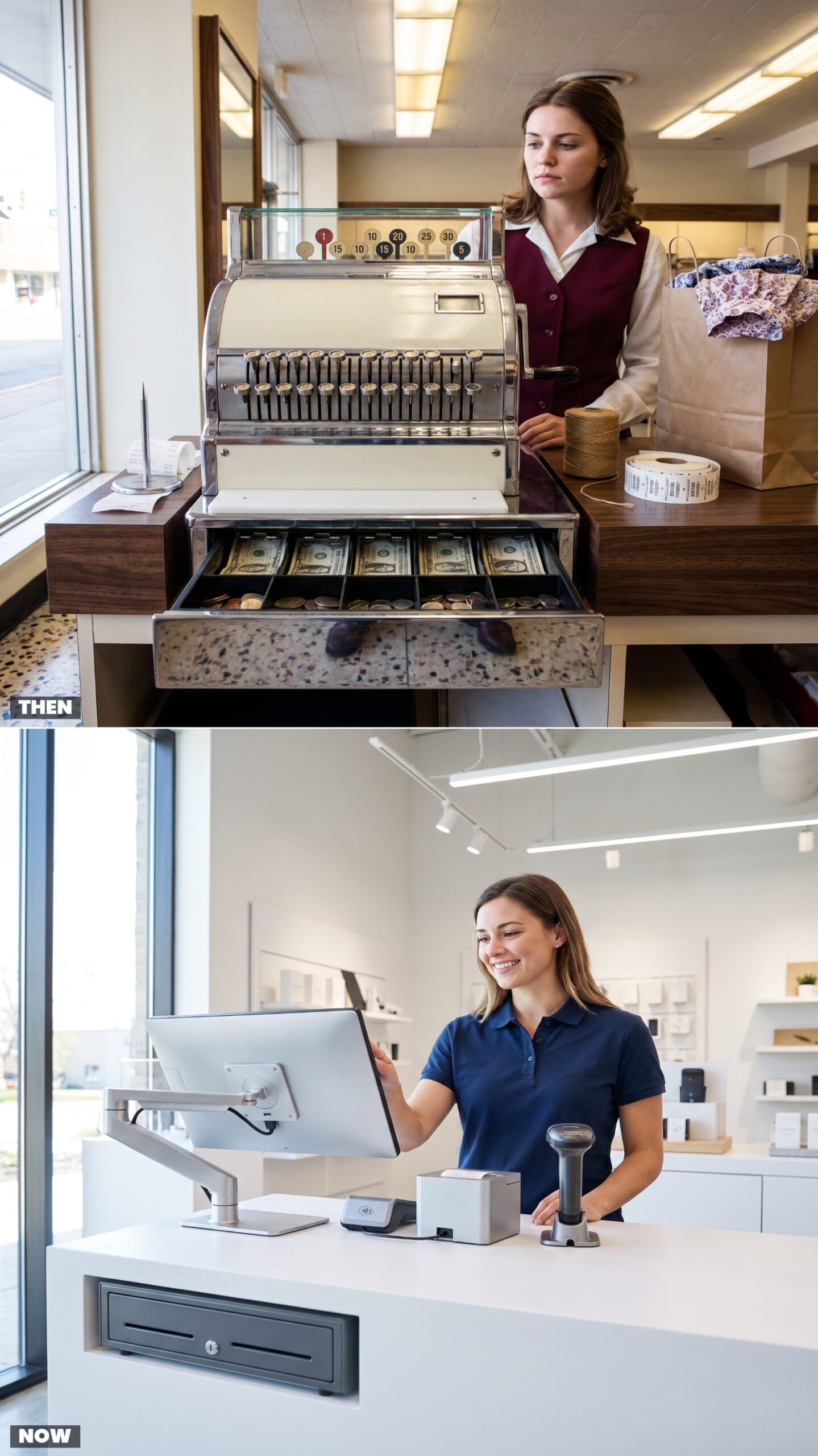
The old register weighed as much as a car engine and sounded like one. You pressed those round keys, the number flags popped up behind the glass, and the drawer shot open with a bell that carried clear across the floor. Cha-ching wasn’t a figure of speech — it was the actual noise a sale made.
The modern touchscreen is faster and tracks inventory down to the item, which the old brass beast never could. But it whispers. A store where nothing goes cha-ching feels a little like a party where nobody claps.
33. Credit-Card Imprint Machine
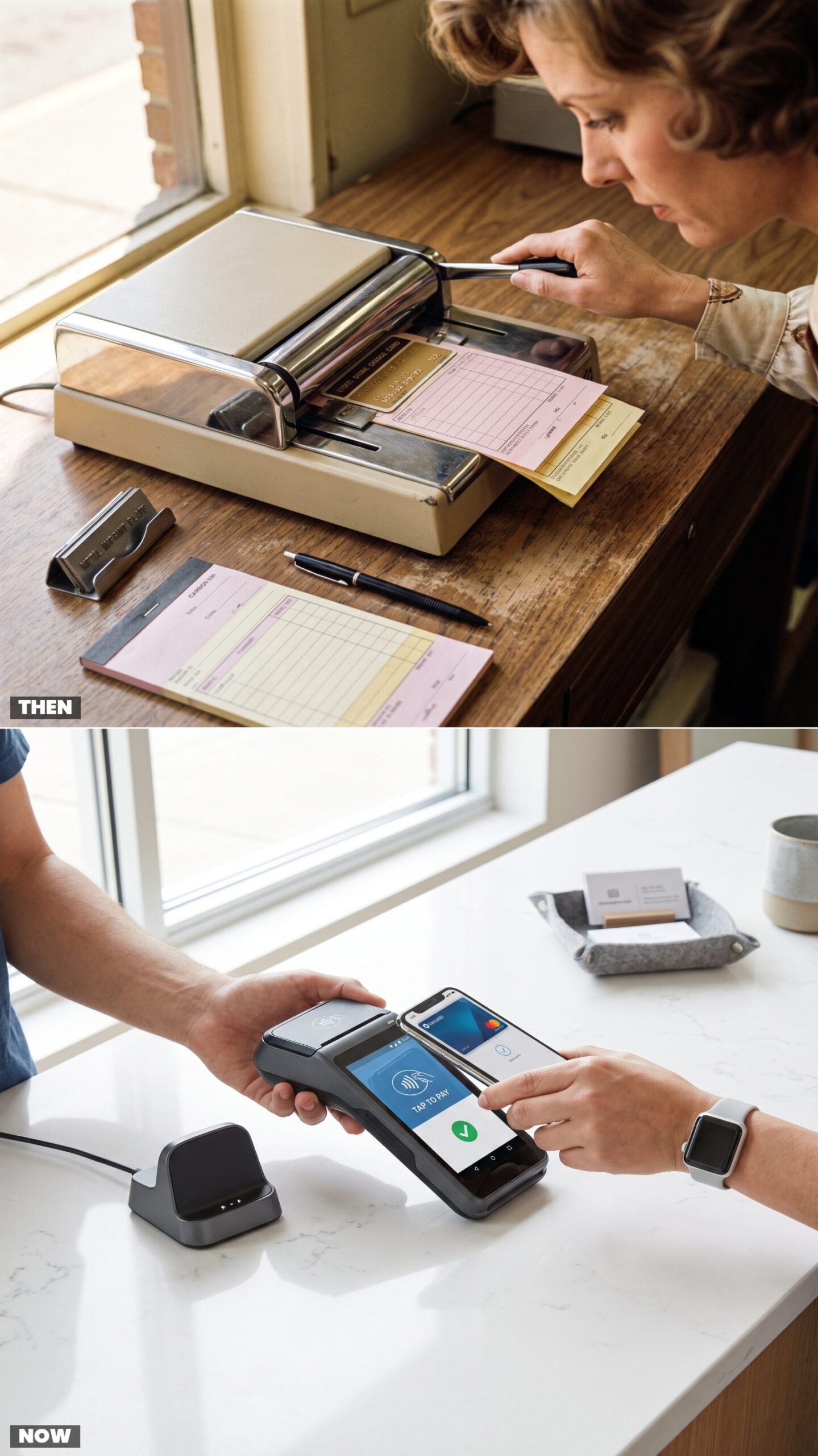
Ka-chunk. That was the sound of buying something on credit in 1975. The clerk laid your embossed charge card in the metal bed, set a carbon slip on top, and dragged that roller bar across with real effort. Out came three copies: one for you, one for the store, one for the bank. Your card number lived in wax and pressure, not in a chip.
Now you tap a phone against a reader and it’s over in half a second. No signature, no carbon, no ka-chunk. Convenient beyond argument — but there was something honest about a machine that made you feel the weight of what you were spending.
32. Pneumatic Cash-Tube System
Would you like to save this?
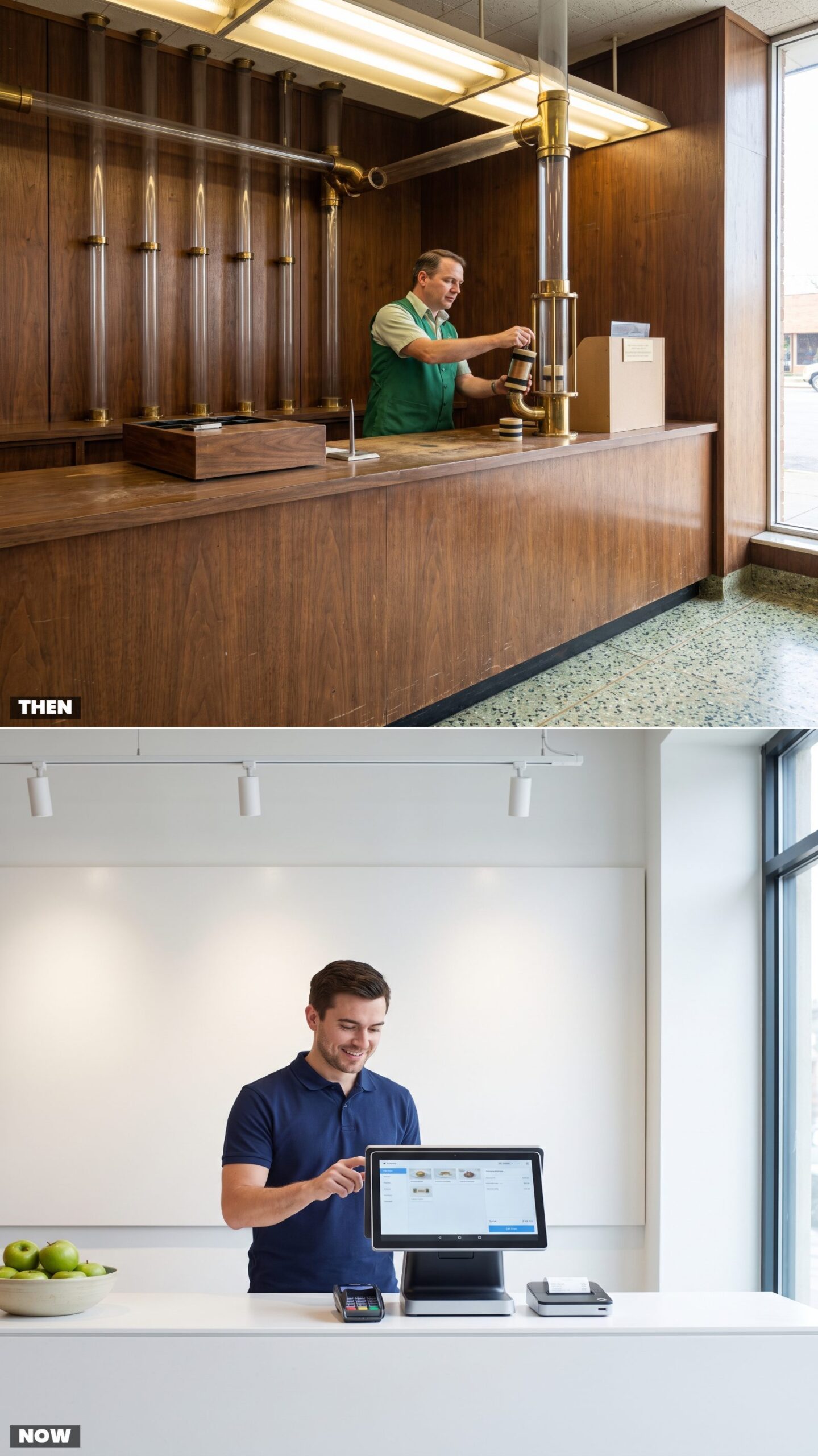
Money used to fly. Literally. The clerk tucked your cash and sales slip into a felt-ringed capsule, slid it into a brass tube, and whoosh — it shot up the wall toward a central cashier’s office somewhere in the building, then whooshed back a few minutes later with your change and a stamped receipt.
Kids pressed their faces to the counter to watch. The whole store was laced with these brass arteries carrying money overhead all day long. Every register handles its own cash now, and the tubes are long gone, sealed inside the walls of buildings that got gutted and renovated decades ago.
31. Price Tags Attached With String
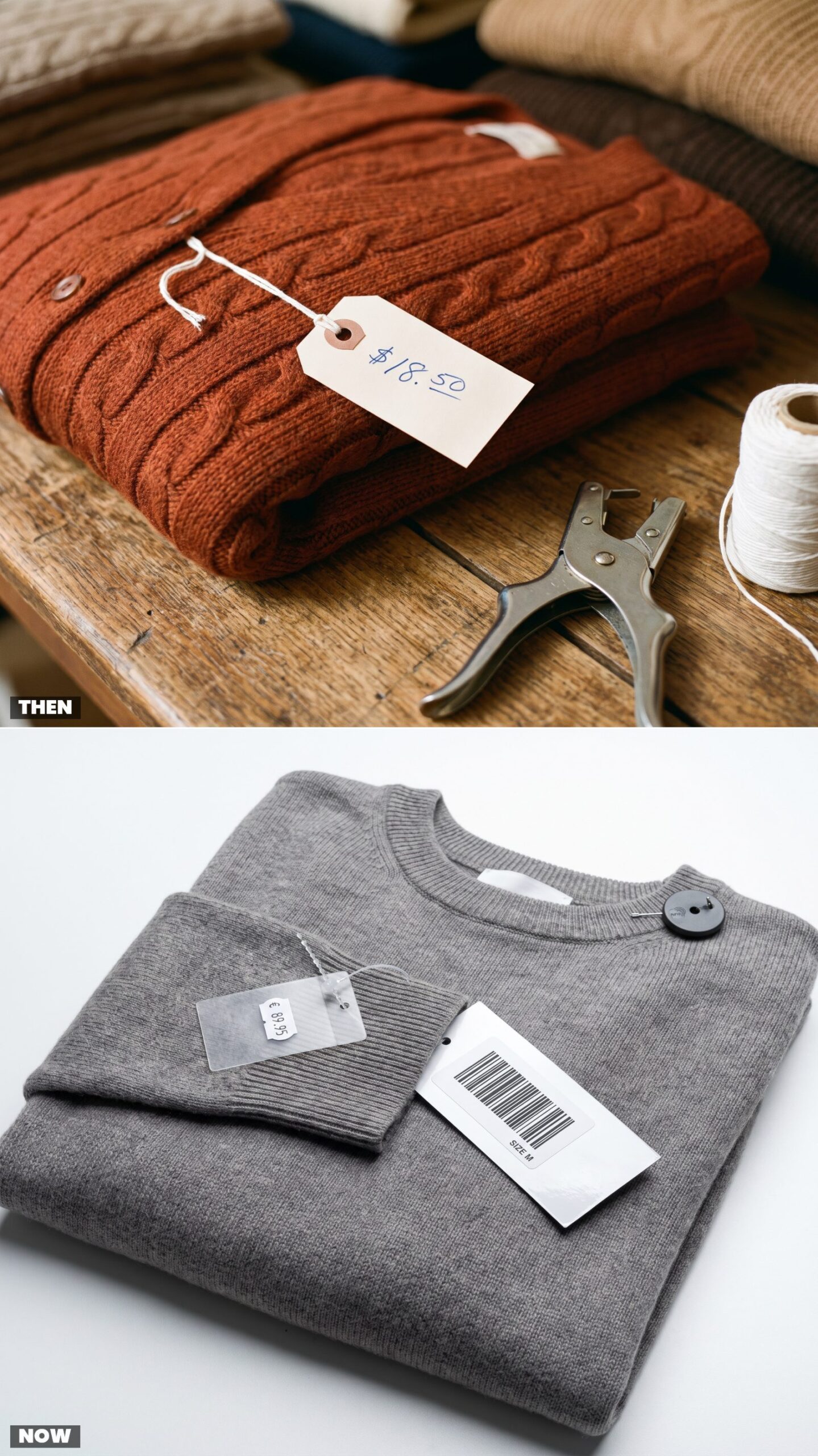
Every price tag was tied on by hand. A little manila card, a hole punched in the corner, a loop of white string threaded through the garment and knotted, the price written in ballpoint. When something went on sale, they crossed out the old number and scrawled the new one right below it.
Now the tag is a printed barcode on a plastic barb, and half of it is a security sensor that shrieks if the cashier forgets to yank it off. Faster to attach, impossible to lose. But a handwritten card had a personality no scannable stripe will ever manage.
30. The Glass Jewelry Counter
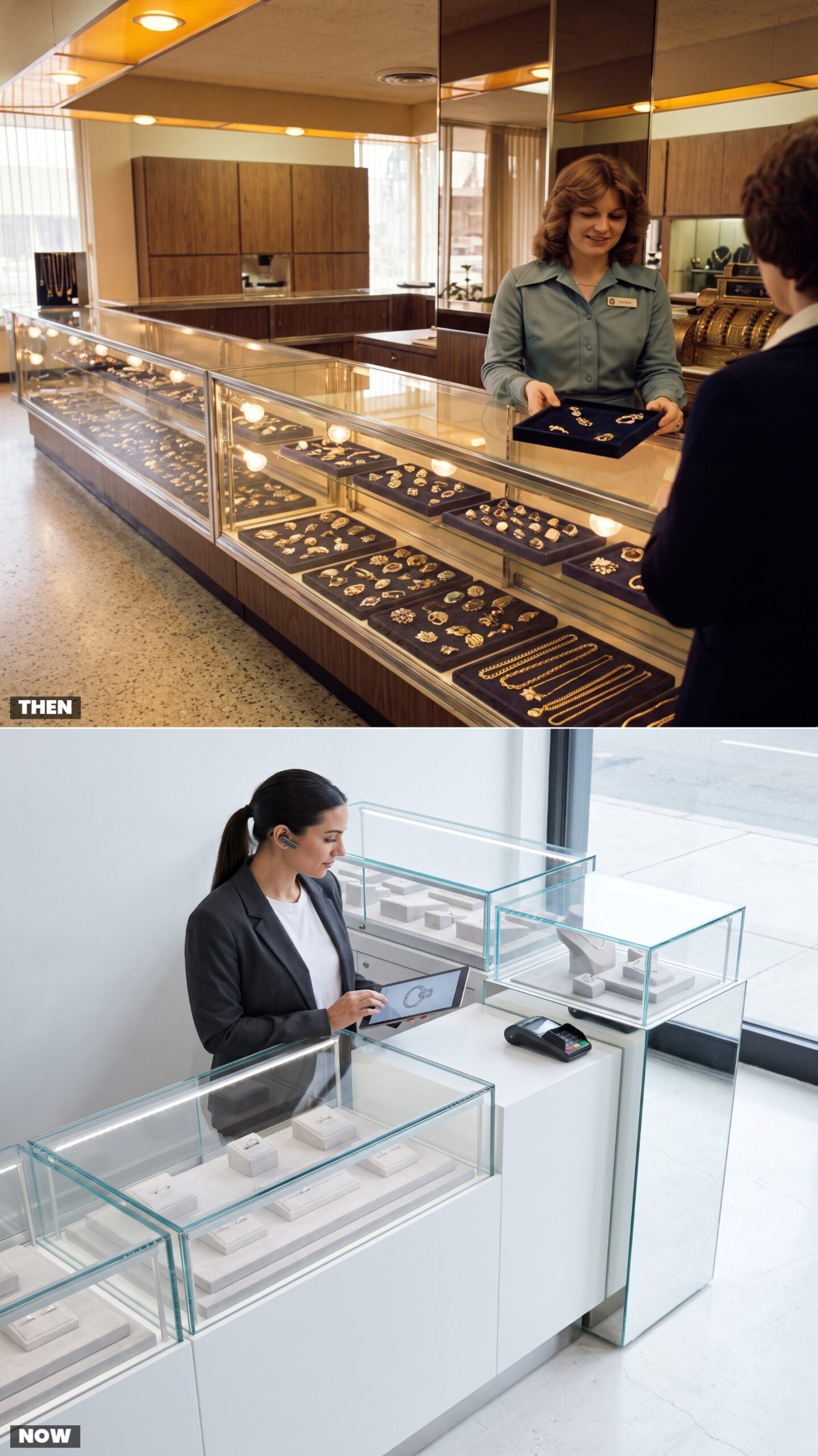
You could hear the jewelry counter before you saw it — the soft clink of a saleslady sliding open the back of a glass case, the little velvet tray set down like an offering. Everything lived behind glass under warm bulbs in 1975, and buying a ring meant a conversation, a tray, and a brass register that rang like a bell.
Now the case glows cool and blue-white, the velvet pads swapped for gray suede risers, and a tablet stands in for the tray. The clink is gone. So is the bell. You tap a card and it’s done before you’ve decided you meant to.
29. The Perfume Testing Counter
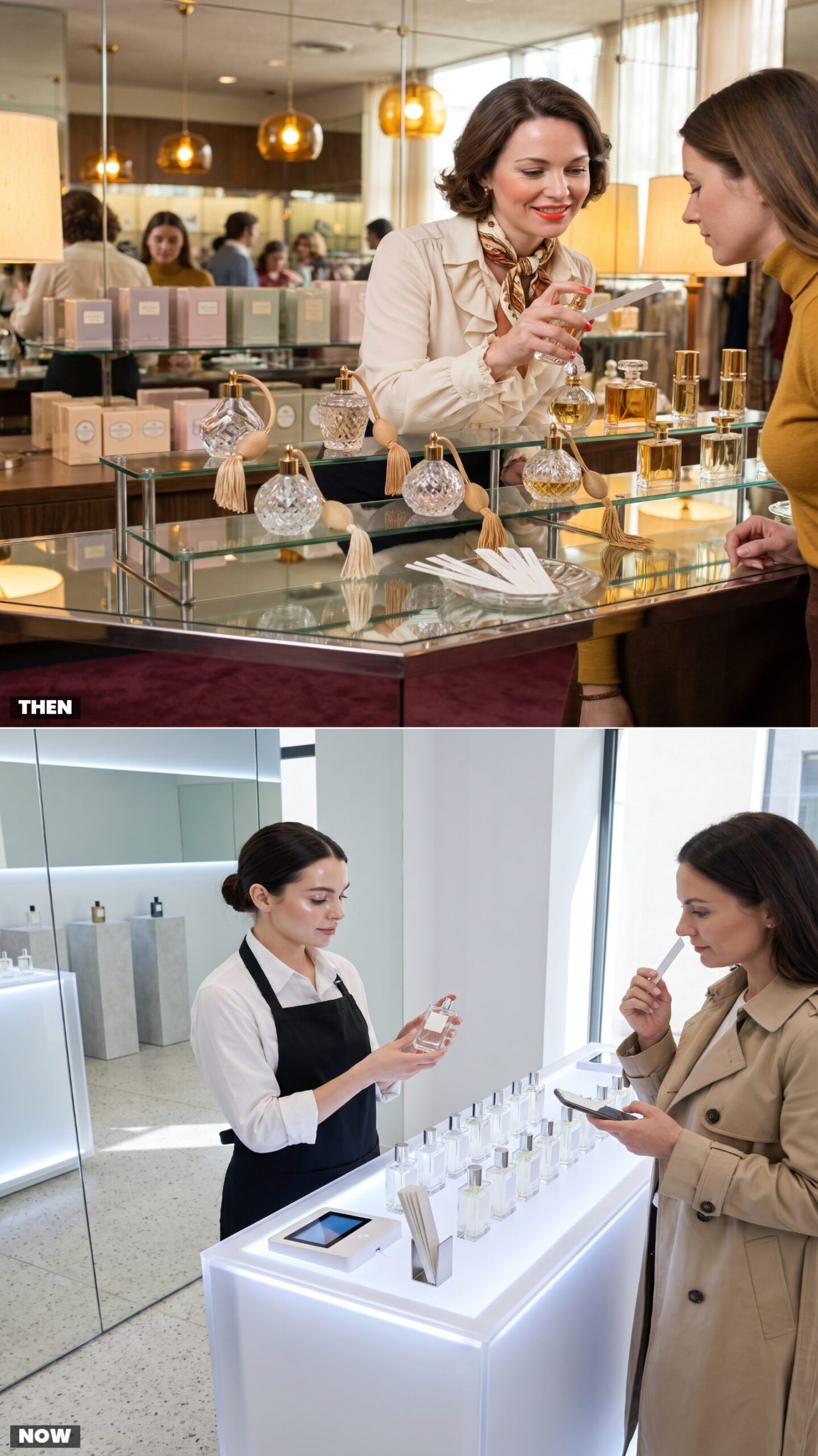
The fragrance hall of 1975 hit you in the face the second you walked in, and that was the whole idea. Crystal bottles with squeeze-bulb atomizers, tasseled and gold-capped, sat on mirrored tiers under lights warm enough to make everything look like candy. A saleswoman spritzed a paper strip, waved it, and handed it over like a secret.
The counter now is white, backlit, and clinical in the best-selling sense. Matching rectangular bottles line up in tidy rows, and a digital diffuser does the work the atomizer bulb used to. Scent strips are still paper, though. Some things a phone can’t do.
28. The Women’s Dress Department
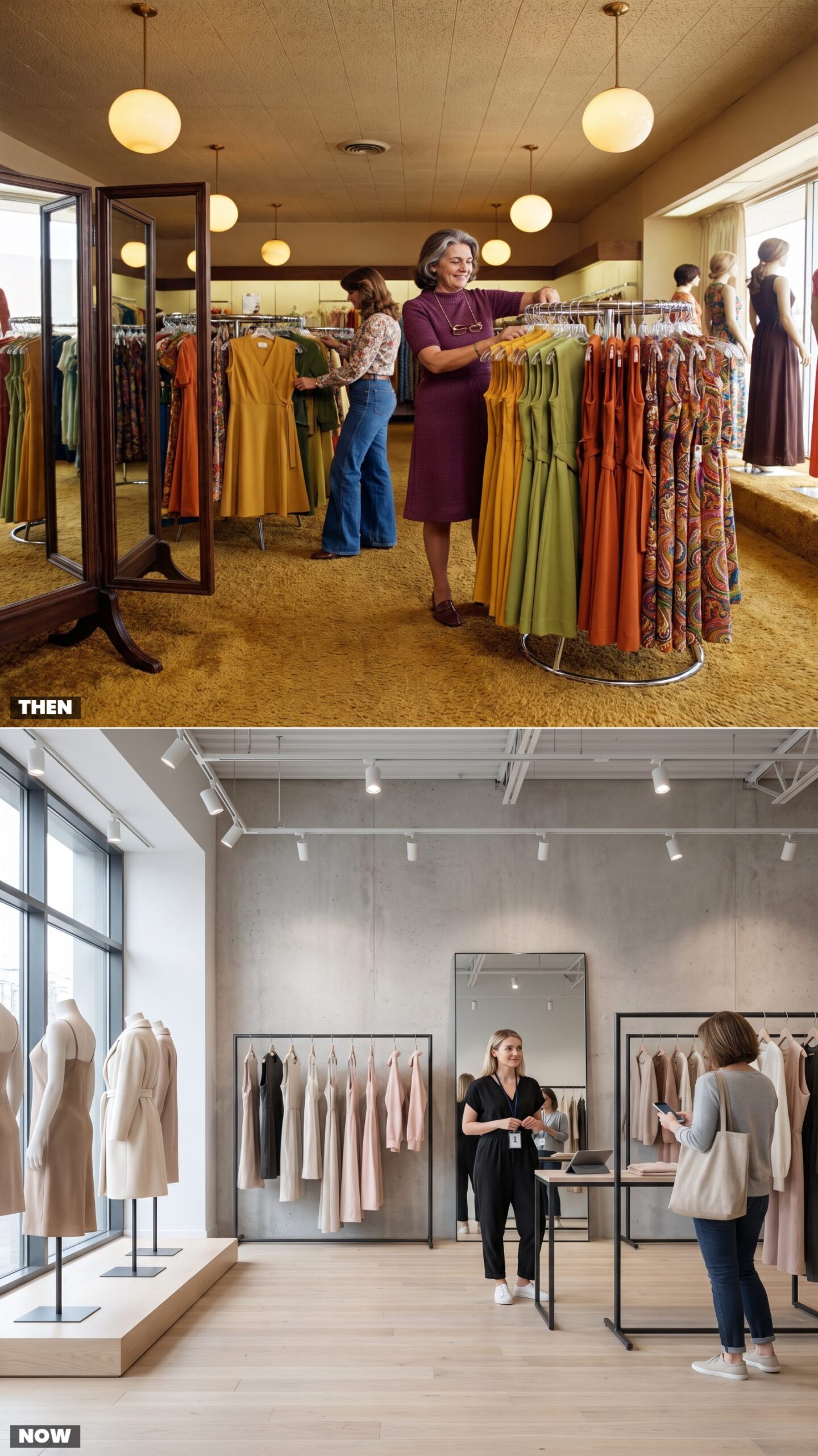
Packed. That’s the word for the 1975 dress floor. Chrome carousel racks jammed so tight you had to shove hangers apart, every color loud and unapologetic — avocado, burnt orange, paisley you could practically hear from across the room. The three-way mirror in its wood frame was a fixture, and so was the saleslady with her glasses on a chain who actually knew where the size tens were hiding.
The floor today breathes. Rails are half-empty on purpose, hangers spaced out like museum pieces, and someone has dialed the palette down to blush and greige. You’ll find one mirror, one tablet, and far fewer people who can tell you where anything is.
27. The Men’s Suit Department
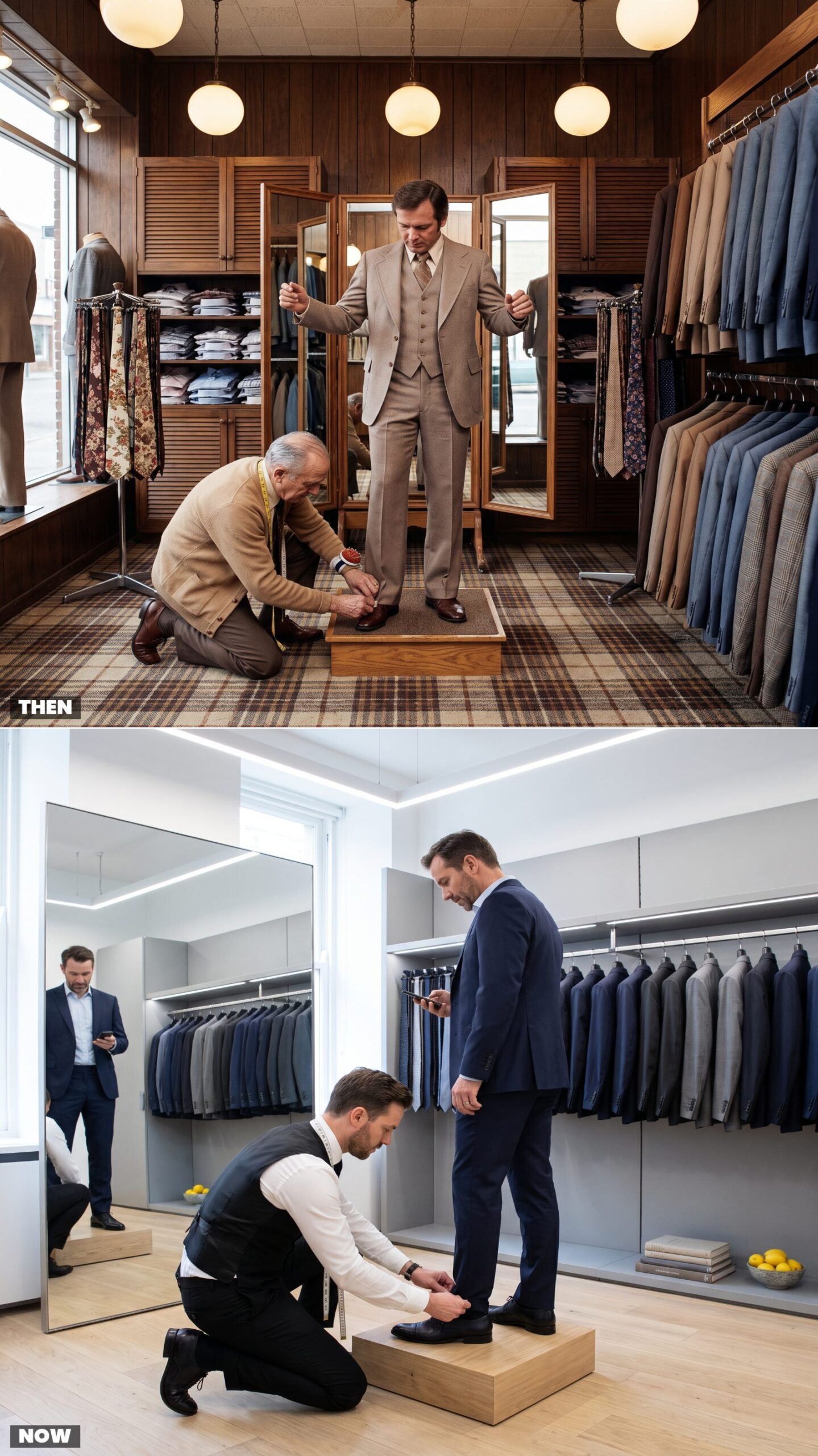
The men’s floor in 1975 came with a person, and that person had chalk. Lapels ran wide as barn doors, ties bloomed with flowers, and the suits came in brown, tan, and every shade between. But the real fixture was the tailor kneeling on the platform with pins in his wrist cushion, marking a hem while you stood there feeling briefly important.
Slimmer everything now — lapels, ties, the whole rack narrowed to navy and charcoal. Where an in-store tailor remains, he still kneels, still pins, still knows more than the app in your hand. The floral tie did not survive at all.
26. The Children’s Clothing Department
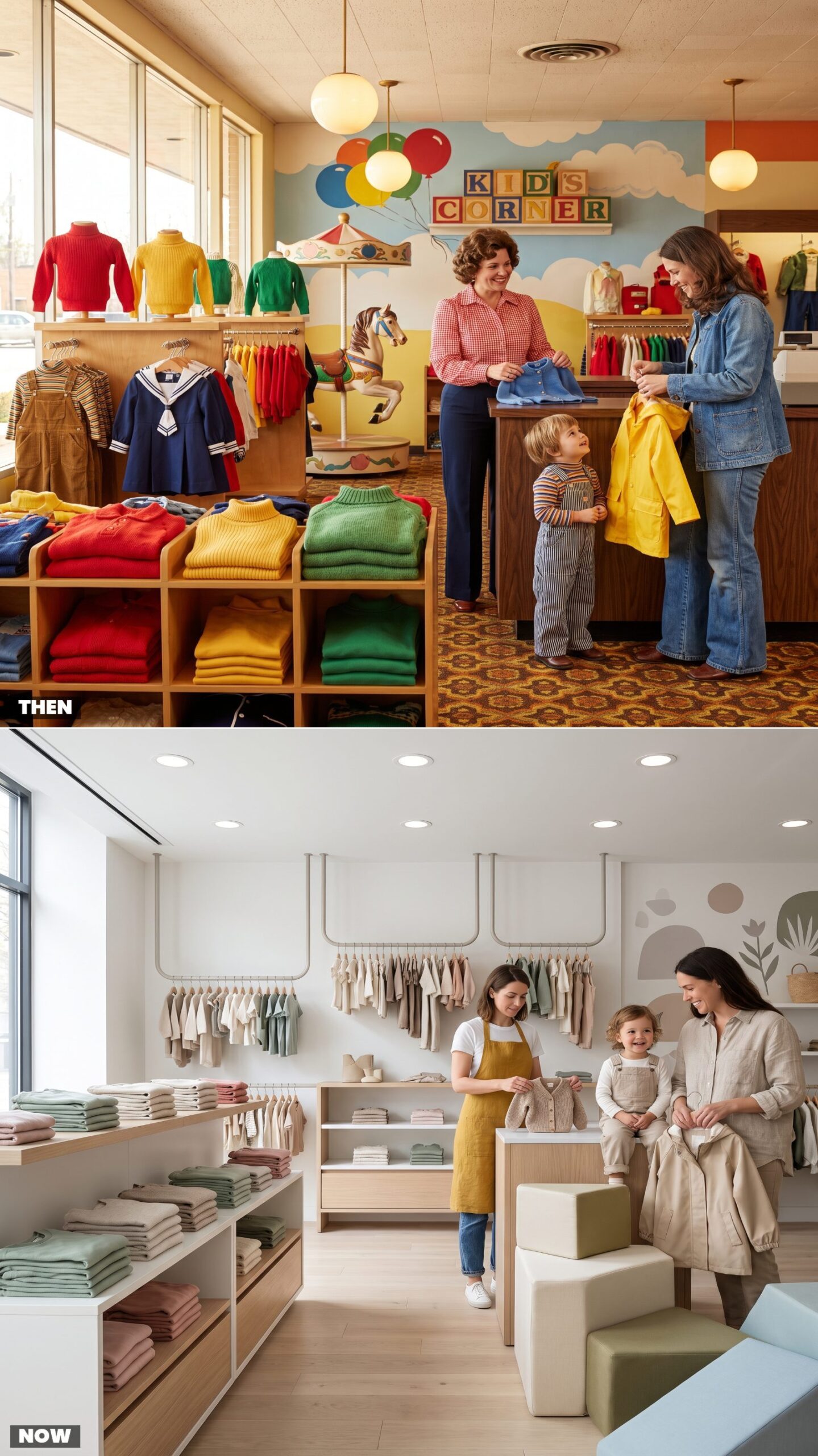
Loud, cheerful, and covered in balloons. The kids’ department in 1975 didn’t whisper — primary red, sunny yellow, grass green, a painted carousel horse in the corner, murals of clouds running across the walls. Corduroy overalls, sailor collars, and ribbed turtlenecks folded into wooden cubbies, all built to be handed down twice.
These days the palette has softened to sage and oatmeal, and the carousel horse got traded for a foam soft-play nook in colors that won’t clash with anyone’s living room. Everything’s organic cotton and folded just as neatly. The kids probably don’t notice. Their parents definitely picked the beige.
25. The Shoe Department With Stockroom Seating
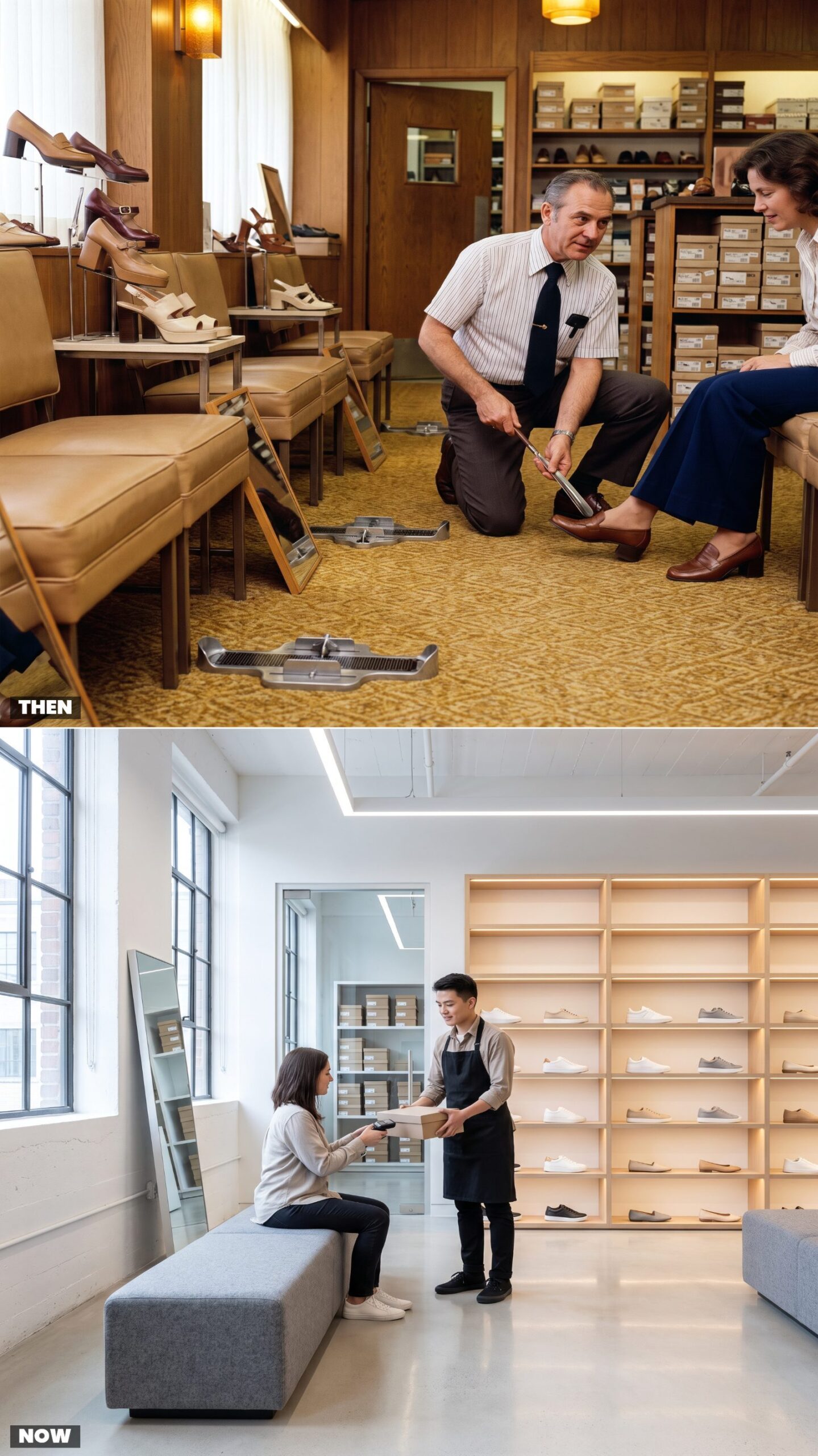
Somebody knelt at your feet to sell you shoes, and nobody thought that was strange. The 1975 shoe department ran on service: tan vinyl benches, a metal Brannock device to size your foot, and a salesman in a clip-on tie vanishing behind a swinging door to fetch your size from a wall of stacked boxes. He’d slide the loafer on with a shoehorn while you wiggled your toes in the slanted floor mirror.
You fetch your own box now, or scan a shelf tag to see if they’ve got your size in the back. The bench survived. The kneeling salesman mostly didn’t. And I’ll admit, I miss the theater of it, even if I never once knew my exact width.
24. The Hat and Millinery Department
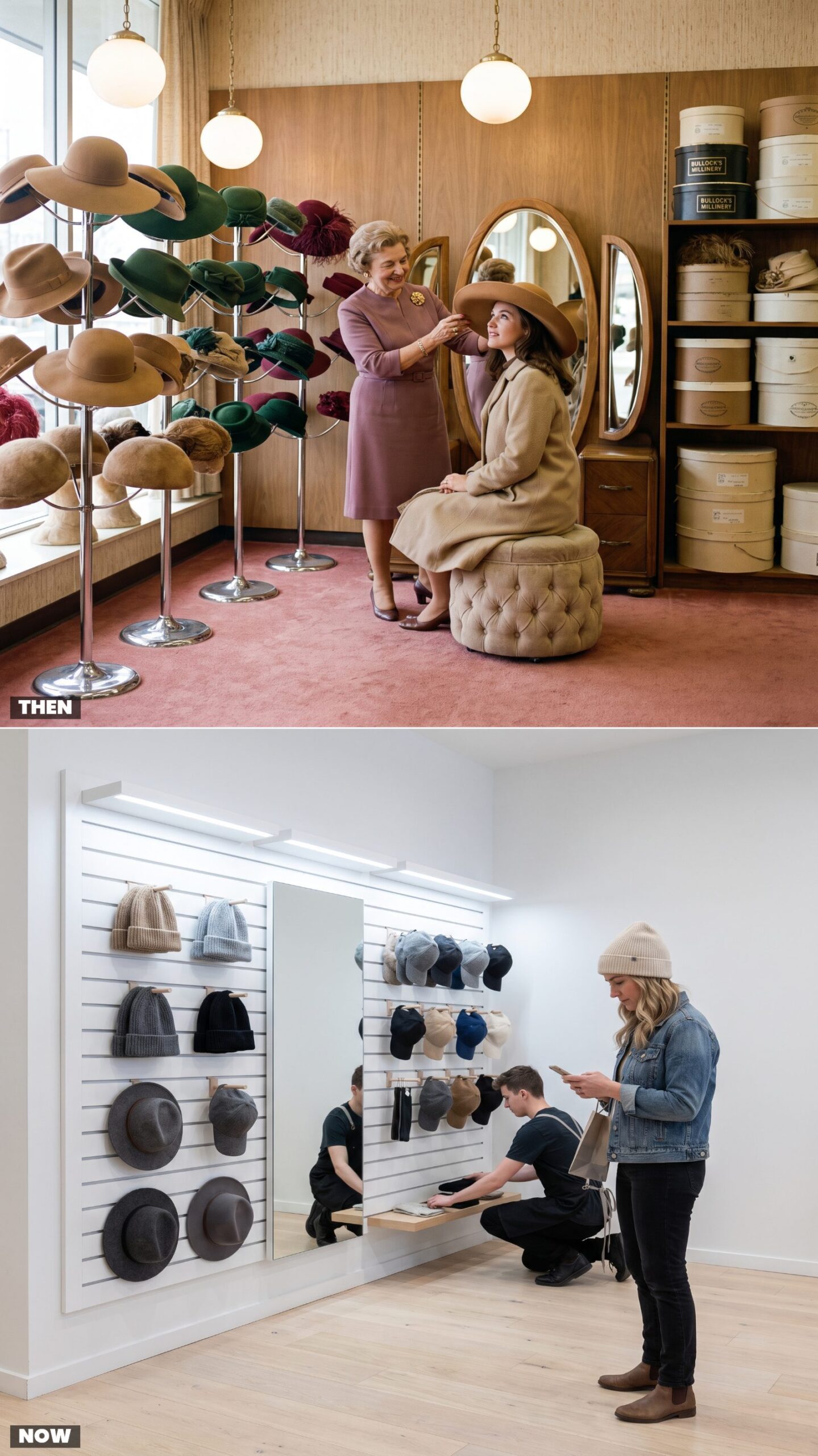
There was a chair. That tells you everything. Buying a hat in 1975 meant sitting at an oval wing mirror while a milliner in a brooch settled a wide-brim felt onto your head and tilted it just so. Chrome stands and mushroom displays held pillboxes, church hats, and feathers in camel and burgundy, and the stacked hatboxes waited to carry your choice home.
The whole department shrank to a corner. A slat wall, some beanies, a couple of fedoras nobody’s tried on. No chair, no milliner, no ceremony. The hat became an afterthought, and honestly, we lost something real when the ritual left with it.
23. The Fabric and Sewing-Notions Department
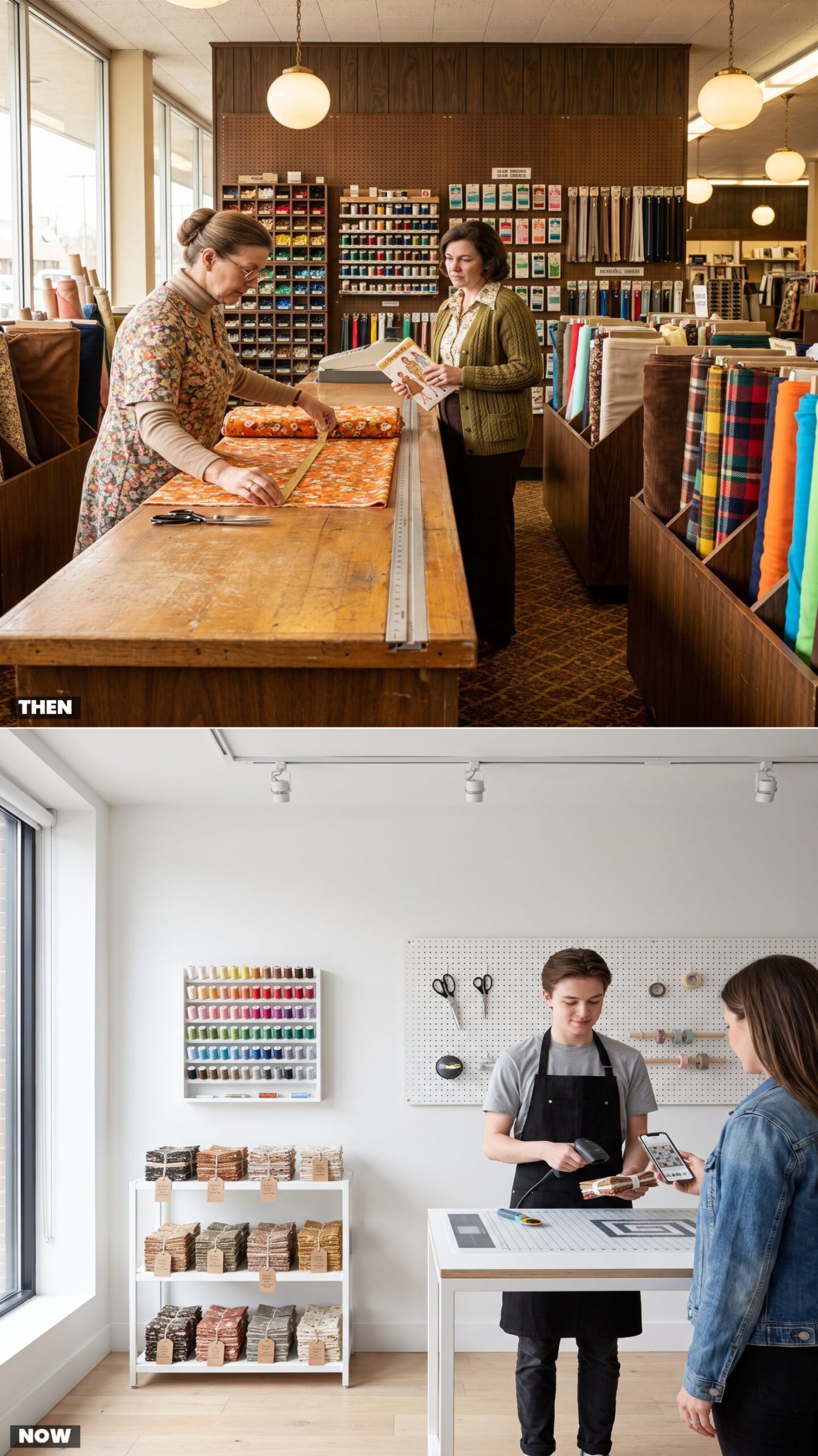
The sound was a bolt of fabric slapping down onto a wooden cutting table, then the slow drag of yardage across a built-in ruler. In 1975 this was serious square footage: angled bins of upright bolts, florals and corduroy and wool plaid, and a whole pegboard wall of zippers, seam binding, buttons in labeled bins, and thread on tiered racks. A woman in a floral smock apron cut your yardage with pinking shears and rounded up to the quarter.
Now it’s a corner, if it exists at all. Pre-cut fat-quarter bundles, a slim counter, a digital pad instead of a yardstick. The pegboard wall of notions got small, and the smock apron went with it.
22. The Pattern-Catalog Table
Would you like to save this?
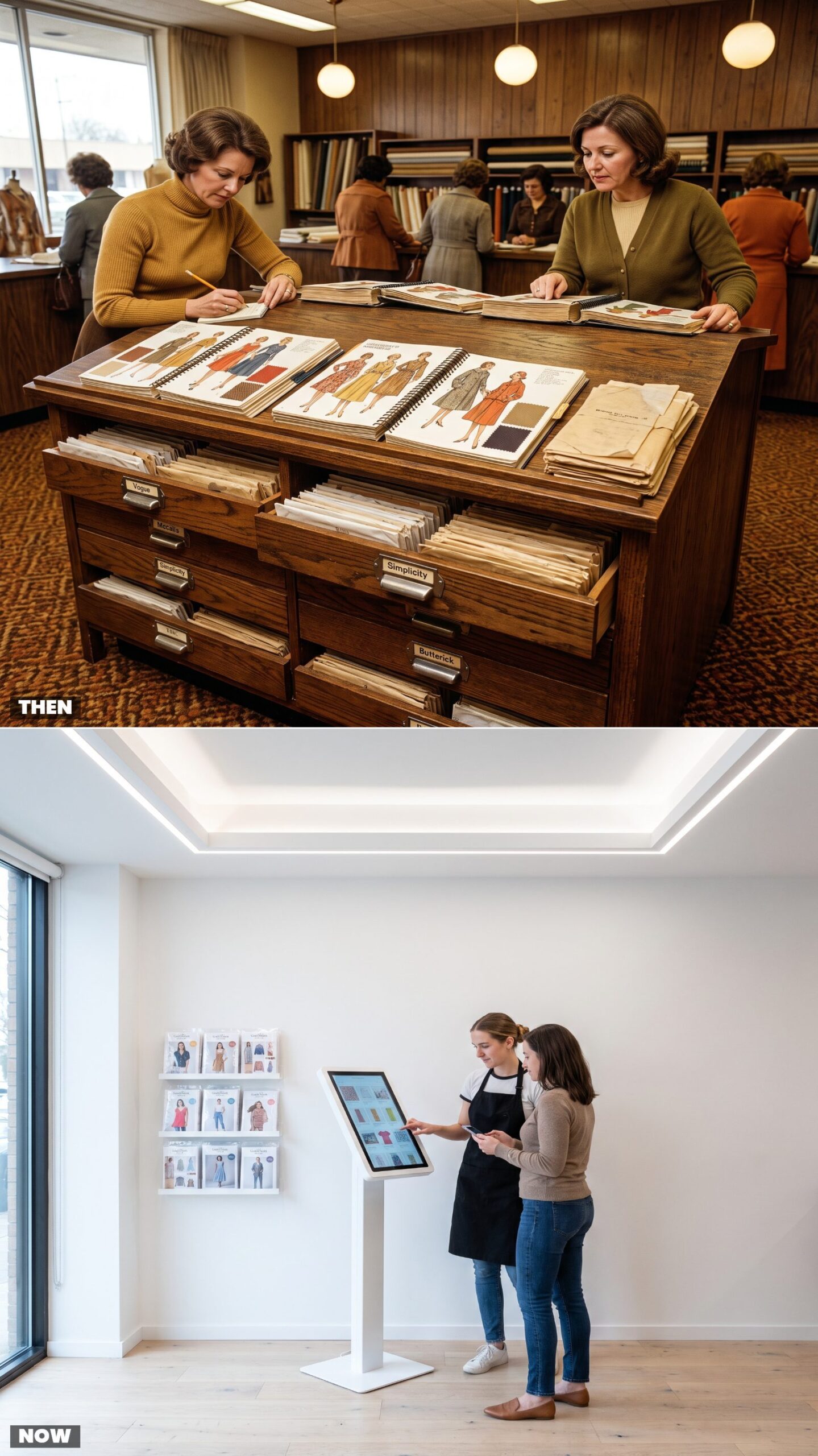
Nobody under forty remembers the pattern table, and that’s a shame, because it was a whole ceremony. You’d stand at a slanted wooden table flipping through a phone-book-thick catalog — illustrations of dresses and coats page after page — jotting a pattern number on a scrap with a golf pencil. Then you’d slide open a long shallow drawer, thumb through envelopes filed by number, and pull your tissue pattern like winning a small lottery.
The table and drawers are gone. A touchscreen kiosk does the browsing now, if the store bothers to stock patterns at all. Faster, sure. But there was something about that golf pencil and the flip of catalog pages that a scroll can’t replace.
21. The Housewares Demonstration Area
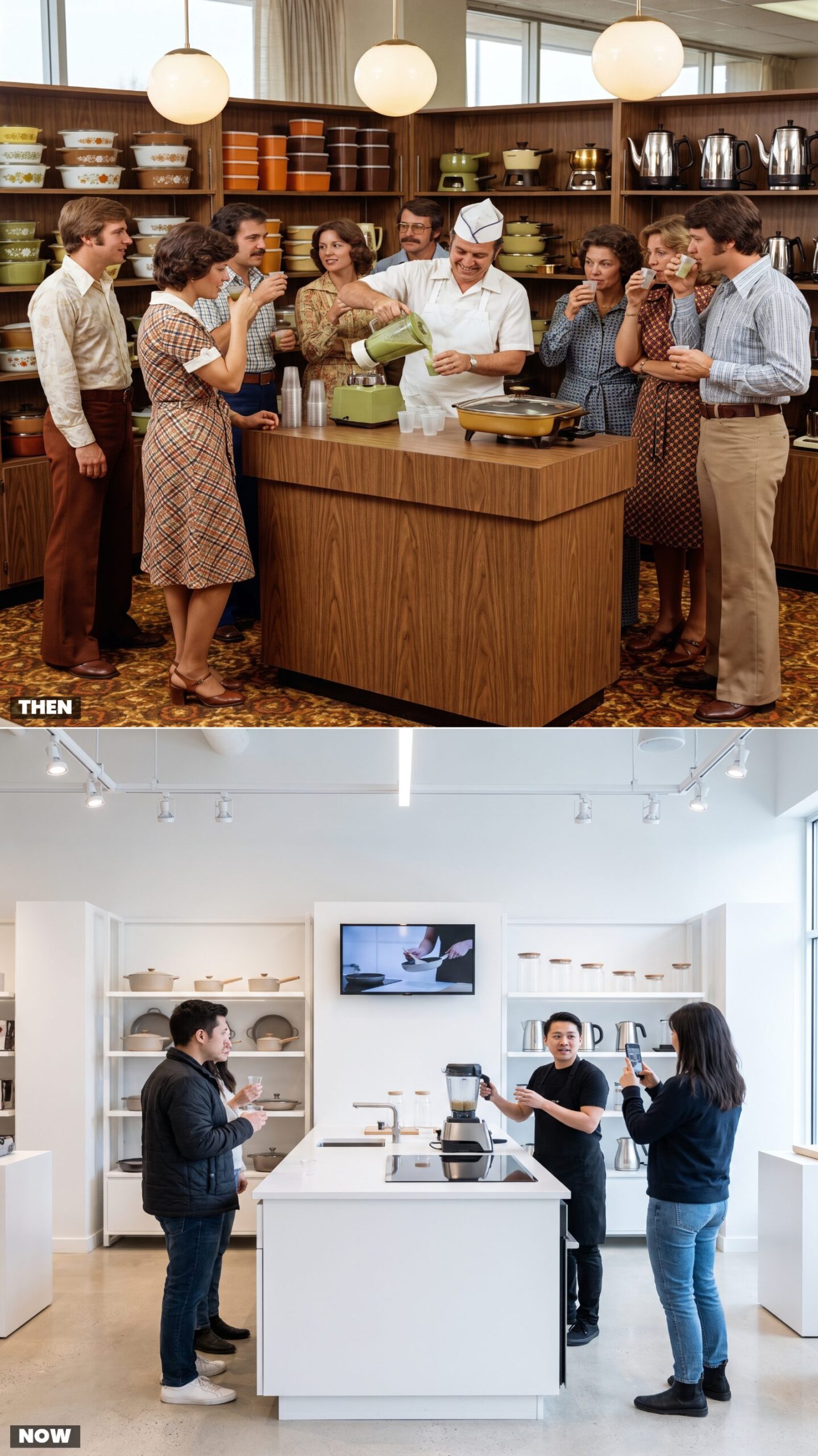
A crowd, a paper chef hat, and an avocado-green blender working overtime. The housewares demo in 1975 pulled people in with samples and showmanship — a demonstrator in a white apron whipping up a drink and passing tiny cups down the line while onlookers eyed the harvest-gold skillet and the flower-print casserole dishes on the shelf behind.
The demo survived, barely. But the crowd thinned, and a silent looping screen now does half the talking. Blender’s stainless, cooktop’s induction, someone’s filming instead of watching. The samples got smaller. The pull hasn’t budged: watch the thing work, want the thing.
20. The China and Crystal Department
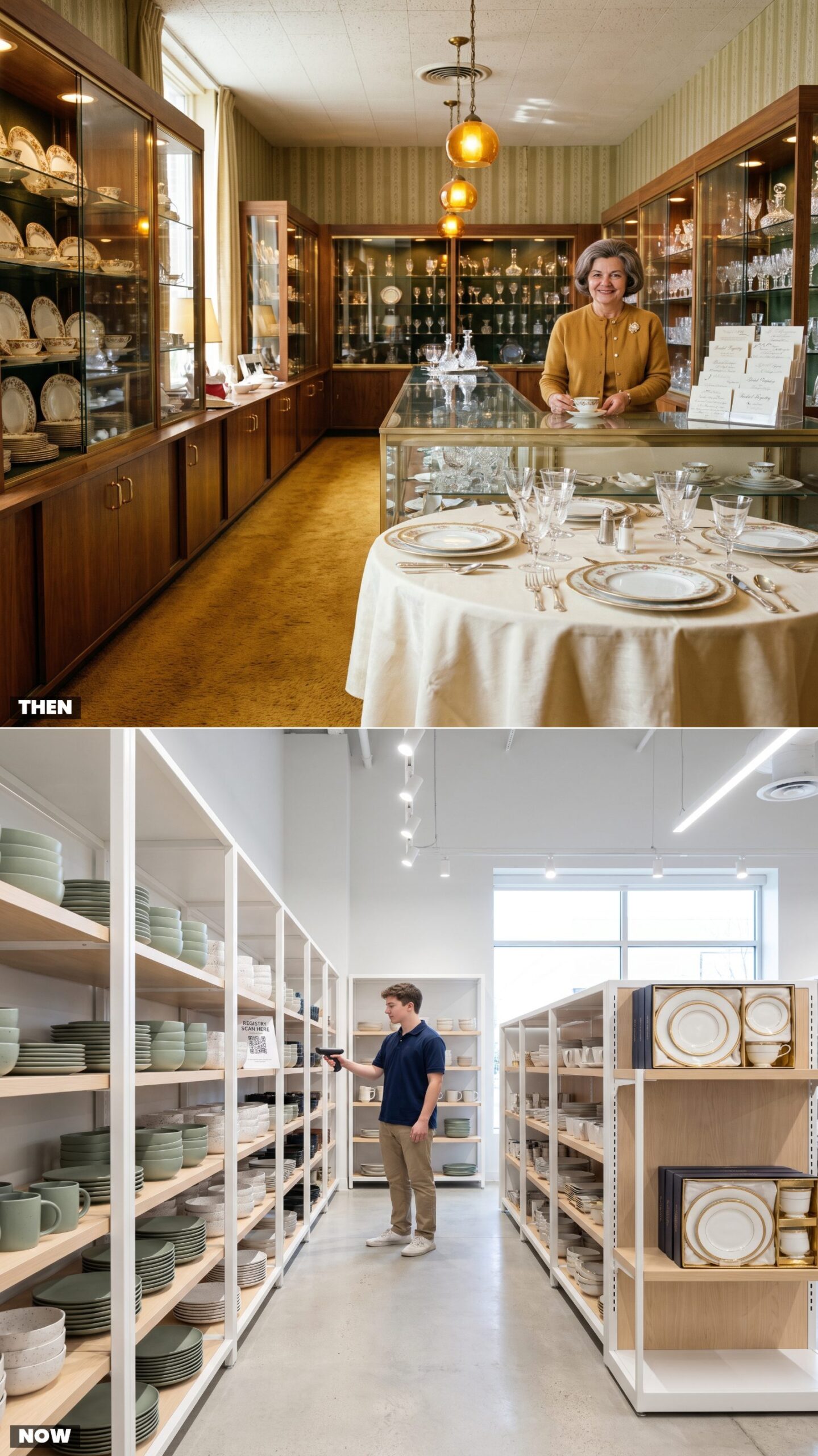
Getting married in 1975 meant a pilgrimage to this department. You walked the aisle of glass cabinets, pointed at a Noritake floral pattern, and a saleswoman wrote it into a registry book by hand. Cut crystal, gold rims, bone china you were terrified to touch. Whole shelves devoted to the good stuff you’d use twice a year and dust the rest.
Now? A few boxed stoneware sets and a QR code. When the formal dining room went, the china cabinet went with it, and casual matte plates you can microwave won the whole war. I don’t miss hand-washing crystal. But the ceremony of it is gone.
19. The Major-Appliance Showroom
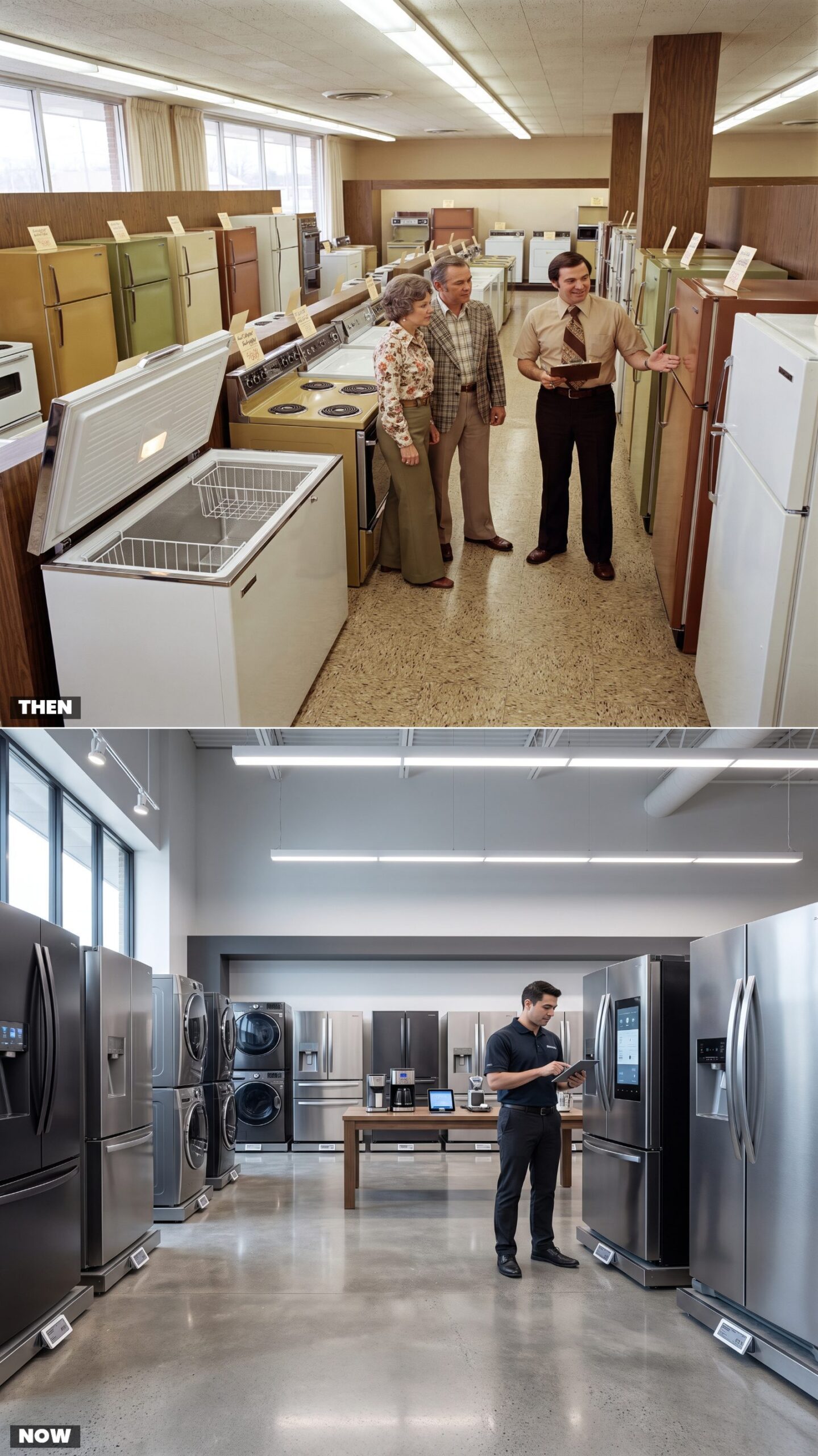
Avocado green. Harvest gold. Coppertone. The 1975 appliance floor came in the colors of a decade that thought a refrigerator should match the kitchen curtains, everything rounded and chromed, with a clipboard salesman who walked you through the difference between models like he’d welded them together in his garage.
Today it’s a sea of stainless steel and matte black, flat-faced and rectangular, half of them wearing touchscreens. The fridge has a screen now. Nobody asked for that. The salesman got swapped for a tablet and a QR code, and the colors got scared and went gray.
18. The Television and Stereo Department
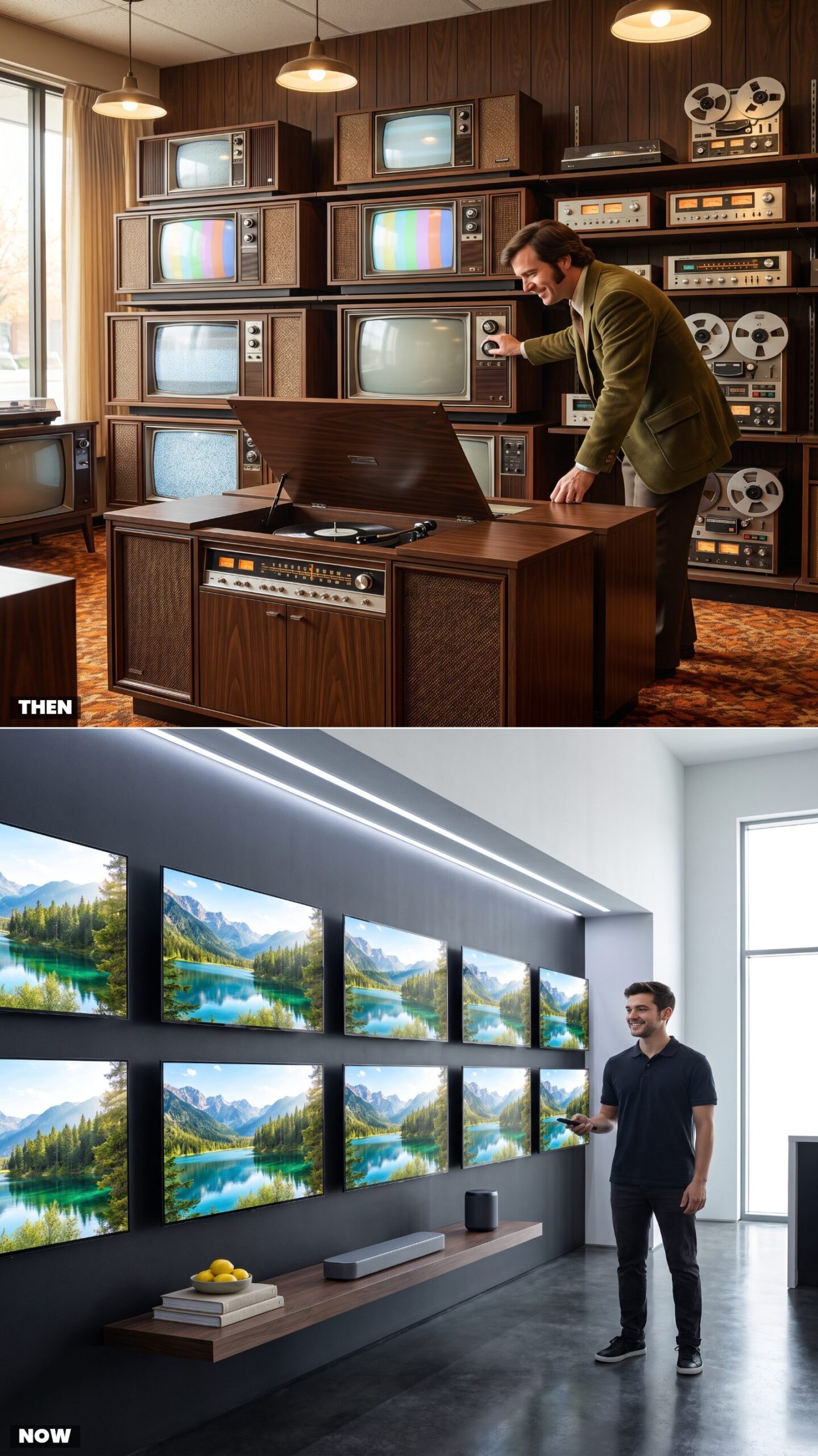
The TV was furniture in 1975 — a console the size of a sideboard, wrapped in walnut veneer, with a fabric speaker grille and a channel dial you turned with a satisfying clunk. Next to it stood the stereo console, lid up, turntable spinning, VU meters glowing amber. This was where the family entertainment lived, and it weighed as much as the family did.
Now the whole wall is a grid of screens thinner than a dinner plate, all looping the same nature footage. The sound comes from a bar the size of a baguette. Beautiful picture. But nobody’s turning a dial anymore.
17. The Record Album Department
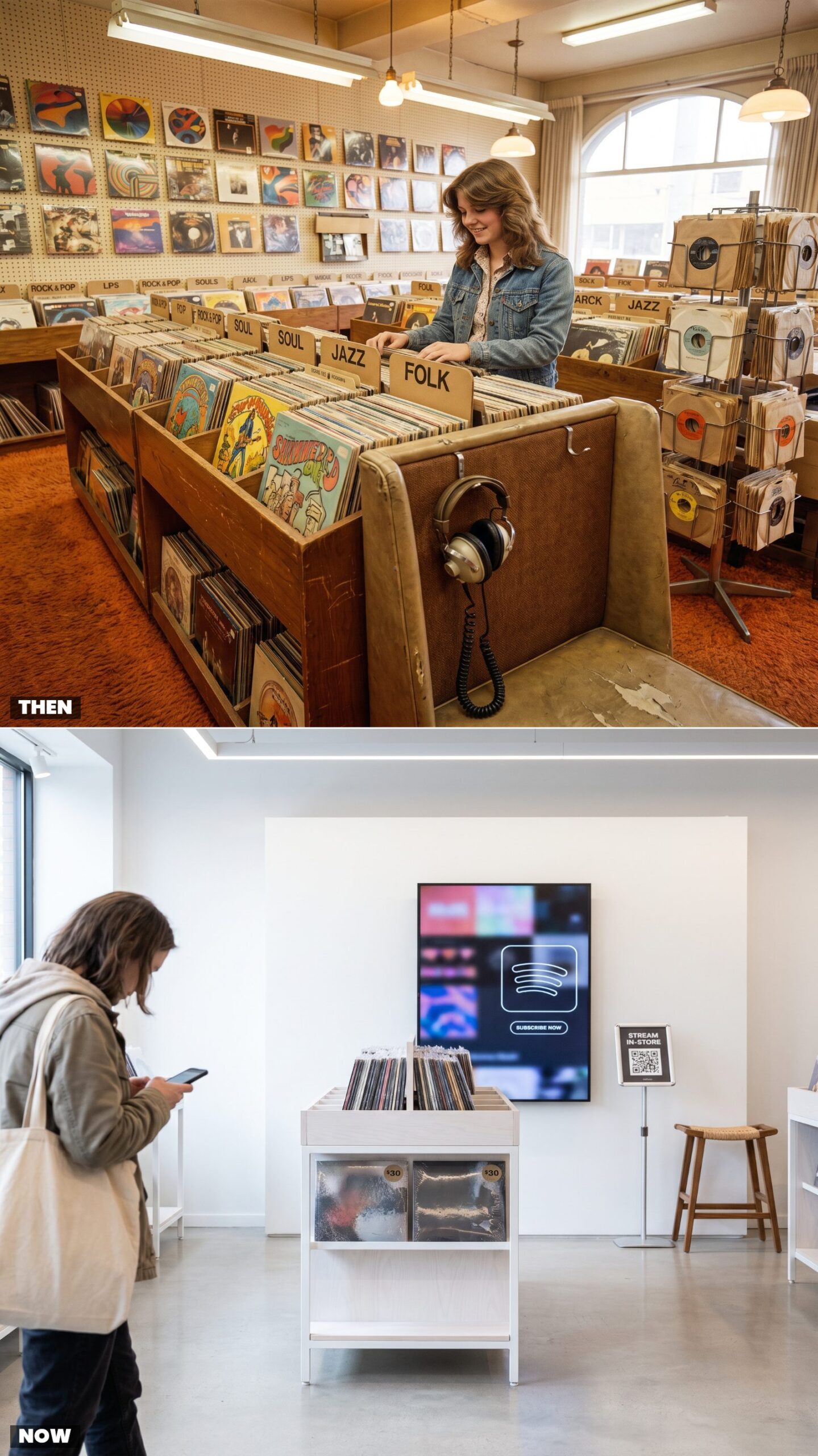
You could lose an hour in these bins. Flipping through hundreds of LPs, thumb walking across cardboard sleeves, the divider cards hand-lettered by genre. Not sure about something? You carried it to the listening booth, slipped on the headphones, and stood there deciding whether it was worth your money. Half the reason to buy was the album art staring back at you.
The department is basically gone. A little vinyl endcap survives as a nostalgia object — reissues at premium prices, facing out like museum pieces. Everything else became a QR code pointing at a streaming app. Convenient. You can’t flip through a cloud, though.
16. The Camera Counter
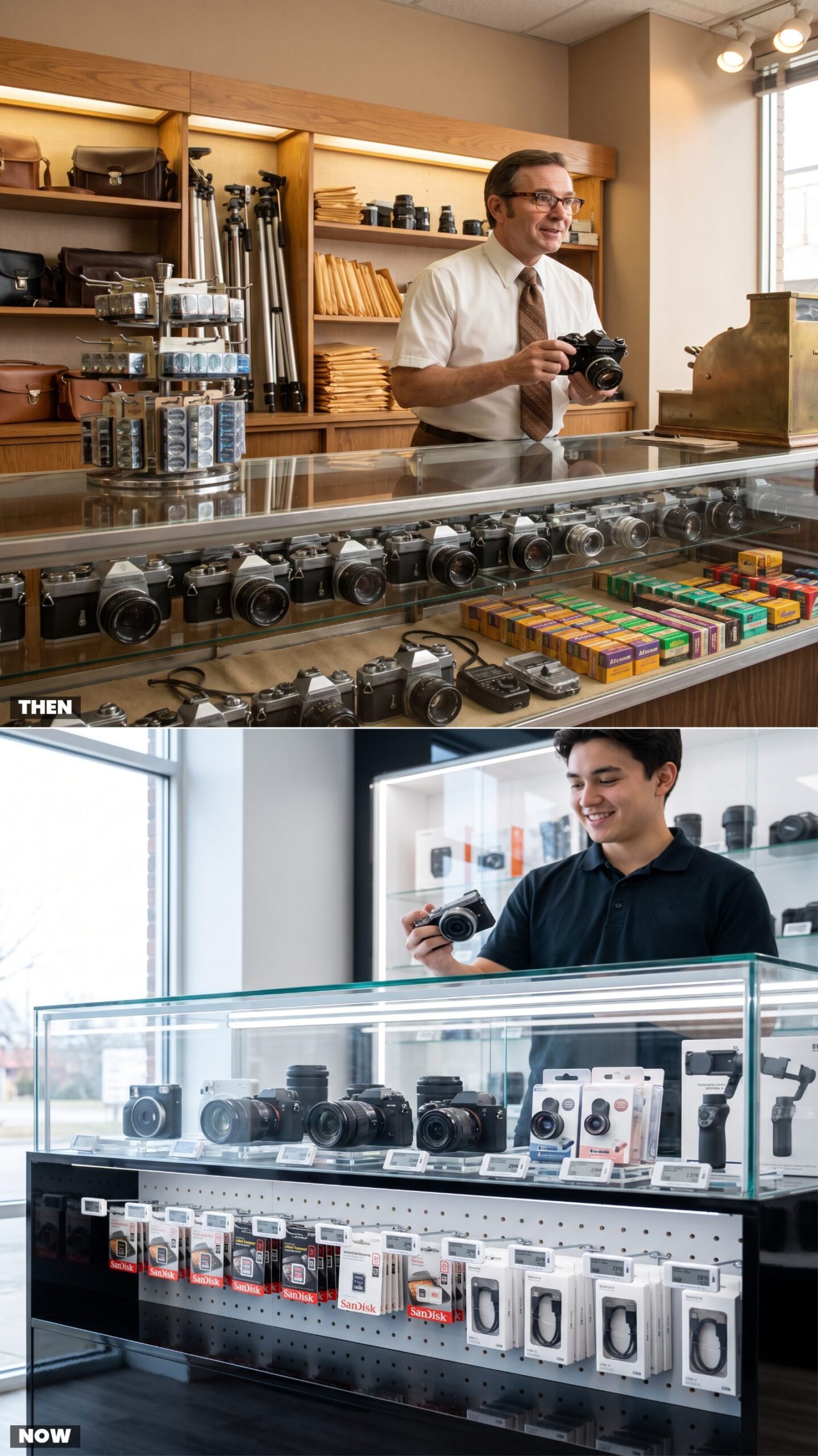
The camera counter had gravity. Glass case, chrome-bodied SLRs lined up like jewelry, boxes of film stacked in cheerful colors, a spinner rack of flashcubes by the register. A salesman who actually knew the gear would pop the back open, show you how to thread a roll, and remind you to drop the finished film in the yellow envelope for developing. You shot 24 exposures and prayed half came out.
The counter shrank to a shelf. Most cameras live in your pocket now, so the case holds a few mirrorless bodies, some instant-print cameras bought purely for the nostalgia, and a peg strip of phone clip-lenses. The film envelope is a memory.
15. The Typewriter and Office-Machine Department
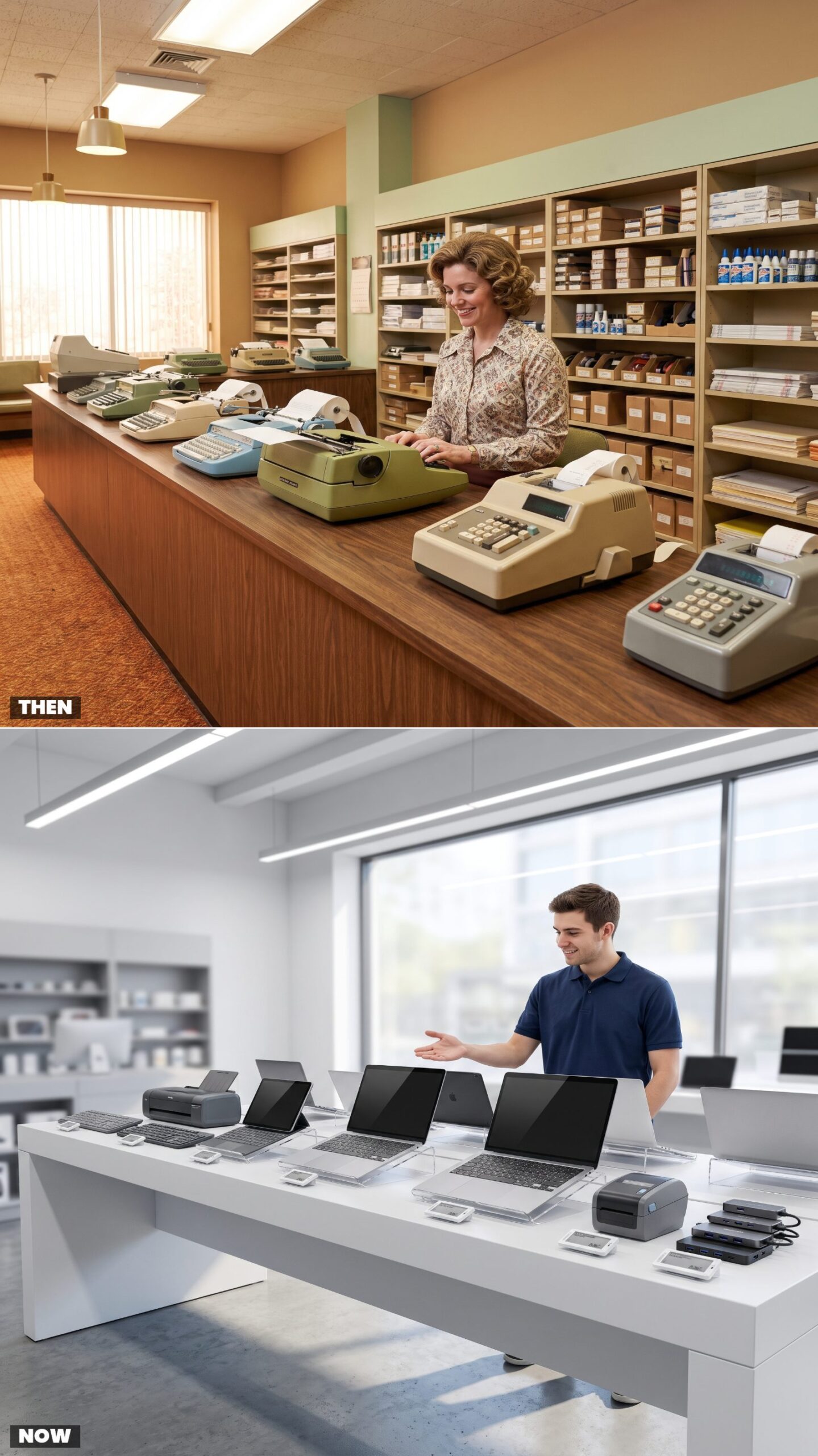
This department clacked. A row of typewriters in beige and powder blue and avocado, an electric model humming under the saleswoman’s demo, the smell of ribbon ink and correction fluid hanging over the counter. Adding machines chattered out paper tape. Buying a typewriter was a real decision — manual or electric — and the thing followed you through high school and into a first job.
The same footprint now holds laptops on acrylic stands and a portable printer. Silent. Sleek. Nothing clacks. I’ll admit correction fluid was a nightmare and I don’t want it back, but a keyboard with no thunk to it still feels a little hollow.
14. The Toy Department
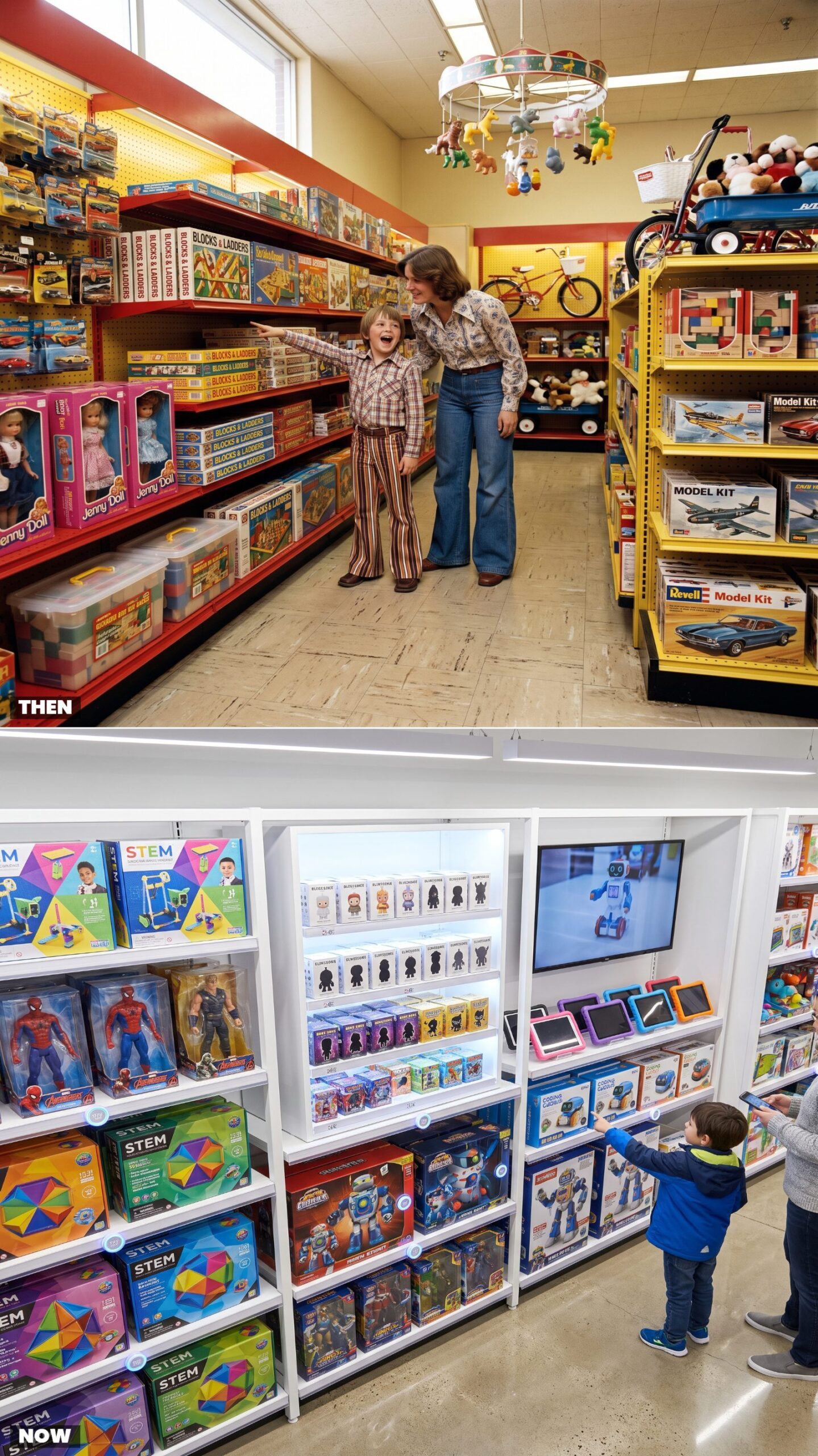
The toy department in 1975 was pure noise and color. Red and yellow metal shelving, board games stacked to the ceiling, dolls staring out through cellophane windows, die-cast cars in a bin you could dig through with both hands. A kid would plant themselves in the aisle and refuse to leave. The whole place smelled like new cardboard and possibility.
Still colorful, but different now. Blind-box collectibles, coding robots, kids’ tablets, and a screen looping a demo video on a loop. The digging bin is gone. Blocks and board games survived, sure, but they share a shelf with toys that need charging.
13. The Bicycle and Sporting-Goods Department
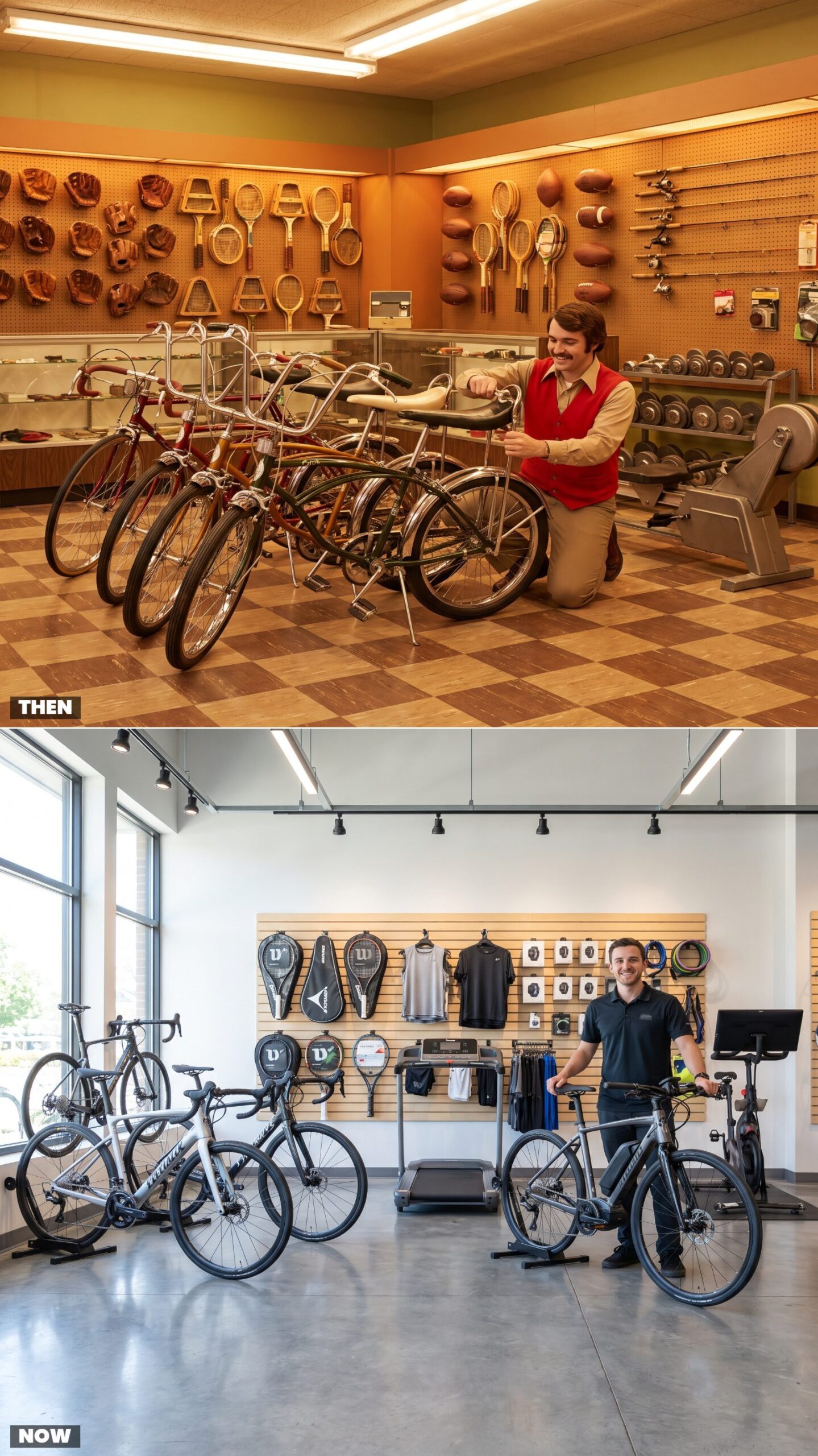
Every kid’s Christmas fantasy stood right here. A row of bikes with banana seats and high handlebars, chrome fenders throwing light, one grown-up ten-speed with drop bars for the older kids. Wooden tennis rackets clamped in presses lined the wall behind, next to baseball gloves you had to break in yourself and footballs stacked in a pyramid. The salesman adjusted your seat height and sent you off.
Same floor, different world. The bikes are aluminum and carbon-look now, one with a battery and a little screen. Rackets went graphite. And the exercise corner grew into a smart stationary bike that tracks your heart rate and, apparently, yells encouragement at you. The banana seat, sadly, did not make it.
12. The Furniture Gallery
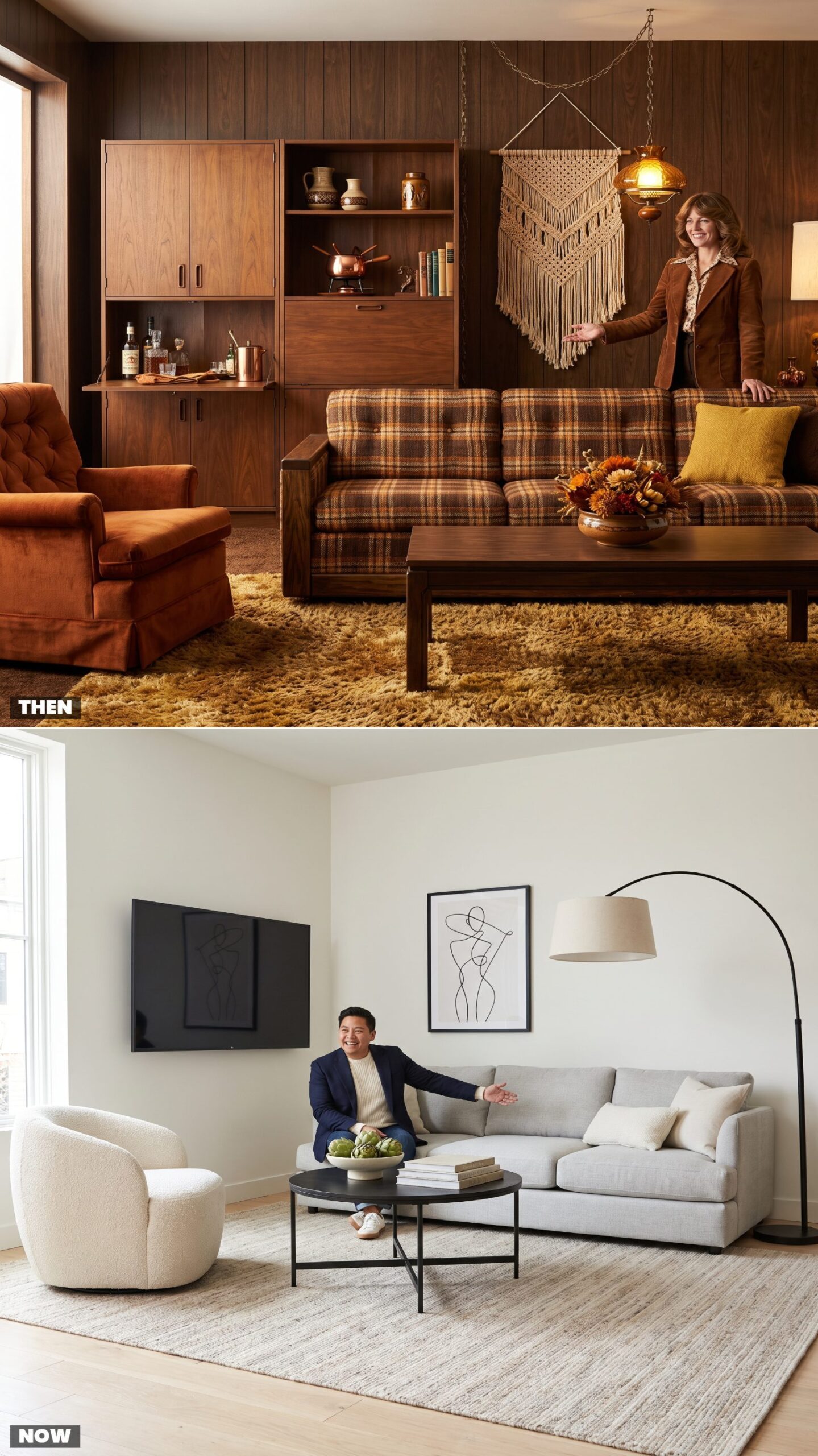
The furniture gallery in 1975 was staged like your neighbor’s rec room, and honestly you kind of wanted it. A plaid sofa with chunky wooden arms, a burnt-orange velour chair, a shag rug in gold and brown, a swag lamp dripping amber glass. Throw in a macrame wall hanging and a fold-down bar built into the wall unit, and there was the dream. Warm, dense, unapologetically brown.
Today’s vignette went quiet and pale. A low gray fabric sectional, a cream boucle accent chair, a round oak coffee table, and a flat-weave rug in some studiously undecided neutral. Clean, calm, and about eighteen shades of beige. I miss the shag a little. Not the vacuuming of it.
11. The Department Store Restaurant
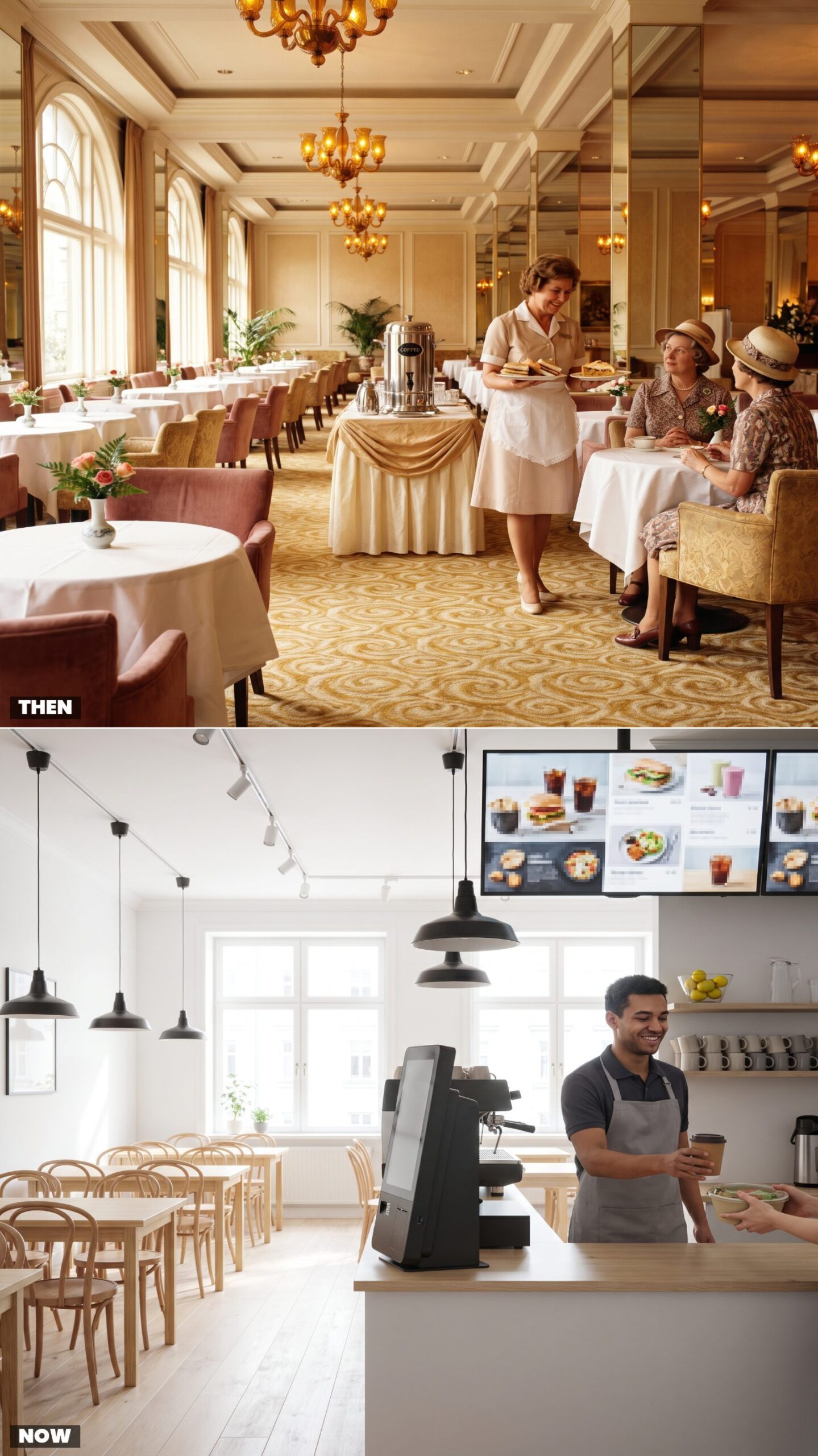
The tea room was where shopping became an occasion. White linen, a little vase on every table, upholstered chairs in rose and gold, a waitress in a crisp uniform bringing a club sandwich and a slice of pie. Ladies in their good dresses lunched between the shoe department and the millinery counter. It was dignified. It was slow on purpose.
Now it’s a fast-casual cafe with a self-order kiosk, bare wood tables, and a menu on a digital board. You grab a paper cup and a salad bowl and eat in fifteen minutes flat. Efficient, sure. But nobody’s lingering over pie under a chandelier anymore, and something about that feels like a real loss.
10. The Basement Lunch Counter
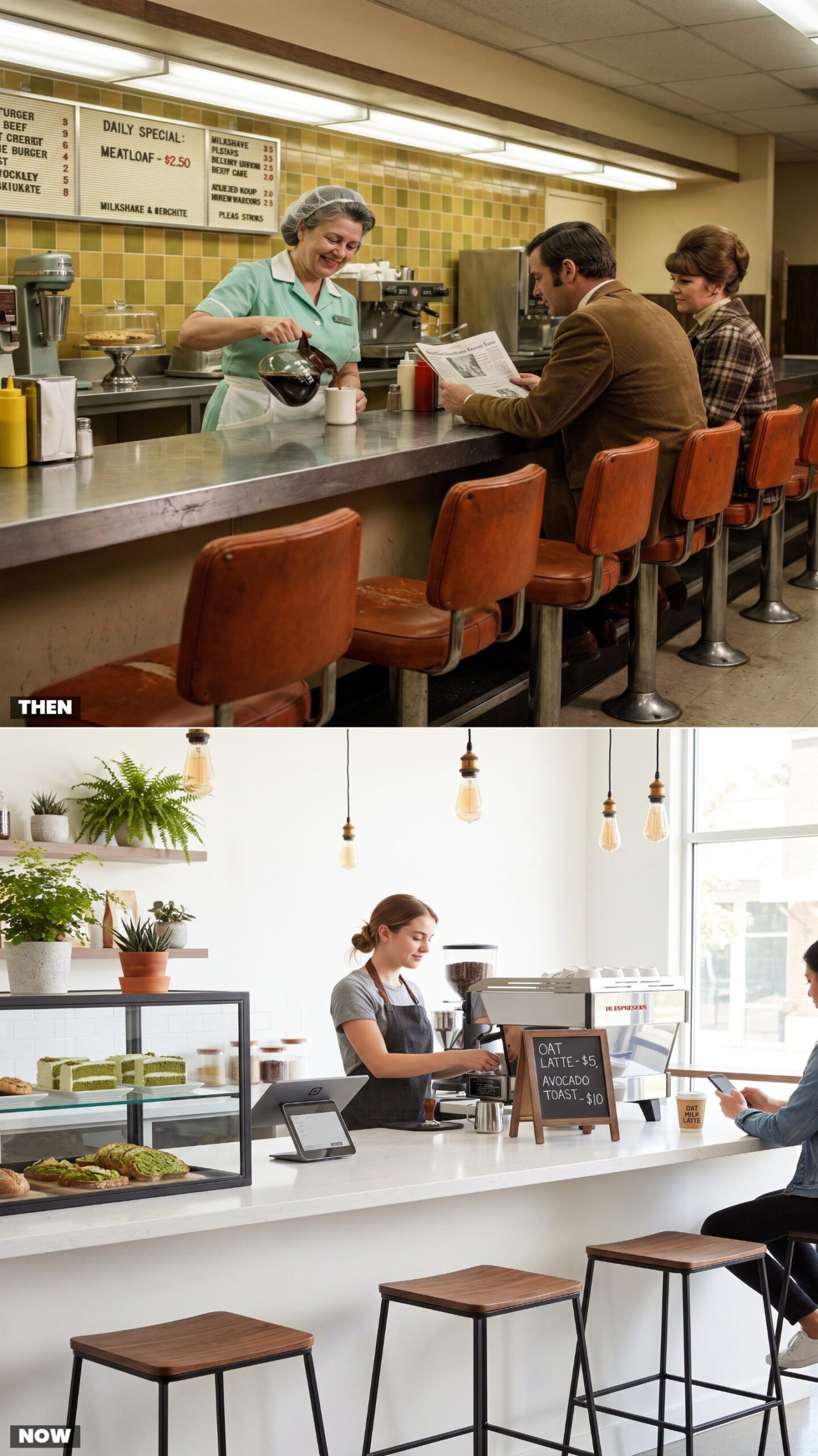
You could smell the basement counter before you saw it: coffee that had been sitting since ten, griddle grease, a whiff of cherry pie under a glass dome. The stools spun, and the waitress knew the regulars by name. A club sandwich and a chocolate malt ran you under two dollars, and you ate elbow-to-elbow with strangers who were shopping the same sale you were.
It didn’t survive the mall era. Where it lived, you now get a leased coffee kiosk or a fast-casual pod with oat milk and a QR code. The malt machine is gone, and so is the waitress who called you honey.
9. The Bakery and Candy Counter
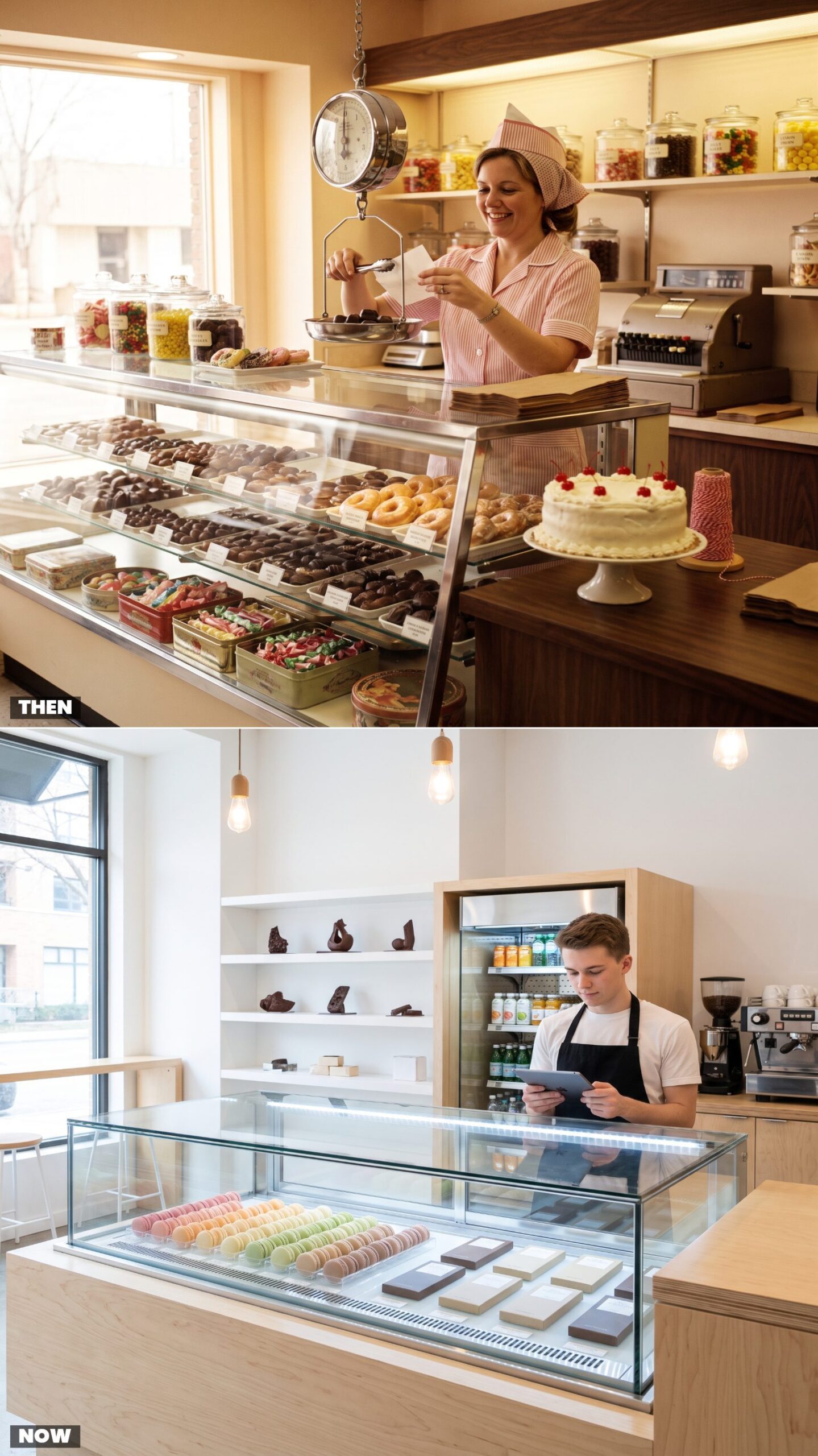
A quarter pound of bridge mix, weighed out by hand and folded into a little white bag while you watched. That was the ritual. The candy counter sat near the door on purpose, catching you on the way out with sugar and warm bread smell working together like a two-person con.
These days the confection counter, if a store keeps one, sells macarons in twelve calibrated colors and chocolate bars that photograph well. The scale went digital. The jelly-bean jars vanished. What you lost was the small theater of somebody scooping your candy right in front of you.
8. The In-Store Beauty Salon
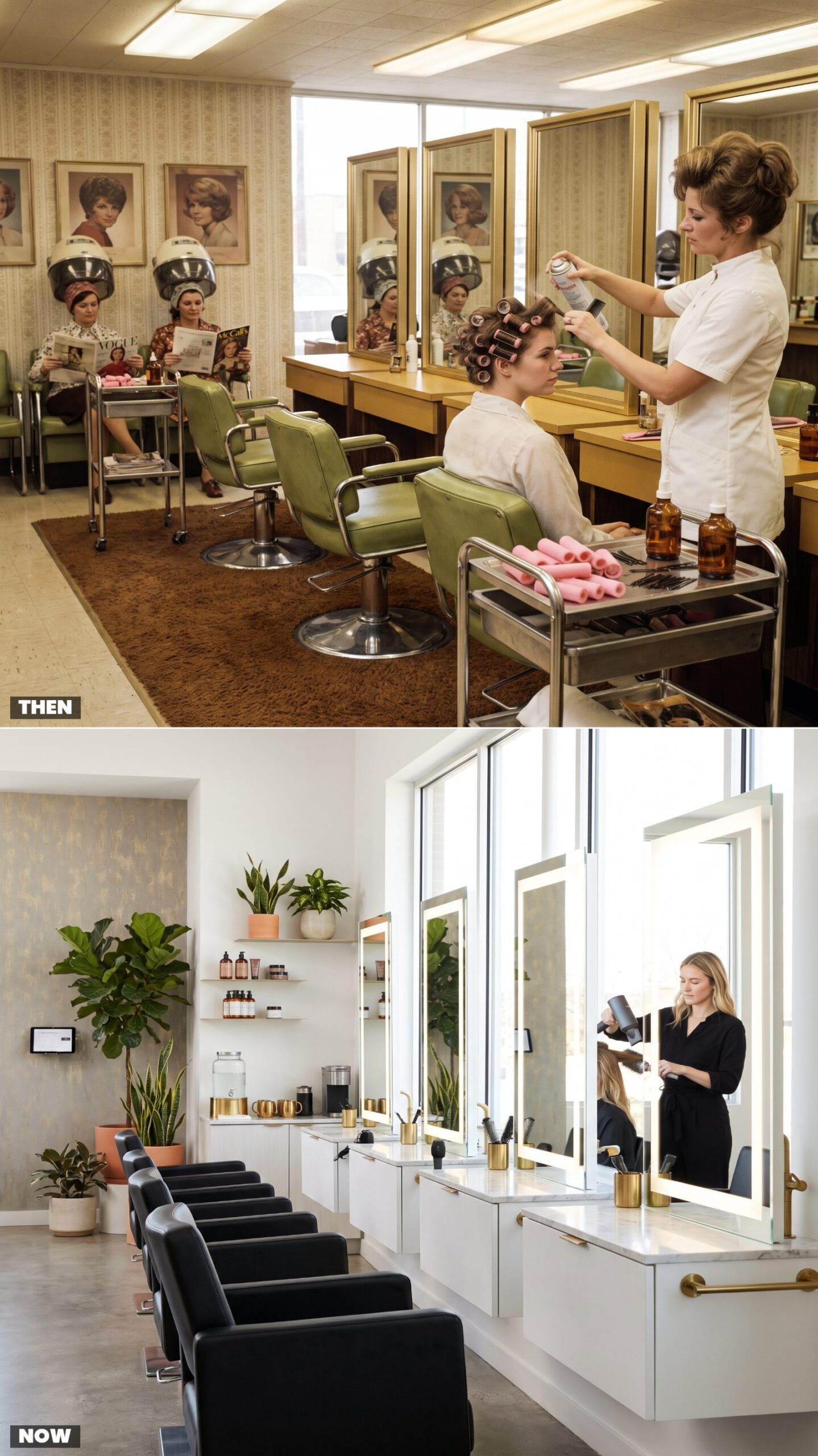
The dome dryers were the sound of the place — a whole row of them roaring while women parked underneath with rollers and a stack of magazines, cooking a set that had to last until next Friday’s appointment. You booked the same time every week, and the operator knew your head by touch.
The weekly set-and-style is nearly extinct. Salons went freelance, chair-rental, appointment-app, and the department-store salon mostly folded. What replaced it is a blow-dry bar with a beverage menu and a stylist who texts you your rebooking link.
7. The Portrait Photography Studio
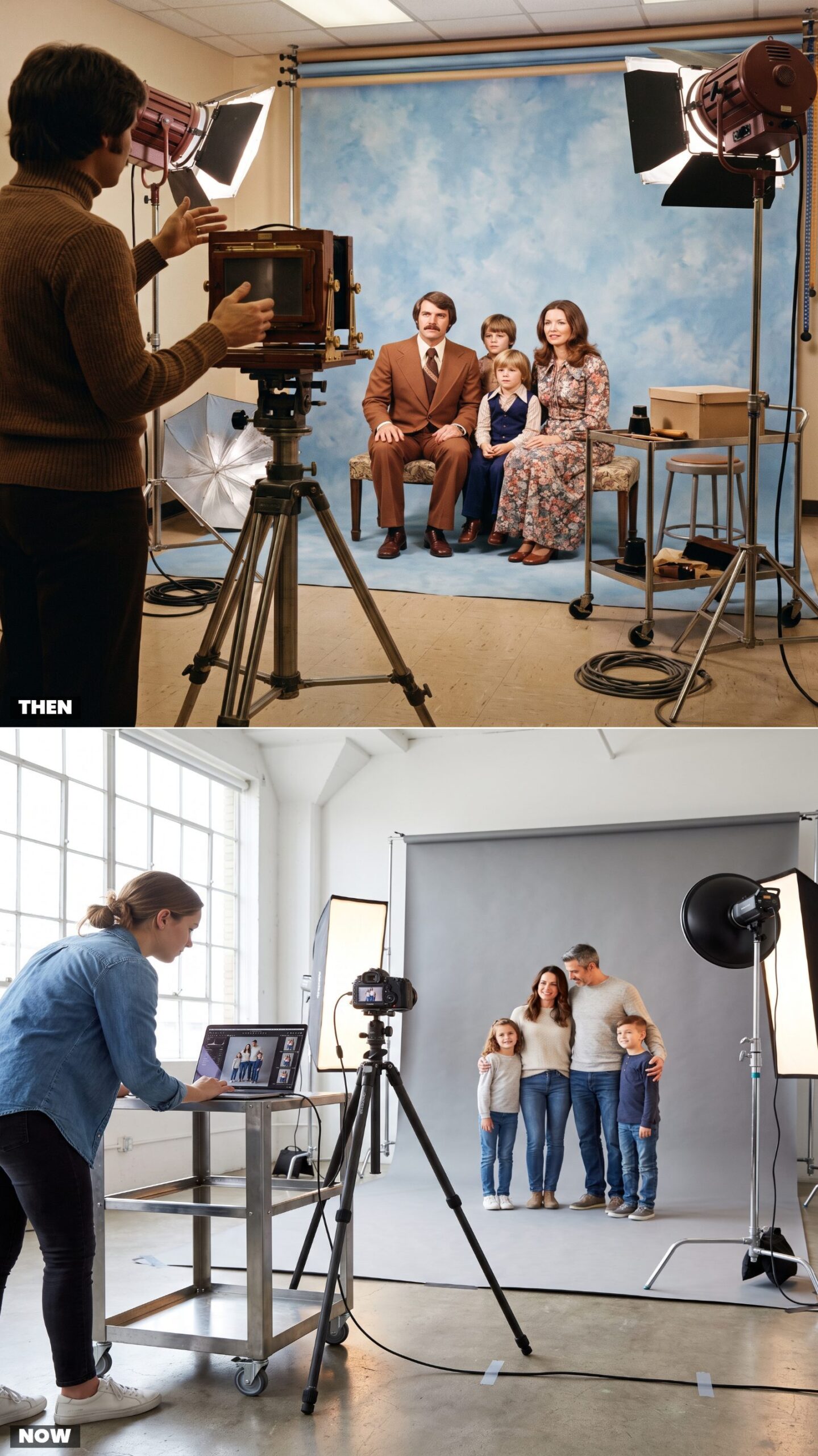
You dressed the whole family up for this. The photographer counted down, the flash popped once, and then you waited two weeks for a package of prints in three sizes you picked off a paper proof sheet. That painted-cloud backdrop showed up in a million living rooms across America.
The mall portrait studio still exists in pockets, but the model flipped. It’s tethered digital now, instant review on a laptop, and most families skip the studio entirely for a phone with 200 megapixels and a friend who’s decent with light. The two-week wait feels like science fiction.
6. The Travel Agency Desk
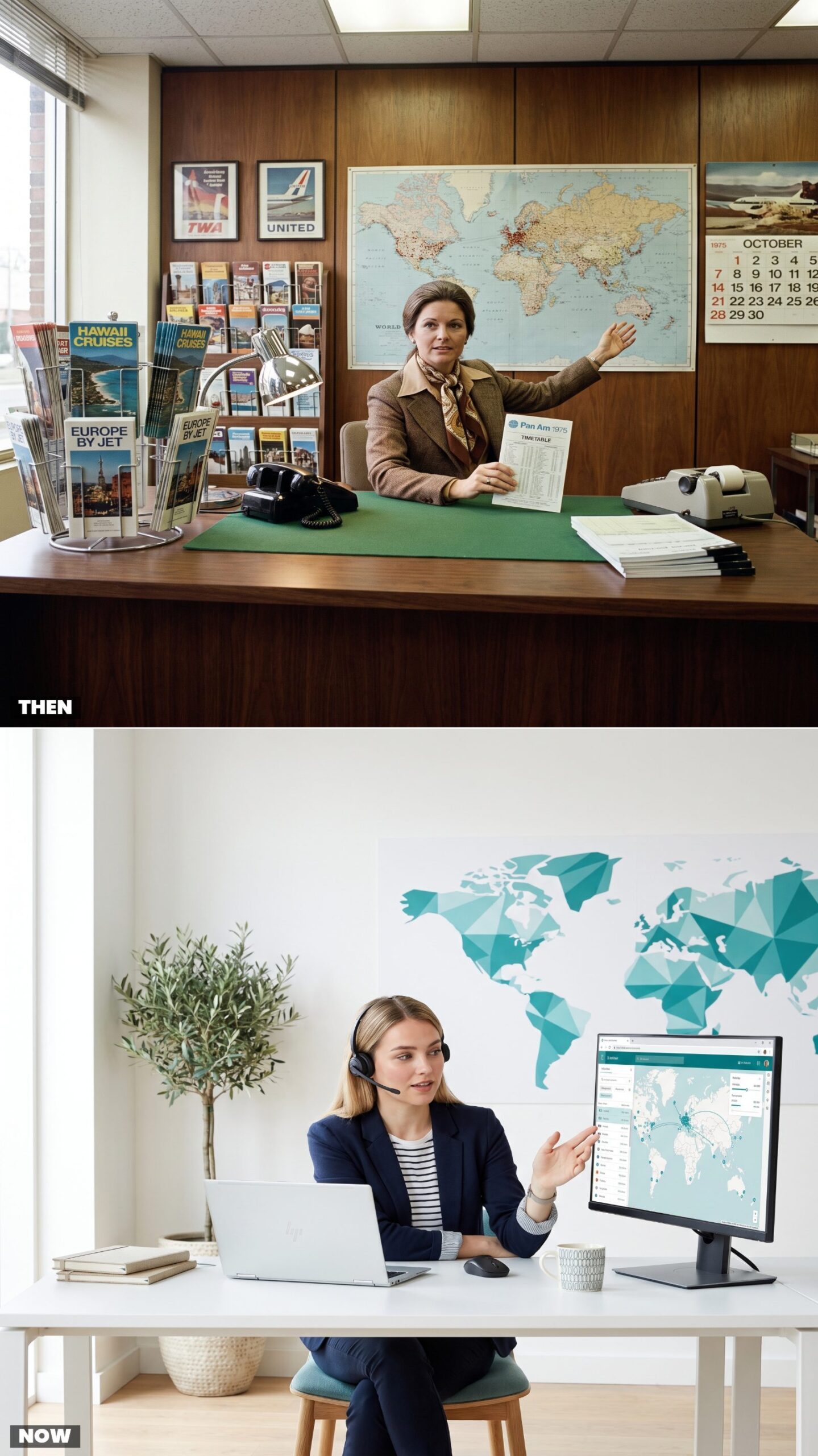
Booking a trip meant sitting across a desk from a person who had actually been to the places on the wall map. She’d spin the brochure rack, pull a fare out of a phone-book-thick airline timetable, and type your ticket on carbon-paper forms. You left with a physical folder and a paper ticket, which you did not lose or you did not fly.
The in-store travel desk is basically gone. You are the travel agent now — in bed at 11 p.m., comparing seventeen tabs. Something got faster. Something knowledgeable got quieter.
5. The Optical Department
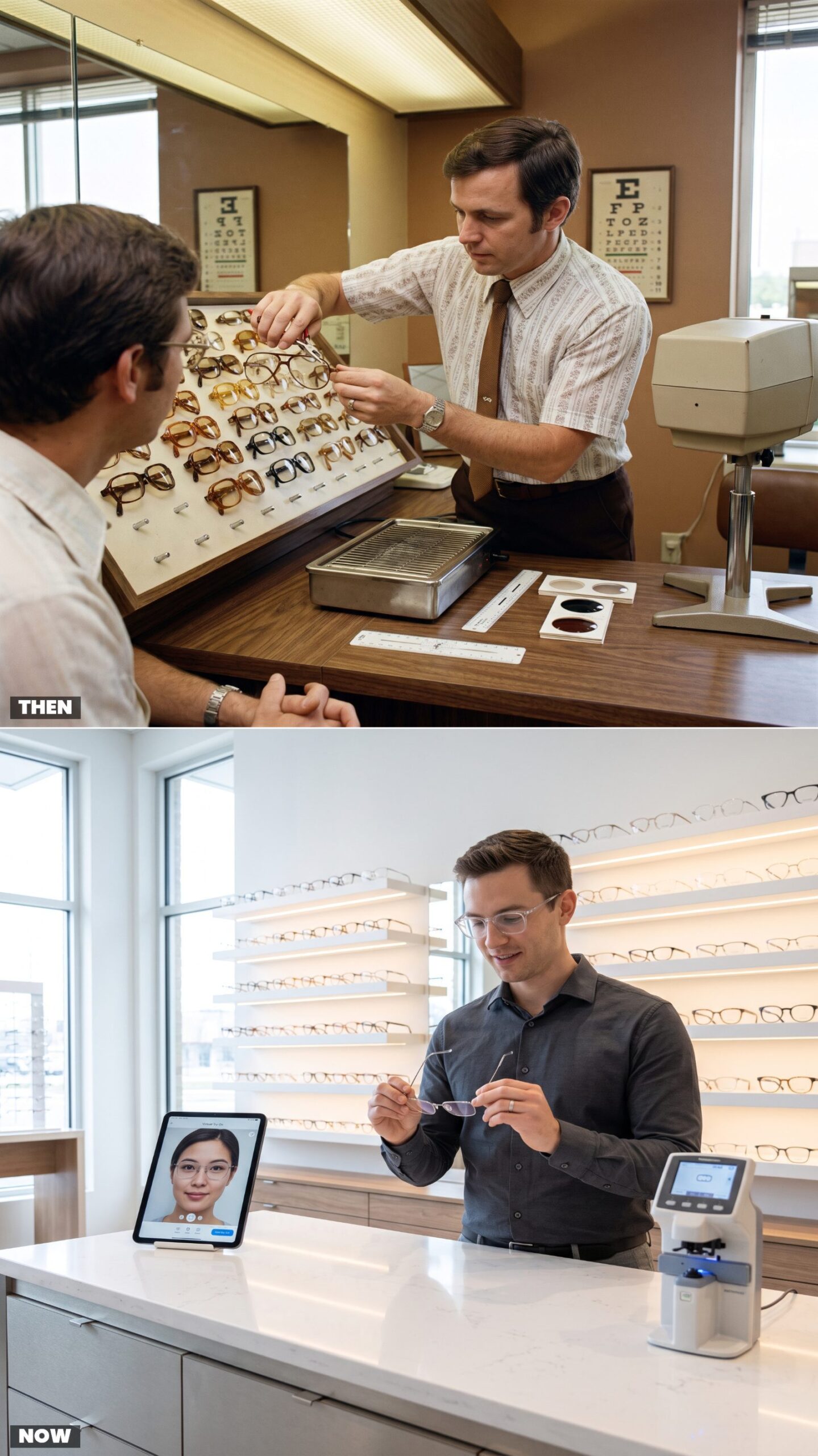
The optical counter was a wall of serious plastic. Frames the size of a car windshield, tortoiseshell and amber, each heated over a little tray so the optician could bend them to your face with pliers. You picked from whatever sat in the case that day, then waited a week or two for lenses ground somewhere in the back.
Now you try frames on a tablet with a camera, order online, and get lenses in an hour or in the mail. The frames got thinner. The whole department got optional.
4. The Alterations and Tailoring Room
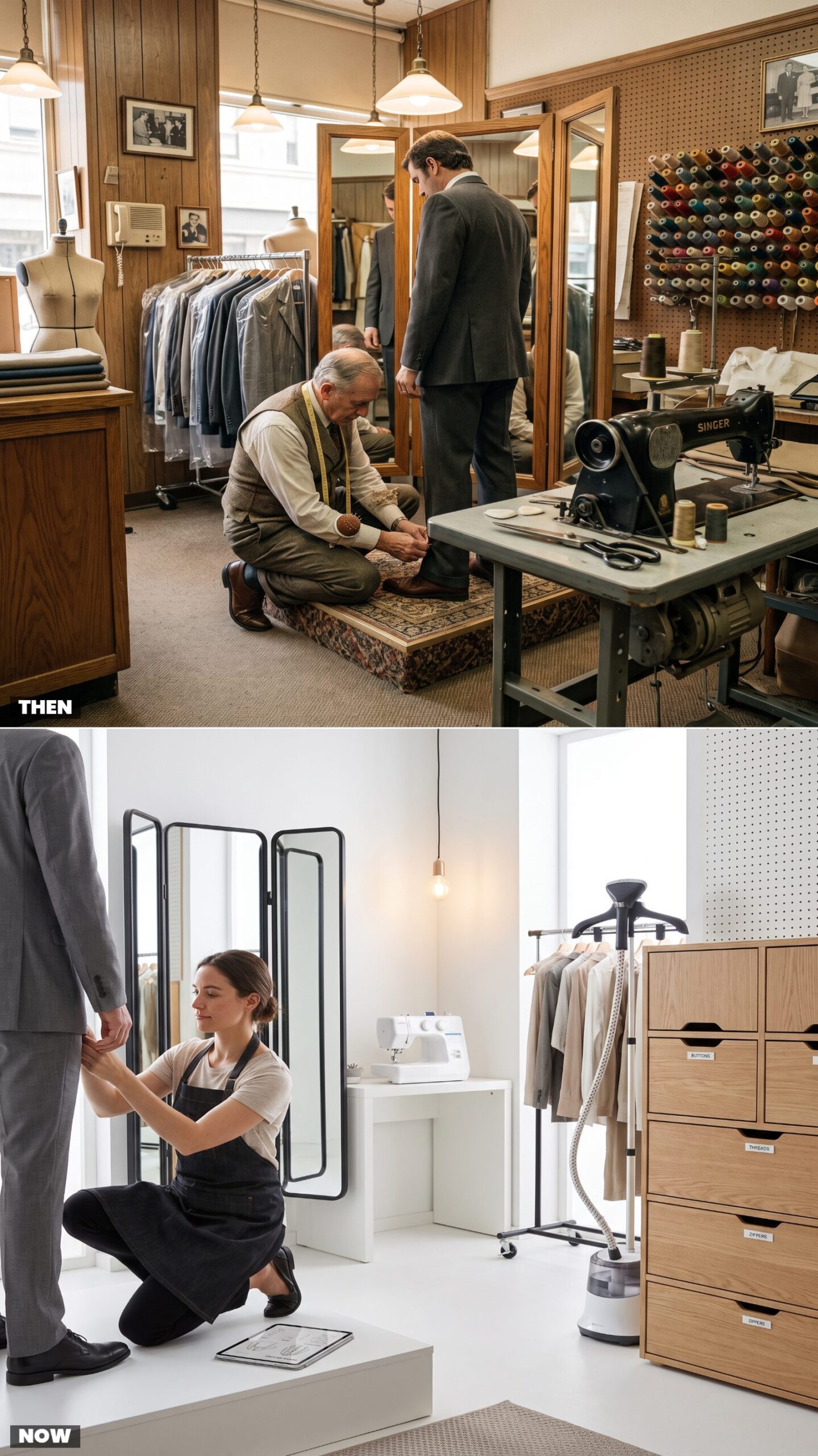
Buy a suit, and the alterations came with it, sometimes free. The tailor knelt with a mouthful of pins and a wrist cushion, chalked the hem, pinned the waist, and told you to come back Thursday. There was a room in the store for exactly this — a real one, with a Singer humming in the back.
Most stores killed in-house alterations to save money. Now it’s a paid add-on, a third-party contractor, or you Googling a neighborhood tailor at midnight. Off-the-rack became take-it-as-is, and a fitted garment turned into a luxury instead of a default.
3. The Public Telephone Booths
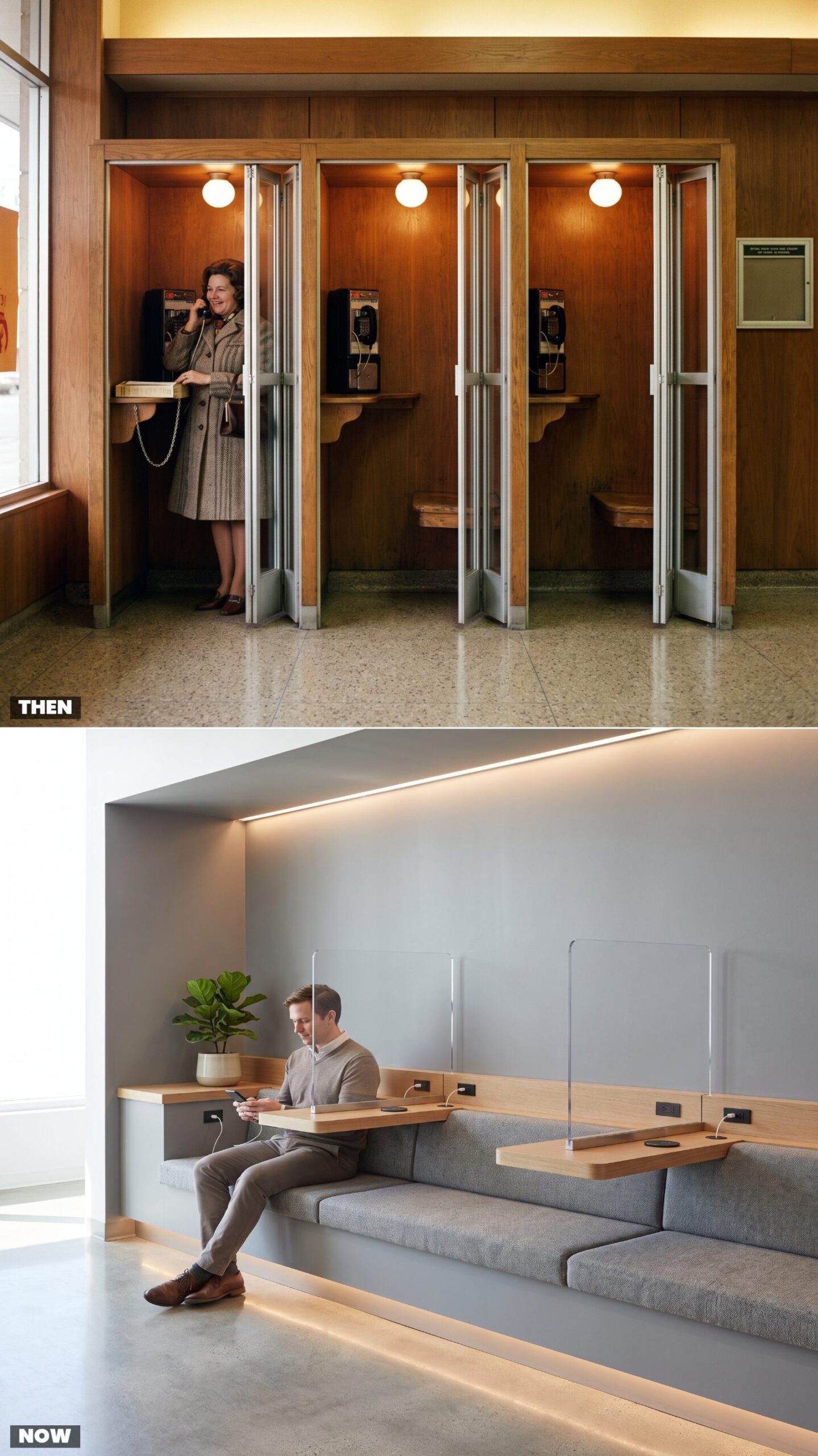
Little wooden rooms with folding doors, a seat, and a phone book on a chain. You dropped a dime, dialed, and if the line was busy you got your dime back. Kids fought over who got to fold the accordion door shut. It was privacy of a kind, right there on the sales floor.
The booths are gone completely. Where they stood, if anything stands, you’ll find a charging lounge — a bench, a row of USB ports, and people staring at the phone already in their own pocket. Same corner, opposite idea of what a phone is even for.
2. The Seasonal Christmas Department
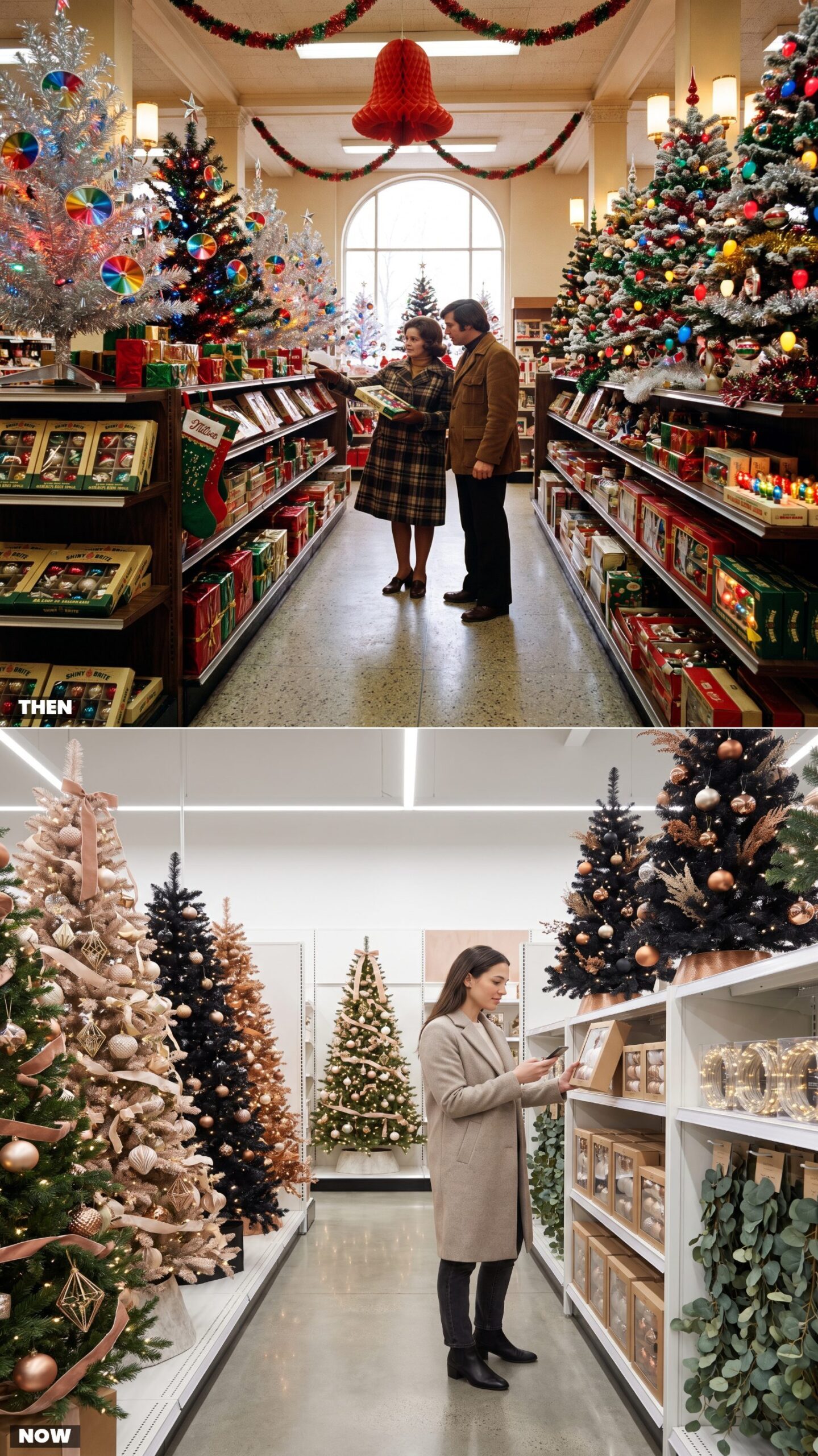
The aluminum tree lit by a rotating color wheel might be the most 1970s object ever sold in a department store. The Christmas department went up around Thanksgiving in a blast of tinsel, bubble lights, honeycomb paper bells, and boxed glass ornaments packed in cardboard grids. It smelled faintly of pine spray they didn’t have any real pine for.
The seasonal floor still shows up, but it’s themed now — blush-and-gold one year, matte-black-and-copper the next, everything pre-lit and coordinated. The color wheel became a collector’s item. Charm gave way to a mood board.
1. The Toyland Santa Set
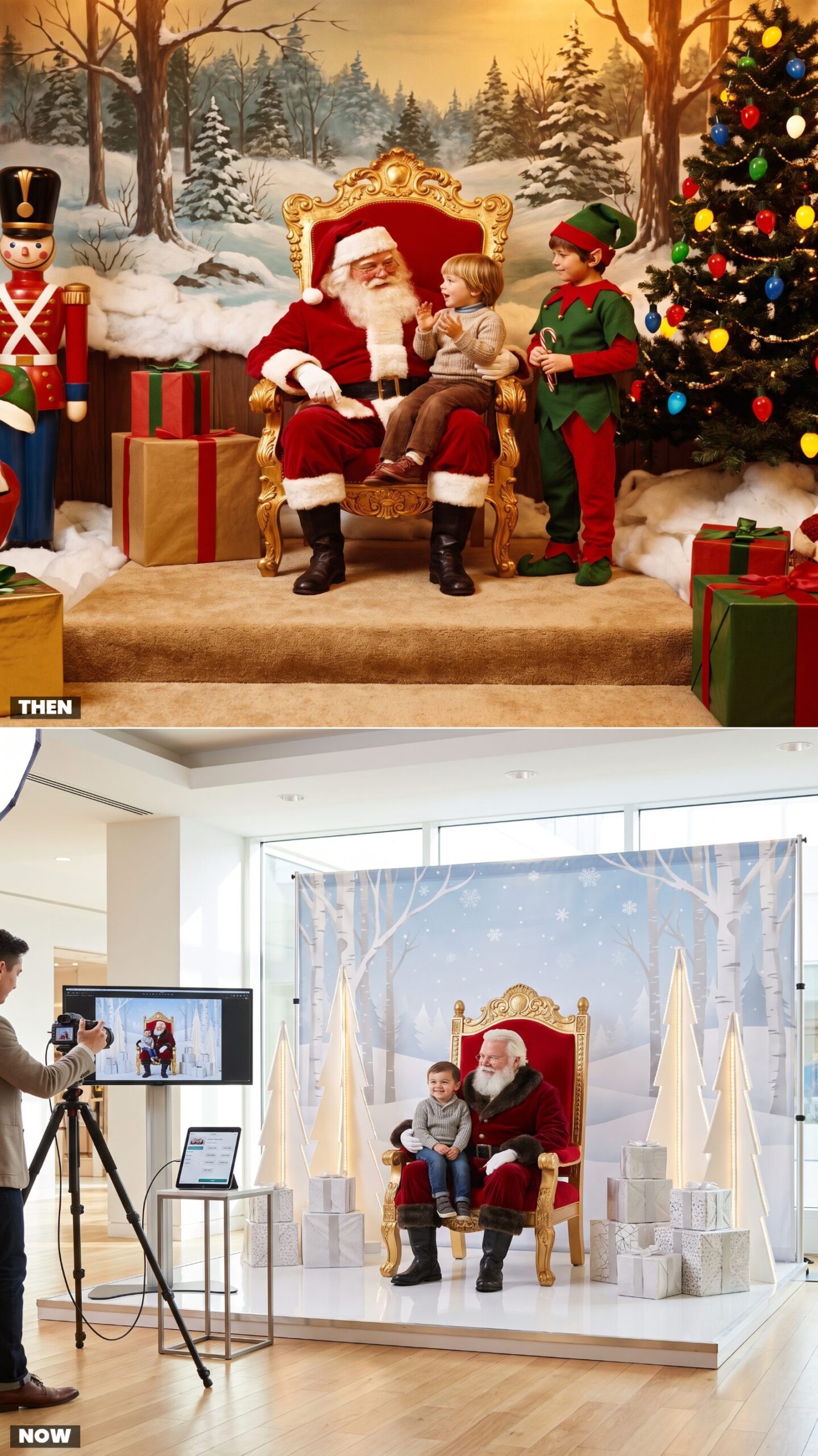
You waited in a line that wrapped the toy floor for a ninety-second audience on a velvet throne. Santa listened, an elf handed over a candy cane, and a store photographer snapped one shot that arrived in the mail before Christmas, if you were lucky. Real cotton snow. A painted forest. Toys stacked to the ceiling behind you.
Toyland itself shrank as toy stores and screens took over, but the Santa set survived — cleaned up and monetized. It’s a reservation now, a tethered mirrorless camera, a live-preview screen, photo packages you pick before you leave. Same lap. New checkout.