
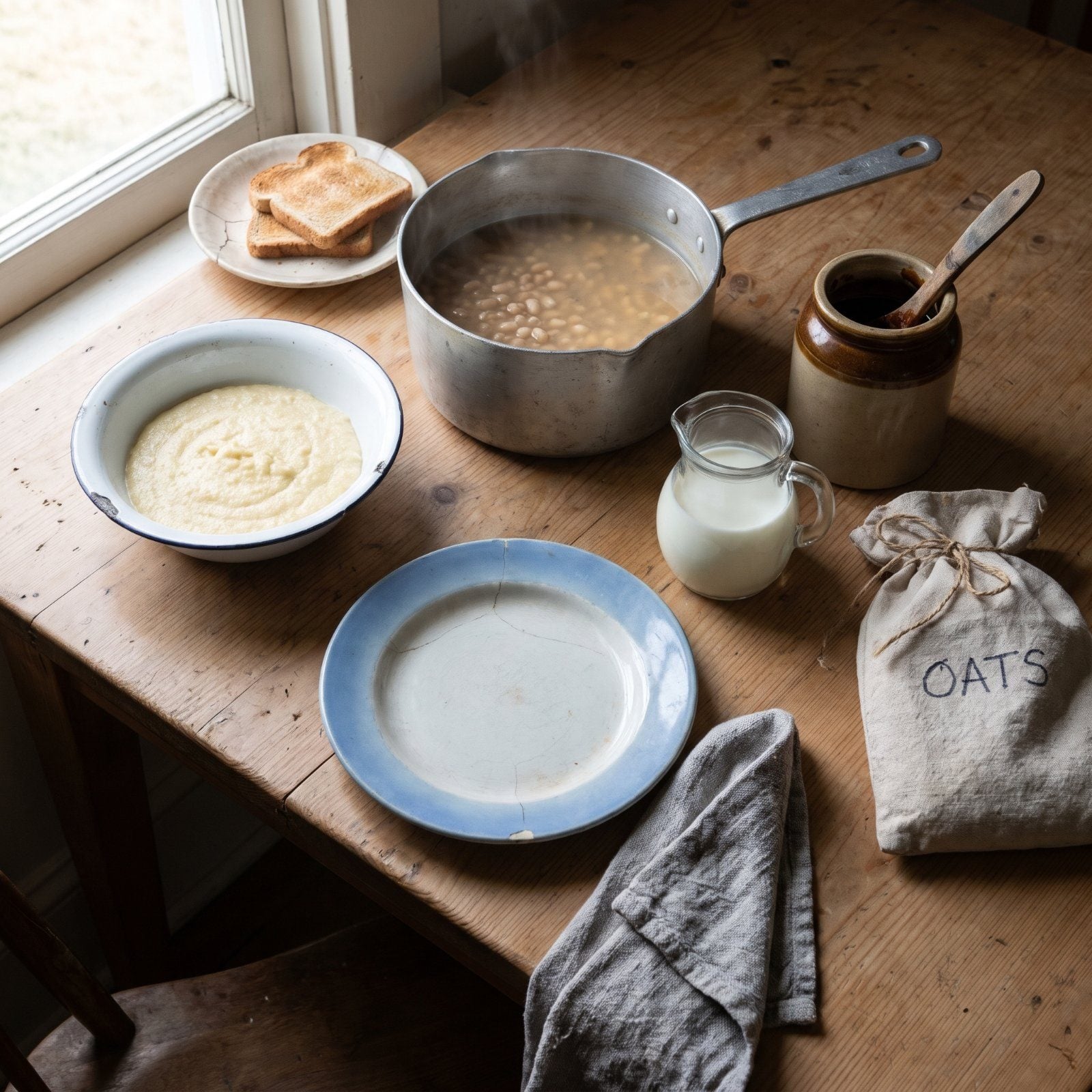
A nickel of cornmeal had to feed a family on a Monday and still show up again on Tuesday. That was the arithmetic of 1933. The household account books that survive from it read less like menus and more like puzzles solved with a tired hand. We rebuilt seven days of real recorded meals from one family’s kitchen ledger. Mush that became fried mush, bean broth that became soup, beef creamed and spread thin over toast. Watch how one meal quietly fed the next.
Please note that some of the images in this article were created with the assistance of AI.
24. Monday Breakfast: Cornmeal Mush With Milk
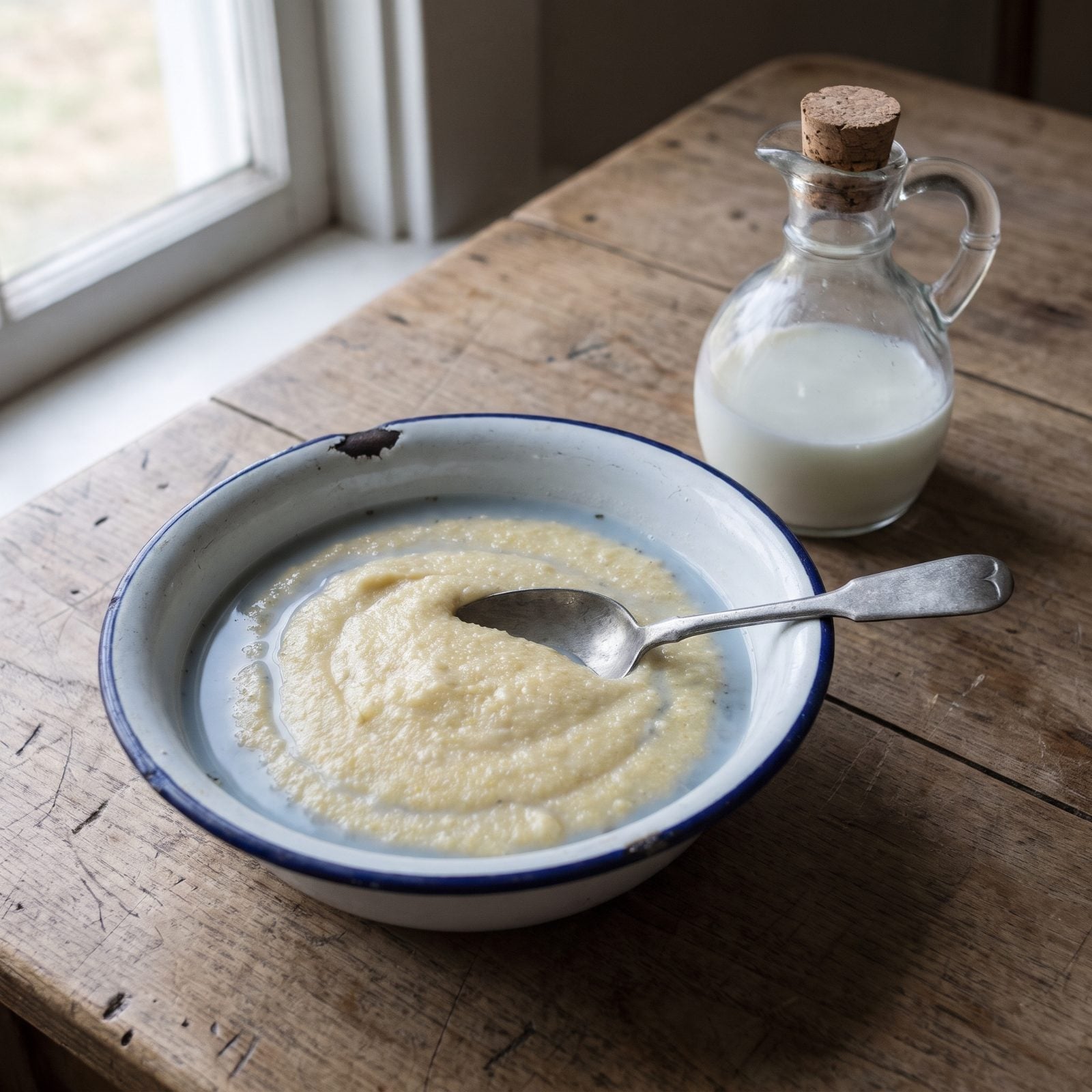
Cornmeal and water, boiled until it held a spoon upright. That was the whole of it. The milk on top got poured thin, stretched with water more often than the family would have admitted to a visitor.
It was the cheapest filler in the store, sold loose by weight into a paper sack, and a single pot of it fed everyone for almost nothing. But the real reason it opened the week wasn’t taste — it was sheer volume. You ate a bowl of mush and you weren’t hungry again until noon. Simple as that.
23. Monday Lunch: Navy Bean Soup and Bread
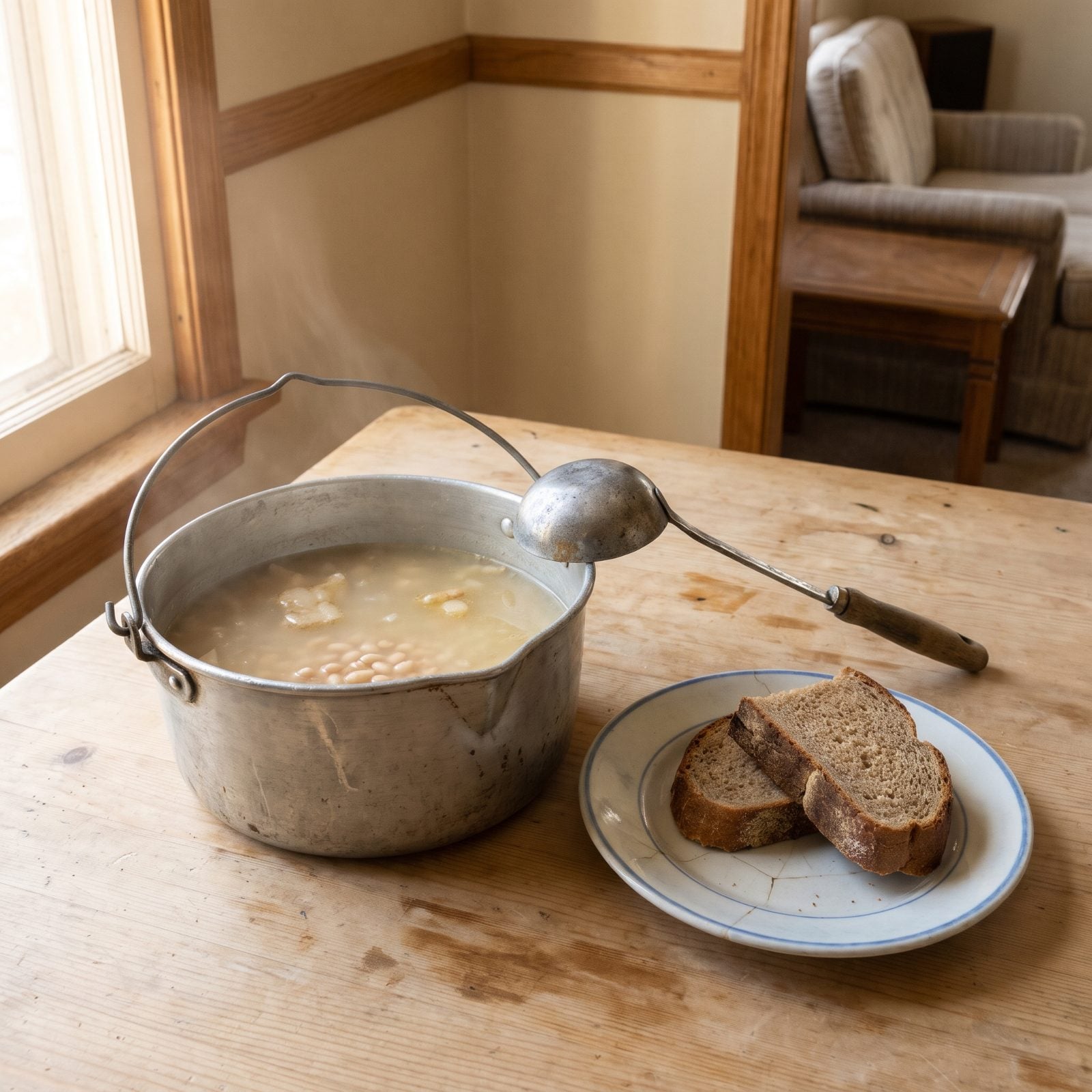
Navy beans soaked overnight in a bowl by the stove, then simmered all morning with whatever scrap of salt pork was hanging around. By noon the pot gave up a thin, pale broth and a loaf to sop it with.
And here’s the quiet genius of it — the beans stretched twice. The broth became lunch, and the cooking liquid got saved to turn up again as the base of another soup later in the week. Nothing with a drop of flavor in it ever went down the drain. A single pound of dried beans swelled to feed a table for a day. The bread came out of the home oven because store bread was a luxury that made no sense when you could bake it yourself.
22. Monday Supper: Creamed Chipped Beef on Toast
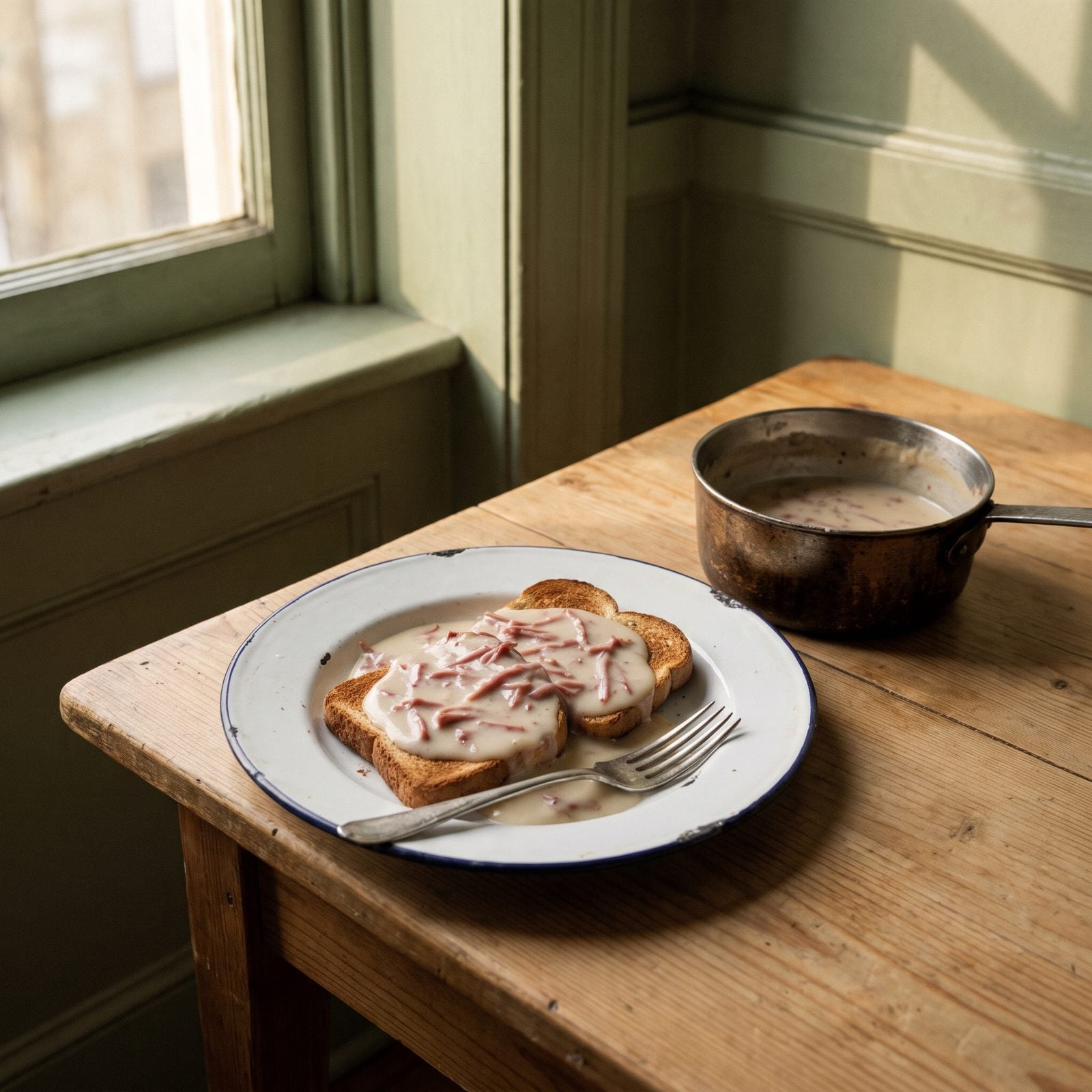
Dried beef came salted and pressed into a small jar, and a little went a long way — which was the whole reason it made the shopping list. You tore it into shreds, stirred it into a white gravy of flour, milk and fat, then poured the lot over toast to make it look like more than it was.
Soldiers later gave this dish a rude nickname. But in a 1933 kitchen it was simply the clever way to turn a few ounces of expensive protein into a supper for the whole family. The toast was the real workhorse — stale bread got a second life, and the gravy hid how thin the meat really was.
21. Tuesday Breakfast: Fried Cornmeal Mush and Molasses
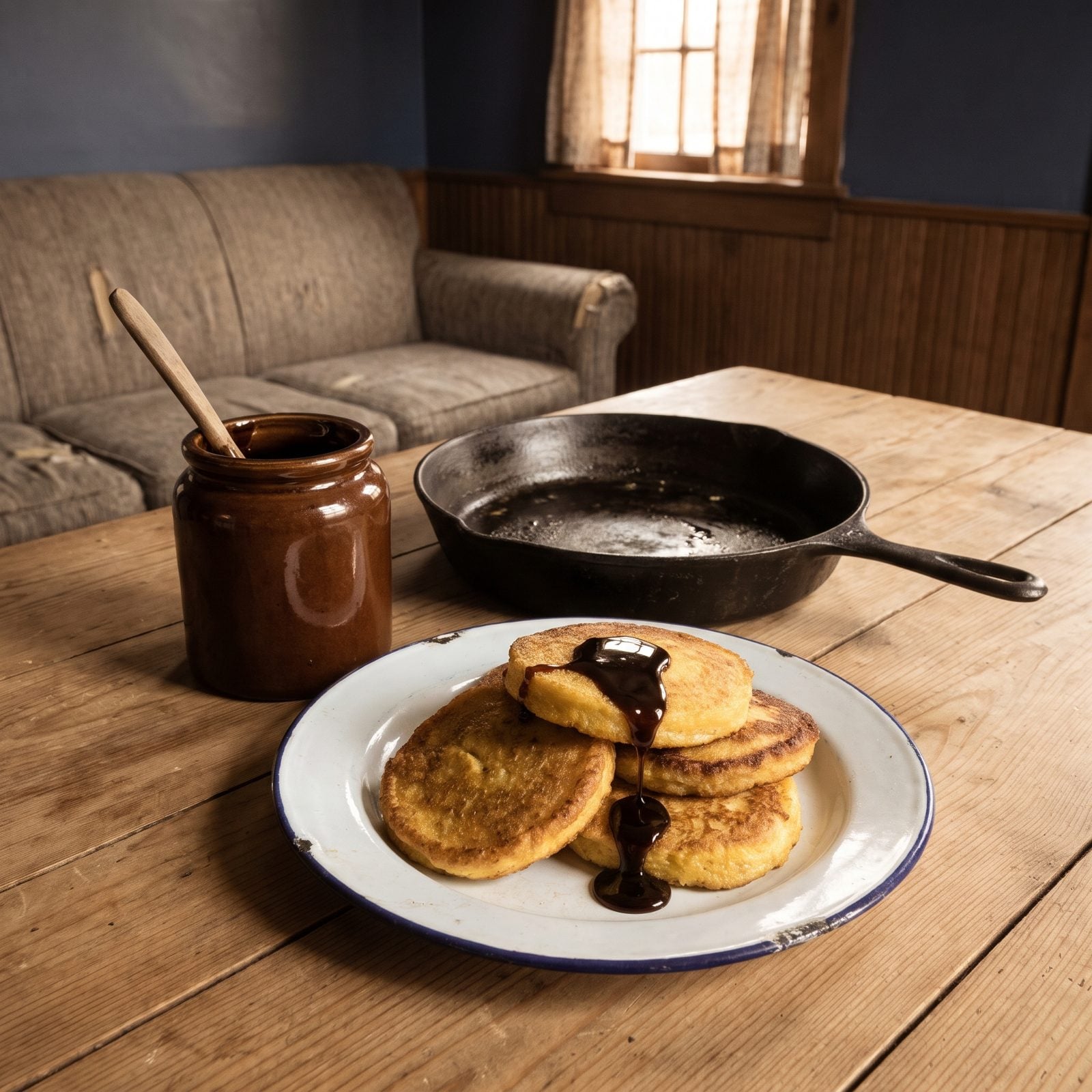
This is the trick that makes the whole week make sense. Monday’s leftover mush got poured into a pan and set in the cold overnight until it firmed up solid, and come Tuesday morning you sliced it, fried it in a greased skillet until the edges crisped, and drizzled molasses over the top.
One pot of cornmeal, two completely different breakfasts. The frying changed the texture enough that nobody at the table felt they were eating leftovers — which mattered more than you’d think. Molasses was the cheapest sweetener going, dark and strong, and a thin trickle made plain fried mush taste like something a child would actually finish.
20. Tuesday Supper: Cabbage, Potatoes and Salt Pork
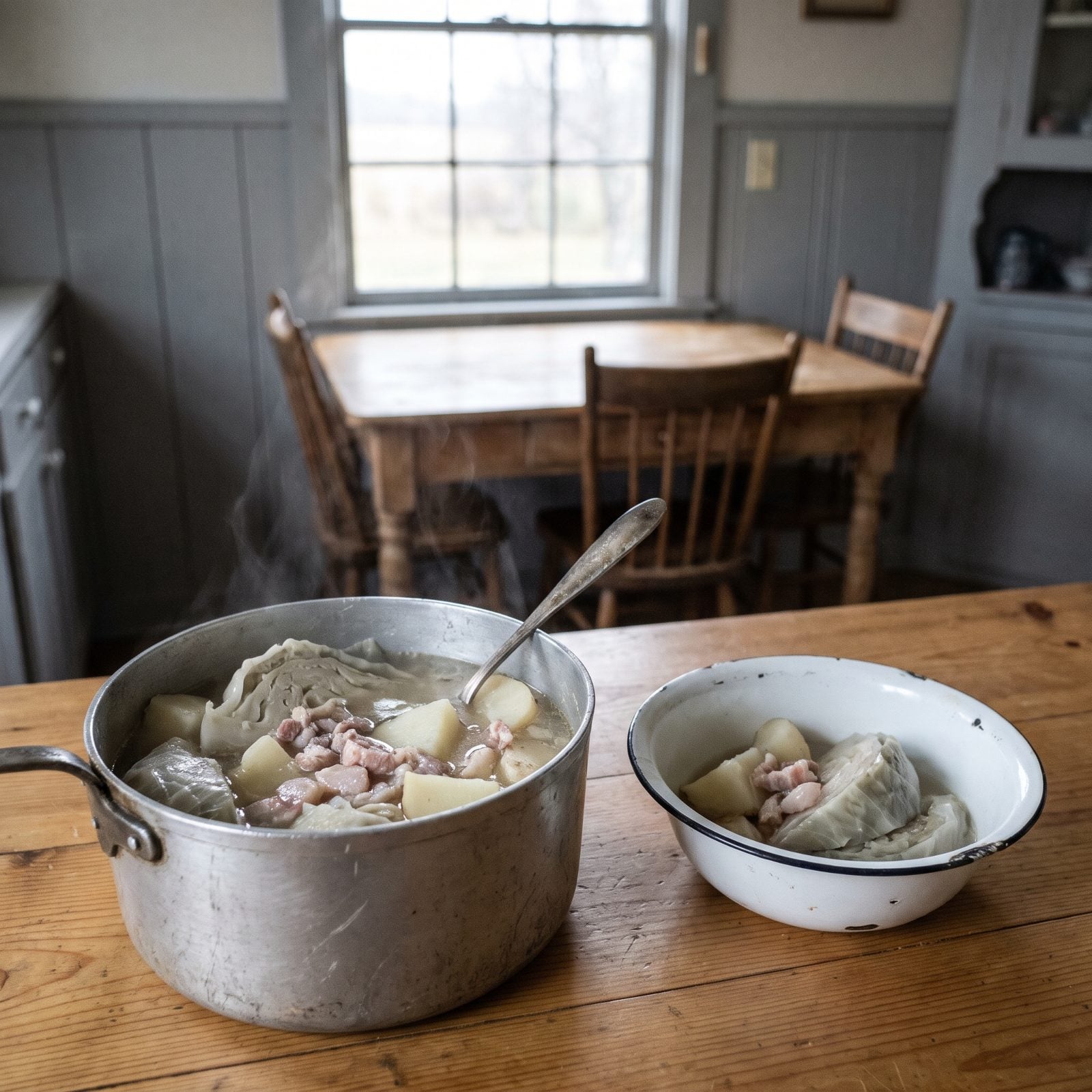
A head of cabbage, a few potatoes, and a small piece of salt pork went into one pot of water and boiled down into supper. The pork wasn’t really food so much as flavor. One fatty chunk seasoned the whole pot and then got divided into pieces so small everyone got a taste of meat without the family ever buying much of it.
Cabbage and potatoes were about the cheapest filling vegetables at the market, and they held in a cellar for weeks without spoiling. That matters more than it sounds. In a house watching every penny, food that didn’t rot before you could eat it was worth as much as food that was cheap to begin with.
19. Wednesday Breakfast: Oatmeal With Stewed Prunes
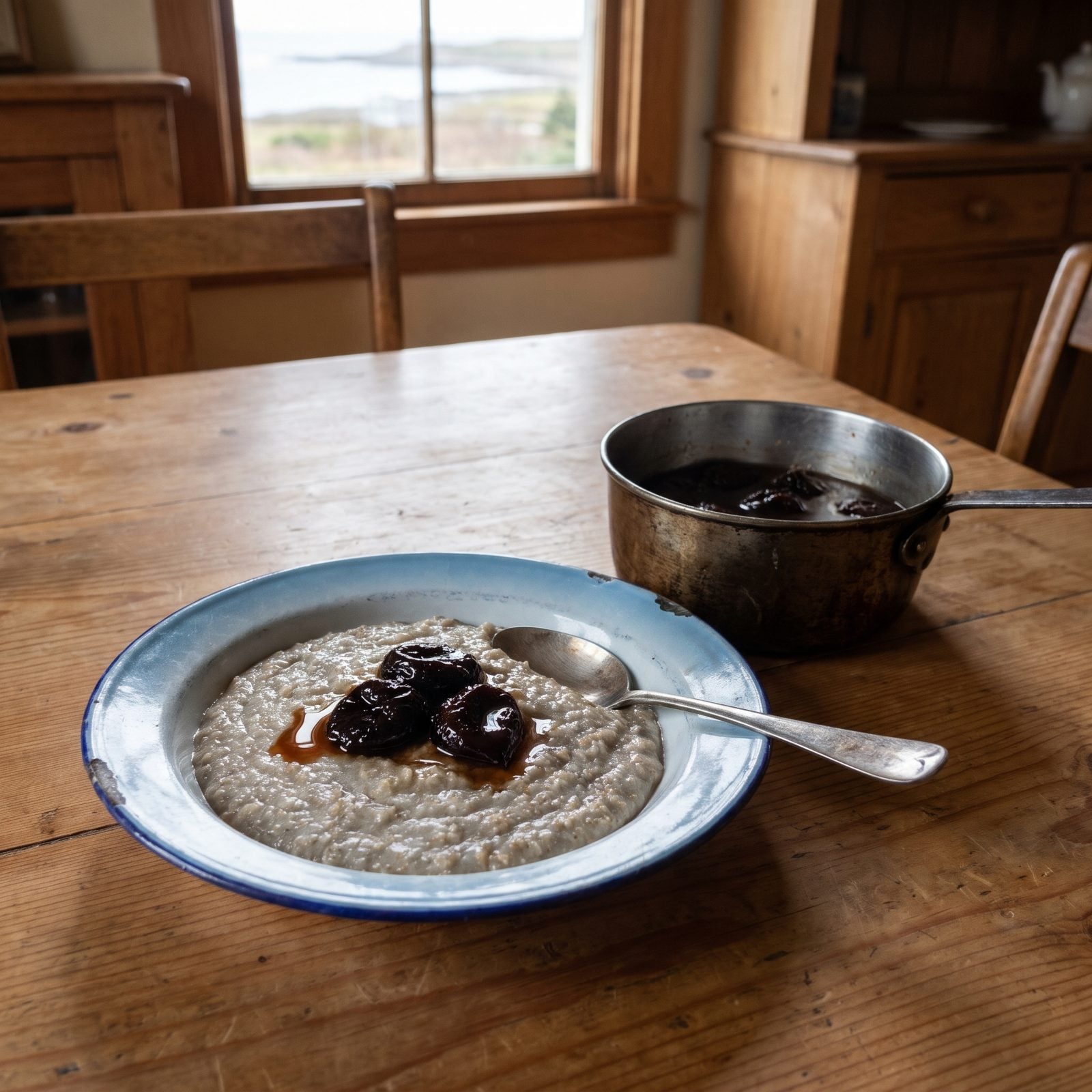
Rolled oats cooked down to a thick porridge, with a few stewed prunes spooned on top for sweetness and, frankly, for keeping everyone regular. Prunes came dried, kept forever in a paper sack, and swelled up soft when you stewed them in water.
No sugar needed here. The dried fruit gave up its own dark, sticky liquid as it cooked, and that syrup did the sweetening. A small handful of prunes stretched across several breakfasts, and the oats underneath were among the cheapest grains in the store. Filling, cheap, and it kept in the cupboard without a worry — that combination is what put it on the table.
Asked whether whole prunes or prune juice works better against constipation, one gastroenterologist says “I always prefer the actual fruit over the juice given the higher fiber content, which is good for your GI tract.”
18. Wednesday Supper: Macaroni With Tomatoes
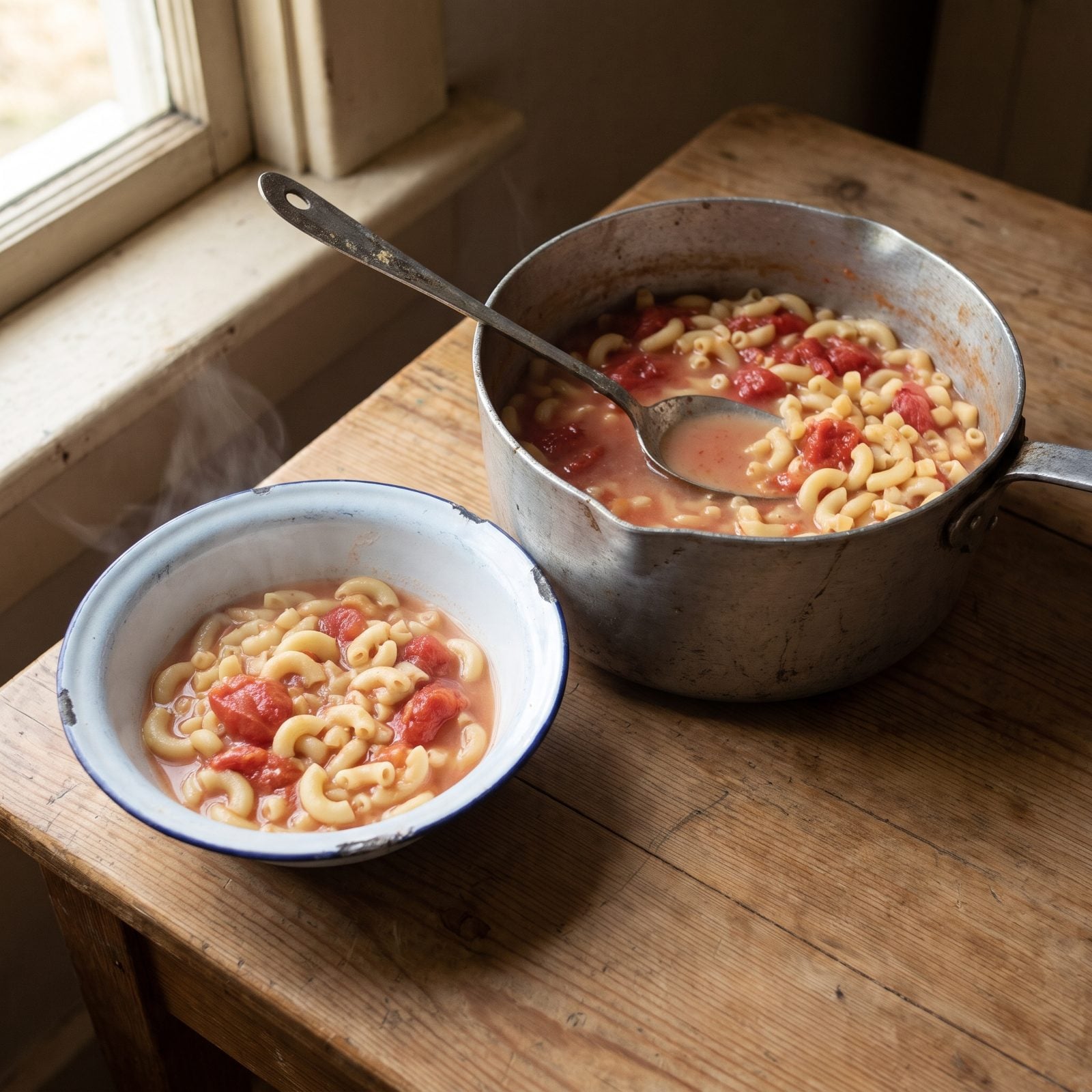
Dry macaroni boiled soft, then mixed through a can or jar of tomatoes and heated until it held together. No meat. No cheese to speak of. The tomatoes did all the work of making plain pasta taste like a meal.
Home-canned tomatoes from a summer garden were the secret ingredient in a lot of Depression kitchens, and a family that put up jars in August ate well off them in February for next to nothing. Macaroni was cheap, filling, and quick on the stove, which saved fuel too. A supper like this fed everyone to full and left the ledger barely touched.
17. Thursday Breakfast: Biscuits and Milk Gravy
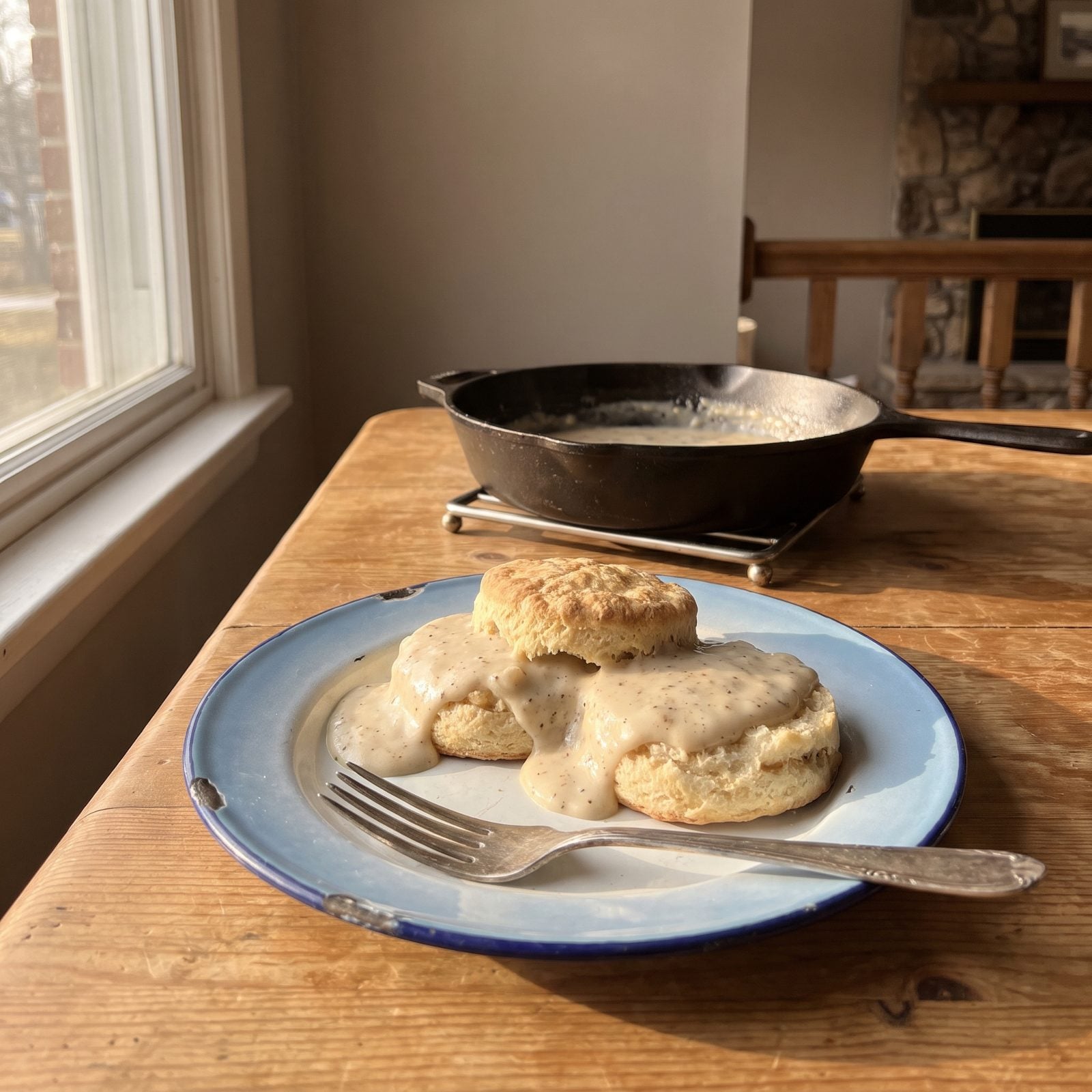
Flour, a little fat, and milk made both the biscuits and the gravy that drowned them. A breakfast built entirely from pantry staples, with no meat in sight — because meat at breakfast was a thing other families did.
The gravy was pure stretch. A spoonful of fat, a scoop of flour, a cup of milk thinned with water, and you had a pan of white sauce that turned two plain biscuits into something that stuck with a working body until noon. It cost almost nothing and filled you up fast, which was exactly what a Thursday needed when payday was still two days off.
16. Thursday Lunch: Potato Soup With Crackers
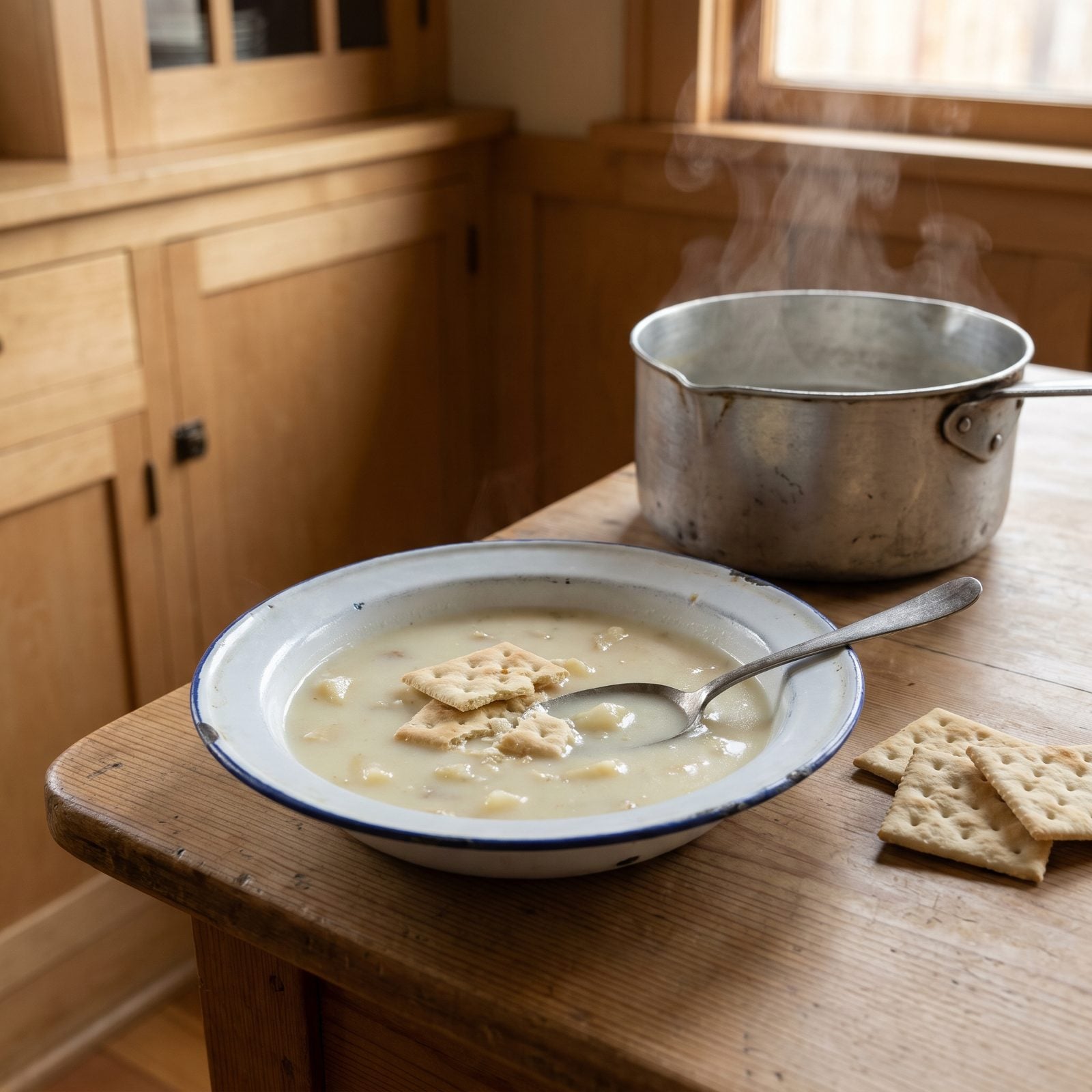
Potatoes, water, a little milk and an onion if there was one. Boiled soft and mashed slightly against the side of the pot to thicken the broth, with crackers crumbled in for body. That was the whole lunch.
Potato soup is about as cheap as a hot meal gets, and it had a second quiet job. Any potatoes starting to turn in the cellar went into the soup pot before they spoiled, so nothing was wasted. The crackers stretched the broth and gave everyone something to chew on when there wasn’t much else in the bowl. Thin, hot, filling. On a Thursday with the week running down, that was enough.
15. Friday Breakfast: Toast With Drippings
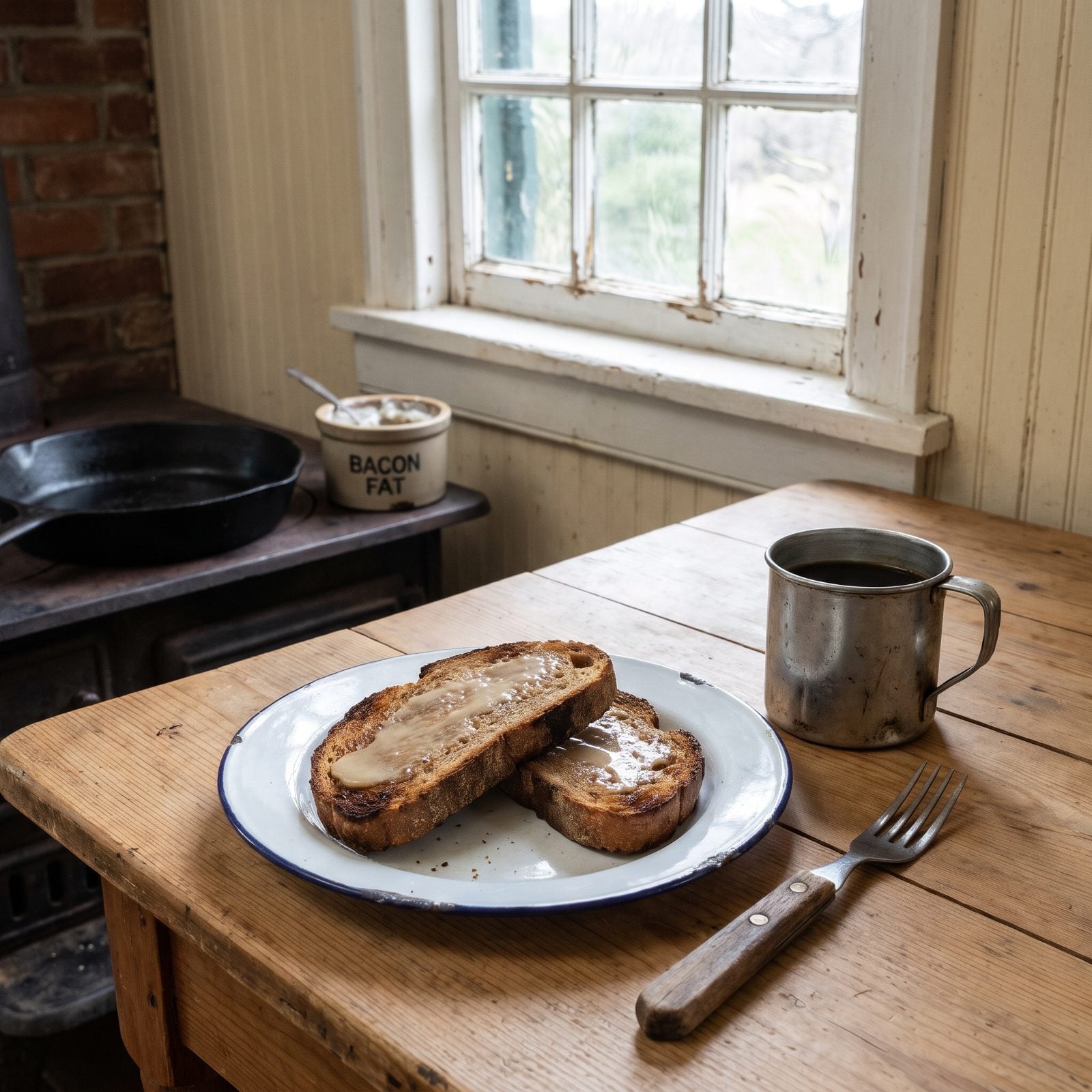
You saved the fat. Everybody saved the fat. The skillet that fried Thursday’s little bit of bacon or pork left a cloudy layer in the crock on the stovetop, and that layer became Friday’s breakfast.
Drippings on toast got sold to a kid as a treat, and honestly? Warm bread carrying the salt and smoke of yesterday’s meat is no hardship at all. Bread flavored by meat without spending another cent on meat. That was the trick of the whole decade — one purchase had to turn up at two or three meals before it was done earning its keep.
14. Friday Lunch: Egg Salad Sandwiches
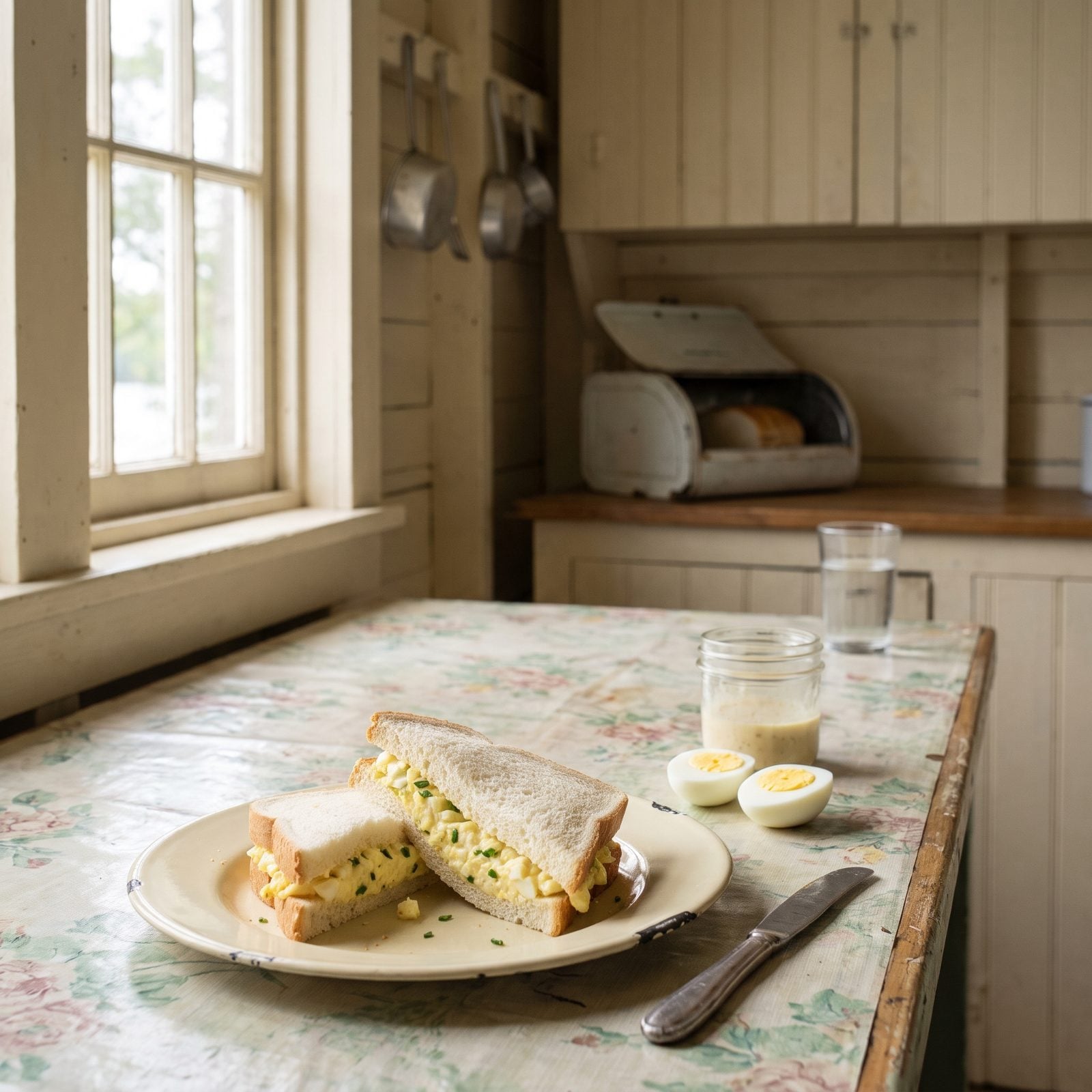
Eggs were the one thing that kept arriving whether the money did or not. A few hens in the yard meant lunch had a fighting chance even in a week when the pantry looked thin.
Egg salad made two or three eggs feed a table. You chopped them fine, bound them with a spoonful of homemade dressing — or a little of that drippings-and-vinegar that stood in for mayonnaise when the real jar ran dry — and pressed the whole mess between whatever bread had gone slightly stale. The staling was the point, really. Fresh bread was for suppers. The ends and the day-old slices went into sandwiches, where nobody would notice.
13. Friday Supper: Salmon Patties and Creamed Peas
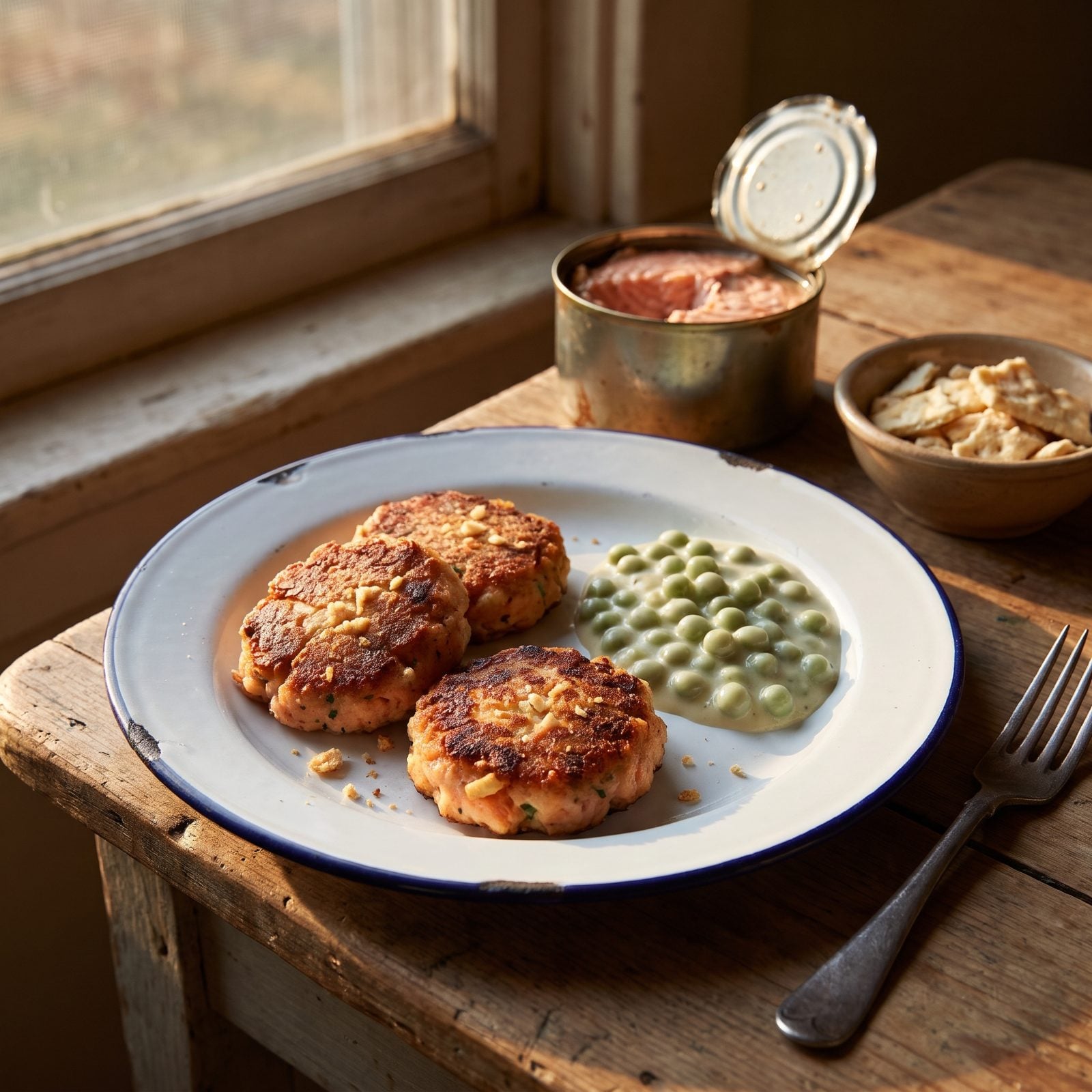
A can of salmon was cheap, it kept forever, and it was the closest thing to meat a Friday budget could manage. One tin — bones and skin mashed right in, because you don’t waste calcium — bound with a beaten egg and whatever cracker crumbs had gone soft in the barrel.
The arithmetic is what made the supper work. One can of fish, stretched with crackers and egg, turned into enough patties to go around. And the creamed peas? Less a side than an extender. A little flour, a little milk, a handful of peas, and suddenly the plate looked fuller than the pantry had any right to make it.
12. Saturday Breakfast: Rice Porridge With Brown Sugar
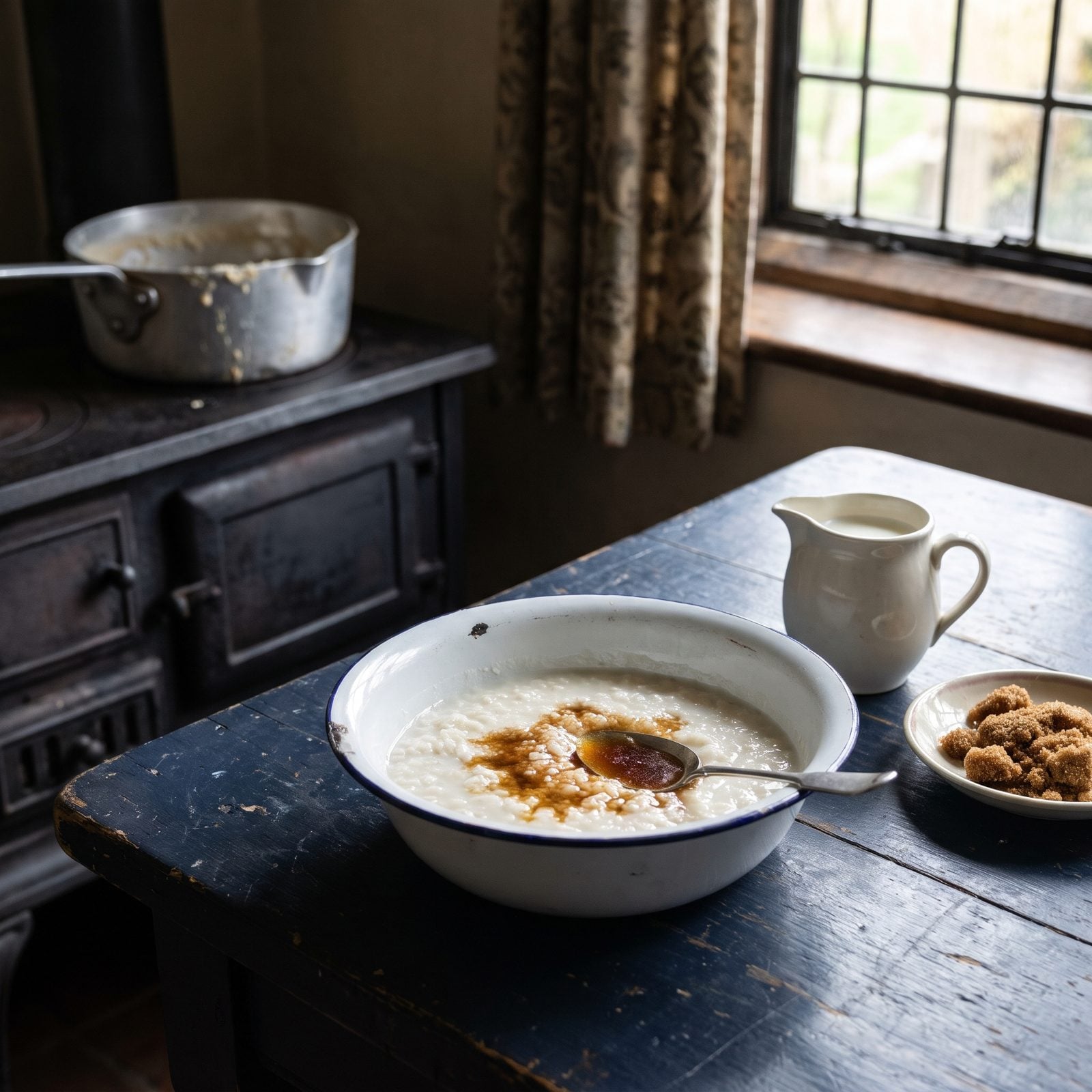
Leftover rice didn’t get thrown out. It became breakfast.
You loosened the leftover cooked rice with milk, warmed it through on the stove, and stirred in a spoon of brown sugar for the children. That was the meal, start to finish — cheap, filling, warm on a cold Saturday morning, and proof that a pot of rice could pull double duty. The sweetness came rationed. One spoonful, enough to make it feel like a kindness rather than a repeat of yesterday.
11. Saturday Lunch: Welsh Rarebit on Stale Bread
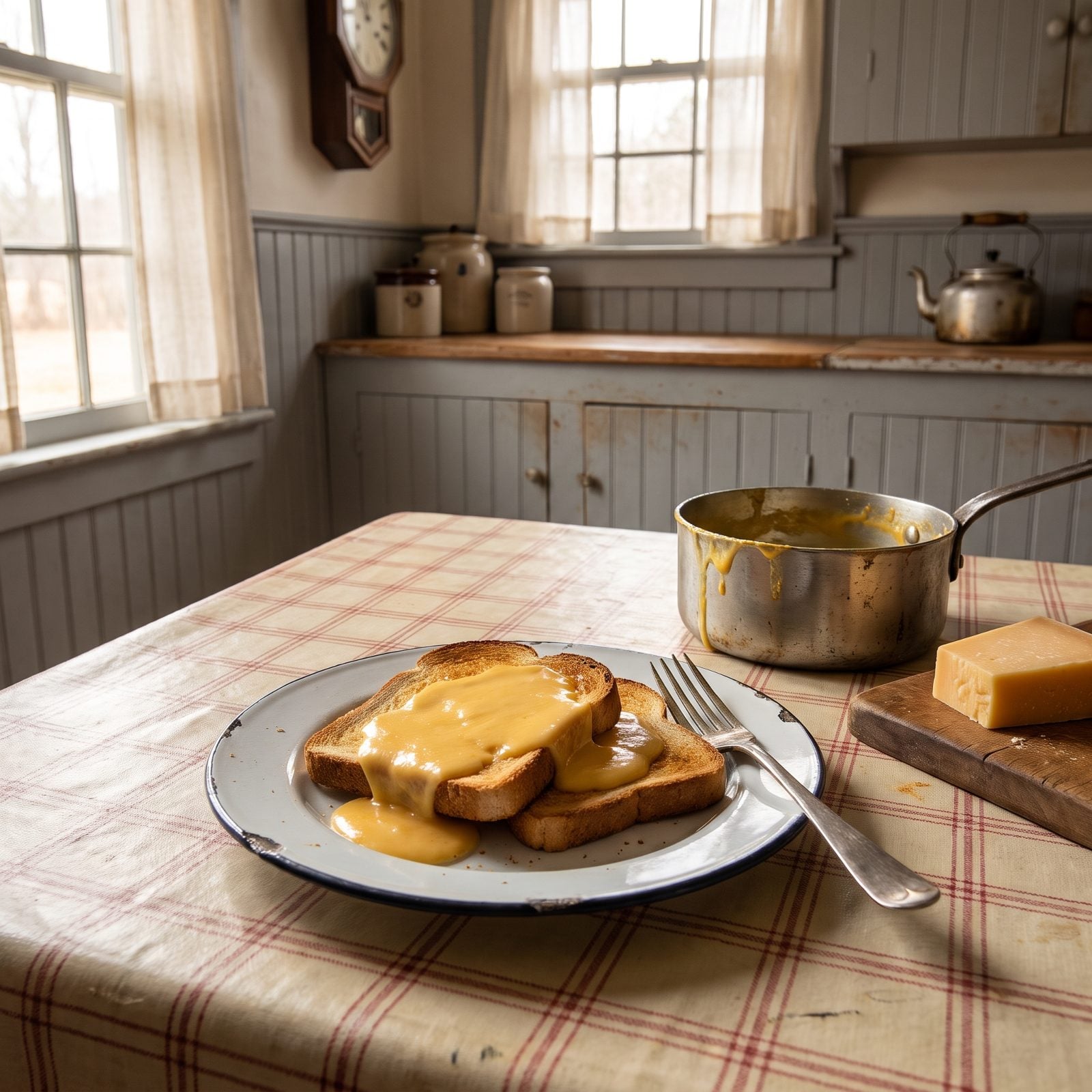
Rarebit was the fancy name for cheese sauce poured over bread that had gone too hard to eat plain. Which is precisely why it existed.
The tail end of a cheese — the piece gone dry and sharp at the rind — got melted down with a little milk and flour and maybe a dash of mustard powder if the house had any. Poured hot over stale bread, it softened the bread and used up the cheese in one move. Two problems, one saucepan. The English name made a Saturday lunch of scraps sound like something you’d order out.
10. Saturday Supper: Vegetable Stew With Dumplings
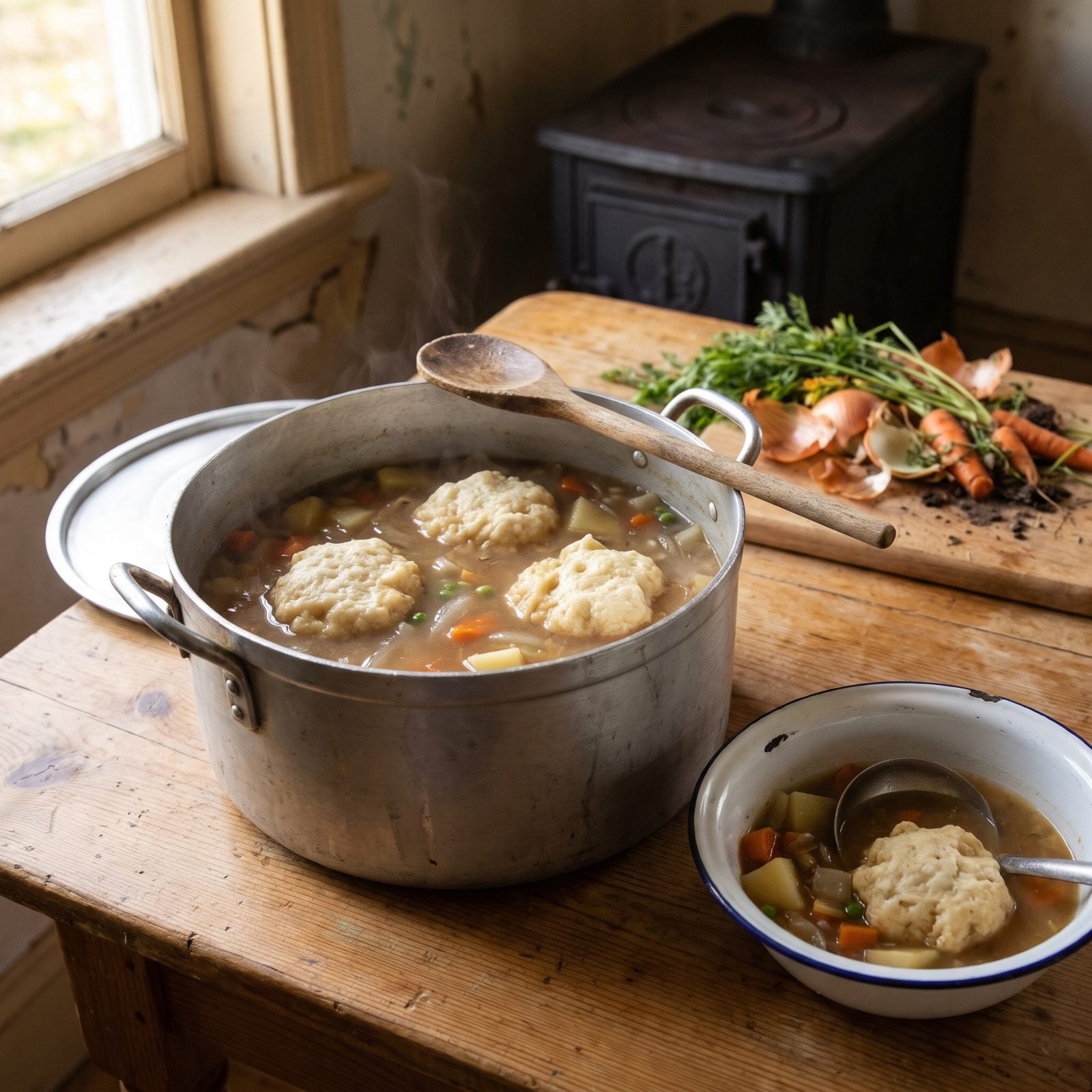
This was the catch-all. Whatever the garden gave and the week left behind went into the pot — a few potatoes, a soft carrot, an onion, the last of the peas, all simmered in water with a little salt until it tasted like something.
The dumplings are the clever bit. Flour, a little fat, a splash of milk, dropped by the spoonful onto the simmering stew and covered to steam. They cost next to nothing, and they turn a thin broth into a meal that sticks to your ribs. A pot of water and scraps, and there’s supper for the whole table. Any left over became Sunday’s lunch base before anyone had to think about it.
9. Sunday Breakfast: Buckwheat Cakes and Sorghum
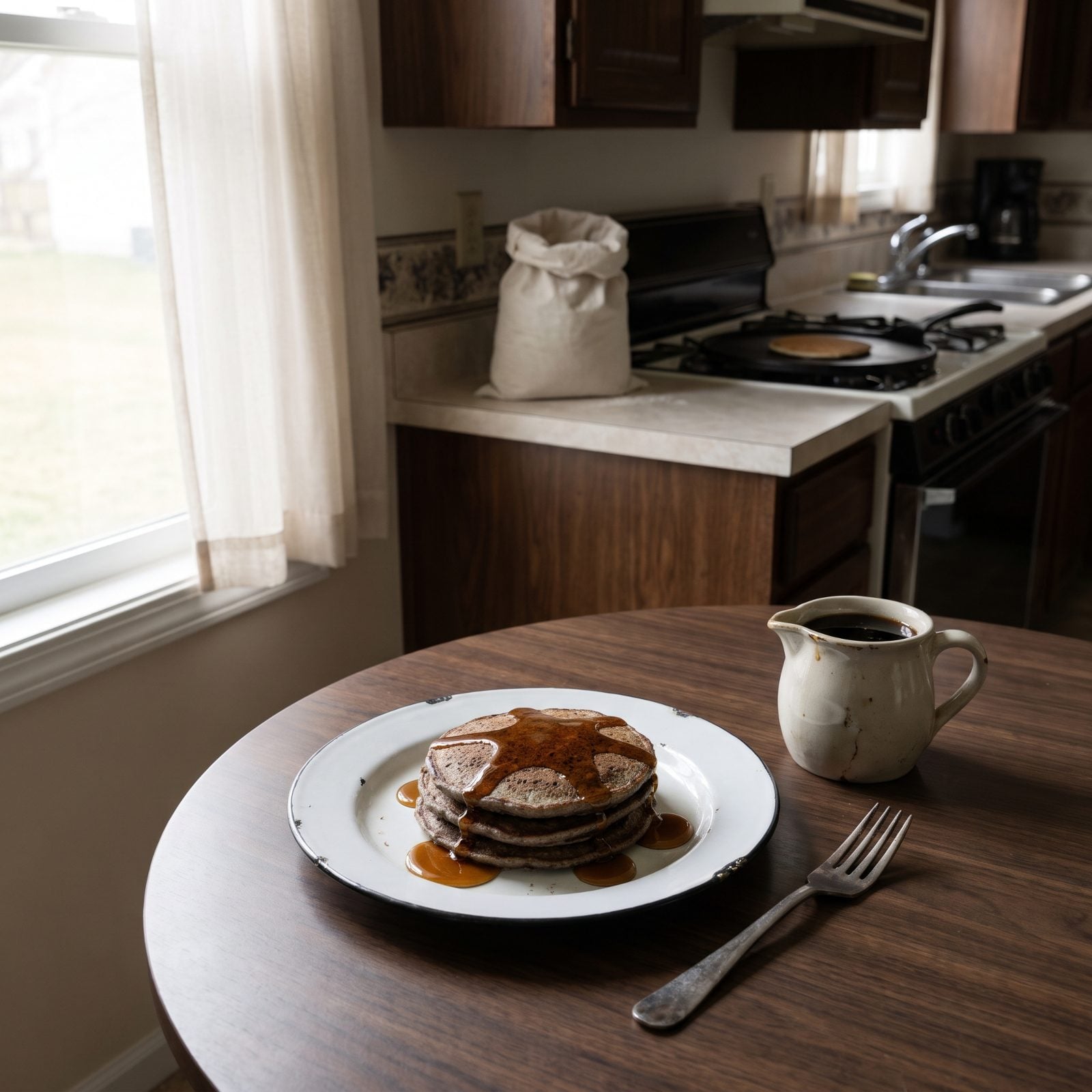
Sunday got the slightly better breakfast. Buckwheat flour was cheap, and it grew on land that grew little else, so even in lean country there was usually a sack of it somewhere in the house.
The cakes came off the griddle dark and nubby, nothing like the pale fluffy stacks you’d see later. And sorghum, not maple, did the sweetening. Sorghum was the poor man’s molasses — dark, strong, made close to home — so it cost a fraction of anything that had to be shipped in a jar. One sack of flour and one jug of syrup turned an ordinary morning into the best one of the week.
8. Sunday Dinner: Roast Chicken With Bread Dressing
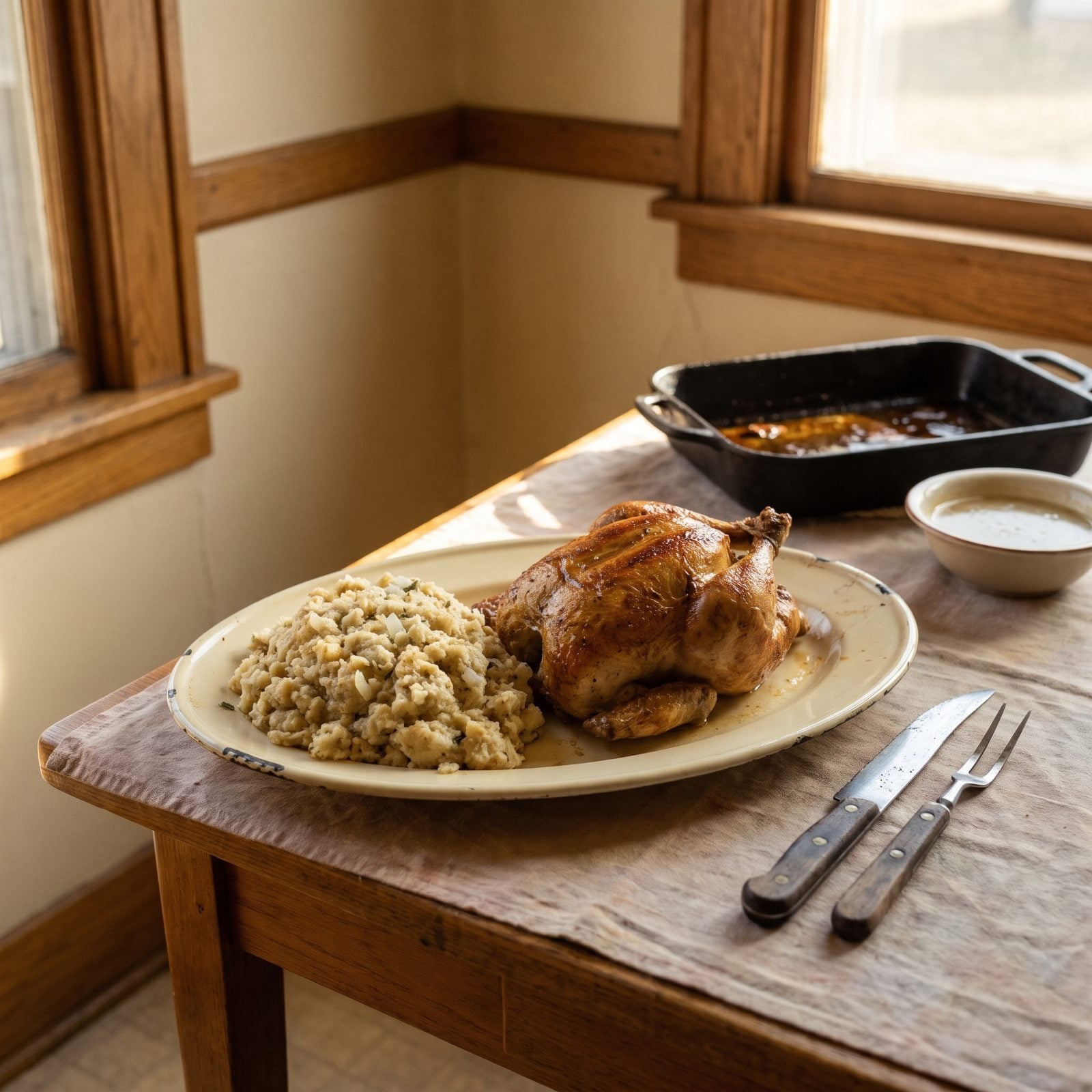
The one meal the whole week was built around. A chicken — probably one that had stopped laying — killed and plucked at home and roasted for Sunday dinner. For most families this was the only meat of its kind they’d see across seven days.
Notice the proportions, though. The bird is small and the dressing is enormous. Deliberately so. Stale bread, an onion, a little sage from the garden, some broth and a beaten egg, baked until it drank up the pan drippings. The dressing stretched one modest chicken across a crowded table, and the carcass went straight into a pot afterward for soup. Nothing about that bird was finished until Tuesday.
7. A Pot of Split Pea Soup With Ham Bone
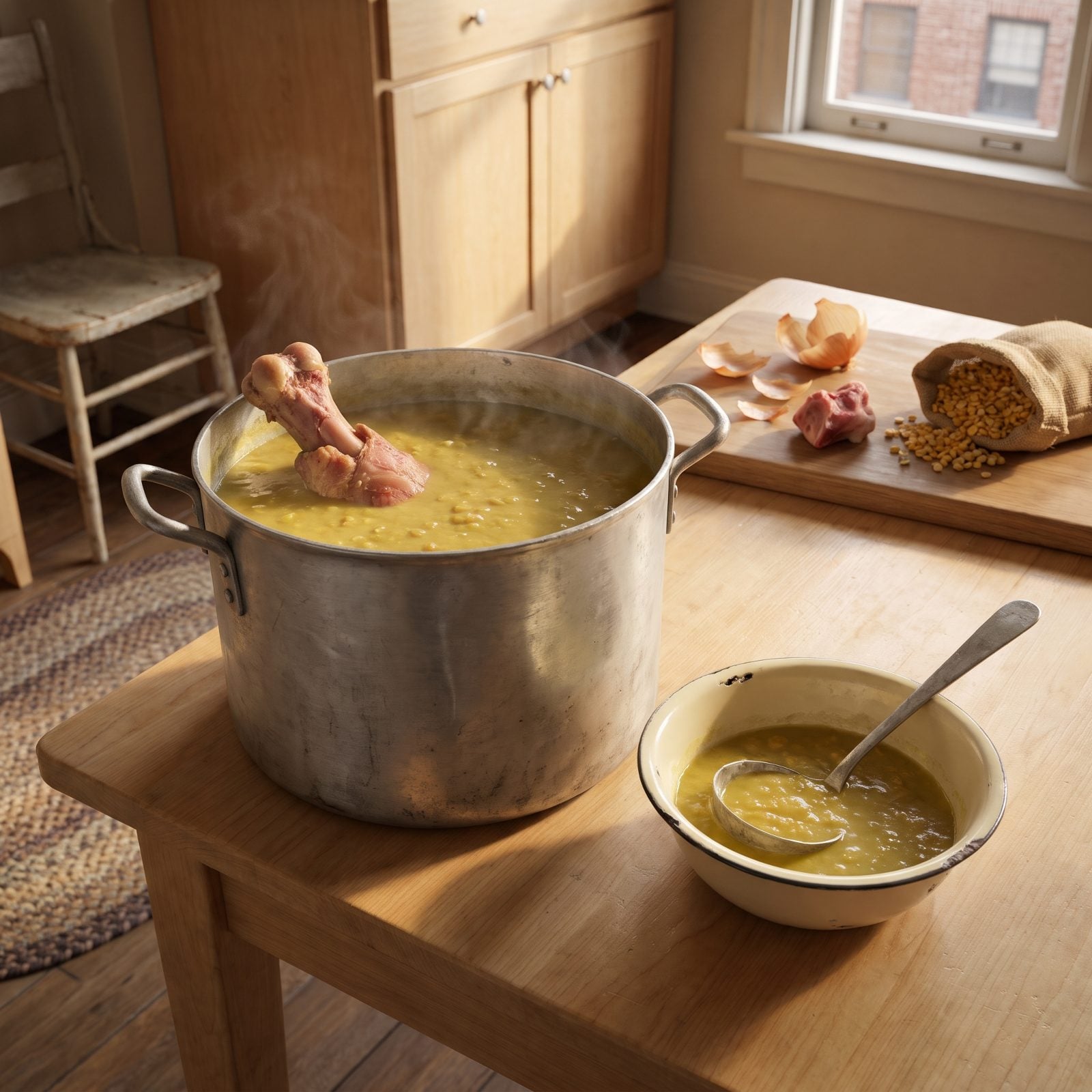
You didn’t buy a ham bone. You saved the one left from an earlier ham, or you asked the butcher for one — and in that decade a butcher often handed it over for next to nothing, even with a fair bit of pink meat still on it.
Dried split peas cost pennies a pound and swelled to several times their size in water. Set them simmering with that saved bone, and the meat, fat and marrow still clinging to it flavored the entire pot. The bone cost next to nothing. The peas were cheap. The result fed everyone twice. This was the last act in the life of a ham, and the family pulled real flavor out of a thing most people would have thrown away.
6. Scalloped Potatoes Made With Canned Milk
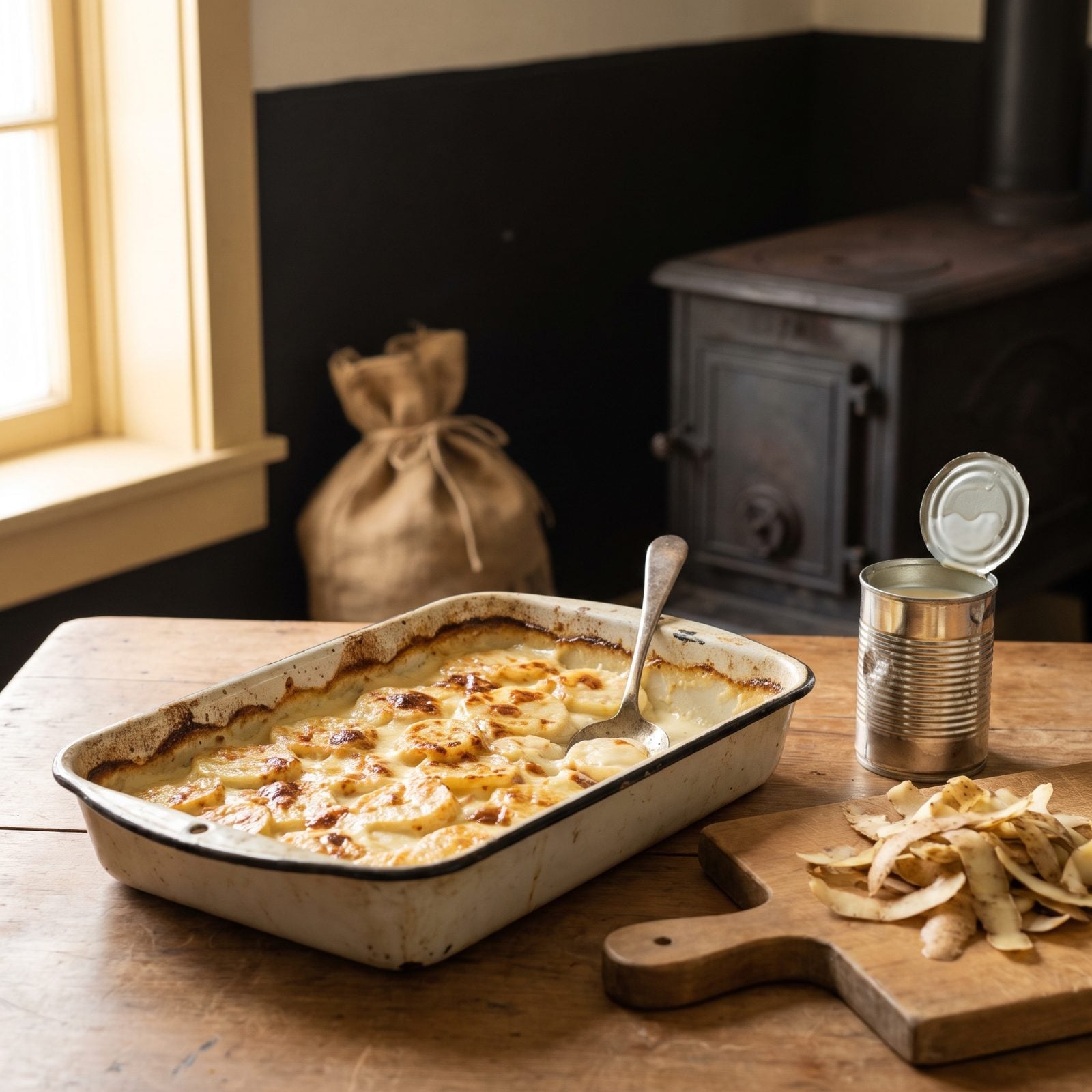
Fresh milk spoiled fast and cost more, and not every family had a cow. Canned evaporated milk solved both problems at once. It kept on the shelf for months, and it stretched — you cut it with water for twice the volume, or poured it straight for richness when a dish needed it.
Thin-sliced potatoes, layered with a little flour and that canned milk, baked slow until the top browned, gave you a filling supper from the cheapest thing in the pantry. Potatoes carried the whole decade’s eating. Canned milk is what turned them from plain boiled spuds into something that tasted like a proper dish.
Recreating an old milk-gravy recipe made with canned milk, one food history YouTuber notes “You can use the evaporated milk straight or reconstitute it with an equal amount of water”
5. Beef and Barley Stew From Soup Bones
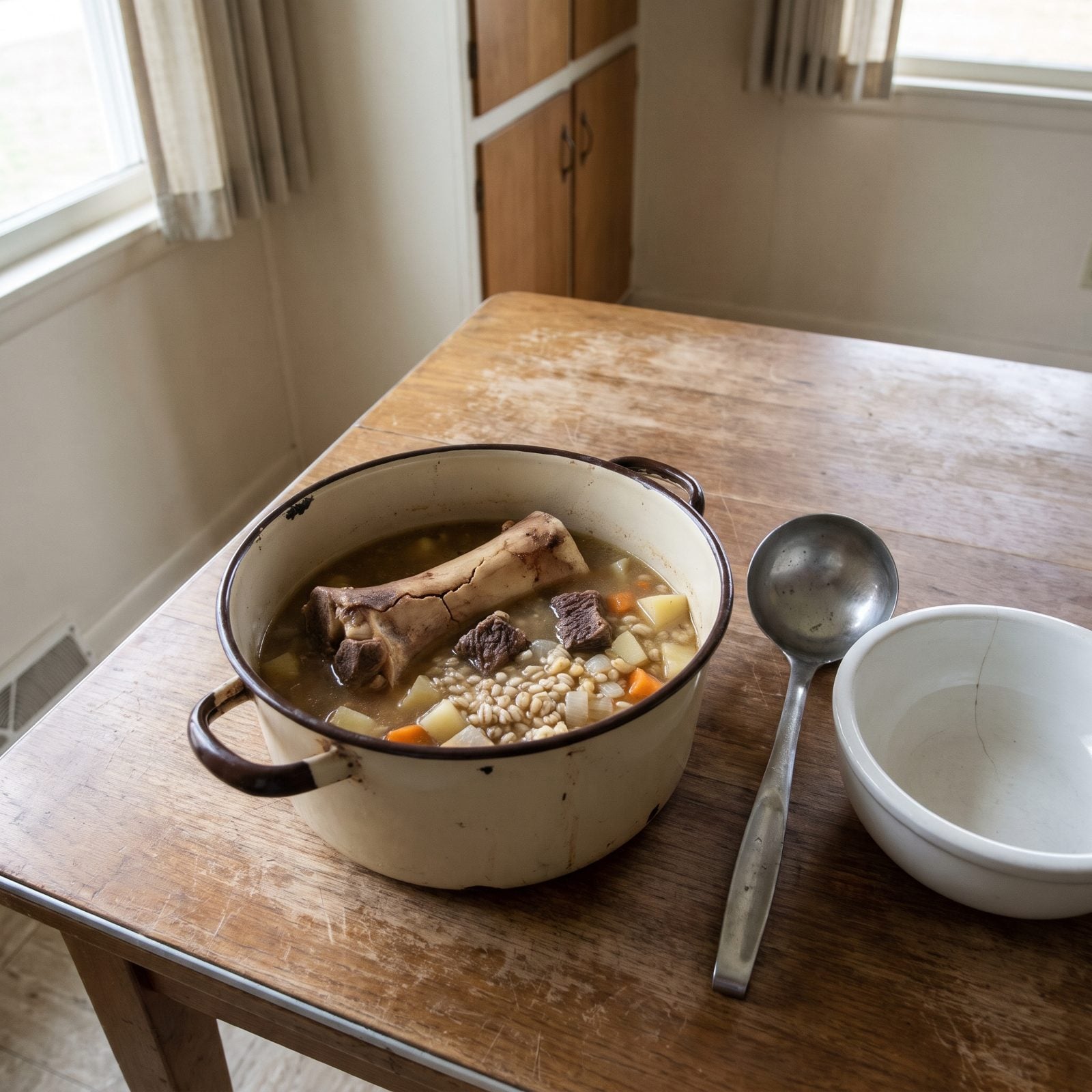
It started with a bone the butcher nearly gave away, knuckle end still pink, more marrow than meat. Set in cold water, brought up slow, skimmed. By afternoon the kitchen smelled like something warm was finally happening.
Barley did the heavy lifting. A handful went in near the end and sat in a pale mound on top, the grains still separate, while the broth underneath stayed thin and clear but filled out the bowl all the same. Whatever vegetables were softening in the bin went in whole or roughly cut, and the beef, what little there was, got cut into small cubes and simmered alongside the bone so every bowl held at least a chunk of it.
4. Rice Croquettes With White Sauce
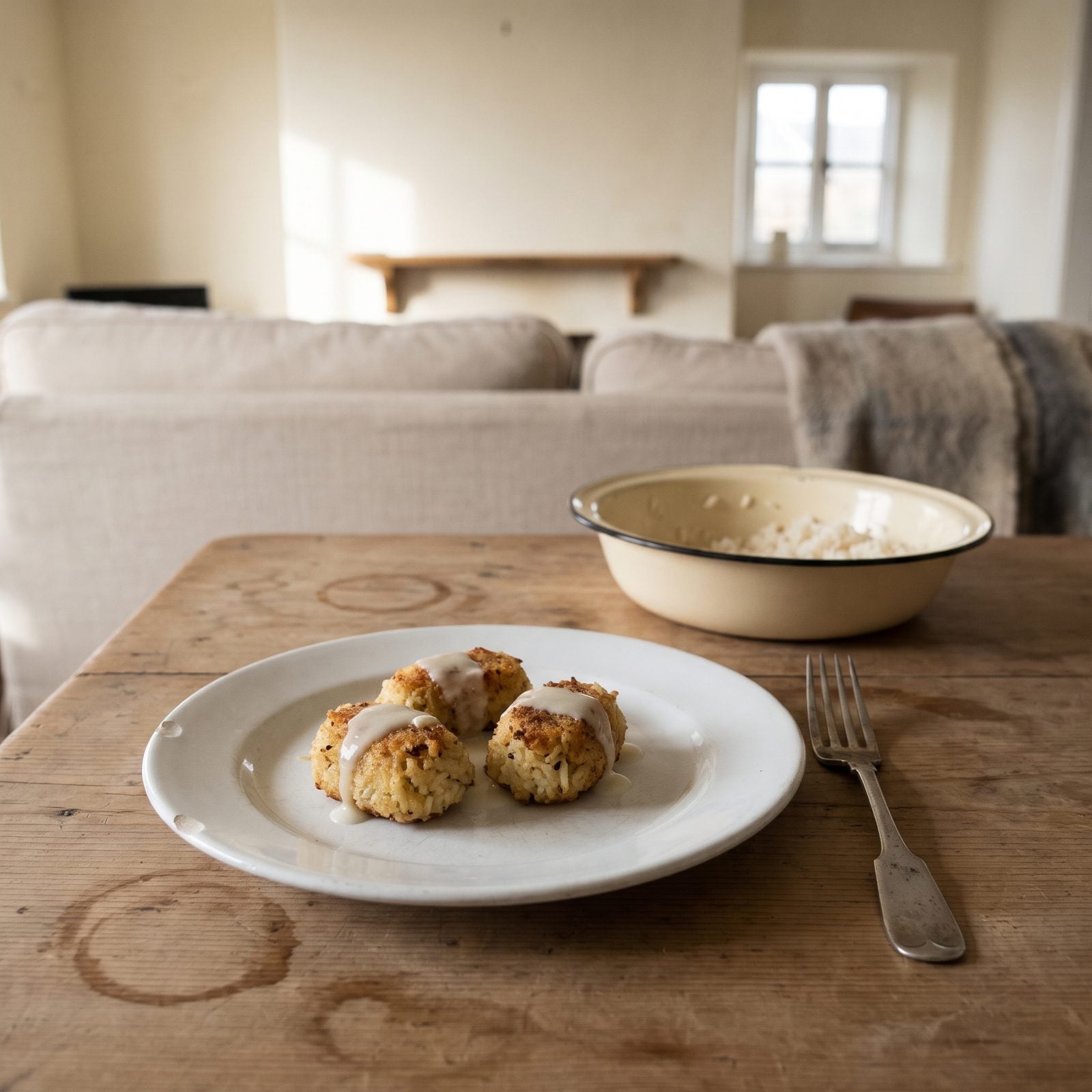
Nothing got thrown out. The rice was leftover rice, cooked plain and set aside because somebody knew it would turn up again.
Bound with a beaten egg and whatever crumbs were drying on the breadboard, the cold rice got rolled into small balls, browned in a little fat, then draped in a flour-and-milk white sauce. And that sauce carried the whole thing. A spoonful of flour and a cup of milk turned three dry croquettes into supper that felt like it had been planned.
I’ll admit it: this is the kind of meal that sounds thin on paper and somehow fills you up at the table. Cheap starch, cheap sauce, a single egg doing the work of a binder. Nobody left hungry.
3. Bread Pudding With Raisins
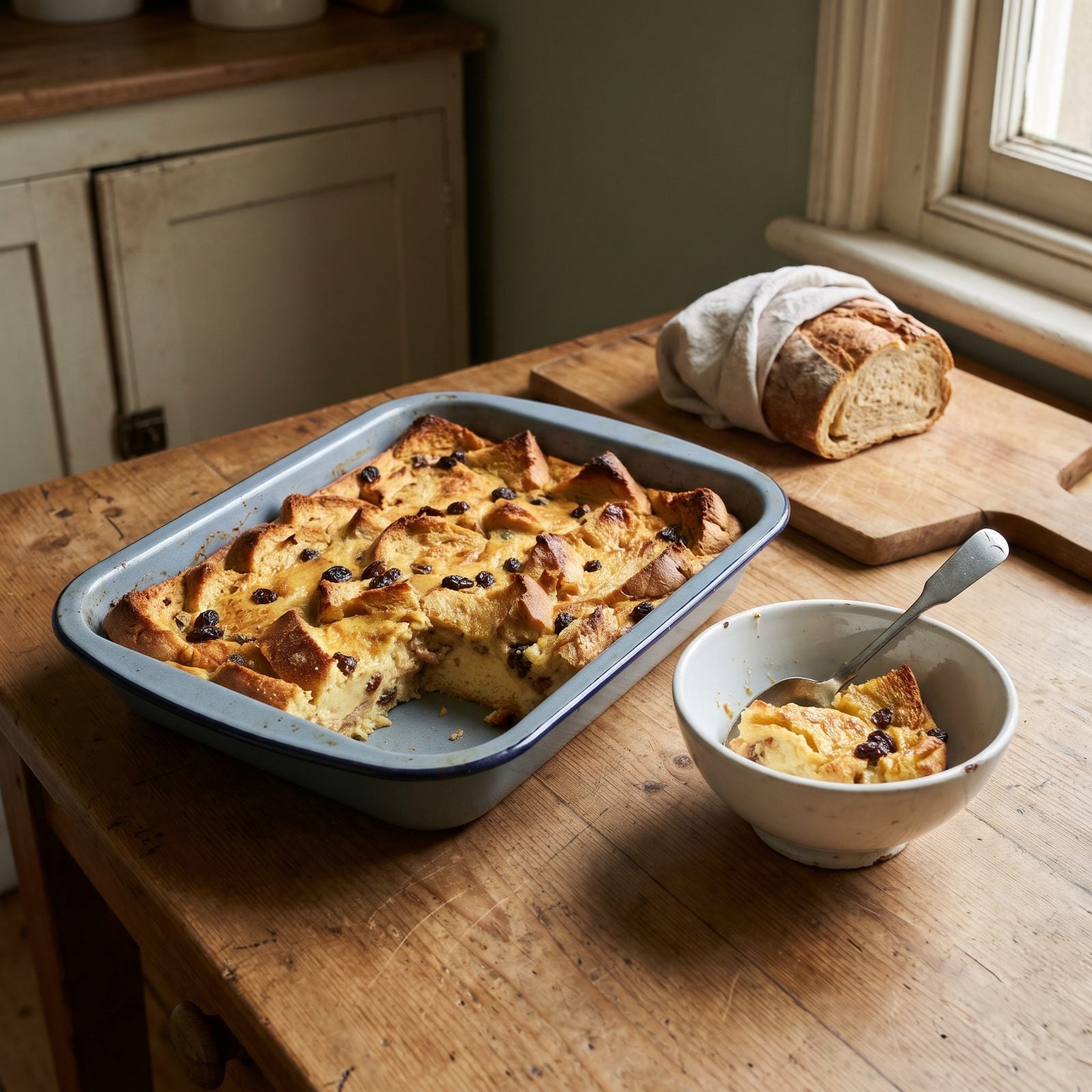
Stale bread was never garbage. It was pudding waiting to happen.
By midweek the loaf had gone hard at the ends, too dry to slice for sandwiches, too good to toss. Torn into a dish, soaked in milk, a beaten egg, and whatever sugar could be spared, it came out of the oven as something close to dessert.
The raisins were the splurge. A small handful, counted out, scattered so each serving got its share. That’s the detail that gets me. Even in a lean week, somebody made room for a little sweetness, and portioned it fair.
2. Apple Pan Dowdy Made From Bruised Apples
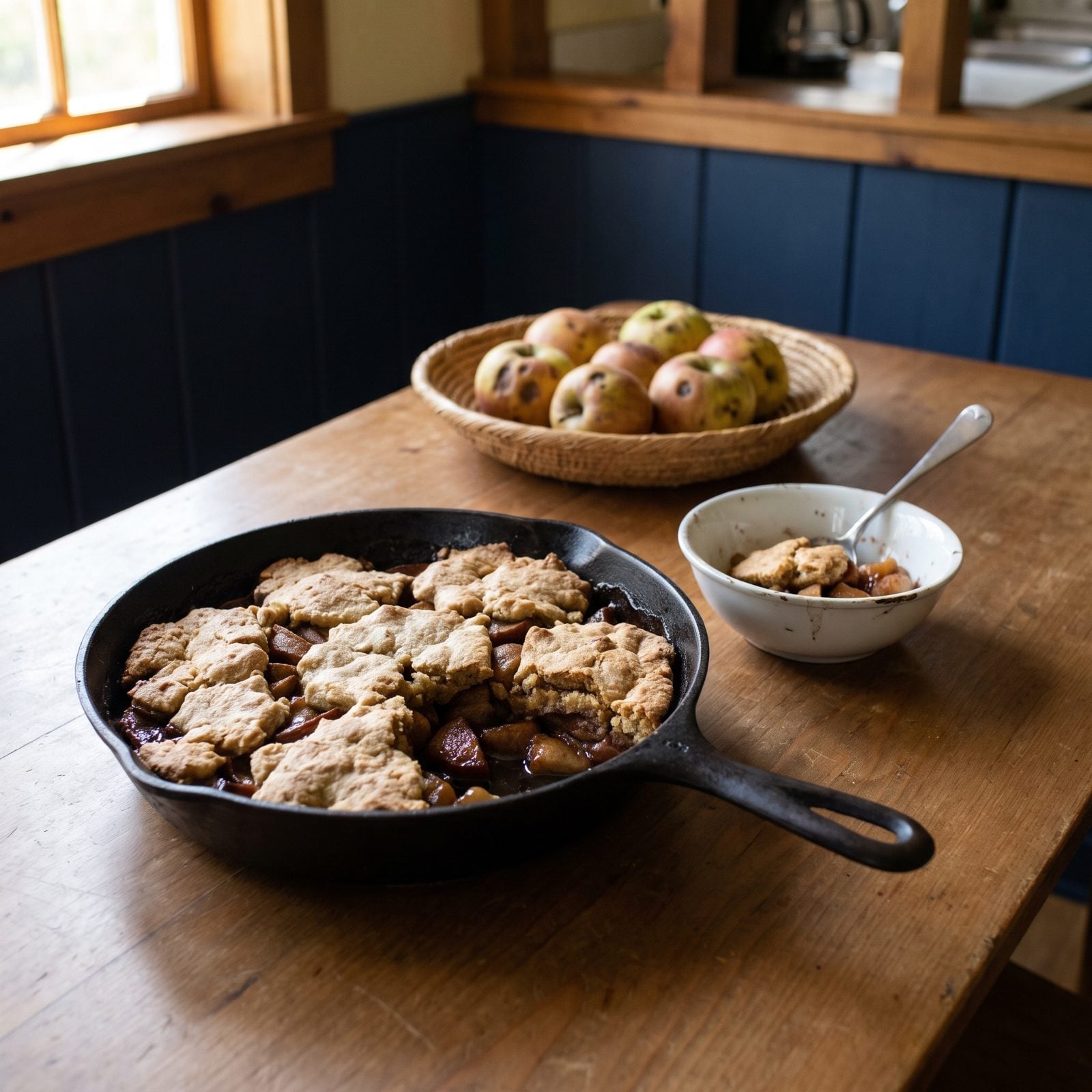
The apples came cheap because they were bruised. Soft spots, nicks, a wormhole or two, the kind a grocer discounted at the end of the day or a neighbor handed over by the basketful.
Cut around the bad parts, the good flesh cooked down sweet under a rough biscuit top. Then came the step that gives the dish its name: partway through baking, the crust got broken and pressed down into the fruit so the juices soaked up through it. Dowdy, meaning plain and homely, and proud of it.
A dessert born entirely from fruit nobody else wanted.
This sweet was made from reject apples, and you’d never have guessed it from the bowl.
1. Cocoa and Crackers Before Bed
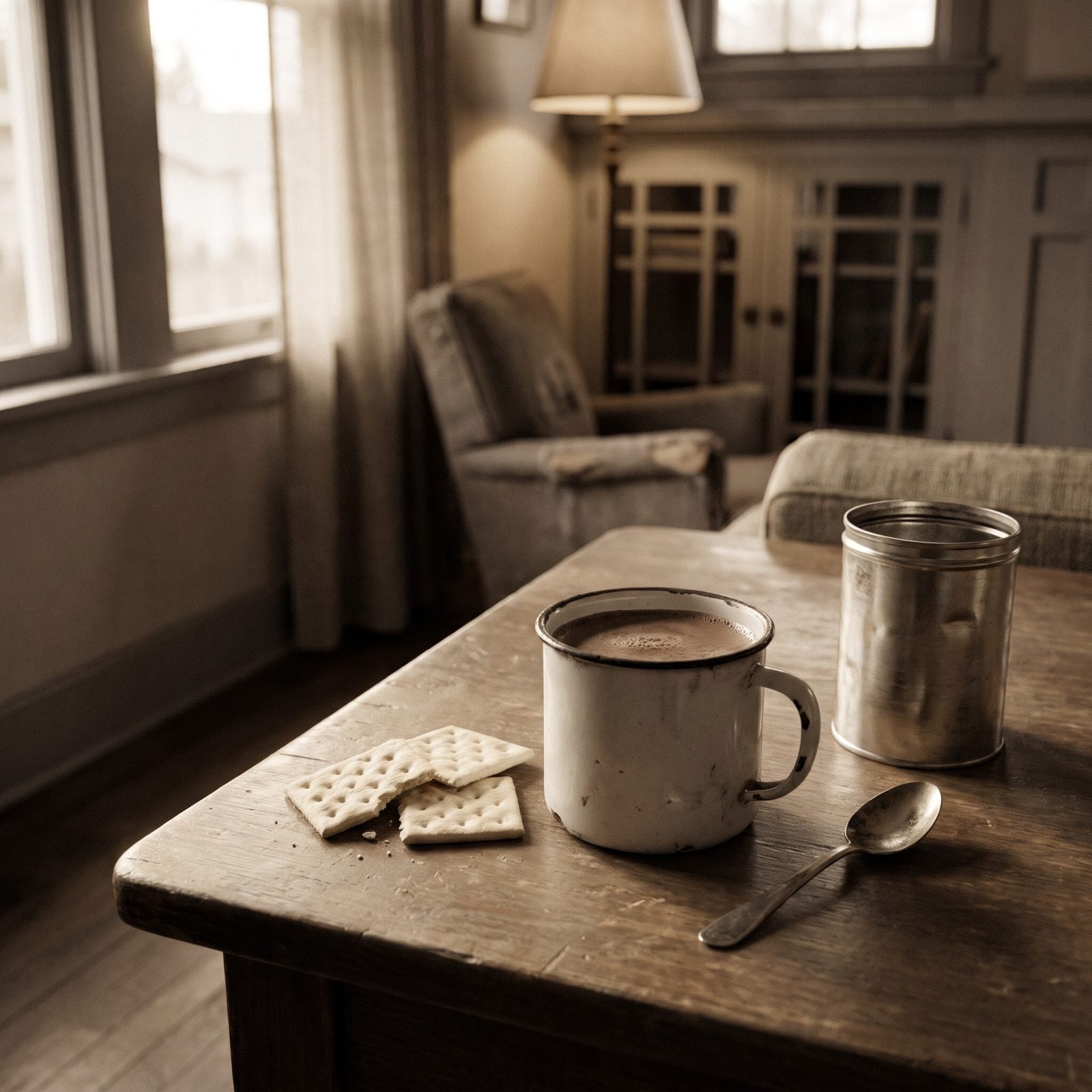
The week closed quietly. A cup of cocoa, a few soda crackers, and that was the nightcap for everyone old enough to hold a mug.
Cocoa powder stretched a long way. A spoonful whisked into hot milk, or hot water when milk ran short, with a little sugar to pull it together. The crackers filled the gap a small supper left, dry and plain and strangely satisfying dunked into the warm cup.