
Would you like to save this?
The alarm went off at 6:15. Your slacks had been pressed the night before, your lunch was packed, and somewhere between the bus stop and the lobby you rehearsed what to say to the receptionist. By the time you reached your desk, the coffee was already scorched, the inbox was already full, and half the rules had been explained without anyone saying them out loud.
A 1975 office ran on paper, machinery, habit and the people who knew where everything was. These are the objects and rituals that shaped that first day—and thousands of workdays after it.
21. Signing Your Name to the Building’s Paper Sign-In Log in the Lobby Every Single Morning
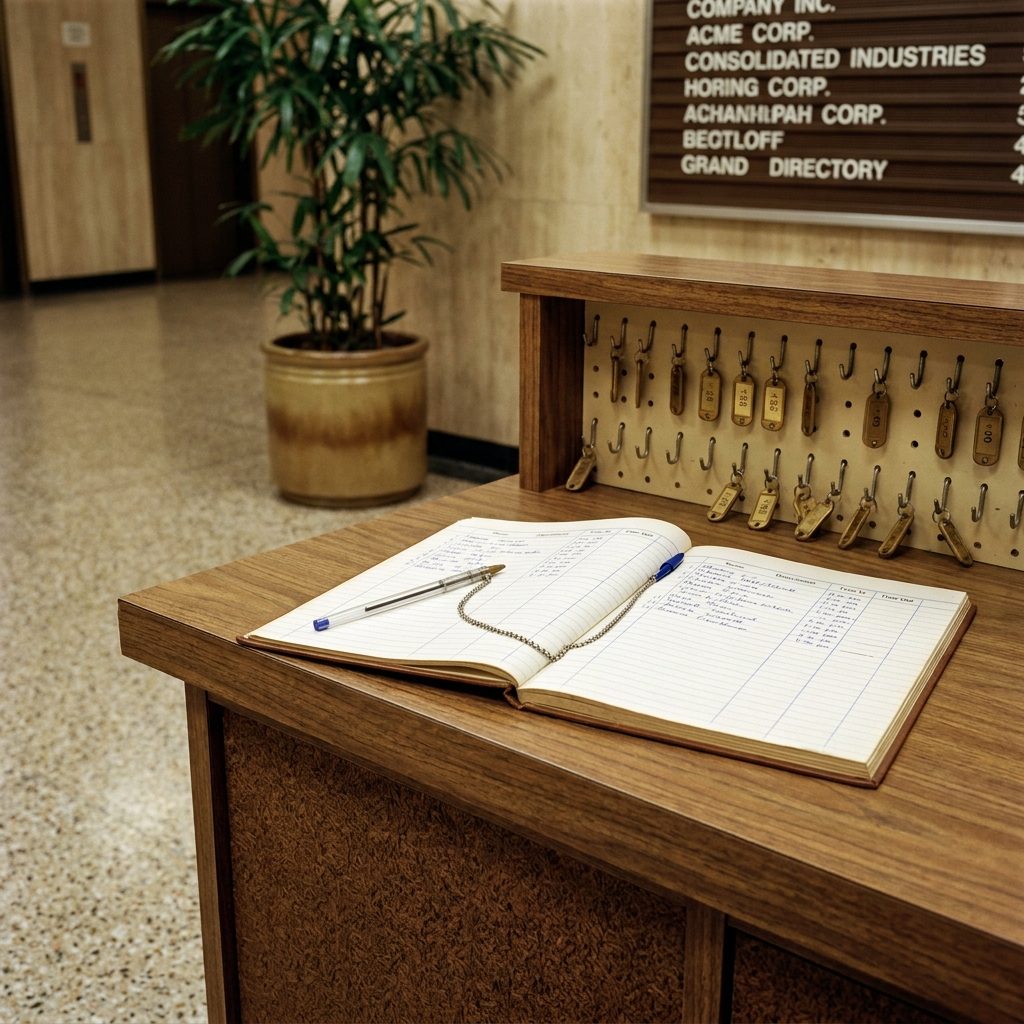
Every morning you printed your name, wrote the time, honestly or close enough, and initialed the column on the right. The guard watched without really watching. The ledger went back months, a perfect handwritten record of who arrived late, who came in on Saturdays, who stopped signing in altogether after the first week and nobody apparently noticed. There was no badge scan. No timestamp. Just your own handwriting as your alibi, which is either a beautiful or a deeply flawed system depending on which side of 9:01 you arrived on.
20. Clocking In on the Mechanical Punch Clock by the Break Room Door
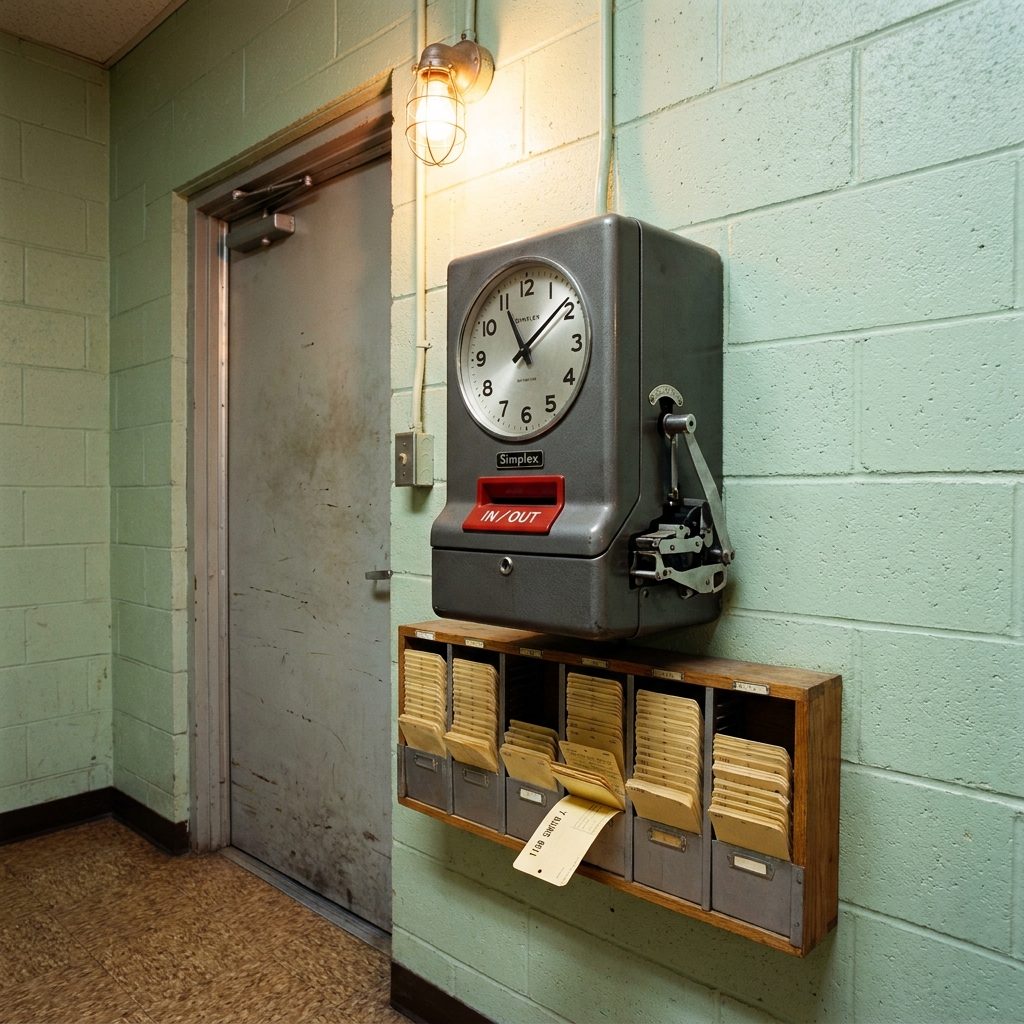
The punch clock did not care that you were one minute late because parking was impossible. It stamped the time and that was the record. You pulled your card from the rack by number, slid it into the slot, and the machine made a sound, a satisfying mechanical thunk, that meant your day had officially started. Miss the slot and you got a crooked red stamp that the payroll clerk would squint at on Friday.
19. The Coffee Percolator Gurgling on a Hot Plate in the Break Room Since 7 AM
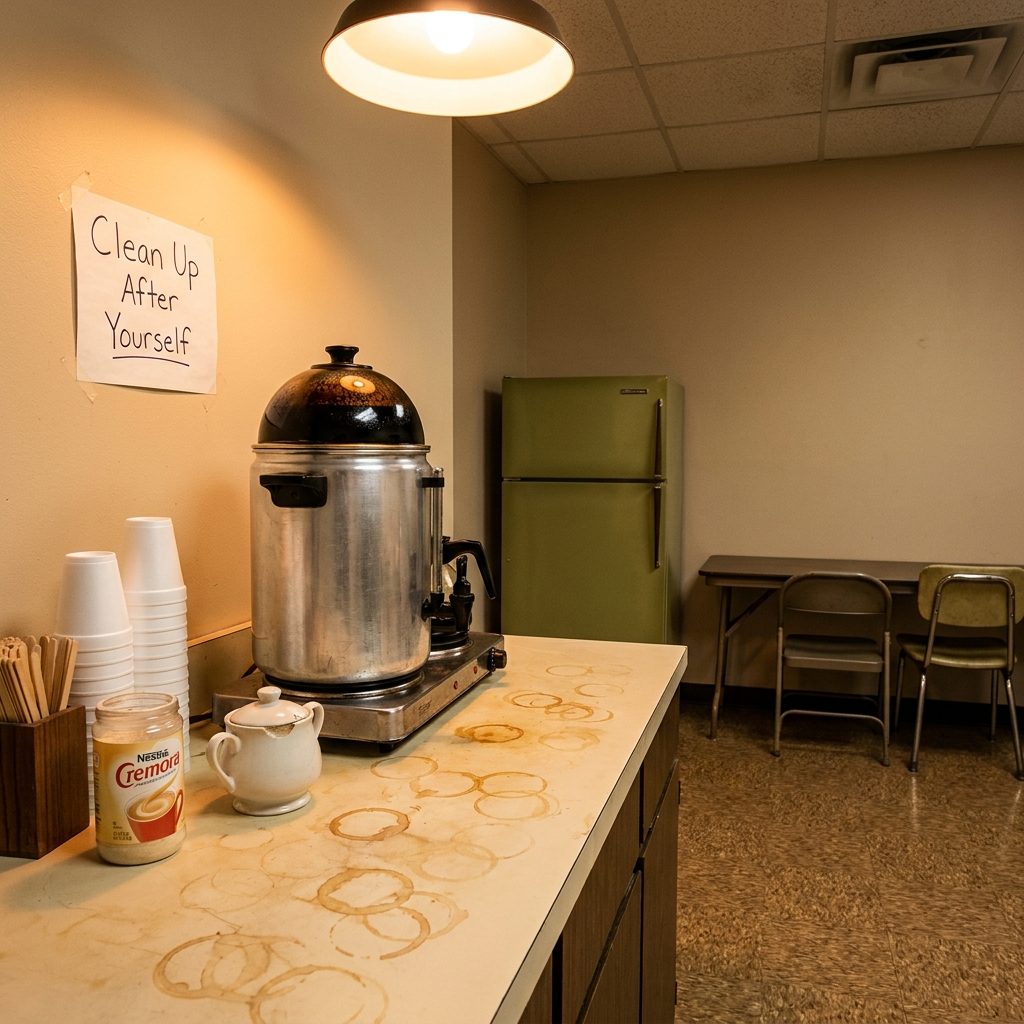
By the time you found the break room on your first morning, that coffee had been sitting since before anyone arrived. The percolator ran on a timer nobody set correctly, which meant the coffee was always either raw or scorched, and on a Wednesday it was almost always scorched. You took a cup anyway. The Cremora clumped. The Styrofoam flexed under your fingers in a way that felt slightly wrong. Nobody complained, because nobody had ever known anything different.
18. Getting Your Extension Listed in the Company Phone Directory, a Stapled Booklet Updated Twice a Year
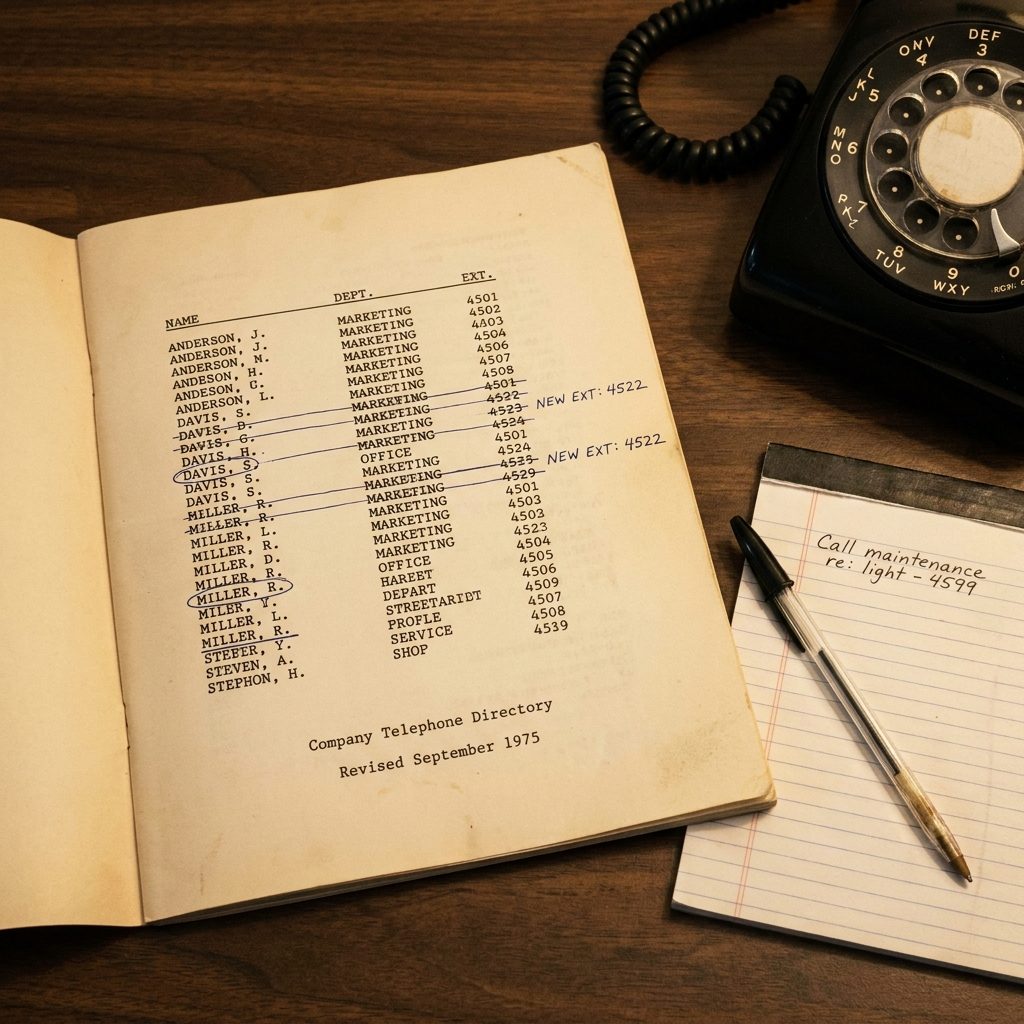
Twice a year, the booklet was updated, printed, stapled, and distributed to every desk in the building. Within two weeks it was already wrong: someone had transferred, someone had left, someone’s extension had changed. You crossed out the old number and wrote the new one in the margin, which meant every copy in the building looked slightly different depending on who’d kept up. Yours, by March, looked like a small act of archaeology.
17. The Dictaphone on the Manager’s Credenza, Waiting for Letters Nobody Would Type Until Tomorrow
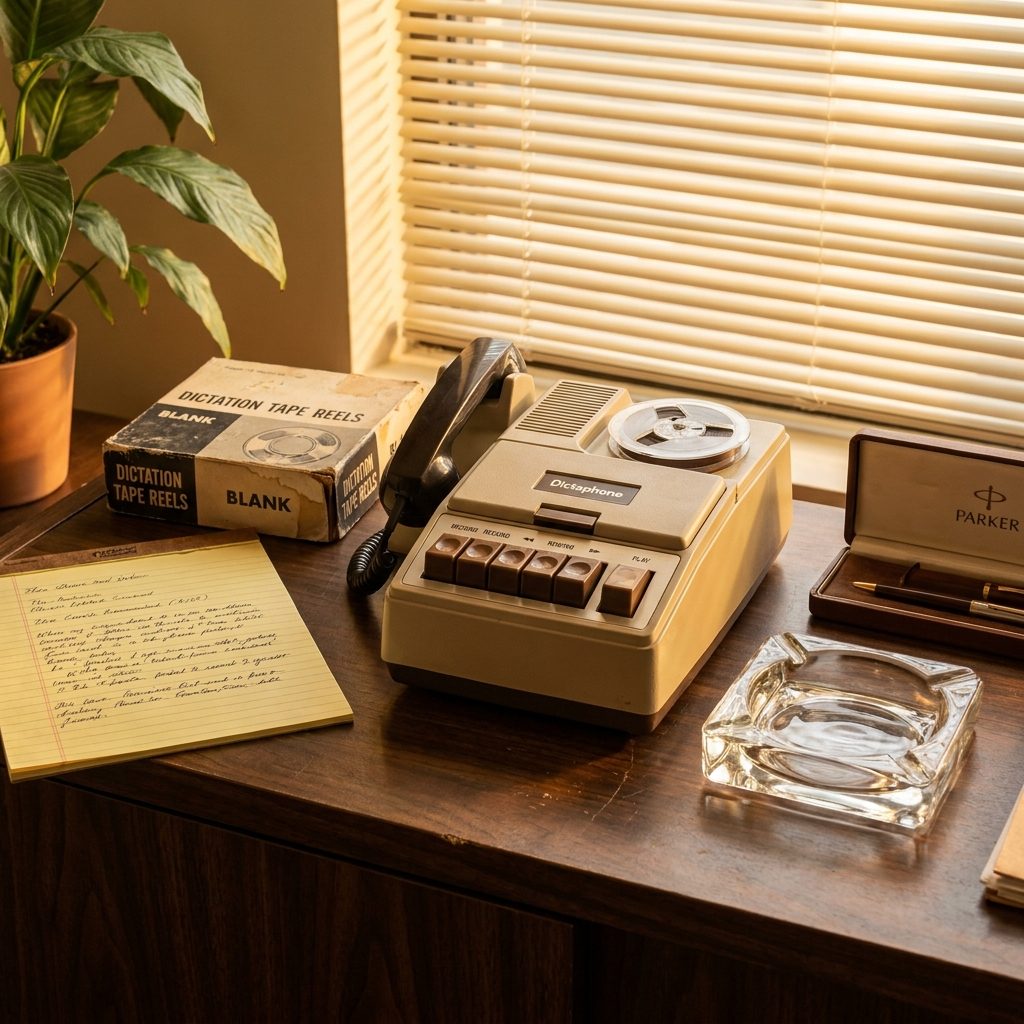
The manager spoke the letter into a handheld microphone. The tape captured it. The tape went to the typing pool. A typist played it back through a small earpiece, foot pedal controlling the speed, and typed what she heard. By the time the letter came back for signature it had passed through four people and taken two days. This was considered efficient. The Dictaphone sat on that credenza like evidence of a very specific kind of faith in process.
16. The Adding Machine on the Accounting Clerk’s Desk, Printing a Paper Tape Nobody Threw Away
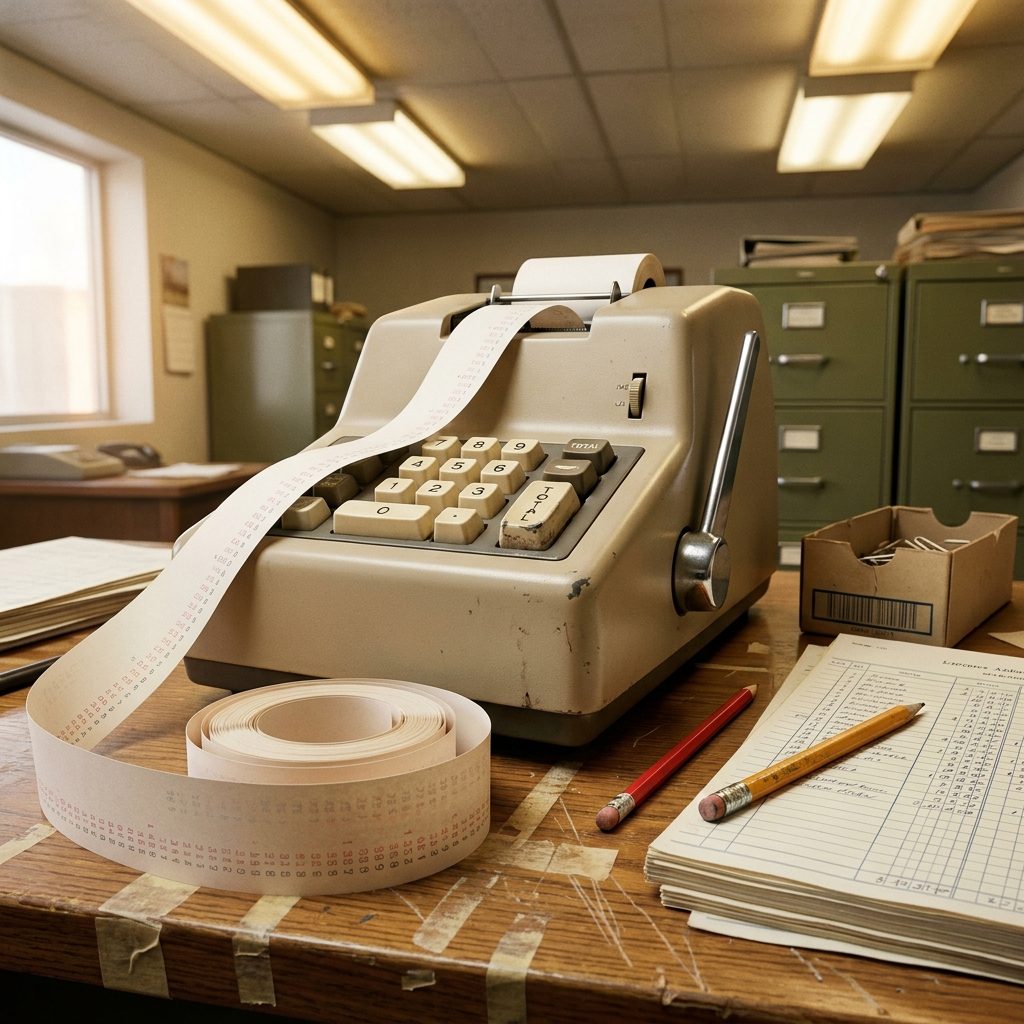
Every calculation printed a receipt whether you wanted one or not. The tape kept coming, curling off the front of the machine, piling up on the desk in a long pink ribbon of arithmetic. Accountants saved the tape. You saved the tape. You saved it because it was proof, because a number without its tape was a number nobody trusted. At the end of the month, the desk drawers had rolls of the stuff, and nobody was entirely sure which tape went with which report, but they kept them all the same.
15. The 10 AM Coffee Break That Stopped the Whole Floor for Exactly Fifteen Minutes by Unwritten Law
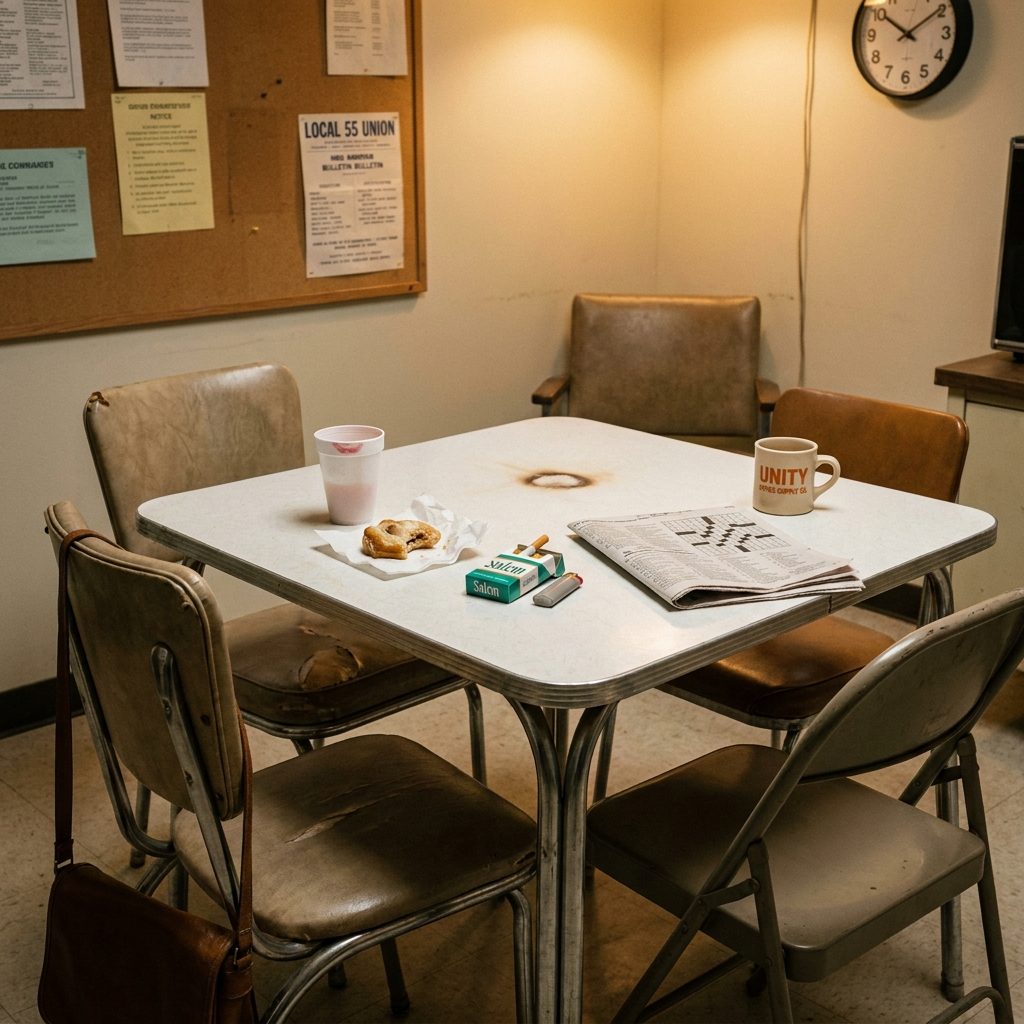
Nobody announced it. Nobody had to. At 10 AM the floor quieted by degrees, chairs pushed back, and people drifted toward the break room in ones and twos like a tide going out. It lasted fifteen minutes. Everyone knew it lasted fifteen minutes. Coming back at sixteen was noticed. The break wasn’t on any schedule you’d been handed, it existed in the culture the way a lot of things existed in a 1975 office, by collective agreement that predated anyone currently working there.
14. The Department Head’s Afternoon Walk-Through, Jacket Back On, Hands Clasped Behind His Back
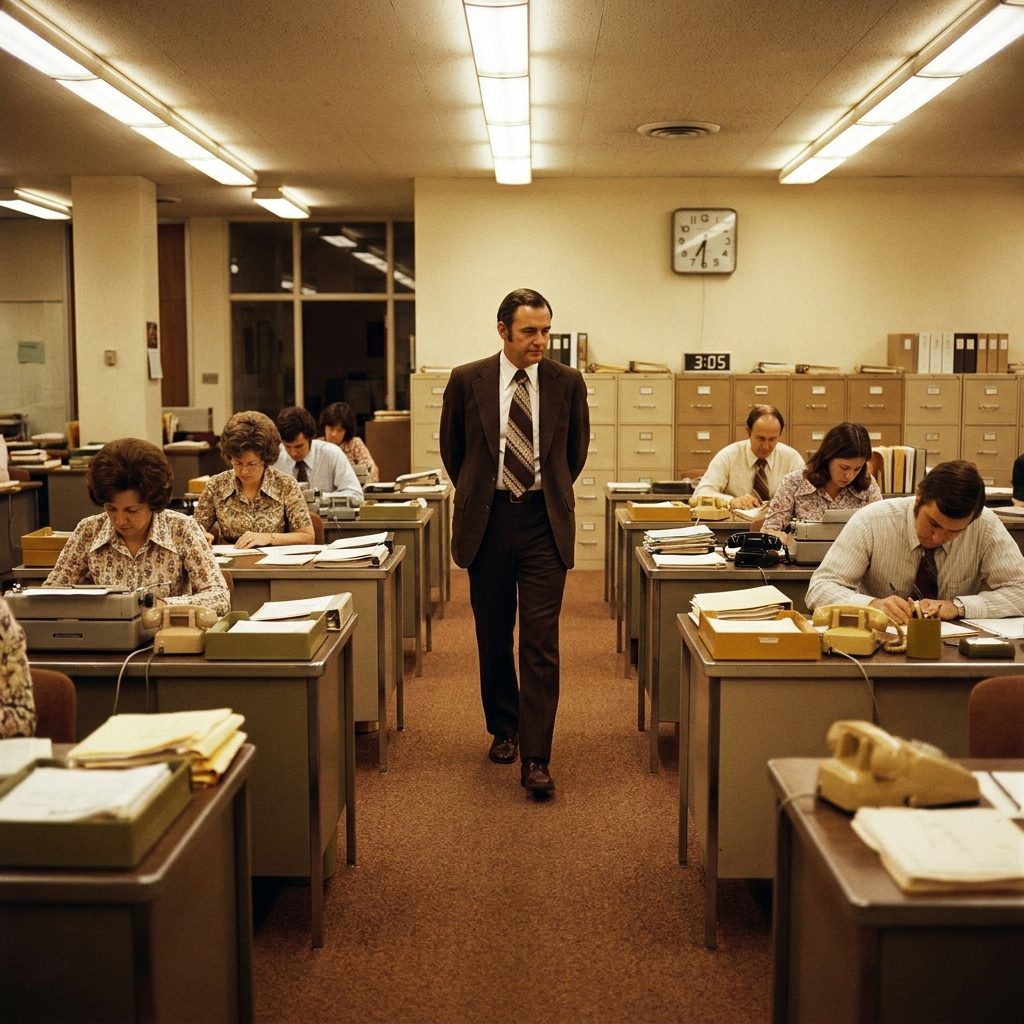
Every afternoon between 3:00 and 3:30, he materialized from his corner office and made the circuit. Jacket back on. Hands behind his back. Nothing said, nothing asked. He just walked the floor with the specific unhurried pace of a man who wanted you to know he’d noticed things. You typed harder. You straightened the papers you hadn’t touched since morning. The walk communicated more than any memo ever did, and it disappeared the day open-plan offices got glass-walled conference rooms and managers stopped needing to leave their chairs to survey the situation.
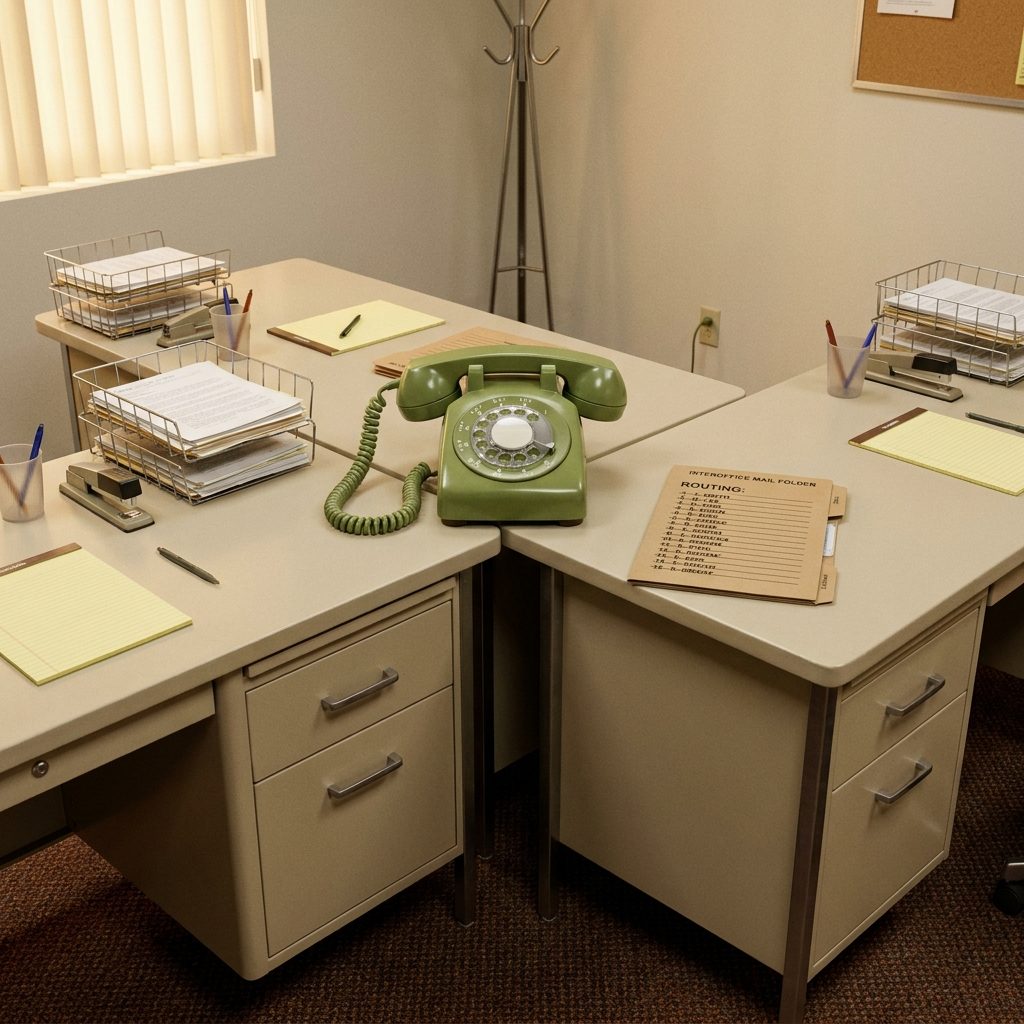
13. The Shared Telephone Line That Three Desks Were All Supposed to Take Turns Answering
Would you like to save this?
The phone rang, and nobody moved. There was always a half-second of collective stillness while everyone hoped someone else would get it. The number belonged to the department, not the person, and the pink While You Were Out slips that resulted went into a pile that sometimes found the right desk by end of day and sometimes did not. Long before voicemail decided any of this, the shared line ran on a combination of goodwill and mild passive aggression that shaped office culture more than any policy ever did.
12. The Interoffice Envelope With Twenty-Three Crossed-Out Names Before Yours
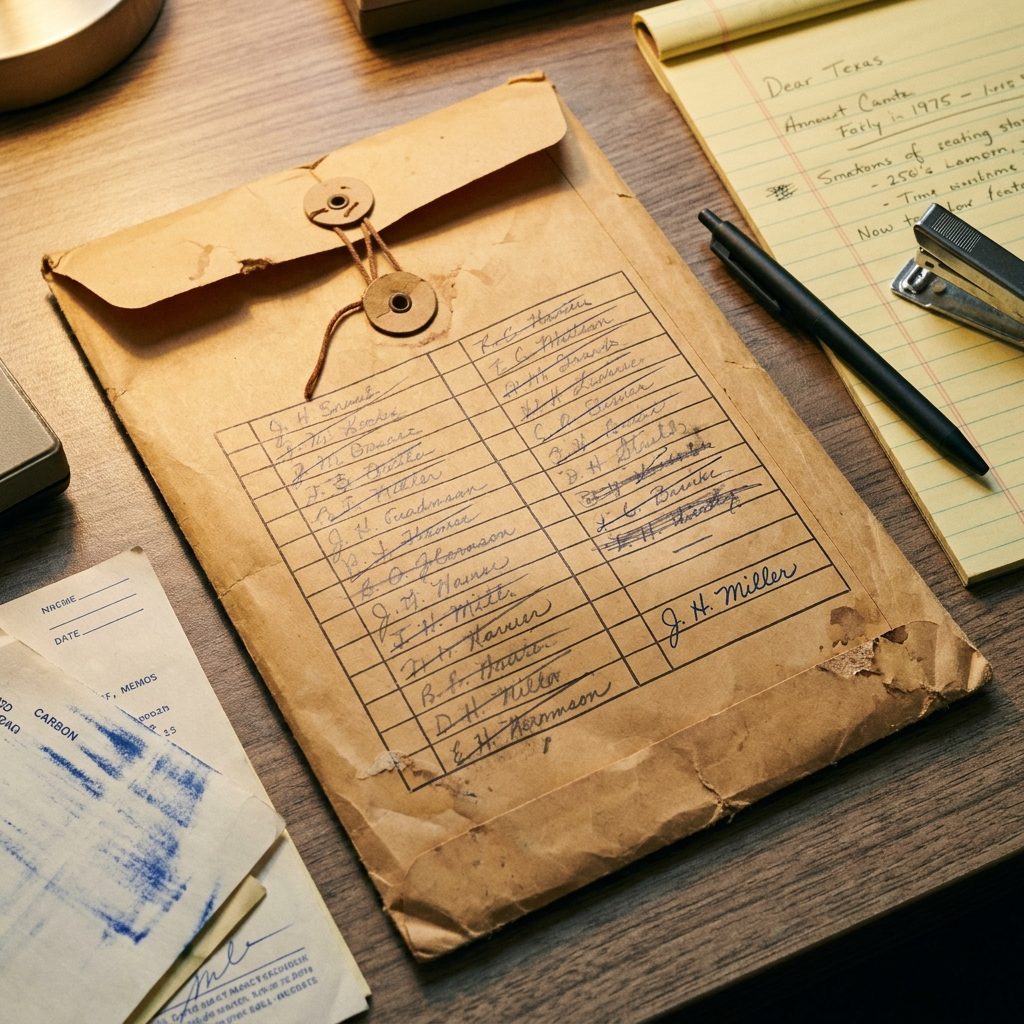
The interoffice envelope was its own document. By the time it reached your new desk on day one, the front was a geological record of everyone who’d touched it, crossed-out names going back months, sometimes years, the routing grid nearly full. You added yours at the bottom, pulled out whatever was inside (usually a single memo that could’ve fit in a plain envelope), re-buttoned the string closure, and dropped it back in the outbox. The envelope probably outlasted three of the people on it.
11. The Org Chart Pinned to the Bulletin Board That Was Already Three Reorganizations Out of Date
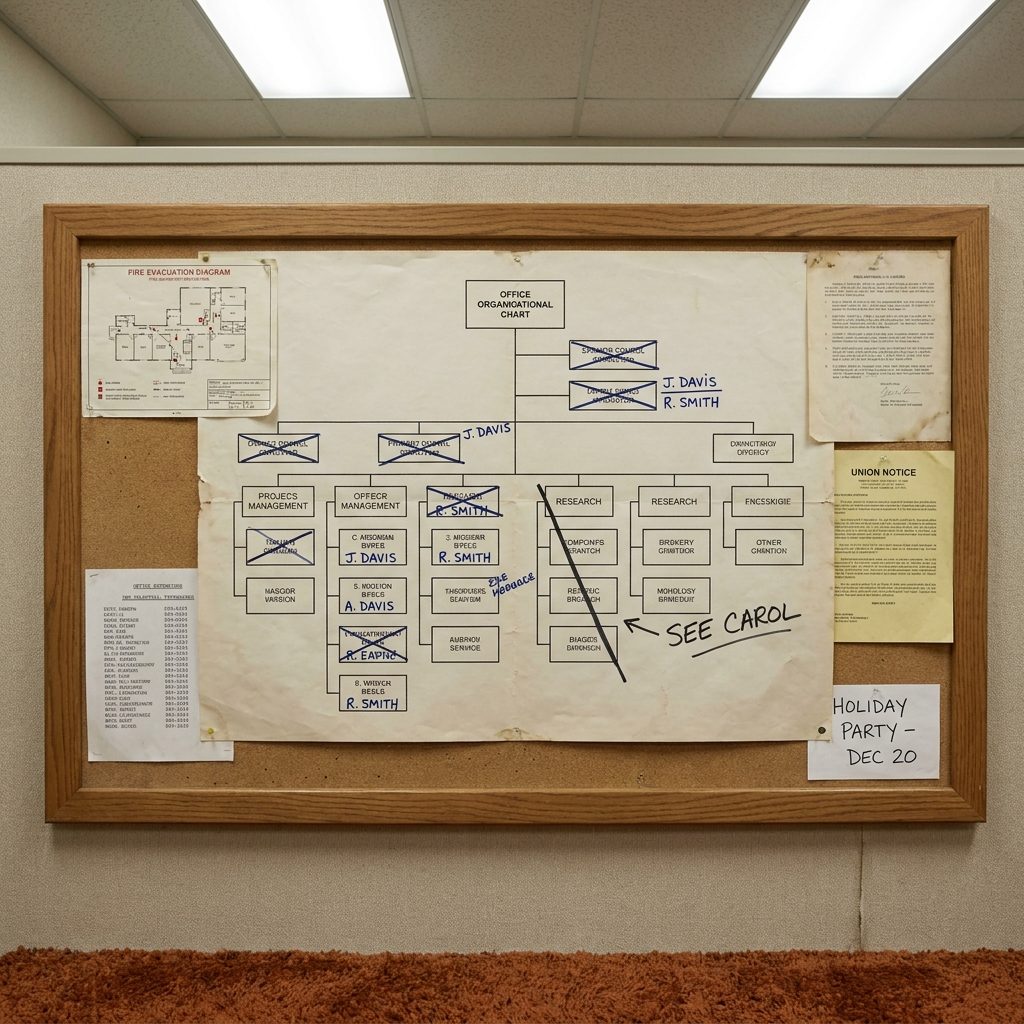
The org chart was posted as authority but read as fiction. Somebody named Robert was still listed as Department Head even though everybody knew Robert had transferred to the Cincinnati office in March. Three boxes showed dotted-line reporting relationships that nobody in those boxes had ever agreed to. On your first day, an older colleague walked you past it, tapped it twice with one finger, and said nothing else. That was the orientation.
10. The In-Box That Was Physically a Metal Tray Bolted to the Side of Your Desk, Already Full
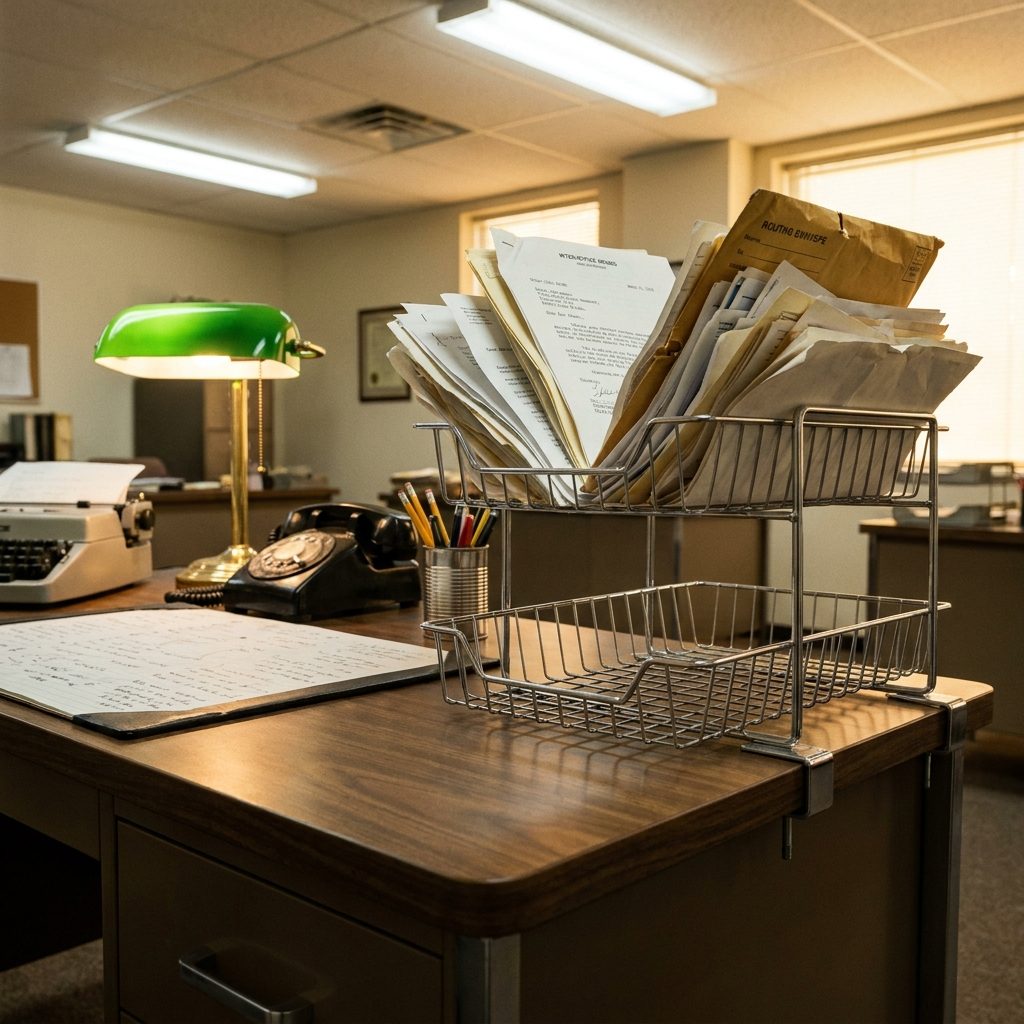
It was full before you arrived. That was the message: things have been accumulating in your absence, and your absence began before you were hired. The inbox tray was not a digital notification count you could ignore. It was a physical stack with weight and height and the specific anxiety of not knowing what was at the bottom. Some of those papers had been waiting for whoever sat at that desk for two weeks. Welcome. Please advise on the Henderson account.
9. The Rolodex Sitting Open on Your Predecessor’s Desk, Half the Cards in Someone Else’s Handwriting
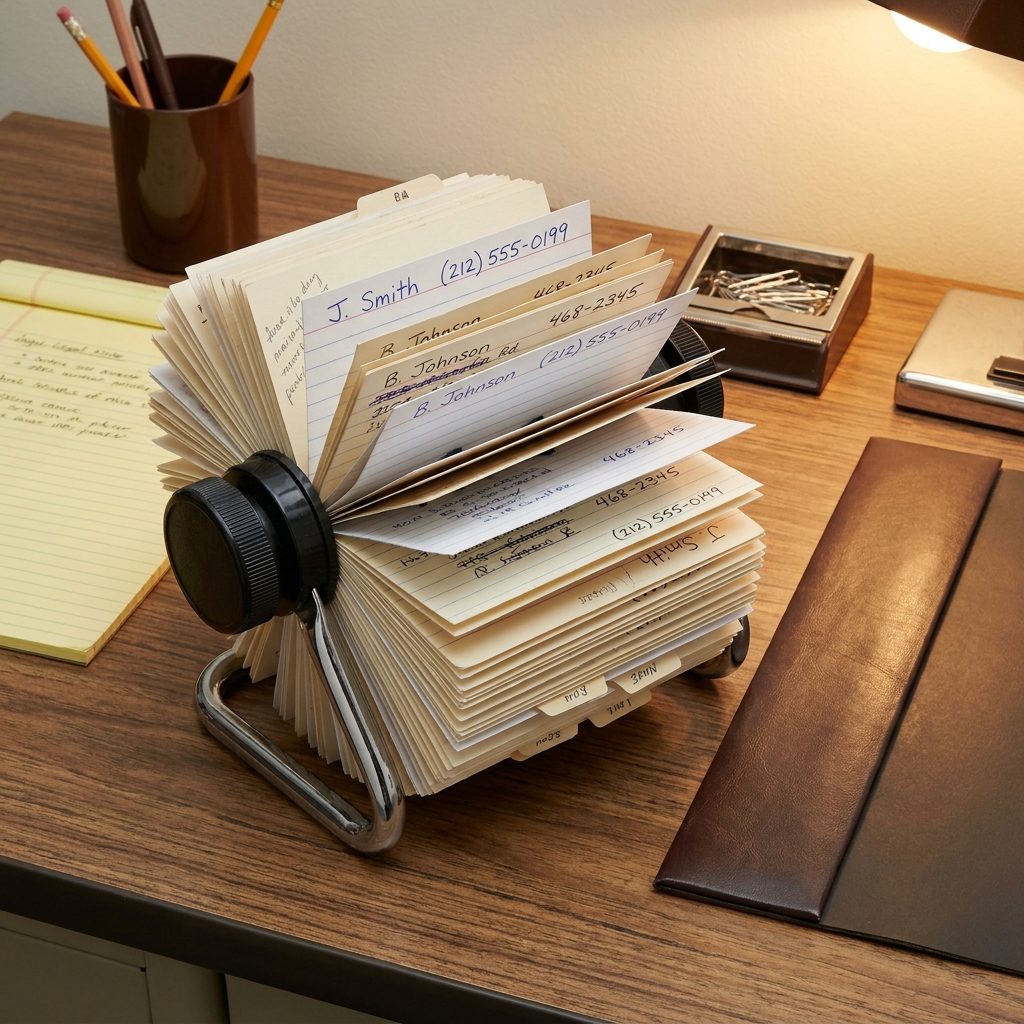
The Rolodex was your inheritance. Whoever held this job before you had built it over years, clients, vendors, the guy at the print shop who’d do a rush job if you asked right, the extension for the third-floor supply closet that wasn’t listed anywhere official. Half the cards were typed. Half were handwritten in a hand you’d be decoding for months. A few had been crossed out so thoroughly you couldn’t read the original name. Nobody explained any of it. The Rolodex was the institutional memory, and now it was yours to figure out.
Did You Know: The Rolodex was developed in 1956 by Hildaur Neilsen, chief engineer at Arnold Neustadter’s office-supply company. Neustadter marketed the rotating card file under the name Rolodex.
8. The Carbon Copy Memo That Went to Eleven People Who Didn’t Need It
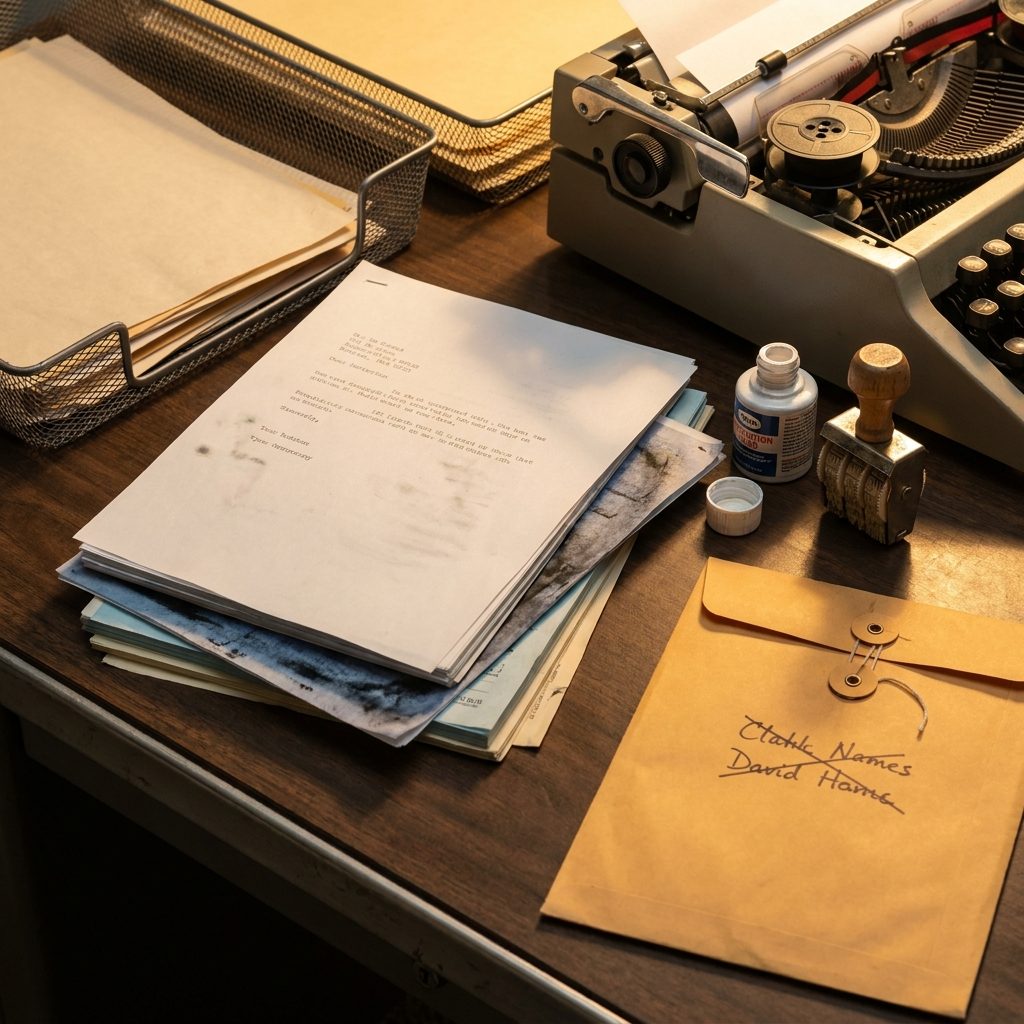
The office memo traveled by hand and by accident. Someone typed it in triplicate, the carbon paper sandwiched in between, and the bottom copy always came out slightly ghostly, like a message that almost made it. Your copy landed in your inbox whether the information applied to you or not. Most people read the first line, confirmed it wasn’t urgent, and dropped it in a stack they’d sort out Friday. Friday never came.
7. The Receptionist Who Knew Exactly Where Everyone Was, All the Time
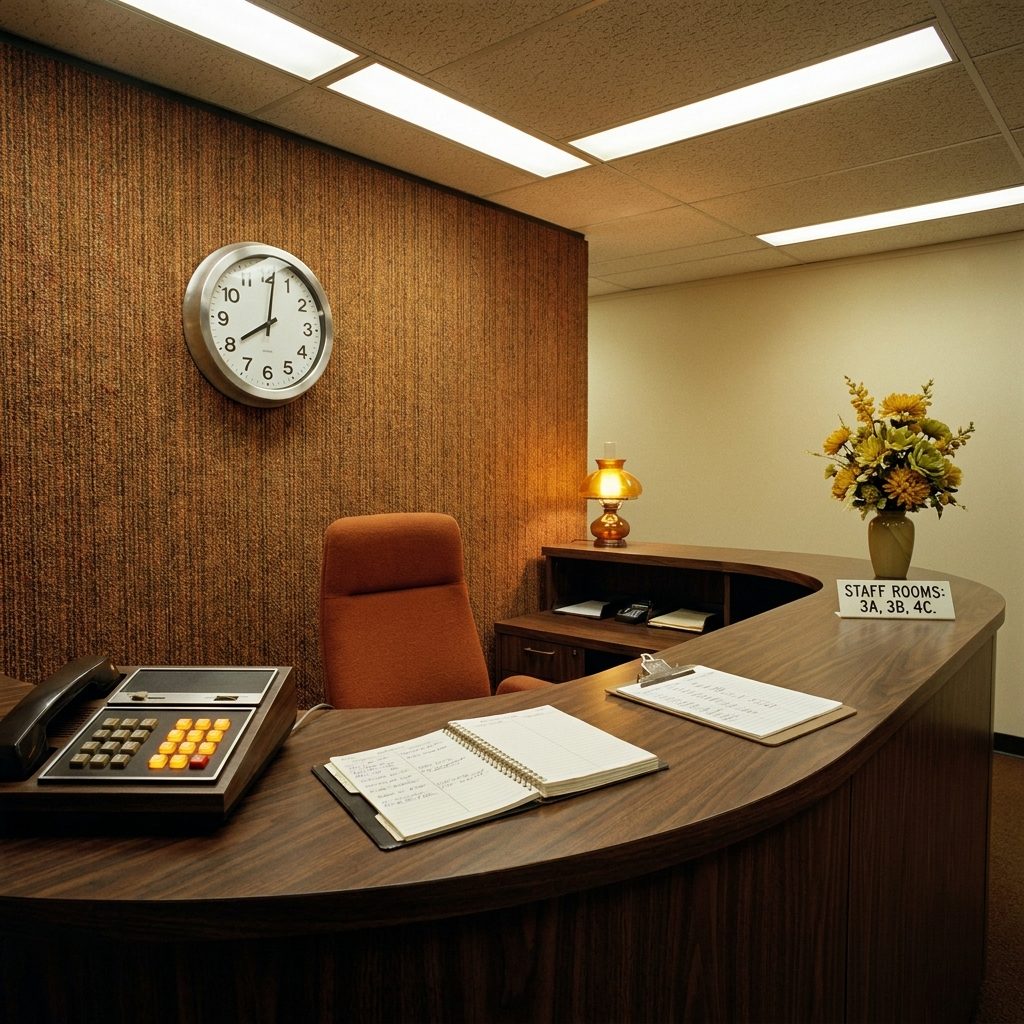
Before the company intranet, before Slack, before anyone could ping anyone, there was one woman who held the entire organizational map in her head. She knew that Henderson had stepped out to the loading dock, that the VP was in the conference room on two, and that the new hire in accounting was currently lost somewhere near the copy room. She ran a paper schedule, a physical sign-in sheet, and about six phone lines simultaneously.
Nobody wrote her a manual. The knowledge was just hers.
6. The Cigarette Burning in the Ashtray on Your New Supervisor’s Desk
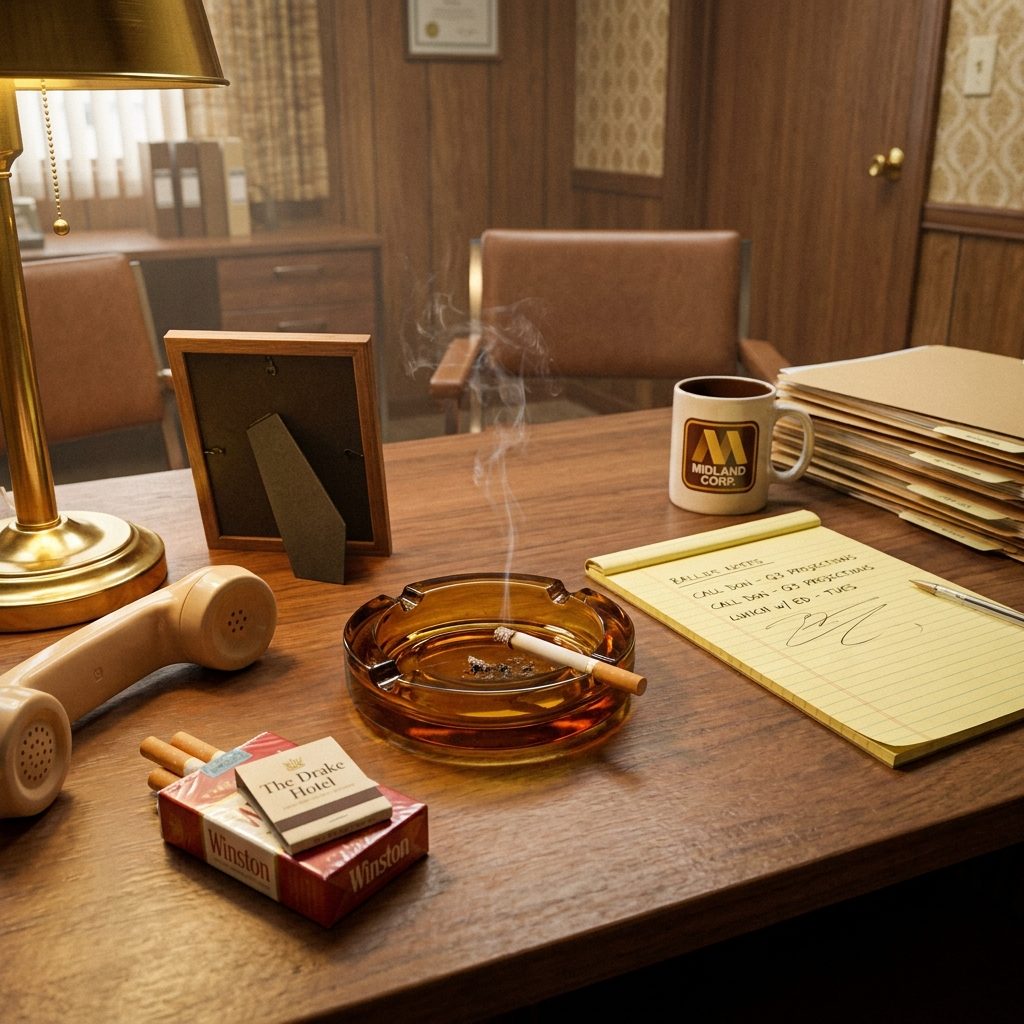
Your supervisor lit up without asking. So did the guy two desks over. The break room had a no-smoking section that existed mostly in theory. By 10 a.m. on your first day, the overhead fluorescents had a slight amber tint that was not a lighting choice.
The heavy glass ashtray was as standard as the stapler. Some people had a nice one, a gift probably, amber or smoked green. You went home that first night with the smell in your hair and just accepted it as part of what an office was.
5. The Typing Pool at Full Speed: Thirty Women, Thirty IBM Selectrics, One Enormous Sound
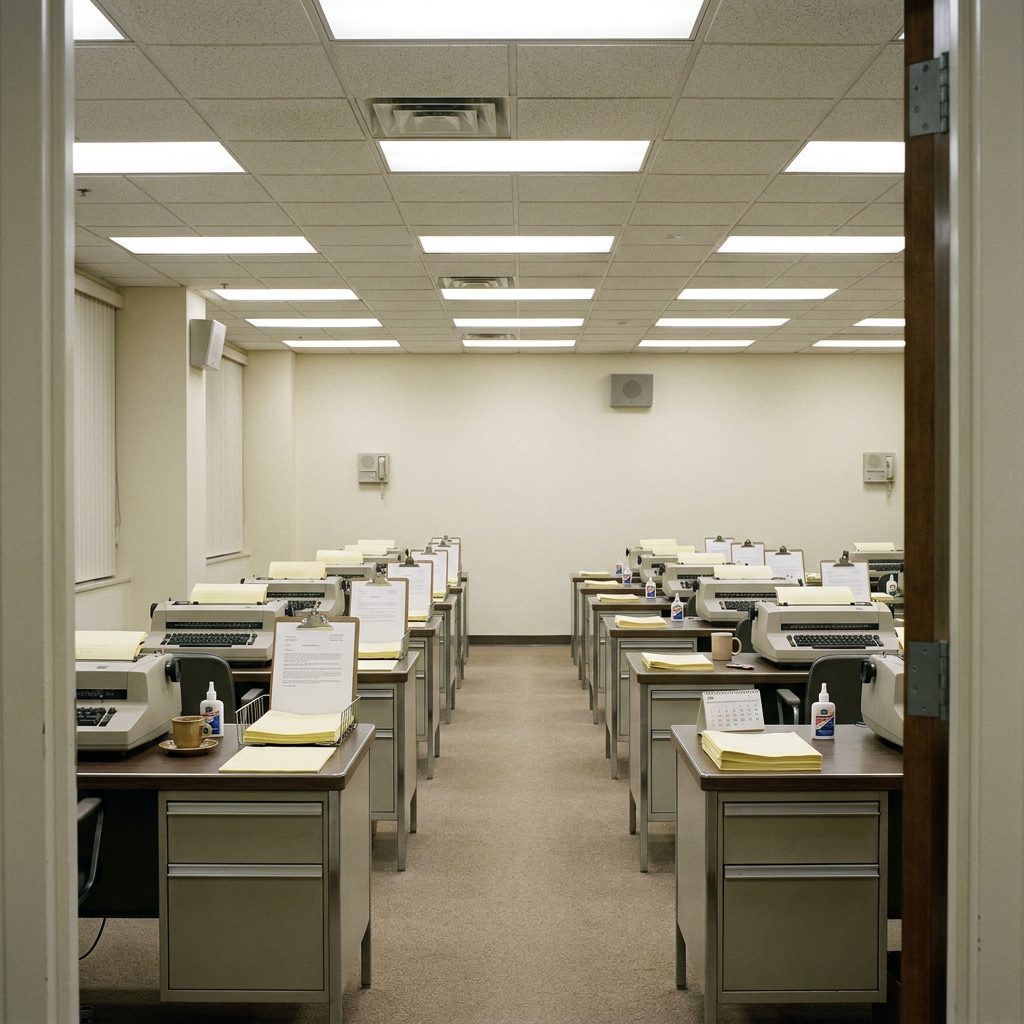
Stand at the door of a working typing pool and the sound hit you before the sight did. Thirty Selectric typewriters going simultaneously made a noise that was part clatter, part hum, part something you felt in your chest. The typeball on an IBM Selectric was a small miracle of engineering and the source of a specific mechanical percussion that no keyboard since has replicated.
On your first day, if you were assigned here, you sat down, adjusted the paper guide, and became part of that sound.
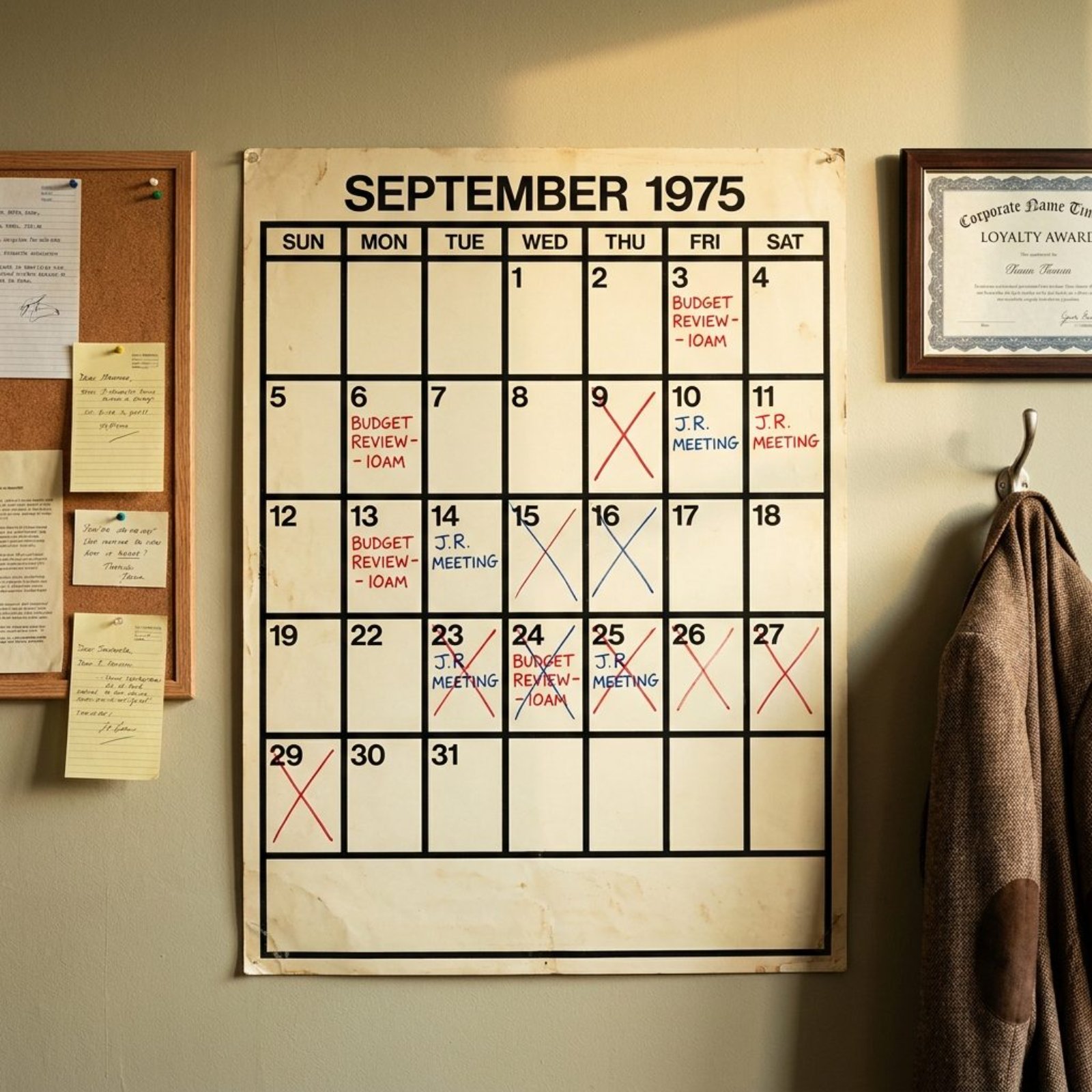
4. The Enormous Paper Calendar Blocking Half the Wall Behind the Boss’s Desk
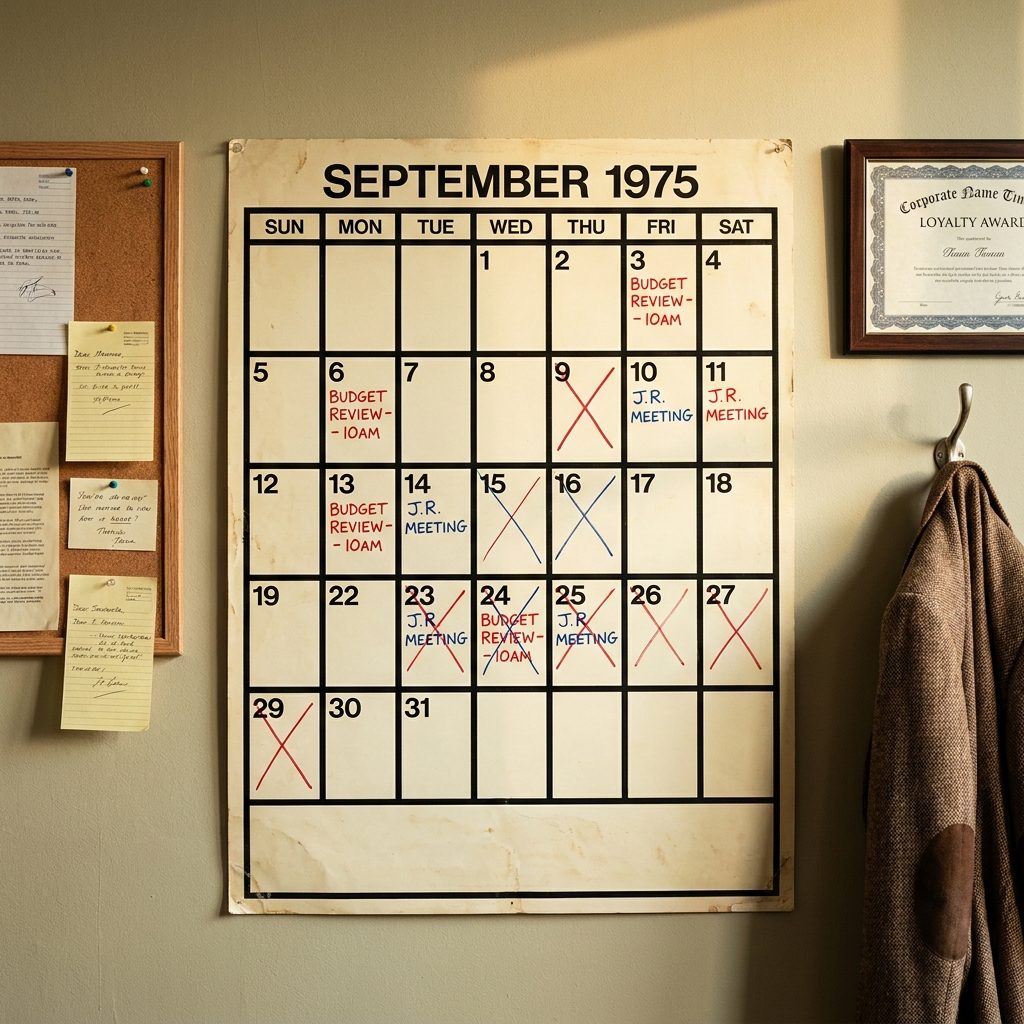
The wall calendar was the company’s memory. Everything that mattered got written into a square in ballpoint, sometimes in someone else’s handwriting, sometimes abbreviated in a way only the boss understood. ‘RKJ conf / budget, Thurs?’ meant something to him. You’d learn to read it eventually.
There was no ‘invite.’ There was no notification. Someone walked to the wall, found your initials already penciled into a Wednesday at 2, and told you about it in the hallway.
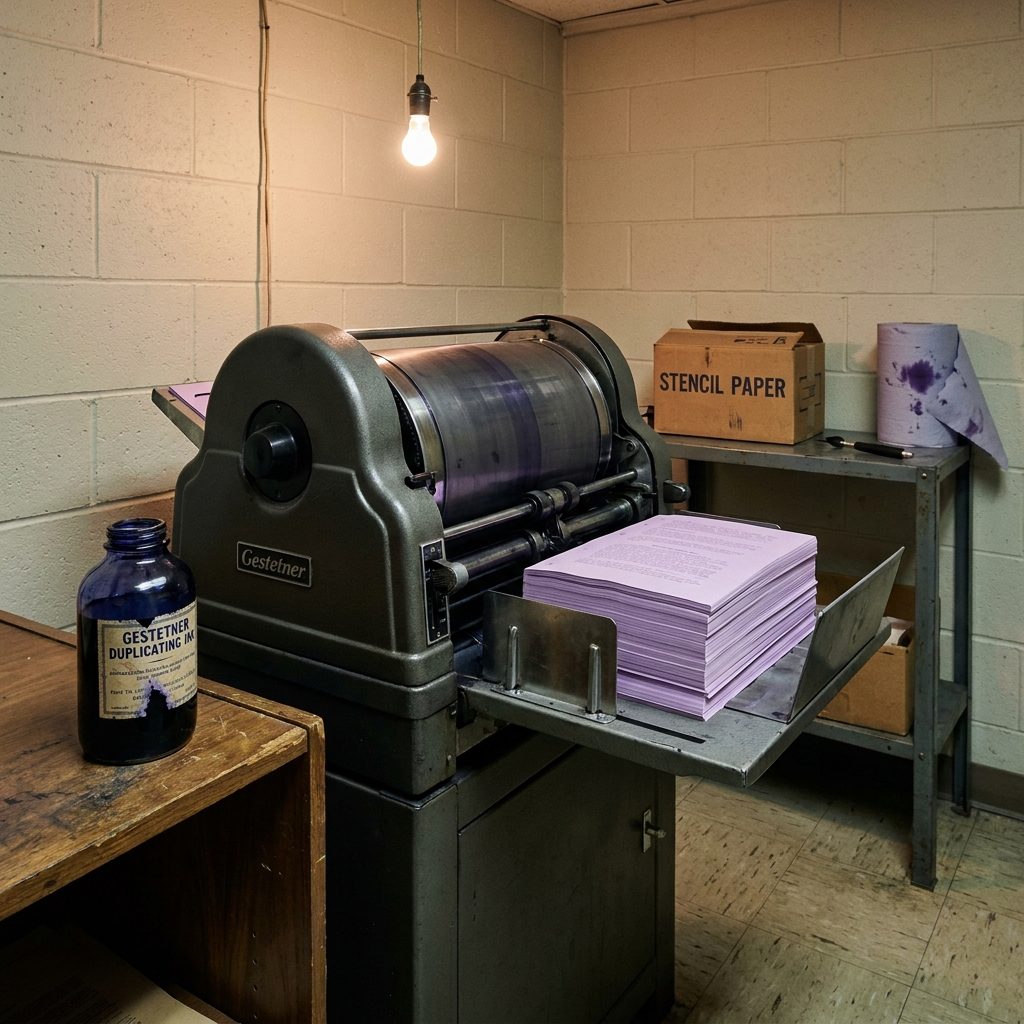
3. The Mimeograph Machine Running Off 200 Copies in the Back Office
Would you like to save this?
The machine worked from a stencil cut on a typewriter, every letter pressed through a coated sheet that would later carry the ink. One mistake meant stopping to dab on correction fluid, waiting for it to dry, then typing the letter again with careful aim.
Once the stencil was mounted, the mimeograph rolled out copies in a steady mechanical rhythm. The pages came off with dense ink, usually black or dark blue, and every flaw in the stencil appeared on every copy after it. By the hundredth sheet, the stack leaned slightly, the room smelled of ink, and someone had stained a thumb checking whether the last page was dry.
Fun Fact: Thomas Edison patented an electric pen and duplicating process in 1876. A.B. Dick later refined the stencil-based system and marketed it successfully under the Mimeograph name.
2. The 4:30 Friday Cash Envelope Handed Out at the Payroll Window
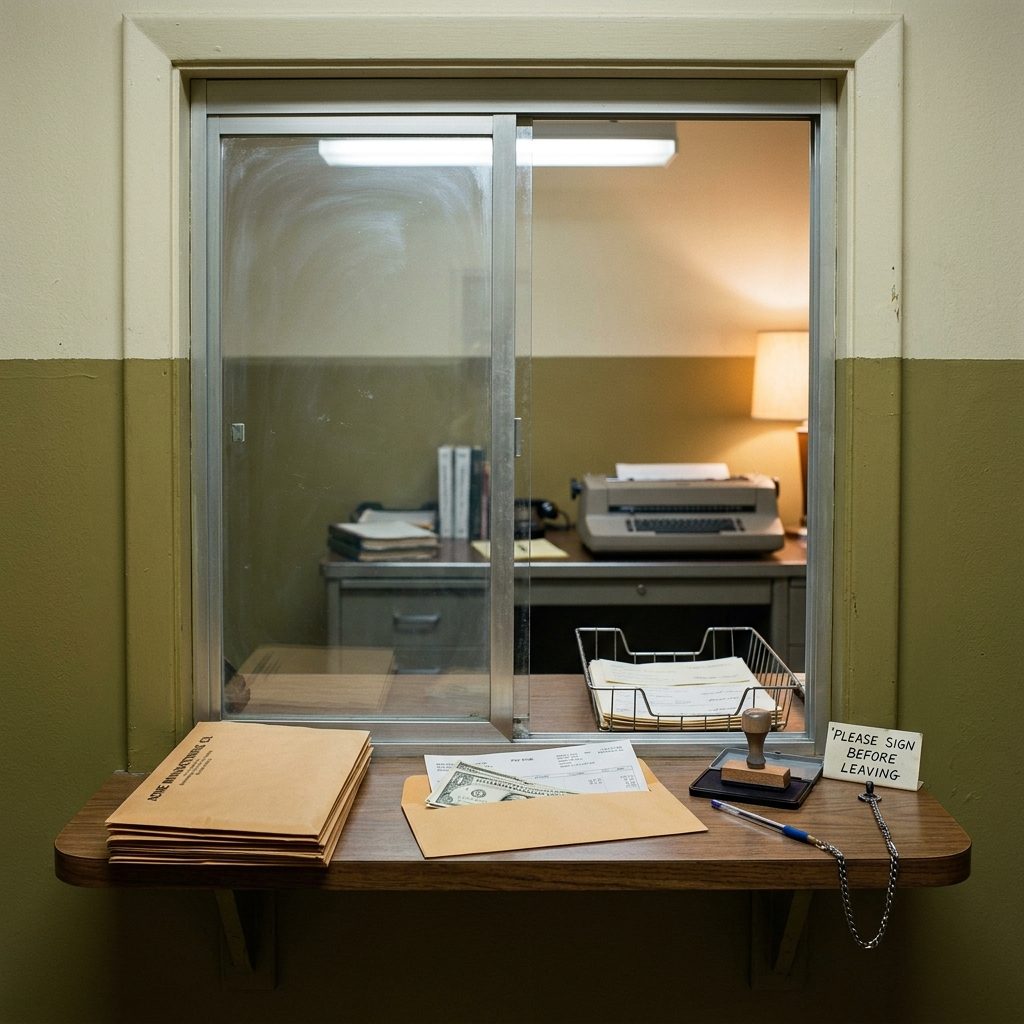
Direct deposit was not a thing you had. Every other Friday, you went to the payroll window, signed your name on the receipt sheet, and they slid your envelope under the glass. The bills were counted, folded once, tucked under the stub. If they’d gotten it wrong, and occasionally they did, you stood there and worked it out in person, in cash, on the spot.
There was something about the physical weight of it that made the two weeks feel real in a way a bank notification never quite does.
1. The Last Hour: Punching Out at 5 PM Sharp and Watching Half the Floor Vanish in Three Minutes
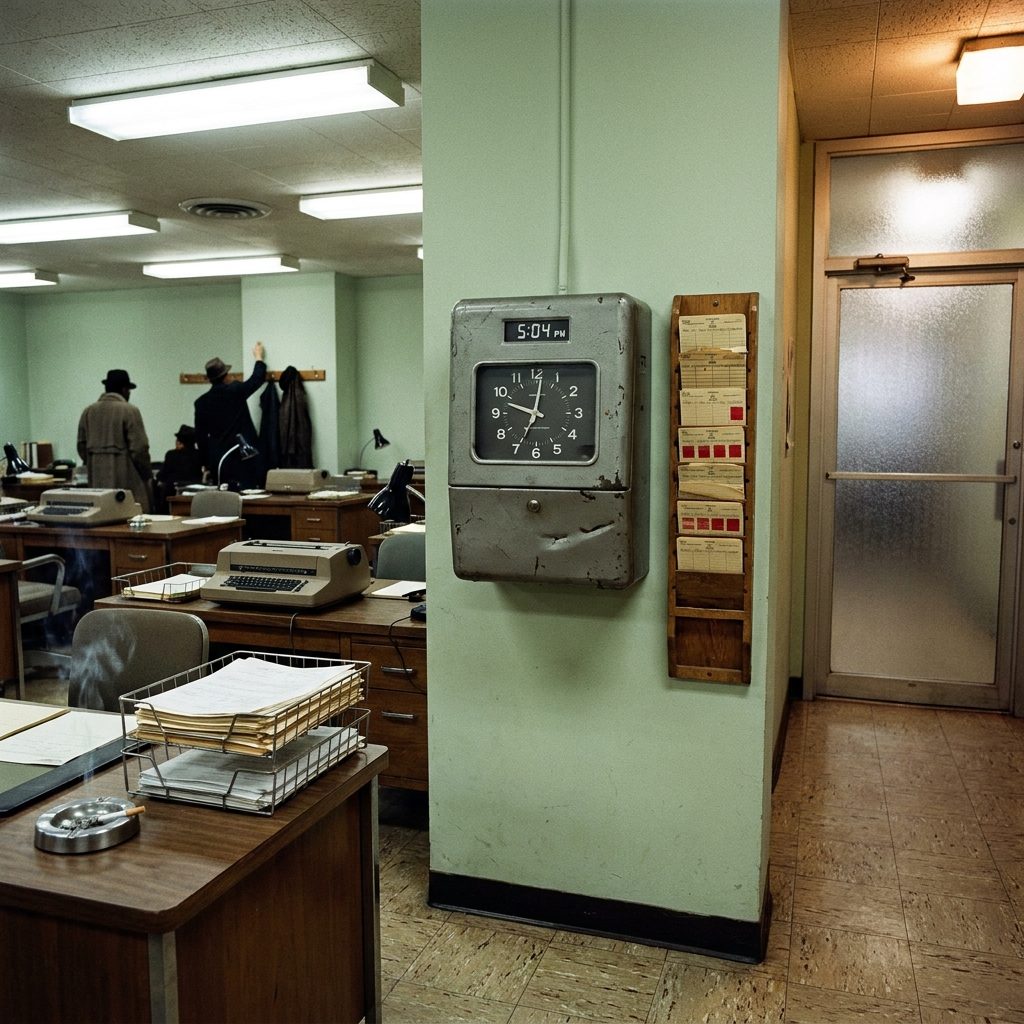
At 4:58, chairs started shifting. Desk drawers closed. Typewriter covers came out. Nothing dramatic happened, but everyone had been watching the clock long enough to know exactly when two minutes of preparation became acceptable.
The time clock waited near the exit, usually a Simplex or Lathem, with a rack of cards beside it. Slide yours into the slot, hear the solid mechanical clunk, and the workday was officially over. By 5:03, half the floor had vanished.
The files stayed in their cabinets. The typewriter stayed on the desk. Whatever had not been finished would still be there in the morning, exactly where you left it. That hard boundary between work and the rest of a Tuesday may be the part of the old office day that feels most distant now.
History Corner: Mechanical time clocks became common in American workplaces around the turn of the 20th century, giving employers and workers a standardized record of hours. Electronic systems later replaced the paper cards, but the punch clock once gave many office and industrial workdays an unmistakable beginning and end.