
Would you like to save this?
You budgeted for the presents. You priced the ham, set aside something for the cookie tins and the wrapping paper you’ll buy at the register because you forgot it again. Then the holiday arrives and the real money leaves the account. Not under the tree, though. At the airport, the kennel, the mechanic, the tree lot. These are the fat, forgettable costs that quietly out-spend the gift list every single year, and almost nobody sees them coming. Here’s where the money actually goes.
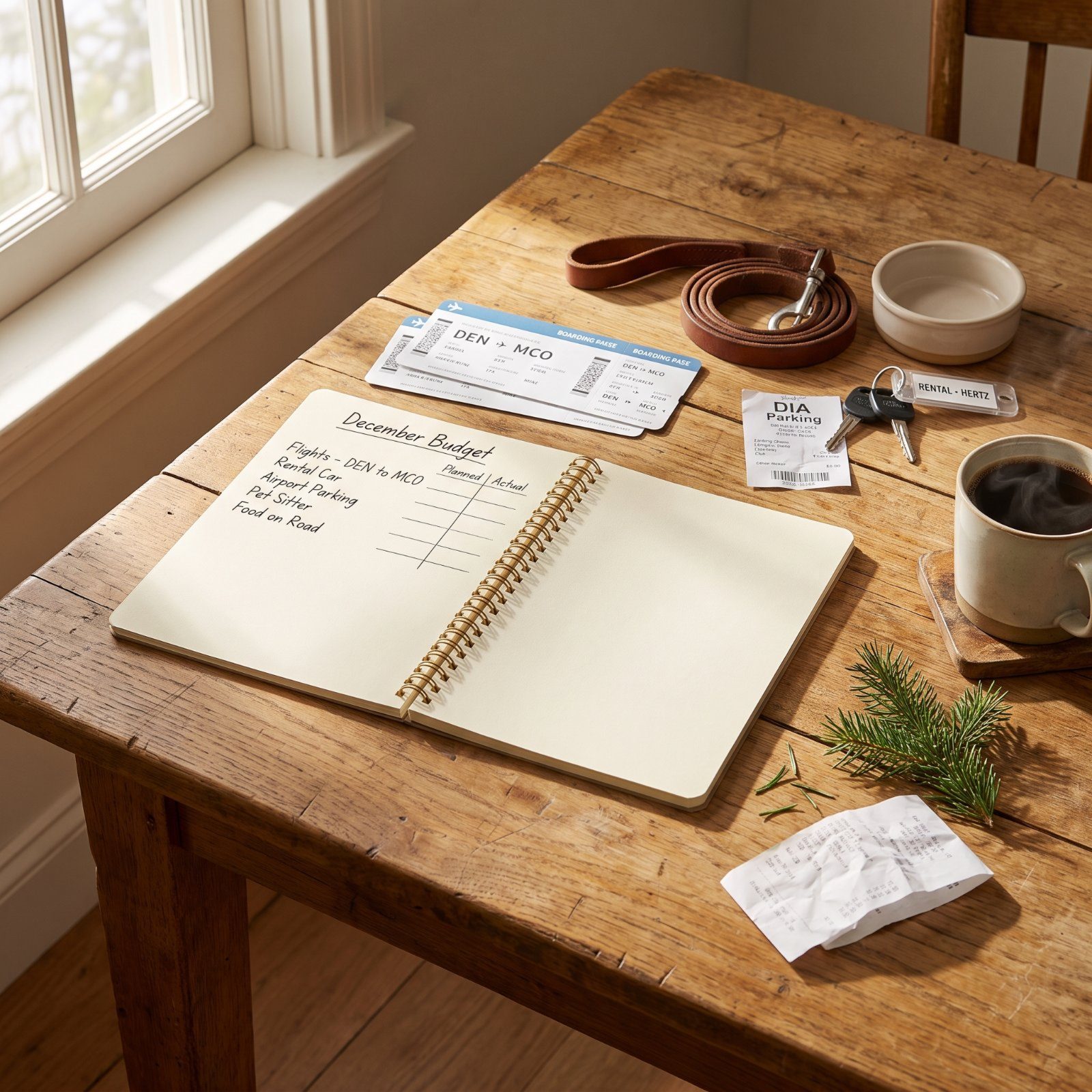
48. Pet Boarding Over the Holiday Weekend

Nobody puts the dog on the gift list. Then you go to book a week at the kennel over December 23rd through the 28th and discover holiday rates are a different animal entirely.
Peak-week boarding often runs premium nightly rates, sometimes with a mandatory holiday surcharge tacked on top. Multiply a jumped-up nightly fee by five or six nights and you’ve spent more on the dog’s vacation than on your nephew’s. The good in-home sitters? Booked out early, and they charge accordingly.
Price it in October. Call two or three places, ask flat out whether there’s a holiday surcharge, and get the full nightly total including feeding and medication fees before you commit to anything.
47. Flights for the Family Christmas Visit
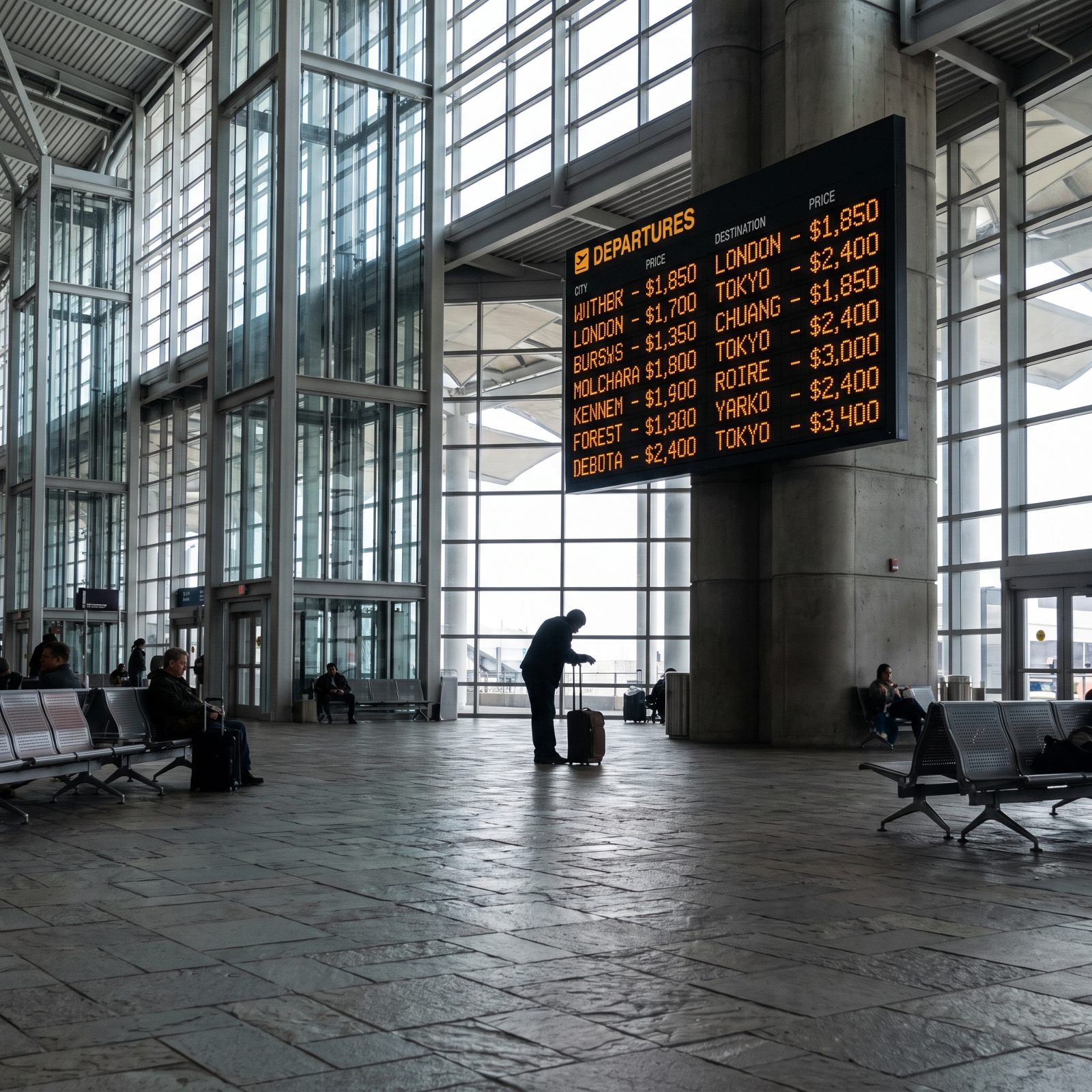
Here’s the part that stings. The flight home for Christmas is the single most expensive thing most families buy all month, and it almost never shows up in the “holiday budget.” It gets filed under travel, as if travel were free the rest of the year.
Airfare over the two weeks around Christmas ranks among the priciest of the entire calendar. Demand is fixed, your dates are locked, and the airlines know perfectly well you aren’t hunting a bargain — you’re hunting a seat home. Fly on the actual holiday itself and you’ll often pay less, since not many people want to spend Christmas Day at 30,000 feet.
Book early. Set a fare alert the minute you know your dates, and stay flexible on the day of departure if you possibly can.
46. Holiday-Week Hotel Rooms

When the whole family descends on one small childhood home, somebody’s sleeping in a hotel. Usually you.
Holiday-week room rates climb for the same reason flights do: fixed dates, high demand, zero leverage on your end. And the cheaper chains near family tend to sell out first, which nudges you toward the pricier option by default. Three or four nights at a jacked-up seasonal rate adds up fast, especially once you factor in parking and the resort fee that materializes from nowhere.
Book refundable rates well ahead so you can rebook if a price drops, and — this one’s easy to skip — ask relatives early whether a spare room exists before you assume it doesn’t.
45. Rental Cars at Peak Seasonal Rates
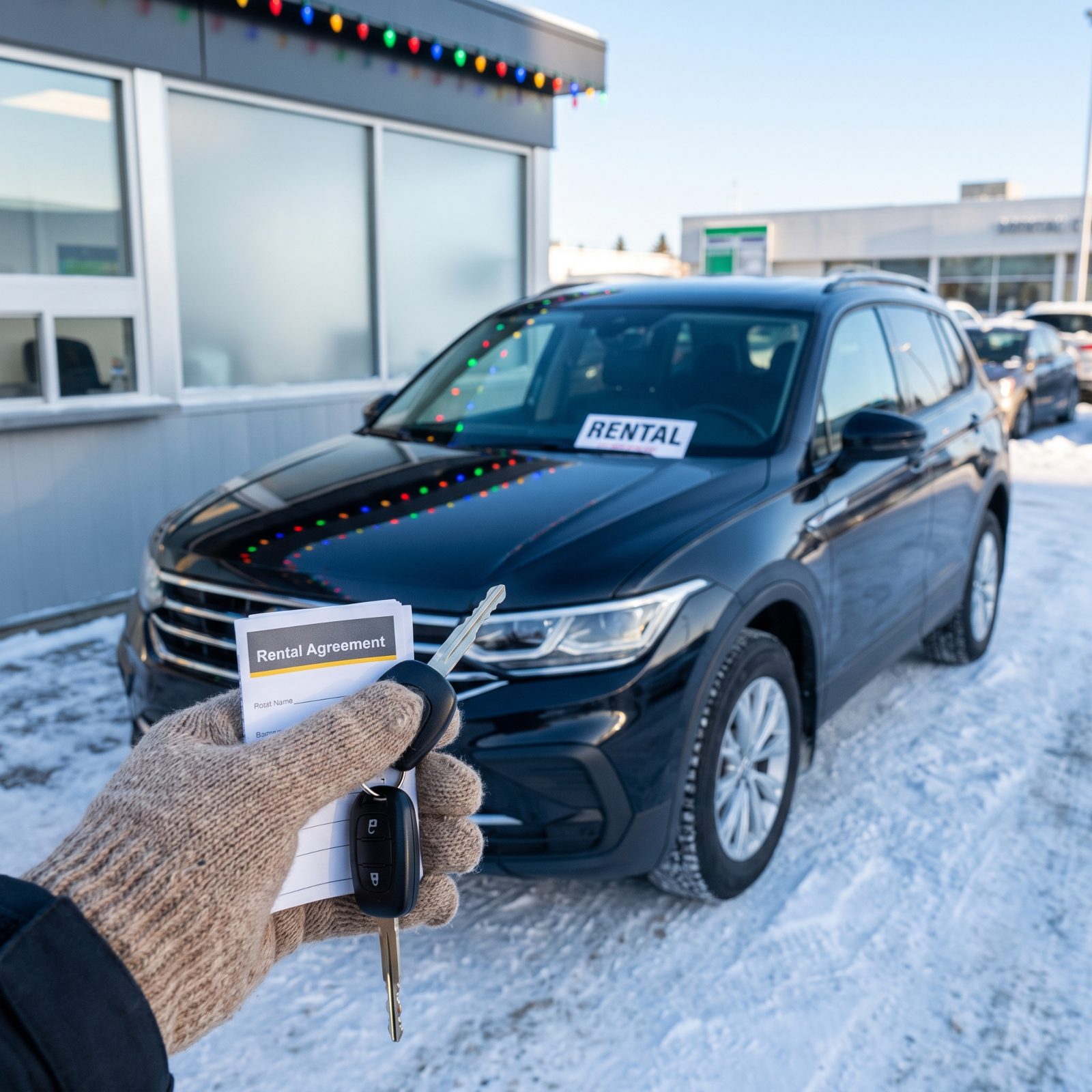
Flying in means renting on the other end, and holiday rental rates do exactly what you’d expect. Supply tightens, airports empty their lots, the daily rate balloons.
The real trap is the add-ons. Insurance you might already carry through a card, a second-driver fee, the young-driver surcharge, and the “return it full or we charge triple for gas” line all pile onto a base rate that was already inflated. A week-long holiday rental can quietly double what you planned for.
So reserve early for the better rate, decline coverage you already hold (check your credit card benefits first), and photograph the fuel gauge and every scratch at pickup so nothing lands on you later.
44. Airport Parking for a Week Away

You’ll remember the flight. You’ll forget the car sitting at the airport the entire week you’re gone, running up a tab the whole time.
On-site airport parking charges a daily rate that feels reasonable for a day trip and alarming across seven days. Garage rates near major airports can turn a week away into one of the bigger line items of the whole trip, and the lots fill over the holidays anyway, so you might not even have the choice.
Book an off-site lot with a shuttle in advance, or do the math on a rideshare drop-off and pickup. Sometimes two rides beat seven days of parking. Sometimes they don’t. Run the actual numbers instead of defaulting to the garage out of habit.
43. Checked-Bag Fees for Winter Luggage
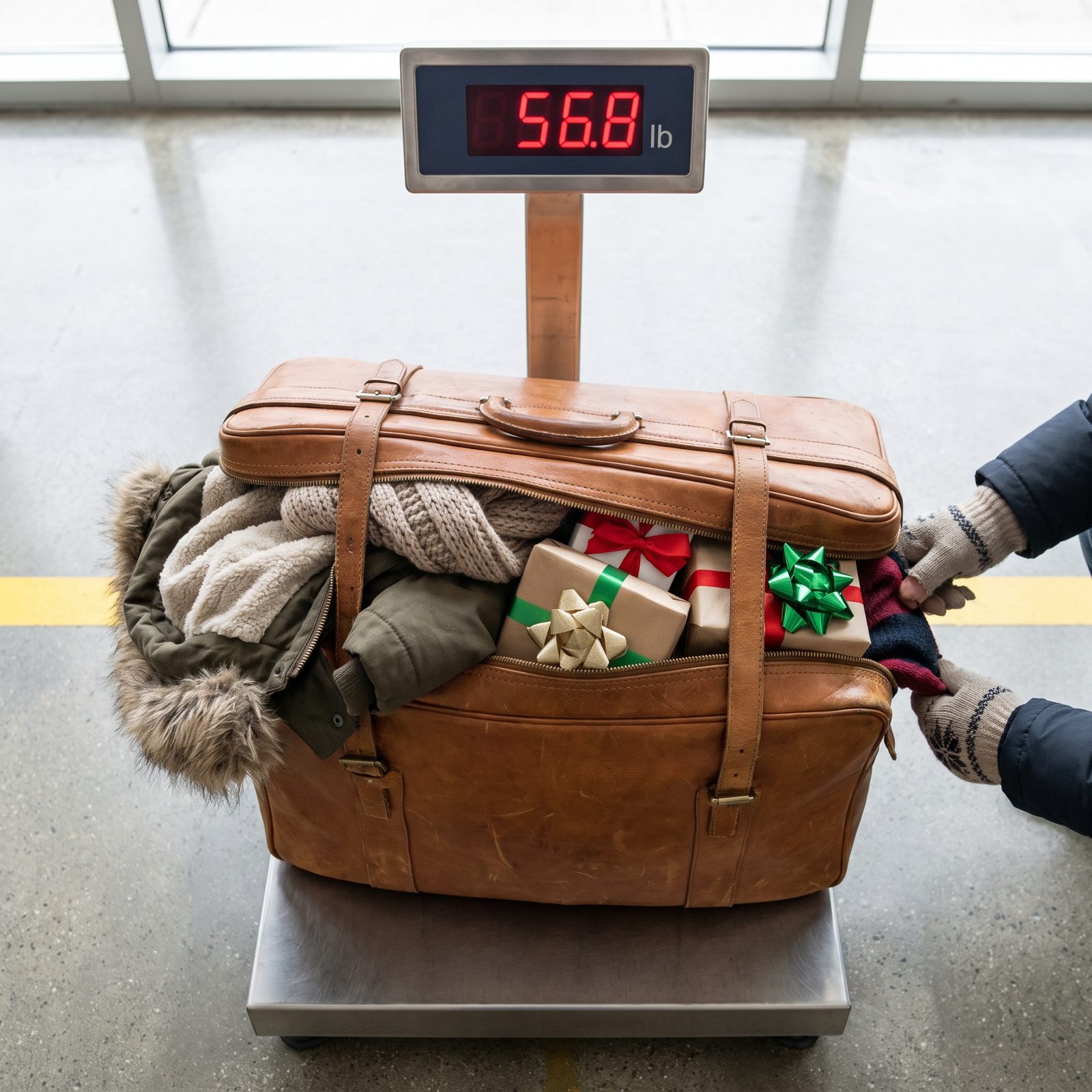
Winter travel is heavy travel. Coats, boots, the gifts you decided to pack instead of ship, the extra sweater because you remember exactly how cold that house gets at night. It all adds up to checked bags, and checked bags cost money now.
A round-trip checked-bag fee per person, times a family of four, is a real number that never makes the budget. Go overweight and the fee jumps again. Bring a second bag just for the presents and you’ve paid twice over.
Weigh every bag at home on a bathroom scale before you leave, wear your heaviest coat and boots onto the plane instead of packing them, and check whether your card or airline status waives the first bag.
42. Emergency Car Maintenance Before Traveling
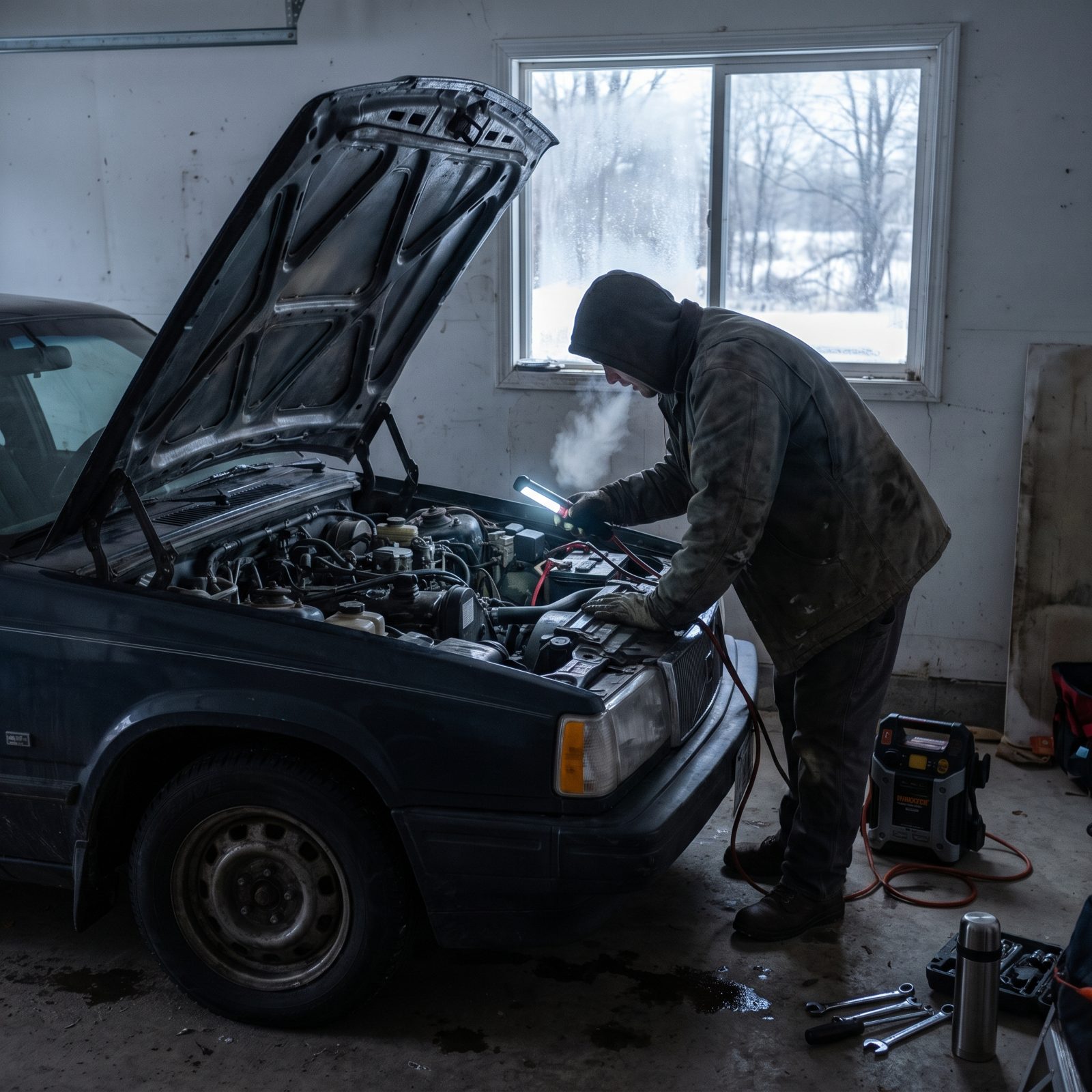
The car always knows. It waits until you’re about to drive three hundred winter miles to the grandparents, then it starts making the noise.
Cold weather is hard on batteries, tires, and anything already running borderline. People who’d normally shrug off a small issue suddenly get it fixed before a long holiday drive, which means an unplanned service bill lands right in the middle of the most expensive month of the year. Tow, diagnostic, parts, labor. None of it was in the plan.
Get the oil, tires, and battery checked in early December while it’s routine and cheap — not on December 22nd when it’s an emergency and the shop is slammed.
41. Travel Insurance for Winter Disruption

Most people skip travel insurance and gamble on a clear sky. Over the holidays, that’s a bigger bet than it looks.
Winter storms cancel flights, close roads, and strand travelers at exactly the moment everything is sold out and nothing is cheap. A trip-protection or cancellation policy costs a small slice of the trip price, and it can cover rebooking, lodging, and nonrefundable deposits when weather blows your plans apart.
Price a policy when you book the trip. Read what “covered reason” actually means — weather delays aren’t always included, so check — and decide honestly whether the nonrefundable money at stake is worth protecting. Sometimes it absolutely is.
40. Flight Changes After Weather Cancellations
Would you like to save this?
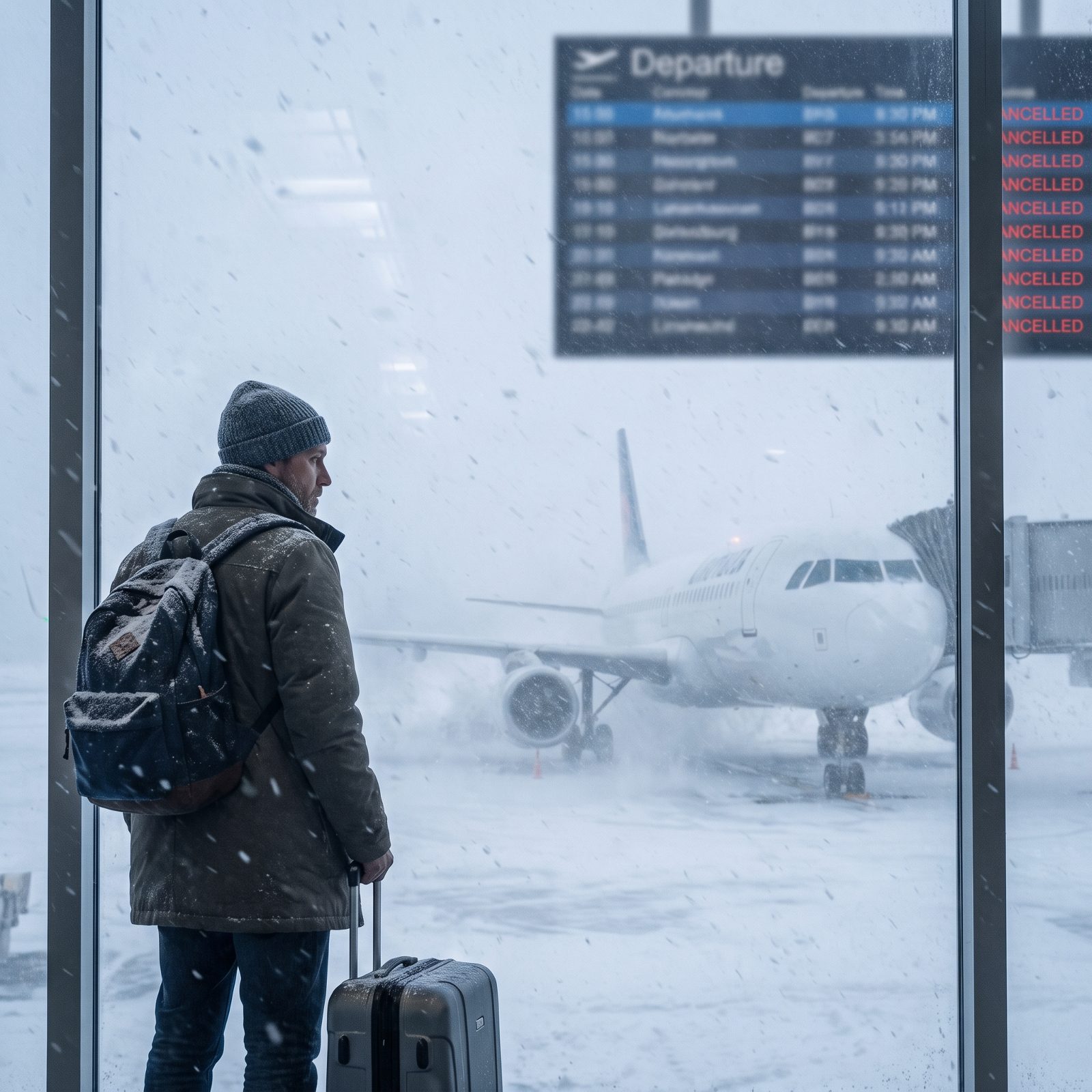
The cancellation itself is the airline’s problem. What you pay to get around it is yours.
When winter weather grounds a flight, the rebooked option is often days out. Can’t wait that long? Then you’re buying a last-minute one-way seat at whatever the market charges that morning, which is plenty. Add a surprise extra hotel night, extra meals in the terminal, another kennel day for the dog back home, and the “free” rebooking has cost you a small fortune.
Keep a buffer in your travel budget specifically for this. Know your airline’s rebooking policy before you fly, and never, ever schedule a tight connection in late December. The storm doesn’t care about your layover.
39. A Fresh-Cut Christmas Tree

The tree feels like tradition, not an expense. Then you’re standing in the lot handing over real money for something that’ll be brown and on the curb by January.
A fresh-cut fir runs more than people remember, and the big, full ones climb fast. Add the stand if you don’t own one, the extra string of lights, the delivery fee at some lots, and suddenly the tree is a line item worth planning for. Prices creep up as the season wears on and supply thins out, too.
Shop the first week trees go on sale for the best selection and price, measure your ceiling before you fall for a monster, and remember: a tree bought on December 23rd is usually the leftover nobody wanted, at a markup nobody expected.
The tree isn’t the cheap part of Christmas. It’s just the part that smells nice enough to make you forget what it cost.
38. Professional Installation of Roofline Lights

Those glowing eaves the whole block admires? Somebody climbed a ladder in freezing wind to hang them, and increasingly that somebody sends a bill. Professional roofline installation costs real money — a few hundred dollars for a modest home, and considerably more once you add steep pitches or a second story.
People forget that the quote usually covers hanging them AND taking them down in January, sometimes storage too. Budget for the full round trip, not just the pretty half. And when you’re pricing it out, ask whether the crew supplies the lights or you do, because that one question swings the total by a lot.
37. The December Electricity Increase
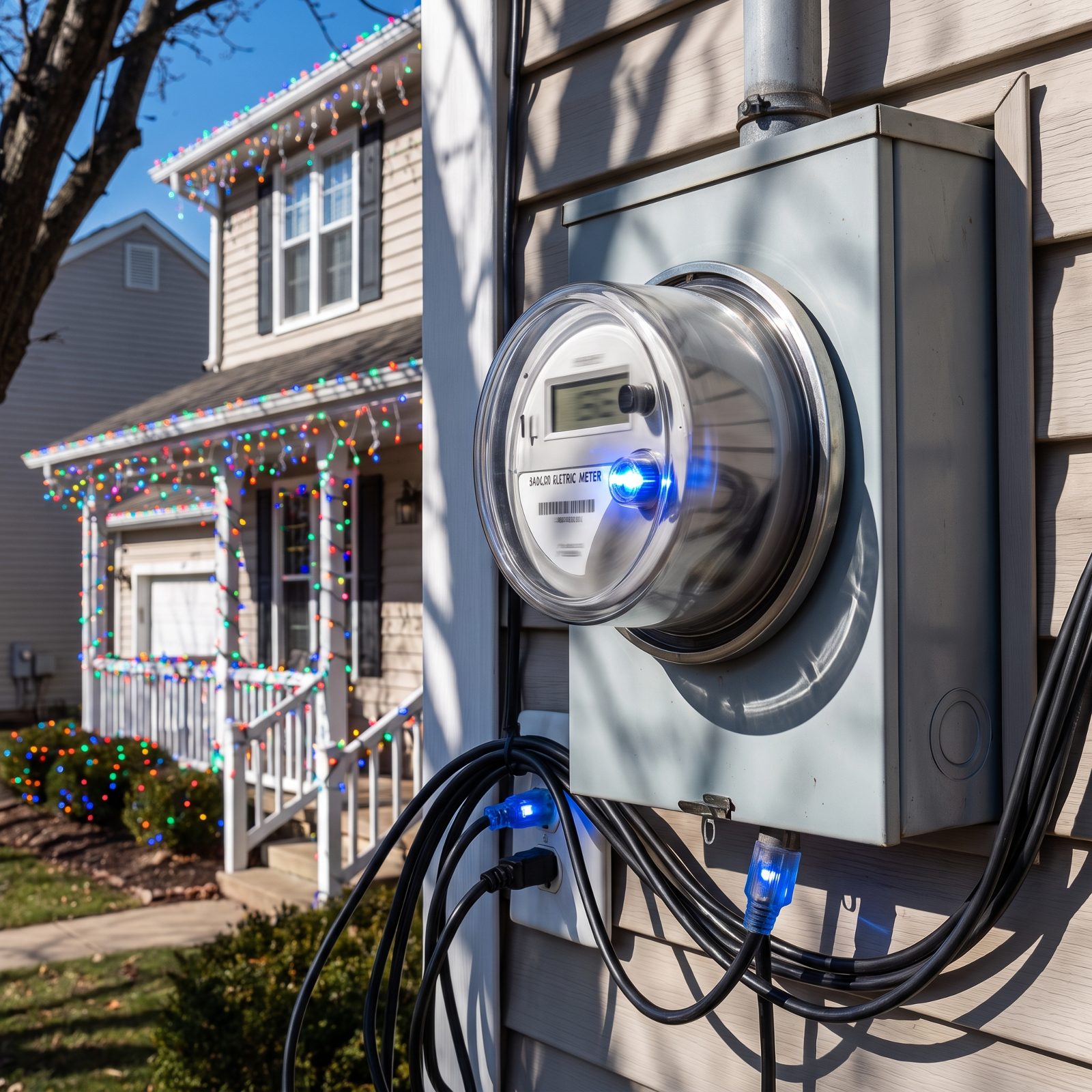
The lights are free to look at. They are not free to run.
A full display of roofline strands, a lit tree burning twelve hours a day, inflatable lawn figures humming through the night, plus the oven working harder than it has all year — all of it lands in one place. Your December statement. The jump isn’t catastrophic for most households, but it’s real, usually enough to catch your eye when the bill shows up in early January alongside every other holiday reckoning.
Switch to LED strands if you haven’t, and put the big displays on a timer so they’re not glowing at 3 a.m. for nobody. Small moves. They take the sting off the meter.
36. Extra Heating for a Full House
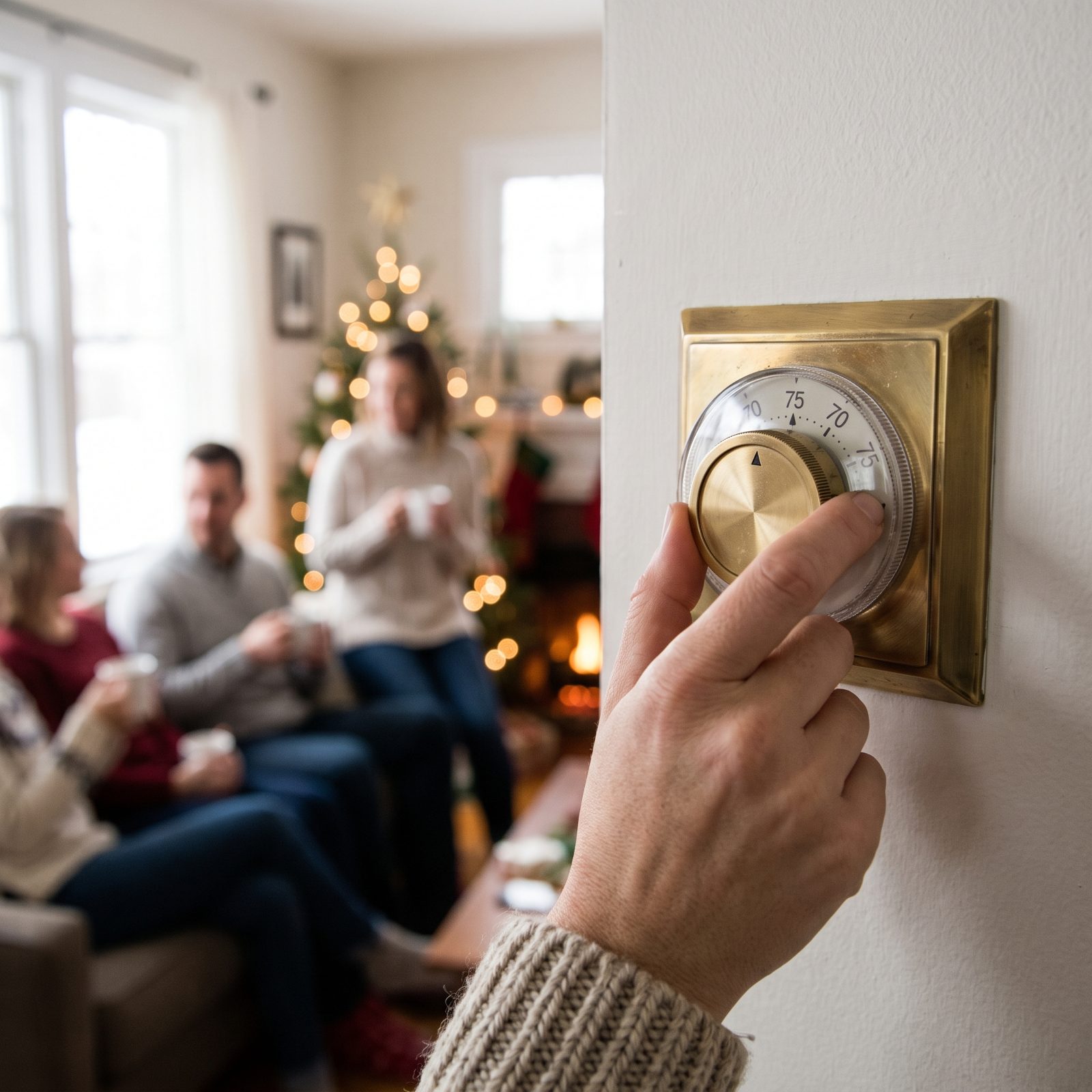
An empty house you keep at sixty-two and layer up. A house full of overnight guests you don’t. Suddenly you’re nudging the thermostat up four degrees, keeping the guest room warm, and the furnace runs stretches it never runs the rest of the year.
Every degree you raise the whole-house setting costs you across the entire month — not just the days guests are there — because people get comfortable at a number and nobody wants to touch the dial back down. It happens all the time. The guests leave on the 27th and the thermostat stays at seventy until February because everyone forgot it was there.
35. A Chimney Sweep Before Lighting the Fire

Nobody budgets for the fireplace until the first cold snap, and by then every sweep in town is booked.
If you only light the fire in December, that flue has been quietly collecting creosote and the occasional bird’s nest all year. A proper inspection and cleaning is the difference between a cozy evening and a chimney fire — exactly the kind of thing you do not want erupting on Christmas Eve with a full house.
What it costs is modest for what it buys you, usually in the low hundreds depending on where you live and how filthy the flue is. Book it in October if you can. Wait until the week before the holidays and you’ll pay a rush premium, assuming you can find anyone at all.
34. Snow Removal Before Guests Arrive

You can control a lot about hosting. You cannot control whether it dumps eight inches the morning your in-laws are driving in from three hours away.
A plowing service, or even a neighborhood kid with a shovel, becomes a line item the second guests are expected and the forecast turns. Per-visit plowing adds up fast when the storms keep coming, and a slip on an unsalted walk is the kind of accident that turns a holiday into an insurance claim.
Keep a bag of ice-melt in the garage before December hits, because the hardware store sells out the instant the first flake falls. And if you contract a plow? Confirm whether holiday mornings count as premium service. They usually do.
33. A Deep Clean Before Hosting

The holidays make you see your house the way a stranger would, and that is an expensive realization.
Suddenly the baseboards matter. The guest bathroom grout matters. Whatever has been living under the couch for eleven months matters very much. Plenty of households who never hire cleaners book one deep clean before hosting, and that pre-holiday scrub costs more than a routine visit because there’s simply more to attack.
32. Post-Holiday Cleaning and Extra Trash Collection
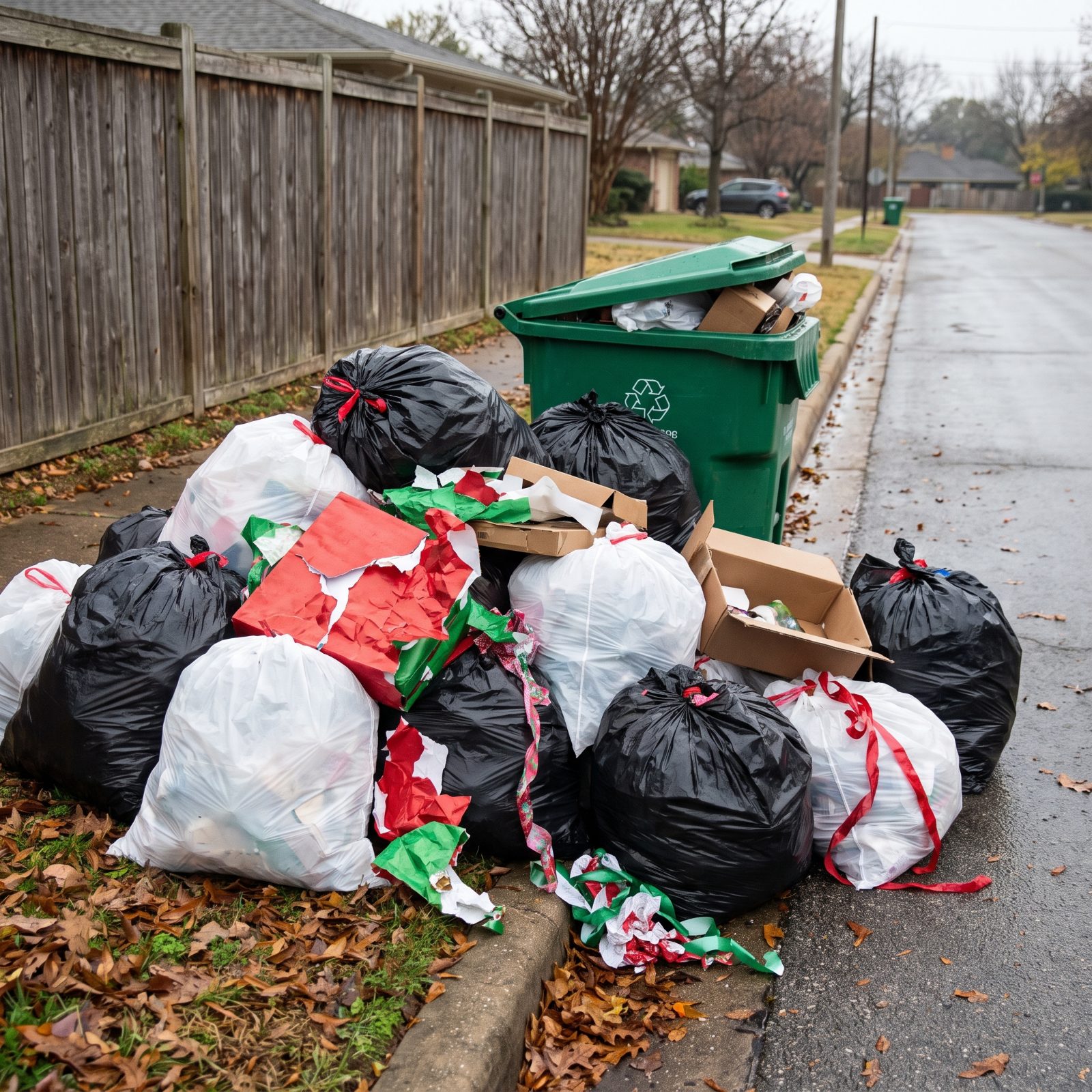
The wreckage of a good holiday fills bags faster than you’d believe — wrapping paper, packaging, bows, the cardboard boxes everything shipped in, the leftovers nobody wanted. It all has to go somewhere, and your regular bins were never built for this volume.
Many towns charge for extra bags beyond your normal pickup, or demand a special bulk collection for the big boxes and the tree. People never see this one coming, because the rest of the year their trash just quietly disappears.
Flatten and recycle what you can, and check your municipality’s holiday collection schedule early. Pickup days often shift around the actual holidays, and a missed week means a garage full of garbage until the next one.
31. Guest-Room Sheets, Pillows and Towels

You have enough sheets for your family — for the number of people who actually live in your house every ordinary day of the year.
Then four relatives announce they’re staying through the weekend, you count your matching pillowcases, and you come up short. A set of guest sheets, a couple of spare pillows, fresh towels nobody’s used — it’s a quiet pre-holiday expense that nobody writes down, because it doesn’t feel like a holiday cost. It feels like a household cost. It’s both.
30. A Temporary Bed for Overnight Visitors

Would you like to save this?
Three guests you can handle. The fourth one sleeps on something you buy in a panic on December 22nd.
An air mattress, a daybed, a quality sleeper sofa if you’re planning further ahead than most of us ever do. It’s the overflow problem, and it hits households that host even once a year. A decent inflatable with a built-in pump isn’t cheap, and the flimsy twenty-dollar kind deflates by 3 a.m. and leaves your brother-in-law on the floor by morning.
Host every year? Buy once, buy well. If it’s a one-off, check whether a friend or neighbor has one to lend before you spend a cent. Half the neighborhood has an air mattress buried in a closet somewhere.
29. Rental Tables, Chairs and Tablecloths
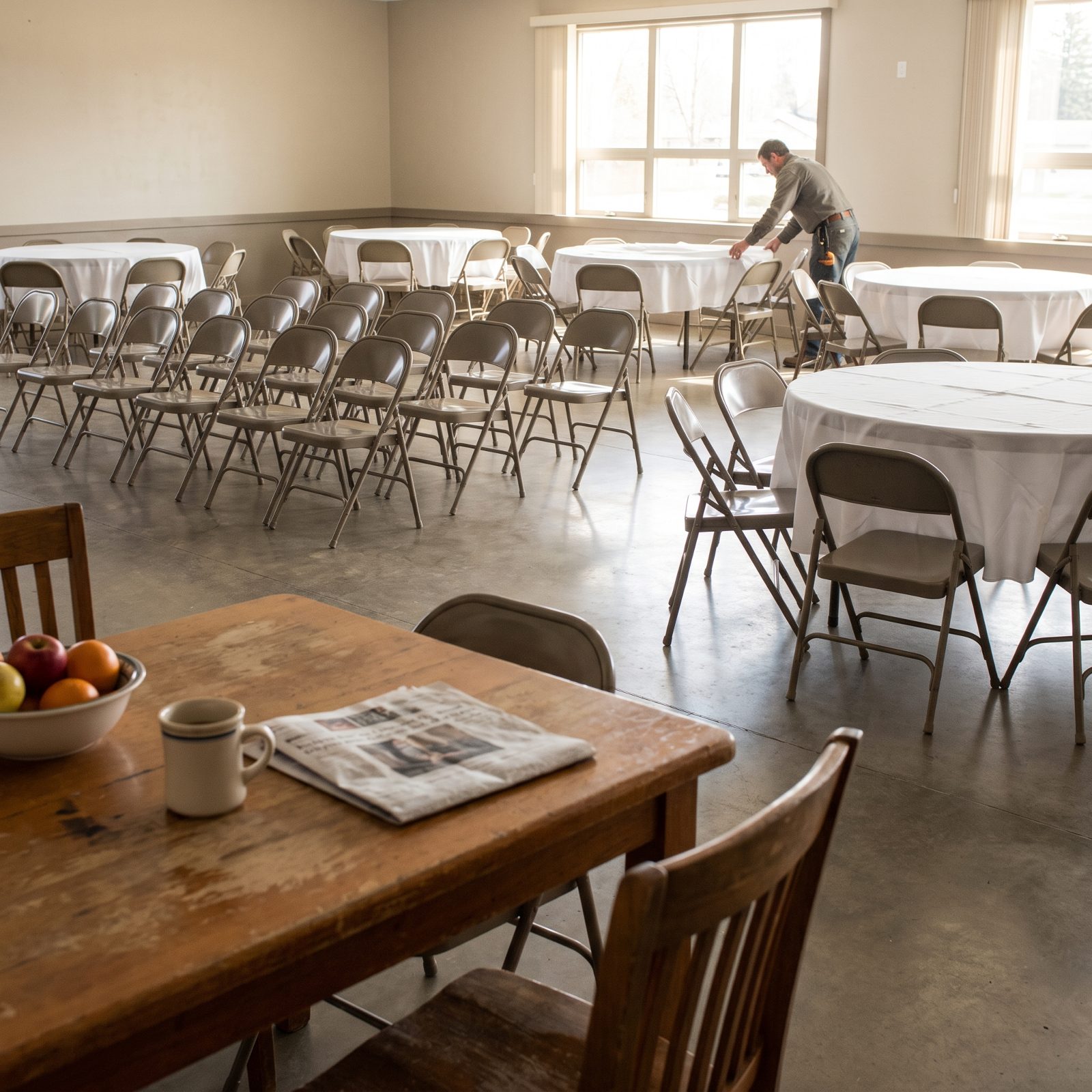
You own a table that seats six. You invited fourteen. The math does not work, and that gap has a price tag.
Party rental companies exist for exactly this moment — extra folding tables, stackable chairs, linens big enough to actually reach the floor. The rental itself is one cost. Then there’s the delivery fee, the pickup fee, and sometimes a cleaning charge if the tablecloths come back with cranberry sauce ground into them. Which they will.
Reserve early. The weeks around the holidays are when every rental warehouse in your region empties out, and showing up three days before with a big order is how you end up serving dinner with everyone’s elbows touching.
28. Christmas Eve Dinner as a Separate Feast

Here’s the trap nobody warns you about. You budget for the big Christmas Day meal — the turkey, the sides, the whole production — and then December 24th shows up with its own appetite.
Christmas Eve has quietly become a second feast in most households. Appetizers, a main, dessert, sometimes a full sit-down spread for whoever arrived early. That’s a separate grocery trip with its own total, and it rarely makes it onto the list next to the gifts.
27. Breakfast for a Houseful of Guests

Houseguests don’t stop eating after the big dinner. They wake up, they want breakfast, and when there are six of them a quiet weekday cereal bowl becomes a short-order kitchen running three mornings straight.
Eggs by the dozen, pounds of bacon, gallons of juice, enough coffee to float a boat. It adds up to a real number — and almost nobody writes it down ahead of time.
26. Alcohol for Several Holiday Gatherings

The bar tab you host yourself is the sneakiest line of all. One party, you could predict. But the season stacks them: the office thing, the neighbor drop-in, the family dinner, the New Year’s lead-in.
Each gathering wants wine, something bubbly, a few beers, maybe a bottle of the good stuff for the brother-in-law who notices. Multiply that across four or five events and you’ve spent more on drinks than on half the gifts under the tree.
25. Special-Diet Food for Visiting Relatives

Aunt So-and-So went gluten-free this year. Your nephew is vegan now. Someone’s new partner has a nut allergy you only learned about last week.
Hosting means feeding everyone, and special diets usually mean a separate trip to the pricier aisle — specialty flours, plant-based swaps, dairy alternatives. These items cost more per unit, and you’re buying them for exactly one reason: so nobody goes hungry at your table.
It’s a kindness. It’s also a cost that never shows up in a normal holiday plan.
24. Cooking Gas, Foil and Disposable Roasting Pans
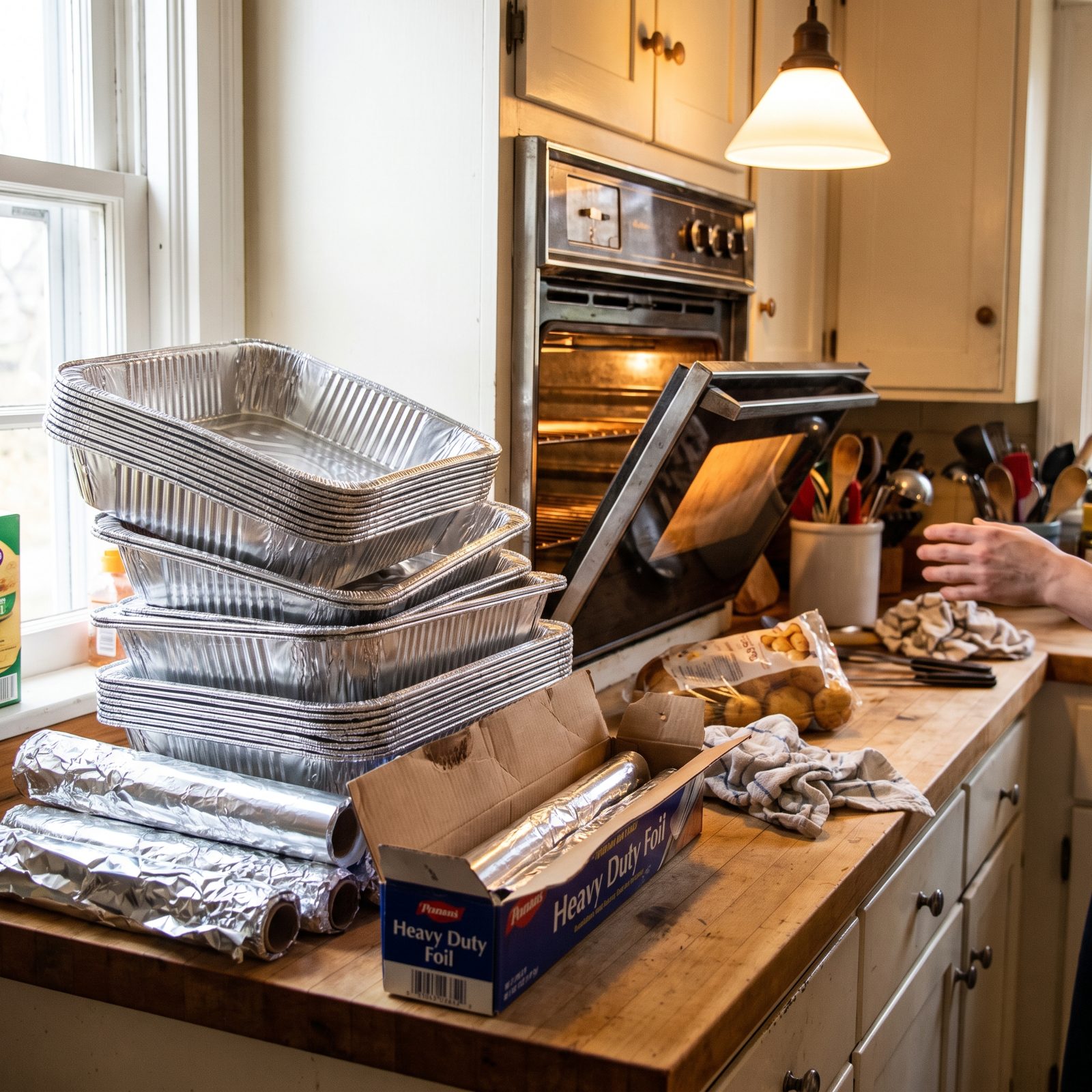
Nobody puts foil in the Christmas budget. Nobody. And yet.
Roasting a turkey burns hours of oven time, and hosting means running the stovetop all day while that gas or electric meter climbs behind your back. Then comes the mountain of disposables — the roasting pans you toss, the foil you wrap everything in, the storage bags for leftovers nobody will actually eat.
Each item is a couple of dollars. Together they’re a real receipt, and they vanish the moment the dishes are done.
23. Restaurant Meals While Traveling

You planned the gas. You planned the gifts you’re hauling across three states. What you didn’t plan? The three meals a day you eat on the road because nobody’s cooking in a moving car.
Travel days mean drive-thru breakfast, a sit-down lunch when the kids revolt, dinner near the hotel because you’re too wiped to go hunting for a grocery store. A family of four can clear a hundred dollars in a single travel day without even trying.
Round trip, that’s two days of restaurant pricing that never made the holiday ledger.
22. Takeout During Exhausting Preparation Days
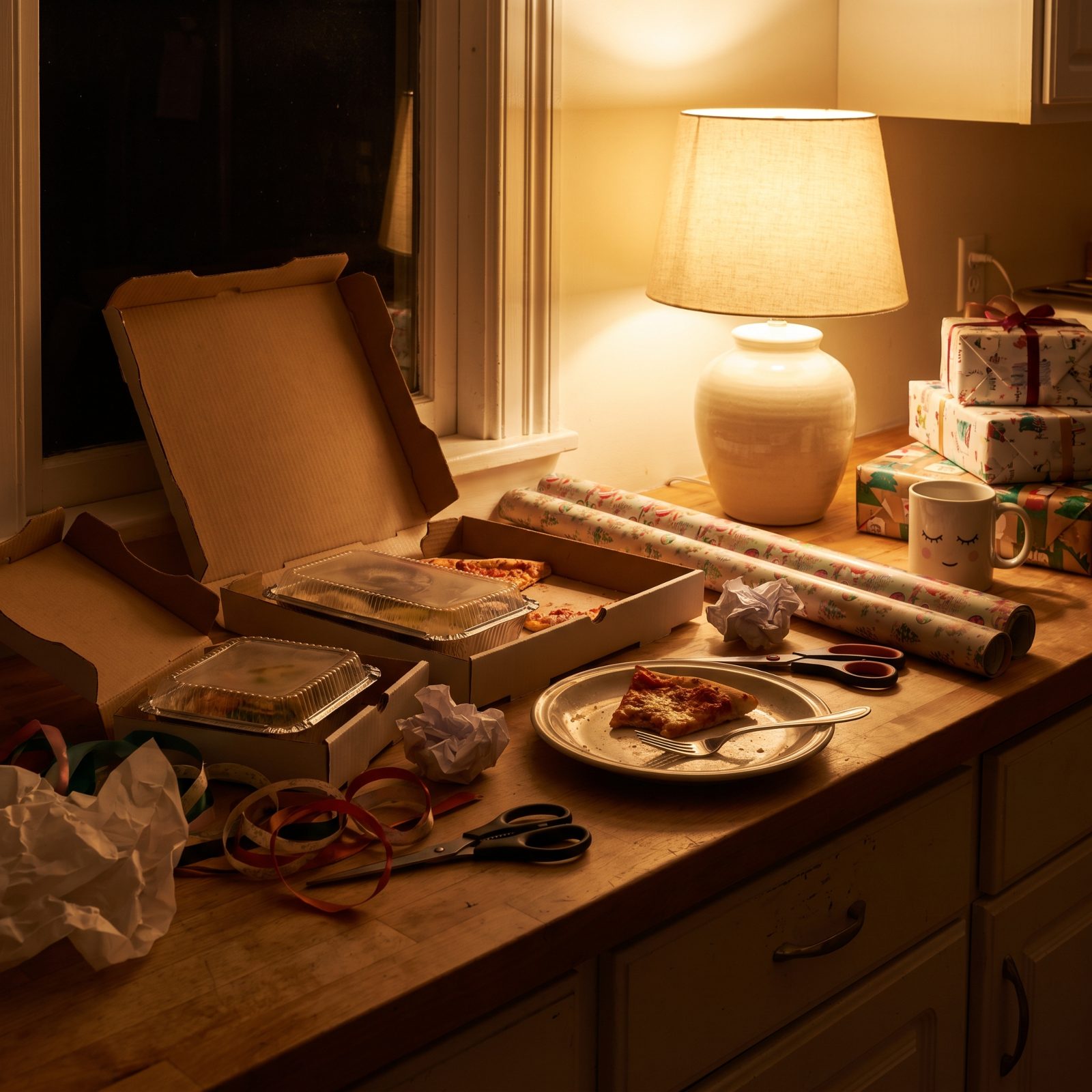
There’s a specific kind of December night. You’ve been wrapping gifts for three hours, the kitchen is a disaster, and the thought of cooking makes you want to lie down on the floor. So you order in.
And it happens more than once. The night the tree goes up. The night you’re baking for the school thing. The night before guests arrive and you simply cannot face another mess. Each order is a small surrender, with a delivery fee and a tip stacked on top of it.
21. Higher Grocery Spending Throughout December

This is the big one, and it’s almost invisible. Not one holiday meal. The whole month.
December grocery runs get fatter without anyone deciding they should. Extra snacks for the kids home on break. Baking supplies for the cookie exchange. The impulse cheese board, the fancy crackers, the second gallon of milk because someone always drinks it. Your ordinary weekly shop swells by a chunk every single week of the month.
Four inflated grocery trips can outweigh an entire gift category. And because it hides inside the normal food budget, nobody flags it until the card statement arrives.
20. Tickets to a Christmas Performance

Would you like to save this?
The Nutcracker. A holiday light show. The community theater’s annual production. They feel like a lovely little outing, right up until you price four tickets at seated-theater rates.
Then there’s parking, the overpriced hot chocolate at intermission, the program everyone wants. A single festive afternoon can run as much as a mid-range gift, and because your brain files it under “experiences” rather than “money,” it slips right past the budget.
19. The Family Visit to Santa

You think of it as free. Stand in line, kid sits on the lap, cute moment, done.
Then comes the photo package. The one print somehow costs twenty dollars, and the bundle with the keychain and the digital download is the only one that feels worth it — so you buy that instead. Add the parking, the whining-cured snack, maybe a small something from the gift shop on the way out.
The visit itself is a memory. The receipt is real, it’s bigger than you expected, and it never once made it onto a single holiday list.
18. Holiday Event Parking and Coat Check
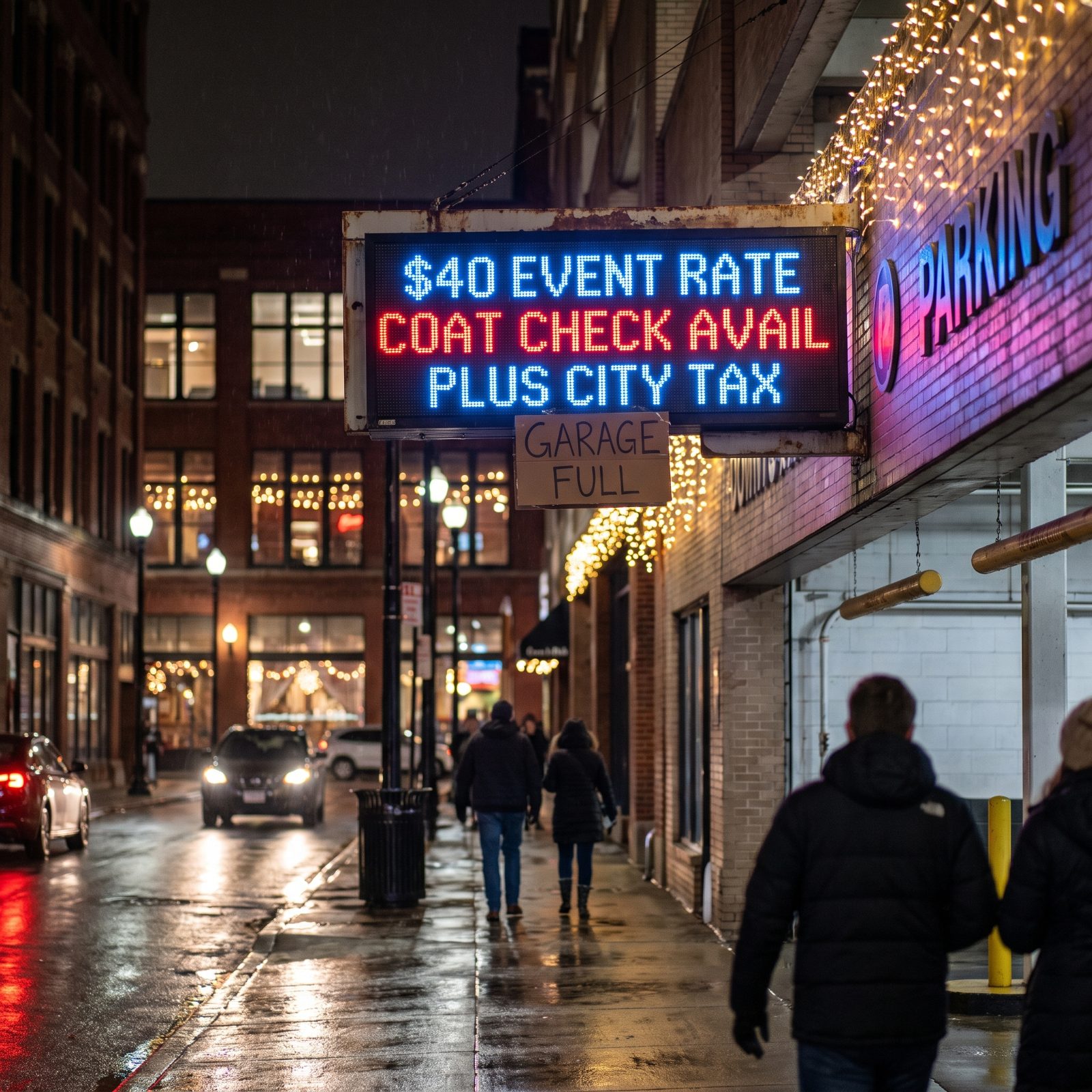
Downtown parking in December is a quiet tax on your social life. The garage near the restaurant charges an event-rate flat fee, the valet expects a tip on top of that, and the coat check wants a few bucks to hold your coat for ninety minutes. None of it feels like much in the moment.
So multiply it. Three or four holiday outings and you’ve spent the price of a decent gift just to stand somewhere warm. Before the season kicks off, pencil in a parking-plus-coat-check figure per event and check whether your venue validates. A lot of them do, and nobody tells you unless you ask.
17. Babysitting for Adult Christmas Parties

Every adults-only party in December needs a sitter, and December sitters cost more. Demand spikes, teenagers are out of school, and the going rate climbs right when you’re booking the most nights of the year.
Say you hit four grown-up gatherings between the office party and New Year’s, several hours each. You’re staring down a few hundred dollars nobody budgeted for. Line it up early. Book your regular sitter for the whole run of dates before another family locks them in, or set up a swap where you trade nights and pay nothing at all.
16. Festive Outfits for Office Parties and Children’s Performances

Nobody wears last year’s outfit two years running, apparently. The office party has a theme, the kids need something nice for the winter concert, and suddenly you’re buying a velvet blazer and two sweaters that get worn exactly once before January.
Children are the real budget-breaker here because they grow out of everything. A concert outfit for one kid, dress shoes they’ll outgrow by spring, maybe a coordinating something for the sibling. Set a cap. Shop your own closet first, then hit consignment and resale for the kids’ one-night pieces. A clearance emerald velvet blazer from last season looks identical under party lighting, and the camera can’t tell the difference.
15. Family Portrait Photography

The annual family portrait feels like tradition until the invoice lands. There’s a session fee, then the print package, then the digital files you actually want, each one priced separately so the real total never shows up until you’re already committed.
Mini-sessions are your friend. Many photographers run short holiday slots for a fraction of a full sitting, and they’re happy to shoot at a park instead of a studio. Set a budget depending on how deep you plan to go, and decide in advance whether you’re buying prints or just the digital files. Buying both is how a small session fee quietly quadruples.
14. Photo-Card Printing and Postage

Photo cards look like a cheap little line item and behave like a big one. The card design is the cheap part. Then come the quantity, because you always need more than you think, plus the premium cardstock upgrade, the envelopes, and the stamps.
Postage is the sneaky killer. A single First-Class stamp times a long mailing list is real money, and that’s before anything heads overseas. Count your list honestly, order a cushion for mistakes and last-minute additions, and buy your stamps in a book rather than ones and twos. Printing-service promo codes stack early in the season and vanish by mid-December, so the procrastinator’s card always costs more.
13. International Shipping, Customs Duties and Rush Fees

Shipping a gift abroad can cost more than the gift. International postage alone is steep, then the recipient’s country may pile on customs duties and a handling fee, and if you’ve waited too long, the rush upgrade doubles everything.
The fix is boring and it works: ship early. Standard international rates beat expedited by a wide margin, and early shipments clear customs without the holiday-backlog panic. Better yet, send money or a gift card to relatives overseas and let them buy locally. You skip the duties, the customs form, and the three-week anxiety entirely.
12. Wrapping Paper, Tape, Tags and Ribbon

This is the cost that always ambushes people. The wrapping costs money too. Paper, tape, those little tags, ribbon, gift bags, tissue, bows. Buy it all at the drugstore in mid-December and you’ve quietly spent a tidy sum dressing up gifts you already paid for.
Buy next year’s supply the day after Christmas, when it’s half price. Solid kraft paper with twine looks better than patterned foil anyway, and a roll of it costs almost nothing and wraps everything. Reuse the sturdy gift bags, skip the single-use foil, and keep a tape dispenser somewhere you can actually find it. You’ll save the panic roll you otherwise grab on the twenty-third.
11. Charitable Donations and Giving-Tree Commitments
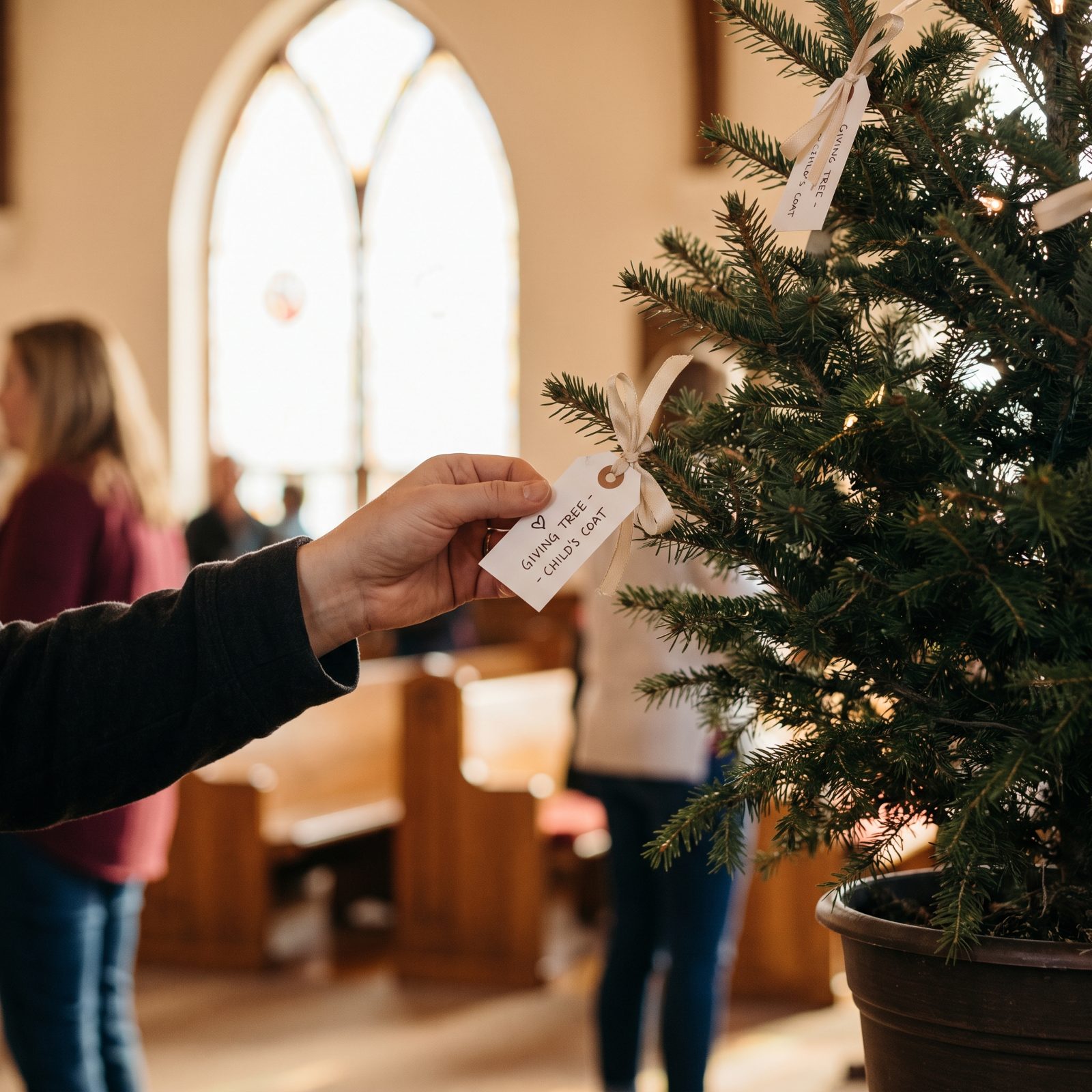
You pull a tag off the giving tree at church or the office, and now you’ve committed to a gift for a stranger. It’s a good thing to do. It’s also an unbudgeted chunk of money, and most people grab a tag without ever filing it under holiday expenses.
Then come the year-end donation asks: the food drive, the coat collection, the colleague raising money for a cause. Decide your total giving number in November and hold to it. Generosity with a ceiling is still generosity, and it keeps you from saying yes to everything and resenting it by January.
10. Year-End Tips for Regular Service Providers
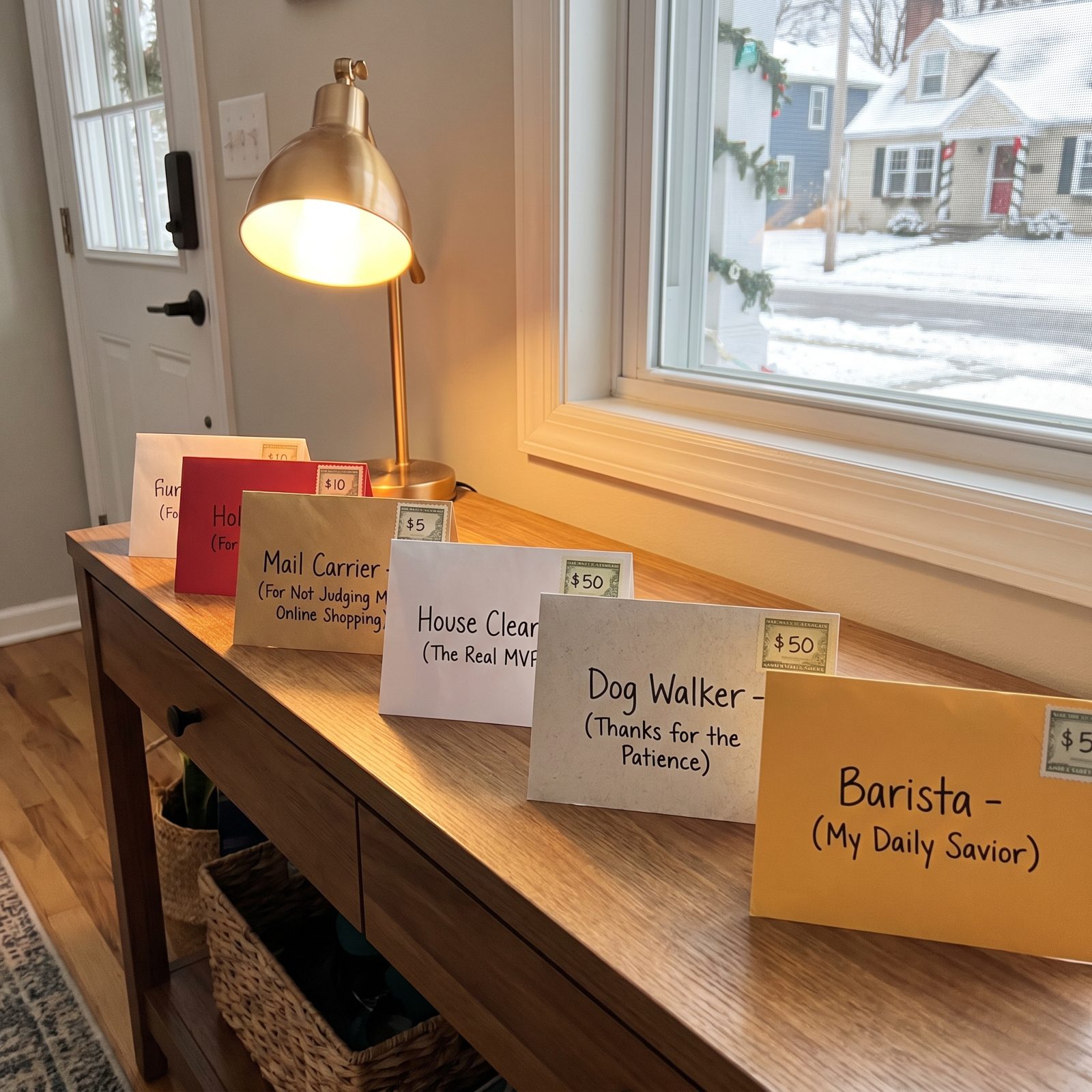
The people who make your year run smoothly expect a little something in December, and the list is longer than you remember. Mail carrier, hairstylist, housekeeper, dog walker, trash crew, the barista who knows your order, the building super.
Each tip runs anywhere from modest to generous depending on the relationship, and five or six of them add up fast. You don’t owe everyone cash, though. A common guide is roughly the cost of one service for the people you see often, while a handwritten card with a small gift card works for the rest. Make the list now so December you isn’t scrambling at the ATM on Christmas Eve.
9. Teacher, Coach and Caregiver Collections

The group email lands in early December. We’re collecting for the teacher. A set amount each, more if you can. Then it’s the coach, the daycare staff, the music teacher, the bus driver, and somehow you’ve bled a hundred dollars across a handful of envelopes.
None of these feel like a choice when everyone else is chipping in, which is exactly the social pressure that makes them so easy to miss when you’re budgeting. Set a per-collection amount you’re comfortable with and stick to it regardless of what the suggested number says. A group gift card the whole class pools into is kinder to a teacher than ten mugs anyway, and kinder to your wallet than going it alone.
8. School Concert and Holiday-Fair Costs
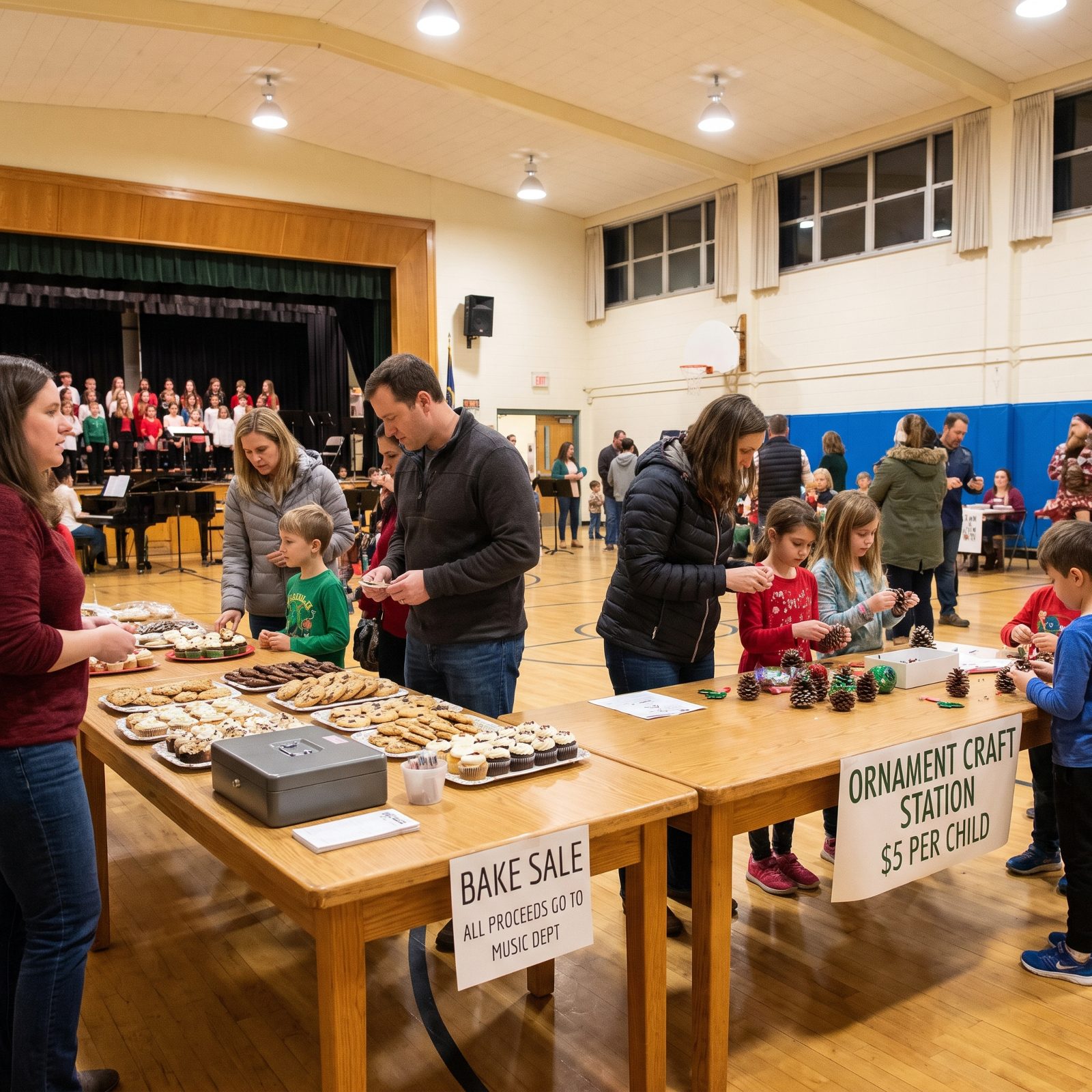
The concert ticket is free. Almost nothing around it is. There’s the class ornament gift, the baked-goods table you feel obligated to buy from, the raffle strip the PTA pushes at the door, and the T-shirt the choir apparently can’t perform without.
None of it is huge on its own, and that’s exactly why it slips past the budget. You add it up sometime in January and realize the holiday concert quietly cost you more than a tank of gas.
7. Workplace Secret Santa Participation
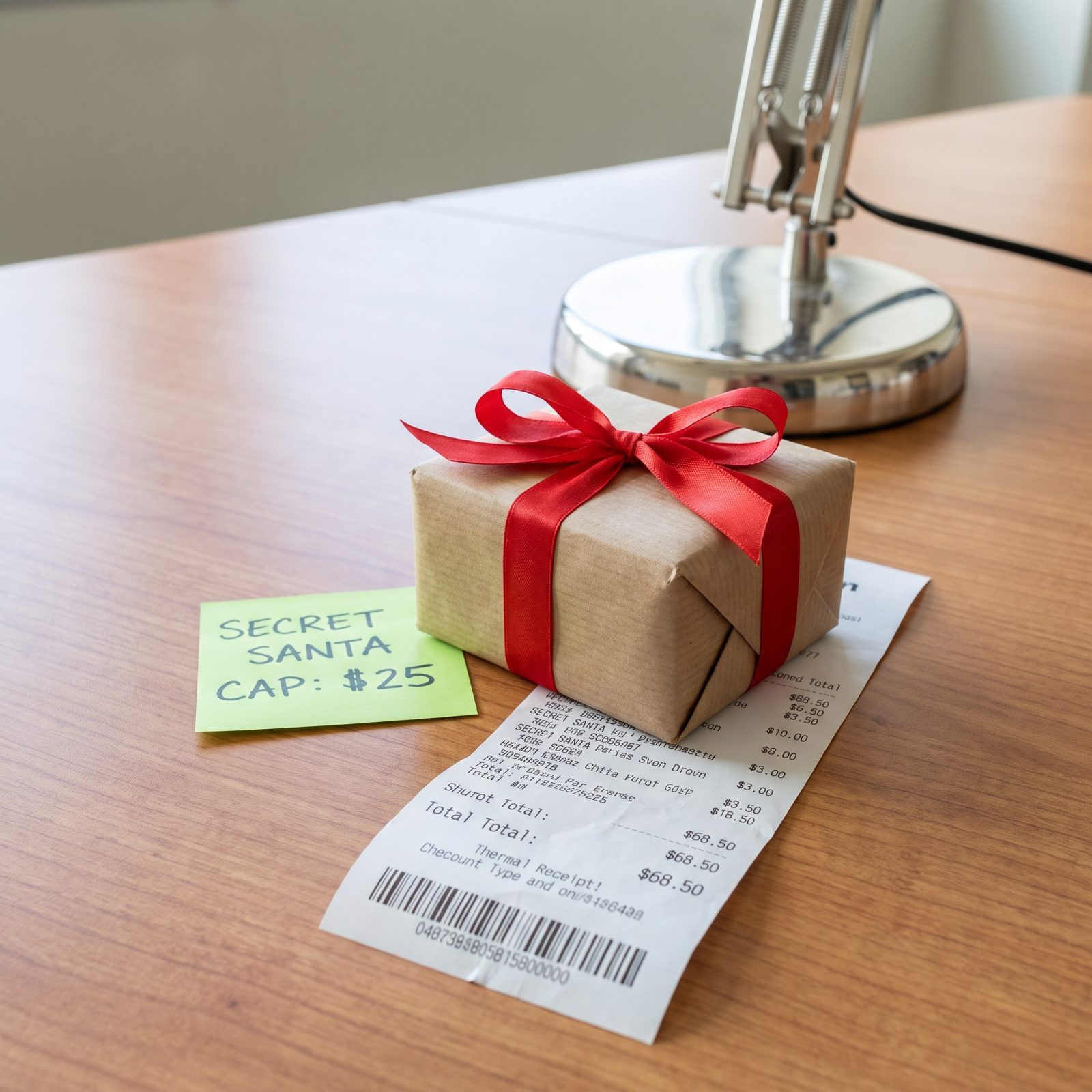
The spending cap says twenty-five dollars. The actual number almost never does.
You nudge a little over so you don’t look cheap. Then there’s tax, maybe wrap, maybe a backup gift because the first one felt thin. Now multiply that across two or three exchanges — your team, your department, that close group of work friends — and the “fun” tradition becomes a line item you never planned for.
So budget the cap plus a realistic cushion. Most people drift well above whatever limit got agreed on, and the honest move is to plan for the number you’ll actually hit rather than the one on the sticky note.
6. Bringing Food and Wine to Other People’s Parties

Nobody shows up empty-handed, and that handful of bottles adds up fast. A decent wine, a cheese, maybe a dessert so you’re not that guest — times every party you say yes to in December.
Four invitations at twenty-five bucks a visit is a hundred dollars you spent on other people’s gatherings. It feels like courtesy, not spending. Which is precisely why it never lands in the holiday budget.
5. Replacing Broken Lights and Decorations
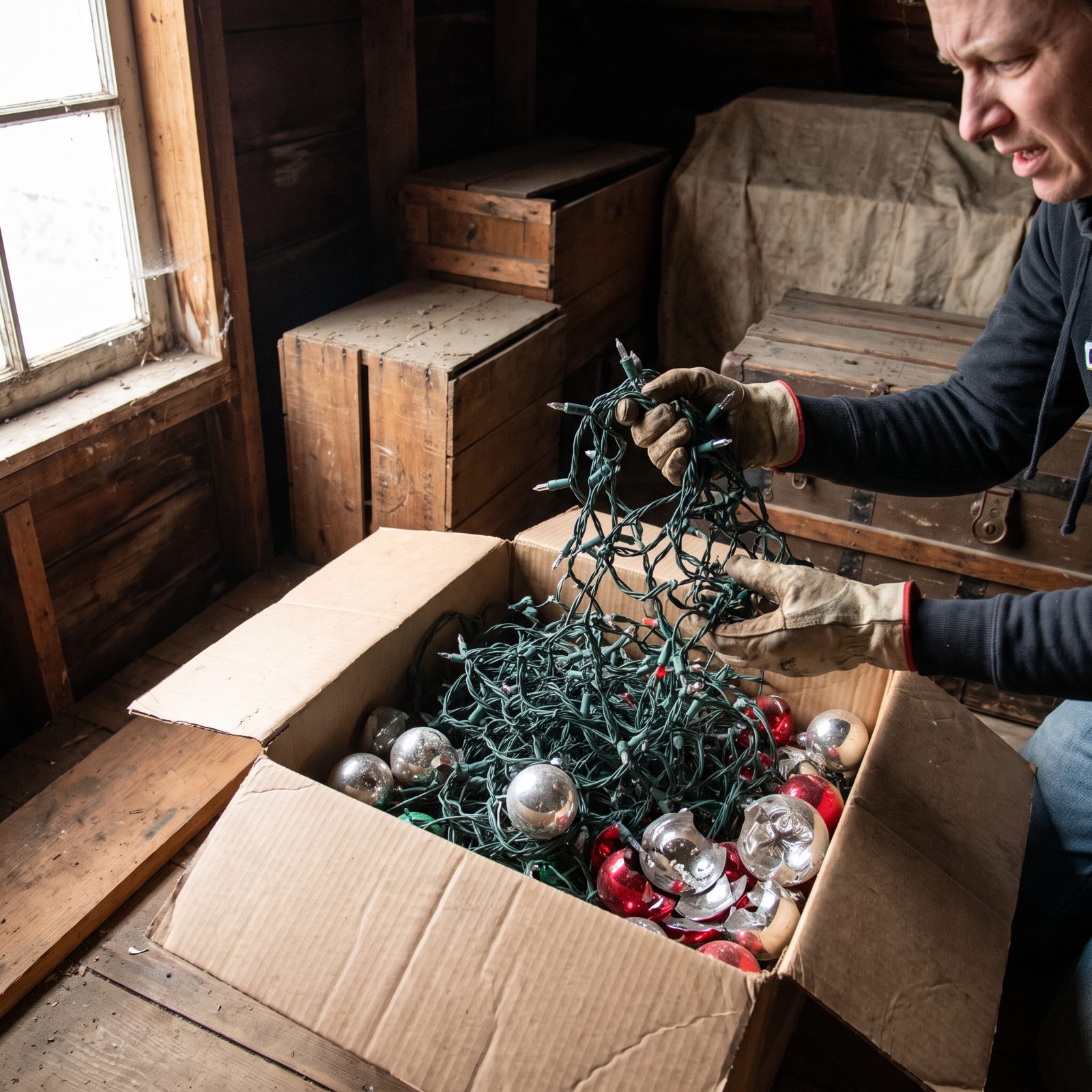
You open the storage box and half the strand is dead. A few ornaments didn’t survive the attic, and the inflatable has a slow leak it didn’t have last January.
Replacing decorations isn’t gift spending, so it dodges the gift budget entirely — then shows up at the register anyway. A couple of light sets, a new extension cord, replacements for whatever shattered, and you’ve dropped real money before buying a single present.
Here’s the quiet trick. When a set dies, note what you need and buy the replacement in the post-holiday clearance in January. You’ll pay a fraction of the December price for next year’s string.
4. Tree Disposal or Curbside Collection Fees
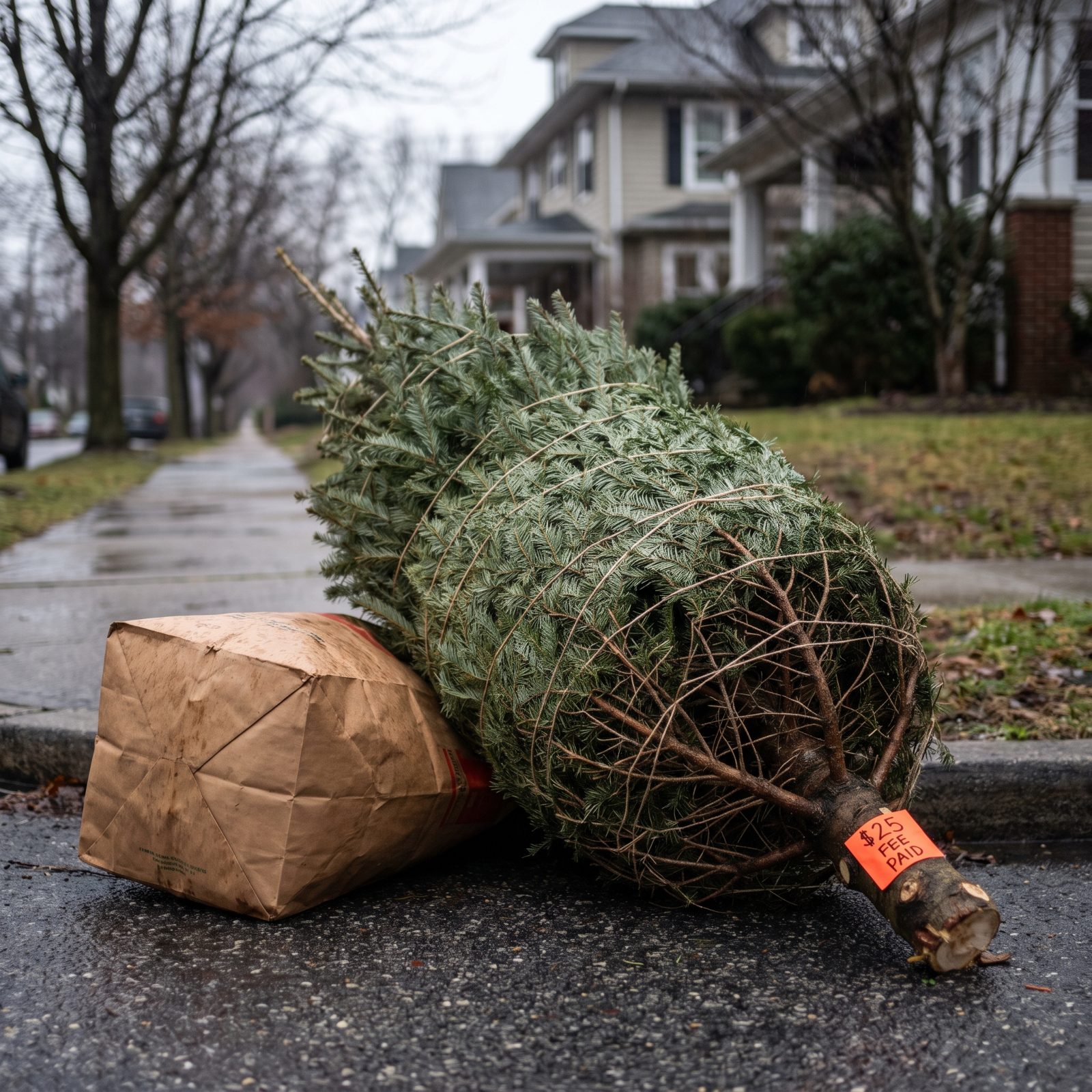
The tree costs money to bring in. In a lot of places, it also costs money to take out.
Some towns charge a curbside pickup fee or require a paid tag. Some haul-away services want a chunk of change just to come get it. If you’re not near a free drop-off, that dead tree is a billable event — and almost nobody writes it into the December plan.
3. Returns Postage and Restocking Fees
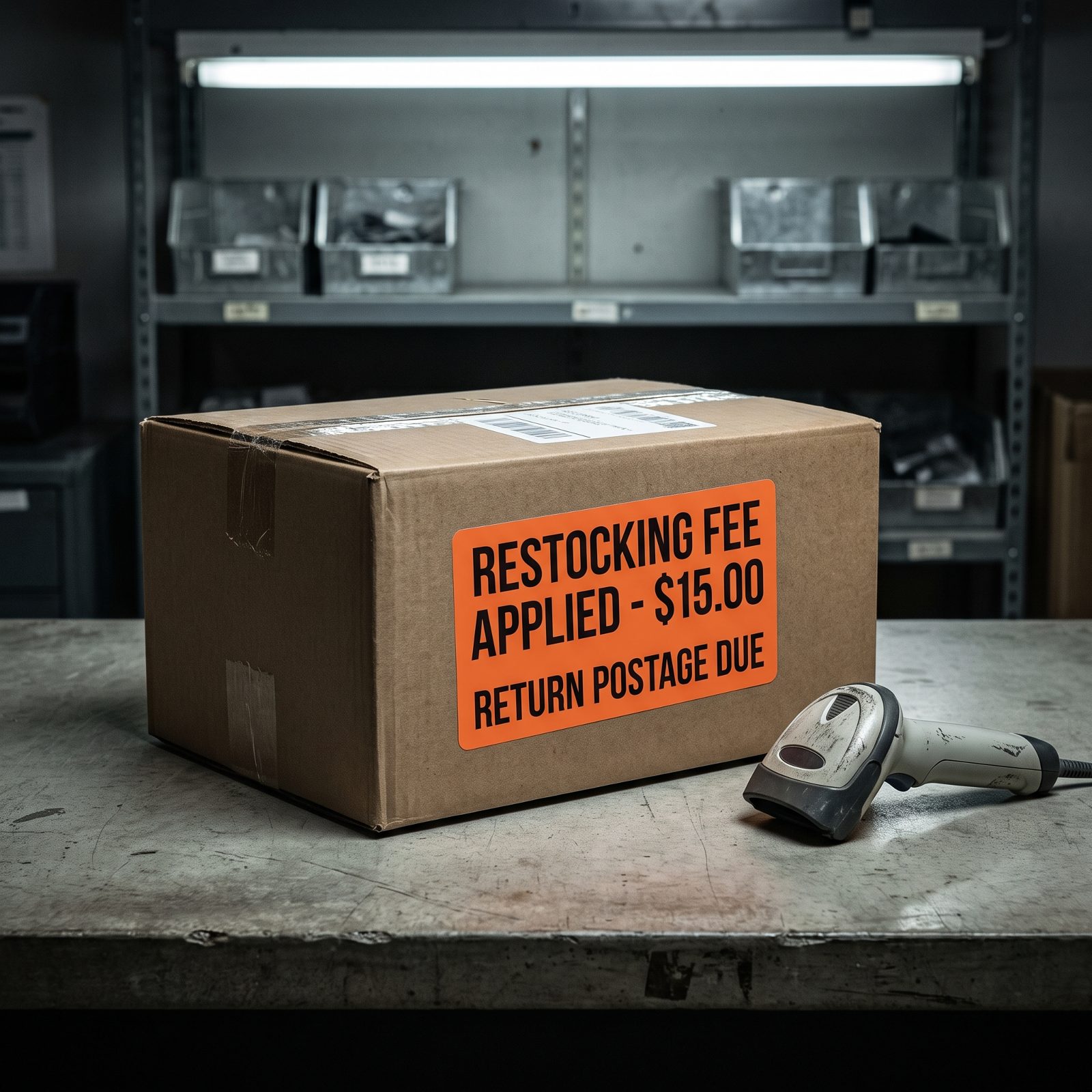
Free shipping to you often isn’t free shipping back. The sweater’s the wrong size, the gadget was a dud, and now you’re paying to send it home.
Return postage can run the price of a lunch per box. Some retailers tack on a restocking fee too, especially on electronics and furniture. Send a few things back and the “savings” from that online sale quietly evaporates.
So before you buy, read the return policy rather than the product page. Favor stores with free in-store returns, keep the original packaging until you’re sure, and don’t let a box sit past the return window — missing it entirely is the most expensive outcome of all.
2. Credit-Card Interest on Seasonal Spending
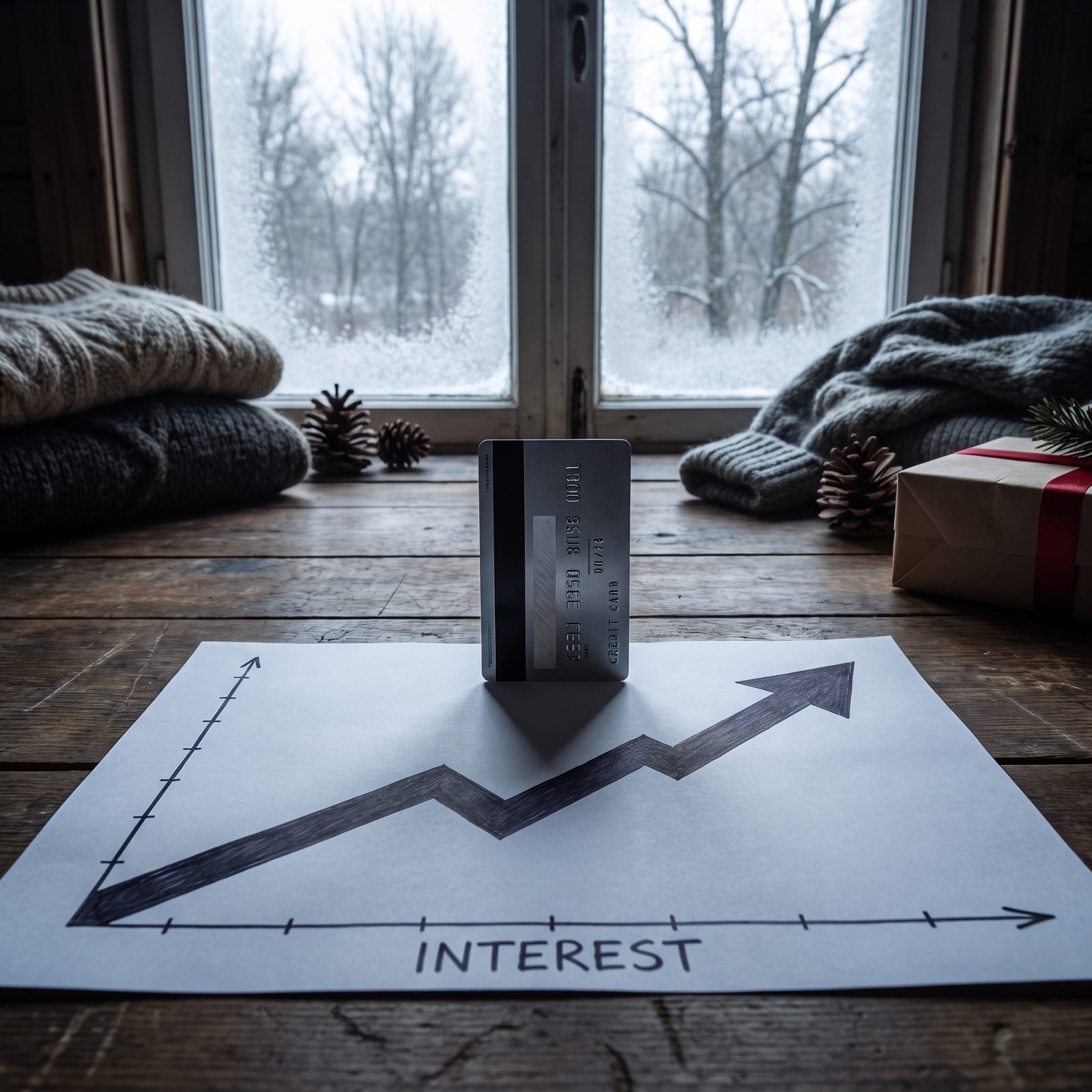
And here’s the cost almost nobody budgets for: the price of not paying in full.
Carry a holiday balance on a card with a high rate, pay only the minimum, and that December splurge stretches across most of the next year. The gift that cost a hundred dollars ends up costing meaningfully more by the time the balance finally clears.
This is the one that compounds. Not as a figure of speech. Actually.
The present was bought in December. The interest gets paid until summer.
If you know a balance is coming, make a plan to clear it in a set number of months before you swipe, and treat the interest as part of the gift’s real price tag.
1. January Bills for Buy Now, Pay Later Purchases
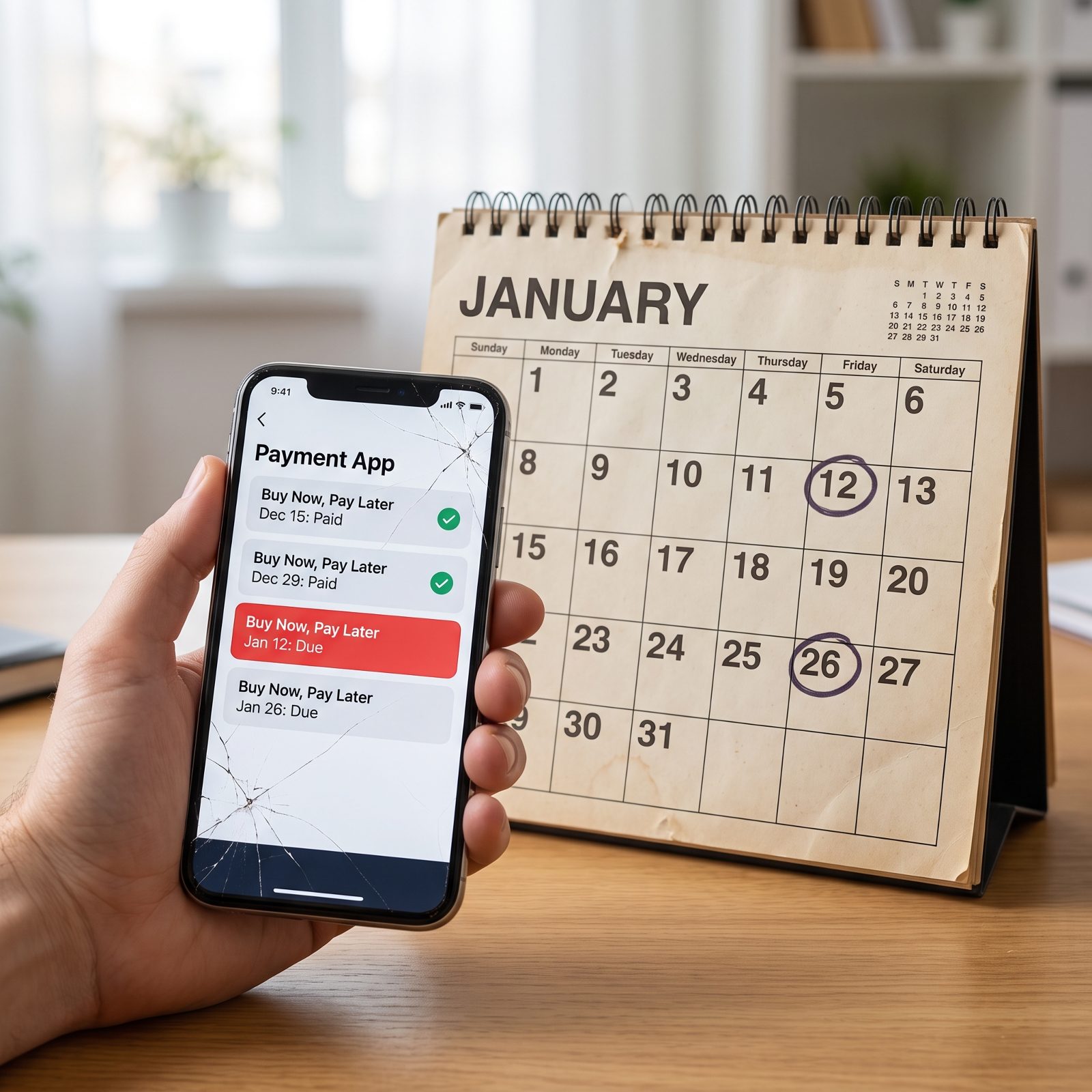
Split it into four easy payments. That’s how it gets you. December feels light because you only paid a quarter up front.
Then January arrives. Installment two from the coat, installment two from the toys, installment one from the thing you bought in a panic on the twenty-fourth. Three or four of these stacked on top of your normal bills is how a budgeted holiday curdles into a stressful new year.
A plan you make in December is a plan you don’t panic over in January. That’s the whole game.