
Would you like to save this?
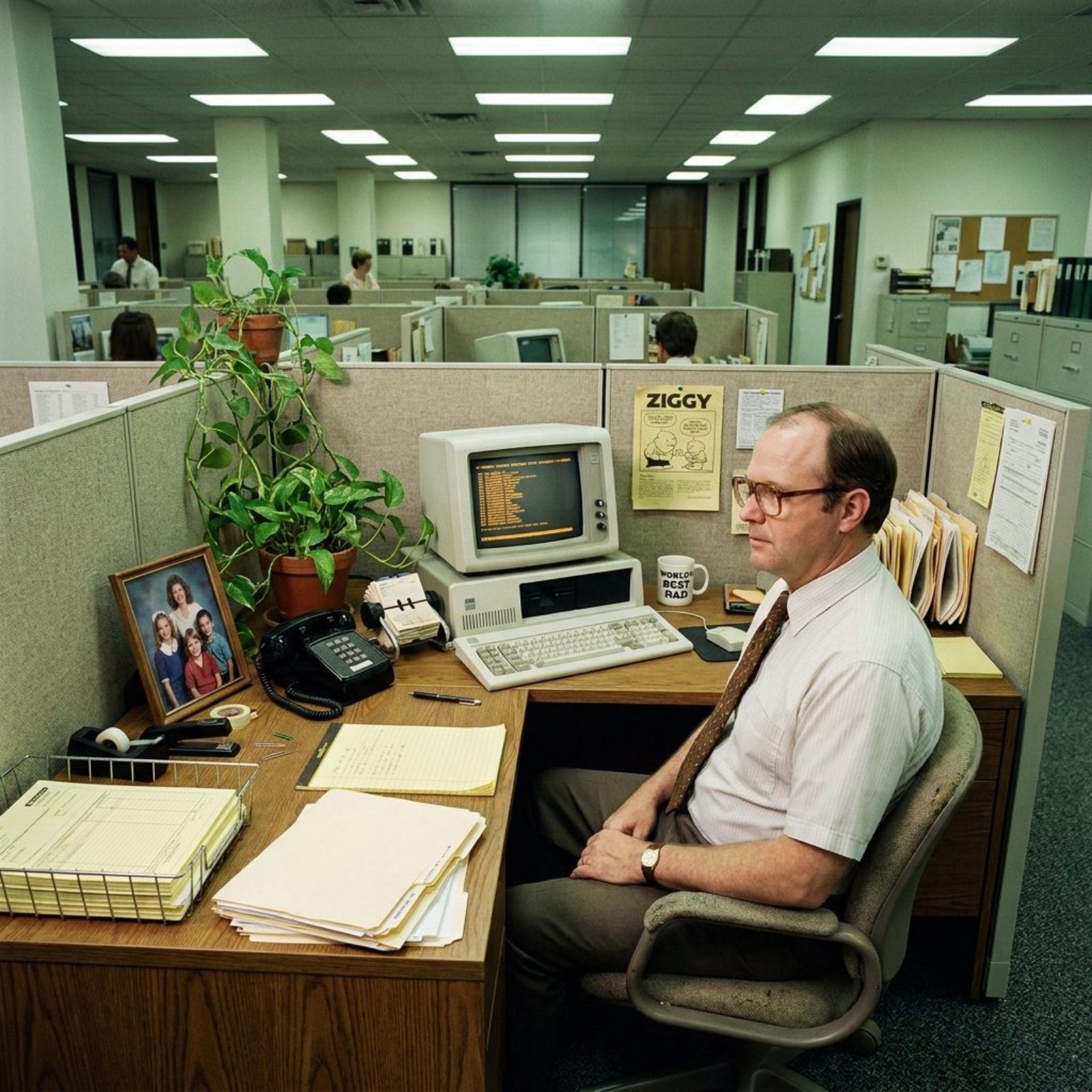
The fluorescent hum. That specific smell of warm plastic, carbon paper, and yesterday’s coffee gone cold in a ceramic mug. A cubicle in 1985 was a small beige fortress you personalized with pushpins and defended with a Rolodex. Everything had weight, took up space, made noise. Four decades later, the whole room has collapsed into a laptop and a tote bag. Here’s what many office workers saw, touched, and cursed at back then—and what sits in its place now.
22. Beige Fabric Walls vs. Open Floor Plans
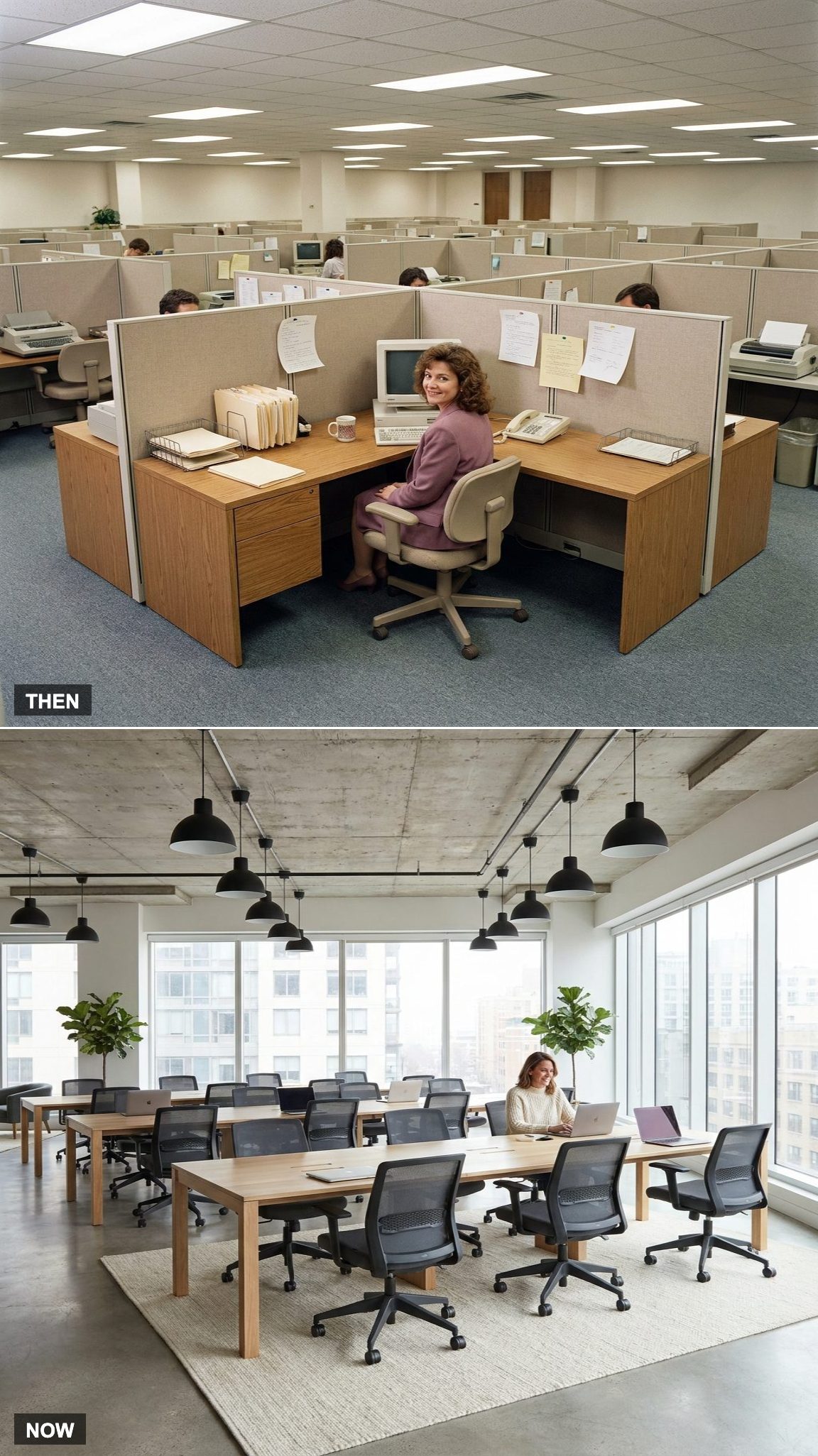
In 1985, the cubicle wall was the boundary of your entire professional identity. Five feet of beige tweed fabric held together by aluminum trim, and you could shove a thumbtack into it without asking anyone. Your neighbor’s cough sounded like it was inside your skull, but at least the wall gave you the illusion of a door.
Now the walls are gone and the illusion went with them. Open plans promised collaboration and delivered noise-canceling headphones as a corporate necessity. Some of us miss the beige—nobody will admit it out loud.
21. The CRT Monitor That Ate the Desk
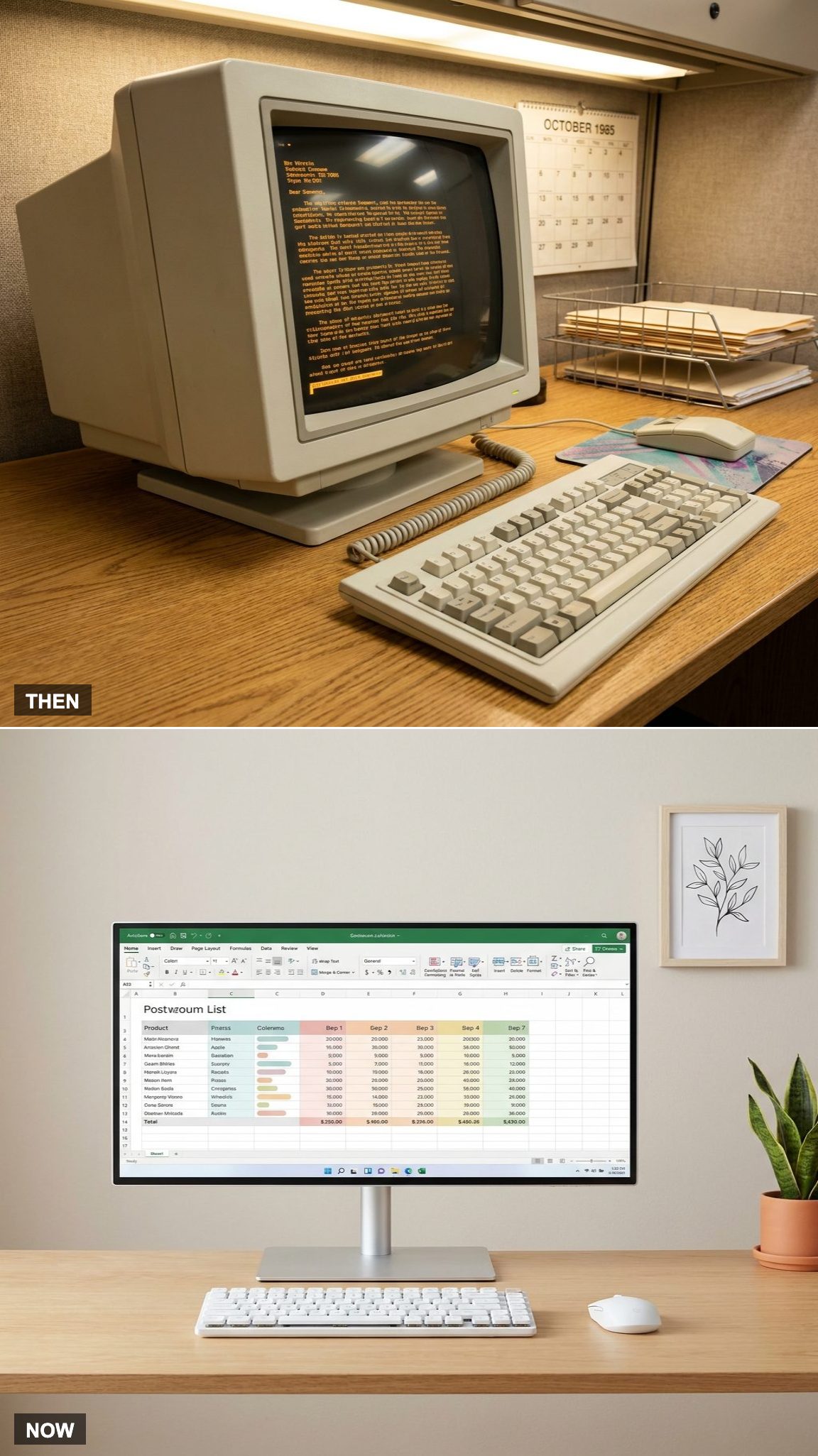
A large 1985 CRT was less a monitor and more an appliance. It could weigh several dozen pounds, ran hot enough to warm your hands in winter, and pushed your keyboard so far forward you typed with your elbows in your ribs. Many office screens glowed amber or green. Staring at it for eight hours felt exactly like staring at it for eight hours.
Today a piece of glass thinner than a magazine does the same job. You get more screen real estate and most of your desk back.
20. Typewriters That Clacked Down the Hall
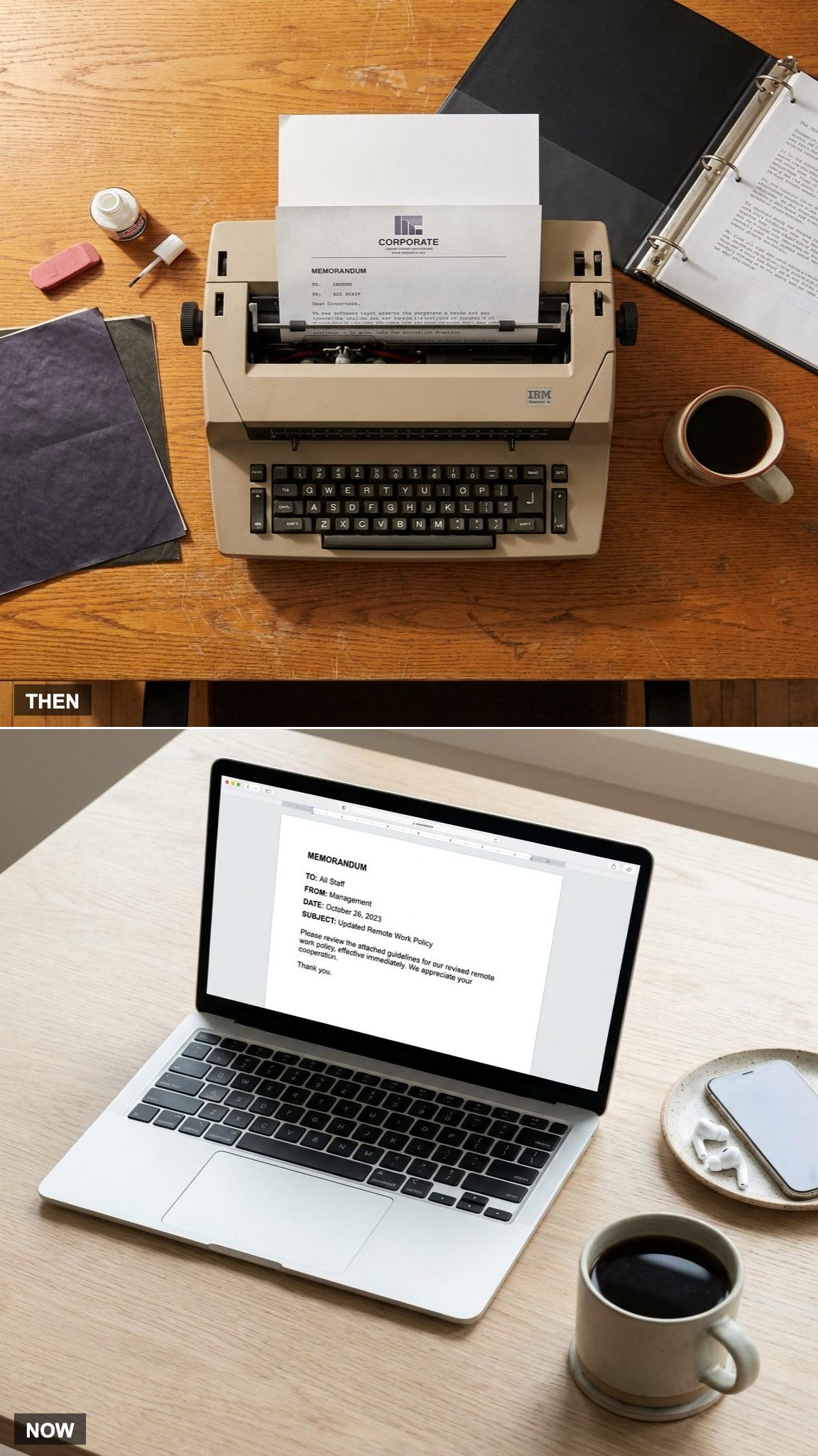
Back in 1985 there was still a real chance the person three cubicles over was typing on a Selectric. You could hear the specific rhythm of it—a mechanical chatter followed by the whirr of the type ball snapping into place. Making a mistake meant correction tape, correction paper, or a dab of fluid—and sometimes starting the page again.
Nobody misses the correction fluid. A few people miss the sound.
19. Filing Cabinets vs. The Cloud
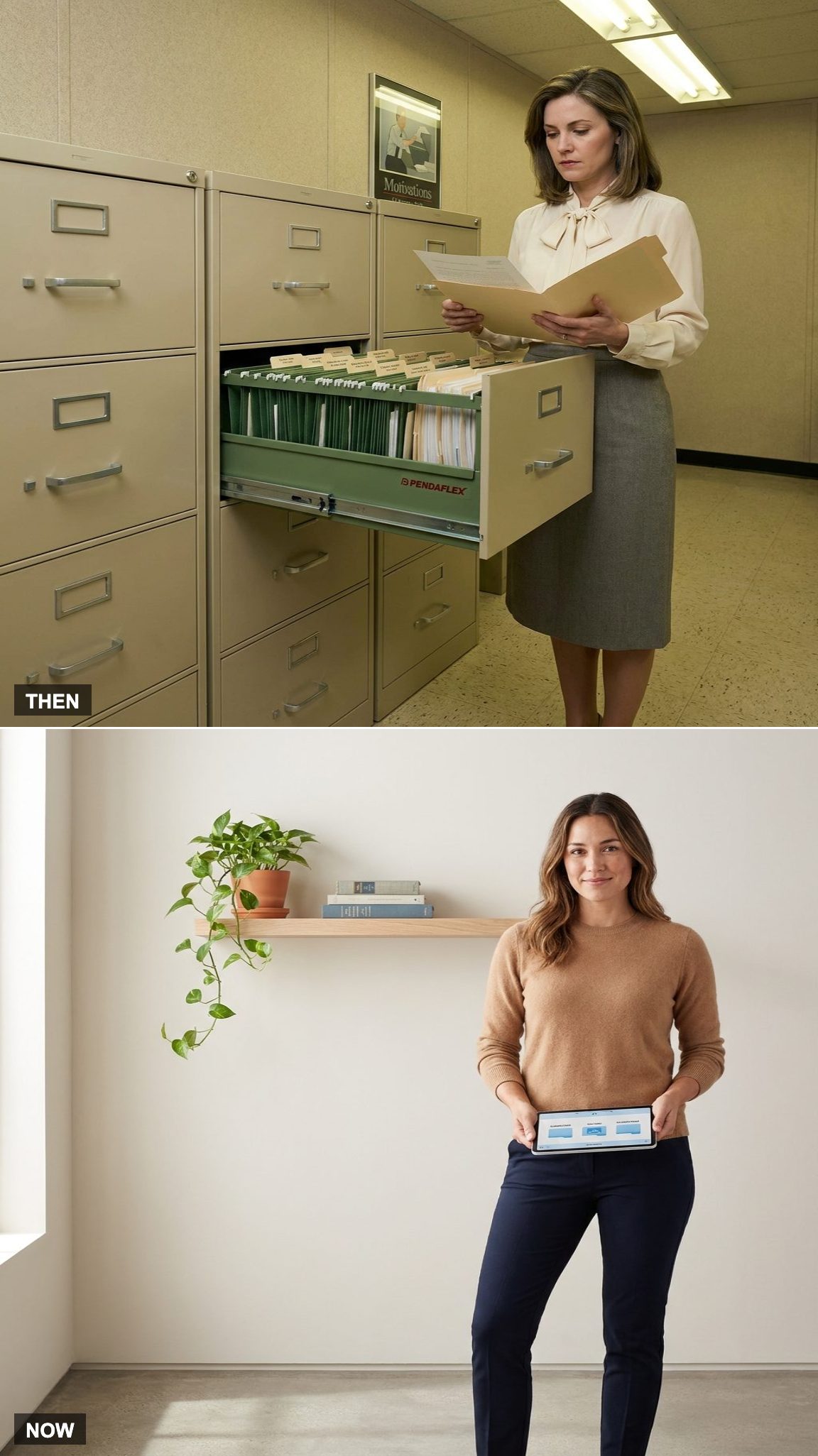
Every important document in 1985 lived inside a metal drawer that squealed when you opened it. Contracts, HR records, client files, the memo Karen sent about the microwave—all of it, alphabetized by someone who took the alphabet seriously. Losing a file was a small catastrophe involving three people and an hour of searching.
Now the file lives in a data center you will probably never see. You find it in four seconds. You also have no idea what you would do if the internet went down for a week, and that’s worth sitting with.
18. The Rolodex Was the Original LinkedIn
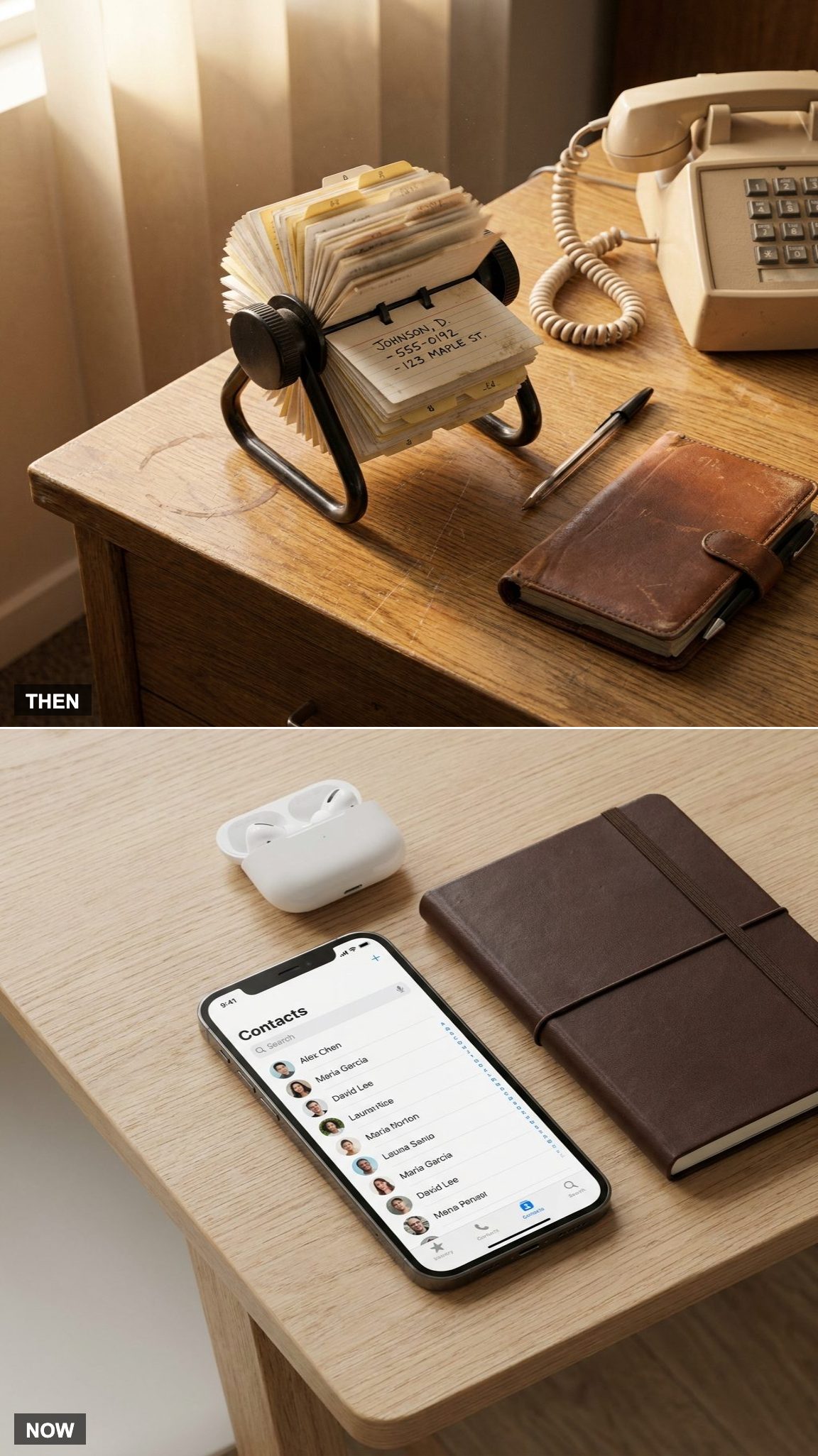
A Rolodex was a status object as much as a tool. A thick one meant you knew people. Some executives guarded their most valuable cards because the contacts could be as important as the files on the desk. When someone left the company, the Rolodex was the first thing they packed.
The digital version is bigger, searchable, and syncs across your phone and laptop. It also doesn’t sit on your desk announcing your worth to every visitor—either a loss or a mercy, depending on your ego.
17. Corded Desk Phones vs. Pocket Computers
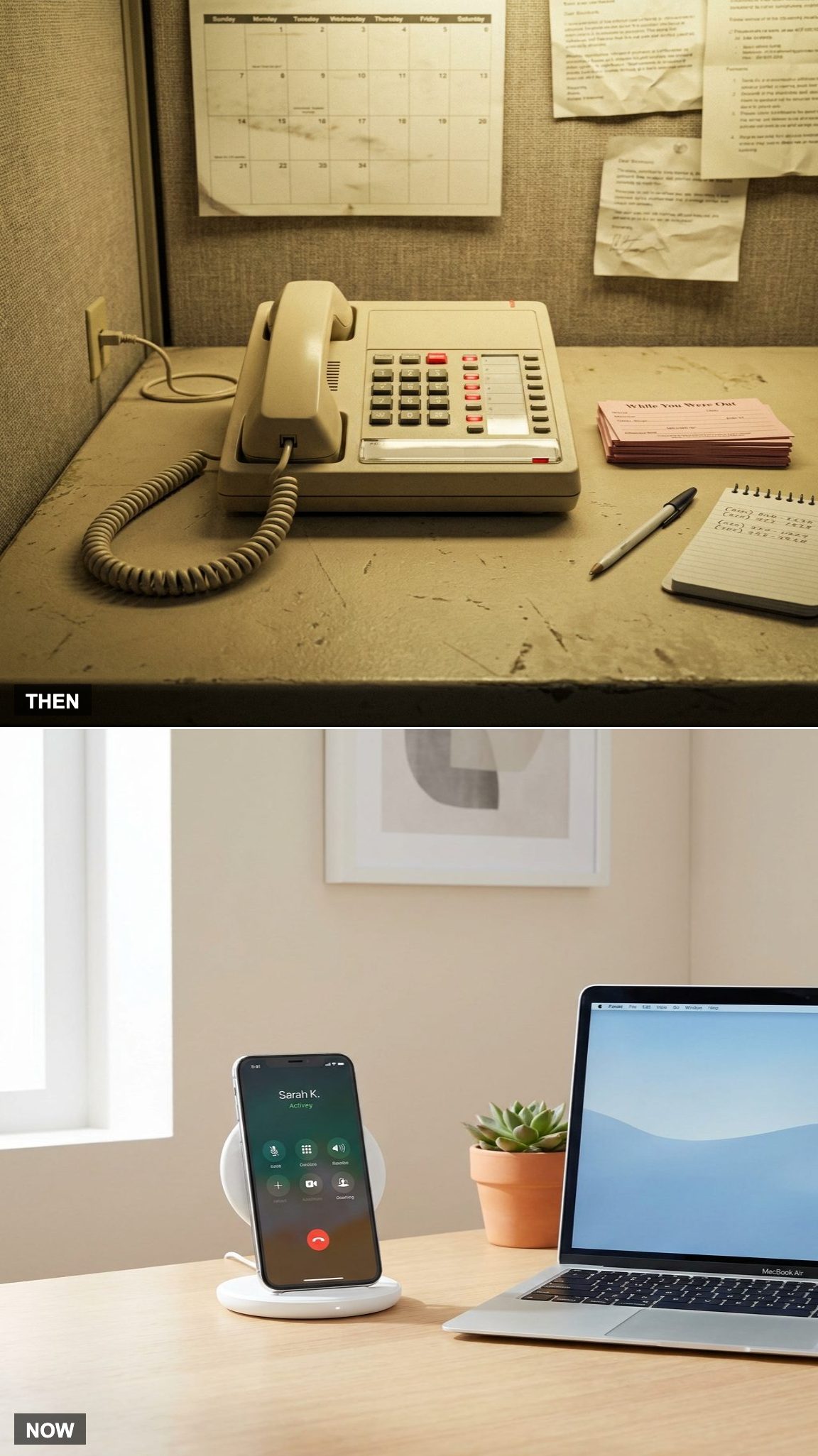
Your phone was tethered to the desk by a coiled cord that could stretch about six feet if you really committed. Long calls meant pacing in a tight circle. You memorized numbers, you wrote messages on pink slips, and if someone called while you were out, they left a message and waited for you to return it.
16. Sticky Notes Fringed Every Monitor
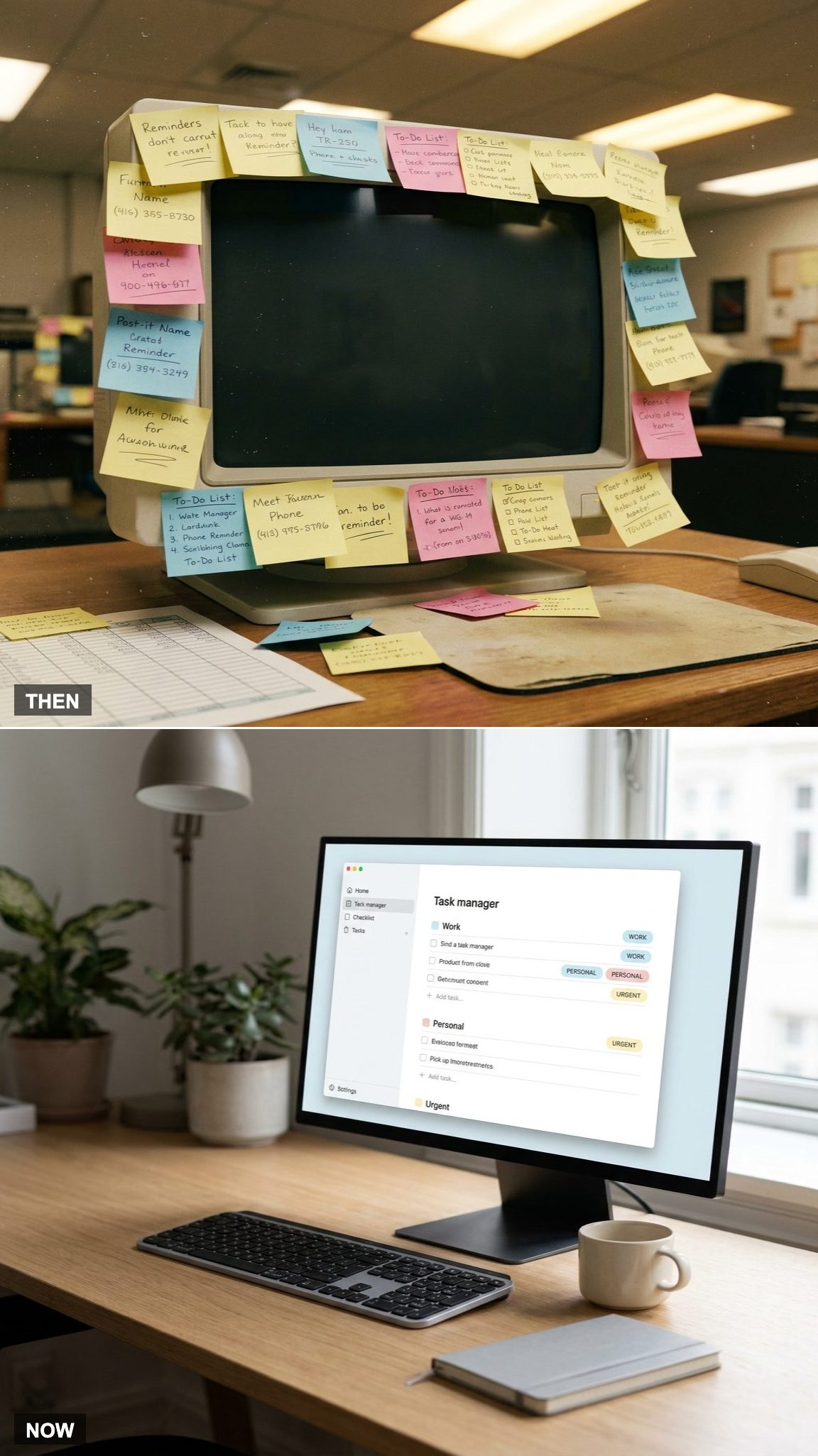
A well-worked cubicle looked like a bird’s nest of yellow squares—Post-its around the monitor, Post-its on the phone, Post-its stuck to the underside of the desk drawer for the passwords you weren’t supposed to write down. The system worked until it didn’t, and when it failed, it failed publicly.
Task managers replaced the paper fringe. Cleaner, searchable, gone the second you close the tab. Some people still print their to-do list every morning.
15. Paper Calendars vs. Shared Digital Ones
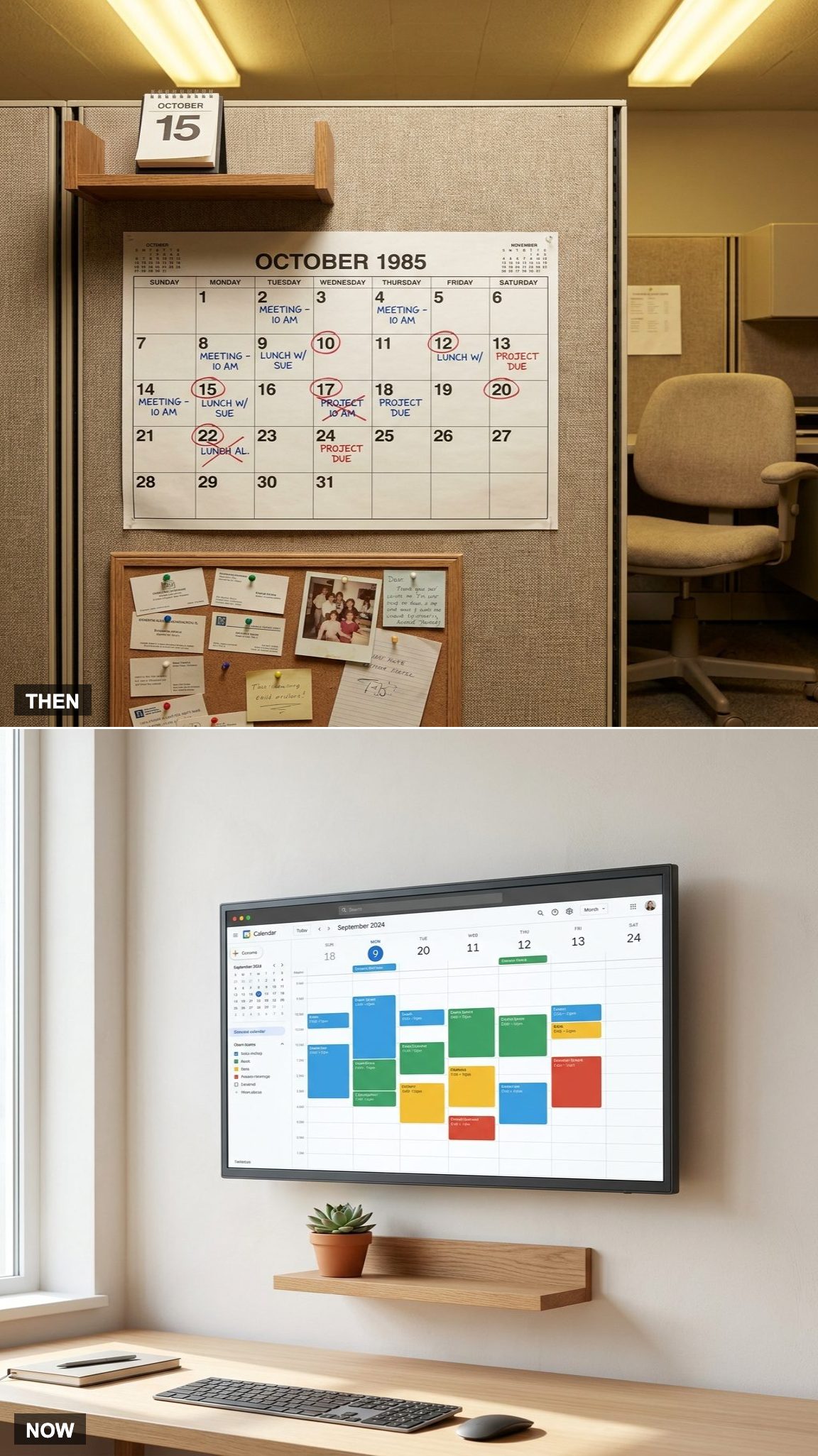
The paper calendar was the source of truth. If it wasn’t written on the calendar, it wasn’t happening. Meetings were scheduled by walking to someone’s cubicle and asking what Thursday looked like. Vacation requests were negotiated in pencil first, then committed in pen only if approved.
Shared digital calendars turned scheduling into an algorithm—faster, more efficient, and also the reason your entire Tuesday can get eaten by back-to-back meetings someone else booked without asking.
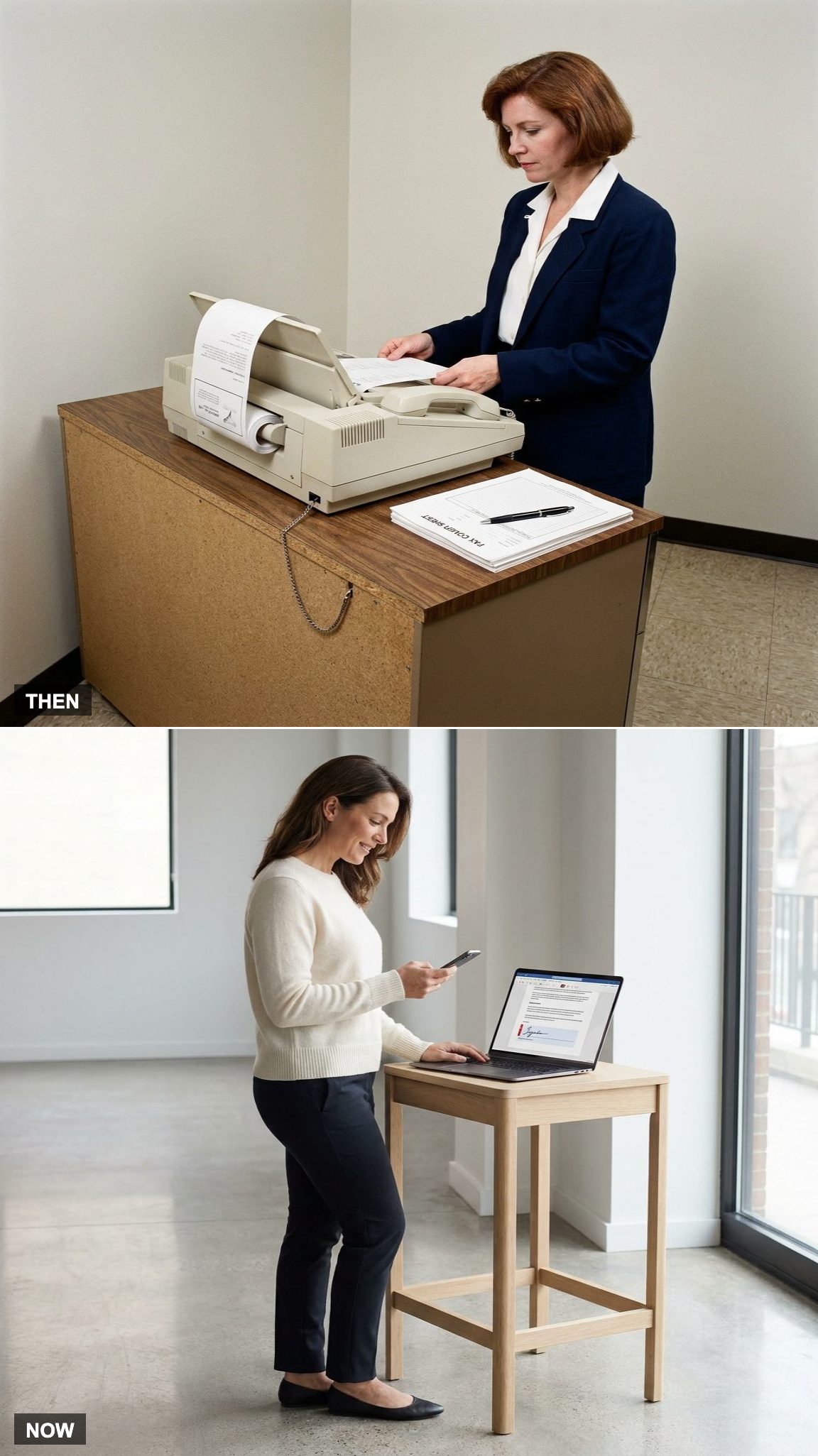
14. The Fax Machine Ruled the Copy Room
Would you like to save this?
The fax machine had its own weather. It got hot, it jammed, it ran out of paper at the worst possible moment. Sending a signed contract meant walking down the hall, dialing a number, feeding pages in one at a time, and hoping the confirmation sheet printed at the other end. The paper it printed on faded to a ghost within a few years, which nobody thought about at the time.
Now you sign with your finger on a screen and the whole thing is done in ninety seconds. Fax machines still exist, mostly in doctors’ offices and law firms, for reasons nobody can fully explain.
13. Family Photos on Every Surface vs. Minimalist Desks
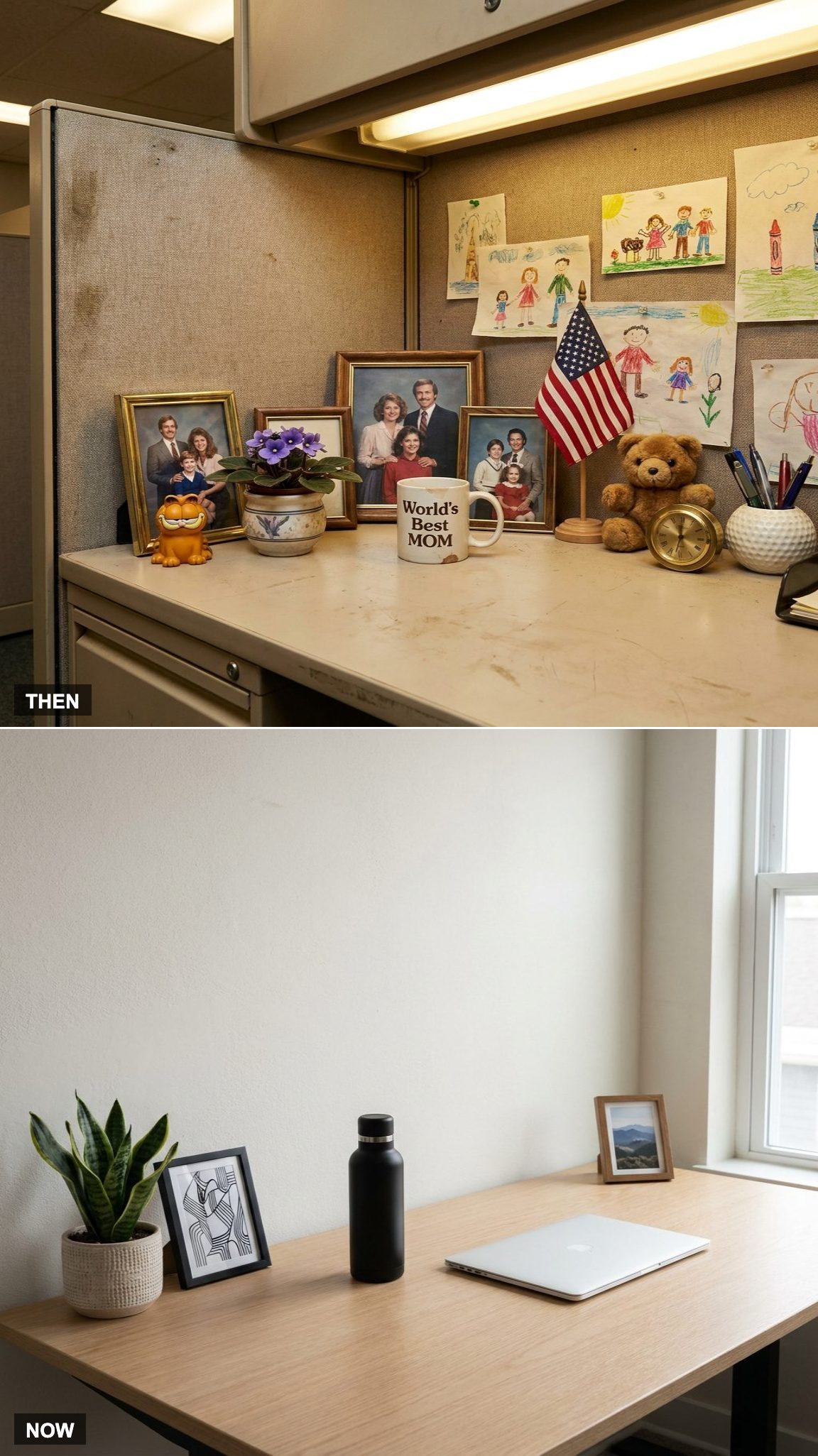
A 1985 cubicle was a shrine to whoever worked in it—family photos, kids’ art, a Ziggy or Far Side cartoon, coffee mugs from Yellowstone, novelty pen holders, and a plant someone gave you at a wedding shower that was somehow still alive. You spent forty hours a week there, so you made it yours.
Modern desks often look more curated: one plant, one framed photo, carefully chosen headphones, perhaps a small model or enamel pin. The objects changed, but the urge did not. People still want a workspace that looks as though someone actually lives there during the day.
12. The Overhead Fluorescents That Hummed From 8 a.m. to 5 p.m.
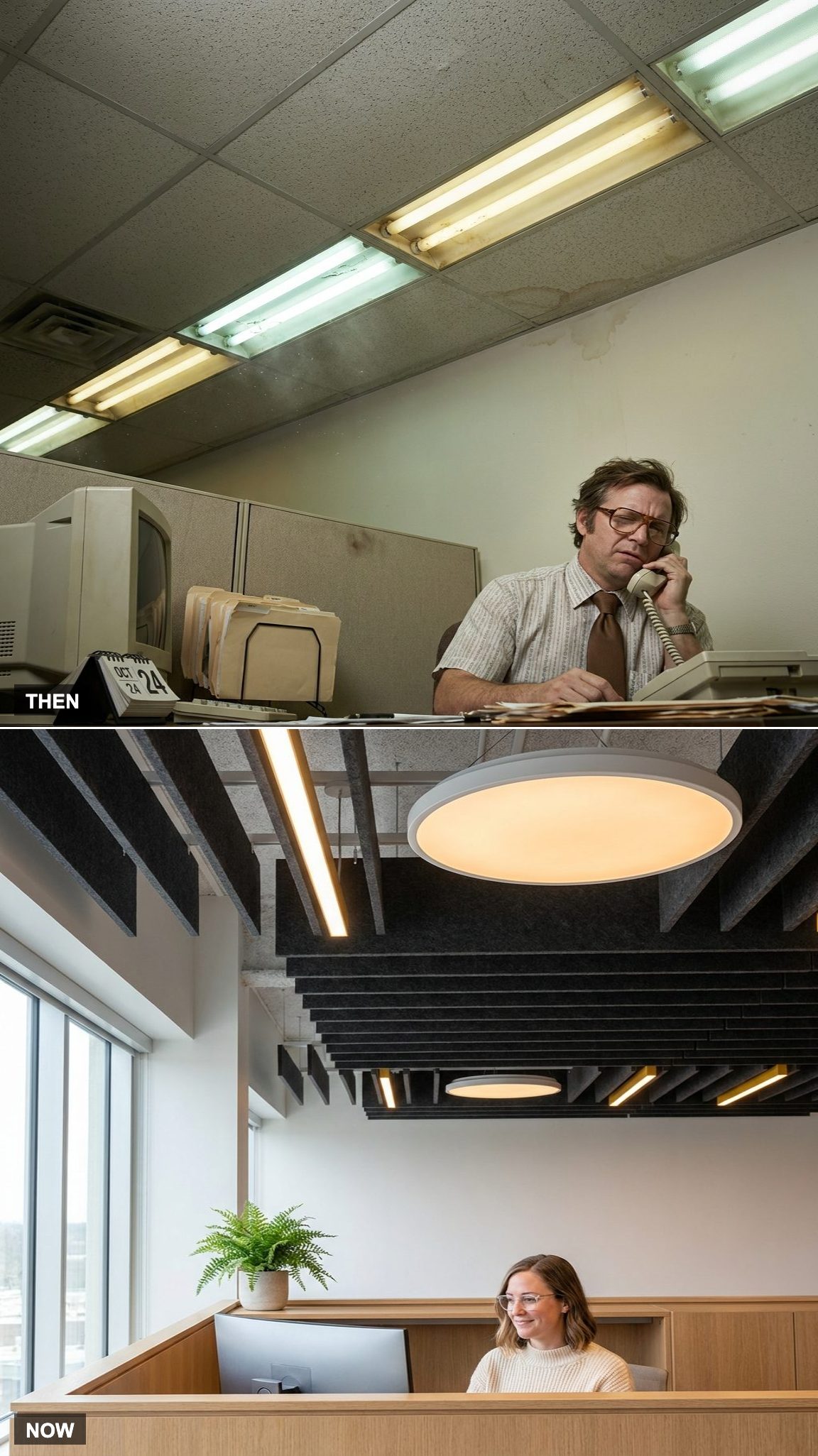
Anyone who worked under 1985 fluorescents remembers the sound before the light—that low electric hum, the occasional flicker nobody ever bothered to fix, the sickly greenish cast that made everyone look one notch worse than they had in the parking lot ten minutes earlier.
Modern offices are more likely to use quieter fixtures, warmer LEDs, tunable lighting, and better access to daylight. Lighting is not neutral: glare, flicker, color rendering, and brightness can all affect comfort over a long workday.
11. The Desk Drawer That Held an Entire Staples Aisle
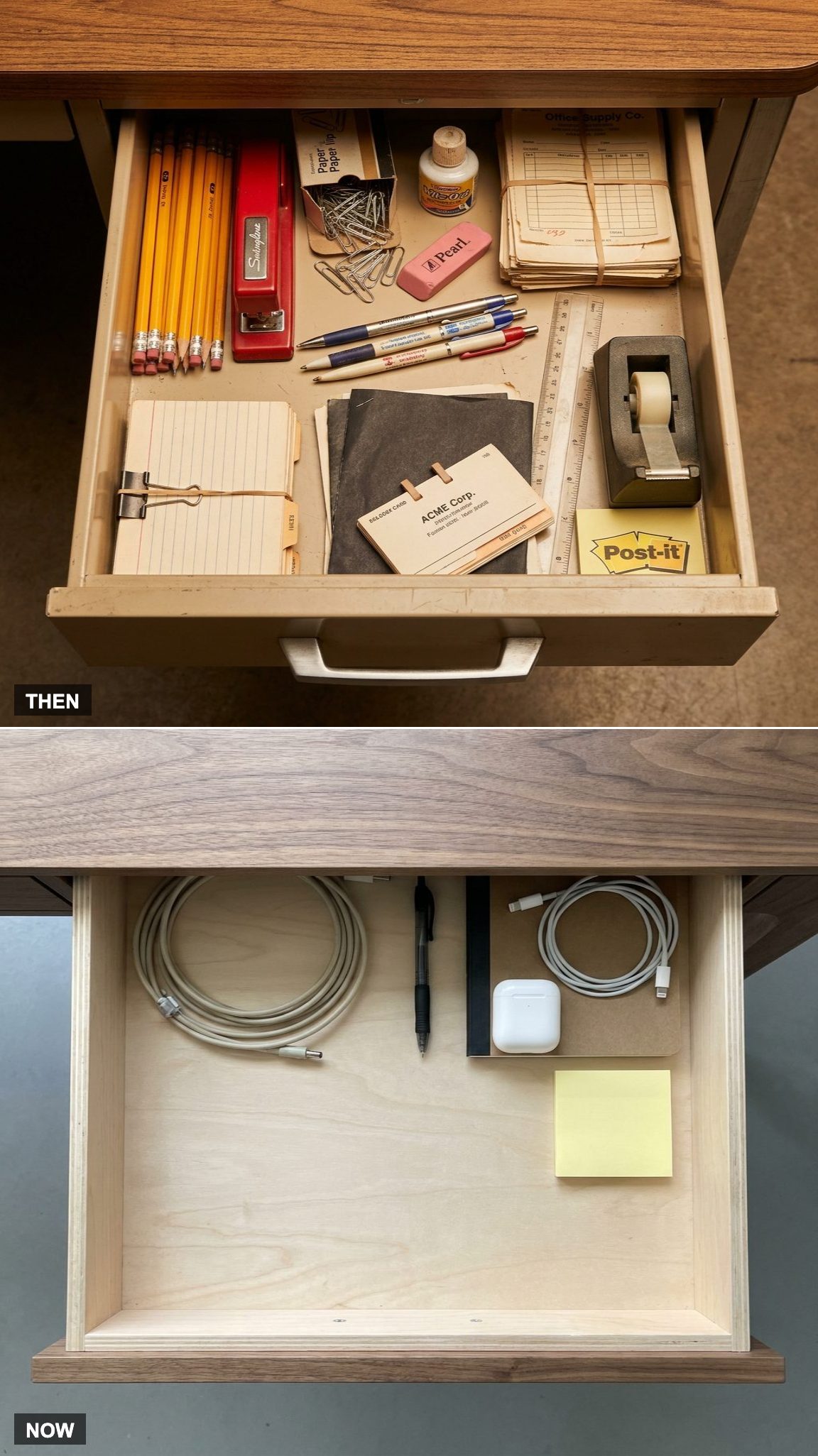
Open a 1985 desk drawer and you’d find enough hardware to stock a small stationery store—paper clips, carbon paper, correction fluid that dried into a chalky crust, three staplers because you didn’t trust the other two.
Now the drawer is mostly air.
The document became a file, and the stapler lost most of its workload. The Rolodex became a contacts app. Wite-Out became the backspace key, which honestly should have happened sooner. I miss the tactile stuff a little. Not enough to actually go back.
10. Interoffice Envelopes and the Slow Art of the Memo
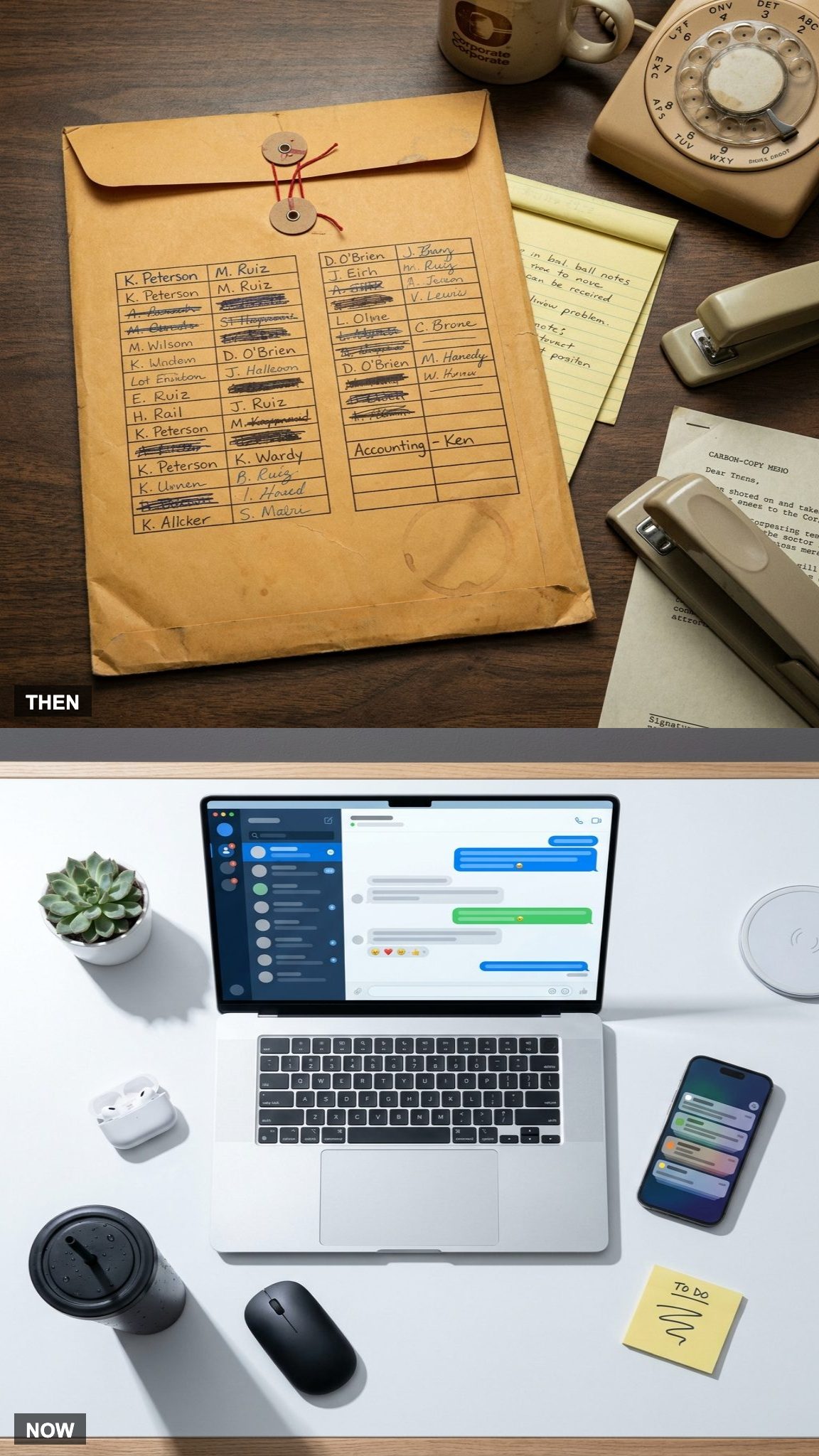
The interoffice envelope was a small marvel of frugality. Manila body, string closure, and a grid printed on the front where every previous recipient’s name got scratched out in ballpoint until the envelope became a kind of ledger of everyone who’d ever needed a signature from Ken in accounting.
A memo took three days to reach four people. Now it takes three seconds to reach four hundred, which is either progress or a completely different problem depending on how you feel about your notification badge.
9. The Manager Who Materialized Over Your Cubicle Wall
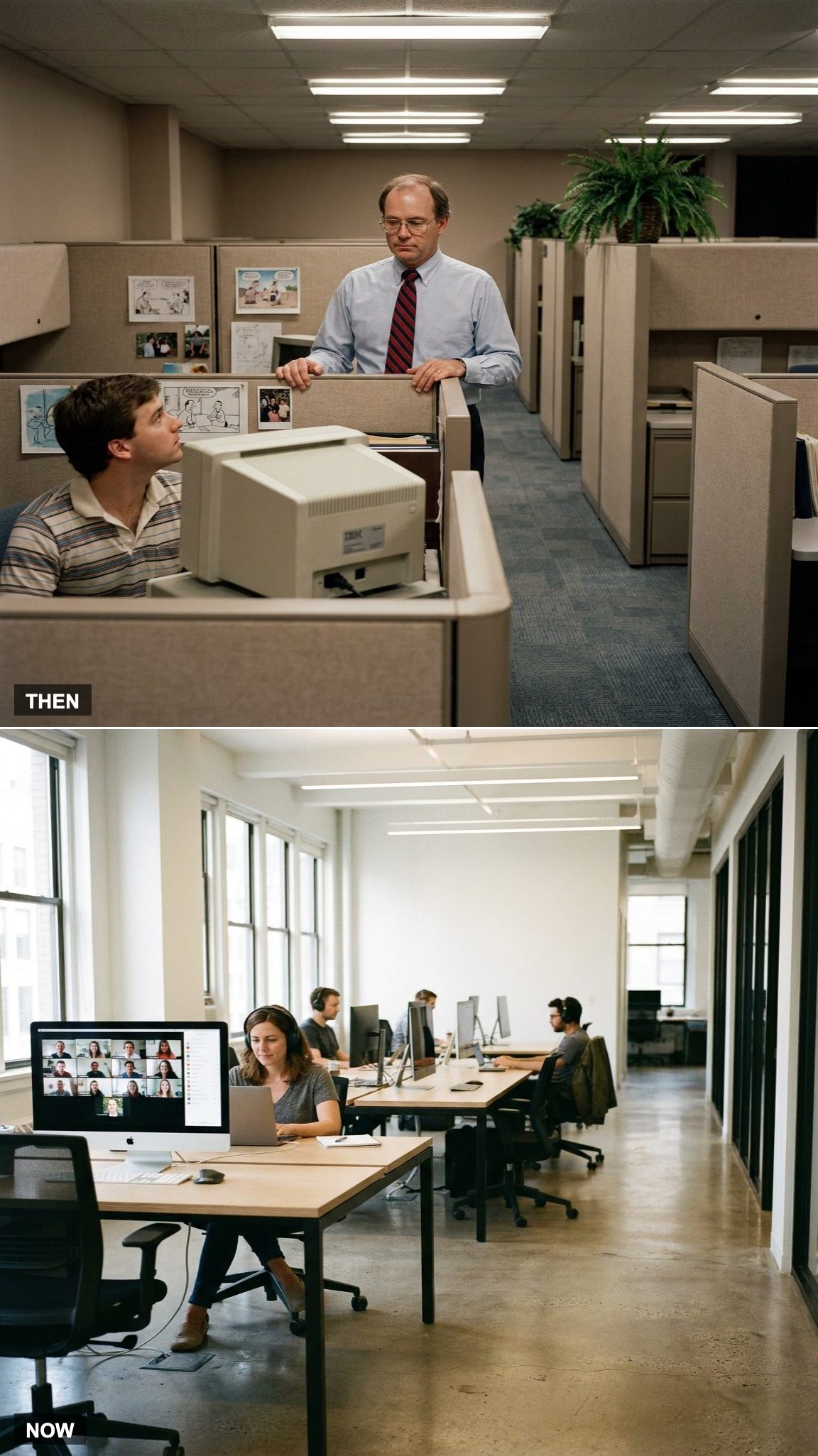
Everyone who worked in a cubicle knew the shadow—that specific darkening at the top of the partition meaning your manager had appeared without warning and was now reading over your shoulder.
The uncertainty was the point: you never knew when the manager might appear. Hybrid work traded that particular anxiety for a different one: the little green dot next to your name, and the low-grade paranoia about how long you’ve been idle. The tools changed, but the feeling did not disappear.
8. The Shared Printer That Ran Like a Small Factory
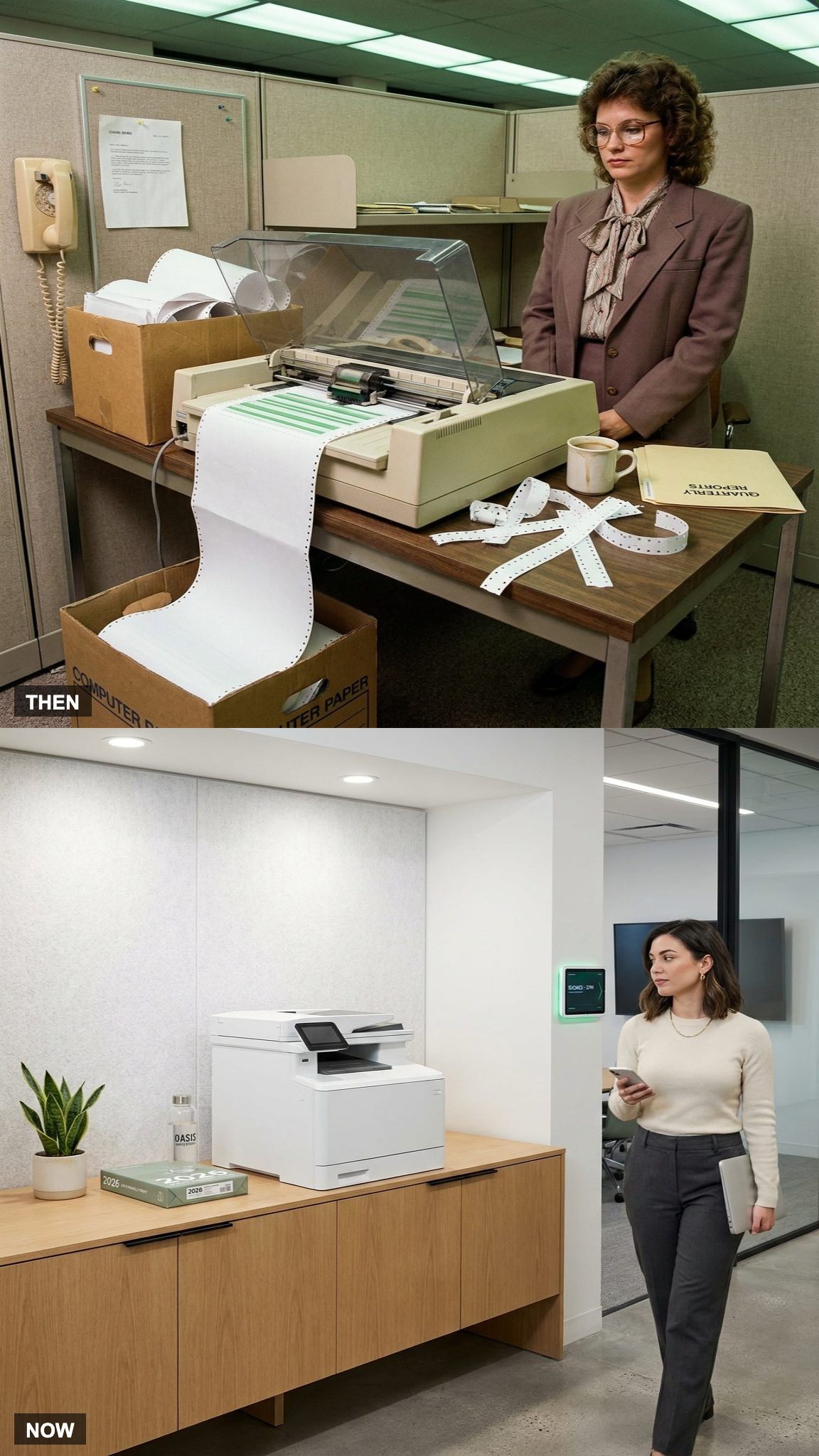
The dot-matrix printer had its own weather system—the screech of the print head, the accordion fold of green-bar paper piling into a cardboard box below, the small ritual of tearing tractor-feed strips along their perforations. When somebody printed a long report, you rescheduled your afternoon around it.
Many office workers now go days or weeks without printing anything. Paper survives mostly as ceremony: contracts, the occasional visa document, tax forms that refuse to modernize on principle. Everything else lives inside PDFs no one will ever open again, which is arguably its own kind of clutter—just quieter and easier to ignore.
7. The One-Size-Fits-All Cubicle Everyone Got Assigned
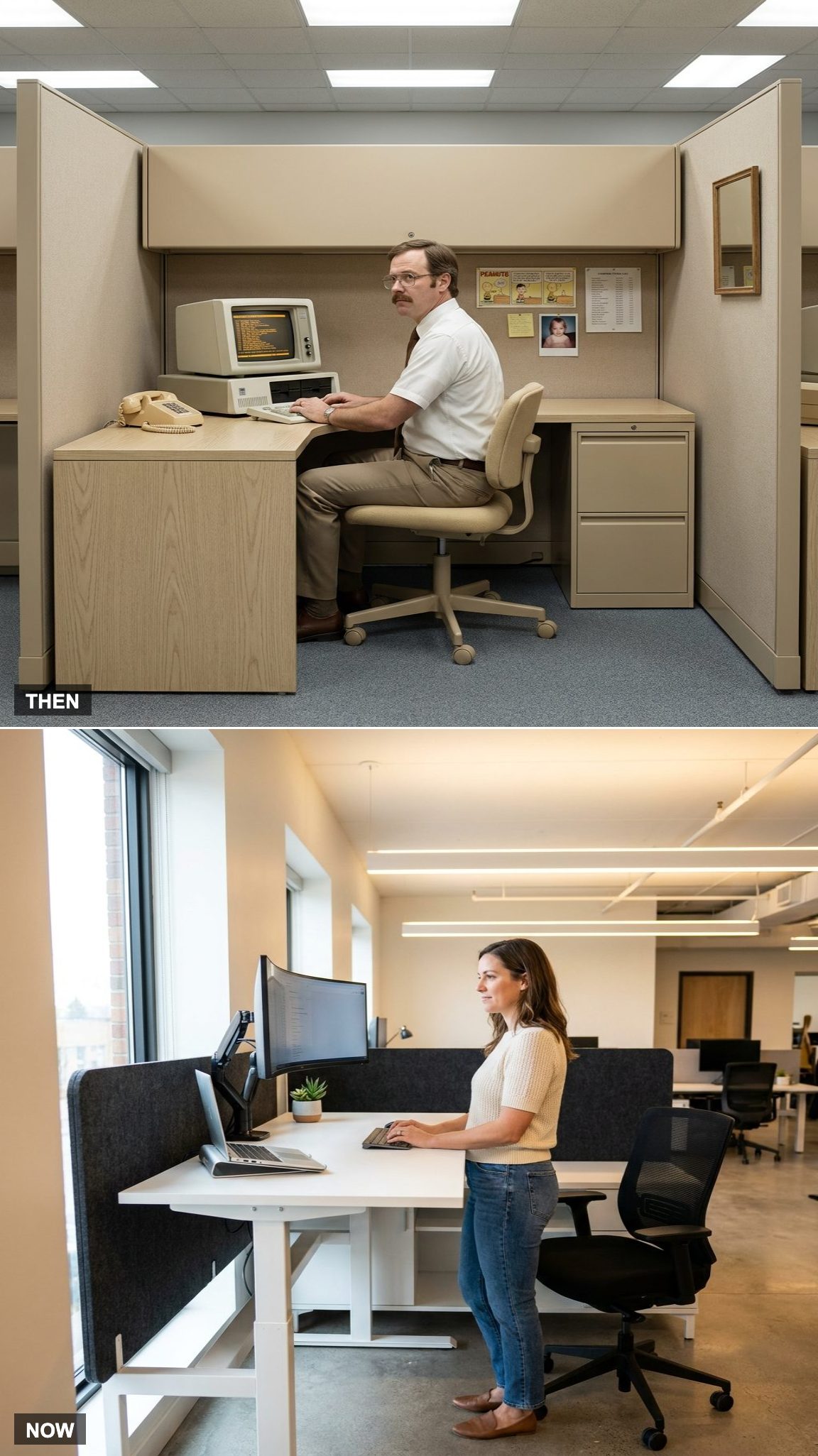
The 1985 cubicle was democracy expressed as furniture. Everyone got the same beige box, desk, and chair, regardless of whether they were five feet two or six feet four. The station was also permanently assigned: your mug, calendar, spare shoes, and drawer full of pens stayed put because that particular beige box was yours.
Modern workstations are more likely to offer adjustable chairs, monitor arms, or sit-stand surfaces, but many offices have traded permanent ownership for hot desking. You book a station, plug in, and leave nothing behind. The furniture may fit better, while the space itself belongs to no one.
6. The Ashtray Sitting Casually Next to the Rolodex
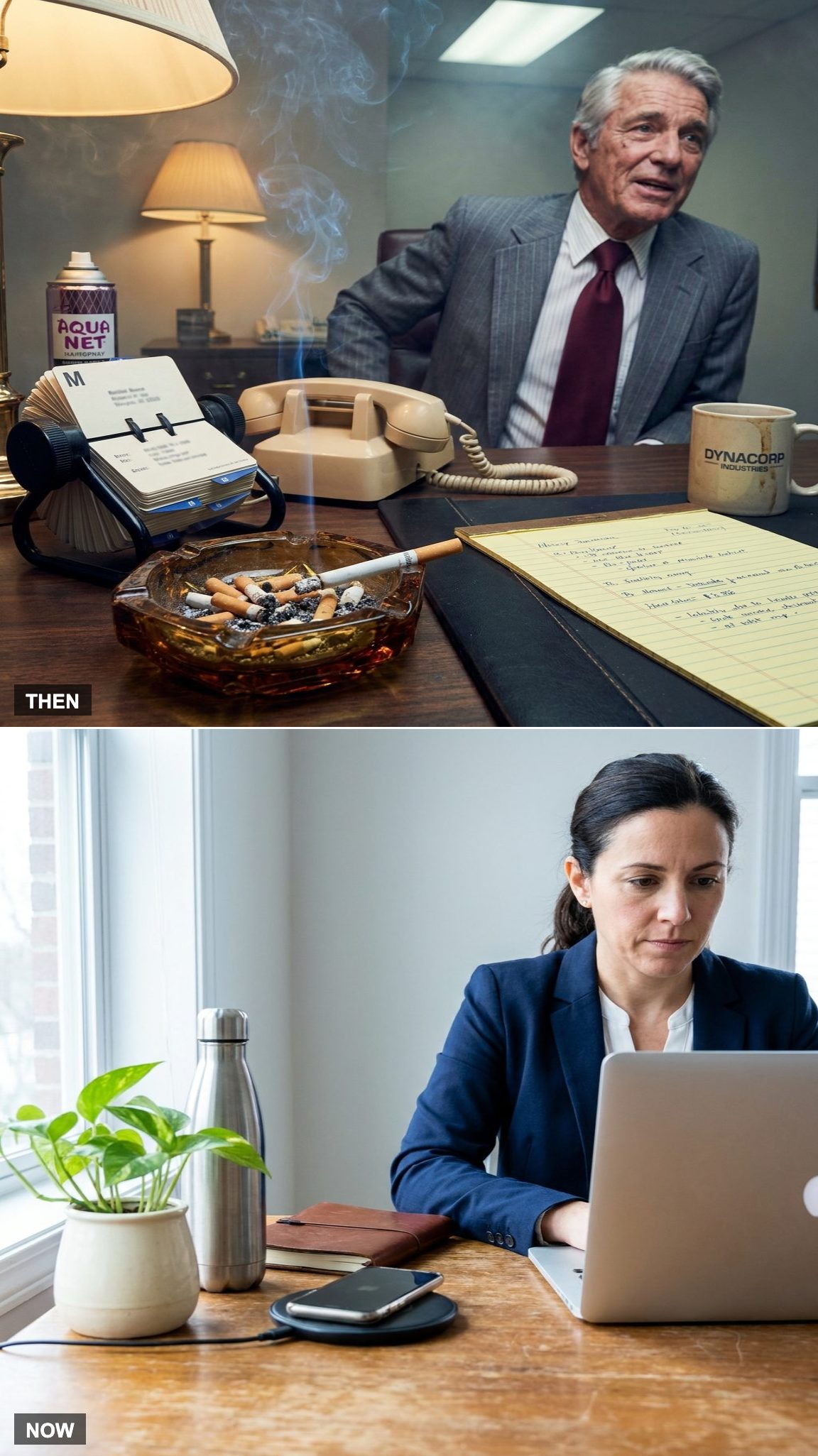
Ashtrays on desks. Ashtrays in conference rooms. Ashtrays in the elevator lobby, the men’s room, and the little smoking area right next to the receptionist. A 1985 office was hazier than anyone under 35 can quite picture, and the yellow film on the ceiling tiles was not a decorating choice.
Workplace smoking restrictions expanded through the 1980s and 1990s through company policies, municipal and state laws, federal rules, labor pressure, and litigation. What remains is a strange archaeology of old buildings where the ventilation still smells faintly of Winston 100s on damp days.
5. The Boxy PC That Felt Miraculous and Ran at a Crawl
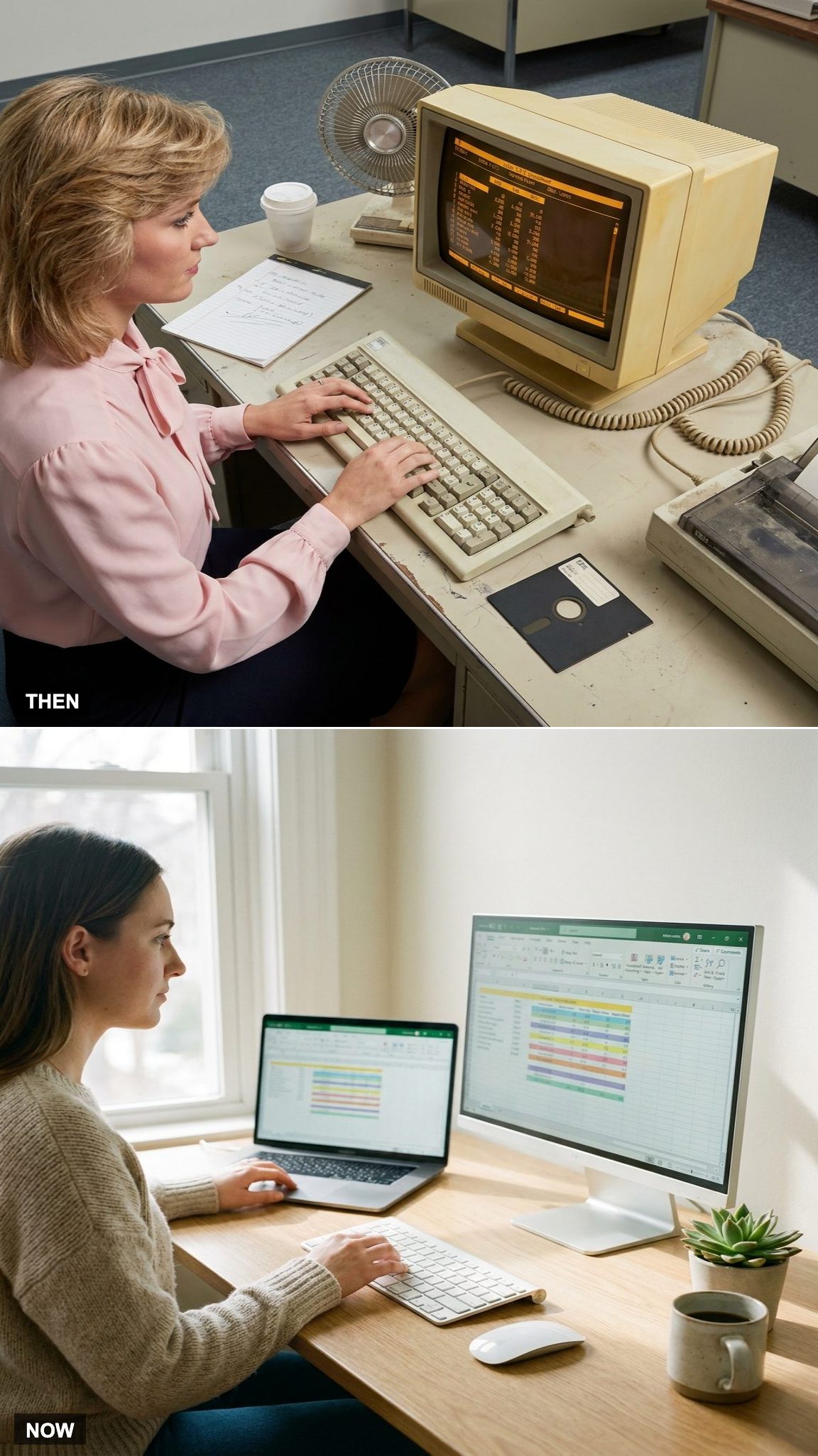
In 1985, a PC on your desk marked you as important. That beige monolith represented a serious chunk of somebody’s budget, ran DOS with the confidence of a mule, and treated saving a file as a five-second commitment involving audible whirring.
A common double-sided 5.25-inch floppy held 360 kilobytes—roughly one photo of your lunch by today’s standards. Today’s laptops fit in a tote bag, run a dozen applications at once without breaking a sweat, and follow you to a coffee shop across town. The miracle just kept getting smaller and quieter until we stopped calling it a miracle at all.
4. The Mailroom Cart and the Long Wait for a Document
Would you like to save this?
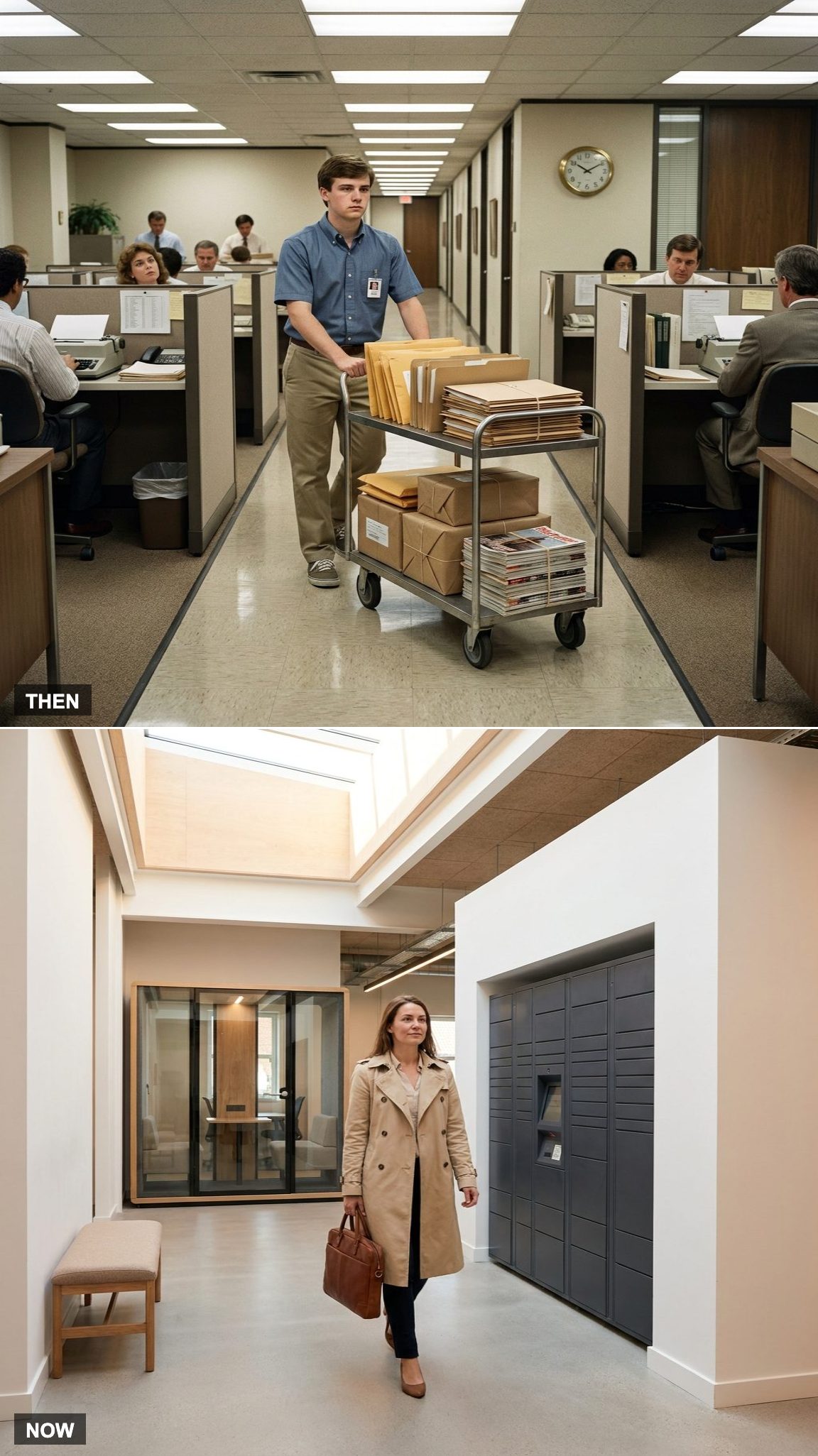
You needed a contract signed by somebody on the seventh floor. In 1985 that meant slipping it into an envelope, dropping it in an out-tray, and waiting for the mailroom clerk to swing by on his afternoon loop. Best case, tomorrow. Worst case, whenever accounting felt inspired.
Email compressed a three-day errand into a three-second one. What we gained in speed, we mostly gave back in volume. A modern inbox can receive in an hour what once took the mail cart days to distribute, and nobody has quite decided whether that counts as an improvement.
3. The Break Room With a Coffee Pot, a Newspaper, and Not Much Else
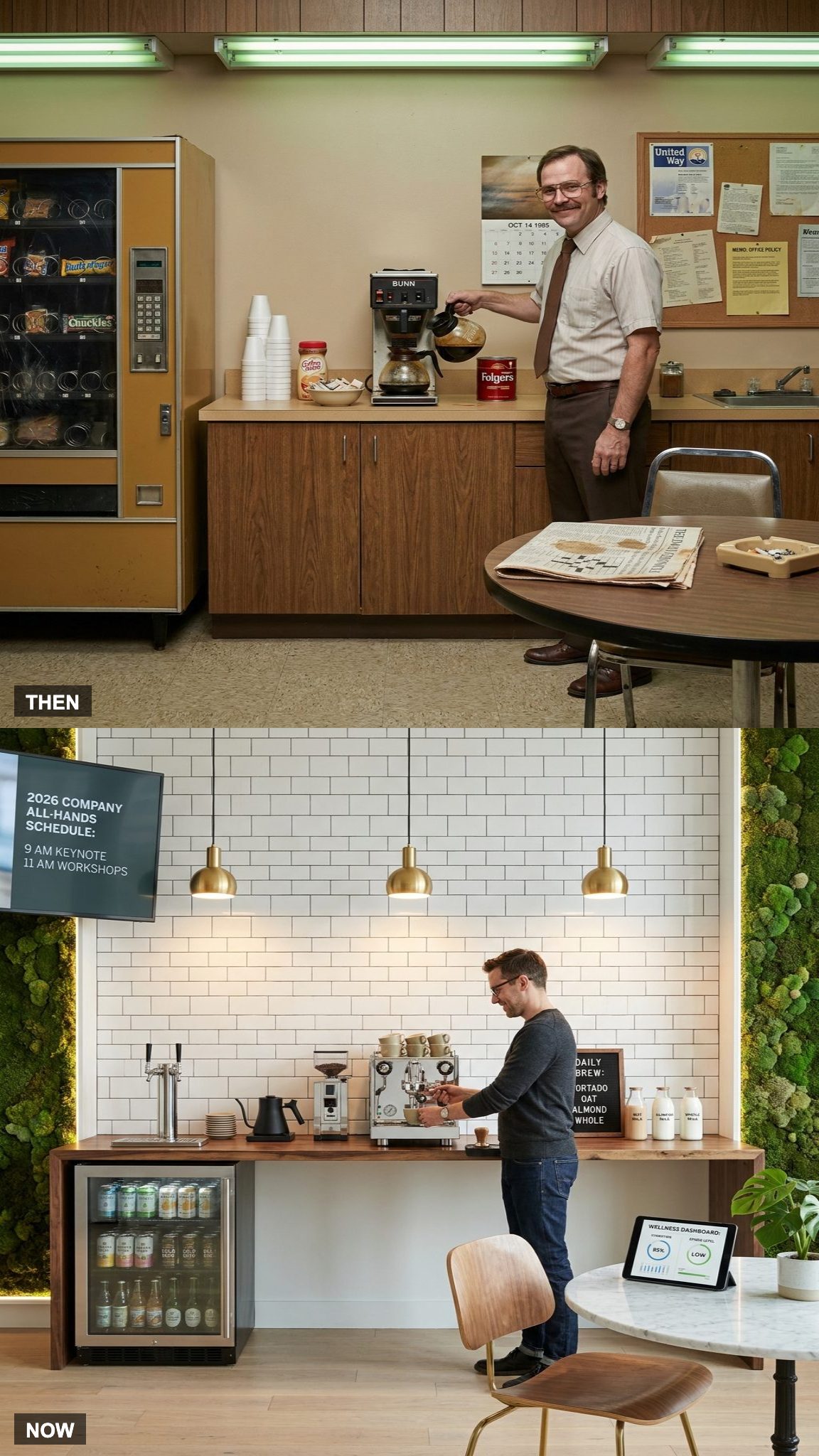
The 1985 break room was not a lifestyle. It was a coffee pot, a newspaper somebody had already done the crossword on, and a vending machine that had contained the same tragic Butterfinger since March. Nobody called it wellness. Nobody called it anything. You went in, drank the coffee, left before the burnt aftertaste settled in.
In some newer offices, the break room has become a small café—barista-grade equipment, oat milk on request, and lounge seating that suggests you might actually enjoy being there. Some of it reflects genuine care about how people work. Some of it is a calculated bet that a nicer espresso machine costs less than the raise you didn’t give. Both things can be true at once.
2. The Conference Room vs. The Zoom Grid
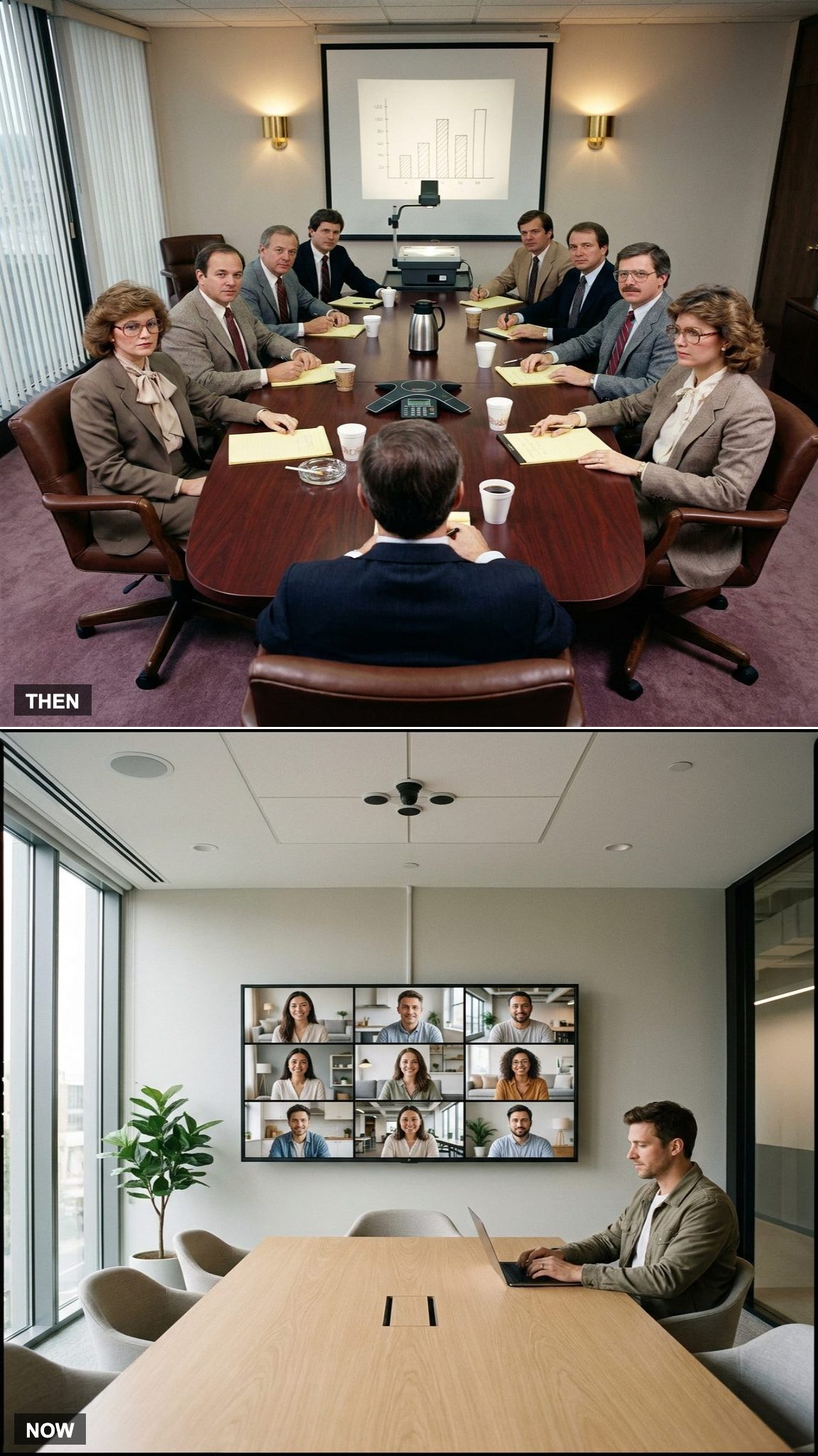
A 1985 meeting was a logistical event. Twelve people crammed into one room, one overhead projector, one poor guy fumbling with transparencies, coffee, cigarettes, and a starfish-shaped speakerphone that made anyone dialing in sound like they were calling from a submarine. A client in Tokyo joined by an expensive conference call or flew in when the meeting justified it.
Now the same meeting is a grid of faces on a screen—someone in Denver, someone in a kitchen in Lisbon, someone technically at the beach with a virtual background of a bookshelf. Starts on time. Ends on time. Nobody had to find a parking spot.
1. The Cubicle as Home Base vs. Work From Anywhere
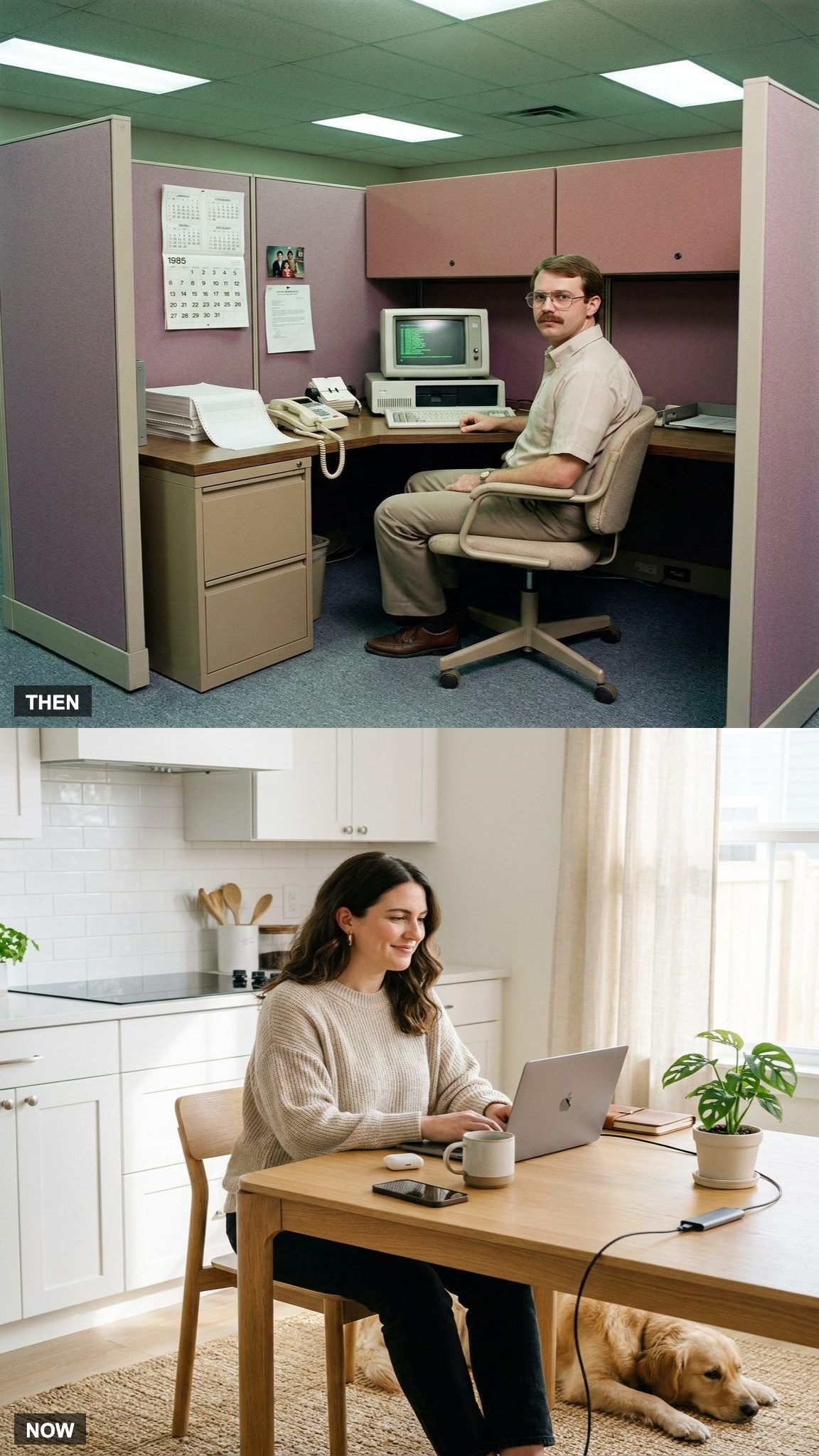
In 1985, the cubicle was where work happened. Full stop. You couldn’t take the terminal, filing cabinet, or office phone system home. To work, you drove to the building, sat in the chair, and stayed there until 5.
Now the whole job fits in a bag. Laptop, charger, decent Wi-Fi, and the office is wherever you set the bag down—a kitchen table on Monday, a coffee shop on Tuesday, a friend’s guest room on Wednesday. The building didn’t disappear. It just stopped being the point.