
Would you like to save this?
Your grandfather did not negotiate. He joined, he showed up, and thirty years later the company handed him a watch and a guaranteed check until he died. That was the deal, and for a generation it held. The 1960s union job was its own ecosystem: the punch clock, the shop steward, the pension booklet nobody fully read but everybody trusted. These are the things that built the middle class, one Friday paycheck at a time.
27. The Union Steward Who Worked the Same Line as Everyone Else
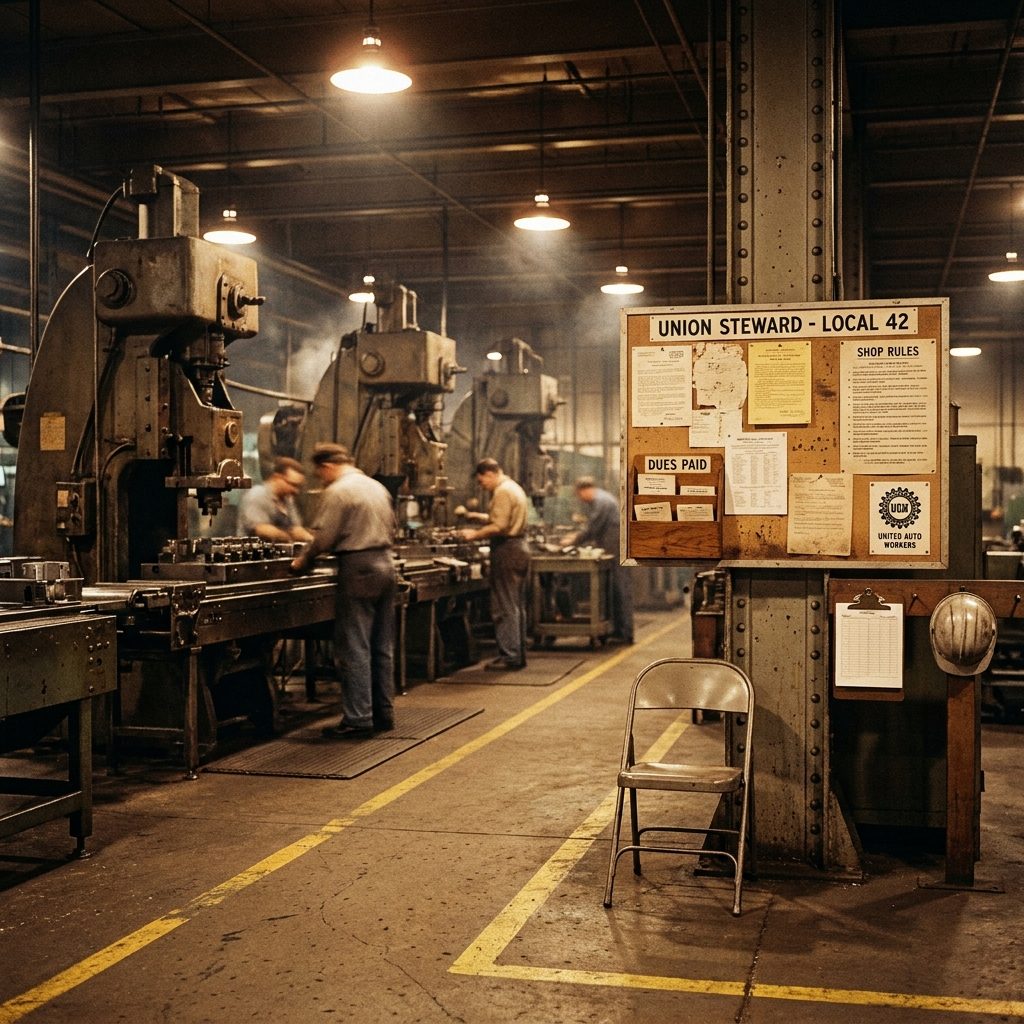
He wasn’t in an office. That was the whole point. The union steward ran the same press, pulled the same shift, clocked in and out the same as the guy next to him. His authority came from that, from being of the floor rather than above it.
When someone had a problem with management, they didn’t write a letter. They walked over and talked to him between parts. He knew the contract better than most supervisors did, and he knew it because he had to. His own livelihood depended on the same language.
26. Overtime Pay That Actually Felt Like Something
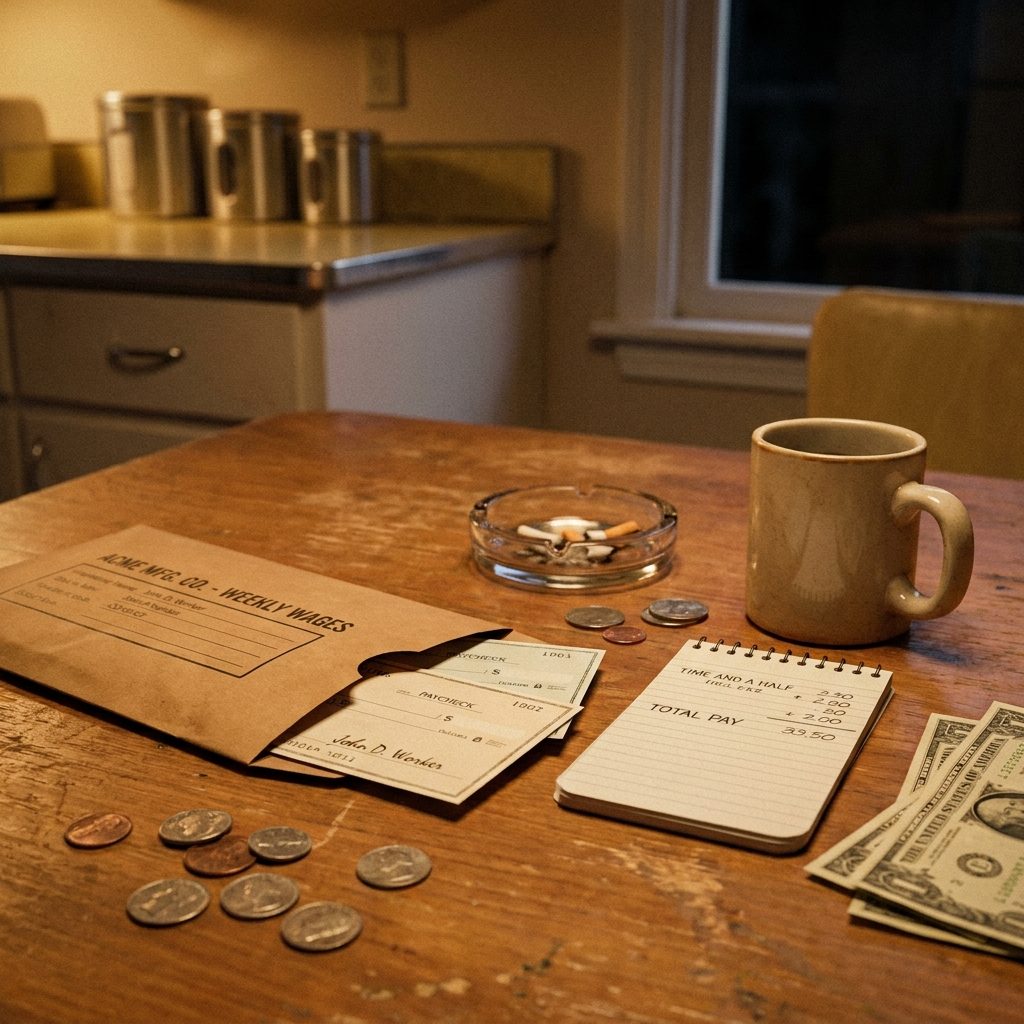
Time and a half meant something real when straight time was already keeping the mortgage paid. A few Saturdays of overtime could cover the new refrigerator, the school clothes, the car repair that had been sitting on the list. The math was simple and the reward was immediate: you worked the extra hours, the number on the stub went up, and the money was there in the envelope on Friday.
The union contract had fought for that rate. It wasn’t a favor from the company. It was bargained for, written down, and enforceable.
25. The Benefit Package Explained at the Hiring Hall, Out Loud, By a Person
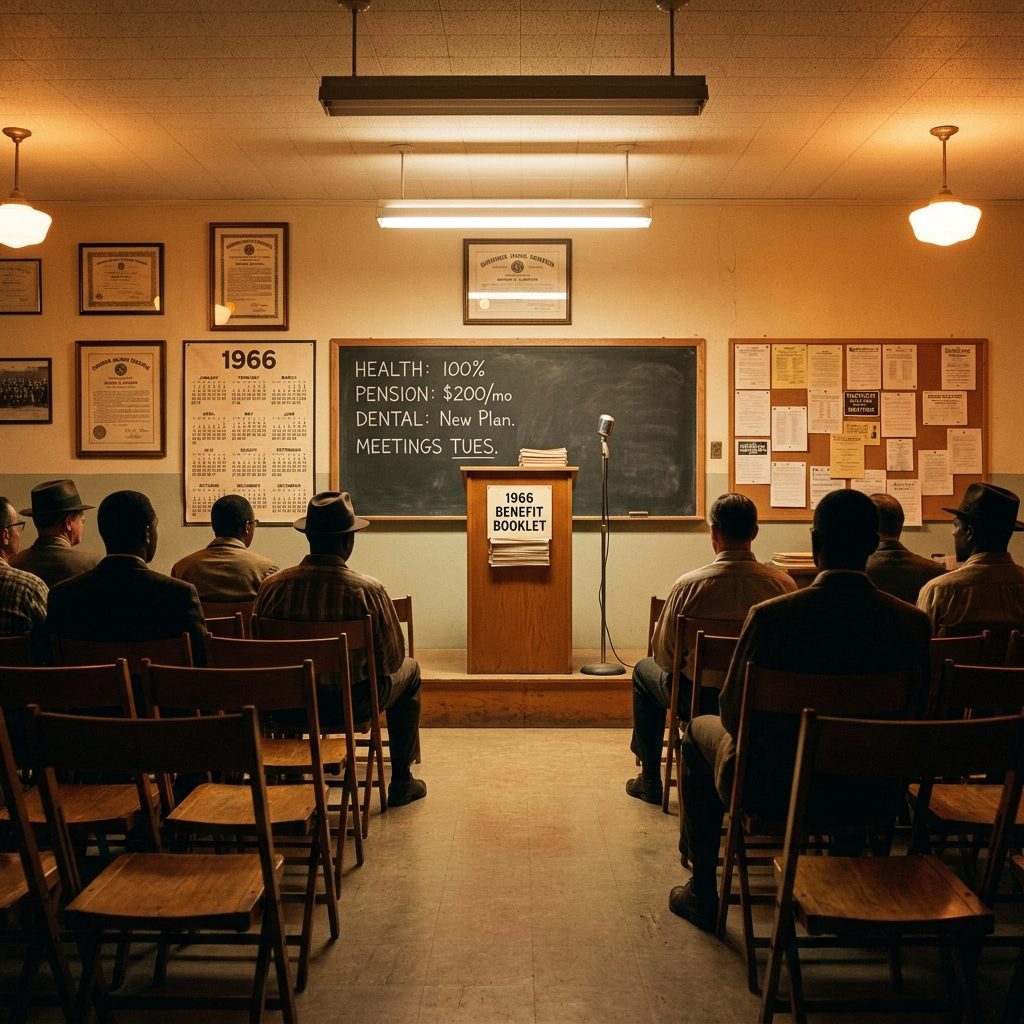
There was no benefits portal. No PDF to download. A man stood at a podium in the hiring hall and told you what you were getting: hospital coverage for the family, a pension that vested after ten years, two weeks vacation after the first year, a dental plan that was new and still felt like a miracle. You could ask questions. He would answer them.
That transaction, a person explaining your protections to your face, sounds basic. For a lot of workers coming out of non-union jobs, it was the first time anyone had explained what they were owed at all.
24. The Dues Checkoff Box on the Pay Stub
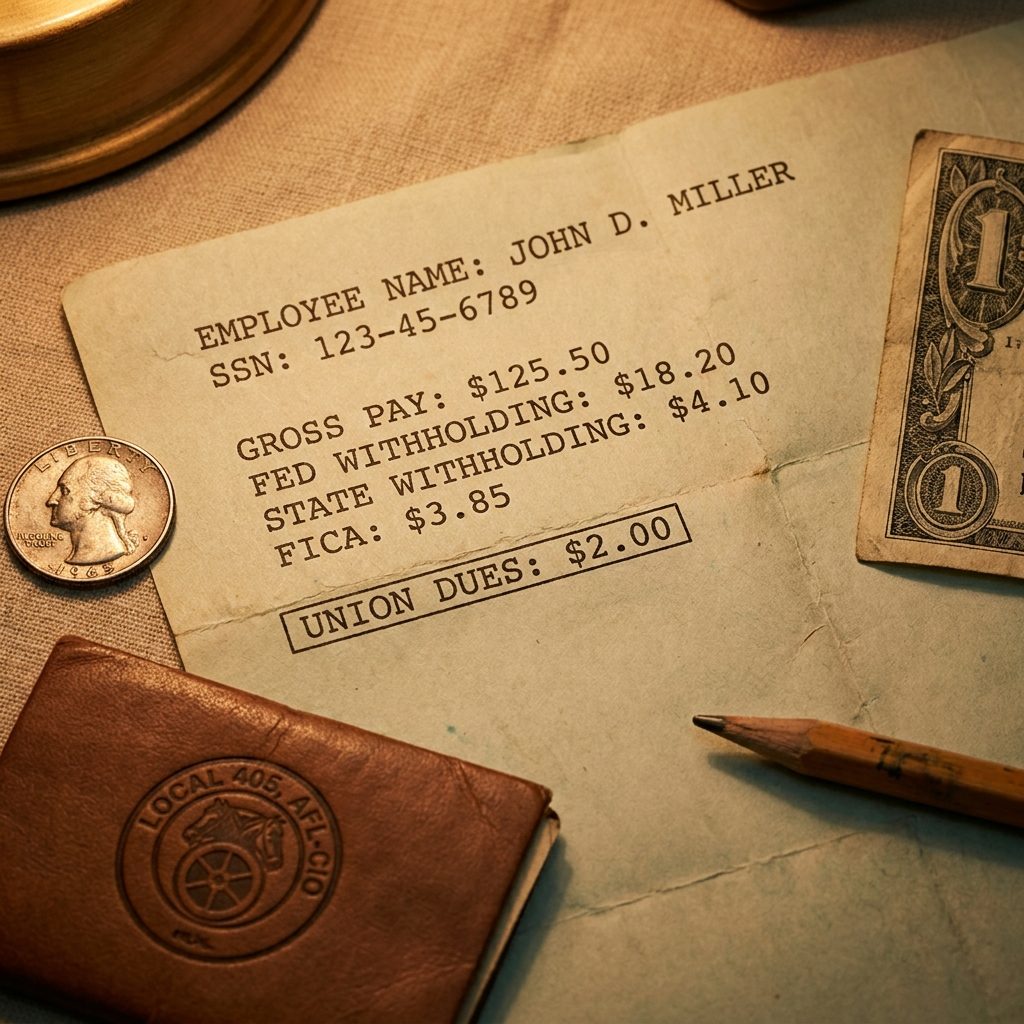
Every week, before you saw a dollar of it, the dues came out. It showed on the stub as its own line, right between FICA and state tax, usually somewhere between two and five dollars depending on your classification and the local. Most members never thought about it after the first paycheck. It was automatic, invisible, and the reason the union had money to operate.
23. The Contract Negotiation Year and the Tension It Put in Everything
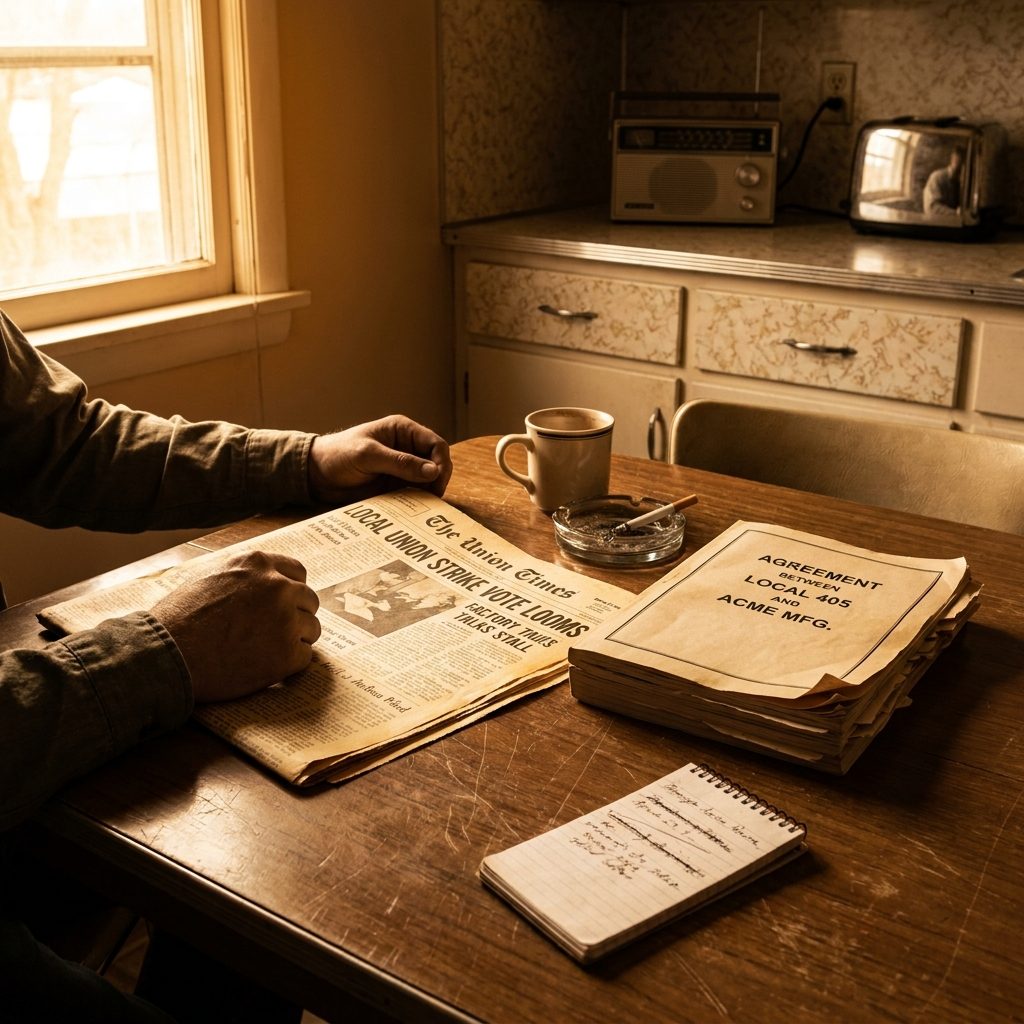
Every three years, usually, the contract came up. And for the months before it settled, the plant ran on a low hum of uncertainty that everyone felt but nobody said out loud directly. Would the pension contribution go up? Would the company push back on the cost-of-living clause? Was anybody talking about a strike, and if so, did the fund have enough in it?
The negotiation wasn’t abstract. It was about the number on next year’s paycheck and whether your family’s health coverage was going to change. Workers who had never read a contract closely started reading them that year.
22. What ‘Fully Vested’ Meant and Why Ten Years Felt Like a Finish Line
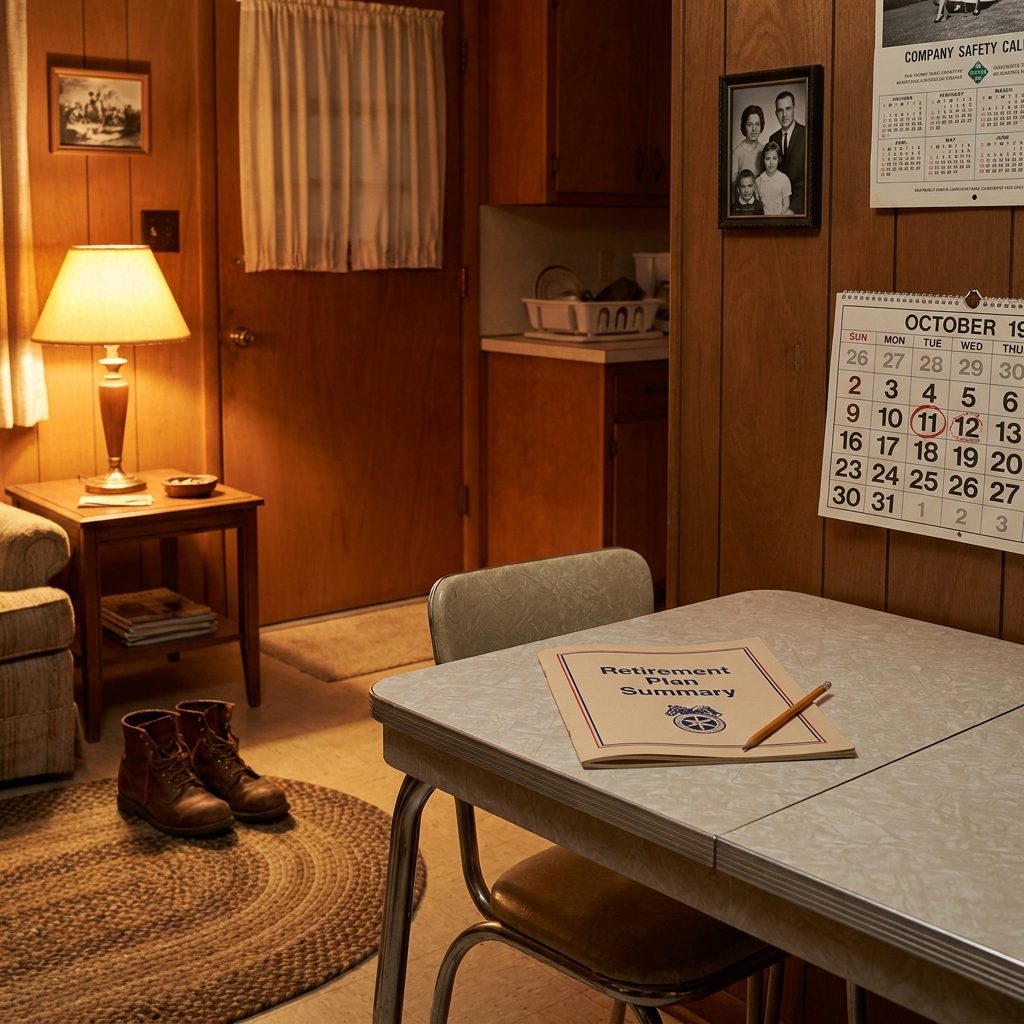
Ten years was the number in most plans. Hit it and your pension was yours, locked in, whether you stayed another twenty years or left the next morning. Fall short and you might walk away with nothing from the company side, just whatever Social Security you’d accumulated.
Workers tracked that date the way some people track a mortgage payoff. The year you hit ten felt different. You weren’t tied to the job in the same panicked way anymore. You had earned something that couldn’t be taken back, and that changed how you stood in the building.
21. The Safety Committee Meeting That Could Actually Stop the Line
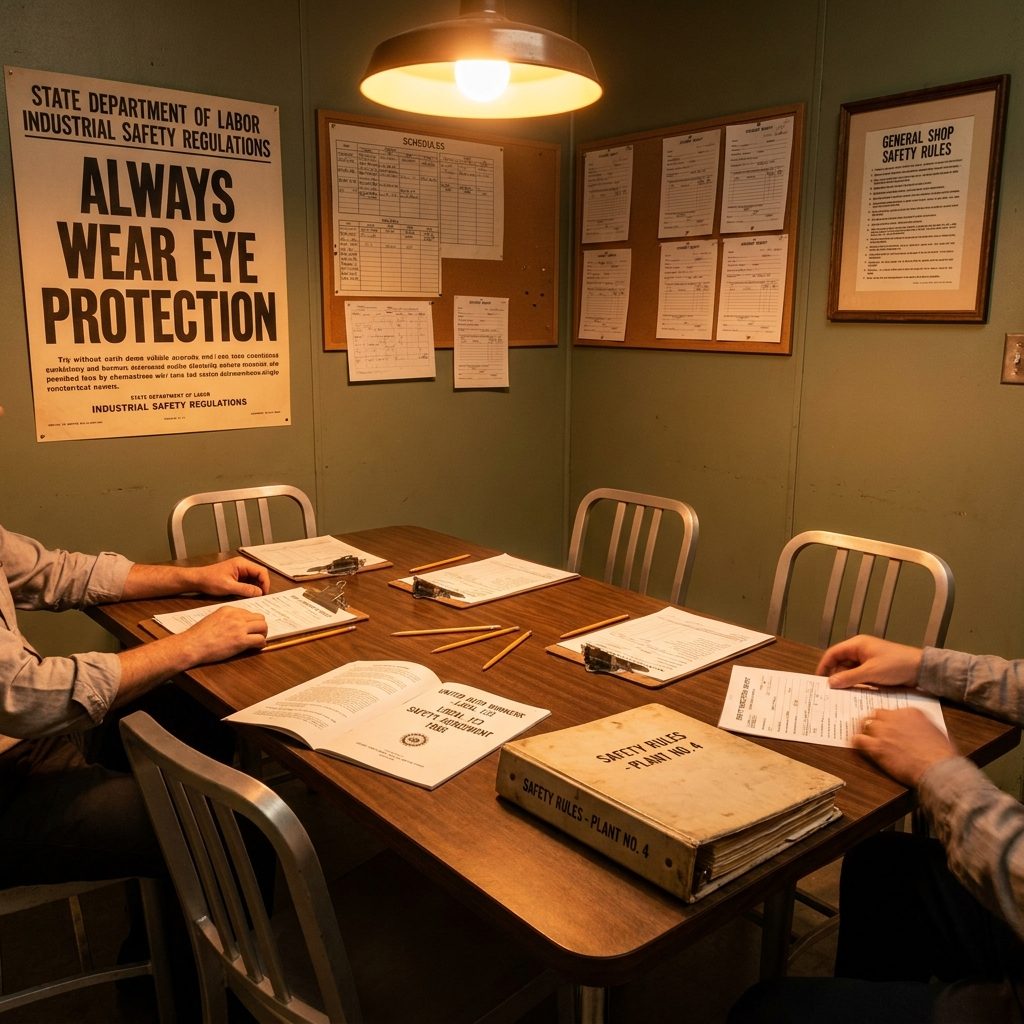
The safety committee wasn’t decoration. In a strong local, the union-appointed members had the standing to flag a hazard and halt production until it was addressed. Management did not love this. That tension was exactly the point.
Meetings happened monthly, usually, and the minutes got filed. Someone took notes on a lined pad, someone else walked the floor with a clipboard. If a machine guard was missing or a chemical was being stored wrong, it went in writing. The paper trail mattered because the grievance process ran on documentation, and everyone in that room knew it.
20. The Union Hall on a Tuesday Night
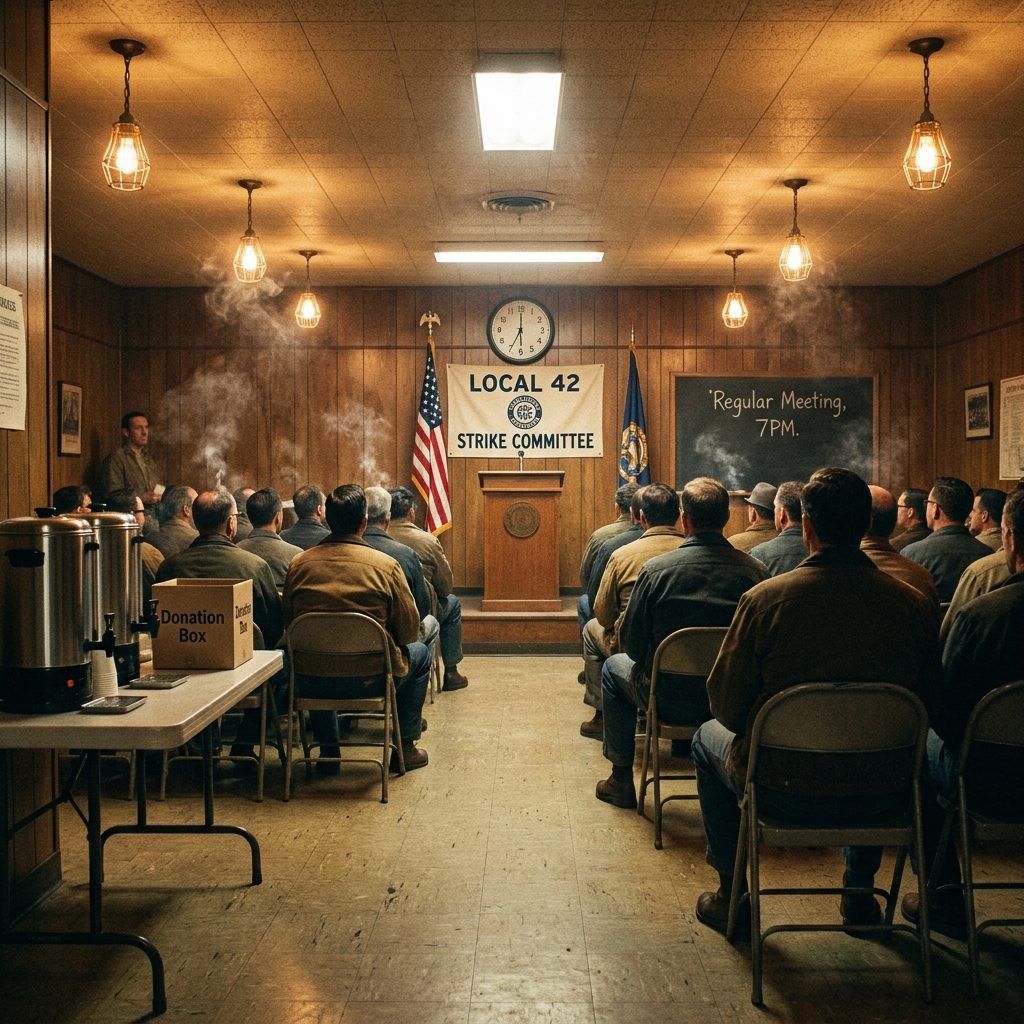
Tuesday nights belonged to the union. Men who’d been on the floor since six in the morning put on a clean shirt, drove to the hall, and sat in metal folding chairs to argue about things that actually mattered: the grievance the foreman filed last month, the pension language in the new contract, whether the night shift was getting shorted on break time. It wasn’t glamorous. The coffee was bad and the room smelled like cigarettes. But decisions made in that room showed up in paychecks for the next three years.
The union hall was one of the few places a line worker had a vote that counted.
19. The Grievance Form Nobody Wanted to Fill Out, and Why They Did Anyway
Would you like to save this?
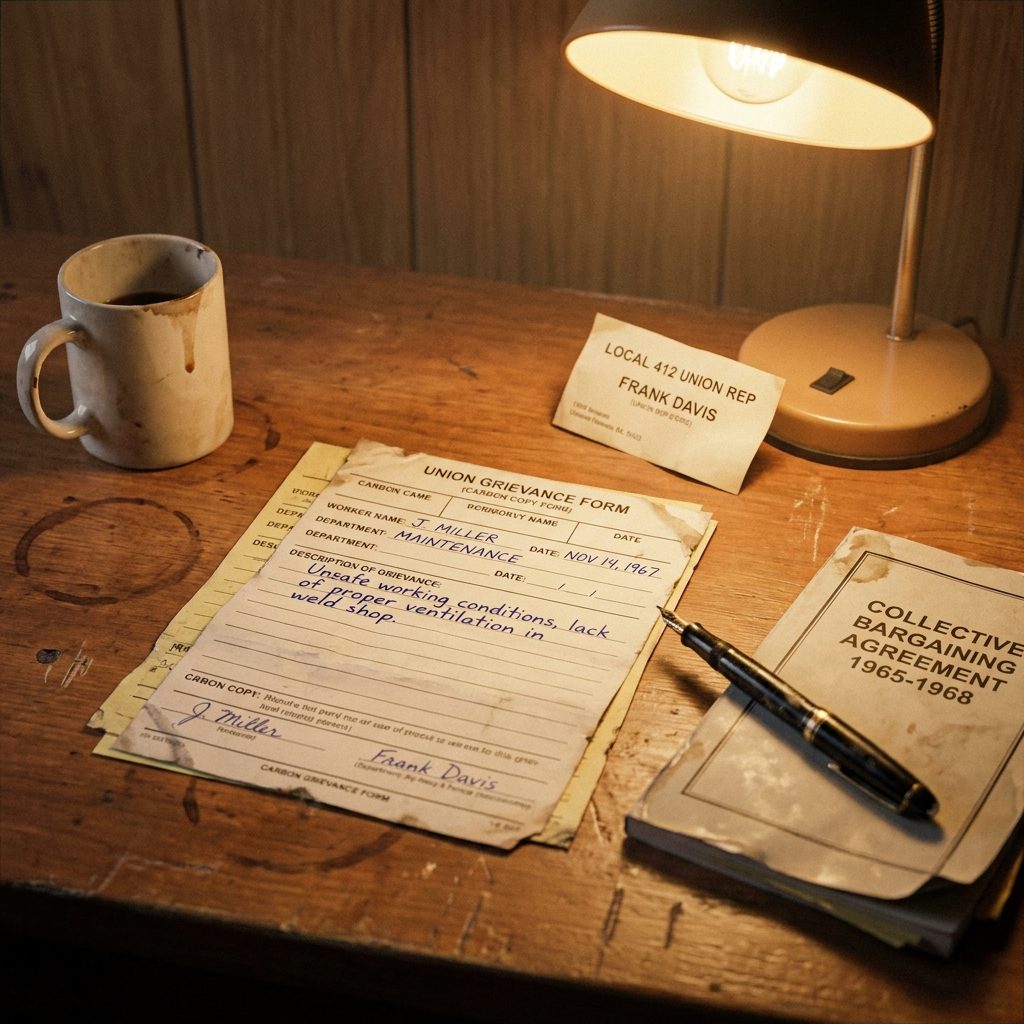
The grievance form was three carbon copies and every word of it mattered. You filled one out when the foreman gave your overtime to somebody else without cause, when they moved you off your machine without notice, when the bathroom breaks were getting timed. It was uncomfortable paperwork that took nerve to submit. The foreman knew you filed it. Your supervisor knew. Everybody knew.
You filed it anyway, because that’s what the contract was for. The shop steward walked it up the chain, and more often than people remember, something actually changed.
18. Seniority Meant Everything, Especially on the Shift Bid
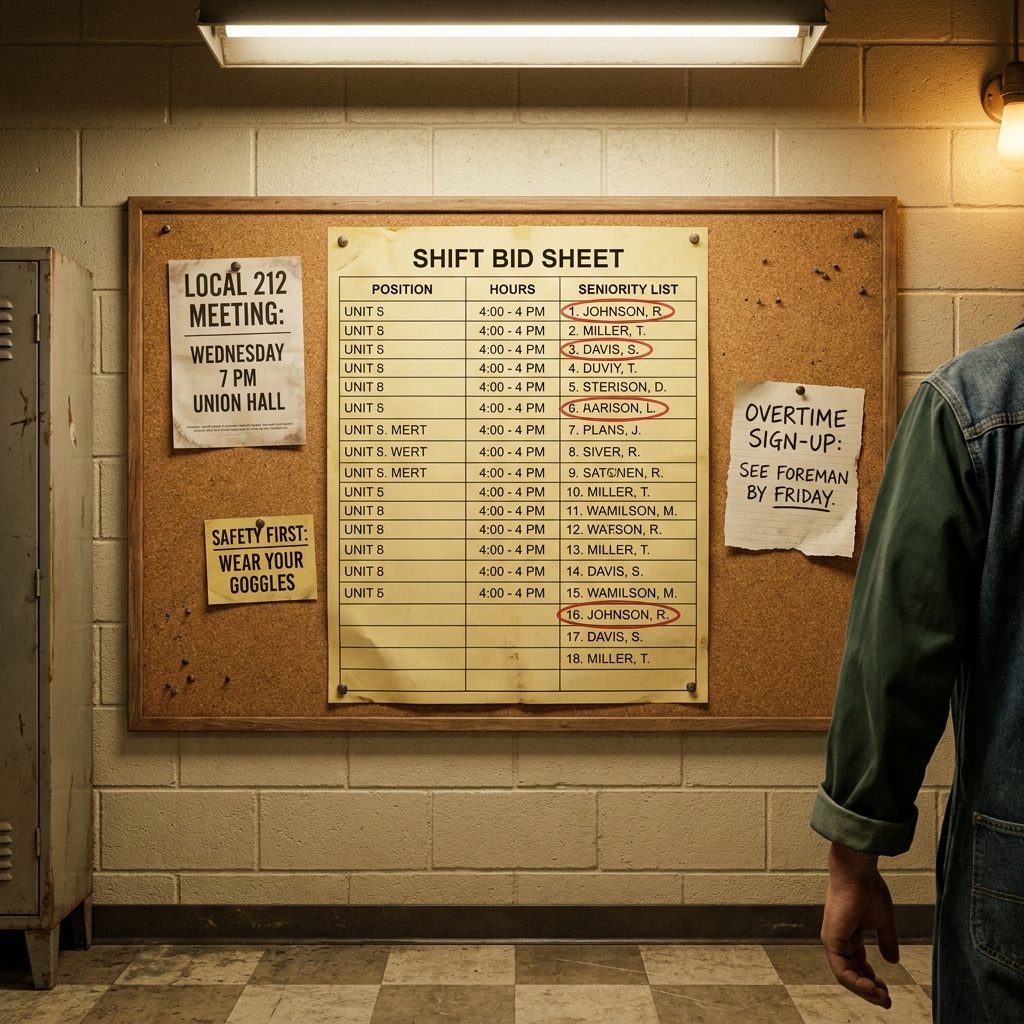
Seniority wasn’t just a number. It was the difference between the day shift and the midnight shift, between the press you knew and the one that always jammed, between a Friday off and a mandatory Saturday. When the shift bid sheet went up on the bulletin board, everyone read it the same way, from the top. If your name was in the first ten, you picked your hours. If you were number forty-seven, you got what was left.
New hires understood this immediately. You paid your dues in bad shifts and worked your way up. That was the deal, and it was at least a deal everyone could see clearly.
17. The Company Doctor Who Saw Everything and Said Nothing
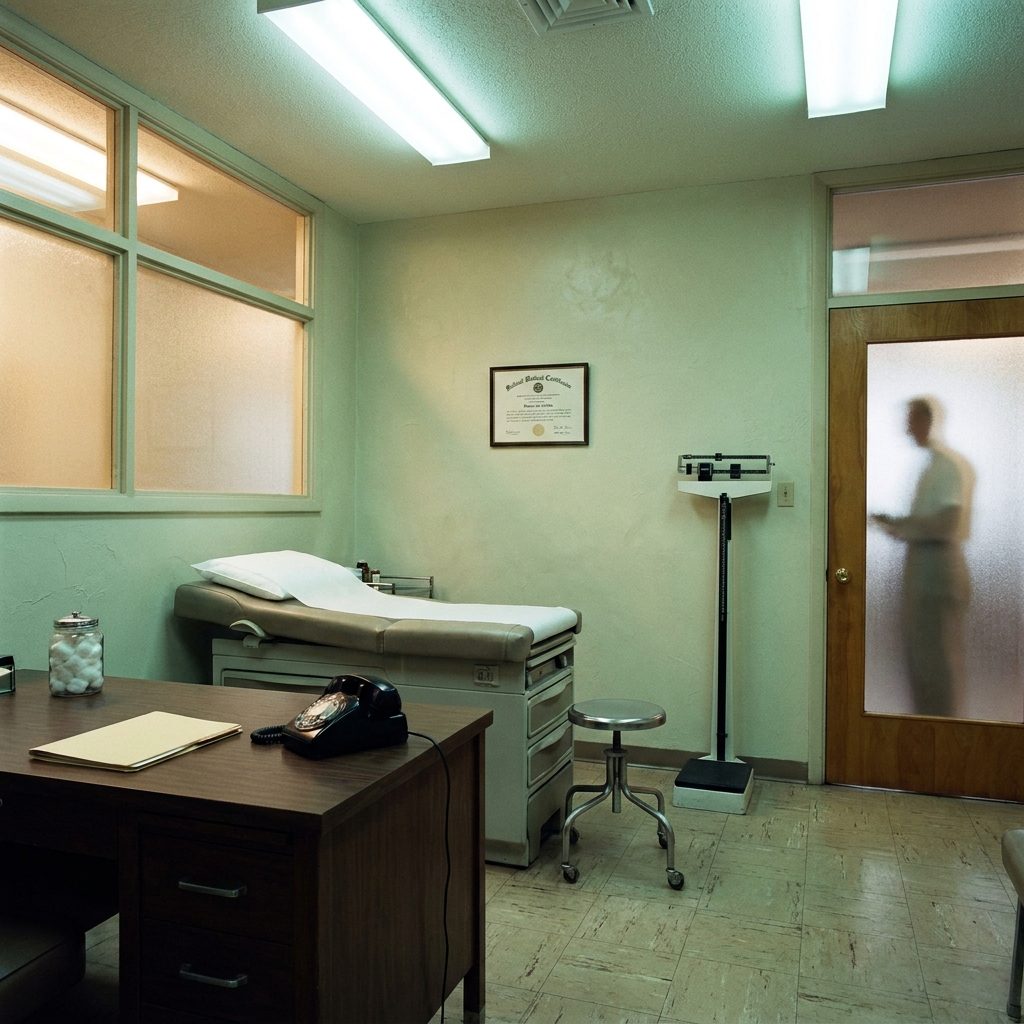
Big union shops and large manufacturers often kept a doctor on payroll. He worked in a small office off the main plant, saw workers for injury assessments, clearances to return to duty, and the occasional blood pressure check during the annual physical. The arrangement had obvious complications nobody talked about out loud. He was employed by the company, not by you.
Workers knew this. They went anyway, because the alternative was no doctor at all. And to his credit, many a company doctor took the work seriously and kept what he saw between himself and his patient.
16. When the Strike Fund Kept the Lights On
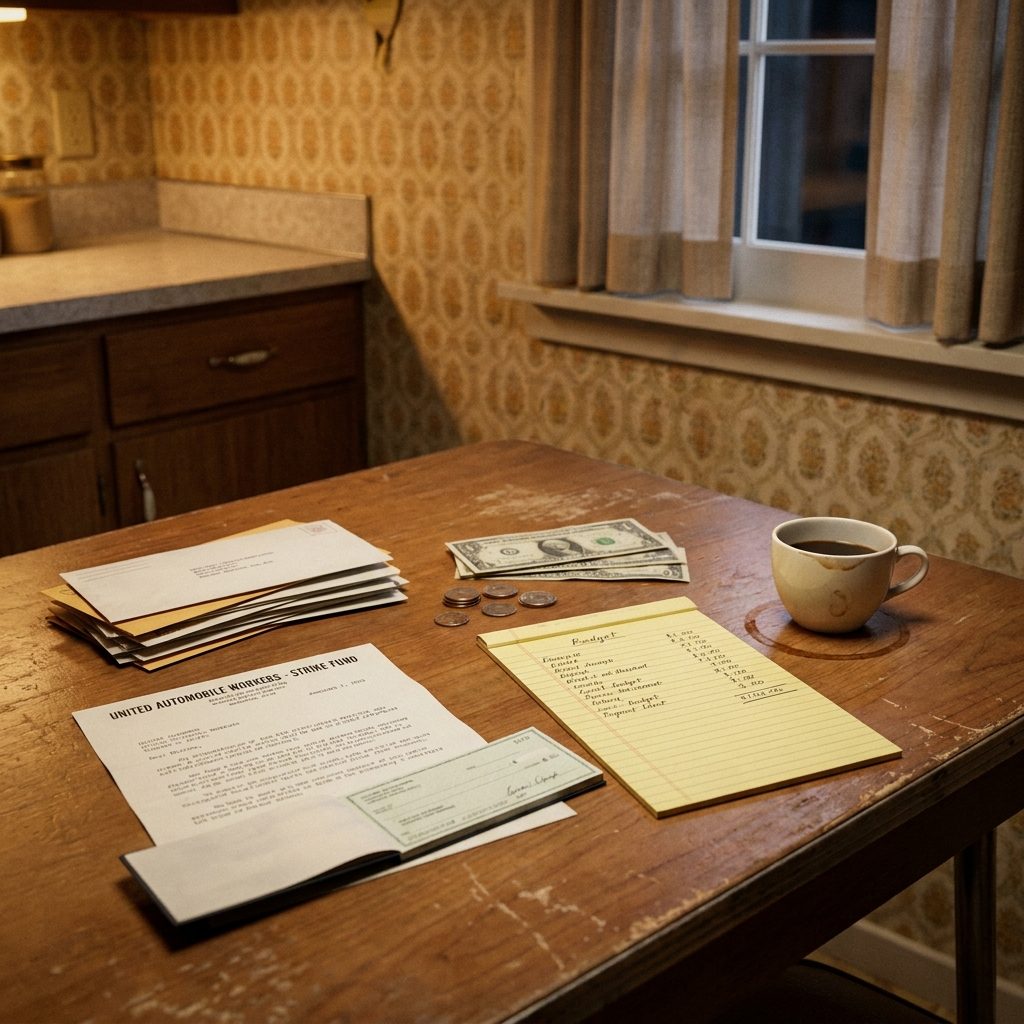
Going on strike meant the paycheck stopped. The strike fund started. Every union member paid into it, a few dollars a week, month after month, year after year, and when the walkout came, those funds went back out as weekly disbursements to the workers on the picket line. It wasn’t a full wage. Nobody pretended it was. But it kept the mortgage current and the groceries bought long enough to hold the line through a contract negotiation.
The strike fund was the reason a union could strike at all. Without it, a company could simply wait out its workers. With it, the math changed.
15. The Gold Watch at the Retirement Party in the Break Room
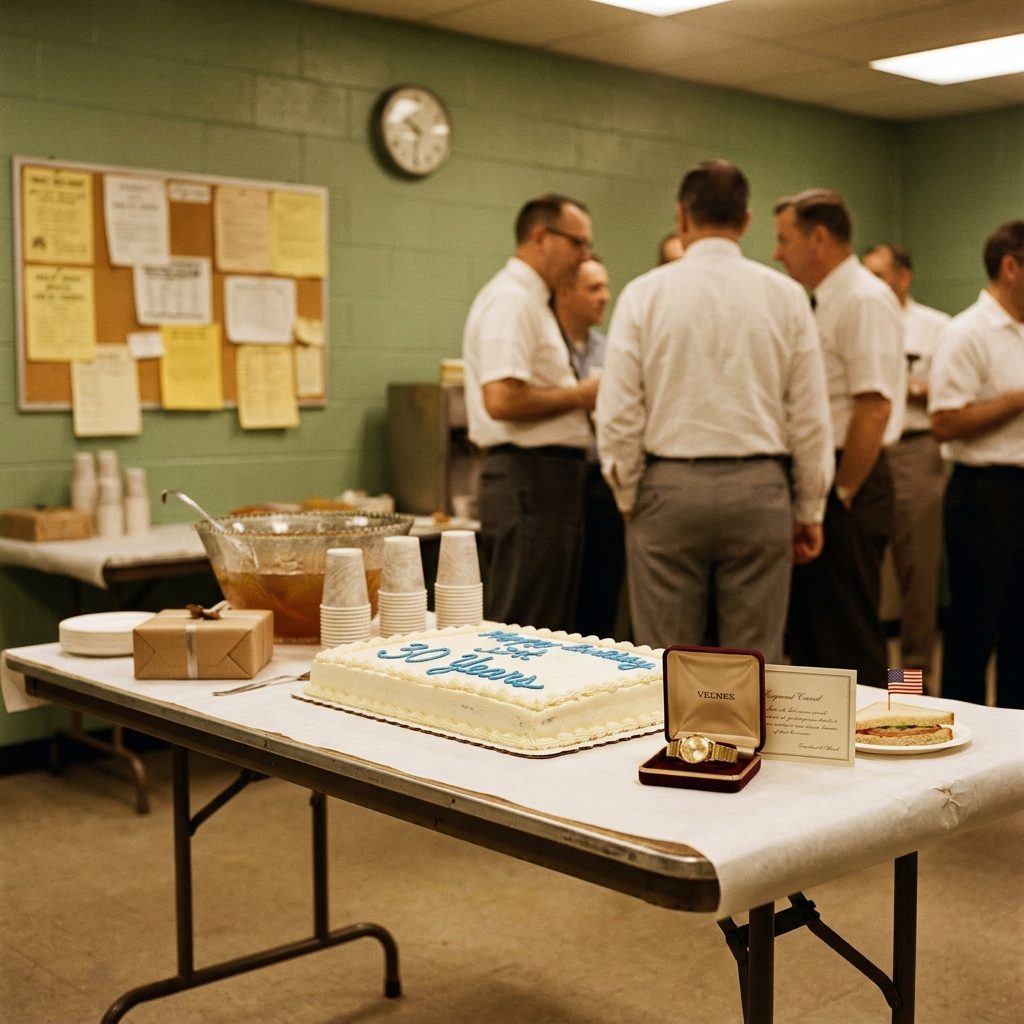
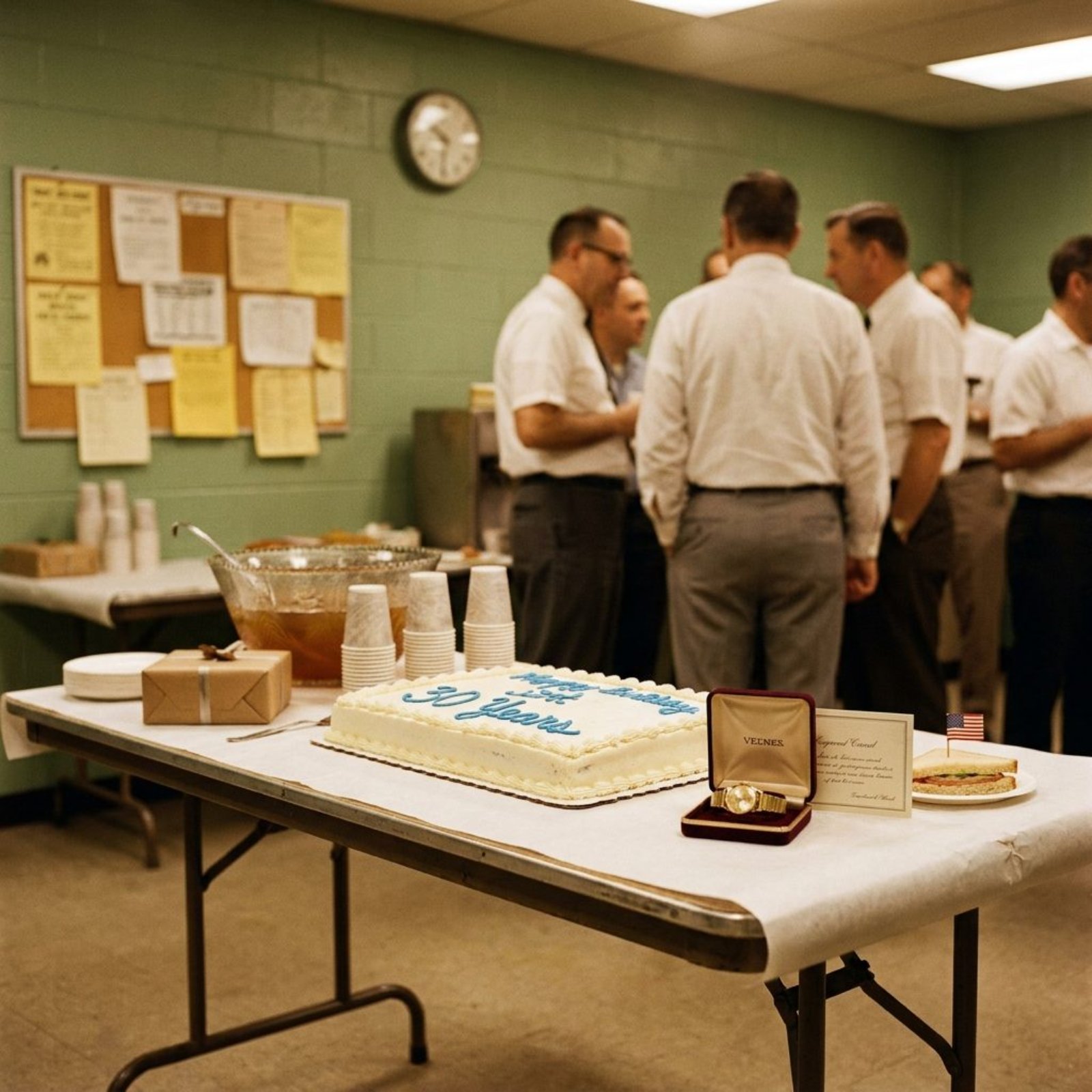
Thirty years at the same plant, and what you got was a handshake from the floor supervisor, a grocery-store sheet cake, and a watch with your name engraved on the back. It sounds thin written down. At the time, it felt like everything. The gold watch wasn’t jewelry. It was proof of something, a physical record that the company acknowledged you had shown up, reliably, for decades, and that the deal between you had held.
Most of those watches lived in a dresser drawer afterward. The point was never wearing it. The point was the ceremony.
14. The Pension Booklet That Lived in the Kitchen Drawer
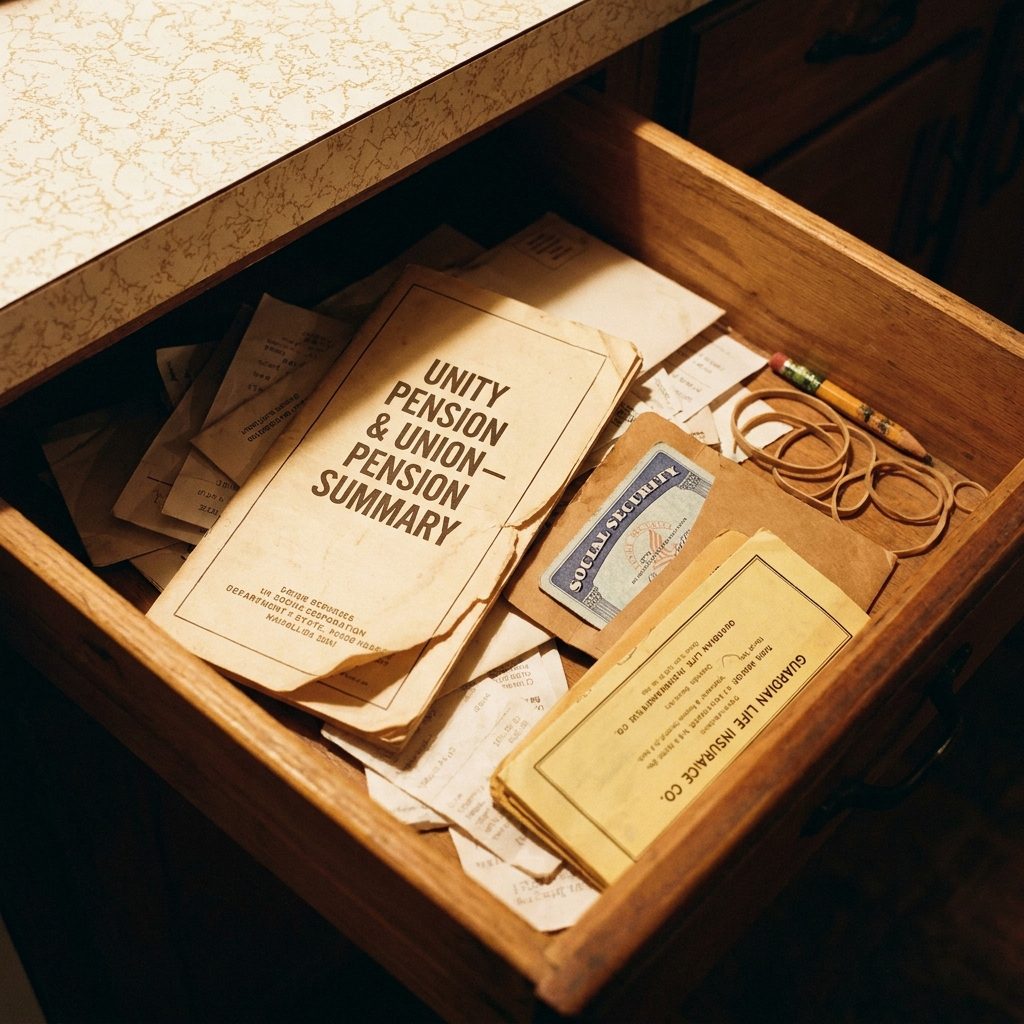
Most workers couldn’t tell you the exact formula, something about years of service times a percentage of final salary, with a break at thirty years. What they could tell you was where the booklet was. It lived in the kitchen drawer under the take-out menus and the extra batteries, a little worn at the fold, consulted maybe twice a year and carried everywhere in the back of the mind.
That booklet represented a promise from an institution to a person: show up for thirty years and we will take care of you. A lot of families built everything around that promise, and for a generation, it held.
13. Apprenticeship: Four Years Before You Touched the Real Work
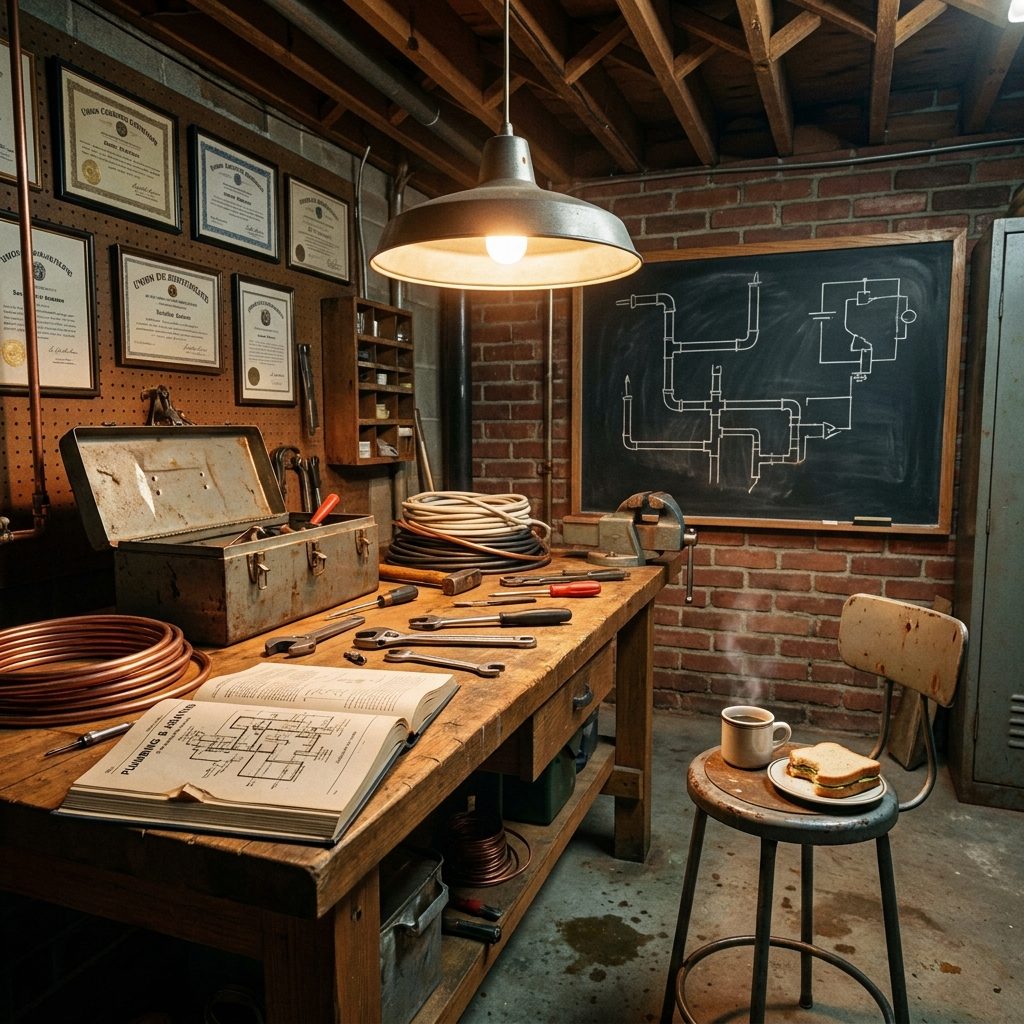
You didn’t just become a plumber or an electrician or a sheet metal worker. You applied to the joint apprenticeship committee, got accepted if your scores held up, and then spent the next four or five years learning the trade from the inside out. Days in the field. Nights in class. A journeyman watched what you did and told you when you did it wrong.
By the time you earned your journeyman’s card, you knew the work the way you knew your own name. The card meant you could walk onto any union job site in the country and they’d put you to work at scale. That credential traveled.
12. The Layoff Notice and the Recall Letter That Came After
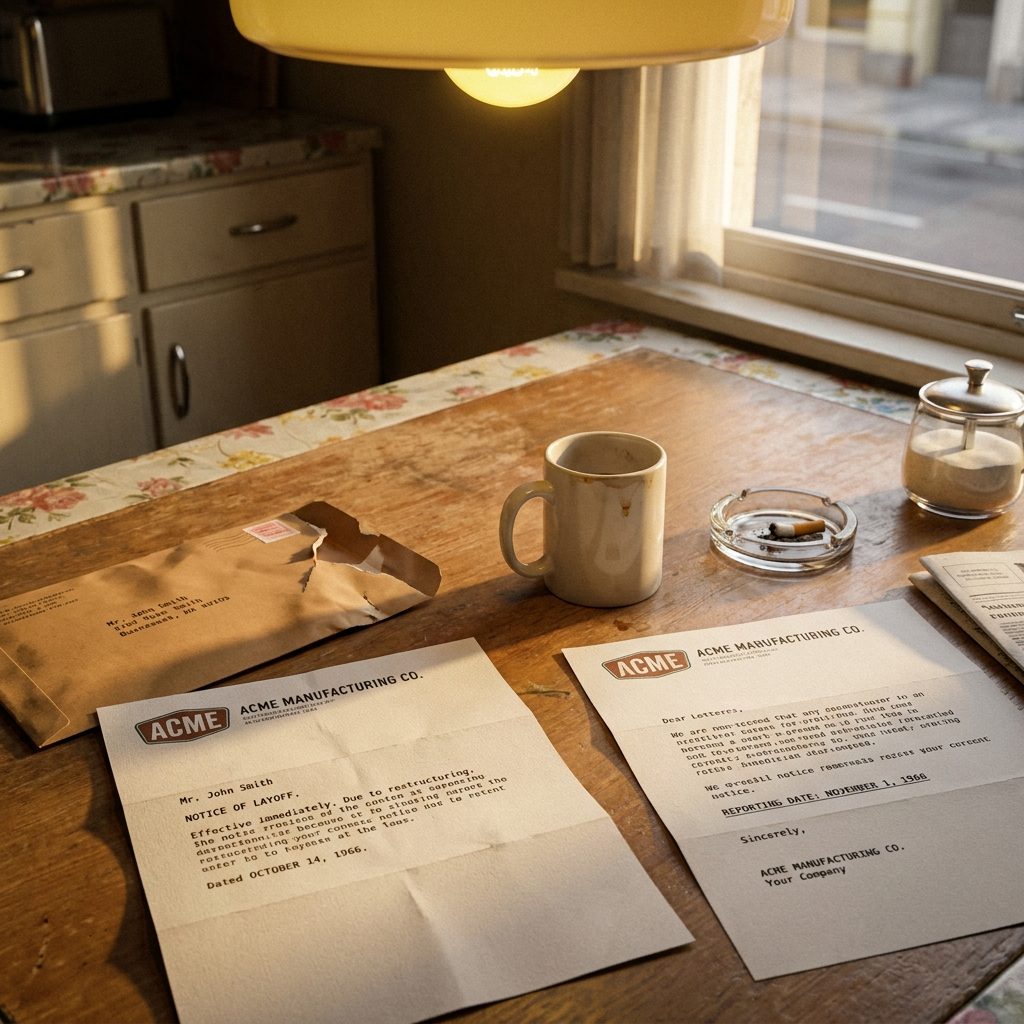
The layoff notice came when orders dropped. The recall letter came when they picked back up. In a union shop, both of those events followed seniority strictly, last hired, first laid off, first recalled. It was hard and it was clear. You knew exactly where you stood on the list, and you knew the recall would come addressed to you by name when the work came back.
Families tightened belts and waited. Unemployment insurance covered some of it. The union sometimes negotiated supplemental benefits that covered more. The letter sitting on the kitchen table was temporary, and everyone in the house tried to believe that while they waited for the one that proved it.
11. The Union Hall Where You Voted on the Contract and Drank Bad Coffee After
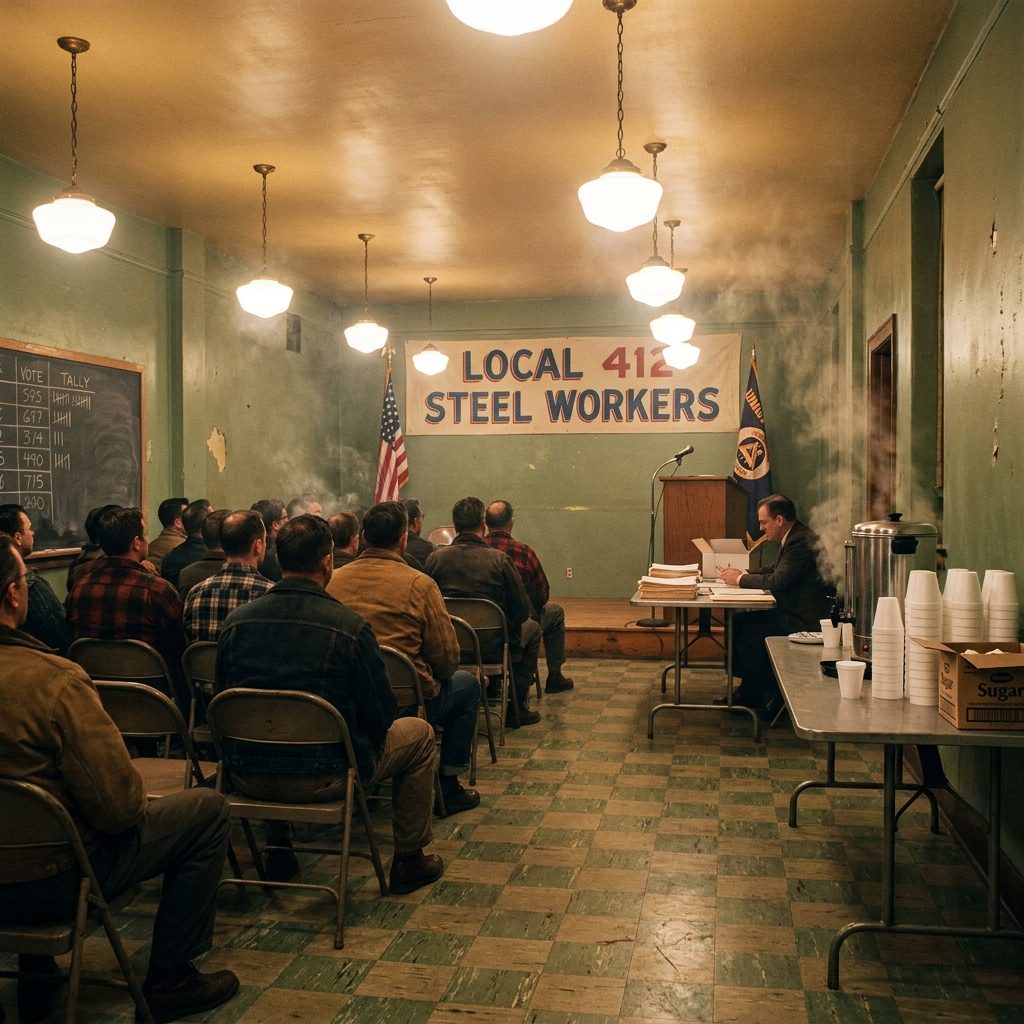
The vote happened on a Tuesday night, and you went even if you were tired, because the guys who didn’t show up lost the right to complain about the outcome. The union hall smelled like cigarette smoke and old coffee from about 1947 forward, and nobody seemed to mind. Someone at the podium read the contract language out loud, paragraph by paragraph, while the crowd interrupted with questions, groans, and the occasional slow handclap. Then you voted by raising your hand or filling out a slip of paper, and afterward you stood around with a Styrofoam cup of truly terrible percolator coffee and argued about whether the wage increase was enough.
It usually wasn’t. But you went back next year anyway.
10. The Seniority List Posted on the Board, and Why Everyone Knew Their Number
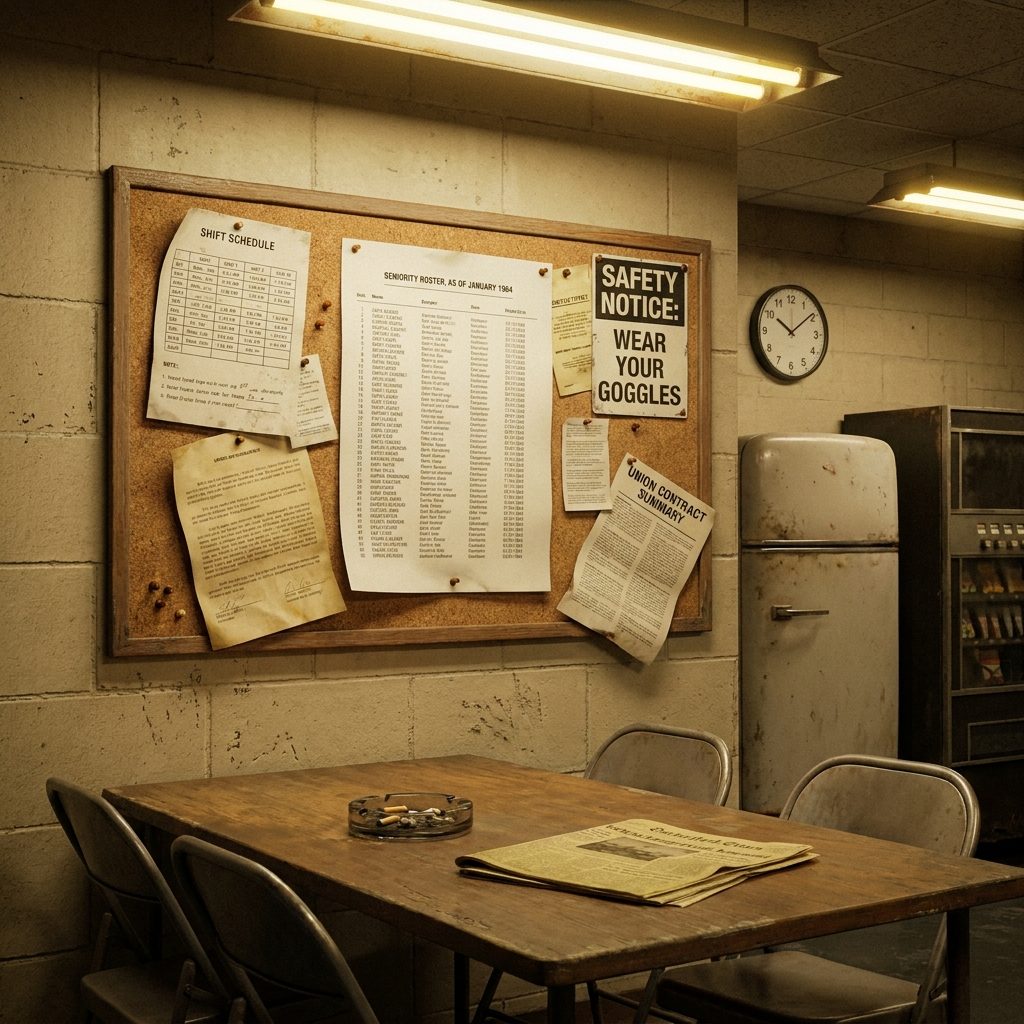
Your seniority number wasn’t just a number. It was the answer to almost every question that mattered at work: who got the day shift, who got first pick of vacation weeks in January, who stayed when layoffs came and who walked. Everybody knew where they stood on the list, and everybody knew who was just above and just below them.
New hires studied it the first week. Guys with twenty years on the job didn’t even need to look anymore. The list was typed fresh every January and pinned to the breakroom board, and if your name moved up even one spot because somebody retired, you noticed.
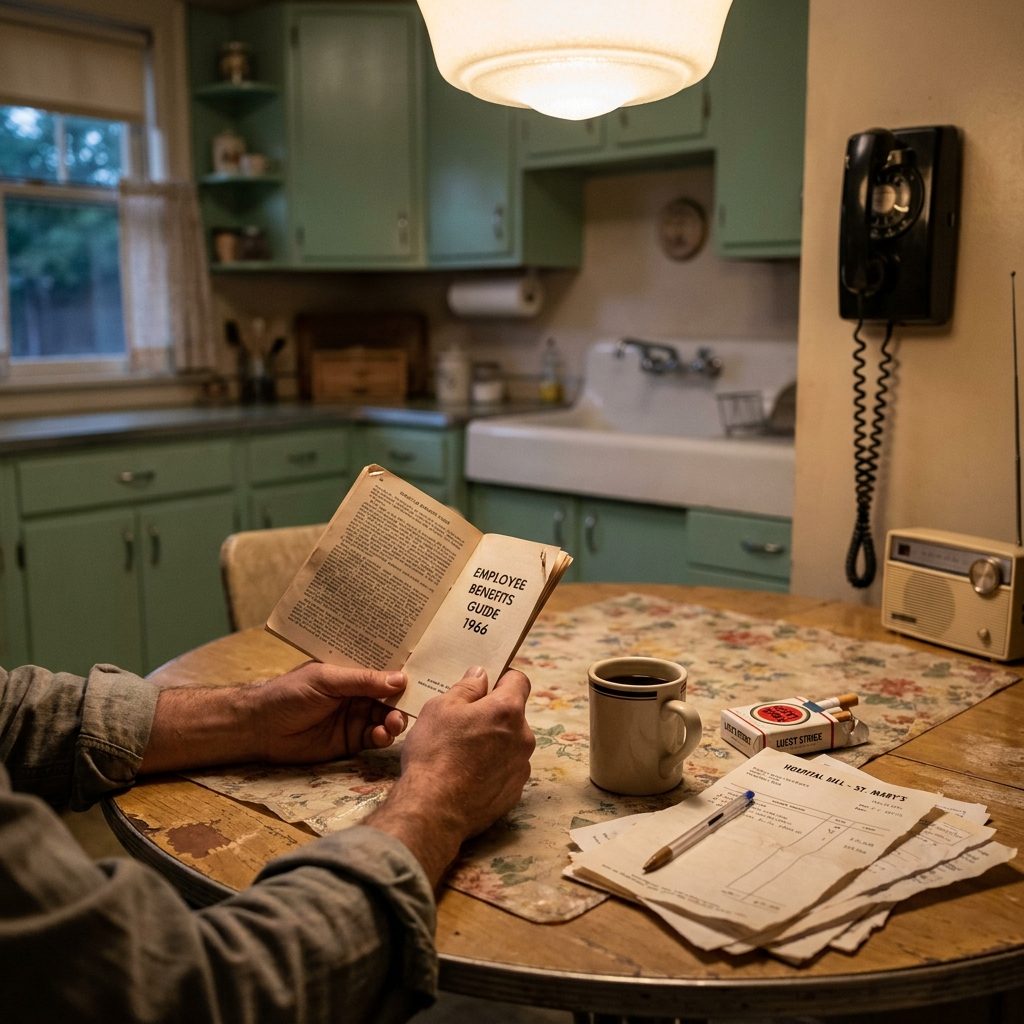
9. Bringing Home the Union Pension Booklet and Reading It at the Kitchen Table

Would you like to save this?
The booklet was maybe twenty pages, stapled in the corner, written in the kind of dense bureaucratic language that required a second read and sometimes a third. But you sat down with it anyway, because inside those columns of numbers was the actual answer to the question your whole working life was pointed at: how much, and when.
You did the math on a legal pad. Thirty years of service times the monthly benefit rate, carry the number. The pension wasn’t huge, but it was guaranteed, and ‘guaranteed’ was the word that made you put the booklet somewhere safe instead of throwing it in a drawer.
8. The Shop Steward’s Clipboard and the Power It Carried on the Floor
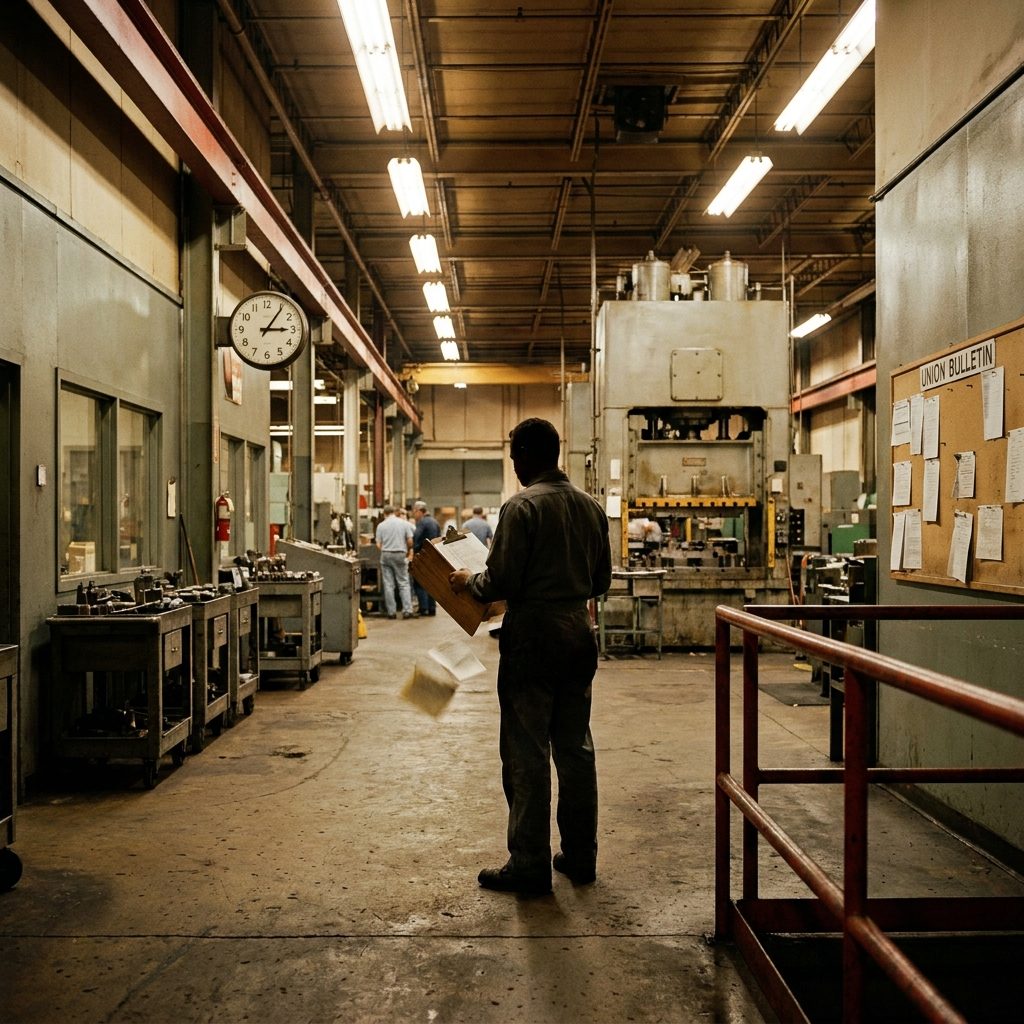
Not the union president. Not the business agent who showed up in a sport coat. The shop steward worked the same shift, ran the same machines, ate the same cafeteria lunch — but he carried a clipboard, and that clipboard meant someone was writing things down.
A foreman couldn’t wave away a complaint when someone was documenting it in ink. The steward’s authority wasn’t organizational. It was physical. He planted himself between the worker and the supervisor, and both sides knew the contract better than anyone in the front office ever bothered to.
7. Payday Was Friday and You Could Feel It in the Parking Lot
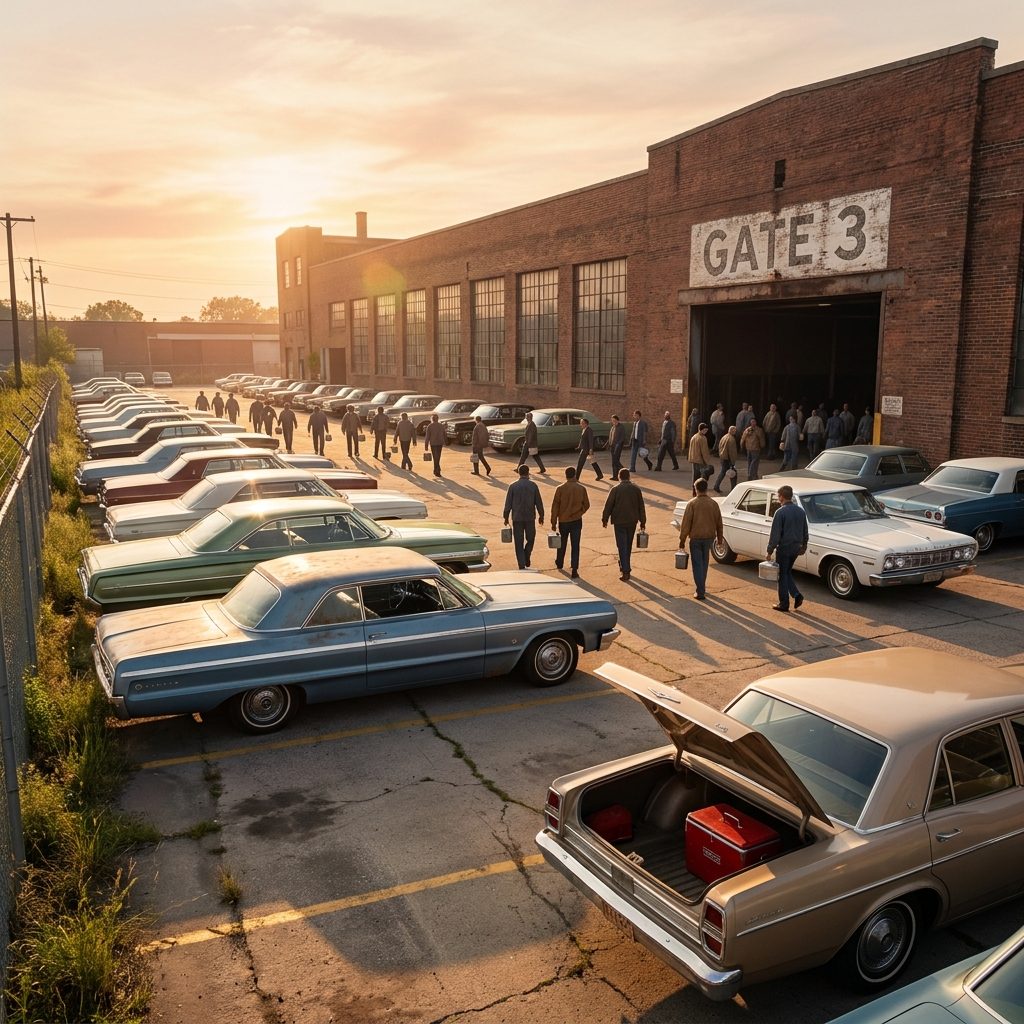
The whole rhythm of the week pointed at it. Friday at 3:30, the line shut down, and you could hear it — lockers slamming, steel-toed boots on concrete moving faster than they had all week. The parking lot sounded different on payday. Engines starting with somewhere to go.
Some guys went straight to the bank. Some went straight to the bar. A lot did both, in that order. The paycheck was physical, folded in an envelope, and cashing it was a ritual. You handed it to a teller, she counted out the bills, you peeled off what the house needed, and whatever remained was yours until Monday made you sensible again.
6. The Bulletin Board Nobody Walked Past Without Reading
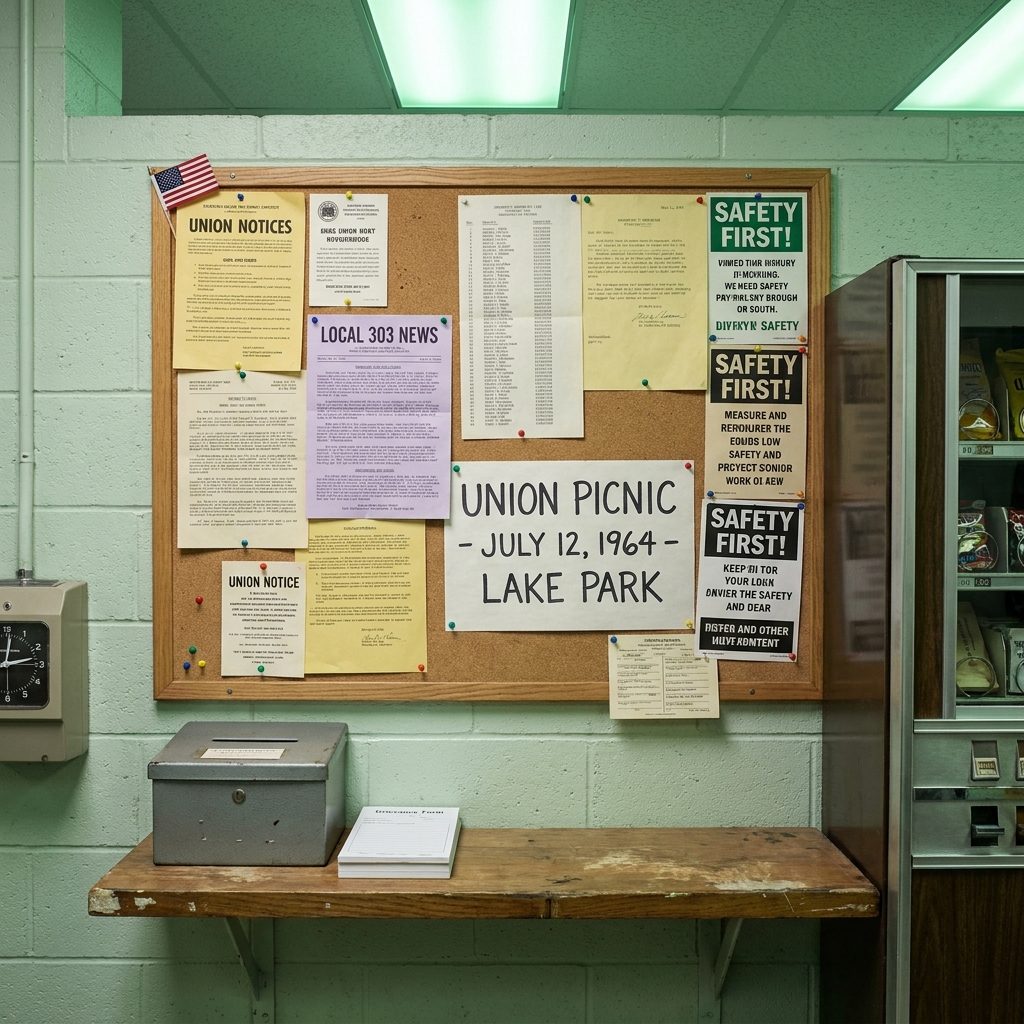
Every union shop had one. Near the time clock, outside the break room — always in the path you couldn’t avoid. Cork surface buried under layers of paper: seniority lists, meeting notices, contract updates typed on a manual typewriter with the O key slightly crooked.
You read it the way people check their phones now. Quick scan, every day, because the board was where things happened. A posting about overtime. Something from the pension fund. A flyer for the summer picnic at the lodge. Someone had pinned a cartoon clipped from the newspaper, and it had been there so long the paper had yellowed around it. The original social feed, except it smelled like mimeograph ink and cigarette smoke.
5. The Break Room Where Everybody Sat by Department and Nobody Had to Be Told
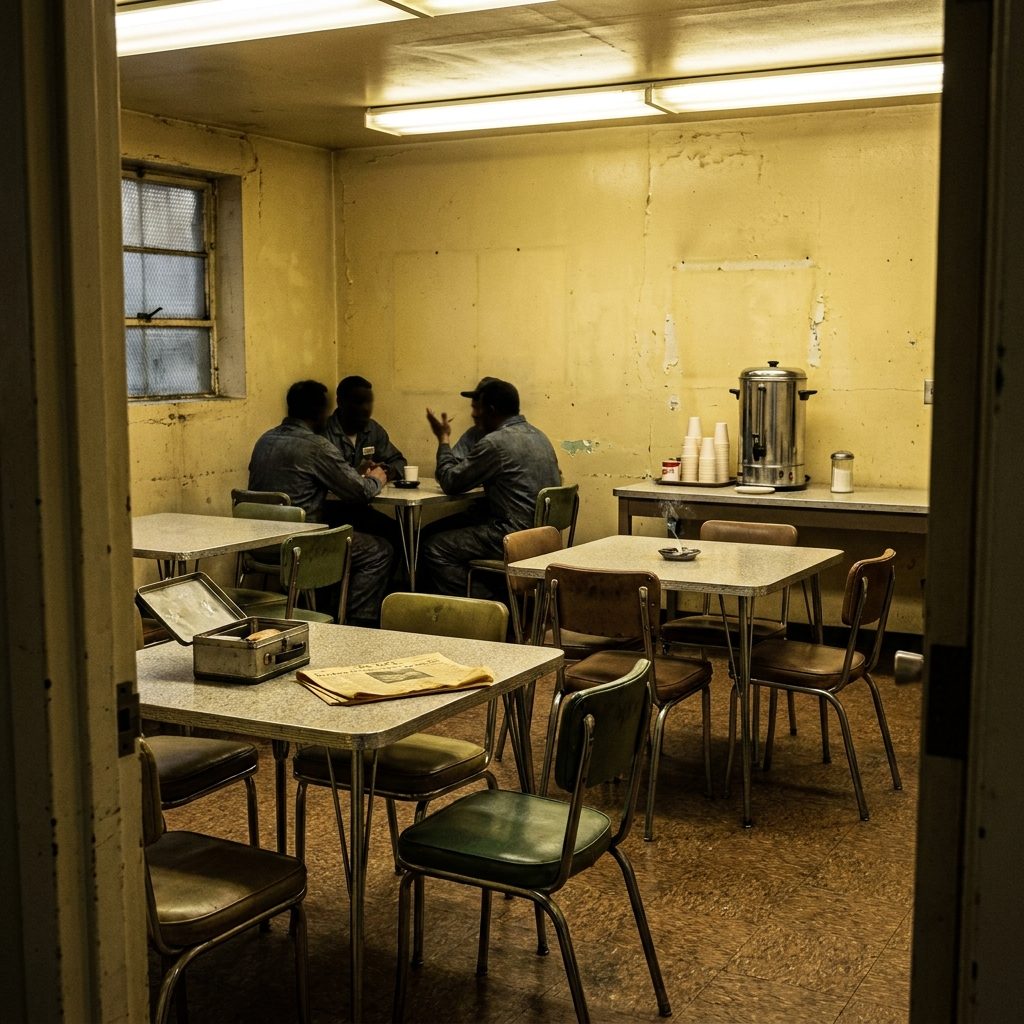
Nobody assigned seats. No chart existed. But the tool-and-die guys sat at the table near the window, press operators camped by the coffee, and the maintenance crew parked closest to the door because they were always getting called back out. You just knew.
I romanticize almost nothing about institutional furniture, but those break rooms held something real. Fifteen minutes, twice a shift, where hierarchy softened just enough. The foreman didn’t sit with the line workers, but he nodded walking past. Conversations happened there that couldn’t happen on the floor — someone’s kid got into college, someone’s wife was sick. The coffee was terrible. Always. Nobody expected otherwise, and honestly I think the terribleness was part of the bonding. A good cup would have ruined the whole dynamic.
4. When Your Father Explained Health Insurance and It Sounded Like a Foreign Country
He didn’t call it a benefit. He called it coverage. And the way he said it, you understood it was something that had been fought for, not handed out.
Union health insurance in the 1960s covered the family. The whole family. Your dad paid little or nothing out of pocket for the premium because the contract handled it. When you broke your arm falling off the garage roof, the hospital bill arrived and disappeared into a drawer, and nobody talked about it at dinner because there was nothing to talk about. Covered. The word meant exactly what it said.
I got this wrong for years, assuming everyone’s family had that deal. They didn’t. That gap — between what a union household took for granted and what everyone else scrambled to afford — was precisely why the contract mattered.
3. The Time-and-a-Half Line That Divided the Week in Two
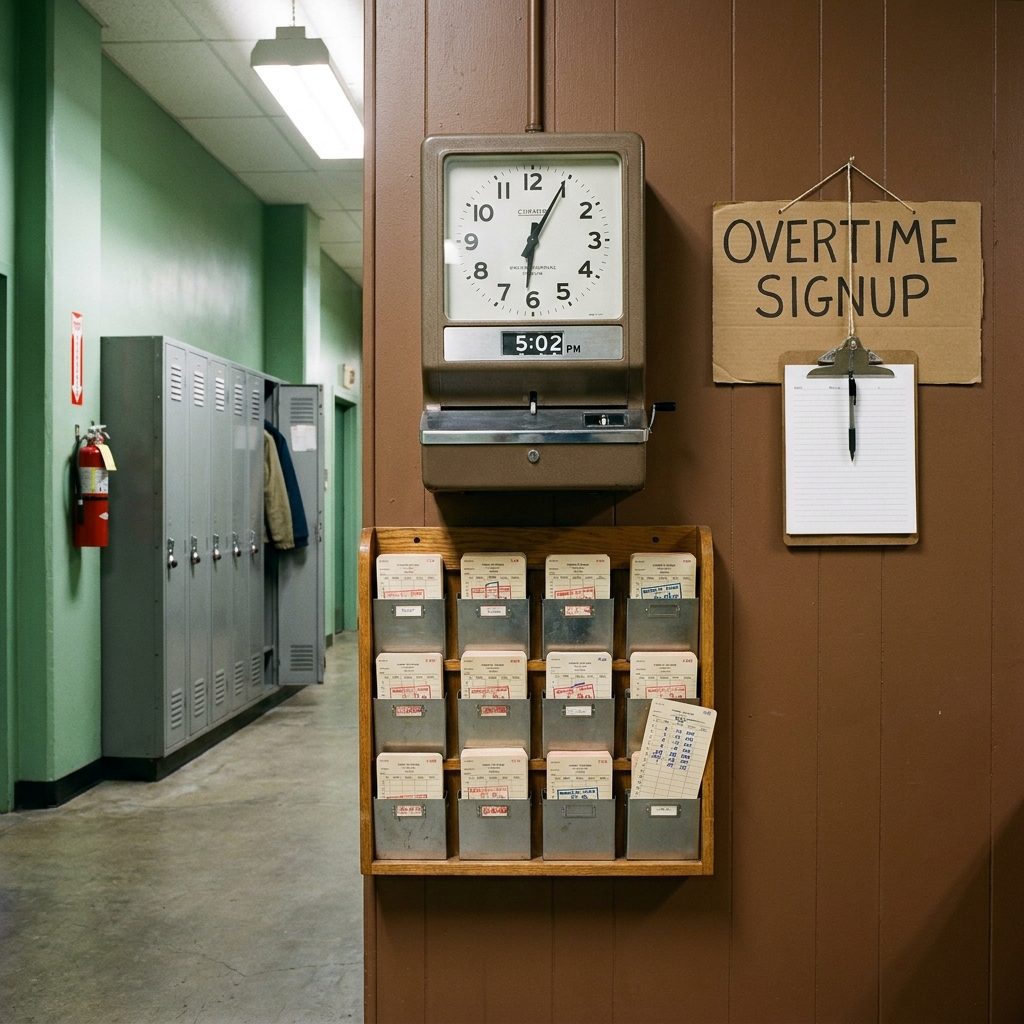
Forty hours was the line. Everything before it was your job. Everything after? Your choice — and it paid half again as much.
Time-and-a-half wasn’t abstract labor theory. It was the math your parents did at the kitchen table with a pencil stub and a grocery list. Eight hours of Saturday overtime meant twelve hours of pay. A few weekends of that and the washing machine got replaced, or the car got new tires, or Christmas spread out a little further. The overtime board went up on Wednesday, and by Thursday morning every slot was full. Management hated paying it. The contract said they had to. That friction — between what the company wanted to spend and what the worker had earned the right to collect — drove the whole arrangement forward.
2. The Retirement Dinner at the VFW Hall with the Sheet Cake and the Speeches
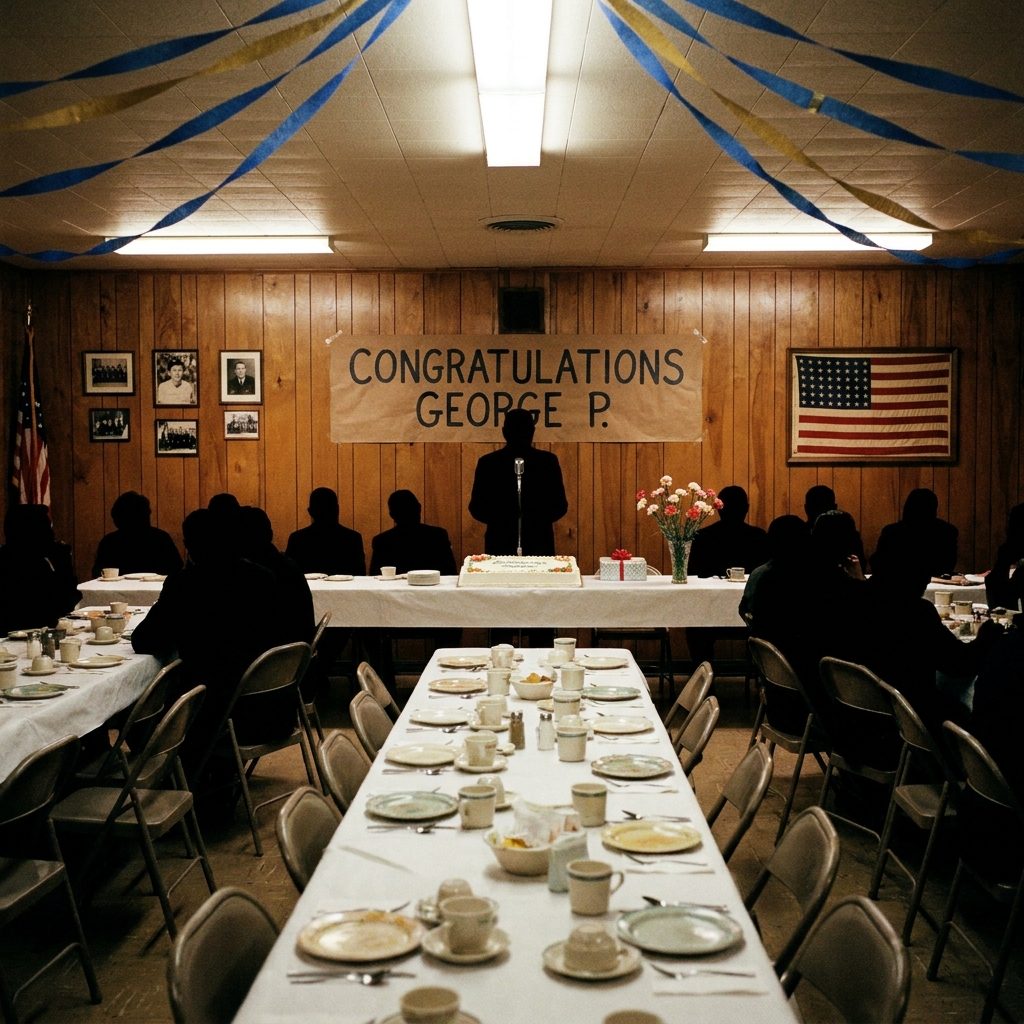
Not a restaurant. The VFW hall, or the Knights of Columbus, or the union lodge with the folding chairs that pinched your fingers when you shifted wrong. Someone’s wife made the sheet cake. Someone else brought a card the whole department signed, and the last guy to sign wrote something that made the foreman pretend to be mad.
The speeches went too long. They always did. A supervisor who’d never said anything personal in thirty years suddenly had things to say — long, wandering things, and you let him talk because what else were you going to do? The retiree stood up, held a glass of something, said he’d miss the guys but not the alarm clock. Everyone laughed. Some of them meant it. He went home with a pension, a watch, and the quiet certainty that he’d done one thing, at one place, and it had been enough. We don’t really have a word for that feeling anymore, which probably tells you something.
1. The Kid Who Got Hired Because His Father Worked There, and Nobody Thought That Was Strange
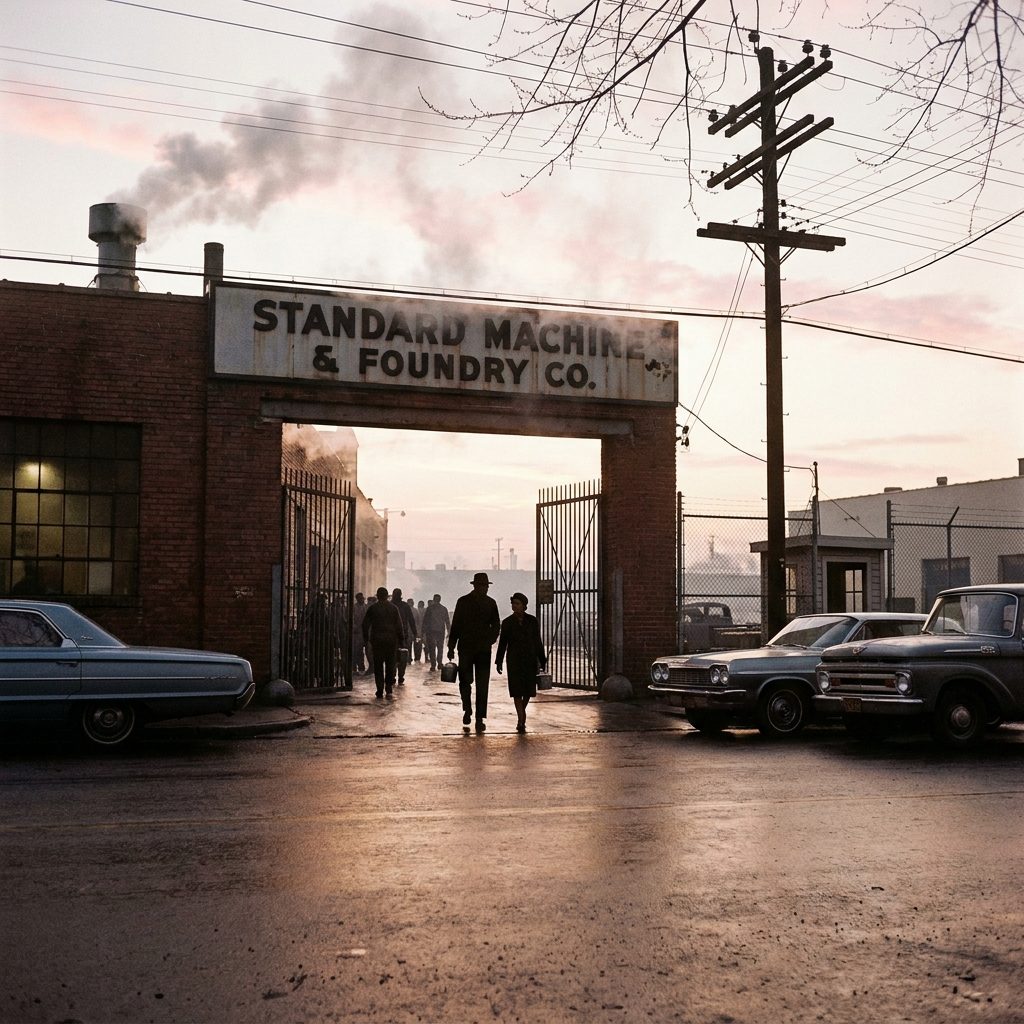
Nepotism is what we’d call it now. Then, it was just how things worked. Your father put in a word, the foreman knew your last name, and you showed up Monday morning. Someone handed you a pair of safety glasses and pointed you toward the line.
There’s something uncomfortable about it, and something honest. The father wasn’t pulling strings in a boardroom. He was vouching for his kid the way a reference letter works, except the reference had been running a lathe in the same building for over two decades. The kid started at the bottom. Swept floors. Hauled stock. If he was any good, the union took him in, and within a few years he had a trade. If he wasn’t? The shop figured that out fast. The last name got you through the gate. Staying was a different question entirely.