
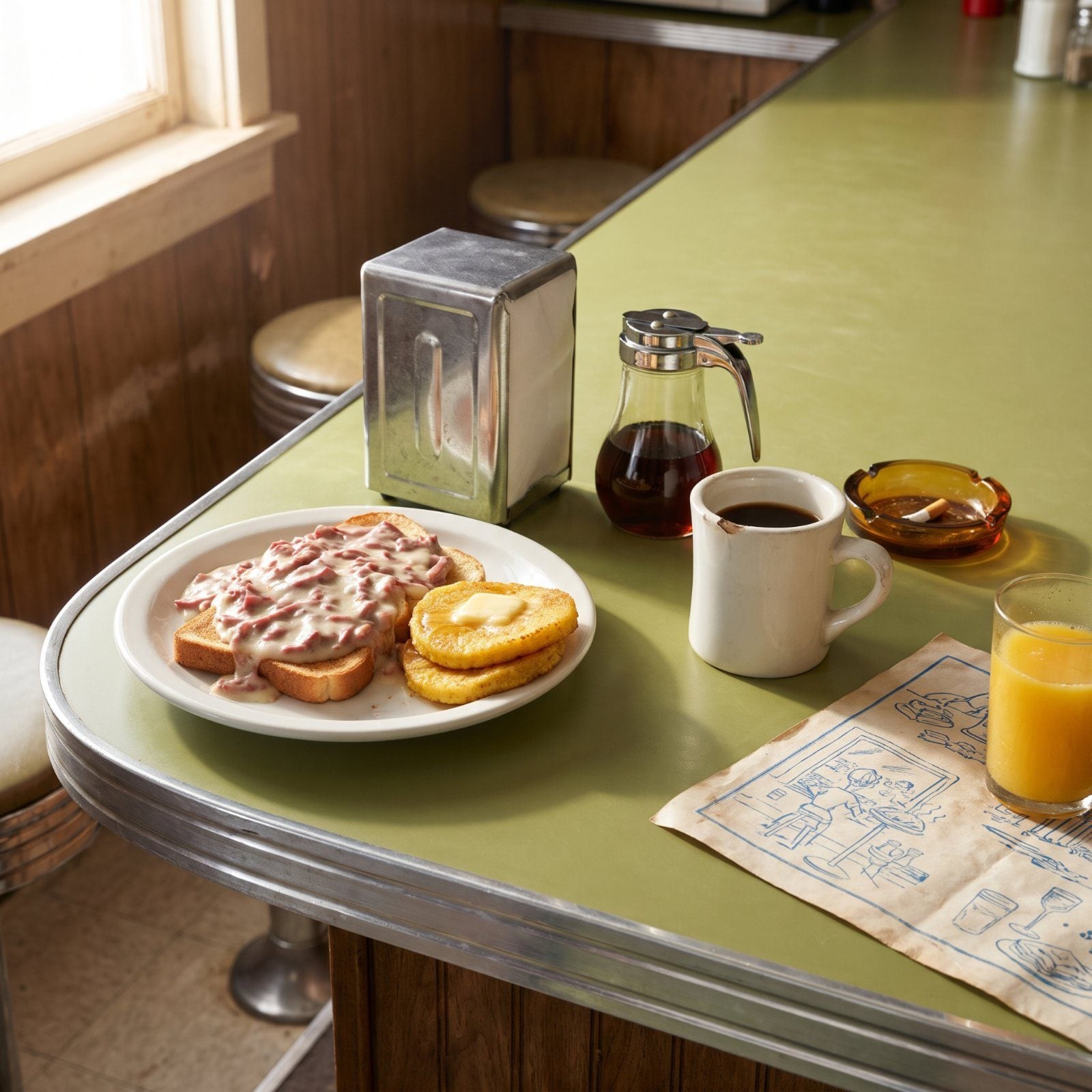
The counter stool spun a little loose on its bolt. Coffee came in a cup so thick you could have hammered a nail with it, and somewhere down the line a short-order cook scraped a griddle that hadn’t been fully cool since the Nixon administration. These were the breakfasts that filled the laminated menus at truck stops and main-street diners, the ones ordered by name without a second thought. Most have quietly slipped off the board. Here’s what we used to pull up a stool for.
Please note that some of the images in this article were created with the assistance of AI.
28. Creamed Chipped Beef on Toast, the Breakfast Nobody Said Out Loud
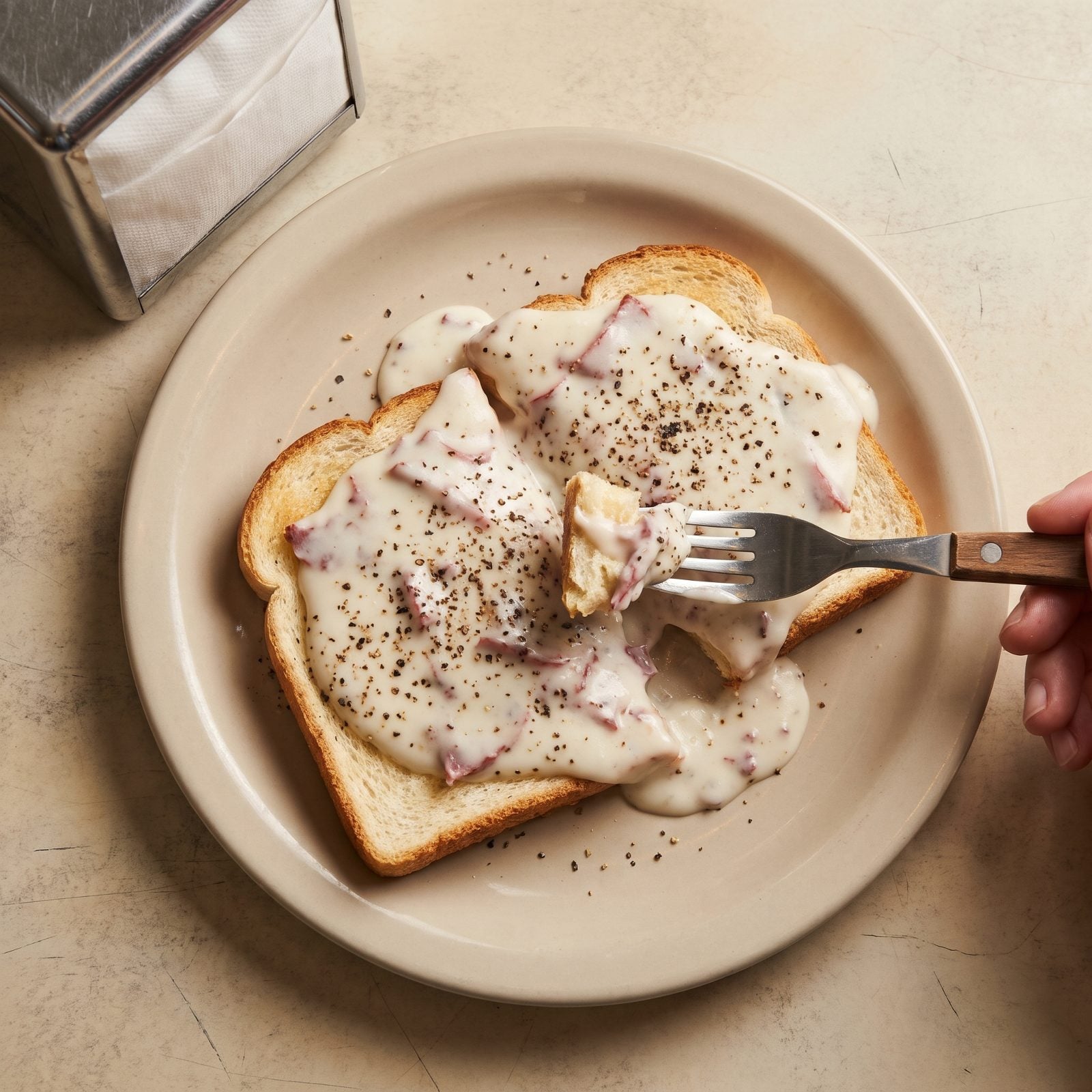
Truckers and GIs had a blunter name for it, and the diners that served it knew exactly which one to print and which one to leave off the menu. Salty cured meat, torn into thin pink slices and strips and folded into a flour-and-milk gravy, then ladled over toast until the whole plate went soft.
Cheap, filling, and it stuck to your ribs through a long haul. I’ll defend it to anyone. The pepper was not optional — a plate without a heavy black dusting across the top was a plate somebody didn’t care about.
Recalling his Air Force mess halls during the Vietnam War, a veteran turned truck driver wrote “It [SOS] was always available on the food tray. Eggs and bacon were my preference, but SOS was delicious, too.”
27. Fried Cornmeal Mush, Crisp Outside and Drowning in Syrup
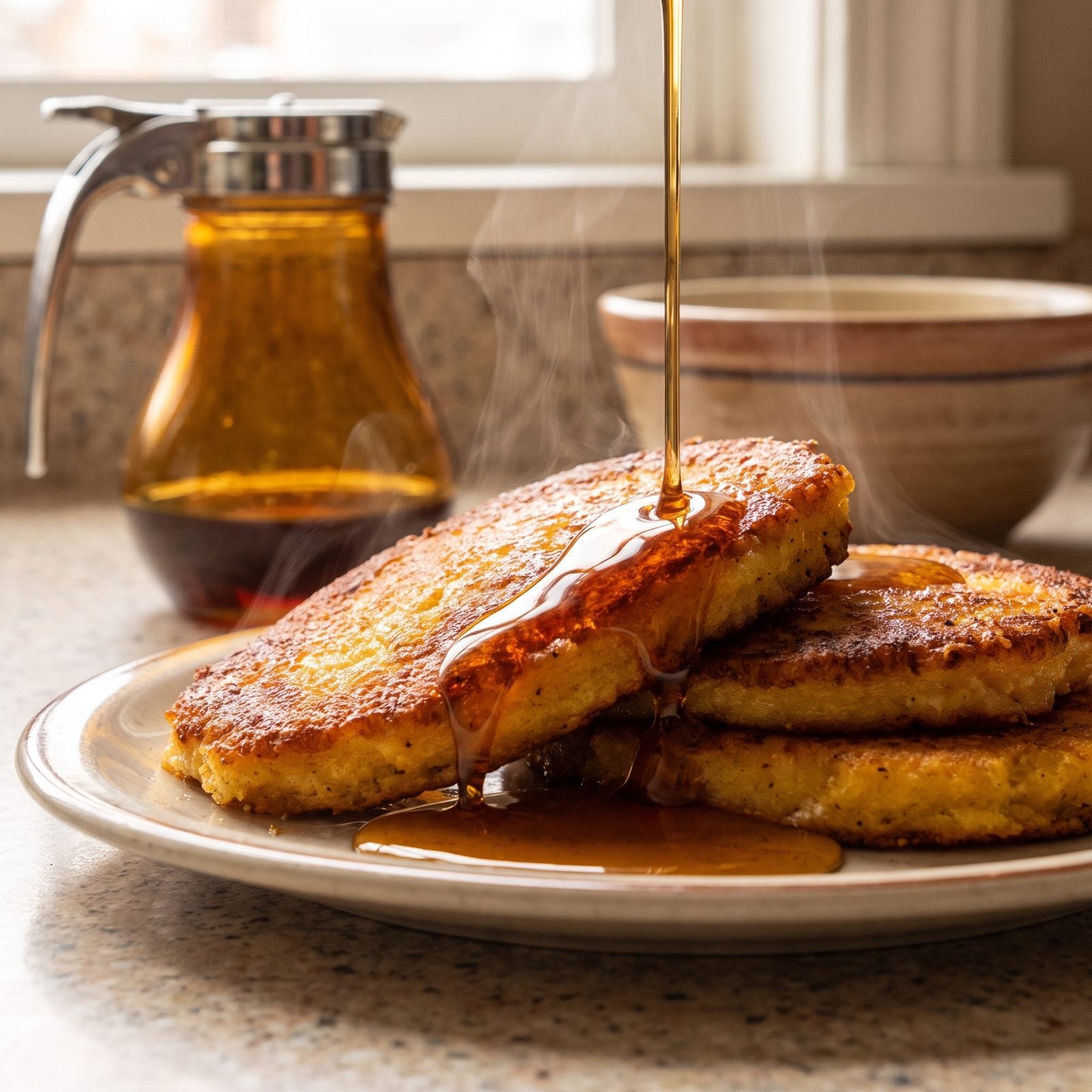
Cornmeal cooked thick, poured into a loaf pan the night before, chilled solid, then sliced and fried on the griddle until the outside crackled and the inside stayed soft as custard. That contrast was everything.
You poured syrup until it ran off the plate and formed a moat, and nobody stopped you. It was the kind of breakfast a farm family stretched out of almost nothing, and the diners kept it around long after most people had stopped making it at home.
26. The Jelly Omelet Dusted With Powdered Sugar
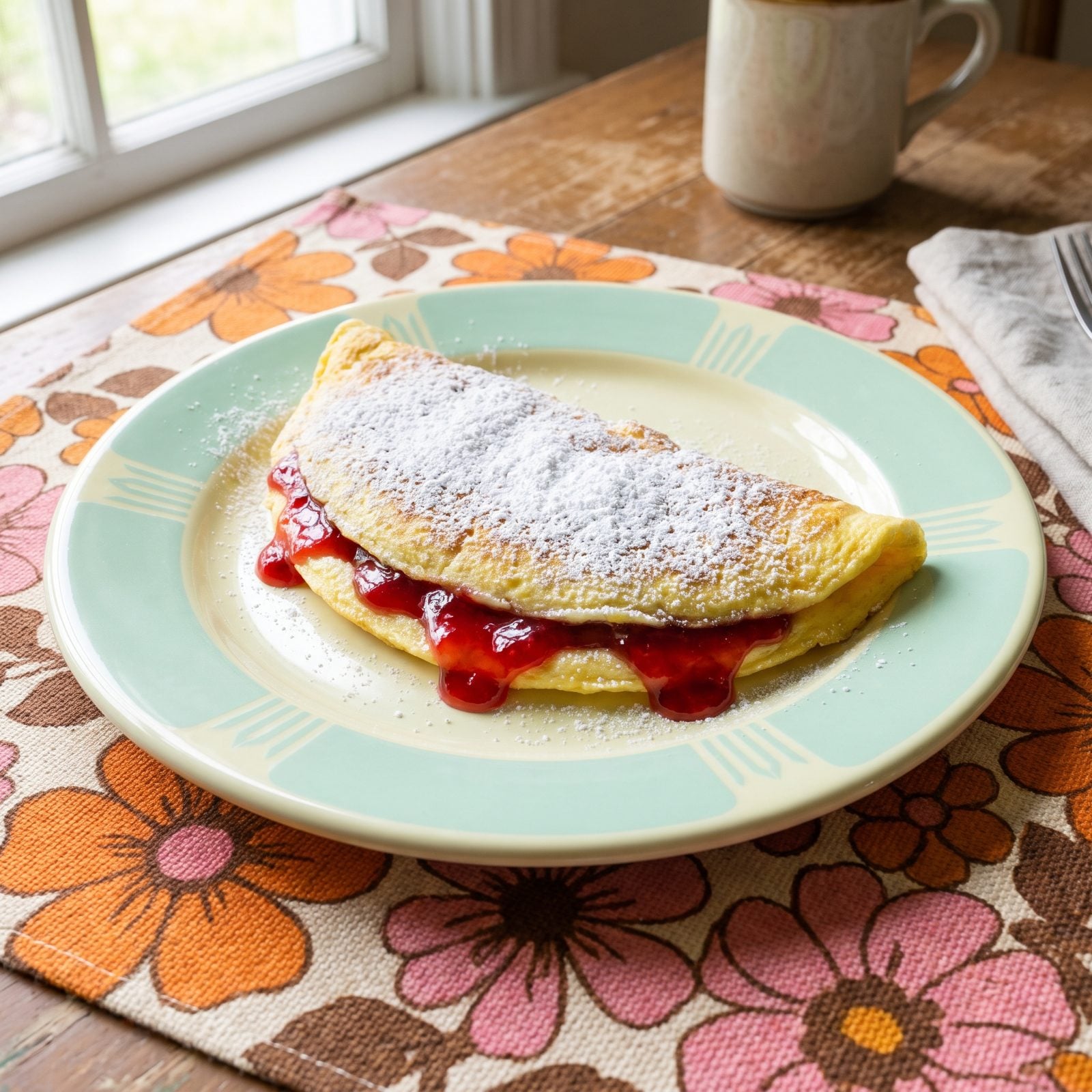
Sweet omelets threw people then and they’d throw people now. Eggs folded soft around a spoonful of grape or strawberry jelly, the whole thing finished with a shake of powdered sugar from the dredger that otherwise sat by the French toast.
Half breakfast, half dessert, completely unbothered by the distinction. It showed up on diner menus more often than you’d believe, usually in small type under the omelet list where only the curious found it.
25. Calf’s Liver With Eggs and Onions
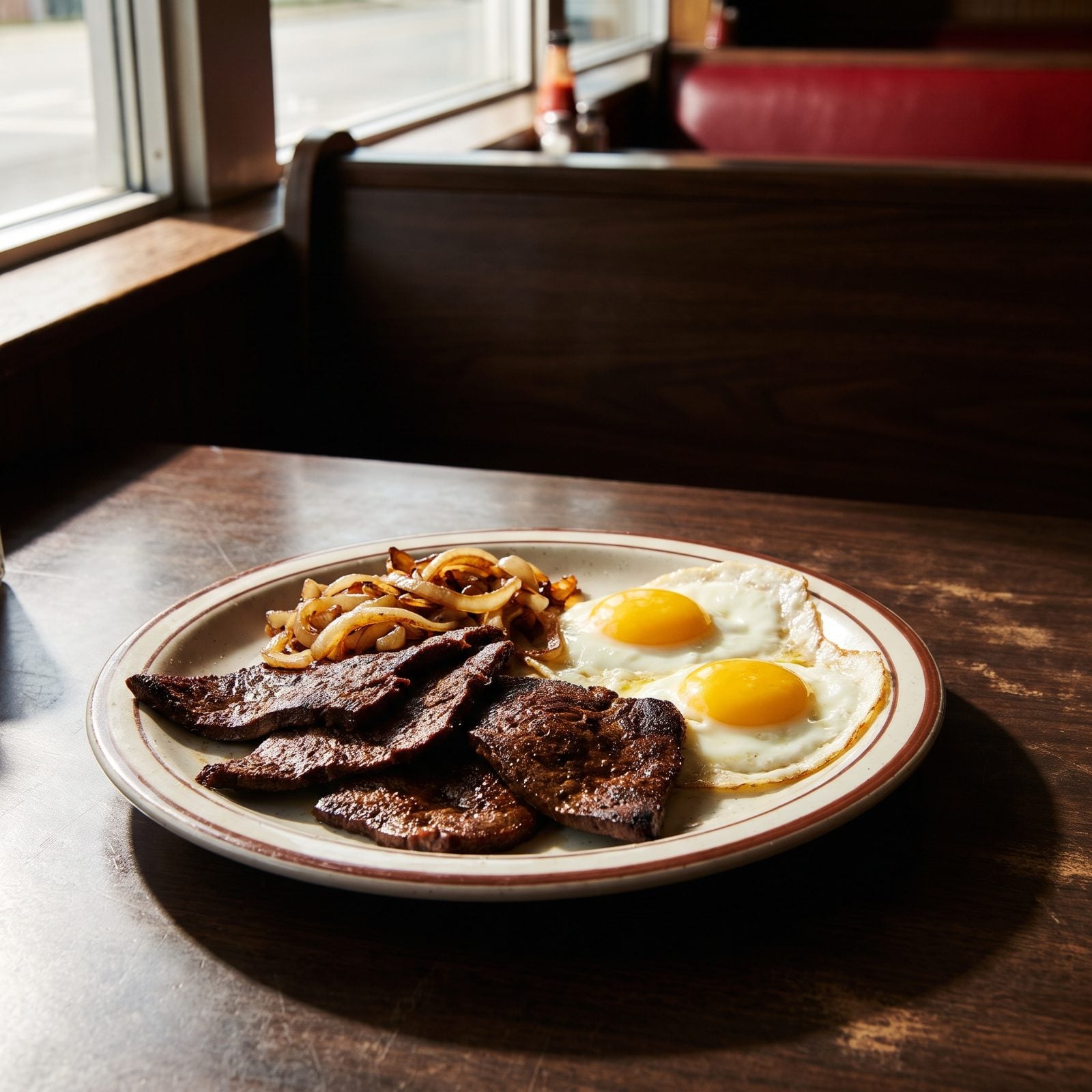
Liver for breakfast sounds alarming now. In the 1970s it was a line on the menu you walked right past unless you knew it, and plenty of older customers knew it cold.
Thin slices of calf’s liver seared quick on the griddle so they didn’t go to shoe leather, piled with onions cooked down sweet and soft, two eggs on the side. The smell carried halfway across the dining room. I won’t pretend everyone loved it. The people who ordered it, ordered it every single week.
24. Red Flannel Hash, the Breakfast That Turned Pink From Beets
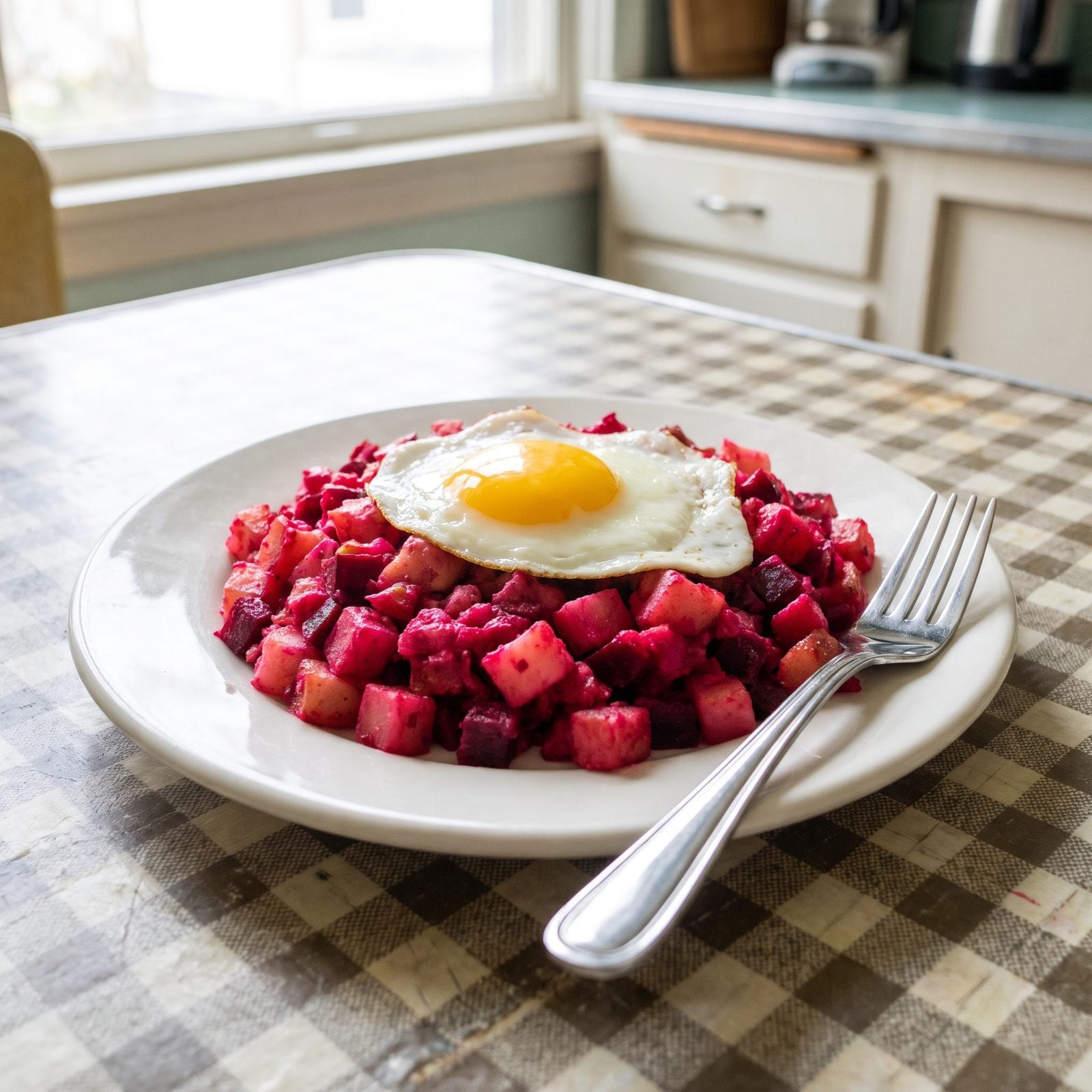
The color stopped first-timers mid-reach for the fork. Diced potato and chopped beets all fried together on the griddle until the beets bled through and turned the entire plate a startling pink.
New England diners kept it going longest, often as a Monday special built from Sunday’s leftover boiled dinner. A sunny-side-up fried egg with crisp, lacy edges went on top so the yolk could run into all that red. It looked like nothing else on the counter, and it tasted far better than its color promised.
23. Eggs Goldenrod Over Toast
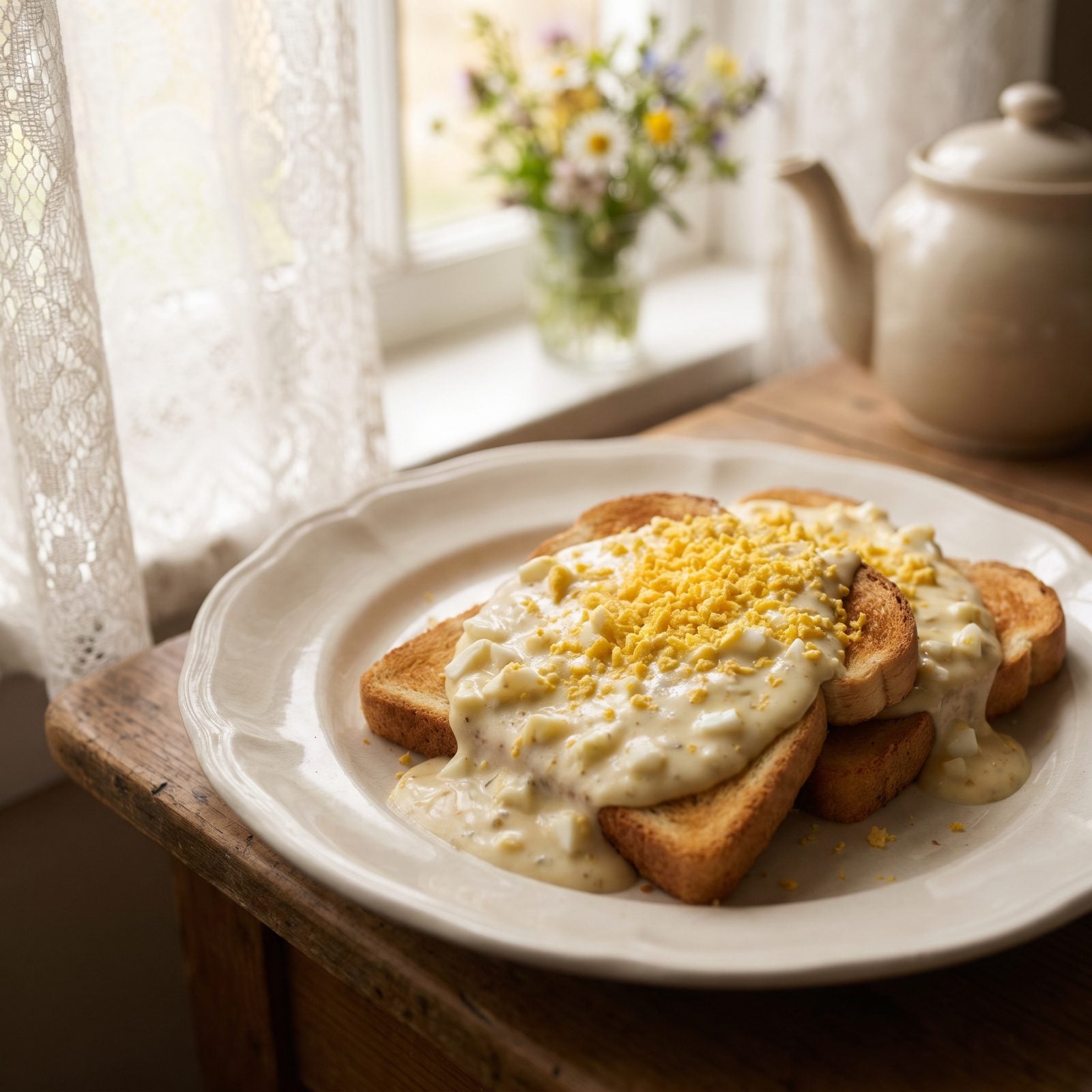
A homely dish with a pretty name. Hard-boiled eggs got separated, the whites chopped into a white cream sauce poured over toast, and the yolks pushed through a sieve so they fell over the top in bright yellow crumbs like, well, goldenrod.
It stretched a few eggs across a whole plate, which is why it survived the Depression and the war years and was still turning up on diner menus decades later. Comfort food in the plainest sense — soft, warm, and gone in five minutes.
Remembering the first time his wife served him eggs goldenrod, a former hotel brunch chef admitted “I was hesitant to try it but, it is deceptively delicious. A simple recipe, you surely have the ingredients in your kitchen.”
22. Ham Steak With a Canned Pineapple Ring on Top
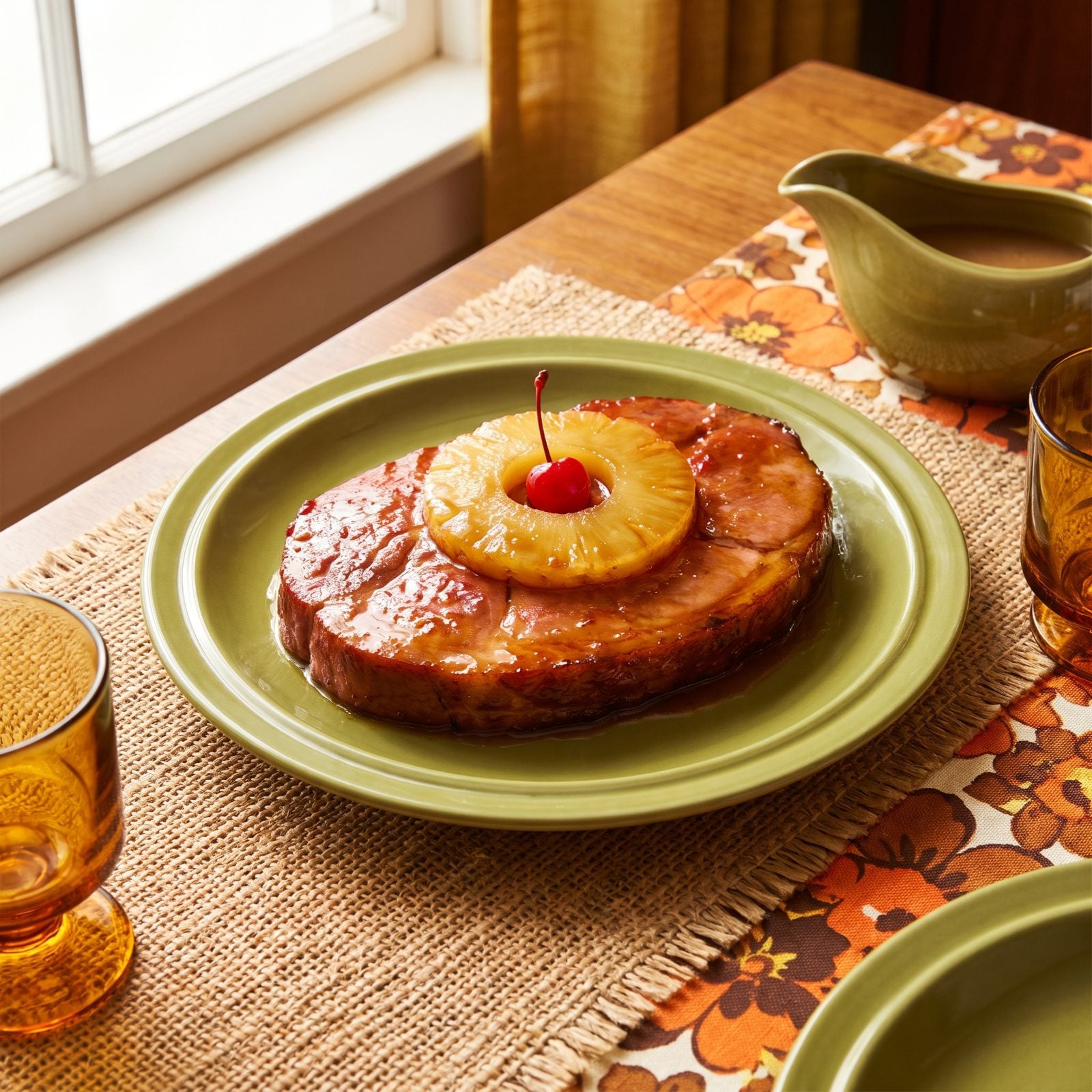
Pure 1970s theater. A slab of ham thick enough to fight, griddled until the edges caught, then crowned with a pineapple ring straight from the can and sometimes a maraschino cherry dropped in the middle for good measure.
The canned pineapple was a point of pride, not an apology. It meant the kitchen was giving you the full presentation.
21. A Spanish Omelet Drowning in Tomato Sauce
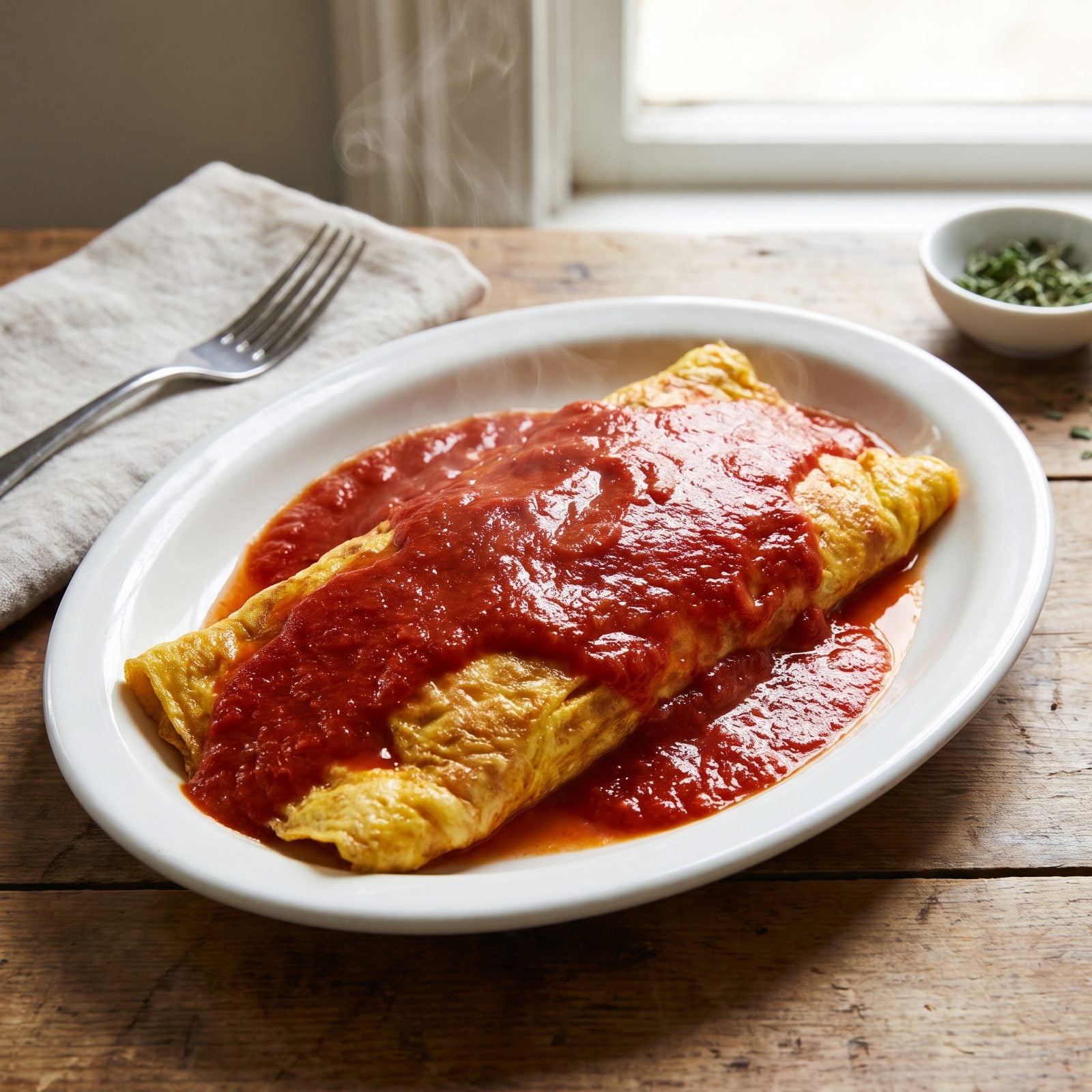
Every diner had its version and no two agreed on what made it Spanish. The common thread: a folded omelet buried under a smooth, bright red tomato sauce, ladled on heavy so it ran down the sides.
Nothing about it was particularly Spanish. The name just meant the tomato-sauce treatment, same as a Denver meant ham and pepper and onion folded in. You learned to read diner code or you ordered blind.
20. Scrapple Fried Crisp at the Edges
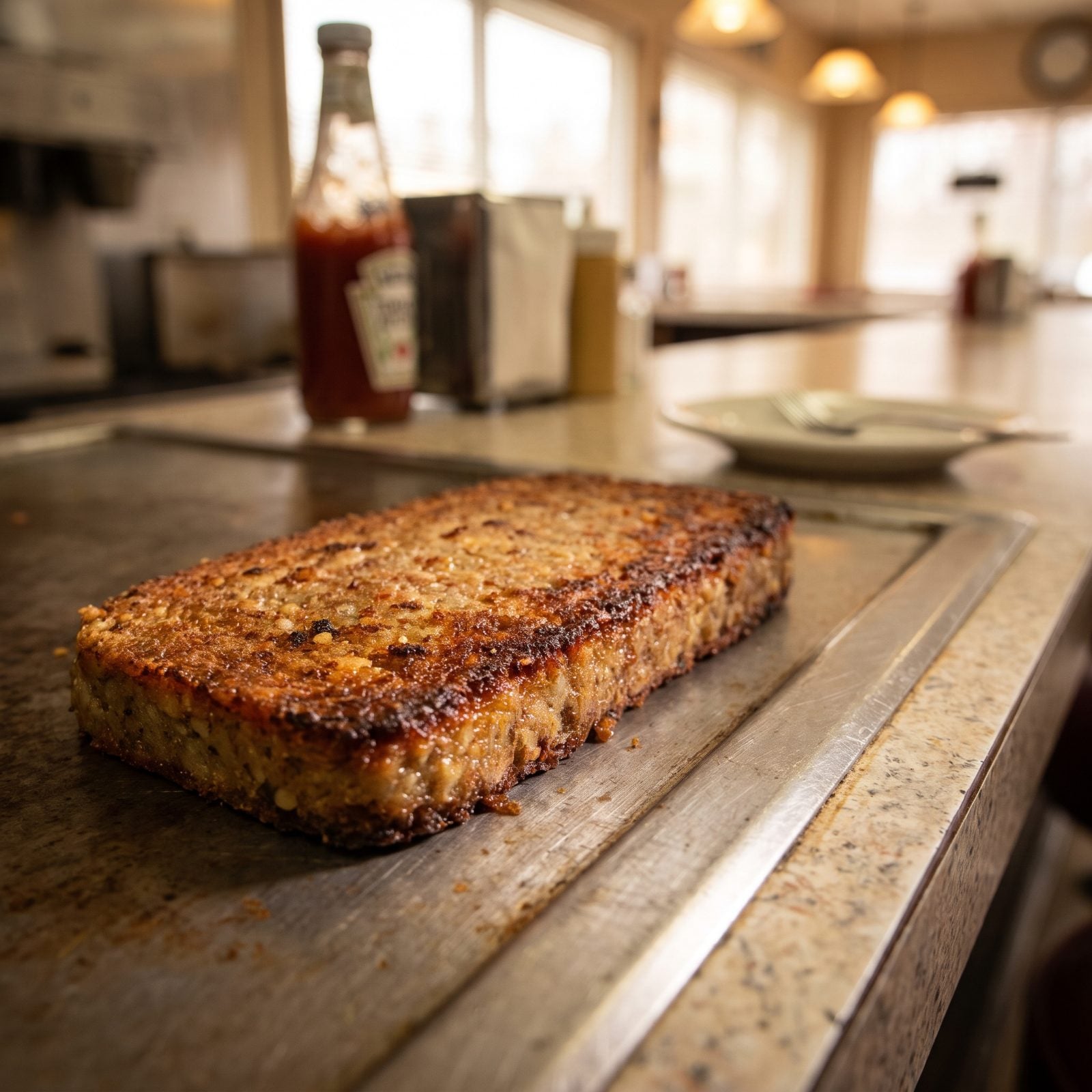
Mid-Atlantic diners lived and died by it, and the great debate was never whether to order scrapple but what to put on it. Ketchup, syrup, or apple butter — and people held firm opinions.
The cook’s job was to get the edges crackling crisp while keeping the thick middle soft, which meant patience and a hot griddle and leaving it alone. Flip it too soon and it fell apart. Flip it right and you got that shattering edge that made the whole thing worth it.
A thick block of scrapple without a crisp edge was just a gray brick, and everybody at the counter knew it.
As a Pennsylvania food writer explains, people who dislike scrapple’s soft center can order it Philly style at a diner, which means thinner slices fried harder.
19. Country Ham With Red-Eye Gravy
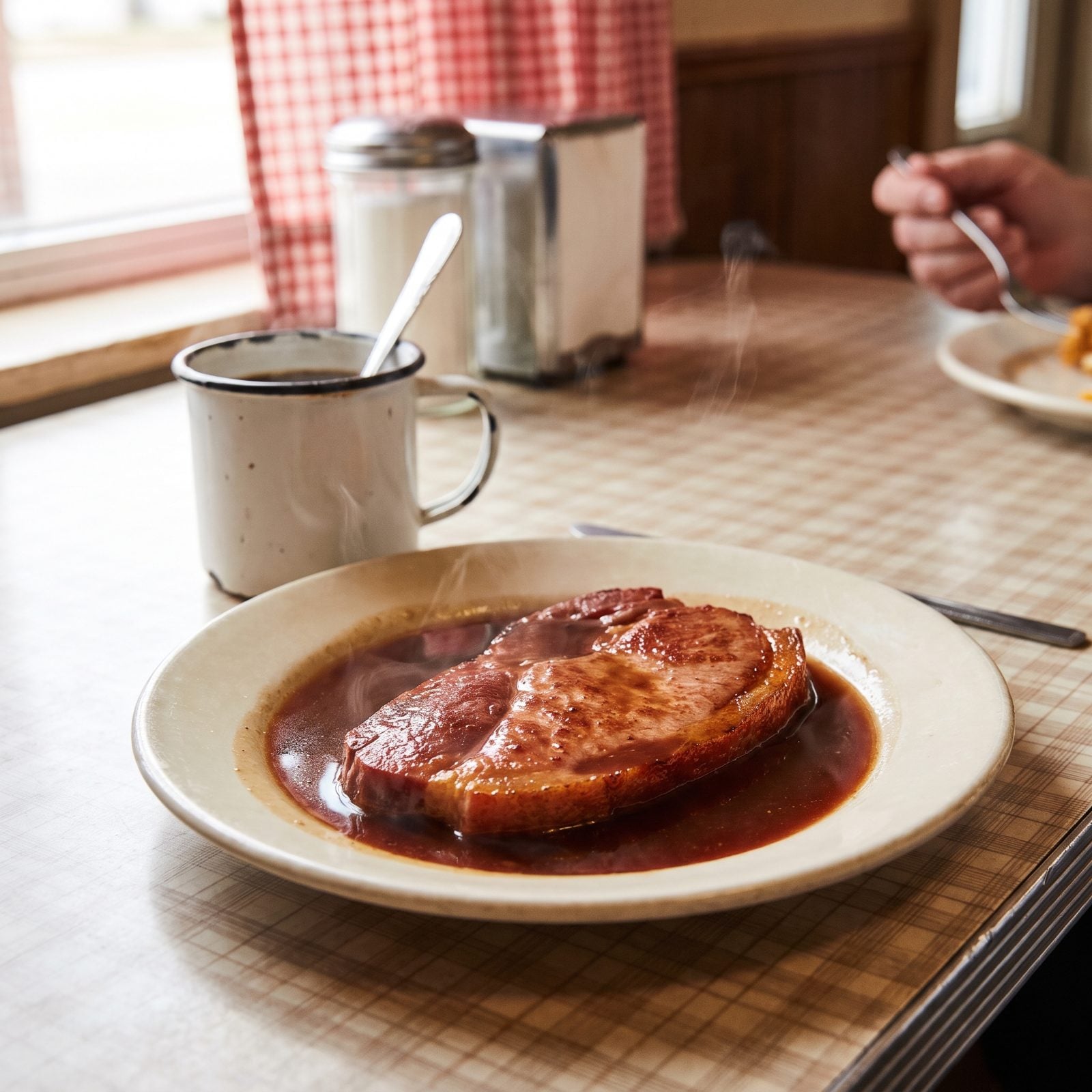
Southern diners served this and the uninitiated always asked what the thin dark gravy was. Coffee. The cook poured black coffee into the pan where the salty country ham had fried, scraped up all the browned bits, and that was red-eye gravy.
No thickening, no cream, just a sharp thin liquid stained reddish-brown that you spooned over everything and sopped up with a biscuit. It was salty enough to make your lips tingle and strong enough to wake you clean up. The last bite was always a torn biscuit dragged through the last of it. That’s the one I still think about.
18. Shirred Eggs Baked in a Little Brown Crock
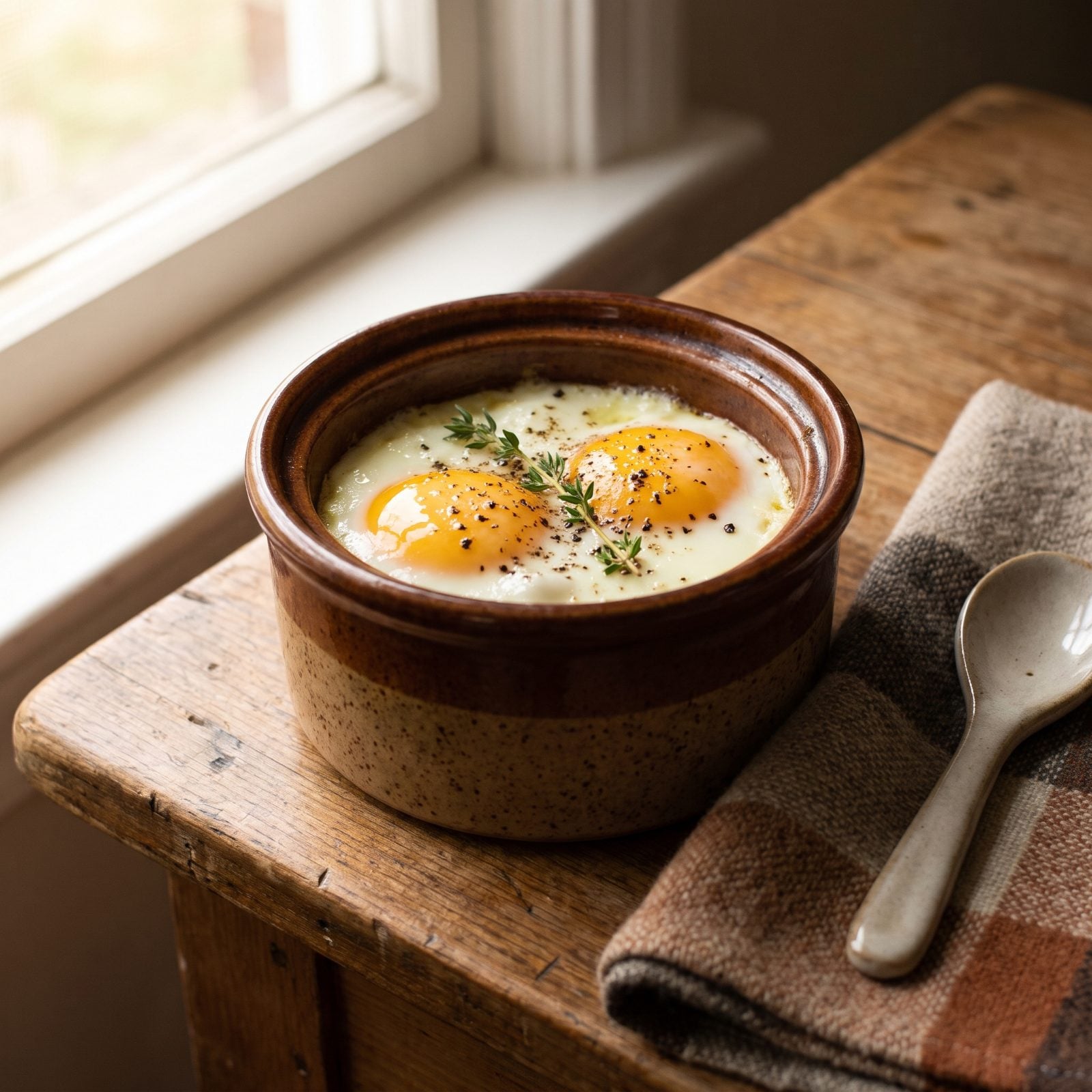
You ordered these when you wanted eggs that felt like someone’s grandmother made them, not something flung off a flat-top. The crock came out blistering hot, the whites barely set, the yolks waiting under a slick of cream and butter that had bubbled around the edges into little brown rings.
Shirred eggs were a diner’s quiet flex. They needed an oven and a few minutes nobody in a hurry wanted to wait, and that’s exactly why they’re gone. Speed killed them off somewhere in the ’80s, and the little brown crocks got packed away.
17. Coddled Eggs With Buttered Toast Soldiers
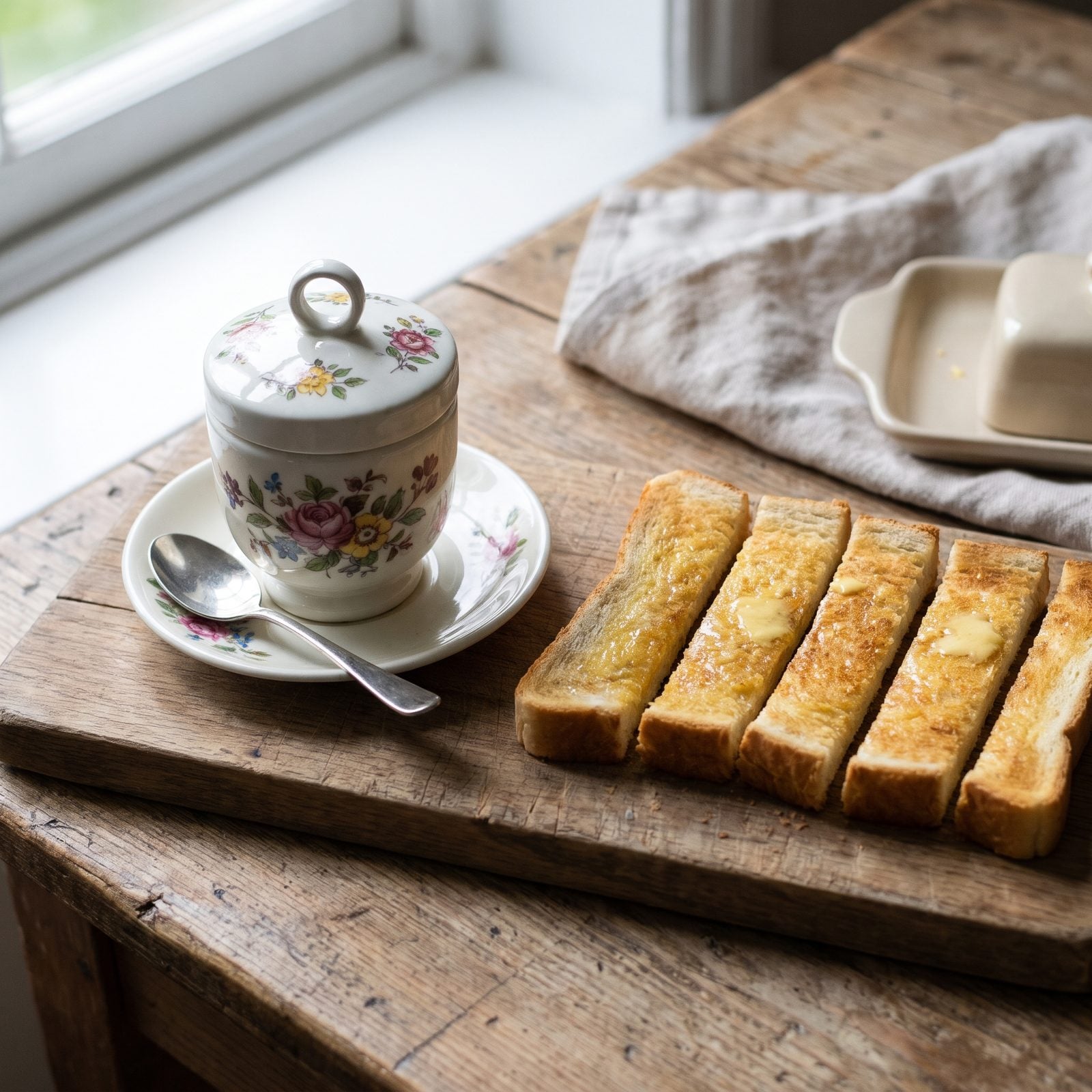
Coddled eggs were the gentlest thing on the menu. Barely cooked, soft enough to spoon, served in a little lidded cup that looked out of place against all that heavy diner china. The toast came cut into skinny buttered strips you dunked straight into the yolk.
Nobody calls them soldiers anymore, but that’s what they were, lined up on the plate like they were waiting for orders. A lovely thing to order on a cold morning when you didn’t feel up to much. Then they just quietly disappeared.
16. Poached Eggs on a Bed of Creamed Spinach
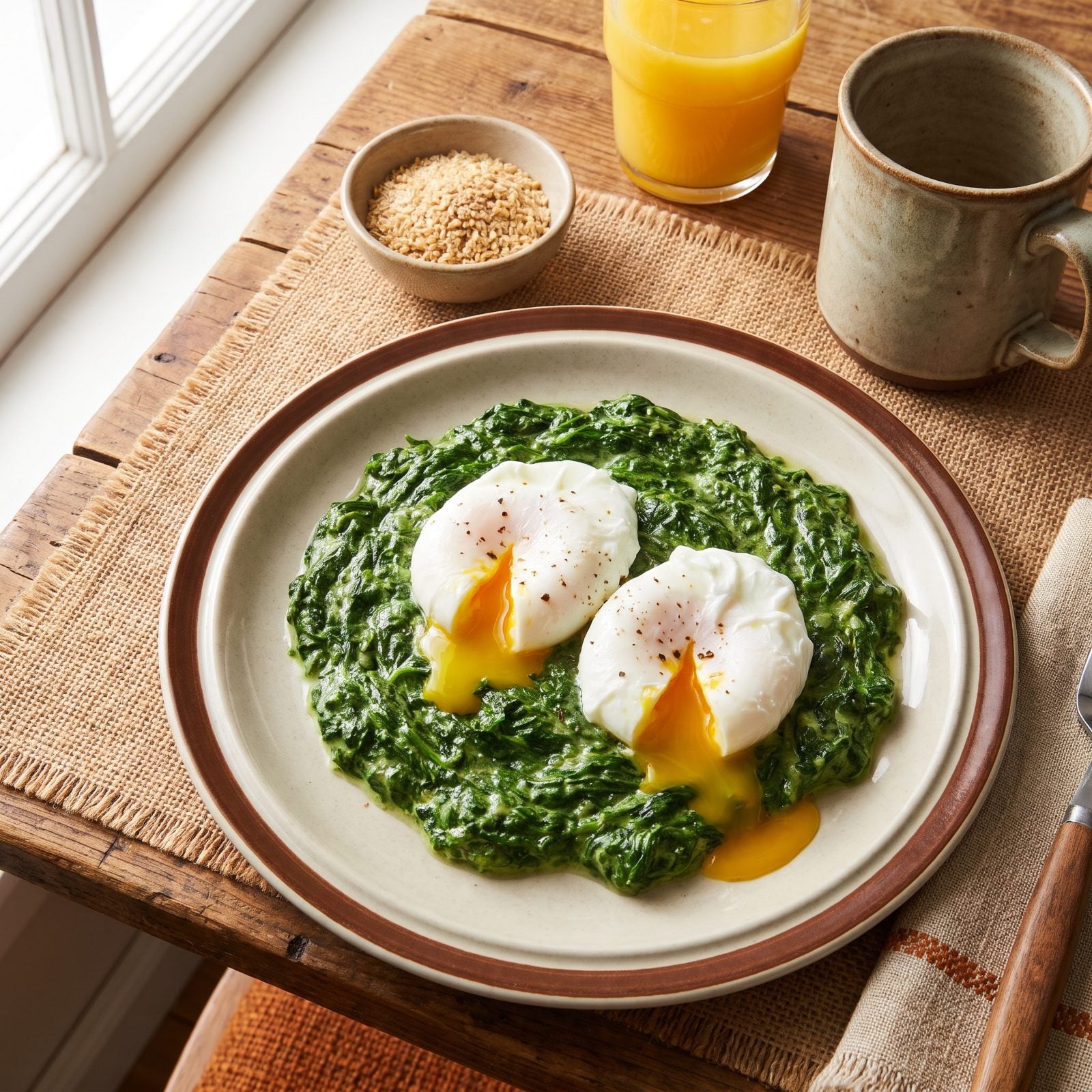
This was the plate people called “healthy” in 1973, which tells you everything about 1973. Two poached eggs sitting on a pool of creamed spinach, the yolk breaking into the green and turning the whole thing richer than anyone pretended.
It had a vaguely virtuous reputation because of the spinach, nevermind the cream. You saw it on diner menus and in the sort of coffee shops that still ran a steam table. The eggs had to be poached to order, which is probably why it faded. Poaching takes attention, and a busy griddle doesn’t have any to spare.
15. Hot Roast Beef Over Breakfast Toast
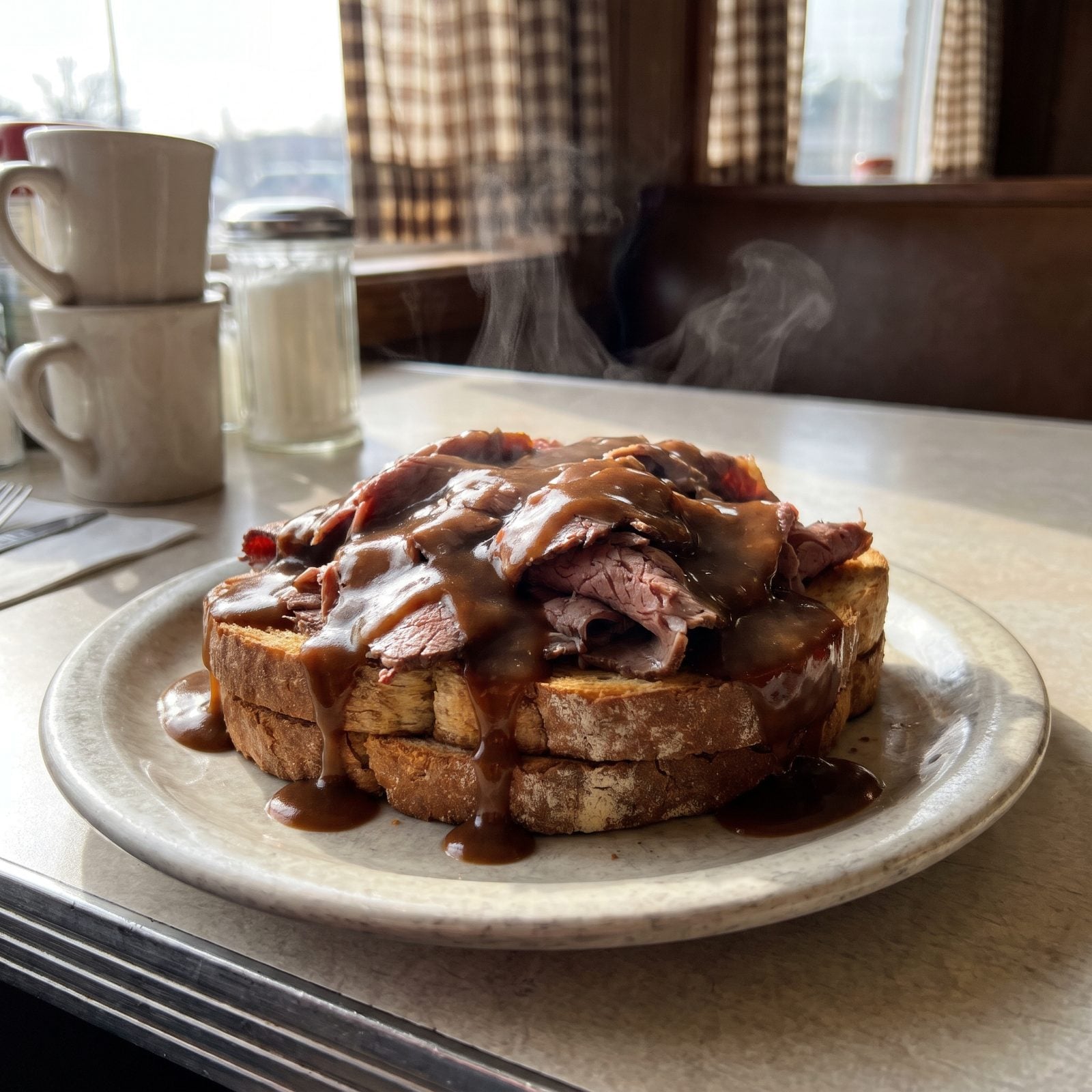
Roast beef for breakfast sounds strange until you remember diners never really believed in breakfast rules. The beef came thin, gray at the edges, piled over toast and buried under brown gravy that soaked the bread into something you ate with a fork.
A working man’s plate, ordered by men coming off night shifts who wanted dinner food at six in the morning. The gravy was the whole point, usually the same gravy they’d ladle over the open-faced beef sandwich at lunch. One pot, two meals, no complaints.
14. A Denver Sandwich on Griddled White Bread
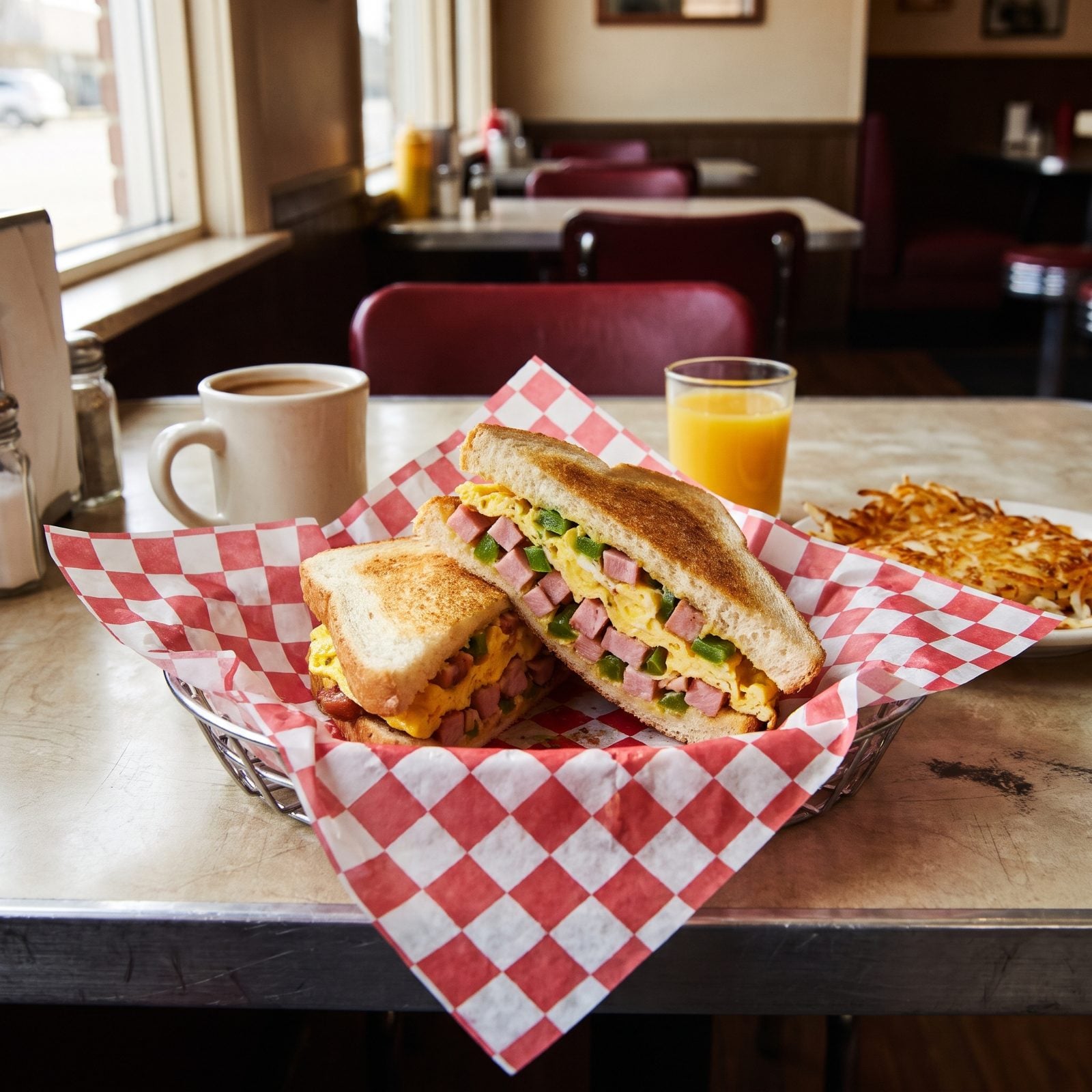
Half the country called it a Denver, the other half a Western, and nobody ever settled it. What you got was a ham-and-pepper-and-onion omelet folded flat and slapped between two slices of white bread toasted on the same griddle where the eggs cooked.
The bread picked up a little grease from the flat-top, which was the secret. A sandwich you ate with one hand while the other held coffee. Cheap, fast, and filling, which is the whole reason a diner existed.
13. Minute Steak and Eggs
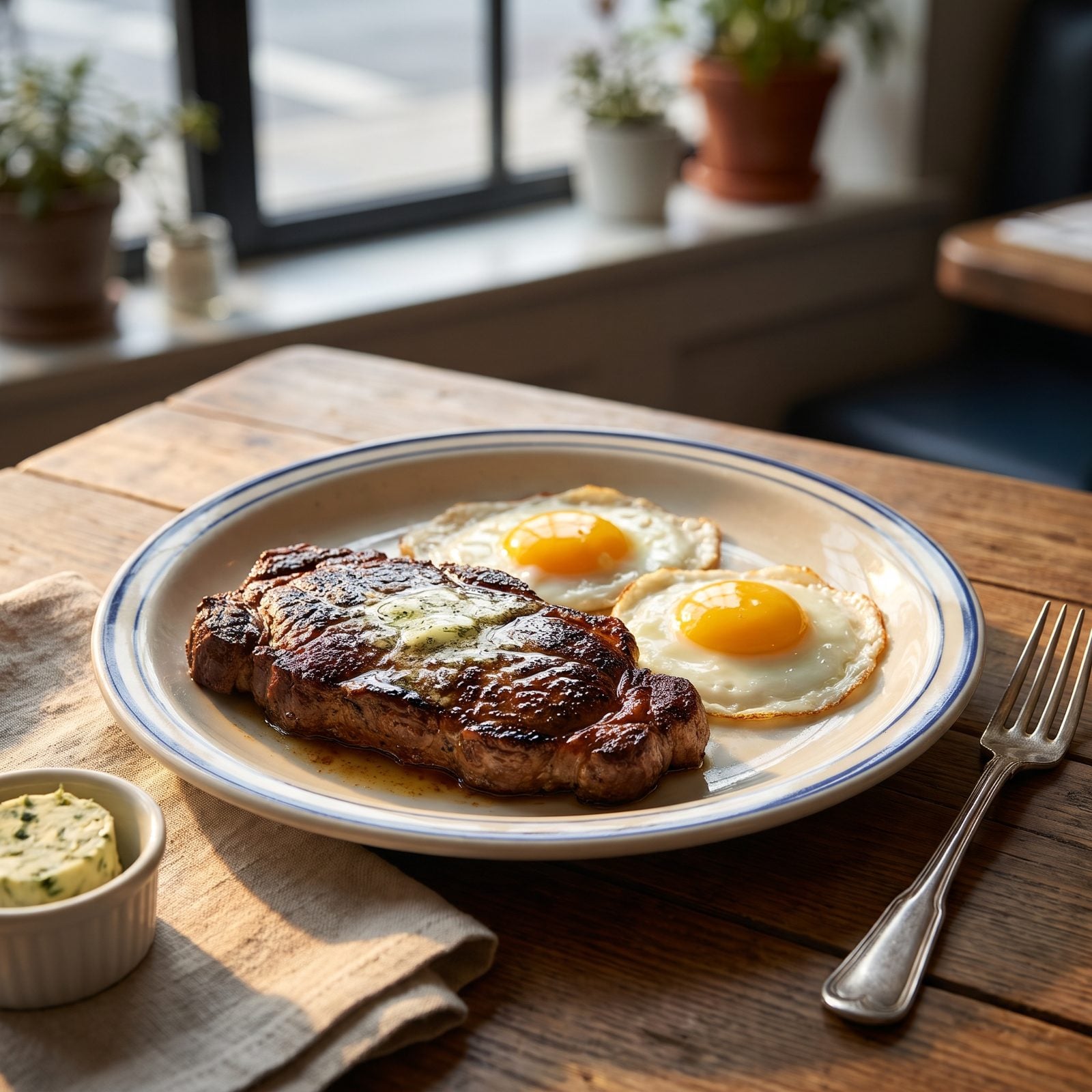
This was the big-spender order, and everybody knew it. Steak and eggs meant you had a little extra in your pocket that morning, or you were feeding a day’s worth of labor into one plate.
The steak was a thin minute steak, seared hard on the flat-top until it wore a glossy, dark crust, served next to a pair of sunny-side-up eggs. It wasn’t tender and it wasn’t supposed to be. You sawed into it with a knife and dragged each bite through the runny yolk. For a buck or two over the egg plate, it felt like a splurge.
12. Buckwheat Griddle Cakes With Real Butter
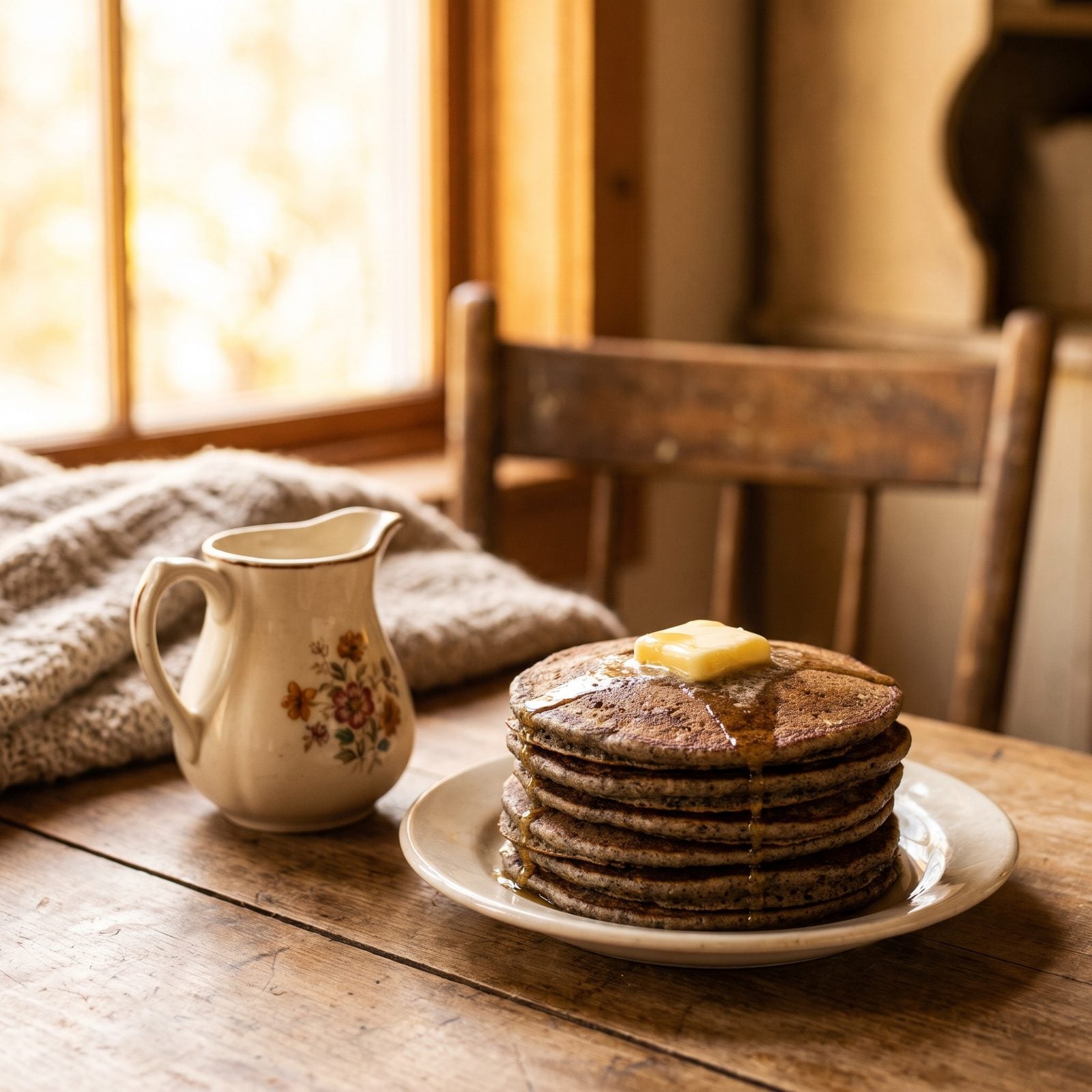
Buckwheat cakes were darker and heartier than the plain flapjacks, with a faint sourness and a speckled look that put some people off and made others order them every single time. They weren’t fluffy. They were dense, earthy, and they filled you up for the whole morning.
Older customers ordered them out of habit, the way their own parents had. By the 1970s they were already fading, outvoted by the lighter buttermilk stacks. If your diner still offered them, that was a sign the cook had been there a long while.
11. Date-Nut Bread With a Smear of Cream Cheese
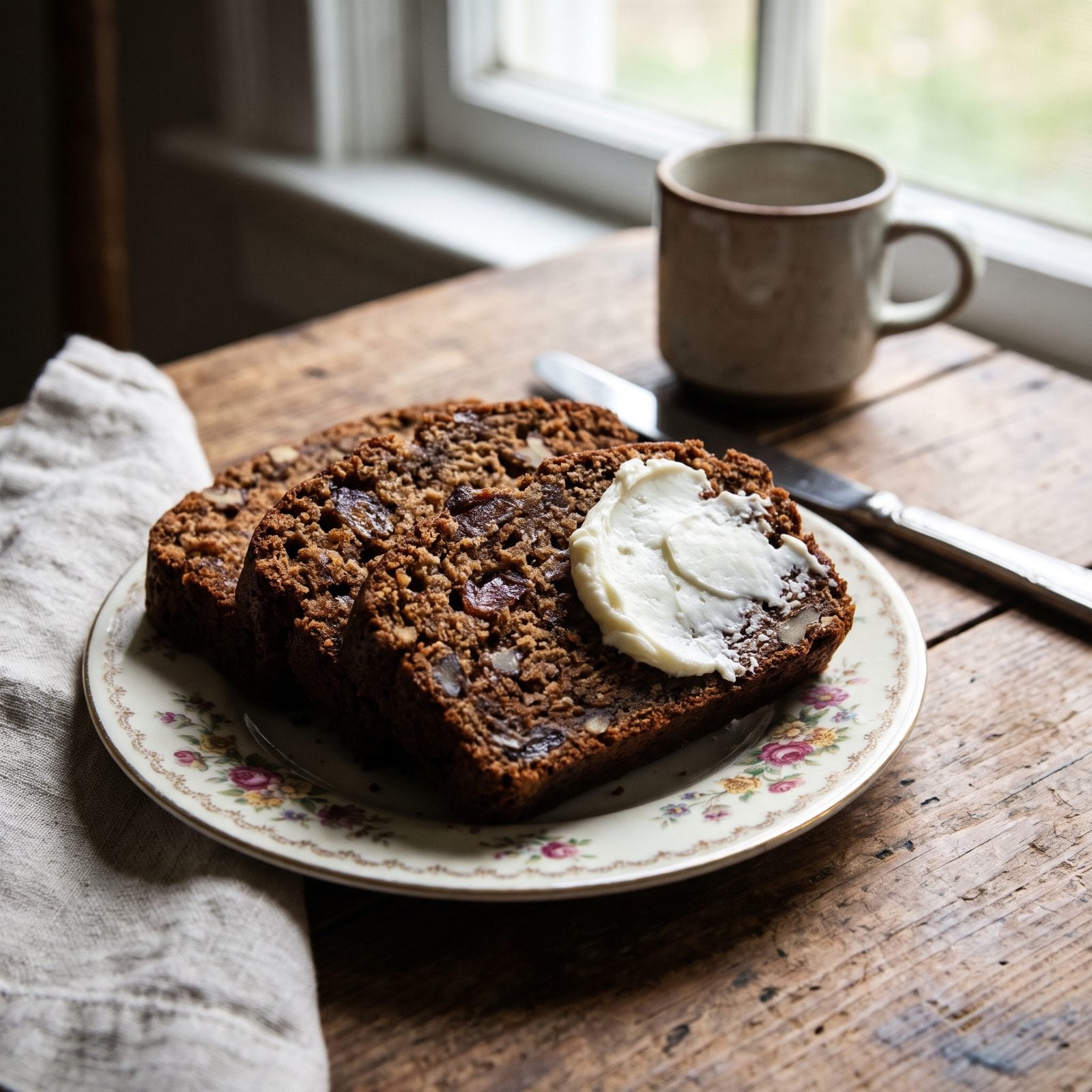
Date-nut bread showed up on the lighter side of the menu, the order you placed when eggs felt like too much. Dark, dense, sweet from the dates, with walnuts giving it crunch, and always, always served with a fat smear of cream cheese.
Diners bought it in loaves or baked it in coffee cans, which is why the slices sometimes came out round. A mid-morning thing, a coffee-break thing, the quiet little order of someone who just wanted something sweet with their cup. You almost never see it now.
10. A Toasted Corn Muffin Split on the Griddle
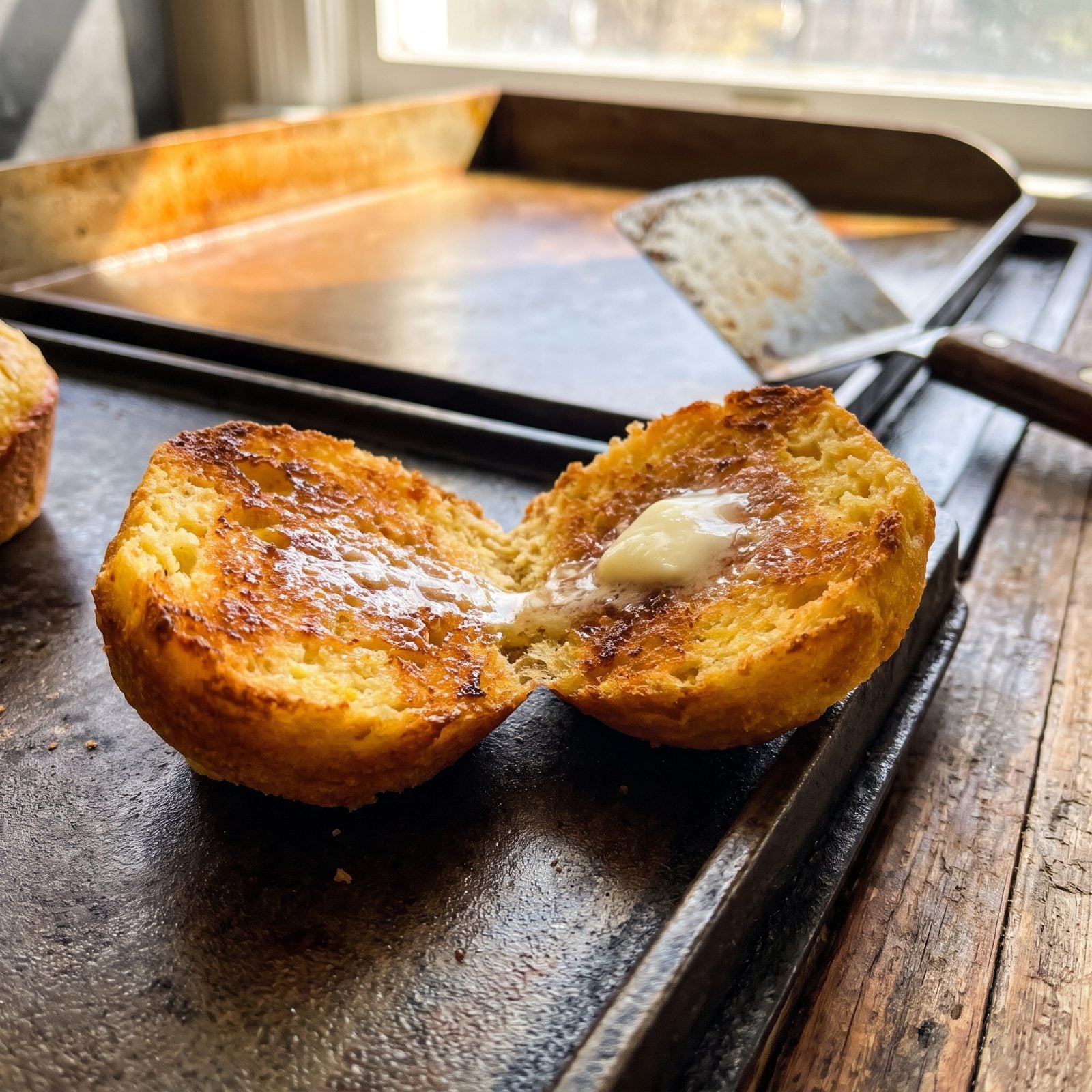
The trick was the griddle. A corn muffin split in two and laid face-down on the hot flat-top came back crisp and golden where the butter had caught, the inside still soft. It beat any oven-warm muffin, and the regulars knew to ask for it that way.
Fifteen cents, maybe a quarter, and it carried a cup of coffee a long way. The good diners griddled everything that could be griddled, English muffins, bagels, cornbread. The lazy ones microwaved. You could tell the difference in one bite.
9. A Canned Grapefruit Half With a Maraschino Cherry on Top
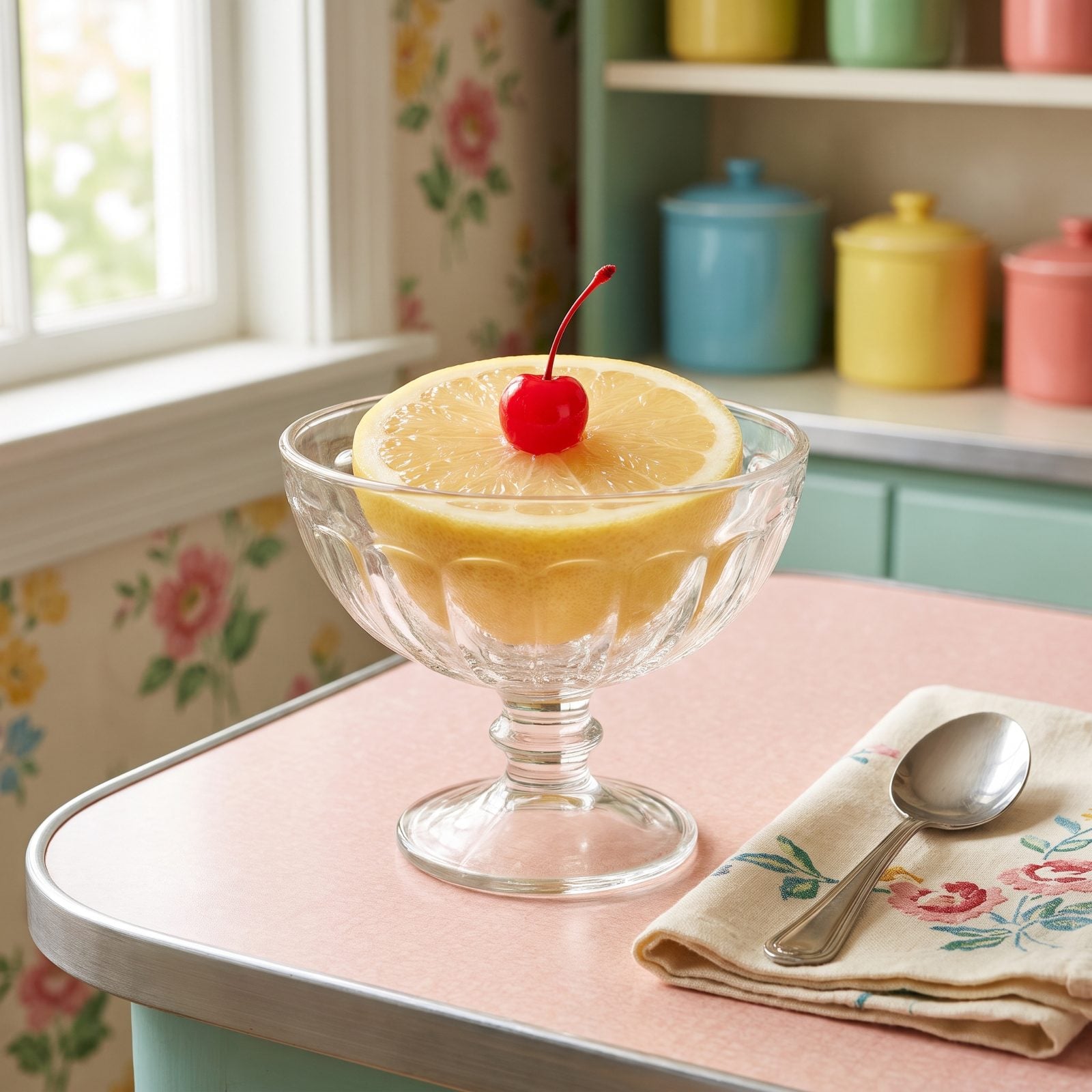
And here’s the one that’ll stop you cold. The grapefruit half, served in a little footed glass dish, segments already loosened by a serrated spoon, and that single red maraschino cherry parked in the middle like a decoration nobody questioned.
It came from a can more often than not, sweet and soft, nothing like fresh. But it was “the fruit option,” the thing you ordered to feel like you’d been reasonable before the pancakes arrived. That cherry had no business being there and it always was. I miss it, and I won’t pretend otherwise.
8. Stewed Prunes in a Little Glass Dessert Dish
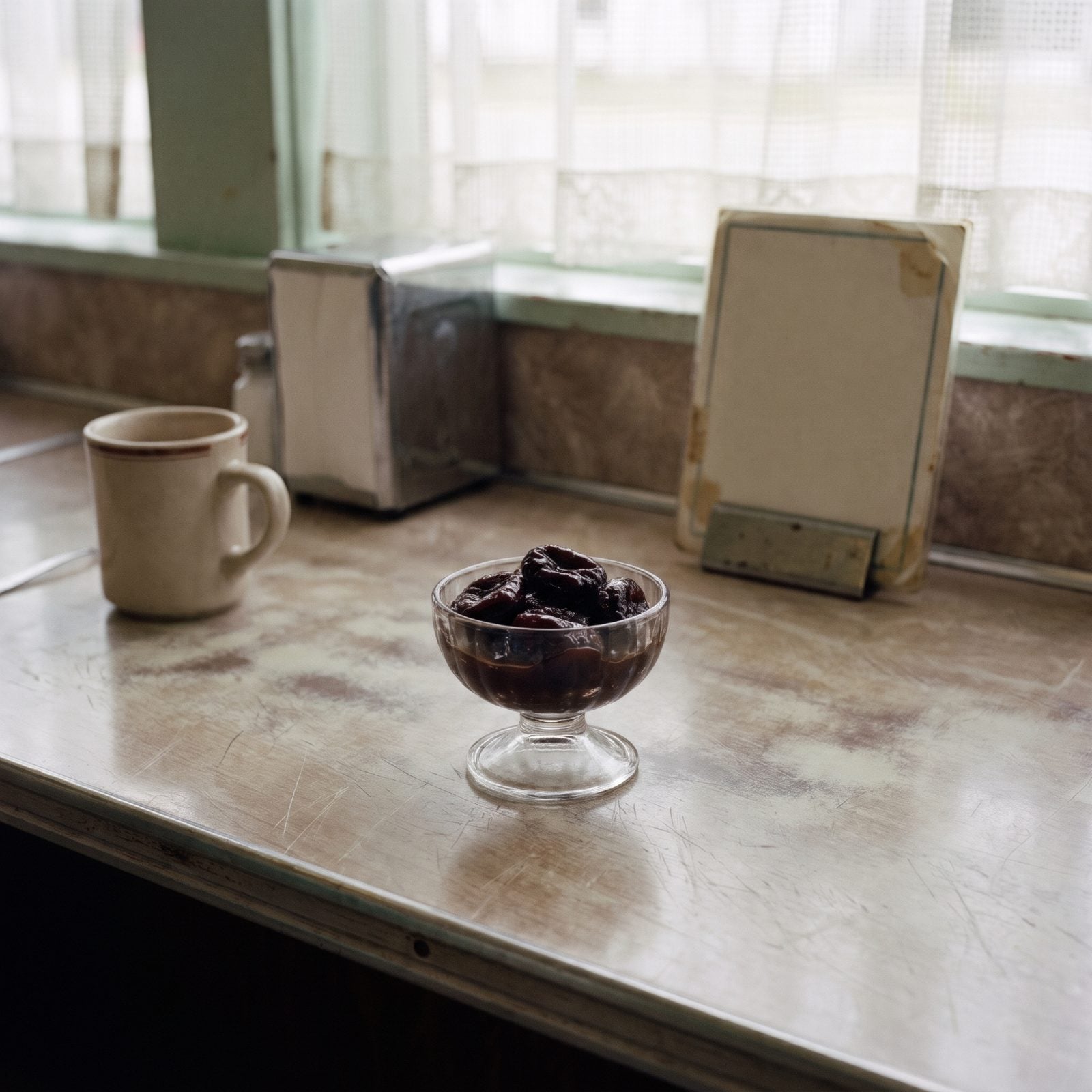
Every diner counter had them, and for a certain generation they weren’t dessert at all. They were the responsible choice before the eggs showed up, served in a pressed-glass dish barely bigger than a shot cup, swimming in their own syrup.
Nobody under forty ordered them. That was the whole social code of the prune. They belonged to the men in the corner booth who’d been up since four and ate them with a small spoon, no apology offered.
7. A Small Glass of Chilled Tomato Juice to Start
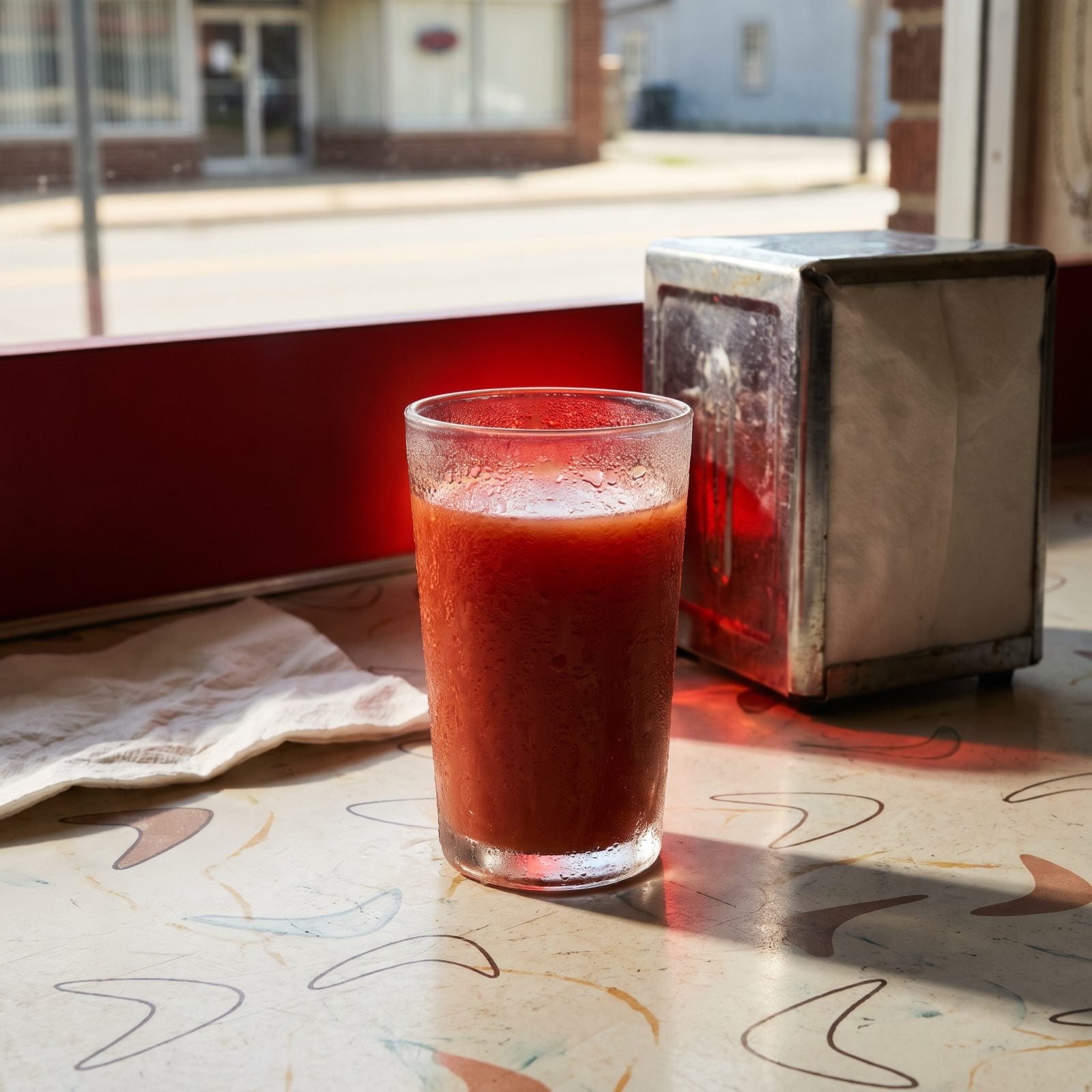
Before orange juice got crowned as the only acceptable breakfast drink, tomato juice held real estate on every diner menu. A small glass, cold enough to fog the sides, sometimes with a lemon wedge or a jab of pepper if the cook was feeling generous.
It carried a vaguely grown-up seriousness. You ordered tomato juice and the waitress nodded like you’d made a sound decision. That saltiness, that thickness, that tang woke you up a different way than sugar ever could. It has quietly vanished from most menus, and I miss it more than I expected to.
6. Canned Orange Juice Pulled From the Counter Dispenser
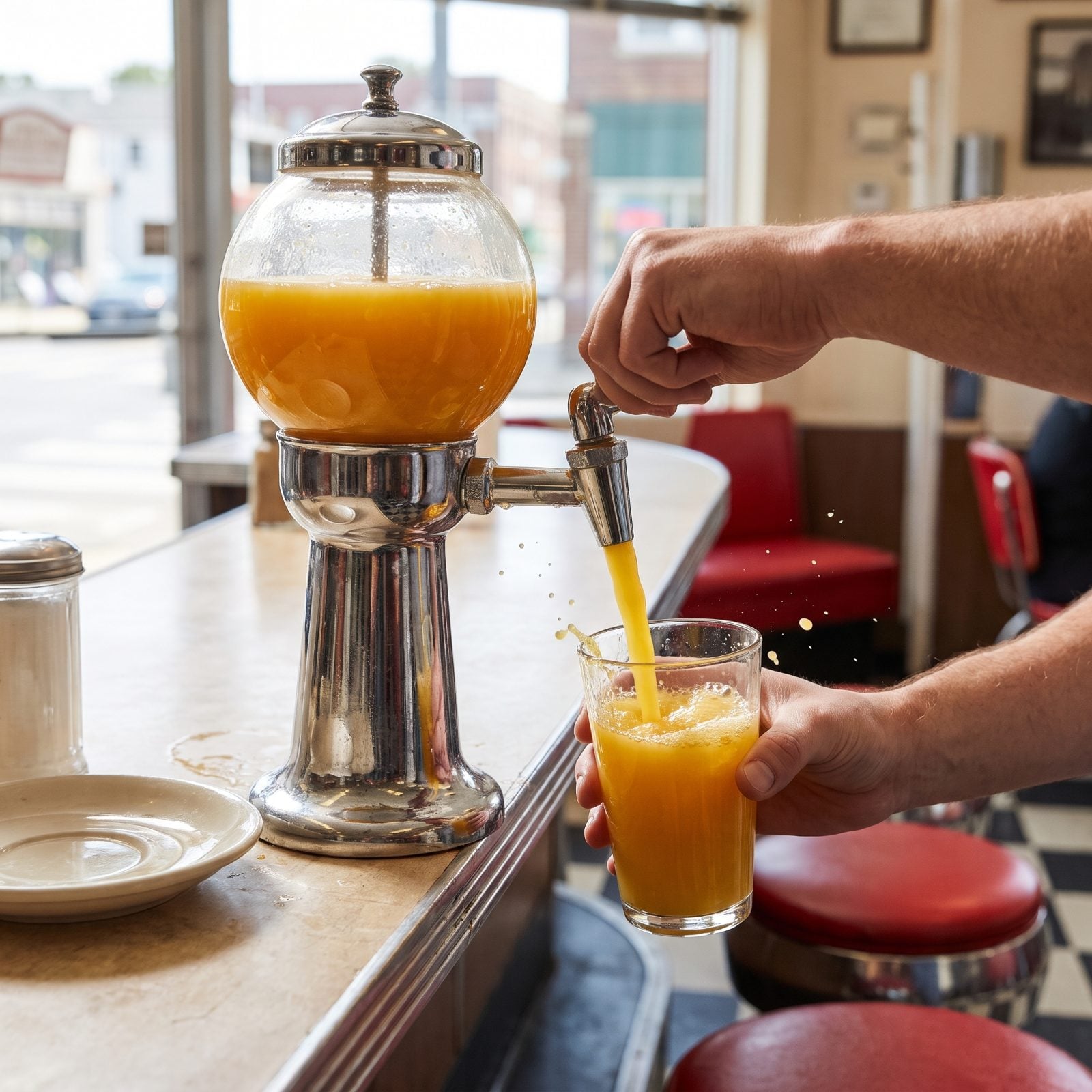
Fresh-squeezed was a restaurant thing, a city thing, a special-occasion thing. Out on the highway, orange juice came from a chrome dome of reconstituted concentrate, pushed through a little lever into a short glass, bright and uniform and foaming slightly at the top.
It tasted the same every single time, which was the whole appeal. No pulp, no surprises, just cold and sweet and reliable. And the dispenser itself was a small marvel — that clear bubble of orange sitting there all morning under the lights, beside a stack of cans whose faded labels nobody could read anyway.
5. Half a Cantaloupe With a Scoop of Cottage Cheese
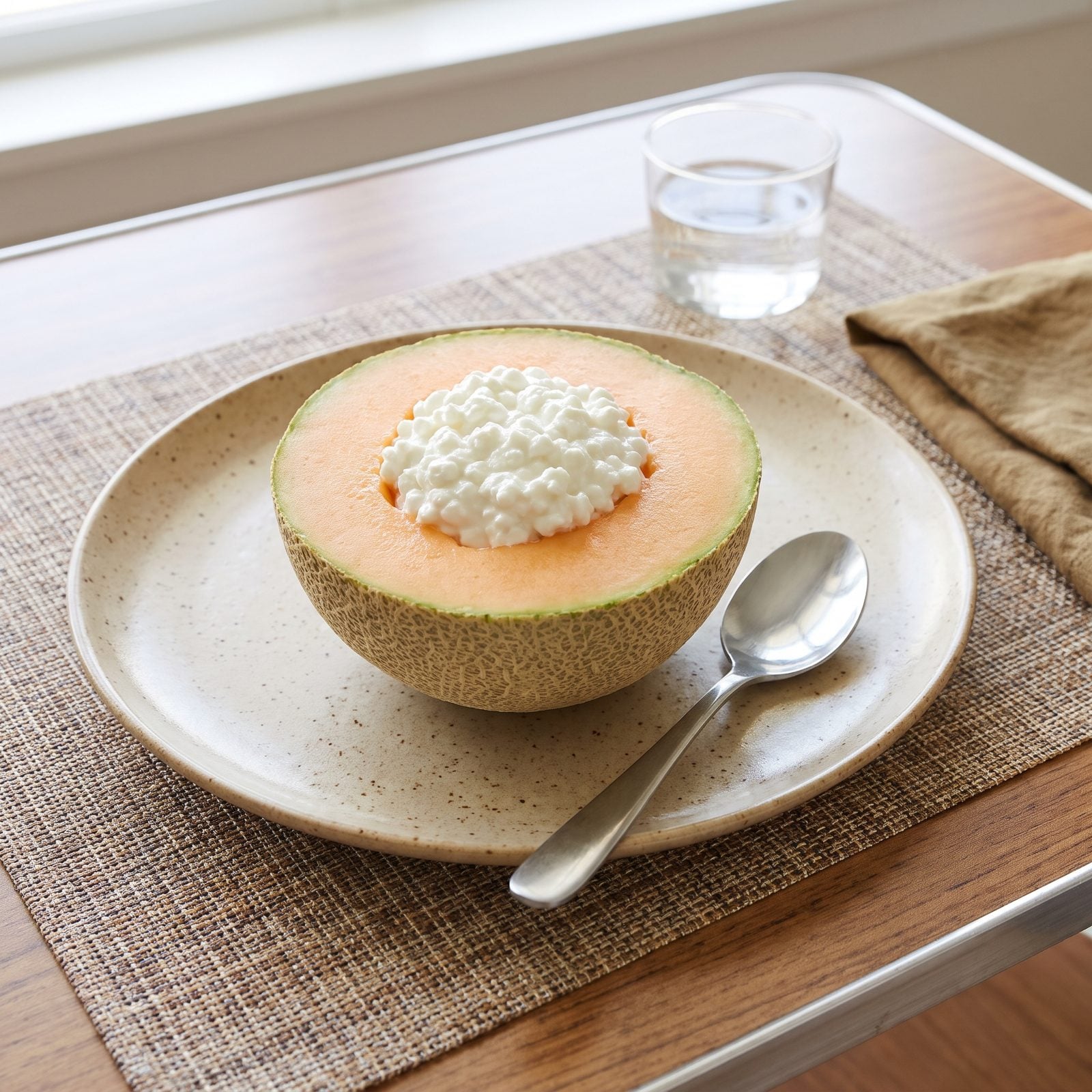
The diet plate before diet plates had a name. Half a cantaloupe, seeds still nestled in the hollow, topped with a snowy mound of cottage cheese doing its brave little job.
This was the order for anyone watching their figure, which in the 1970s meant it showed up on a lot of tables. The melon usually ran a touch underripe and the cottage cheese came straight from the big tub in the back, but together they felt virtuous, cool, strangely satisfying.
4. Hot Ralston With Brown Sugar Melting Into It
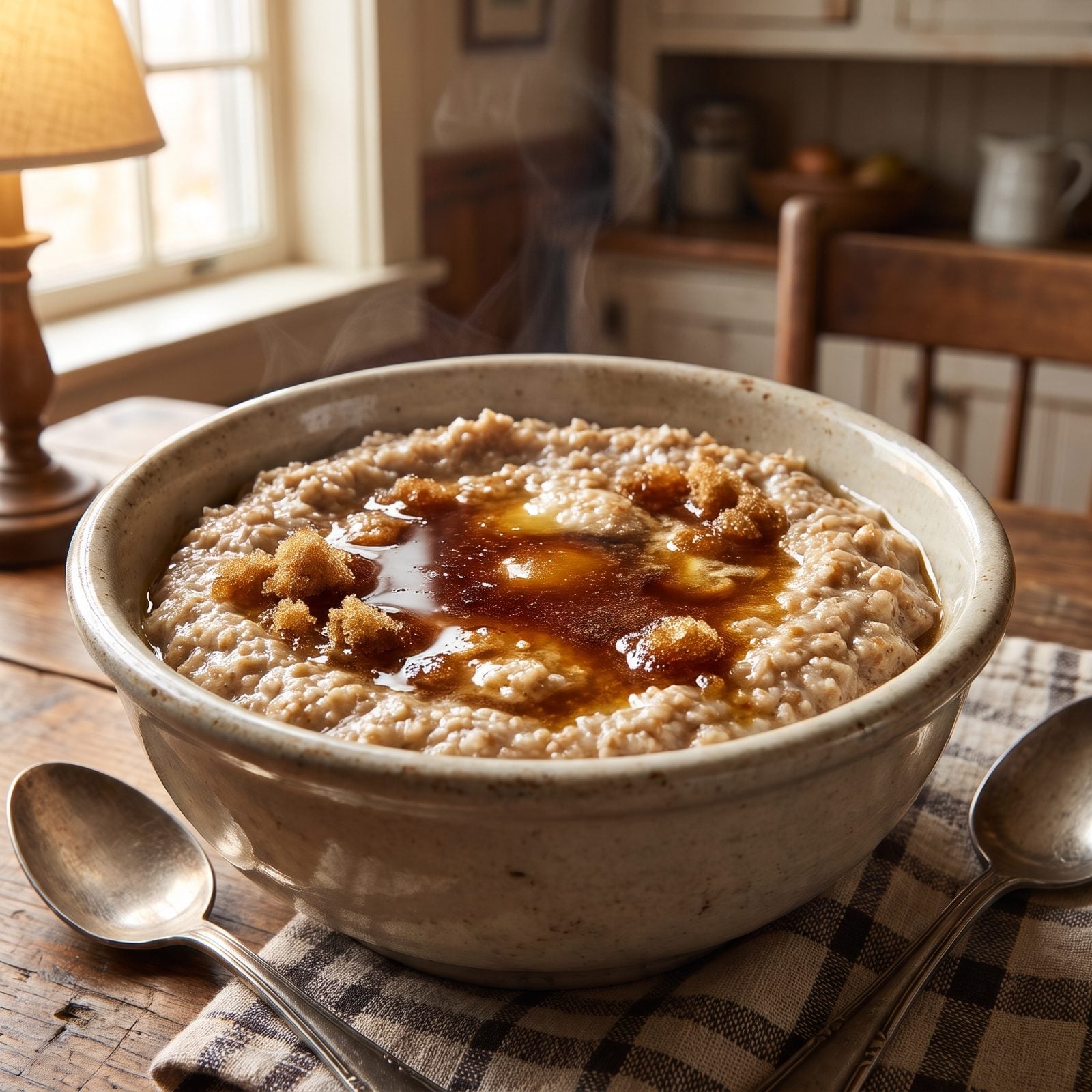
Oatmeal gets all the nostalgia, but plenty of diner counters served Ralston, that nutty wheat cereal cooked thick and hot in the back. It arrived in a heavy white bowl with a pat of butter already sliding across the top.
The move was brown sugar. A spoonful tipped into the center, where it melted into a dark glossy pool you could stir out or save for the last bite. Add cold milk from the little chrome creamer and you had a breakfast that stuck with you through a morning of real work.
3. Postum, the Coffee You Ordered When You Couldn’t Have Coffee
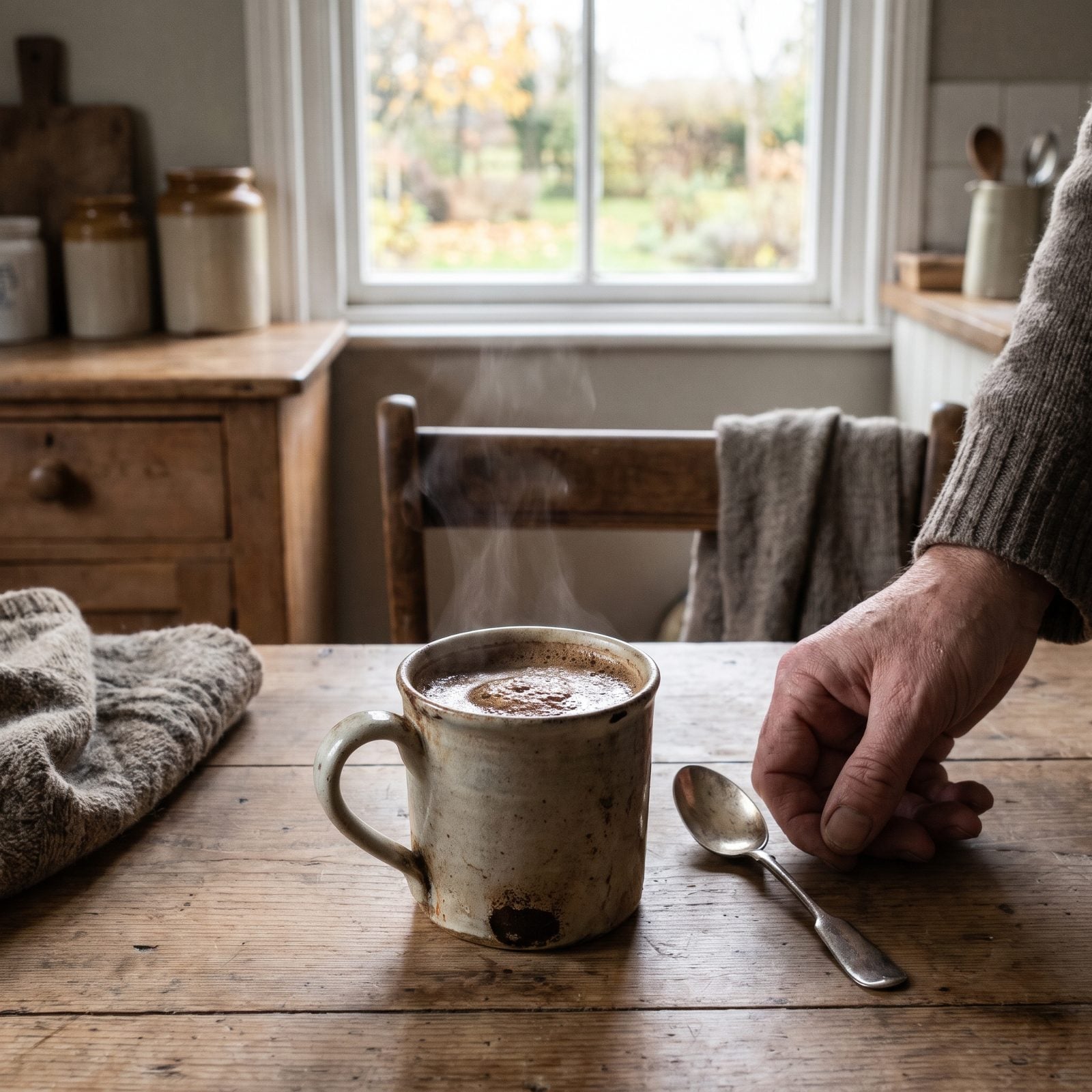
Not everybody drank coffee. Some folks couldn’t, some wouldn’t, and for them there was Postum, the roasted-grain drink that poured an opaque, foamy brown, much like coffee, and tasted like toasted wheat.
In plenty of diners, it was the same regular ordering it every morning, avoiding caffeine on doctor’s orders or by religion. It came in a heavy cream-colored, rust-speckled stoneware mug, and nobody at the kitchen table said a word. Postum went out of production for a stretch in the 2000s, and ordering it now would just get you a blank stare.
Explaining why the old roasted-grain drink still has fans, a coffee-substitute company CEO says “It’s always been marketed as healthy and good for you, but people forget that it tastes really good”
2. Bottomless Coffee From the Glass Silex Pot
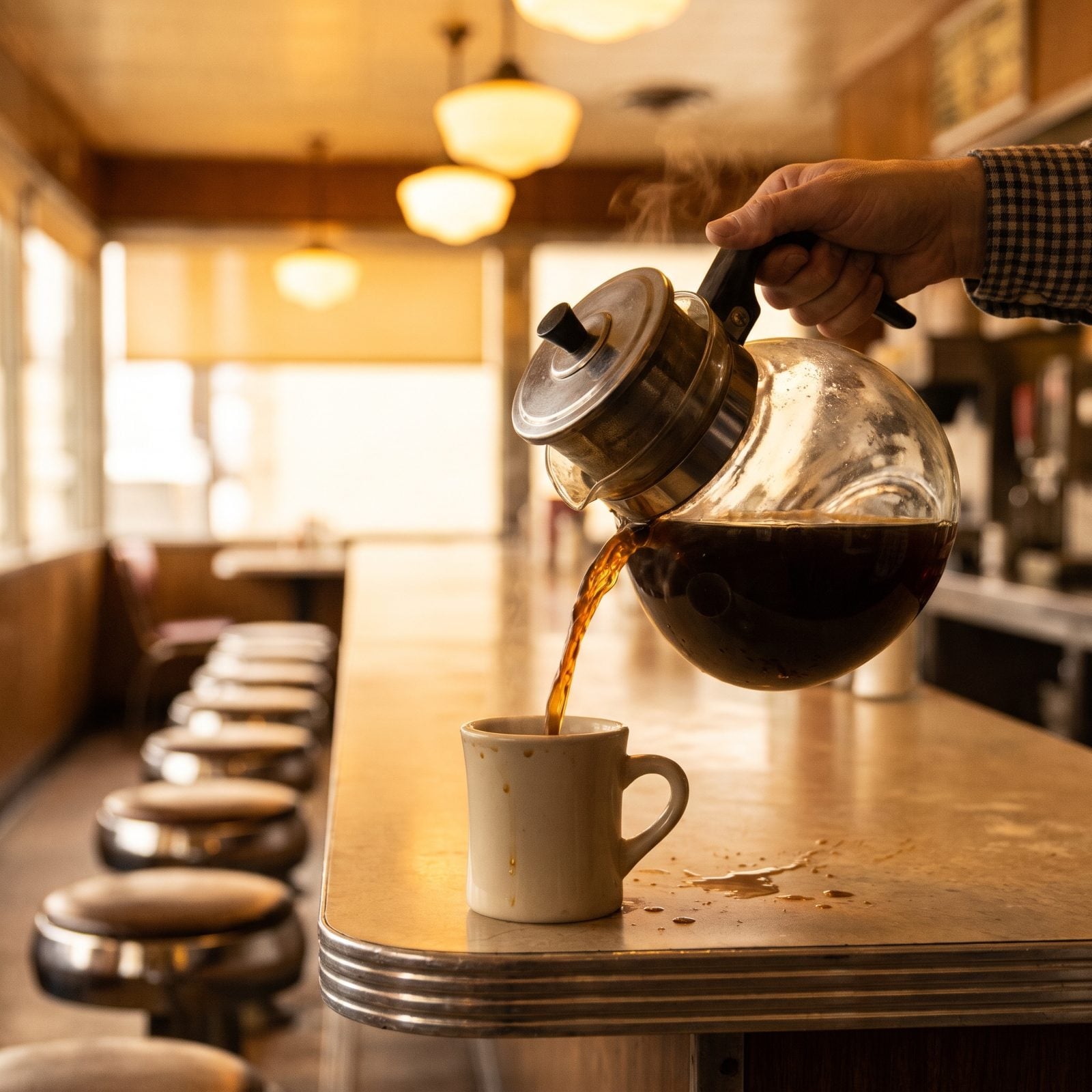
The glass pot never stopped moving. A waitress worked the counter with it in one hand, topping off cups before you’d thought to ask, the coffee dark and a little scorched from sitting on the warmer.
Nobody measured it. Nobody charged for refills. The whole system ran on that glass Silex pot going round and round the counter all morning, plus the quiet understanding that your cup would never actually be empty.
The refill was the hospitality. You didn’t ask, and it just kept coming.
That coffee wasn’t good by any modern measure. It was hot and endless and it tasted like the diner itself, and I’d trade a dozen pour-overs for one more cup of it.
1. Cinnamon Toast Made Under the Broiler
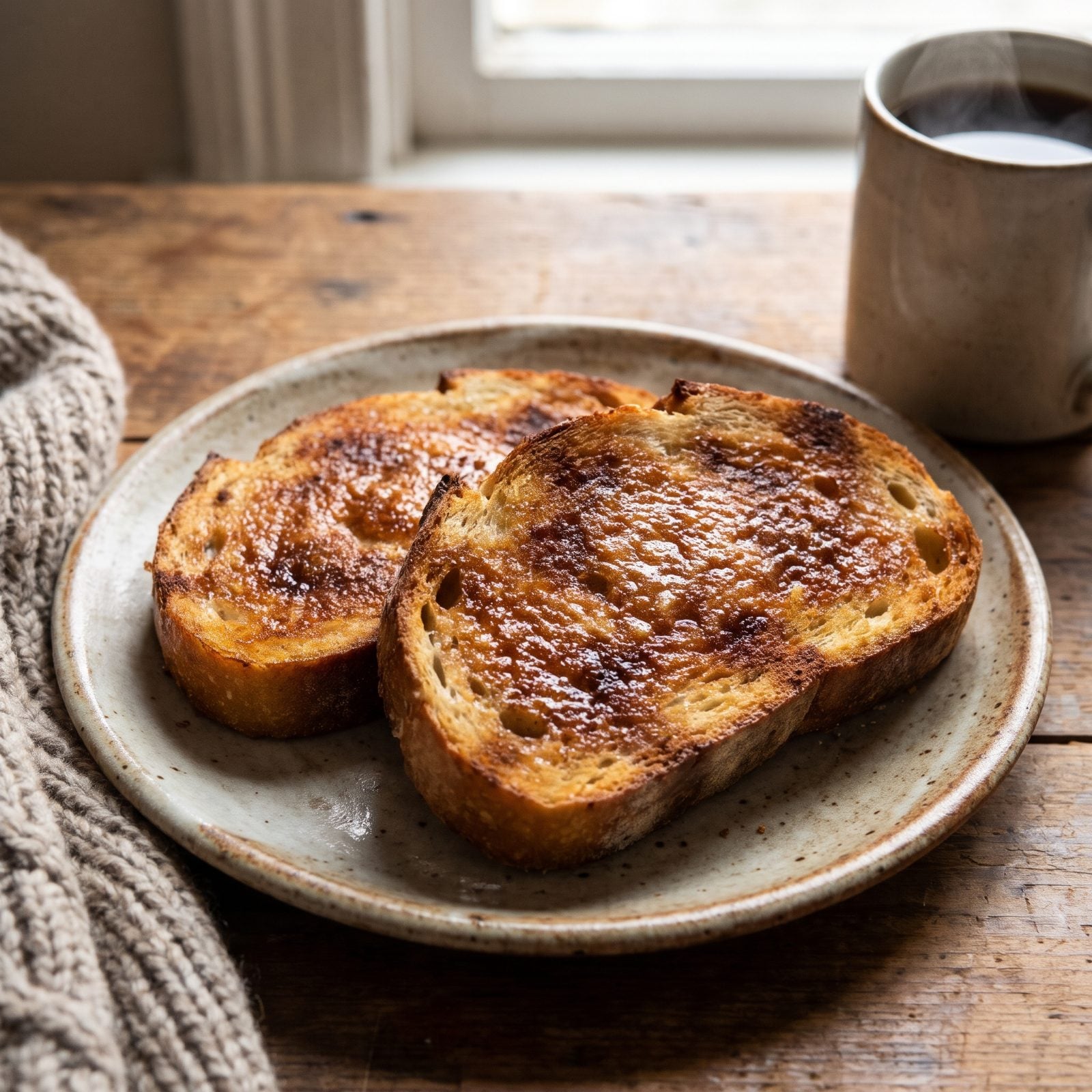
This was the order a kid could actually get excited about. Thick slices of crusty sourdough run under the broiler with butter, sugar and cinnamon until the top crackled and caramelized into something halfway to candy.
The broiler was the secret. A toaster merely warmed the bread, but that overhead flame melted the sugar into a glossy crust that shattered under the first bite. Served as two whole slices alongside a steaming mug of coffee, it was the sweet corner of the breakfast menu where the little ones always landed. Cost almost nothing. Felt like a reward anyway.