
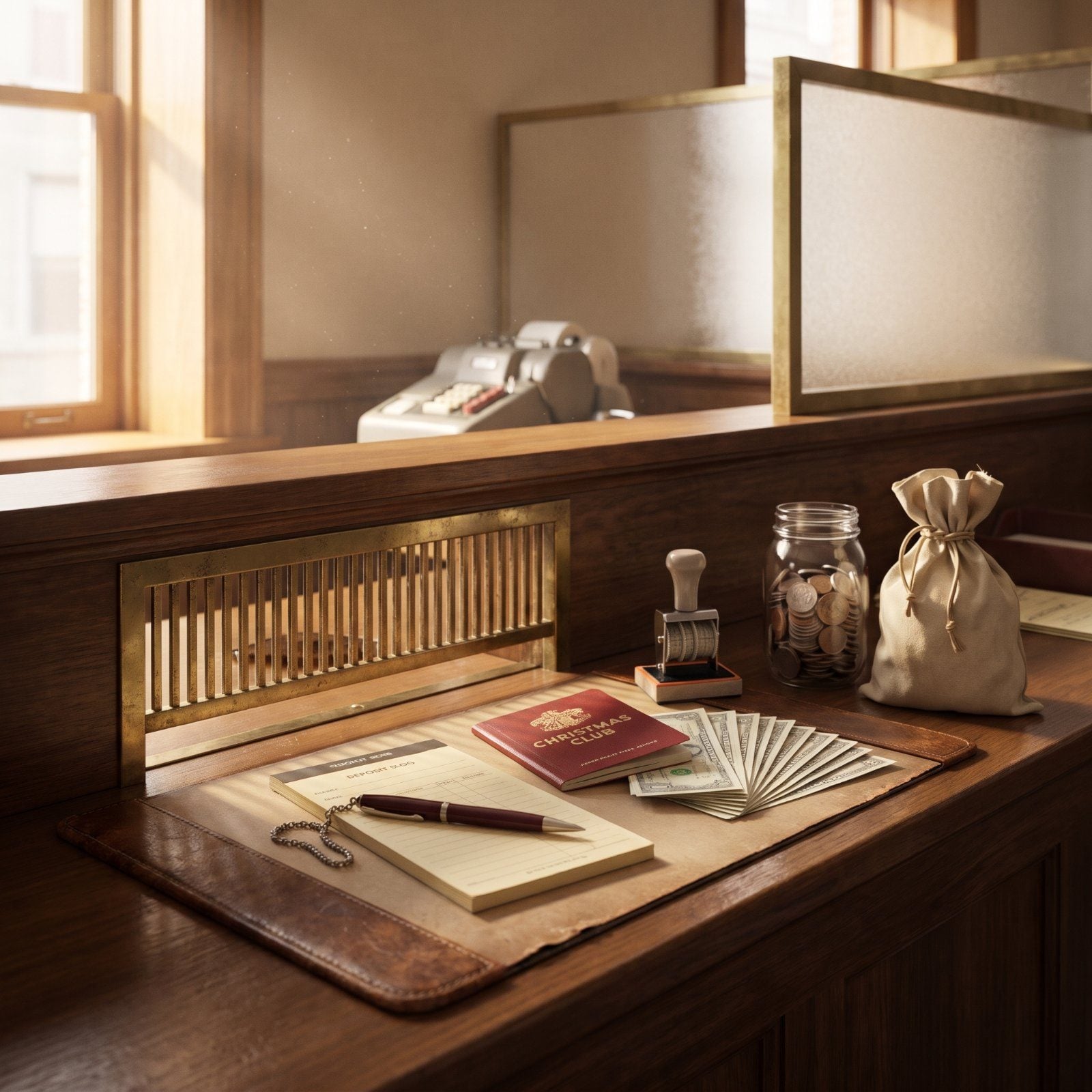
The lobby smelled like floor wax and the back of a dollar bill. A teller in a cardigan knew your name before you reached the counter, and the pen was chained to the ledge but nobody minded. Going to the bank was an errand, sure, but it doubled as a social call. You caught up, you lingered, somebody asked about your mother. Below are the small personal touches that made the whole thing feel human, back when the bank was a place and not an app.
Please note that some of the images in this article were created with the assistance of AI.
31. Greeting Regular Customers by Name
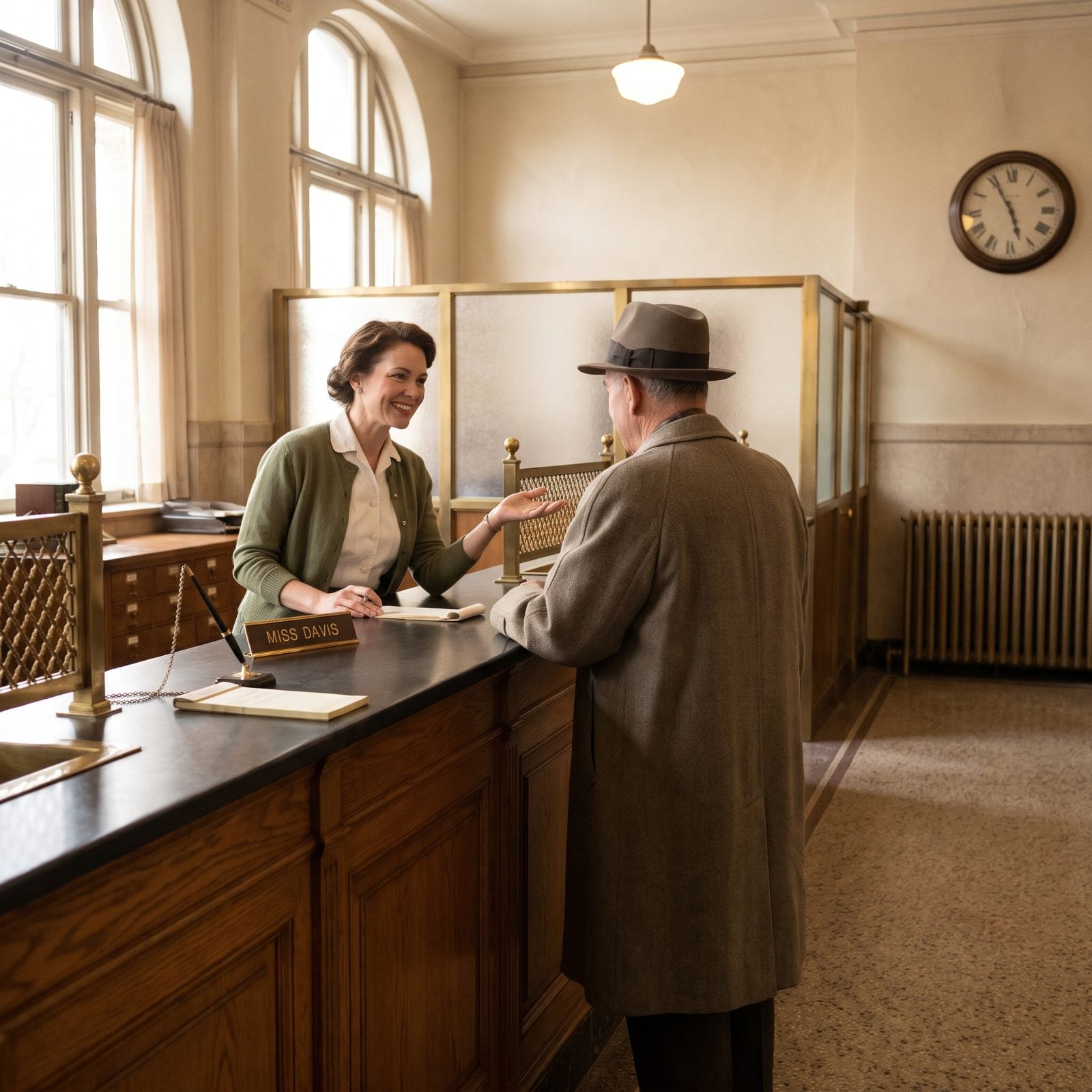
You walked in and someone said your name before you got to the counter. Not your account number. Your name. The teller knew you took cash on Fridays, knew your husband worked the morning shift, and knew to ask how the new baby was sleeping.
No loyalty program here — just a small bank with the same four faces behind the glass for fifteen years. They recognized your handwriting on a check and remembered you preferred fives. Try getting that from a touchscreen.
30. Returning Your Canceled Checks With the Monthly Statement
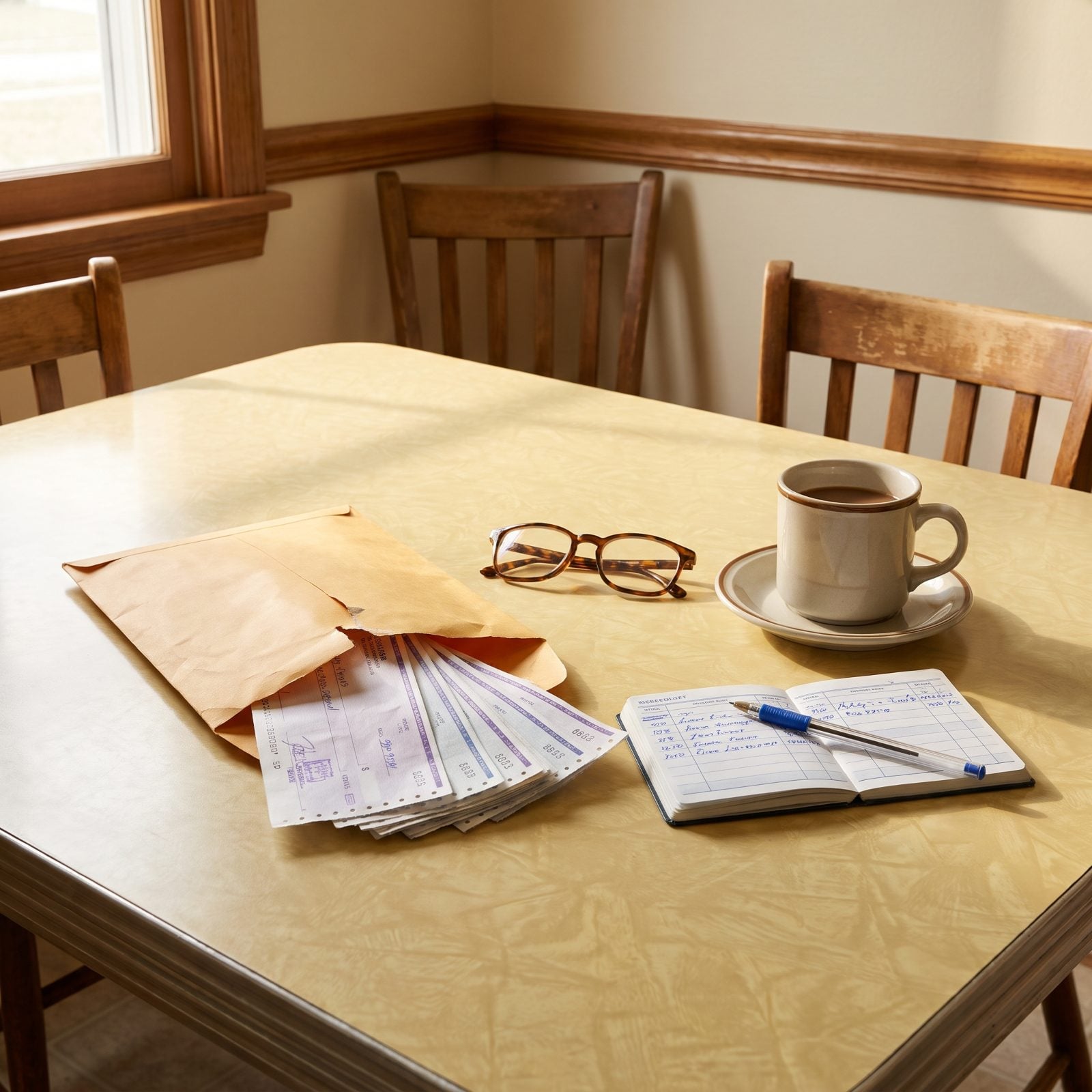
Every month the statement came thick. Not because the bank loved paper, but because your actual checks came back inside it — every one you’d written, stamped and canceled and curling at the edges like little receipts of your whole life.
You could see your own handwriting. The check to the dentist. The one to the hardware store. People kept them in shoeboxes for years because it was proof, and it was also a record of exactly how you lived. Now you get a PDF, and nobody saves a PDF.
29. Running the Christmas Club Savings Account
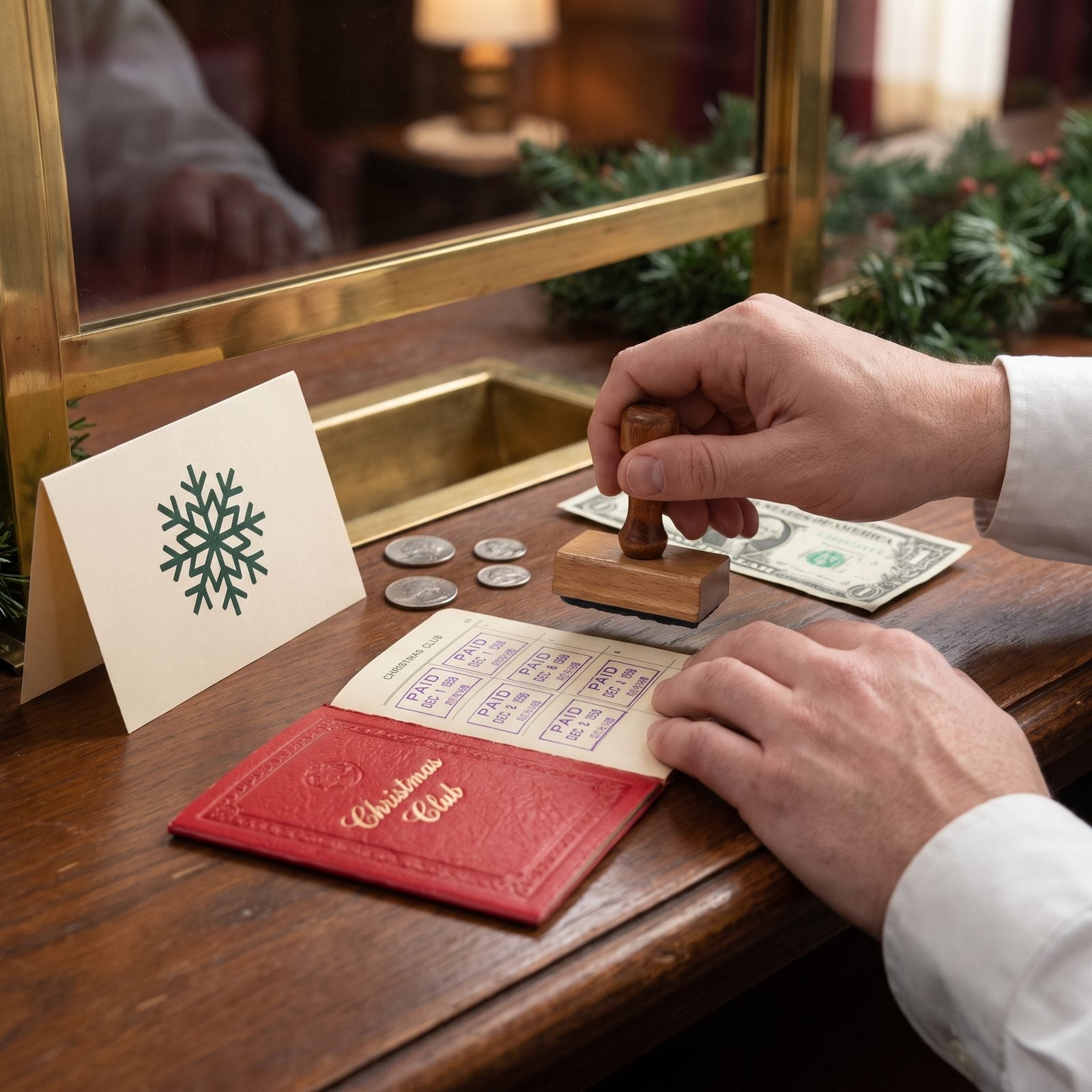
You signed up in December and got your money back the following November, right when you needed it most. A few dollars a week, dropped in every payday, stamped into a little passbook. By the holidays that trickle had become a check big enough to buy the whole family something.
The genius was that you couldn’t easily touch it. The bank held your good intentions hostage in the best possible way. People who swore they could never save discovered they could, as long as it was automatic and a little inconvenient to undo.
28. Collecting Children’s Savings Deposits Right at School
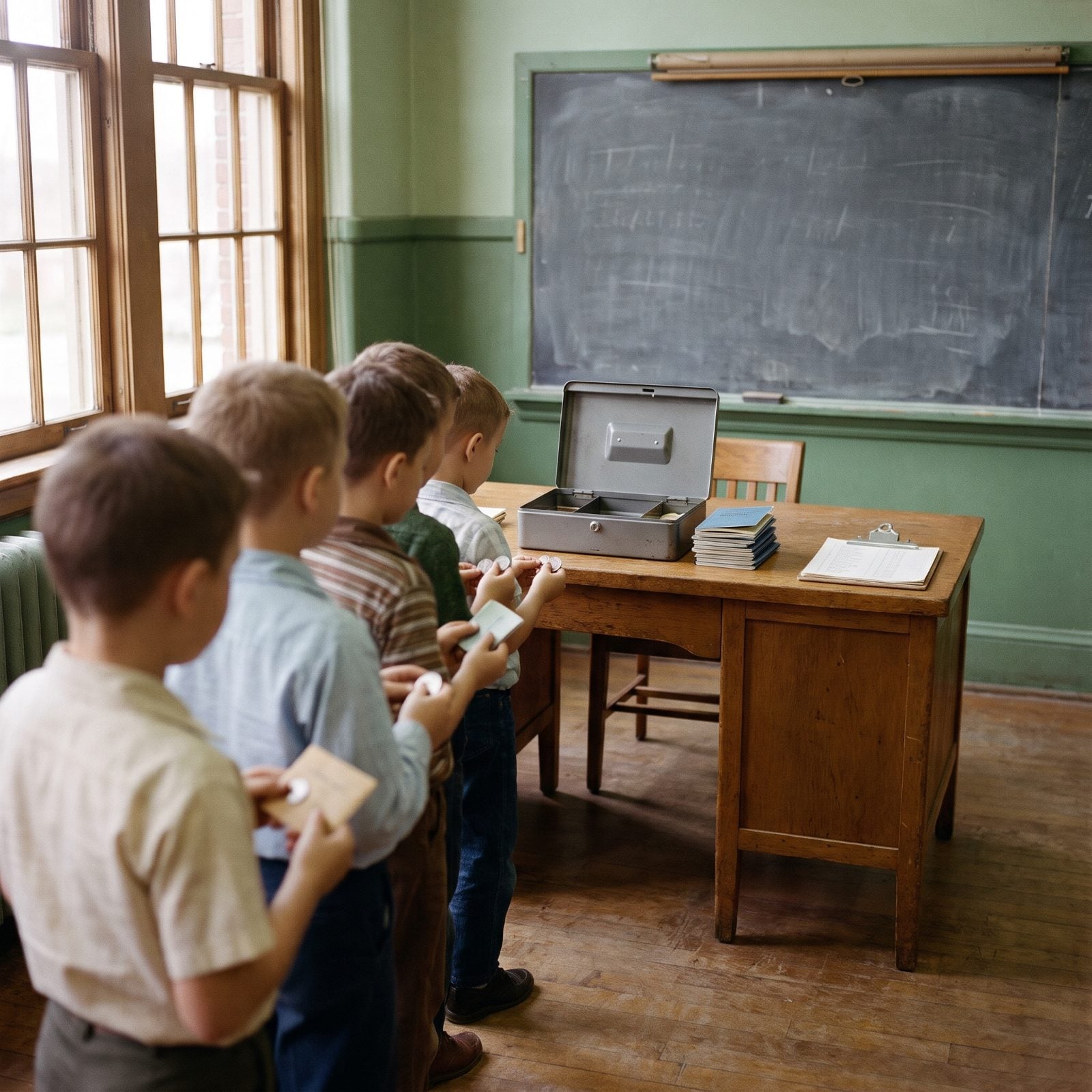
On the appointed morning you brought your dimes to school in a little envelope, and a representative from the local bank set up right there in the classroom to take your deposit. You got a passbook with your name in it. A kid’s name, in an official ledger — imagine that.
It made money feel real and grown-up at eight years old. You learned that a quarter today became a slightly bigger number next week. Half the financial sense some people ever got, they got from the classroom bank lady and her metal box.
27. Counting Your Loose Change for Free
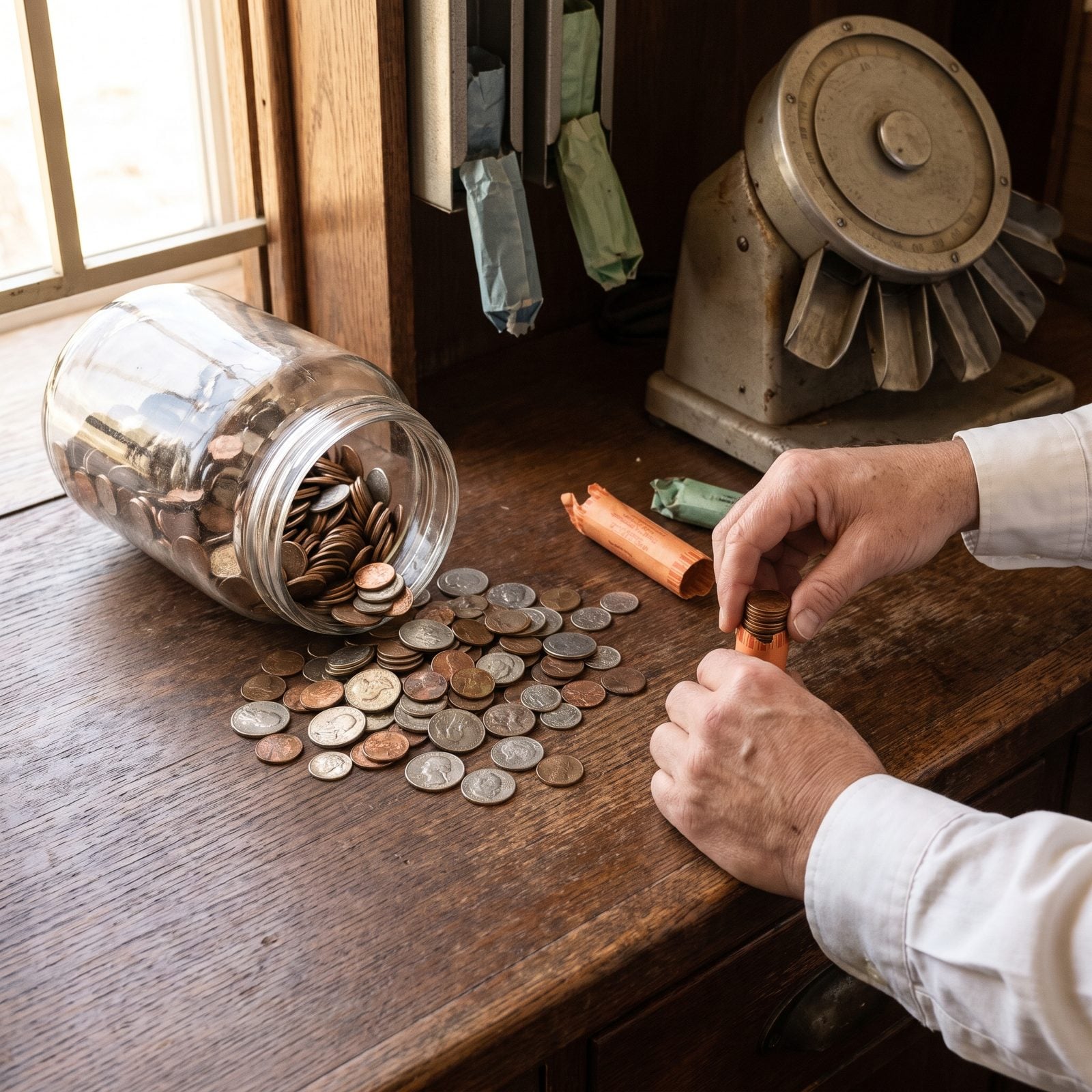
You hauled in the big jar — the one that lived on the dresser swallowing every spare penny for a year — and the teller counted it. By hand or on a little machine with a dial. No fee. No green kiosk taking a cut.
It took a few minutes and nobody rushed you. You walked out with folding money and the strange satisfaction of turning clutter into cash. The modern version charges you a cut on the dollar for the exact same favor, which still makes me a little cranky.
26. Setting Aside Crisp New Bills for Holiday Gifts
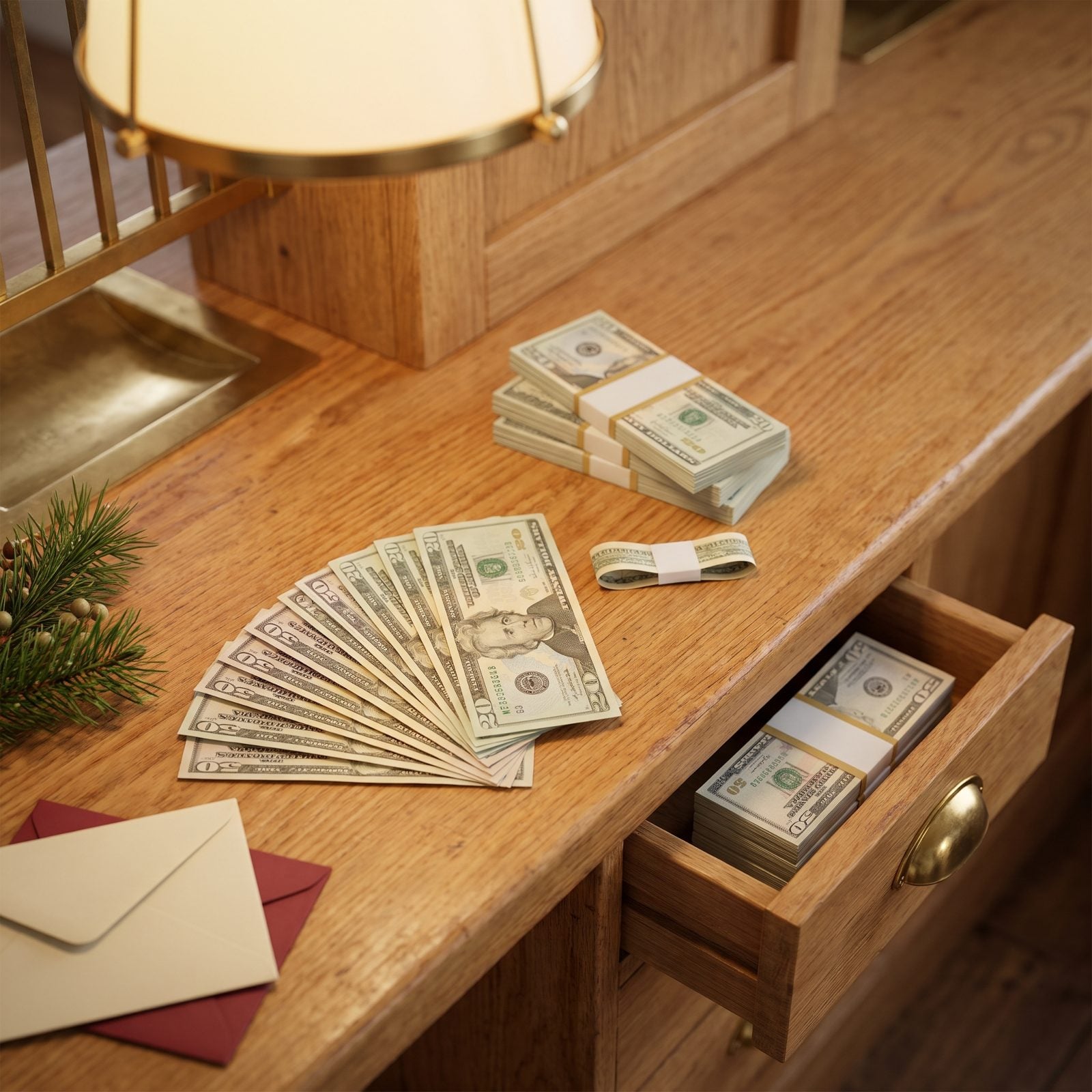
Before the holidays you’d ask the teller for new bills, and she’d dip into the fresh stack kept for exactly this. Crisp ones. The kind that snapped — the kind you tucked into a grandchild’s card so the gift felt like a gift and not an afterthought dug out of a pocket.
A tiny courtesy, but it mattered. A fresh dollar said someone planned ahead for you. Worn, soft money said the opposite. The bank understood that sentiment was part of the service.
25. Cashing Paychecks for Familiar Local Workers
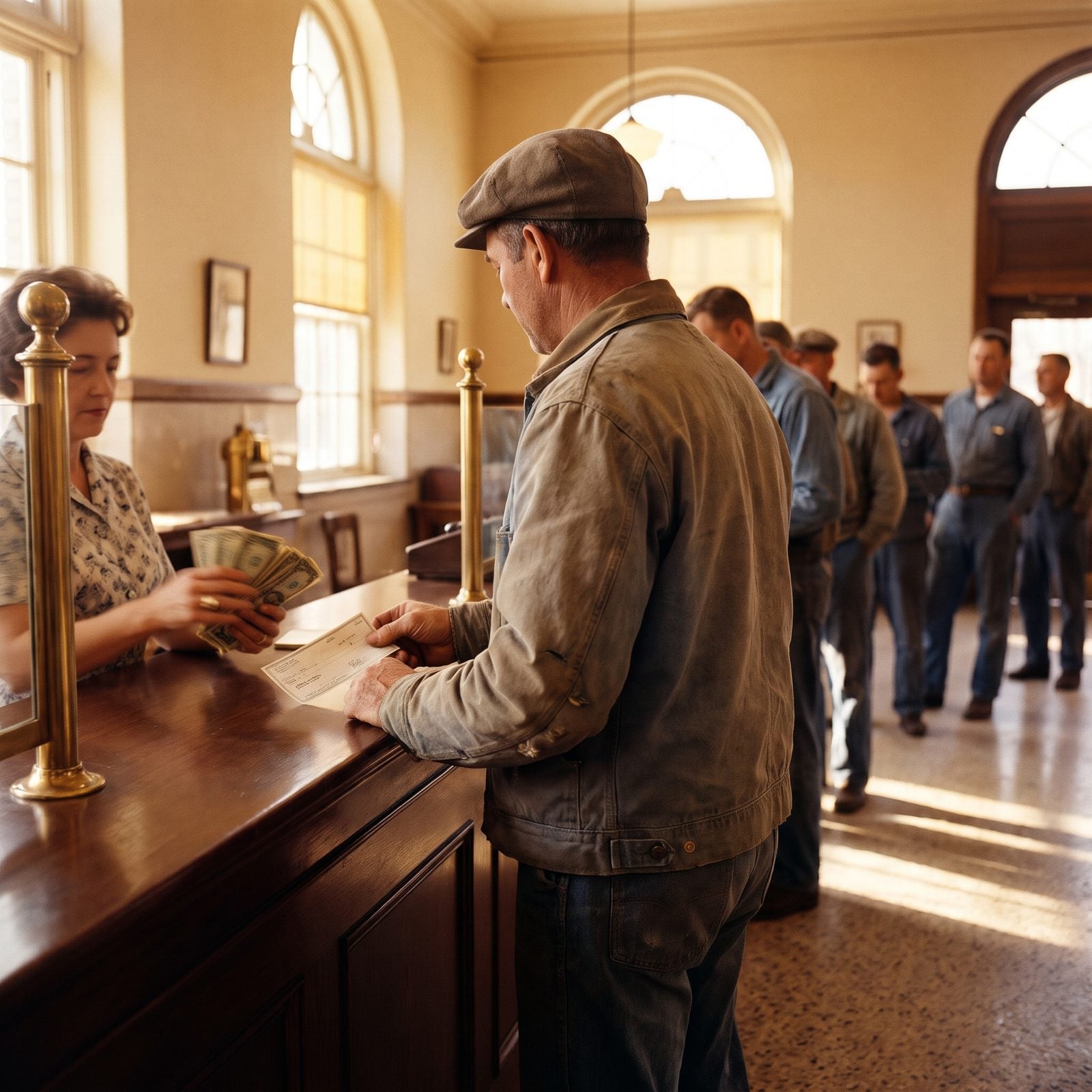
Payday meant a line of familiar faces out the door on Friday, factory badges still clipped to shirts, handing over a check and walking out with the week in cash. No two-day hold, no question of whether you were good for it. They knew where you worked. They knew the company. They knew you.
Trust did the heavy lifting that software does now. The bank was betting on reputation, and in a town that small, your reputation was the only credit score that counted.
24. Accepting Handwritten Counter Withdrawal Slips
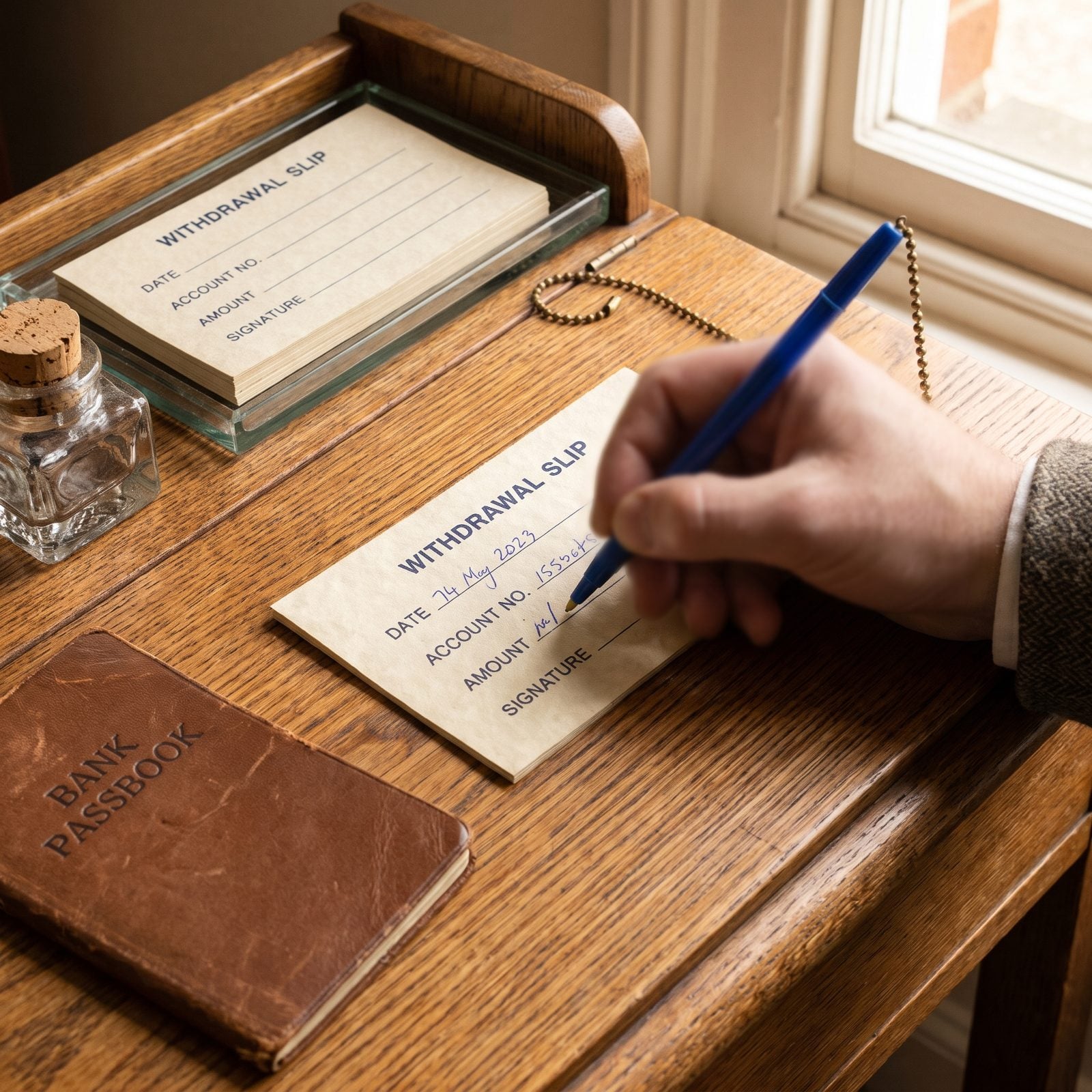
You wrote it out by hand — your name, your account, the amount in both numbers and words, right there at the little oak ledge with a ballpoint pen. Then you carried it to the window, and the teller read your handwriting and handed you your money.
No card. No PIN. No keypad. The system ran on penmanship and recognition. Lose the card you never had, and you simply wrote another slip. There was something grounding about putting your own hand to every dollar you took out.
23. Providing Temporary Counter Checks on the Spot
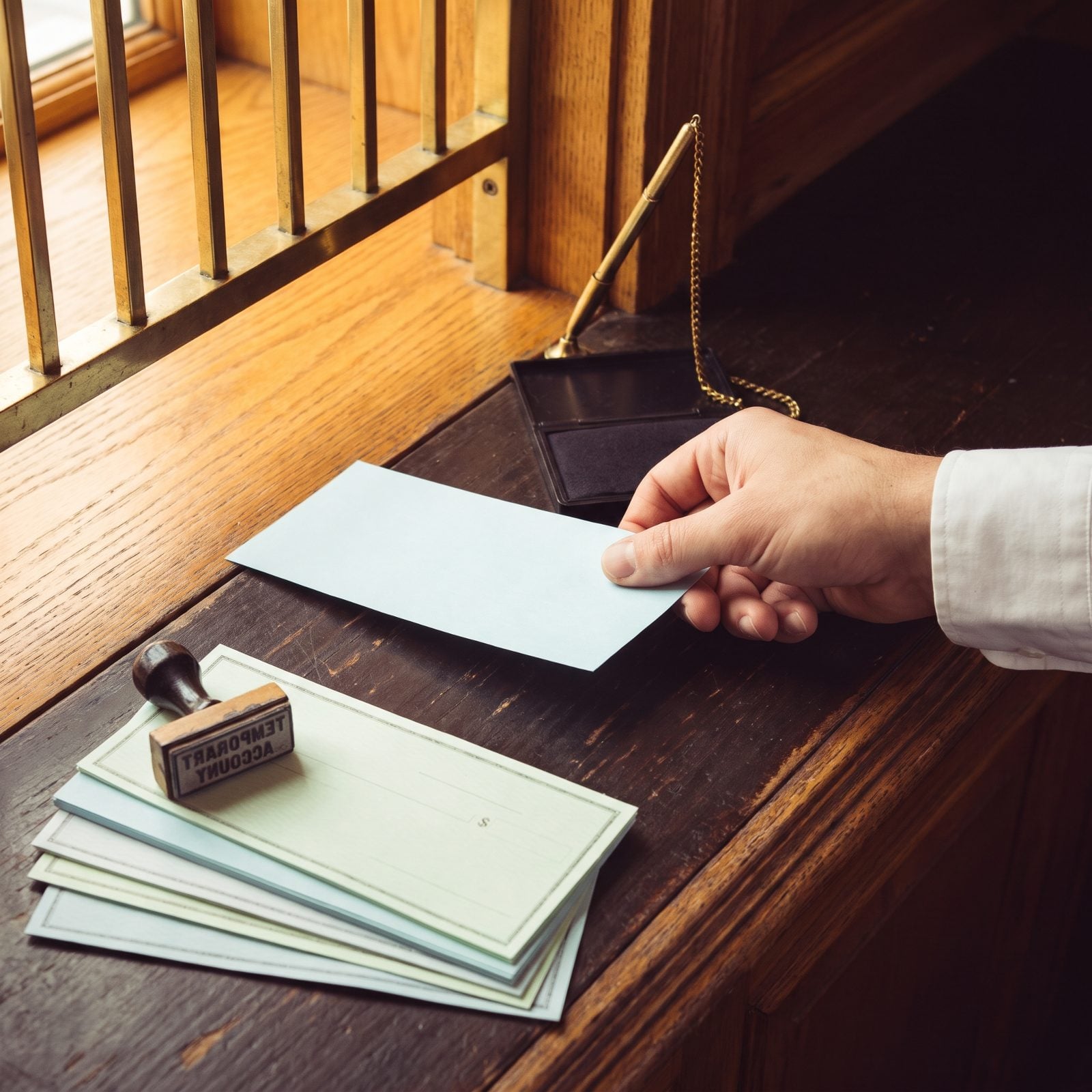
Ran out of checks? The teller handed you a few blank ones, plain as a napkin, no name printed on them, and stamped your account number on so you could pay the electric bill today instead of waiting on a reorder.
These counter checks were ugly and generic, and they saved your hide more than once — a small gap in the system, patched instantly by a human with a stamp. The whole bank operated on the quiet assumption that life doesn’t wait for your check order to show up in the mail.
22. Throwing in a Free Box of Personalized Checks
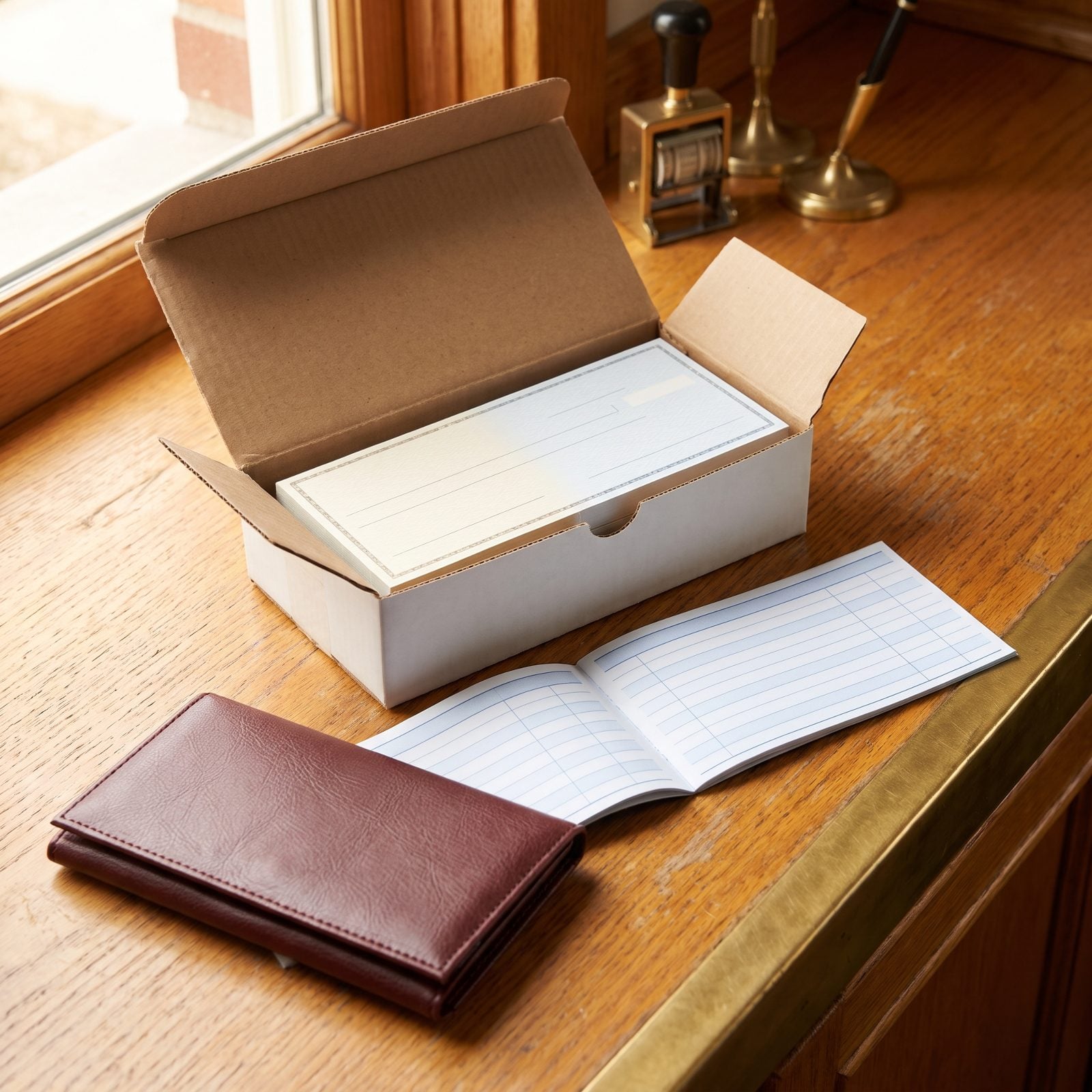
Open an account and your first box of checks came free, your name printed right on them, sometimes with your address and a little pattern you got to pick. It arrived in the mail in a sturdy box with a leatherette cover thrown in for good measure.
Your name on a check felt official. Grown. It said you had arrived somewhere. Now check printing is a fee, an upsell, a thing you order through some third party, and the box costs more than the groceries you’d write it for. Funny how the free stuff disappeared first.
21. The Check Guarantee Card That Vouched for You
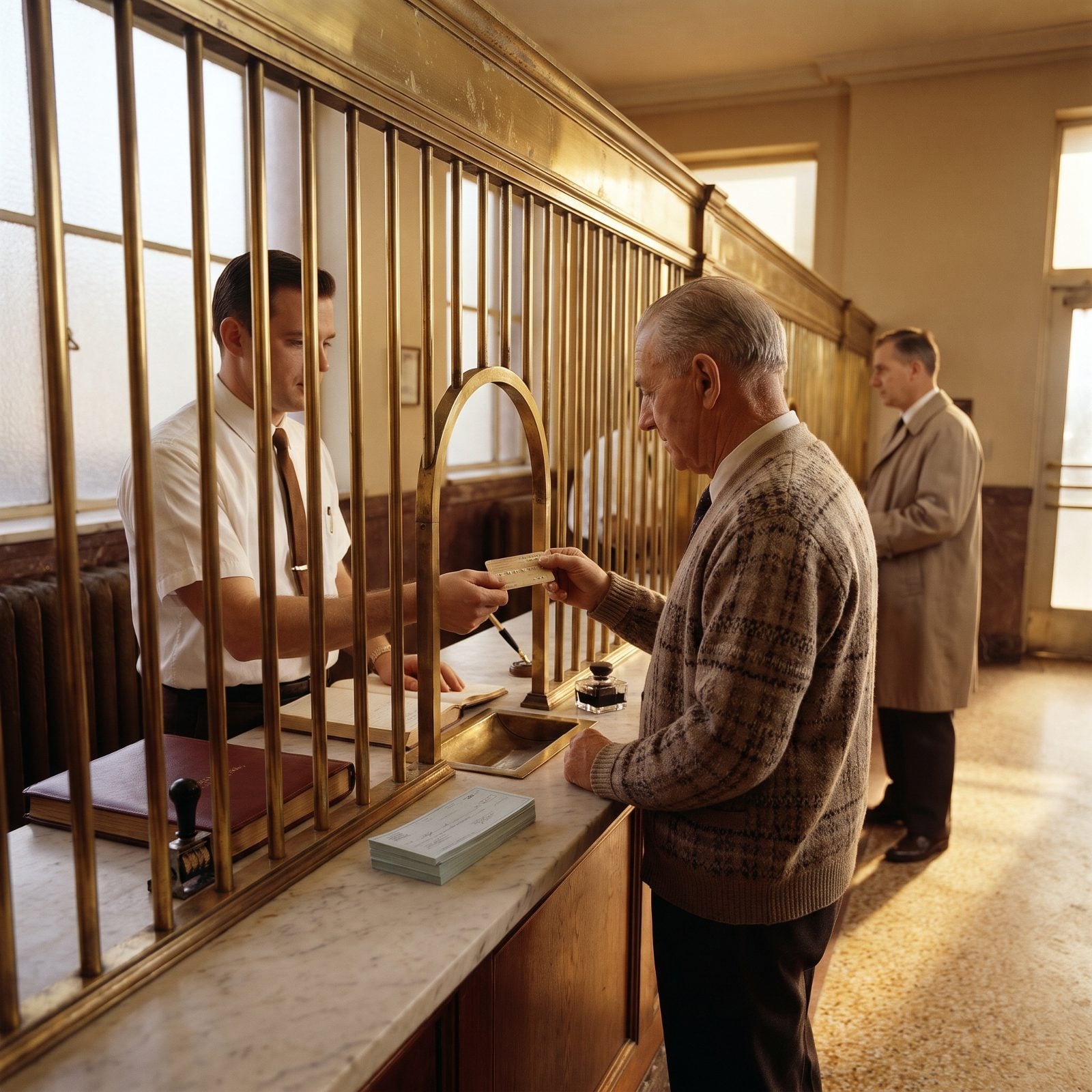
Picture a slip of plastic the size of a playing card, embossed with your account number, that told a bank teller your check was good. That was the check guarantee card, and for a while it did the quiet work a debit card does now, only backwards.
You slid it through the brass bars of the teller’s window, the teller wrote the card number on the back of the check, and the bank promised to cover it up to a stated limit. The teller cashed the check without a second look. No call to your home branch, no squinting at the signature — the bank had already put its own name behind yours.
20. Postage-Paid Envelopes So You Could Bank From the Kitchen Table

Not everyone lived around the corner from a branch, and plenty of people worked hours that lined up badly with a teller window. So the bank mailed you a bundle of envelopes, already paid for, your account details printed inside the flap.
You slid in your deposit slip and your checks, licked the flap, and dropped it in the box at the end of the drive. A few days later your passbook or statement caught up with reality. Banking that respected your time without asking you to leave your own kitchen.
19. Saturday Morning Hours That Fit a Working Week
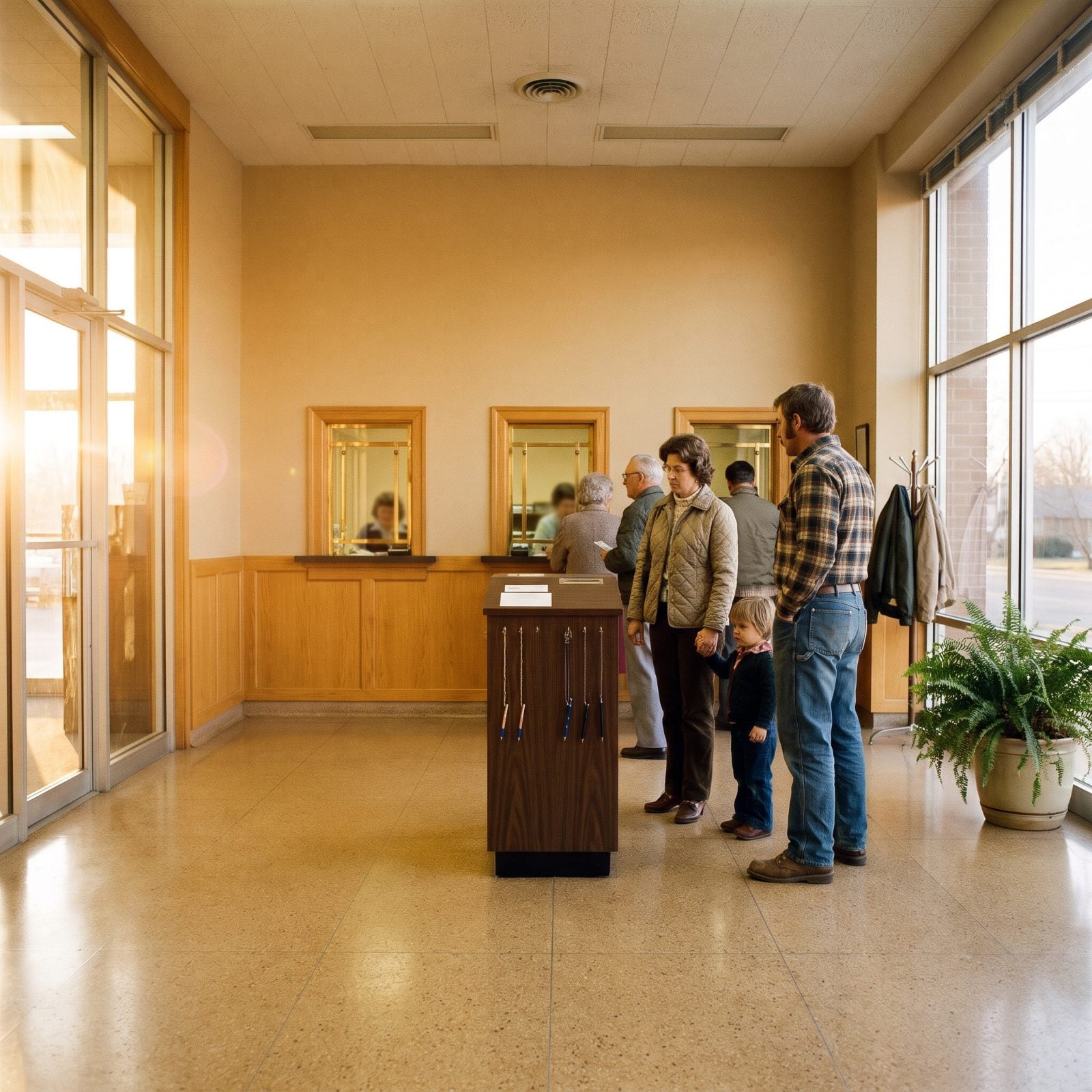
Saturday was the day the bank admitted most people had jobs. The lobby opened for a few hours, usually until noon, and it filled up with every errand you couldn’t run Monday through Friday.
You deposited the week’s pay, took out cash for the weekend, maybe signed something while the manager was in a good mood. Line moved slow because everyone else was in a good mood too. Then the branch consolidated, the hours shrank, and the ATM in the vestibule became the whole Saturday experience. We traded the line for the machine and called it progress.
18. Calling Your Branch and Reaching an Actual Desk
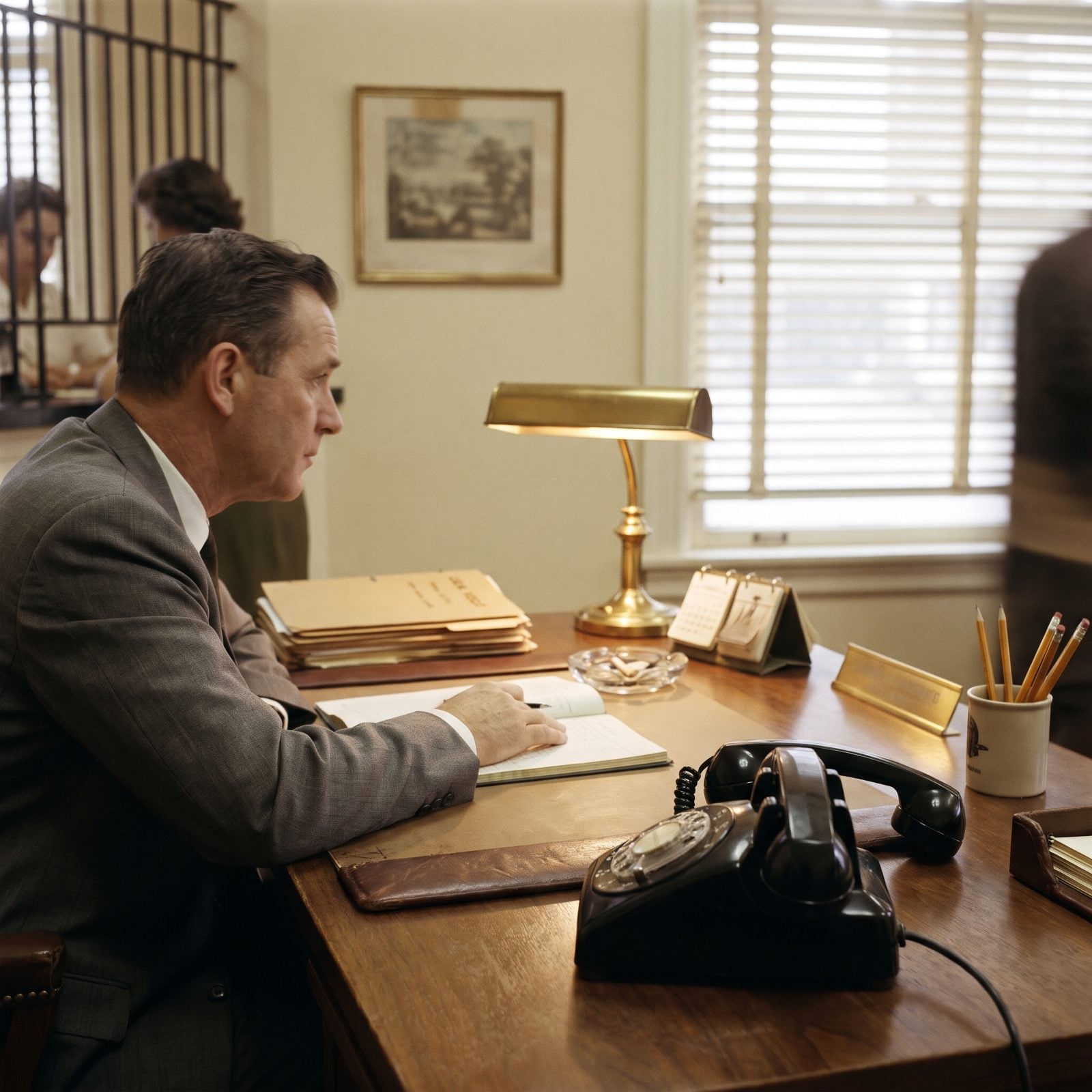
You dialed a number written on the back of your checkbook, and a phone rang on a desk forty feet from the vault. A person answered. Not a menu, not a queue with estimated wait times — a person who knew the difference between your account and your neighbor’s.
If they didn’t know the answer, they walked it down the hall and called you back. That direct line meant your banker was reachable and, more to the point, accountable. The 800 number killed it. Now you press five for the department that transfers you to the department that opens at nine.
17. The Courtesy Call Before Your Check Bounced
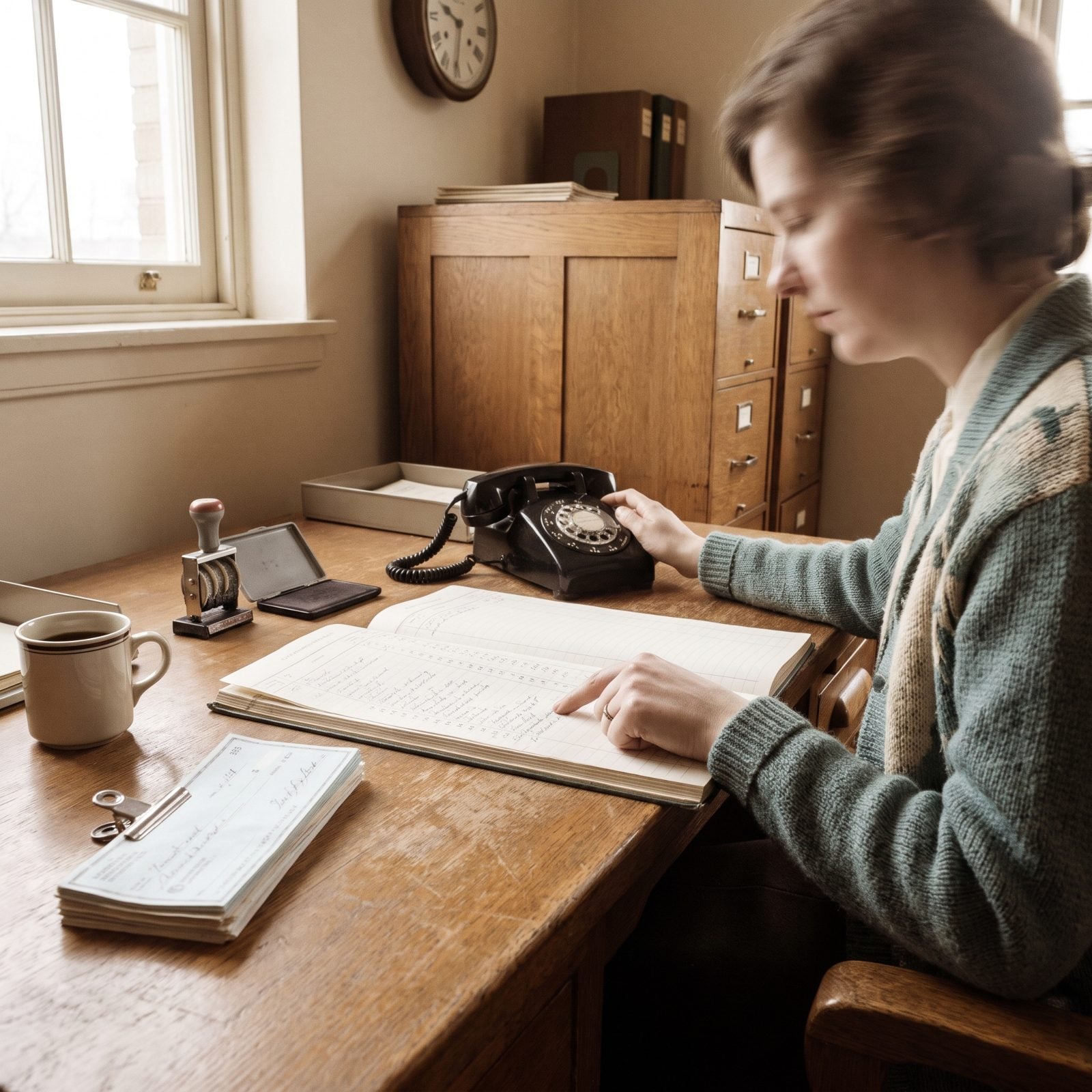
Before the fee automation and the overnight batch processing, a human looked at the ledger and noticed you were about to come up short. And sometimes that human picked up the phone.
You’d get a call: your rent check is going to clear tomorrow and you’re twelve dollars light, can you get a deposit in by two? That heads-up saved you a returned check, a bounced-check fee at the other end, and the landlord’s furious phone call. It only happened because a person recognized your name on the sheet and figured you’d want to know. Try getting that warning now.
16. Waiving an Overdraft Fee on the Spot, No Form Required
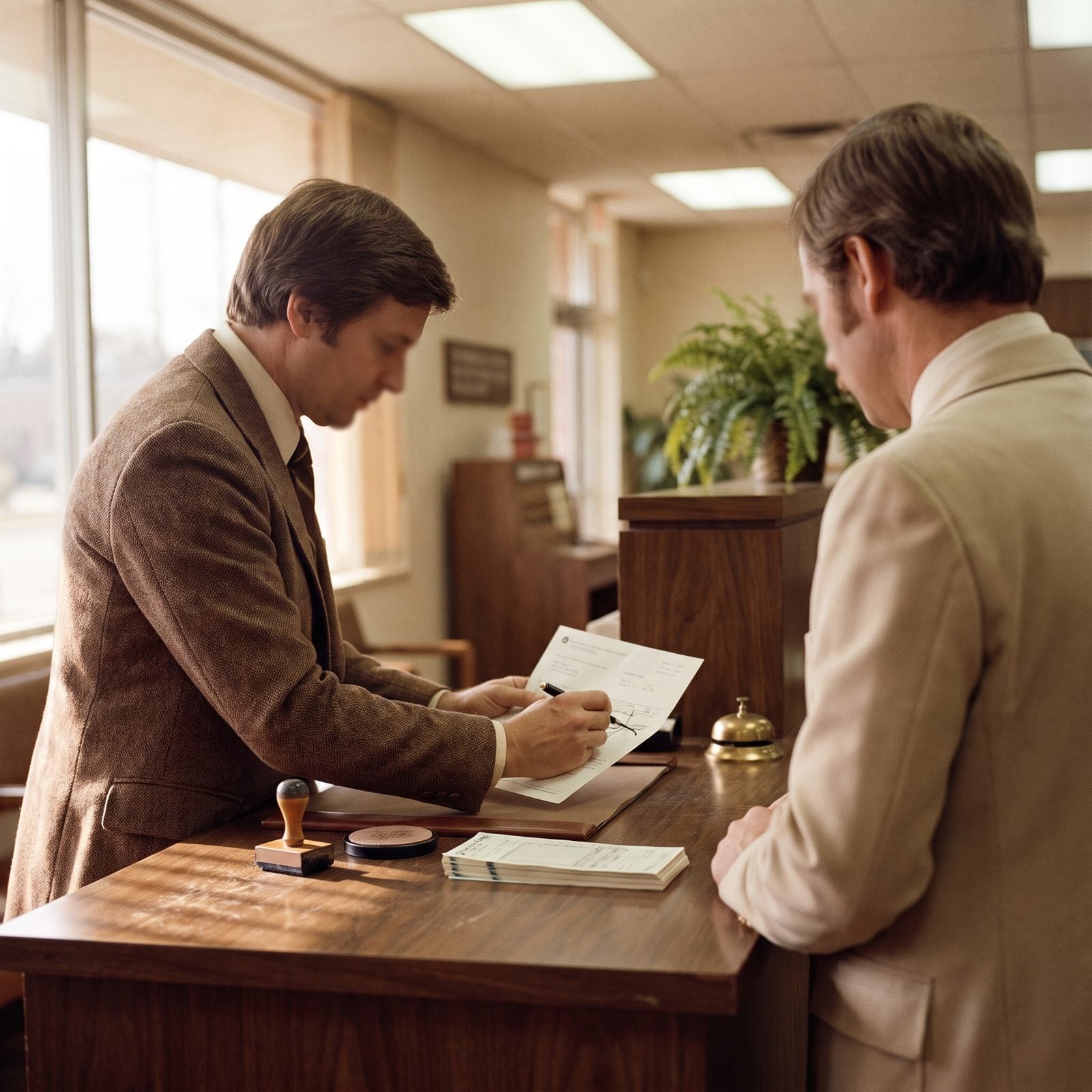
You overdrew by accident, walked in a little sheepish, and explained what happened. The manager looked at your account, saw years of deposits and one honest mistake, and crossed the fee off with a pen.
No appeal process. No 48-hour review. No scripted “I understand your frustration.” Just a judgment call made by someone who actually had the authority to make it. That discretion existed because the person in front of you could decide something — and it got stripped out of the job long before the branches got smaller.
15. Character Loans Built on What the Town Knew About You
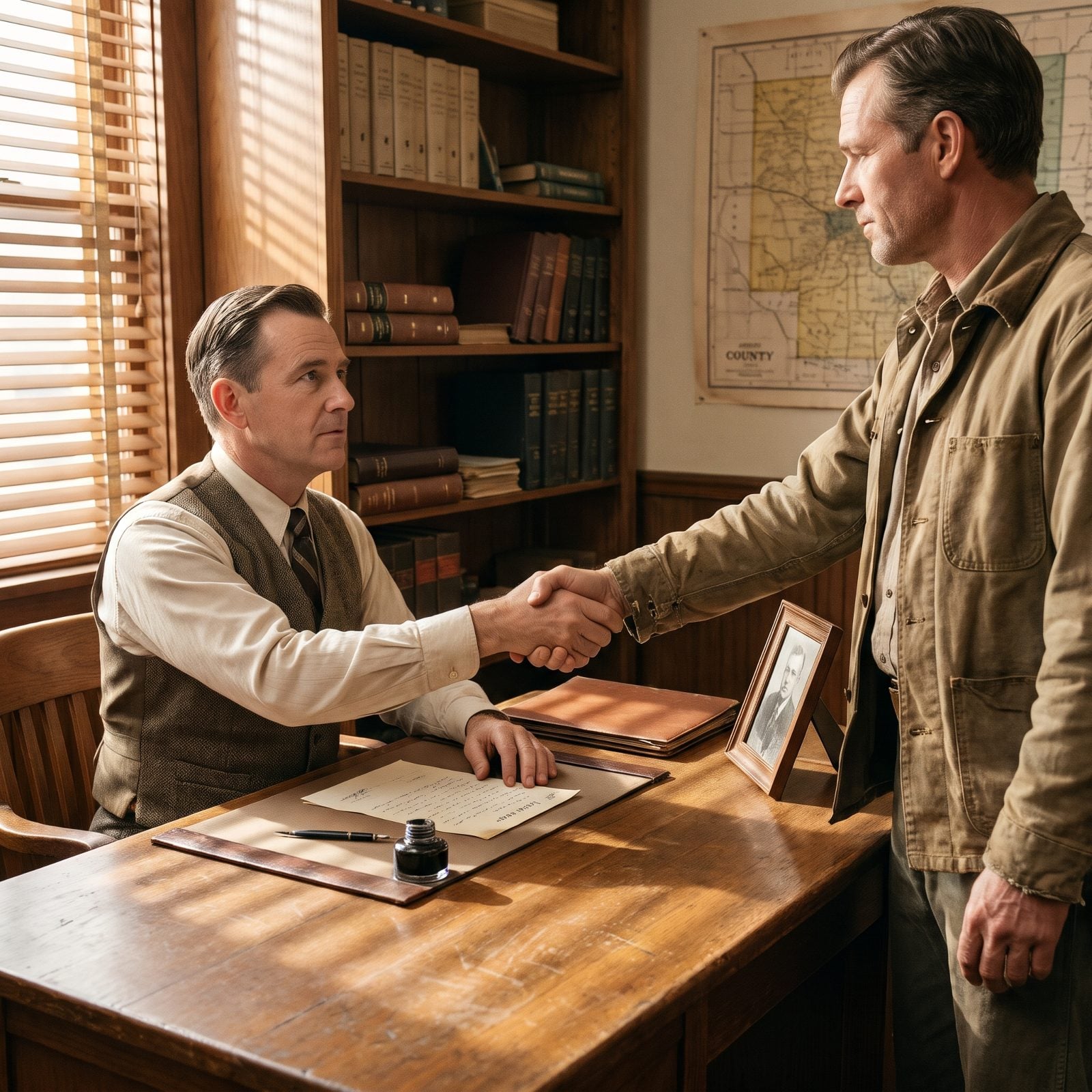
Before a three-digit number decided your worthiness, a banker who knew your father, your church, and your work record decided it. The character loan ran on reputation, which in a small town was a surprisingly accurate dataset.
The officer had watched you pay your bills, keep your word, show up to work in bad weather. That was the collateral. It was imperfect, and it could cut cruelly against outsiders — which is the honest part nobody likes to say. But for the person the banker actually knew, it opened a door a credit model would have slammed. The algorithm doesn’t know your name. The man behind the desk did.
14. The Mortgage That Stayed at the Bank Down the Street
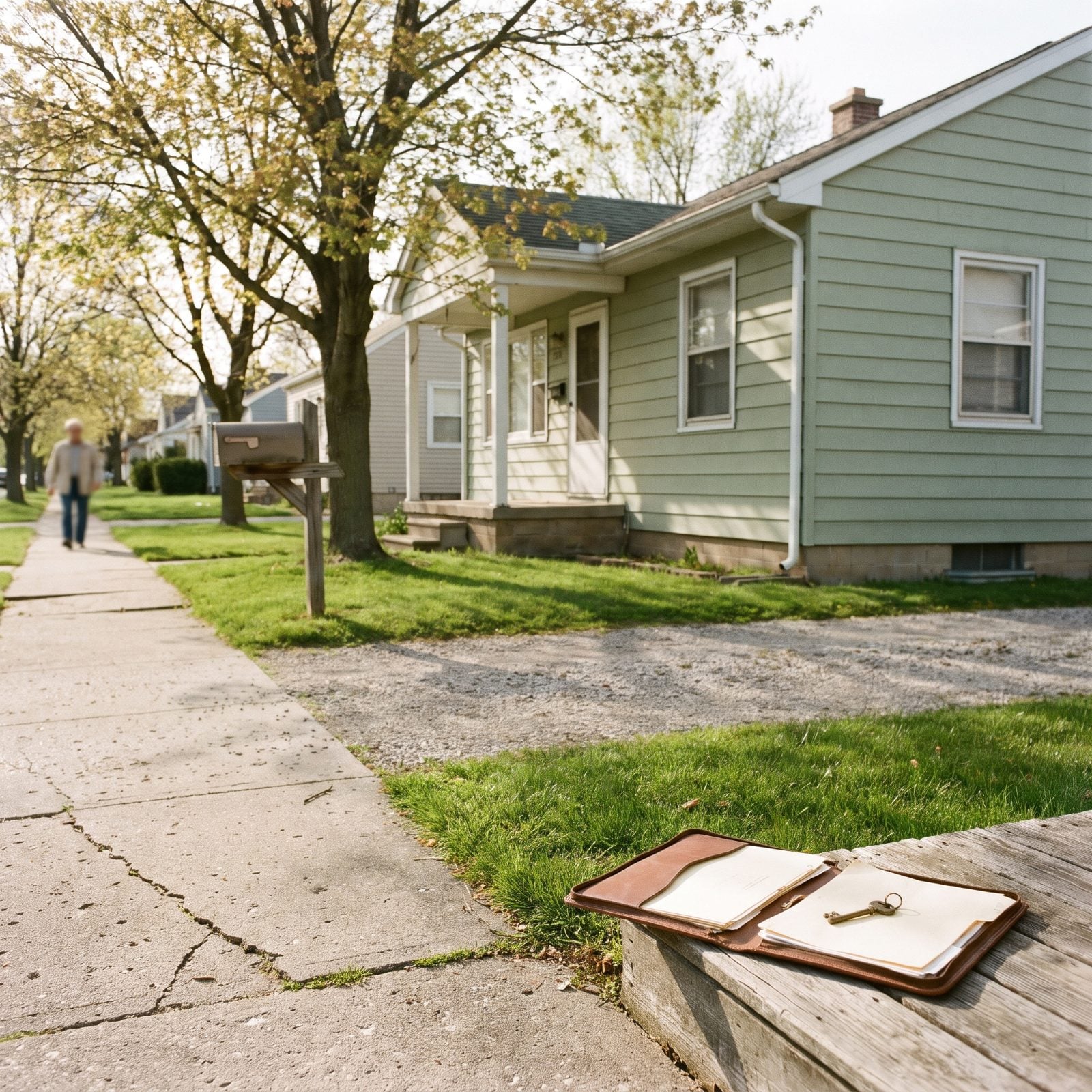
Your mortgage had a face, and the face lived in town. When you signed, the local bank or savings and loan kept the loan on its own books. They held the paper for thirty years, right there at the branch you could walk into.
If times got hard, you talked to the same institution that made the loan, and it had every reason to work something out rather than take back a house it would then have to sell. The loan didn’t get bundled, sliced, and mailed to an investor three states away. It stayed put. When servicing went national, the relationship went with it, and your mortgage became a line item owned by nobody you’d ever meet.
13. Farm Loans That Waited for the Harvest

A farmer doesn’t earn money in twelve even monthly installments. It comes in once, at harvest, in a flood, and the rest of the year is spent on seed and prayer. The local banker got this because the local banker ate the same crops.
So the loan was built around the calendar that actually ruled the land — payment due after the harvest sold, not on the first of every month like a car note. If the rain failed, the banker had the sense and the standing to restructure rather than foreclose on the only collateral that could ever pay him back. That kind of patience required knowing the ground. Literally.
12. Walking a Small Business Through the Slow Season
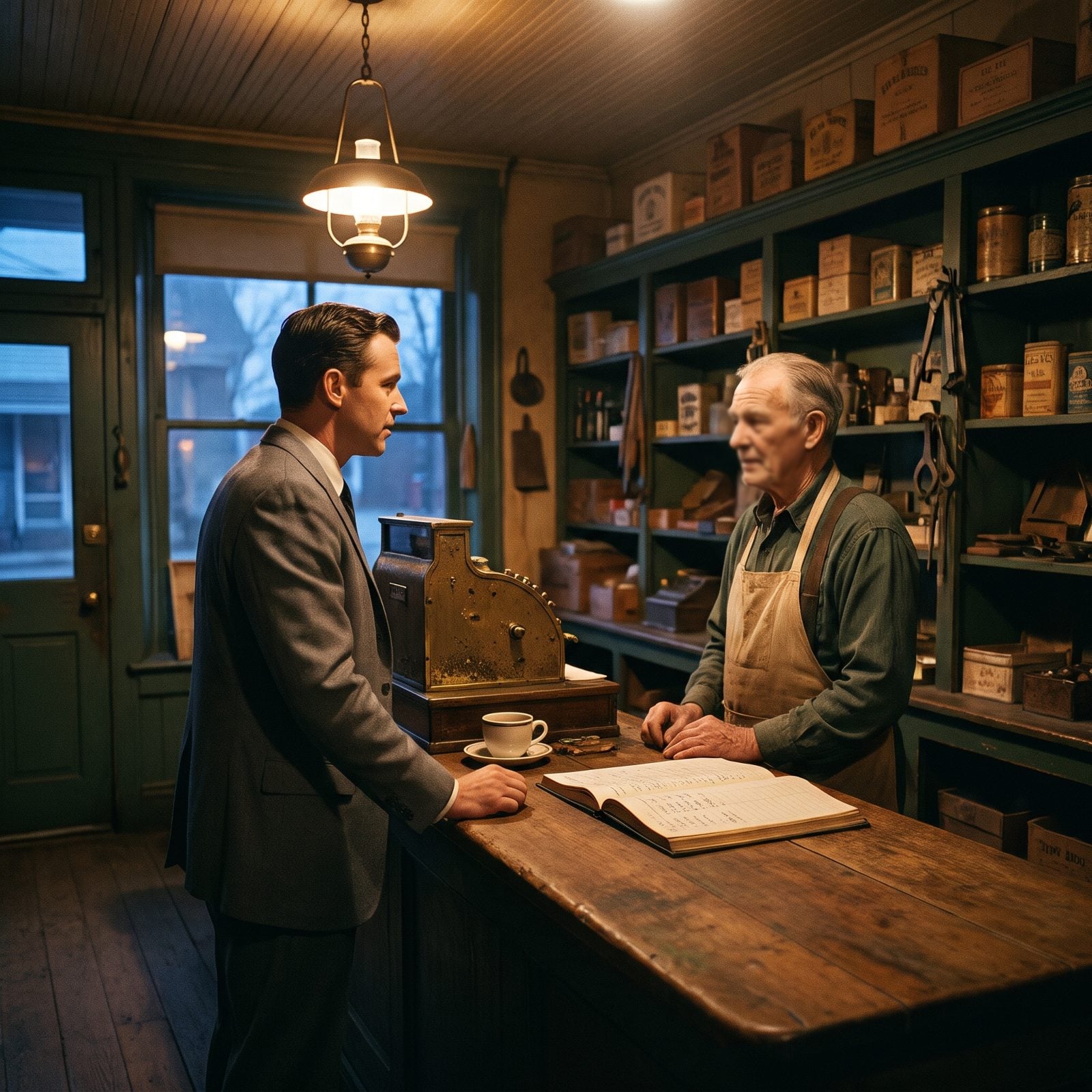
The banker who stopped by the shop wasn’t selling anything. He was looking at the till over the slow winter months and telling the owner, plainly, that summer would carry it if they held tight and trimmed the Tuesday orders.
Free advice, from someone who had watched a hundred shops on the same street survive the same lean stretch. He knew which months were thin and which were fat before the owner did, because he banked the whole block. The shop stayed open. The bank kept a customer who remembered who stood by them when the register went quiet. That kind of counsel walked out of banking the day the loan officer stopped walking the neighborhood.
11. Mailing Coupon Books for Monthly Loan Payments
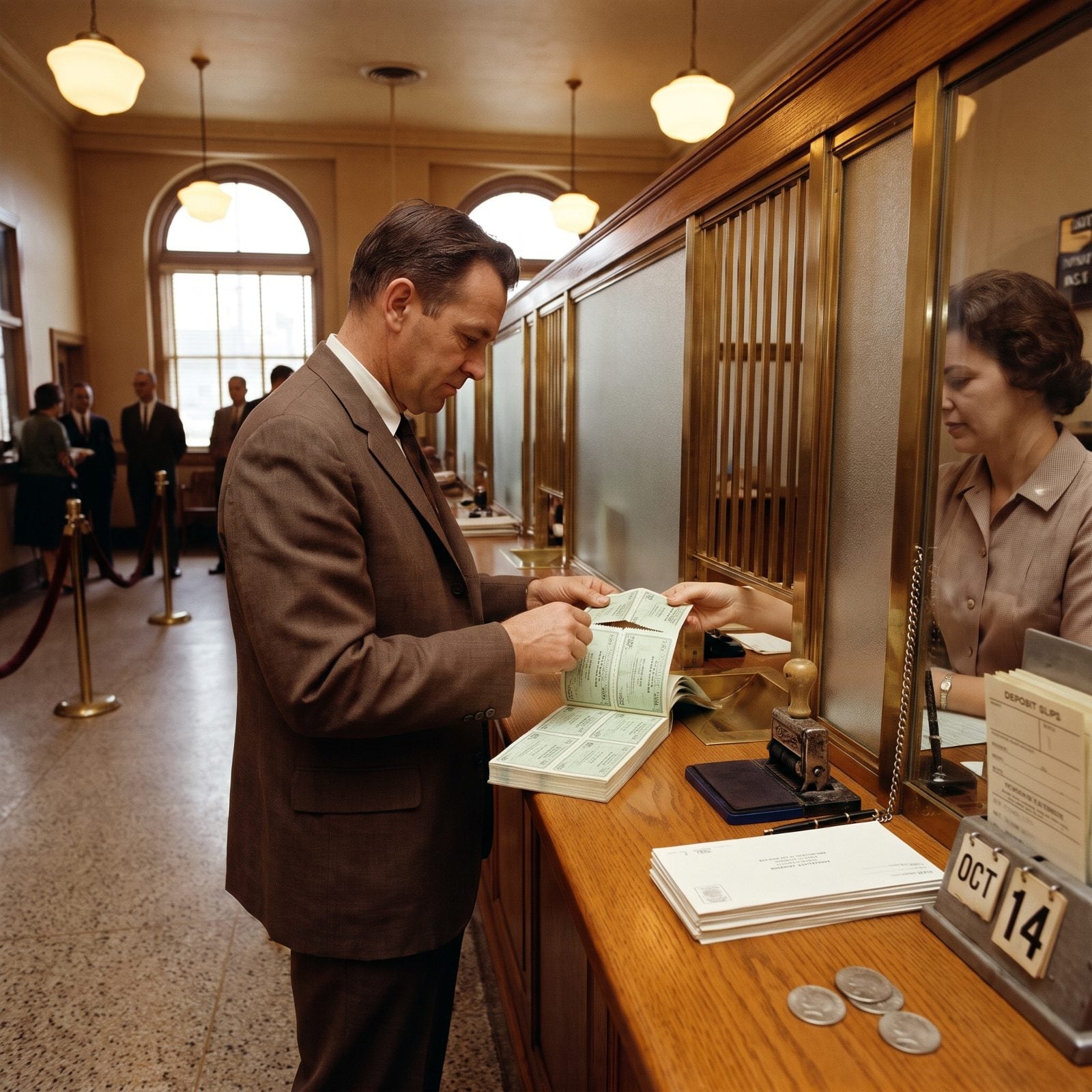
Before autopay drafted your mortgage while you slept, a thick little booklet showed up in the mail. Every page a perforated coupon. Every coupon a month of your life stapled together.
So you’d tear one out, scrawl your account number across it, tuck it into the envelope with your check, and lick the stamp. Watching the stubs thin out over the years was its own quiet thrill. That last coupon? It meant the car was finally yours, or the house was one step closer.
10. Maintaining Plenty of Safe-Deposit Boxes
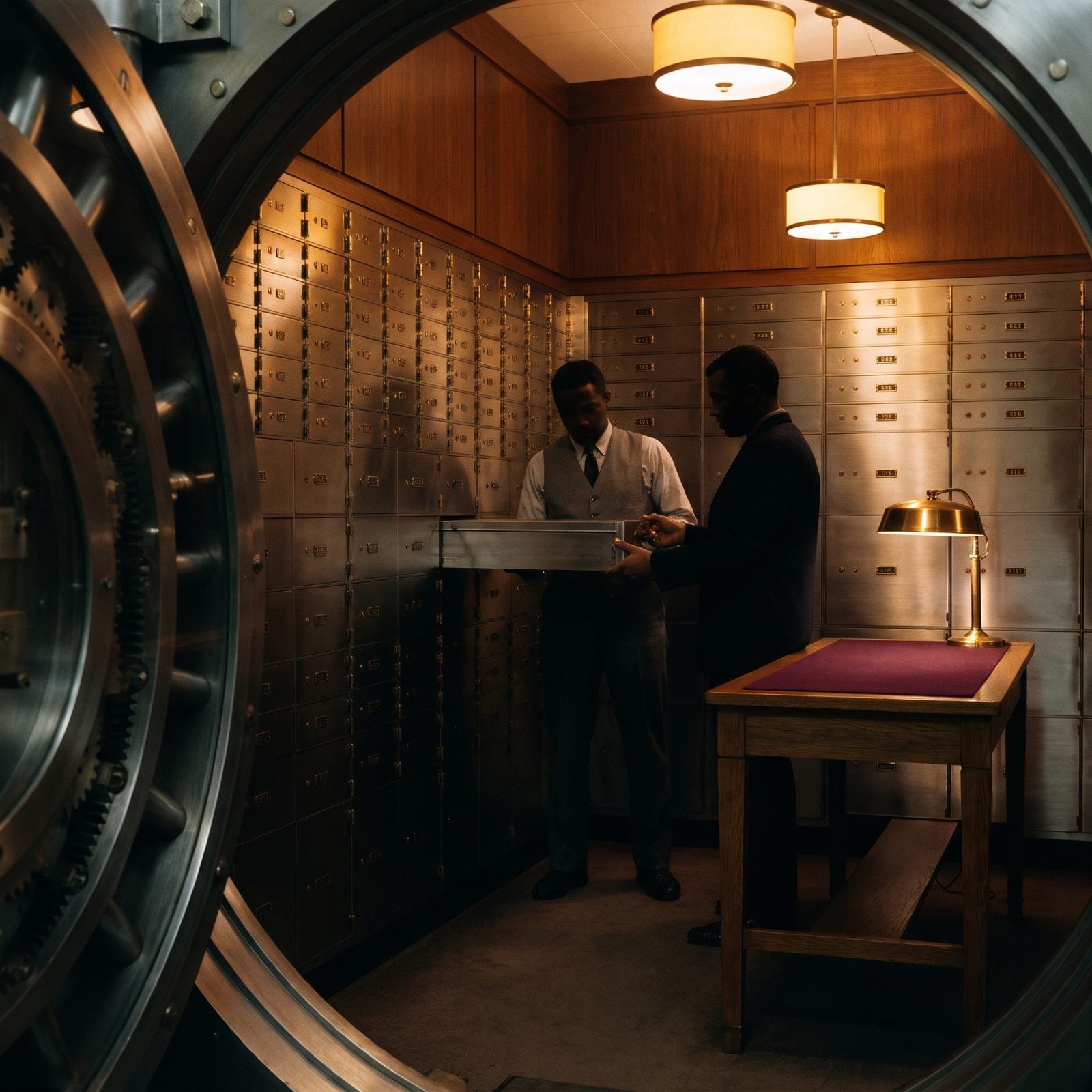
The vault was the quietest room in the building — cold air, a wall of numbered steel doors, and that small ceremony of two keys turning at once, yours and the bank’s. Neither one worked alone.
Inside your rented box lived the stuff too important for a sock drawer. Birth certificates, the deed, a ring from a grandmother. Maybe some cash the household didn’t quite trust the mattress to hold. You’d carry the long steel drawer to a private booth, pull the little curtain, and sort through your own history in peace. No screens, no notifications, just you and the paper that proved your life happened.
Banks stocked hundreds of these boxes because people genuinely needed them. Renting one felt like being handed a secret the whole institution had quietly agreed to keep.
9. Selling Traveler’s Checks at the Teller Counter
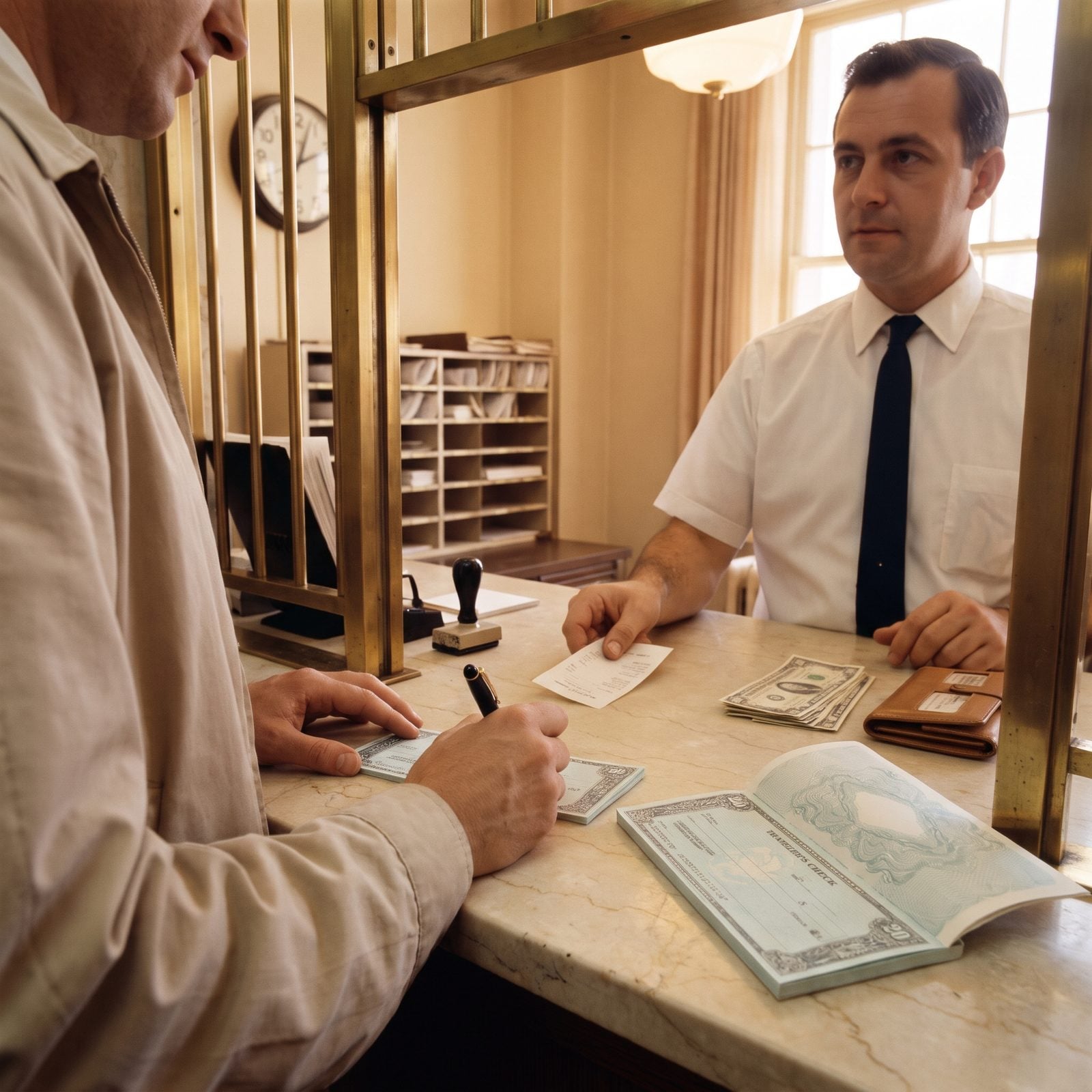
You bought them before any big trip, the way you’d pack a toothbrush. A pad of crisp checks, bought right at the window, each one needing two signatures — one when you got them, one when you spent them. Lose the pad and the issuer replaced it. That was the pitch, and honestly, it was a good one.
The teller counted them out, you signed the top line while they watched, and suddenly your vacation money felt bulletproof. Hotels took them. Restaurants in Paris took them. That countersignature was your passport back to your own cash.
8. Issuing U.S. Savings Bonds in Person
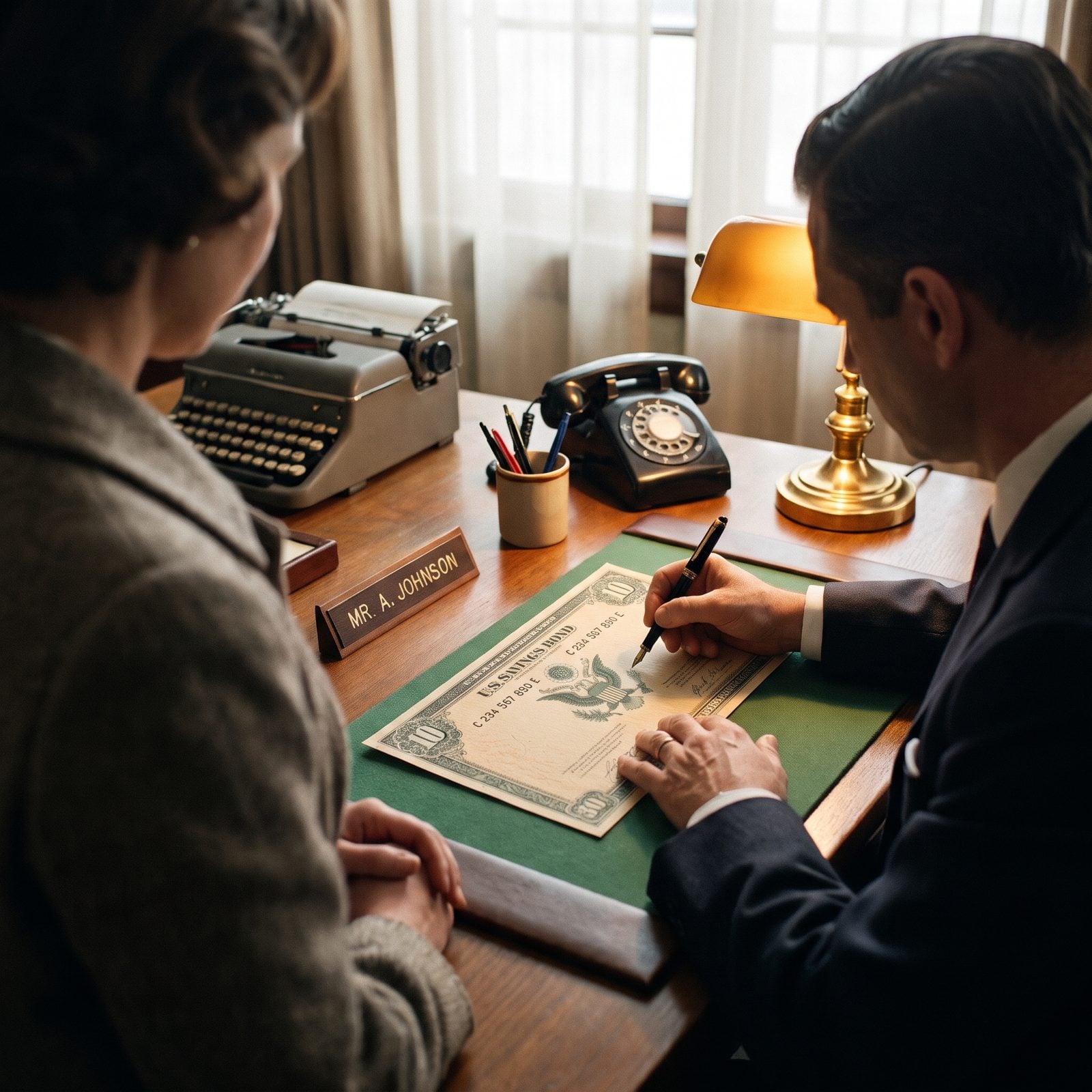
Nothing said we believe in your future quite like a savings bond for a birthday. A heavy sheet of engraved paper, worth double in a decade, handed over by a bank officer who typed your name right onto it.
Grandparents bought them by the stack. You stuffed yours in a drawer, half-forgot it, then found it years later and discovered it had quietly grown up without you. The wait was the whole point — a bond taught patience to a kid who wanted candy money now.
Cash it early and you lost the magic. Buying one meant standing at the counter while someone filled in the blanks by hand, slow and ceremonial, somehow more real than a number glowing on a screen.
7. Accepting Utility Bill Payments at the Branch
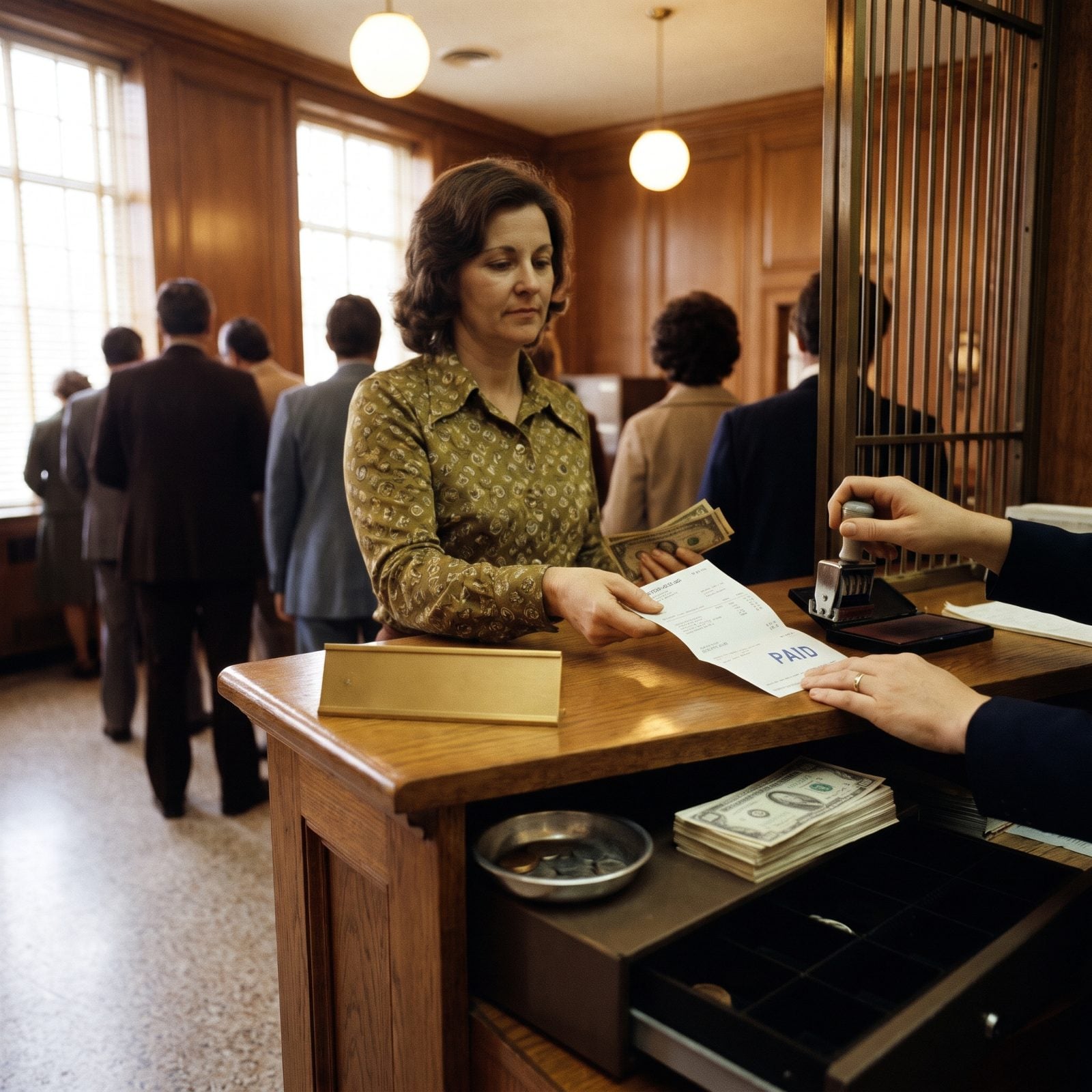
Your bank wasn’t only where your money lived. It was where you paid the electric company, the gas company, sometimes the phone bill too. You brought the stub, handed over cash, and the teller stamped it PAID with that satisfying thunk.
One stop on a Saturday morning knocked out half your obligations — no checks to mail, no stamps to buy, no lying awake wondering whether the payment landed on time. The receipt was proof, inked and dated, folded into your wallet before you’d reached the car.
That turned the branch into the hub of a neighborhood’s financial life. A place you had real reasons to walk into even when you had no banking to do.
6. Issuing Handsome Paper Certificates for CDs
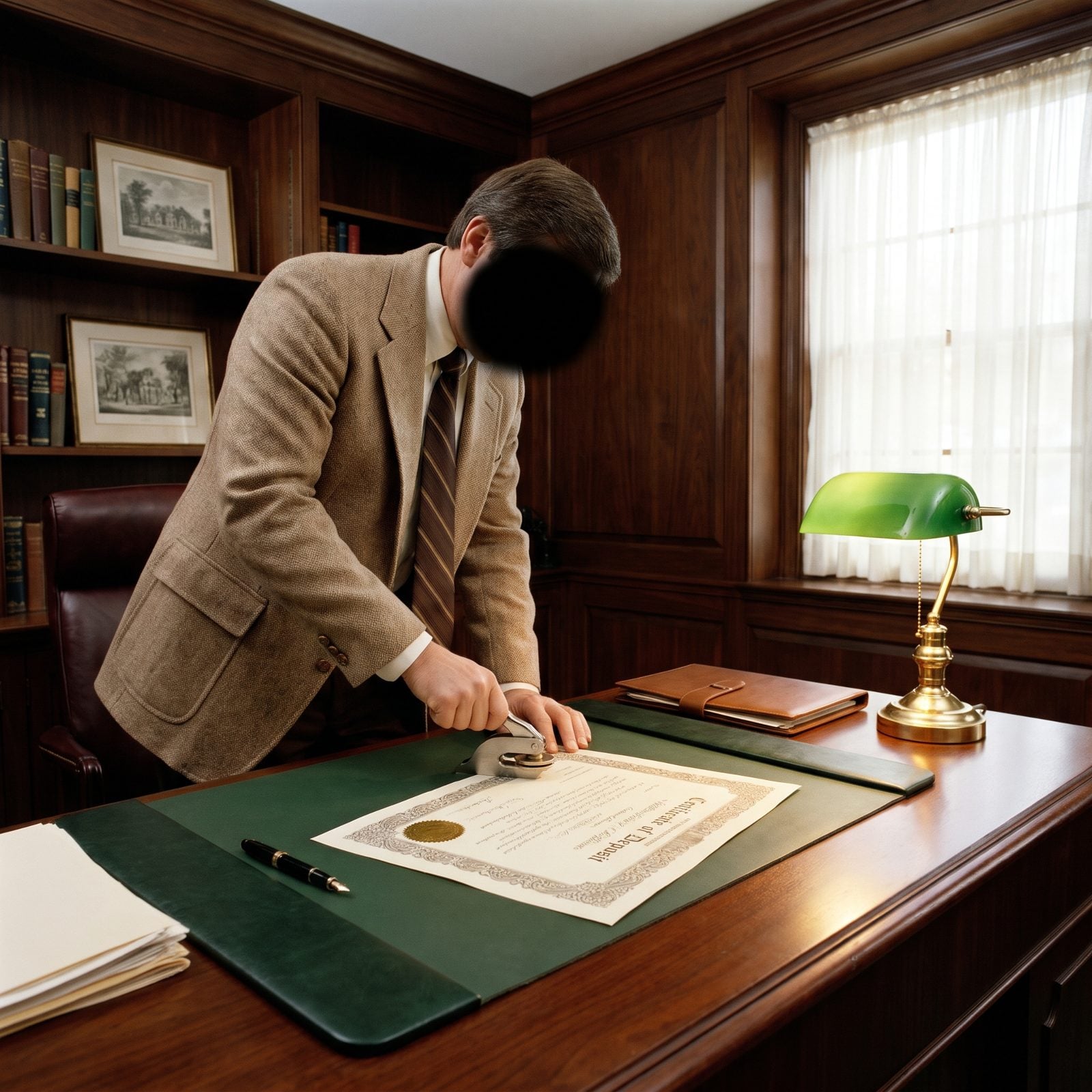
Locking up money for a few years earned you more than interest. It earned you a certificate that looked like a diploma — engraved border, embossed seal, your name and the term printed right on it.
You folded it into the safe-deposit box next to the deed because it felt like something you shouldn’t crease. The paper itself proved your money was off doing its quiet work. Cashing it early meant surrendering the certificate and swallowing a penalty, so most people just waited it out.
5. Giving Children Bank-Shaped Coin Banks
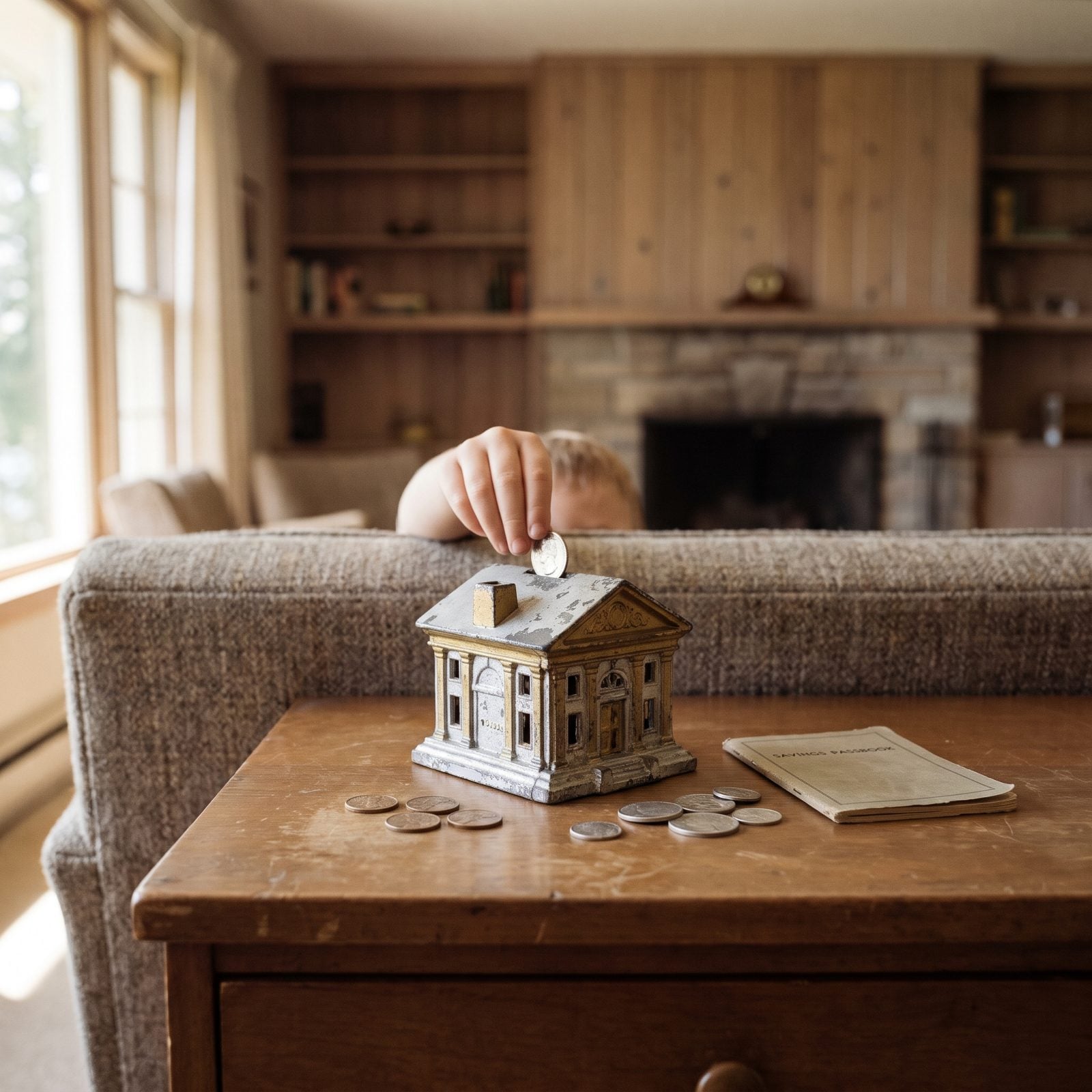
Open an account for a kid and the bank often sent you home with a little metal building, shaped like the branch itself, a coin slot cut into the roof. It sat on the dresser catching dimes.
Here’s the catch — you couldn’t easily get the money back out. That was the entire lesson. Saving meant the coins went in and stayed in until the day you lugged the heavy thing down to the real bank to crack it open.
That small cast-iron building taught a whole generation that money was something you fed, not something you blew the second it hit your palm. A sneaky good trick. Someone should bring it back.
4. Rewarding New Accounts With Toasters and Small Appliances
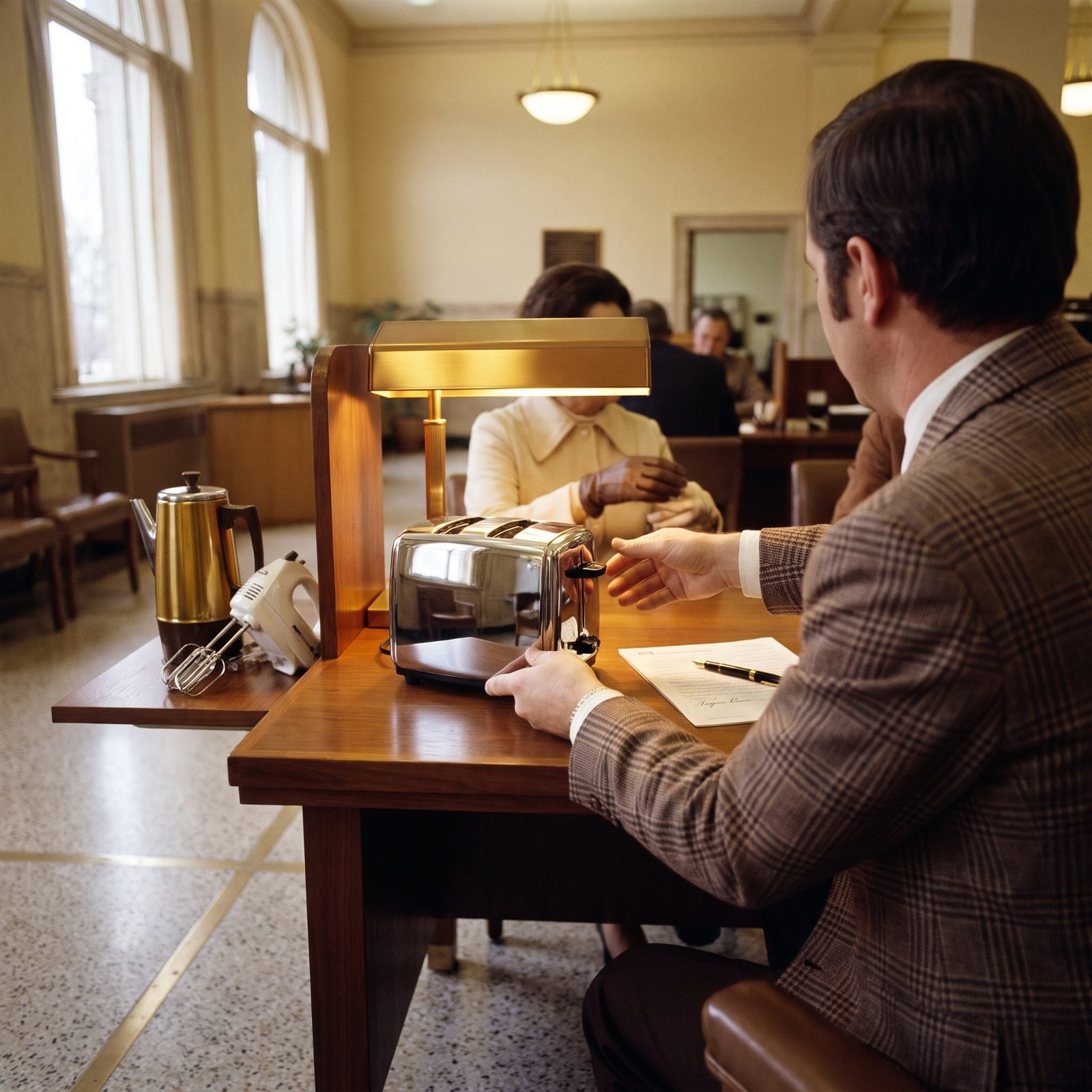
Open a savings account, walk out with a toaster. For a solid stretch of the midcentury, banks fought over your deposit by handing out small appliances right at the door.
A chrome toaster. A percolator. A clock radio if you deposited enough. The gift was genuinely useful, and parking your money somewhere suddenly came with a kitchen upgrade. People really did branch-shop by whatever the giveaway happened to be that month.
3. Hosting School Tours of the Bank Vault
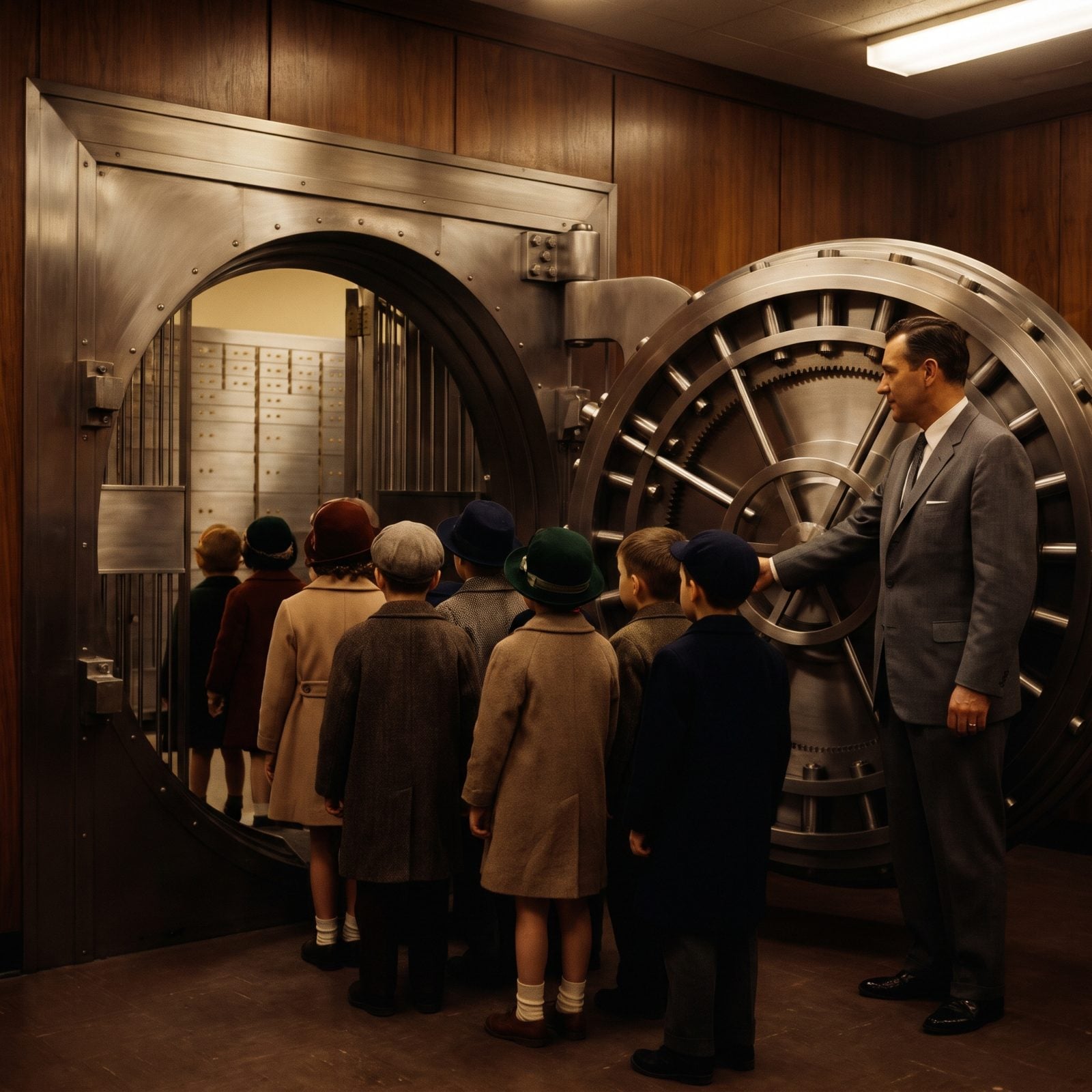
The field trip of the year wasn’t the fire station. It was the bank — and the whole draw was the vault. A door thick as a dictionary, swinging open on gears, revealing a room that smelled like cold steel and secrets.
A banker in a suit walked the line of kids past the safe-deposit boxes, explained interest in words a ten-year-old could actually follow, and sometimes slipped you a free coin bank or a dollar to open your first account. You left wanting to save something. Anything.
Why’d they bother? Because the next generation of customers was standing right there in their good school shoes. And it worked. A kid who’s stood inside an open vault remembers that bank for life. Alright, that’s the end of the tour.
2. When the Teller Would Help You Balance Your Checkbook
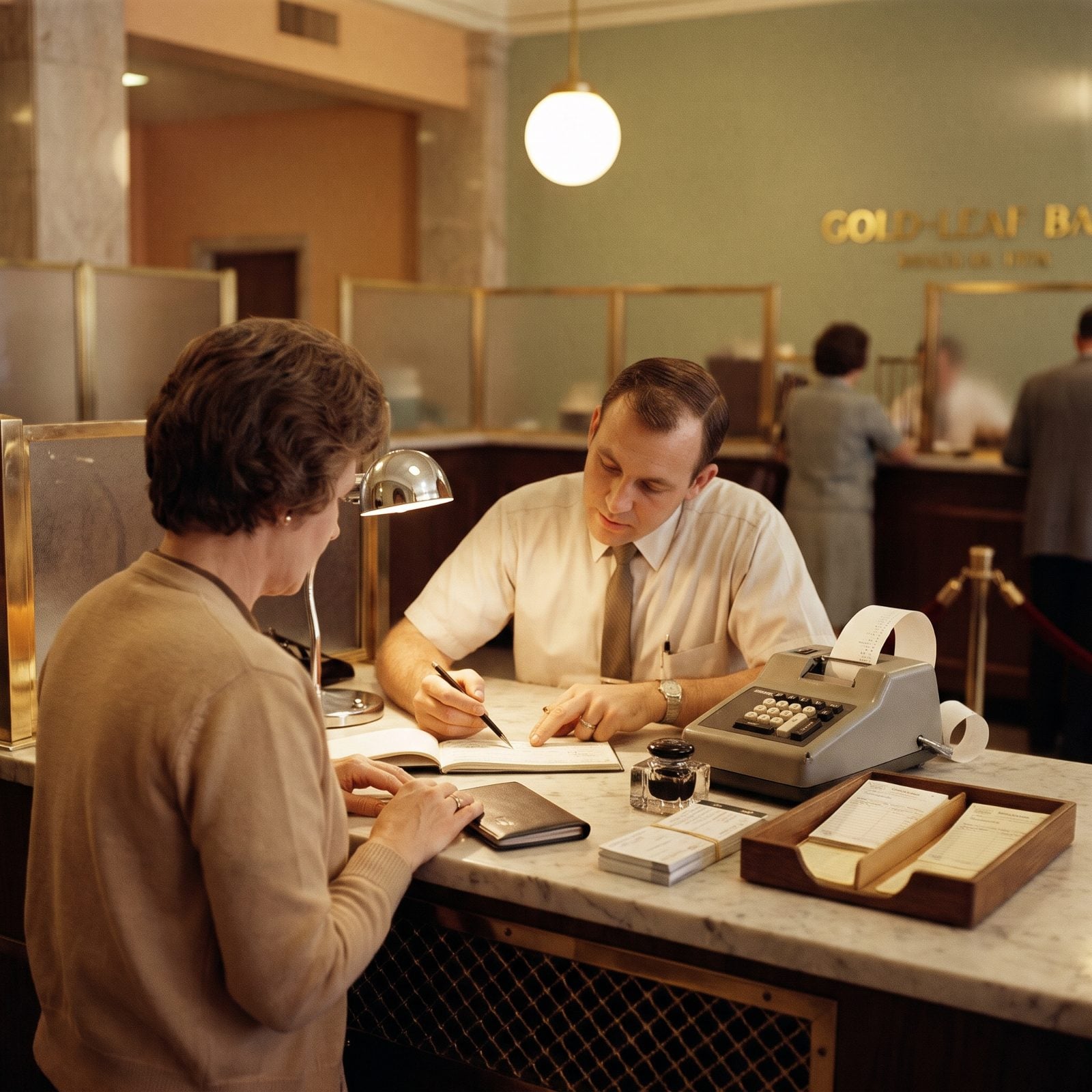
You brought the checkbook in because the numbers wouldn’t agree — off by four dollars and some cents, and you’d checked it twice at the kitchen table before giving up. So you walked it down to the bank. The teller slid a pen out, turned your register around, and started working it line by line against the statement.
No appointment, no fee, just a person who did this all day finding the transposed digit you’d stared past a dozen times. A seven written like a nine. A check you forgot to enter at all.
That kind of help vanished quietly. Online banking does the math now, faster and without frowning at you. But nobody leans across a counter anymore to say, there it is — you just forgot the car payment.
1. Watching the Teller Stamp Your Savings Passbook
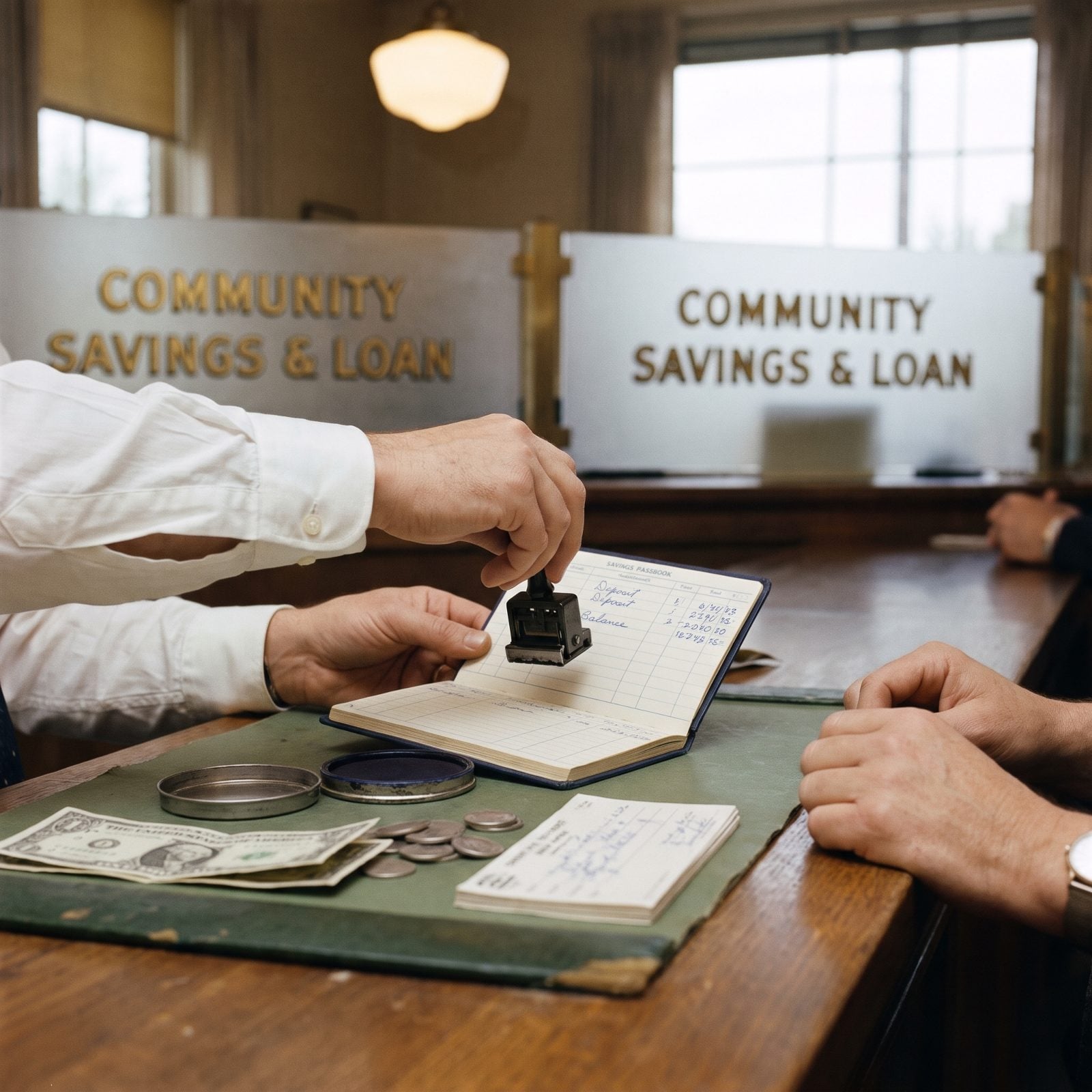
The passbook made saving feel real in a way a number on a screen never has. You’d hand it over with your deposit, the teller would enter the amount in ink, stamp the date, and slide it back. And there it was in print — your balance, a little bigger than last time.
Kids got their own for the school savings program. They’d bring in a quarter on Fridays and watch the line creep up, and the booklet lived in a kitchen drawer or a purse, pulled out and flipped through just to look at. You couldn’t do that with a pixel.
You couldn’t check your balance from the couch. You had to go, and going felt like something.
The passbook tied your money to a place and a face. The teller knew you were saving for a car, or a washing machine, or nothing in particular yet. When ATMs and printed statements took over, the booklet stopped making sense, and the habit of watching your savings grow one stamped line at a time went with it.