

Would you like to save this?
A single breadwinner, a wood-paneled den, a station wagon in the driveway, and a checkbook that balanced most months. Normal 1980s middle-class life, not a lucky one. One income bought the house, fed the kids, and still left enough for a two-week vacation at a lake somewhere. Then something shifted. The same milestones now assume two salaries, two commutes, and a daycare bill that swallows one of them whole. These before-and-afters show where the math quietly stopped working.
26. The Monthly Mortgage on a Starter Home

A starter mortgage in the 1980s was a single-income line item, not a household crisis meeting. One earner signed the papers at the savings and loan, and the payment fit inside a paycheck with room left for the power bill. The house was small and brown and nobody apologized for it.
The starter home carries a second meaning now. Two salaries get folded into one application just to clear the lender’s math, and the payment assumes both people keep working, keep commuting, and never get laid off in the same quarter. The house got a doorbell camera. The margin for error vanished.
25. Scraping Together a First-Home Down Payment

You saved for a down payment the slow way back then. A passbook, a Christmas Club account, maybe a few savings bonds grandma handed over at birthdays. One income could carve out the twenty percent over a handful of years because the house didn’t cost a decade of salary.
The modern version is a group project — two earners, a wedding gift pool, maybe a quiet transfer from parents — and it still takes forever because the target keeps running away from you. The down payment on a first home now rivals what the whole house used to cost.
24. Rent on a Plain Two-Bedroom Apartment

Renting used to be the easy part. A plain two-bedroom in the 1980s was a stepping stone one salary cleared without a spreadsheet — roughly a quarter of a single take-home paycheck. The brown plaid couch came free from somebody’s parents. You weren’t thrilled about it, but you weren’t drowning either.
Now that same unqualified two-bedroom frequently demands two incomes just to meet the landlord’s rule that you earn three times the monthly figure. The apartment got nicer countertops and a worse deal. That trade happened everywhere at once.
23. Full-Time Daycare for One Infant

This is the one that quietly rearranged the whole equation. In the 1980s, childcare often wasn’t a line item at all, because one parent was home, or a neighbor watched the baby for a modest weekly sum tucked into an envelope. The home daycare down the street had a wooden playpen, a rocking chair, and a price a part-time job could cover.
Full-time infant care today frequently rivals a mortgage payment, sometimes beats in-state college tuition, and in plenty of cities runs higher than rent. So two parents go to work partly to pay the place that watches the kid while they’re at work. We find that math genuinely absurd. We’re not the only ones.
22. One Year of In-State Public College Tuition

A summer job could genuinely dent a year of in-state tuition back then. Flip burgers or work the factory floor from June to August, and a public university bill was something a motivated kid could partly out-earn. Parents chipped in the rest from a single income without refinancing anything.
That path is gone. Tuition has climbed so far past wage growth that the summer-job dream now covers textbooks and a parking pass, maybe. Families stretch two incomes and still sign loan paperwork, and the kid walks across the stage owing money the 1980s version never imagined.
A full summer of work used to buy a year of college. Now it buys the orientation fees and a used laptop.
21. Driving Off in a Brand-New Family Sedan

One income bought a new car off the lot and nobody thought it reckless. A boxy sedan with a vinyl bench seat and a tape deck cost a reasonable slice of a single annual salary, financed over three or four years. You drove it home the same afternoon.
New family sedans now cost noticeably more than they did relative to earnings, and the average loan has stretched to six or seven years just to keep the payment digestible. Two incomes make the number work. Or you buy used and pray the previous owner changed the oil. The car got a touchscreen and a payment plan that outlasts some marriages.
20. The Family Health Insurance Premium

Family health coverage in the 1980s was often something the employer simply handled. The company man got a benefits booklet and a card in his wallet, and the payroll deduction — if there even was one — was small enough to forget about. One job insured the whole household.
Today’s premium is a shared burden two incomes absorb. Even with the employer kicking in, the family’s monthly slice has ballooned into one of the biggest costs after housing. Deductibles arrived. So did the explanation-of-benefits paperwork nobody can decode. You pay more and understand less.
19. A Week of Groceries for a Family of Four

A week of groceries for four fit in two brown paper bags and a single income with no drama. The cashier rang up cans with handwritten price stickers, the milk came in a glass bottle, and the bill was a known quantity you paid in cash from the envelope marked FOOD.
The weekly cart costs dramatically more now in real terms, and the coping strategies multiplied: apps, loyalty cards, coupon stacking, buying the store brand and pretending you don’t notice. Two earners means less time to cook from scratch, which means more convenience food, which costs more. The trap feeds itself.
18. The Full Monthly Household Utility Bundle

Would you like to save this?
The utility bundle in the 1980s was short and simple: electric, gas, water, and the phone bill you paid by mail with a stamp and a checkbook. One income covered the lot as an afterthought. No internet line, no streaming stack, no cell plan for every family member.
Now the monthly bundle has sprouted limbs. Electric and gas and water, sure, but also broadband, multiple phone plans, streaming subscriptions that auto-renew in the dark, and a thermostat that emails you. Each piece seems small. Together they form a second rent, and two incomes feel the drain.
17. The Annual Property Tax Bill

Property taxes once rode along quietly inside the mortgage escrow, a once-a-year number a single income handled without a second thought. The statement showed up in the mail, you confirmed it matched the escrow estimate, and into a drawer it went.
Then the bill rose with home values, and in plenty of neighborhoods it has outpaced incomes entirely. Longtime owners on fixed or single salaries feel it hardest now — taxed on a house that appreciated past their ability to pay the tax on it. Sharp little irony, that. The home got more valuable, and that’s exactly what made it harder to keep. One paycheck used to absorb this. Now it’s one more reason the second one shows up for work.
16. Homeowners Insurance for the Family House

Start with the premium. In the 1980s a homeowners policy on a modest three-bedroom was the kind of bill one paycheck absorbed without a family meeting, arriving once a year on paper, paid with a single check, then forgotten.
Now the renewal notice shows up and your stomach drops before you open the envelope. Rebuild costs climbed, weather got meaner, and insurers priced all of it in. What used to be a line item is now a conversation, and that conversation quietly assumes two incomes are footing the house to begin with.
15. Replacing a Worn-Out Roof
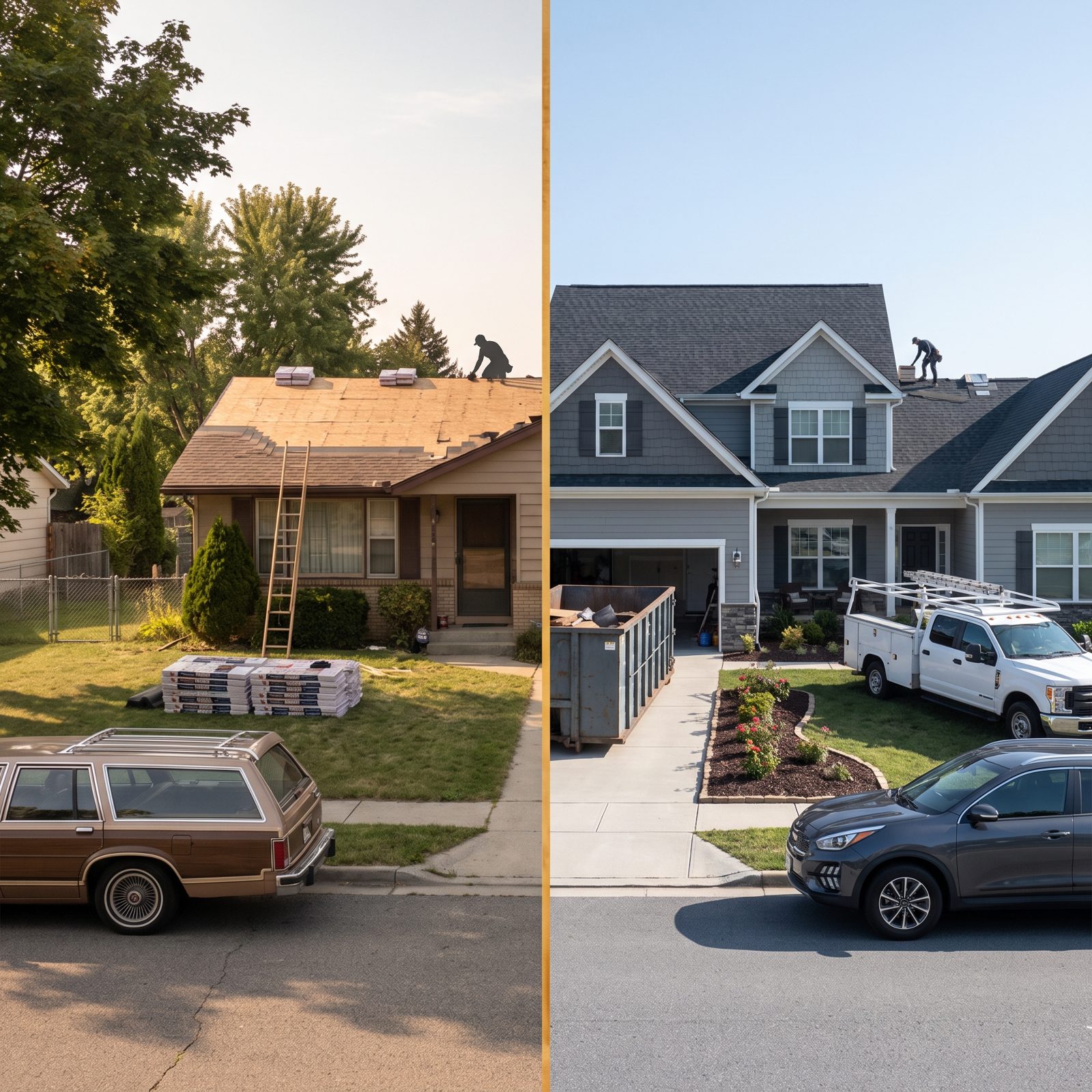
A roof is one of those costs you forget exists until a brown stain blooms on the ceiling. Back then, re-shingling the house was a real expense but a manageable one. The family breadwinner groaned, wrote a check, and the thing got done over a long weekend.
Then shingle prices climbed and skilled labor got scarce and pricier. A full tear-off and replacement now runs into numbers that make people nurse a leaky roof for years, bucket in the attic, hoping to stretch it one more winter. We’ve watched folks do exactly that. The delay usually costs them more.
14. Installing a New Furnace
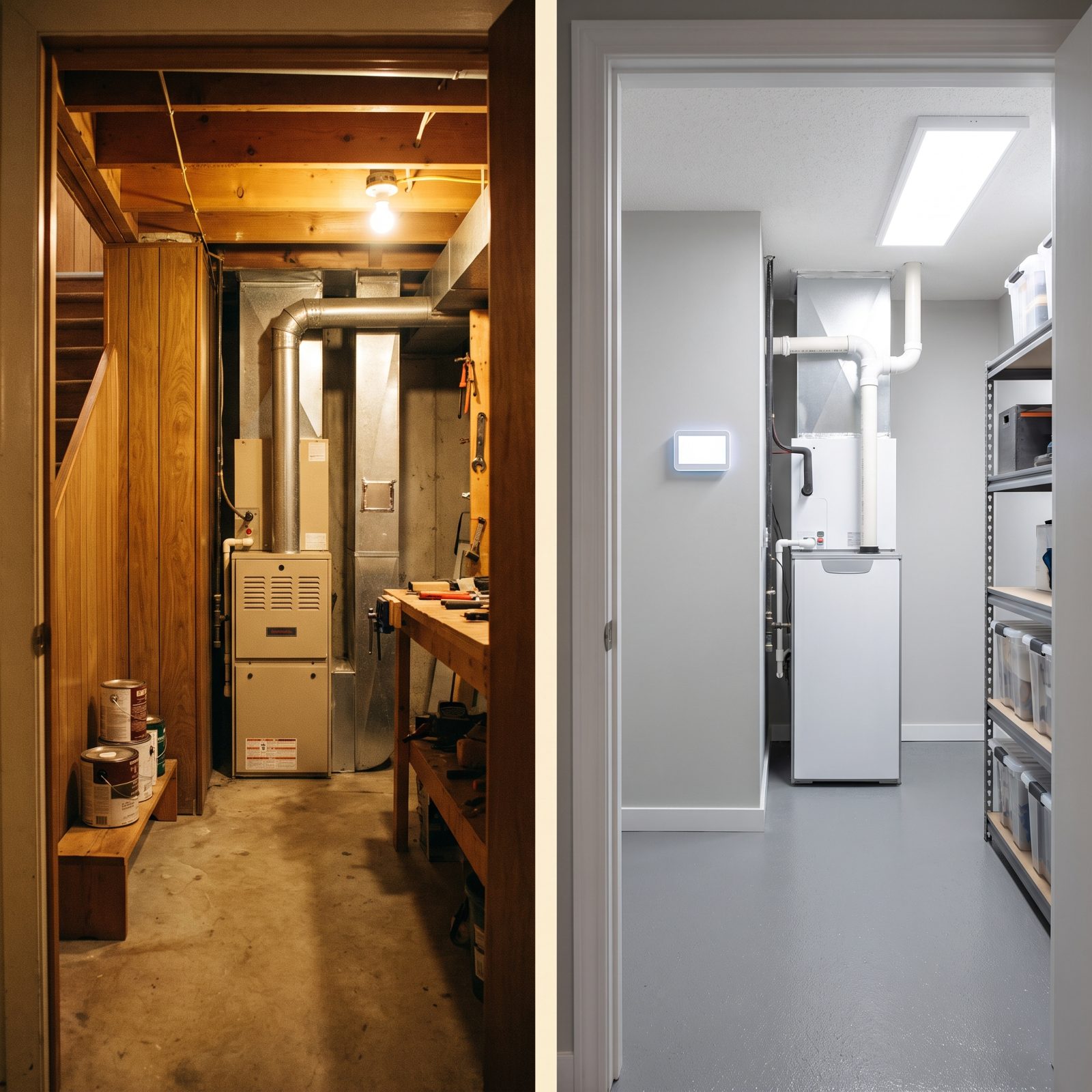
Nobody buys a furnace on a good day. It dies in January, always, usually on a Sunday. In the eighties the replacement was a chunk of money, sure, but it sat inside the range a single earner could cover without touching the kids’ college envelope.
High-efficiency units, tighter codes, and labor costs pushed the modern bill into territory that genuinely rattles a one-income household. The quote lands and suddenly two salaries aren’t a luxury. They’re the reason you’re not shivering in sweaters until spring.
13. A Necessary Septic-System Repair

An expense that doesn’t make it onto any nostalgia list, and it should. When the septic field backed up in the eighties, you called a guy, he brought a truck, and the repair hurt but didn’t upend the household budget.
Permits got stricter and excavation costs ballooned. A failed drain field or a cracked tank now carries a price tag that can equal a used car. It’s the kind of invisible home cost that quietly assumes two paychecks are in the mix.
12. Replacement Windows for an Older House

Drafty old windows were a fact of life, and swapping them was a project a middle-class family could knock out room by room on one income. You’d do the front of the house one year and the back the next, paying as you went.
Energy-efficient units, custom sizing for odd old openings, and installation labor turned a whole-house window job into one of the biggest discretionary home bills going. Most folks now phase it over years or wait until a seal fails and fog creeps between the panes. Beautiful glass. Brutal invoice.
11. A Major Engine or Transmission Repair

Cars used to be fixable in a driveway with a Haynes manual and a weekend. A blown transmission in the eighties was a bad day, but the rebuild fit inside what one earner could swing, especially if your brother-in-law knew his way around a wrench.
Modern vehicles are rolling computers. Parts cost more, diagnostics require machines nobody keeps in a garage, and labor rates climbed with everything else. A major repair now routinely costs more than the car is worth, which is its own kind of cruel math. Two incomes make that call survivable. One makes it a crisis.
10. Car Insurance With a Teenage Driver

Adding a sixteen-year-old to the policy has always made parents wince. But in the eighties the bump was a bump, not a second car payment. One income absorbed it, grudgingly, with a lecture about keeping the grades up for the discount.
Then repair costs, medical costs, and lawsuit exposure all climbed, and teen rates climbed right along with them. The premium jump for a new young driver can now rival a decent monthly rent. Families quietly build their whole budget around it, which usually means both parents are working just to keep that kid legally on the road.
9. The Hospital Bill for an Uncomplicated Birth

A routine delivery used to be, well, routine on the budget too. The hospital sent an itemized bill, insurance covered a good chunk, and the family paid the rest without the arrival of a baby doubling as a financial emergency.
That changed in a way few costs have. Facility fees, specialist charges, and the whole machinery of modern billing turned a plain uncomplicated birth into a four- or five-figure event even with coverage. The baby is free, strictly speaking. Getting them delivered is not.
8. An Ambulance Ride and Emergency-Room Visit

Would you like to save this?
You call for help and don’t ask the price. That instinct hasn’t changed. What changed is what shows up in the mailbox three weeks later.
An ambulance ride and an ER visit in the eighties cost real money, but not the stop-you-cold number families now brace for. Surprise billing, out-of-network ambulance charges, facility fees stacked on facility fees: it adds up to a bill that can wreck a one-income household. And people now hesitate to call 911, talk themselves out of the ER over cost. That’s a genuinely dark turn, and it’s worth saying plainly.
7. A High-Deductible Medical Bill

The deductible is the quiet killer. Back in the day, decent insurance meant a modest copay and the plan picked up the rest. You got sick, you got care, you paid a little.
Now the trade for a lower premium is a deductible in the thousands, which means an ordinary illness or a single broken ankle lands as a genuine household expense before insurance does anything at all. Families budget around the deductible the way they once budgeted around the mortgage. Two earners isn’t greed. It’s the arithmetic of staying covered.
6. Regular Contributions to a Child’s College Fund

A passbook and a pen used to do the whole job. One paycheck covered the mortgage and the groceries and still left a few dollars to drop into a savings account with the kid’s name penciled at the top. The teller stamped it, and you watched the number climb.
The math has changed shape entirely. Tuition has outrun inflation for decades, and the single-income household that once quietly funded four years of state school has mostly become a two-income household feeding a 529 and still coming up short. The account moved to a screen. The pressure moved to both parents — which is a lousy trade if you ask me.
5. A Classic Family Road Trip

The whole trip ran on one plan: fill the tank, pack the cooler, point the wagon somewhere and go. Gas was cheap enough that the drive itself was the vacation instead of a line item you dreaded, and a motel off the highway cost about what dinner costs now.
That simple pleasure has drifted upward in every direction. Fuel, roadside food, and a chain motel room for a family of four add up to a number that a second income now helps absorb. The trip still happens. It just takes more planning and, increasingly, two paychecks underneath it.
4. Round-Trip Flights for the Whole Family

Flying the family somewhere once meant a paper ticket in a little cardboard folder and a single breadwinner who could actually pull it off. Air travel wasn’t casual. But a middle-class household could book four seats for a real trip without a second salary covering the gap.
Four tickets used to be an event one paycheck planned for. Now it’s a budget two paychecks negotiate.
The ticket turned into a glowing rectangle on a phone, and somewhere along the way the arithmetic shifted. Baggage fees. Seat fees. The sheer volume of four fares turned the family flight into something many households now fund with two incomes rather than one.
3. Christmas Gifts Without Carrying a Credit Card Balance

Layaway did the heavy lifting. You put a little down in October, paid it off by December, and the gifts came home debt-free. Plenty of households ran the whole holiday on cash set aside through the fall — one income covering it without a single finance charge.
Now the cart lives on a phone and the balance lives on a card. Toy prices, electronics, and the slow creep of what counts as a “normal” Christmas have pushed more families toward carrying that balance into spring. Debt-free December got harder. Often it’s two incomes trying to keep it that way.
2. A Traditional Wedding Reception

A community hall, folding chairs, a tiered cake, a punch bowl. The reception was warm and the bill was reasonable, and one family’s income could cover a good party without a loan or a spreadsheet.
Expectations have ballooned since then. A wedding now runs into tens of thousands of dollars once you add floral installations, catering per head, and a venue that books a year out. The celebration a single paycheck once hosted in a rented hall has become a two-income undertaking — sometimes with help from both sets of parents layered on top.
1. A Funeral and Burial With Basic Services

Even grief used to come at a price a working household could meet. A modest casket, a basic service, a plot, and the car to the cemetery added up to something a single income or a small savings account could handle without a second loan.
Those costs have climbed steadily. A funeral with burial now lands in the thousands most families don’t keep sitting in a drawer, so more households carry burial insurance or lean on two earners’ savings just to cover the basics with dignity.